
Advertisement
Research ArticleCell biologyGastroenterologyOncology
Open Access |  10.1172/JCI195538
Poly(ADP-ribose) glycohydrolase enforces p21 degradation via dePARylation to promote gastric cancer progression
Yangchan Hu,1,2 Qimei Bao,1 Yixing Huang,1,3 Yan Wang,1,4 Xin Zhao,1 Junjun Nan,1,2 Yuxin Meng,1,2 Mingcong Deng,1 Yuancong Li,1,2 Zirui Zhuang,1,5 Hanyi He,1 Dan Zu,1,6 Yuke Zhong,1 Chunkai Zhang,1 Bing Wang,1,2 Ran Li,1,2 Yanhua He,1 Qihan Wang,7 Min Liu,8 John A. Tainer,8 Yin Shi,3 Xiangdong Cheng,1,9,10 Ji Jing,1,9,10 and Zu Ye1,9,10,11,12
1Zhejiang Cancer Hospital, Hangzhou Institute of Medicine (HIM), Chinese Academy of Sciences, Hangzhou, Zhejiang, China.
2College of Pharmaceutical Science, Zhejiang University of Technology, Hangzhou, China.
3Department of Biochemistry and Department of Pulmonology, Children’s Hospital, Zhejiang University School of Medicine, National Clinical Research Center for Children and Adolescents’ Health and Diseases, Hangzhou, China.
4Collaborative Innovation Center of Yangtza River Delta Region Green Pharmaceuticals, Zhejiang University of Technology, Hangzhou, China.
5School of Molecular Medicine, Hangzhou Institute for Advanced Study, University of Chinese Academy of Sciences (UCAS), Hangzhou, China.
6School of Life Sciences, Tianjin University, Tianjin, China.
7College of Biological Sciences, University of California, Davis, California, USA.
8Departments of Molecular and Cellular Oncology and Cancer Biology, The University of Texas MD Anderson Cancer Center, Houston, Texas, USA.
9Key Laboratory of Prevention, Diagnosis and Therapy of Gastrointestinal Cancer of Zhejiang Province, Hangzhou, China.
10Zhejiang Provincial Research Center for Upper Gastrointestinal Tract Cancer, Zhejiang Cancer Hospital, Hangzhou, China.
11Guangxi Key Laboratory of Early Prevention and Treatment for Regional High Frequency Tumor, Nanning, China.
12Key Laboratory of Early Prevention and Treatment for Regional High Frequency Tumor (Guangxi Medical University), Ministry of Education, Nanning, China.
Address correspondence to: Zu Ye, Ji Jing, or Xiangdong Cheng, Zhejiang Cancer Hospital, Hangzhou Institute of Medicine (HIM), Chinese Academy of Sciences, No. 1 East Banshan Road, Gongshu District District, Hangzhou, Zhejiang 310022, China. E-mail: yezuqscx@zju.edu.cn (ZY); jingji@him.cas.cn (JJ); yezuqscx@gmail.com (XC).
Find articles by Hu, Y. in: PubMed | Google Scholar
1Zhejiang Cancer Hospital, Hangzhou Institute of Medicine (HIM), Chinese Academy of Sciences, Hangzhou, Zhejiang, China.
2College of Pharmaceutical Science, Zhejiang University of Technology, Hangzhou, China.
3Department of Biochemistry and Department of Pulmonology, Children’s Hospital, Zhejiang University School of Medicine, National Clinical Research Center for Children and Adolescents’ Health and Diseases, Hangzhou, China.
4Collaborative Innovation Center of Yangtza River Delta Region Green Pharmaceuticals, Zhejiang University of Technology, Hangzhou, China.
5School of Molecular Medicine, Hangzhou Institute for Advanced Study, University of Chinese Academy of Sciences (UCAS), Hangzhou, China.
6School of Life Sciences, Tianjin University, Tianjin, China.
7College of Biological Sciences, University of California, Davis, California, USA.
8Departments of Molecular and Cellular Oncology and Cancer Biology, The University of Texas MD Anderson Cancer Center, Houston, Texas, USA.
9Key Laboratory of Prevention, Diagnosis and Therapy of Gastrointestinal Cancer of Zhejiang Province, Hangzhou, China.
10Zhejiang Provincial Research Center for Upper Gastrointestinal Tract Cancer, Zhejiang Cancer Hospital, Hangzhou, China.
11Guangxi Key Laboratory of Early Prevention and Treatment for Regional High Frequency Tumor, Nanning, China.
12Key Laboratory of Early Prevention and Treatment for Regional High Frequency Tumor (Guangxi Medical University), Ministry of Education, Nanning, China.
Address correspondence to: Zu Ye, Ji Jing, or Xiangdong Cheng, Zhejiang Cancer Hospital, Hangzhou Institute of Medicine (HIM), Chinese Academy of Sciences, No. 1 East Banshan Road, Gongshu District District, Hangzhou, Zhejiang 310022, China. E-mail: yezuqscx@zju.edu.cn (ZY); jingji@him.cas.cn (JJ); yezuqscx@gmail.com (XC).
Find articles by Bao, Q. in: PubMed | Google Scholar
1Zhejiang Cancer Hospital, Hangzhou Institute of Medicine (HIM), Chinese Academy of Sciences, Hangzhou, Zhejiang, China.
2College of Pharmaceutical Science, Zhejiang University of Technology, Hangzhou, China.
3Department of Biochemistry and Department of Pulmonology, Children’s Hospital, Zhejiang University School of Medicine, National Clinical Research Center for Children and Adolescents’ Health and Diseases, Hangzhou, China.
4Collaborative Innovation Center of Yangtza River Delta Region Green Pharmaceuticals, Zhejiang University of Technology, Hangzhou, China.
5School of Molecular Medicine, Hangzhou Institute for Advanced Study, University of Chinese Academy of Sciences (UCAS), Hangzhou, China.
6School of Life Sciences, Tianjin University, Tianjin, China.
7College of Biological Sciences, University of California, Davis, California, USA.
8Departments of Molecular and Cellular Oncology and Cancer Biology, The University of Texas MD Anderson Cancer Center, Houston, Texas, USA.
9Key Laboratory of Prevention, Diagnosis and Therapy of Gastrointestinal Cancer of Zhejiang Province, Hangzhou, China.
10Zhejiang Provincial Research Center for Upper Gastrointestinal Tract Cancer, Zhejiang Cancer Hospital, Hangzhou, China.
11Guangxi Key Laboratory of Early Prevention and Treatment for Regional High Frequency Tumor, Nanning, China.
12Key Laboratory of Early Prevention and Treatment for Regional High Frequency Tumor (Guangxi Medical University), Ministry of Education, Nanning, China.
Address correspondence to: Zu Ye, Ji Jing, or Xiangdong Cheng, Zhejiang Cancer Hospital, Hangzhou Institute of Medicine (HIM), Chinese Academy of Sciences, No. 1 East Banshan Road, Gongshu District District, Hangzhou, Zhejiang 310022, China. E-mail: yezuqscx@zju.edu.cn (ZY); jingji@him.cas.cn (JJ); yezuqscx@gmail.com (XC).
Find articles by Huang, Y. in: PubMed | Google Scholar
1Zhejiang Cancer Hospital, Hangzhou Institute of Medicine (HIM), Chinese Academy of Sciences, Hangzhou, Zhejiang, China.
2College of Pharmaceutical Science, Zhejiang University of Technology, Hangzhou, China.
3Department of Biochemistry and Department of Pulmonology, Children’s Hospital, Zhejiang University School of Medicine, National Clinical Research Center for Children and Adolescents’ Health and Diseases, Hangzhou, China.
4Collaborative Innovation Center of Yangtza River Delta Region Green Pharmaceuticals, Zhejiang University of Technology, Hangzhou, China.
5School of Molecular Medicine, Hangzhou Institute for Advanced Study, University of Chinese Academy of Sciences (UCAS), Hangzhou, China.
6School of Life Sciences, Tianjin University, Tianjin, China.
7College of Biological Sciences, University of California, Davis, California, USA.
8Departments of Molecular and Cellular Oncology and Cancer Biology, The University of Texas MD Anderson Cancer Center, Houston, Texas, USA.
9Key Laboratory of Prevention, Diagnosis and Therapy of Gastrointestinal Cancer of Zhejiang Province, Hangzhou, China.
10Zhejiang Provincial Research Center for Upper Gastrointestinal Tract Cancer, Zhejiang Cancer Hospital, Hangzhou, China.
11Guangxi Key Laboratory of Early Prevention and Treatment for Regional High Frequency Tumor, Nanning, China.
12Key Laboratory of Early Prevention and Treatment for Regional High Frequency Tumor (Guangxi Medical University), Ministry of Education, Nanning, China.
Address correspondence to: Zu Ye, Ji Jing, or Xiangdong Cheng, Zhejiang Cancer Hospital, Hangzhou Institute of Medicine (HIM), Chinese Academy of Sciences, No. 1 East Banshan Road, Gongshu District District, Hangzhou, Zhejiang 310022, China. E-mail: yezuqscx@zju.edu.cn (ZY); jingji@him.cas.cn (JJ); yezuqscx@gmail.com (XC).
Find articles by Wang, Y. in: PubMed | Google Scholar
1Zhejiang Cancer Hospital, Hangzhou Institute of Medicine (HIM), Chinese Academy of Sciences, Hangzhou, Zhejiang, China.
2College of Pharmaceutical Science, Zhejiang University of Technology, Hangzhou, China.
3Department of Biochemistry and Department of Pulmonology, Children’s Hospital, Zhejiang University School of Medicine, National Clinical Research Center for Children and Adolescents’ Health and Diseases, Hangzhou, China.
4Collaborative Innovation Center of Yangtza River Delta Region Green Pharmaceuticals, Zhejiang University of Technology, Hangzhou, China.
5School of Molecular Medicine, Hangzhou Institute for Advanced Study, University of Chinese Academy of Sciences (UCAS), Hangzhou, China.
6School of Life Sciences, Tianjin University, Tianjin, China.
7College of Biological Sciences, University of California, Davis, California, USA.
8Departments of Molecular and Cellular Oncology and Cancer Biology, The University of Texas MD Anderson Cancer Center, Houston, Texas, USA.
9Key Laboratory of Prevention, Diagnosis and Therapy of Gastrointestinal Cancer of Zhejiang Province, Hangzhou, China.
10Zhejiang Provincial Research Center for Upper Gastrointestinal Tract Cancer, Zhejiang Cancer Hospital, Hangzhou, China.
11Guangxi Key Laboratory of Early Prevention and Treatment for Regional High Frequency Tumor, Nanning, China.
12Key Laboratory of Early Prevention and Treatment for Regional High Frequency Tumor (Guangxi Medical University), Ministry of Education, Nanning, China.
Address correspondence to: Zu Ye, Ji Jing, or Xiangdong Cheng, Zhejiang Cancer Hospital, Hangzhou Institute of Medicine (HIM), Chinese Academy of Sciences, No. 1 East Banshan Road, Gongshu District District, Hangzhou, Zhejiang 310022, China. E-mail: yezuqscx@zju.edu.cn (ZY); jingji@him.cas.cn (JJ); yezuqscx@gmail.com (XC).
Find articles by Zhao, X. in: PubMed | Google Scholar
1Zhejiang Cancer Hospital, Hangzhou Institute of Medicine (HIM), Chinese Academy of Sciences, Hangzhou, Zhejiang, China.
2College of Pharmaceutical Science, Zhejiang University of Technology, Hangzhou, China.
3Department of Biochemistry and Department of Pulmonology, Children’s Hospital, Zhejiang University School of Medicine, National Clinical Research Center for Children and Adolescents’ Health and Diseases, Hangzhou, China.
4Collaborative Innovation Center of Yangtza River Delta Region Green Pharmaceuticals, Zhejiang University of Technology, Hangzhou, China.
5School of Molecular Medicine, Hangzhou Institute for Advanced Study, University of Chinese Academy of Sciences (UCAS), Hangzhou, China.
6School of Life Sciences, Tianjin University, Tianjin, China.
7College of Biological Sciences, University of California, Davis, California, USA.
8Departments of Molecular and Cellular Oncology and Cancer Biology, The University of Texas MD Anderson Cancer Center, Houston, Texas, USA.
9Key Laboratory of Prevention, Diagnosis and Therapy of Gastrointestinal Cancer of Zhejiang Province, Hangzhou, China.
10Zhejiang Provincial Research Center for Upper Gastrointestinal Tract Cancer, Zhejiang Cancer Hospital, Hangzhou, China.
11Guangxi Key Laboratory of Early Prevention and Treatment for Regional High Frequency Tumor, Nanning, China.
12Key Laboratory of Early Prevention and Treatment for Regional High Frequency Tumor (Guangxi Medical University), Ministry of Education, Nanning, China.
Address correspondence to: Zu Ye, Ji Jing, or Xiangdong Cheng, Zhejiang Cancer Hospital, Hangzhou Institute of Medicine (HIM), Chinese Academy of Sciences, No. 1 East Banshan Road, Gongshu District District, Hangzhou, Zhejiang 310022, China. E-mail: yezuqscx@zju.edu.cn (ZY); jingji@him.cas.cn (JJ); yezuqscx@gmail.com (XC).
Find articles by Nan, J. in: PubMed | Google Scholar
1Zhejiang Cancer Hospital, Hangzhou Institute of Medicine (HIM), Chinese Academy of Sciences, Hangzhou, Zhejiang, China.
2College of Pharmaceutical Science, Zhejiang University of Technology, Hangzhou, China.
3Department of Biochemistry and Department of Pulmonology, Children’s Hospital, Zhejiang University School of Medicine, National Clinical Research Center for Children and Adolescents’ Health and Diseases, Hangzhou, China.
4Collaborative Innovation Center of Yangtza River Delta Region Green Pharmaceuticals, Zhejiang University of Technology, Hangzhou, China.
5School of Molecular Medicine, Hangzhou Institute for Advanced Study, University of Chinese Academy of Sciences (UCAS), Hangzhou, China.
6School of Life Sciences, Tianjin University, Tianjin, China.
7College of Biological Sciences, University of California, Davis, California, USA.
8Departments of Molecular and Cellular Oncology and Cancer Biology, The University of Texas MD Anderson Cancer Center, Houston, Texas, USA.
9Key Laboratory of Prevention, Diagnosis and Therapy of Gastrointestinal Cancer of Zhejiang Province, Hangzhou, China.
10Zhejiang Provincial Research Center for Upper Gastrointestinal Tract Cancer, Zhejiang Cancer Hospital, Hangzhou, China.
11Guangxi Key Laboratory of Early Prevention and Treatment for Regional High Frequency Tumor, Nanning, China.
12Key Laboratory of Early Prevention and Treatment for Regional High Frequency Tumor (Guangxi Medical University), Ministry of Education, Nanning, China.
Address correspondence to: Zu Ye, Ji Jing, or Xiangdong Cheng, Zhejiang Cancer Hospital, Hangzhou Institute of Medicine (HIM), Chinese Academy of Sciences, No. 1 East Banshan Road, Gongshu District District, Hangzhou, Zhejiang 310022, China. E-mail: yezuqscx@zju.edu.cn (ZY); jingji@him.cas.cn (JJ); yezuqscx@gmail.com (XC).
Find articles by Meng, Y. in: PubMed | Google Scholar
1Zhejiang Cancer Hospital, Hangzhou Institute of Medicine (HIM), Chinese Academy of Sciences, Hangzhou, Zhejiang, China.
2College of Pharmaceutical Science, Zhejiang University of Technology, Hangzhou, China.
3Department of Biochemistry and Department of Pulmonology, Children’s Hospital, Zhejiang University School of Medicine, National Clinical Research Center for Children and Adolescents’ Health and Diseases, Hangzhou, China.
4Collaborative Innovation Center of Yangtza River Delta Region Green Pharmaceuticals, Zhejiang University of Technology, Hangzhou, China.
5School of Molecular Medicine, Hangzhou Institute for Advanced Study, University of Chinese Academy of Sciences (UCAS), Hangzhou, China.
6School of Life Sciences, Tianjin University, Tianjin, China.
7College of Biological Sciences, University of California, Davis, California, USA.
8Departments of Molecular and Cellular Oncology and Cancer Biology, The University of Texas MD Anderson Cancer Center, Houston, Texas, USA.
9Key Laboratory of Prevention, Diagnosis and Therapy of Gastrointestinal Cancer of Zhejiang Province, Hangzhou, China.
10Zhejiang Provincial Research Center for Upper Gastrointestinal Tract Cancer, Zhejiang Cancer Hospital, Hangzhou, China.
11Guangxi Key Laboratory of Early Prevention and Treatment for Regional High Frequency Tumor, Nanning, China.
12Key Laboratory of Early Prevention and Treatment for Regional High Frequency Tumor (Guangxi Medical University), Ministry of Education, Nanning, China.
Address correspondence to: Zu Ye, Ji Jing, or Xiangdong Cheng, Zhejiang Cancer Hospital, Hangzhou Institute of Medicine (HIM), Chinese Academy of Sciences, No. 1 East Banshan Road, Gongshu District District, Hangzhou, Zhejiang 310022, China. E-mail: yezuqscx@zju.edu.cn (ZY); jingji@him.cas.cn (JJ); yezuqscx@gmail.com (XC).
Find articles by Deng, M. in: PubMed | Google Scholar
1Zhejiang Cancer Hospital, Hangzhou Institute of Medicine (HIM), Chinese Academy of Sciences, Hangzhou, Zhejiang, China.
2College of Pharmaceutical Science, Zhejiang University of Technology, Hangzhou, China.
3Department of Biochemistry and Department of Pulmonology, Children’s Hospital, Zhejiang University School of Medicine, National Clinical Research Center for Children and Adolescents’ Health and Diseases, Hangzhou, China.
4Collaborative Innovation Center of Yangtza River Delta Region Green Pharmaceuticals, Zhejiang University of Technology, Hangzhou, China.
5School of Molecular Medicine, Hangzhou Institute for Advanced Study, University of Chinese Academy of Sciences (UCAS), Hangzhou, China.
6School of Life Sciences, Tianjin University, Tianjin, China.
7College of Biological Sciences, University of California, Davis, California, USA.
8Departments of Molecular and Cellular Oncology and Cancer Biology, The University of Texas MD Anderson Cancer Center, Houston, Texas, USA.
9Key Laboratory of Prevention, Diagnosis and Therapy of Gastrointestinal Cancer of Zhejiang Province, Hangzhou, China.
10Zhejiang Provincial Research Center for Upper Gastrointestinal Tract Cancer, Zhejiang Cancer Hospital, Hangzhou, China.
11Guangxi Key Laboratory of Early Prevention and Treatment for Regional High Frequency Tumor, Nanning, China.
12Key Laboratory of Early Prevention and Treatment for Regional High Frequency Tumor (Guangxi Medical University), Ministry of Education, Nanning, China.
Address correspondence to: Zu Ye, Ji Jing, or Xiangdong Cheng, Zhejiang Cancer Hospital, Hangzhou Institute of Medicine (HIM), Chinese Academy of Sciences, No. 1 East Banshan Road, Gongshu District District, Hangzhou, Zhejiang 310022, China. E-mail: yezuqscx@zju.edu.cn (ZY); jingji@him.cas.cn (JJ); yezuqscx@gmail.com (XC).
Find articles by Li, Y. in: PubMed | Google Scholar
1Zhejiang Cancer Hospital, Hangzhou Institute of Medicine (HIM), Chinese Academy of Sciences, Hangzhou, Zhejiang, China.
2College of Pharmaceutical Science, Zhejiang University of Technology, Hangzhou, China.
3Department of Biochemistry and Department of Pulmonology, Children’s Hospital, Zhejiang University School of Medicine, National Clinical Research Center for Children and Adolescents’ Health and Diseases, Hangzhou, China.
4Collaborative Innovation Center of Yangtza River Delta Region Green Pharmaceuticals, Zhejiang University of Technology, Hangzhou, China.
5School of Molecular Medicine, Hangzhou Institute for Advanced Study, University of Chinese Academy of Sciences (UCAS), Hangzhou, China.
6School of Life Sciences, Tianjin University, Tianjin, China.
7College of Biological Sciences, University of California, Davis, California, USA.
8Departments of Molecular and Cellular Oncology and Cancer Biology, The University of Texas MD Anderson Cancer Center, Houston, Texas, USA.
9Key Laboratory of Prevention, Diagnosis and Therapy of Gastrointestinal Cancer of Zhejiang Province, Hangzhou, China.
10Zhejiang Provincial Research Center for Upper Gastrointestinal Tract Cancer, Zhejiang Cancer Hospital, Hangzhou, China.
11Guangxi Key Laboratory of Early Prevention and Treatment for Regional High Frequency Tumor, Nanning, China.
12Key Laboratory of Early Prevention and Treatment for Regional High Frequency Tumor (Guangxi Medical University), Ministry of Education, Nanning, China.
Address correspondence to: Zu Ye, Ji Jing, or Xiangdong Cheng, Zhejiang Cancer Hospital, Hangzhou Institute of Medicine (HIM), Chinese Academy of Sciences, No. 1 East Banshan Road, Gongshu District District, Hangzhou, Zhejiang 310022, China. E-mail: yezuqscx@zju.edu.cn (ZY); jingji@him.cas.cn (JJ); yezuqscx@gmail.com (XC).
Find articles by Zhuang, Z. in: PubMed | Google Scholar
1Zhejiang Cancer Hospital, Hangzhou Institute of Medicine (HIM), Chinese Academy of Sciences, Hangzhou, Zhejiang, China.
2College of Pharmaceutical Science, Zhejiang University of Technology, Hangzhou, China.
3Department of Biochemistry and Department of Pulmonology, Children’s Hospital, Zhejiang University School of Medicine, National Clinical Research Center for Children and Adolescents’ Health and Diseases, Hangzhou, China.
4Collaborative Innovation Center of Yangtza River Delta Region Green Pharmaceuticals, Zhejiang University of Technology, Hangzhou, China.
5School of Molecular Medicine, Hangzhou Institute for Advanced Study, University of Chinese Academy of Sciences (UCAS), Hangzhou, China.
6School of Life Sciences, Tianjin University, Tianjin, China.
7College of Biological Sciences, University of California, Davis, California, USA.
8Departments of Molecular and Cellular Oncology and Cancer Biology, The University of Texas MD Anderson Cancer Center, Houston, Texas, USA.
9Key Laboratory of Prevention, Diagnosis and Therapy of Gastrointestinal Cancer of Zhejiang Province, Hangzhou, China.
10Zhejiang Provincial Research Center for Upper Gastrointestinal Tract Cancer, Zhejiang Cancer Hospital, Hangzhou, China.
11Guangxi Key Laboratory of Early Prevention and Treatment for Regional High Frequency Tumor, Nanning, China.
12Key Laboratory of Early Prevention and Treatment for Regional High Frequency Tumor (Guangxi Medical University), Ministry of Education, Nanning, China.
Address correspondence to: Zu Ye, Ji Jing, or Xiangdong Cheng, Zhejiang Cancer Hospital, Hangzhou Institute of Medicine (HIM), Chinese Academy of Sciences, No. 1 East Banshan Road, Gongshu District District, Hangzhou, Zhejiang 310022, China. E-mail: yezuqscx@zju.edu.cn (ZY); jingji@him.cas.cn (JJ); yezuqscx@gmail.com (XC).
Find articles by He, H. in: PubMed | Google Scholar
1Zhejiang Cancer Hospital, Hangzhou Institute of Medicine (HIM), Chinese Academy of Sciences, Hangzhou, Zhejiang, China.
2College of Pharmaceutical Science, Zhejiang University of Technology, Hangzhou, China.
3Department of Biochemistry and Department of Pulmonology, Children’s Hospital, Zhejiang University School of Medicine, National Clinical Research Center for Children and Adolescents’ Health and Diseases, Hangzhou, China.
4Collaborative Innovation Center of Yangtza River Delta Region Green Pharmaceuticals, Zhejiang University of Technology, Hangzhou, China.
5School of Molecular Medicine, Hangzhou Institute for Advanced Study, University of Chinese Academy of Sciences (UCAS), Hangzhou, China.
6School of Life Sciences, Tianjin University, Tianjin, China.
7College of Biological Sciences, University of California, Davis, California, USA.
8Departments of Molecular and Cellular Oncology and Cancer Biology, The University of Texas MD Anderson Cancer Center, Houston, Texas, USA.
9Key Laboratory of Prevention, Diagnosis and Therapy of Gastrointestinal Cancer of Zhejiang Province, Hangzhou, China.
10Zhejiang Provincial Research Center for Upper Gastrointestinal Tract Cancer, Zhejiang Cancer Hospital, Hangzhou, China.
11Guangxi Key Laboratory of Early Prevention and Treatment for Regional High Frequency Tumor, Nanning, China.
12Key Laboratory of Early Prevention and Treatment for Regional High Frequency Tumor (Guangxi Medical University), Ministry of Education, Nanning, China.
Address correspondence to: Zu Ye, Ji Jing, or Xiangdong Cheng, Zhejiang Cancer Hospital, Hangzhou Institute of Medicine (HIM), Chinese Academy of Sciences, No. 1 East Banshan Road, Gongshu District District, Hangzhou, Zhejiang 310022, China. E-mail: yezuqscx@zju.edu.cn (ZY); jingji@him.cas.cn (JJ); yezuqscx@gmail.com (XC).
Find articles by Zu, D. in: PubMed | Google Scholar
1Zhejiang Cancer Hospital, Hangzhou Institute of Medicine (HIM), Chinese Academy of Sciences, Hangzhou, Zhejiang, China.
2College of Pharmaceutical Science, Zhejiang University of Technology, Hangzhou, China.
3Department of Biochemistry and Department of Pulmonology, Children’s Hospital, Zhejiang University School of Medicine, National Clinical Research Center for Children and Adolescents’ Health and Diseases, Hangzhou, China.
4Collaborative Innovation Center of Yangtza River Delta Region Green Pharmaceuticals, Zhejiang University of Technology, Hangzhou, China.
5School of Molecular Medicine, Hangzhou Institute for Advanced Study, University of Chinese Academy of Sciences (UCAS), Hangzhou, China.
6School of Life Sciences, Tianjin University, Tianjin, China.
7College of Biological Sciences, University of California, Davis, California, USA.
8Departments of Molecular and Cellular Oncology and Cancer Biology, The University of Texas MD Anderson Cancer Center, Houston, Texas, USA.
9Key Laboratory of Prevention, Diagnosis and Therapy of Gastrointestinal Cancer of Zhejiang Province, Hangzhou, China.
10Zhejiang Provincial Research Center for Upper Gastrointestinal Tract Cancer, Zhejiang Cancer Hospital, Hangzhou, China.
11Guangxi Key Laboratory of Early Prevention and Treatment for Regional High Frequency Tumor, Nanning, China.
12Key Laboratory of Early Prevention and Treatment for Regional High Frequency Tumor (Guangxi Medical University), Ministry of Education, Nanning, China.
Address correspondence to: Zu Ye, Ji Jing, or Xiangdong Cheng, Zhejiang Cancer Hospital, Hangzhou Institute of Medicine (HIM), Chinese Academy of Sciences, No. 1 East Banshan Road, Gongshu District District, Hangzhou, Zhejiang 310022, China. E-mail: yezuqscx@zju.edu.cn (ZY); jingji@him.cas.cn (JJ); yezuqscx@gmail.com (XC).
Find articles by Zhong, Y. in: PubMed | Google Scholar
1Zhejiang Cancer Hospital, Hangzhou Institute of Medicine (HIM), Chinese Academy of Sciences, Hangzhou, Zhejiang, China.
2College of Pharmaceutical Science, Zhejiang University of Technology, Hangzhou, China.
3Department of Biochemistry and Department of Pulmonology, Children’s Hospital, Zhejiang University School of Medicine, National Clinical Research Center for Children and Adolescents’ Health and Diseases, Hangzhou, China.
4Collaborative Innovation Center of Yangtza River Delta Region Green Pharmaceuticals, Zhejiang University of Technology, Hangzhou, China.
5School of Molecular Medicine, Hangzhou Institute for Advanced Study, University of Chinese Academy of Sciences (UCAS), Hangzhou, China.
6School of Life Sciences, Tianjin University, Tianjin, China.
7College of Biological Sciences, University of California, Davis, California, USA.
8Departments of Molecular and Cellular Oncology and Cancer Biology, The University of Texas MD Anderson Cancer Center, Houston, Texas, USA.
9Key Laboratory of Prevention, Diagnosis and Therapy of Gastrointestinal Cancer of Zhejiang Province, Hangzhou, China.
10Zhejiang Provincial Research Center for Upper Gastrointestinal Tract Cancer, Zhejiang Cancer Hospital, Hangzhou, China.
11Guangxi Key Laboratory of Early Prevention and Treatment for Regional High Frequency Tumor, Nanning, China.
12Key Laboratory of Early Prevention and Treatment for Regional High Frequency Tumor (Guangxi Medical University), Ministry of Education, Nanning, China.
Address correspondence to: Zu Ye, Ji Jing, or Xiangdong Cheng, Zhejiang Cancer Hospital, Hangzhou Institute of Medicine (HIM), Chinese Academy of Sciences, No. 1 East Banshan Road, Gongshu District District, Hangzhou, Zhejiang 310022, China. E-mail: yezuqscx@zju.edu.cn (ZY); jingji@him.cas.cn (JJ); yezuqscx@gmail.com (XC).
Find articles by Zhang, C. in: PubMed | Google Scholar
1Zhejiang Cancer Hospital, Hangzhou Institute of Medicine (HIM), Chinese Academy of Sciences, Hangzhou, Zhejiang, China.
2College of Pharmaceutical Science, Zhejiang University of Technology, Hangzhou, China.
3Department of Biochemistry and Department of Pulmonology, Children’s Hospital, Zhejiang University School of Medicine, National Clinical Research Center for Children and Adolescents’ Health and Diseases, Hangzhou, China.
4Collaborative Innovation Center of Yangtza River Delta Region Green Pharmaceuticals, Zhejiang University of Technology, Hangzhou, China.
5School of Molecular Medicine, Hangzhou Institute for Advanced Study, University of Chinese Academy of Sciences (UCAS), Hangzhou, China.
6School of Life Sciences, Tianjin University, Tianjin, China.
7College of Biological Sciences, University of California, Davis, California, USA.
8Departments of Molecular and Cellular Oncology and Cancer Biology, The University of Texas MD Anderson Cancer Center, Houston, Texas, USA.
9Key Laboratory of Prevention, Diagnosis and Therapy of Gastrointestinal Cancer of Zhejiang Province, Hangzhou, China.
10Zhejiang Provincial Research Center for Upper Gastrointestinal Tract Cancer, Zhejiang Cancer Hospital, Hangzhou, China.
11Guangxi Key Laboratory of Early Prevention and Treatment for Regional High Frequency Tumor, Nanning, China.
12Key Laboratory of Early Prevention and Treatment for Regional High Frequency Tumor (Guangxi Medical University), Ministry of Education, Nanning, China.
Address correspondence to: Zu Ye, Ji Jing, or Xiangdong Cheng, Zhejiang Cancer Hospital, Hangzhou Institute of Medicine (HIM), Chinese Academy of Sciences, No. 1 East Banshan Road, Gongshu District District, Hangzhou, Zhejiang 310022, China. E-mail: yezuqscx@zju.edu.cn (ZY); jingji@him.cas.cn (JJ); yezuqscx@gmail.com (XC).
Find articles by Wang, B. in: PubMed | Google Scholar
1Zhejiang Cancer Hospital, Hangzhou Institute of Medicine (HIM), Chinese Academy of Sciences, Hangzhou, Zhejiang, China.
2College of Pharmaceutical Science, Zhejiang University of Technology, Hangzhou, China.
3Department of Biochemistry and Department of Pulmonology, Children’s Hospital, Zhejiang University School of Medicine, National Clinical Research Center for Children and Adolescents’ Health and Diseases, Hangzhou, China.
4Collaborative Innovation Center of Yangtza River Delta Region Green Pharmaceuticals, Zhejiang University of Technology, Hangzhou, China.
5School of Molecular Medicine, Hangzhou Institute for Advanced Study, University of Chinese Academy of Sciences (UCAS), Hangzhou, China.
6School of Life Sciences, Tianjin University, Tianjin, China.
7College of Biological Sciences, University of California, Davis, California, USA.
8Departments of Molecular and Cellular Oncology and Cancer Biology, The University of Texas MD Anderson Cancer Center, Houston, Texas, USA.
9Key Laboratory of Prevention, Diagnosis and Therapy of Gastrointestinal Cancer of Zhejiang Province, Hangzhou, China.
10Zhejiang Provincial Research Center for Upper Gastrointestinal Tract Cancer, Zhejiang Cancer Hospital, Hangzhou, China.
11Guangxi Key Laboratory of Early Prevention and Treatment for Regional High Frequency Tumor, Nanning, China.
12Key Laboratory of Early Prevention and Treatment for Regional High Frequency Tumor (Guangxi Medical University), Ministry of Education, Nanning, China.
Address correspondence to: Zu Ye, Ji Jing, or Xiangdong Cheng, Zhejiang Cancer Hospital, Hangzhou Institute of Medicine (HIM), Chinese Academy of Sciences, No. 1 East Banshan Road, Gongshu District District, Hangzhou, Zhejiang 310022, China. E-mail: yezuqscx@zju.edu.cn (ZY); jingji@him.cas.cn (JJ); yezuqscx@gmail.com (XC).
Find articles by Li, R. in: PubMed | Google Scholar
1Zhejiang Cancer Hospital, Hangzhou Institute of Medicine (HIM), Chinese Academy of Sciences, Hangzhou, Zhejiang, China.
2College of Pharmaceutical Science, Zhejiang University of Technology, Hangzhou, China.
3Department of Biochemistry and Department of Pulmonology, Children’s Hospital, Zhejiang University School of Medicine, National Clinical Research Center for Children and Adolescents’ Health and Diseases, Hangzhou, China.
4Collaborative Innovation Center of Yangtza River Delta Region Green Pharmaceuticals, Zhejiang University of Technology, Hangzhou, China.
5School of Molecular Medicine, Hangzhou Institute for Advanced Study, University of Chinese Academy of Sciences (UCAS), Hangzhou, China.
6School of Life Sciences, Tianjin University, Tianjin, China.
7College of Biological Sciences, University of California, Davis, California, USA.
8Departments of Molecular and Cellular Oncology and Cancer Biology, The University of Texas MD Anderson Cancer Center, Houston, Texas, USA.
9Key Laboratory of Prevention, Diagnosis and Therapy of Gastrointestinal Cancer of Zhejiang Province, Hangzhou, China.
10Zhejiang Provincial Research Center for Upper Gastrointestinal Tract Cancer, Zhejiang Cancer Hospital, Hangzhou, China.
11Guangxi Key Laboratory of Early Prevention and Treatment for Regional High Frequency Tumor, Nanning, China.
12Key Laboratory of Early Prevention and Treatment for Regional High Frequency Tumor (Guangxi Medical University), Ministry of Education, Nanning, China.
Address correspondence to: Zu Ye, Ji Jing, or Xiangdong Cheng, Zhejiang Cancer Hospital, Hangzhou Institute of Medicine (HIM), Chinese Academy of Sciences, No. 1 East Banshan Road, Gongshu District District, Hangzhou, Zhejiang 310022, China. E-mail: yezuqscx@zju.edu.cn (ZY); jingji@him.cas.cn (JJ); yezuqscx@gmail.com (XC).
Find articles by He, Y. in: PubMed | Google Scholar
1Zhejiang Cancer Hospital, Hangzhou Institute of Medicine (HIM), Chinese Academy of Sciences, Hangzhou, Zhejiang, China.
2College of Pharmaceutical Science, Zhejiang University of Technology, Hangzhou, China.
3Department of Biochemistry and Department of Pulmonology, Children’s Hospital, Zhejiang University School of Medicine, National Clinical Research Center for Children and Adolescents’ Health and Diseases, Hangzhou, China.
4Collaborative Innovation Center of Yangtza River Delta Region Green Pharmaceuticals, Zhejiang University of Technology, Hangzhou, China.
5School of Molecular Medicine, Hangzhou Institute for Advanced Study, University of Chinese Academy of Sciences (UCAS), Hangzhou, China.
6School of Life Sciences, Tianjin University, Tianjin, China.
7College of Biological Sciences, University of California, Davis, California, USA.
8Departments of Molecular and Cellular Oncology and Cancer Biology, The University of Texas MD Anderson Cancer Center, Houston, Texas, USA.
9Key Laboratory of Prevention, Diagnosis and Therapy of Gastrointestinal Cancer of Zhejiang Province, Hangzhou, China.
10Zhejiang Provincial Research Center for Upper Gastrointestinal Tract Cancer, Zhejiang Cancer Hospital, Hangzhou, China.
11Guangxi Key Laboratory of Early Prevention and Treatment for Regional High Frequency Tumor, Nanning, China.
12Key Laboratory of Early Prevention and Treatment for Regional High Frequency Tumor (Guangxi Medical University), Ministry of Education, Nanning, China.
Address correspondence to: Zu Ye, Ji Jing, or Xiangdong Cheng, Zhejiang Cancer Hospital, Hangzhou Institute of Medicine (HIM), Chinese Academy of Sciences, No. 1 East Banshan Road, Gongshu District District, Hangzhou, Zhejiang 310022, China. E-mail: yezuqscx@zju.edu.cn (ZY); jingji@him.cas.cn (JJ); yezuqscx@gmail.com (XC).
Find articles by Wang, Q. in: PubMed | Google Scholar
1Zhejiang Cancer Hospital, Hangzhou Institute of Medicine (HIM), Chinese Academy of Sciences, Hangzhou, Zhejiang, China.
2College of Pharmaceutical Science, Zhejiang University of Technology, Hangzhou, China.
3Department of Biochemistry and Department of Pulmonology, Children’s Hospital, Zhejiang University School of Medicine, National Clinical Research Center for Children and Adolescents’ Health and Diseases, Hangzhou, China.
4Collaborative Innovation Center of Yangtza River Delta Region Green Pharmaceuticals, Zhejiang University of Technology, Hangzhou, China.
5School of Molecular Medicine, Hangzhou Institute for Advanced Study, University of Chinese Academy of Sciences (UCAS), Hangzhou, China.
6School of Life Sciences, Tianjin University, Tianjin, China.
7College of Biological Sciences, University of California, Davis, California, USA.
8Departments of Molecular and Cellular Oncology and Cancer Biology, The University of Texas MD Anderson Cancer Center, Houston, Texas, USA.
9Key Laboratory of Prevention, Diagnosis and Therapy of Gastrointestinal Cancer of Zhejiang Province, Hangzhou, China.
10Zhejiang Provincial Research Center for Upper Gastrointestinal Tract Cancer, Zhejiang Cancer Hospital, Hangzhou, China.
11Guangxi Key Laboratory of Early Prevention and Treatment for Regional High Frequency Tumor, Nanning, China.
12Key Laboratory of Early Prevention and Treatment for Regional High Frequency Tumor (Guangxi Medical University), Ministry of Education, Nanning, China.
Address correspondence to: Zu Ye, Ji Jing, or Xiangdong Cheng, Zhejiang Cancer Hospital, Hangzhou Institute of Medicine (HIM), Chinese Academy of Sciences, No. 1 East Banshan Road, Gongshu District District, Hangzhou, Zhejiang 310022, China. E-mail: yezuqscx@zju.edu.cn (ZY); jingji@him.cas.cn (JJ); yezuqscx@gmail.com (XC).
Find articles by Liu, M. in: PubMed | Google Scholar
1Zhejiang Cancer Hospital, Hangzhou Institute of Medicine (HIM), Chinese Academy of Sciences, Hangzhou, Zhejiang, China.
2College of Pharmaceutical Science, Zhejiang University of Technology, Hangzhou, China.
3Department of Biochemistry and Department of Pulmonology, Children’s Hospital, Zhejiang University School of Medicine, National Clinical Research Center for Children and Adolescents’ Health and Diseases, Hangzhou, China.
4Collaborative Innovation Center of Yangtza River Delta Region Green Pharmaceuticals, Zhejiang University of Technology, Hangzhou, China.
5School of Molecular Medicine, Hangzhou Institute for Advanced Study, University of Chinese Academy of Sciences (UCAS), Hangzhou, China.
6School of Life Sciences, Tianjin University, Tianjin, China.
7College of Biological Sciences, University of California, Davis, California, USA.
8Departments of Molecular and Cellular Oncology and Cancer Biology, The University of Texas MD Anderson Cancer Center, Houston, Texas, USA.
9Key Laboratory of Prevention, Diagnosis and Therapy of Gastrointestinal Cancer of Zhejiang Province, Hangzhou, China.
10Zhejiang Provincial Research Center for Upper Gastrointestinal Tract Cancer, Zhejiang Cancer Hospital, Hangzhou, China.
11Guangxi Key Laboratory of Early Prevention and Treatment for Regional High Frequency Tumor, Nanning, China.
12Key Laboratory of Early Prevention and Treatment for Regional High Frequency Tumor (Guangxi Medical University), Ministry of Education, Nanning, China.
Address correspondence to: Zu Ye, Ji Jing, or Xiangdong Cheng, Zhejiang Cancer Hospital, Hangzhou Institute of Medicine (HIM), Chinese Academy of Sciences, No. 1 East Banshan Road, Gongshu District District, Hangzhou, Zhejiang 310022, China. E-mail: yezuqscx@zju.edu.cn (ZY); jingji@him.cas.cn (JJ); yezuqscx@gmail.com (XC).
Find articles by Tainer, J. in: PubMed | Google Scholar
1Zhejiang Cancer Hospital, Hangzhou Institute of Medicine (HIM), Chinese Academy of Sciences, Hangzhou, Zhejiang, China.
2College of Pharmaceutical Science, Zhejiang University of Technology, Hangzhou, China.
3Department of Biochemistry and Department of Pulmonology, Children’s Hospital, Zhejiang University School of Medicine, National Clinical Research Center for Children and Adolescents’ Health and Diseases, Hangzhou, China.
4Collaborative Innovation Center of Yangtza River Delta Region Green Pharmaceuticals, Zhejiang University of Technology, Hangzhou, China.
5School of Molecular Medicine, Hangzhou Institute for Advanced Study, University of Chinese Academy of Sciences (UCAS), Hangzhou, China.
6School of Life Sciences, Tianjin University, Tianjin, China.
7College of Biological Sciences, University of California, Davis, California, USA.
8Departments of Molecular and Cellular Oncology and Cancer Biology, The University of Texas MD Anderson Cancer Center, Houston, Texas, USA.
9Key Laboratory of Prevention, Diagnosis and Therapy of Gastrointestinal Cancer of Zhejiang Province, Hangzhou, China.
10Zhejiang Provincial Research Center for Upper Gastrointestinal Tract Cancer, Zhejiang Cancer Hospital, Hangzhou, China.
11Guangxi Key Laboratory of Early Prevention and Treatment for Regional High Frequency Tumor, Nanning, China.
12Key Laboratory of Early Prevention and Treatment for Regional High Frequency Tumor (Guangxi Medical University), Ministry of Education, Nanning, China.
Address correspondence to: Zu Ye, Ji Jing, or Xiangdong Cheng, Zhejiang Cancer Hospital, Hangzhou Institute of Medicine (HIM), Chinese Academy of Sciences, No. 1 East Banshan Road, Gongshu District District, Hangzhou, Zhejiang 310022, China. E-mail: yezuqscx@zju.edu.cn (ZY); jingji@him.cas.cn (JJ); yezuqscx@gmail.com (XC).
Find articles by Shi, Y. in: PubMed | Google Scholar
1Zhejiang Cancer Hospital, Hangzhou Institute of Medicine (HIM), Chinese Academy of Sciences, Hangzhou, Zhejiang, China.
2College of Pharmaceutical Science, Zhejiang University of Technology, Hangzhou, China.
3Department of Biochemistry and Department of Pulmonology, Children’s Hospital, Zhejiang University School of Medicine, National Clinical Research Center for Children and Adolescents’ Health and Diseases, Hangzhou, China.
4Collaborative Innovation Center of Yangtza River Delta Region Green Pharmaceuticals, Zhejiang University of Technology, Hangzhou, China.
5School of Molecular Medicine, Hangzhou Institute for Advanced Study, University of Chinese Academy of Sciences (UCAS), Hangzhou, China.
6School of Life Sciences, Tianjin University, Tianjin, China.
7College of Biological Sciences, University of California, Davis, California, USA.
8Departments of Molecular and Cellular Oncology and Cancer Biology, The University of Texas MD Anderson Cancer Center, Houston, Texas, USA.
9Key Laboratory of Prevention, Diagnosis and Therapy of Gastrointestinal Cancer of Zhejiang Province, Hangzhou, China.
10Zhejiang Provincial Research Center for Upper Gastrointestinal Tract Cancer, Zhejiang Cancer Hospital, Hangzhou, China.
11Guangxi Key Laboratory of Early Prevention and Treatment for Regional High Frequency Tumor, Nanning, China.
12Key Laboratory of Early Prevention and Treatment for Regional High Frequency Tumor (Guangxi Medical University), Ministry of Education, Nanning, China.
Address correspondence to: Zu Ye, Ji Jing, or Xiangdong Cheng, Zhejiang Cancer Hospital, Hangzhou Institute of Medicine (HIM), Chinese Academy of Sciences, No. 1 East Banshan Road, Gongshu District District, Hangzhou, Zhejiang 310022, China. E-mail: yezuqscx@zju.edu.cn (ZY); jingji@him.cas.cn (JJ); yezuqscx@gmail.com (XC).
Find articles by Cheng, X. in: PubMed | Google Scholar
1Zhejiang Cancer Hospital, Hangzhou Institute of Medicine (HIM), Chinese Academy of Sciences, Hangzhou, Zhejiang, China.
2College of Pharmaceutical Science, Zhejiang University of Technology, Hangzhou, China.
3Department of Biochemistry and Department of Pulmonology, Children’s Hospital, Zhejiang University School of Medicine, National Clinical Research Center for Children and Adolescents’ Health and Diseases, Hangzhou, China.
4Collaborative Innovation Center of Yangtza River Delta Region Green Pharmaceuticals, Zhejiang University of Technology, Hangzhou, China.
5School of Molecular Medicine, Hangzhou Institute for Advanced Study, University of Chinese Academy of Sciences (UCAS), Hangzhou, China.
6School of Life Sciences, Tianjin University, Tianjin, China.
7College of Biological Sciences, University of California, Davis, California, USA.
8Departments of Molecular and Cellular Oncology and Cancer Biology, The University of Texas MD Anderson Cancer Center, Houston, Texas, USA.
9Key Laboratory of Prevention, Diagnosis and Therapy of Gastrointestinal Cancer of Zhejiang Province, Hangzhou, China.
10Zhejiang Provincial Research Center for Upper Gastrointestinal Tract Cancer, Zhejiang Cancer Hospital, Hangzhou, China.
11Guangxi Key Laboratory of Early Prevention and Treatment for Regional High Frequency Tumor, Nanning, China.
12Key Laboratory of Early Prevention and Treatment for Regional High Frequency Tumor (Guangxi Medical University), Ministry of Education, Nanning, China.
Address correspondence to: Zu Ye, Ji Jing, or Xiangdong Cheng, Zhejiang Cancer Hospital, Hangzhou Institute of Medicine (HIM), Chinese Academy of Sciences, No. 1 East Banshan Road, Gongshu District District, Hangzhou, Zhejiang 310022, China. E-mail: yezuqscx@zju.edu.cn (ZY); jingji@him.cas.cn (JJ); yezuqscx@gmail.com (XC).
Find articles by Jing, J. in: PubMed | Google Scholar
1Zhejiang Cancer Hospital, Hangzhou Institute of Medicine (HIM), Chinese Academy of Sciences, Hangzhou, Zhejiang, China.
2College of Pharmaceutical Science, Zhejiang University of Technology, Hangzhou, China.
3Department of Biochemistry and Department of Pulmonology, Children’s Hospital, Zhejiang University School of Medicine, National Clinical Research Center for Children and Adolescents’ Health and Diseases, Hangzhou, China.
4Collaborative Innovation Center of Yangtza River Delta Region Green Pharmaceuticals, Zhejiang University of Technology, Hangzhou, China.
5School of Molecular Medicine, Hangzhou Institute for Advanced Study, University of Chinese Academy of Sciences (UCAS), Hangzhou, China.
6School of Life Sciences, Tianjin University, Tianjin, China.
7College of Biological Sciences, University of California, Davis, California, USA.
8Departments of Molecular and Cellular Oncology and Cancer Biology, The University of Texas MD Anderson Cancer Center, Houston, Texas, USA.
9Key Laboratory of Prevention, Diagnosis and Therapy of Gastrointestinal Cancer of Zhejiang Province, Hangzhou, China.
10Zhejiang Provincial Research Center for Upper Gastrointestinal Tract Cancer, Zhejiang Cancer Hospital, Hangzhou, China.
11Guangxi Key Laboratory of Early Prevention and Treatment for Regional High Frequency Tumor, Nanning, China.
12Key Laboratory of Early Prevention and Treatment for Regional High Frequency Tumor (Guangxi Medical University), Ministry of Education, Nanning, China.
Address correspondence to: Zu Ye, Ji Jing, or Xiangdong Cheng, Zhejiang Cancer Hospital, Hangzhou Institute of Medicine (HIM), Chinese Academy of Sciences, No. 1 East Banshan Road, Gongshu District District, Hangzhou, Zhejiang 310022, China. E-mail: yezuqscx@zju.edu.cn (ZY); jingji@him.cas.cn (JJ); yezuqscx@gmail.com (XC).
Find articles by Ye, Z. in: PubMed | Google Scholar
Published January 15, 2026 - More info
J Clin Invest. 2026;136(5):e195538. https://doi.org/10.1172/JCI195538.
© 2026 Hu et al. This work is licensed under the Creative Commons Attribution 4.0 International License. To view a copy of this license, visit http://creativecommons.org/licenses/by/4.0/.
Received: May 14, 2025; Accepted: January 5, 2026

-
Results
PARG drives cell proliferation by orchestrating cell cycle progression. Analysis of The Cancer Genome Atlas (TCGA) database showed that PARG expression is significantly elevated in most tumor types compared with their normal counterparts, particularly in GC (Figure 1A). Importantly, high PARG expression was strongly correlated with an unfavorable prognosis in patients with GC (Figure 1B). Western blot analysis of 9 GC cell lines (MKN-1, MKN-45, MKN-74, NUGC3, NUGC4, HGC27, AZ521, AGS, and KATO-3) versus normal gastric mucosal cells (GES-1) showed markedly higher PARG expression in 8 of the GC cell lines, particularly in HGC27 and AGS cells (Supplemental Figure 1A; supplemental material available online with this article; https://doi.org/10.1172/JCI195538DS1). To elucidate the biological function of PARG in GC, we generated PARG knockout (KO) HGC27 and AGS cell lines via CRISPR-Cas9 genome editing (Figure 1C). The results of functional assays revealed that PARG ablation significantly impaired cellular proliferation, as evidenced by the results of CCK-8 assays (Figure 1D) and colony formation experiments (Figure 1, E and F).
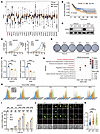 Figure 1
PARG promotes cell proliferation and orchestrates cell cycle progression. (A) TCGA database analysis of PARG expression in pancancer. (B) Survival analysis of patients with GC, P values were determined by 2-sided log-rank test. (C) Western blot detection of PARG protein expression in PARG KO HGC27 and AGS cells. (D) Proliferation profiles of WT and PARG KO HGC27 and AGS cells detected by a CCK-8 assay, n = 5. (E) Colony formation graphs of WT and PARG KO AGS, HGC27 cells detected via a colony formation assay. (F) Statistical graphs of colony formation by HGC27 and AGS cells, n = 3. (G) Bubble map of the transcriptomics KEGG enrichment analysis. (H) Cell cycle distribution of WT and PARG KO HGC27 cells detected by the thymidine double-block assay. (I) Statistics of HGC27 cells in G2/M phase, n = 3. (J) FUCCI4 system virus-infected WT and PARG KO AGS cells were synchronized via the thymidine double-block method, followed by live-cell imaging via the high-quality imaging analysis system; scale bar: 50 μm. (K) Statistical plots of the division times of WT and PARG KO AGS cells, n = 50. (*P ≤ 0.05, **P ≤ 0.01, ***P ≤ 0.001, ****P ≤ 0.0001, NS, not significant, D and I by 2-way ANOVA, F and K by 1-way ANOVA. Error bars represent the mean ± SD).
To systematically investigate the cellular consequences of PARG loss, we performed a series of phenotypic and transcriptomic analyses without preselecting specific pathways. Confocal microscopy analysis revealed that PARG KO induced chromosomal bridge formation and chromosome lagging during anaphase, resulting in defective chromosome segregation (Supplemental Figure 1B). Micronuclei (MCNs) formation assays revealed a significantly increased MCN frequency in PARG-deficient GC cells (Supplemental Figure 1C). Moreover, multinucleation assays showed increased multinucleated cell formation in PARG KO cells (Supplemental Figure 1D). Cytogenetic analysis further identified elevated endogenous chromosomal aberrations, including premature sister chromatid separation (PCS), dicentric chromosomes (Dic), ring chromosomes (Ring), and chromosomal fragments (Frag) (Supplemental Figure 2A). These results suggest that PARG KO induces genomic instability in GC cells.
We subsequently conducted transcriptome-wide profiling to identify differentially expressed genes between WT and PARG KO cells. Kyoto Encyclopedia of Genes and Genomes (KEGG) analysis highlighted significant enrichment in cell cycle–related pathways (Figure 1G). This observation suggested a potential link between PARG function and cell cycle regulation. Guided by this finding, we next focused on assessing the impact of PARG on cell cycle progression.
Cell cycle analysis under serum starvation conditions revealed a G2/M phase arrest in PARG KO cells (Supplemental Figure 2, B and C). This finding was corroborated via thymidine double-block synchronization followed by cell cycle profiling (Figure 1, H and I, and Supplemental Figure 3, A and B). Furthermore, real-time cell cycle tracking via the FUCCI4 reporter system confirmed pronounced mitotic delay in PARG-deficient cells (Figure 1, J and K). Collectively, these results suggest that high PARG expression is associated with poor prognosis in patients with GC and underscore its important role in sustaining cell cycle progression and tumor growth.
PARG interacts with p21 to promote its proteasomal degradation via dePARylation. To elucidate the molecular mechanisms underlying PARG-mediated cell cycle regulation, we performed TurboID proximity labeling coupled with mass spectrometry analysis (Figure 2A). Subsequent GO pathway analysis of the interacting proteins revealed significant enrichment in the mitotic G2/M transition pathway, with p21 emerging as the top-ranked candidate (Figure 2B), suggesting its potential involvement in PARG-induced G2/M arrest. In addition, we also examined the cell cycle–related proteins CCNA2 and CCNB1, which are among the top candidates from the proteomic data, and found that their protein levels did not significantly change (Supplemental Figure 4A).To validate this interaction, we conducted coimmunoprecipitation (Co-IP) assays in HEK293T cells. Co-IP experiments demonstrated that p21 was consistently detected in PARG-Flag precipitates, while PARG was also present in p21-3Myc precipitates (Figure 2C), confirming their physical association. To determine whether this interaction occurs in GC cells, we repeated the experiment using AGS and HGC27 cells and confirmed a reproducible interaction between PARG and p21 (Supplemental Figure 4, B and C). Protein interaction modeling predicted PARG binding at the N-terminal domain of p21 (Supplemental Figure 4D). Subsequent Co-IP assays with p21 truncation mutants confirmed that PARG specifically interacts with amino acid residues 1–90 and 1–140 of p21 (Figure 2, D and E), definitively localizing the interaction domain to the N-terminal region. Additionally, we found that PARG binds to p21 through its C-terminal leucine zipper domain (Figure 2, F and G).
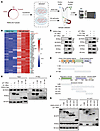 Figure 2
PARG interacts with p21. (A) Flowchart of the TurboID proximity labeling experiment. (B) Heatmap of the interactome of the PARG. (C) PARG-flag and p21-3Myc plasmids were cotransfected into HEK293T cells, and total cell lysates were immunoprecipitated with anti-flag and anti-Myc antibodies, respectively. Then, anti-Myc and anti-PARG antibodies were used to detect the immunoprecipitates, and anti-PARG and anti-Myc antibodies were used to detect the success of the experiments. (D) Schematic of the P21 truncation. (E) PARG-Flag and p21-3Myc truncated plasmids were cotransfected into HEK293T cells, and total cell lysates were immunoprecipitated with anti-Myc antibodies. Then, anti-Myc was used to detect the immunoprecipitates, and anti-PARG was used to detect the success of the experiment. (F) Schematic of the PARG truncation. (G) p21-3Myc and PARG-EGFP truncated plasmids were cotransfected into HEK293T cells, followed by coincubation with EGFP-labeled magnetic beads. Immunoprecipitates were then detected with indicated antibodies.
To further investigate the regulatory role of PARG in relation to p21, we examined p21 protein levels through Western blot experiments. The results indicated that PARG KO led to the upregulation of p21 protein expression in both the HGC27 and AGS cell lines (Figure 3A). To verify that p21 upregulation resulted directly from PARG KO, we introduced PARG-Flag overexpression plasmids into the PARG-WT, -KO1, and -KO2 cell lines and examined the effects on p21. These experiments demonstrated that PARG overexpression substantially reduced p21 protein levels, confirming that p21 expression regulation in GC cells depends on PARG (Figure 3B and Supplemental Figure 4E). We subsequently measured p21 mRNA expression levels via qPCR. The results revealed that PARG KO did not significantly affect p21 transcription levels, suggesting that PARG regulates p21 at the protein level rather than at the transcriptional level (Supplemental Figure 4F).
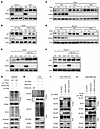 Figure 3
PARG drives p21 proteasomal degradation by removing its PARylation. (A) Western blot detection of p21 protein expression in WT and PARG KO HGC27 and AGS cells. (B) The PARG-Flag plasmid was transfected into WT and PARG KO AGS cells, followed by Western blot analysis of PARG-Flag transfection efficiency and its effect on p21 protein expression. (C and D) AGS and HGC27 cells were treated with 200 μg/mL CHX for 6 hours, and equal amounts of cell lysates enriched with the indicated antibodies were subjected to immunoblotting. (E and F) AGS and HGC27 cells were treated with 10 μM MG132 for 6 hours, and equal amounts of cell lysates were immunoblotted with the indicated antibodies. (G) p21-3Myc, PARG-Flag, and HA-Ub plasmids were transiently transfected into HEK293T cells, and the transfected HEK293T cells were treated with MG132 for 6 hours to harvest proteins. The ubiquitinated p21 protein was pulled down with an anti-Myc antibody and immunoblotted with an anti-Ub antibody. (H) The p21-3Myc plasmid was transfected into WT and PARG KO AGS cells, ADP-ribosylation generation was stimulated with 150 μM H2O2, and total cell lysates were immunoprecipitated with an anti-Myc antibody. Then, anti-Myc was used to detect the immunoprecipitates, and anti-PAR was used to detect the success of the experiment. (I) PARG KO AGS cells were cotransfected with the p21-3Myc plasmid and either the N1-EGFP plasmid or the PARG-EGFP, PARG(mut)-EGFP plasmid. ADP-ribosylation was stimulated with 150 μM H2O2, and total cell lysates were immunoprecipitated and detected with indicated antibodies. (J) p21-3Myc and HA-Ub plasmids were cotransfected with N1-EGFP, PARG-EGFP, or PARG(mut)-EGFP into PARG KO AGS cells. The proteins were harvested after 6 hours of MG132 treatment. The ubiquitinated p21 protein was pulled down via an anti-Myc antibody, followed by immunoblotting with anti-Ub and anti-GFP antibodies.
To further examine the specific regulatory mechanism involved, we treated PARG WT, KO1, and KO2 AGS cells with the protein synthesis inhibitor cycloheximide (CHX) and monitored p21 protein turnover. At baseline (0 h), p21 abundance was markedly higher in PARG-deficient cells than in WT cells (Figure 3, C and D), indicating enhanced p21 stability upon PARG loss. However, the very low basal level of p21 in WT cells precluded reliable determination of degradation kinetics. To overcome this limitation, cells were treated with the p21 transcription activator (APTO-253) to enhance p21 expression prior to CHX treatment. Under these optimized conditions, PARG KO significantly prolonged the half-life of the p21 protein, confirming that PARG depletion stabilizes the p21 protein (Supplemental Figure 4, G and H). The proteasome inhibitor MG132 was subsequently added to PARG KO AGS and HGC27 cells. Western blot experiments demonstrated that PARG KO resulted in the upregulation of p21 expression, and MG132 treatment led to an increase in p21 expression to the same level in all the cell lines (Figure 3, E and F). These findings suggest that PARG primarily regulates p21 through the ubiquitin-proteasome pathway. Ubiquitination assays in HEK293T cells cotransfected with HA-Ub, p21-3Myc, and PARG-Flag plasmids revealed that PARG overexpression increased p21 ubiquitination levels (Figure 3G), whereas PARG KO had the opposite effect (Supplemental Figure 5A). Given recent evidence that PARylation inhibits proteasomal degradation and promotes deubiquitination (48), we examined the p21 PARylation status. Co-IP experiments confirmed that p21 undergoes PARylation, with obviously increased PARylation levels following PARG KO (Figure 3H). In PARG KO cells, empty vectors (N1-EGFP), WT PARG (PARG-EGFP), or a catalytically inactive mutant (PARG[mut]-EGFP, where the key catalytic residues E755/756 were mutated to alanine [E755/756A]), were expressed and p21 PARylation levels and ubiquitination status were analyzed. We found that PARG-EGFP reconstitution effectively rescued the PARG KO–induced reduction in p21 PARylation and increase in p21 ubiquitination. In contrast, catalytically dead PARG(mut)-EGFP failed to do so (Figure 3, I and J). Thus, the decreased level of p21 ubiquitination in PARG KO cells may be due to a spatial blockade of p21 PARylation. Additional experiments with ubiquitin chain-specific mutants (K6R, K11R, K27R, K29R, K33R, K48R, and K63R) revealed K48-linked polyubiquitination as the predominant form involved in this regulation (Supplemental Figure 5B).To identify critical ubiquitination sites, we generated a series of Myc-tagged p21 mutants, including single-point (K16R, K75R, K141R, K154R, K161R, and K163R), multipoint (K2R [K161R/K163R], K4R [K16R/K154R/K161R/K163R]), and complete lysine (K6R) mutants. Co-IP analysis revealed that K161 and K163 are crucial sites for PARG-mediated p21 ubiquitination (Supplemental Figure 5C). Previous research mentioned that SKP2, RNF126, and Cdt2 are potential regulators of p21 ubiquitination and degradation (49). We detected SKP2, RNF126, and Cdt2 expression following PARG knockout via Western blot analysis and found no changes in their expression levels (Supplemental Figure 5, D and F). Subsequent interaction assays demonstrated that PARG overexpression enhanced p21 binding to the E3 ubiquitin ligases SKP2, RNF126, and Cdt2 (Supplemental Figure 5, G–I) and promoted p21 ubiquitination. This suggests that PARG-mediated deparylation may facilitate p21 ubiquitination by promoting E3 ubiquitin ligase recruitment.
To investigate whether PARG universally regulates p21 and the cell cycle, we knocked out PARG in several cancer models with high PARG expression, including esophageal carcinoma KYSE150 and KYSE30 cell lines, breast carcinoma MDA-MB-231 cell line, hepatocellular carcinoma Huh7 cell line, and colorectal carcinoma HCT116 cell line. The results revealed that loss of PARG induced p21 expression and cell cycle arrest at the G2/M phase in all these cell lines, suggesting that this regulation may be universal in different types of cancer (Supplemental Figure 6, A and B).
PARG depletion triggers p21-dependent cancer suppression. To determine whether the inhibition of proliferation caused by PARG KO was p21 dependent, we generated PARG and p21 double knockout (DKO) cell lines via CRISPR-Cas9 genome editing (Supplemental Figure 7A). The results revealed that the proliferation capacity of DKO1 and DKO2 cells was considerably restored compared with that of PARG KO cells (Figure 4A). Furthermore, plate cloning experiments showed that the colony formation ability of DKO1 and DKO2 cells was significantly restored compared with that of PARG KO cells (Figure 4, B and C).
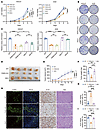 Figure 4
PARG depletion triggers p21-dependent cancer suppression. (A) Proliferation profile of the HGC27 and AGS DKO cell lines, n = 5. (B) Colony formation diagram of the HGC27 and AGS DKO cell lines. (C) Statistical graphs of the colony formation of the HGC27 and AGS DKO cell lines, n = 3. (D) Tumor diagram of the HGC27 xenograft model. (E) Tumor volume growth curve statistics of the HGC27 xenograft model, n = 5. (F) Tumor weight statistics of the HGC27 xenograft model, n = 5. (G) IHC staining of tumor tissues for TUNEL, Ki-67, and H&E staining; scale bar: 50 μm. (H) TUNEL-positive cell statistical graph, n = 5. (I) Statistical analysis of Ki-67–positive cells in tumor tissues, n = 5. (*P ≤ 0.05, **P ≤ 0.01, ***P ≤ 0.001, ****P ≤ 0.0001, NS, not significant, A and E by 2-way ANOVA, C, F, H, and I by 1-way ANOVA. Error bars represent the mean ± SD).
To verify the regulatory role of the PARG-p21 signaling axis in the proliferative activity of GC cells at the cellular level, we investigated whether the PARG KO–induced inhibition of tumor growth was dependent on p21 via the HGC27 cell line-derived xenograft (CDX) model. The results showed that the growth rate of HGC27 cells, as well as the volume and weight of tumors, was significantly higher in mice bearing DKO tumors than in those bearing PARG KO tumors (Figure 4, D–F). Subsequent IHC staining of tumor samples from subcutaneous tumor-bearing mice revealed a substantial decrease in the percentage of TUNEL-positive cells and a significant increase in the percentage of Ki-67–positive cells after knockout of p21 expression in GC cells from PARG KO mice (Figure 4, G–I). These findings provide compelling evidence that PARG exerts its proliferative regulatory effects in GC through p21-dependent mechanisms.
High-throughput screening identifies G C-K as synergistic lethal with PARG loss. To enhance therapeutic efficacy while mitigating drug resistance and adverse effects, GC treatment typically employs multidrug regimens (50). The principle of drug synergy occurs when the combined effect of 2 drugs is greater than the sum of their individual effects, offering a powerful strategy to overcome compensatory pathways and enhance therapeutic outcomes (51). Further induction of damage in genomically unstable tumors promises to apply the principle of synergistic lethality to establish additional therapeutic options. Building upon our identification of PARG as a potential therapeutic target, we conducted high-throughput screening of natural product libraries to identify compounds that exhibit synergistic effects with PARG inhibition (Figure 5A). Primary screening identified 10 compounds with enhanced sensitivity in PARG KO cells (Figure 5B). Further screening revealed that G C-K, a bioactive ginseng component, had potent antitumor activity only in PARG KO cancer cells (Figure 5C). This selection was supported by the established role of p21 as a primary target of G C-K, which aligns with our previous findings regarding the PARG-p21 signaling axis in cell cycle regulation (52). Dose-response assays demonstrated concentration-dependent reductions in the viability of PARG KO1 and KO2 cells, with significantly higher sensitivity than seen in WT cells (Figure 5D and Supplemental Figure 7B). The IC50 value of G C-K in GES-1 cells was 51.26 μM, which was substantially higher than the IC50 values observed in AGS and HGC27 cells. Furthermore, at a working concentration of 30 μM, GES-1 cell viability remained at approximately 90%, indicating that 30 μM G C-K was nontoxic to normal gastric mucosa (Supplemental Figure 7, C and E). Colony formation assays confirmed that, while PARG KO alone impaired proliferative capacity, combination with 30 μM G C-K substantially inhibited growth (Supplemental Figure 7, F–I). These findings establish that PARG deficiency sensitizes GC cells to G C-K treatment. We subsequently examined the cell viability of GC cells in the presence of G C-K via a CCK-8 assay. The investigations revealed that cotreatment with the pancaspase inhibitor Z-VAD-FMK, but not the ferroptosis inhibitor Fer-1 or the pyroptosis inhibitor VX-765, significantly attenuated G C-K-induced cytotoxicity (Supplemental Figure 7J). Flow cytometric analysis confirmed significantly elevated apoptosis rates in G C-K–treated PARG KO cells relative to those in control cells (Supplemental Figure 7, K and L), demonstrating that PARG ablation potentiates G C-K–induced apoptotic cell death.
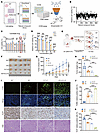 Figure 5
High-throughput screening identifies G C-K as synergistic lethal with PARG loss. (A) Flowchart of high-throughput drug screening. (B) Initial screening of the natural product library, n = 3. (C) Secondary screening of the top 10 drugs sensitive to PARG KO cells, n = 3. Compounds 1–10 represent vincristine sulfate, lappaconitine, 4-methylumbelliferone, mupirocin, diosmetin, aloin, uridine, ginsenoside C-K, saikosaponin D, and gracillin, respectively. (D) A CCK-8 assay was used to detect the survival rate of WT and PARG KO HGC27 cells after G C-K treatment, n = 3. After the cells were treated with 30 μM G C-K for 48 hours, they were incubated with CCK-8 assay reagent for 2 hours before detection. (E) Flowchart of PDX model construction. (F) Graph of G C-K-treated PDX model tumors. (G) Statistical graph of the tumor volume growth curve in the PDX model after G C-K treatment, n = 5. (H) Statistical graph of tumor weight in the PDX model after G C-K treatment, n = 5. (I) Graphs of IHC staining for TUNEL, Ki-67 and H&E in PDX tumor tissues; scale bar: 50 μm. (J) Statistical graph of TUNEL-positive cells in tumor tissues; n = 5. (K) Statistical graph of Ki-67–positive cells in tumor tissues, n = 5. (*P ≤ 0.05, **P ≤ 0.01, ***P ≤ 0.001, ****P ≤ 0.0001, NS, not significant, “C, D, and G by 2-way ANOVA, H, J, and K by 1-way ANOVA. Error bars represent the mean ± SD).
We therefore further tested the effect of PARG KO–enhanced G C-K on the antitumor activity of GC in a patient-derived tumor xenograft (PDX) model (Figure 5E). The results demonstrated that the tumor growth rate, as well as the volume and weight of the tumors, was significantly inhibited by the PARG KO and G C-K treatments (Figure 5, F–H). Subsequent IHC staining of tumor samples from subcutaneous tumor-bearing mice revealed that the percentage of TUNEL-positive cells was significantly elevated and the percentage of Ki-67–positive cells was significantly decreased in tumors from G C-K–treated PARG KO mice (Figure 5, I–K). No significant alterations in body weight were observed during drug treatment (Supplemental Figure 8A), and no substantial differences in the morphological characteristics of organs and tissues after treatment were detected, indicating that G C-K did not induce toxic effects on normal tissues at the experimental doses (Supplemental Figure 8B). These findings further substantiate the safety profile of G C-K in the context of GC treatment. Consistent outcomes were observed in the CDX model (Figure 6, A–F, and Supplemental Figure 8, C and D). Additionally, serum chemistry analysis revealed that key biomarkers for assessing posttreatment hepatic and renal function ALT and BUN remained within normal physiological ranges with no significant changes (Supplemental Figure 8, E and F). In summary, PARG KO markedly enhanced the sensitivity of GC to G C-K, providing a more in-depth experimental basis for the use of PARG as a potential therapeutic target.
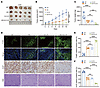 Figure 6
PARG deficiency enhances GC tumor sensitivity to GC-K. (A) Tumor plots of the HGC27 CDX model after G C-K treatment. (B) Tumor volume growth curve statistics of the HGC27 xenograft model after G C-K treatment, n = 5. (C) Tumor weight statistics of the HGC27 xenograft model after G C-K treatment, n = 5. (D) Graphs of IHC staining for TUNEL, Ki-67, and H&E in CDX tumor tissues; scale bar: 50 μm. (E) Statistical graph of TUNEL-positive cells in tumor tissues, n = 5. (F) Statistical graph of Ki-67-positive cells in tumor tissues, n = 5. (**P ≤ 0.01, ***P ≤ 0.001, ****P ≤ 0.0001, NS, not significant, B by 2-way ANOVA, C, E, and F by 1-way ANOVA. Error bars represent the mean ± SD).
p21 governs G C-K sensitivity in PARG-deficient cancer. G C-K can induce cell cycle arrest, with p21 identified as one of the primary regulatory targets of this effect (52). Our transcriptomic profiling demonstrated that the core synergistic lethality of G C-K is executed through a p21-dependent pathway (Supplemental Figure 9, A and B). In addition, we examined the p21 protein levels in HGC27 and AGS cells after treatment with 30 μM G C-K for 48 hours via Western blotting (Figure 7A). The results demonstrated that the p21 protein level was elevated after PARG KO, and G C-K treatment further augmented the expression of p21, which was obviously increased compared with that in both WT and PARG KO cells. These findings suggest that G C-K remarkably amplifies the upregulation effect of p21 in PARG KO GC cells. To further validate these findings, we conducted a cellular activity assay via CCK-8 on p21 KO HGC27 and AGS cells treated with G C-K (Figure 7, B and C). The results showed that p21 KO could partially reverse the antiproliferative effect of G C-K. Furthermore, the results of the colony formation assay revealed that p21 KO partially rescued the colony formation ability after G C-K treatment (Figure 7, D–F). These findings collectively indicate that p21 plays an important role in the antitumor effects of G C-K. To further explore the antitumor effect of G C-K, we regulated p21 expression through a CDX model. The results showed that the growth rate of the tumors, as well as their volume and weight, was significantly inhibited by the PARG KO and G C-K treatments. However, p21 KO and DKO reversed the antitumor effects of G C-K (Figure 7, G–I). Subsequent IHC staining of tumor samples from the mice revealed that the percentage of TUNEL-positive cells was significantly increased and the percentage of Ki-67–positive cells was significantly decreased in the G C-K–treated PARG KO tumors, whereas the percentage of TUNEL-positive cells was significantly reduced and the percentage of Ki-67–positive cells was significantly increased in the p21 KO and DKO tumors (Figure 7, J–L).
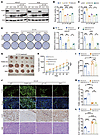 Figure 7
p21 governs G C-K sensitivity in PARG-deficient cancer. (A) G C-K enhances the regulatory effect of p21 in PARG KO gastric cancer cells. (B) A CCK-8 assay was used to detect the survival rate of PARG and p21 DKO HGC27 cells after G C-K treatment, n = 3. (C) A CCK-8 assay was used to detect the survival rate of PARG and p21 DKO AGS cells after G C-K treatment, n = 3. (D) Colony formation assay to detect colony formation in PARG and p21 DKO HGC27 and AGS cells after G C-K treatment. (E) Colony formation statistics of HGC27 and AGS cells after PARG or p21 DKO; n = 3. (F) G C-K treatment after PARG and p21 DKO AGS cell colony formation statistics, n = 3. (G) Tumor plots of the HGC27 xenograft model after G C-K treatment. (H) Tumor volume growth curve statistics of the HGC27 xenograft model after G C-K treatment, n = 5. (I) Tumor weight statistics of the HGC27 xenograft model after G C-K treatment, n = 5. (J) IHC staining of tumor tissues for TUNEL, Ki-67 and H&E staining; scale bar: 50 μm. (K) Statistical analysis of TUNEL-positive cells in tumor tissues, n = 5. (L) Ki-67–positive cell statistical graph, n = 5. (*P ≤ 0.05, **P ≤ 0.01, ***P ≤ 0.001, ****P ≤ 0.0001, NS, not significant, H by 2-way ANOVA, B, C, E, F, I, K, and L by 2-way ANOVA. Error bars represent the mean ± SD).
-
Discussion
GC is a globally prevalent malignancy with complex molecular pathogenesis (53). Despite surgical intervention as the primary treatment, outcomes remain unsatisfactory due to the high heterogeneity of disease, underscoring the urgent need for novel therapeutic strategies (6, 54).
Given the central role of poly(ADP-ribosyl)ation (PARylation) dynamics in genome stability, targeting this pathway has garnered substantial interest. However, while effective in other cancers, PARP inhibitors have shown limited efficacy in the treatment of GC in clinical trials (14). This highlights the need to explore alternative targets within the PARylation pathway. As the primary enzyme responsible for degrading PAR chains, PARG represents a promising candidate. Our study aimed to elucidate the functional role of PARG in GC, revealing its criticality in supporting tumor cell proliferation and cell cycle progression, thereby providing a strong rationale for PARG inhibition as a potential therapeutic approach.
PARG plays multifaceted oncogenic roles, as evidenced by synthetic lethal interactions with DNA damage response targets such as PARP and CHK1 (22), clinical associations with poor prognosis, and functional synergy with oncogenes such as HER2 (20). Despite these advances, the precise biological functions and mechanistic roles of PARG in GC pathogenesis has remained enigmatic until now.
Here, we find that PARG expression is markedly upregulated in GC tissues and that elevated PARG expression is correlated with unfavorable patient prognosis (Figure 1, A and B). Genetic ablation of PARG markedly inhibited GC cell proliferation, as confirmed by CCK-8 viability assays and colony formation analyses (Figure 1, C–F). Moreover, PARG deficiency induced substantial genomic instability in GC cells, characterized by chromosomal bridge formation, micronuclei accumulation, multinucleation, and chromosomal aberrations (Supplemental Figure 1, B–D, and Figure 2A). Cell cycle profiling through flow cytometry and FUCCI4 live-cell imaging demonstrated that PARG knockout induced G2/M phase arrest (Figure 1, H–K, Supplemental Figure 2, B and C, and Figure 3, A–D). Collectively, these findings position PARG as a promising therapeutic target for GC intervention strategies.
Importantly, our mechanistic results revealed a functional interaction between PARG and p21 involving the direct regulation of p21 protein level by PARG through the ubiquitin-proteasome pathway (Figure 2 and Figure 3, A and B). Furthermore, our findings indicated that knockout of PARG led to increased p21 PARylation level and a decreased p21 ubiquitination level (Figure 3, G–J). Research has demonstrated that PARG deficiency results in PARylation accumulation, facilitating the recruitment of the deubiquitinase USP7 and the subsequent stabilization of PARylated TOP1-DNA–protein crosslinks (TOP1-DPCs) (55). Therefore, we reason that PARG has the potential to influence the level of p21 ubiquitination by regulating the level of p21 PARylation. However, the potential for p21 regulation by alternative posttranslational modifications, such as phosphorylation and acetylation, in addition to PARylation and ubiquitination, and the coordination of these modifications with PARG function remain the subject for further exploration. Yet, polyubiquitination of the K48 linkage and the K161 and K163 residues of p21 was crucial for PARG to regulate the stability of the p21 protein (Supplemental Figure 5, B and C), corroborating and extending previous studies (7, 56).
p21 ubiquitination is regulated by E3 ubiquitin ligases such as SKP2, CRL4/Cdt2, CUL4B, RNF126, and UHRF2 (57). Through LC-MS and Co-IP experiments, we confirmed the pivotal role of PARG in regulating E3 ubiquitin ligase-mediated p21 ubiquitination (Supplemental Figure 5, D–I). A multitude of environmental (58) and dietary factors (59) contribute to the intricate molecular biological mechanisms underlying development of GC. While we elucidated the critical function of PARG in GC and its underlying molecular mechanism, further analysis may determine how PARG precisely regulates the interaction between E3 ubiquitin ligase and p21 and whether other cofactors are involved in this process. In an animal model, we verified that PARG KO inhibited proliferation in a manner dependent on the regulatory role of p21. Furthermore, the proliferative capacity of PARG and p21 DKO cells was significantly restored compared with that of PARG single-KO cells, suggesting that p21 plays a key role in PARG-mediated proliferation regulation (Figure 4). Besides its regulation of p21, whether PARG modulates cell cycle progression through other key regulatory proteins (including but not limited to Cyclin B1 and CDK1) during cell cycle distribution warrants further investigation. Notably, previous studies have reported that PARG inhibition can induce replication stress and ATR/CHK1 pathway activation, leading to S-phase perturbation in multiple tumor models (60). Our findings are consistent with the general notion that PARG plays an essential role in maintaining cell cycle integrity, while extending this understanding by revealing that PARG loss can also exert dominant effects at the G2/M checkpoint through p21 stabilization. These observations collectively suggest that PARG regulates the cell cycle at multiple levels, potentially influencing both S-phase and G2/M transitions. The specific checkpoint predominantly affected may vary depending on cell lineage, stress context, or mode of PARG perturbation, which warrants further investigation in future studies.
Interestingly, high-throughput screening of natural product libraries revealed that G C-K exhibited significantly enhanced cytotoxicity against PARG-deficient GC cells. Both in vitro and in vivo results demonstrated that PARG KO potentiates the antitumor efficacy of G C-K through p21 upregulation, providing compelling preclinical evidence for targeting PARG in combination with G C-K for GC therapy (Figures 5–7). While some studies have identified p21 as a primary regulatory target of G C-K, further research is necessary to elucidate the specific molecular mechanisms through which G C-K exerts its antitumor effects by regulating p21 expression, including its potential impact on p21 transcription, translation, or degradation processes.
Our collective results contribute to the body of knowledge surrounding GC pathogenesis. PARG inhibitors, including IDE161, ETX1977, and DAT2645, have been sanctioned by the FDA for clinical experimentation (61, 62) and thus current potential for GC clinical trials. Although the role of PARG in GC pathogenesis remains enigmatic, our data provide a solid experimental foundation for consideration of the combination of PARG inhibitors and G C-K in GC clinical trials.
These findings support a model wherein PARG-mediated regulation of p21 expression drives GC progression (Figure 8). PARG activity dynamically modulates tumor growth by controlling p21 protein stability. Mechanistically, PARylation removal by PARG eliminates steric hindrance, facilitating E3 ubiquitin ligase binding to p21 and subsequent proteasomal degradation. The PARG-p21 axis is a regulatory pathway essential for GC progression. Furthermore, GC-K exhibits synergistic lethality with PARG deficiency, implicating PARG-p21 signaling as a critical regulator of cell proliferation. Collectively, these results establish a mechanistic framework for PARG’s biological function in GC and highlight its therapeutic potential.
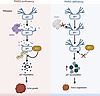 Figure 8
A mechanistic model of PARG-p21 axis in cancer progression. In the context of PARG proficiency, PARG engages in interaction with p21, resulting in dePARylation. This process subsequently enables the E3 ubiquitin ligase to interact with p21, thereby facilitating the ubiquitination and subsequent degradation of p21. This series of events culminates in the promotion of tumor growth. In the context of PARG deficiency, the PAR chains on p21 cannot be removed, spatial hindrance prevents E3 ubiquitin ligase from ubiquitinating p21 for degradation, and the accumulation of p21 leads to inhibition of tumor growth.


Copyright © 2026 American Society for Clinical Investigation
ISSN: 0021-9738 (print), 1558-8238 (online)