
Advertisement
Research ArticleGeneticsOncology
Open Access |  10.1172/JCI195334
Patient-derived xenograft models of Fanconi anemia–associated head and neck cancer identify personalized therapeutic strategies
Jennifer R. Grandis,1 Hua Li,1 Benjamin A. Harrison,2 Andrew L.H. Webster,2 Joanna Pucilowska,3 Austin Nguyen,3 Jinho Lee,3 Gordon B. Mills,3 Jovanka Gencel-Augusto,1 Yan Zeng,1 Steven R. Long,4 Mi-Ok Kim,5 Rex H. Lee,1 David I. Kutler,6 Theresa Scognamiglio,7 Margaret Brandwein-Weber,8 Mark Urken,9 Inna Khodos,10 Elisa de Stanchina,10 Yu-Chien Lin,2 Frank X. Donovan,11 Settara C. Chandrasekharappa,11 Moonjung Jung,2 Mathijs A. Sanders,12 Agata Smogorzewska,2 and Daniel E. Johnson1
1Department of Otolaryngology – Head and Neck Surgery, UCSF, San Francisco, California, USA.
2Laboratory of Genome Maintenance, The Rockefeller University, New York, New York, USA.
3Immune Monitoring and Omics Lab, Knight Cancer Institute, Oregon Health Sciences University, Portland, Oregon, USA.
4Department of Pathology, and
5Department of Epidemiology and Biostatistics, UCSF, San Francisco, California, USA.
6Department of Otolaryngology – Head and Neck Surgery, and
7Department of Pathology, Weill Cornell Medical College, New York, New York, USA.
8Department of Pathology, and
9Department of Otolaryngology – Head and Neck Surgery, Icahn School of Medicine at Mt. Sinai, New York, New York, USA.
10Antitumor Assessment Core, Memorial Sloan Kettering Cancer Center (MSKCC), New York, New York, USA.
11National Human Genome Research Institute, NIH, Bethesda, Maryland, USA.
12Department of Hematology, Erasmus MC Cancer Institute, Rotterdam, Netherlands.
Address correspondence to: Jennifer Grandis or Daniel Johnson, Department of Otolaryngology – Head and Neck Surgery, 1450 3rd Street, Room HD268, UCSF, San Francisco, California, 94158, USA. Phone: 415.502.3470; Email: jennifer.grandis@ucsf.edu (JRG); daniel.johnson@ucsf.edu (DEJ). Or to: Agata Smogorzewska, Laboratory of Genome Maintenance, The Rockefeller University, 1230 York Avenue, New York, New York, 10065, USA. Phone: 212.327.7850; Email: asmogorzewska@rockefeller.edu.
Find articles by Grandis, J. in: PubMed | Google Scholar
1Department of Otolaryngology – Head and Neck Surgery, UCSF, San Francisco, California, USA.
2Laboratory of Genome Maintenance, The Rockefeller University, New York, New York, USA.
3Immune Monitoring and Omics Lab, Knight Cancer Institute, Oregon Health Sciences University, Portland, Oregon, USA.
4Department of Pathology, and
5Department of Epidemiology and Biostatistics, UCSF, San Francisco, California, USA.
6Department of Otolaryngology – Head and Neck Surgery, and
7Department of Pathology, Weill Cornell Medical College, New York, New York, USA.
8Department of Pathology, and
9Department of Otolaryngology – Head and Neck Surgery, Icahn School of Medicine at Mt. Sinai, New York, New York, USA.
10Antitumor Assessment Core, Memorial Sloan Kettering Cancer Center (MSKCC), New York, New York, USA.
11National Human Genome Research Institute, NIH, Bethesda, Maryland, USA.
12Department of Hematology, Erasmus MC Cancer Institute, Rotterdam, Netherlands.
Address correspondence to: Jennifer Grandis or Daniel Johnson, Department of Otolaryngology – Head and Neck Surgery, 1450 3rd Street, Room HD268, UCSF, San Francisco, California, 94158, USA. Phone: 415.502.3470; Email: jennifer.grandis@ucsf.edu (JRG); daniel.johnson@ucsf.edu (DEJ). Or to: Agata Smogorzewska, Laboratory of Genome Maintenance, The Rockefeller University, 1230 York Avenue, New York, New York, 10065, USA. Phone: 212.327.7850; Email: asmogorzewska@rockefeller.edu.
Find articles by Li, H. in: PubMed | Google Scholar
1Department of Otolaryngology – Head and Neck Surgery, UCSF, San Francisco, California, USA.
2Laboratory of Genome Maintenance, The Rockefeller University, New York, New York, USA.
3Immune Monitoring and Omics Lab, Knight Cancer Institute, Oregon Health Sciences University, Portland, Oregon, USA.
4Department of Pathology, and
5Department of Epidemiology and Biostatistics, UCSF, San Francisco, California, USA.
6Department of Otolaryngology – Head and Neck Surgery, and
7Department of Pathology, Weill Cornell Medical College, New York, New York, USA.
8Department of Pathology, and
9Department of Otolaryngology – Head and Neck Surgery, Icahn School of Medicine at Mt. Sinai, New York, New York, USA.
10Antitumor Assessment Core, Memorial Sloan Kettering Cancer Center (MSKCC), New York, New York, USA.
11National Human Genome Research Institute, NIH, Bethesda, Maryland, USA.
12Department of Hematology, Erasmus MC Cancer Institute, Rotterdam, Netherlands.
Address correspondence to: Jennifer Grandis or Daniel Johnson, Department of Otolaryngology – Head and Neck Surgery, 1450 3rd Street, Room HD268, UCSF, San Francisco, California, 94158, USA. Phone: 415.502.3470; Email: jennifer.grandis@ucsf.edu (JRG); daniel.johnson@ucsf.edu (DEJ). Or to: Agata Smogorzewska, Laboratory of Genome Maintenance, The Rockefeller University, 1230 York Avenue, New York, New York, 10065, USA. Phone: 212.327.7850; Email: asmogorzewska@rockefeller.edu.
Find articles by Harrison, B. in: PubMed | Google Scholar
1Department of Otolaryngology – Head and Neck Surgery, UCSF, San Francisco, California, USA.
2Laboratory of Genome Maintenance, The Rockefeller University, New York, New York, USA.
3Immune Monitoring and Omics Lab, Knight Cancer Institute, Oregon Health Sciences University, Portland, Oregon, USA.
4Department of Pathology, and
5Department of Epidemiology and Biostatistics, UCSF, San Francisco, California, USA.
6Department of Otolaryngology – Head and Neck Surgery, and
7Department of Pathology, Weill Cornell Medical College, New York, New York, USA.
8Department of Pathology, and
9Department of Otolaryngology – Head and Neck Surgery, Icahn School of Medicine at Mt. Sinai, New York, New York, USA.
10Antitumor Assessment Core, Memorial Sloan Kettering Cancer Center (MSKCC), New York, New York, USA.
11National Human Genome Research Institute, NIH, Bethesda, Maryland, USA.
12Department of Hematology, Erasmus MC Cancer Institute, Rotterdam, Netherlands.
Address correspondence to: Jennifer Grandis or Daniel Johnson, Department of Otolaryngology – Head and Neck Surgery, 1450 3rd Street, Room HD268, UCSF, San Francisco, California, 94158, USA. Phone: 415.502.3470; Email: jennifer.grandis@ucsf.edu (JRG); daniel.johnson@ucsf.edu (DEJ). Or to: Agata Smogorzewska, Laboratory of Genome Maintenance, The Rockefeller University, 1230 York Avenue, New York, New York, 10065, USA. Phone: 212.327.7850; Email: asmogorzewska@rockefeller.edu.
Find articles by Webster, A. in: PubMed | Google Scholar
1Department of Otolaryngology – Head and Neck Surgery, UCSF, San Francisco, California, USA.
2Laboratory of Genome Maintenance, The Rockefeller University, New York, New York, USA.
3Immune Monitoring and Omics Lab, Knight Cancer Institute, Oregon Health Sciences University, Portland, Oregon, USA.
4Department of Pathology, and
5Department of Epidemiology and Biostatistics, UCSF, San Francisco, California, USA.
6Department of Otolaryngology – Head and Neck Surgery, and
7Department of Pathology, Weill Cornell Medical College, New York, New York, USA.
8Department of Pathology, and
9Department of Otolaryngology – Head and Neck Surgery, Icahn School of Medicine at Mt. Sinai, New York, New York, USA.
10Antitumor Assessment Core, Memorial Sloan Kettering Cancer Center (MSKCC), New York, New York, USA.
11National Human Genome Research Institute, NIH, Bethesda, Maryland, USA.
12Department of Hematology, Erasmus MC Cancer Institute, Rotterdam, Netherlands.
Address correspondence to: Jennifer Grandis or Daniel Johnson, Department of Otolaryngology – Head and Neck Surgery, 1450 3rd Street, Room HD268, UCSF, San Francisco, California, 94158, USA. Phone: 415.502.3470; Email: jennifer.grandis@ucsf.edu (JRG); daniel.johnson@ucsf.edu (DEJ). Or to: Agata Smogorzewska, Laboratory of Genome Maintenance, The Rockefeller University, 1230 York Avenue, New York, New York, 10065, USA. Phone: 212.327.7850; Email: asmogorzewska@rockefeller.edu.
Find articles by Pucilowska, J. in: PubMed | Google Scholar
1Department of Otolaryngology – Head and Neck Surgery, UCSF, San Francisco, California, USA.
2Laboratory of Genome Maintenance, The Rockefeller University, New York, New York, USA.
3Immune Monitoring and Omics Lab, Knight Cancer Institute, Oregon Health Sciences University, Portland, Oregon, USA.
4Department of Pathology, and
5Department of Epidemiology and Biostatistics, UCSF, San Francisco, California, USA.
6Department of Otolaryngology – Head and Neck Surgery, and
7Department of Pathology, Weill Cornell Medical College, New York, New York, USA.
8Department of Pathology, and
9Department of Otolaryngology – Head and Neck Surgery, Icahn School of Medicine at Mt. Sinai, New York, New York, USA.
10Antitumor Assessment Core, Memorial Sloan Kettering Cancer Center (MSKCC), New York, New York, USA.
11National Human Genome Research Institute, NIH, Bethesda, Maryland, USA.
12Department of Hematology, Erasmus MC Cancer Institute, Rotterdam, Netherlands.
Address correspondence to: Jennifer Grandis or Daniel Johnson, Department of Otolaryngology – Head and Neck Surgery, 1450 3rd Street, Room HD268, UCSF, San Francisco, California, 94158, USA. Phone: 415.502.3470; Email: jennifer.grandis@ucsf.edu (JRG); daniel.johnson@ucsf.edu (DEJ). Or to: Agata Smogorzewska, Laboratory of Genome Maintenance, The Rockefeller University, 1230 York Avenue, New York, New York, 10065, USA. Phone: 212.327.7850; Email: asmogorzewska@rockefeller.edu.
Find articles by Nguyen, A. in: PubMed | Google Scholar
1Department of Otolaryngology – Head and Neck Surgery, UCSF, San Francisco, California, USA.
2Laboratory of Genome Maintenance, The Rockefeller University, New York, New York, USA.
3Immune Monitoring and Omics Lab, Knight Cancer Institute, Oregon Health Sciences University, Portland, Oregon, USA.
4Department of Pathology, and
5Department of Epidemiology and Biostatistics, UCSF, San Francisco, California, USA.
6Department of Otolaryngology – Head and Neck Surgery, and
7Department of Pathology, Weill Cornell Medical College, New York, New York, USA.
8Department of Pathology, and
9Department of Otolaryngology – Head and Neck Surgery, Icahn School of Medicine at Mt. Sinai, New York, New York, USA.
10Antitumor Assessment Core, Memorial Sloan Kettering Cancer Center (MSKCC), New York, New York, USA.
11National Human Genome Research Institute, NIH, Bethesda, Maryland, USA.
12Department of Hematology, Erasmus MC Cancer Institute, Rotterdam, Netherlands.
Address correspondence to: Jennifer Grandis or Daniel Johnson, Department of Otolaryngology – Head and Neck Surgery, 1450 3rd Street, Room HD268, UCSF, San Francisco, California, 94158, USA. Phone: 415.502.3470; Email: jennifer.grandis@ucsf.edu (JRG); daniel.johnson@ucsf.edu (DEJ). Or to: Agata Smogorzewska, Laboratory of Genome Maintenance, The Rockefeller University, 1230 York Avenue, New York, New York, 10065, USA. Phone: 212.327.7850; Email: asmogorzewska@rockefeller.edu.
Find articles by Lee, J. in: PubMed | Google Scholar
1Department of Otolaryngology – Head and Neck Surgery, UCSF, San Francisco, California, USA.
2Laboratory of Genome Maintenance, The Rockefeller University, New York, New York, USA.
3Immune Monitoring and Omics Lab, Knight Cancer Institute, Oregon Health Sciences University, Portland, Oregon, USA.
4Department of Pathology, and
5Department of Epidemiology and Biostatistics, UCSF, San Francisco, California, USA.
6Department of Otolaryngology – Head and Neck Surgery, and
7Department of Pathology, Weill Cornell Medical College, New York, New York, USA.
8Department of Pathology, and
9Department of Otolaryngology – Head and Neck Surgery, Icahn School of Medicine at Mt. Sinai, New York, New York, USA.
10Antitumor Assessment Core, Memorial Sloan Kettering Cancer Center (MSKCC), New York, New York, USA.
11National Human Genome Research Institute, NIH, Bethesda, Maryland, USA.
12Department of Hematology, Erasmus MC Cancer Institute, Rotterdam, Netherlands.
Address correspondence to: Jennifer Grandis or Daniel Johnson, Department of Otolaryngology – Head and Neck Surgery, 1450 3rd Street, Room HD268, UCSF, San Francisco, California, 94158, USA. Phone: 415.502.3470; Email: jennifer.grandis@ucsf.edu (JRG); daniel.johnson@ucsf.edu (DEJ). Or to: Agata Smogorzewska, Laboratory of Genome Maintenance, The Rockefeller University, 1230 York Avenue, New York, New York, 10065, USA. Phone: 212.327.7850; Email: asmogorzewska@rockefeller.edu.
Find articles by
Mills, G.
in:
PubMed
|
Google Scholar
|

1Department of Otolaryngology – Head and Neck Surgery, UCSF, San Francisco, California, USA.
2Laboratory of Genome Maintenance, The Rockefeller University, New York, New York, USA.
3Immune Monitoring and Omics Lab, Knight Cancer Institute, Oregon Health Sciences University, Portland, Oregon, USA.
4Department of Pathology, and
5Department of Epidemiology and Biostatistics, UCSF, San Francisco, California, USA.
6Department of Otolaryngology – Head and Neck Surgery, and
7Department of Pathology, Weill Cornell Medical College, New York, New York, USA.
8Department of Pathology, and
9Department of Otolaryngology – Head and Neck Surgery, Icahn School of Medicine at Mt. Sinai, New York, New York, USA.
10Antitumor Assessment Core, Memorial Sloan Kettering Cancer Center (MSKCC), New York, New York, USA.
11National Human Genome Research Institute, NIH, Bethesda, Maryland, USA.
12Department of Hematology, Erasmus MC Cancer Institute, Rotterdam, Netherlands.
Address correspondence to: Jennifer Grandis or Daniel Johnson, Department of Otolaryngology – Head and Neck Surgery, 1450 3rd Street, Room HD268, UCSF, San Francisco, California, 94158, USA. Phone: 415.502.3470; Email: jennifer.grandis@ucsf.edu (JRG); daniel.johnson@ucsf.edu (DEJ). Or to: Agata Smogorzewska, Laboratory of Genome Maintenance, The Rockefeller University, 1230 York Avenue, New York, New York, 10065, USA. Phone: 212.327.7850; Email: asmogorzewska@rockefeller.edu.
Find articles by Gencel-Augusto, J. in: PubMed | Google Scholar
1Department of Otolaryngology – Head and Neck Surgery, UCSF, San Francisco, California, USA.
2Laboratory of Genome Maintenance, The Rockefeller University, New York, New York, USA.
3Immune Monitoring and Omics Lab, Knight Cancer Institute, Oregon Health Sciences University, Portland, Oregon, USA.
4Department of Pathology, and
5Department of Epidemiology and Biostatistics, UCSF, San Francisco, California, USA.
6Department of Otolaryngology – Head and Neck Surgery, and
7Department of Pathology, Weill Cornell Medical College, New York, New York, USA.
8Department of Pathology, and
9Department of Otolaryngology – Head and Neck Surgery, Icahn School of Medicine at Mt. Sinai, New York, New York, USA.
10Antitumor Assessment Core, Memorial Sloan Kettering Cancer Center (MSKCC), New York, New York, USA.
11National Human Genome Research Institute, NIH, Bethesda, Maryland, USA.
12Department of Hematology, Erasmus MC Cancer Institute, Rotterdam, Netherlands.
Address correspondence to: Jennifer Grandis or Daniel Johnson, Department of Otolaryngology – Head and Neck Surgery, 1450 3rd Street, Room HD268, UCSF, San Francisco, California, 94158, USA. Phone: 415.502.3470; Email: jennifer.grandis@ucsf.edu (JRG); daniel.johnson@ucsf.edu (DEJ). Or to: Agata Smogorzewska, Laboratory of Genome Maintenance, The Rockefeller University, 1230 York Avenue, New York, New York, 10065, USA. Phone: 212.327.7850; Email: asmogorzewska@rockefeller.edu.
Find articles by Zeng, Y. in: PubMed | Google Scholar
1Department of Otolaryngology – Head and Neck Surgery, UCSF, San Francisco, California, USA.
2Laboratory of Genome Maintenance, The Rockefeller University, New York, New York, USA.
3Immune Monitoring and Omics Lab, Knight Cancer Institute, Oregon Health Sciences University, Portland, Oregon, USA.
4Department of Pathology, and
5Department of Epidemiology and Biostatistics, UCSF, San Francisco, California, USA.
6Department of Otolaryngology – Head and Neck Surgery, and
7Department of Pathology, Weill Cornell Medical College, New York, New York, USA.
8Department of Pathology, and
9Department of Otolaryngology – Head and Neck Surgery, Icahn School of Medicine at Mt. Sinai, New York, New York, USA.
10Antitumor Assessment Core, Memorial Sloan Kettering Cancer Center (MSKCC), New York, New York, USA.
11National Human Genome Research Institute, NIH, Bethesda, Maryland, USA.
12Department of Hematology, Erasmus MC Cancer Institute, Rotterdam, Netherlands.
Address correspondence to: Jennifer Grandis or Daniel Johnson, Department of Otolaryngology – Head and Neck Surgery, 1450 3rd Street, Room HD268, UCSF, San Francisco, California, 94158, USA. Phone: 415.502.3470; Email: jennifer.grandis@ucsf.edu (JRG); daniel.johnson@ucsf.edu (DEJ). Or to: Agata Smogorzewska, Laboratory of Genome Maintenance, The Rockefeller University, 1230 York Avenue, New York, New York, 10065, USA. Phone: 212.327.7850; Email: asmogorzewska@rockefeller.edu.
Find articles by Long, S. in: PubMed | Google Scholar
1Department of Otolaryngology – Head and Neck Surgery, UCSF, San Francisco, California, USA.
2Laboratory of Genome Maintenance, The Rockefeller University, New York, New York, USA.
3Immune Monitoring and Omics Lab, Knight Cancer Institute, Oregon Health Sciences University, Portland, Oregon, USA.
4Department of Pathology, and
5Department of Epidemiology and Biostatistics, UCSF, San Francisco, California, USA.
6Department of Otolaryngology – Head and Neck Surgery, and
7Department of Pathology, Weill Cornell Medical College, New York, New York, USA.
8Department of Pathology, and
9Department of Otolaryngology – Head and Neck Surgery, Icahn School of Medicine at Mt. Sinai, New York, New York, USA.
10Antitumor Assessment Core, Memorial Sloan Kettering Cancer Center (MSKCC), New York, New York, USA.
11National Human Genome Research Institute, NIH, Bethesda, Maryland, USA.
12Department of Hematology, Erasmus MC Cancer Institute, Rotterdam, Netherlands.
Address correspondence to: Jennifer Grandis or Daniel Johnson, Department of Otolaryngology – Head and Neck Surgery, 1450 3rd Street, Room HD268, UCSF, San Francisco, California, 94158, USA. Phone: 415.502.3470; Email: jennifer.grandis@ucsf.edu (JRG); daniel.johnson@ucsf.edu (DEJ). Or to: Agata Smogorzewska, Laboratory of Genome Maintenance, The Rockefeller University, 1230 York Avenue, New York, New York, 10065, USA. Phone: 212.327.7850; Email: asmogorzewska@rockefeller.edu.
Find articles by
Kim, M.
in:
PubMed
|
Google Scholar
|
1Department of Otolaryngology – Head and Neck Surgery, UCSF, San Francisco, California, USA.
2Laboratory of Genome Maintenance, The Rockefeller University, New York, New York, USA.
3Immune Monitoring and Omics Lab, Knight Cancer Institute, Oregon Health Sciences University, Portland, Oregon, USA.
4Department of Pathology, and
5Department of Epidemiology and Biostatistics, UCSF, San Francisco, California, USA.
6Department of Otolaryngology – Head and Neck Surgery, and
7Department of Pathology, Weill Cornell Medical College, New York, New York, USA.
8Department of Pathology, and
9Department of Otolaryngology – Head and Neck Surgery, Icahn School of Medicine at Mt. Sinai, New York, New York, USA.
10Antitumor Assessment Core, Memorial Sloan Kettering Cancer Center (MSKCC), New York, New York, USA.
11National Human Genome Research Institute, NIH, Bethesda, Maryland, USA.
12Department of Hematology, Erasmus MC Cancer Institute, Rotterdam, Netherlands.
Address correspondence to: Jennifer Grandis or Daniel Johnson, Department of Otolaryngology – Head and Neck Surgery, 1450 3rd Street, Room HD268, UCSF, San Francisco, California, 94158, USA. Phone: 415.502.3470; Email: jennifer.grandis@ucsf.edu (JRG); daniel.johnson@ucsf.edu (DEJ). Or to: Agata Smogorzewska, Laboratory of Genome Maintenance, The Rockefeller University, 1230 York Avenue, New York, New York, 10065, USA. Phone: 212.327.7850; Email: asmogorzewska@rockefeller.edu.
Find articles by
Lee, R.
in:
PubMed
|
Google Scholar
|
1Department of Otolaryngology – Head and Neck Surgery, UCSF, San Francisco, California, USA.
2Laboratory of Genome Maintenance, The Rockefeller University, New York, New York, USA.
3Immune Monitoring and Omics Lab, Knight Cancer Institute, Oregon Health Sciences University, Portland, Oregon, USA.
4Department of Pathology, and
5Department of Epidemiology and Biostatistics, UCSF, San Francisco, California, USA.
6Department of Otolaryngology – Head and Neck Surgery, and
7Department of Pathology, Weill Cornell Medical College, New York, New York, USA.
8Department of Pathology, and
9Department of Otolaryngology – Head and Neck Surgery, Icahn School of Medicine at Mt. Sinai, New York, New York, USA.
10Antitumor Assessment Core, Memorial Sloan Kettering Cancer Center (MSKCC), New York, New York, USA.
11National Human Genome Research Institute, NIH, Bethesda, Maryland, USA.
12Department of Hematology, Erasmus MC Cancer Institute, Rotterdam, Netherlands.
Address correspondence to: Jennifer Grandis or Daniel Johnson, Department of Otolaryngology – Head and Neck Surgery, 1450 3rd Street, Room HD268, UCSF, San Francisco, California, 94158, USA. Phone: 415.502.3470; Email: jennifer.grandis@ucsf.edu (JRG); daniel.johnson@ucsf.edu (DEJ). Or to: Agata Smogorzewska, Laboratory of Genome Maintenance, The Rockefeller University, 1230 York Avenue, New York, New York, 10065, USA. Phone: 212.327.7850; Email: asmogorzewska@rockefeller.edu.
Find articles by Kutler, D. in: PubMed | Google Scholar
1Department of Otolaryngology – Head and Neck Surgery, UCSF, San Francisco, California, USA.
2Laboratory of Genome Maintenance, The Rockefeller University, New York, New York, USA.
3Immune Monitoring and Omics Lab, Knight Cancer Institute, Oregon Health Sciences University, Portland, Oregon, USA.
4Department of Pathology, and
5Department of Epidemiology and Biostatistics, UCSF, San Francisco, California, USA.
6Department of Otolaryngology – Head and Neck Surgery, and
7Department of Pathology, Weill Cornell Medical College, New York, New York, USA.
8Department of Pathology, and
9Department of Otolaryngology – Head and Neck Surgery, Icahn School of Medicine at Mt. Sinai, New York, New York, USA.
10Antitumor Assessment Core, Memorial Sloan Kettering Cancer Center (MSKCC), New York, New York, USA.
11National Human Genome Research Institute, NIH, Bethesda, Maryland, USA.
12Department of Hematology, Erasmus MC Cancer Institute, Rotterdam, Netherlands.
Address correspondence to: Jennifer Grandis or Daniel Johnson, Department of Otolaryngology – Head and Neck Surgery, 1450 3rd Street, Room HD268, UCSF, San Francisco, California, 94158, USA. Phone: 415.502.3470; Email: jennifer.grandis@ucsf.edu (JRG); daniel.johnson@ucsf.edu (DEJ). Or to: Agata Smogorzewska, Laboratory of Genome Maintenance, The Rockefeller University, 1230 York Avenue, New York, New York, 10065, USA. Phone: 212.327.7850; Email: asmogorzewska@rockefeller.edu.
Find articles by
Scognamiglio, T.
in:
PubMed
|
Google Scholar
|
1Department of Otolaryngology – Head and Neck Surgery, UCSF, San Francisco, California, USA.
2Laboratory of Genome Maintenance, The Rockefeller University, New York, New York, USA.
3Immune Monitoring and Omics Lab, Knight Cancer Institute, Oregon Health Sciences University, Portland, Oregon, USA.
4Department of Pathology, and
5Department of Epidemiology and Biostatistics, UCSF, San Francisco, California, USA.
6Department of Otolaryngology – Head and Neck Surgery, and
7Department of Pathology, Weill Cornell Medical College, New York, New York, USA.
8Department of Pathology, and
9Department of Otolaryngology – Head and Neck Surgery, Icahn School of Medicine at Mt. Sinai, New York, New York, USA.
10Antitumor Assessment Core, Memorial Sloan Kettering Cancer Center (MSKCC), New York, New York, USA.
11National Human Genome Research Institute, NIH, Bethesda, Maryland, USA.
12Department of Hematology, Erasmus MC Cancer Institute, Rotterdam, Netherlands.
Address correspondence to: Jennifer Grandis or Daniel Johnson, Department of Otolaryngology – Head and Neck Surgery, 1450 3rd Street, Room HD268, UCSF, San Francisco, California, 94158, USA. Phone: 415.502.3470; Email: jennifer.grandis@ucsf.edu (JRG); daniel.johnson@ucsf.edu (DEJ). Or to: Agata Smogorzewska, Laboratory of Genome Maintenance, The Rockefeller University, 1230 York Avenue, New York, New York, 10065, USA. Phone: 212.327.7850; Email: asmogorzewska@rockefeller.edu.
Find articles by Brandwein-Weber, M. in: PubMed | Google Scholar
1Department of Otolaryngology – Head and Neck Surgery, UCSF, San Francisco, California, USA.
2Laboratory of Genome Maintenance, The Rockefeller University, New York, New York, USA.
3Immune Monitoring and Omics Lab, Knight Cancer Institute, Oregon Health Sciences University, Portland, Oregon, USA.
4Department of Pathology, and
5Department of Epidemiology and Biostatistics, UCSF, San Francisco, California, USA.
6Department of Otolaryngology – Head and Neck Surgery, and
7Department of Pathology, Weill Cornell Medical College, New York, New York, USA.
8Department of Pathology, and
9Department of Otolaryngology – Head and Neck Surgery, Icahn School of Medicine at Mt. Sinai, New York, New York, USA.
10Antitumor Assessment Core, Memorial Sloan Kettering Cancer Center (MSKCC), New York, New York, USA.
11National Human Genome Research Institute, NIH, Bethesda, Maryland, USA.
12Department of Hematology, Erasmus MC Cancer Institute, Rotterdam, Netherlands.
Address correspondence to: Jennifer Grandis or Daniel Johnson, Department of Otolaryngology – Head and Neck Surgery, 1450 3rd Street, Room HD268, UCSF, San Francisco, California, 94158, USA. Phone: 415.502.3470; Email: jennifer.grandis@ucsf.edu (JRG); daniel.johnson@ucsf.edu (DEJ). Or to: Agata Smogorzewska, Laboratory of Genome Maintenance, The Rockefeller University, 1230 York Avenue, New York, New York, 10065, USA. Phone: 212.327.7850; Email: asmogorzewska@rockefeller.edu.
Find articles by Urken, M. in: PubMed | Google Scholar
1Department of Otolaryngology – Head and Neck Surgery, UCSF, San Francisco, California, USA.
2Laboratory of Genome Maintenance, The Rockefeller University, New York, New York, USA.
3Immune Monitoring and Omics Lab, Knight Cancer Institute, Oregon Health Sciences University, Portland, Oregon, USA.
4Department of Pathology, and
5Department of Epidemiology and Biostatistics, UCSF, San Francisco, California, USA.
6Department of Otolaryngology – Head and Neck Surgery, and
7Department of Pathology, Weill Cornell Medical College, New York, New York, USA.
8Department of Pathology, and
9Department of Otolaryngology – Head and Neck Surgery, Icahn School of Medicine at Mt. Sinai, New York, New York, USA.
10Antitumor Assessment Core, Memorial Sloan Kettering Cancer Center (MSKCC), New York, New York, USA.
11National Human Genome Research Institute, NIH, Bethesda, Maryland, USA.
12Department of Hematology, Erasmus MC Cancer Institute, Rotterdam, Netherlands.
Address correspondence to: Jennifer Grandis or Daniel Johnson, Department of Otolaryngology – Head and Neck Surgery, 1450 3rd Street, Room HD268, UCSF, San Francisco, California, 94158, USA. Phone: 415.502.3470; Email: jennifer.grandis@ucsf.edu (JRG); daniel.johnson@ucsf.edu (DEJ). Or to: Agata Smogorzewska, Laboratory of Genome Maintenance, The Rockefeller University, 1230 York Avenue, New York, New York, 10065, USA. Phone: 212.327.7850; Email: asmogorzewska@rockefeller.edu.
Find articles by Khodos, I. in: PubMed | Google Scholar
1Department of Otolaryngology – Head and Neck Surgery, UCSF, San Francisco, California, USA.
2Laboratory of Genome Maintenance, The Rockefeller University, New York, New York, USA.
3Immune Monitoring and Omics Lab, Knight Cancer Institute, Oregon Health Sciences University, Portland, Oregon, USA.
4Department of Pathology, and
5Department of Epidemiology and Biostatistics, UCSF, San Francisco, California, USA.
6Department of Otolaryngology – Head and Neck Surgery, and
7Department of Pathology, Weill Cornell Medical College, New York, New York, USA.
8Department of Pathology, and
9Department of Otolaryngology – Head and Neck Surgery, Icahn School of Medicine at Mt. Sinai, New York, New York, USA.
10Antitumor Assessment Core, Memorial Sloan Kettering Cancer Center (MSKCC), New York, New York, USA.
11National Human Genome Research Institute, NIH, Bethesda, Maryland, USA.
12Department of Hematology, Erasmus MC Cancer Institute, Rotterdam, Netherlands.
Address correspondence to: Jennifer Grandis or Daniel Johnson, Department of Otolaryngology – Head and Neck Surgery, 1450 3rd Street, Room HD268, UCSF, San Francisco, California, 94158, USA. Phone: 415.502.3470; Email: jennifer.grandis@ucsf.edu (JRG); daniel.johnson@ucsf.edu (DEJ). Or to: Agata Smogorzewska, Laboratory of Genome Maintenance, The Rockefeller University, 1230 York Avenue, New York, New York, 10065, USA. Phone: 212.327.7850; Email: asmogorzewska@rockefeller.edu.
Find articles by
de Stanchina, E.
in:
PubMed
|
Google Scholar
|
1Department of Otolaryngology – Head and Neck Surgery, UCSF, San Francisco, California, USA.
2Laboratory of Genome Maintenance, The Rockefeller University, New York, New York, USA.
3Immune Monitoring and Omics Lab, Knight Cancer Institute, Oregon Health Sciences University, Portland, Oregon, USA.
4Department of Pathology, and
5Department of Epidemiology and Biostatistics, UCSF, San Francisco, California, USA.
6Department of Otolaryngology – Head and Neck Surgery, and
7Department of Pathology, Weill Cornell Medical College, New York, New York, USA.
8Department of Pathology, and
9Department of Otolaryngology – Head and Neck Surgery, Icahn School of Medicine at Mt. Sinai, New York, New York, USA.
10Antitumor Assessment Core, Memorial Sloan Kettering Cancer Center (MSKCC), New York, New York, USA.
11National Human Genome Research Institute, NIH, Bethesda, Maryland, USA.
12Department of Hematology, Erasmus MC Cancer Institute, Rotterdam, Netherlands.
Address correspondence to: Jennifer Grandis or Daniel Johnson, Department of Otolaryngology – Head and Neck Surgery, 1450 3rd Street, Room HD268, UCSF, San Francisco, California, 94158, USA. Phone: 415.502.3470; Email: jennifer.grandis@ucsf.edu (JRG); daniel.johnson@ucsf.edu (DEJ). Or to: Agata Smogorzewska, Laboratory of Genome Maintenance, The Rockefeller University, 1230 York Avenue, New York, New York, 10065, USA. Phone: 212.327.7850; Email: asmogorzewska@rockefeller.edu.
Find articles by Lin, Y. in: PubMed | Google Scholar
1Department of Otolaryngology – Head and Neck Surgery, UCSF, San Francisco, California, USA.
2Laboratory of Genome Maintenance, The Rockefeller University, New York, New York, USA.
3Immune Monitoring and Omics Lab, Knight Cancer Institute, Oregon Health Sciences University, Portland, Oregon, USA.
4Department of Pathology, and
5Department of Epidemiology and Biostatistics, UCSF, San Francisco, California, USA.
6Department of Otolaryngology – Head and Neck Surgery, and
7Department of Pathology, Weill Cornell Medical College, New York, New York, USA.
8Department of Pathology, and
9Department of Otolaryngology – Head and Neck Surgery, Icahn School of Medicine at Mt. Sinai, New York, New York, USA.
10Antitumor Assessment Core, Memorial Sloan Kettering Cancer Center (MSKCC), New York, New York, USA.
11National Human Genome Research Institute, NIH, Bethesda, Maryland, USA.
12Department of Hematology, Erasmus MC Cancer Institute, Rotterdam, Netherlands.
Address correspondence to: Jennifer Grandis or Daniel Johnson, Department of Otolaryngology – Head and Neck Surgery, 1450 3rd Street, Room HD268, UCSF, San Francisco, California, 94158, USA. Phone: 415.502.3470; Email: jennifer.grandis@ucsf.edu (JRG); daniel.johnson@ucsf.edu (DEJ). Or to: Agata Smogorzewska, Laboratory of Genome Maintenance, The Rockefeller University, 1230 York Avenue, New York, New York, 10065, USA. Phone: 212.327.7850; Email: asmogorzewska@rockefeller.edu.
Find articles by Donovan, F. in: PubMed | Google Scholar
1Department of Otolaryngology – Head and Neck Surgery, UCSF, San Francisco, California, USA.
2Laboratory of Genome Maintenance, The Rockefeller University, New York, New York, USA.
3Immune Monitoring and Omics Lab, Knight Cancer Institute, Oregon Health Sciences University, Portland, Oregon, USA.
4Department of Pathology, and
5Department of Epidemiology and Biostatistics, UCSF, San Francisco, California, USA.
6Department of Otolaryngology – Head and Neck Surgery, and
7Department of Pathology, Weill Cornell Medical College, New York, New York, USA.
8Department of Pathology, and
9Department of Otolaryngology – Head and Neck Surgery, Icahn School of Medicine at Mt. Sinai, New York, New York, USA.
10Antitumor Assessment Core, Memorial Sloan Kettering Cancer Center (MSKCC), New York, New York, USA.
11National Human Genome Research Institute, NIH, Bethesda, Maryland, USA.
12Department of Hematology, Erasmus MC Cancer Institute, Rotterdam, Netherlands.
Address correspondence to: Jennifer Grandis or Daniel Johnson, Department of Otolaryngology – Head and Neck Surgery, 1450 3rd Street, Room HD268, UCSF, San Francisco, California, 94158, USA. Phone: 415.502.3470; Email: jennifer.grandis@ucsf.edu (JRG); daniel.johnson@ucsf.edu (DEJ). Or to: Agata Smogorzewska, Laboratory of Genome Maintenance, The Rockefeller University, 1230 York Avenue, New York, New York, 10065, USA. Phone: 212.327.7850; Email: asmogorzewska@rockefeller.edu.
Find articles by Chandrasekharappa, S. in: PubMed | Google Scholar
1Department of Otolaryngology – Head and Neck Surgery, UCSF, San Francisco, California, USA.
2Laboratory of Genome Maintenance, The Rockefeller University, New York, New York, USA.
3Immune Monitoring and Omics Lab, Knight Cancer Institute, Oregon Health Sciences University, Portland, Oregon, USA.
4Department of Pathology, and
5Department of Epidemiology and Biostatistics, UCSF, San Francisco, California, USA.
6Department of Otolaryngology – Head and Neck Surgery, and
7Department of Pathology, Weill Cornell Medical College, New York, New York, USA.
8Department of Pathology, and
9Department of Otolaryngology – Head and Neck Surgery, Icahn School of Medicine at Mt. Sinai, New York, New York, USA.
10Antitumor Assessment Core, Memorial Sloan Kettering Cancer Center (MSKCC), New York, New York, USA.
11National Human Genome Research Institute, NIH, Bethesda, Maryland, USA.
12Department of Hematology, Erasmus MC Cancer Institute, Rotterdam, Netherlands.
Address correspondence to: Jennifer Grandis or Daniel Johnson, Department of Otolaryngology – Head and Neck Surgery, 1450 3rd Street, Room HD268, UCSF, San Francisco, California, 94158, USA. Phone: 415.502.3470; Email: jennifer.grandis@ucsf.edu (JRG); daniel.johnson@ucsf.edu (DEJ). Or to: Agata Smogorzewska, Laboratory of Genome Maintenance, The Rockefeller University, 1230 York Avenue, New York, New York, 10065, USA. Phone: 212.327.7850; Email: asmogorzewska@rockefeller.edu.
Find articles by
Jung, M.
in:
PubMed
|
Google Scholar
|
1Department of Otolaryngology – Head and Neck Surgery, UCSF, San Francisco, California, USA.
2Laboratory of Genome Maintenance, The Rockefeller University, New York, New York, USA.
3Immune Monitoring and Omics Lab, Knight Cancer Institute, Oregon Health Sciences University, Portland, Oregon, USA.
4Department of Pathology, and
5Department of Epidemiology and Biostatistics, UCSF, San Francisco, California, USA.
6Department of Otolaryngology – Head and Neck Surgery, and
7Department of Pathology, Weill Cornell Medical College, New York, New York, USA.
8Department of Pathology, and
9Department of Otolaryngology – Head and Neck Surgery, Icahn School of Medicine at Mt. Sinai, New York, New York, USA.
10Antitumor Assessment Core, Memorial Sloan Kettering Cancer Center (MSKCC), New York, New York, USA.
11National Human Genome Research Institute, NIH, Bethesda, Maryland, USA.
12Department of Hematology, Erasmus MC Cancer Institute, Rotterdam, Netherlands.
Address correspondence to: Jennifer Grandis or Daniel Johnson, Department of Otolaryngology – Head and Neck Surgery, 1450 3rd Street, Room HD268, UCSF, San Francisco, California, 94158, USA. Phone: 415.502.3470; Email: jennifer.grandis@ucsf.edu (JRG); daniel.johnson@ucsf.edu (DEJ). Or to: Agata Smogorzewska, Laboratory of Genome Maintenance, The Rockefeller University, 1230 York Avenue, New York, New York, 10065, USA. Phone: 212.327.7850; Email: asmogorzewska@rockefeller.edu.
Find articles by Sanders, M. in: PubMed | Google Scholar
1Department of Otolaryngology – Head and Neck Surgery, UCSF, San Francisco, California, USA.
2Laboratory of Genome Maintenance, The Rockefeller University, New York, New York, USA.
3Immune Monitoring and Omics Lab, Knight Cancer Institute, Oregon Health Sciences University, Portland, Oregon, USA.
4Department of Pathology, and
5Department of Epidemiology and Biostatistics, UCSF, San Francisco, California, USA.
6Department of Otolaryngology – Head and Neck Surgery, and
7Department of Pathology, Weill Cornell Medical College, New York, New York, USA.
8Department of Pathology, and
9Department of Otolaryngology – Head and Neck Surgery, Icahn School of Medicine at Mt. Sinai, New York, New York, USA.
10Antitumor Assessment Core, Memorial Sloan Kettering Cancer Center (MSKCC), New York, New York, USA.
11National Human Genome Research Institute, NIH, Bethesda, Maryland, USA.
12Department of Hematology, Erasmus MC Cancer Institute, Rotterdam, Netherlands.
Address correspondence to: Jennifer Grandis or Daniel Johnson, Department of Otolaryngology – Head and Neck Surgery, 1450 3rd Street, Room HD268, UCSF, San Francisco, California, 94158, USA. Phone: 415.502.3470; Email: jennifer.grandis@ucsf.edu (JRG); daniel.johnson@ucsf.edu (DEJ). Or to: Agata Smogorzewska, Laboratory of Genome Maintenance, The Rockefeller University, 1230 York Avenue, New York, New York, 10065, USA. Phone: 212.327.7850; Email: asmogorzewska@rockefeller.edu.
Find articles by
Smogorzewska, A.
in:
PubMed
|
Google Scholar
|
1Department of Otolaryngology – Head and Neck Surgery, UCSF, San Francisco, California, USA.
2Laboratory of Genome Maintenance, The Rockefeller University, New York, New York, USA.
3Immune Monitoring and Omics Lab, Knight Cancer Institute, Oregon Health Sciences University, Portland, Oregon, USA.
4Department of Pathology, and
5Department of Epidemiology and Biostatistics, UCSF, San Francisco, California, USA.
6Department of Otolaryngology – Head and Neck Surgery, and
7Department of Pathology, Weill Cornell Medical College, New York, New York, USA.
8Department of Pathology, and
9Department of Otolaryngology – Head and Neck Surgery, Icahn School of Medicine at Mt. Sinai, New York, New York, USA.
10Antitumor Assessment Core, Memorial Sloan Kettering Cancer Center (MSKCC), New York, New York, USA.
11National Human Genome Research Institute, NIH, Bethesda, Maryland, USA.
12Department of Hematology, Erasmus MC Cancer Institute, Rotterdam, Netherlands.
Address correspondence to: Jennifer Grandis or Daniel Johnson, Department of Otolaryngology – Head and Neck Surgery, 1450 3rd Street, Room HD268, UCSF, San Francisco, California, 94158, USA. Phone: 415.502.3470; Email: jennifer.grandis@ucsf.edu (JRG); daniel.johnson@ucsf.edu (DEJ). Or to: Agata Smogorzewska, Laboratory of Genome Maintenance, The Rockefeller University, 1230 York Avenue, New York, New York, 10065, USA. Phone: 212.327.7850; Email: asmogorzewska@rockefeller.edu.
Find articles by
Johnson, D.
in:
PubMed
|
Google Scholar
|
Published December 16, 2025 - More info
J Clin Invest. 2026;136(4):e195334. https://doi.org/10.1172/JCI195334.
© 2025 Grandis et al. This work is licensed under the Creative Commons Attribution 4.0 International License. To view a copy of this license, visit http://creativecommons.org/licenses/by/4.0/.
Received: May 12, 2025; Accepted: December 10, 2025

-
Results
Generation of FA-HNSCC PDX models. PDX models of FA-HNSCC have not been reported, to our knowledge. We successfully generated 3 independent FA-HNSCC PDX models (FA PDX 1, FA PDX 2, and FA PDX 3) by implanting tumor tissue from 3 patients with FA-HNSCC into the flanks of immunodeficient mice. H&E staining of the PDX models confirmed that all 3 models represented invasive carcinoma (Supplemental Figure 1; supplemental material available online with this article; https://doi.org/10.1172/JCI195334DS1). Moreover, tumor cell morphologies and tumor stromal components were highly similar between early-passage tumors (passages 4, 3, and 7 for FA PDX 1, FA PDX 2, and FA PDX 3, respectively, as shown in Supplemental Figure 1) and late-passage tumors (passages 16, 28, and 23; data not shown) for all 3 models. FA PDX 1 was generated from a stage 2 hypopharyngeal tumor resected from a 13-year-old male individual who died from lung metastases 9 months postoperatively without receiving radiation or systemic therapy. The FA PDX 2 model was generated from a recurrent stage 4 squamous cell carcinoma of the mandible resected from a 38-year-old male individual who also died from the cancer. Prior to that resection, the patient was treated with radiation as well as with paclitaxel and pembrolizumab. FA PDX 3 was generated from an untreated tongue tumor resected from a 27-year-old male individual who experienced a regional metastasis to the neck 9 months after primary resection, was treated with proton therapy, and had not experienced disease recurrence over 3 years. All 3 individuals had germline biallelic FANCA variants leading to FA (Table 1). The youngest individual (FA PDX 1) also carried a heterozygous pathogenic germline variant in BReast CAncer gene 2 (BRCA2) (also known as FANCD1. Like the majority of individuals with FA (15), all 3 patients underwent hematopoietic stem cell transplantation in their first decade of life (for clinical and pathology details, see Table 1, Supplemental Table 1, and the Supplemental Clinical Information).
Genomic and proteomic characterization of the FA-HNSCC PDX models. Since our FA-HNSCC PDXs represent, to our knowledge, the first such models for this rare disease, we determined the genomic landscape of each model (Figures 1 and 2). All models were derived from patients with germline biallelic FANCA variants and were characterized by high numbers of somatic structural variants and somatic copy number changes (Figure 1, A and B, Supplemental Figure 2, and Supplemental Tables 2 and 3), consistent with previous sequencing of FA-HNSCC tumors (16). Among the key alterations noted, FA PDX 1 exhibited a heterozygous germline variant of BRCA2/FANCD1, somatic TP53 pathogenic variants, and somatic gene amplification of EGFR, MYC, and PIK3CA, which encodes the enzyme phosphoinositide 3-kinase (PI3K), as well as CCND1, which encodes cyclin D1. The FA PDX 2 tumor model demonstrated a somatic PIK3CA missense pathogenic variant and amplification of the MYC and CCND1 genes, among others. FA PDX 3 carried a somatic TP53 missense variant and amplifications of CCND1 and MYC. Comparison of whole-exome sequencing data revealed a high degree of similarity between early-passage tumors (passages 2, 3, and 2 for FA PDX 1, FA PDX 2, and FA PDX 3, respectively) and late-passage tumors (passages 16, 28, and 23). Single nucleotide variants (SNVs) in early- and late-passage tumors were 96%, 98%, and 97% identical for FA PDX 1, FA PDX 2, and FA PDX 3, respectively. For insertions/deletions (InDels), early- and late-passage tumors exhibited greater than 99% similarity for all 3 models.
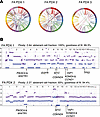 Figure 1
Generation and genomic characterization of FA-HNSCC PDX models. (A) Circos plot displaying somatic SV calls in the PDX tumors, with chromosomes indicated on the outer ring. (B) Shown are allele-specific copy number plots of FA PDX 1 and FA PDX 2. Blue and purple lines represent minor and total allele counts, with y axes indicating relative copy numbers across all chromosomes. The estimated ploidy, tumor purity, and ASCAT model fit for the PDX tumor samples are indicated. Annotated below the graph are key HNSCC oncogenes and tumor suppressor genes with copy number alterations in each sample.
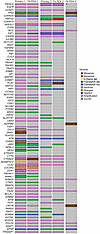 Figure 2
Oncoplot indicating curated HNSCC oncogene and tumor suppressor gene somatic alterations in primary and PDX tumor samples. The key indicates the alteration type by color. The red asterisk indicates that PIK3CA had an increased copy number, although the log2 fold change of 0.4 did not reach our cutoff of 0.6 to count as an amplification. The primary tissue for FA PDX 3 was not available for analysis. del, deletion; ins, insertion.
We also sought to determine whether the genomic landscape of the FA-HNSCC PDX tumors closely reflected the genomics of the primary tumor. Comparison of somatic variants revealed similar patterns of somatic changes, especially in the most commonly affected genes (Figure 2, Supplemental Figure 2, and Supplemental Tables 2 and 3). As found in other cancers, the PDXs had more structural variants than did the primary tumors (17). In addition, loss of heterozygosity in the FANCA locus and the BRCA2/FANCD1 locus were noted in FA PDX 1 (Supplemental Figure 3). The more deleterious germline FANCA deletion variant (del exon 1–6), already present at an allelic frequency below 0.5 in the primary tumor, was replaced by the less deleterious germline splice variant allele (FANCA c.1359+1G>C). Similarly, the deleterious BRCA2/FANCD1 germline variant (BRCA2/FANCD1 c. 5722-5723del) had a higher allele frequency in the PDX than in the primary tumor, with the PDX most likely representing a purer population of tumor cells than the primary sample that was sequenced.
Digital spatial profiling (DSP) (18, 19) was used to examine the expression of 81 proteins and phospho-proteins involved in cellular proliferation or survival. For each PDX model, we performed profiling on 6 different tumor regions and generated heatmaps of protein expression (Figure 3). FA PDX 1 was characterized by high expression of epithelial markers (EpCam, cytokeratins), as well as by elevated expression of the EGFR/HER family members EGFR and HER2. FA PDX 2 was characterized by activation of the PI3K/AKT signaling pathway (high levels of phosphorylated AKT [p-AKT] and p-PRAS40), consistent with the presence of a PI3K-activating mutation in this model, whereas FA PDX 3 exhibited high levels of Ki67, p-MEK, and the apoptosis regulatory proteins B-cell lymphoma 2 (Bcl-2), Bcl-XL, and Bim. Unsupervised clustering of the DSP data showed that the different regions of the FA PDX 1 tumor clustered together, as did different regions of the FA PDX 2 tumor, while the FA PDX 3 tumor displayed intratumoral heterogeneity, characterized by 2 distinct regions (Supplemental Figure 4). Collectively, these data demonstrated unique differences among the 3 FA-HNSCC PDX models, as well as substantial intratumoral heterogeneity in 1 model, confirming the necessity of personalized therapeutic approaches in this disease.
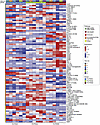 Figure 3
Supervised heatmap representation of DSP of protein targets across PDX samples. The heatmap illustrates the variation in expression levels of DSP protein targets across PDX samples, with 6 ROIs analyzed per PDX tumor. Columns correspond to individual samples, while the rows represent the protein targets for DSP. Each cell in the heatmap corresponds to the expression level of a specific protein target in a particular sample, with color intensity indicating the expression level (red for high expression, blue for low expression). Additionally, the heatmap is annotated with information regarding the pathways, groups, and ROI unique identifiers (ROI IDs) associated with each sample. Proteins are grouped according to their associated pathways.
FA-HNSCC PDX models mimic heightened cisplatin sensitivity characteristic of FA. Platinum chemotherapy remains the mainstay of systemic chemotherapy regimens for sporadic HNSCC. However, the germline defects in DNA repair that are characteristic of FA result in extreme cellular sensitivity to this DNA-crosslinking agent and excessive toxicity in patients with FA (11). To test our prediction that the FA-HNSCC PDXs would exhibit heightened sensitivity to cisplatin, we assessed tumor growth following once-weekly treatment with cisplatin (Figure 4A). We observed potent, dose-dependent inhibition of FA PDX 1 and FA PDX 2 tumors, with tumor regression occurring at the higher doses of 2.5 and 5.0 mg/kg cisplatin. FA PDX 3 tumors, although responsive to cisplatin, were more resistant, and regression was not observed in this model. We have previously reported the response of 7 well-characterized, non-FA, sporadic HNSCC PDX models to a 14-day treatment with cisplatin (5 mg/kg) (20). Here, we treated mice harboring FA PDX 1, FA PDX 2, or FA PDX 3 tumors with cisplatin (5 mg/kg) for 14 days and compared the growth inhibition in our FA-HNSCC PDX models with the growth inhibition we previously reported in non-FA, sporadic HNSCC PDX models (Figure 4B). We found that the FA PDX 1 and FA PDX 2 tumors were the most sensitive to cisplatin in this comparison, while the FA PDX 3 tumor displayed moderate sensitivity (Figure 4B). These findings demonstrated that the phenotypic response of the FA PDX tumors to a DNA-damaging agent was consistent with what would be predicted for an FA-deficient tumor, with some heterogeneity in the response.
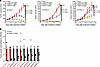 Figure 4
FA-HNSCC PDX exhibits heightened sensitivity to cisplatin. (A) Cisplatin dose response of FA-HNSCC PDX tumors. Mice harboring FA PDX 1, FA PDX 2, or FA PDX 3 tumors were treated once a week via i.p. injection with vehicle (saline) or varying doses of cisplatin (4 mice/group for FA PDX 1 and FA PDX 3; 5 mice/group for FA PDX 2; 2 tumors/mouse for all). Data represent the mean + SEM. Differences at the final time point in average tumor volumes between treatment groups were determined using Dunnett’s 2-tailed t test ad hoc to control the experiment-wise type I error rate at 5%. (B) Comparison of cisplatin sensitivity in FA-HNSCC PDX models (red) versus sporadic (spor) HNSCC PDX models. The average tumor volume on day 14 after cisplatin treatment (normalized to vehicle treatment) for the FA-HNSCC PDX is compared with the responses we have previously reported for 7 sporadic HNSCC PDX models (20). Mice harboring FA-HNSCC PDX tumors were treated once a week via i.p. injection with vehicle (saline) or cisplatin (5 mg/kg) (4 mice/group for FA PDX 1 and FA PDX 3; 5 mice/group for FA PDX 2; 2 tumors/mouse for all). Data represent the mean + SEM.
It is noteworthy that the FA PDX 1 model and FA PDX 2 and the corresponding primary patient tumors exhibited heterozygous loss of the gene encoding the DNA damage response (DDR) kinase ATM (Figure 2). It has been reported that inhibition of ATR, an alternative DDR kinase, can dramatically increase sensitivity to cisplatin in ATM-deficient tumors (21, 22), providing an opportunity for lowering the dose of cisplatin needed to achieve tumor growth inhibition. Although inhibition of ATR using AZD738 failed to enhance sensitivity to cisplatin in the FA PDX 1 model, we observed a modest enhancement of cisplatin sensitivity following ATR inhibition in the FA PDX 2 model (Supplemental Figure 5).
Overexpression of activated EGFR in FA PDX 1 is associated with high sensitivity to cetuximab. Cetuximab, a monoclonal antibody targeting EGFR, was approved by the FDA in 2006 for the treatment of sporadic HNSCC. However, neither expression nor activation (phosphorylation) of EGFR has consistently been shown to be a predictive biomarker of response, and EGFR tumor testing is not required for cetuximab administration. A small number of patients with FA HNSCC (n = 10) have been reported to have been safely treated with cetuximab, but there is no information on the EGFR status in the patients’ tumors (11, 14, 23–25).
Genomic analysis demonstrated amplification of EGFR in the FA PDX 1 model, but not in the other models, and DSP indicated elevated levels of EGFR protein in FA PDX 1. We therefore performed immunoblotting to rigorously assess the levels of total EGFR and p-EGFR (Y1068) in the FA-HNSCC PDX models. We found that both total EGFR and p-EGFR were expressed at high levels in FA PDX 1, consistent with the genomic and DSP findings for this model (Figure 5A). In contrast, the FA PDX 2 and FA PDX 3 models expressed only low or undetectable levels of total EGFR and p-EGFR. Immunoblotting of late-passage tumors (passages 16, 28, and 23 for FA PDX 1, FA PDX 2, and FA PDX 3, respectively) revealed that FA PDX 1 tumors retained high levels of total EGFR and p-EGFR expression relative to the other models (Supplemental Figure 6).
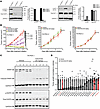 Figure 5
FA PDX 1 expresses high levels of EGFR and is highly sensitive to cetuximab. (A) Overexpression of total EGFR and p-EGFR by FA PDX 1, FA PDX 1, FA PDX 2, and FA PDX 3 tumors was analyzed. Tumor lysates were subjected to immunoblotting for p-EGFR (Y1068), total EGFR, p-AKT (S473), total AKT or GAPDH. (B) Dose-dependent inhibition of FA PDX 1, but not FA PDX 2 or FA PDX 3, by cetuximab. Mice with FA-HNSCC PDX tumors (5 mice/group, 2 tumors/mouse) were treated twice per week via i.p. injection with vehicle (saline) or varying doses of cetuximab (5 mice/group, 2 tumors/mouse). Tumor growth data for FA PDX 2 and FA PDX 3 are shown only for the highest cetuximab dose (20 mg/kg). Data represent the mean + SEM. Differences at the final time point in average tumor volumes between treatment groups were determined using Dunnett’s 2-tailed t test ad hoc to control the experiment-wise type I error rate at 5%. (C) PARP cleavage and loss of p-EGFR in cetuximab-treated FA PDX 1 tumors. Mice harboring FA PDX 1 tumors were treated twice weekly via i.p. injection with vehicle (saline) or cetuximab (20 mg/kg), and tumors were harvested on day 21. Tumor lysates were subjected to immunoblotting for PARP, p-EGFR, total EGFR, or GAPDH. The blot shows 1 tumor from each mouse. (D) Comparison of FA-HNSCC PDX models (red) versus sporadic HNSCC PDX models. The average tumor volume on day 14 after cetuximab treatment (normalized to vehicle) for the FA-HNSCC PDX models is compared with the responses we have previously reported for 18 sporadic HNSCC PDXs (26). Mice with FA-HNSCC PDX tumors were treated twice per week via i.p. injection with vehicle (saline) or cetuximab (20 mg/kg) (5 mice/group, 2 tumors/mouse). Data represent the mean + SEM. Mr, molecular weight.
We next tested the predictive value of total EGFR and p-EGFR levels for the response to cetuximab in our FA-HNSCC PDX models and observed a striking correlation. Mice harboring FA-HNSCC PDX tumors were treated with cetuximab twice weekly via i.p. injection, and tumor growth was monitored (Figure 5B). Treatment of FA PDX 1 led to potent, dose-dependent inhibition of tumor growth, with regression observed at the highest doses of 10 or 20 mg/kg. Treatment of FA PDX 1 with cetuximab at the 20 mg/kg dose was associated with loss of full-length PARP protein and the appearance of cleaved PARP in the tumor specimens, indicative of apoptosis induction, as well as with loss of p-EGFR and a reduction in total EGFR levels (Figure 5C). In contrast to FA PDX 1, the FA PDX 2 and FA PDX 3 models, which lacked robust levels of total and p-EGFR, failed to respond to the highest cetuximab dose (20 mg/kg) (Figure 5B).
We have previously reported the effect of cetuximab treatment (20 mg/kg, twice weekly for 14 days) on the growth of 18 non-FA, sporadic HNSCC PDX models (26). Here, we treated the 3 FA-HNSCC PDX models similarly and compared the observed growth inhibition with that reported for the non-FA, sporadic HNSCC PDX models (Figure 5D). While FA PDX 2 and FA PDX 3 were among the least responsive to cetuximab in this comparison, FA PDX 1 was among the most sensitive. Collectively, our findings in the 3 FA-HNSCC PDX models showed that expression of total EGFR and/or p-EGFR predicted the response to the FDA-approved cetuximab, supporting the utility of further exploration of this agent in patients with FA-HNSCC whose tumors express high EGFR/p-EGFR levels.
The growth-promoting effects of EGFR activation are mediated, in large part, via activation of the PI3K/AKT signaling pathway. We and others have previously reported that the PIK3CA gene, encoding PI3K, is the most commonly altered oncogene in sporadic HNSCC (27, 28), with both gene amplification and mutation contributing to aberrant PI3K activity in tumor cells. Genomics analyses revealed PIK3CA amplification in FA PDX 1 (Figures 1 and 2). An increased PIK3CA copy number and a canonical activating mutation of PIK3CA (H1047R) were present in FA PDX 2, as well as in the corresponding primary tumor, and an increased PIK3CA copy number, albeit one that did not reach the amplification threshold, was present in FA PDX 3 (Figures 1 and 2, and Supplemental Tables 2 and 3). DSP data indicated hyperactivation of the PI3K/AKT pathway in FA PDX 2 (Figure 3), and immunoblotting confirmed elevated levels of phosphorylated/activated (S473) AKT (p-AKT) in this model in both early (Figure 5A) and late (Supplemental Figure 6) tumor passages, consistent with the presence of an activating PIK3CA mutation. Lower p-AKT levels were detected in the FA PDX 1 and FA PDX 3 models (Figure 5A and Supplemental Figure 6). We assessed the effect of inhibition of the PI3K/AKT pathway on tumor growth by treating the tumors with alpelisib (BYL719), a PI3K inhibitor that is FDA approved for use in PIK3CA-mutant breast cancer. Mice harboring the FA-HNSCC PDX tumors were treated with alpelisib (30 mg/kg via oral gavage, 5 times/week) alone or in combination with cetuximab (i.p., twice/week; 2.5 mg/kg for FA PDX 1 and FA PDX 2; 20 mg/kg for FA PDX 3) (Figure 6). As monotherapy, treatment with alpelisib reduced tumor growth only in the PIK3CA-mutant FA PDX 2 model. Similarly, treatment with the combination of alpelisib plus cetuximab demonstrated a trend toward additive tumor growth inhibition compared with either agent alone only in the FA PDX 2 model. Thus, although alpelisib remains investigational in sporadic HNSCC, in patients with FA-HNSCC whose tumors harbor an activating PIK3CA mutation, the addition of a PI3K inhibitor to a treatment regimen containing cetuximab may prove clinically beneficial.
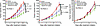 Figure 6
Combination treatment with cetuximab and the PI3K inhibitor alpelisib (BYL719). Mice with FA-HNSCC PDX tumors were treated with vehicle (i.p. saline for cetuximab; oral gavage of 0.5% methylcellulose + 0.1% Tween 80 for alpelisib); alpelisib (30 mg/kg, 5 times per week, oral gavage), cetuximab (2.5 mg/kg for FA PDX 1 and FA PDX 2, 20 mg/kg for FA PDX 3, i.p. twice/week); or the combination of alpelisib and cetuximab (5 mice/group, 2 tumors/mouse). Data represent the mean + SEM. Differences at the final time point in average tumor volumes between treatment groups were determined using Dunnett’s 2-tailed t test ad hoc to control the experiment-wise type I error rate at 5%.
FA PDX 1 is highly sensitive to the pan-EGFR/HER family tyrosine kinase inhibitor dacomitinib. The tyrosine kinase inhibitor (TKI) gefitinib targets EGFR, while the TKI afatinib targets both EGFR and the EGFR/HER family member HER2. Both agents have failed in unselected sporadic HNSCC cohorts and neither is FDA approved for this disease. Despite this, Montanuy et al. (29) have reported growth inhibition of xenograft tumors derived from FA-HNSCC cell lines deficient in the FA genes FANCC or FANCL following treatment with gefitinib or afatinib, prompting the development of a pending European trial of afatinib treatment of patients with FA-HNSCC (30). We therefore evaluated sensitivities to gefitinib and afatinib in 2 of the FA-HNSCC PDX models, both of which harbor altered FANCA, the most common FA gene alteration found in FA-HNSCC (16). Treatment of the FA PDX 1 model (high levels of total EGFR and p-EGFR) with gefitinib (150 mg/kg via oral gavage, 5 times/week) or afatinib (20 mg/kg, via oral gavage, 5 times/week) led to significant inhibition of tumor growth, with afatinib exhibiting greater potency (Figure 7). Treatment of the FA PDX 2 model (low levels of total EGFR and undetectable p-EGFR) with gefitinib or afatinib, however, failed to affect tumor growth.
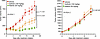 Figure 7
Gefitinib and afatinib inhibit the growth of FA PDX 1 tumors, but not FA PDX 2 tumors. Mice with FA-HNSCC PDX tumors were treated 5 times per week via oral gavage with vehicle (0.5% methylcellulose, 0.1% Tween 80); gefitinib (150 mg/kg); or afatinib (20 mg/kg) (4 mice/group for FA PDX 1; 5 mice/group for FA PDX 3; 2 tumors/mouse for all). Data represent the mean + SEM. Differences at the final time point in average tumor volumes between treatment groups were determined using Dunnett’s 2-tailed t test ad hoc to control the experiment-wise type I error rate at 5%.
The high expression levels of total EGFR and p-EGFR in FA PDX 1 and the associated sensitivity of this model to EGFR inhibitors (gefitinib, afatinib, and cetuximab) prompted us to examine the expression of other members of the EGFR/HER protein family in all 3 FA-HNSCC PDX models. As shown in Figure 8A, total HER2 was expressed at high levels in FA PDX 1, at lower levels in FA PDX 2, and was undetectable in FA PDX 3 models. FA PDX 1 also expressed p-HER2 (Y1248). Notably, total HER3 and p-HER3 (Y1289) were highly expressed by FA PDX 1, but not by the other models. In view of the expression, albeit variable, of additional EGFR/HER family members, we sought to determine the effect of pan-EGFR/HER family inhibition. Dacomitinib is an irreversible pan-EGFR/HER TKI that is approved by the FDA for use in lung cancer and is under active clinical investigation in sporadic HNSCC (NCT01449201, NCT00768664) (31–33). Treatment with dacomitinib (5 times/week via oral gavage) resulted in potent dose-dependent inhibition of tumor growth in the FA PDX 1 model (Figure 8B). At the highest dose (10 mg/kg), we observed tumor regression, accompanied by loss of full-length PARP, p-EGFR, p-HER2, and p-HER3 (Figure 8C). By contrast, FA PDX 3 tumors failed to respond to treatment with 10 mg/kg dacomitinib (Figure 8D). We observed a moderate, though statistically significant, response to dacomitinib in the FA PDX 2 model, consistent with increased expression of HER2 in this model (Figure 8, A and D).
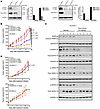 Figure 8
The pan-EGFR/HER TKI dacomitinib potently inhibits FA PDX 1 tumor growth. (A) Expression of total and phosphorylated forms of HER2 and HER3. FA PDX 1, FA PDX 2, and FA PDX 3 tumor lysates were subjected to immunoblotting for p-HER2 (Y1248), total HER2, p-HER3 (Y1289), total HER3, or GAPDH. (B) Dose-dependent inhibition of FA PDX 1 tumors by dacomitinib. Mice with FA PDX 1 tumors were treated with vehicle (0.5% methycellulose + 0.1% Tween 80) or varying doses of dacomitinib via oral gavage 5 times per week (5 mice/group, 2 tumors/mouse). Data represent the mean + SEM. Differences at the final time point in average tumor volumes between treatment groups were determined using Dunnett’s 2-tailed t test ad hoc to control the experiment-wise type I error rate at 5%. (C) Loss of full-length PARP and phosphorylated forms of EGFR, HER2, and HER3 in dacomitinib-treated FA PDX 1 tumors. Tumors from the treated mice in B were harvested on day 18, and tumor lysates were subjected to immunoblotting for PARP, p-EGFR, total EGFR, p-HER2, total HER2, p-HER3, total HER3 and GAPDH. The blot shows 1 tumor from each mouse. (D) Dacomitinib insensitivity of FA PDX 2 and FA PDX 3 tumors. Mice harboring FA PDX 2 or FA PDX 3 tumors were treated 5 times per week via oral gavage with vehicle or dacomitinib (10 mg/kg). Data represent the mean + SEM. Statistical differences were determined as in B.
Targeting antiapoptotic proteins inhibits the growth of Bcl-2–overexpressing FA PDX 3. The FA PDX 3 tumor model exhibited greater resistance to cisplatin relative to the other FA-HNSCC PDX models and did not respond to EGFR/HER-targeting agents or the PI3K inhibitor alpelisib. Tumor resistance to DNA-damaging agents, as well as molecular targeting agents, can be due to overexpression of the antiapoptotic Bcl-2 family members Bcl-2 and Bcl-XL, which were noted to be expressed at high levels in FA PDX 3 tumors in our DSP studies (Figure 3). Immunoblotting confirmed markedly elevated expression of Bcl-2 and modestly elevated Bcl-XL expression in FA PDX 3 tumors compared with the other 2 models in both early (Figure 9A) and late (Supplemental Figure 6) tumor passages. We therefore examined the effect of venetoclax, an FDA-approved Bcl-2 inhibitor, on FA PDX 3 tumor growth. Treatment with venetoclax (100 mg/kg, 5 times/week via oral gavage) led to growth inhibition in this drug-resistant FA-HNSCC tumor model (Figure 9B and Supplemental Figure 7). The antitumor effects of venetoclax in this FA-HNSCC PDX model identifies a unique personalized therapeutic approach for FA-associated HNSCC that is based on the molecular characterization of our preclinical models.
 Figure 9
The Bcl-2 inhibitor venetoclax inhibits FA PDX 3 tumor growth. (A) Expression of Bcl-2 and Bcl-XL by FA PDX 3. FA-HNSCC PDX tumor lysates were subjected to immunoblotting for Bcl-2, Bcl-XL, or GAPDH. (B) Inhibition of FA PDX 3 tumor growth by venetoclax. Mice with FA-HNSCC PDX tumors were treated 5 times per week with vehicle (0.5% methycellulose + 0.1% Tween 80) or venetoclax (100 mg/kg) via oral gavage (5 mice/group, 2 tumors/mouse). Data represent the mean + SEM. Differences at the final time point in average tumor volumes between treatment groups were determined using Dunnett’s 2-tailed t test ad hoc to control the experiment-wise type I error rate at 5%.


Copyright © 2026 American Society for Clinical Investigation
ISSN: 0021-9738 (print), 1558-8238 (online)