
Advertisement
Research ArticleClinical ResearchNeuroscience
Open Access |  10.1172/JCI193475
Conserved sleep disturbances in FOXP1 syndrome originate from developmental dysregulation of peptidergic signaling
Mireia Coll-Tané,1,2 Ilse Eidhof,1,2 Jie Han,1,2 Nicholas Raun,1,2 Lara V. van Renssen,1,2 Simon E. Fisher,3,4 Matthew S. Kayser,5 Tjitske Kleefstra,1,6,7 Sigrid Pillen,8 Caitlin M. Hudac,9,10 Jordi Mayneris-Perxachs,11,12 Marieke Klein,2,13 Saskia Koene,1 Anna Castells-Nobau,1,2,11,12 and Annette Schenck1,2
1Department of Human Genetics and
2Donders Institute for Brain, Cognition, and Behaviour, Radboud University Medical Center, Nijmegen, Netherlands.
3Language and Genetics Department, Max Planck Institute for Psycholinguistics, Nijmegen, Netherlands.
4Donders Centre for Neuroscience, Donders Institute for Brain, Cognition, and Behaviour, Radboud University, Nijmegen, Netherlands.
5Departments of Psychiatry and Neuroscience, Chronobiology and Sleep Institute, Perelman School of Medicine at the University of Pennsylvania, Philadelphia, Pennsylvania, USA.
6Department of Clinical Genetics, Erasmus University Rotterdam, Rotterdam, Netherlands.
7Center of Excellence for Neuropsychiatry, Vincent van Gogh Institute for Psychiatry, Venray, Netherlands.
8Kinderslaapexpert BV (Pediatric Sleep Expert Ltd.), Mook, Netherlands.
9Department of Psychology and
10Carolina Autism and Neurodevelopment Research Center, University of South Carolina, Columbia, South Carolina, USA.
11Nutrition, Eumetabolism and Health Group and Integrative Systems Medicine and Biology Group, Girona Biomedical Research Institute (IDIBGI-CERCA), Girona, Spain.
12Centro de Investigación Biomédica en Red de Fisiopatología de la Obesidad y Nutrición (CIBEROBN), Madrid, Spain.
13Department of Medical Neuroscience, Radboud University Medical Center, Nijmegen, Netherlands.
Address correspondence to: Mireia Coll-Tané or Annette Schenck, Radboud University Medical Center, Geert Grooteplein 10, 6525 GA Nijmegen, Netherlands. Phone: 31.24.3614017; Email: mireia.colltane@radboudumc.nl (MCT). Phone: 31.24.3610868; Email: annette.schenck@radboudumc.nl (AS). Or to: Anna Castells-Nobau, Institut d’Investigació Biomèdica de Girona, Parc Hospitalari Martí i Julià de Salt, C/ Dr. Castany s/n, 17190 Salt, Spain. Phone: 34.872.987087; Email: acastells@idibgi.org.
Authorship note: IE and JH contributed equally to this work. ACN and AS contributed equally to this work.
Find articles by Coll-Tané, M. in: PubMed | Google Scholar
1Department of Human Genetics and
2Donders Institute for Brain, Cognition, and Behaviour, Radboud University Medical Center, Nijmegen, Netherlands.
3Language and Genetics Department, Max Planck Institute for Psycholinguistics, Nijmegen, Netherlands.
4Donders Centre for Neuroscience, Donders Institute for Brain, Cognition, and Behaviour, Radboud University, Nijmegen, Netherlands.
5Departments of Psychiatry and Neuroscience, Chronobiology and Sleep Institute, Perelman School of Medicine at the University of Pennsylvania, Philadelphia, Pennsylvania, USA.
6Department of Clinical Genetics, Erasmus University Rotterdam, Rotterdam, Netherlands.
7Center of Excellence for Neuropsychiatry, Vincent van Gogh Institute for Psychiatry, Venray, Netherlands.
8Kinderslaapexpert BV (Pediatric Sleep Expert Ltd.), Mook, Netherlands.
9Department of Psychology and
10Carolina Autism and Neurodevelopment Research Center, University of South Carolina, Columbia, South Carolina, USA.
11Nutrition, Eumetabolism and Health Group and Integrative Systems Medicine and Biology Group, Girona Biomedical Research Institute (IDIBGI-CERCA), Girona, Spain.
12Centro de Investigación Biomédica en Red de Fisiopatología de la Obesidad y Nutrición (CIBEROBN), Madrid, Spain.
13Department of Medical Neuroscience, Radboud University Medical Center, Nijmegen, Netherlands.
Address correspondence to: Mireia Coll-Tané or Annette Schenck, Radboud University Medical Center, Geert Grooteplein 10, 6525 GA Nijmegen, Netherlands. Phone: 31.24.3614017; Email: mireia.colltane@radboudumc.nl (MCT). Phone: 31.24.3610868; Email: annette.schenck@radboudumc.nl (AS). Or to: Anna Castells-Nobau, Institut d’Investigació Biomèdica de Girona, Parc Hospitalari Martí i Julià de Salt, C/ Dr. Castany s/n, 17190 Salt, Spain. Phone: 34.872.987087; Email: acastells@idibgi.org.
Authorship note: IE and JH contributed equally to this work. ACN and AS contributed equally to this work.
Find articles by Eidhof, I. in: PubMed | Google Scholar
1Department of Human Genetics and
2Donders Institute for Brain, Cognition, and Behaviour, Radboud University Medical Center, Nijmegen, Netherlands.
3Language and Genetics Department, Max Planck Institute for Psycholinguistics, Nijmegen, Netherlands.
4Donders Centre for Neuroscience, Donders Institute for Brain, Cognition, and Behaviour, Radboud University, Nijmegen, Netherlands.
5Departments of Psychiatry and Neuroscience, Chronobiology and Sleep Institute, Perelman School of Medicine at the University of Pennsylvania, Philadelphia, Pennsylvania, USA.
6Department of Clinical Genetics, Erasmus University Rotterdam, Rotterdam, Netherlands.
7Center of Excellence for Neuropsychiatry, Vincent van Gogh Institute for Psychiatry, Venray, Netherlands.
8Kinderslaapexpert BV (Pediatric Sleep Expert Ltd.), Mook, Netherlands.
9Department of Psychology and
10Carolina Autism and Neurodevelopment Research Center, University of South Carolina, Columbia, South Carolina, USA.
11Nutrition, Eumetabolism and Health Group and Integrative Systems Medicine and Biology Group, Girona Biomedical Research Institute (IDIBGI-CERCA), Girona, Spain.
12Centro de Investigación Biomédica en Red de Fisiopatología de la Obesidad y Nutrición (CIBEROBN), Madrid, Spain.
13Department of Medical Neuroscience, Radboud University Medical Center, Nijmegen, Netherlands.
Address correspondence to: Mireia Coll-Tané or Annette Schenck, Radboud University Medical Center, Geert Grooteplein 10, 6525 GA Nijmegen, Netherlands. Phone: 31.24.3614017; Email: mireia.colltane@radboudumc.nl (MCT). Phone: 31.24.3610868; Email: annette.schenck@radboudumc.nl (AS). Or to: Anna Castells-Nobau, Institut d’Investigació Biomèdica de Girona, Parc Hospitalari Martí i Julià de Salt, C/ Dr. Castany s/n, 17190 Salt, Spain. Phone: 34.872.987087; Email: acastells@idibgi.org.
Authorship note: IE and JH contributed equally to this work. ACN and AS contributed equally to this work.
Find articles by Han, J. in: PubMed | Google Scholar
1Department of Human Genetics and
2Donders Institute for Brain, Cognition, and Behaviour, Radboud University Medical Center, Nijmegen, Netherlands.
3Language and Genetics Department, Max Planck Institute for Psycholinguistics, Nijmegen, Netherlands.
4Donders Centre for Neuroscience, Donders Institute for Brain, Cognition, and Behaviour, Radboud University, Nijmegen, Netherlands.
5Departments of Psychiatry and Neuroscience, Chronobiology and Sleep Institute, Perelman School of Medicine at the University of Pennsylvania, Philadelphia, Pennsylvania, USA.
6Department of Clinical Genetics, Erasmus University Rotterdam, Rotterdam, Netherlands.
7Center of Excellence for Neuropsychiatry, Vincent van Gogh Institute for Psychiatry, Venray, Netherlands.
8Kinderslaapexpert BV (Pediatric Sleep Expert Ltd.), Mook, Netherlands.
9Department of Psychology and
10Carolina Autism and Neurodevelopment Research Center, University of South Carolina, Columbia, South Carolina, USA.
11Nutrition, Eumetabolism and Health Group and Integrative Systems Medicine and Biology Group, Girona Biomedical Research Institute (IDIBGI-CERCA), Girona, Spain.
12Centro de Investigación Biomédica en Red de Fisiopatología de la Obesidad y Nutrición (CIBEROBN), Madrid, Spain.
13Department of Medical Neuroscience, Radboud University Medical Center, Nijmegen, Netherlands.
Address correspondence to: Mireia Coll-Tané or Annette Schenck, Radboud University Medical Center, Geert Grooteplein 10, 6525 GA Nijmegen, Netherlands. Phone: 31.24.3614017; Email: mireia.colltane@radboudumc.nl (MCT). Phone: 31.24.3610868; Email: annette.schenck@radboudumc.nl (AS). Or to: Anna Castells-Nobau, Institut d’Investigació Biomèdica de Girona, Parc Hospitalari Martí i Julià de Salt, C/ Dr. Castany s/n, 17190 Salt, Spain. Phone: 34.872.987087; Email: acastells@idibgi.org.
Authorship note: IE and JH contributed equally to this work. ACN and AS contributed equally to this work.
Find articles by Raun, N. in: PubMed | Google Scholar
1Department of Human Genetics and
2Donders Institute for Brain, Cognition, and Behaviour, Radboud University Medical Center, Nijmegen, Netherlands.
3Language and Genetics Department, Max Planck Institute for Psycholinguistics, Nijmegen, Netherlands.
4Donders Centre for Neuroscience, Donders Institute for Brain, Cognition, and Behaviour, Radboud University, Nijmegen, Netherlands.
5Departments of Psychiatry and Neuroscience, Chronobiology and Sleep Institute, Perelman School of Medicine at the University of Pennsylvania, Philadelphia, Pennsylvania, USA.
6Department of Clinical Genetics, Erasmus University Rotterdam, Rotterdam, Netherlands.
7Center of Excellence for Neuropsychiatry, Vincent van Gogh Institute for Psychiatry, Venray, Netherlands.
8Kinderslaapexpert BV (Pediatric Sleep Expert Ltd.), Mook, Netherlands.
9Department of Psychology and
10Carolina Autism and Neurodevelopment Research Center, University of South Carolina, Columbia, South Carolina, USA.
11Nutrition, Eumetabolism and Health Group and Integrative Systems Medicine and Biology Group, Girona Biomedical Research Institute (IDIBGI-CERCA), Girona, Spain.
12Centro de Investigación Biomédica en Red de Fisiopatología de la Obesidad y Nutrición (CIBEROBN), Madrid, Spain.
13Department of Medical Neuroscience, Radboud University Medical Center, Nijmegen, Netherlands.
Address correspondence to: Mireia Coll-Tané or Annette Schenck, Radboud University Medical Center, Geert Grooteplein 10, 6525 GA Nijmegen, Netherlands. Phone: 31.24.3614017; Email: mireia.colltane@radboudumc.nl (MCT). Phone: 31.24.3610868; Email: annette.schenck@radboudumc.nl (AS). Or to: Anna Castells-Nobau, Institut d’Investigació Biomèdica de Girona, Parc Hospitalari Martí i Julià de Salt, C/ Dr. Castany s/n, 17190 Salt, Spain. Phone: 34.872.987087; Email: acastells@idibgi.org.
Authorship note: IE and JH contributed equally to this work. ACN and AS contributed equally to this work.
Find articles by van Renssen, L. in: PubMed | Google Scholar
1Department of Human Genetics and
2Donders Institute for Brain, Cognition, and Behaviour, Radboud University Medical Center, Nijmegen, Netherlands.
3Language and Genetics Department, Max Planck Institute for Psycholinguistics, Nijmegen, Netherlands.
4Donders Centre for Neuroscience, Donders Institute for Brain, Cognition, and Behaviour, Radboud University, Nijmegen, Netherlands.
5Departments of Psychiatry and Neuroscience, Chronobiology and Sleep Institute, Perelman School of Medicine at the University of Pennsylvania, Philadelphia, Pennsylvania, USA.
6Department of Clinical Genetics, Erasmus University Rotterdam, Rotterdam, Netherlands.
7Center of Excellence for Neuropsychiatry, Vincent van Gogh Institute for Psychiatry, Venray, Netherlands.
8Kinderslaapexpert BV (Pediatric Sleep Expert Ltd.), Mook, Netherlands.
9Department of Psychology and
10Carolina Autism and Neurodevelopment Research Center, University of South Carolina, Columbia, South Carolina, USA.
11Nutrition, Eumetabolism and Health Group and Integrative Systems Medicine and Biology Group, Girona Biomedical Research Institute (IDIBGI-CERCA), Girona, Spain.
12Centro de Investigación Biomédica en Red de Fisiopatología de la Obesidad y Nutrición (CIBEROBN), Madrid, Spain.
13Department of Medical Neuroscience, Radboud University Medical Center, Nijmegen, Netherlands.
Address correspondence to: Mireia Coll-Tané or Annette Schenck, Radboud University Medical Center, Geert Grooteplein 10, 6525 GA Nijmegen, Netherlands. Phone: 31.24.3614017; Email: mireia.colltane@radboudumc.nl (MCT). Phone: 31.24.3610868; Email: annette.schenck@radboudumc.nl (AS). Or to: Anna Castells-Nobau, Institut d’Investigació Biomèdica de Girona, Parc Hospitalari Martí i Julià de Salt, C/ Dr. Castany s/n, 17190 Salt, Spain. Phone: 34.872.987087; Email: acastells@idibgi.org.
Authorship note: IE and JH contributed equally to this work. ACN and AS contributed equally to this work.
Find articles by
Fisher, S.
in:
PubMed
|
Google Scholar
|

1Department of Human Genetics and
2Donders Institute for Brain, Cognition, and Behaviour, Radboud University Medical Center, Nijmegen, Netherlands.
3Language and Genetics Department, Max Planck Institute for Psycholinguistics, Nijmegen, Netherlands.
4Donders Centre for Neuroscience, Donders Institute for Brain, Cognition, and Behaviour, Radboud University, Nijmegen, Netherlands.
5Departments of Psychiatry and Neuroscience, Chronobiology and Sleep Institute, Perelman School of Medicine at the University of Pennsylvania, Philadelphia, Pennsylvania, USA.
6Department of Clinical Genetics, Erasmus University Rotterdam, Rotterdam, Netherlands.
7Center of Excellence for Neuropsychiatry, Vincent van Gogh Institute for Psychiatry, Venray, Netherlands.
8Kinderslaapexpert BV (Pediatric Sleep Expert Ltd.), Mook, Netherlands.
9Department of Psychology and
10Carolina Autism and Neurodevelopment Research Center, University of South Carolina, Columbia, South Carolina, USA.
11Nutrition, Eumetabolism and Health Group and Integrative Systems Medicine and Biology Group, Girona Biomedical Research Institute (IDIBGI-CERCA), Girona, Spain.
12Centro de Investigación Biomédica en Red de Fisiopatología de la Obesidad y Nutrición (CIBEROBN), Madrid, Spain.
13Department of Medical Neuroscience, Radboud University Medical Center, Nijmegen, Netherlands.
Address correspondence to: Mireia Coll-Tané or Annette Schenck, Radboud University Medical Center, Geert Grooteplein 10, 6525 GA Nijmegen, Netherlands. Phone: 31.24.3614017; Email: mireia.colltane@radboudumc.nl (MCT). Phone: 31.24.3610868; Email: annette.schenck@radboudumc.nl (AS). Or to: Anna Castells-Nobau, Institut d’Investigació Biomèdica de Girona, Parc Hospitalari Martí i Julià de Salt, C/ Dr. Castany s/n, 17190 Salt, Spain. Phone: 34.872.987087; Email: acastells@idibgi.org.
Authorship note: IE and JH contributed equally to this work. ACN and AS contributed equally to this work.
Find articles by Kayser, M. in: PubMed | Google Scholar
1Department of Human Genetics and
2Donders Institute for Brain, Cognition, and Behaviour, Radboud University Medical Center, Nijmegen, Netherlands.
3Language and Genetics Department, Max Planck Institute for Psycholinguistics, Nijmegen, Netherlands.
4Donders Centre for Neuroscience, Donders Institute for Brain, Cognition, and Behaviour, Radboud University, Nijmegen, Netherlands.
5Departments of Psychiatry and Neuroscience, Chronobiology and Sleep Institute, Perelman School of Medicine at the University of Pennsylvania, Philadelphia, Pennsylvania, USA.
6Department of Clinical Genetics, Erasmus University Rotterdam, Rotterdam, Netherlands.
7Center of Excellence for Neuropsychiatry, Vincent van Gogh Institute for Psychiatry, Venray, Netherlands.
8Kinderslaapexpert BV (Pediatric Sleep Expert Ltd.), Mook, Netherlands.
9Department of Psychology and
10Carolina Autism and Neurodevelopment Research Center, University of South Carolina, Columbia, South Carolina, USA.
11Nutrition, Eumetabolism and Health Group and Integrative Systems Medicine and Biology Group, Girona Biomedical Research Institute (IDIBGI-CERCA), Girona, Spain.
12Centro de Investigación Biomédica en Red de Fisiopatología de la Obesidad y Nutrición (CIBEROBN), Madrid, Spain.
13Department of Medical Neuroscience, Radboud University Medical Center, Nijmegen, Netherlands.
Address correspondence to: Mireia Coll-Tané or Annette Schenck, Radboud University Medical Center, Geert Grooteplein 10, 6525 GA Nijmegen, Netherlands. Phone: 31.24.3614017; Email: mireia.colltane@radboudumc.nl (MCT). Phone: 31.24.3610868; Email: annette.schenck@radboudumc.nl (AS). Or to: Anna Castells-Nobau, Institut d’Investigació Biomèdica de Girona, Parc Hospitalari Martí i Julià de Salt, C/ Dr. Castany s/n, 17190 Salt, Spain. Phone: 34.872.987087; Email: acastells@idibgi.org.
Authorship note: IE and JH contributed equally to this work. ACN and AS contributed equally to this work.
Find articles by Kleefstra, T. in: PubMed | Google Scholar
1Department of Human Genetics and
2Donders Institute for Brain, Cognition, and Behaviour, Radboud University Medical Center, Nijmegen, Netherlands.
3Language and Genetics Department, Max Planck Institute for Psycholinguistics, Nijmegen, Netherlands.
4Donders Centre for Neuroscience, Donders Institute for Brain, Cognition, and Behaviour, Radboud University, Nijmegen, Netherlands.
5Departments of Psychiatry and Neuroscience, Chronobiology and Sleep Institute, Perelman School of Medicine at the University of Pennsylvania, Philadelphia, Pennsylvania, USA.
6Department of Clinical Genetics, Erasmus University Rotterdam, Rotterdam, Netherlands.
7Center of Excellence for Neuropsychiatry, Vincent van Gogh Institute for Psychiatry, Venray, Netherlands.
8Kinderslaapexpert BV (Pediatric Sleep Expert Ltd.), Mook, Netherlands.
9Department of Psychology and
10Carolina Autism and Neurodevelopment Research Center, University of South Carolina, Columbia, South Carolina, USA.
11Nutrition, Eumetabolism and Health Group and Integrative Systems Medicine and Biology Group, Girona Biomedical Research Institute (IDIBGI-CERCA), Girona, Spain.
12Centro de Investigación Biomédica en Red de Fisiopatología de la Obesidad y Nutrición (CIBEROBN), Madrid, Spain.
13Department of Medical Neuroscience, Radboud University Medical Center, Nijmegen, Netherlands.
Address correspondence to: Mireia Coll-Tané or Annette Schenck, Radboud University Medical Center, Geert Grooteplein 10, 6525 GA Nijmegen, Netherlands. Phone: 31.24.3614017; Email: mireia.colltane@radboudumc.nl (MCT). Phone: 31.24.3610868; Email: annette.schenck@radboudumc.nl (AS). Or to: Anna Castells-Nobau, Institut d’Investigació Biomèdica de Girona, Parc Hospitalari Martí i Julià de Salt, C/ Dr. Castany s/n, 17190 Salt, Spain. Phone: 34.872.987087; Email: acastells@idibgi.org.
Authorship note: IE and JH contributed equally to this work. ACN and AS contributed equally to this work.
Find articles by Pillen, S. in: PubMed | Google Scholar
1Department of Human Genetics and
2Donders Institute for Brain, Cognition, and Behaviour, Radboud University Medical Center, Nijmegen, Netherlands.
3Language and Genetics Department, Max Planck Institute for Psycholinguistics, Nijmegen, Netherlands.
4Donders Centre for Neuroscience, Donders Institute for Brain, Cognition, and Behaviour, Radboud University, Nijmegen, Netherlands.
5Departments of Psychiatry and Neuroscience, Chronobiology and Sleep Institute, Perelman School of Medicine at the University of Pennsylvania, Philadelphia, Pennsylvania, USA.
6Department of Clinical Genetics, Erasmus University Rotterdam, Rotterdam, Netherlands.
7Center of Excellence for Neuropsychiatry, Vincent van Gogh Institute for Psychiatry, Venray, Netherlands.
8Kinderslaapexpert BV (Pediatric Sleep Expert Ltd.), Mook, Netherlands.
9Department of Psychology and
10Carolina Autism and Neurodevelopment Research Center, University of South Carolina, Columbia, South Carolina, USA.
11Nutrition, Eumetabolism and Health Group and Integrative Systems Medicine and Biology Group, Girona Biomedical Research Institute (IDIBGI-CERCA), Girona, Spain.
12Centro de Investigación Biomédica en Red de Fisiopatología de la Obesidad y Nutrición (CIBEROBN), Madrid, Spain.
13Department of Medical Neuroscience, Radboud University Medical Center, Nijmegen, Netherlands.
Address correspondence to: Mireia Coll-Tané or Annette Schenck, Radboud University Medical Center, Geert Grooteplein 10, 6525 GA Nijmegen, Netherlands. Phone: 31.24.3614017; Email: mireia.colltane@radboudumc.nl (MCT). Phone: 31.24.3610868; Email: annette.schenck@radboudumc.nl (AS). Or to: Anna Castells-Nobau, Institut d’Investigació Biomèdica de Girona, Parc Hospitalari Martí i Julià de Salt, C/ Dr. Castany s/n, 17190 Salt, Spain. Phone: 34.872.987087; Email: acastells@idibgi.org.
Authorship note: IE and JH contributed equally to this work. ACN and AS contributed equally to this work.
Find articles by Hudac, C. in: PubMed | Google Scholar
1Department of Human Genetics and
2Donders Institute for Brain, Cognition, and Behaviour, Radboud University Medical Center, Nijmegen, Netherlands.
3Language and Genetics Department, Max Planck Institute for Psycholinguistics, Nijmegen, Netherlands.
4Donders Centre for Neuroscience, Donders Institute for Brain, Cognition, and Behaviour, Radboud University, Nijmegen, Netherlands.
5Departments of Psychiatry and Neuroscience, Chronobiology and Sleep Institute, Perelman School of Medicine at the University of Pennsylvania, Philadelphia, Pennsylvania, USA.
6Department of Clinical Genetics, Erasmus University Rotterdam, Rotterdam, Netherlands.
7Center of Excellence for Neuropsychiatry, Vincent van Gogh Institute for Psychiatry, Venray, Netherlands.
8Kinderslaapexpert BV (Pediatric Sleep Expert Ltd.), Mook, Netherlands.
9Department of Psychology and
10Carolina Autism and Neurodevelopment Research Center, University of South Carolina, Columbia, South Carolina, USA.
11Nutrition, Eumetabolism and Health Group and Integrative Systems Medicine and Biology Group, Girona Biomedical Research Institute (IDIBGI-CERCA), Girona, Spain.
12Centro de Investigación Biomédica en Red de Fisiopatología de la Obesidad y Nutrición (CIBEROBN), Madrid, Spain.
13Department of Medical Neuroscience, Radboud University Medical Center, Nijmegen, Netherlands.
Address correspondence to: Mireia Coll-Tané or Annette Schenck, Radboud University Medical Center, Geert Grooteplein 10, 6525 GA Nijmegen, Netherlands. Phone: 31.24.3614017; Email: mireia.colltane@radboudumc.nl (MCT). Phone: 31.24.3610868; Email: annette.schenck@radboudumc.nl (AS). Or to: Anna Castells-Nobau, Institut d’Investigació Biomèdica de Girona, Parc Hospitalari Martí i Julià de Salt, C/ Dr. Castany s/n, 17190 Salt, Spain. Phone: 34.872.987087; Email: acastells@idibgi.org.
Authorship note: IE and JH contributed equally to this work. ACN and AS contributed equally to this work.
Find articles by
Mayneris-Perxachs, J.
in:
PubMed
|
Google Scholar
|
1Department of Human Genetics and
2Donders Institute for Brain, Cognition, and Behaviour, Radboud University Medical Center, Nijmegen, Netherlands.
3Language and Genetics Department, Max Planck Institute for Psycholinguistics, Nijmegen, Netherlands.
4Donders Centre for Neuroscience, Donders Institute for Brain, Cognition, and Behaviour, Radboud University, Nijmegen, Netherlands.
5Departments of Psychiatry and Neuroscience, Chronobiology and Sleep Institute, Perelman School of Medicine at the University of Pennsylvania, Philadelphia, Pennsylvania, USA.
6Department of Clinical Genetics, Erasmus University Rotterdam, Rotterdam, Netherlands.
7Center of Excellence for Neuropsychiatry, Vincent van Gogh Institute for Psychiatry, Venray, Netherlands.
8Kinderslaapexpert BV (Pediatric Sleep Expert Ltd.), Mook, Netherlands.
9Department of Psychology and
10Carolina Autism and Neurodevelopment Research Center, University of South Carolina, Columbia, South Carolina, USA.
11Nutrition, Eumetabolism and Health Group and Integrative Systems Medicine and Biology Group, Girona Biomedical Research Institute (IDIBGI-CERCA), Girona, Spain.
12Centro de Investigación Biomédica en Red de Fisiopatología de la Obesidad y Nutrición (CIBEROBN), Madrid, Spain.
13Department of Medical Neuroscience, Radboud University Medical Center, Nijmegen, Netherlands.
Address correspondence to: Mireia Coll-Tané or Annette Schenck, Radboud University Medical Center, Geert Grooteplein 10, 6525 GA Nijmegen, Netherlands. Phone: 31.24.3614017; Email: mireia.colltane@radboudumc.nl (MCT). Phone: 31.24.3610868; Email: annette.schenck@radboudumc.nl (AS). Or to: Anna Castells-Nobau, Institut d’Investigació Biomèdica de Girona, Parc Hospitalari Martí i Julià de Salt, C/ Dr. Castany s/n, 17190 Salt, Spain. Phone: 34.872.987087; Email: acastells@idibgi.org.
Authorship note: IE and JH contributed equally to this work. ACN and AS contributed equally to this work.
Find articles by Klein, M. in: PubMed | Google Scholar
1Department of Human Genetics and
2Donders Institute for Brain, Cognition, and Behaviour, Radboud University Medical Center, Nijmegen, Netherlands.
3Language and Genetics Department, Max Planck Institute for Psycholinguistics, Nijmegen, Netherlands.
4Donders Centre for Neuroscience, Donders Institute for Brain, Cognition, and Behaviour, Radboud University, Nijmegen, Netherlands.
5Departments of Psychiatry and Neuroscience, Chronobiology and Sleep Institute, Perelman School of Medicine at the University of Pennsylvania, Philadelphia, Pennsylvania, USA.
6Department of Clinical Genetics, Erasmus University Rotterdam, Rotterdam, Netherlands.
7Center of Excellence for Neuropsychiatry, Vincent van Gogh Institute for Psychiatry, Venray, Netherlands.
8Kinderslaapexpert BV (Pediatric Sleep Expert Ltd.), Mook, Netherlands.
9Department of Psychology and
10Carolina Autism and Neurodevelopment Research Center, University of South Carolina, Columbia, South Carolina, USA.
11Nutrition, Eumetabolism and Health Group and Integrative Systems Medicine and Biology Group, Girona Biomedical Research Institute (IDIBGI-CERCA), Girona, Spain.
12Centro de Investigación Biomédica en Red de Fisiopatología de la Obesidad y Nutrición (CIBEROBN), Madrid, Spain.
13Department of Medical Neuroscience, Radboud University Medical Center, Nijmegen, Netherlands.
Address correspondence to: Mireia Coll-Tané or Annette Schenck, Radboud University Medical Center, Geert Grooteplein 10, 6525 GA Nijmegen, Netherlands. Phone: 31.24.3614017; Email: mireia.colltane@radboudumc.nl (MCT). Phone: 31.24.3610868; Email: annette.schenck@radboudumc.nl (AS). Or to: Anna Castells-Nobau, Institut d’Investigació Biomèdica de Girona, Parc Hospitalari Martí i Julià de Salt, C/ Dr. Castany s/n, 17190 Salt, Spain. Phone: 34.872.987087; Email: acastells@idibgi.org.
Authorship note: IE and JH contributed equally to this work. ACN and AS contributed equally to this work.
Find articles by Koene, S. in: PubMed | Google Scholar
1Department of Human Genetics and
2Donders Institute for Brain, Cognition, and Behaviour, Radboud University Medical Center, Nijmegen, Netherlands.
3Language and Genetics Department, Max Planck Institute for Psycholinguistics, Nijmegen, Netherlands.
4Donders Centre for Neuroscience, Donders Institute for Brain, Cognition, and Behaviour, Radboud University, Nijmegen, Netherlands.
5Departments of Psychiatry and Neuroscience, Chronobiology and Sleep Institute, Perelman School of Medicine at the University of Pennsylvania, Philadelphia, Pennsylvania, USA.
6Department of Clinical Genetics, Erasmus University Rotterdam, Rotterdam, Netherlands.
7Center of Excellence for Neuropsychiatry, Vincent van Gogh Institute for Psychiatry, Venray, Netherlands.
8Kinderslaapexpert BV (Pediatric Sleep Expert Ltd.), Mook, Netherlands.
9Department of Psychology and
10Carolina Autism and Neurodevelopment Research Center, University of South Carolina, Columbia, South Carolina, USA.
11Nutrition, Eumetabolism and Health Group and Integrative Systems Medicine and Biology Group, Girona Biomedical Research Institute (IDIBGI-CERCA), Girona, Spain.
12Centro de Investigación Biomédica en Red de Fisiopatología de la Obesidad y Nutrición (CIBEROBN), Madrid, Spain.
13Department of Medical Neuroscience, Radboud University Medical Center, Nijmegen, Netherlands.
Address correspondence to: Mireia Coll-Tané or Annette Schenck, Radboud University Medical Center, Geert Grooteplein 10, 6525 GA Nijmegen, Netherlands. Phone: 31.24.3614017; Email: mireia.colltane@radboudumc.nl (MCT). Phone: 31.24.3610868; Email: annette.schenck@radboudumc.nl (AS). Or to: Anna Castells-Nobau, Institut d’Investigació Biomèdica de Girona, Parc Hospitalari Martí i Julià de Salt, C/ Dr. Castany s/n, 17190 Salt, Spain. Phone: 34.872.987087; Email: acastells@idibgi.org.
Authorship note: IE and JH contributed equally to this work. ACN and AS contributed equally to this work.
Find articles by Castells-Nobau, A. in: PubMed | Google Scholar
1Department of Human Genetics and
2Donders Institute for Brain, Cognition, and Behaviour, Radboud University Medical Center, Nijmegen, Netherlands.
3Language and Genetics Department, Max Planck Institute for Psycholinguistics, Nijmegen, Netherlands.
4Donders Centre for Neuroscience, Donders Institute for Brain, Cognition, and Behaviour, Radboud University, Nijmegen, Netherlands.
5Departments of Psychiatry and Neuroscience, Chronobiology and Sleep Institute, Perelman School of Medicine at the University of Pennsylvania, Philadelphia, Pennsylvania, USA.
6Department of Clinical Genetics, Erasmus University Rotterdam, Rotterdam, Netherlands.
7Center of Excellence for Neuropsychiatry, Vincent van Gogh Institute for Psychiatry, Venray, Netherlands.
8Kinderslaapexpert BV (Pediatric Sleep Expert Ltd.), Mook, Netherlands.
9Department of Psychology and
10Carolina Autism and Neurodevelopment Research Center, University of South Carolina, Columbia, South Carolina, USA.
11Nutrition, Eumetabolism and Health Group and Integrative Systems Medicine and Biology Group, Girona Biomedical Research Institute (IDIBGI-CERCA), Girona, Spain.
12Centro de Investigación Biomédica en Red de Fisiopatología de la Obesidad y Nutrición (CIBEROBN), Madrid, Spain.
13Department of Medical Neuroscience, Radboud University Medical Center, Nijmegen, Netherlands.
Address correspondence to: Mireia Coll-Tané or Annette Schenck, Radboud University Medical Center, Geert Grooteplein 10, 6525 GA Nijmegen, Netherlands. Phone: 31.24.3614017; Email: mireia.colltane@radboudumc.nl (MCT). Phone: 31.24.3610868; Email: annette.schenck@radboudumc.nl (AS). Or to: Anna Castells-Nobau, Institut d’Investigació Biomèdica de Girona, Parc Hospitalari Martí i Julià de Salt, C/ Dr. Castany s/n, 17190 Salt, Spain. Phone: 34.872.987087; Email: acastells@idibgi.org.
Authorship note: IE and JH contributed equally to this work. ACN and AS contributed equally to this work.
Find articles by Schenck, A. in: PubMed | Google Scholar
Published April 1, 2026 - More info
J Clin Invest. 2026;136(7):e193475. https://doi.org/10.1172/JCI193475.
© 2026 Coll-Tané et al. This work is licensed under the Creative Commons Attribution 4.0 International License. To view a copy of this license, visit http://creativecommons.org/licenses/by/4.0/.
Received: March 17, 2025; Accepted: February 3, 2026

-
Results
Individuals with pathogenic variants in FOXP1 suffer from sleep disturbances. In a recent parent-report questionnaire study in a cohort with FOXP1 syndrome, sleep problems emerged as a highly reported symptom with a 45% prevalence (12). To obtain a first indication of the potential nature of these disturbances, we identified 6 individuals with likely gene-disruptive mutations (LGDMs) in FOXP1 (genetic diagnosis detailed in Supplemental Table 1; supplemental material available online with this article; https://doi.org/10.1172/JCI193475DS1) from 2 large studies of NDD cohorts characterized by rare ASD-associated single-gene etiologies: the Simons Simplex Collection (SSC) (17, 18) and the National Institute of Mental Health–funded study (19). We extracted all available annotated sleep-related data for these individuals.
Among the 6 individuals with LGDMs in FOXP1, 4 (67%) reported frequent night awakenings, 3 (50%) experienced sleep-onset related issues, and 3 (50%) had daytime complaints (Table 1 and Supplemental Table 1). Due to the absence of an independent, age-matched neurotypical control group that underwent comparable genetic and phenotypic assessments, we compared these rates to 2 reference groups from the SSC: (a) a cohort with idiopathic ASD (i.e., ASD without a known genetic etiology) and (b) a cohort with NDDs caused by LGDMs in genes other than FOXP1. The prevalence of sleep complaints in individuals with FOXP1 mutations was broadly similar to the idiopathic ASD cohort (n = 2509, P = 0.74) and in the cohort with LGDMs in other genes (n = 372, P > 0.99). Across development, older children were more likely to have sleep onset issues, though a trend suggests this effect was stronger for FOXP1 (Spearman’s ρ = 0.89, P = 0.017) than for those with idiopathic ASD [Spearman’s ρ = 0.06, P = 0.004; F(1, 2,266) = 3.21, P = 0.073].
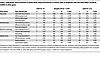 Table 1
Individuals with mutations in FOXP1 show sleep disturbances at similar rates to idiopathic ASD and other NDDs caused by LGDMs in other genes
In addition to these available yet limiting data, we collected qualitative and/or quantitative sleep data from 9 individuals who reported sleep problems in a previous parent-report questionnaire study (12). For these children, parents completed an extensive sleep behavior questionnaire (the Modified Simonds & Parraga Sleep Questionnaire) (20–22). Cognitive impairment was the most prevalent comorbidity (Supplemental Figure 1A). Seven parents (78%) indicated their child was experiencing sleep problems at the time of completing the questionnaires. The most common problem was early waking (5 out of 7; 71%), defined as waking up before 5 am (Figure 1A). The second most frequent parental complaint was night waking (4 out of 7; 57%) (Figure 1A). Of note, the 2 individuals who had no sleep problems at the time of completing the questionnaire had sleep disturbances in the past, both specifying suffering from night wakings and difficulties falling asleep, and 1 additionally reported early waking and feeling sleepy during the day. We followed the International Classification of Sleep Disorders 3 (ICSD-3) criteria, which define a sleep disorder as complaints occurring at least 3 times per week (23), regardless of whether the caretakers thought their children currently had sleep problems. Parent reports indicated that 56% of children experienced night wakings, and 44% experienced early waking at least 3 times per week (Figure 1B). The frequency of nightly awakenings in the whole cohort ranged from once per night to 3 times per night, with about 55% of them waking twice (Figure 1C). When woken during the night, most remained awake for up to 1 hour, while only 2 resettled in a few minutes (Figure 1D).
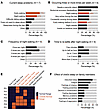 Figure 1
Individuals with FOXP1 syndrome suffer from night and early wakings that affect their family’s well-being. (A) Nature of the sleep problems reported by the parents of individuals with FOXP1 syndrome who believe their child currently has disturbed sleep (7 out of 9 individuals). (B) Sleep disturbances reported to occur at least 3 times per week in the whole cohort (n = 9), independently of whether the parents consider that they are currently experiencing sleep problems. Sleep complaints occurring 3 or more times per week are defined as a sleep disorder according to the ICSD-3 criteria (23). Only features occurring in at least 40% of our cohort are reported. (C and D) Frequency of night wakings (C) and estimated time taken to resettle after waking during the night (D) in our FOXP1 syndrome cohort (n = 9). (E) Outcome of the quantitative graphical sleep diaries. Quantitative values outside the range of neurotypical individuals (age considered; see Supplemental Methods) are highlighted in orange. Numerical values are provided in Table 2. (F) Effect of child’s sleep on family members (n = 9).
In addition to the questionnaires, the parents of the 7 individuals who reported sleep disturbances at that time also provided a well-annotated graphical sleep diary (20–22) for 2 consecutive weeks, except 2 individuals who only completed 1 week. Analysis of these diaries corroborated the observations from the questionnaires and confirmed early morning awakenings, as evidenced by increased wake after sleep offset (WASF) in 5 of 7 individuals with FOXP1 syndrome and by a higher frequency of early awakenings in 4 of 7 patients (Figure 1E and Table 2). Additionally, nearly half of the diaries substantiated elevated wake after sleep onset (WASO), indicating nighttime awakenings, along with low sleep efficiency (below 85%) (Figure 1E and Table 2). One of the most common disruptions was prolonged sleep onset latency (SOL), with 5 individuals showing a median SOL above the reference value of 30 minutes. This finding was unexpected, as it was not a primary complaint. The co-occurrence of increased SOL, WASO, and early morning awakenings was notably prevalent in prepubescent participants (8–13 years old). Total sleep time was in the normal range and largely consistent across the cohort, except for the 2 oldest individuals (13 and 16 years old), who showed reduced and increased sleep, respectively.
Our sleep questionnaire also assessed the effects of the child’s disturbed sleep on family members. All parents and siblings reported being affected by the sleep problems of individuals with FOXP1 syndrome. Not surprisingly, about 80% reported experiencing disrupted sleep due to the child’s sleep problems (Figure 1F). Roughly 55%–66% of family members reported being fatigued and/or feeling irritated and powerless (Figure 1F). About one-third also reported reduced concentration, memory problems, and/or feeling depressed (Figure 1F). Finally, about 20% of parents and siblings reported experiencing feelings of aggression and having more arguments with their partner (Figure 1F). Together, these data highlight sleep disturbances, particularly sleep fragmentation, in individuals with FOXP1 syndrome and their deleterious effects on their families.
Common variation in FOXP1, FOXP2, and FOXP4 is associated with multiple sleep traits in the general population. To obtain further evidence for the importance of FOXP1 in the regulation of sleep, we examined whether common SNPs in the FOXP1 gene, as detected in GWAS, show significant associations with sleep. From an extensive set of GWAS datasets (~4,000 in total) available in the GWAS Atlas (24), we collected data from relevant studies and determined gene-based P values for FOXP1 (NCBI gene ID 27086) as well as for the other members of the FOXP family: FOXP2 (NCBI gene ID 93986) and FOXP4 (NCBI gene ID 116113) (Figure 2A and Supplemental Table 2). We were not able to include the X-linked gene FOXP3 in this analysis due to the insufficient GWAS data for the X chromosome (25). We identified significant associations between common variants in FOXP1 and the sleep traits frequent insomnia symptoms and short sleep (Figure 2, A–C, and Supplemental Table 3). Similarly, FOXP2 showed significant gene-wide associations with short sleep and frequent insomnia symptoms as well as with insomnia, sleep efficiency, and sleep duration (Figure 2, A–E, Supplemental Figure 2, A–C, and Supplemental Table 3). FOXP4 showed associations with short sleep, aligning with FOXP1 and FOXP2, as well as with sleep duration, consistent with FOXP2. Furthermore, gene-wide associations of FOXP4 were significant for chronotype, extreme chronotype, and number of sleep episodes (Figure 2A, Supplemental Figure 3, A–E, and Supplemental Table 3). In summary, gene-wide analyses of common variants of FOXP1, FOXP2, and FOXP4 revealed significant associations with several specific sleep traits resembling the sleep disturbances observed in individuals with FOXP1 gene-disruptive mutations, corroborating a role for the FOXP transcription factor family in sleep regulation.
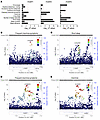 Figure 2
Common variants in FOXP1, FOXP2, and FOXP4 are associated with insomnia, frequent insomnia symptoms, and short sleep. (A) Gene-based analyses of FOXP1, FOXP2, and FOXP4 reveal significant associations with multiple sleep traits. Dashed line indicates significance threshold of P < 0.001515 after correction for multiple testing of 11 traits and 3 genes. (B and C) Regional association plots showing association signals for frequent insomnia symptoms and short sleep at the FOXP1 locus. (D and E) Regional association plots showing association signals for frequent insomnia symptoms and insomnia at the FOXP2 locus. Data are shown as −log10(P value) for individual SNPs. The color of each marker reflects its linkage disequilibrium (r2) with the strongest associated SNP indicated as a purple diamond. The recombination rate is indicated in blue. Chr, chromosome.
Drosophila FoxP mutants recapitulate human sleep maintenance problems. To investigate how the FOXP gene family regulates sleep, we used the fruit fly Drosophila melanogaster as a model. While vertebrates possess 4 FOXP paralogs (FOXP1–4) derived from gene duplication events, invertebrates like Drosophila have a single ortholog, FoxP (26). At the protein level, Drosophila FoxP is highly conserved with human FOXP1, FOXP2, and FOXP4, particularly in domains required for dimerization and DNA binding: the zinc finger, leucine zipper, and forkhead domains (Figure 3A) (27). A notable difference is the absence of the N-terminal polyglutamine region found in mammalian FOXP proteins, which may influence transcriptional regulation (28). Despite this, Drosophila FoxP produces 3 isoforms with distinct forkhead domains that, like their human counterparts, can form homo- and heterodimers to regulate transcription (15, 27). Functionally, Drosophila FoxP is essential for neurodevelopment and behaviors relevant to FOXP-associated disorders, including learning, memory, and social behavior (27). These molecular and functional parallels support that Drosophila FoxP is the ortholog of FOXP1, FOXP2, and FOXP4.
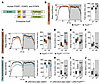 Figure 3
FoxP is required in Drosophila neurons to safeguard normal sleep duration and architecture. (A) Schematic showing domain conservation between human FOXP1, FOXP2, FOXP4 and their Drosophila ortholog, FoxP. Domains include forkhead, zinc finger (ZF), leucine zipper (LZ), and polyglutamine (Q-rich). Adapted from Castells-Nobau et al. (27). (B) Representative sleep profile and total sleep time of FoxP homozygous mutants (FoxP71.2, n = 14) compared with isogenic controls (n = 27). Homozygous FoxP mutants show severe locomotor impairments, with high immobility and lack of arousal at dusk/dawn, limiting unbiased sleep assessment. (C and G) Sleep profiles and their quantification. (D, E, H, and I) Average duration (D and H) and number of sleep bouts (E and I) in the light (LP, ZT0–12) and dark periods (DP, ZT12–24). FoxP71.2/5-SZ-3955 transheterozygous mutant males (n = 117) show reduced total sleep (P < 0.0001) (C) with shorter sleep bouts (P < 0.0001) (D), while the number of sleep bouts increased (P < 0.0001) (E) both during day and night compared with heterozygous Fox5-SZ-3955/+ flies (n = 116). (F and J) Latency to first sleep episode after lights-on and lights-off. (F) FoxP71.2/5-SZ-3955 mutants show longer latency to sleep onset after lights-on (P = 0.012) and shorter latency after lights-off (P < 0.0001). (G–J) Pan-neuronal FoxP-knockdown males (UAS-Dcr2,elav-Gal4 > UAS-FoxPRNAi-1, n = 66) show reduced sleep duration during both the day and night (P < 0.0001) compared with isogenic controls (UAS-Dcr2,elav-Gal4/+, n = 58). Moreover, they exhibit sleep fragmentation, with shorter but more frequent sleep bouts (P < 0.0001). SOL is unaffected. Flies were reared at 28°C. Data are presented as box-and-whisker plots showing the 25th to 75th percentiles, with the median indicated; whiskers represent the 5th and 95th percentiles. Statistical analysis was performed using 2-tailed unpaired t tests or Mann-Whitney tests, with Bonferroni correction for multiple comparisons. Significance: *P < 0.05 and ***P < 0.001.
To address a potential role in sleep regulation of FoxP, we first attempted to assess sleep in the FoxP null mutants previously generated and characterized (27). Homozygous FoxP71.2 mutants exhibited poor mobility (Figure 3B) consistent with previous findings of substantial locomotor deficits (27), making reliable sleep assessment in FoxP null conditions unfeasible. Therefore, we next determined sleep in a less severe yet stringent allele combination. We combined the FoxP71.2 null allele with the hypomorphic allele FoxP5-SZ-3955. Male FoxP71.2/5-SZ-3955 compound heterozygous mutants did not show motor impairment and exhibited reduced total sleep duration during both the light (20% decrease) and dark (10% decrease) periods when compared with heterozygous FoxP5-SZ-3955/+ controls (Figure 3C). Furthermore, FoxP71.2/5-SZ-3955 flies were unable to maintain sleep for as long as heterozygous mutant flies, which was evidenced by a reduction in sleep bout duration (45% reduction in the day and 30% at night; Figure 3D). This decrease was accompanied by an increase in the number of sleep bouts (Figure 3E), suggesting that FoxP71.2/5-SZ-3955 mutants attempt to compensate for reduced sleep by initiating more bouts. These shorter sleep bouts occurring with a higher number of sleep episodes constitute sleep fragmentation, a hallmark of human sleep maintenance insomnia. The same sleep defects also occurred in compound heterozygous FoxP71.2/5-SZ-3955 female mutants (Supplemental Figure 4, A–C), indicating the function of FoxP in sleep fragmentation is not sex specific. Sleep latency at lights-off, however, was reduced in males and unchanged in females (Figure 3F and Supplemental Figure 4D), contrasting with the increased SOL observed in individuals with FOXP1 syndrome. Overall, FoxP loss in Drosophila recapitulates the sleep maintenance insomnia observed in FOXP1 syndrome and reflects FOXP1/2/4-associated sleep traits in the general population.
FoxP is required in neurons for sleep integrity. We sought to collect independent evidence for the role of FoxP in sleep regulation and to identify the cellular substrates through which it acts. Taking advantage of the UAS-Gal4 system and a highly effective and previously validated RNAi line (27, 29, 30), we first induced ubiquitous, constitutive FoxP knockdown using actin-Gal4. This manipulation recapitulated decreased total sleep time, during both the light and dark periods (Supplemental Figure 5A). Furthermore, ubiquitous FoxP knockdown reproduced the sleep fragmentation present in FoxP71.2/5-SZ-3955 mutants (Supplemental Figure 5, B and C). The decreased sleep time and fragmentation were more severe than in compound heterozygous hypomorphic FoxP mutants, with sleep bout duration showing a 60% reduction during the day and a 65% decrease during the night. We used an independent, previously validated, weaker RNAi construct (27) to confirm these findings. FoxP knockdown with this alternative RNAi faithfully reproduced the daytime and nighttime sleep fragmentation; however, total sleep duration was unaltered (Supplemental Figure 5, D–F).
In the CNS of the fly, FoxP has been shown to be expressed in neurons (27, 31). Therefore, we investigated whether loss of FoxP in neurons would reproduce the sleep disturbances present in FoxP mutants. Inducing FoxP knockdown with the pan-neuronal driver elav-Gal4 led to a severe decrease in total sleep time (about a 15%–20% reduction compared with isogenic controls; Figure 3G). Moreover, it reproduced the marked sleep fragmentation seen in the FoxP71.2/5-SZ-3955 mutants and ubiquitous knockdown flies (Figure 3, H–J). In contrast, knocking down FoxP in glial cells did not affect sleep duration or structure (Supplemental Figure 5, G–I), supporting the hypothesis that the observed sleep phenotypes originate in neurons rather than glia. Collectively, we conclude that sleep disturbances in FoxP mutants map to FoxP function in neurons.
FoxP is required during development for adult sleep. To investigate whether FoxP is required in neurons for sleep integrity early in development or regulates sleep acutely in adulthood, we took advantage of the temporal and regional gene expression targeting (TARGET) system (32) to restrict FoxP knockdown temporally (Figure 4A). Flies carrying the elav-Gal4 driver and the ubiquitous Gal4 repressor tub-Gal80ts kept at a restrictive temperature (19°C, no FoxP knockdown) throughout their lifespan showed comparable sleep duration and architecture to genetic background controls (Supplemental Figure 6, A–D). In contrast, when kept continuously at the permissive temperature (29°C, FoxP knockdown), flies showed decreased and fragmented sleep during both the day and the night (Supplemental Figure 6, E–H). Restricting pan-neuronal FoxP knockdown to only adulthood (shifting to 29°C immediately after eclosion) did not affect sleep quantity or architecture (Figure 4, B–E). In contrast, FoxP knockdown throughout developmental stages prior to eclosion only (29°C pre-eclosion) resulted in decreased and fragmented sleep in the adult, mirroring FoxP knockdown throughout the lifespan (Figure 4, F–I). Together, these experiments reveal that FoxP is required during developmental stages in neurons for normal adult sleep.
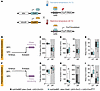 Figure 4
FoxP is required during development for adult sleep. (A) Schematic representation of the TARGET system. (B) Temperature shifts used to induce posteclosion FoxP knockdown, restricting it to adulthood. (C–E) Representative data for total sleep time (C), average sleep bout duration (D), and number of sleep bouts (E) during the light period (LP, ZT0–12) and dark period (DP, ZT12–24) in flies with pan-neuronal FoxP knockdown exclusively during posteclosion stages (tub-Gal80ts, elav-Gal4; UAS-Dcr2 > UAS-FoxPRNAi-1, n = 16) compared with isogenic controls (tub-Gal80ts, elav-Gal4; UAS-Dcr2/+, n = 16). Posteclosion FoxP knockdown does not affect sleep. (F) Temperature shifts used to induce FoxP knockdown throughout developmental stages prior to eclosion only. (G–I) Representative data for total sleep time (G), average sleep bout duration (H), and number of sleep bouts (I) during the light period (ZT0–12) and dark period (ZT12–24) in flies with pan-neuronal FoxP knockdown during pre-eclosion stages (tub-Gal80ts, elav-Gal4; UAS-Dcr2 > UAS-FoxPRNAi-1, n = 26) compared with isogenic controls (tub-Gal80ts, elav-Gal4; UAS-Dcr2/+, n = 29). FoxP knockdown during developmental stages prior to eclosion is necessary and sufficient to cause decreased and fragmented sleep. Data are presented as box-and-whisker plots showing the 25th to 75th percentiles, with the median indicated; whiskers represent the 5th and 95th percentiles. Statistical analysis was performed using 2-tailed unpaired t tests or Mann-Whitney tests, with Bonferroni correction for multiple comparisons. Significance: *P < 0.05, **P < 0.01, and ***P < 0.001.
FoxP is required for circadian rhythmicity. Having established a role for FoxP in sleep, we next asked whether FoxP is required for sleep homeostasis by examining whether it affects sleep rebound in response to sleep deprivation. Overnight mechanical sleep deprivation led to strong daytime sleep rebound in FoxP71.2/5-SZ-3955 mutants and their background controls (Supplemental Figure 7, A and B), suggesting that the sleep homeostat remains intact and functions independently of FoxP. Next, we investigated whether FoxP regulates circadian rhythms by assessing rest/activity rhythms in constant darkness. FoxP hemizygous mutants showed a decreased rhythmicity index in free-running conditions (Figure 5A). Moreover, only 20% of FoxP mutants remained rhythmic compared with 80% of their isogenic controls (Figure 5B). Pan-neuronal FoxP knockdown also led to a reduction in rhythm strength in constant darkness (Figure 5, A and B). Compound heterozygous mutant and FoxP pan-neuronal knockdown females likewise showed impaired rhythmicity at constant darkness (Supplemental Figure 8A). Thus, FoxP loss disrupts circadian rhythmicity in free-running conditions.
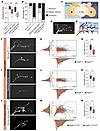 Figure 5
FoxP loss leads to circadian rhythmicity defects and abolishes PDF-secreting s-LNv neuron plasticity. (A and B) Rhythmicity index (A) and proportion of rhythmic, weakly rhythmic, and arrhythmic flies (B) in FoxP71.2/5-SZ-3955 compound heterozygous mutant males (n = 28) compared with heterozygous hypomorphic Fox5-SZ-3955/+ flies (n = 25) and pan-neuronal FoxP-knockdown male flies (UAS-Dcr2,elav-Gal4 > UAS-FoxPRNAi-1, n = 69) compared with isogenic controls (UAS-Dcr2,elav-Gal4/+, n = 61). FoxP transheterozygous mutants and FoxP pan-neuronal knockdown leads to a lower rhythmicity index and increased arrhythmicity. (C) Schematic representation of the presynaptic terminals of s-LNv neurons in the morning (ZT2) and at night (ZT14). During early morning (ZT2), s-LNv projections are highly branched with high levels of PDF immunoreactivity, whereas during the night (ZT14), the projections are decreased and show lower PDF levels (80). (D and E) Example of synaptic terminal (D) and schematic illustration (E) of the image segmentation process employed for the quantitative analysis of s-LNv branching morphology. (F, I, and L) Representative images of PDF foci in s-LNv axonal terminals. Scale bar: 10 μm. (G, J, and M) Distribution of Cartesian (x, y) coordinates for each PDF-immunoreactive maximum. The distributions display the percentage of PDF-immunoreactive maxima along both the x and y dimensions. (H, K, and N) Percentage of PDF foci within area 2. (F–H) FoxP homozygous mutants (FoxP71.2, n = 30) compared with isogenic controls (n = 28) at ZT1–3 (morning). (I–K) FoxP homozygous mutants (FoxP71.2, n = 27) compared with isogenic controls (in gray, n = 25) at ZT13–15 (evening). (L–N) FoxP71.2/5-SZ-3955 compound heterozygous mutants (n = 27) compared with heterozygous hypomorphic Fox5-SZ-3955/+ flies (n = 25) at ZT1–3 (morning). Data are presented as box-and-whisker plots showing the 25th to 75th percentiles, with the median indicated; whiskers represent the 5th and 95th percentiles. Statistical analysis was performed using a 2-tailed unpaired t test. Significance: *P < 0.05 and ***P < 0.001.
FoxP affects the plasticity of PDF-secreting neurons in a non-cell-autonomous manner. Locomotor activity rhythms in Drosophila are driven by clock neurons in the brain, whereby the ventrolateral neurons (LNvs) function as central pacemakers that synchronize downstream neuronal oscillators via the rhythmic secretion of the neuropeptide pigment dispersing factor (PDF) (33, 34). The small LNvs (s-LNvs) change electrophysiological properties and presynaptic morphologies between day and night. During the early daytime (Zeitgeber time 1–3 [ZT1–3], peaking 2 hours after lights-on), they exhibit extensive branching of their presynaptic terminals and a higher level of PDF neuropeptide. However, during the early night (ZT14, 2 hours after lights-off), s-LNvs undergo retraction to adopt a less complex morphology with lower levels of PDF (Figure 5B) (35, 36). This plasticity is crucial for downstream connectivity and proper regulation of circadian output behaviors such as sleep, locomotion, and metabolism in a time of day–dependent manner (35, 37).
To investigate whether FoxP regulates s-LNv morphology, we visualized the s-LNvs’ synaptic terminals of FoxP71.2 homozygous null mutants and isogenic controls during the morning (ZT1–3) and evening (ZT13–15) by immunohistochemistry with an α-PDF antibody (Figure 5, C–K). Individual PDF+ foci were given a Cartesian (x, y) coordinate relative to the origin corresponding to the primary s-LNv axonal branching point (x = 0, y = 0; see Supplemental Methods) (Figure 5, C–E) and were plotted as dispersion graphs. s-LNv axonal terminal of FoxP71.2 homozygous null mutants in the morning (ZT1–3) showed reduced terminal extension compared with isogenic control flies (Figure 5, F–H). We then quantified the percentage of PDF foci in area 2 (Figure 5E), comprising the distal axonal terminals, which confirmed a significant impairment in the distal branching extension of s-LNvs, both in the morning (Figure 5, F–H) and in the evening, albeit to a lesser extent (Figure 5, I–K). Thus, FoxP null mutant s-LNv axonal terminals show impaired structural plasticity (Figure 5, F–K, and Supplemental Figure 5, B–E). Moreover, we observed a decrease in s-LNv axonal terminal morning extension and complexity in FoxP71.2/5-SZ-3955 compound heterozygous mutants (Figure 5, L–N). Together, our findings show that loss of FoxP disrupts the plasticity of central pacemaker neurons.
To investigate whether FoxP regulates sleep cell-autonomously in LNvs, we induced FoxP knockdown specifically in these neurons using the Pdf-Gal4 driver. However, LNv-specific FoxP knockdown had no effect on sleep duration or its architecture (Supplemental Figure 9, A–C). This result aligns with the lack of FoxP expression in PDF neurons during adulthood (Supplemental Figure 9D). We also tested whether FoxP might operate in a subgroup of dorsal clock neurons (DN1), which are contacted by the axonal terminals of the s-LNvs, hypothesizing that they may be involved in the functional defects. We found that FoxP knockdown in DN1 neurons led to a significant decrease in daytime sleep (Supplemental Figure 9E) along with fragmented sleep (Supplemental Figure 9, F and G), recapitulating the daytime sleep complaints of the FoxP models.
FoxP is required in cholinergic, glutamatergic, and peptidergic neurons for sleep. Although flies sleep during both the day and night, consolidated sleep (longer sleep episodes) preferentially occurs at night and is thought to reflect a crucial deep sleep state, which has been linked to cognitive functioning (38–40). Disruption of consolidated night sleep episodes before reaching deeper stages impairs learning even when total sleep duration remains unaffected (38); in this sense, night sleep fragmentation in Drosophila is of greater relevance to the sleep problems experienced by individuals with FOXP1 syndrome. Therefore, we further screened the impact of FoxP knockdown in various neurotransmitter systems and brain regions that express FoxP or play a role in sleep regulation (27, 41). FoxP knockdown using GABAergic, dopaminergic, and serotonergic drivers and drivers for the mushroom body, the ellipsoid body, the fan-shaped body, the insulin-producing cells, or the giant descending neuron circuit had no effect on the duration or number of nighttime sleep episodes (Figure 6, A and B). However, knockdown in cholinergic, glutamatergic, and peptidergic neurons significantly reduced sleep bout duration while increasing the number of bouts (Figure 6, A and B). Further analysis revealed that in addition to the nighttime sleep fragmentation, FoxP knockdown in cholinergic neurons led to increased sleep during the day (Figure 6, C–E). In contrast, FoxP knockdown restricted to glutamatergic neurons significantly decreased and fragmented both daytime and nighttime sleep (Figure 6, F–H). Restricting FoxP knockdown to peptidergic neurons using the 386Y-Gal4 driver resulted in severe sleep fragmentation. In this case, FoxP knockdown exclusively disrupted nighttime sleep (Figure 6, I–K). In conclusion, FoxP is required in glutamatergic neurons for both daytime and nighttime sleep and in cholinergic and especially peptidergic neurons for nighttime sleep.
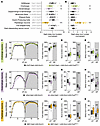 Figure 6
FoxP is required in cholinergic, glutamatergic, and peptidergic neurons for nighttime sleep integrity and duration. (A) Effect of FoxP knockdown (UAS-FoxPRNAi-1;UAS-Dcr2) on the average sleep bout duration (B) and number of sleep bouts in the different neuronal subtypes. Data were normalized to their respective background controls (Gal4,UAS-Dcr2/+). 26–32 flies per genotype. Data are represented as the median ± 95% CI, with individual values depicted. Two-tailed unpaired t test or Mann-Whitney U test, with Bonferroni correction for multiple testing. (C, F, and I) Sleep profiles and their quantification. (D, E, G, H, J, and K) Average duration (D, G, and J) and number of sleep bouts (E, H, and K) in the light (LP, ZT0–12) and dark periods (DP, ZT12–24). (C–E) FoxP knockdown in cholinergic neurons (ChAT-Gal4 > UAS-Dcr2,UAS-FoxPRNAi-1, n = 64) decreases sleep during both day (P < 0.0001) and night (P = 0.012) compared with controls (ChAT-Gal4 UAS-Dcr2/+, n = 63). Knockdown flies exhibit shorter but more frequent sleep bouts during the dark period (P < 0.0001). (F–H) FoxP knockdown in glutamatergic neurons (vGlut-Gal4 > UAS-Dcr2,UAS-FoxPRNAi-1, n = 95) significantly decreases sleep duration during the day (P = 0.006) and the night (P = 0.00012) compared with controls (vGlut-Gal4 UAS-Dcr2/+, n = 96). Knockdown flies show shorter but more frequent sleep bouts (P < 0.0001, LP and DP). (I–K) FoxP knockdown in neuropeptidergic neurons (386Y-Gal4 > UAS-Dcr2,UAS-FoxPRNAi-1, n = 84) leads to a significant decrease in sleep duration at night (P = 0.0018) compared with controls (386Y-Gal4 UAS-Dcr2/+, n = 92). FoxP-knockdown flies show shorter (P < 0.0001) and an increased number of sleep bouts (P < 0.0001). Data are presented as box-and-whisker plots showing the 25th to 75th percentiles, with the median indicated; whiskers represent the 5th and 95th percentiles. Statistical analysis was performed using 2-tailed unpaired t test or Mann-Whitney U test, with Bonferroni correction for multiple testing. Significance: *P < 0.05, **P < 0.01, and ***P < 0.001.
FoxP loss leads to the downregulation of genes involved in neuropeptidergic signaling. FoxP is a transcription factor and, as such, functions by regulating downstream gene expression programs. To gain insight into the specific FoxP target genes that mediate sleep, we performed transcriptomics analysis (RNA-seq) of FoxP null mutant and isogenic control whole brains. To evaluate consistency between the biological replicates, we first performed principal component analysis, which revealed a clear separation between the 2 genotypes (Supplemental Figure 10A). We identified 1,575 significantly differentially expressed genes (809 up- and 766 downregulated genes) and confirmed that, as expected, the gene with the largest negative fold change in expression is FoxP itself (Figure 7A and Supplemental Table 4). Remarkably, Gene Ontology (GO) molecular function overrepresentation analysis of significantly downregulated genes revealed that FoxP regulates targets involved in neuropeptidergic function such as neuropeptide receptor activity and binding, neuropeptide binding, neuropeptide hormone activity, and neuropeptide receptor binding, among others (Figure 7, B and C, and Supplemental Table 5). Similarly, we identified pathways related to neuropeptide signaling with overrepresentation analysis of the downregulated targets at the GO biological process level (Supplemental Figure 10, B and C, and Supplemental Table 6). Given that peptidergic neurons underlie the night sleep fragmentation (Figure 6, I–K), the finding that FoxP regulates genes involved in neuropeptidergic function is of particular interest.
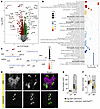 Figure 7
FoxP regulates genes involved in neuropeptide signaling and controls sleep integrity in peptidergic hugin+ neurons. (A) Volcano plot of differentially expressed genes in the brains of FoxP71.2 homozygous mutants identified using robust linear regression models (t statistic based on M estimation with Huber weighting solved using iteratively reweighted least squares). The log2 of the fold change and the log10 P values adjusted for multiple testing (pFDR) are plotted for each gene. Differentially expressed genes (pFDR < 0.05) are colored in red and green, indicating down- and upregulation, respectively. (B) Dot plot of GO molecular function enrichment analysis from genes significantly downregulated in the brains of FoxP71.2 homozygous mutants. Dots are colored according to their q value. (C) Gene concept network illustrating significant genes associated with key molecular functions: neuropeptide receptor activity, neuropeptide binding, neuropeptide hormone activity, and neuropeptide receptor binding. (D) Colocalization of FoxP+ and hugin+ neurons; FoxP-LexA and Hug-Gal4 were combined with LexOp-mCD8-RFP and UAS-mCD8-GFP, respectively, to identify overlapping fluorescent signal at adult and wandering L3 larval stages. FoxP is partially expressed in hugin+ neurons in L3 larvae brains, but not in adults. Scale bars: 25 μm. (E and F) Average duration (E) and number of sleep bouts (F) during the light (LP, ZT0–12) and dark periods (DP, ZT12–24). FoxP knockdown in hugin+ neurons (hug-Gal4 > UAS-Dcr2, UAS-FoxPRNAi-1, n = 95) leads to shorter but more frequent sleep bouts exclusively during the night (P = 0.0004 and P < 0.0001) compared with controls (hug-Gal4 UAS-Dcr2/+, n = 96). Data are presented as box-and-whisker plots showing the 25th to 75th percentiles, with the median indicated; whiskers represent the 5th and 95th percentiles. Statistical analysis was performed using 2-tailed unpaired t test or Mann-Whitney U test with Bonferroni’s correction for multiple testing. Significance: **P < 0.01 and ***P < 0.001.
FoxP promotes nighttime sleep integrity via its function in hugin+ neurons. Motivated by the role of FoxP in peptidergic neurons — where it regulates sleep and transcriptionally regulates neuropeptide activity — we investigated whether FoxP exerts its effects through one of its downstream targets. Since we recapitulated the sleep maintenance defect observed in FoxP mutants by knocking down FoxP specifically in peptidergic neurons using the 386-GAL4 driver (Figure 6), we examined the neuronal populations targeted by this construct in more detail. The 386Y-Gal4 driver follows the pattern of the amontillado gene, which encodes a prohormone convertase essential for processing neuropeptide precursors into bioactive hormones. These include adipokinetic hormone, FMRFamide-like peptides 2–8, CAPA peptides (CAPA-periviscerokinin-1/2 and CAPA-pyrokinin), corazonin, myosuppressin, Hugin (Hug), and short neuropeptide F-1 and -2 (42, 43). We examined the expression of genes encoding these neuropeptides in the targets identified by RNA-seq in FoxP mutant brains. Surprisingly, only one of these peptidergic hormones, Hugin, was significantly downregulated in FoxP71.2 homozygous null mutants (Figure 7C and Supplemental Figure 10C), suggesting a specific link between FoxP and Hugin-expressing neurons in sleep regulation.
Hugin is a prepropeptide that produces 2 neuropeptides, Hugin-γ and pyrokinin-2, the latter homologous to mammalian neuromedin U (44). To investigate whether FoxP is expressed in hugin+ neurons, we used genetically encoded fluorescent proteins to colabel FoxP and hugin+ neurons. We used the driver hug-Gal4 to express UAS-GFP in about 20 hugin+ neurons in the subesophageal zone and labeled FoxP-expressing cells by expressing LexOp-mCD8-RFP using a previously validated FoxP driver, FoxP-LexA (45). We found that FoxP was undetectable in hugin+ neurons during adulthood (Figure 7D). However, motivated by the developmental origin of FoxP-dependent sleep fragmentation, we also investigated whether FoxP is expressed in hugin+ neurons during earlier stages of development. We found that at the wandering L3 larval stage, FoxP is expressed in a subset of hugin+ neurons (Figure 7D). Next, we investigated whether FoxP may regulate sleep integrity in these peptidergic neurons. Indeed, we found that FoxP knockdown in hugin+ neurons led to sleep fragmentation at nighttime, as evidenced by shorter but more frequent sleep bouts (Figure 7, E and F). Together, we conclude that FoxP is required during development in a subset of hugin+ neurons for proper adult sleep architecture.
Finally, to explore whether FOXP1/2/4 may regulate neuromedin U, we analyzed recent high-resolution single-cell RNA-seq datasets of the human cortex at prenatal (46) and postnatal stages (47). In the developing cortex, NMU — the gene encoding neuromedin U in humans — is expressed mainly in the medial ganglionic eminence (dividing and intermediate cells), in dividing intermediate progenitor cells, and in dividing radial glia (Supplemental Figure 11A). FOXP1 and FOXP2 are expressed in these clusters, while FOXP4 only shows sparse expression. In the adult cortex, NMU is highly localized to somatostatin and parvalbumin neuronal clusters (Supplemental Figure 11B). FOXP1 and FOXP4 are broadly expressed in these cells, whereas FOXP2 expression is more limited and at lower levels. Together, these data support a role for FOXP1 in NMU-expressing neurons during both development and adulthood in the human cortex.


Copyright © 2026 American Society for Clinical Investigation
ISSN: 0021-9738 (print), 1558-8238 (online)