
Advertisement
Research ArticleCell biologyGeneticsOncology
Open Access |  10.1172/JCI192883
RCC2 and CD24 cooperate to modulate prostate cancer progression through vimentin ubiquitination and β-catenin activation
Xuelian Cui,1 Yicun Wang,1 Chao Zhang,1 Zhichao Liu,1 Haiyan Yu,1 Lizhong Wang,1,2 Jiangbing Zhou,3,4 and Runhua Liu1,2
1Department of Genetics and
2O’Neal Comprehensive Cancer Center, University of Alabama at Birmingham, Birmingham, Alabama, USA.
3Department of Neurosurgery and
4Biomedical Engineering, Yale University, New Haven, Connecticut, USA.
Address correspondence to: Runhua Liu or Lizhong Wang, The University of Alabama at Birmingham, 631 MCLM, 1918 University Blvd., Birmingham, Alabama, 35294, USA. Phone: 205.934.7308; Email: runhua@uab.edu (RL); Email: lizhongwang@gmail.com (LW). Or to: Jiangbing Zhou, 310 Cedar Street, New Haven, Connecticut, 06520, USA. Phone: 203.785.5327; Email: jiangbing.zhou@yale.edu.
Authorship note: XC, YW, and CZ have been designated as cofirst authors.
Find articles by Cui, X. in: PubMed | Google Scholar
1Department of Genetics and
2O’Neal Comprehensive Cancer Center, University of Alabama at Birmingham, Birmingham, Alabama, USA.
3Department of Neurosurgery and
4Biomedical Engineering, Yale University, New Haven, Connecticut, USA.
Address correspondence to: Runhua Liu or Lizhong Wang, The University of Alabama at Birmingham, 631 MCLM, 1918 University Blvd., Birmingham, Alabama, 35294, USA. Phone: 205.934.7308; Email: runhua@uab.edu (RL); Email: lizhongwang@gmail.com (LW). Or to: Jiangbing Zhou, 310 Cedar Street, New Haven, Connecticut, 06520, USA. Phone: 203.785.5327; Email: jiangbing.zhou@yale.edu.
Authorship note: XC, YW, and CZ have been designated as cofirst authors.
Find articles by Wang, Y. in: PubMed | Google Scholar
1Department of Genetics and
2O’Neal Comprehensive Cancer Center, University of Alabama at Birmingham, Birmingham, Alabama, USA.
3Department of Neurosurgery and
4Biomedical Engineering, Yale University, New Haven, Connecticut, USA.
Address correspondence to: Runhua Liu or Lizhong Wang, The University of Alabama at Birmingham, 631 MCLM, 1918 University Blvd., Birmingham, Alabama, 35294, USA. Phone: 205.934.7308; Email: runhua@uab.edu (RL); Email: lizhongwang@gmail.com (LW). Or to: Jiangbing Zhou, 310 Cedar Street, New Haven, Connecticut, 06520, USA. Phone: 203.785.5327; Email: jiangbing.zhou@yale.edu.
Authorship note: XC, YW, and CZ have been designated as cofirst authors.
Find articles by Zhang, C. in: PubMed | Google Scholar
1Department of Genetics and
2O’Neal Comprehensive Cancer Center, University of Alabama at Birmingham, Birmingham, Alabama, USA.
3Department of Neurosurgery and
4Biomedical Engineering, Yale University, New Haven, Connecticut, USA.
Address correspondence to: Runhua Liu or Lizhong Wang, The University of Alabama at Birmingham, 631 MCLM, 1918 University Blvd., Birmingham, Alabama, 35294, USA. Phone: 205.934.7308; Email: runhua@uab.edu (RL); Email: lizhongwang@gmail.com (LW). Or to: Jiangbing Zhou, 310 Cedar Street, New Haven, Connecticut, 06520, USA. Phone: 203.785.5327; Email: jiangbing.zhou@yale.edu.
Authorship note: XC, YW, and CZ have been designated as cofirst authors.
Find articles by Liu, Z. in: PubMed | Google Scholar
1Department of Genetics and
2O’Neal Comprehensive Cancer Center, University of Alabama at Birmingham, Birmingham, Alabama, USA.
3Department of Neurosurgery and
4Biomedical Engineering, Yale University, New Haven, Connecticut, USA.
Address correspondence to: Runhua Liu or Lizhong Wang, The University of Alabama at Birmingham, 631 MCLM, 1918 University Blvd., Birmingham, Alabama, 35294, USA. Phone: 205.934.7308; Email: runhua@uab.edu (RL); Email: lizhongwang@gmail.com (LW). Or to: Jiangbing Zhou, 310 Cedar Street, New Haven, Connecticut, 06520, USA. Phone: 203.785.5327; Email: jiangbing.zhou@yale.edu.
Authorship note: XC, YW, and CZ have been designated as cofirst authors.
Find articles by Yu, H. in: PubMed | Google Scholar
1Department of Genetics and
2O’Neal Comprehensive Cancer Center, University of Alabama at Birmingham, Birmingham, Alabama, USA.
3Department of Neurosurgery and
4Biomedical Engineering, Yale University, New Haven, Connecticut, USA.
Address correspondence to: Runhua Liu or Lizhong Wang, The University of Alabama at Birmingham, 631 MCLM, 1918 University Blvd., Birmingham, Alabama, 35294, USA. Phone: 205.934.7308; Email: runhua@uab.edu (RL); Email: lizhongwang@gmail.com (LW). Or to: Jiangbing Zhou, 310 Cedar Street, New Haven, Connecticut, 06520, USA. Phone: 203.785.5327; Email: jiangbing.zhou@yale.edu.
Authorship note: XC, YW, and CZ have been designated as cofirst authors.
Find articles by Wang, L. in: PubMed | Google Scholar
1Department of Genetics and
2O’Neal Comprehensive Cancer Center, University of Alabama at Birmingham, Birmingham, Alabama, USA.
3Department of Neurosurgery and
4Biomedical Engineering, Yale University, New Haven, Connecticut, USA.
Address correspondence to: Runhua Liu or Lizhong Wang, The University of Alabama at Birmingham, 631 MCLM, 1918 University Blvd., Birmingham, Alabama, 35294, USA. Phone: 205.934.7308; Email: runhua@uab.edu (RL); Email: lizhongwang@gmail.com (LW). Or to: Jiangbing Zhou, 310 Cedar Street, New Haven, Connecticut, 06520, USA. Phone: 203.785.5327; Email: jiangbing.zhou@yale.edu.
Authorship note: XC, YW, and CZ have been designated as cofirst authors.
Find articles by
Zhou, J.
in:
PubMed
|
Google Scholar
|

1Department of Genetics and
2O’Neal Comprehensive Cancer Center, University of Alabama at Birmingham, Birmingham, Alabama, USA.
3Department of Neurosurgery and
4Biomedical Engineering, Yale University, New Haven, Connecticut, USA.
Address correspondence to: Runhua Liu or Lizhong Wang, The University of Alabama at Birmingham, 631 MCLM, 1918 University Blvd., Birmingham, Alabama, 35294, USA. Phone: 205.934.7308; Email: runhua@uab.edu (RL); Email: lizhongwang@gmail.com (LW). Or to: Jiangbing Zhou, 310 Cedar Street, New Haven, Connecticut, 06520, USA. Phone: 203.785.5327; Email: jiangbing.zhou@yale.edu.
Authorship note: XC, YW, and CZ have been designated as cofirst authors.
Find articles by Liu, R. in: PubMed | Google Scholar
Published October 15, 2025 - More info
J Clin Invest. 2025;135(20):e192883. https://doi.org/10.1172/JCI192883.
© 2025 Cui et al. This work is licensed under the Creative Commons Attribution 4.0 International License. To view a copy of this license, visit http://creativecommons.org/licenses/by/4.0/.
Received: February 27, 2025; Accepted: July 30, 2025

-
Results
CD24 is positively correlated with RCC2 in human prostate cancer. CD24 plays a crucial role in tumor metastasis (24), including prostate cancer (3, 7). Although we previously established that intracellular CD24 stimulates prostate cancer cell growth by controlling the ARF-NPM interaction and p53 inactivation (7), the mechanism of CD24-mediated metastasis remains elusive. To identify potential mechanisms, particularly other genes that interact with CD24 to promote metastasis, we screened potential CD24-associated genes using 2 public datasets: the Cancer Genome Atlas Program (TCGA) and the Prostate Cancer Transcriptome Atlas (PCTA). As shown in Figure 1A, we employed a comprehensive data-driven approach to perform a bioinformatics analysis of public datasets for the identification of CD24-associated interactors in the TCGA dataset. First, we identified genes positively correlated with CD24 expression, including RCC2 (Pearson correlation coefficient (r) > 0.30, P < 0.001). Among several candidate CD24 interactor genes, RCC2 was significantly associated with metastasis-related pathways in human prostate cancer (Figure 1B). These analyses of expression correlation and metastasis pathway enrichment suggest that RCC2 is a key player in CD24-mediated metastasis. Furthermore, we identified a weak-to-moderate positive correlation between CD24 and RCC2 mRNA expression levels in human prostate cancer tissues from the TCGA (r = 0.371, P < 0.0001) and PCTA (r = 0.226, P < 0.0001) datasets (Figure 1, C and D, and Supplemental Figure 1, A and B; supplemental material available online with this article; https://doi.org/10.1172/JCI192883DS1). Although CD24 is known to be androgen regulated in prostate cancer cells (25), there was no correlation in the TCGA dataset between CD24 expression and androgen receptor (AR) expression, or between CD24 and the AR-regulated gene KLK3 (prostate-specific antigen, PSA) (Supplemental Figure 1C). Similarly, although RCC2 expression showed a weak correlation with AR, it did not correlate with KLK3 expression (Supplemental Figure 1D). In the PCTA dataset, we also observed a weak correlation between CD24 and AR expression, as well as between CD24 and KLK3 (PSA) expression (Supplemental Figure 1C). Likewise, RCC2 showed a weak correlation with AR but no correlation with KLK3 (PSA) (Supplemental Figure 1D). Additionally, CD24 mRNA expression was lowest in the hormone-sensitive prostate cancer cell line LNCaP, moderate in the AR-positive castration-resistant prostate cancer (CRPC) cell line 22RV1, and highest in AR-negative CRPC cell lines (DU145 and PC3) and neuroendocrine prostate cancer (NEPC) cell lines (H660 and VCaP) (Supplemental Figure 1E). In contrast, RCC2 mRNA expression did not significantly differ among hormone-sensitive prostate cancer, CRPC, or NEPC cell lines (Supplemental Figure 1F). These findings suggest that CD24, but not RCC2, may function in relation to AR signaling.
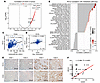 Figure 1
Positive correlation between CD24 and RCC2 expression in human prostate cancer tissues. (A) Volcano plot showing the correlation between CD24 and other transcriptome genes in human prostate adenocarcinoma tissues (TCGA dataset, n = 424). The x-axis represents the Pearson correlation coefficient (r), and the y-axis displays the –log10(FDR). Gray dots indicate genes with nonsignificant correlations (FDR ≥ 0.05), while red dots represent genes with a significant positive correlation (r > 0.30 and FDR < 0.05). (B) Correlation analysis between RCC2 expression and metastasis-related pathway activity based on Gene Set Variation Analysis (GSVA) in the TCGA dataset (n = 550). The x-axis shows the r, and the y-axis lists metastasis-related pathways. Dot color represents the correlation value (blue, negative; red, positive), while dot size reflects statistical significance, with larger dots corresponding to smaller P-values (–log10(P)). (C) Scatter plot showing a moderate positive correlation between CD24 and RCC2 mRNA expression levels in human prostate adenocarcinoma tissues (TCGA dataset). (D) Scatter plot showing a weak to moderate correlation between CD24 and RCC2 mRNA expression levels in the Prostate Cancer Transcriptome Atlas (PCTA) dataset. (E) Representative IHC staining of CD24 and RCC2 in human prostate cancer samples. Scale bar: 100 μm. (F) H-score quantitative analysis of IHC data reveals a moderate positive correlation between CD24 and RCC2 protein expression levels in primary prostate cancer samples (n = 78). A–D, and F, r was determined using Pearson’s correlation test. The experiments were repeated twice.
Furthermore, using IHC analysis, we evaluated the protein expression of CD24 and RCC2 in 78 primary prostate adenocarcinoma samples (Figure 1E). Approximately 49% (38 of 78) and 82% (64 of 78) of prostate cancer samples showed CD24 and RCC2 expression, respectively. Notably, H-score quantitative analysis revealed a moderate positive correlation between the protein expression levels of CD24 and RCC2 in primary prostate adenocarcinomas (r = 0.369, P < 0.0001; Figure 1F and Supplemental Table 1). RCC2 protein expression was significantly decreased only in Gleason score 8–10 samples compared to Gleason score 7 samples (P = 0.031) (Supplemental Figure 1G). However, no significant changes in RCC2 protein expression were observed across tumor stages (T2, T3, T4, or metastatic cases) (Supplemental Figure 1H).
To determine whether RCC2 interacts with CD24 in prostate cancer cells, we analyzed the localization of CD24 and RCC2 in DU145 cells using immunofluorescence (IF). CD24 is a cell surface marker, but the majority reside intracellularly in DU145 cells (7). As shown in Figure 2A, RCC2 was expressed in both the nucleus and cytoplasm of DU145 cells during the interphase, whereas CD24 was localized in the cytoplasm. However, RCC2, which accumulates in the nucleus, is widely dispersed in the cytoplasm during mitosis, particularly during metaphase. CD24 and RCC2 colocalized in the cytosol of DU145 cells during interphase and mitosis. Notably, overlapping intensity patterns of RCC2 and CD24 were observed by analyzing the precise pixel intensity values throughout the nucleus and cytoplasm (Figure 2B). A quantitative colocalization analysis of CD24 and RCC2 was performed using ImageJ/Fiji with the JaCoP plugin to assess the relationship between the fluorescence intensities of the 2 proteins and to further quantify their colocalization. As shown in Figure 2C, there was strong colocalization between CD24 and RCC2, as indicated by Pearson’s correlation coefficient (PCC, r = 0.6393), Manders’ overlap coefficient (MOC)-M1 (CD24 vs. RCC2, r = 0.7655), and MOC- M2 (RCC2 vs. CD24, r = 0.6130).
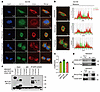 Figure 2
Colocalization and interaction of CD24 and RCC2 in DU145 cells. (A) Immunofluorescence images showing the localization of CD24 and RCC2 in DU145 cells during various cell cycle phases using specific anti-CD24 and anti-RCC2 antibodies. Scale bar: 5 μm. (B) Overlapping intensity patterns of CD24 and RCC2 were observed by analyzing pixel intensity values throughout the nucleus and cytoplasm. The images in B are derived from A, presenting overlapping intensity patterns via pixel intensity analysis. (C) Quantitative analysis of CD24 and RCC2 colocalization using ImageJ/Fiji with the JaCoP plugin. Pearson’s correlation coefficient (PCC) indicates the linear relationship between the fluorescence intensities of CD24 and RCC2. Manders’ overlap coefficient (MOC) values represent the degree of signal overlap: MOC-M1 reflects the fraction of CD24 signal overlapping with RCC2, while MOC-M2 reflects the fraction of RCC2 signal overlapping with CD24. Data were obtained from 3–4 independent immunofluorescence experiments, each with 3–4 images per condition (6–8 cells per image). Data are presented as mean ± SE. The coefficients were determined using Pearson’s correlation test. (D and E) Coimmunoprecipitation (co-IP) assays for the reciprocal binding between CD24 and RCC2 in transiently coexpressed HEK293T cells using specific anti-CD24 and anti-RCC2 antibodies. (F) Mapping of the binding regions between CD24 and RCC2 in HEK 293T cells overexpressing GFP-tagged full-length CD24 and Flag-tagged RCC2 domains. All experiments were repeated 3 times.
Furthermore, we cotransfected CD24 and RCC2 into HEK293T cells to examine their potential interactions. In transiently overexpressing HEK293T cells, coimmunoprecipitation (co-IP) confirmed direct binding between CD24 and RCC2 (Figure 2, D and E). To map the binding regions between CD24 and RCC2, GFP-tagged full-length CD24 and Flag-tagged full-length RCC2 N- or C-terminal cDNA domain constructs were cointroduced to overexpress CD24 and RCC2 in HEK 293T cells. As shown in Figure 2F, both the C-terminal and N-terminal domains of RCC2 were immunoprecipitated using anti-GFP antibody incubation and identified using anti-FLAG antibody incubation. These data indicated that RCC2 and CD24, as interacting partners, are coexpressed in the cytosol of prostate cancer cells.
To evaluate RCC2 expression and its clinical relevance in human prostate cancer, we conducted bioinformatics analysis of TCGA and PCTA datasets. According to TCGA dataset, RCC2 expression was upregulated in most human cancer types (16 of 24), including prostate cancer (Supplemental Figure 2A). For prostate adenocarcinoma, RCC2 expression was higher in tumor samples than in normal prostate samples and likely increased with Gleason score, tumor stage, and metastasis, but was not significantly related to patient overall survival (Supplemental Figure 2, B–F). However, high RCC2 expression was likely associated with poor survival in patients with other cancers, including breast cancer, liver cancer, and mesothelioma (Supplemental Figure 2, G–I). Furthermore, we performed bioinformatics analysis using cBioPortal datasets to assess genetic alterations in RCC2 among 10,998 human prostate cancer samples from 26 studies, including the TCGA dataset. Genetic alterations in RCC2, including amplification, deletion, and mutation, were found in only 1.2% of the samples.
Establishment of CD24 and RCC2-KO prostate cancer cells. In our previous studies, we analyzed the expression of CD24 mRNA and protein in 3 human prostate cancer cell lines: DU145, PC3, and LNCaP (7). The metastatic CRPC cell lines DU145 and PC3 express high and low levels of CD24, respectively, whereas androgen-dependent LNCaP cells do not express detectable amounts of CD24 (7). Similarly, we determined the expression levels of RCC2 in the 3 prostate cancer cell lines. DU145 cells expressed the highest levels of RCC2, whereas LNCaP cells expressed the lowest levels among the 3 cell lines (Supplemental Figure 3A). Using CRISPR/Cas9 genome editing with 2 distinct single-guide RNAs (sgRNAs), we developed CD24-and/or RCC2 KO CRPC cell models. As shown in Supplemental Figure 3, B and C, we established CD24-KO DU145 cell lines (2 clones) and RCC2-KO DU145 cell lines (2 clones). These cell lines were validated by Sanger sequencing, Western blotting, and flow cytometry (Supplemental Figure 3, B, C, E, and F, and Supplemental Figure 4A). PC3 cells express low levels of CD24 in their cytoplasm (7). As shown in Supplemental Figure 3D and Supplemental Figure 5A, we established RCC2-KO PC3 cell lines (2 clones), which were validated by DNA sequencing and Western blotting. Finally, all selected KO colonies were analyzed using the Cas-OFFinder web tool to predict the potential off-target regions of CD24 and RCC2 sgRNAs (Supplemental Figure 3, G and H), as described previously (26, 27). Notably, 4 nucleotide-mismatched genes, MARS, MAPKAPK3, CPNE2, and PRKCD, were predicted to be potential off-targets for RCC2 sgRNAs. Denaturing gradient gel electrophoresis was performed to exclude potential off-target effects on these genes (Supplemental Figure 3I).
Effect of CD24 and RCC2 on prostate tumor growth and metastasis. Our previous studies demonstrated the oncogenic role of CD24 in tumor growth and metastasis in prostate cancer (7). Notably, targeted mutation and short hairpin RNA (shRNA) silencing of CD24 reduced cell proliferation and migration and retarded xenograft tumor growth, progression, and lung metastasis. Next, we tested the effect of RCC2 KO on the biological activities of DU145 and PC3 cells. In vitro analysis showed an inhibitory effect of RCC2 KO on the proliferation of DU145 and PC3 cells, as evidenced by cell growth, colony formation, and soft agar assays (Supplemental Figure 4, A–E, and Supplemental Figure 5, A–E). However, RCC2 KO promoted the migratory capacity of DU145 and PC3 cells, as demonstrated by the wound healing and transwell migration assays (Supplemental Figure 4, F–I, and Supplemental Figure 5, F–I). To determine whether the effect of RCC2 KO on cell proliferation and migration was related to CD24 expression, we established CD24 and RCC2 double-KO (CD24/RCC2 KO) DU145 cells. Using the established DU145 cell model, we assessed the role of CD24, RCC2, and their interaction in tumor cell proliferation and migration. As shown in Figure 3, A–E, RCC2 KO, CD24 KO, and CD24/RCC2 KO cells exhibited decreased cell proliferation compared with scrambled control cells, as measured by cell growth, colony formation, and soft agar assays. Notably, DU145 cells with RCC2 KO migrated faster, while CD24 KO or CD24/RCC2 KO migrated slower than scrambled control cells in wound healing and transwell migration (Figure 3, F–I). Cell proliferation was reduced in CD24/RCC2 KO cells compared with proliferation in other cells, suggesting that dual targeting CD24 and RCC2 effectively inhibits cell proliferation in DU145 cells. However, cell migration was increased in RCC2-KO cells but decreased in CD24-KO cells compared with scrambled control cells. Collectively, these findings suggest a synergistic role of CD24 and RCC2 in promoting cell proliferation but opposing functions in regulating cell migration.
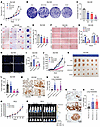 Figure 3
Effects of CD24 and RCC2 knockouts on cell proliferation, migration, tumor growth, and metastasis in human prostate cancer cell models. (A–E) Cell proliferation assays in CD24 knockout (KO), RCC2 KO, and CD24/RCC2 KO (D-KO) DU145 cells compared to scrambled control (Scr) cells, evaluated by cell growth, colony formation, and soft agar assays. Scale bars (D): 500 μm (40× and 100× panels); 200 μm (200× panel); and 100 μm (400× panel) (F–I) Cell migration rates determined by wound healing and Transwell migration assays in CD24 KO, RCC2 KO, and CD24/RCC2 KO DU145 cells compared with scrambled control cells. Red dotted lines indicate the edge of cell migration. Blue DAPI staining dots refer to the cells that have crossed the transwell chamber membrane. Scale bar (H): 100 μm. (J–L) In vivo tumor growth analysis in NSG mice subcutaneously inoculated with DU145 cells, showing tumor volumes, sizes, and weights in CD24 KO, RCC2 KO, and CD24/RCC2 KO xenografts compared with scrambled controls. (M and N) Lung metastasis rates and gross tumor nodules in CD24 KO, RCC2 KO, and CD24/RCC2 KO xenografts compared with scrambled controls, determined by IHC analysis with a specific anti-human vimentin antibody, staining shows lung metastatic tumor cells with Vimentin expression. Scale bar (M): 50 μm. (O and P) Tumor growth, weight, and lung metastasis in NSG mice implanted with luciferase-labeled PC3 cells with or without RCC2 KO. (Q and R) Quantitative analysis of lung metastasis in PC3 xenografts in RCC2 KO compared to scrambled controls by IHC analysis with a specific anti-human vimentin antibody, staining shows lung metastatic tumor cells with Vimentin expression. Scale bars (Q): 50 μm. Data are presented as mean ± SD. *P < 0.05, **P < 0.01, and ***P < 0.001 by 1-way ANOVA with Tukey’s multiple comparisons test (C, G, I, L, N, and R) or 2-way ANOVA vs. scrambled control group (A, J, and O). All experiments were repeated 2 or 3 times.
To further investigate the functions of CD24 and RCC2 in vivo, we subcutaneously inoculated scrambled control, RCC2 KO, CD24 KO, and CD24/RCC2 KO DU145 cells into the lower left quadrant of the abdomen of 6-week-old male NOD SCID gamma (NSG) mice and monitored the tumor growth and spontaneous metastasis. As shown in Figure 3, J–L, tumor volume, size, and weight were reduced in CD24-KO and CD24/RCC2-KO xenograft mice compared with those in scrambled control xenograft mice. However, there was no significant difference in tumor volume, size, or weight between RCC2-KO and scrambled control xenograft mice. This in vivo result is in contrast to the in vitro observation of cell growth differences between RCC2-KO and scrambled control cells. Additionally, there was no significant difference in tumor volume, size, or weight between CD24-KO and CD24/RCC2-KO xenograft mice. Eight weeks after injection, lung metastasis was assessed by IHC analysis using an antivimentin antibody in all 4 animal groups. Ten out of 12 mice in the RCC2-KO and CD24/RCC2-KO xenograft groups developed spontaneous lung metastases, compared with fewer mice in the scrambled control (5 of 12) and CD24-KO (3 of 12) groups. Quantitative analysis revealed approximately 10-fold more gross tumor nodules in the lungs of RCC2-KO and CD24/RCC2-KO xenograft mice than in scrambled control and CD24-KO xenograft mice (Figure 3, M and N). These data suggest that RCC2 is more likely to be involved in regulating tumor metastasis than in promoting tumor growth in prostate cancer. To validate the role of RCC2 in tumor metastasis in vivo, we used an additional metastatic CRPC cell line, the transgenic luciferase-labeled PC3 cell line, with or without RCC2 implanted subcutaneously into 6-week-old male NSG mice. Mice bearing scrambled control and RCC2-KO PC3 cells showed similar tumor growth (Figure 3O). At 8 weeks post injection, lung metastasis was detected in both scrambled control (8 of 12) and RCC2-KO (12 of 12) groups. Quantitative analysis indicated more than a 3-fold increase in gross tumor nodules in the lungs of RCC2-KO xenograft mice compared with scrambled control xenograft mice (Figure 3, P–R). Collectively, these data suggest that RCC2 KO induces spontaneous lung metastasis in prostate cancer cells.
To elucidate the molecular mechanism of RCC2-KO–induced cell migration, we performed mass spectrometry analysis using a Flag-RCC2 construct or an empty vector overexpressed in HEK293T cells to identify the potential RCC2 binding partners (Supplemental Table 2). Notably, Vimentin was identified as one of the top 3 RCC2 binding partners with 13 matching peptides (Figure 4, A and B). Vimentin is the most widely expressed intermediate filament protein component and undergoes dramatic reorganization during mesenchymal and cancer cell migration (28). To validate the interaction between Vimentin and RCC2, we performed IF and coIP assays using either anti-RCC2 or anti-vimentin antibodies in DU145 cells, which confirmed that Vimentin and RCC2 interact (Figure 4, C–E). Next, we transfected a vector containing the full-length RCC2 coding sequence into CD24-KO DU145 cells to create cells with overexpressed RCC2 and CD24 KO (CD24 KO+RCC2 overexpression [OE]). In RCC2-KO cells, vimentin expression increased but disappeared when RCC2 was overexpressed in CD24-KO cells, and vimentin expression was restored when RCC2 was knocked out in CD24-KO cells (Figure 4F). Vimentin levels are regulated by the ubiquitin-proteasome system (29, 30). To examine whether RCC2 degrades vimentin via ubiquitination, we treated scrambled control and RCC2-OE + CD24-KO DU145 cells with the proteasome inhibitor MG-132 for 6, 12, and 24 hours at a dose of 10 μM. MG-132 treatment for 12 hours and 24 hours stabilized vimentin protein expression in DU145 cells (Figure 4G). Notably, Vimentin protein stabilization was more pronounced when RCC2 was overexpressed in CD24-KO DU145 cells after MG-132 treatment (Figure 4G), suggesting that RCC2 may regulate vimentin protein expression through ubiquitin-mediated degradation. Subsequently, we performed immunoprecipitation with an anti-vimentin antibody, followed by immunoblotting with an anti-ubiquitin antibody, using MG-132 treated lysates from parental DU145 cells, RCC2-OE + CD24-KO DU145 cells, and RCC2-KO DU145 cells. The results showed that RCC2 overexpression markedly enhanced vimentin ubiquitination, whereas RCC2 KO reduced vimentin ubiquitination compared with parental DU145 cells (Figure 4H). VIM is a transcriptional target of β-catenin. In TCGA dataset, we identified a negative correlation between RCC2 and VIM mRNA expression levels (r = –0.160, P < 0.001) in primary prostate cancer tissues (Supplemental Figure 6A). Furthermore, IHC analysis of vimentin protein expression in primary prostate cancer samples revealed a negative correlation between RCC2 and Vimentin protein expression levels (r = –0.464, P < 0.001) (Supplemental Figure 6, B and C).
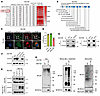 Figure 4
Interaction between RCC2 and Vimentin and the role of RCC2 in Vimentin degradation in DU145 cells. (A) Identification of Vimentin as a top RCC2-binding partner by mass spectrometry analysis of Flag-RCC2 overexpressed in HEK293T cells, showing 13 matching peptides from Vimentin. (B) Table listing Vimentin peptides identified by mass spectrometry, highlighting the potential interaction sites with RCC2. (C) Immunofluorescence images showing the localization of RCC2 and Vimentin in DU145 cells using specific anti-RCC2 and anti-Vimentin antibodies. Scale bar: 10 μm. (D) Quantitative analysis of RCC2 and vimentin colocalization using ImageJ/Fiji with the JaCoP plugin. Pearson’s correlation coefficient (PCC) indicates the linear relationship between the fluorescence intensities of RCC2 and vimentin. Manders’ overlap coefficient (MOC) values represent the extent of signal overlap: MOC-M1 reflects the fraction of RCC2 signal overlapping with vimentin, while MOC-M2 reflects the fraction of vimentin signal overlapping with RCC2. Data were obtained from 3–4 independent immunofluorescence experiments, each with 3–4 images per condition (6–8 cells per image). Data are presented as mean ± SE. The coefficients were determined using Pearson’s correlation test. (E) Coimmunoprecipitation (co-IP) assays with anti-RCC2 and anti-Vimentin antibodies in DU145 cells confirming the interaction between RCC2 and Vimentin. (F) Immunoblot analysis showing Vimentin expression in RCC2 KO cells, CD24 KO + RCC2 overexpression (OE) cells, and CD24/RCC2 double KO (D-KO) cells. (G) Vimentin expression in scrambled control and RCC2 OE + CD24 KO DU145 cells treated with the proteasome inhibitor MG-132 (10 μM) for 6, 12, and 24 hours. (H) Immunoprecipitation with anti-Vimentin followed by anti-Ubiquitin immunoblotting in MG-132-treated lysates of scrambled control, RCC2 OE + CD24 KO, and RCC2 KO DU145 cells. The experiments were repeated 3 times.
Intermediate filaments interact with microfilaments and microtubules to regulate the cell cytoskeleton, thus influencing directed cell migration (31, 32). To further assess the effects of CD24 and/or RCC2 KO on microfilament and microtubule organization, we stained the cells with F-actin and α-tubulin antibodies for IF analysis. Compared with scrambled control DU145 cells, F-actin filaments appeared compressed throughout the cytoplasm in RCC2-KO cells but were loosely distributed in CD24-KO cells (Supplemental Figure 7A). Notably, RCC2-KO cells had compacted F-actin filaments that were otherwise unconsolidated in CD24-KO cells. Additionally, α-tubulin staining showed that microtubules in RCC2-KO DU145 cells were sparse and condensed compared with those in the scrambled control cells (Supplemental Figure 7B). In CD24-KO cells, the microtubules were short and perinuclear, whereas in CD24/RCC2-KO cells, they were elongated and expanded (Supplemental Figure 7B). Collectively, these data indicated that CD24 and RCC2 may interact to regulate the cytoskeleton in prostate cancer cells.
One essential function of RCC2 is the attenuation of fibronectin-induced (FN-induced) activation of small GTPases RAC1 and ARF6, which regulate directional cell migration (33). RAC1 is a critical regulator of mesenchymal-like migration, axonal growth, and cell adhesion, and its activation correlates with aggressive malignant characteristics, such as tumor invasion and metastasis, in several tumor types. ARF6 is a critical mediator of endocytosis and membrane recycling at the cell surface, and ARF6 activation promotes invasion and metastasis of various cancer cells. As determined by binding assays with downstream effector proteins of GTP-bound RAC1 and ARF6, cell adhesion to a FN substrate can induce activation of RAC1 and ARF6 during cell spreading (33). We investigated the effect of RCC2 KO on the FN-dependent activation of RAC1 and ARF6 in prostate cancer cells. As shown in Supplemental Figure 7C, after FN stimulation, GTP-RAC1 expression levels peaked at 10 minutes, decreased at 30–60 minutes, and increased again at 90 minutes, showing similar activation patterns in both the scrambled control and RCC2-KO cells. Furthermore, after FN stimulation, maximal levels of GTP-ARF6 expression were observed at 10 minutes, which decreased from 30 to 120 minutes in scrambled control cells, whereas GTP-ARF6 levels decreased from 15 to 30 minutes and increased again from 60 to 120 minutes in RCC2-KO cells (Supplemental Figure 7D). These data suggested that RCC2 is unlikely to be responsible for FN-dependent RAC1 and ARF6 activation and related cell migration in DU145 cells.
Prostate-specific deletion of Rcc2 delays tumor development but promotes tumor metastasis in prostate cancer mouse models. To validate the role of Rcc2 in spontaneous prostate cancer, we crossed Nkx3-1CreERT2 knock-in mice with Rcc2-floxed mice and/or Pten-floxed mice to create prostate conditional Rcc2-KO (Rcc2-cKO), Pten-cKO, and Rcc2 and Pten double cKOs (Rcc2/Pten-cKO) mice on a C57BL/6 background (Supplemental Figure 8, A and B). All mice were treated with tamoxifen at 8 weeks of age to induce Cre recombinase (CreERT2) expression at the Nkx3.1 locus in mouse prostate epithelial cells (Figure 5A). However, no histological changes were observed in the prostate of Rcc2-cKO mice compared with Nkx3-1CreERT2/+ control mice for up to 12 months after tamoxifen treatment. Approximately 100% of Pten-cKO mice developed high-grade mouse prostatic neoplasia hyperplasia (mPIN) but no carcinoma or metastasis for up to 12 months (34). In Rcc2/Pten-cKO mice, prostate weight did not significantly change at 6 months after tamoxifen treatment but was reduced after 8 months, especially at 12 months, compared with Pten-cKO mice (Figure 5B), suggesting that Rcc2/Pten-cKO mice experienced slower prostate growth than Pten-cKO mice. Histological assessment revealed delayed formation of mPIN in Rcc2/Pten-cKO mice compared with Pten-cKO mice, but no invasion through the basement membrane was observed for up to 12 months (Figure 5, C and D). All mPIN lesions in the mice were androgen receptor–positive (AR-positive), with no changes in AR expression among groups (Figure 5E). Notably, Rcc2/Pten-cKO mPIN lesions showed increased vimentin expression and decreased E-cadherin expression compared with Pten-cKO lesions (Figure 5E). We also assessed the incidence of distant metastasis in various organs, including the lungs, liver, bone, and brain using histological analysis. Twelve months after tamoxifen treatment, 12% (6 of 50) of Rcc2/Pten-cKO mice developed lung metastasis, whereas none of the Pten-cKO mice developed distant metastasis (Figure 5F). IHC staining confirmed that all metastatic lung tumors were prostate-specific antigen–positive (Figure 5G). These data suggest that Rcc2-cKO facilitates prostate cancer metastasis to the lungs of Pten-cKO mice.
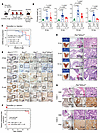 Figure 5
Role of Rcc2 in spontaneous prostate cancer progression and metastasis in mouse models. (A) Schematic diagram of spontaneously developed prostate tumors followed up to 12 months of age in genetically engineered mouse models. Tamoxifen was administered at 8 weeks of age to induce Cre-mediated recombination in prostate epithelial cells. (B) Prostate weight analysis in Rcc2-cKO, Pten-cKO, and Rcc2/Pten-cKO mice compared with scrambled control mice at 6-, 8-, 10-, and 12-months after tamoxifen treatment. (C) Kaplan–Meier curves of mPIN incidences up to 40 weeks of age. At 20, 25, 30, 35, and 40 weeks of age, 5 mice per time point were sacrificed for pathological analysis. (D) Histological analysis of prostate tissues in Rcc2/Pten-cKO mice up to 12 months after tamoxifen treatment. Scale bars: 500 μm (left), 50 μm (right). (E) IHC staining in mouse prostate tissues with anti-mouse PTEN, RCC2, AR, E-cadherin, and Vimentin antibodies in Rcc2-cKO, Pten-cKO, and Rcc2/Pten-cKO mice compared with scrambled control mice at 6 months after tamoxifen treatment. Scale bars: 200 μm. (F) Incidence of lung metastasis in Rcc2/Pten-cKO mice compared with Pten-cKO mice at 12 months after tamoxifen treatment. (G) Representative IHC staining of lung metastatic lesions with anti-PSA antibody, confirming the prostatic origin of metastatic tumors. Data are presented as means ± SD. Scale bars in Case 1: 500 μm (left); 200 μm (middle); 50 μm (right). Scale bars in Case 2: 500 μm (left); 100 μm (middle); 50 μm (right). (B) P values were determined by 1-way ANOVA with Tukey’s multiple comparisons test. (C and F) The log-rank test was used to analyze tumor development or metastasis and compare the distribution of time to event between groups. AR, androgen receptor; cKO, conditional knockout; mPIN, mouse prostatic intraepithelial neoplasia; i.p., intraperitoneal injection; PSA, prostate-specific antigen. All experiments were repeated twice.
To further validate the role of Rcc2 in spontaneous tumor metastasis, we crossed Rcc2 cKO alleles with transgenic adenocarcinoma of the mouse prostate (TRAMP) mice on a C57BL/6 background (Supplemental Figure 8C). TRAMP mice express the SV40 large T antigen, a potent oncogene, under the control of a prostate-specific rat probasin (PB) promoter and develop spontaneous prostate cancers with tumor metastasis. As shown in Supplemental Figure 9, A and B, the onset of prostate tumors was delayed in homozygous Rcc2-cKO TRAMP mice compared with the onset in heterozygous Rcc2-cKO or Rcc2 WT TRAMP mice. However, homozygous Rcc2-cKO TRAMP mice died earlier than heterozygous Rcc2-cKO or Rcc2 WT TRAMP mice (Supplemental Figure 9C). At 7 months of age, prostate weights were notably increased in heterozygous Rcc2-cKO and Rcc2 WT TRAMP mice, but decreased in homozygous Rcc2-cKO mice (Supplemental Figure 9D). TRAMP mice develop lymphatic and lung metastases at 6 months of age. As summarized in Supplemental Figure 9, E–G, by 7 months, lung metastases were observed in 6.7% (2 of 30) of Rcc2 WT, 10% (3 of 30) of heterozygous Rcc2-cKO, and 20% (6 of 30) of homozygous Rcc2-cKO TRAMP mice. IHC analysis revealed AR-positive prostate tumors in all groups, with lower E-cadherin and higher vimentin expression in Rcc2-cKO TRAMP tumors than in WT TRAMP tumors (Supplemental Figure 9H). These data suggest that prostate-specific inactivation of both Rcc2 alleles reduces tumor growth but promotes metastasis.
CD24 ubiquitinates and degrades RCC2 and cooperatively regulates the β-catenin signaling pathway in prostate cancer cells. In DU145 cells, we observed that CD24 KO overexpressed RCC2 (Figure 6A). Further analysis of the nuclear and cytoplasmic protein fractions revealed that RCC2 was predominantly overexpressed in the cytoplasm of CD24-KO cells (Figure 6B), whereas the level of CD24 expression was unaffected by RCC2 KO (Supplemental Figure 3E). Likewise, IF staining showed an accumulation of RCC2 in the cytoplasm of CD24-KO cells compared with scrambled control cells (Figure 6C). We also transduced CD24 into LNCaP and PC3 cells, and CD24 overexpression reduced RCC2 expression (Figure 6, D and E). To determine whether CD24 degrades RCC2 via ubiquitination, we treated endogenous CD24-expressiing DU145 cells, empty vector–transduced PC3 cells, and CD24-overexpressed PC3 cells with MG-132 (10 μM) for 12 hours. MG-132 treatment stabilized RCC2 protein expression in all treated cells (Figure 6, F and G). Subsequent immunoprecipitation with an anti-RCC2 antibody, followed by immunoblotting with an anti-ubiquitin antibody using MG-132-treated lysates, showed that CD24, particularly overexpression of CD24, markedly enhanced RCC2 ubiquitination in these cells (Figure 6, F and G). This indicates that CD24 ubiquitinates and degrades RCC2 protein in prostate cancer cells. IHC analysis further validated the overexpression of RCC2 in DU145 CD24-KO xenograft tumors (Figure 6H).
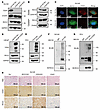 Figure 6
Regulation of RCC2 by CD24 and its impact on β-catenin signaling in prostate cancer cells. (A) Western blot analysis showing RCC2 expression in CD24 knockout (KO) DU145 cells compared with scrambled control (Scr) cells. (B) Subcellular fractionation and Western blot analysis of RCC2 expression in the cytoplasm of CD24 KO DU145 cells compared with Scr cells. (C) Immunofluorescence staining showing cytoplasmic accumulation of RCC2 in CD24 KO DU145 cells relative to Scr cells. Scale bars: 10 μm. (D and E) Western blot analysis showing expression of CD24 and RCC2 in LNCaP and PC3 cells. (F and G) Western blot and immunoprecipitation analysis following MG-132 treatment (10 μM for 12 hours) showing stabilization of RCC2 protein expression and ubiquitination in endogenous CD24-expressing DU145 cells, empty vector-transduced PC3 cells, and CD24-overexpressing (CD24 OE) PC3 cells. (H) IHC analysis of xenograft tumors from DU145 cells showing expression of CD24 and RCC2 in CD24 KO, RCC2 KO, and CD24/RCC2 KO (D-KO) tumors compared to scrambled controls. Scale bars: 100 μm.
To further elucidate the molecular mechanism of CD24 and RCC2 interaction in prostate cancer cells, we performed RNA sequencing (RNA-Seq) to identify differentially expressed genes (DEGs) in RCC2-KO and CD24-KO DU145 cells compared with scrambled control cells (Figure 7, A and B). Gene set enrichment analysis (GSEA) revealed that DEGs were enriched in the Wnt/β-catenin signaling pathway, which was downregulated in CD24-KO cells but upregulated in RCC2-KO cells compared with scrambled control cells (Figure 7, C and D). These results suggest differential regulation of the Wnt/β-catenin signaling pathway by RCC2 and CD24, indicating their potential roles in modulating this pathway in prostate cancer. Western blot analysis revealed that RCC2 KO not only increased β-catenin activation but also decreased the expression of AXIN2 and APC, 2 inhibitors of β-catenin (Figure 7E). In contrast, CD24 KO and CD24/RCC2 KO led to β-catenin inactivation, suggesting that CD24 and RCC2 have opposing roles in the regulation of β-catenin signaling in prostate cancer cells. Given the increased RCC2 protein levels in CD24-KO DU145 cells and xenograft tumors, we further investigated whether CD24-KO–induced RCC2 expression is associated with the β-catenin signaling pathway. As shown in Figure 7F, RCC2 protein levels increased in both CD24 KO and DU145 cells treated with XAV939, a β-catenin pathway inhibitor. Notably, β-catenin signaling activation was reduced following XAV939 treatment for 24 hours at a concentration of 50 μM. To further validate the role of CD24 in regulating RCC2 expression, we established a CD24-OE cell model in the CD24-negative prostate cancer cell line LNCaP by transducing the coding sequence of human CD24 (7). Both the mRNA and protein levels of RCC2 were measured in this cell model. RCC2 protein levels decreased with increased β-catenin signaling activation in CD24-OE LNCaP cells but were restored in XAV939-treated CD24-OE LNCaP cells (Figure 7G). However, CD24 overexpression led to a 2-fold increase in RCC2 mRNA levels in LNCaP cells, but this effect was abolished in XAV939-treated CD24-OE LNCaP cells (Figure 7H), suggesting potential feedback in the transcriptional regulation of RCC2. AXIN2 is not only a negative regulator but also a transcriptional target of the β-catenin signaling pathway (35). As shown in Figure 7, G and I, increased mRNA and protein levels of AXIN2 were evident after CD24 overexpression, but this increase was restored in XAV939-treated CD24 OE LNCaP cells. Additionally, overexpression of vimentin was observed in RCC2-KO and CD24/RCC2-KO xenograft tumors, while vimentin expression was reduced in DU145 CD24-KO xenograft tumors compared with expression in scrambled control xenograft tumors (Figure 7J). In contrast, E-cadherin overexpression was evident in CD24 KO xenograft tumors, and reduced vimentin expression was observed in RCC2 KO and CD24/RCC2 KO xenograft tumors (Figure 7J). Thus, DU145 cells exhibited a mesenchymal phenotype when RCC2 was knocked out and an epithelial phenotype when CD24 was knocked out, indicating the roles of RCC2 and CD24 in EMT. As Vim is a β-catenin target gene, CD24/RCC2-mediated EMT is likely to be regulated by the β-catenin signaling pathway. These data provided strong evidence that the interaction between CD24 and RCC2 modulates β-catenin signaling activation (Supplemental Figure 10), which is a key regulator of cell movement, adhesion, migration, invasion, and metastasis in prostate cancer cells.
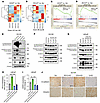 Figure 7
Effect of CD24 and RCC2 interaction on β-catenin signaling activation in prostate cancer cells. (A and B) Heatmaps of differentially expressed genes (DEGs) identified by RNA sequencing (RNA-Seq) in CD24 knockout (KO) and RCC2 KO DU145 cells compared to scrambled control cells. (C and D) Gene set enrichment analysis (GSEA) showing the enrichment of DEGs in the Wnt/β-catenin signaling pathway in CD24 KO and RCC2 KO cells compared to scrambled control cells. (E) Western blot analysis showing β-catenin activation and expression levels of Axin2 and APC in CD24 KO, RCC2 KO, and CD24/RCC2 KO (D-KO) DU145 cells compared to scrambled cells. (F) Western blot analysis showing β-catenin activation and expression levels of RCC2 in CD24 KO DU145 cells and XAV939-treated DU145 cells. (G) Western blot analysis showing β-catenin activation and expression levels of RCC2 and Axin2 in parental LNCaP cells, CD24 OE LNCaP cells, and XAV939-treated CD24 OE LNCaP cells. (H and I) mRNA expression levels of RCC2 and AXIN2 in parental LNCaP cells, CD24 OE LNCaP cells, and XAV939-treated CD24 OE LNCaP cells. (J) IHC analysis of xenograft tumors from DU145 cells showing expression of E-cadherin and Vimentin in CD24 KO, RCC2 KO, and CD24/RCC2 KO (D-KO) tumors compared with scrambled controls. Scale bars: 100 μm. Data are presented as means ± SD. H and I: **P < 0.01 and ***P < 0.001 by 1-way ANOVA with Tukey’s multiple comparisons test. All experiments were repeated 3 times.


Copyright © 2026 American Society for Clinical Investigation
ISSN: 0021-9738 (print), 1558-8238 (online)