
Advertisement
Research ArticleAutoimmunityEndocrinologyGastroenterology
Open Access |  10.1172/JCI192322
Characterization of intestinal immune responses in generalized human and murine lipodystrophy
Marilena Letizia,1,2 Toka Omar,1,2 Patrick Weidner,1,3,4 Manuel O. Jakob,1,5 Inka Freise,1,2 Susanne M. Krug,1,6 Britt-Sabina Löscher,7 Elisa Rosati,7 Benedikt Obermayer,1,8 Reyes Gamez-Belmonte,9 Julia Hecker,1,2 Jörn-Felix Ziegler,1,2 Benjamin Weixler,1,10 Patrick Asbach,1,11 Desiree Kunkel,1,12 Michael Stumvoll,13 Konstanze Miehle,13 Christoph Becker,9 Christoph S.N. Klose,1,5,14 Rainer Glauben,1,2 Dieter Beule,1,8,14 Anja A. Kühl,15 Thomas Conrad,16 Frank Tacke,1,14,17 Stefan Wirtz,9 Andre Franke,7 Ashley D. Sanders,1,3,4,14 Britta Siegmund,1,2,14 and Carl Weidinger1,2,14
1Charité – Universitätsmedizin Berlin, corporate member of Freie Universität Berlin, Humboldt-Universität zu Berlin, Berlin, Germany.
2Department of Gastroenterology, Infectious Diseases and Rheumatology, Campus Benjamin Franklin, Berlin, Germany.
3Berlin Institute for Medical Systems Biology, Max Delbrück Center for Molecular Medicine in the Helmholtz Association, Berlin, Germany.
4Berlin Institute of Health (BIH) at Charité – Universitätsmedizin Berlin, Berlin, Germany.
5Department of Microbiology, Infectious Diseases and Immunology,
6Institute of Clinical Physiology/Nutritional Medicine, and
7Institute of Clinical Molecular Biology, Kiel University and University Medical Center Schleswig-Holstein, Kiel, Germany.
8Core Unit Bioinformatics, Berlin Institute of Health, Berlin, Germany.
9Department of Medicine 1, Universitätsklinikum Erlangen, Friedrich-Alexander-Universität Erlangen-Nürnberg, Erlangen, Germany.
10Department of Visceral Surgery and
11Department of Radiology, Campus Benjamin Franklin, Berlin, Germany.
12Berlin Institute of Health at Charité – Universitätsmedizin Berlin, Flow and Mass Cytometry Core Facility, Berlin, Germany.
13Medical Department III – Endocrinology, Nephrology, Rheumatology, University of Leipzig Medical Center, Germany, Leipzig, German.
14Cluster of Excellence ImmunoPreCept, Charité – Universitätsmedizin Berlin, Berlin, Germany.
15iPATH.Berlin–Immunopathology for Experimental Models, Core Facility of the Charité, Berlin, Germany.
16Core Unit Genomics, Berlin Institute of Health at Charité – Universitätsmedizin Berlin, Berlin, Germany.
17Department of Hepatology and Gastroenterology, Campus Virchow-Klinikum and Campus Charité Mitte, Berlin, Germany.
Address correspondence to: Ashley D Sanders, Berlin Institute for Medical Systems Biology, Max Delbrück Center for Molecular Medicine in the Helmholtz Association, Hannoversche Strasse 28, 10115 Berlin, Germany. Email: Ashley.Sanders@mdc-berlin.de. Or to: Britta Siegmund or Carl Weidinger, Department of Gastroenterology, Infectious Diseases and Rheumatology, Campus Benjamin Franklin, Hindenburgdamm 30, 12200 Berlin, Germany. Email: Britta.siegmund@charite.de (BS); carl.weidinger@charite.de (CW).
Authorship note: ML, TO, and PW contributed equally to this work. ADS, BS, and CW jointly supervised this work.
Find articles by Letizia, M. in: PubMed | Google Scholar
1Charité – Universitätsmedizin Berlin, corporate member of Freie Universität Berlin, Humboldt-Universität zu Berlin, Berlin, Germany.
2Department of Gastroenterology, Infectious Diseases and Rheumatology, Campus Benjamin Franklin, Berlin, Germany.
3Berlin Institute for Medical Systems Biology, Max Delbrück Center for Molecular Medicine in the Helmholtz Association, Berlin, Germany.
4Berlin Institute of Health (BIH) at Charité – Universitätsmedizin Berlin, Berlin, Germany.
5Department of Microbiology, Infectious Diseases and Immunology,
6Institute of Clinical Physiology/Nutritional Medicine, and
7Institute of Clinical Molecular Biology, Kiel University and University Medical Center Schleswig-Holstein, Kiel, Germany.
8Core Unit Bioinformatics, Berlin Institute of Health, Berlin, Germany.
9Department of Medicine 1, Universitätsklinikum Erlangen, Friedrich-Alexander-Universität Erlangen-Nürnberg, Erlangen, Germany.
10Department of Visceral Surgery and
11Department of Radiology, Campus Benjamin Franklin, Berlin, Germany.
12Berlin Institute of Health at Charité – Universitätsmedizin Berlin, Flow and Mass Cytometry Core Facility, Berlin, Germany.
13Medical Department III – Endocrinology, Nephrology, Rheumatology, University of Leipzig Medical Center, Germany, Leipzig, German.
14Cluster of Excellence ImmunoPreCept, Charité – Universitätsmedizin Berlin, Berlin, Germany.
15iPATH.Berlin–Immunopathology for Experimental Models, Core Facility of the Charité, Berlin, Germany.
16Core Unit Genomics, Berlin Institute of Health at Charité – Universitätsmedizin Berlin, Berlin, Germany.
17Department of Hepatology and Gastroenterology, Campus Virchow-Klinikum and Campus Charité Mitte, Berlin, Germany.
Address correspondence to: Ashley D Sanders, Berlin Institute for Medical Systems Biology, Max Delbrück Center for Molecular Medicine in the Helmholtz Association, Hannoversche Strasse 28, 10115 Berlin, Germany. Email: Ashley.Sanders@mdc-berlin.de. Or to: Britta Siegmund or Carl Weidinger, Department of Gastroenterology, Infectious Diseases and Rheumatology, Campus Benjamin Franklin, Hindenburgdamm 30, 12200 Berlin, Germany. Email: Britta.siegmund@charite.de (BS); carl.weidinger@charite.de (CW).
Authorship note: ML, TO, and PW contributed equally to this work. ADS, BS, and CW jointly supervised this work.
Find articles by Omar, T. in: PubMed | Google Scholar
1Charité – Universitätsmedizin Berlin, corporate member of Freie Universität Berlin, Humboldt-Universität zu Berlin, Berlin, Germany.
2Department of Gastroenterology, Infectious Diseases and Rheumatology, Campus Benjamin Franklin, Berlin, Germany.
3Berlin Institute for Medical Systems Biology, Max Delbrück Center for Molecular Medicine in the Helmholtz Association, Berlin, Germany.
4Berlin Institute of Health (BIH) at Charité – Universitätsmedizin Berlin, Berlin, Germany.
5Department of Microbiology, Infectious Diseases and Immunology,
6Institute of Clinical Physiology/Nutritional Medicine, and
7Institute of Clinical Molecular Biology, Kiel University and University Medical Center Schleswig-Holstein, Kiel, Germany.
8Core Unit Bioinformatics, Berlin Institute of Health, Berlin, Germany.
9Department of Medicine 1, Universitätsklinikum Erlangen, Friedrich-Alexander-Universität Erlangen-Nürnberg, Erlangen, Germany.
10Department of Visceral Surgery and
11Department of Radiology, Campus Benjamin Franklin, Berlin, Germany.
12Berlin Institute of Health at Charité – Universitätsmedizin Berlin, Flow and Mass Cytometry Core Facility, Berlin, Germany.
13Medical Department III – Endocrinology, Nephrology, Rheumatology, University of Leipzig Medical Center, Germany, Leipzig, German.
14Cluster of Excellence ImmunoPreCept, Charité – Universitätsmedizin Berlin, Berlin, Germany.
15iPATH.Berlin–Immunopathology for Experimental Models, Core Facility of the Charité, Berlin, Germany.
16Core Unit Genomics, Berlin Institute of Health at Charité – Universitätsmedizin Berlin, Berlin, Germany.
17Department of Hepatology and Gastroenterology, Campus Virchow-Klinikum and Campus Charité Mitte, Berlin, Germany.
Address correspondence to: Ashley D Sanders, Berlin Institute for Medical Systems Biology, Max Delbrück Center for Molecular Medicine in the Helmholtz Association, Hannoversche Strasse 28, 10115 Berlin, Germany. Email: Ashley.Sanders@mdc-berlin.de. Or to: Britta Siegmund or Carl Weidinger, Department of Gastroenterology, Infectious Diseases and Rheumatology, Campus Benjamin Franklin, Hindenburgdamm 30, 12200 Berlin, Germany. Email: Britta.siegmund@charite.de (BS); carl.weidinger@charite.de (CW).
Authorship note: ML, TO, and PW contributed equally to this work. ADS, BS, and CW jointly supervised this work.
Find articles by Weidner, P. in: PubMed | Google Scholar
1Charité – Universitätsmedizin Berlin, corporate member of Freie Universität Berlin, Humboldt-Universität zu Berlin, Berlin, Germany.
2Department of Gastroenterology, Infectious Diseases and Rheumatology, Campus Benjamin Franklin, Berlin, Germany.
3Berlin Institute for Medical Systems Biology, Max Delbrück Center for Molecular Medicine in the Helmholtz Association, Berlin, Germany.
4Berlin Institute of Health (BIH) at Charité – Universitätsmedizin Berlin, Berlin, Germany.
5Department of Microbiology, Infectious Diseases and Immunology,
6Institute of Clinical Physiology/Nutritional Medicine, and
7Institute of Clinical Molecular Biology, Kiel University and University Medical Center Schleswig-Holstein, Kiel, Germany.
8Core Unit Bioinformatics, Berlin Institute of Health, Berlin, Germany.
9Department of Medicine 1, Universitätsklinikum Erlangen, Friedrich-Alexander-Universität Erlangen-Nürnberg, Erlangen, Germany.
10Department of Visceral Surgery and
11Department of Radiology, Campus Benjamin Franklin, Berlin, Germany.
12Berlin Institute of Health at Charité – Universitätsmedizin Berlin, Flow and Mass Cytometry Core Facility, Berlin, Germany.
13Medical Department III – Endocrinology, Nephrology, Rheumatology, University of Leipzig Medical Center, Germany, Leipzig, German.
14Cluster of Excellence ImmunoPreCept, Charité – Universitätsmedizin Berlin, Berlin, Germany.
15iPATH.Berlin–Immunopathology for Experimental Models, Core Facility of the Charité, Berlin, Germany.
16Core Unit Genomics, Berlin Institute of Health at Charité – Universitätsmedizin Berlin, Berlin, Germany.
17Department of Hepatology and Gastroenterology, Campus Virchow-Klinikum and Campus Charité Mitte, Berlin, Germany.
Address correspondence to: Ashley D Sanders, Berlin Institute for Medical Systems Biology, Max Delbrück Center for Molecular Medicine in the Helmholtz Association, Hannoversche Strasse 28, 10115 Berlin, Germany. Email: Ashley.Sanders@mdc-berlin.de. Or to: Britta Siegmund or Carl Weidinger, Department of Gastroenterology, Infectious Diseases and Rheumatology, Campus Benjamin Franklin, Hindenburgdamm 30, 12200 Berlin, Germany. Email: Britta.siegmund@charite.de (BS); carl.weidinger@charite.de (CW).
Authorship note: ML, TO, and PW contributed equally to this work. ADS, BS, and CW jointly supervised this work.
Find articles by Jakob, M. in: PubMed | Google Scholar
1Charité – Universitätsmedizin Berlin, corporate member of Freie Universität Berlin, Humboldt-Universität zu Berlin, Berlin, Germany.
2Department of Gastroenterology, Infectious Diseases and Rheumatology, Campus Benjamin Franklin, Berlin, Germany.
3Berlin Institute for Medical Systems Biology, Max Delbrück Center for Molecular Medicine in the Helmholtz Association, Berlin, Germany.
4Berlin Institute of Health (BIH) at Charité – Universitätsmedizin Berlin, Berlin, Germany.
5Department of Microbiology, Infectious Diseases and Immunology,
6Institute of Clinical Physiology/Nutritional Medicine, and
7Institute of Clinical Molecular Biology, Kiel University and University Medical Center Schleswig-Holstein, Kiel, Germany.
8Core Unit Bioinformatics, Berlin Institute of Health, Berlin, Germany.
9Department of Medicine 1, Universitätsklinikum Erlangen, Friedrich-Alexander-Universität Erlangen-Nürnberg, Erlangen, Germany.
10Department of Visceral Surgery and
11Department of Radiology, Campus Benjamin Franklin, Berlin, Germany.
12Berlin Institute of Health at Charité – Universitätsmedizin Berlin, Flow and Mass Cytometry Core Facility, Berlin, Germany.
13Medical Department III – Endocrinology, Nephrology, Rheumatology, University of Leipzig Medical Center, Germany, Leipzig, German.
14Cluster of Excellence ImmunoPreCept, Charité – Universitätsmedizin Berlin, Berlin, Germany.
15iPATH.Berlin–Immunopathology for Experimental Models, Core Facility of the Charité, Berlin, Germany.
16Core Unit Genomics, Berlin Institute of Health at Charité – Universitätsmedizin Berlin, Berlin, Germany.
17Department of Hepatology and Gastroenterology, Campus Virchow-Klinikum and Campus Charité Mitte, Berlin, Germany.
Address correspondence to: Ashley D Sanders, Berlin Institute for Medical Systems Biology, Max Delbrück Center for Molecular Medicine in the Helmholtz Association, Hannoversche Strasse 28, 10115 Berlin, Germany. Email: Ashley.Sanders@mdc-berlin.de. Or to: Britta Siegmund or Carl Weidinger, Department of Gastroenterology, Infectious Diseases and Rheumatology, Campus Benjamin Franklin, Hindenburgdamm 30, 12200 Berlin, Germany. Email: Britta.siegmund@charite.de (BS); carl.weidinger@charite.de (CW).
Authorship note: ML, TO, and PW contributed equally to this work. ADS, BS, and CW jointly supervised this work.
Find articles by Freise, I. in: PubMed | Google Scholar
1Charité – Universitätsmedizin Berlin, corporate member of Freie Universität Berlin, Humboldt-Universität zu Berlin, Berlin, Germany.
2Department of Gastroenterology, Infectious Diseases and Rheumatology, Campus Benjamin Franklin, Berlin, Germany.
3Berlin Institute for Medical Systems Biology, Max Delbrück Center for Molecular Medicine in the Helmholtz Association, Berlin, Germany.
4Berlin Institute of Health (BIH) at Charité – Universitätsmedizin Berlin, Berlin, Germany.
5Department of Microbiology, Infectious Diseases and Immunology,
6Institute of Clinical Physiology/Nutritional Medicine, and
7Institute of Clinical Molecular Biology, Kiel University and University Medical Center Schleswig-Holstein, Kiel, Germany.
8Core Unit Bioinformatics, Berlin Institute of Health, Berlin, Germany.
9Department of Medicine 1, Universitätsklinikum Erlangen, Friedrich-Alexander-Universität Erlangen-Nürnberg, Erlangen, Germany.
10Department of Visceral Surgery and
11Department of Radiology, Campus Benjamin Franklin, Berlin, Germany.
12Berlin Institute of Health at Charité – Universitätsmedizin Berlin, Flow and Mass Cytometry Core Facility, Berlin, Germany.
13Medical Department III – Endocrinology, Nephrology, Rheumatology, University of Leipzig Medical Center, Germany, Leipzig, German.
14Cluster of Excellence ImmunoPreCept, Charité – Universitätsmedizin Berlin, Berlin, Germany.
15iPATH.Berlin–Immunopathology for Experimental Models, Core Facility of the Charité, Berlin, Germany.
16Core Unit Genomics, Berlin Institute of Health at Charité – Universitätsmedizin Berlin, Berlin, Germany.
17Department of Hepatology and Gastroenterology, Campus Virchow-Klinikum and Campus Charité Mitte, Berlin, Germany.
Address correspondence to: Ashley D Sanders, Berlin Institute for Medical Systems Biology, Max Delbrück Center for Molecular Medicine in the Helmholtz Association, Hannoversche Strasse 28, 10115 Berlin, Germany. Email: Ashley.Sanders@mdc-berlin.de. Or to: Britta Siegmund or Carl Weidinger, Department of Gastroenterology, Infectious Diseases and Rheumatology, Campus Benjamin Franklin, Hindenburgdamm 30, 12200 Berlin, Germany. Email: Britta.siegmund@charite.de (BS); carl.weidinger@charite.de (CW).
Authorship note: ML, TO, and PW contributed equally to this work. ADS, BS, and CW jointly supervised this work.
Find articles by
Krug, S.
in:
PubMed
|
Google Scholar
|

1Charité – Universitätsmedizin Berlin, corporate member of Freie Universität Berlin, Humboldt-Universität zu Berlin, Berlin, Germany.
2Department of Gastroenterology, Infectious Diseases and Rheumatology, Campus Benjamin Franklin, Berlin, Germany.
3Berlin Institute for Medical Systems Biology, Max Delbrück Center for Molecular Medicine in the Helmholtz Association, Berlin, Germany.
4Berlin Institute of Health (BIH) at Charité – Universitätsmedizin Berlin, Berlin, Germany.
5Department of Microbiology, Infectious Diseases and Immunology,
6Institute of Clinical Physiology/Nutritional Medicine, and
7Institute of Clinical Molecular Biology, Kiel University and University Medical Center Schleswig-Holstein, Kiel, Germany.
8Core Unit Bioinformatics, Berlin Institute of Health, Berlin, Germany.
9Department of Medicine 1, Universitätsklinikum Erlangen, Friedrich-Alexander-Universität Erlangen-Nürnberg, Erlangen, Germany.
10Department of Visceral Surgery and
11Department of Radiology, Campus Benjamin Franklin, Berlin, Germany.
12Berlin Institute of Health at Charité – Universitätsmedizin Berlin, Flow and Mass Cytometry Core Facility, Berlin, Germany.
13Medical Department III – Endocrinology, Nephrology, Rheumatology, University of Leipzig Medical Center, Germany, Leipzig, German.
14Cluster of Excellence ImmunoPreCept, Charité – Universitätsmedizin Berlin, Berlin, Germany.
15iPATH.Berlin–Immunopathology for Experimental Models, Core Facility of the Charité, Berlin, Germany.
16Core Unit Genomics, Berlin Institute of Health at Charité – Universitätsmedizin Berlin, Berlin, Germany.
17Department of Hepatology and Gastroenterology, Campus Virchow-Klinikum and Campus Charité Mitte, Berlin, Germany.
Address correspondence to: Ashley D Sanders, Berlin Institute for Medical Systems Biology, Max Delbrück Center for Molecular Medicine in the Helmholtz Association, Hannoversche Strasse 28, 10115 Berlin, Germany. Email: Ashley.Sanders@mdc-berlin.de. Or to: Britta Siegmund or Carl Weidinger, Department of Gastroenterology, Infectious Diseases and Rheumatology, Campus Benjamin Franklin, Hindenburgdamm 30, 12200 Berlin, Germany. Email: Britta.siegmund@charite.de (BS); carl.weidinger@charite.de (CW).
Authorship note: ML, TO, and PW contributed equally to this work. ADS, BS, and CW jointly supervised this work.
Find articles by Löscher, B. in: PubMed | Google Scholar
1Charité – Universitätsmedizin Berlin, corporate member of Freie Universität Berlin, Humboldt-Universität zu Berlin, Berlin, Germany.
2Department of Gastroenterology, Infectious Diseases and Rheumatology, Campus Benjamin Franklin, Berlin, Germany.
3Berlin Institute for Medical Systems Biology, Max Delbrück Center for Molecular Medicine in the Helmholtz Association, Berlin, Germany.
4Berlin Institute of Health (BIH) at Charité – Universitätsmedizin Berlin, Berlin, Germany.
5Department of Microbiology, Infectious Diseases and Immunology,
6Institute of Clinical Physiology/Nutritional Medicine, and
7Institute of Clinical Molecular Biology, Kiel University and University Medical Center Schleswig-Holstein, Kiel, Germany.
8Core Unit Bioinformatics, Berlin Institute of Health, Berlin, Germany.
9Department of Medicine 1, Universitätsklinikum Erlangen, Friedrich-Alexander-Universität Erlangen-Nürnberg, Erlangen, Germany.
10Department of Visceral Surgery and
11Department of Radiology, Campus Benjamin Franklin, Berlin, Germany.
12Berlin Institute of Health at Charité – Universitätsmedizin Berlin, Flow and Mass Cytometry Core Facility, Berlin, Germany.
13Medical Department III – Endocrinology, Nephrology, Rheumatology, University of Leipzig Medical Center, Germany, Leipzig, German.
14Cluster of Excellence ImmunoPreCept, Charité – Universitätsmedizin Berlin, Berlin, Germany.
15iPATH.Berlin–Immunopathology for Experimental Models, Core Facility of the Charité, Berlin, Germany.
16Core Unit Genomics, Berlin Institute of Health at Charité – Universitätsmedizin Berlin, Berlin, Germany.
17Department of Hepatology and Gastroenterology, Campus Virchow-Klinikum and Campus Charité Mitte, Berlin, Germany.
Address correspondence to: Ashley D Sanders, Berlin Institute for Medical Systems Biology, Max Delbrück Center for Molecular Medicine in the Helmholtz Association, Hannoversche Strasse 28, 10115 Berlin, Germany. Email: Ashley.Sanders@mdc-berlin.de. Or to: Britta Siegmund or Carl Weidinger, Department of Gastroenterology, Infectious Diseases and Rheumatology, Campus Benjamin Franklin, Hindenburgdamm 30, 12200 Berlin, Germany. Email: Britta.siegmund@charite.de (BS); carl.weidinger@charite.de (CW).
Authorship note: ML, TO, and PW contributed equally to this work. ADS, BS, and CW jointly supervised this work.
Find articles by Rosati, E. in: PubMed | Google Scholar
1Charité – Universitätsmedizin Berlin, corporate member of Freie Universität Berlin, Humboldt-Universität zu Berlin, Berlin, Germany.
2Department of Gastroenterology, Infectious Diseases and Rheumatology, Campus Benjamin Franklin, Berlin, Germany.
3Berlin Institute for Medical Systems Biology, Max Delbrück Center for Molecular Medicine in the Helmholtz Association, Berlin, Germany.
4Berlin Institute of Health (BIH) at Charité – Universitätsmedizin Berlin, Berlin, Germany.
5Department of Microbiology, Infectious Diseases and Immunology,
6Institute of Clinical Physiology/Nutritional Medicine, and
7Institute of Clinical Molecular Biology, Kiel University and University Medical Center Schleswig-Holstein, Kiel, Germany.
8Core Unit Bioinformatics, Berlin Institute of Health, Berlin, Germany.
9Department of Medicine 1, Universitätsklinikum Erlangen, Friedrich-Alexander-Universität Erlangen-Nürnberg, Erlangen, Germany.
10Department of Visceral Surgery and
11Department of Radiology, Campus Benjamin Franklin, Berlin, Germany.
12Berlin Institute of Health at Charité – Universitätsmedizin Berlin, Flow and Mass Cytometry Core Facility, Berlin, Germany.
13Medical Department III – Endocrinology, Nephrology, Rheumatology, University of Leipzig Medical Center, Germany, Leipzig, German.
14Cluster of Excellence ImmunoPreCept, Charité – Universitätsmedizin Berlin, Berlin, Germany.
15iPATH.Berlin–Immunopathology for Experimental Models, Core Facility of the Charité, Berlin, Germany.
16Core Unit Genomics, Berlin Institute of Health at Charité – Universitätsmedizin Berlin, Berlin, Germany.
17Department of Hepatology and Gastroenterology, Campus Virchow-Klinikum and Campus Charité Mitte, Berlin, Germany.
Address correspondence to: Ashley D Sanders, Berlin Institute for Medical Systems Biology, Max Delbrück Center for Molecular Medicine in the Helmholtz Association, Hannoversche Strasse 28, 10115 Berlin, Germany. Email: Ashley.Sanders@mdc-berlin.de. Or to: Britta Siegmund or Carl Weidinger, Department of Gastroenterology, Infectious Diseases and Rheumatology, Campus Benjamin Franklin, Hindenburgdamm 30, 12200 Berlin, Germany. Email: Britta.siegmund@charite.de (BS); carl.weidinger@charite.de (CW).
Authorship note: ML, TO, and PW contributed equally to this work. ADS, BS, and CW jointly supervised this work.
Find articles by Obermayer, B. in: PubMed | Google Scholar
1Charité – Universitätsmedizin Berlin, corporate member of Freie Universität Berlin, Humboldt-Universität zu Berlin, Berlin, Germany.
2Department of Gastroenterology, Infectious Diseases and Rheumatology, Campus Benjamin Franklin, Berlin, Germany.
3Berlin Institute for Medical Systems Biology, Max Delbrück Center for Molecular Medicine in the Helmholtz Association, Berlin, Germany.
4Berlin Institute of Health (BIH) at Charité – Universitätsmedizin Berlin, Berlin, Germany.
5Department of Microbiology, Infectious Diseases and Immunology,
6Institute of Clinical Physiology/Nutritional Medicine, and
7Institute of Clinical Molecular Biology, Kiel University and University Medical Center Schleswig-Holstein, Kiel, Germany.
8Core Unit Bioinformatics, Berlin Institute of Health, Berlin, Germany.
9Department of Medicine 1, Universitätsklinikum Erlangen, Friedrich-Alexander-Universität Erlangen-Nürnberg, Erlangen, Germany.
10Department of Visceral Surgery and
11Department of Radiology, Campus Benjamin Franklin, Berlin, Germany.
12Berlin Institute of Health at Charité – Universitätsmedizin Berlin, Flow and Mass Cytometry Core Facility, Berlin, Germany.
13Medical Department III – Endocrinology, Nephrology, Rheumatology, University of Leipzig Medical Center, Germany, Leipzig, German.
14Cluster of Excellence ImmunoPreCept, Charité – Universitätsmedizin Berlin, Berlin, Germany.
15iPATH.Berlin–Immunopathology for Experimental Models, Core Facility of the Charité, Berlin, Germany.
16Core Unit Genomics, Berlin Institute of Health at Charité – Universitätsmedizin Berlin, Berlin, Germany.
17Department of Hepatology and Gastroenterology, Campus Virchow-Klinikum and Campus Charité Mitte, Berlin, Germany.
Address correspondence to: Ashley D Sanders, Berlin Institute for Medical Systems Biology, Max Delbrück Center for Molecular Medicine in the Helmholtz Association, Hannoversche Strasse 28, 10115 Berlin, Germany. Email: Ashley.Sanders@mdc-berlin.de. Or to: Britta Siegmund or Carl Weidinger, Department of Gastroenterology, Infectious Diseases and Rheumatology, Campus Benjamin Franklin, Hindenburgdamm 30, 12200 Berlin, Germany. Email: Britta.siegmund@charite.de (BS); carl.weidinger@charite.de (CW).
Authorship note: ML, TO, and PW contributed equally to this work. ADS, BS, and CW jointly supervised this work.
Find articles by Gamez-Belmonte, R. in: PubMed | Google Scholar
1Charité – Universitätsmedizin Berlin, corporate member of Freie Universität Berlin, Humboldt-Universität zu Berlin, Berlin, Germany.
2Department of Gastroenterology, Infectious Diseases and Rheumatology, Campus Benjamin Franklin, Berlin, Germany.
3Berlin Institute for Medical Systems Biology, Max Delbrück Center for Molecular Medicine in the Helmholtz Association, Berlin, Germany.
4Berlin Institute of Health (BIH) at Charité – Universitätsmedizin Berlin, Berlin, Germany.
5Department of Microbiology, Infectious Diseases and Immunology,
6Institute of Clinical Physiology/Nutritional Medicine, and
7Institute of Clinical Molecular Biology, Kiel University and University Medical Center Schleswig-Holstein, Kiel, Germany.
8Core Unit Bioinformatics, Berlin Institute of Health, Berlin, Germany.
9Department of Medicine 1, Universitätsklinikum Erlangen, Friedrich-Alexander-Universität Erlangen-Nürnberg, Erlangen, Germany.
10Department of Visceral Surgery and
11Department of Radiology, Campus Benjamin Franklin, Berlin, Germany.
12Berlin Institute of Health at Charité – Universitätsmedizin Berlin, Flow and Mass Cytometry Core Facility, Berlin, Germany.
13Medical Department III – Endocrinology, Nephrology, Rheumatology, University of Leipzig Medical Center, Germany, Leipzig, German.
14Cluster of Excellence ImmunoPreCept, Charité – Universitätsmedizin Berlin, Berlin, Germany.
15iPATH.Berlin–Immunopathology for Experimental Models, Core Facility of the Charité, Berlin, Germany.
16Core Unit Genomics, Berlin Institute of Health at Charité – Universitätsmedizin Berlin, Berlin, Germany.
17Department of Hepatology and Gastroenterology, Campus Virchow-Klinikum and Campus Charité Mitte, Berlin, Germany.
Address correspondence to: Ashley D Sanders, Berlin Institute for Medical Systems Biology, Max Delbrück Center for Molecular Medicine in the Helmholtz Association, Hannoversche Strasse 28, 10115 Berlin, Germany. Email: Ashley.Sanders@mdc-berlin.de. Or to: Britta Siegmund or Carl Weidinger, Department of Gastroenterology, Infectious Diseases and Rheumatology, Campus Benjamin Franklin, Hindenburgdamm 30, 12200 Berlin, Germany. Email: Britta.siegmund@charite.de (BS); carl.weidinger@charite.de (CW).
Authorship note: ML, TO, and PW contributed equally to this work. ADS, BS, and CW jointly supervised this work.
Find articles by Hecker, J. in: PubMed | Google Scholar
1Charité – Universitätsmedizin Berlin, corporate member of Freie Universität Berlin, Humboldt-Universität zu Berlin, Berlin, Germany.
2Department of Gastroenterology, Infectious Diseases and Rheumatology, Campus Benjamin Franklin, Berlin, Germany.
3Berlin Institute for Medical Systems Biology, Max Delbrück Center for Molecular Medicine in the Helmholtz Association, Berlin, Germany.
4Berlin Institute of Health (BIH) at Charité – Universitätsmedizin Berlin, Berlin, Germany.
5Department of Microbiology, Infectious Diseases and Immunology,
6Institute of Clinical Physiology/Nutritional Medicine, and
7Institute of Clinical Molecular Biology, Kiel University and University Medical Center Schleswig-Holstein, Kiel, Germany.
8Core Unit Bioinformatics, Berlin Institute of Health, Berlin, Germany.
9Department of Medicine 1, Universitätsklinikum Erlangen, Friedrich-Alexander-Universität Erlangen-Nürnberg, Erlangen, Germany.
10Department of Visceral Surgery and
11Department of Radiology, Campus Benjamin Franklin, Berlin, Germany.
12Berlin Institute of Health at Charité – Universitätsmedizin Berlin, Flow and Mass Cytometry Core Facility, Berlin, Germany.
13Medical Department III – Endocrinology, Nephrology, Rheumatology, University of Leipzig Medical Center, Germany, Leipzig, German.
14Cluster of Excellence ImmunoPreCept, Charité – Universitätsmedizin Berlin, Berlin, Germany.
15iPATH.Berlin–Immunopathology for Experimental Models, Core Facility of the Charité, Berlin, Germany.
16Core Unit Genomics, Berlin Institute of Health at Charité – Universitätsmedizin Berlin, Berlin, Germany.
17Department of Hepatology and Gastroenterology, Campus Virchow-Klinikum and Campus Charité Mitte, Berlin, Germany.
Address correspondence to: Ashley D Sanders, Berlin Institute for Medical Systems Biology, Max Delbrück Center for Molecular Medicine in the Helmholtz Association, Hannoversche Strasse 28, 10115 Berlin, Germany. Email: Ashley.Sanders@mdc-berlin.de. Or to: Britta Siegmund or Carl Weidinger, Department of Gastroenterology, Infectious Diseases and Rheumatology, Campus Benjamin Franklin, Hindenburgdamm 30, 12200 Berlin, Germany. Email: Britta.siegmund@charite.de (BS); carl.weidinger@charite.de (CW).
Authorship note: ML, TO, and PW contributed equally to this work. ADS, BS, and CW jointly supervised this work.
Find articles by Ziegler, J. in: PubMed | Google Scholar
1Charité – Universitätsmedizin Berlin, corporate member of Freie Universität Berlin, Humboldt-Universität zu Berlin, Berlin, Germany.
2Department of Gastroenterology, Infectious Diseases and Rheumatology, Campus Benjamin Franklin, Berlin, Germany.
3Berlin Institute for Medical Systems Biology, Max Delbrück Center for Molecular Medicine in the Helmholtz Association, Berlin, Germany.
4Berlin Institute of Health (BIH) at Charité – Universitätsmedizin Berlin, Berlin, Germany.
5Department of Microbiology, Infectious Diseases and Immunology,
6Institute of Clinical Physiology/Nutritional Medicine, and
7Institute of Clinical Molecular Biology, Kiel University and University Medical Center Schleswig-Holstein, Kiel, Germany.
8Core Unit Bioinformatics, Berlin Institute of Health, Berlin, Germany.
9Department of Medicine 1, Universitätsklinikum Erlangen, Friedrich-Alexander-Universität Erlangen-Nürnberg, Erlangen, Germany.
10Department of Visceral Surgery and
11Department of Radiology, Campus Benjamin Franklin, Berlin, Germany.
12Berlin Institute of Health at Charité – Universitätsmedizin Berlin, Flow and Mass Cytometry Core Facility, Berlin, Germany.
13Medical Department III – Endocrinology, Nephrology, Rheumatology, University of Leipzig Medical Center, Germany, Leipzig, German.
14Cluster of Excellence ImmunoPreCept, Charité – Universitätsmedizin Berlin, Berlin, Germany.
15iPATH.Berlin–Immunopathology for Experimental Models, Core Facility of the Charité, Berlin, Germany.
16Core Unit Genomics, Berlin Institute of Health at Charité – Universitätsmedizin Berlin, Berlin, Germany.
17Department of Hepatology and Gastroenterology, Campus Virchow-Klinikum and Campus Charité Mitte, Berlin, Germany.
Address correspondence to: Ashley D Sanders, Berlin Institute for Medical Systems Biology, Max Delbrück Center for Molecular Medicine in the Helmholtz Association, Hannoversche Strasse 28, 10115 Berlin, Germany. Email: Ashley.Sanders@mdc-berlin.de. Or to: Britta Siegmund or Carl Weidinger, Department of Gastroenterology, Infectious Diseases and Rheumatology, Campus Benjamin Franklin, Hindenburgdamm 30, 12200 Berlin, Germany. Email: Britta.siegmund@charite.de (BS); carl.weidinger@charite.de (CW).
Authorship note: ML, TO, and PW contributed equally to this work. ADS, BS, and CW jointly supervised this work.
Find articles by Weixler, B. in: PubMed | Google Scholar
1Charité – Universitätsmedizin Berlin, corporate member of Freie Universität Berlin, Humboldt-Universität zu Berlin, Berlin, Germany.
2Department of Gastroenterology, Infectious Diseases and Rheumatology, Campus Benjamin Franklin, Berlin, Germany.
3Berlin Institute for Medical Systems Biology, Max Delbrück Center for Molecular Medicine in the Helmholtz Association, Berlin, Germany.
4Berlin Institute of Health (BIH) at Charité – Universitätsmedizin Berlin, Berlin, Germany.
5Department of Microbiology, Infectious Diseases and Immunology,
6Institute of Clinical Physiology/Nutritional Medicine, and
7Institute of Clinical Molecular Biology, Kiel University and University Medical Center Schleswig-Holstein, Kiel, Germany.
8Core Unit Bioinformatics, Berlin Institute of Health, Berlin, Germany.
9Department of Medicine 1, Universitätsklinikum Erlangen, Friedrich-Alexander-Universität Erlangen-Nürnberg, Erlangen, Germany.
10Department of Visceral Surgery and
11Department of Radiology, Campus Benjamin Franklin, Berlin, Germany.
12Berlin Institute of Health at Charité – Universitätsmedizin Berlin, Flow and Mass Cytometry Core Facility, Berlin, Germany.
13Medical Department III – Endocrinology, Nephrology, Rheumatology, University of Leipzig Medical Center, Germany, Leipzig, German.
14Cluster of Excellence ImmunoPreCept, Charité – Universitätsmedizin Berlin, Berlin, Germany.
15iPATH.Berlin–Immunopathology for Experimental Models, Core Facility of the Charité, Berlin, Germany.
16Core Unit Genomics, Berlin Institute of Health at Charité – Universitätsmedizin Berlin, Berlin, Germany.
17Department of Hepatology and Gastroenterology, Campus Virchow-Klinikum and Campus Charité Mitte, Berlin, Germany.
Address correspondence to: Ashley D Sanders, Berlin Institute for Medical Systems Biology, Max Delbrück Center for Molecular Medicine in the Helmholtz Association, Hannoversche Strasse 28, 10115 Berlin, Germany. Email: Ashley.Sanders@mdc-berlin.de. Or to: Britta Siegmund or Carl Weidinger, Department of Gastroenterology, Infectious Diseases and Rheumatology, Campus Benjamin Franklin, Hindenburgdamm 30, 12200 Berlin, Germany. Email: Britta.siegmund@charite.de (BS); carl.weidinger@charite.de (CW).
Authorship note: ML, TO, and PW contributed equally to this work. ADS, BS, and CW jointly supervised this work.
Find articles by Asbach, P. in: PubMed | Google Scholar
1Charité – Universitätsmedizin Berlin, corporate member of Freie Universität Berlin, Humboldt-Universität zu Berlin, Berlin, Germany.
2Department of Gastroenterology, Infectious Diseases and Rheumatology, Campus Benjamin Franklin, Berlin, Germany.
3Berlin Institute for Medical Systems Biology, Max Delbrück Center for Molecular Medicine in the Helmholtz Association, Berlin, Germany.
4Berlin Institute of Health (BIH) at Charité – Universitätsmedizin Berlin, Berlin, Germany.
5Department of Microbiology, Infectious Diseases and Immunology,
6Institute of Clinical Physiology/Nutritional Medicine, and
7Institute of Clinical Molecular Biology, Kiel University and University Medical Center Schleswig-Holstein, Kiel, Germany.
8Core Unit Bioinformatics, Berlin Institute of Health, Berlin, Germany.
9Department of Medicine 1, Universitätsklinikum Erlangen, Friedrich-Alexander-Universität Erlangen-Nürnberg, Erlangen, Germany.
10Department of Visceral Surgery and
11Department of Radiology, Campus Benjamin Franklin, Berlin, Germany.
12Berlin Institute of Health at Charité – Universitätsmedizin Berlin, Flow and Mass Cytometry Core Facility, Berlin, Germany.
13Medical Department III – Endocrinology, Nephrology, Rheumatology, University of Leipzig Medical Center, Germany, Leipzig, German.
14Cluster of Excellence ImmunoPreCept, Charité – Universitätsmedizin Berlin, Berlin, Germany.
15iPATH.Berlin–Immunopathology for Experimental Models, Core Facility of the Charité, Berlin, Germany.
16Core Unit Genomics, Berlin Institute of Health at Charité – Universitätsmedizin Berlin, Berlin, Germany.
17Department of Hepatology and Gastroenterology, Campus Virchow-Klinikum and Campus Charité Mitte, Berlin, Germany.
Address correspondence to: Ashley D Sanders, Berlin Institute for Medical Systems Biology, Max Delbrück Center for Molecular Medicine in the Helmholtz Association, Hannoversche Strasse 28, 10115 Berlin, Germany. Email: Ashley.Sanders@mdc-berlin.de. Or to: Britta Siegmund or Carl Weidinger, Department of Gastroenterology, Infectious Diseases and Rheumatology, Campus Benjamin Franklin, Hindenburgdamm 30, 12200 Berlin, Germany. Email: Britta.siegmund@charite.de (BS); carl.weidinger@charite.de (CW).
Authorship note: ML, TO, and PW contributed equally to this work. ADS, BS, and CW jointly supervised this work.
Find articles by Kunkel, D. in: PubMed | Google Scholar
1Charité – Universitätsmedizin Berlin, corporate member of Freie Universität Berlin, Humboldt-Universität zu Berlin, Berlin, Germany.
2Department of Gastroenterology, Infectious Diseases and Rheumatology, Campus Benjamin Franklin, Berlin, Germany.
3Berlin Institute for Medical Systems Biology, Max Delbrück Center for Molecular Medicine in the Helmholtz Association, Berlin, Germany.
4Berlin Institute of Health (BIH) at Charité – Universitätsmedizin Berlin, Berlin, Germany.
5Department of Microbiology, Infectious Diseases and Immunology,
6Institute of Clinical Physiology/Nutritional Medicine, and
7Institute of Clinical Molecular Biology, Kiel University and University Medical Center Schleswig-Holstein, Kiel, Germany.
8Core Unit Bioinformatics, Berlin Institute of Health, Berlin, Germany.
9Department of Medicine 1, Universitätsklinikum Erlangen, Friedrich-Alexander-Universität Erlangen-Nürnberg, Erlangen, Germany.
10Department of Visceral Surgery and
11Department of Radiology, Campus Benjamin Franklin, Berlin, Germany.
12Berlin Institute of Health at Charité – Universitätsmedizin Berlin, Flow and Mass Cytometry Core Facility, Berlin, Germany.
13Medical Department III – Endocrinology, Nephrology, Rheumatology, University of Leipzig Medical Center, Germany, Leipzig, German.
14Cluster of Excellence ImmunoPreCept, Charité – Universitätsmedizin Berlin, Berlin, Germany.
15iPATH.Berlin–Immunopathology for Experimental Models, Core Facility of the Charité, Berlin, Germany.
16Core Unit Genomics, Berlin Institute of Health at Charité – Universitätsmedizin Berlin, Berlin, Germany.
17Department of Hepatology and Gastroenterology, Campus Virchow-Klinikum and Campus Charité Mitte, Berlin, Germany.
Address correspondence to: Ashley D Sanders, Berlin Institute for Medical Systems Biology, Max Delbrück Center for Molecular Medicine in the Helmholtz Association, Hannoversche Strasse 28, 10115 Berlin, Germany. Email: Ashley.Sanders@mdc-berlin.de. Or to: Britta Siegmund or Carl Weidinger, Department of Gastroenterology, Infectious Diseases and Rheumatology, Campus Benjamin Franklin, Hindenburgdamm 30, 12200 Berlin, Germany. Email: Britta.siegmund@charite.de (BS); carl.weidinger@charite.de (CW).
Authorship note: ML, TO, and PW contributed equally to this work. ADS, BS, and CW jointly supervised this work.
Find articles by Stumvoll, M. in: PubMed | Google Scholar
1Charité – Universitätsmedizin Berlin, corporate member of Freie Universität Berlin, Humboldt-Universität zu Berlin, Berlin, Germany.
2Department of Gastroenterology, Infectious Diseases and Rheumatology, Campus Benjamin Franklin, Berlin, Germany.
3Berlin Institute for Medical Systems Biology, Max Delbrück Center for Molecular Medicine in the Helmholtz Association, Berlin, Germany.
4Berlin Institute of Health (BIH) at Charité – Universitätsmedizin Berlin, Berlin, Germany.
5Department of Microbiology, Infectious Diseases and Immunology,
6Institute of Clinical Physiology/Nutritional Medicine, and
7Institute of Clinical Molecular Biology, Kiel University and University Medical Center Schleswig-Holstein, Kiel, Germany.
8Core Unit Bioinformatics, Berlin Institute of Health, Berlin, Germany.
9Department of Medicine 1, Universitätsklinikum Erlangen, Friedrich-Alexander-Universität Erlangen-Nürnberg, Erlangen, Germany.
10Department of Visceral Surgery and
11Department of Radiology, Campus Benjamin Franklin, Berlin, Germany.
12Berlin Institute of Health at Charité – Universitätsmedizin Berlin, Flow and Mass Cytometry Core Facility, Berlin, Germany.
13Medical Department III – Endocrinology, Nephrology, Rheumatology, University of Leipzig Medical Center, Germany, Leipzig, German.
14Cluster of Excellence ImmunoPreCept, Charité – Universitätsmedizin Berlin, Berlin, Germany.
15iPATH.Berlin–Immunopathology for Experimental Models, Core Facility of the Charité, Berlin, Germany.
16Core Unit Genomics, Berlin Institute of Health at Charité – Universitätsmedizin Berlin, Berlin, Germany.
17Department of Hepatology and Gastroenterology, Campus Virchow-Klinikum and Campus Charité Mitte, Berlin, Germany.
Address correspondence to: Ashley D Sanders, Berlin Institute for Medical Systems Biology, Max Delbrück Center for Molecular Medicine in the Helmholtz Association, Hannoversche Strasse 28, 10115 Berlin, Germany. Email: Ashley.Sanders@mdc-berlin.de. Or to: Britta Siegmund or Carl Weidinger, Department of Gastroenterology, Infectious Diseases and Rheumatology, Campus Benjamin Franklin, Hindenburgdamm 30, 12200 Berlin, Germany. Email: Britta.siegmund@charite.de (BS); carl.weidinger@charite.de (CW).
Authorship note: ML, TO, and PW contributed equally to this work. ADS, BS, and CW jointly supervised this work.
Find articles by Miehle, K. in: PubMed | Google Scholar
1Charité – Universitätsmedizin Berlin, corporate member of Freie Universität Berlin, Humboldt-Universität zu Berlin, Berlin, Germany.
2Department of Gastroenterology, Infectious Diseases and Rheumatology, Campus Benjamin Franklin, Berlin, Germany.
3Berlin Institute for Medical Systems Biology, Max Delbrück Center for Molecular Medicine in the Helmholtz Association, Berlin, Germany.
4Berlin Institute of Health (BIH) at Charité – Universitätsmedizin Berlin, Berlin, Germany.
5Department of Microbiology, Infectious Diseases and Immunology,
6Institute of Clinical Physiology/Nutritional Medicine, and
7Institute of Clinical Molecular Biology, Kiel University and University Medical Center Schleswig-Holstein, Kiel, Germany.
8Core Unit Bioinformatics, Berlin Institute of Health, Berlin, Germany.
9Department of Medicine 1, Universitätsklinikum Erlangen, Friedrich-Alexander-Universität Erlangen-Nürnberg, Erlangen, Germany.
10Department of Visceral Surgery and
11Department of Radiology, Campus Benjamin Franklin, Berlin, Germany.
12Berlin Institute of Health at Charité – Universitätsmedizin Berlin, Flow and Mass Cytometry Core Facility, Berlin, Germany.
13Medical Department III – Endocrinology, Nephrology, Rheumatology, University of Leipzig Medical Center, Germany, Leipzig, German.
14Cluster of Excellence ImmunoPreCept, Charité – Universitätsmedizin Berlin, Berlin, Germany.
15iPATH.Berlin–Immunopathology for Experimental Models, Core Facility of the Charité, Berlin, Germany.
16Core Unit Genomics, Berlin Institute of Health at Charité – Universitätsmedizin Berlin, Berlin, Germany.
17Department of Hepatology and Gastroenterology, Campus Virchow-Klinikum and Campus Charité Mitte, Berlin, Germany.
Address correspondence to: Ashley D Sanders, Berlin Institute for Medical Systems Biology, Max Delbrück Center for Molecular Medicine in the Helmholtz Association, Hannoversche Strasse 28, 10115 Berlin, Germany. Email: Ashley.Sanders@mdc-berlin.de. Or to: Britta Siegmund or Carl Weidinger, Department of Gastroenterology, Infectious Diseases and Rheumatology, Campus Benjamin Franklin, Hindenburgdamm 30, 12200 Berlin, Germany. Email: Britta.siegmund@charite.de (BS); carl.weidinger@charite.de (CW).
Authorship note: ML, TO, and PW contributed equally to this work. ADS, BS, and CW jointly supervised this work.
Find articles by Becker, C. in: PubMed | Google Scholar
1Charité – Universitätsmedizin Berlin, corporate member of Freie Universität Berlin, Humboldt-Universität zu Berlin, Berlin, Germany.
2Department of Gastroenterology, Infectious Diseases and Rheumatology, Campus Benjamin Franklin, Berlin, Germany.
3Berlin Institute for Medical Systems Biology, Max Delbrück Center for Molecular Medicine in the Helmholtz Association, Berlin, Germany.
4Berlin Institute of Health (BIH) at Charité – Universitätsmedizin Berlin, Berlin, Germany.
5Department of Microbiology, Infectious Diseases and Immunology,
6Institute of Clinical Physiology/Nutritional Medicine, and
7Institute of Clinical Molecular Biology, Kiel University and University Medical Center Schleswig-Holstein, Kiel, Germany.
8Core Unit Bioinformatics, Berlin Institute of Health, Berlin, Germany.
9Department of Medicine 1, Universitätsklinikum Erlangen, Friedrich-Alexander-Universität Erlangen-Nürnberg, Erlangen, Germany.
10Department of Visceral Surgery and
11Department of Radiology, Campus Benjamin Franklin, Berlin, Germany.
12Berlin Institute of Health at Charité – Universitätsmedizin Berlin, Flow and Mass Cytometry Core Facility, Berlin, Germany.
13Medical Department III – Endocrinology, Nephrology, Rheumatology, University of Leipzig Medical Center, Germany, Leipzig, German.
14Cluster of Excellence ImmunoPreCept, Charité – Universitätsmedizin Berlin, Berlin, Germany.
15iPATH.Berlin–Immunopathology for Experimental Models, Core Facility of the Charité, Berlin, Germany.
16Core Unit Genomics, Berlin Institute of Health at Charité – Universitätsmedizin Berlin, Berlin, Germany.
17Department of Hepatology and Gastroenterology, Campus Virchow-Klinikum and Campus Charité Mitte, Berlin, Germany.
Address correspondence to: Ashley D Sanders, Berlin Institute for Medical Systems Biology, Max Delbrück Center for Molecular Medicine in the Helmholtz Association, Hannoversche Strasse 28, 10115 Berlin, Germany. Email: Ashley.Sanders@mdc-berlin.de. Or to: Britta Siegmund or Carl Weidinger, Department of Gastroenterology, Infectious Diseases and Rheumatology, Campus Benjamin Franklin, Hindenburgdamm 30, 12200 Berlin, Germany. Email: Britta.siegmund@charite.de (BS); carl.weidinger@charite.de (CW).
Authorship note: ML, TO, and PW contributed equally to this work. ADS, BS, and CW jointly supervised this work.
Find articles by Klose, C. in: PubMed | Google Scholar
1Charité – Universitätsmedizin Berlin, corporate member of Freie Universität Berlin, Humboldt-Universität zu Berlin, Berlin, Germany.
2Department of Gastroenterology, Infectious Diseases and Rheumatology, Campus Benjamin Franklin, Berlin, Germany.
3Berlin Institute for Medical Systems Biology, Max Delbrück Center for Molecular Medicine in the Helmholtz Association, Berlin, Germany.
4Berlin Institute of Health (BIH) at Charité – Universitätsmedizin Berlin, Berlin, Germany.
5Department of Microbiology, Infectious Diseases and Immunology,
6Institute of Clinical Physiology/Nutritional Medicine, and
7Institute of Clinical Molecular Biology, Kiel University and University Medical Center Schleswig-Holstein, Kiel, Germany.
8Core Unit Bioinformatics, Berlin Institute of Health, Berlin, Germany.
9Department of Medicine 1, Universitätsklinikum Erlangen, Friedrich-Alexander-Universität Erlangen-Nürnberg, Erlangen, Germany.
10Department of Visceral Surgery and
11Department of Radiology, Campus Benjamin Franklin, Berlin, Germany.
12Berlin Institute of Health at Charité – Universitätsmedizin Berlin, Flow and Mass Cytometry Core Facility, Berlin, Germany.
13Medical Department III – Endocrinology, Nephrology, Rheumatology, University of Leipzig Medical Center, Germany, Leipzig, German.
14Cluster of Excellence ImmunoPreCept, Charité – Universitätsmedizin Berlin, Berlin, Germany.
15iPATH.Berlin–Immunopathology for Experimental Models, Core Facility of the Charité, Berlin, Germany.
16Core Unit Genomics, Berlin Institute of Health at Charité – Universitätsmedizin Berlin, Berlin, Germany.
17Department of Hepatology and Gastroenterology, Campus Virchow-Klinikum and Campus Charité Mitte, Berlin, Germany.
Address correspondence to: Ashley D Sanders, Berlin Institute for Medical Systems Biology, Max Delbrück Center for Molecular Medicine in the Helmholtz Association, Hannoversche Strasse 28, 10115 Berlin, Germany. Email: Ashley.Sanders@mdc-berlin.de. Or to: Britta Siegmund or Carl Weidinger, Department of Gastroenterology, Infectious Diseases and Rheumatology, Campus Benjamin Franklin, Hindenburgdamm 30, 12200 Berlin, Germany. Email: Britta.siegmund@charite.de (BS); carl.weidinger@charite.de (CW).
Authorship note: ML, TO, and PW contributed equally to this work. ADS, BS, and CW jointly supervised this work.
Find articles by Glauben, R. in: PubMed | Google Scholar
1Charité – Universitätsmedizin Berlin, corporate member of Freie Universität Berlin, Humboldt-Universität zu Berlin, Berlin, Germany.
2Department of Gastroenterology, Infectious Diseases and Rheumatology, Campus Benjamin Franklin, Berlin, Germany.
3Berlin Institute for Medical Systems Biology, Max Delbrück Center for Molecular Medicine in the Helmholtz Association, Berlin, Germany.
4Berlin Institute of Health (BIH) at Charité – Universitätsmedizin Berlin, Berlin, Germany.
5Department of Microbiology, Infectious Diseases and Immunology,
6Institute of Clinical Physiology/Nutritional Medicine, and
7Institute of Clinical Molecular Biology, Kiel University and University Medical Center Schleswig-Holstein, Kiel, Germany.
8Core Unit Bioinformatics, Berlin Institute of Health, Berlin, Germany.
9Department of Medicine 1, Universitätsklinikum Erlangen, Friedrich-Alexander-Universität Erlangen-Nürnberg, Erlangen, Germany.
10Department of Visceral Surgery and
11Department of Radiology, Campus Benjamin Franklin, Berlin, Germany.
12Berlin Institute of Health at Charité – Universitätsmedizin Berlin, Flow and Mass Cytometry Core Facility, Berlin, Germany.
13Medical Department III – Endocrinology, Nephrology, Rheumatology, University of Leipzig Medical Center, Germany, Leipzig, German.
14Cluster of Excellence ImmunoPreCept, Charité – Universitätsmedizin Berlin, Berlin, Germany.
15iPATH.Berlin–Immunopathology for Experimental Models, Core Facility of the Charité, Berlin, Germany.
16Core Unit Genomics, Berlin Institute of Health at Charité – Universitätsmedizin Berlin, Berlin, Germany.
17Department of Hepatology and Gastroenterology, Campus Virchow-Klinikum and Campus Charité Mitte, Berlin, Germany.
Address correspondence to: Ashley D Sanders, Berlin Institute for Medical Systems Biology, Max Delbrück Center for Molecular Medicine in the Helmholtz Association, Hannoversche Strasse 28, 10115 Berlin, Germany. Email: Ashley.Sanders@mdc-berlin.de. Or to: Britta Siegmund or Carl Weidinger, Department of Gastroenterology, Infectious Diseases and Rheumatology, Campus Benjamin Franklin, Hindenburgdamm 30, 12200 Berlin, Germany. Email: Britta.siegmund@charite.de (BS); carl.weidinger@charite.de (CW).
Authorship note: ML, TO, and PW contributed equally to this work. ADS, BS, and CW jointly supervised this work.
Find articles by Beule, D. in: PubMed | Google Scholar
1Charité – Universitätsmedizin Berlin, corporate member of Freie Universität Berlin, Humboldt-Universität zu Berlin, Berlin, Germany.
2Department of Gastroenterology, Infectious Diseases and Rheumatology, Campus Benjamin Franklin, Berlin, Germany.
3Berlin Institute for Medical Systems Biology, Max Delbrück Center for Molecular Medicine in the Helmholtz Association, Berlin, Germany.
4Berlin Institute of Health (BIH) at Charité – Universitätsmedizin Berlin, Berlin, Germany.
5Department of Microbiology, Infectious Diseases and Immunology,
6Institute of Clinical Physiology/Nutritional Medicine, and
7Institute of Clinical Molecular Biology, Kiel University and University Medical Center Schleswig-Holstein, Kiel, Germany.
8Core Unit Bioinformatics, Berlin Institute of Health, Berlin, Germany.
9Department of Medicine 1, Universitätsklinikum Erlangen, Friedrich-Alexander-Universität Erlangen-Nürnberg, Erlangen, Germany.
10Department of Visceral Surgery and
11Department of Radiology, Campus Benjamin Franklin, Berlin, Germany.
12Berlin Institute of Health at Charité – Universitätsmedizin Berlin, Flow and Mass Cytometry Core Facility, Berlin, Germany.
13Medical Department III – Endocrinology, Nephrology, Rheumatology, University of Leipzig Medical Center, Germany, Leipzig, German.
14Cluster of Excellence ImmunoPreCept, Charité – Universitätsmedizin Berlin, Berlin, Germany.
15iPATH.Berlin–Immunopathology for Experimental Models, Core Facility of the Charité, Berlin, Germany.
16Core Unit Genomics, Berlin Institute of Health at Charité – Universitätsmedizin Berlin, Berlin, Germany.
17Department of Hepatology and Gastroenterology, Campus Virchow-Klinikum and Campus Charité Mitte, Berlin, Germany.
Address correspondence to: Ashley D Sanders, Berlin Institute for Medical Systems Biology, Max Delbrück Center for Molecular Medicine in the Helmholtz Association, Hannoversche Strasse 28, 10115 Berlin, Germany. Email: Ashley.Sanders@mdc-berlin.de. Or to: Britta Siegmund or Carl Weidinger, Department of Gastroenterology, Infectious Diseases and Rheumatology, Campus Benjamin Franklin, Hindenburgdamm 30, 12200 Berlin, Germany. Email: Britta.siegmund@charite.de (BS); carl.weidinger@charite.de (CW).
Authorship note: ML, TO, and PW contributed equally to this work. ADS, BS, and CW jointly supervised this work.
Find articles by Kühl, A. in: PubMed | Google Scholar
1Charité – Universitätsmedizin Berlin, corporate member of Freie Universität Berlin, Humboldt-Universität zu Berlin, Berlin, Germany.
2Department of Gastroenterology, Infectious Diseases and Rheumatology, Campus Benjamin Franklin, Berlin, Germany.
3Berlin Institute for Medical Systems Biology, Max Delbrück Center for Molecular Medicine in the Helmholtz Association, Berlin, Germany.
4Berlin Institute of Health (BIH) at Charité – Universitätsmedizin Berlin, Berlin, Germany.
5Department of Microbiology, Infectious Diseases and Immunology,
6Institute of Clinical Physiology/Nutritional Medicine, and
7Institute of Clinical Molecular Biology, Kiel University and University Medical Center Schleswig-Holstein, Kiel, Germany.
8Core Unit Bioinformatics, Berlin Institute of Health, Berlin, Germany.
9Department of Medicine 1, Universitätsklinikum Erlangen, Friedrich-Alexander-Universität Erlangen-Nürnberg, Erlangen, Germany.
10Department of Visceral Surgery and
11Department of Radiology, Campus Benjamin Franklin, Berlin, Germany.
12Berlin Institute of Health at Charité – Universitätsmedizin Berlin, Flow and Mass Cytometry Core Facility, Berlin, Germany.
13Medical Department III – Endocrinology, Nephrology, Rheumatology, University of Leipzig Medical Center, Germany, Leipzig, German.
14Cluster of Excellence ImmunoPreCept, Charité – Universitätsmedizin Berlin, Berlin, Germany.
15iPATH.Berlin–Immunopathology for Experimental Models, Core Facility of the Charité, Berlin, Germany.
16Core Unit Genomics, Berlin Institute of Health at Charité – Universitätsmedizin Berlin, Berlin, Germany.
17Department of Hepatology and Gastroenterology, Campus Virchow-Klinikum and Campus Charité Mitte, Berlin, Germany.
Address correspondence to: Ashley D Sanders, Berlin Institute for Medical Systems Biology, Max Delbrück Center for Molecular Medicine in the Helmholtz Association, Hannoversche Strasse 28, 10115 Berlin, Germany. Email: Ashley.Sanders@mdc-berlin.de. Or to: Britta Siegmund or Carl Weidinger, Department of Gastroenterology, Infectious Diseases and Rheumatology, Campus Benjamin Franklin, Hindenburgdamm 30, 12200 Berlin, Germany. Email: Britta.siegmund@charite.de (BS); carl.weidinger@charite.de (CW).
Authorship note: ML, TO, and PW contributed equally to this work. ADS, BS, and CW jointly supervised this work.
Find articles by
Conrad, T.
in:
PubMed
|
Google Scholar
|
1Charité – Universitätsmedizin Berlin, corporate member of Freie Universität Berlin, Humboldt-Universität zu Berlin, Berlin, Germany.
2Department of Gastroenterology, Infectious Diseases and Rheumatology, Campus Benjamin Franklin, Berlin, Germany.
3Berlin Institute for Medical Systems Biology, Max Delbrück Center for Molecular Medicine in the Helmholtz Association, Berlin, Germany.
4Berlin Institute of Health (BIH) at Charité – Universitätsmedizin Berlin, Berlin, Germany.
5Department of Microbiology, Infectious Diseases and Immunology,
6Institute of Clinical Physiology/Nutritional Medicine, and
7Institute of Clinical Molecular Biology, Kiel University and University Medical Center Schleswig-Holstein, Kiel, Germany.
8Core Unit Bioinformatics, Berlin Institute of Health, Berlin, Germany.
9Department of Medicine 1, Universitätsklinikum Erlangen, Friedrich-Alexander-Universität Erlangen-Nürnberg, Erlangen, Germany.
10Department of Visceral Surgery and
11Department of Radiology, Campus Benjamin Franklin, Berlin, Germany.
12Berlin Institute of Health at Charité – Universitätsmedizin Berlin, Flow and Mass Cytometry Core Facility, Berlin, Germany.
13Medical Department III – Endocrinology, Nephrology, Rheumatology, University of Leipzig Medical Center, Germany, Leipzig, German.
14Cluster of Excellence ImmunoPreCept, Charité – Universitätsmedizin Berlin, Berlin, Germany.
15iPATH.Berlin–Immunopathology for Experimental Models, Core Facility of the Charité, Berlin, Germany.
16Core Unit Genomics, Berlin Institute of Health at Charité – Universitätsmedizin Berlin, Berlin, Germany.
17Department of Hepatology and Gastroenterology, Campus Virchow-Klinikum and Campus Charité Mitte, Berlin, Germany.
Address correspondence to: Ashley D Sanders, Berlin Institute for Medical Systems Biology, Max Delbrück Center for Molecular Medicine in the Helmholtz Association, Hannoversche Strasse 28, 10115 Berlin, Germany. Email: Ashley.Sanders@mdc-berlin.de. Or to: Britta Siegmund or Carl Weidinger, Department of Gastroenterology, Infectious Diseases and Rheumatology, Campus Benjamin Franklin, Hindenburgdamm 30, 12200 Berlin, Germany. Email: Britta.siegmund@charite.de (BS); carl.weidinger@charite.de (CW).
Authorship note: ML, TO, and PW contributed equally to this work. ADS, BS, and CW jointly supervised this work.
Find articles by
Tacke, F.
in:
PubMed
|
Google Scholar
|
1Charité – Universitätsmedizin Berlin, corporate member of Freie Universität Berlin, Humboldt-Universität zu Berlin, Berlin, Germany.
2Department of Gastroenterology, Infectious Diseases and Rheumatology, Campus Benjamin Franklin, Berlin, Germany.
3Berlin Institute for Medical Systems Biology, Max Delbrück Center for Molecular Medicine in the Helmholtz Association, Berlin, Germany.
4Berlin Institute of Health (BIH) at Charité – Universitätsmedizin Berlin, Berlin, Germany.
5Department of Microbiology, Infectious Diseases and Immunology,
6Institute of Clinical Physiology/Nutritional Medicine, and
7Institute of Clinical Molecular Biology, Kiel University and University Medical Center Schleswig-Holstein, Kiel, Germany.
8Core Unit Bioinformatics, Berlin Institute of Health, Berlin, Germany.
9Department of Medicine 1, Universitätsklinikum Erlangen, Friedrich-Alexander-Universität Erlangen-Nürnberg, Erlangen, Germany.
10Department of Visceral Surgery and
11Department of Radiology, Campus Benjamin Franklin, Berlin, Germany.
12Berlin Institute of Health at Charité – Universitätsmedizin Berlin, Flow and Mass Cytometry Core Facility, Berlin, Germany.
13Medical Department III – Endocrinology, Nephrology, Rheumatology, University of Leipzig Medical Center, Germany, Leipzig, German.
14Cluster of Excellence ImmunoPreCept, Charité – Universitätsmedizin Berlin, Berlin, Germany.
15iPATH.Berlin–Immunopathology for Experimental Models, Core Facility of the Charité, Berlin, Germany.
16Core Unit Genomics, Berlin Institute of Health at Charité – Universitätsmedizin Berlin, Berlin, Germany.
17Department of Hepatology and Gastroenterology, Campus Virchow-Klinikum and Campus Charité Mitte, Berlin, Germany.
Address correspondence to: Ashley D Sanders, Berlin Institute for Medical Systems Biology, Max Delbrück Center for Molecular Medicine in the Helmholtz Association, Hannoversche Strasse 28, 10115 Berlin, Germany. Email: Ashley.Sanders@mdc-berlin.de. Or to: Britta Siegmund or Carl Weidinger, Department of Gastroenterology, Infectious Diseases and Rheumatology, Campus Benjamin Franklin, Hindenburgdamm 30, 12200 Berlin, Germany. Email: Britta.siegmund@charite.de (BS); carl.weidinger@charite.de (CW).
Authorship note: ML, TO, and PW contributed equally to this work. ADS, BS, and CW jointly supervised this work.
Find articles by Wirtz, S. in: PubMed | Google Scholar
1Charité – Universitätsmedizin Berlin, corporate member of Freie Universität Berlin, Humboldt-Universität zu Berlin, Berlin, Germany.
2Department of Gastroenterology, Infectious Diseases and Rheumatology, Campus Benjamin Franklin, Berlin, Germany.
3Berlin Institute for Medical Systems Biology, Max Delbrück Center for Molecular Medicine in the Helmholtz Association, Berlin, Germany.
4Berlin Institute of Health (BIH) at Charité – Universitätsmedizin Berlin, Berlin, Germany.
5Department of Microbiology, Infectious Diseases and Immunology,
6Institute of Clinical Physiology/Nutritional Medicine, and
7Institute of Clinical Molecular Biology, Kiel University and University Medical Center Schleswig-Holstein, Kiel, Germany.
8Core Unit Bioinformatics, Berlin Institute of Health, Berlin, Germany.
9Department of Medicine 1, Universitätsklinikum Erlangen, Friedrich-Alexander-Universität Erlangen-Nürnberg, Erlangen, Germany.
10Department of Visceral Surgery and
11Department of Radiology, Campus Benjamin Franklin, Berlin, Germany.
12Berlin Institute of Health at Charité – Universitätsmedizin Berlin, Flow and Mass Cytometry Core Facility, Berlin, Germany.
13Medical Department III – Endocrinology, Nephrology, Rheumatology, University of Leipzig Medical Center, Germany, Leipzig, German.
14Cluster of Excellence ImmunoPreCept, Charité – Universitätsmedizin Berlin, Berlin, Germany.
15iPATH.Berlin–Immunopathology for Experimental Models, Core Facility of the Charité, Berlin, Germany.
16Core Unit Genomics, Berlin Institute of Health at Charité – Universitätsmedizin Berlin, Berlin, Germany.
17Department of Hepatology and Gastroenterology, Campus Virchow-Klinikum and Campus Charité Mitte, Berlin, Germany.
Address correspondence to: Ashley D Sanders, Berlin Institute for Medical Systems Biology, Max Delbrück Center for Molecular Medicine in the Helmholtz Association, Hannoversche Strasse 28, 10115 Berlin, Germany. Email: Ashley.Sanders@mdc-berlin.de. Or to: Britta Siegmund or Carl Weidinger, Department of Gastroenterology, Infectious Diseases and Rheumatology, Campus Benjamin Franklin, Hindenburgdamm 30, 12200 Berlin, Germany. Email: Britta.siegmund@charite.de (BS); carl.weidinger@charite.de (CW).
Authorship note: ML, TO, and PW contributed equally to this work. ADS, BS, and CW jointly supervised this work.
Find articles by Franke, A. in: PubMed | Google Scholar
1Charité – Universitätsmedizin Berlin, corporate member of Freie Universität Berlin, Humboldt-Universität zu Berlin, Berlin, Germany.
2Department of Gastroenterology, Infectious Diseases and Rheumatology, Campus Benjamin Franklin, Berlin, Germany.
3Berlin Institute for Medical Systems Biology, Max Delbrück Center for Molecular Medicine in the Helmholtz Association, Berlin, Germany.
4Berlin Institute of Health (BIH) at Charité – Universitätsmedizin Berlin, Berlin, Germany.
5Department of Microbiology, Infectious Diseases and Immunology,
6Institute of Clinical Physiology/Nutritional Medicine, and
7Institute of Clinical Molecular Biology, Kiel University and University Medical Center Schleswig-Holstein, Kiel, Germany.
8Core Unit Bioinformatics, Berlin Institute of Health, Berlin, Germany.
9Department of Medicine 1, Universitätsklinikum Erlangen, Friedrich-Alexander-Universität Erlangen-Nürnberg, Erlangen, Germany.
10Department of Visceral Surgery and
11Department of Radiology, Campus Benjamin Franklin, Berlin, Germany.
12Berlin Institute of Health at Charité – Universitätsmedizin Berlin, Flow and Mass Cytometry Core Facility, Berlin, Germany.
13Medical Department III – Endocrinology, Nephrology, Rheumatology, University of Leipzig Medical Center, Germany, Leipzig, German.
14Cluster of Excellence ImmunoPreCept, Charité – Universitätsmedizin Berlin, Berlin, Germany.
15iPATH.Berlin–Immunopathology for Experimental Models, Core Facility of the Charité, Berlin, Germany.
16Core Unit Genomics, Berlin Institute of Health at Charité – Universitätsmedizin Berlin, Berlin, Germany.
17Department of Hepatology and Gastroenterology, Campus Virchow-Klinikum and Campus Charité Mitte, Berlin, Germany.
Address correspondence to: Ashley D Sanders, Berlin Institute for Medical Systems Biology, Max Delbrück Center for Molecular Medicine in the Helmholtz Association, Hannoversche Strasse 28, 10115 Berlin, Germany. Email: Ashley.Sanders@mdc-berlin.de. Or to: Britta Siegmund or Carl Weidinger, Department of Gastroenterology, Infectious Diseases and Rheumatology, Campus Benjamin Franklin, Hindenburgdamm 30, 12200 Berlin, Germany. Email: Britta.siegmund@charite.de (BS); carl.weidinger@charite.de (CW).
Authorship note: ML, TO, and PW contributed equally to this work. ADS, BS, and CW jointly supervised this work.
Find articles by Sanders, A. in: PubMed | Google Scholar
1Charité – Universitätsmedizin Berlin, corporate member of Freie Universität Berlin, Humboldt-Universität zu Berlin, Berlin, Germany.
2Department of Gastroenterology, Infectious Diseases and Rheumatology, Campus Benjamin Franklin, Berlin, Germany.
3Berlin Institute for Medical Systems Biology, Max Delbrück Center for Molecular Medicine in the Helmholtz Association, Berlin, Germany.
4Berlin Institute of Health (BIH) at Charité – Universitätsmedizin Berlin, Berlin, Germany.
5Department of Microbiology, Infectious Diseases and Immunology,
6Institute of Clinical Physiology/Nutritional Medicine, and
7Institute of Clinical Molecular Biology, Kiel University and University Medical Center Schleswig-Holstein, Kiel, Germany.
8Core Unit Bioinformatics, Berlin Institute of Health, Berlin, Germany.
9Department of Medicine 1, Universitätsklinikum Erlangen, Friedrich-Alexander-Universität Erlangen-Nürnberg, Erlangen, Germany.
10Department of Visceral Surgery and
11Department of Radiology, Campus Benjamin Franklin, Berlin, Germany.
12Berlin Institute of Health at Charité – Universitätsmedizin Berlin, Flow and Mass Cytometry Core Facility, Berlin, Germany.
13Medical Department III – Endocrinology, Nephrology, Rheumatology, University of Leipzig Medical Center, Germany, Leipzig, German.
14Cluster of Excellence ImmunoPreCept, Charité – Universitätsmedizin Berlin, Berlin, Germany.
15iPATH.Berlin–Immunopathology for Experimental Models, Core Facility of the Charité, Berlin, Germany.
16Core Unit Genomics, Berlin Institute of Health at Charité – Universitätsmedizin Berlin, Berlin, Germany.
17Department of Hepatology and Gastroenterology, Campus Virchow-Klinikum and Campus Charité Mitte, Berlin, Germany.
Address correspondence to: Ashley D Sanders, Berlin Institute for Medical Systems Biology, Max Delbrück Center for Molecular Medicine in the Helmholtz Association, Hannoversche Strasse 28, 10115 Berlin, Germany. Email: Ashley.Sanders@mdc-berlin.de. Or to: Britta Siegmund or Carl Weidinger, Department of Gastroenterology, Infectious Diseases and Rheumatology, Campus Benjamin Franklin, Hindenburgdamm 30, 12200 Berlin, Germany. Email: Britta.siegmund@charite.de (BS); carl.weidinger@charite.de (CW).
Authorship note: ML, TO, and PW contributed equally to this work. ADS, BS, and CW jointly supervised this work.
Find articles by Siegmund, B. in: PubMed | Google Scholar
1Charité – Universitätsmedizin Berlin, corporate member of Freie Universität Berlin, Humboldt-Universität zu Berlin, Berlin, Germany.
2Department of Gastroenterology, Infectious Diseases and Rheumatology, Campus Benjamin Franklin, Berlin, Germany.
3Berlin Institute for Medical Systems Biology, Max Delbrück Center for Molecular Medicine in the Helmholtz Association, Berlin, Germany.
4Berlin Institute of Health (BIH) at Charité – Universitätsmedizin Berlin, Berlin, Germany.
5Department of Microbiology, Infectious Diseases and Immunology,
6Institute of Clinical Physiology/Nutritional Medicine, and
7Institute of Clinical Molecular Biology, Kiel University and University Medical Center Schleswig-Holstein, Kiel, Germany.
8Core Unit Bioinformatics, Berlin Institute of Health, Berlin, Germany.
9Department of Medicine 1, Universitätsklinikum Erlangen, Friedrich-Alexander-Universität Erlangen-Nürnberg, Erlangen, Germany.
10Department of Visceral Surgery and
11Department of Radiology, Campus Benjamin Franklin, Berlin, Germany.
12Berlin Institute of Health at Charité – Universitätsmedizin Berlin, Flow and Mass Cytometry Core Facility, Berlin, Germany.
13Medical Department III – Endocrinology, Nephrology, Rheumatology, University of Leipzig Medical Center, Germany, Leipzig, German.
14Cluster of Excellence ImmunoPreCept, Charité – Universitätsmedizin Berlin, Berlin, Germany.
15iPATH.Berlin–Immunopathology for Experimental Models, Core Facility of the Charité, Berlin, Germany.
16Core Unit Genomics, Berlin Institute of Health at Charité – Universitätsmedizin Berlin, Berlin, Germany.
17Department of Hepatology and Gastroenterology, Campus Virchow-Klinikum and Campus Charité Mitte, Berlin, Germany.
Address correspondence to: Ashley D Sanders, Berlin Institute for Medical Systems Biology, Max Delbrück Center for Molecular Medicine in the Helmholtz Association, Hannoversche Strasse 28, 10115 Berlin, Germany. Email: Ashley.Sanders@mdc-berlin.de. Or to: Britta Siegmund or Carl Weidinger, Department of Gastroenterology, Infectious Diseases and Rheumatology, Campus Benjamin Franklin, Hindenburgdamm 30, 12200 Berlin, Germany. Email: Britta.siegmund@charite.de (BS); carl.weidinger@charite.de (CW).
Authorship note: ML, TO, and PW contributed equally to this work. ADS, BS, and CW jointly supervised this work.
Find articles by Weidinger, C. in: PubMed | Google Scholar
Published March 16, 2026 - More info
J Clin Invest. 2026;136(6):e192322. https://doi.org/10.1172/JCI192322.
© 2026 Letizia et al. This work is licensed under the Creative Commons Attribution 4.0 International License. To view a copy of this license, visit http://creativecommons.org/licenses/by/4.0/.
Received: February 14, 2025; Accepted: January 15, 2026


-
Results
Detection of high abundances of effector and central memory CD4+ and CD8+ T cells in the inflamed intestine and periphery in a patient with AGLCD. The pathogenesis of AGL remains poorly understood, and the drivers of autoimmunity in AGL have yet to be elucidated. To gain insights into the mechanisms of chronic intestinal inflammation in AGL, we conducted an in-depth analysis of the intestinal immune cell composition of a rare patient with AGLCD (11), who presented with a complete absence of adipose tissue, leptin deficiency, severe metabolic dysfunction, progressive liver disease requiring liver transplantation at 15 years of age, and CD with recurrent ileocolonic inflammation from age 11 that ultimately required long-term immunosuppression with tacrolimus, mycophenolate, and TNF-α blockade (Figure 1A).
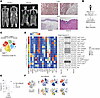 Figure 1
Enrichment of T cells in the small intestinal lamina propria in a patient with AGLCD as assessed by mass cytometry. (A) T1-weighted whole-body MRI (left) and liver (upper right) and ileal (lower right) histology from a patient with AGLCD versus a healthy control showing a complete absence of subcutaneous and visceral fat, hepatic steatosis with inflammation, and severe ileal lesions. (B) Workflow for mass cytometry. LPMCs were isolated from terminal ileum surgical resections from patients with CD (n = 6), 1 patient with AGLCD, and noninflamed controls (n = 4). Cells were stimulated with or without PMA and ionomycin for 4 hours. (C) FlowSOM clustering of merged flow cytometry standard files identified 17 cell clusters among CD45+ LPMCs. tSNE, t-distributed stochastic neighbor embedding. (D) Heatmap showing relative expression of 16 phenotypic markers across clusters. The accompanying table summarizes the mean cluster frequencies (± SEM) in noninflamed (Non-infl.), CD, and AGLCD samples. Statistical comparisons were performed using the edgeR framework with a negative binomial generalized linear model and FDR correction (10%, Benjamini-Hochberg). ILCs, innate lymphoid cells; padj., adjusted P value. (E) Frequency of CD8+CD45RO+ effector T cells (cluster 13) across groups. Boxes indicate IQRs, whiskers denote minimum to maximum values, and lines represent the median. (F) viSNE plots of representative samples (noninflamed, CD, and AGLCD) colored by marker expression (blue = low; red = high). Data in C–F are from 1 mass cytometry experiment.
Thus, we performed mass cytometry to compare the ileal immune cell compartment in the patient with AGLCD with fat-proficient noninflamed control individuals or patients with CD (Figure 1B and Supplemental Figure 1; supplemental material available online with this article; https://doi.org/10.1172/JCI192322DS1), resolving a total of 17 intestinal immune cell clusters (Figure 1, C and D). Among these, CD4+IL-7R–CD25+ Tregs (cluster 8) as well as CD4+CD45RO+ effector T cells (cluster 9), which have been identified as a cell signature indicative of IBD (19), were enriched in both the AGLCD and CD patients when compared with noninflamed controls (Figure 1D). Interestingly, only the patient with AGLCD showed an expansion of CD8+ CD45RO+ effector T cells (cluster 13), which was not detected in the patients with CD or the noninflamed controls (Figure 1, E and F). Supplemental Figure 2 summarizes the differences in activation markers, cytokines, and cytolytic proteins between cell clusters of the AGLCD patient, CD patients, and noninflamed controls, highlighting an upregulation of IL-17 in CD8+CD45RO+ T cells and IL-10 in CD4+ T cells from the patient with AGLCD.
To better characterize the intestinal immune cell composition of the patient with AGLCD, we performed scRNA-seq on FACS-sorted ileal CD45+ lamina propria mononuclear cells (LPMCs) from the patient with AGLCD and 3 control patients with CD (Figure 2A), as well as on CD45+ PBMCs collected from the patient with AGLCD at 2 independent time points 2 years apart, alongside samples from 3 age-matched, lean male healthy donors (HDs) (Figure 2B). As shown in Figure 2, C–F, the patient with AGLCD exhibited an expansion of intestinal CD4+ and CD8+ T cells, accompanied by a reduced abundance of total B cells (Figure 2C). In particular, central memory and effector memory CD4+ and CD8+ T cells were increased, whereas naive B cells and plasmablasts were decreased in the patient with AGLCD compared with the CD controls (Figure 2, D and E).
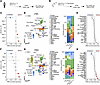 Figure 2
Altered peripheral and intestinal immune cell compositions in AGLCD revealed by single-cell profiling. (A and B) Workflow for scRNA-seq of CD45+ immune cells from small intestine or peripheral blood of the patient with AGLCD and from 3 lean male HDs and 3 patients with CD. GEX, gene expression; TCR, single T cell receptor sequencing. (C–E) Intestinal immune cell (LPMC) comparisons showing the AGLCD sample alongside CD controls. (F–H) PBMC comparisons showing the AGLCD sample alongside HDs. (D and G) Uniform manifold approximation and projections (UMAPs) and bar graphs display cell-type frequencies, and forest plots show arcsine square root–transformed (Δ arcsin-sqrt prop.) relative abundance of lymphocyte clusters for the CD (C and E) and HD (F and H) groups against the AGLCD sample. ASDC, AXL+ Siglec-6+ dendritic cell; cDC2, conventional Dendritic Cell 2; CTL, CD4+ cytotoxic T; dnT, double-negative T; gdT, gamma-delta T; HSPC, hematopoietic stem and progenitor cell; interm., intermediate; Mono, monocytes; pDC, plasmacytoid DCs; TCM, central memory T cells; TEM, effector memory T cells.
Consistent with these findings, we previously used mass and flow cytometry to identify a systemic expansion of CD8+ T cells in the peripheral blood of the patient with AGLCD (11), which demonstrated that the patient with AGLCD had a systemic occurrence of expanded CD8+ T cells. Likewise, scRNA-seq analyses of the CD45+ PBMCs revealed a higher abundance of peripheral B cells and CD4+ T cells, together with a reduced frequency of NK cells in the patient with AGLCD when compared with HDs (Figure 2F). More specifically, the patient with AGLCD showed increased CD4+ and CD8+ effector memory T cell subsets, more Tregs, and a reduced frequency of NK cells and naive CD4+ T cells relative to HDs (Figure 2, G and H). These findings confirm our previous observations of defective NK cell homeostasis (11) and highlight a persistent expansion of T cells in the patient with AGLCD, in both the peripheral blood and the gut at the site of inflammation.
Considering that these immune alterations occur in the complete absence of adipose tissue, we next asked whether adipose loss itself might contribute to or protect against immune dysregulation. Adipose tissue plays a critical role in regulating the immune system in the context of IBD as well as rheumatoid arthritis (7, 20). Given that patients with AGL frequently experience autoimmune-related comorbidities such as arthritis, glomerulonephritis, and autoimmune hepatitis (2), we sought to determine whether the observed accumulation of T cells was a consequence of the absence of adipose tissue. Accordingly, we examined the effect of adipose tissue loss on immune cell composition, focusing on T cell differentiation, function, and expansion in lipodystrophic Ppargfl/fl Adipoq-Cre mice.
Lipodystrophic mice show alterations in splenic NK and intestinal T cell composition and have increased intestinal antimicrobial peptide expression. As previously published by Wang et al. (14), lipodystrophic Ppargfl/fl Adipoq-Cre mice exhibited a complete absence of visceral fat (Figure 3A), consecutive absence of adipokines including leptin in the serum (Figure 3B) and developed nonalcoholic steatohepatitis analogous to the patient with AGLCD (Figure 3C and Supplemental Figure 3A). However, no accumulation of lipids was observed in other tissues, including the pancreas, spleen, kidneys, or cardiac muscle (Supplemental Figure 3A). Additionally, splenomegaly with an enlarged red pulp and larger-sized glomeruli in the kidneys were detected, as previously described (21) (Supplemental Figure 3A). Although it has been reported that knockout models of fat-derived signals, such as leptin (ob/ob) or leptin receptor–deficient (db/db) mice exhibit disturbances in immune cell homeostasis compared with WT controls (22), scarce knowledge exists regarding the effect of lipodystrophy on immune cell homeostasis, and more specifically on T cell homeostasis. To gain insight into the effect of adipose tissue loss on immune cell composition in lipodystrophic mice at steady state, we conducted a comprehensive immune cell characterization of the spleen and intestinal tissue using flow cytometry (gating strategies are summarized in Supplemental Figure 3, B and C). Specifically, splenocytes and LPMCs isolated from the ileum and colon were stained with antibody cocktails targeting CD4 and CD8 for the identification of T cells, CD19 for B cells, and Gr-1 for myeloid subsets. NK1.1, CD49b, CD49a, T-bet, Eomes, CD11b, and CD27 were used to characterize NK subsets according to the 4-stage model of NK cell maturation CD11bloCD27lo → CD11bloCD27hi → CD11bhiCD27hi → CD11bhiCD27lo (23). Moreover, to identify discrepancies in cytokine production, cells were stimulated in vitro with PMA/ionomycin for 4 hours and then stained intracellularly for TNF-α, IFN-γ, and IL-17A (Supplemental Figure 3, B and C). Notably, lipodystrophic mice showed a reduction in frequencies and absolute cell numbers of splenic NK1.1+ NK and type 1 innate lymphoid cells and an increased abundance of Gr-1+ myeloid subsets compared with WT littermate controls (Figure 3, D and E). Further analysis of the CD49b+ NK cell population revealed a higher frequency of less mature CD11bhiCD27hi NK cells and a reduced percentage of the highly cytolytic CD11bhiCD27lo NK cell subset in lipodystrophic mice compared with WT mice (Figure 3, F and G). Although no obvious histological abnormalities were detected in the small or large intestine of lipodystrophic versus WT animals (Figure 3H), flow cytometric analysis revealed a significantly reduced frequency of CD8+ T cells in the colon of fat-deficient lipodystrophic mice compared with WT controls (Figure 3I), while the overall numbers of intestinal and splenic T cell subsets did not significantly differ between the 2 groups (Supplemental Figure 3, D–F).
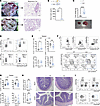 Figure 3
Lipodystrophic Ppargfl/fl Adipoq-Cre mice mimic the hepatic phenotype of the patient with AGLCD and show defects in the development of NK and T cells under steady-state conditions. (A) Representative images of Ppargfl/fl Adipoq-Cre (Lipo) and WT mice showing the complete absence of fat tissue and H&E-stained images of mesenteric adipose tissue (arrows indicate mesenteric and gonadal fat tissue). Scale bars: 100 μm. (B) Leptin plasma levels (WT n = 4; Lipo n = 4). (C) Liver weights of WT mice (n = 16) and Ppargfl/fl Adipoq-Cre mice (n = 12) from 2 independent experiments with a representative image. (D–G) Flow cytometric assessment of splenic NK cells from Ppargfl/fl Adipoq-Cre mice (n = 9–24) compared with WT littermate cells (n = 10–23). Data were pooled from 3 independent experiments. (H) Representative H&E-stained images and immune cell counts (millions/cm) in the terminal ileum or colon as assessed by histology (WT: n = 12–16; Lipo: n = 8–12). Scale bars: 100 μm. (I) Gating strategy of T cells and CD4+FoxP3+ Tregs. The line in the box indicates the median. Boxes range from the 25th to 75th percentiles. Whisker plots show the minimum (smallest) and maximum (largest) values while the line in the box indicates the median. *P < 0.05, **P < 0.01, ***P < 0.001, and ****P < 0.0001, by unpaired 2-tailed t test with Welch’s correction.
These data collectively indicate that adipose tissue and its secreted factors are required to maintain immune cell homeostasis, including the differentiation of splenic NK cells and, to a lesser extent, intestinal CD8+ T cells under steady-state conditions. Additionally, our findings show that the absence of adipose tissue and missing fat-derived signals in AGL were not responsible for the expansion of peripheral and intestinal CD4+ and CD8+ T cells observed in the patient with AGLCD.
To gain further insight into the effect of adipose tissue absence on mucosal homeostasis, we conducted bulk RNA-seq analyses of colonic tissue from 6 lipodystrophic and 6 control mice (Figure 4A). We detected 73 downregulated and 83 upregulated genes in the colonic tissue of lipodystrophic mice compared with WT littermates. Consistent with the complete absence of adipose tissue, the most significantly downregulated genes in lipodystrophic mice were those transcribing for adipose-derived factors including adipsin (Cfd), resistin (Retn), leptin (Lep), and adiponectin (Adipoq) (Figure 4, B and C). In addition, colonic tissue from lipodystrophic mice showed significantly higher mRNA transcripts of antimicrobial peptides (AMPs), including Reg3b, Reg3g, and Chitin1, compared with WT controls (Figure 4D). Pathway analyses revealed that lipodystrophic mice exhibited a differential regulation of genes primarily involved in adipocyte differentiation, regulation of thermogenesis, and pathways controlling lipid droplet formation (Figure 4, E and F). Notably, we did not detect major alterations in intestinal epithelial cell differentiation between lipodystrophic and WT mice by RNA-seq or quantitative PCR (qPCR) (Figure 4, E–G). Similarly, immunohistochemical staining of colonic tissue revealed comparable levels of chromogranin A and mucin 2 (MUC2), indicating that lipodystrophy does not affect the homeostasis of intestinal neuroendocrine or goblet cells (Figure 4H).
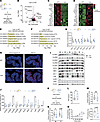 Figure 4
Lipodystrophic mice display normal mucus production and have increased expression of epithelial TJ proteins. (A) Experimental setup of bulk RNA-seq experiments of colon tissue obtained from WT and lipodystrophic mice. (B) Volcano plot showing differentially regulated genes between Ppargfl/fl Adipoq-Cre and WT mice (n = 6 per group). (C and D) Heatmaps showing differentially regulated genes related to adipose tissue –secreted factors and antimicrobial factors between Ppargfl/fl Adipoq-Cre mice and WT littermates (n = 6 per group). (E and F) Bar graphs displaying pathway analyses of significantly regulated genes in lipodystrophic mice. (G) Box-and-whisker plots showing qPCR expression of epithelial differentiation markers in colonic tissue obtained from 6 WT mice and 6 Ppargfl/fl Adipoq-Cre mice. (H) Representative immunohistochemical staining of colonic tissue obtained from WT controls and Ppargfl/fl Adipoq-Cre mice showing epithelial MUC2 and chromogranin A expression. Scale bars: 427.2 μm. (I and J) Western blot analyses of colonic TJ proteins in WT mice (n = 5) and Ppargfl/fl Adipoq-Cre mice (n = 4–5). (K) Intestinal epithelial barrier function was evaluated ex vivo by mounting murine colonic tissue in Ussing chambers. (L) TER, (M) permeability ratios of sodium to chloride (PNa/PCl), and (N) the respective absolute permeabilities for sodium and chloride. Each point represents an individual measurement (n = 7 per group with 2 measurements for each). (O) Basolateral increase in FD4 concentration over time. FD4 permeability is shown for WT and Ppargfl/fl Adipoq-Cre mice (n = 7 per group). Statistical differences were calculated using the Mann-Whitney U test. Boxes range from the 25th to 75th percentiles. Whisker plots show the minimum (smallest) and maximum (largest) values (G, J, L–N, and O right). Data indicate the mean ± SEM (O left). *P < 0.05 and **P < 0.01, by an unpaired 2-tailed t test with Welch correction for panel J, and by a Mann-Whitney U 2-tailed test for panels L, M, and O. GO, Gene Ontology.
Several publications have proposed that excessive production of adipose-derived factors, such as leptin, could impair epithelial barrier function in patients with obesity by affecting the expression of tight junction (TJ) proteins, including claudins, in intestinal and mammary gland epithelial cells (24–26), which are crucial for epithelial barrier function and repair (27, 28). We therefore examined the effect of fat loss on TJ protein expression levels in intestinal epithelial cells by Western blot analyses. Specifically, we analyzed members of the claudin (Cldn) family, which are expressed in the colon and mainly determine the paracellular barrier properties for ions and small solutes (29). We furthermore studied TJ-associated MARVEL proteins (occludin, tricellulin, marvelD3), of which occludin and tricellulin are pivotal for paracellular macromolecule permeability, as well as the intestinal angulins angulin 1 (also known as LSR) and angulin 2 (also known as ILDR1), which control the correct localization of tricellulin and the regulation of the permeability of the tricellular TJ (26, 30). As an important TJ scaffolding protein, we additionally analyzed the expression of zonula occludens 1 (ZO-1) (29, 31). As shown in Figure 4, I and J, we observed significantly elevated expression of claudin 3 (CLDN3), occludin (OCCL), and the lipolysis-stimulated lipoprotein receptor (LSR) in colonic tissue of lipodystrophic mice when compared with expression levels in WT controls. This suggests that lipodystrophic mice may exhibit an augmented epithelial resistance to the translocation of luminal pathogens due to their enhanced expression of TJ proteins and antimicrobial peptides. To functionally test epithelial barrier functions of lipodystrophic mice, we therefore compared the properties of colon explants of lipodystrophic mice and WT littermates in Ussing chamber experiments (Figure 4K), which revealed higher transepithelial electric resistance (TER) (Figure 4L). However, the measurement for ion permeability was not affected by ion charge selectivity (Figure 4M), presumably because of the decreased permeability for sodium (Figure 4N). In addition, flux rates of the macromolecular 4 kDa FITC-dextran (FD4) were decreased in lipodystrophic mice compared with WT controls (Figure 4O), highlighting the idea that epithelial barrier functions improve in lipodystrophic mice in the absence of fat-derived signals.
Lipodystrophic mice are protected from chronic DSS-induced colitis. To rule out the possibility that the T lymphoproliferation observed in the patient with AGLCD only arises during chronic intestinal inflammation in AGL, we next challenged lipodystrophic or WT littermates with 3 cycles of 1.5% DSS, which induced weight loss in both WT and lipodystrophic mice (Figure 5A). We found that only fat-proficient WT mice developed severe chronic colitis with higher scores in stool consistency (Supplemental Figure 4A), whereas lipodystrophic animals were characterized by significantly reduced intestinal inflammation as assessed by histology (Figure 5B).
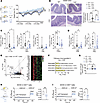 Figure 5
Lipodystrophic mice are protected from DSS-induced colitis. (A) Experimental groups for chronic DSS colitis induction and percentage of weight loss. Differences were calculated by 1-way ANOVA with Šídák’s correction. Lines indicate mean values. (B) Histologic colitis score with representative H&E staining of distal colon sections (WT + H2O: n = 10; WT + DSS: n = 12; Lipo + H2O: n = 10; Lipo + DSS: n = 9). Differences were tested by Kruskal-Wallis with Dunn’s correction; data were pooled from 2 independent experiments. Relative cell numbers (per cm) in colonic tissue samples from WT + H2O (n = 10), WT + DSS (n = 12), and Lipo + H2O (n = 9) mice and for CD4+ (C) and CD8+ T cells (D), as assessed by flow cytometry. Differences were calculated by Mann-Whitney U test; data were pooled from 2 experiments. (E) Volcano plot of differentially regulated genes between Ppargfl/fl Adipoq-Cre and WT mice (n = 5/group) and heatmap of downregulated inflammation-related genes in DSS-treated Ppargfl/fl Adipoq-Cre versus DSS-treated WT controls. (F) Kyoto Encyclopedia of Genes and Genomes (KEGG) pathway analysis and representative genes significantly downregulated (Padj < 0.05, log2 fold change <–1) in Lipo + DSS (n = 5) versus WT + DSS (n = 5) mice. (G) Plasma anti–E. coli LPS IgG levels (WT + H2O: n = 10; WT + DSS: n = 12; Lipo + H2O: n = 9; Lipo + DSS: n = 9). Significance was determined by 1-way ANOVA with Šídák’s correction. (H and I) Calcium influx upon thapsigargin treatment in splenic CD4+ (H) and CD8+ (I) T cells from Ppargfl/fl Adipoq-Cre mice and WT littermates (n = 7/group), as assessed by flow cytometry. Data were pooled from 2 experiments. Boxes represent 25th–75th percentiles; whiskers represent minimum and maximum; line indicates the median. SEM is shown where applicable. f/f0, MFI of Fluo-4 (f) normalized to MFI average detected during 30 s baseline measurement (f0); ΔR/ΔT, calcium influx rate. Boxes range from 25th–75th percentiles. Whisker plots show minimum (smallest) and maximum (largest) values; line in box indicates the median. Data indicate the mean ± SEM (A, H, and I). *P < 0.05, **P < 0.01, ***P < 0.001, and ****P < 0.0001, by 1-way ANOVA corrected for multiple comparisons with Šídák’s test (A–D and G) and Mann-Whitney U 2-tailed test (H and I).
Flow cytometric analyses of colonic immune cells revealed that DSS treatment effectively induced colitis in WT mice, which harbored significantly elevated numbers of CD4+ Tregs and proinflammatory CD4+ and CD8+ T cell subsets compared with WT littermates receiving only water (Figure 5C). Notably, lipodystrophic mice treated with DSS were characterized by a significant reduction in colonic CD4+ T cells, that produced TNF-α or IL-17A, and a decline in Tregs (Figure 5D) in comparison with WT mice treated with DSS. Additionally, there was a notable decrease in intestinal CD8+ T cells in lipodystrophic mice, which further supports the notion that fat-derived signals play a pivotal role in the differentiation and function of proinflammatory T cells during intestinal inflammation. Consistently, bulk RNA-seq of colonic tissue substantiated that DSS-treated lipodystrophic mice had significantly decreased expression of gene sets linked to T cell differentiation and antigen presentation when compared with their DSS-treated WT littermates (Figure 5, E and F). In addition, further gene set enrichment analysis (GSEA) not only revealed a significant decline in the expression of genes associated with inflammation but also showed a reduced epithelial-mesenchymal transition signature in DSS-treated lipodystrophic mice (Supplemental Figure 4B), indicating a preserved intestinal epithelial polarity and adherence in the absence of fat. Notably, we also observed that DSS-treated lipodystrophic mice had significantly less bacterial translocation through the intestinal barrier, as fat-deficient mice harbored lower serum levels of anti–E. coli LPS IgG compared with WT mice receiving DSS (Figure 5G).
To better understand why T cells from lipodystrophic mice exhibited reduced cytokine production in the absence of adipose tissue, we conducted a comparative analysis of the ability of CD4+ and CD8+ T cells to flux calcium through store-operated calcium entry (SOCE) between T cells obtained from lipodystrophic mice or WT littermates. SOCE, mediated by ORAI and STIM molecules, is a key signaling pathway controlling proinflammatory T cell function in murine and human IBD downstream of T cell receptor (TCR) activation (19). As shown in Figure 5, H and I, SOCE was significantly reduced in splenic CD4+ and CD8+ T cells derived from lipodystrophic mice when compared with T cells from WT mice. This suggests that T cells from lipodystrophic mice had a defect in the homeostasis of SOCE, which may have contributed to impaired T cell function, ultimately resulting in decreased production of proinflammatory cytokines and a reduction in intestinal inflammation, as SOCE signaling is required for the production of IFN-γ, IL-17A, and TNF-α in both CD4+ and CD8+ T cells and genetic or pharmacologic ablation of SOCE results in reduced differentiation of Th1 cells, Th17 cells, and Tregs (19). Elevated lipid concentrations and intracellular lipid droplet accumulation have been shown to act as cytoplasmic Ca²+ sinks, thereby impairing SOCE in immune cells (32). To determine whether the observed SOCE defect was T cell intrinsic or secondary to lipodystrophy, we incubated WT splenocytes with plasma from lipodystrophic or WT mice. Lipodystrophic plasma contained elevated triglycerides, induced lipid droplet formation in CD4+ and CD8+ T cells, and significantly reduced SOCE, indicating that triglyceride-driven lipid droplet accumulation can act as intracellular Ca²+ sinks and thereby secondarily diminish SOCE in T cells (Supplemental Figure 5, A–F).
Transplantation of allogeneic fat tissue partially rescues intestinal inflammation in lipodystrophic mice via a leptin-dependent induction of proinflammatory T cells. To further support our observation that adipose tissue is required for proper T cell homeostasis, we next examined how the reintroduction of adipose tissue would affect the T cell compartment of lipodystrophic mice under steady-state and inflammatory conditions. Using allogeneic adipose tissue transplantation models, we transplanted DSS-treated mice with either adipose tissue from WT donor mice or with adipose tissue from leptin-deficient ob/ob donor mice (Figure 6A and Supplemental Figure 6A). We observed that transplanted adipose tissue showed good engraftment with spontaneous vascularization, led to fat uptake in transplanted adipose tissue, and partially restored basal leptin production in recipient lipodystrophic mice (Figure 6, A–C and Supplemental Figure 6B). As expected, leptin production could thus only be observed in recipient lipodystrophic mice receiving adipose tissue from WT donor mice but not in lipodystrophic mice transplanted with fat tissue from leptin-deficient ob/ob mice (Figure 6C). Remarkably, transplantation of WT fat partially rescued the hepatic phenotype of lipodystrophic mice by reducing lipid load and liver weight (Figure 6F, Supplemental Figure 6, C and D, and Supplemental Figure 7C), underscoring the engraftment of functional adipose tissue after fat transplantation. Furthermore, Western blot analyses of colonic tissue revealed that WT fat transplantation could partially reverse the overexpression of colonic TJ proteins observed in lipodystrophic mice under steady-state conditions (Supplemental Figure 6, E and F), indicating that epithelial barrier functions decreased with increasing fat mass.
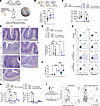 Figure 6
Allogeneic fat transplantation partially restores basal leptin levels, reverses steatohepatitis, and promotes intestinal inflammation via induction of intestinal proinflammatory T cells. (A) Experimental design: After 1 DSS cycle (1.5%), lipodystrophic or WT mice were transplanted with 500–600 mg adipose tissue from WT or leptin-deficient ob/ob donors by mini-laparotomy before undergoing another 2 cycles of DSS. Image on right shows vascularized transplanted fat 1 month after surgery. (B) Weight change of transplanted fat tissue relative to baseline. (C) Plasma leptin levels (n = 4–9). (D) Representative images of H&E- stained colon sections from transplanted versus nontransplanted DSS-treated animals. Scale bars: 100 μm. (E) Box-and-whisker plots summarizing the histologic inflammation score of fat-transplanted and nontransplanted animals. Data shown were pooled from 2 independent transplantation experiments (bold symbols) and additional control data points derived from nontransplantation DSS experiments (light gray) shown in Figure 3 (n = 4–18). (F) Liver weights of transplanted WT and Ppargfl/fl Adipoq-Cre mice (n = 4–18; data were pooled from 5 experiments). (G) Representative FACS plots showing IFN-γ and IL-17A production in colonic CD4+ T cells. UNSTIM., unstimulated. (H) Box-and-whisker plots summarizing absolute numbers of IFN-γ– and IL-17A–producing CD4+ T cells normalized to WT mice (n = 4–18; data were pooled from 5 experiments). Statistical differences were calculated by 1-way ANOVA with Šídák’s correction. Each point represents 1 mouse; boxes range from the 25th-75th percentiles. Whisker plots show the minimum (smallest) and maximum (largest) values while the line in the box indicates the median. (I) Experimental setup and representative FACS plots showing IFN-γ– and IL-17A–producing CD4+ T cells in peripheral blood of a patient with AGLCD before and 4 days after daily recombinant leptin substitution. transpl., transplantation. Data indicate the mean ± SEM. *P < 0.05, **P < 0.01, ***P < 0.001, and ****P < 0.0001, by 1-way ANOVA with Tukey’s multiple comparisons test for B, C, E, F, and H.
As shown in Figure 6, D and E, transplantation of WT adipose tissue resulted in comparable levels of histologic inflammation and weight loss in WT and lipodystrophic mice treated with DSS (Supplemental Figure 7, A and B). However, lipodystrophic mice that did not undergo fat transplantation or receive fat from leptin-deficient ob/ob mice showed significantly reduced inflammation or no inflammation upon DSS treatment when compared with DSS-treated WT mice that had undergone transplantation with WT adipose tissue (Figure 6, D and E). Analysis of bulk RNA-seq data from colon tissue revealed that transplantation of WT fat tissue led to an enrichment of a proinflammatory Th1/Th2 gene signature in DSS-treated lipodystrophic mice when compared with DSS-treated lipodystrophic mice that did not receive adipose tissue (Supplemental Figure 7, E and F). Interestingly, we also observed that the transplantation of WT fat in lipodystrophic mice caused an enrichment of a Th17 cell mRNA signature when compared with lipodystrophic mice that received fat tissue from ob/ob mice (Supplemental Figure 7, G and H), underscoring the notion that fat-secreted leptin plays an important role in the differentiation of proinflammatory T cells. Likewise, we could detect a significantly higher number of colonic lamina propria Th17 cells in lipodystrophic mice receiving WT fat (Figure 6, G and H, and Supplemental Figure 7D), and we observed that the transplantation of WT fat significantly increased the production of IFN-γ in T cells of lipodystrophic mice (Figure 6H). Likewise, splenocytes from WT mice that were exposed to plasma of DSS-treated lipodystrophic mice that had been transplanted with WT fat showed a higher trend to flux calcium compared with those exposed to plasma from mice transplanted with ob/ob fat (Supplemental Figure 8). Taken together, these findings confirm previous observations that fat-secreted leptin controls the differentiation and function of T cells in mice (13). To exclude the possibility that the observed effects on T cell differentiation were primarily driven by differences in microbiota composition rather than by leptin, we performed 16S sequencing of stool obtained from the different experimental groups. These analyses did not reveal significant differences between lipodystrophic and WT controls, between DSS-treated lipodystrophic and WT mice, or between DSS-treated lipodystrophic mice transplanted with WT fat or ob/ob fat (Supplemental Figure 9).
To confirm that leptin is not only required for T cell homeostasis in mice but also involved in the functional regulation of proinflammatory CD4+ T cells in humans, we analyzed PBMCs from our patient with AGLCD, obtained before treatment with recombinant leptin and following 4 days of daily treatments with recombinant leptin. Consistent with our observations in mice, we found that leptin treatment increased the abundance and expression of IL-17A–producing CD4+ T cells in the patient with AGLCD in vivo (Figure 6I). Taken together, these findings demonstrate that fat-derived signals such as leptin are required for the differentiation and function of proinflammatory T cells in both mice and humans and that lipodystrophy strongly protects against intestinal inflammation.
Identification of a persistently restricted TCR repertoire in the patient with AGLCD. Given the high frequency of CD4+ and CD8+ T cells that we had detected in both the periphery and at the site of inflammation in the patient with AGLCD, despite the absence of fat-derived signals, we hypothesized that the observed T cell expansion reflected a predominantly T cell–intrinsic process. To test this hypothesis, we characterized the T cell clonotypes (CTs) of the patient with AGLCD using scTCR-seq. scTCR-seq of PBMCs and LPMCs revealed marked clonal restrictions of T cells in both the blood and small intestine of the patient with AGLCD (Figure 7, A–C), in contrast to PBMCs from HDs and intestinal T cells from patients with CD. To assess the temporal stability and tissue distribution of these CTs, scRNA/TCR-seq was performed on PBMCs collected from the patient with AGLCD 2 years apart (time point 1 [T1] and time point 2 [T2]), while LPMCs were analyzed once from inflamed ileal tissue at the first time point. Cross-comparison of TCR repertoires across time points and tissues identified shared CTs in the patient with AGLCD (Figure 7D). Within the peripheral compartment, CT abundances were strongly correlated over time (Pearson’s R² = 0.61), indicating long-term persistence of expanded T cell clones. By contrast, the overlap between intestinal and peripheral repertoires was limited (Pearson’s R² = 0.012), suggesting that only a small subset of expanded clones was shared across compartments (Figure 7, E and F).
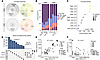 Figure 7
AGLCD patient TCR repertoires characterized by reduced diversity and persistent peripheral CTs. (A) Honeycomb plots from scTCR-seq of peripheral T cells from the patient with AGLCD at 2 time points, age-matched HDs, and intestinal T cells from the AGLCD and CD patients, showing CT distributions. (B) Stacked bar plot of proportional repertoire occupancy across groups. (C) Forest plot of mean inverse (Inv.) Simpson index (dots) after equal depth downsampling with 1,000 bootstrap iterations and 95% CIs (whiskers). (D) Upset plot of shared CTs across peripheral and intestinal samples from the patient with AGLCD, HDs, and patients with CD. (E) Scatter plots showing CT abundance concordance over time in AGLCD blood (2 years apart) and (F) between matched blood and intestinal samples. Clones are categorized by counts into singlets or expanded, either exclusively present or shared between the selected samples. Associations were evaluated using Pearson’s correlation; the corresponding R², reflecting explained variance, is shown along with a global dashed regression line. T1 exp., time point 1 expanded; T2 exp., time point 2 expanded.
Mapping dominant CTs (clonal proportion >1%, n >50) onto the scRNA-seq landscape demonstrated that clonal expansion was most prominent among effector and central memory CD8+ T cells and mucosal-associated invariant T (MAIT) cells (Figure 8, A and B). Tissue-matched differential gene expression (DGE) analyses revealed that clonally expanded T cells in both the blood and intestine exhibited a proinflammatory profile, with significant enrichment of gene signatures related to TNF-α, IFN-γ, and mTORC1 signaling (Figure 8, C–H). Together, these data identify persistently expanded, clonally stable inflammatory T cell populations in the circulation, with selective recruitment or retention of related clones within inflamed intestinal tissue.
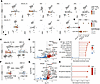 Figure 8
Characterization of clonally expanded T cells in the patient with AGLCD. (A) UMAPs showing densities of expanded CTs in the patient with AGLCD, HDs, and patients with CD. (B) Bubble plots quantifying top clone frequencies and total expanded CT proportions per sample. (C and F) Workflow diagrams outlining contrasts for DGE and GSEA by tissue. (D and G) Volcano plots of differentially expressed genes in expanded CD8+ T cells from the patient with AGLCD versus tissue-matched HD or CD T cells. (E and H) HALLMARK GSEA of expanded CD8+ T cells relative to tissue-matched control T cells. LPMCs and PBMCs were sequenced in independent scRNA-seq experiments. NES, normalized enrichment score; max prop., maximum proportion; Unf., unfolded.
T cells of the patient with AGLCD harbor a somatic de novo NRAS G13D mutation. Prior research has indicated that somatic de novo mutations in T cells may play a role in the survival and evolution of clonally restricted T cells in patients with rheumatoid arthritis, multiple sclerosis, or nonmalignant hematologic or immunologic disorders, including aplastic anemia, myelodysplastic syndrome, and autoimmune thrombocytopenia (33–35). To understand whether the observed long-term persistence of clonally expanded T cells could be supported by the occurrence of somatic mutations in the patient with AGLCD, we next examined the mutational landscape of lymphocytes in this patient. Using whole-exome sequencing (WES) generated from whole blood of the patient with AGLCD and his relatives (11), we had previously excluded germline mutations commonly associated with inherited forms of generalized lipodystrophies in genes regulating lipolysis and adipocyte homeostasis (AGPAT2, BSCL2, CAV1, PTRF) (36–39). However, by looking beyond these genes and further reanalyzing this existing WES dataset (11), we were able to detect a de novo mutation causing a nonconservative glycine–to–aspartic acid substitution at codon 13 in the NRAS gene (NRAS G13D) (Figure 9A, STEP1). The NRAS gene encodes the NRAS protein, an essential regulator of the hematopoietic system development (40).
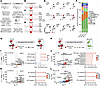 Figure 9
Detection of a somatic NRAS G13D mutation in T cells of the patient with AGLCD. (A) Workflow for WES experiments. (B–D) Targeted Sanger sequencing of the NRAS locus in buccal cells and sorted immune cell subsets from peripheral blood and ileal lamina propria of the patient with AGLCD. (E) UMAPs and (F) bar plots summarizing NRAS G13D+ cells across T cell subtypes per sample. (G and H) Workflow diagrams outlining intra-patient and inter-patient contrasts used for DGE analysis and GSEA. (I and J) Volcano plots comparing tissue-matched DGE and lollipop plots showing GSEA pathways comparing PBMC NRAS G13D+ T cells with T cells from the same patient with no detectable NRAS G13D reads (I) and T cells from HDs (J). (K and L) Volcano plots comparing tissue-matched DGE and lollipop plots showing GSEA pathways comparing LPMC NRAS G13D+ T cells with tissue-matched T cells from the same patient with no detectable NRAS G13D reads (K) and T cells from patients with CD (L). Infl., inflammatory; Oxid. phosph., oxidative phosphorylation; sign., signaling.
For example, NRAS was found to play a crucial role during the development and function of CD8+ T cells in mice, as NRAS-deficient CD8+ T cells show impaired thymic development and functional impairments in controlling infections with influenza virus (41). Previous studies have furthermore identified mutations that lead to the constitutive activation of NRAS as a potential risk factor for hematopoietic malignancies in both patients and transgenic mouse models (42). In particular, the NRAS G13D mutation results in the substitution of glycine at position 13 by an aspartate residue, which lies within the GTP-binding pocket of the NRAS protein. This variant has previously been implicated in the pathogenesis of autoimmune lymphoproliferative syndrome (ALPS) by rendering T cells and lymphocytes more resistant to growth factor deprivation–induced apoptosis that ultimately results in a systemic, nonmalignant lymphocyte expansion (15). In addition, NRAS G13D has been associated with RALDs, which are characterized by autoimmune manifestations such as lupus-like syndromes, lymphadenopathy, and massive splenomegaly (16–18). Moreover, the mutation has been identified in patients with Noonan syndrome and in cases of acute promyelocytic-like leukemia with concomitant myelodysplastic syndrome (43). Of note, the NRAS G13D variant is essentially absent as a germline allele, with an extremely low allele frequency of 6.196 × 10⁻⁷ (https://gnomad.broadinstitute.org) and has been shown to drive cell survival and lymphoproliferation in the context of ALPS (15). Since the NRAS G13D mutation was detected in less than 10% of all reads by WES performed on whole blood cells (data not shown), we hypothesized that only a small fraction of PBMCs might carry the NRAS G13D mutation. To test this, we used targeted Sanger sequencing to separately analyze peripheral CD3+ T cells, CD19+ B cells, CD14+ monocytes, and buccal epithelial cells isolated from the patient with AGLCD or a HD (Figure 9A, step 2). As shown in Figure 9, B–D, among all the cell types investigated, only CD3+ T cells harbored the NRAS G13D mutation. Further analysis of sorted CD4+ and CD8+ T cells isolated from either blood or intestinal biopsies from the patient with AGLCD (Figure 9E, step 3) confirmed the presence of the NRAS G13D point mutation in T cells in the peripheral blood compartment as well as in FACS-sorted T cells at the site of inflammation in the intestine (Figure 9E). Remarkably, we were also able to detect RNA reads spanning the NRAS G13D mutation in our scRNA-seq data in CD4+ and CD8+ T cells obtained from the peripheral blood and intestine, supporting the notion that the patient with AGLCD carries a somatic de novo NRAS G13D mutation in the T cell compartment (Figure 9F). To assess the transcriptional consequences of the NRAS G13D mutation, we compared gene expression profiles of mutation-positive T cells with T cells from the same patient lacking detectable NRAS G13D, as well as with T cells from HDs expressing WT NRAS (Figure 9, G and H). NRAS G13D+ T cells showed increased NRAS transcript abundance and a marked enrichment of lymphoproliferative and inflammatory gene programs, supporting the idea of a functional role for activating NRAS signaling in driving T cell expansion and sustained lymphoproliferation (Figure 9, I–L).
In light of the growing evidence for the role of somatic mutations in the evolution and maintenance of clonally restricted T cells in nonmalignant T cells, our data collectively indicate that the occurrence of the NRAS G13D mutation might facilitate the survival of autoreactive T cells, thereby advancing the selection and survival of clonally restricted inflammatory T cells in the patient with AGLCD, ultimately contributing to persistent intestinal and systemic inflammation, which can then be further aggravated by exogenous substitution with recombinant leptin.


Copyright © 2026 American Society for Clinical Investigation
ISSN: 0021-9738 (print), 1558-8238 (online)