
Advertisement
Research ArticleCell biologyOncology
Open Access |  10.1172/JCI189152
Mutated FGFR1 is an oncogenic driver and therapeutic target in high-risk neuroblastoma
Lisa Werr,1,2,3 Jana Boland,1,4 Josephine Petersen,1,5 Fiorella Iglesias,6 Stefanie Höppner,1,2,4 Christoph Bartenhagen,1,2 Carolina Rosswog,1,2,7 Anna-Maria Hellmann,1,2,7 Yvonne Kahlert,1 Nadine Hemstedt,1 Nadliv Ibruli,1 Marcel A. Dammert,3,8 Boris Decarolis,9 Jan-Michael Werner,10,11 Florian Malchers,3,12 Kathrin Schramm,13,14 Olaf Witt,13,15,16,17,18 Klaus H. Beiske,19 Anne Gro Wesenberg Rognlien,20 Maria Winther Gunnes,20 Karin P. Langenberg,21 Jan Molenaar,21,22 Marie Bernkopf,23 Sabine Taschner-Mandl,23 Debbie Hughes,24 Sally L. George,24,25,26 Louis Chesler,24 Johannes H. Schulte,27 Giuseppe Barone,28 Mario Capasso,29,30 Lea F. Surrey,31,32 Rochelle Bagatell,33 Julien Masliah-Planchon,34 Gudrun Schleiermacher,35 Holger Grüll,36 Frank Westermann,13,37 Anne M. Schultheis,8 Reinhard Büttner,8 Anton G. Henssen,38,39,40,41 Angelika Eggert,38 Martin Peifer,3,7 Neerav N. Shukla,5 Thorsten Simon,9 Barbara Hero,9 H. Christian Reinhardt,42 Roman K. Thomas,3,8 and Matthias Fischer1,2
1Department of Experimental Pediatric Oncology and Hematology,
2Center for Molecular Medicine Cologne and Department of Experimental Pediatric Oncology, Medical Faculty, and
3Department of Translational Genomics, Medical Faculty, University of Cologne, Cologne, Germany.
4Mildred Scheel School of Oncology, Cologne, University Hospital Cologne, Medical Faculty, Cologne, Germany.
5Koeln Fortune Program/Faculty of Medicine, University of Cologne, Cologne, Germany.
6Department of Pediatrics, Memorial Sloan Kettering Cancer Center, New York, New York, USA.
7Else Kröner Forschungskolleg Clonal Evolution in Cancer, University Hospital Cologne, Cologne, Germany.
8Institute of Pathology, Faculty of Medicine and University Hospital Cologne,
9Department of Pediatric Oncology and Hematology, and
10Department of Neurology, Faculty of Medicine and University Hospital Cologne, University of Cologne, Cologne, Germany.
11Division of Oncology and Christian Doppler Laboratory for Personalized Immunotherapy, Department of Medicine I, Medical University of Vienna, Vienna, Austria.
12Institute of Biochemistry I, Medical Faculty, University of Cologne, Cologne, Germany.
13Hopp Children’s Cancer Center Heidelberg, Heidelberg, Germany.
14Division of Pediatric Glioma Research (B360) and
15Clinical Cooperation Unit Pediatric Oncology, German Cancer Research Center (DKFZ), Heidelberg, Germany.
16Department of Pediatric Oncology, Hematology, Immunology and Pulmonology, Heidelberg University Hospital, Heidelberg, Germany.
17German Cancer Consortium (DKTK), Heidelberg, Germany.
18National Center for Tumor Diseases, Heidelberg, Germany.
19Department of Pathology, Oslo University Hospital, Oslo, Norway.
20Division of Pediatric and Adolescent Medicine, Oslo University Hospital Rikshospitalet, Oslo, Norway.
21Princess Máxima Center for Pediatric Oncology, Heidelberglaan 25, Utrecht, Netherlands.
22Department of Pharmaceutical Sciences, University Utrecht, Utrecht, Netherlands.
23St. Anna Children’s Cancer Research Institute, Vienna, Austria.
24Division of Clinical Studies, The Institute of Cancer Research, Sutton, London, United Kingdom.
25The Francis Crick Institute, London, United Kingdom.
26Children and Young People’s Unit, The Royal Marsden Hospital, Sutton, London, United Kingdom.
27University Children’s Hospital, Eberhard Karls University, Abteilung I, Tuebingen, Germany.
28Great Ormond Street Hospital, London, United Kingdom.
29Department of Molecular Medicine and Medical Biotechnology, University of Naples “Federico II,” Naples, Italy.
30CEINGE Biotecnologie Avanzate, Napoli, Italy.
31Division of Genomic Diagnostics, Children’s Hospital of Philadelphia, Philadelphia, Pennsylvania, USA.
32Department of Pathology and Laboratory Medicine, and
33Department of Pediatrics, Division of Oncology, Children’s Hospital of Philadelphia and the Perelman School of Medicine, University of Pennsylvania, Philadelphia, Pennsylvania, USA.
34Oncogenetic lab, Institute Curie, Paris, France.
35Recherche Translationelle en Oncologie Pédiatrique; INSERM U830, and SIREDO Integrated Pediatric Oncology Center, PSL Research University, Institut Curie, Paris, France.
36Faculty of Medicine and University Hospital of Cologne, Institute of Diagnostic and Interventional Radiology, University of Cologne, Cologne, Germany.
37Division of Neuroblastoma Genomics, DFKZ, Heidelberg, Germany.
38Department of Pediatric Oncology/Hematology, Charité-Universitätsmedizin Berlin, Berlin, Germany.
39DKTK, Partner Site Berlin, and DKFZ, Heidelberg, Germany.
40Max-Delbrück-Center for Molecular Medicine in the Helmholtz Association (MDC), Technology Platform Electron Microscopy, Berlin, Germany.
41Experimental and Clinical Research Center of the MDC and Charité Berlin, Berlin, Germany.
42Department of Hematology and Stem Cell Transplantation, University Hospital Essen, University Duisburg-Essen, DKTK, partner site Essen, Essen, Germany.
Address correspondence to: Matthias Fischer, Department of Experimental Pediatric Oncology, University Children’s Hospital of Cologne, Kerpener Str. 62, 50924 Cologne, Germany. Phone: 49.221.478.40685; Email: matthias.fischer@uk-koeln.de.
Find articles by Werr, L. in: PubMed | Google Scholar
1Department of Experimental Pediatric Oncology and Hematology,
2Center for Molecular Medicine Cologne and Department of Experimental Pediatric Oncology, Medical Faculty, and
3Department of Translational Genomics, Medical Faculty, University of Cologne, Cologne, Germany.
4Mildred Scheel School of Oncology, Cologne, University Hospital Cologne, Medical Faculty, Cologne, Germany.
5Koeln Fortune Program/Faculty of Medicine, University of Cologne, Cologne, Germany.
6Department of Pediatrics, Memorial Sloan Kettering Cancer Center, New York, New York, USA.
7Else Kröner Forschungskolleg Clonal Evolution in Cancer, University Hospital Cologne, Cologne, Germany.
8Institute of Pathology, Faculty of Medicine and University Hospital Cologne,
9Department of Pediatric Oncology and Hematology, and
10Department of Neurology, Faculty of Medicine and University Hospital Cologne, University of Cologne, Cologne, Germany.
11Division of Oncology and Christian Doppler Laboratory for Personalized Immunotherapy, Department of Medicine I, Medical University of Vienna, Vienna, Austria.
12Institute of Biochemistry I, Medical Faculty, University of Cologne, Cologne, Germany.
13Hopp Children’s Cancer Center Heidelberg, Heidelberg, Germany.
14Division of Pediatric Glioma Research (B360) and
15Clinical Cooperation Unit Pediatric Oncology, German Cancer Research Center (DKFZ), Heidelberg, Germany.
16Department of Pediatric Oncology, Hematology, Immunology and Pulmonology, Heidelberg University Hospital, Heidelberg, Germany.
17German Cancer Consortium (DKTK), Heidelberg, Germany.
18National Center for Tumor Diseases, Heidelberg, Germany.
19Department of Pathology, Oslo University Hospital, Oslo, Norway.
20Division of Pediatric and Adolescent Medicine, Oslo University Hospital Rikshospitalet, Oslo, Norway.
21Princess Máxima Center for Pediatric Oncology, Heidelberglaan 25, Utrecht, Netherlands.
22Department of Pharmaceutical Sciences, University Utrecht, Utrecht, Netherlands.
23St. Anna Children’s Cancer Research Institute, Vienna, Austria.
24Division of Clinical Studies, The Institute of Cancer Research, Sutton, London, United Kingdom.
25The Francis Crick Institute, London, United Kingdom.
26Children and Young People’s Unit, The Royal Marsden Hospital, Sutton, London, United Kingdom.
27University Children’s Hospital, Eberhard Karls University, Abteilung I, Tuebingen, Germany.
28Great Ormond Street Hospital, London, United Kingdom.
29Department of Molecular Medicine and Medical Biotechnology, University of Naples “Federico II,” Naples, Italy.
30CEINGE Biotecnologie Avanzate, Napoli, Italy.
31Division of Genomic Diagnostics, Children’s Hospital of Philadelphia, Philadelphia, Pennsylvania, USA.
32Department of Pathology and Laboratory Medicine, and
33Department of Pediatrics, Division of Oncology, Children’s Hospital of Philadelphia and the Perelman School of Medicine, University of Pennsylvania, Philadelphia, Pennsylvania, USA.
34Oncogenetic lab, Institute Curie, Paris, France.
35Recherche Translationelle en Oncologie Pédiatrique; INSERM U830, and SIREDO Integrated Pediatric Oncology Center, PSL Research University, Institut Curie, Paris, France.
36Faculty of Medicine and University Hospital of Cologne, Institute of Diagnostic and Interventional Radiology, University of Cologne, Cologne, Germany.
37Division of Neuroblastoma Genomics, DFKZ, Heidelberg, Germany.
38Department of Pediatric Oncology/Hematology, Charité-Universitätsmedizin Berlin, Berlin, Germany.
39DKTK, Partner Site Berlin, and DKFZ, Heidelberg, Germany.
40Max-Delbrück-Center for Molecular Medicine in the Helmholtz Association (MDC), Technology Platform Electron Microscopy, Berlin, Germany.
41Experimental and Clinical Research Center of the MDC and Charité Berlin, Berlin, Germany.
42Department of Hematology and Stem Cell Transplantation, University Hospital Essen, University Duisburg-Essen, DKTK, partner site Essen, Essen, Germany.
Address correspondence to: Matthias Fischer, Department of Experimental Pediatric Oncology, University Children’s Hospital of Cologne, Kerpener Str. 62, 50924 Cologne, Germany. Phone: 49.221.478.40685; Email: matthias.fischer@uk-koeln.de.
Find articles by Boland, J. in: PubMed | Google Scholar
1Department of Experimental Pediatric Oncology and Hematology,
2Center for Molecular Medicine Cologne and Department of Experimental Pediatric Oncology, Medical Faculty, and
3Department of Translational Genomics, Medical Faculty, University of Cologne, Cologne, Germany.
4Mildred Scheel School of Oncology, Cologne, University Hospital Cologne, Medical Faculty, Cologne, Germany.
5Koeln Fortune Program/Faculty of Medicine, University of Cologne, Cologne, Germany.
6Department of Pediatrics, Memorial Sloan Kettering Cancer Center, New York, New York, USA.
7Else Kröner Forschungskolleg Clonal Evolution in Cancer, University Hospital Cologne, Cologne, Germany.
8Institute of Pathology, Faculty of Medicine and University Hospital Cologne,
9Department of Pediatric Oncology and Hematology, and
10Department of Neurology, Faculty of Medicine and University Hospital Cologne, University of Cologne, Cologne, Germany.
11Division of Oncology and Christian Doppler Laboratory for Personalized Immunotherapy, Department of Medicine I, Medical University of Vienna, Vienna, Austria.
12Institute of Biochemistry I, Medical Faculty, University of Cologne, Cologne, Germany.
13Hopp Children’s Cancer Center Heidelberg, Heidelberg, Germany.
14Division of Pediatric Glioma Research (B360) and
15Clinical Cooperation Unit Pediatric Oncology, German Cancer Research Center (DKFZ), Heidelberg, Germany.
16Department of Pediatric Oncology, Hematology, Immunology and Pulmonology, Heidelberg University Hospital, Heidelberg, Germany.
17German Cancer Consortium (DKTK), Heidelberg, Germany.
18National Center for Tumor Diseases, Heidelberg, Germany.
19Department of Pathology, Oslo University Hospital, Oslo, Norway.
20Division of Pediatric and Adolescent Medicine, Oslo University Hospital Rikshospitalet, Oslo, Norway.
21Princess Máxima Center for Pediatric Oncology, Heidelberglaan 25, Utrecht, Netherlands.
22Department of Pharmaceutical Sciences, University Utrecht, Utrecht, Netherlands.
23St. Anna Children’s Cancer Research Institute, Vienna, Austria.
24Division of Clinical Studies, The Institute of Cancer Research, Sutton, London, United Kingdom.
25The Francis Crick Institute, London, United Kingdom.
26Children and Young People’s Unit, The Royal Marsden Hospital, Sutton, London, United Kingdom.
27University Children’s Hospital, Eberhard Karls University, Abteilung I, Tuebingen, Germany.
28Great Ormond Street Hospital, London, United Kingdom.
29Department of Molecular Medicine and Medical Biotechnology, University of Naples “Federico II,” Naples, Italy.
30CEINGE Biotecnologie Avanzate, Napoli, Italy.
31Division of Genomic Diagnostics, Children’s Hospital of Philadelphia, Philadelphia, Pennsylvania, USA.
32Department of Pathology and Laboratory Medicine, and
33Department of Pediatrics, Division of Oncology, Children’s Hospital of Philadelphia and the Perelman School of Medicine, University of Pennsylvania, Philadelphia, Pennsylvania, USA.
34Oncogenetic lab, Institute Curie, Paris, France.
35Recherche Translationelle en Oncologie Pédiatrique; INSERM U830, and SIREDO Integrated Pediatric Oncology Center, PSL Research University, Institut Curie, Paris, France.
36Faculty of Medicine and University Hospital of Cologne, Institute of Diagnostic and Interventional Radiology, University of Cologne, Cologne, Germany.
37Division of Neuroblastoma Genomics, DFKZ, Heidelberg, Germany.
38Department of Pediatric Oncology/Hematology, Charité-Universitätsmedizin Berlin, Berlin, Germany.
39DKTK, Partner Site Berlin, and DKFZ, Heidelberg, Germany.
40Max-Delbrück-Center for Molecular Medicine in the Helmholtz Association (MDC), Technology Platform Electron Microscopy, Berlin, Germany.
41Experimental and Clinical Research Center of the MDC and Charité Berlin, Berlin, Germany.
42Department of Hematology and Stem Cell Transplantation, University Hospital Essen, University Duisburg-Essen, DKTK, partner site Essen, Essen, Germany.
Address correspondence to: Matthias Fischer, Department of Experimental Pediatric Oncology, University Children’s Hospital of Cologne, Kerpener Str. 62, 50924 Cologne, Germany. Phone: 49.221.478.40685; Email: matthias.fischer@uk-koeln.de.
Find articles by Petersen, J. in: PubMed | Google Scholar
1Department of Experimental Pediatric Oncology and Hematology,
2Center for Molecular Medicine Cologne and Department of Experimental Pediatric Oncology, Medical Faculty, and
3Department of Translational Genomics, Medical Faculty, University of Cologne, Cologne, Germany.
4Mildred Scheel School of Oncology, Cologne, University Hospital Cologne, Medical Faculty, Cologne, Germany.
5Koeln Fortune Program/Faculty of Medicine, University of Cologne, Cologne, Germany.
6Department of Pediatrics, Memorial Sloan Kettering Cancer Center, New York, New York, USA.
7Else Kröner Forschungskolleg Clonal Evolution in Cancer, University Hospital Cologne, Cologne, Germany.
8Institute of Pathology, Faculty of Medicine and University Hospital Cologne,
9Department of Pediatric Oncology and Hematology, and
10Department of Neurology, Faculty of Medicine and University Hospital Cologne, University of Cologne, Cologne, Germany.
11Division of Oncology and Christian Doppler Laboratory for Personalized Immunotherapy, Department of Medicine I, Medical University of Vienna, Vienna, Austria.
12Institute of Biochemistry I, Medical Faculty, University of Cologne, Cologne, Germany.
13Hopp Children’s Cancer Center Heidelberg, Heidelberg, Germany.
14Division of Pediatric Glioma Research (B360) and
15Clinical Cooperation Unit Pediatric Oncology, German Cancer Research Center (DKFZ), Heidelberg, Germany.
16Department of Pediatric Oncology, Hematology, Immunology and Pulmonology, Heidelberg University Hospital, Heidelberg, Germany.
17German Cancer Consortium (DKTK), Heidelberg, Germany.
18National Center for Tumor Diseases, Heidelberg, Germany.
19Department of Pathology, Oslo University Hospital, Oslo, Norway.
20Division of Pediatric and Adolescent Medicine, Oslo University Hospital Rikshospitalet, Oslo, Norway.
21Princess Máxima Center for Pediatric Oncology, Heidelberglaan 25, Utrecht, Netherlands.
22Department of Pharmaceutical Sciences, University Utrecht, Utrecht, Netherlands.
23St. Anna Children’s Cancer Research Institute, Vienna, Austria.
24Division of Clinical Studies, The Institute of Cancer Research, Sutton, London, United Kingdom.
25The Francis Crick Institute, London, United Kingdom.
26Children and Young People’s Unit, The Royal Marsden Hospital, Sutton, London, United Kingdom.
27University Children’s Hospital, Eberhard Karls University, Abteilung I, Tuebingen, Germany.
28Great Ormond Street Hospital, London, United Kingdom.
29Department of Molecular Medicine and Medical Biotechnology, University of Naples “Federico II,” Naples, Italy.
30CEINGE Biotecnologie Avanzate, Napoli, Italy.
31Division of Genomic Diagnostics, Children’s Hospital of Philadelphia, Philadelphia, Pennsylvania, USA.
32Department of Pathology and Laboratory Medicine, and
33Department of Pediatrics, Division of Oncology, Children’s Hospital of Philadelphia and the Perelman School of Medicine, University of Pennsylvania, Philadelphia, Pennsylvania, USA.
34Oncogenetic lab, Institute Curie, Paris, France.
35Recherche Translationelle en Oncologie Pédiatrique; INSERM U830, and SIREDO Integrated Pediatric Oncology Center, PSL Research University, Institut Curie, Paris, France.
36Faculty of Medicine and University Hospital of Cologne, Institute of Diagnostic and Interventional Radiology, University of Cologne, Cologne, Germany.
37Division of Neuroblastoma Genomics, DFKZ, Heidelberg, Germany.
38Department of Pediatric Oncology/Hematology, Charité-Universitätsmedizin Berlin, Berlin, Germany.
39DKTK, Partner Site Berlin, and DKFZ, Heidelberg, Germany.
40Max-Delbrück-Center for Molecular Medicine in the Helmholtz Association (MDC), Technology Platform Electron Microscopy, Berlin, Germany.
41Experimental and Clinical Research Center of the MDC and Charité Berlin, Berlin, Germany.
42Department of Hematology and Stem Cell Transplantation, University Hospital Essen, University Duisburg-Essen, DKTK, partner site Essen, Essen, Germany.
Address correspondence to: Matthias Fischer, Department of Experimental Pediatric Oncology, University Children’s Hospital of Cologne, Kerpener Str. 62, 50924 Cologne, Germany. Phone: 49.221.478.40685; Email: matthias.fischer@uk-koeln.de.
Find articles by Iglesias, F. in: PubMed | Google Scholar
1Department of Experimental Pediatric Oncology and Hematology,
2Center for Molecular Medicine Cologne and Department of Experimental Pediatric Oncology, Medical Faculty, and
3Department of Translational Genomics, Medical Faculty, University of Cologne, Cologne, Germany.
4Mildred Scheel School of Oncology, Cologne, University Hospital Cologne, Medical Faculty, Cologne, Germany.
5Koeln Fortune Program/Faculty of Medicine, University of Cologne, Cologne, Germany.
6Department of Pediatrics, Memorial Sloan Kettering Cancer Center, New York, New York, USA.
7Else Kröner Forschungskolleg Clonal Evolution in Cancer, University Hospital Cologne, Cologne, Germany.
8Institute of Pathology, Faculty of Medicine and University Hospital Cologne,
9Department of Pediatric Oncology and Hematology, and
10Department of Neurology, Faculty of Medicine and University Hospital Cologne, University of Cologne, Cologne, Germany.
11Division of Oncology and Christian Doppler Laboratory for Personalized Immunotherapy, Department of Medicine I, Medical University of Vienna, Vienna, Austria.
12Institute of Biochemistry I, Medical Faculty, University of Cologne, Cologne, Germany.
13Hopp Children’s Cancer Center Heidelberg, Heidelberg, Germany.
14Division of Pediatric Glioma Research (B360) and
15Clinical Cooperation Unit Pediatric Oncology, German Cancer Research Center (DKFZ), Heidelberg, Germany.
16Department of Pediatric Oncology, Hematology, Immunology and Pulmonology, Heidelberg University Hospital, Heidelberg, Germany.
17German Cancer Consortium (DKTK), Heidelberg, Germany.
18National Center for Tumor Diseases, Heidelberg, Germany.
19Department of Pathology, Oslo University Hospital, Oslo, Norway.
20Division of Pediatric and Adolescent Medicine, Oslo University Hospital Rikshospitalet, Oslo, Norway.
21Princess Máxima Center for Pediatric Oncology, Heidelberglaan 25, Utrecht, Netherlands.
22Department of Pharmaceutical Sciences, University Utrecht, Utrecht, Netherlands.
23St. Anna Children’s Cancer Research Institute, Vienna, Austria.
24Division of Clinical Studies, The Institute of Cancer Research, Sutton, London, United Kingdom.
25The Francis Crick Institute, London, United Kingdom.
26Children and Young People’s Unit, The Royal Marsden Hospital, Sutton, London, United Kingdom.
27University Children’s Hospital, Eberhard Karls University, Abteilung I, Tuebingen, Germany.
28Great Ormond Street Hospital, London, United Kingdom.
29Department of Molecular Medicine and Medical Biotechnology, University of Naples “Federico II,” Naples, Italy.
30CEINGE Biotecnologie Avanzate, Napoli, Italy.
31Division of Genomic Diagnostics, Children’s Hospital of Philadelphia, Philadelphia, Pennsylvania, USA.
32Department of Pathology and Laboratory Medicine, and
33Department of Pediatrics, Division of Oncology, Children’s Hospital of Philadelphia and the Perelman School of Medicine, University of Pennsylvania, Philadelphia, Pennsylvania, USA.
34Oncogenetic lab, Institute Curie, Paris, France.
35Recherche Translationelle en Oncologie Pédiatrique; INSERM U830, and SIREDO Integrated Pediatric Oncology Center, PSL Research University, Institut Curie, Paris, France.
36Faculty of Medicine and University Hospital of Cologne, Institute of Diagnostic and Interventional Radiology, University of Cologne, Cologne, Germany.
37Division of Neuroblastoma Genomics, DFKZ, Heidelberg, Germany.
38Department of Pediatric Oncology/Hematology, Charité-Universitätsmedizin Berlin, Berlin, Germany.
39DKTK, Partner Site Berlin, and DKFZ, Heidelberg, Germany.
40Max-Delbrück-Center for Molecular Medicine in the Helmholtz Association (MDC), Technology Platform Electron Microscopy, Berlin, Germany.
41Experimental and Clinical Research Center of the MDC and Charité Berlin, Berlin, Germany.
42Department of Hematology and Stem Cell Transplantation, University Hospital Essen, University Duisburg-Essen, DKTK, partner site Essen, Essen, Germany.
Address correspondence to: Matthias Fischer, Department of Experimental Pediatric Oncology, University Children’s Hospital of Cologne, Kerpener Str. 62, 50924 Cologne, Germany. Phone: 49.221.478.40685; Email: matthias.fischer@uk-koeln.de.
Find articles by Höppner, S. in: PubMed | Google Scholar
1Department of Experimental Pediatric Oncology and Hematology,
2Center for Molecular Medicine Cologne and Department of Experimental Pediatric Oncology, Medical Faculty, and
3Department of Translational Genomics, Medical Faculty, University of Cologne, Cologne, Germany.
4Mildred Scheel School of Oncology, Cologne, University Hospital Cologne, Medical Faculty, Cologne, Germany.
5Koeln Fortune Program/Faculty of Medicine, University of Cologne, Cologne, Germany.
6Department of Pediatrics, Memorial Sloan Kettering Cancer Center, New York, New York, USA.
7Else Kröner Forschungskolleg Clonal Evolution in Cancer, University Hospital Cologne, Cologne, Germany.
8Institute of Pathology, Faculty of Medicine and University Hospital Cologne,
9Department of Pediatric Oncology and Hematology, and
10Department of Neurology, Faculty of Medicine and University Hospital Cologne, University of Cologne, Cologne, Germany.
11Division of Oncology and Christian Doppler Laboratory for Personalized Immunotherapy, Department of Medicine I, Medical University of Vienna, Vienna, Austria.
12Institute of Biochemistry I, Medical Faculty, University of Cologne, Cologne, Germany.
13Hopp Children’s Cancer Center Heidelberg, Heidelberg, Germany.
14Division of Pediatric Glioma Research (B360) and
15Clinical Cooperation Unit Pediatric Oncology, German Cancer Research Center (DKFZ), Heidelberg, Germany.
16Department of Pediatric Oncology, Hematology, Immunology and Pulmonology, Heidelberg University Hospital, Heidelberg, Germany.
17German Cancer Consortium (DKTK), Heidelberg, Germany.
18National Center for Tumor Diseases, Heidelberg, Germany.
19Department of Pathology, Oslo University Hospital, Oslo, Norway.
20Division of Pediatric and Adolescent Medicine, Oslo University Hospital Rikshospitalet, Oslo, Norway.
21Princess Máxima Center for Pediatric Oncology, Heidelberglaan 25, Utrecht, Netherlands.
22Department of Pharmaceutical Sciences, University Utrecht, Utrecht, Netherlands.
23St. Anna Children’s Cancer Research Institute, Vienna, Austria.
24Division of Clinical Studies, The Institute of Cancer Research, Sutton, London, United Kingdom.
25The Francis Crick Institute, London, United Kingdom.
26Children and Young People’s Unit, The Royal Marsden Hospital, Sutton, London, United Kingdom.
27University Children’s Hospital, Eberhard Karls University, Abteilung I, Tuebingen, Germany.
28Great Ormond Street Hospital, London, United Kingdom.
29Department of Molecular Medicine and Medical Biotechnology, University of Naples “Federico II,” Naples, Italy.
30CEINGE Biotecnologie Avanzate, Napoli, Italy.
31Division of Genomic Diagnostics, Children’s Hospital of Philadelphia, Philadelphia, Pennsylvania, USA.
32Department of Pathology and Laboratory Medicine, and
33Department of Pediatrics, Division of Oncology, Children’s Hospital of Philadelphia and the Perelman School of Medicine, University of Pennsylvania, Philadelphia, Pennsylvania, USA.
34Oncogenetic lab, Institute Curie, Paris, France.
35Recherche Translationelle en Oncologie Pédiatrique; INSERM U830, and SIREDO Integrated Pediatric Oncology Center, PSL Research University, Institut Curie, Paris, France.
36Faculty of Medicine and University Hospital of Cologne, Institute of Diagnostic and Interventional Radiology, University of Cologne, Cologne, Germany.
37Division of Neuroblastoma Genomics, DFKZ, Heidelberg, Germany.
38Department of Pediatric Oncology/Hematology, Charité-Universitätsmedizin Berlin, Berlin, Germany.
39DKTK, Partner Site Berlin, and DKFZ, Heidelberg, Germany.
40Max-Delbrück-Center for Molecular Medicine in the Helmholtz Association (MDC), Technology Platform Electron Microscopy, Berlin, Germany.
41Experimental and Clinical Research Center of the MDC and Charité Berlin, Berlin, Germany.
42Department of Hematology and Stem Cell Transplantation, University Hospital Essen, University Duisburg-Essen, DKTK, partner site Essen, Essen, Germany.
Address correspondence to: Matthias Fischer, Department of Experimental Pediatric Oncology, University Children’s Hospital of Cologne, Kerpener Str. 62, 50924 Cologne, Germany. Phone: 49.221.478.40685; Email: matthias.fischer@uk-koeln.de.
Find articles by Bartenhagen, C. in: PubMed | Google Scholar
1Department of Experimental Pediatric Oncology and Hematology,
2Center for Molecular Medicine Cologne and Department of Experimental Pediatric Oncology, Medical Faculty, and
3Department of Translational Genomics, Medical Faculty, University of Cologne, Cologne, Germany.
4Mildred Scheel School of Oncology, Cologne, University Hospital Cologne, Medical Faculty, Cologne, Germany.
5Koeln Fortune Program/Faculty of Medicine, University of Cologne, Cologne, Germany.
6Department of Pediatrics, Memorial Sloan Kettering Cancer Center, New York, New York, USA.
7Else Kröner Forschungskolleg Clonal Evolution in Cancer, University Hospital Cologne, Cologne, Germany.
8Institute of Pathology, Faculty of Medicine and University Hospital Cologne,
9Department of Pediatric Oncology and Hematology, and
10Department of Neurology, Faculty of Medicine and University Hospital Cologne, University of Cologne, Cologne, Germany.
11Division of Oncology and Christian Doppler Laboratory for Personalized Immunotherapy, Department of Medicine I, Medical University of Vienna, Vienna, Austria.
12Institute of Biochemistry I, Medical Faculty, University of Cologne, Cologne, Germany.
13Hopp Children’s Cancer Center Heidelberg, Heidelberg, Germany.
14Division of Pediatric Glioma Research (B360) and
15Clinical Cooperation Unit Pediatric Oncology, German Cancer Research Center (DKFZ), Heidelberg, Germany.
16Department of Pediatric Oncology, Hematology, Immunology and Pulmonology, Heidelberg University Hospital, Heidelberg, Germany.
17German Cancer Consortium (DKTK), Heidelberg, Germany.
18National Center for Tumor Diseases, Heidelberg, Germany.
19Department of Pathology, Oslo University Hospital, Oslo, Norway.
20Division of Pediatric and Adolescent Medicine, Oslo University Hospital Rikshospitalet, Oslo, Norway.
21Princess Máxima Center for Pediatric Oncology, Heidelberglaan 25, Utrecht, Netherlands.
22Department of Pharmaceutical Sciences, University Utrecht, Utrecht, Netherlands.
23St. Anna Children’s Cancer Research Institute, Vienna, Austria.
24Division of Clinical Studies, The Institute of Cancer Research, Sutton, London, United Kingdom.
25The Francis Crick Institute, London, United Kingdom.
26Children and Young People’s Unit, The Royal Marsden Hospital, Sutton, London, United Kingdom.
27University Children’s Hospital, Eberhard Karls University, Abteilung I, Tuebingen, Germany.
28Great Ormond Street Hospital, London, United Kingdom.
29Department of Molecular Medicine and Medical Biotechnology, University of Naples “Federico II,” Naples, Italy.
30CEINGE Biotecnologie Avanzate, Napoli, Italy.
31Division of Genomic Diagnostics, Children’s Hospital of Philadelphia, Philadelphia, Pennsylvania, USA.
32Department of Pathology and Laboratory Medicine, and
33Department of Pediatrics, Division of Oncology, Children’s Hospital of Philadelphia and the Perelman School of Medicine, University of Pennsylvania, Philadelphia, Pennsylvania, USA.
34Oncogenetic lab, Institute Curie, Paris, France.
35Recherche Translationelle en Oncologie Pédiatrique; INSERM U830, and SIREDO Integrated Pediatric Oncology Center, PSL Research University, Institut Curie, Paris, France.
36Faculty of Medicine and University Hospital of Cologne, Institute of Diagnostic and Interventional Radiology, University of Cologne, Cologne, Germany.
37Division of Neuroblastoma Genomics, DFKZ, Heidelberg, Germany.
38Department of Pediatric Oncology/Hematology, Charité-Universitätsmedizin Berlin, Berlin, Germany.
39DKTK, Partner Site Berlin, and DKFZ, Heidelberg, Germany.
40Max-Delbrück-Center for Molecular Medicine in the Helmholtz Association (MDC), Technology Platform Electron Microscopy, Berlin, Germany.
41Experimental and Clinical Research Center of the MDC and Charité Berlin, Berlin, Germany.
42Department of Hematology and Stem Cell Transplantation, University Hospital Essen, University Duisburg-Essen, DKTK, partner site Essen, Essen, Germany.
Address correspondence to: Matthias Fischer, Department of Experimental Pediatric Oncology, University Children’s Hospital of Cologne, Kerpener Str. 62, 50924 Cologne, Germany. Phone: 49.221.478.40685; Email: matthias.fischer@uk-koeln.de.
Find articles by Rosswog, C. in: PubMed | Google Scholar
1Department of Experimental Pediatric Oncology and Hematology,
2Center for Molecular Medicine Cologne and Department of Experimental Pediatric Oncology, Medical Faculty, and
3Department of Translational Genomics, Medical Faculty, University of Cologne, Cologne, Germany.
4Mildred Scheel School of Oncology, Cologne, University Hospital Cologne, Medical Faculty, Cologne, Germany.
5Koeln Fortune Program/Faculty of Medicine, University of Cologne, Cologne, Germany.
6Department of Pediatrics, Memorial Sloan Kettering Cancer Center, New York, New York, USA.
7Else Kröner Forschungskolleg Clonal Evolution in Cancer, University Hospital Cologne, Cologne, Germany.
8Institute of Pathology, Faculty of Medicine and University Hospital Cologne,
9Department of Pediatric Oncology and Hematology, and
10Department of Neurology, Faculty of Medicine and University Hospital Cologne, University of Cologne, Cologne, Germany.
11Division of Oncology and Christian Doppler Laboratory for Personalized Immunotherapy, Department of Medicine I, Medical University of Vienna, Vienna, Austria.
12Institute of Biochemistry I, Medical Faculty, University of Cologne, Cologne, Germany.
13Hopp Children’s Cancer Center Heidelberg, Heidelberg, Germany.
14Division of Pediatric Glioma Research (B360) and
15Clinical Cooperation Unit Pediatric Oncology, German Cancer Research Center (DKFZ), Heidelberg, Germany.
16Department of Pediatric Oncology, Hematology, Immunology and Pulmonology, Heidelberg University Hospital, Heidelberg, Germany.
17German Cancer Consortium (DKTK), Heidelberg, Germany.
18National Center for Tumor Diseases, Heidelberg, Germany.
19Department of Pathology, Oslo University Hospital, Oslo, Norway.
20Division of Pediatric and Adolescent Medicine, Oslo University Hospital Rikshospitalet, Oslo, Norway.
21Princess Máxima Center for Pediatric Oncology, Heidelberglaan 25, Utrecht, Netherlands.
22Department of Pharmaceutical Sciences, University Utrecht, Utrecht, Netherlands.
23St. Anna Children’s Cancer Research Institute, Vienna, Austria.
24Division of Clinical Studies, The Institute of Cancer Research, Sutton, London, United Kingdom.
25The Francis Crick Institute, London, United Kingdom.
26Children and Young People’s Unit, The Royal Marsden Hospital, Sutton, London, United Kingdom.
27University Children’s Hospital, Eberhard Karls University, Abteilung I, Tuebingen, Germany.
28Great Ormond Street Hospital, London, United Kingdom.
29Department of Molecular Medicine and Medical Biotechnology, University of Naples “Federico II,” Naples, Italy.
30CEINGE Biotecnologie Avanzate, Napoli, Italy.
31Division of Genomic Diagnostics, Children’s Hospital of Philadelphia, Philadelphia, Pennsylvania, USA.
32Department of Pathology and Laboratory Medicine, and
33Department of Pediatrics, Division of Oncology, Children’s Hospital of Philadelphia and the Perelman School of Medicine, University of Pennsylvania, Philadelphia, Pennsylvania, USA.
34Oncogenetic lab, Institute Curie, Paris, France.
35Recherche Translationelle en Oncologie Pédiatrique; INSERM U830, and SIREDO Integrated Pediatric Oncology Center, PSL Research University, Institut Curie, Paris, France.
36Faculty of Medicine and University Hospital of Cologne, Institute of Diagnostic and Interventional Radiology, University of Cologne, Cologne, Germany.
37Division of Neuroblastoma Genomics, DFKZ, Heidelberg, Germany.
38Department of Pediatric Oncology/Hematology, Charité-Universitätsmedizin Berlin, Berlin, Germany.
39DKTK, Partner Site Berlin, and DKFZ, Heidelberg, Germany.
40Max-Delbrück-Center for Molecular Medicine in the Helmholtz Association (MDC), Technology Platform Electron Microscopy, Berlin, Germany.
41Experimental and Clinical Research Center of the MDC and Charité Berlin, Berlin, Germany.
42Department of Hematology and Stem Cell Transplantation, University Hospital Essen, University Duisburg-Essen, DKTK, partner site Essen, Essen, Germany.
Address correspondence to: Matthias Fischer, Department of Experimental Pediatric Oncology, University Children’s Hospital of Cologne, Kerpener Str. 62, 50924 Cologne, Germany. Phone: 49.221.478.40685; Email: matthias.fischer@uk-koeln.de.
Find articles by Hellmann, A. in: PubMed | Google Scholar
1Department of Experimental Pediatric Oncology and Hematology,
2Center for Molecular Medicine Cologne and Department of Experimental Pediatric Oncology, Medical Faculty, and
3Department of Translational Genomics, Medical Faculty, University of Cologne, Cologne, Germany.
4Mildred Scheel School of Oncology, Cologne, University Hospital Cologne, Medical Faculty, Cologne, Germany.
5Koeln Fortune Program/Faculty of Medicine, University of Cologne, Cologne, Germany.
6Department of Pediatrics, Memorial Sloan Kettering Cancer Center, New York, New York, USA.
7Else Kröner Forschungskolleg Clonal Evolution in Cancer, University Hospital Cologne, Cologne, Germany.
8Institute of Pathology, Faculty of Medicine and University Hospital Cologne,
9Department of Pediatric Oncology and Hematology, and
10Department of Neurology, Faculty of Medicine and University Hospital Cologne, University of Cologne, Cologne, Germany.
11Division of Oncology and Christian Doppler Laboratory for Personalized Immunotherapy, Department of Medicine I, Medical University of Vienna, Vienna, Austria.
12Institute of Biochemistry I, Medical Faculty, University of Cologne, Cologne, Germany.
13Hopp Children’s Cancer Center Heidelberg, Heidelberg, Germany.
14Division of Pediatric Glioma Research (B360) and
15Clinical Cooperation Unit Pediatric Oncology, German Cancer Research Center (DKFZ), Heidelberg, Germany.
16Department of Pediatric Oncology, Hematology, Immunology and Pulmonology, Heidelberg University Hospital, Heidelberg, Germany.
17German Cancer Consortium (DKTK), Heidelberg, Germany.
18National Center for Tumor Diseases, Heidelberg, Germany.
19Department of Pathology, Oslo University Hospital, Oslo, Norway.
20Division of Pediatric and Adolescent Medicine, Oslo University Hospital Rikshospitalet, Oslo, Norway.
21Princess Máxima Center for Pediatric Oncology, Heidelberglaan 25, Utrecht, Netherlands.
22Department of Pharmaceutical Sciences, University Utrecht, Utrecht, Netherlands.
23St. Anna Children’s Cancer Research Institute, Vienna, Austria.
24Division of Clinical Studies, The Institute of Cancer Research, Sutton, London, United Kingdom.
25The Francis Crick Institute, London, United Kingdom.
26Children and Young People’s Unit, The Royal Marsden Hospital, Sutton, London, United Kingdom.
27University Children’s Hospital, Eberhard Karls University, Abteilung I, Tuebingen, Germany.
28Great Ormond Street Hospital, London, United Kingdom.
29Department of Molecular Medicine and Medical Biotechnology, University of Naples “Federico II,” Naples, Italy.
30CEINGE Biotecnologie Avanzate, Napoli, Italy.
31Division of Genomic Diagnostics, Children’s Hospital of Philadelphia, Philadelphia, Pennsylvania, USA.
32Department of Pathology and Laboratory Medicine, and
33Department of Pediatrics, Division of Oncology, Children’s Hospital of Philadelphia and the Perelman School of Medicine, University of Pennsylvania, Philadelphia, Pennsylvania, USA.
34Oncogenetic lab, Institute Curie, Paris, France.
35Recherche Translationelle en Oncologie Pédiatrique; INSERM U830, and SIREDO Integrated Pediatric Oncology Center, PSL Research University, Institut Curie, Paris, France.
36Faculty of Medicine and University Hospital of Cologne, Institute of Diagnostic and Interventional Radiology, University of Cologne, Cologne, Germany.
37Division of Neuroblastoma Genomics, DFKZ, Heidelberg, Germany.
38Department of Pediatric Oncology/Hematology, Charité-Universitätsmedizin Berlin, Berlin, Germany.
39DKTK, Partner Site Berlin, and DKFZ, Heidelberg, Germany.
40Max-Delbrück-Center for Molecular Medicine in the Helmholtz Association (MDC), Technology Platform Electron Microscopy, Berlin, Germany.
41Experimental and Clinical Research Center of the MDC and Charité Berlin, Berlin, Germany.
42Department of Hematology and Stem Cell Transplantation, University Hospital Essen, University Duisburg-Essen, DKTK, partner site Essen, Essen, Germany.
Address correspondence to: Matthias Fischer, Department of Experimental Pediatric Oncology, University Children’s Hospital of Cologne, Kerpener Str. 62, 50924 Cologne, Germany. Phone: 49.221.478.40685; Email: matthias.fischer@uk-koeln.de.
Find articles by Kahlert, Y. in: PubMed | Google Scholar
1Department of Experimental Pediatric Oncology and Hematology,
2Center for Molecular Medicine Cologne and Department of Experimental Pediatric Oncology, Medical Faculty, and
3Department of Translational Genomics, Medical Faculty, University of Cologne, Cologne, Germany.
4Mildred Scheel School of Oncology, Cologne, University Hospital Cologne, Medical Faculty, Cologne, Germany.
5Koeln Fortune Program/Faculty of Medicine, University of Cologne, Cologne, Germany.
6Department of Pediatrics, Memorial Sloan Kettering Cancer Center, New York, New York, USA.
7Else Kröner Forschungskolleg Clonal Evolution in Cancer, University Hospital Cologne, Cologne, Germany.
8Institute of Pathology, Faculty of Medicine and University Hospital Cologne,
9Department of Pediatric Oncology and Hematology, and
10Department of Neurology, Faculty of Medicine and University Hospital Cologne, University of Cologne, Cologne, Germany.
11Division of Oncology and Christian Doppler Laboratory for Personalized Immunotherapy, Department of Medicine I, Medical University of Vienna, Vienna, Austria.
12Institute of Biochemistry I, Medical Faculty, University of Cologne, Cologne, Germany.
13Hopp Children’s Cancer Center Heidelberg, Heidelberg, Germany.
14Division of Pediatric Glioma Research (B360) and
15Clinical Cooperation Unit Pediatric Oncology, German Cancer Research Center (DKFZ), Heidelberg, Germany.
16Department of Pediatric Oncology, Hematology, Immunology and Pulmonology, Heidelberg University Hospital, Heidelberg, Germany.
17German Cancer Consortium (DKTK), Heidelberg, Germany.
18National Center for Tumor Diseases, Heidelberg, Germany.
19Department of Pathology, Oslo University Hospital, Oslo, Norway.
20Division of Pediatric and Adolescent Medicine, Oslo University Hospital Rikshospitalet, Oslo, Norway.
21Princess Máxima Center for Pediatric Oncology, Heidelberglaan 25, Utrecht, Netherlands.
22Department of Pharmaceutical Sciences, University Utrecht, Utrecht, Netherlands.
23St. Anna Children’s Cancer Research Institute, Vienna, Austria.
24Division of Clinical Studies, The Institute of Cancer Research, Sutton, London, United Kingdom.
25The Francis Crick Institute, London, United Kingdom.
26Children and Young People’s Unit, The Royal Marsden Hospital, Sutton, London, United Kingdom.
27University Children’s Hospital, Eberhard Karls University, Abteilung I, Tuebingen, Germany.
28Great Ormond Street Hospital, London, United Kingdom.
29Department of Molecular Medicine and Medical Biotechnology, University of Naples “Federico II,” Naples, Italy.
30CEINGE Biotecnologie Avanzate, Napoli, Italy.
31Division of Genomic Diagnostics, Children’s Hospital of Philadelphia, Philadelphia, Pennsylvania, USA.
32Department of Pathology and Laboratory Medicine, and
33Department of Pediatrics, Division of Oncology, Children’s Hospital of Philadelphia and the Perelman School of Medicine, University of Pennsylvania, Philadelphia, Pennsylvania, USA.
34Oncogenetic lab, Institute Curie, Paris, France.
35Recherche Translationelle en Oncologie Pédiatrique; INSERM U830, and SIREDO Integrated Pediatric Oncology Center, PSL Research University, Institut Curie, Paris, France.
36Faculty of Medicine and University Hospital of Cologne, Institute of Diagnostic and Interventional Radiology, University of Cologne, Cologne, Germany.
37Division of Neuroblastoma Genomics, DFKZ, Heidelberg, Germany.
38Department of Pediatric Oncology/Hematology, Charité-Universitätsmedizin Berlin, Berlin, Germany.
39DKTK, Partner Site Berlin, and DKFZ, Heidelberg, Germany.
40Max-Delbrück-Center for Molecular Medicine in the Helmholtz Association (MDC), Technology Platform Electron Microscopy, Berlin, Germany.
41Experimental and Clinical Research Center of the MDC and Charité Berlin, Berlin, Germany.
42Department of Hematology and Stem Cell Transplantation, University Hospital Essen, University Duisburg-Essen, DKTK, partner site Essen, Essen, Germany.
Address correspondence to: Matthias Fischer, Department of Experimental Pediatric Oncology, University Children’s Hospital of Cologne, Kerpener Str. 62, 50924 Cologne, Germany. Phone: 49.221.478.40685; Email: matthias.fischer@uk-koeln.de.
Find articles by Hemstedt, N. in: PubMed | Google Scholar
1Department of Experimental Pediatric Oncology and Hematology,
2Center for Molecular Medicine Cologne and Department of Experimental Pediatric Oncology, Medical Faculty, and
3Department of Translational Genomics, Medical Faculty, University of Cologne, Cologne, Germany.
4Mildred Scheel School of Oncology, Cologne, University Hospital Cologne, Medical Faculty, Cologne, Germany.
5Koeln Fortune Program/Faculty of Medicine, University of Cologne, Cologne, Germany.
6Department of Pediatrics, Memorial Sloan Kettering Cancer Center, New York, New York, USA.
7Else Kröner Forschungskolleg Clonal Evolution in Cancer, University Hospital Cologne, Cologne, Germany.
8Institute of Pathology, Faculty of Medicine and University Hospital Cologne,
9Department of Pediatric Oncology and Hematology, and
10Department of Neurology, Faculty of Medicine and University Hospital Cologne, University of Cologne, Cologne, Germany.
11Division of Oncology and Christian Doppler Laboratory for Personalized Immunotherapy, Department of Medicine I, Medical University of Vienna, Vienna, Austria.
12Institute of Biochemistry I, Medical Faculty, University of Cologne, Cologne, Germany.
13Hopp Children’s Cancer Center Heidelberg, Heidelberg, Germany.
14Division of Pediatric Glioma Research (B360) and
15Clinical Cooperation Unit Pediatric Oncology, German Cancer Research Center (DKFZ), Heidelberg, Germany.
16Department of Pediatric Oncology, Hematology, Immunology and Pulmonology, Heidelberg University Hospital, Heidelberg, Germany.
17German Cancer Consortium (DKTK), Heidelberg, Germany.
18National Center for Tumor Diseases, Heidelberg, Germany.
19Department of Pathology, Oslo University Hospital, Oslo, Norway.
20Division of Pediatric and Adolescent Medicine, Oslo University Hospital Rikshospitalet, Oslo, Norway.
21Princess Máxima Center for Pediatric Oncology, Heidelberglaan 25, Utrecht, Netherlands.
22Department of Pharmaceutical Sciences, University Utrecht, Utrecht, Netherlands.
23St. Anna Children’s Cancer Research Institute, Vienna, Austria.
24Division of Clinical Studies, The Institute of Cancer Research, Sutton, London, United Kingdom.
25The Francis Crick Institute, London, United Kingdom.
26Children and Young People’s Unit, The Royal Marsden Hospital, Sutton, London, United Kingdom.
27University Children’s Hospital, Eberhard Karls University, Abteilung I, Tuebingen, Germany.
28Great Ormond Street Hospital, London, United Kingdom.
29Department of Molecular Medicine and Medical Biotechnology, University of Naples “Federico II,” Naples, Italy.
30CEINGE Biotecnologie Avanzate, Napoli, Italy.
31Division of Genomic Diagnostics, Children’s Hospital of Philadelphia, Philadelphia, Pennsylvania, USA.
32Department of Pathology and Laboratory Medicine, and
33Department of Pediatrics, Division of Oncology, Children’s Hospital of Philadelphia and the Perelman School of Medicine, University of Pennsylvania, Philadelphia, Pennsylvania, USA.
34Oncogenetic lab, Institute Curie, Paris, France.
35Recherche Translationelle en Oncologie Pédiatrique; INSERM U830, and SIREDO Integrated Pediatric Oncology Center, PSL Research University, Institut Curie, Paris, France.
36Faculty of Medicine and University Hospital of Cologne, Institute of Diagnostic and Interventional Radiology, University of Cologne, Cologne, Germany.
37Division of Neuroblastoma Genomics, DFKZ, Heidelberg, Germany.
38Department of Pediatric Oncology/Hematology, Charité-Universitätsmedizin Berlin, Berlin, Germany.
39DKTK, Partner Site Berlin, and DKFZ, Heidelberg, Germany.
40Max-Delbrück-Center for Molecular Medicine in the Helmholtz Association (MDC), Technology Platform Electron Microscopy, Berlin, Germany.
41Experimental and Clinical Research Center of the MDC and Charité Berlin, Berlin, Germany.
42Department of Hematology and Stem Cell Transplantation, University Hospital Essen, University Duisburg-Essen, DKTK, partner site Essen, Essen, Germany.
Address correspondence to: Matthias Fischer, Department of Experimental Pediatric Oncology, University Children’s Hospital of Cologne, Kerpener Str. 62, 50924 Cologne, Germany. Phone: 49.221.478.40685; Email: matthias.fischer@uk-koeln.de.
Find articles by Ibruli, N. in: PubMed | Google Scholar
1Department of Experimental Pediatric Oncology and Hematology,
2Center for Molecular Medicine Cologne and Department of Experimental Pediatric Oncology, Medical Faculty, and
3Department of Translational Genomics, Medical Faculty, University of Cologne, Cologne, Germany.
4Mildred Scheel School of Oncology, Cologne, University Hospital Cologne, Medical Faculty, Cologne, Germany.
5Koeln Fortune Program/Faculty of Medicine, University of Cologne, Cologne, Germany.
6Department of Pediatrics, Memorial Sloan Kettering Cancer Center, New York, New York, USA.
7Else Kröner Forschungskolleg Clonal Evolution in Cancer, University Hospital Cologne, Cologne, Germany.
8Institute of Pathology, Faculty of Medicine and University Hospital Cologne,
9Department of Pediatric Oncology and Hematology, and
10Department of Neurology, Faculty of Medicine and University Hospital Cologne, University of Cologne, Cologne, Germany.
11Division of Oncology and Christian Doppler Laboratory for Personalized Immunotherapy, Department of Medicine I, Medical University of Vienna, Vienna, Austria.
12Institute of Biochemistry I, Medical Faculty, University of Cologne, Cologne, Germany.
13Hopp Children’s Cancer Center Heidelberg, Heidelberg, Germany.
14Division of Pediatric Glioma Research (B360) and
15Clinical Cooperation Unit Pediatric Oncology, German Cancer Research Center (DKFZ), Heidelberg, Germany.
16Department of Pediatric Oncology, Hematology, Immunology and Pulmonology, Heidelberg University Hospital, Heidelberg, Germany.
17German Cancer Consortium (DKTK), Heidelberg, Germany.
18National Center for Tumor Diseases, Heidelberg, Germany.
19Department of Pathology, Oslo University Hospital, Oslo, Norway.
20Division of Pediatric and Adolescent Medicine, Oslo University Hospital Rikshospitalet, Oslo, Norway.
21Princess Máxima Center for Pediatric Oncology, Heidelberglaan 25, Utrecht, Netherlands.
22Department of Pharmaceutical Sciences, University Utrecht, Utrecht, Netherlands.
23St. Anna Children’s Cancer Research Institute, Vienna, Austria.
24Division of Clinical Studies, The Institute of Cancer Research, Sutton, London, United Kingdom.
25The Francis Crick Institute, London, United Kingdom.
26Children and Young People’s Unit, The Royal Marsden Hospital, Sutton, London, United Kingdom.
27University Children’s Hospital, Eberhard Karls University, Abteilung I, Tuebingen, Germany.
28Great Ormond Street Hospital, London, United Kingdom.
29Department of Molecular Medicine and Medical Biotechnology, University of Naples “Federico II,” Naples, Italy.
30CEINGE Biotecnologie Avanzate, Napoli, Italy.
31Division of Genomic Diagnostics, Children’s Hospital of Philadelphia, Philadelphia, Pennsylvania, USA.
32Department of Pathology and Laboratory Medicine, and
33Department of Pediatrics, Division of Oncology, Children’s Hospital of Philadelphia and the Perelman School of Medicine, University of Pennsylvania, Philadelphia, Pennsylvania, USA.
34Oncogenetic lab, Institute Curie, Paris, France.
35Recherche Translationelle en Oncologie Pédiatrique; INSERM U830, and SIREDO Integrated Pediatric Oncology Center, PSL Research University, Institut Curie, Paris, France.
36Faculty of Medicine and University Hospital of Cologne, Institute of Diagnostic and Interventional Radiology, University of Cologne, Cologne, Germany.
37Division of Neuroblastoma Genomics, DFKZ, Heidelberg, Germany.
38Department of Pediatric Oncology/Hematology, Charité-Universitätsmedizin Berlin, Berlin, Germany.
39DKTK, Partner Site Berlin, and DKFZ, Heidelberg, Germany.
40Max-Delbrück-Center for Molecular Medicine in the Helmholtz Association (MDC), Technology Platform Electron Microscopy, Berlin, Germany.
41Experimental and Clinical Research Center of the MDC and Charité Berlin, Berlin, Germany.
42Department of Hematology and Stem Cell Transplantation, University Hospital Essen, University Duisburg-Essen, DKTK, partner site Essen, Essen, Germany.
Address correspondence to: Matthias Fischer, Department of Experimental Pediatric Oncology, University Children’s Hospital of Cologne, Kerpener Str. 62, 50924 Cologne, Germany. Phone: 49.221.478.40685; Email: matthias.fischer@uk-koeln.de.
Find articles by Dammert, M. in: PubMed | Google Scholar
1Department of Experimental Pediatric Oncology and Hematology,
2Center for Molecular Medicine Cologne and Department of Experimental Pediatric Oncology, Medical Faculty, and
3Department of Translational Genomics, Medical Faculty, University of Cologne, Cologne, Germany.
4Mildred Scheel School of Oncology, Cologne, University Hospital Cologne, Medical Faculty, Cologne, Germany.
5Koeln Fortune Program/Faculty of Medicine, University of Cologne, Cologne, Germany.
6Department of Pediatrics, Memorial Sloan Kettering Cancer Center, New York, New York, USA.
7Else Kröner Forschungskolleg Clonal Evolution in Cancer, University Hospital Cologne, Cologne, Germany.
8Institute of Pathology, Faculty of Medicine and University Hospital Cologne,
9Department of Pediatric Oncology and Hematology, and
10Department of Neurology, Faculty of Medicine and University Hospital Cologne, University of Cologne, Cologne, Germany.
11Division of Oncology and Christian Doppler Laboratory for Personalized Immunotherapy, Department of Medicine I, Medical University of Vienna, Vienna, Austria.
12Institute of Biochemistry I, Medical Faculty, University of Cologne, Cologne, Germany.
13Hopp Children’s Cancer Center Heidelberg, Heidelberg, Germany.
14Division of Pediatric Glioma Research (B360) and
15Clinical Cooperation Unit Pediatric Oncology, German Cancer Research Center (DKFZ), Heidelberg, Germany.
16Department of Pediatric Oncology, Hematology, Immunology and Pulmonology, Heidelberg University Hospital, Heidelberg, Germany.
17German Cancer Consortium (DKTK), Heidelberg, Germany.
18National Center for Tumor Diseases, Heidelberg, Germany.
19Department of Pathology, Oslo University Hospital, Oslo, Norway.
20Division of Pediatric and Adolescent Medicine, Oslo University Hospital Rikshospitalet, Oslo, Norway.
21Princess Máxima Center for Pediatric Oncology, Heidelberglaan 25, Utrecht, Netherlands.
22Department of Pharmaceutical Sciences, University Utrecht, Utrecht, Netherlands.
23St. Anna Children’s Cancer Research Institute, Vienna, Austria.
24Division of Clinical Studies, The Institute of Cancer Research, Sutton, London, United Kingdom.
25The Francis Crick Institute, London, United Kingdom.
26Children and Young People’s Unit, The Royal Marsden Hospital, Sutton, London, United Kingdom.
27University Children’s Hospital, Eberhard Karls University, Abteilung I, Tuebingen, Germany.
28Great Ormond Street Hospital, London, United Kingdom.
29Department of Molecular Medicine and Medical Biotechnology, University of Naples “Federico II,” Naples, Italy.
30CEINGE Biotecnologie Avanzate, Napoli, Italy.
31Division of Genomic Diagnostics, Children’s Hospital of Philadelphia, Philadelphia, Pennsylvania, USA.
32Department of Pathology and Laboratory Medicine, and
33Department of Pediatrics, Division of Oncology, Children’s Hospital of Philadelphia and the Perelman School of Medicine, University of Pennsylvania, Philadelphia, Pennsylvania, USA.
34Oncogenetic lab, Institute Curie, Paris, France.
35Recherche Translationelle en Oncologie Pédiatrique; INSERM U830, and SIREDO Integrated Pediatric Oncology Center, PSL Research University, Institut Curie, Paris, France.
36Faculty of Medicine and University Hospital of Cologne, Institute of Diagnostic and Interventional Radiology, University of Cologne, Cologne, Germany.
37Division of Neuroblastoma Genomics, DFKZ, Heidelberg, Germany.
38Department of Pediatric Oncology/Hematology, Charité-Universitätsmedizin Berlin, Berlin, Germany.
39DKTK, Partner Site Berlin, and DKFZ, Heidelberg, Germany.
40Max-Delbrück-Center for Molecular Medicine in the Helmholtz Association (MDC), Technology Platform Electron Microscopy, Berlin, Germany.
41Experimental and Clinical Research Center of the MDC and Charité Berlin, Berlin, Germany.
42Department of Hematology and Stem Cell Transplantation, University Hospital Essen, University Duisburg-Essen, DKTK, partner site Essen, Essen, Germany.
Address correspondence to: Matthias Fischer, Department of Experimental Pediatric Oncology, University Children’s Hospital of Cologne, Kerpener Str. 62, 50924 Cologne, Germany. Phone: 49.221.478.40685; Email: matthias.fischer@uk-koeln.de.
Find articles by Decarolis, B. in: PubMed | Google Scholar
1Department of Experimental Pediatric Oncology and Hematology,
2Center for Molecular Medicine Cologne and Department of Experimental Pediatric Oncology, Medical Faculty, and
3Department of Translational Genomics, Medical Faculty, University of Cologne, Cologne, Germany.
4Mildred Scheel School of Oncology, Cologne, University Hospital Cologne, Medical Faculty, Cologne, Germany.
5Koeln Fortune Program/Faculty of Medicine, University of Cologne, Cologne, Germany.
6Department of Pediatrics, Memorial Sloan Kettering Cancer Center, New York, New York, USA.
7Else Kröner Forschungskolleg Clonal Evolution in Cancer, University Hospital Cologne, Cologne, Germany.
8Institute of Pathology, Faculty of Medicine and University Hospital Cologne,
9Department of Pediatric Oncology and Hematology, and
10Department of Neurology, Faculty of Medicine and University Hospital Cologne, University of Cologne, Cologne, Germany.
11Division of Oncology and Christian Doppler Laboratory for Personalized Immunotherapy, Department of Medicine I, Medical University of Vienna, Vienna, Austria.
12Institute of Biochemistry I, Medical Faculty, University of Cologne, Cologne, Germany.
13Hopp Children’s Cancer Center Heidelberg, Heidelberg, Germany.
14Division of Pediatric Glioma Research (B360) and
15Clinical Cooperation Unit Pediatric Oncology, German Cancer Research Center (DKFZ), Heidelberg, Germany.
16Department of Pediatric Oncology, Hematology, Immunology and Pulmonology, Heidelberg University Hospital, Heidelberg, Germany.
17German Cancer Consortium (DKTK), Heidelberg, Germany.
18National Center for Tumor Diseases, Heidelberg, Germany.
19Department of Pathology, Oslo University Hospital, Oslo, Norway.
20Division of Pediatric and Adolescent Medicine, Oslo University Hospital Rikshospitalet, Oslo, Norway.
21Princess Máxima Center for Pediatric Oncology, Heidelberglaan 25, Utrecht, Netherlands.
22Department of Pharmaceutical Sciences, University Utrecht, Utrecht, Netherlands.
23St. Anna Children’s Cancer Research Institute, Vienna, Austria.
24Division of Clinical Studies, The Institute of Cancer Research, Sutton, London, United Kingdom.
25The Francis Crick Institute, London, United Kingdom.
26Children and Young People’s Unit, The Royal Marsden Hospital, Sutton, London, United Kingdom.
27University Children’s Hospital, Eberhard Karls University, Abteilung I, Tuebingen, Germany.
28Great Ormond Street Hospital, London, United Kingdom.
29Department of Molecular Medicine and Medical Biotechnology, University of Naples “Federico II,” Naples, Italy.
30CEINGE Biotecnologie Avanzate, Napoli, Italy.
31Division of Genomic Diagnostics, Children’s Hospital of Philadelphia, Philadelphia, Pennsylvania, USA.
32Department of Pathology and Laboratory Medicine, and
33Department of Pediatrics, Division of Oncology, Children’s Hospital of Philadelphia and the Perelman School of Medicine, University of Pennsylvania, Philadelphia, Pennsylvania, USA.
34Oncogenetic lab, Institute Curie, Paris, France.
35Recherche Translationelle en Oncologie Pédiatrique; INSERM U830, and SIREDO Integrated Pediatric Oncology Center, PSL Research University, Institut Curie, Paris, France.
36Faculty of Medicine and University Hospital of Cologne, Institute of Diagnostic and Interventional Radiology, University of Cologne, Cologne, Germany.
37Division of Neuroblastoma Genomics, DFKZ, Heidelberg, Germany.
38Department of Pediatric Oncology/Hematology, Charité-Universitätsmedizin Berlin, Berlin, Germany.
39DKTK, Partner Site Berlin, and DKFZ, Heidelberg, Germany.
40Max-Delbrück-Center for Molecular Medicine in the Helmholtz Association (MDC), Technology Platform Electron Microscopy, Berlin, Germany.
41Experimental and Clinical Research Center of the MDC and Charité Berlin, Berlin, Germany.
42Department of Hematology and Stem Cell Transplantation, University Hospital Essen, University Duisburg-Essen, DKTK, partner site Essen, Essen, Germany.
Address correspondence to: Matthias Fischer, Department of Experimental Pediatric Oncology, University Children’s Hospital of Cologne, Kerpener Str. 62, 50924 Cologne, Germany. Phone: 49.221.478.40685; Email: matthias.fischer@uk-koeln.de.
Find articles by Werner, J. in: PubMed | Google Scholar
1Department of Experimental Pediatric Oncology and Hematology,
2Center for Molecular Medicine Cologne and Department of Experimental Pediatric Oncology, Medical Faculty, and
3Department of Translational Genomics, Medical Faculty, University of Cologne, Cologne, Germany.
4Mildred Scheel School of Oncology, Cologne, University Hospital Cologne, Medical Faculty, Cologne, Germany.
5Koeln Fortune Program/Faculty of Medicine, University of Cologne, Cologne, Germany.
6Department of Pediatrics, Memorial Sloan Kettering Cancer Center, New York, New York, USA.
7Else Kröner Forschungskolleg Clonal Evolution in Cancer, University Hospital Cologne, Cologne, Germany.
8Institute of Pathology, Faculty of Medicine and University Hospital Cologne,
9Department of Pediatric Oncology and Hematology, and
10Department of Neurology, Faculty of Medicine and University Hospital Cologne, University of Cologne, Cologne, Germany.
11Division of Oncology and Christian Doppler Laboratory for Personalized Immunotherapy, Department of Medicine I, Medical University of Vienna, Vienna, Austria.
12Institute of Biochemistry I, Medical Faculty, University of Cologne, Cologne, Germany.
13Hopp Children’s Cancer Center Heidelberg, Heidelberg, Germany.
14Division of Pediatric Glioma Research (B360) and
15Clinical Cooperation Unit Pediatric Oncology, German Cancer Research Center (DKFZ), Heidelberg, Germany.
16Department of Pediatric Oncology, Hematology, Immunology and Pulmonology, Heidelberg University Hospital, Heidelberg, Germany.
17German Cancer Consortium (DKTK), Heidelberg, Germany.
18National Center for Tumor Diseases, Heidelberg, Germany.
19Department of Pathology, Oslo University Hospital, Oslo, Norway.
20Division of Pediatric and Adolescent Medicine, Oslo University Hospital Rikshospitalet, Oslo, Norway.
21Princess Máxima Center for Pediatric Oncology, Heidelberglaan 25, Utrecht, Netherlands.
22Department of Pharmaceutical Sciences, University Utrecht, Utrecht, Netherlands.
23St. Anna Children’s Cancer Research Institute, Vienna, Austria.
24Division of Clinical Studies, The Institute of Cancer Research, Sutton, London, United Kingdom.
25The Francis Crick Institute, London, United Kingdom.
26Children and Young People’s Unit, The Royal Marsden Hospital, Sutton, London, United Kingdom.
27University Children’s Hospital, Eberhard Karls University, Abteilung I, Tuebingen, Germany.
28Great Ormond Street Hospital, London, United Kingdom.
29Department of Molecular Medicine and Medical Biotechnology, University of Naples “Federico II,” Naples, Italy.
30CEINGE Biotecnologie Avanzate, Napoli, Italy.
31Division of Genomic Diagnostics, Children’s Hospital of Philadelphia, Philadelphia, Pennsylvania, USA.
32Department of Pathology and Laboratory Medicine, and
33Department of Pediatrics, Division of Oncology, Children’s Hospital of Philadelphia and the Perelman School of Medicine, University of Pennsylvania, Philadelphia, Pennsylvania, USA.
34Oncogenetic lab, Institute Curie, Paris, France.
35Recherche Translationelle en Oncologie Pédiatrique; INSERM U830, and SIREDO Integrated Pediatric Oncology Center, PSL Research University, Institut Curie, Paris, France.
36Faculty of Medicine and University Hospital of Cologne, Institute of Diagnostic and Interventional Radiology, University of Cologne, Cologne, Germany.
37Division of Neuroblastoma Genomics, DFKZ, Heidelberg, Germany.
38Department of Pediatric Oncology/Hematology, Charité-Universitätsmedizin Berlin, Berlin, Germany.
39DKTK, Partner Site Berlin, and DKFZ, Heidelberg, Germany.
40Max-Delbrück-Center for Molecular Medicine in the Helmholtz Association (MDC), Technology Platform Electron Microscopy, Berlin, Germany.
41Experimental and Clinical Research Center of the MDC and Charité Berlin, Berlin, Germany.
42Department of Hematology and Stem Cell Transplantation, University Hospital Essen, University Duisburg-Essen, DKTK, partner site Essen, Essen, Germany.
Address correspondence to: Matthias Fischer, Department of Experimental Pediatric Oncology, University Children’s Hospital of Cologne, Kerpener Str. 62, 50924 Cologne, Germany. Phone: 49.221.478.40685; Email: matthias.fischer@uk-koeln.de.
Find articles by
Malchers, F.
in:
PubMed
|
Google Scholar
|

1Department of Experimental Pediatric Oncology and Hematology,
2Center for Molecular Medicine Cologne and Department of Experimental Pediatric Oncology, Medical Faculty, and
3Department of Translational Genomics, Medical Faculty, University of Cologne, Cologne, Germany.
4Mildred Scheel School of Oncology, Cologne, University Hospital Cologne, Medical Faculty, Cologne, Germany.
5Koeln Fortune Program/Faculty of Medicine, University of Cologne, Cologne, Germany.
6Department of Pediatrics, Memorial Sloan Kettering Cancer Center, New York, New York, USA.
7Else Kröner Forschungskolleg Clonal Evolution in Cancer, University Hospital Cologne, Cologne, Germany.
8Institute of Pathology, Faculty of Medicine and University Hospital Cologne,
9Department of Pediatric Oncology and Hematology, and
10Department of Neurology, Faculty of Medicine and University Hospital Cologne, University of Cologne, Cologne, Germany.
11Division of Oncology and Christian Doppler Laboratory for Personalized Immunotherapy, Department of Medicine I, Medical University of Vienna, Vienna, Austria.
12Institute of Biochemistry I, Medical Faculty, University of Cologne, Cologne, Germany.
13Hopp Children’s Cancer Center Heidelberg, Heidelberg, Germany.
14Division of Pediatric Glioma Research (B360) and
15Clinical Cooperation Unit Pediatric Oncology, German Cancer Research Center (DKFZ), Heidelberg, Germany.
16Department of Pediatric Oncology, Hematology, Immunology and Pulmonology, Heidelberg University Hospital, Heidelberg, Germany.
17German Cancer Consortium (DKTK), Heidelberg, Germany.
18National Center for Tumor Diseases, Heidelberg, Germany.
19Department of Pathology, Oslo University Hospital, Oslo, Norway.
20Division of Pediatric and Adolescent Medicine, Oslo University Hospital Rikshospitalet, Oslo, Norway.
21Princess Máxima Center for Pediatric Oncology, Heidelberglaan 25, Utrecht, Netherlands.
22Department of Pharmaceutical Sciences, University Utrecht, Utrecht, Netherlands.
23St. Anna Children’s Cancer Research Institute, Vienna, Austria.
24Division of Clinical Studies, The Institute of Cancer Research, Sutton, London, United Kingdom.
25The Francis Crick Institute, London, United Kingdom.
26Children and Young People’s Unit, The Royal Marsden Hospital, Sutton, London, United Kingdom.
27University Children’s Hospital, Eberhard Karls University, Abteilung I, Tuebingen, Germany.
28Great Ormond Street Hospital, London, United Kingdom.
29Department of Molecular Medicine and Medical Biotechnology, University of Naples “Federico II,” Naples, Italy.
30CEINGE Biotecnologie Avanzate, Napoli, Italy.
31Division of Genomic Diagnostics, Children’s Hospital of Philadelphia, Philadelphia, Pennsylvania, USA.
32Department of Pathology and Laboratory Medicine, and
33Department of Pediatrics, Division of Oncology, Children’s Hospital of Philadelphia and the Perelman School of Medicine, University of Pennsylvania, Philadelphia, Pennsylvania, USA.
34Oncogenetic lab, Institute Curie, Paris, France.
35Recherche Translationelle en Oncologie Pédiatrique; INSERM U830, and SIREDO Integrated Pediatric Oncology Center, PSL Research University, Institut Curie, Paris, France.
36Faculty of Medicine and University Hospital of Cologne, Institute of Diagnostic and Interventional Radiology, University of Cologne, Cologne, Germany.
37Division of Neuroblastoma Genomics, DFKZ, Heidelberg, Germany.
38Department of Pediatric Oncology/Hematology, Charité-Universitätsmedizin Berlin, Berlin, Germany.
39DKTK, Partner Site Berlin, and DKFZ, Heidelberg, Germany.
40Max-Delbrück-Center for Molecular Medicine in the Helmholtz Association (MDC), Technology Platform Electron Microscopy, Berlin, Germany.
41Experimental and Clinical Research Center of the MDC and Charité Berlin, Berlin, Germany.
42Department of Hematology and Stem Cell Transplantation, University Hospital Essen, University Duisburg-Essen, DKTK, partner site Essen, Essen, Germany.
Address correspondence to: Matthias Fischer, Department of Experimental Pediatric Oncology, University Children’s Hospital of Cologne, Kerpener Str. 62, 50924 Cologne, Germany. Phone: 49.221.478.40685; Email: matthias.fischer@uk-koeln.de.
Find articles by Schramm, K. in: PubMed | Google Scholar
1Department of Experimental Pediatric Oncology and Hematology,
2Center for Molecular Medicine Cologne and Department of Experimental Pediatric Oncology, Medical Faculty, and
3Department of Translational Genomics, Medical Faculty, University of Cologne, Cologne, Germany.
4Mildred Scheel School of Oncology, Cologne, University Hospital Cologne, Medical Faculty, Cologne, Germany.
5Koeln Fortune Program/Faculty of Medicine, University of Cologne, Cologne, Germany.
6Department of Pediatrics, Memorial Sloan Kettering Cancer Center, New York, New York, USA.
7Else Kröner Forschungskolleg Clonal Evolution in Cancer, University Hospital Cologne, Cologne, Germany.
8Institute of Pathology, Faculty of Medicine and University Hospital Cologne,
9Department of Pediatric Oncology and Hematology, and
10Department of Neurology, Faculty of Medicine and University Hospital Cologne, University of Cologne, Cologne, Germany.
11Division of Oncology and Christian Doppler Laboratory for Personalized Immunotherapy, Department of Medicine I, Medical University of Vienna, Vienna, Austria.
12Institute of Biochemistry I, Medical Faculty, University of Cologne, Cologne, Germany.
13Hopp Children’s Cancer Center Heidelberg, Heidelberg, Germany.
14Division of Pediatric Glioma Research (B360) and
15Clinical Cooperation Unit Pediatric Oncology, German Cancer Research Center (DKFZ), Heidelberg, Germany.
16Department of Pediatric Oncology, Hematology, Immunology and Pulmonology, Heidelberg University Hospital, Heidelberg, Germany.
17German Cancer Consortium (DKTK), Heidelberg, Germany.
18National Center for Tumor Diseases, Heidelberg, Germany.
19Department of Pathology, Oslo University Hospital, Oslo, Norway.
20Division of Pediatric and Adolescent Medicine, Oslo University Hospital Rikshospitalet, Oslo, Norway.
21Princess Máxima Center for Pediatric Oncology, Heidelberglaan 25, Utrecht, Netherlands.
22Department of Pharmaceutical Sciences, University Utrecht, Utrecht, Netherlands.
23St. Anna Children’s Cancer Research Institute, Vienna, Austria.
24Division of Clinical Studies, The Institute of Cancer Research, Sutton, London, United Kingdom.
25The Francis Crick Institute, London, United Kingdom.
26Children and Young People’s Unit, The Royal Marsden Hospital, Sutton, London, United Kingdom.
27University Children’s Hospital, Eberhard Karls University, Abteilung I, Tuebingen, Germany.
28Great Ormond Street Hospital, London, United Kingdom.
29Department of Molecular Medicine and Medical Biotechnology, University of Naples “Federico II,” Naples, Italy.
30CEINGE Biotecnologie Avanzate, Napoli, Italy.
31Division of Genomic Diagnostics, Children’s Hospital of Philadelphia, Philadelphia, Pennsylvania, USA.
32Department of Pathology and Laboratory Medicine, and
33Department of Pediatrics, Division of Oncology, Children’s Hospital of Philadelphia and the Perelman School of Medicine, University of Pennsylvania, Philadelphia, Pennsylvania, USA.
34Oncogenetic lab, Institute Curie, Paris, France.
35Recherche Translationelle en Oncologie Pédiatrique; INSERM U830, and SIREDO Integrated Pediatric Oncology Center, PSL Research University, Institut Curie, Paris, France.
36Faculty of Medicine and University Hospital of Cologne, Institute of Diagnostic and Interventional Radiology, University of Cologne, Cologne, Germany.
37Division of Neuroblastoma Genomics, DFKZ, Heidelberg, Germany.
38Department of Pediatric Oncology/Hematology, Charité-Universitätsmedizin Berlin, Berlin, Germany.
39DKTK, Partner Site Berlin, and DKFZ, Heidelberg, Germany.
40Max-Delbrück-Center for Molecular Medicine in the Helmholtz Association (MDC), Technology Platform Electron Microscopy, Berlin, Germany.
41Experimental and Clinical Research Center of the MDC and Charité Berlin, Berlin, Germany.
42Department of Hematology and Stem Cell Transplantation, University Hospital Essen, University Duisburg-Essen, DKTK, partner site Essen, Essen, Germany.
Address correspondence to: Matthias Fischer, Department of Experimental Pediatric Oncology, University Children’s Hospital of Cologne, Kerpener Str. 62, 50924 Cologne, Germany. Phone: 49.221.478.40685; Email: matthias.fischer@uk-koeln.de.
Find articles by Witt, O. in: PubMed | Google Scholar
1Department of Experimental Pediatric Oncology and Hematology,
2Center for Molecular Medicine Cologne and Department of Experimental Pediatric Oncology, Medical Faculty, and
3Department of Translational Genomics, Medical Faculty, University of Cologne, Cologne, Germany.
4Mildred Scheel School of Oncology, Cologne, University Hospital Cologne, Medical Faculty, Cologne, Germany.
5Koeln Fortune Program/Faculty of Medicine, University of Cologne, Cologne, Germany.
6Department of Pediatrics, Memorial Sloan Kettering Cancer Center, New York, New York, USA.
7Else Kröner Forschungskolleg Clonal Evolution in Cancer, University Hospital Cologne, Cologne, Germany.
8Institute of Pathology, Faculty of Medicine and University Hospital Cologne,
9Department of Pediatric Oncology and Hematology, and
10Department of Neurology, Faculty of Medicine and University Hospital Cologne, University of Cologne, Cologne, Germany.
11Division of Oncology and Christian Doppler Laboratory for Personalized Immunotherapy, Department of Medicine I, Medical University of Vienna, Vienna, Austria.
12Institute of Biochemistry I, Medical Faculty, University of Cologne, Cologne, Germany.
13Hopp Children’s Cancer Center Heidelberg, Heidelberg, Germany.
14Division of Pediatric Glioma Research (B360) and
15Clinical Cooperation Unit Pediatric Oncology, German Cancer Research Center (DKFZ), Heidelberg, Germany.
16Department of Pediatric Oncology, Hematology, Immunology and Pulmonology, Heidelberg University Hospital, Heidelberg, Germany.
17German Cancer Consortium (DKTK), Heidelberg, Germany.
18National Center for Tumor Diseases, Heidelberg, Germany.
19Department of Pathology, Oslo University Hospital, Oslo, Norway.
20Division of Pediatric and Adolescent Medicine, Oslo University Hospital Rikshospitalet, Oslo, Norway.
21Princess Máxima Center for Pediatric Oncology, Heidelberglaan 25, Utrecht, Netherlands.
22Department of Pharmaceutical Sciences, University Utrecht, Utrecht, Netherlands.
23St. Anna Children’s Cancer Research Institute, Vienna, Austria.
24Division of Clinical Studies, The Institute of Cancer Research, Sutton, London, United Kingdom.
25The Francis Crick Institute, London, United Kingdom.
26Children and Young People’s Unit, The Royal Marsden Hospital, Sutton, London, United Kingdom.
27University Children’s Hospital, Eberhard Karls University, Abteilung I, Tuebingen, Germany.
28Great Ormond Street Hospital, London, United Kingdom.
29Department of Molecular Medicine and Medical Biotechnology, University of Naples “Federico II,” Naples, Italy.
30CEINGE Biotecnologie Avanzate, Napoli, Italy.
31Division of Genomic Diagnostics, Children’s Hospital of Philadelphia, Philadelphia, Pennsylvania, USA.
32Department of Pathology and Laboratory Medicine, and
33Department of Pediatrics, Division of Oncology, Children’s Hospital of Philadelphia and the Perelman School of Medicine, University of Pennsylvania, Philadelphia, Pennsylvania, USA.
34Oncogenetic lab, Institute Curie, Paris, France.
35Recherche Translationelle en Oncologie Pédiatrique; INSERM U830, and SIREDO Integrated Pediatric Oncology Center, PSL Research University, Institut Curie, Paris, France.
36Faculty of Medicine and University Hospital of Cologne, Institute of Diagnostic and Interventional Radiology, University of Cologne, Cologne, Germany.
37Division of Neuroblastoma Genomics, DFKZ, Heidelberg, Germany.
38Department of Pediatric Oncology/Hematology, Charité-Universitätsmedizin Berlin, Berlin, Germany.
39DKTK, Partner Site Berlin, and DKFZ, Heidelberg, Germany.
40Max-Delbrück-Center for Molecular Medicine in the Helmholtz Association (MDC), Technology Platform Electron Microscopy, Berlin, Germany.
41Experimental and Clinical Research Center of the MDC and Charité Berlin, Berlin, Germany.
42Department of Hematology and Stem Cell Transplantation, University Hospital Essen, University Duisburg-Essen, DKTK, partner site Essen, Essen, Germany.
Address correspondence to: Matthias Fischer, Department of Experimental Pediatric Oncology, University Children’s Hospital of Cologne, Kerpener Str. 62, 50924 Cologne, Germany. Phone: 49.221.478.40685; Email: matthias.fischer@uk-koeln.de.
Find articles by Beiske, K. in: PubMed | Google Scholar
1Department of Experimental Pediatric Oncology and Hematology,
2Center for Molecular Medicine Cologne and Department of Experimental Pediatric Oncology, Medical Faculty, and
3Department of Translational Genomics, Medical Faculty, University of Cologne, Cologne, Germany.
4Mildred Scheel School of Oncology, Cologne, University Hospital Cologne, Medical Faculty, Cologne, Germany.
5Koeln Fortune Program/Faculty of Medicine, University of Cologne, Cologne, Germany.
6Department of Pediatrics, Memorial Sloan Kettering Cancer Center, New York, New York, USA.
7Else Kröner Forschungskolleg Clonal Evolution in Cancer, University Hospital Cologne, Cologne, Germany.
8Institute of Pathology, Faculty of Medicine and University Hospital Cologne,
9Department of Pediatric Oncology and Hematology, and
10Department of Neurology, Faculty of Medicine and University Hospital Cologne, University of Cologne, Cologne, Germany.
11Division of Oncology and Christian Doppler Laboratory for Personalized Immunotherapy, Department of Medicine I, Medical University of Vienna, Vienna, Austria.
12Institute of Biochemistry I, Medical Faculty, University of Cologne, Cologne, Germany.
13Hopp Children’s Cancer Center Heidelberg, Heidelberg, Germany.
14Division of Pediatric Glioma Research (B360) and
15Clinical Cooperation Unit Pediatric Oncology, German Cancer Research Center (DKFZ), Heidelberg, Germany.
16Department of Pediatric Oncology, Hematology, Immunology and Pulmonology, Heidelberg University Hospital, Heidelberg, Germany.
17German Cancer Consortium (DKTK), Heidelberg, Germany.
18National Center for Tumor Diseases, Heidelberg, Germany.
19Department of Pathology, Oslo University Hospital, Oslo, Norway.
20Division of Pediatric and Adolescent Medicine, Oslo University Hospital Rikshospitalet, Oslo, Norway.
21Princess Máxima Center for Pediatric Oncology, Heidelberglaan 25, Utrecht, Netherlands.
22Department of Pharmaceutical Sciences, University Utrecht, Utrecht, Netherlands.
23St. Anna Children’s Cancer Research Institute, Vienna, Austria.
24Division of Clinical Studies, The Institute of Cancer Research, Sutton, London, United Kingdom.
25The Francis Crick Institute, London, United Kingdom.
26Children and Young People’s Unit, The Royal Marsden Hospital, Sutton, London, United Kingdom.
27University Children’s Hospital, Eberhard Karls University, Abteilung I, Tuebingen, Germany.
28Great Ormond Street Hospital, London, United Kingdom.
29Department of Molecular Medicine and Medical Biotechnology, University of Naples “Federico II,” Naples, Italy.
30CEINGE Biotecnologie Avanzate, Napoli, Italy.
31Division of Genomic Diagnostics, Children’s Hospital of Philadelphia, Philadelphia, Pennsylvania, USA.
32Department of Pathology and Laboratory Medicine, and
33Department of Pediatrics, Division of Oncology, Children’s Hospital of Philadelphia and the Perelman School of Medicine, University of Pennsylvania, Philadelphia, Pennsylvania, USA.
34Oncogenetic lab, Institute Curie, Paris, France.
35Recherche Translationelle en Oncologie Pédiatrique; INSERM U830, and SIREDO Integrated Pediatric Oncology Center, PSL Research University, Institut Curie, Paris, France.
36Faculty of Medicine and University Hospital of Cologne, Institute of Diagnostic and Interventional Radiology, University of Cologne, Cologne, Germany.
37Division of Neuroblastoma Genomics, DFKZ, Heidelberg, Germany.
38Department of Pediatric Oncology/Hematology, Charité-Universitätsmedizin Berlin, Berlin, Germany.
39DKTK, Partner Site Berlin, and DKFZ, Heidelberg, Germany.
40Max-Delbrück-Center for Molecular Medicine in the Helmholtz Association (MDC), Technology Platform Electron Microscopy, Berlin, Germany.
41Experimental and Clinical Research Center of the MDC and Charité Berlin, Berlin, Germany.
42Department of Hematology and Stem Cell Transplantation, University Hospital Essen, University Duisburg-Essen, DKTK, partner site Essen, Essen, Germany.
Address correspondence to: Matthias Fischer, Department of Experimental Pediatric Oncology, University Children’s Hospital of Cologne, Kerpener Str. 62, 50924 Cologne, Germany. Phone: 49.221.478.40685; Email: matthias.fischer@uk-koeln.de.
Find articles by Rognlien, A. in: PubMed | Google Scholar
1Department of Experimental Pediatric Oncology and Hematology,
2Center for Molecular Medicine Cologne and Department of Experimental Pediatric Oncology, Medical Faculty, and
3Department of Translational Genomics, Medical Faculty, University of Cologne, Cologne, Germany.
4Mildred Scheel School of Oncology, Cologne, University Hospital Cologne, Medical Faculty, Cologne, Germany.
5Koeln Fortune Program/Faculty of Medicine, University of Cologne, Cologne, Germany.
6Department of Pediatrics, Memorial Sloan Kettering Cancer Center, New York, New York, USA.
7Else Kröner Forschungskolleg Clonal Evolution in Cancer, University Hospital Cologne, Cologne, Germany.
8Institute of Pathology, Faculty of Medicine and University Hospital Cologne,
9Department of Pediatric Oncology and Hematology, and
10Department of Neurology, Faculty of Medicine and University Hospital Cologne, University of Cologne, Cologne, Germany.
11Division of Oncology and Christian Doppler Laboratory for Personalized Immunotherapy, Department of Medicine I, Medical University of Vienna, Vienna, Austria.
12Institute of Biochemistry I, Medical Faculty, University of Cologne, Cologne, Germany.
13Hopp Children’s Cancer Center Heidelberg, Heidelberg, Germany.
14Division of Pediatric Glioma Research (B360) and
15Clinical Cooperation Unit Pediatric Oncology, German Cancer Research Center (DKFZ), Heidelberg, Germany.
16Department of Pediatric Oncology, Hematology, Immunology and Pulmonology, Heidelberg University Hospital, Heidelberg, Germany.
17German Cancer Consortium (DKTK), Heidelberg, Germany.
18National Center for Tumor Diseases, Heidelberg, Germany.
19Department of Pathology, Oslo University Hospital, Oslo, Norway.
20Division of Pediatric and Adolescent Medicine, Oslo University Hospital Rikshospitalet, Oslo, Norway.
21Princess Máxima Center for Pediatric Oncology, Heidelberglaan 25, Utrecht, Netherlands.
22Department of Pharmaceutical Sciences, University Utrecht, Utrecht, Netherlands.
23St. Anna Children’s Cancer Research Institute, Vienna, Austria.
24Division of Clinical Studies, The Institute of Cancer Research, Sutton, London, United Kingdom.
25The Francis Crick Institute, London, United Kingdom.
26Children and Young People’s Unit, The Royal Marsden Hospital, Sutton, London, United Kingdom.
27University Children’s Hospital, Eberhard Karls University, Abteilung I, Tuebingen, Germany.
28Great Ormond Street Hospital, London, United Kingdom.
29Department of Molecular Medicine and Medical Biotechnology, University of Naples “Federico II,” Naples, Italy.
30CEINGE Biotecnologie Avanzate, Napoli, Italy.
31Division of Genomic Diagnostics, Children’s Hospital of Philadelphia, Philadelphia, Pennsylvania, USA.
32Department of Pathology and Laboratory Medicine, and
33Department of Pediatrics, Division of Oncology, Children’s Hospital of Philadelphia and the Perelman School of Medicine, University of Pennsylvania, Philadelphia, Pennsylvania, USA.
34Oncogenetic lab, Institute Curie, Paris, France.
35Recherche Translationelle en Oncologie Pédiatrique; INSERM U830, and SIREDO Integrated Pediatric Oncology Center, PSL Research University, Institut Curie, Paris, France.
36Faculty of Medicine and University Hospital of Cologne, Institute of Diagnostic and Interventional Radiology, University of Cologne, Cologne, Germany.
37Division of Neuroblastoma Genomics, DFKZ, Heidelberg, Germany.
38Department of Pediatric Oncology/Hematology, Charité-Universitätsmedizin Berlin, Berlin, Germany.
39DKTK, Partner Site Berlin, and DKFZ, Heidelberg, Germany.
40Max-Delbrück-Center for Molecular Medicine in the Helmholtz Association (MDC), Technology Platform Electron Microscopy, Berlin, Germany.
41Experimental and Clinical Research Center of the MDC and Charité Berlin, Berlin, Germany.
42Department of Hematology and Stem Cell Transplantation, University Hospital Essen, University Duisburg-Essen, DKTK, partner site Essen, Essen, Germany.
Address correspondence to: Matthias Fischer, Department of Experimental Pediatric Oncology, University Children’s Hospital of Cologne, Kerpener Str. 62, 50924 Cologne, Germany. Phone: 49.221.478.40685; Email: matthias.fischer@uk-koeln.de.
Find articles by Gunnes, M. in: PubMed | Google Scholar
1Department of Experimental Pediatric Oncology and Hematology,
2Center for Molecular Medicine Cologne and Department of Experimental Pediatric Oncology, Medical Faculty, and
3Department of Translational Genomics, Medical Faculty, University of Cologne, Cologne, Germany.
4Mildred Scheel School of Oncology, Cologne, University Hospital Cologne, Medical Faculty, Cologne, Germany.
5Koeln Fortune Program/Faculty of Medicine, University of Cologne, Cologne, Germany.
6Department of Pediatrics, Memorial Sloan Kettering Cancer Center, New York, New York, USA.
7Else Kröner Forschungskolleg Clonal Evolution in Cancer, University Hospital Cologne, Cologne, Germany.
8Institute of Pathology, Faculty of Medicine and University Hospital Cologne,
9Department of Pediatric Oncology and Hematology, and
10Department of Neurology, Faculty of Medicine and University Hospital Cologne, University of Cologne, Cologne, Germany.
11Division of Oncology and Christian Doppler Laboratory for Personalized Immunotherapy, Department of Medicine I, Medical University of Vienna, Vienna, Austria.
12Institute of Biochemistry I, Medical Faculty, University of Cologne, Cologne, Germany.
13Hopp Children’s Cancer Center Heidelberg, Heidelberg, Germany.
14Division of Pediatric Glioma Research (B360) and
15Clinical Cooperation Unit Pediatric Oncology, German Cancer Research Center (DKFZ), Heidelberg, Germany.
16Department of Pediatric Oncology, Hematology, Immunology and Pulmonology, Heidelberg University Hospital, Heidelberg, Germany.
17German Cancer Consortium (DKTK), Heidelberg, Germany.
18National Center for Tumor Diseases, Heidelberg, Germany.
19Department of Pathology, Oslo University Hospital, Oslo, Norway.
20Division of Pediatric and Adolescent Medicine, Oslo University Hospital Rikshospitalet, Oslo, Norway.
21Princess Máxima Center for Pediatric Oncology, Heidelberglaan 25, Utrecht, Netherlands.
22Department of Pharmaceutical Sciences, University Utrecht, Utrecht, Netherlands.
23St. Anna Children’s Cancer Research Institute, Vienna, Austria.
24Division of Clinical Studies, The Institute of Cancer Research, Sutton, London, United Kingdom.
25The Francis Crick Institute, London, United Kingdom.
26Children and Young People’s Unit, The Royal Marsden Hospital, Sutton, London, United Kingdom.
27University Children’s Hospital, Eberhard Karls University, Abteilung I, Tuebingen, Germany.
28Great Ormond Street Hospital, London, United Kingdom.
29Department of Molecular Medicine and Medical Biotechnology, University of Naples “Federico II,” Naples, Italy.
30CEINGE Biotecnologie Avanzate, Napoli, Italy.
31Division of Genomic Diagnostics, Children’s Hospital of Philadelphia, Philadelphia, Pennsylvania, USA.
32Department of Pathology and Laboratory Medicine, and
33Department of Pediatrics, Division of Oncology, Children’s Hospital of Philadelphia and the Perelman School of Medicine, University of Pennsylvania, Philadelphia, Pennsylvania, USA.
34Oncogenetic lab, Institute Curie, Paris, France.
35Recherche Translationelle en Oncologie Pédiatrique; INSERM U830, and SIREDO Integrated Pediatric Oncology Center, PSL Research University, Institut Curie, Paris, France.
36Faculty of Medicine and University Hospital of Cologne, Institute of Diagnostic and Interventional Radiology, University of Cologne, Cologne, Germany.
37Division of Neuroblastoma Genomics, DFKZ, Heidelberg, Germany.
38Department of Pediatric Oncology/Hematology, Charité-Universitätsmedizin Berlin, Berlin, Germany.
39DKTK, Partner Site Berlin, and DKFZ, Heidelberg, Germany.
40Max-Delbrück-Center for Molecular Medicine in the Helmholtz Association (MDC), Technology Platform Electron Microscopy, Berlin, Germany.
41Experimental and Clinical Research Center of the MDC and Charité Berlin, Berlin, Germany.
42Department of Hematology and Stem Cell Transplantation, University Hospital Essen, University Duisburg-Essen, DKTK, partner site Essen, Essen, Germany.
Address correspondence to: Matthias Fischer, Department of Experimental Pediatric Oncology, University Children’s Hospital of Cologne, Kerpener Str. 62, 50924 Cologne, Germany. Phone: 49.221.478.40685; Email: matthias.fischer@uk-koeln.de.
Find articles by Langenberg, K. in: PubMed | Google Scholar
1Department of Experimental Pediatric Oncology and Hematology,
2Center for Molecular Medicine Cologne and Department of Experimental Pediatric Oncology, Medical Faculty, and
3Department of Translational Genomics, Medical Faculty, University of Cologne, Cologne, Germany.
4Mildred Scheel School of Oncology, Cologne, University Hospital Cologne, Medical Faculty, Cologne, Germany.
5Koeln Fortune Program/Faculty of Medicine, University of Cologne, Cologne, Germany.
6Department of Pediatrics, Memorial Sloan Kettering Cancer Center, New York, New York, USA.
7Else Kröner Forschungskolleg Clonal Evolution in Cancer, University Hospital Cologne, Cologne, Germany.
8Institute of Pathology, Faculty of Medicine and University Hospital Cologne,
9Department of Pediatric Oncology and Hematology, and
10Department of Neurology, Faculty of Medicine and University Hospital Cologne, University of Cologne, Cologne, Germany.
11Division of Oncology and Christian Doppler Laboratory for Personalized Immunotherapy, Department of Medicine I, Medical University of Vienna, Vienna, Austria.
12Institute of Biochemistry I, Medical Faculty, University of Cologne, Cologne, Germany.
13Hopp Children’s Cancer Center Heidelberg, Heidelberg, Germany.
14Division of Pediatric Glioma Research (B360) and
15Clinical Cooperation Unit Pediatric Oncology, German Cancer Research Center (DKFZ), Heidelberg, Germany.
16Department of Pediatric Oncology, Hematology, Immunology and Pulmonology, Heidelberg University Hospital, Heidelberg, Germany.
17German Cancer Consortium (DKTK), Heidelberg, Germany.
18National Center for Tumor Diseases, Heidelberg, Germany.
19Department of Pathology, Oslo University Hospital, Oslo, Norway.
20Division of Pediatric and Adolescent Medicine, Oslo University Hospital Rikshospitalet, Oslo, Norway.
21Princess Máxima Center for Pediatric Oncology, Heidelberglaan 25, Utrecht, Netherlands.
22Department of Pharmaceutical Sciences, University Utrecht, Utrecht, Netherlands.
23St. Anna Children’s Cancer Research Institute, Vienna, Austria.
24Division of Clinical Studies, The Institute of Cancer Research, Sutton, London, United Kingdom.
25The Francis Crick Institute, London, United Kingdom.
26Children and Young People’s Unit, The Royal Marsden Hospital, Sutton, London, United Kingdom.
27University Children’s Hospital, Eberhard Karls University, Abteilung I, Tuebingen, Germany.
28Great Ormond Street Hospital, London, United Kingdom.
29Department of Molecular Medicine and Medical Biotechnology, University of Naples “Federico II,” Naples, Italy.
30CEINGE Biotecnologie Avanzate, Napoli, Italy.
31Division of Genomic Diagnostics, Children’s Hospital of Philadelphia, Philadelphia, Pennsylvania, USA.
32Department of Pathology and Laboratory Medicine, and
33Department of Pediatrics, Division of Oncology, Children’s Hospital of Philadelphia and the Perelman School of Medicine, University of Pennsylvania, Philadelphia, Pennsylvania, USA.
34Oncogenetic lab, Institute Curie, Paris, France.
35Recherche Translationelle en Oncologie Pédiatrique; INSERM U830, and SIREDO Integrated Pediatric Oncology Center, PSL Research University, Institut Curie, Paris, France.
36Faculty of Medicine and University Hospital of Cologne, Institute of Diagnostic and Interventional Radiology, University of Cologne, Cologne, Germany.
37Division of Neuroblastoma Genomics, DFKZ, Heidelberg, Germany.
38Department of Pediatric Oncology/Hematology, Charité-Universitätsmedizin Berlin, Berlin, Germany.
39DKTK, Partner Site Berlin, and DKFZ, Heidelberg, Germany.
40Max-Delbrück-Center for Molecular Medicine in the Helmholtz Association (MDC), Technology Platform Electron Microscopy, Berlin, Germany.
41Experimental and Clinical Research Center of the MDC and Charité Berlin, Berlin, Germany.
42Department of Hematology and Stem Cell Transplantation, University Hospital Essen, University Duisburg-Essen, DKTK, partner site Essen, Essen, Germany.
Address correspondence to: Matthias Fischer, Department of Experimental Pediatric Oncology, University Children’s Hospital of Cologne, Kerpener Str. 62, 50924 Cologne, Germany. Phone: 49.221.478.40685; Email: matthias.fischer@uk-koeln.de.
Find articles by Molenaar, J. in: PubMed | Google Scholar
1Department of Experimental Pediatric Oncology and Hematology,
2Center for Molecular Medicine Cologne and Department of Experimental Pediatric Oncology, Medical Faculty, and
3Department of Translational Genomics, Medical Faculty, University of Cologne, Cologne, Germany.
4Mildred Scheel School of Oncology, Cologne, University Hospital Cologne, Medical Faculty, Cologne, Germany.
5Koeln Fortune Program/Faculty of Medicine, University of Cologne, Cologne, Germany.
6Department of Pediatrics, Memorial Sloan Kettering Cancer Center, New York, New York, USA.
7Else Kröner Forschungskolleg Clonal Evolution in Cancer, University Hospital Cologne, Cologne, Germany.
8Institute of Pathology, Faculty of Medicine and University Hospital Cologne,
9Department of Pediatric Oncology and Hematology, and
10Department of Neurology, Faculty of Medicine and University Hospital Cologne, University of Cologne, Cologne, Germany.
11Division of Oncology and Christian Doppler Laboratory for Personalized Immunotherapy, Department of Medicine I, Medical University of Vienna, Vienna, Austria.
12Institute of Biochemistry I, Medical Faculty, University of Cologne, Cologne, Germany.
13Hopp Children’s Cancer Center Heidelberg, Heidelberg, Germany.
14Division of Pediatric Glioma Research (B360) and
15Clinical Cooperation Unit Pediatric Oncology, German Cancer Research Center (DKFZ), Heidelberg, Germany.
16Department of Pediatric Oncology, Hematology, Immunology and Pulmonology, Heidelberg University Hospital, Heidelberg, Germany.
17German Cancer Consortium (DKTK), Heidelberg, Germany.
18National Center for Tumor Diseases, Heidelberg, Germany.
19Department of Pathology, Oslo University Hospital, Oslo, Norway.
20Division of Pediatric and Adolescent Medicine, Oslo University Hospital Rikshospitalet, Oslo, Norway.
21Princess Máxima Center for Pediatric Oncology, Heidelberglaan 25, Utrecht, Netherlands.
22Department of Pharmaceutical Sciences, University Utrecht, Utrecht, Netherlands.
23St. Anna Children’s Cancer Research Institute, Vienna, Austria.
24Division of Clinical Studies, The Institute of Cancer Research, Sutton, London, United Kingdom.
25The Francis Crick Institute, London, United Kingdom.
26Children and Young People’s Unit, The Royal Marsden Hospital, Sutton, London, United Kingdom.
27University Children’s Hospital, Eberhard Karls University, Abteilung I, Tuebingen, Germany.
28Great Ormond Street Hospital, London, United Kingdom.
29Department of Molecular Medicine and Medical Biotechnology, University of Naples “Federico II,” Naples, Italy.
30CEINGE Biotecnologie Avanzate, Napoli, Italy.
31Division of Genomic Diagnostics, Children’s Hospital of Philadelphia, Philadelphia, Pennsylvania, USA.
32Department of Pathology and Laboratory Medicine, and
33Department of Pediatrics, Division of Oncology, Children’s Hospital of Philadelphia and the Perelman School of Medicine, University of Pennsylvania, Philadelphia, Pennsylvania, USA.
34Oncogenetic lab, Institute Curie, Paris, France.
35Recherche Translationelle en Oncologie Pédiatrique; INSERM U830, and SIREDO Integrated Pediatric Oncology Center, PSL Research University, Institut Curie, Paris, France.
36Faculty of Medicine and University Hospital of Cologne, Institute of Diagnostic and Interventional Radiology, University of Cologne, Cologne, Germany.
37Division of Neuroblastoma Genomics, DFKZ, Heidelberg, Germany.
38Department of Pediatric Oncology/Hematology, Charité-Universitätsmedizin Berlin, Berlin, Germany.
39DKTK, Partner Site Berlin, and DKFZ, Heidelberg, Germany.
40Max-Delbrück-Center for Molecular Medicine in the Helmholtz Association (MDC), Technology Platform Electron Microscopy, Berlin, Germany.
41Experimental and Clinical Research Center of the MDC and Charité Berlin, Berlin, Germany.
42Department of Hematology and Stem Cell Transplantation, University Hospital Essen, University Duisburg-Essen, DKTK, partner site Essen, Essen, Germany.
Address correspondence to: Matthias Fischer, Department of Experimental Pediatric Oncology, University Children’s Hospital of Cologne, Kerpener Str. 62, 50924 Cologne, Germany. Phone: 49.221.478.40685; Email: matthias.fischer@uk-koeln.de.
Find articles by Bernkopf, M. in: PubMed | Google Scholar
1Department of Experimental Pediatric Oncology and Hematology,
2Center for Molecular Medicine Cologne and Department of Experimental Pediatric Oncology, Medical Faculty, and
3Department of Translational Genomics, Medical Faculty, University of Cologne, Cologne, Germany.
4Mildred Scheel School of Oncology, Cologne, University Hospital Cologne, Medical Faculty, Cologne, Germany.
5Koeln Fortune Program/Faculty of Medicine, University of Cologne, Cologne, Germany.
6Department of Pediatrics, Memorial Sloan Kettering Cancer Center, New York, New York, USA.
7Else Kröner Forschungskolleg Clonal Evolution in Cancer, University Hospital Cologne, Cologne, Germany.
8Institute of Pathology, Faculty of Medicine and University Hospital Cologne,
9Department of Pediatric Oncology and Hematology, and
10Department of Neurology, Faculty of Medicine and University Hospital Cologne, University of Cologne, Cologne, Germany.
11Division of Oncology and Christian Doppler Laboratory for Personalized Immunotherapy, Department of Medicine I, Medical University of Vienna, Vienna, Austria.
12Institute of Biochemistry I, Medical Faculty, University of Cologne, Cologne, Germany.
13Hopp Children’s Cancer Center Heidelberg, Heidelberg, Germany.
14Division of Pediatric Glioma Research (B360) and
15Clinical Cooperation Unit Pediatric Oncology, German Cancer Research Center (DKFZ), Heidelberg, Germany.
16Department of Pediatric Oncology, Hematology, Immunology and Pulmonology, Heidelberg University Hospital, Heidelberg, Germany.
17German Cancer Consortium (DKTK), Heidelberg, Germany.
18National Center for Tumor Diseases, Heidelberg, Germany.
19Department of Pathology, Oslo University Hospital, Oslo, Norway.
20Division of Pediatric and Adolescent Medicine, Oslo University Hospital Rikshospitalet, Oslo, Norway.
21Princess Máxima Center for Pediatric Oncology, Heidelberglaan 25, Utrecht, Netherlands.
22Department of Pharmaceutical Sciences, University Utrecht, Utrecht, Netherlands.
23St. Anna Children’s Cancer Research Institute, Vienna, Austria.
24Division of Clinical Studies, The Institute of Cancer Research, Sutton, London, United Kingdom.
25The Francis Crick Institute, London, United Kingdom.
26Children and Young People’s Unit, The Royal Marsden Hospital, Sutton, London, United Kingdom.
27University Children’s Hospital, Eberhard Karls University, Abteilung I, Tuebingen, Germany.
28Great Ormond Street Hospital, London, United Kingdom.
29Department of Molecular Medicine and Medical Biotechnology, University of Naples “Federico II,” Naples, Italy.
30CEINGE Biotecnologie Avanzate, Napoli, Italy.
31Division of Genomic Diagnostics, Children’s Hospital of Philadelphia, Philadelphia, Pennsylvania, USA.
32Department of Pathology and Laboratory Medicine, and
33Department of Pediatrics, Division of Oncology, Children’s Hospital of Philadelphia and the Perelman School of Medicine, University of Pennsylvania, Philadelphia, Pennsylvania, USA.
34Oncogenetic lab, Institute Curie, Paris, France.
35Recherche Translationelle en Oncologie Pédiatrique; INSERM U830, and SIREDO Integrated Pediatric Oncology Center, PSL Research University, Institut Curie, Paris, France.
36Faculty of Medicine and University Hospital of Cologne, Institute of Diagnostic and Interventional Radiology, University of Cologne, Cologne, Germany.
37Division of Neuroblastoma Genomics, DFKZ, Heidelberg, Germany.
38Department of Pediatric Oncology/Hematology, Charité-Universitätsmedizin Berlin, Berlin, Germany.
39DKTK, Partner Site Berlin, and DKFZ, Heidelberg, Germany.
40Max-Delbrück-Center for Molecular Medicine in the Helmholtz Association (MDC), Technology Platform Electron Microscopy, Berlin, Germany.
41Experimental and Clinical Research Center of the MDC and Charité Berlin, Berlin, Germany.
42Department of Hematology and Stem Cell Transplantation, University Hospital Essen, University Duisburg-Essen, DKTK, partner site Essen, Essen, Germany.
Address correspondence to: Matthias Fischer, Department of Experimental Pediatric Oncology, University Children’s Hospital of Cologne, Kerpener Str. 62, 50924 Cologne, Germany. Phone: 49.221.478.40685; Email: matthias.fischer@uk-koeln.de.
Find articles by Taschner-Mandl, S. in: PubMed | Google Scholar
1Department of Experimental Pediatric Oncology and Hematology,
2Center for Molecular Medicine Cologne and Department of Experimental Pediatric Oncology, Medical Faculty, and
3Department of Translational Genomics, Medical Faculty, University of Cologne, Cologne, Germany.
4Mildred Scheel School of Oncology, Cologne, University Hospital Cologne, Medical Faculty, Cologne, Germany.
5Koeln Fortune Program/Faculty of Medicine, University of Cologne, Cologne, Germany.
6Department of Pediatrics, Memorial Sloan Kettering Cancer Center, New York, New York, USA.
7Else Kröner Forschungskolleg Clonal Evolution in Cancer, University Hospital Cologne, Cologne, Germany.
8Institute of Pathology, Faculty of Medicine and University Hospital Cologne,
9Department of Pediatric Oncology and Hematology, and
10Department of Neurology, Faculty of Medicine and University Hospital Cologne, University of Cologne, Cologne, Germany.
11Division of Oncology and Christian Doppler Laboratory for Personalized Immunotherapy, Department of Medicine I, Medical University of Vienna, Vienna, Austria.
12Institute of Biochemistry I, Medical Faculty, University of Cologne, Cologne, Germany.
13Hopp Children’s Cancer Center Heidelberg, Heidelberg, Germany.
14Division of Pediatric Glioma Research (B360) and
15Clinical Cooperation Unit Pediatric Oncology, German Cancer Research Center (DKFZ), Heidelberg, Germany.
16Department of Pediatric Oncology, Hematology, Immunology and Pulmonology, Heidelberg University Hospital, Heidelberg, Germany.
17German Cancer Consortium (DKTK), Heidelberg, Germany.
18National Center for Tumor Diseases, Heidelberg, Germany.
19Department of Pathology, Oslo University Hospital, Oslo, Norway.
20Division of Pediatric and Adolescent Medicine, Oslo University Hospital Rikshospitalet, Oslo, Norway.
21Princess Máxima Center for Pediatric Oncology, Heidelberglaan 25, Utrecht, Netherlands.
22Department of Pharmaceutical Sciences, University Utrecht, Utrecht, Netherlands.
23St. Anna Children’s Cancer Research Institute, Vienna, Austria.
24Division of Clinical Studies, The Institute of Cancer Research, Sutton, London, United Kingdom.
25The Francis Crick Institute, London, United Kingdom.
26Children and Young People’s Unit, The Royal Marsden Hospital, Sutton, London, United Kingdom.
27University Children’s Hospital, Eberhard Karls University, Abteilung I, Tuebingen, Germany.
28Great Ormond Street Hospital, London, United Kingdom.
29Department of Molecular Medicine and Medical Biotechnology, University of Naples “Federico II,” Naples, Italy.
30CEINGE Biotecnologie Avanzate, Napoli, Italy.
31Division of Genomic Diagnostics, Children’s Hospital of Philadelphia, Philadelphia, Pennsylvania, USA.
32Department of Pathology and Laboratory Medicine, and
33Department of Pediatrics, Division of Oncology, Children’s Hospital of Philadelphia and the Perelman School of Medicine, University of Pennsylvania, Philadelphia, Pennsylvania, USA.
34Oncogenetic lab, Institute Curie, Paris, France.
35Recherche Translationelle en Oncologie Pédiatrique; INSERM U830, and SIREDO Integrated Pediatric Oncology Center, PSL Research University, Institut Curie, Paris, France.
36Faculty of Medicine and University Hospital of Cologne, Institute of Diagnostic and Interventional Radiology, University of Cologne, Cologne, Germany.
37Division of Neuroblastoma Genomics, DFKZ, Heidelberg, Germany.
38Department of Pediatric Oncology/Hematology, Charité-Universitätsmedizin Berlin, Berlin, Germany.
39DKTK, Partner Site Berlin, and DKFZ, Heidelberg, Germany.
40Max-Delbrück-Center for Molecular Medicine in the Helmholtz Association (MDC), Technology Platform Electron Microscopy, Berlin, Germany.
41Experimental and Clinical Research Center of the MDC and Charité Berlin, Berlin, Germany.
42Department of Hematology and Stem Cell Transplantation, University Hospital Essen, University Duisburg-Essen, DKTK, partner site Essen, Essen, Germany.
Address correspondence to: Matthias Fischer, Department of Experimental Pediatric Oncology, University Children’s Hospital of Cologne, Kerpener Str. 62, 50924 Cologne, Germany. Phone: 49.221.478.40685; Email: matthias.fischer@uk-koeln.de.
Find articles by Hughes, D. in: PubMed | Google Scholar
1Department of Experimental Pediatric Oncology and Hematology,
2Center for Molecular Medicine Cologne and Department of Experimental Pediatric Oncology, Medical Faculty, and
3Department of Translational Genomics, Medical Faculty, University of Cologne, Cologne, Germany.
4Mildred Scheel School of Oncology, Cologne, University Hospital Cologne, Medical Faculty, Cologne, Germany.
5Koeln Fortune Program/Faculty of Medicine, University of Cologne, Cologne, Germany.
6Department of Pediatrics, Memorial Sloan Kettering Cancer Center, New York, New York, USA.
7Else Kröner Forschungskolleg Clonal Evolution in Cancer, University Hospital Cologne, Cologne, Germany.
8Institute of Pathology, Faculty of Medicine and University Hospital Cologne,
9Department of Pediatric Oncology and Hematology, and
10Department of Neurology, Faculty of Medicine and University Hospital Cologne, University of Cologne, Cologne, Germany.
11Division of Oncology and Christian Doppler Laboratory for Personalized Immunotherapy, Department of Medicine I, Medical University of Vienna, Vienna, Austria.
12Institute of Biochemistry I, Medical Faculty, University of Cologne, Cologne, Germany.
13Hopp Children’s Cancer Center Heidelberg, Heidelberg, Germany.
14Division of Pediatric Glioma Research (B360) and
15Clinical Cooperation Unit Pediatric Oncology, German Cancer Research Center (DKFZ), Heidelberg, Germany.
16Department of Pediatric Oncology, Hematology, Immunology and Pulmonology, Heidelberg University Hospital, Heidelberg, Germany.
17German Cancer Consortium (DKTK), Heidelberg, Germany.
18National Center for Tumor Diseases, Heidelberg, Germany.
19Department of Pathology, Oslo University Hospital, Oslo, Norway.
20Division of Pediatric and Adolescent Medicine, Oslo University Hospital Rikshospitalet, Oslo, Norway.
21Princess Máxima Center for Pediatric Oncology, Heidelberglaan 25, Utrecht, Netherlands.
22Department of Pharmaceutical Sciences, University Utrecht, Utrecht, Netherlands.
23St. Anna Children’s Cancer Research Institute, Vienna, Austria.
24Division of Clinical Studies, The Institute of Cancer Research, Sutton, London, United Kingdom.
25The Francis Crick Institute, London, United Kingdom.
26Children and Young People’s Unit, The Royal Marsden Hospital, Sutton, London, United Kingdom.
27University Children’s Hospital, Eberhard Karls University, Abteilung I, Tuebingen, Germany.
28Great Ormond Street Hospital, London, United Kingdom.
29Department of Molecular Medicine and Medical Biotechnology, University of Naples “Federico II,” Naples, Italy.
30CEINGE Biotecnologie Avanzate, Napoli, Italy.
31Division of Genomic Diagnostics, Children’s Hospital of Philadelphia, Philadelphia, Pennsylvania, USA.
32Department of Pathology and Laboratory Medicine, and
33Department of Pediatrics, Division of Oncology, Children’s Hospital of Philadelphia and the Perelman School of Medicine, University of Pennsylvania, Philadelphia, Pennsylvania, USA.
34Oncogenetic lab, Institute Curie, Paris, France.
35Recherche Translationelle en Oncologie Pédiatrique; INSERM U830, and SIREDO Integrated Pediatric Oncology Center, PSL Research University, Institut Curie, Paris, France.
36Faculty of Medicine and University Hospital of Cologne, Institute of Diagnostic and Interventional Radiology, University of Cologne, Cologne, Germany.
37Division of Neuroblastoma Genomics, DFKZ, Heidelberg, Germany.
38Department of Pediatric Oncology/Hematology, Charité-Universitätsmedizin Berlin, Berlin, Germany.
39DKTK, Partner Site Berlin, and DKFZ, Heidelberg, Germany.
40Max-Delbrück-Center for Molecular Medicine in the Helmholtz Association (MDC), Technology Platform Electron Microscopy, Berlin, Germany.
41Experimental and Clinical Research Center of the MDC and Charité Berlin, Berlin, Germany.
42Department of Hematology and Stem Cell Transplantation, University Hospital Essen, University Duisburg-Essen, DKTK, partner site Essen, Essen, Germany.
Address correspondence to: Matthias Fischer, Department of Experimental Pediatric Oncology, University Children’s Hospital of Cologne, Kerpener Str. 62, 50924 Cologne, Germany. Phone: 49.221.478.40685; Email: matthias.fischer@uk-koeln.de.
Find articles by George, S. in: PubMed | Google Scholar
1Department of Experimental Pediatric Oncology and Hematology,
2Center for Molecular Medicine Cologne and Department of Experimental Pediatric Oncology, Medical Faculty, and
3Department of Translational Genomics, Medical Faculty, University of Cologne, Cologne, Germany.
4Mildred Scheel School of Oncology, Cologne, University Hospital Cologne, Medical Faculty, Cologne, Germany.
5Koeln Fortune Program/Faculty of Medicine, University of Cologne, Cologne, Germany.
6Department of Pediatrics, Memorial Sloan Kettering Cancer Center, New York, New York, USA.
7Else Kröner Forschungskolleg Clonal Evolution in Cancer, University Hospital Cologne, Cologne, Germany.
8Institute of Pathology, Faculty of Medicine and University Hospital Cologne,
9Department of Pediatric Oncology and Hematology, and
10Department of Neurology, Faculty of Medicine and University Hospital Cologne, University of Cologne, Cologne, Germany.
11Division of Oncology and Christian Doppler Laboratory for Personalized Immunotherapy, Department of Medicine I, Medical University of Vienna, Vienna, Austria.
12Institute of Biochemistry I, Medical Faculty, University of Cologne, Cologne, Germany.
13Hopp Children’s Cancer Center Heidelberg, Heidelberg, Germany.
14Division of Pediatric Glioma Research (B360) and
15Clinical Cooperation Unit Pediatric Oncology, German Cancer Research Center (DKFZ), Heidelberg, Germany.
16Department of Pediatric Oncology, Hematology, Immunology and Pulmonology, Heidelberg University Hospital, Heidelberg, Germany.
17German Cancer Consortium (DKTK), Heidelberg, Germany.
18National Center for Tumor Diseases, Heidelberg, Germany.
19Department of Pathology, Oslo University Hospital, Oslo, Norway.
20Division of Pediatric and Adolescent Medicine, Oslo University Hospital Rikshospitalet, Oslo, Norway.
21Princess Máxima Center for Pediatric Oncology, Heidelberglaan 25, Utrecht, Netherlands.
22Department of Pharmaceutical Sciences, University Utrecht, Utrecht, Netherlands.
23St. Anna Children’s Cancer Research Institute, Vienna, Austria.
24Division of Clinical Studies, The Institute of Cancer Research, Sutton, London, United Kingdom.
25The Francis Crick Institute, London, United Kingdom.
26Children and Young People’s Unit, The Royal Marsden Hospital, Sutton, London, United Kingdom.
27University Children’s Hospital, Eberhard Karls University, Abteilung I, Tuebingen, Germany.
28Great Ormond Street Hospital, London, United Kingdom.
29Department of Molecular Medicine and Medical Biotechnology, University of Naples “Federico II,” Naples, Italy.
30CEINGE Biotecnologie Avanzate, Napoli, Italy.
31Division of Genomic Diagnostics, Children’s Hospital of Philadelphia, Philadelphia, Pennsylvania, USA.
32Department of Pathology and Laboratory Medicine, and
33Department of Pediatrics, Division of Oncology, Children’s Hospital of Philadelphia and the Perelman School of Medicine, University of Pennsylvania, Philadelphia, Pennsylvania, USA.
34Oncogenetic lab, Institute Curie, Paris, France.
35Recherche Translationelle en Oncologie Pédiatrique; INSERM U830, and SIREDO Integrated Pediatric Oncology Center, PSL Research University, Institut Curie, Paris, France.
36Faculty of Medicine and University Hospital of Cologne, Institute of Diagnostic and Interventional Radiology, University of Cologne, Cologne, Germany.
37Division of Neuroblastoma Genomics, DFKZ, Heidelberg, Germany.
38Department of Pediatric Oncology/Hematology, Charité-Universitätsmedizin Berlin, Berlin, Germany.
39DKTK, Partner Site Berlin, and DKFZ, Heidelberg, Germany.
40Max-Delbrück-Center for Molecular Medicine in the Helmholtz Association (MDC), Technology Platform Electron Microscopy, Berlin, Germany.
41Experimental and Clinical Research Center of the MDC and Charité Berlin, Berlin, Germany.
42Department of Hematology and Stem Cell Transplantation, University Hospital Essen, University Duisburg-Essen, DKTK, partner site Essen, Essen, Germany.
Address correspondence to: Matthias Fischer, Department of Experimental Pediatric Oncology, University Children’s Hospital of Cologne, Kerpener Str. 62, 50924 Cologne, Germany. Phone: 49.221.478.40685; Email: matthias.fischer@uk-koeln.de.
Find articles by
Chesler, L.
in:
PubMed
|
Google Scholar
|
1Department of Experimental Pediatric Oncology and Hematology,
2Center for Molecular Medicine Cologne and Department of Experimental Pediatric Oncology, Medical Faculty, and
3Department of Translational Genomics, Medical Faculty, University of Cologne, Cologne, Germany.
4Mildred Scheel School of Oncology, Cologne, University Hospital Cologne, Medical Faculty, Cologne, Germany.
5Koeln Fortune Program/Faculty of Medicine, University of Cologne, Cologne, Germany.
6Department of Pediatrics, Memorial Sloan Kettering Cancer Center, New York, New York, USA.
7Else Kröner Forschungskolleg Clonal Evolution in Cancer, University Hospital Cologne, Cologne, Germany.
8Institute of Pathology, Faculty of Medicine and University Hospital Cologne,
9Department of Pediatric Oncology and Hematology, and
10Department of Neurology, Faculty of Medicine and University Hospital Cologne, University of Cologne, Cologne, Germany.
11Division of Oncology and Christian Doppler Laboratory for Personalized Immunotherapy, Department of Medicine I, Medical University of Vienna, Vienna, Austria.
12Institute of Biochemistry I, Medical Faculty, University of Cologne, Cologne, Germany.
13Hopp Children’s Cancer Center Heidelberg, Heidelberg, Germany.
14Division of Pediatric Glioma Research (B360) and
15Clinical Cooperation Unit Pediatric Oncology, German Cancer Research Center (DKFZ), Heidelberg, Germany.
16Department of Pediatric Oncology, Hematology, Immunology and Pulmonology, Heidelberg University Hospital, Heidelberg, Germany.
17German Cancer Consortium (DKTK), Heidelberg, Germany.
18National Center for Tumor Diseases, Heidelberg, Germany.
19Department of Pathology, Oslo University Hospital, Oslo, Norway.
20Division of Pediatric and Adolescent Medicine, Oslo University Hospital Rikshospitalet, Oslo, Norway.
21Princess Máxima Center for Pediatric Oncology, Heidelberglaan 25, Utrecht, Netherlands.
22Department of Pharmaceutical Sciences, University Utrecht, Utrecht, Netherlands.
23St. Anna Children’s Cancer Research Institute, Vienna, Austria.
24Division of Clinical Studies, The Institute of Cancer Research, Sutton, London, United Kingdom.
25The Francis Crick Institute, London, United Kingdom.
26Children and Young People’s Unit, The Royal Marsden Hospital, Sutton, London, United Kingdom.
27University Children’s Hospital, Eberhard Karls University, Abteilung I, Tuebingen, Germany.
28Great Ormond Street Hospital, London, United Kingdom.
29Department of Molecular Medicine and Medical Biotechnology, University of Naples “Federico II,” Naples, Italy.
30CEINGE Biotecnologie Avanzate, Napoli, Italy.
31Division of Genomic Diagnostics, Children’s Hospital of Philadelphia, Philadelphia, Pennsylvania, USA.
32Department of Pathology and Laboratory Medicine, and
33Department of Pediatrics, Division of Oncology, Children’s Hospital of Philadelphia and the Perelman School of Medicine, University of Pennsylvania, Philadelphia, Pennsylvania, USA.
34Oncogenetic lab, Institute Curie, Paris, France.
35Recherche Translationelle en Oncologie Pédiatrique; INSERM U830, and SIREDO Integrated Pediatric Oncology Center, PSL Research University, Institut Curie, Paris, France.
36Faculty of Medicine and University Hospital of Cologne, Institute of Diagnostic and Interventional Radiology, University of Cologne, Cologne, Germany.
37Division of Neuroblastoma Genomics, DFKZ, Heidelberg, Germany.
38Department of Pediatric Oncology/Hematology, Charité-Universitätsmedizin Berlin, Berlin, Germany.
39DKTK, Partner Site Berlin, and DKFZ, Heidelberg, Germany.
40Max-Delbrück-Center for Molecular Medicine in the Helmholtz Association (MDC), Technology Platform Electron Microscopy, Berlin, Germany.
41Experimental and Clinical Research Center of the MDC and Charité Berlin, Berlin, Germany.
42Department of Hematology and Stem Cell Transplantation, University Hospital Essen, University Duisburg-Essen, DKTK, partner site Essen, Essen, Germany.
Address correspondence to: Matthias Fischer, Department of Experimental Pediatric Oncology, University Children’s Hospital of Cologne, Kerpener Str. 62, 50924 Cologne, Germany. Phone: 49.221.478.40685; Email: matthias.fischer@uk-koeln.de.
Find articles by Schulte, J. in: PubMed | Google Scholar
1Department of Experimental Pediatric Oncology and Hematology,
2Center for Molecular Medicine Cologne and Department of Experimental Pediatric Oncology, Medical Faculty, and
3Department of Translational Genomics, Medical Faculty, University of Cologne, Cologne, Germany.
4Mildred Scheel School of Oncology, Cologne, University Hospital Cologne, Medical Faculty, Cologne, Germany.
5Koeln Fortune Program/Faculty of Medicine, University of Cologne, Cologne, Germany.
6Department of Pediatrics, Memorial Sloan Kettering Cancer Center, New York, New York, USA.
7Else Kröner Forschungskolleg Clonal Evolution in Cancer, University Hospital Cologne, Cologne, Germany.
8Institute of Pathology, Faculty of Medicine and University Hospital Cologne,
9Department of Pediatric Oncology and Hematology, and
10Department of Neurology, Faculty of Medicine and University Hospital Cologne, University of Cologne, Cologne, Germany.
11Division of Oncology and Christian Doppler Laboratory for Personalized Immunotherapy, Department of Medicine I, Medical University of Vienna, Vienna, Austria.
12Institute of Biochemistry I, Medical Faculty, University of Cologne, Cologne, Germany.
13Hopp Children’s Cancer Center Heidelberg, Heidelberg, Germany.
14Division of Pediatric Glioma Research (B360) and
15Clinical Cooperation Unit Pediatric Oncology, German Cancer Research Center (DKFZ), Heidelberg, Germany.
16Department of Pediatric Oncology, Hematology, Immunology and Pulmonology, Heidelberg University Hospital, Heidelberg, Germany.
17German Cancer Consortium (DKTK), Heidelberg, Germany.
18National Center for Tumor Diseases, Heidelberg, Germany.
19Department of Pathology, Oslo University Hospital, Oslo, Norway.
20Division of Pediatric and Adolescent Medicine, Oslo University Hospital Rikshospitalet, Oslo, Norway.
21Princess Máxima Center for Pediatric Oncology, Heidelberglaan 25, Utrecht, Netherlands.
22Department of Pharmaceutical Sciences, University Utrecht, Utrecht, Netherlands.
23St. Anna Children’s Cancer Research Institute, Vienna, Austria.
24Division of Clinical Studies, The Institute of Cancer Research, Sutton, London, United Kingdom.
25The Francis Crick Institute, London, United Kingdom.
26Children and Young People’s Unit, The Royal Marsden Hospital, Sutton, London, United Kingdom.
27University Children’s Hospital, Eberhard Karls University, Abteilung I, Tuebingen, Germany.
28Great Ormond Street Hospital, London, United Kingdom.
29Department of Molecular Medicine and Medical Biotechnology, University of Naples “Federico II,” Naples, Italy.
30CEINGE Biotecnologie Avanzate, Napoli, Italy.
31Division of Genomic Diagnostics, Children’s Hospital of Philadelphia, Philadelphia, Pennsylvania, USA.
32Department of Pathology and Laboratory Medicine, and
33Department of Pediatrics, Division of Oncology, Children’s Hospital of Philadelphia and the Perelman School of Medicine, University of Pennsylvania, Philadelphia, Pennsylvania, USA.
34Oncogenetic lab, Institute Curie, Paris, France.
35Recherche Translationelle en Oncologie Pédiatrique; INSERM U830, and SIREDO Integrated Pediatric Oncology Center, PSL Research University, Institut Curie, Paris, France.
36Faculty of Medicine and University Hospital of Cologne, Institute of Diagnostic and Interventional Radiology, University of Cologne, Cologne, Germany.
37Division of Neuroblastoma Genomics, DFKZ, Heidelberg, Germany.
38Department of Pediatric Oncology/Hematology, Charité-Universitätsmedizin Berlin, Berlin, Germany.
39DKTK, Partner Site Berlin, and DKFZ, Heidelberg, Germany.
40Max-Delbrück-Center for Molecular Medicine in the Helmholtz Association (MDC), Technology Platform Electron Microscopy, Berlin, Germany.
41Experimental and Clinical Research Center of the MDC and Charité Berlin, Berlin, Germany.
42Department of Hematology and Stem Cell Transplantation, University Hospital Essen, University Duisburg-Essen, DKTK, partner site Essen, Essen, Germany.
Address correspondence to: Matthias Fischer, Department of Experimental Pediatric Oncology, University Children’s Hospital of Cologne, Kerpener Str. 62, 50924 Cologne, Germany. Phone: 49.221.478.40685; Email: matthias.fischer@uk-koeln.de.
Find articles by
Barone, G.
in:
PubMed
|
Google Scholar
|
1Department of Experimental Pediatric Oncology and Hematology,
2Center for Molecular Medicine Cologne and Department of Experimental Pediatric Oncology, Medical Faculty, and
3Department of Translational Genomics, Medical Faculty, University of Cologne, Cologne, Germany.
4Mildred Scheel School of Oncology, Cologne, University Hospital Cologne, Medical Faculty, Cologne, Germany.
5Koeln Fortune Program/Faculty of Medicine, University of Cologne, Cologne, Germany.
6Department of Pediatrics, Memorial Sloan Kettering Cancer Center, New York, New York, USA.
7Else Kröner Forschungskolleg Clonal Evolution in Cancer, University Hospital Cologne, Cologne, Germany.
8Institute of Pathology, Faculty of Medicine and University Hospital Cologne,
9Department of Pediatric Oncology and Hematology, and
10Department of Neurology, Faculty of Medicine and University Hospital Cologne, University of Cologne, Cologne, Germany.
11Division of Oncology and Christian Doppler Laboratory for Personalized Immunotherapy, Department of Medicine I, Medical University of Vienna, Vienna, Austria.
12Institute of Biochemistry I, Medical Faculty, University of Cologne, Cologne, Germany.
13Hopp Children’s Cancer Center Heidelberg, Heidelberg, Germany.
14Division of Pediatric Glioma Research (B360) and
15Clinical Cooperation Unit Pediatric Oncology, German Cancer Research Center (DKFZ), Heidelberg, Germany.
16Department of Pediatric Oncology, Hematology, Immunology and Pulmonology, Heidelberg University Hospital, Heidelberg, Germany.
17German Cancer Consortium (DKTK), Heidelberg, Germany.
18National Center for Tumor Diseases, Heidelberg, Germany.
19Department of Pathology, Oslo University Hospital, Oslo, Norway.
20Division of Pediatric and Adolescent Medicine, Oslo University Hospital Rikshospitalet, Oslo, Norway.
21Princess Máxima Center for Pediatric Oncology, Heidelberglaan 25, Utrecht, Netherlands.
22Department of Pharmaceutical Sciences, University Utrecht, Utrecht, Netherlands.
23St. Anna Children’s Cancer Research Institute, Vienna, Austria.
24Division of Clinical Studies, The Institute of Cancer Research, Sutton, London, United Kingdom.
25The Francis Crick Institute, London, United Kingdom.
26Children and Young People’s Unit, The Royal Marsden Hospital, Sutton, London, United Kingdom.
27University Children’s Hospital, Eberhard Karls University, Abteilung I, Tuebingen, Germany.
28Great Ormond Street Hospital, London, United Kingdom.
29Department of Molecular Medicine and Medical Biotechnology, University of Naples “Federico II,” Naples, Italy.
30CEINGE Biotecnologie Avanzate, Napoli, Italy.
31Division of Genomic Diagnostics, Children’s Hospital of Philadelphia, Philadelphia, Pennsylvania, USA.
32Department of Pathology and Laboratory Medicine, and
33Department of Pediatrics, Division of Oncology, Children’s Hospital of Philadelphia and the Perelman School of Medicine, University of Pennsylvania, Philadelphia, Pennsylvania, USA.
34Oncogenetic lab, Institute Curie, Paris, France.
35Recherche Translationelle en Oncologie Pédiatrique; INSERM U830, and SIREDO Integrated Pediatric Oncology Center, PSL Research University, Institut Curie, Paris, France.
36Faculty of Medicine and University Hospital of Cologne, Institute of Diagnostic and Interventional Radiology, University of Cologne, Cologne, Germany.
37Division of Neuroblastoma Genomics, DFKZ, Heidelberg, Germany.
38Department of Pediatric Oncology/Hematology, Charité-Universitätsmedizin Berlin, Berlin, Germany.
39DKTK, Partner Site Berlin, and DKFZ, Heidelberg, Germany.
40Max-Delbrück-Center for Molecular Medicine in the Helmholtz Association (MDC), Technology Platform Electron Microscopy, Berlin, Germany.
41Experimental and Clinical Research Center of the MDC and Charité Berlin, Berlin, Germany.
42Department of Hematology and Stem Cell Transplantation, University Hospital Essen, University Duisburg-Essen, DKTK, partner site Essen, Essen, Germany.
Address correspondence to: Matthias Fischer, Department of Experimental Pediatric Oncology, University Children’s Hospital of Cologne, Kerpener Str. 62, 50924 Cologne, Germany. Phone: 49.221.478.40685; Email: matthias.fischer@uk-koeln.de.
Find articles by Capasso, M. in: PubMed | Google Scholar
1Department of Experimental Pediatric Oncology and Hematology,
2Center for Molecular Medicine Cologne and Department of Experimental Pediatric Oncology, Medical Faculty, and
3Department of Translational Genomics, Medical Faculty, University of Cologne, Cologne, Germany.
4Mildred Scheel School of Oncology, Cologne, University Hospital Cologne, Medical Faculty, Cologne, Germany.
5Koeln Fortune Program/Faculty of Medicine, University of Cologne, Cologne, Germany.
6Department of Pediatrics, Memorial Sloan Kettering Cancer Center, New York, New York, USA.
7Else Kröner Forschungskolleg Clonal Evolution in Cancer, University Hospital Cologne, Cologne, Germany.
8Institute of Pathology, Faculty of Medicine and University Hospital Cologne,
9Department of Pediatric Oncology and Hematology, and
10Department of Neurology, Faculty of Medicine and University Hospital Cologne, University of Cologne, Cologne, Germany.
11Division of Oncology and Christian Doppler Laboratory for Personalized Immunotherapy, Department of Medicine I, Medical University of Vienna, Vienna, Austria.
12Institute of Biochemistry I, Medical Faculty, University of Cologne, Cologne, Germany.
13Hopp Children’s Cancer Center Heidelberg, Heidelberg, Germany.
14Division of Pediatric Glioma Research (B360) and
15Clinical Cooperation Unit Pediatric Oncology, German Cancer Research Center (DKFZ), Heidelberg, Germany.
16Department of Pediatric Oncology, Hematology, Immunology and Pulmonology, Heidelberg University Hospital, Heidelberg, Germany.
17German Cancer Consortium (DKTK), Heidelberg, Germany.
18National Center for Tumor Diseases, Heidelberg, Germany.
19Department of Pathology, Oslo University Hospital, Oslo, Norway.
20Division of Pediatric and Adolescent Medicine, Oslo University Hospital Rikshospitalet, Oslo, Norway.
21Princess Máxima Center for Pediatric Oncology, Heidelberglaan 25, Utrecht, Netherlands.
22Department of Pharmaceutical Sciences, University Utrecht, Utrecht, Netherlands.
23St. Anna Children’s Cancer Research Institute, Vienna, Austria.
24Division of Clinical Studies, The Institute of Cancer Research, Sutton, London, United Kingdom.
25The Francis Crick Institute, London, United Kingdom.
26Children and Young People’s Unit, The Royal Marsden Hospital, Sutton, London, United Kingdom.
27University Children’s Hospital, Eberhard Karls University, Abteilung I, Tuebingen, Germany.
28Great Ormond Street Hospital, London, United Kingdom.
29Department of Molecular Medicine and Medical Biotechnology, University of Naples “Federico II,” Naples, Italy.
30CEINGE Biotecnologie Avanzate, Napoli, Italy.
31Division of Genomic Diagnostics, Children’s Hospital of Philadelphia, Philadelphia, Pennsylvania, USA.
32Department of Pathology and Laboratory Medicine, and
33Department of Pediatrics, Division of Oncology, Children’s Hospital of Philadelphia and the Perelman School of Medicine, University of Pennsylvania, Philadelphia, Pennsylvania, USA.
34Oncogenetic lab, Institute Curie, Paris, France.
35Recherche Translationelle en Oncologie Pédiatrique; INSERM U830, and SIREDO Integrated Pediatric Oncology Center, PSL Research University, Institut Curie, Paris, France.
36Faculty of Medicine and University Hospital of Cologne, Institute of Diagnostic and Interventional Radiology, University of Cologne, Cologne, Germany.
37Division of Neuroblastoma Genomics, DFKZ, Heidelberg, Germany.
38Department of Pediatric Oncology/Hematology, Charité-Universitätsmedizin Berlin, Berlin, Germany.
39DKTK, Partner Site Berlin, and DKFZ, Heidelberg, Germany.
40Max-Delbrück-Center for Molecular Medicine in the Helmholtz Association (MDC), Technology Platform Electron Microscopy, Berlin, Germany.
41Experimental and Clinical Research Center of the MDC and Charité Berlin, Berlin, Germany.
42Department of Hematology and Stem Cell Transplantation, University Hospital Essen, University Duisburg-Essen, DKTK, partner site Essen, Essen, Germany.
Address correspondence to: Matthias Fischer, Department of Experimental Pediatric Oncology, University Children’s Hospital of Cologne, Kerpener Str. 62, 50924 Cologne, Germany. Phone: 49.221.478.40685; Email: matthias.fischer@uk-koeln.de.
Find articles by
Surrey, L.
in:
PubMed
|
Google Scholar
|
1Department of Experimental Pediatric Oncology and Hematology,
2Center for Molecular Medicine Cologne and Department of Experimental Pediatric Oncology, Medical Faculty, and
3Department of Translational Genomics, Medical Faculty, University of Cologne, Cologne, Germany.
4Mildred Scheel School of Oncology, Cologne, University Hospital Cologne, Medical Faculty, Cologne, Germany.
5Koeln Fortune Program/Faculty of Medicine, University of Cologne, Cologne, Germany.
6Department of Pediatrics, Memorial Sloan Kettering Cancer Center, New York, New York, USA.
7Else Kröner Forschungskolleg Clonal Evolution in Cancer, University Hospital Cologne, Cologne, Germany.
8Institute of Pathology, Faculty of Medicine and University Hospital Cologne,
9Department of Pediatric Oncology and Hematology, and
10Department of Neurology, Faculty of Medicine and University Hospital Cologne, University of Cologne, Cologne, Germany.
11Division of Oncology and Christian Doppler Laboratory for Personalized Immunotherapy, Department of Medicine I, Medical University of Vienna, Vienna, Austria.
12Institute of Biochemistry I, Medical Faculty, University of Cologne, Cologne, Germany.
13Hopp Children’s Cancer Center Heidelberg, Heidelberg, Germany.
14Division of Pediatric Glioma Research (B360) and
15Clinical Cooperation Unit Pediatric Oncology, German Cancer Research Center (DKFZ), Heidelberg, Germany.
16Department of Pediatric Oncology, Hematology, Immunology and Pulmonology, Heidelberg University Hospital, Heidelberg, Germany.
17German Cancer Consortium (DKTK), Heidelberg, Germany.
18National Center for Tumor Diseases, Heidelberg, Germany.
19Department of Pathology, Oslo University Hospital, Oslo, Norway.
20Division of Pediatric and Adolescent Medicine, Oslo University Hospital Rikshospitalet, Oslo, Norway.
21Princess Máxima Center for Pediatric Oncology, Heidelberglaan 25, Utrecht, Netherlands.
22Department of Pharmaceutical Sciences, University Utrecht, Utrecht, Netherlands.
23St. Anna Children’s Cancer Research Institute, Vienna, Austria.
24Division of Clinical Studies, The Institute of Cancer Research, Sutton, London, United Kingdom.
25The Francis Crick Institute, London, United Kingdom.
26Children and Young People’s Unit, The Royal Marsden Hospital, Sutton, London, United Kingdom.
27University Children’s Hospital, Eberhard Karls University, Abteilung I, Tuebingen, Germany.
28Great Ormond Street Hospital, London, United Kingdom.
29Department of Molecular Medicine and Medical Biotechnology, University of Naples “Federico II,” Naples, Italy.
30CEINGE Biotecnologie Avanzate, Napoli, Italy.
31Division of Genomic Diagnostics, Children’s Hospital of Philadelphia, Philadelphia, Pennsylvania, USA.
32Department of Pathology and Laboratory Medicine, and
33Department of Pediatrics, Division of Oncology, Children’s Hospital of Philadelphia and the Perelman School of Medicine, University of Pennsylvania, Philadelphia, Pennsylvania, USA.
34Oncogenetic lab, Institute Curie, Paris, France.
35Recherche Translationelle en Oncologie Pédiatrique; INSERM U830, and SIREDO Integrated Pediatric Oncology Center, PSL Research University, Institut Curie, Paris, France.
36Faculty of Medicine and University Hospital of Cologne, Institute of Diagnostic and Interventional Radiology, University of Cologne, Cologne, Germany.
37Division of Neuroblastoma Genomics, DFKZ, Heidelberg, Germany.
38Department of Pediatric Oncology/Hematology, Charité-Universitätsmedizin Berlin, Berlin, Germany.
39DKTK, Partner Site Berlin, and DKFZ, Heidelberg, Germany.
40Max-Delbrück-Center for Molecular Medicine in the Helmholtz Association (MDC), Technology Platform Electron Microscopy, Berlin, Germany.
41Experimental and Clinical Research Center of the MDC and Charité Berlin, Berlin, Germany.
42Department of Hematology and Stem Cell Transplantation, University Hospital Essen, University Duisburg-Essen, DKTK, partner site Essen, Essen, Germany.
Address correspondence to: Matthias Fischer, Department of Experimental Pediatric Oncology, University Children’s Hospital of Cologne, Kerpener Str. 62, 50924 Cologne, Germany. Phone: 49.221.478.40685; Email: matthias.fischer@uk-koeln.de.
Find articles by Bagatell, R. in: PubMed | Google Scholar
1Department of Experimental Pediatric Oncology and Hematology,
2Center for Molecular Medicine Cologne and Department of Experimental Pediatric Oncology, Medical Faculty, and
3Department of Translational Genomics, Medical Faculty, University of Cologne, Cologne, Germany.
4Mildred Scheel School of Oncology, Cologne, University Hospital Cologne, Medical Faculty, Cologne, Germany.
5Koeln Fortune Program/Faculty of Medicine, University of Cologne, Cologne, Germany.
6Department of Pediatrics, Memorial Sloan Kettering Cancer Center, New York, New York, USA.
7Else Kröner Forschungskolleg Clonal Evolution in Cancer, University Hospital Cologne, Cologne, Germany.
8Institute of Pathology, Faculty of Medicine and University Hospital Cologne,
9Department of Pediatric Oncology and Hematology, and
10Department of Neurology, Faculty of Medicine and University Hospital Cologne, University of Cologne, Cologne, Germany.
11Division of Oncology and Christian Doppler Laboratory for Personalized Immunotherapy, Department of Medicine I, Medical University of Vienna, Vienna, Austria.
12Institute of Biochemistry I, Medical Faculty, University of Cologne, Cologne, Germany.
13Hopp Children’s Cancer Center Heidelberg, Heidelberg, Germany.
14Division of Pediatric Glioma Research (B360) and
15Clinical Cooperation Unit Pediatric Oncology, German Cancer Research Center (DKFZ), Heidelberg, Germany.
16Department of Pediatric Oncology, Hematology, Immunology and Pulmonology, Heidelberg University Hospital, Heidelberg, Germany.
17German Cancer Consortium (DKTK), Heidelberg, Germany.
18National Center for Tumor Diseases, Heidelberg, Germany.
19Department of Pathology, Oslo University Hospital, Oslo, Norway.
20Division of Pediatric and Adolescent Medicine, Oslo University Hospital Rikshospitalet, Oslo, Norway.
21Princess Máxima Center for Pediatric Oncology, Heidelberglaan 25, Utrecht, Netherlands.
22Department of Pharmaceutical Sciences, University Utrecht, Utrecht, Netherlands.
23St. Anna Children’s Cancer Research Institute, Vienna, Austria.
24Division of Clinical Studies, The Institute of Cancer Research, Sutton, London, United Kingdom.
25The Francis Crick Institute, London, United Kingdom.
26Children and Young People’s Unit, The Royal Marsden Hospital, Sutton, London, United Kingdom.
27University Children’s Hospital, Eberhard Karls University, Abteilung I, Tuebingen, Germany.
28Great Ormond Street Hospital, London, United Kingdom.
29Department of Molecular Medicine and Medical Biotechnology, University of Naples “Federico II,” Naples, Italy.
30CEINGE Biotecnologie Avanzate, Napoli, Italy.
31Division of Genomic Diagnostics, Children’s Hospital of Philadelphia, Philadelphia, Pennsylvania, USA.
32Department of Pathology and Laboratory Medicine, and
33Department of Pediatrics, Division of Oncology, Children’s Hospital of Philadelphia and the Perelman School of Medicine, University of Pennsylvania, Philadelphia, Pennsylvania, USA.
34Oncogenetic lab, Institute Curie, Paris, France.
35Recherche Translationelle en Oncologie Pédiatrique; INSERM U830, and SIREDO Integrated Pediatric Oncology Center, PSL Research University, Institut Curie, Paris, France.
36Faculty of Medicine and University Hospital of Cologne, Institute of Diagnostic and Interventional Radiology, University of Cologne, Cologne, Germany.
37Division of Neuroblastoma Genomics, DFKZ, Heidelberg, Germany.
38Department of Pediatric Oncology/Hematology, Charité-Universitätsmedizin Berlin, Berlin, Germany.
39DKTK, Partner Site Berlin, and DKFZ, Heidelberg, Germany.
40Max-Delbrück-Center for Molecular Medicine in the Helmholtz Association (MDC), Technology Platform Electron Microscopy, Berlin, Germany.
41Experimental and Clinical Research Center of the MDC and Charité Berlin, Berlin, Germany.
42Department of Hematology and Stem Cell Transplantation, University Hospital Essen, University Duisburg-Essen, DKTK, partner site Essen, Essen, Germany.
Address correspondence to: Matthias Fischer, Department of Experimental Pediatric Oncology, University Children’s Hospital of Cologne, Kerpener Str. 62, 50924 Cologne, Germany. Phone: 49.221.478.40685; Email: matthias.fischer@uk-koeln.de.
Find articles by Masliah-Planchon, J. in: PubMed | Google Scholar
1Department of Experimental Pediatric Oncology and Hematology,
2Center for Molecular Medicine Cologne and Department of Experimental Pediatric Oncology, Medical Faculty, and
3Department of Translational Genomics, Medical Faculty, University of Cologne, Cologne, Germany.
4Mildred Scheel School of Oncology, Cologne, University Hospital Cologne, Medical Faculty, Cologne, Germany.
5Koeln Fortune Program/Faculty of Medicine, University of Cologne, Cologne, Germany.
6Department of Pediatrics, Memorial Sloan Kettering Cancer Center, New York, New York, USA.
7Else Kröner Forschungskolleg Clonal Evolution in Cancer, University Hospital Cologne, Cologne, Germany.
8Institute of Pathology, Faculty of Medicine and University Hospital Cologne,
9Department of Pediatric Oncology and Hematology, and
10Department of Neurology, Faculty of Medicine and University Hospital Cologne, University of Cologne, Cologne, Germany.
11Division of Oncology and Christian Doppler Laboratory for Personalized Immunotherapy, Department of Medicine I, Medical University of Vienna, Vienna, Austria.
12Institute of Biochemistry I, Medical Faculty, University of Cologne, Cologne, Germany.
13Hopp Children’s Cancer Center Heidelberg, Heidelberg, Germany.
14Division of Pediatric Glioma Research (B360) and
15Clinical Cooperation Unit Pediatric Oncology, German Cancer Research Center (DKFZ), Heidelberg, Germany.
16Department of Pediatric Oncology, Hematology, Immunology and Pulmonology, Heidelberg University Hospital, Heidelberg, Germany.
17German Cancer Consortium (DKTK), Heidelberg, Germany.
18National Center for Tumor Diseases, Heidelberg, Germany.
19Department of Pathology, Oslo University Hospital, Oslo, Norway.
20Division of Pediatric and Adolescent Medicine, Oslo University Hospital Rikshospitalet, Oslo, Norway.
21Princess Máxima Center for Pediatric Oncology, Heidelberglaan 25, Utrecht, Netherlands.
22Department of Pharmaceutical Sciences, University Utrecht, Utrecht, Netherlands.
23St. Anna Children’s Cancer Research Institute, Vienna, Austria.
24Division of Clinical Studies, The Institute of Cancer Research, Sutton, London, United Kingdom.
25The Francis Crick Institute, London, United Kingdom.
26Children and Young People’s Unit, The Royal Marsden Hospital, Sutton, London, United Kingdom.
27University Children’s Hospital, Eberhard Karls University, Abteilung I, Tuebingen, Germany.
28Great Ormond Street Hospital, London, United Kingdom.
29Department of Molecular Medicine and Medical Biotechnology, University of Naples “Federico II,” Naples, Italy.
30CEINGE Biotecnologie Avanzate, Napoli, Italy.
31Division of Genomic Diagnostics, Children’s Hospital of Philadelphia, Philadelphia, Pennsylvania, USA.
32Department of Pathology and Laboratory Medicine, and
33Department of Pediatrics, Division of Oncology, Children’s Hospital of Philadelphia and the Perelman School of Medicine, University of Pennsylvania, Philadelphia, Pennsylvania, USA.
34Oncogenetic lab, Institute Curie, Paris, France.
35Recherche Translationelle en Oncologie Pédiatrique; INSERM U830, and SIREDO Integrated Pediatric Oncology Center, PSL Research University, Institut Curie, Paris, France.
36Faculty of Medicine and University Hospital of Cologne, Institute of Diagnostic and Interventional Radiology, University of Cologne, Cologne, Germany.
37Division of Neuroblastoma Genomics, DFKZ, Heidelberg, Germany.
38Department of Pediatric Oncology/Hematology, Charité-Universitätsmedizin Berlin, Berlin, Germany.
39DKTK, Partner Site Berlin, and DKFZ, Heidelberg, Germany.
40Max-Delbrück-Center for Molecular Medicine in the Helmholtz Association (MDC), Technology Platform Electron Microscopy, Berlin, Germany.
41Experimental and Clinical Research Center of the MDC and Charité Berlin, Berlin, Germany.
42Department of Hematology and Stem Cell Transplantation, University Hospital Essen, University Duisburg-Essen, DKTK, partner site Essen, Essen, Germany.
Address correspondence to: Matthias Fischer, Department of Experimental Pediatric Oncology, University Children’s Hospital of Cologne, Kerpener Str. 62, 50924 Cologne, Germany. Phone: 49.221.478.40685; Email: matthias.fischer@uk-koeln.de.
Find articles by Schleiermacher, G. in: PubMed | Google Scholar
1Department of Experimental Pediatric Oncology and Hematology,
2Center for Molecular Medicine Cologne and Department of Experimental Pediatric Oncology, Medical Faculty, and
3Department of Translational Genomics, Medical Faculty, University of Cologne, Cologne, Germany.
4Mildred Scheel School of Oncology, Cologne, University Hospital Cologne, Medical Faculty, Cologne, Germany.
5Koeln Fortune Program/Faculty of Medicine, University of Cologne, Cologne, Germany.
6Department of Pediatrics, Memorial Sloan Kettering Cancer Center, New York, New York, USA.
7Else Kröner Forschungskolleg Clonal Evolution in Cancer, University Hospital Cologne, Cologne, Germany.
8Institute of Pathology, Faculty of Medicine and University Hospital Cologne,
9Department of Pediatric Oncology and Hematology, and
10Department of Neurology, Faculty of Medicine and University Hospital Cologne, University of Cologne, Cologne, Germany.
11Division of Oncology and Christian Doppler Laboratory for Personalized Immunotherapy, Department of Medicine I, Medical University of Vienna, Vienna, Austria.
12Institute of Biochemistry I, Medical Faculty, University of Cologne, Cologne, Germany.
13Hopp Children’s Cancer Center Heidelberg, Heidelberg, Germany.
14Division of Pediatric Glioma Research (B360) and
15Clinical Cooperation Unit Pediatric Oncology, German Cancer Research Center (DKFZ), Heidelberg, Germany.
16Department of Pediatric Oncology, Hematology, Immunology and Pulmonology, Heidelberg University Hospital, Heidelberg, Germany.
17German Cancer Consortium (DKTK), Heidelberg, Germany.
18National Center for Tumor Diseases, Heidelberg, Germany.
19Department of Pathology, Oslo University Hospital, Oslo, Norway.
20Division of Pediatric and Adolescent Medicine, Oslo University Hospital Rikshospitalet, Oslo, Norway.
21Princess Máxima Center for Pediatric Oncology, Heidelberglaan 25, Utrecht, Netherlands.
22Department of Pharmaceutical Sciences, University Utrecht, Utrecht, Netherlands.
23St. Anna Children’s Cancer Research Institute, Vienna, Austria.
24Division of Clinical Studies, The Institute of Cancer Research, Sutton, London, United Kingdom.
25The Francis Crick Institute, London, United Kingdom.
26Children and Young People’s Unit, The Royal Marsden Hospital, Sutton, London, United Kingdom.
27University Children’s Hospital, Eberhard Karls University, Abteilung I, Tuebingen, Germany.
28Great Ormond Street Hospital, London, United Kingdom.
29Department of Molecular Medicine and Medical Biotechnology, University of Naples “Federico II,” Naples, Italy.
30CEINGE Biotecnologie Avanzate, Napoli, Italy.
31Division of Genomic Diagnostics, Children’s Hospital of Philadelphia, Philadelphia, Pennsylvania, USA.
32Department of Pathology and Laboratory Medicine, and
33Department of Pediatrics, Division of Oncology, Children’s Hospital of Philadelphia and the Perelman School of Medicine, University of Pennsylvania, Philadelphia, Pennsylvania, USA.
34Oncogenetic lab, Institute Curie, Paris, France.
35Recherche Translationelle en Oncologie Pédiatrique; INSERM U830, and SIREDO Integrated Pediatric Oncology Center, PSL Research University, Institut Curie, Paris, France.
36Faculty of Medicine and University Hospital of Cologne, Institute of Diagnostic and Interventional Radiology, University of Cologne, Cologne, Germany.
37Division of Neuroblastoma Genomics, DFKZ, Heidelberg, Germany.
38Department of Pediatric Oncology/Hematology, Charité-Universitätsmedizin Berlin, Berlin, Germany.
39DKTK, Partner Site Berlin, and DKFZ, Heidelberg, Germany.
40Max-Delbrück-Center for Molecular Medicine in the Helmholtz Association (MDC), Technology Platform Electron Microscopy, Berlin, Germany.
41Experimental and Clinical Research Center of the MDC and Charité Berlin, Berlin, Germany.
42Department of Hematology and Stem Cell Transplantation, University Hospital Essen, University Duisburg-Essen, DKTK, partner site Essen, Essen, Germany.
Address correspondence to: Matthias Fischer, Department of Experimental Pediatric Oncology, University Children’s Hospital of Cologne, Kerpener Str. 62, 50924 Cologne, Germany. Phone: 49.221.478.40685; Email: matthias.fischer@uk-koeln.de.
Find articles by Grüll, H. in: PubMed | Google Scholar
1Department of Experimental Pediatric Oncology and Hematology,
2Center for Molecular Medicine Cologne and Department of Experimental Pediatric Oncology, Medical Faculty, and
3Department of Translational Genomics, Medical Faculty, University of Cologne, Cologne, Germany.
4Mildred Scheel School of Oncology, Cologne, University Hospital Cologne, Medical Faculty, Cologne, Germany.
5Koeln Fortune Program/Faculty of Medicine, University of Cologne, Cologne, Germany.
6Department of Pediatrics, Memorial Sloan Kettering Cancer Center, New York, New York, USA.
7Else Kröner Forschungskolleg Clonal Evolution in Cancer, University Hospital Cologne, Cologne, Germany.
8Institute of Pathology, Faculty of Medicine and University Hospital Cologne,
9Department of Pediatric Oncology and Hematology, and
10Department of Neurology, Faculty of Medicine and University Hospital Cologne, University of Cologne, Cologne, Germany.
11Division of Oncology and Christian Doppler Laboratory for Personalized Immunotherapy, Department of Medicine I, Medical University of Vienna, Vienna, Austria.
12Institute of Biochemistry I, Medical Faculty, University of Cologne, Cologne, Germany.
13Hopp Children’s Cancer Center Heidelberg, Heidelberg, Germany.
14Division of Pediatric Glioma Research (B360) and
15Clinical Cooperation Unit Pediatric Oncology, German Cancer Research Center (DKFZ), Heidelberg, Germany.
16Department of Pediatric Oncology, Hematology, Immunology and Pulmonology, Heidelberg University Hospital, Heidelberg, Germany.
17German Cancer Consortium (DKTK), Heidelberg, Germany.
18National Center for Tumor Diseases, Heidelberg, Germany.
19Department of Pathology, Oslo University Hospital, Oslo, Norway.
20Division of Pediatric and Adolescent Medicine, Oslo University Hospital Rikshospitalet, Oslo, Norway.
21Princess Máxima Center for Pediatric Oncology, Heidelberglaan 25, Utrecht, Netherlands.
22Department of Pharmaceutical Sciences, University Utrecht, Utrecht, Netherlands.
23St. Anna Children’s Cancer Research Institute, Vienna, Austria.
24Division of Clinical Studies, The Institute of Cancer Research, Sutton, London, United Kingdom.
25The Francis Crick Institute, London, United Kingdom.
26Children and Young People’s Unit, The Royal Marsden Hospital, Sutton, London, United Kingdom.
27University Children’s Hospital, Eberhard Karls University, Abteilung I, Tuebingen, Germany.
28Great Ormond Street Hospital, London, United Kingdom.
29Department of Molecular Medicine and Medical Biotechnology, University of Naples “Federico II,” Naples, Italy.
30CEINGE Biotecnologie Avanzate, Napoli, Italy.
31Division of Genomic Diagnostics, Children’s Hospital of Philadelphia, Philadelphia, Pennsylvania, USA.
32Department of Pathology and Laboratory Medicine, and
33Department of Pediatrics, Division of Oncology, Children’s Hospital of Philadelphia and the Perelman School of Medicine, University of Pennsylvania, Philadelphia, Pennsylvania, USA.
34Oncogenetic lab, Institute Curie, Paris, France.
35Recherche Translationelle en Oncologie Pédiatrique; INSERM U830, and SIREDO Integrated Pediatric Oncology Center, PSL Research University, Institut Curie, Paris, France.
36Faculty of Medicine and University Hospital of Cologne, Institute of Diagnostic and Interventional Radiology, University of Cologne, Cologne, Germany.
37Division of Neuroblastoma Genomics, DFKZ, Heidelberg, Germany.
38Department of Pediatric Oncology/Hematology, Charité-Universitätsmedizin Berlin, Berlin, Germany.
39DKTK, Partner Site Berlin, and DKFZ, Heidelberg, Germany.
40Max-Delbrück-Center for Molecular Medicine in the Helmholtz Association (MDC), Technology Platform Electron Microscopy, Berlin, Germany.
41Experimental and Clinical Research Center of the MDC and Charité Berlin, Berlin, Germany.
42Department of Hematology and Stem Cell Transplantation, University Hospital Essen, University Duisburg-Essen, DKTK, partner site Essen, Essen, Germany.
Address correspondence to: Matthias Fischer, Department of Experimental Pediatric Oncology, University Children’s Hospital of Cologne, Kerpener Str. 62, 50924 Cologne, Germany. Phone: 49.221.478.40685; Email: matthias.fischer@uk-koeln.de.
Find articles by Westermann, F. in: PubMed | Google Scholar
1Department of Experimental Pediatric Oncology and Hematology,
2Center for Molecular Medicine Cologne and Department of Experimental Pediatric Oncology, Medical Faculty, and
3Department of Translational Genomics, Medical Faculty, University of Cologne, Cologne, Germany.
4Mildred Scheel School of Oncology, Cologne, University Hospital Cologne, Medical Faculty, Cologne, Germany.
5Koeln Fortune Program/Faculty of Medicine, University of Cologne, Cologne, Germany.
6Department of Pediatrics, Memorial Sloan Kettering Cancer Center, New York, New York, USA.
7Else Kröner Forschungskolleg Clonal Evolution in Cancer, University Hospital Cologne, Cologne, Germany.
8Institute of Pathology, Faculty of Medicine and University Hospital Cologne,
9Department of Pediatric Oncology and Hematology, and
10Department of Neurology, Faculty of Medicine and University Hospital Cologne, University of Cologne, Cologne, Germany.
11Division of Oncology and Christian Doppler Laboratory for Personalized Immunotherapy, Department of Medicine I, Medical University of Vienna, Vienna, Austria.
12Institute of Biochemistry I, Medical Faculty, University of Cologne, Cologne, Germany.
13Hopp Children’s Cancer Center Heidelberg, Heidelberg, Germany.
14Division of Pediatric Glioma Research (B360) and
15Clinical Cooperation Unit Pediatric Oncology, German Cancer Research Center (DKFZ), Heidelberg, Germany.
16Department of Pediatric Oncology, Hematology, Immunology and Pulmonology, Heidelberg University Hospital, Heidelberg, Germany.
17German Cancer Consortium (DKTK), Heidelberg, Germany.
18National Center for Tumor Diseases, Heidelberg, Germany.
19Department of Pathology, Oslo University Hospital, Oslo, Norway.
20Division of Pediatric and Adolescent Medicine, Oslo University Hospital Rikshospitalet, Oslo, Norway.
21Princess Máxima Center for Pediatric Oncology, Heidelberglaan 25, Utrecht, Netherlands.
22Department of Pharmaceutical Sciences, University Utrecht, Utrecht, Netherlands.
23St. Anna Children’s Cancer Research Institute, Vienna, Austria.
24Division of Clinical Studies, The Institute of Cancer Research, Sutton, London, United Kingdom.
25The Francis Crick Institute, London, United Kingdom.
26Children and Young People’s Unit, The Royal Marsden Hospital, Sutton, London, United Kingdom.
27University Children’s Hospital, Eberhard Karls University, Abteilung I, Tuebingen, Germany.
28Great Ormond Street Hospital, London, United Kingdom.
29Department of Molecular Medicine and Medical Biotechnology, University of Naples “Federico II,” Naples, Italy.
30CEINGE Biotecnologie Avanzate, Napoli, Italy.
31Division of Genomic Diagnostics, Children’s Hospital of Philadelphia, Philadelphia, Pennsylvania, USA.
32Department of Pathology and Laboratory Medicine, and
33Department of Pediatrics, Division of Oncology, Children’s Hospital of Philadelphia and the Perelman School of Medicine, University of Pennsylvania, Philadelphia, Pennsylvania, USA.
34Oncogenetic lab, Institute Curie, Paris, France.
35Recherche Translationelle en Oncologie Pédiatrique; INSERM U830, and SIREDO Integrated Pediatric Oncology Center, PSL Research University, Institut Curie, Paris, France.
36Faculty of Medicine and University Hospital of Cologne, Institute of Diagnostic and Interventional Radiology, University of Cologne, Cologne, Germany.
37Division of Neuroblastoma Genomics, DFKZ, Heidelberg, Germany.
38Department of Pediatric Oncology/Hematology, Charité-Universitätsmedizin Berlin, Berlin, Germany.
39DKTK, Partner Site Berlin, and DKFZ, Heidelberg, Germany.
40Max-Delbrück-Center for Molecular Medicine in the Helmholtz Association (MDC), Technology Platform Electron Microscopy, Berlin, Germany.
41Experimental and Clinical Research Center of the MDC and Charité Berlin, Berlin, Germany.
42Department of Hematology and Stem Cell Transplantation, University Hospital Essen, University Duisburg-Essen, DKTK, partner site Essen, Essen, Germany.
Address correspondence to: Matthias Fischer, Department of Experimental Pediatric Oncology, University Children’s Hospital of Cologne, Kerpener Str. 62, 50924 Cologne, Germany. Phone: 49.221.478.40685; Email: matthias.fischer@uk-koeln.de.
Find articles by Schultheis, A. in: PubMed | Google Scholar
1Department of Experimental Pediatric Oncology and Hematology,
2Center for Molecular Medicine Cologne and Department of Experimental Pediatric Oncology, Medical Faculty, and
3Department of Translational Genomics, Medical Faculty, University of Cologne, Cologne, Germany.
4Mildred Scheel School of Oncology, Cologne, University Hospital Cologne, Medical Faculty, Cologne, Germany.
5Koeln Fortune Program/Faculty of Medicine, University of Cologne, Cologne, Germany.
6Department of Pediatrics, Memorial Sloan Kettering Cancer Center, New York, New York, USA.
7Else Kröner Forschungskolleg Clonal Evolution in Cancer, University Hospital Cologne, Cologne, Germany.
8Institute of Pathology, Faculty of Medicine and University Hospital Cologne,
9Department of Pediatric Oncology and Hematology, and
10Department of Neurology, Faculty of Medicine and University Hospital Cologne, University of Cologne, Cologne, Germany.
11Division of Oncology and Christian Doppler Laboratory for Personalized Immunotherapy, Department of Medicine I, Medical University of Vienna, Vienna, Austria.
12Institute of Biochemistry I, Medical Faculty, University of Cologne, Cologne, Germany.
13Hopp Children’s Cancer Center Heidelberg, Heidelberg, Germany.
14Division of Pediatric Glioma Research (B360) and
15Clinical Cooperation Unit Pediatric Oncology, German Cancer Research Center (DKFZ), Heidelberg, Germany.
16Department of Pediatric Oncology, Hematology, Immunology and Pulmonology, Heidelberg University Hospital, Heidelberg, Germany.
17German Cancer Consortium (DKTK), Heidelberg, Germany.
18National Center for Tumor Diseases, Heidelberg, Germany.
19Department of Pathology, Oslo University Hospital, Oslo, Norway.
20Division of Pediatric and Adolescent Medicine, Oslo University Hospital Rikshospitalet, Oslo, Norway.
21Princess Máxima Center for Pediatric Oncology, Heidelberglaan 25, Utrecht, Netherlands.
22Department of Pharmaceutical Sciences, University Utrecht, Utrecht, Netherlands.
23St. Anna Children’s Cancer Research Institute, Vienna, Austria.
24Division of Clinical Studies, The Institute of Cancer Research, Sutton, London, United Kingdom.
25The Francis Crick Institute, London, United Kingdom.
26Children and Young People’s Unit, The Royal Marsden Hospital, Sutton, London, United Kingdom.
27University Children’s Hospital, Eberhard Karls University, Abteilung I, Tuebingen, Germany.
28Great Ormond Street Hospital, London, United Kingdom.
29Department of Molecular Medicine and Medical Biotechnology, University of Naples “Federico II,” Naples, Italy.
30CEINGE Biotecnologie Avanzate, Napoli, Italy.
31Division of Genomic Diagnostics, Children’s Hospital of Philadelphia, Philadelphia, Pennsylvania, USA.
32Department of Pathology and Laboratory Medicine, and
33Department of Pediatrics, Division of Oncology, Children’s Hospital of Philadelphia and the Perelman School of Medicine, University of Pennsylvania, Philadelphia, Pennsylvania, USA.
34Oncogenetic lab, Institute Curie, Paris, France.
35Recherche Translationelle en Oncologie Pédiatrique; INSERM U830, and SIREDO Integrated Pediatric Oncology Center, PSL Research University, Institut Curie, Paris, France.
36Faculty of Medicine and University Hospital of Cologne, Institute of Diagnostic and Interventional Radiology, University of Cologne, Cologne, Germany.
37Division of Neuroblastoma Genomics, DFKZ, Heidelberg, Germany.
38Department of Pediatric Oncology/Hematology, Charité-Universitätsmedizin Berlin, Berlin, Germany.
39DKTK, Partner Site Berlin, and DKFZ, Heidelberg, Germany.
40Max-Delbrück-Center for Molecular Medicine in the Helmholtz Association (MDC), Technology Platform Electron Microscopy, Berlin, Germany.
41Experimental and Clinical Research Center of the MDC and Charité Berlin, Berlin, Germany.
42Department of Hematology and Stem Cell Transplantation, University Hospital Essen, University Duisburg-Essen, DKTK, partner site Essen, Essen, Germany.
Address correspondence to: Matthias Fischer, Department of Experimental Pediatric Oncology, University Children’s Hospital of Cologne, Kerpener Str. 62, 50924 Cologne, Germany. Phone: 49.221.478.40685; Email: matthias.fischer@uk-koeln.de.
Find articles by
Büttner, R.
in:
PubMed
|
Google Scholar
|
1Department of Experimental Pediatric Oncology and Hematology,
2Center for Molecular Medicine Cologne and Department of Experimental Pediatric Oncology, Medical Faculty, and
3Department of Translational Genomics, Medical Faculty, University of Cologne, Cologne, Germany.
4Mildred Scheel School of Oncology, Cologne, University Hospital Cologne, Medical Faculty, Cologne, Germany.
5Koeln Fortune Program/Faculty of Medicine, University of Cologne, Cologne, Germany.
6Department of Pediatrics, Memorial Sloan Kettering Cancer Center, New York, New York, USA.
7Else Kröner Forschungskolleg Clonal Evolution in Cancer, University Hospital Cologne, Cologne, Germany.
8Institute of Pathology, Faculty of Medicine and University Hospital Cologne,
9Department of Pediatric Oncology and Hematology, and
10Department of Neurology, Faculty of Medicine and University Hospital Cologne, University of Cologne, Cologne, Germany.
11Division of Oncology and Christian Doppler Laboratory for Personalized Immunotherapy, Department of Medicine I, Medical University of Vienna, Vienna, Austria.
12Institute of Biochemistry I, Medical Faculty, University of Cologne, Cologne, Germany.
13Hopp Children’s Cancer Center Heidelberg, Heidelberg, Germany.
14Division of Pediatric Glioma Research (B360) and
15Clinical Cooperation Unit Pediatric Oncology, German Cancer Research Center (DKFZ), Heidelberg, Germany.
16Department of Pediatric Oncology, Hematology, Immunology and Pulmonology, Heidelberg University Hospital, Heidelberg, Germany.
17German Cancer Consortium (DKTK), Heidelberg, Germany.
18National Center for Tumor Diseases, Heidelberg, Germany.
19Department of Pathology, Oslo University Hospital, Oslo, Norway.
20Division of Pediatric and Adolescent Medicine, Oslo University Hospital Rikshospitalet, Oslo, Norway.
21Princess Máxima Center for Pediatric Oncology, Heidelberglaan 25, Utrecht, Netherlands.
22Department of Pharmaceutical Sciences, University Utrecht, Utrecht, Netherlands.
23St. Anna Children’s Cancer Research Institute, Vienna, Austria.
24Division of Clinical Studies, The Institute of Cancer Research, Sutton, London, United Kingdom.
25The Francis Crick Institute, London, United Kingdom.
26Children and Young People’s Unit, The Royal Marsden Hospital, Sutton, London, United Kingdom.
27University Children’s Hospital, Eberhard Karls University, Abteilung I, Tuebingen, Germany.
28Great Ormond Street Hospital, London, United Kingdom.
29Department of Molecular Medicine and Medical Biotechnology, University of Naples “Federico II,” Naples, Italy.
30CEINGE Biotecnologie Avanzate, Napoli, Italy.
31Division of Genomic Diagnostics, Children’s Hospital of Philadelphia, Philadelphia, Pennsylvania, USA.
32Department of Pathology and Laboratory Medicine, and
33Department of Pediatrics, Division of Oncology, Children’s Hospital of Philadelphia and the Perelman School of Medicine, University of Pennsylvania, Philadelphia, Pennsylvania, USA.
34Oncogenetic lab, Institute Curie, Paris, France.
35Recherche Translationelle en Oncologie Pédiatrique; INSERM U830, and SIREDO Integrated Pediatric Oncology Center, PSL Research University, Institut Curie, Paris, France.
36Faculty of Medicine and University Hospital of Cologne, Institute of Diagnostic and Interventional Radiology, University of Cologne, Cologne, Germany.
37Division of Neuroblastoma Genomics, DFKZ, Heidelberg, Germany.
38Department of Pediatric Oncology/Hematology, Charité-Universitätsmedizin Berlin, Berlin, Germany.
39DKTK, Partner Site Berlin, and DKFZ, Heidelberg, Germany.
40Max-Delbrück-Center for Molecular Medicine in the Helmholtz Association (MDC), Technology Platform Electron Microscopy, Berlin, Germany.
41Experimental and Clinical Research Center of the MDC and Charité Berlin, Berlin, Germany.
42Department of Hematology and Stem Cell Transplantation, University Hospital Essen, University Duisburg-Essen, DKTK, partner site Essen, Essen, Germany.
Address correspondence to: Matthias Fischer, Department of Experimental Pediatric Oncology, University Children’s Hospital of Cologne, Kerpener Str. 62, 50924 Cologne, Germany. Phone: 49.221.478.40685; Email: matthias.fischer@uk-koeln.de.
Find articles by Henssen, A. in: PubMed | Google Scholar
1Department of Experimental Pediatric Oncology and Hematology,
2Center for Molecular Medicine Cologne and Department of Experimental Pediatric Oncology, Medical Faculty, and
3Department of Translational Genomics, Medical Faculty, University of Cologne, Cologne, Germany.
4Mildred Scheel School of Oncology, Cologne, University Hospital Cologne, Medical Faculty, Cologne, Germany.
5Koeln Fortune Program/Faculty of Medicine, University of Cologne, Cologne, Germany.
6Department of Pediatrics, Memorial Sloan Kettering Cancer Center, New York, New York, USA.
7Else Kröner Forschungskolleg Clonal Evolution in Cancer, University Hospital Cologne, Cologne, Germany.
8Institute of Pathology, Faculty of Medicine and University Hospital Cologne,
9Department of Pediatric Oncology and Hematology, and
10Department of Neurology, Faculty of Medicine and University Hospital Cologne, University of Cologne, Cologne, Germany.
11Division of Oncology and Christian Doppler Laboratory for Personalized Immunotherapy, Department of Medicine I, Medical University of Vienna, Vienna, Austria.
12Institute of Biochemistry I, Medical Faculty, University of Cologne, Cologne, Germany.
13Hopp Children’s Cancer Center Heidelberg, Heidelberg, Germany.
14Division of Pediatric Glioma Research (B360) and
15Clinical Cooperation Unit Pediatric Oncology, German Cancer Research Center (DKFZ), Heidelberg, Germany.
16Department of Pediatric Oncology, Hematology, Immunology and Pulmonology, Heidelberg University Hospital, Heidelberg, Germany.
17German Cancer Consortium (DKTK), Heidelberg, Germany.
18National Center for Tumor Diseases, Heidelberg, Germany.
19Department of Pathology, Oslo University Hospital, Oslo, Norway.
20Division of Pediatric and Adolescent Medicine, Oslo University Hospital Rikshospitalet, Oslo, Norway.
21Princess Máxima Center for Pediatric Oncology, Heidelberglaan 25, Utrecht, Netherlands.
22Department of Pharmaceutical Sciences, University Utrecht, Utrecht, Netherlands.
23St. Anna Children’s Cancer Research Institute, Vienna, Austria.
24Division of Clinical Studies, The Institute of Cancer Research, Sutton, London, United Kingdom.
25The Francis Crick Institute, London, United Kingdom.
26Children and Young People’s Unit, The Royal Marsden Hospital, Sutton, London, United Kingdom.
27University Children’s Hospital, Eberhard Karls University, Abteilung I, Tuebingen, Germany.
28Great Ormond Street Hospital, London, United Kingdom.
29Department of Molecular Medicine and Medical Biotechnology, University of Naples “Federico II,” Naples, Italy.
30CEINGE Biotecnologie Avanzate, Napoli, Italy.
31Division of Genomic Diagnostics, Children’s Hospital of Philadelphia, Philadelphia, Pennsylvania, USA.
32Department of Pathology and Laboratory Medicine, and
33Department of Pediatrics, Division of Oncology, Children’s Hospital of Philadelphia and the Perelman School of Medicine, University of Pennsylvania, Philadelphia, Pennsylvania, USA.
34Oncogenetic lab, Institute Curie, Paris, France.
35Recherche Translationelle en Oncologie Pédiatrique; INSERM U830, and SIREDO Integrated Pediatric Oncology Center, PSL Research University, Institut Curie, Paris, France.
36Faculty of Medicine and University Hospital of Cologne, Institute of Diagnostic and Interventional Radiology, University of Cologne, Cologne, Germany.
37Division of Neuroblastoma Genomics, DFKZ, Heidelberg, Germany.
38Department of Pediatric Oncology/Hematology, Charité-Universitätsmedizin Berlin, Berlin, Germany.
39DKTK, Partner Site Berlin, and DKFZ, Heidelberg, Germany.
40Max-Delbrück-Center for Molecular Medicine in the Helmholtz Association (MDC), Technology Platform Electron Microscopy, Berlin, Germany.
41Experimental and Clinical Research Center of the MDC and Charité Berlin, Berlin, Germany.
42Department of Hematology and Stem Cell Transplantation, University Hospital Essen, University Duisburg-Essen, DKTK, partner site Essen, Essen, Germany.
Address correspondence to: Matthias Fischer, Department of Experimental Pediatric Oncology, University Children’s Hospital of Cologne, Kerpener Str. 62, 50924 Cologne, Germany. Phone: 49.221.478.40685; Email: matthias.fischer@uk-koeln.de.
Find articles by Eggert, A. in: PubMed | Google Scholar
1Department of Experimental Pediatric Oncology and Hematology,
2Center for Molecular Medicine Cologne and Department of Experimental Pediatric Oncology, Medical Faculty, and
3Department of Translational Genomics, Medical Faculty, University of Cologne, Cologne, Germany.
4Mildred Scheel School of Oncology, Cologne, University Hospital Cologne, Medical Faculty, Cologne, Germany.
5Koeln Fortune Program/Faculty of Medicine, University of Cologne, Cologne, Germany.
6Department of Pediatrics, Memorial Sloan Kettering Cancer Center, New York, New York, USA.
7Else Kröner Forschungskolleg Clonal Evolution in Cancer, University Hospital Cologne, Cologne, Germany.
8Institute of Pathology, Faculty of Medicine and University Hospital Cologne,
9Department of Pediatric Oncology and Hematology, and
10Department of Neurology, Faculty of Medicine and University Hospital Cologne, University of Cologne, Cologne, Germany.
11Division of Oncology and Christian Doppler Laboratory for Personalized Immunotherapy, Department of Medicine I, Medical University of Vienna, Vienna, Austria.
12Institute of Biochemistry I, Medical Faculty, University of Cologne, Cologne, Germany.
13Hopp Children’s Cancer Center Heidelberg, Heidelberg, Germany.
14Division of Pediatric Glioma Research (B360) and
15Clinical Cooperation Unit Pediatric Oncology, German Cancer Research Center (DKFZ), Heidelberg, Germany.
16Department of Pediatric Oncology, Hematology, Immunology and Pulmonology, Heidelberg University Hospital, Heidelberg, Germany.
17German Cancer Consortium (DKTK), Heidelberg, Germany.
18National Center for Tumor Diseases, Heidelberg, Germany.
19Department of Pathology, Oslo University Hospital, Oslo, Norway.
20Division of Pediatric and Adolescent Medicine, Oslo University Hospital Rikshospitalet, Oslo, Norway.
21Princess Máxima Center for Pediatric Oncology, Heidelberglaan 25, Utrecht, Netherlands.
22Department of Pharmaceutical Sciences, University Utrecht, Utrecht, Netherlands.
23St. Anna Children’s Cancer Research Institute, Vienna, Austria.
24Division of Clinical Studies, The Institute of Cancer Research, Sutton, London, United Kingdom.
25The Francis Crick Institute, London, United Kingdom.
26Children and Young People’s Unit, The Royal Marsden Hospital, Sutton, London, United Kingdom.
27University Children’s Hospital, Eberhard Karls University, Abteilung I, Tuebingen, Germany.
28Great Ormond Street Hospital, London, United Kingdom.
29Department of Molecular Medicine and Medical Biotechnology, University of Naples “Federico II,” Naples, Italy.
30CEINGE Biotecnologie Avanzate, Napoli, Italy.
31Division of Genomic Diagnostics, Children’s Hospital of Philadelphia, Philadelphia, Pennsylvania, USA.
32Department of Pathology and Laboratory Medicine, and
33Department of Pediatrics, Division of Oncology, Children’s Hospital of Philadelphia and the Perelman School of Medicine, University of Pennsylvania, Philadelphia, Pennsylvania, USA.
34Oncogenetic lab, Institute Curie, Paris, France.
35Recherche Translationelle en Oncologie Pédiatrique; INSERM U830, and SIREDO Integrated Pediatric Oncology Center, PSL Research University, Institut Curie, Paris, France.
36Faculty of Medicine and University Hospital of Cologne, Institute of Diagnostic and Interventional Radiology, University of Cologne, Cologne, Germany.
37Division of Neuroblastoma Genomics, DFKZ, Heidelberg, Germany.
38Department of Pediatric Oncology/Hematology, Charité-Universitätsmedizin Berlin, Berlin, Germany.
39DKTK, Partner Site Berlin, and DKFZ, Heidelberg, Germany.
40Max-Delbrück-Center for Molecular Medicine in the Helmholtz Association (MDC), Technology Platform Electron Microscopy, Berlin, Germany.
41Experimental and Clinical Research Center of the MDC and Charité Berlin, Berlin, Germany.
42Department of Hematology and Stem Cell Transplantation, University Hospital Essen, University Duisburg-Essen, DKTK, partner site Essen, Essen, Germany.
Address correspondence to: Matthias Fischer, Department of Experimental Pediatric Oncology, University Children’s Hospital of Cologne, Kerpener Str. 62, 50924 Cologne, Germany. Phone: 49.221.478.40685; Email: matthias.fischer@uk-koeln.de.
Find articles by
Peifer, M.
in:
PubMed
|
Google Scholar
|
1Department of Experimental Pediatric Oncology and Hematology,
2Center for Molecular Medicine Cologne and Department of Experimental Pediatric Oncology, Medical Faculty, and
3Department of Translational Genomics, Medical Faculty, University of Cologne, Cologne, Germany.
4Mildred Scheel School of Oncology, Cologne, University Hospital Cologne, Medical Faculty, Cologne, Germany.
5Koeln Fortune Program/Faculty of Medicine, University of Cologne, Cologne, Germany.
6Department of Pediatrics, Memorial Sloan Kettering Cancer Center, New York, New York, USA.
7Else Kröner Forschungskolleg Clonal Evolution in Cancer, University Hospital Cologne, Cologne, Germany.
8Institute of Pathology, Faculty of Medicine and University Hospital Cologne,
9Department of Pediatric Oncology and Hematology, and
10Department of Neurology, Faculty of Medicine and University Hospital Cologne, University of Cologne, Cologne, Germany.
11Division of Oncology and Christian Doppler Laboratory for Personalized Immunotherapy, Department of Medicine I, Medical University of Vienna, Vienna, Austria.
12Institute of Biochemistry I, Medical Faculty, University of Cologne, Cologne, Germany.
13Hopp Children’s Cancer Center Heidelberg, Heidelberg, Germany.
14Division of Pediatric Glioma Research (B360) and
15Clinical Cooperation Unit Pediatric Oncology, German Cancer Research Center (DKFZ), Heidelberg, Germany.
16Department of Pediatric Oncology, Hematology, Immunology and Pulmonology, Heidelberg University Hospital, Heidelberg, Germany.
17German Cancer Consortium (DKTK), Heidelberg, Germany.
18National Center for Tumor Diseases, Heidelberg, Germany.
19Department of Pathology, Oslo University Hospital, Oslo, Norway.
20Division of Pediatric and Adolescent Medicine, Oslo University Hospital Rikshospitalet, Oslo, Norway.
21Princess Máxima Center for Pediatric Oncology, Heidelberglaan 25, Utrecht, Netherlands.
22Department of Pharmaceutical Sciences, University Utrecht, Utrecht, Netherlands.
23St. Anna Children’s Cancer Research Institute, Vienna, Austria.
24Division of Clinical Studies, The Institute of Cancer Research, Sutton, London, United Kingdom.
25The Francis Crick Institute, London, United Kingdom.
26Children and Young People’s Unit, The Royal Marsden Hospital, Sutton, London, United Kingdom.
27University Children’s Hospital, Eberhard Karls University, Abteilung I, Tuebingen, Germany.
28Great Ormond Street Hospital, London, United Kingdom.
29Department of Molecular Medicine and Medical Biotechnology, University of Naples “Federico II,” Naples, Italy.
30CEINGE Biotecnologie Avanzate, Napoli, Italy.
31Division of Genomic Diagnostics, Children’s Hospital of Philadelphia, Philadelphia, Pennsylvania, USA.
32Department of Pathology and Laboratory Medicine, and
33Department of Pediatrics, Division of Oncology, Children’s Hospital of Philadelphia and the Perelman School of Medicine, University of Pennsylvania, Philadelphia, Pennsylvania, USA.
34Oncogenetic lab, Institute Curie, Paris, France.
35Recherche Translationelle en Oncologie Pédiatrique; INSERM U830, and SIREDO Integrated Pediatric Oncology Center, PSL Research University, Institut Curie, Paris, France.
36Faculty of Medicine and University Hospital of Cologne, Institute of Diagnostic and Interventional Radiology, University of Cologne, Cologne, Germany.
37Division of Neuroblastoma Genomics, DFKZ, Heidelberg, Germany.
38Department of Pediatric Oncology/Hematology, Charité-Universitätsmedizin Berlin, Berlin, Germany.
39DKTK, Partner Site Berlin, and DKFZ, Heidelberg, Germany.
40Max-Delbrück-Center for Molecular Medicine in the Helmholtz Association (MDC), Technology Platform Electron Microscopy, Berlin, Germany.
41Experimental and Clinical Research Center of the MDC and Charité Berlin, Berlin, Germany.
42Department of Hematology and Stem Cell Transplantation, University Hospital Essen, University Duisburg-Essen, DKTK, partner site Essen, Essen, Germany.
Address correspondence to: Matthias Fischer, Department of Experimental Pediatric Oncology, University Children’s Hospital of Cologne, Kerpener Str. 62, 50924 Cologne, Germany. Phone: 49.221.478.40685; Email: matthias.fischer@uk-koeln.de.
Find articles by Shukla, N. in: PubMed | Google Scholar
1Department of Experimental Pediatric Oncology and Hematology,
2Center for Molecular Medicine Cologne and Department of Experimental Pediatric Oncology, Medical Faculty, and
3Department of Translational Genomics, Medical Faculty, University of Cologne, Cologne, Germany.
4Mildred Scheel School of Oncology, Cologne, University Hospital Cologne, Medical Faculty, Cologne, Germany.
5Koeln Fortune Program/Faculty of Medicine, University of Cologne, Cologne, Germany.
6Department of Pediatrics, Memorial Sloan Kettering Cancer Center, New York, New York, USA.
7Else Kröner Forschungskolleg Clonal Evolution in Cancer, University Hospital Cologne, Cologne, Germany.
8Institute of Pathology, Faculty of Medicine and University Hospital Cologne,
9Department of Pediatric Oncology and Hematology, and
10Department of Neurology, Faculty of Medicine and University Hospital Cologne, University of Cologne, Cologne, Germany.
11Division of Oncology and Christian Doppler Laboratory for Personalized Immunotherapy, Department of Medicine I, Medical University of Vienna, Vienna, Austria.
12Institute of Biochemistry I, Medical Faculty, University of Cologne, Cologne, Germany.
13Hopp Children’s Cancer Center Heidelberg, Heidelberg, Germany.
14Division of Pediatric Glioma Research (B360) and
15Clinical Cooperation Unit Pediatric Oncology, German Cancer Research Center (DKFZ), Heidelberg, Germany.
16Department of Pediatric Oncology, Hematology, Immunology and Pulmonology, Heidelberg University Hospital, Heidelberg, Germany.
17German Cancer Consortium (DKTK), Heidelberg, Germany.
18National Center for Tumor Diseases, Heidelberg, Germany.
19Department of Pathology, Oslo University Hospital, Oslo, Norway.
20Division of Pediatric and Adolescent Medicine, Oslo University Hospital Rikshospitalet, Oslo, Norway.
21Princess Máxima Center for Pediatric Oncology, Heidelberglaan 25, Utrecht, Netherlands.
22Department of Pharmaceutical Sciences, University Utrecht, Utrecht, Netherlands.
23St. Anna Children’s Cancer Research Institute, Vienna, Austria.
24Division of Clinical Studies, The Institute of Cancer Research, Sutton, London, United Kingdom.
25The Francis Crick Institute, London, United Kingdom.
26Children and Young People’s Unit, The Royal Marsden Hospital, Sutton, London, United Kingdom.
27University Children’s Hospital, Eberhard Karls University, Abteilung I, Tuebingen, Germany.
28Great Ormond Street Hospital, London, United Kingdom.
29Department of Molecular Medicine and Medical Biotechnology, University of Naples “Federico II,” Naples, Italy.
30CEINGE Biotecnologie Avanzate, Napoli, Italy.
31Division of Genomic Diagnostics, Children’s Hospital of Philadelphia, Philadelphia, Pennsylvania, USA.
32Department of Pathology and Laboratory Medicine, and
33Department of Pediatrics, Division of Oncology, Children’s Hospital of Philadelphia and the Perelman School of Medicine, University of Pennsylvania, Philadelphia, Pennsylvania, USA.
34Oncogenetic lab, Institute Curie, Paris, France.
35Recherche Translationelle en Oncologie Pédiatrique; INSERM U830, and SIREDO Integrated Pediatric Oncology Center, PSL Research University, Institut Curie, Paris, France.
36Faculty of Medicine and University Hospital of Cologne, Institute of Diagnostic and Interventional Radiology, University of Cologne, Cologne, Germany.
37Division of Neuroblastoma Genomics, DFKZ, Heidelberg, Germany.
38Department of Pediatric Oncology/Hematology, Charité-Universitätsmedizin Berlin, Berlin, Germany.
39DKTK, Partner Site Berlin, and DKFZ, Heidelberg, Germany.
40Max-Delbrück-Center for Molecular Medicine in the Helmholtz Association (MDC), Technology Platform Electron Microscopy, Berlin, Germany.
41Experimental and Clinical Research Center of the MDC and Charité Berlin, Berlin, Germany.
42Department of Hematology and Stem Cell Transplantation, University Hospital Essen, University Duisburg-Essen, DKTK, partner site Essen, Essen, Germany.
Address correspondence to: Matthias Fischer, Department of Experimental Pediatric Oncology, University Children’s Hospital of Cologne, Kerpener Str. 62, 50924 Cologne, Germany. Phone: 49.221.478.40685; Email: matthias.fischer@uk-koeln.de.
Find articles by Simon, T. in: PubMed | Google Scholar
1Department of Experimental Pediatric Oncology and Hematology,
2Center for Molecular Medicine Cologne and Department of Experimental Pediatric Oncology, Medical Faculty, and
3Department of Translational Genomics, Medical Faculty, University of Cologne, Cologne, Germany.
4Mildred Scheel School of Oncology, Cologne, University Hospital Cologne, Medical Faculty, Cologne, Germany.
5Koeln Fortune Program/Faculty of Medicine, University of Cologne, Cologne, Germany.
6Department of Pediatrics, Memorial Sloan Kettering Cancer Center, New York, New York, USA.
7Else Kröner Forschungskolleg Clonal Evolution in Cancer, University Hospital Cologne, Cologne, Germany.
8Institute of Pathology, Faculty of Medicine and University Hospital Cologne,
9Department of Pediatric Oncology and Hematology, and
10Department of Neurology, Faculty of Medicine and University Hospital Cologne, University of Cologne, Cologne, Germany.
11Division of Oncology and Christian Doppler Laboratory for Personalized Immunotherapy, Department of Medicine I, Medical University of Vienna, Vienna, Austria.
12Institute of Biochemistry I, Medical Faculty, University of Cologne, Cologne, Germany.
13Hopp Children’s Cancer Center Heidelberg, Heidelberg, Germany.
14Division of Pediatric Glioma Research (B360) and
15Clinical Cooperation Unit Pediatric Oncology, German Cancer Research Center (DKFZ), Heidelberg, Germany.
16Department of Pediatric Oncology, Hematology, Immunology and Pulmonology, Heidelberg University Hospital, Heidelberg, Germany.
17German Cancer Consortium (DKTK), Heidelberg, Germany.
18National Center for Tumor Diseases, Heidelberg, Germany.
19Department of Pathology, Oslo University Hospital, Oslo, Norway.
20Division of Pediatric and Adolescent Medicine, Oslo University Hospital Rikshospitalet, Oslo, Norway.
21Princess Máxima Center for Pediatric Oncology, Heidelberglaan 25, Utrecht, Netherlands.
22Department of Pharmaceutical Sciences, University Utrecht, Utrecht, Netherlands.
23St. Anna Children’s Cancer Research Institute, Vienna, Austria.
24Division of Clinical Studies, The Institute of Cancer Research, Sutton, London, United Kingdom.
25The Francis Crick Institute, London, United Kingdom.
26Children and Young People’s Unit, The Royal Marsden Hospital, Sutton, London, United Kingdom.
27University Children’s Hospital, Eberhard Karls University, Abteilung I, Tuebingen, Germany.
28Great Ormond Street Hospital, London, United Kingdom.
29Department of Molecular Medicine and Medical Biotechnology, University of Naples “Federico II,” Naples, Italy.
30CEINGE Biotecnologie Avanzate, Napoli, Italy.
31Division of Genomic Diagnostics, Children’s Hospital of Philadelphia, Philadelphia, Pennsylvania, USA.
32Department of Pathology and Laboratory Medicine, and
33Department of Pediatrics, Division of Oncology, Children’s Hospital of Philadelphia and the Perelman School of Medicine, University of Pennsylvania, Philadelphia, Pennsylvania, USA.
34Oncogenetic lab, Institute Curie, Paris, France.
35Recherche Translationelle en Oncologie Pédiatrique; INSERM U830, and SIREDO Integrated Pediatric Oncology Center, PSL Research University, Institut Curie, Paris, France.
36Faculty of Medicine and University Hospital of Cologne, Institute of Diagnostic and Interventional Radiology, University of Cologne, Cologne, Germany.
37Division of Neuroblastoma Genomics, DFKZ, Heidelberg, Germany.
38Department of Pediatric Oncology/Hematology, Charité-Universitätsmedizin Berlin, Berlin, Germany.
39DKTK, Partner Site Berlin, and DKFZ, Heidelberg, Germany.
40Max-Delbrück-Center for Molecular Medicine in the Helmholtz Association (MDC), Technology Platform Electron Microscopy, Berlin, Germany.
41Experimental and Clinical Research Center of the MDC and Charité Berlin, Berlin, Germany.
42Department of Hematology and Stem Cell Transplantation, University Hospital Essen, University Duisburg-Essen, DKTK, partner site Essen, Essen, Germany.
Address correspondence to: Matthias Fischer, Department of Experimental Pediatric Oncology, University Children’s Hospital of Cologne, Kerpener Str. 62, 50924 Cologne, Germany. Phone: 49.221.478.40685; Email: matthias.fischer@uk-koeln.de.
Find articles by Hero, B. in: PubMed | Google Scholar
1Department of Experimental Pediatric Oncology and Hematology,
2Center for Molecular Medicine Cologne and Department of Experimental Pediatric Oncology, Medical Faculty, and
3Department of Translational Genomics, Medical Faculty, University of Cologne, Cologne, Germany.
4Mildred Scheel School of Oncology, Cologne, University Hospital Cologne, Medical Faculty, Cologne, Germany.
5Koeln Fortune Program/Faculty of Medicine, University of Cologne, Cologne, Germany.
6Department of Pediatrics, Memorial Sloan Kettering Cancer Center, New York, New York, USA.
7Else Kröner Forschungskolleg Clonal Evolution in Cancer, University Hospital Cologne, Cologne, Germany.
8Institute of Pathology, Faculty of Medicine and University Hospital Cologne,
9Department of Pediatric Oncology and Hematology, and
10Department of Neurology, Faculty of Medicine and University Hospital Cologne, University of Cologne, Cologne, Germany.
11Division of Oncology and Christian Doppler Laboratory for Personalized Immunotherapy, Department of Medicine I, Medical University of Vienna, Vienna, Austria.
12Institute of Biochemistry I, Medical Faculty, University of Cologne, Cologne, Germany.
13Hopp Children’s Cancer Center Heidelberg, Heidelberg, Germany.
14Division of Pediatric Glioma Research (B360) and
15Clinical Cooperation Unit Pediatric Oncology, German Cancer Research Center (DKFZ), Heidelberg, Germany.
16Department of Pediatric Oncology, Hematology, Immunology and Pulmonology, Heidelberg University Hospital, Heidelberg, Germany.
17German Cancer Consortium (DKTK), Heidelberg, Germany.
18National Center for Tumor Diseases, Heidelberg, Germany.
19Department of Pathology, Oslo University Hospital, Oslo, Norway.
20Division of Pediatric and Adolescent Medicine, Oslo University Hospital Rikshospitalet, Oslo, Norway.
21Princess Máxima Center for Pediatric Oncology, Heidelberglaan 25, Utrecht, Netherlands.
22Department of Pharmaceutical Sciences, University Utrecht, Utrecht, Netherlands.
23St. Anna Children’s Cancer Research Institute, Vienna, Austria.
24Division of Clinical Studies, The Institute of Cancer Research, Sutton, London, United Kingdom.
25The Francis Crick Institute, London, United Kingdom.
26Children and Young People’s Unit, The Royal Marsden Hospital, Sutton, London, United Kingdom.
27University Children’s Hospital, Eberhard Karls University, Abteilung I, Tuebingen, Germany.
28Great Ormond Street Hospital, London, United Kingdom.
29Department of Molecular Medicine and Medical Biotechnology, University of Naples “Federico II,” Naples, Italy.
30CEINGE Biotecnologie Avanzate, Napoli, Italy.
31Division of Genomic Diagnostics, Children’s Hospital of Philadelphia, Philadelphia, Pennsylvania, USA.
32Department of Pathology and Laboratory Medicine, and
33Department of Pediatrics, Division of Oncology, Children’s Hospital of Philadelphia and the Perelman School of Medicine, University of Pennsylvania, Philadelphia, Pennsylvania, USA.
34Oncogenetic lab, Institute Curie, Paris, France.
35Recherche Translationelle en Oncologie Pédiatrique; INSERM U830, and SIREDO Integrated Pediatric Oncology Center, PSL Research University, Institut Curie, Paris, France.
36Faculty of Medicine and University Hospital of Cologne, Institute of Diagnostic and Interventional Radiology, University of Cologne, Cologne, Germany.
37Division of Neuroblastoma Genomics, DFKZ, Heidelberg, Germany.
38Department of Pediatric Oncology/Hematology, Charité-Universitätsmedizin Berlin, Berlin, Germany.
39DKTK, Partner Site Berlin, and DKFZ, Heidelberg, Germany.
40Max-Delbrück-Center for Molecular Medicine in the Helmholtz Association (MDC), Technology Platform Electron Microscopy, Berlin, Germany.
41Experimental and Clinical Research Center of the MDC and Charité Berlin, Berlin, Germany.
42Department of Hematology and Stem Cell Transplantation, University Hospital Essen, University Duisburg-Essen, DKTK, partner site Essen, Essen, Germany.
Address correspondence to: Matthias Fischer, Department of Experimental Pediatric Oncology, University Children’s Hospital of Cologne, Kerpener Str. 62, 50924 Cologne, Germany. Phone: 49.221.478.40685; Email: matthias.fischer@uk-koeln.de.
Find articles by Reinhardt, H. in: PubMed | Google Scholar
1Department of Experimental Pediatric Oncology and Hematology,
2Center for Molecular Medicine Cologne and Department of Experimental Pediatric Oncology, Medical Faculty, and
3Department of Translational Genomics, Medical Faculty, University of Cologne, Cologne, Germany.
4Mildred Scheel School of Oncology, Cologne, University Hospital Cologne, Medical Faculty, Cologne, Germany.
5Koeln Fortune Program/Faculty of Medicine, University of Cologne, Cologne, Germany.
6Department of Pediatrics, Memorial Sloan Kettering Cancer Center, New York, New York, USA.
7Else Kröner Forschungskolleg Clonal Evolution in Cancer, University Hospital Cologne, Cologne, Germany.
8Institute of Pathology, Faculty of Medicine and University Hospital Cologne,
9Department of Pediatric Oncology and Hematology, and
10Department of Neurology, Faculty of Medicine and University Hospital Cologne, University of Cologne, Cologne, Germany.
11Division of Oncology and Christian Doppler Laboratory for Personalized Immunotherapy, Department of Medicine I, Medical University of Vienna, Vienna, Austria.
12Institute of Biochemistry I, Medical Faculty, University of Cologne, Cologne, Germany.
13Hopp Children’s Cancer Center Heidelberg, Heidelberg, Germany.
14Division of Pediatric Glioma Research (B360) and
15Clinical Cooperation Unit Pediatric Oncology, German Cancer Research Center (DKFZ), Heidelberg, Germany.
16Department of Pediatric Oncology, Hematology, Immunology and Pulmonology, Heidelberg University Hospital, Heidelberg, Germany.
17German Cancer Consortium (DKTK), Heidelberg, Germany.
18National Center for Tumor Diseases, Heidelberg, Germany.
19Department of Pathology, Oslo University Hospital, Oslo, Norway.
20Division of Pediatric and Adolescent Medicine, Oslo University Hospital Rikshospitalet, Oslo, Norway.
21Princess Máxima Center for Pediatric Oncology, Heidelberglaan 25, Utrecht, Netherlands.
22Department of Pharmaceutical Sciences, University Utrecht, Utrecht, Netherlands.
23St. Anna Children’s Cancer Research Institute, Vienna, Austria.
24Division of Clinical Studies, The Institute of Cancer Research, Sutton, London, United Kingdom.
25The Francis Crick Institute, London, United Kingdom.
26Children and Young People’s Unit, The Royal Marsden Hospital, Sutton, London, United Kingdom.
27University Children’s Hospital, Eberhard Karls University, Abteilung I, Tuebingen, Germany.
28Great Ormond Street Hospital, London, United Kingdom.
29Department of Molecular Medicine and Medical Biotechnology, University of Naples “Federico II,” Naples, Italy.
30CEINGE Biotecnologie Avanzate, Napoli, Italy.
31Division of Genomic Diagnostics, Children’s Hospital of Philadelphia, Philadelphia, Pennsylvania, USA.
32Department of Pathology and Laboratory Medicine, and
33Department of Pediatrics, Division of Oncology, Children’s Hospital of Philadelphia and the Perelman School of Medicine, University of Pennsylvania, Philadelphia, Pennsylvania, USA.
34Oncogenetic lab, Institute Curie, Paris, France.
35Recherche Translationelle en Oncologie Pédiatrique; INSERM U830, and SIREDO Integrated Pediatric Oncology Center, PSL Research University, Institut Curie, Paris, France.
36Faculty of Medicine and University Hospital of Cologne, Institute of Diagnostic and Interventional Radiology, University of Cologne, Cologne, Germany.
37Division of Neuroblastoma Genomics, DFKZ, Heidelberg, Germany.
38Department of Pediatric Oncology/Hematology, Charité-Universitätsmedizin Berlin, Berlin, Germany.
39DKTK, Partner Site Berlin, and DKFZ, Heidelberg, Germany.
40Max-Delbrück-Center for Molecular Medicine in the Helmholtz Association (MDC), Technology Platform Electron Microscopy, Berlin, Germany.
41Experimental and Clinical Research Center of the MDC and Charité Berlin, Berlin, Germany.
42Department of Hematology and Stem Cell Transplantation, University Hospital Essen, University Duisburg-Essen, DKTK, partner site Essen, Essen, Germany.
Address correspondence to: Matthias Fischer, Department of Experimental Pediatric Oncology, University Children’s Hospital of Cologne, Kerpener Str. 62, 50924 Cologne, Germany. Phone: 49.221.478.40685; Email: matthias.fischer@uk-koeln.de.
Find articles by Thomas, R. in: PubMed | Google Scholar
1Department of Experimental Pediatric Oncology and Hematology,
2Center for Molecular Medicine Cologne and Department of Experimental Pediatric Oncology, Medical Faculty, and
3Department of Translational Genomics, Medical Faculty, University of Cologne, Cologne, Germany.
4Mildred Scheel School of Oncology, Cologne, University Hospital Cologne, Medical Faculty, Cologne, Germany.
5Koeln Fortune Program/Faculty of Medicine, University of Cologne, Cologne, Germany.
6Department of Pediatrics, Memorial Sloan Kettering Cancer Center, New York, New York, USA.
7Else Kröner Forschungskolleg Clonal Evolution in Cancer, University Hospital Cologne, Cologne, Germany.
8Institute of Pathology, Faculty of Medicine and University Hospital Cologne,
9Department of Pediatric Oncology and Hematology, and
10Department of Neurology, Faculty of Medicine and University Hospital Cologne, University of Cologne, Cologne, Germany.
11Division of Oncology and Christian Doppler Laboratory for Personalized Immunotherapy, Department of Medicine I, Medical University of Vienna, Vienna, Austria.
12Institute of Biochemistry I, Medical Faculty, University of Cologne, Cologne, Germany.
13Hopp Children’s Cancer Center Heidelberg, Heidelberg, Germany.
14Division of Pediatric Glioma Research (B360) and
15Clinical Cooperation Unit Pediatric Oncology, German Cancer Research Center (DKFZ), Heidelberg, Germany.
16Department of Pediatric Oncology, Hematology, Immunology and Pulmonology, Heidelberg University Hospital, Heidelberg, Germany.
17German Cancer Consortium (DKTK), Heidelberg, Germany.
18National Center for Tumor Diseases, Heidelberg, Germany.
19Department of Pathology, Oslo University Hospital, Oslo, Norway.
20Division of Pediatric and Adolescent Medicine, Oslo University Hospital Rikshospitalet, Oslo, Norway.
21Princess Máxima Center for Pediatric Oncology, Heidelberglaan 25, Utrecht, Netherlands.
22Department of Pharmaceutical Sciences, University Utrecht, Utrecht, Netherlands.
23St. Anna Children’s Cancer Research Institute, Vienna, Austria.
24Division of Clinical Studies, The Institute of Cancer Research, Sutton, London, United Kingdom.
25The Francis Crick Institute, London, United Kingdom.
26Children and Young People’s Unit, The Royal Marsden Hospital, Sutton, London, United Kingdom.
27University Children’s Hospital, Eberhard Karls University, Abteilung I, Tuebingen, Germany.
28Great Ormond Street Hospital, London, United Kingdom.
29Department of Molecular Medicine and Medical Biotechnology, University of Naples “Federico II,” Naples, Italy.
30CEINGE Biotecnologie Avanzate, Napoli, Italy.
31Division of Genomic Diagnostics, Children’s Hospital of Philadelphia, Philadelphia, Pennsylvania, USA.
32Department of Pathology and Laboratory Medicine, and
33Department of Pediatrics, Division of Oncology, Children’s Hospital of Philadelphia and the Perelman School of Medicine, University of Pennsylvania, Philadelphia, Pennsylvania, USA.
34Oncogenetic lab, Institute Curie, Paris, France.
35Recherche Translationelle en Oncologie Pédiatrique; INSERM U830, and SIREDO Integrated Pediatric Oncology Center, PSL Research University, Institut Curie, Paris, France.
36Faculty of Medicine and University Hospital of Cologne, Institute of Diagnostic and Interventional Radiology, University of Cologne, Cologne, Germany.
37Division of Neuroblastoma Genomics, DFKZ, Heidelberg, Germany.
38Department of Pediatric Oncology/Hematology, Charité-Universitätsmedizin Berlin, Berlin, Germany.
39DKTK, Partner Site Berlin, and DKFZ, Heidelberg, Germany.
40Max-Delbrück-Center for Molecular Medicine in the Helmholtz Association (MDC), Technology Platform Electron Microscopy, Berlin, Germany.
41Experimental and Clinical Research Center of the MDC and Charité Berlin, Berlin, Germany.
42Department of Hematology and Stem Cell Transplantation, University Hospital Essen, University Duisburg-Essen, DKTK, partner site Essen, Essen, Germany.
Address correspondence to: Matthias Fischer, Department of Experimental Pediatric Oncology, University Children’s Hospital of Cologne, Kerpener Str. 62, 50924 Cologne, Germany. Phone: 49.221.478.40685; Email: matthias.fischer@uk-koeln.de.
Find articles by Fischer, M. in: PubMed | Google Scholar
Published February 12, 2026 - More info
J Clin Invest. 2026;136(7):e189152. https://doi.org/10.1172/JCI189152.
© 2026 Werr et al. This work is licensed under the Creative Commons Attribution 4.0 International License. To view a copy of this license, visit http://creativecommons.org/licenses/by/4.0/.
Received: November 25, 2024; Accepted: February 3, 2026

-
Results
Patients with FGFR1N546-mutated neuroblastoma have poor outcome. To determine the association of FGFR1N546 mutations with clinical variables and outcome in neuroblastoma, we screened sequencing data obtained from patients in Germany, the Netherlands, Austria, Norway, the United Kingdom, France, Italy, and the United States, and identified mutations at this position in 19 cases (Figure 1 and Supplemental Figure 1; supplemental material available online with this article; https://doi.org/10.1172/JCI189152DS1). The prevalence of FGFR1N546 mutations was approximately 1% at diagnosis (n = 2 of 239 patients in the German cohort) and 2% at relapse (n = 2 of 73 patients in the German cohort). Mutations led to asparagine-to-lysine substitution in 16 of the tumors (p.N546K) and asparagine-to-aspartic acid substitution in 3 cases (p.N546D), both predicted to be activating (Supplemental Figure 2A and Supplemental Table 1) (15, 26). Mutations at other positions of FGFR1 were not found in the cohort from which we had complete sequencing information available (n = 312). We also observed that the mutated FGFR1N546 allele was expressed at the RNA level in affected tumors (n = 6 of 19 tumors analyzed) (Figure 2A). FGFR1N546 mutations were found predominantly in International Neuroblastoma Staging System (INSS) stage 4/INRG Staging System stage M tumors and high-risk disease, as defined by INRG (n = 14 of 19 cases), and occurred in combination with MYCN amplification in 8 of 18 tumors (not analyzed, n = 1) (Supplemental Table 1).
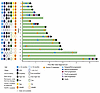 Figure 1
Clinical courses of patients with FGFR1N546 mutated neuroblastoma. Swimmer plot illustrating the course of disease of 19 patients with FGFR1N546-mutated neuroblastoma. Light grey rectangles indicate missing data (not available; NA).
 Figure 2
Patients with FGFR1N546-mutated neuroblastoma have a poor outcome. (A) Allelic fractions of FGFR1N546 mutations (mut.) in DNA and RNA-Seq data obtained from 6 of the FGFR1N546-mutated tumors. (B) OS of patients at high risk (top) and those not at high risk (bottom) with FGFR1N546-mutated neuroblastoma and patients with tumors bearing single nucleotide variants in the ALK kinase domain (27). Survival curves were estimated according to the Kaplan-Meier test and compared with log-rank test. (C) OS after first-time detection of mutant FGFR1N546 (top) or mutant ALK in high-risk patients (bottom) at diagnosis (blue) or relapse/progression (progr.) (red). Survival curves were estimated according to Kaplan-Meier and compared with a log-rank test.
In 6 patients, the FGFR1N546 variant was detected at the time of diagnosis, whereas it occurred only at relapse or progression in 5 other cases (not analyzed at diagnosis, n = 8) (Figure 1 and Supplemental Table 1). Survival of patients with FGFR1N546-mutant high-risk tumors was poor: all but 1 of these patients have died (2-year overall survival [OS] = 0.408 ± 0.136, and survival was significantly inferior to that of patients with tumors bearing mutant ALK, the most frequently altered receptor tyrosine kinase in this malignancy (Figure 2B) (27). The prevalence of the risk factors age, stage, and MYCN status did not differ between FGFR1N546- and ALK-mutant high-risk neuroblastoma (Supplemental Figure 2B).
Survival of patients with FGFR1N546-mutant non–high-risk disease appeared to be better than that of high-risk patients (2-year OS = 0.800±0.179; P = 0.304), but inferior to that of ALK-mutant non–high-risk patients (Figure 2B); however, this finding was limited by the small number of non–high-risk patients with mutant FGFR1 and the short follow-up of some of these patients. The difference in survival between patients with FGFR1- and ALK-mutant neuroblastoma was also evident after exclusion of patients with ALK-mutant tumors who had been treated with ALK inhibitors (Supplemental Figure 2C). Most of the patients with FGFR1N546-mutant neuroblastoma had rapid disease progression shortly after detection of the mutation despite therapy (Supplemental Figure 1); median survival was 270 (range, 66–1,798) days after detection of mutated FGFR1N546, and this did not differ significantly between patients in whom mutations occurred in tumors at diagnosis or only at relapse (1-year OS = 0.333±0.192 vs. 0.200±0.179, respectively; P = 0.76) (Figure 2C). Similarly, survival did not differ between high-risk patients with ALK mutation in whom mutations occurred at diagnosis or only at relapse (P = 0.280) (Figure 2C), which was, however, significantly longer than that of patients with FGFR1-mutant neuroblastoma after detection of mutated FGFR1 (median survival 1,108 days vs. 270 days, respectively; P < 0.001). Together, these data suggest FGFRN546 mutations contribute to chemotherapy resistance and poor outcome in neuroblastoma.
FGFR1N546K is an oncogenic driver in Ba/F3 cells. Previous studies have shown that the p.N546K variant leads to enhanced tyrosine kinase activity of FGFR1 in Rat-1 and neuroblastoma cells, and that FGFR1N546K may confer oncogenic properties in vitro (20, 26). To validate the transforming capacity of mutant FGFR1N546K, we generated Ba/F3 cells stably expressing FGFR1WT and FGFR1N546K. We also generated Ba/F3 cells with stable expression of FGFR1 bearing a kinase-dead mutation (FGFR1D623A), both in the FGFR1WT and FGFR1N546K background, to test whether FGFR1N546K leads to constitutive activation of the kinase domain of FGFR1 (26). Because proliferation of parental Ba/F3 cells is dependent on IL-3 (28, 29), we evaluated the transforming capacity of mutated FGFR1 by determining cell counts in its presence and absence. As expected, cell counts did not differ between FGFR1N546K-transduced and control Ba/F3 cells in the presence of IL-3. By contrast, we found a significantly higher number of viable Ba/F3 FGFR1N546K cells in comparison with all control cells after withdrawal of IL-3 (Figure 3A), which points toward the transforming potential of this variant. Of note, proliferation of FGFR1N546K-expressing Ba/F3 cells was completely abrogated by introduction of the kinase-dead mutation p.D623A (Figure 3A), indicating that activation of the kinase-domain is essential for the oncogenic effect.
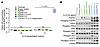 Figure 3
FGFR1N546K drives cytokine-independent proliferation of Ba/F3 cells and renders them sensitive to pharmacological FGFR inhibition. (A) Relative cell counts of viable Ba/F3 cells transduced with different vectors (empty vector, FGFR1 WT, FGFR1D623A, FGFR1D623A;N546K, FGFR1N546K) normalized to parental Ba/F3 cells. Analyses were performed with 10 ng/mL IL-3 in culture medium and after withdrawal of IL-3 after 144 hours. Average numbers (±SD) of 6 independent experiments are shown. P values were calculated in pair-wise comparisons to Ba/F3 parental cells using a 1-sided Wilcoxon rank-sum test and adjusted for multiple testing using the Benjamini–Hochberg method. (B) Levels of total and phosphorylated proteins of the FGFR pathway in IL-3–dependent Ba/F3 cells (parental, empty vector, FGFR1 WT, FGFR1D623A, FGFR1D623A;N546K, FGFR1N546K) and 3 IL-3–independent FGFR1N546K-transduced Ba/F3 cell clones (blue). IL-3–independent FGFR1N546K-transduced BA/F3 cells shown in different blue tones correspond to cells from 3 independent experiments labelled in light blue in (A). Antibodies against total and phosphorylated FGFR1, the adaptor protein FRS2, and the downstream targets AKT, ERK, and STAT3 were used. β-actin served as loading control.
We next generated 3 distinct IL-3–independent, FGFR1N546K-expressing Ba/F3 cell lines and analyzed FGFR pathway activation, using immunoblot analysis of downstream targets. Protein expression of FGFR1 was detected in all FGFR1-transduced Ba/F3 cells, whereas significant levels of FGFR1 phosphorylation occurred only in the 3 IL-3–independent FGFR1N546K cell lines (Figure 3B). Accordingly, we found intense phosphorylation of the downstream targets FRS2, ERK, AKT, and STAT3 in IL-3–independent FGFR1N546K cells, whereas phosphorylation of these proteins was substantially lower in all cytokine-dependent cells (Figure 3B). Together, these data indicate the variant p.N546K constitutively activates the tyrosine kinase domain of FGFR1, leading to induction of FGFR signaling by phosphorylation of downstream targets and consecutive autonomous cell proliferation, which is in line with previous reports (20, 26).
Treatment of FGFR1N546K Ba/F3 cells with FGFR inhibitors downregulates FGFR pathway activity and impairs cell proliferation. Because various small-molecule FGFR inhibitors have been developed and are in clinical use for adult patients with tumors bearing FGFR alterations, we next asked whether FGFR1N546K is a potential therapeutic target. We examined effects of the clinically approved FGFR inhibitors futibatinib and erdafitinib in IL-3–independent FGFR1N546K and control Ba/F3 cells (30–32). Cell viability of IL-3–independent FGFR1N546K-expressing cells was significantly reduced in comparison with parental cells after treatment with futibatinib or erdafitinib for 72 hours, whereas no effect was observed in IL-3–dependent cells bearing FGFR1N546K, WT FGFR1, or FGFR1D623A in the presence or absence of p.N546K (Figure 4, A and B, and Supplemental Figure 3, A–C). In line with these observations, we found that phosphorylation of FGFR1 and its downstream targets decreased in IL-3–independent FGFR1N546K cells upon treatment with futibatinib or erdafitinib in a dose-dependent manner (Figure 4C and Supplemental Figure 3D).
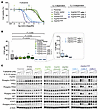 Figure 4
FGFR1N546K renders Ba/F3 cells sensitive to pharmacological FGFR inhibition. (A) Relative cell viability of IL-3–dependent Ba/F3 cells (parental, empty vector, FGFR1 WT, FGFR1D623A, FGFR1D623A;N546K, FGFR1N546K) and 3 IL-3–independent FGFR1N546K-transduced Ba/F3 cell clones (blue) after treatment with various concentrations (conc.) of futibatinib (in μM: 0.0001, 0.001, 0.01, 0.0398, 0.0631, 0.1, 1, 10, and 100) and DMSO as control for 72 hours. Mean cell viabilities ± SD of 3 (FGFR1 WT, FGFR1D623A, FGFR1D623A;N546K, FGFR1N546K) or 4 (parental, empty vector, FGFR1N546K IL-3–independent cells) independent experiments conducted in triplicate each are plotted. (B) IC50 of futibatinib in IL-3–dependent Ba/F3 cells and 3 IL-3–independent FGFR1N546K-transduced Ba/F3 cell clones, derived from 3 (FGFR1 WT, FGFR1D623A, FGFR1D623A;N546K, FGFR1N546K) or 4 (parental, empty vector, FGFR1N546K IL-3–independent cells) independent experiments consisting of triplicates each. P values were calculated in pair-wise comparisons to Ba/F3 parental cells using a 1-sided Wilcoxon rank-sum test and adjusted for multiple testing using the Benjamini–Hochberg method. (C) Levels of total and phosphorylated proteins of the FGFR pathway in IL-3–dependent Ba/F3 cells (parental, empty vector, FGFR1 WT, FGFR1D623A, FGFR1D623A;N546K, FGFR1N546K) and 3 IL-3–independent FGFR1N546K transduced Ba/F3 cell clones (blue) after treatment with DMSO or 10, 50, or 100 nM futibatinib (experiment was conducted 3 times).
Targeted FGFR1N546K expression leads to neuroblastoma development in vivo. To determine whether FGFR1N546K drives the development of neuroblastoma, we generated an R26-LSL-FGFR1N546K transgenic mouse model in which an FGFR1N546K transgene is integrated into the ROSA26 locus and expressed after Cre-loxP-mediated recombination (Supplemental Figure 4A). To direct expression of the transgene to cells of the developing sympathetic nervous system, FGFR1N546K transgenic mice were crossbred with mice bearing a Th-IRES-Cre transgene, which express Cre recombinase under control of the tyrosine hydroxylase (Th) promoter (33). In R26-LSL-FGFR1N546K/wt;Th-IRES-Cretg/wt mice, the stop cassette flanked by loxP recombination sites is removed in cells of the neural crest during early development, leading to ectopic FGFR1N546K expression driven by the CAG promoter (Supplemental Figure 4A).
Macroscopic inspection of the abdominal cavity in 16 R26-LSL-FGFR1N546K/wt;Th-IRES-Cretg/wt mice sacrificed within the first days of life revealed neuroblastoma formation in all cases, which was validated by histological examination (Figure 5, A and B, and Supplemental Table 2). By contrast, no abdominal tumors were detected in 35 R26-LSL-FGFR1N546K/wt;Th-IRES-Cretg/wt mice at the age of 4 weeks by MRI, which suggested early FGFR1N546K-driven neuroblastomas do not develop an aggressive phenotype but undergo spontaneous regression within the first weeks after birth (Figure 5, A and B). Two of these mice developed neuroblastoma beyond the age of 4 weeks, as detected by MRI (Supplemental Table 3). In 1 mouse, the tumor partially regressed over time, whereas in the other, disease progressed to fatal outcome (Supplemental Figure 4, B and C). Histological assessment and expression of paired-like homeobox 2B (PHOX2B) confirmed that both tumors were neuroblastoma, and FGFR1 expression was validated by immunofluorescence (Supplemental Figure 4, D and E).
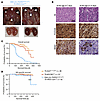 Figure 5
FGFR1N546K drives neuroblastoma development in a transgenic mouse model. (A) Images of abdominal cavities of R26-LSL-FGFR1N546K/wt;Th-IRES-Cretg/wt mice sacrificed at the ages of 7 and 21 days, showing tumors between the kidneys (top). Arrows point to the tumor boundaries. Kidneys (K) and tumors (indicated by asterisks) were prepared for better visualization of the tumors (bottom). (B) H&E and PHOX2B and Ki67 immunohistochemical staining of tumor sections obtained from R26-LSL-FGFR1N546K/wt;Th-IRES-Cretg/wt mice at the ages of 7 (left) and 14 (right) days; scale bar: 50 μm. (C and D) OS (C) and neuroblastoma-specific (NB-specific) survival (D) of R26-LSL-FGFR1N546K/wt;Th-IRES-Cretg/wt (blue), Th-MYCNtg/wt (red), and Th-ALKF1174L/wt (yellow) mice. Although OS was reduced in FGFR1N546K transgenic mice in comparison with the other groups, due to development of papillomas and sarcomas (FGFR1N546K vs. MYCNtg, P < 0.001; FGFR1N546K vs. ALKF1174L, P < 0.001; MYCNtg vs. ALKF1174L, P = 0.106), neuroblastoma-specific survival of FGFR1N546K transgenic mice was worse only in comparison with ALKF1174L mice (P = 0.049), but did not differ from that of MYCNtg mice (P = 0.226). Survival of ALKF1174L compared with MYCNtg mice was not significant (P = 0.394). Survival curves were estimated according to Kaplan-Meier test and compared with a log-rank test.
By contrast, absence of neuroblastoma was validated by macroscopic inspection of the abdominal cavity in the remaining 33 animals (Supplemental Table 3). We noted, however, that adrenal glands of R26-FGFR1-N546KN546K/wt;Th-IRES-Cretg/wt mice without visible tumors that were sacrificed at the age of 13–21 weeks contained microscopic clusters of neuroblasts in 4 of 9 cases (Supplemental Figure 5A, Supplemental Table 3), resembling neuroblastoma in situ (34). In addition, we noted that long-term survival of R26-FGFR1N546K/wt;Th-IRES-Cretg/wt mice was limited by the development of papillomas at the tail, mouth, and genitals, as well as sarcomas (Figure 5C, Supplemental Figure 5, B–F, and Supplemental Table 3). The development of these tumors is likely due to low-level expression of tyrosine hydroxylase in murine skin and muscle (35, 36), leading to expression of the FGFR1N546K transgene also in these tissues and consecutive development of papillomas and sarcomas.
We next compared the phenotype of R26-FGFR1N546K/wt;Th-IRES-Cretg/wt mice with that of mice transgenic for ALKF1174L, representing 1 of the most common tyrosine receptor kinase mutations in human neuroblastoma (14, 27, 37). In contrast to FGFR1N546K transgenic mice, we did not detect any tumors in Th-ALKF1174L mice beyond the age of 4 weeks by MRI imaging or by macroscopic or histological inspection of the adrenal glands (Supplemental Figure 6A). We also did not observe macroscopic tumors in the adrenal glands of Th-ALKF1174L mice sacrificed at the age of 14 days (n = 3 mice) (Supplemental Figure 6B); however, histological examination revealed neuroblastoma in situ in 2 of 4 adrenal glands in these animals, similar to the findings in older FGFR1N546K transgenic mice (Supplemental Figure 6C).
Co-expression of FGFR1N546K and MYCN drives aggressive disease in murine neuroblastoma. Because FGFR1 mutations occurred in combination with MYCN amplification in almost half of the tumors of patients, we sought to reproduce this genotype in a murine model. We mated R26-FGFR1-N546KN546K/wt;Th-IRES-Cretg/wt mice with an established Th-MYCN neuroblastoma mouse model (38) to assess the effect of FGFR1N546K and MYCN co-expression on tumor development and progression. We found that ectopic co-expression of FGFR1N546K and MYCN resulted in development of multifocal abdominal tumors within the first days of life with 100% penetrance (Figure 6A and Supplemental Table 3), leading to death of the animals at the age of 17–21 days (Figure 6B and Supplemental Table 3). Both histology and PHOX2B staining of the tumors indicated they corresponded to neuroblastoma (Figure 6C). Expression of both the mutant FGFR1 transcript and FGFR1 protein in the tumor was validated by RNA-Seq and Western blot analysis, respectively (Figure 6D and Supplemental Figure 7, A and B).
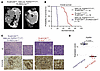 Figure 6
Concurrent expression of FGFR1N546K and MYCN promotes aggressive neuroblastoma in murine models. (A) Axial T2-weighted MRI scans of an R26-FGFR1N546K/wt;Th-IRES-Cretg/wt;Th-MYCNtg/wt mouse that developed neuroblastomas at the adrenal glands (left) and the pelvic sympathetic trunk (right). (B) OS of R26-FGFR1N546K/wt;Th-IRES-Cretg/wt;Th-MYCNtg/wt, Th-ALKF1174L/wt;Th-MYCNtg/wt, and R26-LSL-FGFR1N546K/wt;Th-MYCNtg/wt mice. Survival of all groups differed significantly from each other in pairwise comparisons (P < 0.001 each). Survival curves were estimated according to Kaplan-Meier tests and compared with log-rank tests. (C) H&E (top) and PHOX2B immunohistochemical (bottom) staining of an adrenal tumor obtained from an R26-FGFR1N546K/wt;Th-IRES-Cretg/wt;Th-MYCNtg/wt mouse at the age of 21 days, and of an adrenal tumor obtained from a Th-ALKF1174L/wt;Th-MYCNtg/wt mouse at the age of 49 days; scale bar: 50 μm. (D) FGFR1 transcript levels in tumors obtained from R26-FGFR1N546K/wt;Th-IRES-Cretg/wt;Th-MYCNtg/wt mice and from Th-ALKF1174L/wt;Th-MYCNtg/wt mice (n = 11 each), as determined by RNA-Seq. Box plots show the median, first, and third quartiles; the whiskers represent the minimum and maximum values within ±1.5 times the interquartile range. Comparisons between groups were performed using a 2-tailed Wilcoxon rank-sum test.
Because we had observed more aggressive disease courses in patients with FGFR1-mutant high-risk neuroblastoma than in those with ALK mutations, we compared the phenotype of FGFR1N546K;Th-MYCN mice with that of Th-ALKF1174L;Th-MYCN mice, a well-established murine neuroblastoma model corresponding to a recurrent genotype in human neuroblastoma (38, 39). The combined expression of mutant ALK and MYCN also resulted in tumor formation with 100% penetrance, whereas heterozygous expression of the MYCN transgene alone led to macroscopic tumor development in 3% of the cases (n = 2 of 67 mice) only, as described previously (Supplemental Tables 3 and 4) (38, 39). In comparison with FGFR1N546K;Th-MYCN mice, neuroblastomas developed later in Th-ALKF1174L;Th-MYCN mice, which led to death at the age of 6–8 weeks, indicating FGFR1N546K might have a stronger oncogenic potential than ALKF1174L (Figure 6B, Supplemental Figure 7, C and D, and Supplemental Table 4). The aggressive tumor phenotype observed in FGFR1N546K;Th-MYCN mice thus resembled that of FGFR1N546-mutant neuroblastoma in high-risk patients.
FGFR1N546K;MYCN- and ALKF1174L;MYCN-driven neuroblastomas differ in their molecular profiles. To determine the molecular basis of the distinct phenotypes observed in FGFR1N546K-, FGFR1N546K;MYCN-, and ALKF1174L;MYCN-driven neuroblastomas, we generated RNA-Seq data from tumors of these 3 subtypes (Supplemental Table 5). Unsupervised analysis of expression data by t-distributed stochastic neighbor embedding revealed that these 3 genetically defined neuroblastoma types formed distinct clusters (Supplemental Figure 8A). We then determined differentially expressed genes between FGFR1N546K- and FGFR1N546K;MYCN-driven neuroblastomas, followed by gene set enrichment analysis (40–42), which uncovered enrichment of cell cycle– and proliferation-associated and adrenergic gene sets in the latter (Supplemental Figure 8, B and C, and Supplemental Table 6). By contrast, cell cycle and proliferation gene sets were depleted, and both adrenergic and mesenchymal gene sets were enriched in FGFR1N546K;MYCN in comparison with ALKF1174L;MYCN-driven neuroblastomas (Supplemental Figure 8, D and E) (43, 44).
Because these data unexpectedly suggested that ALKF1174L, in combination with MYCN, triggers a higher proliferation rate of the tumor cells than FGFR1N546K;MYCN, we examined differentially expressed genes of these 2 tumor types in more detail (Supplemental Table 7). Indeed, we found that proliferation-associated genes, such as Mki67, Ccnb1, Ccnd1, Top2a, and Pcna, were expressed at higher levels in ALKF1174L-driven tumors (Figure 7A). We speculated, therefore, that the more aggressive growth of tumors in FGFR1N546K;MYCN mice was due not only to increased proliferation but also to a shifted balance between pro- and anti-apoptotic signals in the malignant cells, leading to impaired cell death in these tumors. In line with that notion, we observed that the anti-apoptotic genes Bcl2 and Bcl2l1 were significantly upregulated, whereas pro-apoptotic Casp3, Bax, Bid, and Bcl2l11 were downregulated in FGFR1N546K;MYCN-driven tumors (Figure 7, B and C, Supplemental Figure 8F, and Supplemental Table 7).
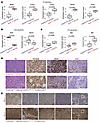 Figure 7
FGFR1N546K;MYCN-driven and ALKF1174L;MYCN-driven tumors differ in the expression of proliferation-associated and apoptotic markers. (A–C) Expression levels of genes associated with proliferation (Mki67, Ccnb1, Ccnd1, Top2a, and Pcna (A); anti-apoptotic genes (Bcl2 and Bcl2l1) (B); and pro-apoptotic genes (Casp3, Bax, and Bid) (C) in tumors of R26-FGFR1N546K/wt;Th-IRES-Cretg/wt;Th-MYCNtg/wt and Th-ALKF1174L/wt;Th-MYCNtg/wt mice, as determined by RNA-Seq. Box plots show the median, first, and third quartiles; the whiskers represent the minimum and maximum values within ±1.5 times the interquartile range. Comparisons between groups were performed using a 2-tailed Wilcoxon rank-sum test. (D) H&E and PHOX2B, Ki67, and cleaved caspase 3 (CC3) immunohistochemical staining of tumor sections obtained from a Th-ALKF1174L/wt;Th-MYCNtg/wt mouse (56 days old; top) and from an R26-FGFR1N546K/wt;Th-IRES-Cretg/wt;Th-MYCNtg/wt mouse (20 days old; bottom); scale bar, 50 μm. (E) BCL2 immunohistochemical staining of tumor sections obtained from of Th-ALKF1174L/wt;Th-MYCNtg/wt (top) and R26-FGFR1N546K/wt;Th-IRES-Cretg/wt;Th-MYCNtg/wt (bottom) mice; scale bar: 100 μm.
We validated reduced protein levels of MKI67 and cleaved caspase 3 in FGFR1N546K;MYCN-driven neuroblastoma by immunohistochemistry (Figure 7D and Supplemental Figure 9A), as well as elevated levels of BCL2 by immunohistochemistry and Western blot analysis (Figure 7E, Supplemental Figures 7B and 9B). We also evaluated apoptotic DNA fragmentation by TUNEL staining and found only few positive cells in FGFR1N546K;MYCN-driven tumors, whereas TUNEL-positive cells were abundant in ALKF1174L;MYCN-driven neuroblastomas (Supplemental Figure 9, C and D). Together, these data suggest the aggressive growth of tumors bearing FGFR1N546K may be due to impaired mechanisms of cell death when compared with ALKF1174L-driven tumors, which is in line with the poor response to chemotherapy observed in patients.
FGFR inhibition impairs tumor growth and prolongs survival in FGFR1N546K;MYCN transgenic mice. We next asked whether targeting mutated FGFR1 with FGFR inhibitors might impair FGFR1N546K-driven tumor growth in vivo. To this end, we genotyped R26-FGFR1-N546KN546K/wt;Th-MYCNtg/wt;Th-IRES-Cretg/wt mice at the age of 10–13 days and confirmed tumor development by MRI at the age of 14–15 days. We then immediately started treatment with futibatinib, which has been used at a broad dosing range (0.5–50 mg/kg body weight per day) in previous mouse experiments (32, 45–47).
At a daily dose of 30 mg/kg, we observed reduction in tumor size in all treated mice (n = 4) (Figure 8A and Supplemental Figure 10, A–C), whereas control mice had rapid tumor progression, as expected (Supplemental Figure 10, A, B, and D). Tumor response in futibatinib-treated mice, however, was not accompanied by prolonged survival (Figure 8B and Supplemental Table 8), which was probably due to impaired tolerability of the compound and/or the administration procedure; mice developed weight loss (>10% of the body weight) and reduced condition (measured by various parameters defined in the score sheet we used) over treatment. Therefore, we lowered the dose of futibatinib to 5 mg/kg/day, which resulted in partial tumor remission or decelerated tumor growth, and significantly prolonged survival of the treated cohort in comparison with the control cohort (Figure 8, A–C, and Supplemental Table 8). We again noted, however, that futibatinib- and control-treated mice concordantly showed weight loss and reduced condition, suggesting the oral gavage procedure itself may cause these symptoms, which may limit the feasibility of oral drug administration, particularly in mice of this young age (48).
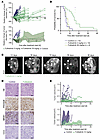 Figure 8
Futibatinib impairs tumor growth and prolongs survival in FGFR1N546K;MYCN transgenic mice. (A) Temporal changes of relative tumor diameters in R26-FGFR1N546K/wt;Th-IRES-Cretg/wt;Th-MYCNtg/wt mice treated with 5 mg/kg futibatinib (light green), 30 mg/kg futibatinib (dark green), or control substance (0.5% CMC-Na; blue). Growth curves of individual tumors are shown on the left; mean and range of the relative tumor diameter changes are shown on the right. (B) OS of R26-FGFR1N546K/wt;Th-IRES-Cretg/wt;Th-MYCNtg/wt mice treated with 5 mg/kg, or 30 mg/kg futibatinib, or control. Survival of mice treated with 5 mg/kg futibatinib was significantly longer than that of control mice (P < 0.001), whereas survival of mice treated with 30 mg/kg futibatinib was not significantly prolonged, due to toxicity (P = 0.47). (C) Axial T2-weighted MRI scans of an R26-FGFR1N546K/wt;Th-IRES-Cretg/wt;Th-MYCNtg/wt mouse treated with 5 mg/kg futibatinib at the indicated ages. (D) H&E and PHOX2B, Ki67, and CC3 immunohistochemical staining of tumor sections obtained from R26-FGFR1N546K/wt;Th-IRES-Cretg/wt;Th-MYCNtg/wt mice treated with control (top) or 5 mg/kg futibatinib (bottom); scale bar, 50 μm. (E) Absolute volumes of tumors obtained from R26-FGFR1N546K/wt;Th-IRES-Cretg/wt;Th-MYCNtg/wt mice, subcutaneously reimplanted into NSG mice and treated with 10 mg/kg futibatinib (n = 11) or control (n = 9) after reaching a volume of 0.08–0.2 cm3. Growth curves of individual tumors are shown on the left; mean and range of tumor volumes are shown on the right.
Histological analysis of treated tumors revealed impaired proliferation as compared with controls, as indicated by reduction in MKI67-positive cells (Figure 8D and Supplemental Figure 10E). We also observed focal enrichment of TUNEL-positive cells, indicating apoptotic DNA fragmentation; however, we did not observe increased fractions of cleaved caspase 3–positive cells by immunohistochemistry (Figure 8D and Supplemental Figure 10, E–G).
To compensate for the limitations caused by gavage and/or futibatinib toxicity in mice of very young age and small size, we reimplanted tumor specimens obtained from R26-LSL-FGFR1N546K/wt;Th-MYCNtg/wt;Th-IRES-Cretg/wt mice in immunocompromised NSG mice, thus enabling evaluation of the therapeutic efficacy of FGFR inhibition in older mice with higher body weight at the start of treatment. Here, we found that treatment with futibatinib at an increased dose of 10 mg/kg almost completely abrogated tumor growth and significantly prolonged survival of the mice (Figure 8E, Supplemental Figure 11, A and B, and Supplemental Table 9). We again observed, however, that mice had to be sacrificed due to weight loss without having reached the maximum tumor volume, both in the futibatinib- and the control-treated cohorts, supporting the notion that the procedure of gavage or the solvent may be associated with stress and reduced food intake.
FGFR inhibition has antitumor activity in human FGFR1N546K-mutant neuroblastoma models. We next examined the antitumor activity of pharmacological FGFR inhibition in human FGFR1N546K-mutant neuroblastoma models. Exposure of a human FGFR1N546K-mutant, MYCN-amplified cell line to futibatinib led to both dose-dependent reduction of cell viability and decreased phosphorylation of FGFR1 and its downstream targets (Supplemental Figure 11, C–E), similar to results in Ba/F3 cells (Figures 3 and 4). Likewise, we observed dose-dependent reduction of cell viability in a patient-derived, MYCN-amplified organoid model upon exposure to erdafitinib or futibatinib, whereas this model was largely resistant to cytotoxic agents used in neuroblastoma therapy (Supplemental Figure 11F).
We also evaluated the antitumor effect of FGFR inhibition in a non–MYCN-amplified, FGFR1N546K-mutated, chemotherapy-resistant, patient-derived xenograft (PDX) model that had been generated at the time of relapse from patient 8 (Figure 1; ITCC-P4_s15_NB0675; ref. 49). The patient had stage 2A disease at diagnosis but had a metastatic relapse with pleural metastases and did not respond to relapse therapy. Tumors were implanted subcutaneously in immunodeficient NOD/Shi-scid/IL-2Rγnull (NOG) mice after confirmation of the FGFR1N546K mutation (Supplemental Figure 12, A and B). Mice were randomized into treatment and control groups, and treatment with futibatinib at 10 mg/kg/day or control substance was started when tumors had reached a volume of 0.08–0.2 cm³. In line with the results from the murine re-implantation experiment, we observed that treatment with futibatinib at this dose led to deceleration of tumor growth and prolonged survival in comparison with control mice (Supplemental Figure 12, C and D). Futibatinib treatment was tolerated well by immunodeficient NOG mice over 21 days. We did not observe body weight loss of more than 10% or symptoms potentially related to hyperphosphatemia, such as diarrhea, muscle cramps, or lethargy, in 2 test mice used to determine the tolerability of 10 mg/kg futibatinib (Supplemental Figure 12E). Phosphate blood levels after 2 weeks treatment were within the reference range (Supplemental Figure 12F).
Because our previous results suggested dose-dependent antitumor effects of futibatinib, we asked whether higher doses may enhance growth inhibitory effects in this model. Because treatment was well tolerated at 10 mg/kg futibatinib daily, we treated a second cohort of mice at 20 mg/kg/day (Figure 9A). We found that the increased dose improved the growth-inhibitory effect of futibatinib and survival of mice over the treatment period of 40–42 days (Figure 9B and Supplemental Figure 12G). Treatment with 20 mg/kg futibatinib led to body weight loss in some animals (Supplemental Figure 12H). After a 2-day drug holiday, however, treatment was restarted at the same dose level and was then well tolerated.
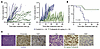 Figure 9
Futibatinib abrogates tumor growth in an FGFR1N546K-mutant, patient-derived xenograft model. (A) Absolute volumes of individual tumors (left) and mean and range of tumor volumes (right) of an FGFRN546K-mutant, patient-derived xenograft mouse model, treated with control (10% DMSO + 90% [20%] Captisol in 0.9% NaCl); n = 13) or 20 mg/kg futibatinib (futibatinib diluted in 10% DMSO + 90% [20%] Captisol in 0.9% NaCl); n = 13). (B) OS of mice bearing an FGFRN546K-mutant, patient-derived xenograft, treated with control or 20 mg/kg futibatinib. Survival curves were estimated according to Kaplan-Meier test and compared with a log-rank test. (C) H&E and PHOX2B and Ki67 immunohistochemical staining of tumor sections obtained from patient-derived xenograft tumors treated with a control substance (top) of 20 mg/kg futibatinib (bottom); scale bar, 100 μm.
We found that treatment with 20 mg/kg futibatinib substantially reduced the number of MKI67-positive cells in the tumor when compared with control and treatment with 10 mg/kg futibatinib (Figure 9C and Supplemental Figure 13A). However, we again did not observe more cleaved caspase 3–positive cells or increased fractions of TUNEL-positive cells (Supplemental Figure 13, B and C). Together, the results obtained from murine and human models treated with futibatinib demonstrate that pharmacological inhibition of FGFR effectively impairs growth of FGFR1N546K-mutated neuroblastoma and that the antitumor effect is dose dependent.
Addition of futibatinib to low-intensity chemotherapy has clinical benefit in a patient with FGFR1N546K-mutated neuroblastoma. Finally, we evaluated the tolerability and efficacy of futibatinib in combination with chemotherapy in a patient with FGFR1N546K-mutant neuroblastoma with progressive disease despite multiple prior lines of therapy (Supplemental Table 10). The patient was initially diagnosed at the age of 2 years and 11 months with MYCN nonamplified, locoregional L2 neuroblastoma harboring an FGFR1N546K mutation. The patient received 2 cycles of induction chemotherapy (cyclophosphamide/topotecan and ifosfamide/carboplatin/etoposide) with no response to treatment (stable disease by INRC). Surgery was performed after these 2 cycles, and the presence of the mutation was confirmed in the surgical specimen. The patient then received a third cycle of chemotherapy (cyclophosphamide/doxorubicin/vincristine [CAV] per trial ANBL1531 [Clinical Trials.gov NCT03126916]), followed by clinical observation. Mediastinal nodal and intraabdominal disease progression occurred 184 days after initial diagnosis. The patient then received multiple rescue therapies, including chemotherapy (1 cycle CAV; 2 cycles of irinotecan/temozolomide/dinutuximab, per trial ANBL1221; and 1 cycle of cisplatin/etoposide, per trial ANBL1531 [Clinical Trials.gov NCT017767194]) and 131I-metaiodobenzylguanidine therapy in combination with vorinostat. However, tumor progression occurred again under treatment, consistent with refractory disease. Considering the presence of mutated FGFR1, the patient was then treated with cyclophosphamide (250 mg/m2) and topotecan (0.75 mg/m2) daily for 5 days in a 28-day cycle in combination with futibatinib (8 mg) daily in an outpatient setting (Figure 10A). After 3 months of this combination therapy, a decrease of tumor diameter was observed on computed tomography scans (Figure 10, A and B), followed by stable disease for 5 months of therapy (n = 9 cycles). After this period, tumor progression occurred again, and the patient eventually succumbed to disease 3 months later (OS = 699 days).
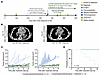 Figure 10
Futibatinib shows clinical benefit in a patient with FGFR1-mutated neuroblastoma (NB). (A) Schematic timeline of the clinical course of a patient with FGFR1N546K-mutated neuroblastoma that progressed under multiple lines of treatment and therefore was treated with a combination of futibatinib, cyclophosphamide, and topotecan. (B) Computed tomography (CT) scans of the tumor region in patient shown in (D) on day 15 after start of futibatinib/cyclophosphamide/topotecan (day 380 after diagnosis) and on day 87 (day 442 after diagnosis), demonstrating a partial regression of the tumor. (C) Absolute volumes of individual tumors (left) and mean and range of tumor volumes (right) of the patient-derived xenograft mouse model, treated with cyclophosphamide/topotecan alone (blue) or in combination with 20 mg/kg futibatinib (green). (D) OS of mice bearing the patient-derived xenograft, treated with cyclophosphamide/topotecan alone (blue) or in combination with 20 mg/kg futibatinib (green). Survival curves were estimated according to Kaplan-Meier test and compared with a log-rank test. MIBG, metaiodobenzylguanidine.
To experimentally test the added antitumor activity of futibatinib in combination with cyclophosphamide/topotecan over the chemotherapy backbone alone, we administered the combination therapy to mice bearing the FGFR1N546K-mutant PDX (Figure 9), which was derived from patient 8 (Figure 1 and Supplemental Figure 1) with a similar history of chemotherapy-resistant neuroblastoma. Whereas cytotoxic treatment with cyclophosphamide/topotecan alone had moderate antitumor efficacy in this model, addition of futibatinib almost completely abrogated tumor growth and led to survival of all mice over the treatment period (Figure 10, C and D, and Supplemental Figure 13D), thus supporting the potential relevance of FGFR1 inhibition in a treatment concept for refractory FGFR1N546K-mutant neuroblastoma.
In the patient, futibatinib treatment in combination with cyclophosphamide and topotecan was tolerated well in general. After 3 weeks of therapy, phosphate levels increased to 7.2 mg/dL (hyperphosphatemia grade 3; ref. 50), resulting in the need for a drug holiday until blood phosphate levels had decreased to normal. Phosphate intake was then restricted to 600–800 mg/day, accompanied by treatment with phosphate-binding medication (sevelamer 400 mg 3 times a day), which maintained normal phosphate levels with continued futibatinib treatment (Supplemental Figure 13E). Although additional experience is required, this case and results from the PDX model suggest addition of an FGFR inhibitor to a chemotherapy backbone may be tolerable and delay disease progression in patients with FGFR1N546K-mutated neuroblastoma.


Copyright © 2026 American Society for Clinical Investigation
ISSN: 0021-9738 (print), 1558-8238 (online)