
Advertisement
Research ArticleCell biologyPulmonology
Open Access |  10.1172/JCI182984
Cilia-independent gas–liquid transport, a third mechanism mediating airway mucus clearance
Siddharth K. Shenoy,1,2 Mark Gutay,1,3 Ian Brown,1,3 Troy D. Rogers,1 Kane Banner,1,3 Nico Olegario,1,3 Nicholas Griffin,1,3 Henry P. Goodell,2 Bryan Yoder,2 David S. Lalush,2 David A. Edwards,4 Richard C. Boucher,1 Barbara R. Grubb,1 and Brian Button1,2,3
1Marsico Lung Institute,
2Department of Biomedical Engineering, and
3Department of Biochemistry and Biophysics, University of North Carolina, Chapel Hill, North Carolina, USA.
4Center for Nanomedicine, Johns Hopkins University Medical School, Baltimore, Maryland, USA
Address correspondence to: Brian Button, University of North Carolina, 6017 Thurston Bowles Bldg., Campus Box 7248, Chapel Hill, North Carolina 27599-7249, USA. Phone: 919.966.8073; Email: brian_button@med.unc.edu.
Find articles by Shenoy, S. in: PubMed | Google Scholar
1Marsico Lung Institute,
2Department of Biomedical Engineering, and
3Department of Biochemistry and Biophysics, University of North Carolina, Chapel Hill, North Carolina, USA.
4Center for Nanomedicine, Johns Hopkins University Medical School, Baltimore, Maryland, USA
Address correspondence to: Brian Button, University of North Carolina, 6017 Thurston Bowles Bldg., Campus Box 7248, Chapel Hill, North Carolina 27599-7249, USA. Phone: 919.966.8073; Email: brian_button@med.unc.edu.
Find articles by Gutay, M. in: PubMed | Google Scholar
1Marsico Lung Institute,
2Department of Biomedical Engineering, and
3Department of Biochemistry and Biophysics, University of North Carolina, Chapel Hill, North Carolina, USA.
4Center for Nanomedicine, Johns Hopkins University Medical School, Baltimore, Maryland, USA
Address correspondence to: Brian Button, University of North Carolina, 6017 Thurston Bowles Bldg., Campus Box 7248, Chapel Hill, North Carolina 27599-7249, USA. Phone: 919.966.8073; Email: brian_button@med.unc.edu.
Find articles by Brown, I. in: PubMed | Google Scholar
1Marsico Lung Institute,
2Department of Biomedical Engineering, and
3Department of Biochemistry and Biophysics, University of North Carolina, Chapel Hill, North Carolina, USA.
4Center for Nanomedicine, Johns Hopkins University Medical School, Baltimore, Maryland, USA
Address correspondence to: Brian Button, University of North Carolina, 6017 Thurston Bowles Bldg., Campus Box 7248, Chapel Hill, North Carolina 27599-7249, USA. Phone: 919.966.8073; Email: brian_button@med.unc.edu.
Find articles by Rogers, T. in: PubMed | Google Scholar
1Marsico Lung Institute,
2Department of Biomedical Engineering, and
3Department of Biochemistry and Biophysics, University of North Carolina, Chapel Hill, North Carolina, USA.
4Center for Nanomedicine, Johns Hopkins University Medical School, Baltimore, Maryland, USA
Address correspondence to: Brian Button, University of North Carolina, 6017 Thurston Bowles Bldg., Campus Box 7248, Chapel Hill, North Carolina 27599-7249, USA. Phone: 919.966.8073; Email: brian_button@med.unc.edu.
Find articles by Banner, K. in: PubMed | Google Scholar
1Marsico Lung Institute,
2Department of Biomedical Engineering, and
3Department of Biochemistry and Biophysics, University of North Carolina, Chapel Hill, North Carolina, USA.
4Center for Nanomedicine, Johns Hopkins University Medical School, Baltimore, Maryland, USA
Address correspondence to: Brian Button, University of North Carolina, 6017 Thurston Bowles Bldg., Campus Box 7248, Chapel Hill, North Carolina 27599-7249, USA. Phone: 919.966.8073; Email: brian_button@med.unc.edu.
Find articles by Olegario, N. in: PubMed | Google Scholar
1Marsico Lung Institute,
2Department of Biomedical Engineering, and
3Department of Biochemistry and Biophysics, University of North Carolina, Chapel Hill, North Carolina, USA.
4Center for Nanomedicine, Johns Hopkins University Medical School, Baltimore, Maryland, USA
Address correspondence to: Brian Button, University of North Carolina, 6017 Thurston Bowles Bldg., Campus Box 7248, Chapel Hill, North Carolina 27599-7249, USA. Phone: 919.966.8073; Email: brian_button@med.unc.edu.
Find articles by Griffin, N. in: PubMed | Google Scholar
1Marsico Lung Institute,
2Department of Biomedical Engineering, and
3Department of Biochemistry and Biophysics, University of North Carolina, Chapel Hill, North Carolina, USA.
4Center for Nanomedicine, Johns Hopkins University Medical School, Baltimore, Maryland, USA
Address correspondence to: Brian Button, University of North Carolina, 6017 Thurston Bowles Bldg., Campus Box 7248, Chapel Hill, North Carolina 27599-7249, USA. Phone: 919.966.8073; Email: brian_button@med.unc.edu.
Find articles by Goodell, H. in: PubMed | Google Scholar
1Marsico Lung Institute,
2Department of Biomedical Engineering, and
3Department of Biochemistry and Biophysics, University of North Carolina, Chapel Hill, North Carolina, USA.
4Center for Nanomedicine, Johns Hopkins University Medical School, Baltimore, Maryland, USA
Address correspondence to: Brian Button, University of North Carolina, 6017 Thurston Bowles Bldg., Campus Box 7248, Chapel Hill, North Carolina 27599-7249, USA. Phone: 919.966.8073; Email: brian_button@med.unc.edu.
Find articles by Yoder, B. in: PubMed | Google Scholar
1Marsico Lung Institute,
2Department of Biomedical Engineering, and
3Department of Biochemistry and Biophysics, University of North Carolina, Chapel Hill, North Carolina, USA.
4Center for Nanomedicine, Johns Hopkins University Medical School, Baltimore, Maryland, USA
Address correspondence to: Brian Button, University of North Carolina, 6017 Thurston Bowles Bldg., Campus Box 7248, Chapel Hill, North Carolina 27599-7249, USA. Phone: 919.966.8073; Email: brian_button@med.unc.edu.
Find articles by Lalush, D. in: PubMed | Google Scholar
1Marsico Lung Institute,
2Department of Biomedical Engineering, and
3Department of Biochemistry and Biophysics, University of North Carolina, Chapel Hill, North Carolina, USA.
4Center for Nanomedicine, Johns Hopkins University Medical School, Baltimore, Maryland, USA
Address correspondence to: Brian Button, University of North Carolina, 6017 Thurston Bowles Bldg., Campus Box 7248, Chapel Hill, North Carolina 27599-7249, USA. Phone: 919.966.8073; Email: brian_button@med.unc.edu.
Find articles by Edwards, D. in: PubMed | Google Scholar
1Marsico Lung Institute,
2Department of Biomedical Engineering, and
3Department of Biochemistry and Biophysics, University of North Carolina, Chapel Hill, North Carolina, USA.
4Center for Nanomedicine, Johns Hopkins University Medical School, Baltimore, Maryland, USA
Address correspondence to: Brian Button, University of North Carolina, 6017 Thurston Bowles Bldg., Campus Box 7248, Chapel Hill, North Carolina 27599-7249, USA. Phone: 919.966.8073; Email: brian_button@med.unc.edu.
Find articles by Boucher, R. in: PubMed | Google Scholar
1Marsico Lung Institute,
2Department of Biomedical Engineering, and
3Department of Biochemistry and Biophysics, University of North Carolina, Chapel Hill, North Carolina, USA.
4Center for Nanomedicine, Johns Hopkins University Medical School, Baltimore, Maryland, USA
Address correspondence to: Brian Button, University of North Carolina, 6017 Thurston Bowles Bldg., Campus Box 7248, Chapel Hill, North Carolina 27599-7249, USA. Phone: 919.966.8073; Email: brian_button@med.unc.edu.
Find articles by Grubb, B. in: PubMed | Google Scholar
1Marsico Lung Institute,
2Department of Biomedical Engineering, and
3Department of Biochemistry and Biophysics, University of North Carolina, Chapel Hill, North Carolina, USA.
4Center for Nanomedicine, Johns Hopkins University Medical School, Baltimore, Maryland, USA
Address correspondence to: Brian Button, University of North Carolina, 6017 Thurston Bowles Bldg., Campus Box 7248, Chapel Hill, North Carolina 27599-7249, USA. Phone: 919.966.8073; Email: brian_button@med.unc.edu.
Find articles by
Button, B.
in:
PubMed
|
Google Scholar
|

Published March 17, 2026 - More info
J Clin Invest. 2026;136(10):e182984. https://doi.org/10.1172/JCI182984.
© 2026 Shenoy et al. This work is licensed under the Creative Commons Attribution 4.0 International License. To view a copy of this license, visit http://creativecommons.org/licenses/by/4.0/.
Received: May 13, 2024; Accepted: March 10, 2026

-
Introduction
The human lung contains the largest epithelial surface area of the body (~100 m2) and is continually exposed to inspired air containing pathogens and environmental particulates (1). The health of the conducting airways is maintained by the entrapment of inhaled particulates and pathogens in a thin, protective viscoelastic mucus layer that lines airway surfaces. Mucus is continually transported from the lungs by coordinated ciliary beating (2), a process termed mucociliary clearance (MCC). In addition to MCC, mucus can be cleared by cough clearance (CC), a reflex mechanism that utilizes high-speed airflow (up to 200 m/s) to expel mucus accumulated in central airways from the lungs (3–5). Cough is especially important during allergen exposure or lung infection, conditions that produce concentrated, adherent mucus that is resistant to cilial-dependent clearance (6–9). During cough, the rapid expiratory airflow generates pronounced mucus wave motion along the airway surfaces, producing shear forces that mobilize the mucus layer as a 2-phase gas–liquid flow.
While clearance of mucus by cilia-dependent MCC and high-speed airflow-dependent CC has been well described, a third mechanism of mucus clearance, referred to as cilia-independent gas–liquid transport (GLT), was proposed in the 1980s (10). Like CC, GLT was proposed to reflect a 2-phase gas–liquid flow-dependent mechanism (11, 12) by which gas (air) moves an underlying mucus (gel) layer over airway epithelial surfaces. However, unlike the high-speed flow of air generated during a cough, GLT is predicted to occur at airflow velocities associated with tidal breathing. Kim and colleagues (12) used various model systems to demonstrate that linear airflow velocities of 1–3 meters per second could propel mucus via GLT. Importantly, they predicted that such airflow velocities could be achieved during the expiratory phase of high minute volume (100 L/min) breathing throughout the airways to the level of the bronchioles (12, 13).
A requisite for GLT-mediated mucus clearance from the lungs is that the expiratory airflow velocity exceeds inspiratory airflow velocity (12). While the inspired and expired air volumes per unit time are similar during tidal breathing, the airways exhibit a reduction in diameter during exhalation compared with inhalation (13, 14). This hysteresis in airway diameter during tidal breathing reflects the effects of intrathoracic pressures during the breathing cycle. Pedley et al. (13) quantified airway diameters during tidal breathing, demonstrating that intrathoracic pressure changes alter the airway caliber by 5%–25%, depending on the airway generation. This hysteresis increases expiratory relative to inspiratory airflow rates, an asymmetry hypothesized to produce net mucus transport in the cephalad direction (10, 12, 15, 16) (Figure 1A). The effectiveness of GLT-mediated mucus clearance, however, is influenced by several airway and breathing dynamics factors, including airway geometry and compliance, airflow velocity, breathing frequency, mucus concentration with its associated effects on mucus viscoelastic properties, and mucus–epithelial surface adhesion (12, 16, 17).
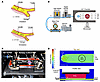 Figure 1
Model to study airflow-mediated mucus clearance. (A) Model of a eighth-generation airway to show airflow asymmetry during inhalation (top) and exhalation (bottom) at 75 L/min volumetric flow (exercise). During inhalation, airways dilate to facilitate air entry into the lung. Conversely, during exhalation, airways narrow. If the inspiratory and expiratory volumes are similar, the airflow velocities and shear stresses are higher on exhalation, which promotes the net clearance of mucus from the lungs. (B) Diagram of the in vitro GLT system showing the airflow pathway (see Methods for additional details). (C) Photo of the system used to deliver breathing-mimicking airflow pulses to human bronchial airway cultures, mounted on an inverted fluorescence microscope. (D) Illustrations showing the chamber from top down (top) and profile (bottom) combined with computational fluid dynamic simulation of the laminar airflow during a 5 m/s airflow pulse.
GLT-mediated mucus clearance is potentially important in individuals who exhibit defects in ciliary motility (18), including primary cilia dyskinesia (PCD), and in airway regions devoid of functional cilia consequent to airway damage, e.g., due to gastric aspiration (19, 20), viral infection (21), or cigarette smoking (22). However, functional studies investigating the significance of GLT, as well as biophysical studies defining the variables that regulate its efficiency in health or disease, are lacking. To address this gap, we developed in vitro models to study mucus flow at airflow velocities spanning normal tidal breathing to those evident during exercise. In parallel, we performed in vivo studies to evaluate the role of GLT-mediated transport in WT mice, mice with defective ciliated cell numbers or cilia beating (PCD), and neonatal mice and neonatal ferrets exhibiting reduced or absent ciliation at birth (23, 24).
-
Results
In vitro model system to measure GLT. An airflow–fluid dynamics model was generated to describe airflow rate hysteresis at both tidal breathing (15 breaths/min at 15 L/min) and moderate exercise (50 breaths/min at 75 L/min) (Figure 1A and Table 1) based on Weibel’s anatomical model of the human respiratory system (25, 26) and Pedley and Schröter’s measurements of airway diameter changes during inhalation and exhalation (13). Under tidal breathing conditions, airflow pulses remained laminar (Reynolds numbers < 2,000; Table 1), whereas flow rates in larger airway generations (1–4) during exercise are predicted to be transitional or turbulent. To investigate airflow–mucus transport dynamics experimentally, we developed a system that delivered unidirectional pulses of humidified air to airway epithelial cultures with a well-characterized endogenous mucus layer (27), mounted on an inverted fluorescence microscope interfaced to a high-speed camera (Figure 1, B–D). This setup enabled precise quantification of the relationships between airflow velocity, pulse duration, mucus concentration, and mucus translocation (28, 29). For these studies, we selected a pulse velocity of 1 m/s, which permitted accurate measurements of mucus translocation while mimicking exhalation airflow velocities in airway generations 0–6 (Table 1). A higher velocity of 5 m/s was chosen to replicate exercise-induced flows.
Evidence of breathing-relevant GLT in vitro. Initial studies were performed in human airway bronchial epithelial (HBE) cultures covered with mucus with a concentration consistent with health (10 mg/mL organic content; ~1% organic solids) (30), into which 1 μm fluorescent particles were incorporated to aid tracking of mucus flow by high-speed microscopy (31) (Figure 1B). Mucus flow across the airway surface was recorded while subjected to an airflow pulse protocol approximating tidal-breathing parameters over a period of 15 s (5 s of no flow, 5 s of air pulse, and 5 s of elastic recoil). Representative time-lapse traces in Figure 2A show that (a) during airflow velocities simulating a peak tidal expiratory flow rate of 5 m/s, particles embedded in a normally concentrated (10 mg/mL solids) mucus layer exhibited flow in the direction of airflow during the pulse (Air Pulse), and (b) upon cessation of airflow, a retrograde movement of mucus in the opposite direction (Recoil) was detected, reflecting the elastic element of a mucin-containing mucus layer (30). Point-to-point tracking of fluorescent particles embedded in the mucus layer was used to monitor mucus flow throughout the pulse protocol (7) (Figure 2B). During the active airflow pulse, mucus displacement was biphasic: an initial rapid velocity followed by a slower, steady-state velocity for the remainder of the pulse duration (Figure 2C). The imaging data were used to calculate ensemble mucus (bead) displacements relative to the starting position (no airflow) during the air pulse (Figure 2, C and D). At the end of the air pulse, the elastic recoil of the viscoelastic mucus layer resulted in a retrograde flow of mucus. The difference between the starting and postrecoil positions was defined as the net displacement of a breath-mimicking unidirectional airflow pulse.
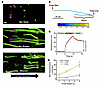 Figure 2
Airflow-mediated mucus transport across HBE cells. (A) Representative 5 s time-lapse microscopy images of fluorescent particles before (top), during (middle), or after (bottom) a 5 m/s airflow pulse. The starting points are indicated by magenta circles, the positions at the end of the air pulse by yellow circles, and the positions at the end of the elastic recoil by cyan circles. Scale bar: 10 μm. (B) Mucus transport rates were evaluated by tracking fluorescent tracers during the time-lapse video. This representative particle trace shows displacement before, during, and after a 5 s airflow pulse in normal (10 mg/mL) mucus. The gradient scale represents discrete, instantaneous, point-to-point velocity in μm/s. (C) Displacement plot (μm) versus time (seconds) for normal 10 mg/mL mucus in response to a 5 s airflow pulse at 5 m/s. The net displacement was evaluated at the end of the recoil period. (D) Comparison of net displacement for various air pulse lengths (from 1 to 5 s) at 2 airflow velocities (1 or 5 m/s). *P < 0.01 versus 1 m/s at each pulse length; 1-way ANOVA followed by Tukey’s post hoc test.
To investigate the dependence of air pulse velocity and duration on the net displacement of mucus during simulated exhalation at rest versus exercise, studies were performed over a range of pulse lengths (from 1 to 5 s) at either 1 or 5 m/s, respectively (Figure 2D). Mucus displacement during the breath-mimicking air pulse increased directly with the pulse length, irrespective of airflow velocity. In contrast, net mucus displacement did not scale proportionally to airflow velocity. At 5 m/s, net mucus displacement was 7.5 ± 2.0 fold higher than values obtained at 1 m/s airflow, consistent with mucus shear-thinning behavior (elasticity decreases with increasing stress) at higher airflow velocities.
Mucus hyperconcentration reduces GLT-mediated clearance. Most, if not all, muco-obstructive airway diseases, including chronic bronchitis, asthma, cystic fibrosis (CF), and PCD, are characterized by hyperconcentrated mucus (32). To investigate the effect of mucus concentration on the efficiency of GLT-mediated mucus transport, in vitro studies were performed over a range of mucus concentrations spanning normal (10 mg/mL; 2% total solids); moderately dehydrated (hyperconcentrated) mucus (40 mg/mL; 5% total solids) representing PCD (33–35) and chronic bronchitis (7); and severely dehydrated (hyperconcentrated) mucus (90 mg/mL; 10% total solids), mimicking the concentration of mucus removed from CF airways after lung excision (31). Similar to previous studies on the clearance of mucus by cilia and cough (7, 30, 36), GLT-mediated mucus flow was significantly affected by mucus concentration. Figure 3, A and B, show representative mucus tracks and displacement plots of 5 m/s air pulses (for 5 s) across HBE cultures covered by a normal (10 mg/mL), mildly dehydrated (40 mg/mL), or severely dehydrated (90 mg/mL) mucus layer. As the mucus concentration increased, a significant decrease in the net transport of mucus was observed at both 1 m/s (Figure 3C) and 5 m/s (Figure 3D) airflow velocities. Notably, GLT was negligible at mucus concentrations representing severe disease-like conditions (e.g., 90 mg/mL mucus). However, in cases of mild dehydration (33), e.g., 40 mg/mL mucus, GLT rates increased with increasing airflow velocities from 1 to 5 m/s.
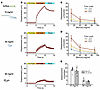 Figure 3
Concentration dependence of airflow-mediated mucus transport. (A and B) Representative bead tracings as a function of mucus concentration (A) and summary net displacement plots (B) in response to a 5 s airflow pulse at 5 m/s in the presence of healthy (10 mg/mL; top), mild disease (40 mg/mL; middle), or severe disease (90 mg/mL; bottom) mucus. Scale bar: 25 μm. (C and D) Effect of mucus concentration and pulse length at 1 m/s (C) and 5 m/s (D) airflow on net mucus displacement (μm/pulse). *P < 0.05, ‡P < 0.01, 1-way ANOVA followed by Tukey’s post hoc test. (E) Comparison of GLT rates between mucus produced from nondiseased (non-CF) and CF cultures at 1 and 5 m/s (not significant, unpaired, 2-tailed Student’s t test).
Because these studies were performed in normal airway cultures with hyperconcentrated normal airway mucus, we performed similar studies with cultures obtained from CF donor lungs. Both CF and non-CF cultures exhibited GLT clearance rates that were comparable at mucus concentrations of 10 mg/mL (Figure 3E). Similarly, GLT on both CF and non-CF cultures was significantly reduced when mucus concentrations were increased to values associated with endogenous CF values (Figure 3E).
Improvement of GLT efficiency with muco-active agents. The finding that higher mucus concentrations reduce airflow’s effectiveness in clearing mucus suggests that therapies that reduce mucus concentration or alter mucus properties by other mechanisms may improve GLT-mediated clearance. Such therapies might also target the mucus frictional and adhesive interactions between the secreted and tethered mucins that influence mucus mobility. To test the notion that muco-active agents may be effective in muco-obstructive diseases with moderate mucus dehydration, studies were performed by nebulizing small volumes (100 nL/cm2) (37)onto mucus (40 mg/mL) containing either (a) a reducing agent (10 mM DTT) to decrease mucin polymer length/molecular weight (38) or (b) a surfactant (0.01% NP-40 [IGEPAL CA-630]) to decrease mucus–cell surface interactions (36, 38). The increase in net mucus displacement after DTT treatment versus control (40 mg/mL mucus) was observed in representative bead tracings in response to a 5 m/s pulse (for 2.5 s) (Figure 4A). Cumulative data from the muco-active agent administration protocol revealed that both DTT and NP-40 increased net bead displacement at 1 and 5 m/s pulses (Figure 4B). Both agents increased particle displacement during the pulse (Figure 4C) and reduced the recoil distance of the mucus (Figure 4D). These data are consistent with reductions in both the elastic (Figure 4E) and viscous (Figure 4F) moduli of mucus, as measured by traditional cone-and-plate rheology, and a reduction in the viscous dissipation at the mucus–cell surface interface (36). Additionally, because we have shown that these agents affect the adhesive interactions with the cell surface, it is possible that a reduction in mucus adhesive strength also contributed to accelerated clearance by GLT (36). Collectively, these data suggest that muco-active agents targeting both intrinsic mucus properties and mucus interactions with the cell surface may enhance GLT-mediated clearance of moderately dehydrated mucus.
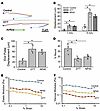 Figure 4
Therapeutic treatment to improve GLT-mediated transport. (A) Representative bead traces in control mucus (40 mg/mL) or 30 min after DTT (10 mM) addition. Purple, bead start location; yellow, bead position at the end of the air pulse (5 m/s for 2.5 s); blue, bead position at the end of the recovery period. Scale bar: 5 μm. (B) Summary of net displacement of mucus (40 mg/mL) under control conditions (0.9% PBS) and 30 min after the nebulization of a reducing agent (DTT; final concentration 10 mM) or surfactant (NP-40; 0.01%) at either 1 or 5 m/s for 2.5 s. (C) Comparison of end pulse distances (i.e., the distance between the purple and yellow circles in B) for a 2.5 s pulse at 5 m/s. *P < 0.01, 1-way ANOVA followed by Tukey’s post hoc test. (D) Comparison of the magnitude of elastic recoil (measured as the percent recovery after the termination of the airflow pulse, i.e., distance between yellow and blue circles in B). *P < 0.01 between groups. (E and F) Effect of DTT (10 mM) and NP-40 (0.01%) on the elastic (E) and viscous (F) modulus of a 40 mg/mL mucus layer over a range of oscillatory strains (at 6.25 rad/s) as measured with a cone-and-plate rheometer.
In vivo evidence of GLT to clear mucus in the absence of cilia and cough. The in vitro studies demonstrated that mucus is transported across the airway surface by airflow at velocities simulating tidal breathing. However, our in vitro model only assessed mucus transport in response to unidirectional airflows calculated to mimic human in vivo conditions. To assess whether asymmetric airflow associated with tidal breathing produces net mucus clearance in vivo, GLT studies were performed in 4 animal models with or without functional cilia. Mucus transport was measured as the clearance rate of a small volume (150 nL) of radiolabeled sulfur colloid particles (99mTc-SC) (8), focally deposited in the left murine mainstem bronchus (Figure 5A). The clearance was measured by γ scintigraphy, and rates were calculated as a percentage of particles cleared from the airways over time (39) (Figure 5A). Similar to radiotracer clearance studies in humans (9), 99mTc-SC clearance from mice exhibited biphasic kinetics (Figure 5B) with a rapid clearance of the majority of particles followed by a slower, more continuous, rate of clearance.
 Figure 5
GLT-mediated mucus clearance in mice and ferrets. (A) Left: Technical representation of depositing a small amount (~150 nL) of 9139mTC-SC radiotracer (blue drop) in the proximal airways of mice using a narrow (0.6 mm OD) polyethylene tube (black). Scale bar = 1 μm. Right: Representative γ camera images showing the clearance of 99mTC-SC after 5 min. Three subdermally implanted fiducial 99mTC markers (circled) were used for image alignment. Scale bar = 1 cm. (B) Representative plot showing the mucus clearance versus time in a normal mouse, determined from time-lapse γ camera images as the percentage of 99mTC-labeled particles cleared from the trachea over 15 min. The initial clearance rate was calculated over 0–5 min (red bar). (C) Histological cross sections (H&E staining) showing the ablation of cilia from the lumen of SO2-treated animals (right) compared with controls (left). Scale bar: 10 μm. (D) Summary of the peak clearance rates (first 5 min) from sham-treated control mice versus mice with cilia chemically ablated by SO2 exposure. Mucus clearance rates are shown from alive (breathing +) versus dead (breathing –) control and SO2-treated animals. (E) Summary of mucus clearance rates from PCD mice with defective cilia. Littermates with functional cilia served as genetic background controls. (F) Comparison of total lung clearance in neonatal (P1–P2) mice with poor ciliation, 15 min after installation of 3 μm fluorescent particles in breathing versus nonbreathing (i.e., after euthanasia) animals. (G) Total lung clearance in breathing versus nonbreathing neonatal ferrets (P1–P2). *P < 0.01, unpaired 2-tailed Student’s t test.
As a first test of GLT-mediated clearance in vivo, control mice were compared with a mouse model in which ciliated cells were ablated chemically by inhalation of sulfur dioxide (SO2) gas (500 ppm for 3 hours). SO2 exposure was used previously to produce acute airway injury (40, 41) and shedding of luminal airway epithelial cells (including ciliated cells), leaving only an intact basal cell layer for up to 7 days before cilia reappear (42). Histologic sections of mouse bronchial specimens harvested 3 days after SO2 treatment confirmed that SO2 inhalation produced an airway surface devoid of ciliated cells compared with control animals (Figure 5C). Three days after exposure to SO2 (or sham control), the clearance of mucus by cilia beating versus tidal breathing (GLT) was studied under 2 conditions: (a) alive, anesthetized, and spontaneous breathing and (b) immediately after death (i.e., nonbreathing). Notably, ciliary beating and MCC remain active for at least 3 hours postmortem in control mice (43). Consistent with this observation, mucus clearance rates were similar between breathing and nonbreathing conditions in normal control mice (Figure 5D). Living and breathing SO2-treated mice cleared the deposited tracer in the absence of cilia at rates approximately 50% of those exhibited by sham-exposed living control mice (5.8% ± 1.6%/min vs. 11.1% ± 1.2%/min) (Figure 5D). Importantly, neither coughing nor labored breathing was detected in either control or SO2-treated animals during the γ imaging studies. After death and cessation of breathing, the SO2-treated mice exhibited no measurable particle/mucus clearance, demonstrating the role of GLT in mediating mucus clearance during tidal breathing conditions.
The role of GLT in airway mucus clearance was also tested in a mouse model with genetically dysfunctional cilia. This mouse model of PCD manifests a deletion in the intermediate dynein chain (Dnaic1) and has previously been reported to exhibit deficient MCC (44). To investigate whether PCD mice exhibit GLT, 99mTc-SC radiotracer clearance was measured using protocols identical to those for the SO2-treated mice. These results demonstrated that in live breathing PCD mice, mucus was cleared at nearly control (non-PCD) rates (8.3% ± 1.4%/min). As with SO2-exposed mice, mucus clearance was abolished in nonbreathing, acutely euthanized PCD mice, whereas non-PCD littermate controls cleared mucus effectively immediately after euthanasia (8.3% ± 0.9%/min) (Figure 5E).
As final tests of the role of GLT in vivo, both neonatal mice and ferrets were studied. At birth, airways in both species are poorly ciliated, with cilia covering approximately 20% of the airway surfaces (23, 31). Ciliation increases through P14, but before approximately P9, cilia exhibit poor beat coordination, which, combined with reduced cilial cell numbers, produces virtually no measurable cilia-mediated flow across the airway epithelial surface in either species (23, 31). Previous studies of neonatal animal mucus clearance rates utilized a fluorescent bead technique to measure clearance in alive/breathing versus dead/nonbreathing conditions (45). Using this approach, clearance in breathing (alive) neonatal mice was observed to be significantly greater than clearance in euthanized, nonbreathing conditions (Figure 5F). Similar findings were observed in neonatal ferrets (P1–P2) (Figure 5G). Collectively, these data demonstrate that tidal breathing–mediated GLT provides significant clearance of mucus when cilial-dependent clearance is ineffective in the neonatal period.
Breathing frequency increases GLT rate. Higher breathing frequencies (i.e., higher number of GLT-mediated pulses/min) are predicted to produce greater net GLT-mediated mucus clearance per min. Accordingly, the impact of breathing frequency on the rate of GLT in vivo was investigated. In these studies, the rates of mucus clearance versus breathing rate frequency were measured in anesthetized control and SO2-exposed mice. Breathing frequency in spontaneously breathing mice was varied using 2 anesthetic regimens: (a) ketamine/xylazine, which has mild effects on breathing rate (46); and (b) isoflurane, which produces significantly slower breathing rates (47). A summary of GLT-mediated clearance versus breathing rate in control and SO2-treated animals is shown in Figure 6. In control animals with functional cilia beating, there was no correlation between breathing frequency and clearance (R2 = 0.08) (Figure 6A). In contrast, a strong correlation was observed (R2 = 0.86) between breathing frequency and the rate of GLT-mediated mucus clearance in SO2-treated animals (Figure 6B). While these studies were performed with different general anesthetics to achieve a range of breathing frequencies, the dependence of clearance rate on breathing frequency in SO2-treated mice was similar for the breathing rates for both anesthetics. Together, these data suggest that breathing frequencies govern the rate of GLT-mediated mucus clearance when cilia beating is defective.
 Figure 6
Effects of breathing rate on cilia- versus airflow-mediated mucus clearance in vivo. 99mTC-SC clearance rates versus breathing frequency (in bpm) in spontaneously breathing control (A) and SO2-treated (B) mice. Data are shown from individual isoflurane (ISO) anesthetized animals (red) and ketamine/xylazine anesthetized (KET/XYL) animals (blue). Slope (m) is shown as % clearance/min/bpm. In both sham control and SO2-treated mice, isoflurane-breathing mice exhibited significantly reduced breathing rates compared with ketamine/xylazine anesthetized mice: 85.9 ± 24.4 versus 111.7 ± 21.4 bpm in control mice (P < 0.05) and 73.1 ± 10.9 versus 115 ± 11.7 bpm (P < 0.01) in SO2-treated mice.
GLT is influenced by gravitational forces. We further evaluated how changes in body position, which alter gravitational forces (48, 49), impact cilia-dependent and GLT-mediated mucus clearance in vivo. To study this variable, mucus clearance studies were performed with sham-treated control and SO2-treated mice positioned (a) horizontally (neutral to gravity), (b) heads-up/vertically (against gravity), and (c) heads-down (with gravity). Mucus clearance was measured in the trachea, which has the advantage of having a single orientation that follows body position. In living, breathing control mice, body position had little effect on the rate of clearance (Figure 7, A and C), with the heads-down position having only slightly faster clearance rates (18.5% ± 1.36%/min), not significantly different from horizontal (16.0% ± 1.82%/min) or heads-up animals (15.48% ± 2.21%/min). In contrast, in alive breathing mice lacking cilia (SO2 treated), the rates of mucus clearance were significantly affected by body orientation, with clearance significantly faster with (heads-down) versus against (heads-up) gravity (Figure 7, B and C). In the nonbreathing (posteuthanasia) animals, body position had minimal impact on mucus clearance in control mice, and, as predicted in dead SO2-exposed animals, all mucus transport ceased regardless of body position (Figure 7D).
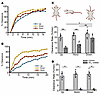 Figure 7
Effects of body orientation on airflow-mediated mucus transport. (A and B) Comparison of 99mTC radiotracer clearance in sham-treated control (A) and SO2-treated (B) animals when positioned horizontally (Horiz) versus a heads-up or heads-down orientation. (C and D) Summary of the mucus clearance rates in % clearance/minute (for the first 5 min) in alive/breathing (C) and dead/nonbreathing (D) mice. *P < 0.01, **P < 0.05, 1-way ANOVA followed by Tukey’s post hoc test.


Copyright © 2026 American Society for Clinical Investigation
ISSN: 0021-9738 (print), 1558-8238 (online)