

Abstract
Elevation of lung capillary pressure causes exocytosis of the leukocyte adhesion receptor P-selectin in endothelial cells (ECs), indicating that lung ECs generate a proinflammatory response to pressure-induced stress. To define underlying mechanisms, we followed the EC signaling sequence leading to P-selectin exocytosis through application of real-time, in situ fluorescence microscopy in lung capillaries. Pressure elevation increased the amplitude of cytosolic Ca2+ oscillations that triggered increases in the amplitude of mitochondrial Ca2+ oscillations and in reactive oxygen species (ROS) production. Responses to blockers of the Ca2+ oscillations and of mitochondrial electron transport indicated that the ROS production was Ca2+ dependent and of mitochondrial origin. A new proinflammatory mechanism was revealed in that pressure-induced exocytosis of P-selectin was inhibited by both antioxidants and mitochondrial inhibitors, indicating that the exocytosis was driven by mitochondrial ROS. In this signaling pathway mitochondria coupled pressure-induced Ca2+ oscillations to the production of ROS that in turn acted as diffusible messengers to activate P-selectin exocytosis. These findings implicate mitochondrial mechanisms in the lung’s proinflammatory response to pressure elevation and identify mitochondrial ROS as critical to P-selectin exocytosis in lung capillary ECs.
Authors
Hideo Ichimura, Kaushik Parthasarathi, Sadiqa Quadri, Andrew C. Issekutz, Jahar Bhattacharya

Abstract
Signaling by hormones and neurotransmitters that activate G protein–coupled receptors (GPCRs) maintains blood pressure within the normal range despite large changes in cardiac output that can occur within seconds. This implies that blood pressure regulation requires precise kinetic control of GPCR signaling. To test this hypothesis, we analyzed mice deficient in RGS2, a GTPase-activating protein that greatly accelerates the deactivation rate of heterotrimeric G proteins in vitro. Both rgs2+/– and rgs2–/– mice exhibited a strong hypertensive phenotype, renovascular abnormalities, persistent constriction of the resistance vasculature, and prolonged response of the vasculature to vasoconstrictors in vivo. Analysis of P2Y receptor–mediated Ca2+ signaling in vascular smooth muscle cells in vitro indicated that loss of RGS2 increased agonist potency and efficacy and slowed the kinetics of signal termination. These results establish that abnormally prolonged signaling by G protein–coupled vasoconstrictor receptors can contribute to the onset of hypertension, and they suggest that genetic defects affecting the function or expression of RGS2 may be novel risk factors for development of hypertension in humans.
Authors
Scott P. Heximer, Russell H. Knutsen, Xiaoguang Sun, Kevin M. Kaltenbronn, Man-Hee Rhee, Ning Peng, Antonio Oliveira-dos-Santos, Josef M. Penninger, Anthony J. Muslin, Thomas H. Steinberg, J. Michael Wyss, Robert P. Mecham, Kendall J. Blumer

Abstract
Enteroviral infections of the heart are among the most commonly identified causes of acute myocarditis in children and adults and have been implicated in dilated cardiomyopathy. Although there is considerable information regarding the cellular immune response in myocarditis, little is known about innate signaling mechanisms within the infected cardiac myocyte that contribute to the host defense against viral infection. Here we show the essential role of Janus kinase (JAK) signaling in cardiac myocyte antiviral defense and a negative role of an intrinsic JAK inhibitor, the suppressor of cytokine signaling (SOCS), in the early disease process. Cardiac myocyte–specific transgenic expression of SOCS1 inhibited enterovirus-induced signaling of JAK and the signal transducers and activators of transcription (STAT), with accompanying increases in viral replication, cardiomyopathy, and mortality in coxsackievirus-infected mice. Furthermore, the inhibition of SOCS in the cardiac myocyte through adeno-associated virus–mediated (AAV-mediated) expression of a dominant-negative SOCS1 increased the myocyte resistance to the acute cardiac injury caused by enteroviral infection. These results indicate that strategies directed at inhibition of SOCS in the heart and perhaps other organs can augment the host-cell antiviral system, thus preventing viral-mediated end-organ damage during the early stages of infection.
Authors
Hideo Yasukawa, Toshitaka Yajima, Hervé Duplain, Mitsuo Iwatate, Masakuni Kido, Masahiko Hoshijima, Matthew D. Weitzman, Tomoyuki Nakamura, Sarah Woodard, Dingding Xiong, Akihiko Yoshimura, Kenneth R. Chien, Kirk U. Knowlton

Abstract
A new member of the lipase gene family, initially termed endothelial lipase (gene nomenclature, LIPG; protein, EL), is expressed in a variety of different tissues, suggesting a general role in lipid metabolism. To assess the hypothesis that EL plays a physiological role in lipoprotein metabolism in vivo, we have used gene targeting of the native murine locus and transgenic introduction of the human LIPG locus in mice to modulate the level of EL expression. Evaluation of these alleles in a C57Bl/6 background revealed an inverse relationship between HDL cholesterol level and EL expression. Fasting plasma HDL cholesterol was increased by 57% in LIPG–/– mice and 25% in LIPG+/– mice and was decreased by 19% in LIPG transgenic mice as compared with syngeneic controls. Detailed analysis of lipoprotein particle composition indicated that this increase was due primarily to an increased number of HDL particles. Phospholipase assays indicated that EL is a primary contributor to phospholipase activity in mouse. These data indicate that expression levels of this novel lipase have a significant effect on lipoprotein metabolism.
Authors
Tatsuro Ishida, Sungshin Choi, Ramendra K. Kundu, Ken-ichi Hirata, Edward M. Rubin, Allen D. Cooper, Thomas Quertermous

Abstract
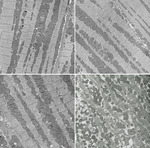
Lipoprotein lipase is the principal enzyme that hydrolyzes circulating triglycerides and liberates free fatty acids that can be used as energy by cardiac muscle. Although lipoprotein lipase is expressed by and is found on the surface of cardiomyocytes, its transfer to the luminal surface of endothelial cells is thought to be required for lipoprotein lipase actions. To study whether nontransferable lipoprotein lipase has physiological actions, we placed an α-myosin heavy-chain promoter upstream of a human lipoprotein lipase minigene construct with a glycosylphosphatidylinositol anchoring sequence on the carboxyl terminal region. Hearts of transgenic mice expressed the altered lipoprotein lipase, and the protein localized to the surface of cardiomyocytes. Hearts, but not postheparin plasma, of these mice contained human lipoprotein lipase activity. More lipid accumulated in hearts expressing the transgene; the myocytes were enlarged and exhibited abnormal architecture. Hearts of transgenic mice were dilated, and left ventricular systolic function was impaired. Thus, lipoprotein lipase expressed on the surface of cardiomyocytes can increase lipid uptake and produce cardiomyopathy.
Authors
Hiroaki Yagyu, Guangping Chen, Masayoshi Yokoyama, Kumiko Hirata, Ayanna Augustus, Yuko Kako, Toru Seo, Yunying Hu, E. Peer Lutz, Martin Merkel, André Bensadoun, Shunichi Homma, Ira J. Goldberg

Abstract
Restrictive cardiomyopathy (RCM) is an uncommon heart muscle disorder characterized by impaired filling of the ventricles with reduced volume in the presence of normal or near normal wall thickness and systolic function. The disease may be associated with systemic disease but is most often idiopathic. We recognized a large family in which individuals were affected by either idiopathic RCM or hypertrophic cardiomyopathy (HCM). Linkage analysis to selected sarcomeric contractile protein genes identified cardiac troponin I (TNNI3) as the likely disease gene. Subsequent mutation analysis revealed a novel missense mutation, which cosegregated with the disease in the family (lod score: 4.8). To determine if idiopathic RCM is part of the clinical expression of TNNI3 mutations, genetic investigations of the gene were performed in an additional nine unrelated RCM patients with restrictive filling patterns, bi-atrial dilatation, normal systolic function, and normal wall thickness. TNNI3 mutations were identified in six of these nine RCM patients. Two of the mutations identified in young individuals were de novo mutations. All mutations appeared in conserved and functionally important domains of the gene.
Authors
Jens Mogensen, Toru Kubo, Mauricio Duque, William Uribe, Anthony Shaw, Ross Murphy, Juan R. Gimeno, Perry Elliott, William J. McKenna

Abstract
Cholesterol-loaded macrophage foam cells are a central component of atherosclerotic lesions. ABCA1, the defective molecule in Tangier disease, mediates the efflux of phospholipids and cholesterol from cells to apoA-I, reversing foam cell formation. In ABCA1, we identified a sequence rich in proline, glutamic acid, serine, and threonine (PEST sequence) that enhances the degradation of ABCA1 by calpain protease and thereby controls the cell surface concentration and cholesterol efflux activity of ABCA1. In an apparent positive feedback loop, apoA-I binds ABCA1, promotes lipid efflux, inhibits calpain degradation, and leads to increased levels of ABCA1. ApoA-I infusion also increases ABCA1 in vivo. These studies reveal a novel mode of regulation of ABCA1 by PEST sequence–mediated calpain proteolysis that appears to be reversed by apolipoprotein-mediated phospholipid efflux. Inhibition of ABCA1 degradation by calpain could represent a novel therapeutic approach to increasing macrophage cholesterol efflux and decreasing atherosclerosis.
Authors
Nan Wang, Wengen Chen, Patrick Linsel-Nitschke, Laurent O. Martinez, Birgit Agerholm-Larsen, David L. Silver, Alan R. Tall

Abstract
Research Article
Authors
Emily R. Eden, Dilipkumar D. Patel, Xi-Ming Sun, Jemima J. Burden, Michael Themis, Matthew Edwards, Philip Lee, Clare Neuwirth, Rossitza P. Naoumova, Anne K. Soutar

Abstract
Research Article
Authors
Colleen E. Clancy, Michihiro Tateyama, Robert S. Kass

Abstract
Research Article
Authors
Gregory A. Graf, Wei-Ping Li, Robert D. Gerard, Ingrid Gelissen, Ann White, Jonathan C. Cohen, Helen H. Hobbs


Copyright © 2025 American Society for Clinical Investigation
ISSN: 0021-9738 (print), 1558-8238 (online)