
Go to JCI Insight
  • About
  • Editors
  • Consulting Editors
  • For authors
  • Publication ethics
  • Publication alerts by email
  • Advertising
  • Job board
  • Contact
  • Clinical Research and Public Health
  • Current issue
  • Past issues
  • By specialty
    • COVID-19
    • Cardiology
    • Gastroenterology
    • Immunology
    • Metabolism
    • Nephrology
    • Neuroscience
    • Oncology
    • Pulmonology
    • Vascular biology
    • All ...
  • Videos
    • ASCI Milestone Awards
    • Video Abstracts
    • Conversations with Giants in Medicine
  • Reviews
    • View all reviews ...
    • The cGAS-STING pathway: DNA sensing in health and disease (Jun 2026)
    • Neurodegeneration (Mar 2026)
    • Clinical innovation and scientific progress in GLP-1 medicine (Nov 2025)
    • Pancreatic Cancer (Jul 2025)
    • Complement Biology and Therapeutics (May 2025)
    • Evolving insights into MASLD and MASH pathogenesis and treatment (Apr 2025)
    • Microbiome in Health and Disease (Feb 2025)
    • View all review series ...
  • Viewpoint
  • Collections
    • In-Press Preview
    • Clinical Research and Public Health
    • Research Letters
    • Letters to the Editor
    • Editorials
    • Commentaries
    • Editor's notes
    • Reviews
    • Viewpoints
    • 100th anniversary
    • Top read articles

  • Current issue
  • Past issues
  • Specialties
  • Reviews
  • Review series
  • ASCI Milestone Awards
  • Video Abstracts
  • Conversations with Giants in Medicine
  • In-Press Preview
  • Clinical Research and Public Health
  • Research Letters
  • Letters to the Editor
  • Editorials
  • Commentaries
  • Editor's notes
  • Reviews
  • Viewpoints
  • 100th anniversary
  • Top read articles
  • About
  • Editors
  • Consulting Editors
  • For authors
  • Publication ethics
  • Publication alerts by email
  • Advertising
  • Job board
  • Contact

What lies beneath

 
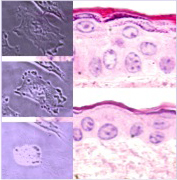
Mycobacterium ulcerans infects the skin and subcutaneous tissues. It secretes a lipid toxin, mycolactone, which causes open skin lesions, known as Buruli ulcers. Laure Guenin-Macé and colleagues investigated the molecular actions of mycolactone and found that it dysregulates the actin cytokskeleton, driving uncontrolled actin polymerization by activating a protein known as N-WASP. Guenin-Macé and colleagues demonstrated that they could block the degradation process by administration of the N-WASP inhibitor wiskostatin. These results reveal the molecular pathogenesis of M. ulcerans and suggest that drugs that disrupt mycolactone/N-WASP binding could be used to treat Buruli ulcers. The accompanying images show mouse epidermis treated with vehicle (top right) and mycolactone (bottom right) as well as cells treated with mycolactone over time (left panels, increasing time, top to bottom).

Published March 15, 2013, by Jillian Hurst

Scientific Show Stopper

Related articles

Mycolactone activation of Wiskott-Aldrich syndrome proteins underpins Buruli ulcer formation
Laure Guenin-Macé, Romain Veyron-Churlet, Maria-Isabel Thoulouze, Guillaume Romet-Lemonne, Hui Hong, Peter F. Leadlay, Anne Danckaert, Marie-Thérèse Ruf, Serge Mostowy, Chiara Zurzolo, Philippe Bousso, Fabrice Chrétien, Marie-France Carlier, Caroline Demangel
View: Text | PDF
Research Article Infectious disease

Mycolactone activation of Wiskott-Aldrich syndrome proteins underpins Buruli ulcer formation

  • Text
  • PDF
Abstract

Mycolactone is a diffusible lipid secreted by the human pathogen Mycobacterium ulcerans, which induces the formation of open skin lesions referred to as Buruli ulcers. Here, we show that mycolactone operates by hijacking the Wiskott-Aldrich syndrome protein (WASP) family of actin-nucleating factors. By disrupting WASP autoinhibition, mycolactone leads to uncontrolled activation of ARP2/3-mediated assembly of actin in the cytoplasm. In epithelial cells, mycolactone-induced stimulation of ARP2/3 concentrated in the perinuclear region, resulting in defective cell adhesion and directional migration. In vivo injection of mycolactone into mouse ears consistently altered the junctional organization and stratification of keratinocytes, leading to epidermal thinning, followed by rupture. This degradation process was efficiently suppressed by coadministration of the N-WASP inhibitor wiskostatin. These results elucidate the molecular basis of mycolactone activity and provide a mechanism for Buruli ulcer pathogenesis. Our findings should allow for the rationale design of competitive inhibitors of mycolactone binding to N-WASP, with anti–Buruli ulcer therapeutic potential.

Authors

Laure Guenin-Macé, Romain Veyron-Churlet, Maria-Isabel Thoulouze, Guillaume Romet-Lemonne, Hui Hong, Peter F. Leadlay, Anne Danckaert, Marie-Thérèse Ruf, Serge Mostowy, Chiara Zurzolo, Philippe Bousso, Fabrice Chrétien, Marie-France Carlier, Caroline Demangel

×
Advertisement

Copyright © 2026 American Society for Clinical Investigation
ISSN: 0021-9738 (print), 1558-8238 (online)

Sign up for email alerts