
Submit a comment
Abstract
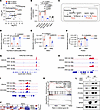
Cancers reprogram their metabolism to provide anabolic needs without driving excessive oxidative stress. Attention has focused on glucose metabolism, yet amino acid synthesis and degradation also promote tumor cell states and growth. Here, we assessed amino acids that maintain cancer stem cells in glioblastoma and found increased proline levels relative to differentiated tumor progeny through increased proline synthesis. Cancer stem cells preferentially expressed the signaling molecule FAM3C induced by the stem cell transcription factor SOX2 to drive expression of proline synthesis enzymes. FAM3C classically mediated cellular responses as a secreted protein but gained intracellular functions in cancer stem cells through binding the histone reader spindlin 1 (SPIN1), thereby preventing its lysosomal degradation, assisting its nuclear localization, and promoting epigenetic regulation of proline synthesis. Proline synthesis depleted ROS, and genetic targeting of FAM3C attenuated ROS scavenging, whereas SPIN1 OE restored ROS levels. Molecular docking identified tucatinib as a brain-penetrant pharmacologic disruptor of FAM3C-SPIN1 interactions, promoting SPIN1 degradation and reducing intracellular proline levels. Thus, cancer stem cells induced a favorable metabolic state through proline synthesis and ROS depletion, revealing potential therapeutic dependencies.
Authors
Weichi Wu, Po Zhang, Donghai Wang, Xujia Wu, Qiulian Wu, Daqi Li, Tengfei Huang, Rui Wang, Huan Li, Hailong Mi, Suchet Taori, Fanen Yuan, Tingting Duan, Zhiye Chen, Huairui Yuan, Jeremy N. Rich
Guidelines
The Editorial Board will only consider comments that are deemed relevant and of interest to readers. The Journal will not post data that have not been subjected to peer review; or a comment that is essentially a reiteration of another comment.
- Comments appear on the Journal’s website and are linked from the original article’s web page.
- Authors are notified by email if their comments are posted.
- The Journal reserves the right to edit comments for length and clarity.
- No appeals will be considered.
- Comments are not indexed in PubMed.
Specific requirements
- Maximum length, 400 words
- Entered as plain text or HTML
- Author’s name and email address, to be posted with the comment
- Declaration of all potential conflicts of interest (even if these are not ultimately posted); see the Journal’s conflict-of-interest policy
- Comments may not include figures


Copyright © 2026 American Society for Clinical Investigation
ISSN: 0021-9738 (print), 1558-8238 (online)