
Submit a comment
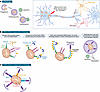
Abstract
Regulation of mitochondrial health is critical for maintaining cellular homeostasis in the nervous system. Damaged mitochondria can have detrimental effects on neuronal health and are thought to be key contributors to the progression of neurodegenerative disorders including Parkinson’s disease and amyotrophic lateral sclerosis. To mitigate this damage, multiple quality control mechanisms have evolved to eliminate aged or damaged mitochondria. One such quality control process is autophagy, a process that involves turnover of mitochondria at presynaptic sites and the axon terminal under basal conditions. This highly conserved mechanism sequesters mitochondria from the cytosol within autophagosomes followed by degradation upon fusion with a lysosome. Acute mitochondrial damage activates a selective form of autophagy called mitophagy that involves receptor-mediated engulfment and degradation of the damaged organelle. Multiple mechanisms have been shown to drive efficient mitophagy in neurons and glia, including PTEN induced kinase 1 (PINK1)/Parkin–dependent mitophagy and receptor-mediated mitophagy. Genetic, pathological, and experimental evidence all implicate defects in the removal of damaged mitochondria in the onset or progression of neurodegenerative disease. Both the initiation of PINK1/Parkin–dependent mitophagy and deficits in the removal of damaged mitochondria are linked to activation of neuroinflammatory pathways, including NF-κB and cyclic GMP-AMP synthase–stimulator of interferon genes (cGAS-STING) signaling. In this Review, we discuss the molecular pathways governing mitophagy in neurons and glial cells and how deficits in these pathways may lead to neurodegeneration. We also highlight emerging therapeutic strategies aimed at restoring mitophagy to preserve neuronal homeostasis and function.
Authors
Bishal Basak, Julia F. Riley, Neha M. Nataraj, Erika L.F. Holzbaur
Guidelines
The Editorial Board will only consider comments that are deemed relevant and of interest to readers. The Journal will not post data that have not been subjected to peer review; or a comment that is essentially a reiteration of another comment.
- Comments appear on the Journal’s website and are linked from the original article’s web page.
- Authors are notified by email if their comments are posted.
- The Journal reserves the right to edit comments for length and clarity.
- No appeals will be considered.
- Comments are not indexed in PubMed.
Specific requirements
- Maximum length, 400 words
- Entered as plain text or HTML
- Author’s name and email address, to be posted with the comment
- Declaration of all potential conflicts of interest (even if these are not ultimately posted); see the Journal’s conflict-of-interest policy
- Comments may not include figures


Copyright © 2026 American Society for Clinical Investigation
ISSN: 0021-9738 (print), 1558-8238 (online)