
Go to JCI Insight
  • About
  • Editors
  • Consulting Editors
  • For authors
  • Publication ethics
  • Publication alerts by email
  • Advertising
  • Job board
  • Contact
  • Clinical Research and Public Health
  • Current issue
  • Past issues
  • By specialty
    • COVID-19
    • Cardiology
    • Gastroenterology
    • Immunology
    • Metabolism
    • Nephrology
    • Neuroscience
    • Oncology
    • Pulmonology
    • Vascular biology
    • All ...
  • Videos
    • ASCI Milestone Awards
    • Video Abstracts
    • Conversations with Giants in Medicine
  • Reviews
    • View all reviews ...
    • Neurodegeneration (Mar 2026)
    • Clinical innovation and scientific progress in GLP-1 medicine (Nov 2025)
    • Pancreatic Cancer (Jul 2025)
    • Complement Biology and Therapeutics (May 2025)
    • Evolving insights into MASLD and MASH pathogenesis and treatment (Apr 2025)
    • Microbiome in Health and Disease (Feb 2025)
    • Substance Use Disorders (Oct 2024)
    • View all review series ...
  • Viewpoint
  • Collections
    • In-Press Preview
    • Clinical Research and Public Health
    • Research Letters
    • Letters to the Editor
    • Editorials
    • Commentaries
    • Editor's notes
    • Reviews
    • Viewpoints
    • 100th anniversary
    • Top read articles

  • Current issue
  • Past issues
  • Specialties
  • Reviews
  • Review series
  • ASCI Milestone Awards
  • Video Abstracts
  • Conversations with Giants in Medicine
  • In-Press Preview
  • Clinical Research and Public Health
  • Research Letters
  • Letters to the Editor
  • Editorials
  • Commentaries
  • Editor's notes
  • Reviews
  • Viewpoints
  • 100th anniversary
  • Top read articles
  • About
  • Editors
  • Consulting Editors
  • For authors
  • Publication ethics
  • Publication alerts by email
  • Advertising
  • Job board
  • Contact

Submit a comment

Targeting RANKL-independent osteoclastogenesis overcomes denosumab resistance in models of ER+ breast cancer bone metastasis
Qun Lin, Jinpeng Luo, Zhuxi Duan, Jieer Luo, Wei Zhang, Yuan Xia, Yinduo Zeng, Xiaolin Fang, Jiahui Liang, Jiayi Chen, Qianchong Lin, Yilin Quan, Ruiyu Hu, Hongcai Liu, Qiang Liu, Jun Li, Chang Gong
View: Text | PDF
Research Article Cell biology Oncology

Targeting RANKL-independent osteoclastogenesis overcomes denosumab resistance in models of ER+ breast cancer bone metastasis

  • Text
  • PDF
Abstract

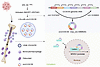
Bone metastasis remains a major cause of morbidity in estrogen receptor–positive breast cancer, with RANKL inhibitor resistance emerging as a critical clinical challenge. Nearly 40% of patients develop progressive skeletal lesions despite denosumab therapy, highlighting an urgent need to identify resistance mechanisms and alternative therapeutic strategies. We identified a RANKL-independent osteoclast activation pathway mediated by the CRKL/circCCDC50/NFATc1 axis. Mechanistically, CRKL promoted EIF4A3-dependent circCCDC50 biogenesis, which was packaged into large oncosomes and transferred to osteoclast precursors. Nuclear circCCDC50 recruited CARM1 to epigenetically activate NFATc1 transcription, establishing a self-reinforcing loop that sustained osteolysis despite RANKL blockade. Pharmacological inhibition of CARM1 (TP-064) effectively suppressed osteoclastogenesis and bone metastasis in denosumab-resistant models. These findings revealed a targetable resistance mechanism and provided a clinically actionable strategy to overcome microenvironment-driven metastasis through dual targeting of tumor and bone niches.

Authors

Qun Lin, Jinpeng Luo, Zhuxi Duan, Jieer Luo, Wei Zhang, Yuan Xia, Yinduo Zeng, Xiaolin Fang, Jiahui Liang, Jiayi Chen, Qianchong Lin, Yilin Quan, Ruiyu Hu, Hongcai Liu, Qiang Liu, Jun Li, Chang Gong

×

Guidelines

The Editorial Board will only consider comments that are deemed relevant and of interest to readers. The Journal will not post data that have not been subjected to peer review; or a comment that is essentially a reiteration of another comment.

  • Comments appear on the Journal’s website and are linked from the original article’s web page.
  • Authors are notified by email if their comments are posted.
  • The Journal reserves the right to edit comments for length and clarity.
  • No appeals will be considered.
  • Comments are not indexed in PubMed.

Specific requirements

  • Maximum length, 400 words
  • Entered as plain text or HTML
  • Author’s name and email address, to be posted with the comment
  • Declaration of all potential conflicts of interest (even if these are not ultimately posted); see the Journal’s conflict-of-interest policy
  • Comments may not include figures
This field is required

Copyright © 2026 American Society for Clinical Investigation
ISSN: 0021-9738 (print), 1558-8238 (online)

Sign up for email alerts