
Go to JCI Insight
  • About
  • Editors
  • Consulting Editors
  • For authors
  • Publication ethics
  • Publication alerts by email
  • Advertising
  • Job board
  • Contact
  • Clinical Research and Public Health
  • Current issue
  • Past issues
  • By specialty
    • COVID-19
    • Cardiology
    • Gastroenterology
    • Immunology
    • Metabolism
    • Nephrology
    • Neuroscience
    • Oncology
    • Pulmonology
    • Vascular biology
    • All ...
  • Videos
    • ASCI Milestone Awards
    • Video Abstracts
    • Conversations with Giants in Medicine
  • Reviews
    • View all reviews ...
    • Clinical innovation and scientific progress in GLP-1 medicine (Nov 2025)
    • Pancreatic Cancer (Jul 2025)
    • Complement Biology and Therapeutics (May 2025)
    • Evolving insights into MASLD and MASH pathogenesis and treatment (Apr 2025)
    • Microbiome in Health and Disease (Feb 2025)
    • Substance Use Disorders (Oct 2024)
    • Clonal Hematopoiesis (Oct 2024)
    • View all review series ...
  • Viewpoint
  • Collections
    • In-Press Preview
    • Clinical Research and Public Health
    • Research Letters
    • Letters to the Editor
    • Editorials
    • Commentaries
    • Editor's notes
    • Reviews
    • Viewpoints
    • 100th anniversary
    • Top read articles

  • Current issue
  • Past issues
  • Specialties
  • Reviews
  • Review series
  • ASCI Milestone Awards
  • Video Abstracts
  • Conversations with Giants in Medicine
  • In-Press Preview
  • Clinical Research and Public Health
  • Research Letters
  • Letters to the Editor
  • Editorials
  • Commentaries
  • Editor's notes
  • Reviews
  • Viewpoints
  • 100th anniversary
  • Top read articles
  • About
  • Editors
  • Consulting Editors
  • For authors
  • Publication ethics
  • Publication alerts by email
  • Advertising
  • Job board
  • Contact
Top
  • View PDF
  • Download citation information
  • Send a comment
  • Terms of use
  • Standard abbreviations
  • Need help? Email the journal
  • Top
  • Abstract
  • Base editing: advanced genome editing technology
  • Gene therapy in sodium channelopathies
  • Base editing to treat SCN8A-DEE
  • On deck: unanswered questions and future directions
  • Funding support
  • Footnotes
  • References
  • Version history
  • Article usage
  • Citations to this article

Advertisement

Commentary Open Access | 10.1172/JCI200689

A hit for base editing: treatment of developmental epilepsy in a mouse model

Sophie F. Hill1 and Ethan M. Goldberg1,2,3,4

1Division of Neurology, Department of Pediatrics and

2The Epilepsy Neurogenetics Initiative, The Children’s Hospital of Philadelphia, Philadelphia, Pennsylvania, USA.

3Department of Neuroscience and

4Department of Neurology, The University of Pennsylvania Perelman School of Medicine, Philadelphia, Pennsylvania, USA.

Address correspondence to: Ethan M. Goldberg, Abramson Research Center 510D, 3615 Civic Center Blvd, Philadelphia, Pennsylvania 19104, USA. Email: goldberge@chop.edu.

Find articles by Hill, S. in: PubMed | Google Scholar

1Division of Neurology, Department of Pediatrics and

2The Epilepsy Neurogenetics Initiative, The Children’s Hospital of Philadelphia, Philadelphia, Pennsylvania, USA.

3Department of Neuroscience and

4Department of Neurology, The University of Pennsylvania Perelman School of Medicine, Philadelphia, Pennsylvania, USA.

Address correspondence to: Ethan M. Goldberg, Abramson Research Center 510D, 3615 Civic Center Blvd, Philadelphia, Pennsylvania 19104, USA. Email: goldberge@chop.edu.

Find articles by Goldberg, E. in: PubMed | Google Scholar |

Published February 2, 2026 - More info

Published in Volume 136, Issue 3 on February 2, 2026
J Clin Invest. 2026;136(3):e200689. https://doi.org/10.1172/JCI200689.
© 2026 Hill et al. This work is licensed under the Creative Commons Attribution 4.0 International License. To view a copy of this license, visit http://creativecommons.org/licenses/by/4.0/.
Published February 2, 2026 - Version history
View PDF

Related article:

Base editing rescues seizures and sudden death in a SCN8A mutation-associated developmental epileptic encephalopathy model
Caeley M. Reever, Alexis R. Boscia, Tyler C.J. Deutsch, Mansi P. Patel, Raquel M. Miralles, Shrinidhi Kittur, Erik J. Fleischel, Atum M.L. Buo, Matthew S. Yorek, Miriam H. Meisler, Charles R. Farber, Manoj K. Patel
A gene therapy targeting a deadly mutation causing epilepsy rescues seizures and disease symptoms, offering a promising gene therapy for other genetic forms of epilepsy.
Research Article Genetics Neuroscience

Base editing rescues seizures and sudden death in a SCN8A mutation-associated developmental epileptic encephalopathy model

  • Text
  • PDF
Abstract

SCN8A encodes the voltage-gated sodium channel Nav1.6, which plays a key role in facilitating neuronal excitability. Mutations in SCN8A, particularly gain-of-function variants, cause SCN8A developmental and epileptic encephalopathy (DEE), a severe epilepsy syndrome characterized by seizures, cognitive dysfunction, movement disorders, and sudden unexpected death in epilepsy (SUDEP). The recurrent SCN8A variant R1872W impairs channel inactivation, causing neuronal hyperexcitability and seizures. Current treatments, including antiseizure medications, are often ineffective for patients with SCN8A DEE, highlighting the need for targeted therapies. We employed base editing to correct the R1872W SCN8A variant. An adenine base editor and guide RNA (SCN8A-ABE) were packaged within dual PhP.eB-adeno-associated viruses (AAVs) and administered to R1872W mice at P2. SCN8A-ABE significantly increased survival of mice expressing R1872W and either reduced seizure incidence and severity or eliminated seizure occurrence. Electrophysiological recordings revealed a rescue of seizure-associated neuronal hyperexcitability and suppression of the pathogenic persistent sodium current (INaP) in treated mice. Comorbidities, including diminished mobility and anxiety-like behaviors, were improved by SCN8A-ABE. These effects were achieved by a 32% absolute reduction in mutant transcripts, accompanied by conversion to SCN8A WT transcripts. Our findings demonstrate base editing as an effective targeted therapeutic approach for SCN8A DEEs by addressing the underlying genetic cause.

Authors

Caeley M. Reever, Alexis R. Boscia, Tyler C.J. Deutsch, Mansi P. Patel, Raquel M. Miralles, Shrinidhi Kittur, Erik J. Fleischel, Atum M.L. Buo, Matthew S. Yorek, Miriam H. Meisler, Charles R. Farber, Manoj K. Patel

×

Abstract

CRISPR/Cas9 base editing holds the potential to treat disease caused by single-nucleotide variants. In contrast with conventional CRISPR/Cas9 approaches, base editing enzymatically induces precise DNA alterations and can directly correct disease-causing variants. In this issue of JCI, Reever et al. used base editing to treat a mouse model of a severe neurodevelopmental disorder caused by a pathogenic missense variant in the voltage-gated sodium channel gene SCN8A. This work represents a starting point for the further refinement of base editing to treat genetic epilepsy.

Base editing: advanced genome editing technology

Naturally occurring Cas9 proteins are enzymes that induce double-stranded DNA or RNA breaks at sequences specified by a guide RNA. Double-stranded DNA breaks are usually repaired by nonhomologous end joining, an error-prone pathway that often induces random insertion/deletions (“indels”), which can disrupt the reading frame of the target gene. Most human applications of first-generation CRISPR technology deliberately introduce indels into the disease-causing gene (or a regulatory protein) to “turn off” the gene.

Newer approaches use modified versions of Cas9 to perform more advanced genome editing without inducing double-stranded breaks. In particular, base editing was developed by the laboratory of David Liu to achieve enzymatic changes in nucleotide identity (Figure 1A) (1, 2). Base editors are fusion proteins composed of a catalytic domain and “nickase” Cas9. The catalytic deaminase domain converts either cytidine to uracil (read as thymine by polymerases) or adenine to inosine (read as guanine) on one strand. Cellular machinery detects the resulting mismatch and attempts to repair it, either by reverting to the original sequence or by replacing the unedited base to match its edited pair. The “nickase” Cas9 induces a single-stranded DNA “nick” on the unedited strand, promoting repair to match the edited base. The Liu lab has engineered improved base editors such that an ever-increasing proportion of single-nucleotide variants can be targeted and changed by a base editor (2, 3). These editors have proven effective in several preclinical models of human disease (4, 5).
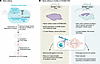
CRISPR/Cas9 base editing in a mouse model of SCN8A-related seizure disorderFigure 1

CRISPR/Cas9 base editing in a mouse model of SCN8A-related seizure disorder. (A) Base editing facilitates precise enzymatic correction of a mutant allele. The base editor is directed to a DNA locus by a guide RNA, and enzymatically changes nucleotide identity at that site. In this case, Reever et al. used adenine base editing to deaminate adenine into inosine, a nonstandard DNA base that is read as guanine. The mismatched I-T pair is detected and corrected to either the original A-T pair or the desired G-C pair. Nicking of the nonedited strand facilitates repair to G-C. (B) Reever et al. tested a base-editing strategy in two models of SCN8A-DEE by injecting the base editor packaged in an AAV vectors into the lateral ventricles on postnatal day 2 (16). In Scn8aW/+-EIIa mice, which express mutant Scn8a globally and display a severe phenotype and limited lifespan, the base editor treatment rescued the hyperexcitable phenotype in excitatory neurons but did not substantially extend lifespan. In Scn8aW/+-Emx1 mice, in which the mutant allele is restricted to forebrain excitatory neurons and has later-onset expression, base editor treatment prolonged survival, reduced seizure frequency, and normalized excitatory neuron function. Pam, protospacer adjacent motif.

In 2022, base editing was used in humans for the first time to treat inherited familial hypercholesterolemia by targeting PCSK9, which encodes a liver enzyme involved in lipoprotein homeostasis. The base editor reduced LDL cholesterol in all patients assessed, but two patients experienced serious cardiac events attributed to the underlying disease, reducing enthusiasm (6, 7). A recent successful trial in an infant with a life-limiting liver disease has raised hopes again (8, 9). Baby KJ Muldoon was diagnosed with CPS1 deficiency, a genetic disorder causing hyperammonemia, in the first month of life. Within 6 months, researchers at the Children’s Hospital of Philadelphia and University of Pennsylvania Perelman School of Medicine developed a personalized base editor to target his genetic variant, packaged it into lipid nanoparticles, and delivered it to the patient intravenously (8, 9). Following treatment, KJ’s physicians were able to reduce the dosage of his other medications and increase protein intake. Successful treatment on such a short time scale is an encouraging sign for the future of base editing therapeutics.

In both of the above examples, base editors were directed to the liver, which is readily targeted by intravenous administration. However, base editors have not yet been used to treat human neurological disease, in part due to the challenges of delivering large fusion proteins to the brain while avoiding liver toxicity. At the time of writing, no publication has reported a method to safely and efficiently cross the human blood-brain barrier, so therapies cannot be administered systemically and instead must be packaged into viruses and injected into the cerebrospinal fluid or directly into the brain parenchyma.
Gene therapy in sodium channelopathies

Electrical signaling in neurons depends on the precise gating of ion channels. Genetic variants affecting ion channel proteins are common causes of neurological disease. Sodium channels, which mediate the upstroke of the action potential, are implicated in epilepsy and other disorders of electrical excitability. There are four brain-expressed sodium channel genes: SCN1A (encoding Nav1.1), SCN2A (encoding Nav1.2), SCN3A (encoding Nav1.3), and SCN8A (encoding Nav1.6). Sodium channel variants are generally classified as either “loss of function” or “gain of function” (GoF), depending on the effects on sodium current. GoF variants in SCN8A cause SCN8A-related developmental and epileptic encephalopathy (SCN8A-DEE), a severe seizure disorder defined by treatment-resistant epilepsy, movement disorder, and severe developmental delay/intellectual disability.

There have been several attempts to treat mouse models of SCN8A-related encephalopathy in mice with Scn8a GoF variants. In the Scn8aN1768D/+ mouse, the small-molecule sodium channel blockers GS-967 and NBI-921352 reduced electrophysiological abnormalities in neurons, protected against electrically induced seizures, and extended survival (10, 11). Antisense oligonucleotides (ASOs), short DNA or RNA oligomers that can alter gene expression, have also extended the lifespan of Scn8a GoF mice while preventing seizures (12).

Similar approaches have been effective in mice with mutations in other sodium channel genes. The SCN1A-targeting ASO (which removes a “poison exon” to increase Nav1.1 expression from the intact allele) completed a Phase 1/2a clinical trial with promising results (13). CRISPR activation, wherein Cas9 is fused to a transcriptional activator to increase expression of target genes, has also improved the phenotypes of Scn1a and Scn2a mutant mice (14, 15). In this issue of JCI, Reever et al. described the first application of base editing to a mouse model of a genetic epilepsy (16).

Base editing to treat SCN8A-DEE

Reever et al. assessed the efficacy and specificity of a series of guide RNAs and base editors in cultured cells to identify lead candidates to correct the mutant Scn8a allele (16). The best performing guide RNA and base editor combination, which was used for subsequent in vivo studies, exhibited a modest, approximately 30%, correction of the mutant allele; base editors to treat other disorders in mouse have achieved over 80% efficiency in cultured cells (4, 17).

Base editing machinery is too large to fit into standard AAV vectors. To deliver the base editor in vivo, the authors used the now-standard approach of splitting the editor into two viruses (4, 5). With a “split-intein” method, cells that take up both viruses can assemble the components of base editing machinery into a single protein. Reever et al. administered these viruses via injection into the lateral ventricles on postnatal day 2, achieving brain-wide expression of a GFP reporter. They administered the base editor to the Cre-dependent Scn8aflox(R1872W)/+ (W/+) mouse. Experimental mice were generated by crossing to a global Cre driver expressed from the blastocyst stage (Scn8aW/+-EIIa) or a forebrain excitatory neuron-specific Cre with later-onset expression (Scn8aW/+-EMX1) (Figure 1B).

Sham-treated EIIa-W/+ mice had a profoundly shortened lifespan, around two weeks. The base editor did not prolong survival in these mice, and the authors implied that there was insufficient time for therapeutic expression of the AAV/base editing machinery before death (16). However, the base editor did rescue the hyperexcitable electrophysiological phenotype associated with Scn8aW/+-EIIa excitatory neurons. Therefore, an alternative explanation could be that correction was not achieved in enough cells and/or brain areas. Supporting this view, the authors noted that mice with a higher proportion of edited cells survived longer. Absence of a survival benefit in these mice is somewhat concerning, since the Scn8aW/+-EIIa global mouse mutant has the highest validity as a model of SCN8A-related encephalopathy in human patients, who harbor SCN8A variants in all cells. In human and mouse, Nav1.6 is expressed in both excitatory and inhibitory (GABAergic) neurons and in brain areas beyond cerebral cortex including reticular thalamic nucleus, basal ganglia, and cerebellum, as well as in the peripheral nervous system (18). Perhaps a more efficient guide RNA/Cas9 combination would prove more effective in the Scn8aW/+-EIIa mice.

In the less severely affected Scn8aW/+-EMX1 mice, the base editor improved median survival from approximately 3 weeks, as observed in sham-treated mice, to over 3 months. Base editor-treated Scn8aW/+-EMX1 mice also exhibited fewer seizures than sham-treated counterparts, and the electrophysiological properties of neocortical excitatory glutamatergic neurons were normalized (16). Although seizures are the most prominent feature of SCN8A-DEE, the nonseizure comorbidities are a significant burden on patients and their families. These comorbidities include hypotonia, movement disorder, and intellectual disability/developmental delay (19). Few behavioral abnormalities have been identified in the Scn8aW/+-EMX1 mice, although in the open field test, Reever et al. observed a partial restoration of distance traveled across (a measure of hyperactivity) and time spent in the center (an index for anxiety).

On deck: unanswered questions and future directions

A major safety concern of base editing is the potential for editing at off-target sites and “bystander” editing at like nucleotides adjacent to the target base. The gold-standard approach for off-target screening is to identify the most likely off-target sites using an unbiased method (e.g., CIRCLE-seq (20)) and subject these loci to deep sequencing. Reever et al. instead performed RNA-seq and whole-genome–seq (16). This method has the advantage of identifying potential off-target editing at any genomic location, but it is less sensitive than targeted sequencing of previously identified risk loci. The authors reported no significant off-target or bystander editing, but deeper sequencing of selected sites could have more rigorously identified potentially problematic events.

Reever et al.’s work represents what is, to our knowledge, the first published attempt to treat a genetic epilepsy using base editing (16). This is an exciting step toward a disease-modifying therapy for a severe condition that is typically refractory to conventional antiepileptic drugs and is associated with significant morbidity and mortality. However, many questions remain to be answered. Why was treatment of the global mutant not effective, and how can this be improved? What proportion of cells need to be corrected to improve epilepsy, nonepilepsy comorbid conditions, and survival, both in a global mouse model and in humans? What specific cell type(s) and brain regions need to be corrected for meaningful efficacy? Targeting the entire human brain with high efficiency will be difficult, so identifying discrete high-yield brain regions and/or particular cell types for correction could be both effective and practical.

While we still await a home run for base editing in neurological diseases, Reever et al. have put a runner on first base for the epilepsy field.

Funding support

This work is the result of NIH funding, in whole or in part, and is subject to the NIH Public Access Policy. Through acceptance of this federal funding, the NIH has been given a right to make the work publicly available in PubMed Central.

  • Brody Family Medical Trust Fund Fellowship from the Philadelphia Foundation to SFH.
  • NINDS R01NS119977 and R01NS110869.
  • A research grant from the Dravet Syndrome Foundation to EMG.
Footnotes

Conflict of interest: The authors have declared that no conflict of interest exists.

Copyright: © 2026, Hill et al. This is an open access article published under the terms of the Creative Commons Attribution 4.0 International License.

Reference information: J Clin Invest. 2026;136(3):e200689. https://doi.org/10.1172/JCI200689.

See the related article at Base editing rescues seizures and sudden death in a SCN8A mutation-associated developmental epileptic encephalopathy model.

References
  1. Komor AC, et al. Programmable editing of a target base in genomic DNA without double-stranded DNA cleavage. Nature. 2016;533(7603):420–424.
    View this article via: CrossRef PubMed Google Scholar
  2. Gaudelli NM, et al. Programmable base editing of A•T to G•C in genomic DNA without DNA cleavage. Nature. 2017;551(7681):464–471.
    View this article via: CrossRef PubMed Google Scholar
  3. Richter MF, et al. Phage-assisted evolution of an adenine base editor with improved Cas domain compatibility and activity. Nat Biotechnol. 2020;38(7):883–891.
    View this article via: CrossRef PubMed Google Scholar
  4. Newby GA, et al. Base editing of haematopoietic stem cells rescues sickle cell disease in mice. Nature. 2021;595(7866):295–302.
    View this article via: CrossRef PubMed Google Scholar
  5. Arbab M, et al. Base editing rescue of spinal muscular atrophy in cells and in mice. Science. 2023;380(6642):eadg6518.
    View this article via: CrossRef PubMed Google Scholar
  6. Horie T, Ono K. VERVE-101: a promising CRISPR-based gene editing therapy that reduces LDL-C and PCSK9 levels in HeFH patients. Eur Heart J Cardiovasc Pharmacother. 2024;10(2):89–90.
    View this article via: CrossRef PubMed Google Scholar
  7. Naddaf M. First trial of ‘base editing’ in humans lowers cholesterol - but raises safety concerns. Nature. 2023;623(7988):671–672.
    View this article via: CrossRef PubMed Google Scholar
  8. Kolata G. Baby is healed with world’s first personalized gene-editing treatment. New York Times. May 15, 2025. Accessed October 1, 2025. https://www.nytimes.com/2025/05/15/health/gene-editing-personalized-rare-disorders.html.
  9. Musunuru K, et al. Patient-specific in vivo gene editing to treat a rare genetic disease. N Engl J Med. 2025;392(22):2235–2243.
    View this article via: CrossRef PubMed Google Scholar
  10. Baker EM, et al. The novel sodium channel modulator GS-458967 (GS967) is an effective treatment in a mouse model of SCN8A encephalopathy. Epilepsia. 2018;59(6):1166–1176.
    View this article via: CrossRef PubMed Google Scholar
  11. Johnson J, et al. NBI-921352, a first-in-class, NaV1.6 selective, sodium channel inhibitor that prevents seizures in Scn8a gain-of-function mice, and wild-type mice and rats. Elife. 2022;11:e72468.
    View this article via: CrossRef PubMed Google Scholar
  12. Lenk GM, et al. Scn8a antisense oligonucleotide is protective in mouse models of SCN8A encephalopathy and dravet syndrome. Ann Neurol. 2020;87(3):339–346.
    View this article via: CrossRef PubMed Google Scholar
  13. Stoke Therapeutics. Stoke Therapeutics Announces Landmark New Data That Support the Potential for STK-001 to be the First Disease-Modifying Medicine for the Treatment of Patients with Dravet Syndrome. https://investor.stoketherapeutics.com/news-releases/news-release-details/stoke-therapeutics-announces-landmark-new-data-support-potential/ Updated March 25, 2024. Accessed October 1, 2025.
  14. Colasante G, et al. In vivo CRISPRa decreases seizures and rescues cognitive deficits in a rodent model of epilepsy. Brain. 2020;143(3):891–905.
    View this article via: CrossRef PubMed Google Scholar
  15. Tamura S, et al. CRISPR activation for SCN2A-related neurodevelopmental disorders. Nature. 2025;646(8086):983–991.
    View this article via: CrossRef PubMed Google Scholar
  16. Reever CM, et al. Base editing rescue of seizures and SUDEP in SCN8A developmental epileptic encephalopathy. J Clin Invest. 2026;136(3):e196402.
    View this article via: JCI CrossRef Google Scholar
  17. Koblan LW, et al. In vivo base editing rescues Hutchinson-Gilford progeria syndrome in mice. Nature. 2021;589(7843):608–614.
    View this article via: CrossRef PubMed Google Scholar
  18. Yao Z, et al. A high-resolution transcriptomic and spatial atlas of cell types in the whole mouse brain. Nature. 2023;624(7991):317–332.
    View this article via: CrossRef PubMed Google Scholar
  19. Hammer MF, et al. SCN8A-related epilepsy and/or neurodevelopmental disorders. In: Adam MP, et al., eds. GeneReviews. University of Washington, Seattle; 1993:NBK379665.
  20. Tsai SQ, et al. CIRCLE-seq: a highly sensitive in vitro screen for genome-wide CRISPR-Cas9 nuclease off-targets. Nat Methods. 2017;14(6):607–614.
    View this article via: CrossRef PubMed Google Scholar
Version history
  • Version 1 (February 2, 2026): Electronic publication

Article tools

  • View PDF
  • Download citation information
  • Send a comment
  • Terms of use
  • Standard abbreviations
  • Need help? Email the journal

Metrics

  • Article usage
  • Citations to this article

Go to

  • Top
  • Abstract
  • Base editing: advanced genome editing technology
  • Gene therapy in sodium channelopathies
  • Base editing to treat SCN8A-DEE
  • On deck: unanswered questions and future directions
  • Funding support
  • Footnotes
  • References
  • Version history
Advertisement
Advertisement

Copyright © 2026 American Society for Clinical Investigation
ISSN: 0021-9738 (print), 1558-8238 (online)

Sign up for email alerts