
Advertisement
Research ArticleGeneticsNeuroscience
Open Access |  10.1172/JCI196402
Base editing rescues seizures and sudden death in a SCN8A mutation-associated developmental epileptic encephalopathy model
Caeley M. Reever,1,2 Alexis R. Boscia,1 Tyler C.J. Deutsch,1 Mansi P. Patel,1 Raquel M. Miralles,1,2 Shrinidhi Kittur,1 Erik J. Fleischel,2,3 Atum M.L. Buo,4 Matthew S. Yorek,1 Miriam H. Meisler,5 Charles R. Farber,4 and Manoj K. Patel1,2
1Department of Anesthesiology, University of Virginia Health System, Charlottesville, Virginia, USA.
2Neuroscience Graduate Program,
3Department of Neuroscience, and
4Department of Genomic Sciences, University of Virginia; Charlottesville, Virginia, USA.
5Department of Human Genetics, University of Michigan, Ann Arbor, Michigan, USA.
Address correspondence to: Caeley M. Reever or Manoj K. Patel, Department of Anesthesiology and Neuroscience Graduate Program, 21 Hospital Drive, University of Virginia Health System, Charlottesville, Virginia 22903, USA. Phone: 434.924.9586; Email: cr6ch@virginia.edu (CMR). Phone: 434.924.9693; Email: mkp5u@uvahealth.org.
Find articles by Reever, C. in: PubMed | Google Scholar
1Department of Anesthesiology, University of Virginia Health System, Charlottesville, Virginia, USA.
2Neuroscience Graduate Program,
3Department of Neuroscience, and
4Department of Genomic Sciences, University of Virginia; Charlottesville, Virginia, USA.
5Department of Human Genetics, University of Michigan, Ann Arbor, Michigan, USA.
Address correspondence to: Caeley M. Reever or Manoj K. Patel, Department of Anesthesiology and Neuroscience Graduate Program, 21 Hospital Drive, University of Virginia Health System, Charlottesville, Virginia 22903, USA. Phone: 434.924.9586; Email: cr6ch@virginia.edu (CMR). Phone: 434.924.9693; Email: mkp5u@uvahealth.org.
Find articles by Boscia, A. in: PubMed | Google Scholar
1Department of Anesthesiology, University of Virginia Health System, Charlottesville, Virginia, USA.
2Neuroscience Graduate Program,
3Department of Neuroscience, and
4Department of Genomic Sciences, University of Virginia; Charlottesville, Virginia, USA.
5Department of Human Genetics, University of Michigan, Ann Arbor, Michigan, USA.
Address correspondence to: Caeley M. Reever or Manoj K. Patel, Department of Anesthesiology and Neuroscience Graduate Program, 21 Hospital Drive, University of Virginia Health System, Charlottesville, Virginia 22903, USA. Phone: 434.924.9586; Email: cr6ch@virginia.edu (CMR). Phone: 434.924.9693; Email: mkp5u@uvahealth.org.
Find articles by Deutsch, T. in: PubMed | Google Scholar
1Department of Anesthesiology, University of Virginia Health System, Charlottesville, Virginia, USA.
2Neuroscience Graduate Program,
3Department of Neuroscience, and
4Department of Genomic Sciences, University of Virginia; Charlottesville, Virginia, USA.
5Department of Human Genetics, University of Michigan, Ann Arbor, Michigan, USA.
Address correspondence to: Caeley M. Reever or Manoj K. Patel, Department of Anesthesiology and Neuroscience Graduate Program, 21 Hospital Drive, University of Virginia Health System, Charlottesville, Virginia 22903, USA. Phone: 434.924.9586; Email: cr6ch@virginia.edu (CMR). Phone: 434.924.9693; Email: mkp5u@uvahealth.org.
Find articles by Patel, M. in: PubMed | Google Scholar
1Department of Anesthesiology, University of Virginia Health System, Charlottesville, Virginia, USA.
2Neuroscience Graduate Program,
3Department of Neuroscience, and
4Department of Genomic Sciences, University of Virginia; Charlottesville, Virginia, USA.
5Department of Human Genetics, University of Michigan, Ann Arbor, Michigan, USA.
Address correspondence to: Caeley M. Reever or Manoj K. Patel, Department of Anesthesiology and Neuroscience Graduate Program, 21 Hospital Drive, University of Virginia Health System, Charlottesville, Virginia 22903, USA. Phone: 434.924.9586; Email: cr6ch@virginia.edu (CMR). Phone: 434.924.9693; Email: mkp5u@uvahealth.org.
Find articles by Miralles, R. in: PubMed | Google Scholar
1Department of Anesthesiology, University of Virginia Health System, Charlottesville, Virginia, USA.
2Neuroscience Graduate Program,
3Department of Neuroscience, and
4Department of Genomic Sciences, University of Virginia; Charlottesville, Virginia, USA.
5Department of Human Genetics, University of Michigan, Ann Arbor, Michigan, USA.
Address correspondence to: Caeley M. Reever or Manoj K. Patel, Department of Anesthesiology and Neuroscience Graduate Program, 21 Hospital Drive, University of Virginia Health System, Charlottesville, Virginia 22903, USA. Phone: 434.924.9586; Email: cr6ch@virginia.edu (CMR). Phone: 434.924.9693; Email: mkp5u@uvahealth.org.
Find articles by Kittur, S. in: PubMed | Google Scholar
1Department of Anesthesiology, University of Virginia Health System, Charlottesville, Virginia, USA.
2Neuroscience Graduate Program,
3Department of Neuroscience, and
4Department of Genomic Sciences, University of Virginia; Charlottesville, Virginia, USA.
5Department of Human Genetics, University of Michigan, Ann Arbor, Michigan, USA.
Address correspondence to: Caeley M. Reever or Manoj K. Patel, Department of Anesthesiology and Neuroscience Graduate Program, 21 Hospital Drive, University of Virginia Health System, Charlottesville, Virginia 22903, USA. Phone: 434.924.9586; Email: cr6ch@virginia.edu (CMR). Phone: 434.924.9693; Email: mkp5u@uvahealth.org.
Find articles by Fleischel, E. in: PubMed | Google Scholar
1Department of Anesthesiology, University of Virginia Health System, Charlottesville, Virginia, USA.
2Neuroscience Graduate Program,
3Department of Neuroscience, and
4Department of Genomic Sciences, University of Virginia; Charlottesville, Virginia, USA.
5Department of Human Genetics, University of Michigan, Ann Arbor, Michigan, USA.
Address correspondence to: Caeley M. Reever or Manoj K. Patel, Department of Anesthesiology and Neuroscience Graduate Program, 21 Hospital Drive, University of Virginia Health System, Charlottesville, Virginia 22903, USA. Phone: 434.924.9586; Email: cr6ch@virginia.edu (CMR). Phone: 434.924.9693; Email: mkp5u@uvahealth.org.
Find articles by Buo, A. in: PubMed | Google Scholar
1Department of Anesthesiology, University of Virginia Health System, Charlottesville, Virginia, USA.
2Neuroscience Graduate Program,
3Department of Neuroscience, and
4Department of Genomic Sciences, University of Virginia; Charlottesville, Virginia, USA.
5Department of Human Genetics, University of Michigan, Ann Arbor, Michigan, USA.
Address correspondence to: Caeley M. Reever or Manoj K. Patel, Department of Anesthesiology and Neuroscience Graduate Program, 21 Hospital Drive, University of Virginia Health System, Charlottesville, Virginia 22903, USA. Phone: 434.924.9586; Email: cr6ch@virginia.edu (CMR). Phone: 434.924.9693; Email: mkp5u@uvahealth.org.
Find articles by Yorek, M. in: PubMed | Google Scholar
1Department of Anesthesiology, University of Virginia Health System, Charlottesville, Virginia, USA.
2Neuroscience Graduate Program,
3Department of Neuroscience, and
4Department of Genomic Sciences, University of Virginia; Charlottesville, Virginia, USA.
5Department of Human Genetics, University of Michigan, Ann Arbor, Michigan, USA.
Address correspondence to: Caeley M. Reever or Manoj K. Patel, Department of Anesthesiology and Neuroscience Graduate Program, 21 Hospital Drive, University of Virginia Health System, Charlottesville, Virginia 22903, USA. Phone: 434.924.9586; Email: cr6ch@virginia.edu (CMR). Phone: 434.924.9693; Email: mkp5u@uvahealth.org.
Find articles by Meisler, M. in: PubMed | Google Scholar
1Department of Anesthesiology, University of Virginia Health System, Charlottesville, Virginia, USA.
2Neuroscience Graduate Program,
3Department of Neuroscience, and
4Department of Genomic Sciences, University of Virginia; Charlottesville, Virginia, USA.
5Department of Human Genetics, University of Michigan, Ann Arbor, Michigan, USA.
Address correspondence to: Caeley M. Reever or Manoj K. Patel, Department of Anesthesiology and Neuroscience Graduate Program, 21 Hospital Drive, University of Virginia Health System, Charlottesville, Virginia 22903, USA. Phone: 434.924.9586; Email: cr6ch@virginia.edu (CMR). Phone: 434.924.9693; Email: mkp5u@uvahealth.org.
Find articles by
Farber, C.
in:
PubMed
|
Google Scholar
|

1Department of Anesthesiology, University of Virginia Health System, Charlottesville, Virginia, USA.
2Neuroscience Graduate Program,
3Department of Neuroscience, and
4Department of Genomic Sciences, University of Virginia; Charlottesville, Virginia, USA.
5Department of Human Genetics, University of Michigan, Ann Arbor, Michigan, USA.
Address correspondence to: Caeley M. Reever or Manoj K. Patel, Department of Anesthesiology and Neuroscience Graduate Program, 21 Hospital Drive, University of Virginia Health System, Charlottesville, Virginia 22903, USA. Phone: 434.924.9586; Email: cr6ch@virginia.edu (CMR). Phone: 434.924.9693; Email: mkp5u@uvahealth.org.
Find articles by Patel, M. in: PubMed | Google Scholar
Published February 2, 2026 - More info
J Clin Invest. 2026;136(3):e196402. https://doi.org/10.1172/JCI196402.
© 2026 Reever et al. This work is licensed under the Creative Commons Attribution 4.0 International License. To view a copy of this license, visit http://creativecommons.org/licenses/by/4.0/.
Received: June 4, 2025; Accepted: December 4, 2025

Related article:
Abstract
CRISPR/Cas9 base editing holds the potential to treat disease caused by single-nucleotide variants. In contrast with conventional CRISPR/Cas9 approaches, base editing enzymatically induces precise DNA alterations and can directly correct disease-causing variants. In this issue of JCI, Reever et al. used base editing to treat a mouse model of a severe neurodevelopmental disorder caused by a pathogenic missense variant in the voltage-gated sodium channel gene SCN8A. This work represents a starting point for the further refinement of base editing to treat genetic epilepsy.
Authors
Sophie F. Hill, Ethan M. Goldberg
-
Results
Design and validation of adenine base editor targeting SCN8A R1872W. The SCN8A variant R1872W (c.5614C>T) (Figure 1A) results from a CGG to TGG substitution on the coding DNA strand. We targeted the negative (complementary) strand to enable an adenine to guanine (A-to-G) conversion. This ultimately resulted in a TGG to CGG correction upon completion of the intermediate base editing conversion of adenine to inosine (Figure 1, B and C) (17). Additionally, there is no canonical NGG PAM, the typical recognition site for Cas9 (19), near the R1872W loci in a utilizable position for single guide RNA(sgRNA) constructs. Therefore, we explored base editors with fluid PAM sequences in cell screens to identify the most efficient constructs. We designed a set of sgRNA sequences capable of utilizing 23 published ABE deaminase constructs with diverse PAM recognition profiles to revert R1872W. We chose to pair these into 16 testable constructs (Supplemental Table 1 and Supplemental Figure 1; supplemental material available online with this article; https://doi.org/10.1172/JCI196402DS1) based on reported PAM preferences (20–23) and high predictive accuracy from BE-HIVE (24), CRISPOR (25), and CRISPR RGEN tools (26). Each construct was designed to target the same adenine at the R1872W SCN8A locus and took into consideration the available PAM sequences in the area.
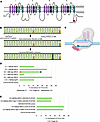 Figure 1
Comparative analysis of on-target ABE efficiencies in cell lines. (A) Location of the R1872W variant (red) in the C-terminal domain of the Nav1.6 voltage gated sodium channel. (B) Adenine base editing at the R1872W locus. Target adenine (red) at the first position of the tryptophan codon is converted to inosine (blue) by the SCN8A-ABE and subsequently to guanine and cytosine pairing (dark green) via base excision and mismatch repair. Potential bystander adenines in the target sequence are depicted in yellow. (C) Cartoon depicting an adenine base editor. (D) Multiple constructs were screened in CHO-R1872W rodent cells. The efficacy of various base editors for on-target adenine conversion was assessed by Sanger sequencing. A4 on-target, green; A1 bystander, orange; A12 bystander, navy. (E) Construct C2 was optimized for on-target adenine conversion rates and minimal bystander activity in CHO-R1872W cells and HEK293-R1872W cells with the addition of a split intein structure and a V106W mutation in the TadA-8e deaminase domain. A4, green; on-target. Outcomes were assessed by Sanger sequencing.
To screen for efficient base editing, sgRNA constructs were initially tested in HEK293 cells engineered to harbor a mouse codon-optimized SCN8A R1872W allele (HEK293-R1872W). These cells were selected for their ease of transfection and editing efficiencies, which were determined in our experiment by genomic DNA extraction and Sanger sequencing without the need for antibiotic selection or flow cytometry GFP sorting. Among the 16 tested constructs, 4 constructs achieved acceptable A-to-G conversion (≥ 15%) without A-to-G bystander editing (≤ 1%). Another 4 constructs exhibited bystander adenine editing, and 8 constructs showed no evident on-target A-to-G conversion, disqualifying guides under both categories from further in vitro studies. (Supplemental Figure 1). To mitigate the effects of HEK293 cell triploidy and account for species-specific genomic codon differences influencing guide RNA efficiency, the most effective constructs with no bystander A-to-G activity were evaluated in CHO Flp-In cells (CHO-R1872W). The CHO line provides a diploid genomic context more representative of typical mammalian somatic karyotypes in mice and humans, unlike the multiallelic integration in HEK293 cells (27, 28). These cells, engineered to carry the same SCN8A R1872W allele, provide a diploid genomic context and serve as a rodent model proxy for in vivo applications. Editing efficiencies in CHO-R1872W cells were similar to those observed in HEK293 cells with 4 constructs achieving acceptable A-to-G conversion (≥ 15%) with only 1 construct exhibiting potential bystander adenine editing (Figure 1D). Guide C2 and ABE8e-NRCH exhibited robust activity in the murine genome. We selected C2 for in vivo analyses due to the absence of nearby bystander adenines within the immediate target window (4–7 nucleotides (nt) from 5’ start of guide) (19). Additionally, its paired editor demonstrated enhanced fidelity compared with prior ABEs (19) along with compatibility to undergo evolution to recognize PAM sequences such as NRCH (21), where N = any nucleotide, R = A or G, and H = A, C, or T.
The introduction of a V106W mutation into the deaminase domain of ABE8e achieves significantly reduced DNA off-target effects (19, 29). The V106W modified deaminase domain has shown to be particularly advantageous in gene editing scenarios in which minimizing off-target and bystander activity is crucial. This modification would be advantageous for the R1872W mutation, where the presence of multiple adenines in the target sequence poses a heightened risk in a sensitive pediatric population. We introduced the V106W mutation into the base editor; the construct was then divided into N-terminal and C-terminal pAAV backbones, incorporating NpuN and NpuC intein proteins as previously described (30, 31) to form the C2 and ABE8e-NRCH V106W split intein construct (C2 Split-V106W) (Figure 1E). To assess whether these modifications affected construct activity, we screened them in the same engineered HEK293-R1872W and CHO-R1872W cell lines, comparing results to C2 paired with unmodified ABE8e-NRCH. C2 Split-V106W exhibited no significant on-target reduction at the R1872W locus editing compared with C2 paired with unmodified ABE8e-NRCH in both cell lines (Figure 1E).
SCN8A-ABE treatment ameliorates seizure activity and premature death in R1872W-expressing mice. To assess the efficacy of our base editors in vivo, we used a mouse model in which the corresponding site in mouse SCN8A has been mutated to create the human R1872W missense mutation in a Cre-dependent manner (Scn8aW/+) (10, 32). We used EMX1-Cre to generate a SCN8A DEE mouse model expressing the R1872W variant exclusively in forebrain excitatory neurons (Scn8aW/+-EMX1) (Figure 2A) (10). Scn8aW/+-EMX1 mice exhibit a typical seizure onset around P20 (10, 33), allowing time for peak expression of our base editing AAVs and correction of the variant (34, 35).
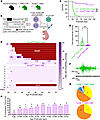 Figure 2
Treatment with SCN8A-ABE significantly increases survival and reduces seizure frequency. (A) Breeding strategy to generate Scn8aW/+-EMX1 mice. (B) P2 mice were injected intraventricularly (ICV) with a 5:1 ratio of AAV SCN8A-ABE to AAV-GFP with a total of 1.0 × 10¹¹ viral genomes (vg) of the SCN8A-ABE treatment (5.0 × 10¹⁰ vg of each dual intein PhP.eB-ABE vectors along with 2.0 × 10¹⁰ vg PhP.e-GFP). Littermates were injected only with 2.0 × 10¹⁰ vg of PhP.e-GFP as a ‘sham’ viral transduction control. (C) Survival of Scn8aW/+-EMX1 mice is significantly increased with SCN8A-ABE treatment (purple, n = 23) compared with sham control Scn8aW/+-EMX1 mice (green, n = 25, P < 0.0001, Log-rank Mantel-Cox test). (D) Spontaneous seizure incidence (purple shading) in sham control (n = 10) and SCN8A-ABE treated (n = 11) Scn8aW/+-EMX1 mice over a period of 35 days. Red bar indicates seizure-induced death. In this panel (D), * indicates Scn8aW/+-EMX1 SCN8A-ABE–treated mice that experienced seizures, which correlate with panel H. (E) Sham control Scn8aW/+-EMX1 mice (n = 10) exhibit significantly more seizures than their SCN8A-ABE–treated counterparts (n = 11); (***P < 0.001, Mann-Whitney test). Bars represent mean ± SEM. (F) Representative EEG trace of a stage 5 Racine scale seizure recorded from a sham control Scn8aW/+-EMX1 mouse (green). Mouse succumbed to seizure-induced death immediately following the seizure. Bottom trace, (black) shows example trace of EEG activity from a Scn8aW/+-EMX1 SCN8A-ABE–treated mouse. (G) Severity of seizures recorded from Scn8aW/+-EMX1 SCN8A-ABE–treated mice (n = 3 mice, n = 23 seizures) compared with Scn8aW/+-EMX1 sham control mice (n = 9 mice, n = 416 seizures). Numbers represent Racine scale seizure classification. (H) Percentage of T-to-C conversion of the mutant R1872W allele in Scn8a W/+-EMX1 SCN8A-ABE–treated mice (n = 10) assessed for seizure activity at varying time points. Numbers shown correlate T-to-C conversion with effects on seizure incidence for mice shown in D. Asterisks indicate mice that exhibited seizure activity in D.
To achieve in vivo base editing of the mutant R1872W allele, we designed a dual intein adeno-associated virus (AAV) delivery strategy, referred to as SCN8A-ABE, to package the split ABE8e-NRCH (V106W) base editor paired with the C2 sgRNA (C2 Split-V106W) into 2 AAV capsids, as previously described (31) (Figure 2B). The SCN8A-ABE treatment of dual intein vectors was paired with a third AAV directing GFP expression to visualize treated cells in later experiments (31). For packaging, we selected the AAV.PhP.eB capsid, an engineered variant of AAV9 (36–38). We utilized PhP.eB to deliver the SCN8A-ABE treatment along with the partnered GFP virus. As a control, we used the partnered GFP virus in the absence of SCN8A-ABE, referred to as sham control (31).
We delivered either SCN8A-ABE or sham virus via ICV injection at P2 in Scn8aW/+-EMX1 mice, (Figure 2B). SCN8A-ABE treatment significantly prolonged the survival of approximately 87% of SCN8A-ABE–treated mice (n = 23) compared with sham control Scn8aW/+-EMX1 mice (n = 25) (Figure 2C). Early mortality was observed in 3 SCN8A-ABE–treated Scn8aW/+-EMX1 mice (< P65). An additional 2 ABE-treated Scn8aW/+-EMX1 mice survived until P106 and P110. For sequencing purposes, we euthanized 16 SCN8A-ABE–treated mice at varying timepoints after P150, making the true survival rates for SCN8A-ABE–treated Scn8aW/+-EMX1 mice impossible to accurately calculate (Figure 2C and Supplemental Figure 2, C and D).
Increased survival in SCN8A-ABE–treated mice was likely attributed to a decrease in seizure burden. To assess this, we evaluated seizures using concurrent video and electroencephalogram (EEG) recordings in Scn8aW/+-EMX1 mice treated either with SCN8A-ABE (n = 11) or the sham virus (n = 10) (Figure 2, D and E and Supplemental Video 1). Spontaneous seizures were detected in all sham control Scn8aW/+-EMX1 mice, and 8 of 10 mice succumbed to seizure-induced death before P40. The 2 remaining sham control Scn8aW/+-EMX1 mice succumbed to death before P65. We evaluated seizure severity using the standard Racine Scale. Sham control Scn8aW/+-EMX1 mice experienced 1–5 Racine scale seizures (Figure 2G). In contrast, spontaneous seizures were completely inhibited in 7 of the 11 SCN8A-ABE–treated Scn8aW/+-EMX1 mice (Figure 2, D and E). In another 3 mice, seizure frequency was significantly reduced, and seizure severity was reduced to only stage 1–2 Racine scale seizures (Figure 2, F and G).
Global expression of the R1872W variant via EIIa-Cre (Scn8aW/+-EIIa) leads to premature death at approximately P15 (10). We also evaluated our base editor in these mice (n = 12; Supplemental Figure 4). Peak expression of AAVs, and therefore editing activity, occurs around 3 weeks (34, 35, 39). Despite the severity and timeline of seizure-related death in this expression model, SCN8A-ABE treatment significantly increased the average survival of approximately half of all SCN8A-ABE–treated Scn8aW/+-EIIa mice. Two SCN8A-ABE–treated mice were euthanized for sequencing at P163 and P283, therefore also underestimating the true survival time (Supplemental Figure 4, B, D, and E). Sham control Scn8aW/+-EIIa mice (n = 13) survived to an average age of P14.5, typically following a single seizure event.
ABE treatment demonstrates high R1872W loci–targeting efficacy. We used Next-Generation targeted amplicon Sequencing (NGS) to assess the extent of correction of R1872W variant alleles from mice used to generate the survival curves. This was detected via PCR primers spanning the TALEN-silent mutations inserted within the mutant R1872W allele only (10, 32, 40) (Supplemental Figure 2A). For this sequencing process, we leveraged these engineered silent substitutions, introduced originally to prevent TALEN recleavage, to enabled selective amplification and quantification of exon 26b, the only locus harboring the pathogenic R1872W variant (CGG to TGG on the + strand; CCA on the – strand) (10, 32). Notably, while exon 26a and the WT allele contain adenines at positions A1 and A12 (corresponding to A2 and A13 in guide RNA alignment), they lack the critical A4 (A5 in chosen guide coordinates), which defines the targetable mutant site. Thus, A4 editing serves as a unique marker for the pathogenic exon 26b, while A1 and A12 represent potential bystander edits across all three alleles.
We dissected hippocampal and cortical regions from 21 total SCN8A-ABE treated Scn8aW/+-EMX1 mice and 19 sham control Scn8aW/+-EMX1 mice assessed for survival in Figure 2C. In SCN8A-ABE–treated Scn8aW/+-EMX1 mice that did not exhibit premature death and survived past timepoint P150 (n = 16), we observed a reversion of 18.5% of the mutant allele T/A to WT C/G in genomic DNA compared with sham control Scn8aW/+-EMX1 mice (from 72.5% ± 1.7% (n = 19) in sham control to 54.0% ± 0.9% (n = 16) in SCN8A-ABE–treated mice). The percentage of reads from all cells in these regions with the variant T/A at the R1872W locus of SCN8A was reduced and WT base pairing of C/G at the R1872W locus increased with an equivalent percentage (Supplemental Figure 2B). Additional sequencing revealed less than 5% editing within the hippocampus and cortex of 3 SCN8A-ABE–treated Scn8aW/+-EMX1 mice that experienced premature death (P26, P40, and P44; Figure 2, C and H, and Supplemental Figure 2, C and D). Thus, the observed level of editing in these mice was insufficient to support survival. On target Nav1.6 A4 mRNA sequencing of Scn8aW/+-EMX1 SCN8A-ABE–treated mice (n = 13) that were euthanized after P150 shows approximately 32% on-target A-to-G reversion in RNA of mutant transcript (from 43.4% ± 1.9% in sham controls (n = 5) to 11.6% ± 1.5% in SCN8A-ABE–treated mice (n = 13); Supplemental Figure 2E). The correlation between transcript expression and seizures is shown in Supplemental Table 2. DNA editing efficiencies above 15% were associated with complete seizure cessation and the prevention of seizure-induced death.
We also assessed the extent of correction of the R1872W mutation in dissected hippocampal and cortical regions from 11 SCN8A-ABE–treated Scn8aW/+-EIIa mice and 9 sham control Scn8aW/+-EIIa mice used to generate the survival curve shown in Supplemental Figure 4B. We observed approximately 20% reversion in the mutant allele of T/A to WT C/G in genomic DNA in dissected hippocampus and cortex of 6 SCN8A-ABE–treated Scn8aW/+-EIIa mice that survived past P21, a timepoint where all sham control Scn8aW/+-EIIa mice had succumbed to death (Supplemental Figure 4, B and C). The percentage of reads from all cells in these regions with the variant T/A at the R1872W locus of SCN8A was reduced from an average of 93% ± 0.8% (with calculated 7% failure of heterozygous EIIa-Cre activation of the R1872W variant) to 73% ± 1.8%. WT base pairing of C/G at the R1872W locus increased with an equivalent percentage to the decrease in mutant T/A in SCN8A-ABE–treated Scn8aW/+-EIIa mice (Supplemental Figure 4C).
In both Scn8aW/+-EMX1 and Scn8aW/+-EIIa mice, SCN8A-ABE treatment effectively converted the tryptophan-encoding TGG sequence of the mutant allele at the R1872W locus to its WT arginine-encoding CGG counterpart, thereby inducing increasing levels of healthy WT transcript.
In vivo RNA and WGS off-target analysis of SCN8A-ABE–treated mice. To assess the A-to-G off-target activity of SCN8A-ABE, we conducted RNA sequencing on brain tissue from SCN8A-ABE–treated Scn8aW/+-EMX1 mice (n = 5; P345) and Scn8aW/+-EMX1 sham control mice (n = 5; P25-30). Our objective was to quantify A-to-G editing and transcript reversion events both at the on-target site (A4) and at any other potential off-target locations across the transcriptome. Utilizing the computational tools CRISPOR (UCSC) (25), CRISPR RGEN tools (26), and COSMID (41), we identified all adenines at a total of 290 potential off-target sites across platforms harboring less than 5 nucleotide mismatches with the target sequence or guide RNA. Whole transcriptome RNA sequencing was performed using SCN8A-ABE treated Scn8aW/+-EMX1 and Scn8aW/+-EMX1 sham control mice. Figure 3A demonstrates A-to-G percentage editing outcomes for all adenines at 177 predicted off-target exon, protein coding sites showing percent A-to-G editing visible as percentage transcript reversions, comparing SCN8A-ABE–treated Scn8aW/+-EMX1 mice with Scn8aW/+-EMX1 sham control mice. This comparison controls for sequencing noise inherent to the brain transcriptome, which we observed at less than or equal to 1%, consistent with no biologically meaningful off target activity (42–45). We observed less than or equal to 1% average transcript reversion of 2 adenines at Ap3d1 and 1 adenine each at off-target Agpat3, Cables2, and Inst3 loci in the CNS across the Scn8aW/+-EMX1 SCN8A-ABE–treated mice compared with Scn8aW/+-EMX1 sham control mice. There was no A-to-G base editing at any of the other adenines at the additional assayed potential off-target loci. In comparison, editing of the target A4 adenine resulted in an average of 32% on-target transcript reversion of mutant-to-normal WT transcripts with less than or equal to 1% bystander A1 and A12, consistent with no biologically meaningful bystander activity (Figure 3A). Absence of significant bystander adenines in Scn8aW/+-EMX1 SCN8A-ABE–treated mice was confirmed via NGS amplicon sequencing validations (Supplemental Figure 3). These results indicate high genomic target specificity of SCN8A-ABE for the on-target R1872W locus.
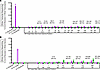 Figure 3
In vivo correction of the mutant T in tryptophan codon R1872W. (A) On-target R1872W A4 A-to-G percentage reversion activity is compared with bystander adenines A1 and A12 and all adenines at 177 potential off-target exons from Scn8aW/+-EMX1 SCN8A-ABE–treated (n = 5, P345) mice compared with Scn8aW/+-EMX1 sham control (n = 5, P25-30) mice. Sites exhibit a less than 5 nt mismatch cutoff from homology to guide and target sequence. X indicates no A-to-G recorded activity at adenines in loci. Data points represent individual mice. (B) On-target A4 A-to-G percentage editing results are depicted from WGS in matched pairs of SCN8A-ABE treated Scn8aW/+-EMX1 mice (n = 2, P345) and sham control Scn8aW/+-EMX1 mice (n = 2, P25 and P30) compared with bystander adenines A1 and A12 and all adenines at a total 290 potential off-target sites in matched pairs of SCN8A-ABE–treated Scn8aW/+-EMX1 mice and sham-treated Scn8aW/+-EMX1 mice. Sites exhibit a less than 5 nt mismatch cutoff from homology to guide and target sequence. X indicates no A-to-G percentage recorded activity at adenines in loci. Bars represent mean ± SEM. Threshold for significant levels of editing greater than or equal to 1%. Data points represent individual mice.
To further characterize off-target editing, we performed 30 × short read WGS on matched pairs of SCN8A-ABE–treated Scn8aW/+-EMX1 (n = 2; P345) and sham control Scn8aW/+-EMX1 mice (n = 2; P25–P30) (Figure 3B). We evaluated 977 adenines at a total of 290 potential off-target sites harboring less than 5 nucleotide mismatches with the target or guide sequence, including all sites evaluated in the RNA sequencing analysis. WGS analysis revealed no significant off-target reads of A-to-G altered reads from the 2 pairs of SCN8A-ABE–treated mice compared with their matched sham controls at all 977 adenines in all 290 potential off-target loci (Figure 3B, ≤ 1%), consistent with no biologically meaningful off-target activity (42–45). In comparison, an average of greater than 21% on-target editing at the R1872W target A4 adenine was observed with no significant bystander A-to-G editing (≤ 1%), at A1 and A12 (Figure 3B). The results of the comprehensive off-target analysis indicate high genomic target specificity of the SCN8A-ABE base editing strategy for the on-target R1872W locus. To further support the specificity of our construct for both SCN8A and the R1872W mutant allele, we evaluated all members of the SCNX gene family at genomic locations most likely to exhibit off-target activity following SCN8A-ABE treatment. These evaluations, based on transcriptome-wide RNA-seq and WGS data, confirmed that no detectable A-to-G editing occurred at any of these loci (Supplemental Table 3).
ABE treatment attenuates pathological neuronal hyperexcitability and persistent sodium current (INaP). Increases in neuronal excitability are a hallmark of seizures in SCN8A DEE (10, 11), and hyperexcitability of excitatory cortical and hippocampal pyramidal cells was previously reported in the Scn8aW/+-EIIa mouse model (10). We next determined whether SCN8A-ABE treatment could rescue neuronal hyperexcitability (Figure 4). As an additional control, we examined Scn8aW/+ mice in the absence of Cre, where the R1872W variant is not activated (Scn8aW/+-control). Electrophysiological recordings were conducted at a time point corresponding to seizure onset via EEG monitoring (Figure 2D). Transduced neurons were identified by GFP expression. Transduction of GFP in Scn8aW/+-EMX1 mice was widespread, with high staining in the hippocampus and cortex (Figure 4, A and B). We examined neuronal excitability of GFP-positive pyramidal neurons in the somatosensory cortex layer IV/V of P17–25 sham control (n = 25, 4 mice) and SCN8A-ABE–treated Scn8aW/+-EMX1 mice (n = 33 cells, 7 mice). Sham control Scn8aW/+-EMX1 neurons were hyperexcitable when compared with Scn8aW/+-control neurons (n = 21, 4 mice), which was attenuated in SCN8A-ABE–treated Scn8aW/+-EMX1 neurons. SCN8A-ABE treatment did not fully restore firing frequencies to levels observed in Scn8aW/+-control mice at higher current injection steps (Figure 4, C and D). Analysis of membrane and action potential (AP) properties showed a significant increase in downstroke velocity in SCN8A-ABE–treated Scn8aW/+-EMX1 neurons compared with sham controls (Supplemental Table 4). All other parameters were unchanged between ABE and sham control Scn8aW/+-EMX1 neurons.
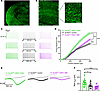 Figure 4
SCN8A-ABE attenuates neuronal hyperexcitability and reduces the pathological persistent sodium current (INaP). (A) GFP expression in 30 μm sectioned brain tissue (P25) from Scn8aW/+-EMX1 mouse injected with the SCN8A-ABE and AAV-GFP viruses. Scale bar: 0.5 mm. (B) GFP labeling of cortical layers (LI-LVI) in Scn8aW/+-EMX1 mouse injected with SCN8A-ABE and AAV-GFP virus (Scale bar 0.2 mm). Inset (Right) shows GFP labeling of cortical layer LIV/LV pyramidal neurons. Scale bar: 0.01 mm. (C) Example traces of action potential firing from Scn8aW/+-EMX1 sham control (green), Scn8aW/+-control (black), and Scn8aW/+-EMX1 SCN8A-ABE–treated (purple) cortical layer LIV/LV pyramidal neurons at current injection steps of 200 pA, 400 pA, or 600 pA (P17-P25). (D) Average number of action potentials elicited relative to current injection magnitude. At current injections greater than 240 pA, Scn8aW/+-EMX1 Sham neurons (n = 25, 4 mice) exhibit increased firing frequencies when compared with Scn8aW/+-control (n = 21, 4 mice). This hyperexcitability is significantly attenuated in Scn8aW/+-EMX1 SCN8A-ABE–treated neurons (n = 33 cells, 7 mice; ***P < 0.001, ****P < 0.0001; nested 1-way ANOVA with Dunns’s multiple comparisons test). (E) Example traces of steady state INaP evoked by slow voltage ramps in pyramidal neurons from Scn8aW/+-EMX1 sham (green), Scn8aW/+-control (black), and Scn8aW/+-EMX1 SCN8A-ABE–treated mice (purple). Traces in gray show slow voltage ramp in the presence of 500 nM TTX. (F) Elevated maximum INaP in Scn8aW/+-EMX1 sham control neurons (n = 24, 8 mice) is rescued by SCN8A-ABE treatment in Scn8aW/+-EMX1 neurons (n = 18, 8 mice) to amplitudes recorded in Scn8aW/+-control neurons (n = 17, 6 mice; *P < 0.05, ****P < 0.0001; Kruskal-Wallis with Dunn’s multiple comparisons). No significant difference observed between Scn8aW/+ EMX1 SCN8A-ABE–treated and Scn8aW/+-control groups. Data points represent individual recordings, bars represent mean ± SEM.
We also observed heightened neuronal excitability in P13–17 Scn8aW/+-EIIa sham control mice (n = 17, 5 mice) when compared with Scn8aW/+-control mice (n = 29, 5 mice), which was completely rescued by SCN8A-ABE treatment (n = 26, 8 mice) (Supplemental Figure 5, A and B). Analysis of membrane and action potential properties revealed a decrease in rheobase and downstroke velocity and an increase in AP width in Scn8aW/+-EIIa sham control mice when compared with Scn8aW/+-EIIa SCN8A-ABE mice. We also observed a decrease in AP threshold in both sham control and SCN8A-ABE–treated Scn8aW/+-EIIa mice when compared with Scn8aW/+-controls. (Supplemental Table 5).
The most prominent biophysical feature of SCN8A GOF variants is an elevated persistent sodium current (INaP) (3, 11, 13). Elevated INaP is a major contributor to neuronal hyperexcitability in epilepsy (13). Thus, we sought to determine whether SCN8A-ABE treatment eliminated the pathological heightened INaP. We used slow voltage ramps in pyramidal neurons from layer IV/V of the somatosensory cortex to measure INaP in sham control (n = 24; 8 mice) and SCN8A-ABE–treated Scn8aW/+-EMX1 mice (n = 18; 8 mice) and compared them with Scn8aW/+-control mice (P17-P25: n = 17; 6 mice). ABE treatment significantly decreased the amplitude of INaP compared with sham control Scn8aW/+-EMX1 mice to levels recorded in Scn8aW/+-control neurons (Figure 4, E and F). Half maximal activation voltages (V1/2) were not different between the 3 groups (Supplemental Table 4).
ABE treatment improves behavioral comorbidities in R1872W SCN8A DEE mice. In addition to seizures, patients with SCN8A DEE suffer from severe comorbidities, including movement disorders and cognitive impairment (5). To examine locomotor activity and anxiety-like behavior, we evaluated both sham control (n = 15) and Scn8a-ABE–treated (n = 22) Scn8aW/+-EMX1 mice along with Scn8aW/+-control mice (n = 25) in the open field test. We used total distance travelled to assess locomotor activity and thigmotaxis as a measure of anxiety-like behavior (46). Mice were tested between 4 and 8 weeks of age, a time point after the onset of seizures in Scn8aW/+-EMX1 mice (10). We generated quantifications of locomotor activity to analyze behavior in all groups (Figure 5). Scn8aW/+-EMX1 sham control mice had reduced locomotor activity and spent significantly less time in the open areas of the field compared with Scn8aW/+-control mice, indicating diminished mobility and increased anxiety (Figure 5, A–C). Treatment with SCN8A-ABE significantly improved both comorbidities, with locomotor activity completely restored to levels observed in Scn8aW/+-control mice (Figure 5B). Thigmotaxis was significantly reduced in SCN8A-ABE–treated Scn8aW/+-EMX1 mice but did not reach Scn8aW/+-control levels (Figure 5, A and C). We also tested general cognition and memory. We observed no significant differences in recognition memory (more time in the novel arm), spatial reference memory (more visits to the novel arm), or working memory (spontaneous alterations recorded) between the groups (Supplemental Figure 6). These findings collectively suggest that Scn8aW/+-EMX1 mice have underlying motor discrepancies and anxiety that can be ameliorated by early SCN8A-ABE treatment.
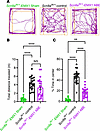 Figure 5
Anxiety and movement discrepancy phenotypes are reduced by SCN8A-ABE treatment. (A) Representative movement tracks in open field for Scn8aW/+-EMX1 sham control (n = 15), Scn8aW/+-control (n = 25), and Scn8aW/+-EMX1 SCN8A-ABE treated mice (n = 22). (B) In the open field test, Scn8aW/+-EMX1 sham control mice (n = 15, green) show significantly decreased distance traveled compared with Scn8aW/+-control mice (n = 25, black). Treatment with SCN8A-ABE in Scn8aW/+-EMX1 mice (n = 22, purple) rescues this phenotype to levels seen in Scn8aW/+-control mice (****P < 0.0001, Brown-Forsythe ANOVA with Dunnett’s multiple comparisons test). (C) Scn8aW/+-EMX1 sham control mice (n = 15, green) show significantly reduced time in the center in the open field test compared to Scn8aW/+-control mice (n = 25, black). Scn8aW/+-EMX1 SCN8A-ABE treatment attenuated this phenotype (n = 22, purple) but did not reach Scn8aW/+-control levels (**P < 0.01, ****P < 0.0001, Kruskal-Wallis test with Dunn’s multiple comparisons test). Data points represent individual mice, bars represent mean ± SEM.


Copyright © 2026 American Society for Clinical Investigation
ISSN: 0021-9738 (print), 1558-8238 (online)