
Advertisement
Research ArticleClinical ResearchOncology
Open Access |  10.1172/JCI198193
Androgen receptor splice variant 7 expression levels distinguish AR-mutated from nonmutated metastatic castration-resistant prostate cancers
Alec Paschalis,1,2 Ines Figueiredo,1 Denisa Bogdan,1 Arian Lundberg,1 Rita Santos,1 Bora Gurel,1 Tarek Taha,1,2 Ossian Longoria,1,2 Ana Ferreira,1 Claudia Bertan,1 Nicholas Brittain,3 Ryan Nelson,3 Laura Walker,3 Antje Neeb,1 Jonathan Welti,1 Wei Yuan,1 Costas Mitsopoulos,1 Stephen R. Plymate,4 Michael C. Haffner,5,6 Adam G. Sowalsky,7 Suzanne Carreira,1 Adam Sharp,1,2 Luke Gaughan,3 and Johann de Bono1,2
1The Institute of Cancer Research, London, United Kingdom.
2The Royal Marsden Hospital, London, United Kingdom.
3Newcastle University Centre for Cancer, United Kingdom.
4Department of Medicine, University of Washington School of Medicine and VAPSHCS-GRECC, Seattle, Washington, USA.
5Divisions of Human Biology and Clinical Research, Fred Hutchinson Cancer Center, Seattle, Washington, USA.
6Department of Laboratory Medicine and Pathology, University of Washington, Seattle, Washington, USA.
7Genitourinary Malignancies Branch, National Cancer Institute, Bethesda, Maryland, USA.
Address correspondence to: Johann de Bono, The Institute of Cancer Research, 15 Cotswold Road, London SM2 5NG, United Kingdom. Phone: 44.0.208.722.4028; Email: Johann.de-bono@icr.ac.uk.
Authorship note: AP, IF, DB, and AL are co–first authors.
Find articles by
Paschalis, A.
in:
PubMed
|
Google Scholar
|

1The Institute of Cancer Research, London, United Kingdom.
2The Royal Marsden Hospital, London, United Kingdom.
3Newcastle University Centre for Cancer, United Kingdom.
4Department of Medicine, University of Washington School of Medicine and VAPSHCS-GRECC, Seattle, Washington, USA.
5Divisions of Human Biology and Clinical Research, Fred Hutchinson Cancer Center, Seattle, Washington, USA.
6Department of Laboratory Medicine and Pathology, University of Washington, Seattle, Washington, USA.
7Genitourinary Malignancies Branch, National Cancer Institute, Bethesda, Maryland, USA.
Address correspondence to: Johann de Bono, The Institute of Cancer Research, 15 Cotswold Road, London SM2 5NG, United Kingdom. Phone: 44.0.208.722.4028; Email: Johann.de-bono@icr.ac.uk.
Authorship note: AP, IF, DB, and AL are co–first authors.
Find articles by Figueiredo, I. in: PubMed | Google Scholar
1The Institute of Cancer Research, London, United Kingdom.
2The Royal Marsden Hospital, London, United Kingdom.
3Newcastle University Centre for Cancer, United Kingdom.
4Department of Medicine, University of Washington School of Medicine and VAPSHCS-GRECC, Seattle, Washington, USA.
5Divisions of Human Biology and Clinical Research, Fred Hutchinson Cancer Center, Seattle, Washington, USA.
6Department of Laboratory Medicine and Pathology, University of Washington, Seattle, Washington, USA.
7Genitourinary Malignancies Branch, National Cancer Institute, Bethesda, Maryland, USA.
Address correspondence to: Johann de Bono, The Institute of Cancer Research, 15 Cotswold Road, London SM2 5NG, United Kingdom. Phone: 44.0.208.722.4028; Email: Johann.de-bono@icr.ac.uk.
Authorship note: AP, IF, DB, and AL are co–first authors.
Find articles by
Bogdan, D.
in:
PubMed
|
Google Scholar
|
1The Institute of Cancer Research, London, United Kingdom.
2The Royal Marsden Hospital, London, United Kingdom.
3Newcastle University Centre for Cancer, United Kingdom.
4Department of Medicine, University of Washington School of Medicine and VAPSHCS-GRECC, Seattle, Washington, USA.
5Divisions of Human Biology and Clinical Research, Fred Hutchinson Cancer Center, Seattle, Washington, USA.
6Department of Laboratory Medicine and Pathology, University of Washington, Seattle, Washington, USA.
7Genitourinary Malignancies Branch, National Cancer Institute, Bethesda, Maryland, USA.
Address correspondence to: Johann de Bono, The Institute of Cancer Research, 15 Cotswold Road, London SM2 5NG, United Kingdom. Phone: 44.0.208.722.4028; Email: Johann.de-bono@icr.ac.uk.
Authorship note: AP, IF, DB, and AL are co–first authors.
Find articles by
Lundberg, A.
in:
PubMed
|
Google Scholar
|
1The Institute of Cancer Research, London, United Kingdom.
2The Royal Marsden Hospital, London, United Kingdom.
3Newcastle University Centre for Cancer, United Kingdom.
4Department of Medicine, University of Washington School of Medicine and VAPSHCS-GRECC, Seattle, Washington, USA.
5Divisions of Human Biology and Clinical Research, Fred Hutchinson Cancer Center, Seattle, Washington, USA.
6Department of Laboratory Medicine and Pathology, University of Washington, Seattle, Washington, USA.
7Genitourinary Malignancies Branch, National Cancer Institute, Bethesda, Maryland, USA.
Address correspondence to: Johann de Bono, The Institute of Cancer Research, 15 Cotswold Road, London SM2 5NG, United Kingdom. Phone: 44.0.208.722.4028; Email: Johann.de-bono@icr.ac.uk.
Authorship note: AP, IF, DB, and AL are co–first authors.
Find articles by Santos, R. in: PubMed | Google Scholar
1The Institute of Cancer Research, London, United Kingdom.
2The Royal Marsden Hospital, London, United Kingdom.
3Newcastle University Centre for Cancer, United Kingdom.
4Department of Medicine, University of Washington School of Medicine and VAPSHCS-GRECC, Seattle, Washington, USA.
5Divisions of Human Biology and Clinical Research, Fred Hutchinson Cancer Center, Seattle, Washington, USA.
6Department of Laboratory Medicine and Pathology, University of Washington, Seattle, Washington, USA.
7Genitourinary Malignancies Branch, National Cancer Institute, Bethesda, Maryland, USA.
Address correspondence to: Johann de Bono, The Institute of Cancer Research, 15 Cotswold Road, London SM2 5NG, United Kingdom. Phone: 44.0.208.722.4028; Email: Johann.de-bono@icr.ac.uk.
Authorship note: AP, IF, DB, and AL are co–first authors.
Find articles by
Gurel, B.
in:
PubMed
|
Google Scholar
|
1The Institute of Cancer Research, London, United Kingdom.
2The Royal Marsden Hospital, London, United Kingdom.
3Newcastle University Centre for Cancer, United Kingdom.
4Department of Medicine, University of Washington School of Medicine and VAPSHCS-GRECC, Seattle, Washington, USA.
5Divisions of Human Biology and Clinical Research, Fred Hutchinson Cancer Center, Seattle, Washington, USA.
6Department of Laboratory Medicine and Pathology, University of Washington, Seattle, Washington, USA.
7Genitourinary Malignancies Branch, National Cancer Institute, Bethesda, Maryland, USA.
Address correspondence to: Johann de Bono, The Institute of Cancer Research, 15 Cotswold Road, London SM2 5NG, United Kingdom. Phone: 44.0.208.722.4028; Email: Johann.de-bono@icr.ac.uk.
Authorship note: AP, IF, DB, and AL are co–first authors.
Find articles by Taha, T. in: PubMed | Google Scholar
1The Institute of Cancer Research, London, United Kingdom.
2The Royal Marsden Hospital, London, United Kingdom.
3Newcastle University Centre for Cancer, United Kingdom.
4Department of Medicine, University of Washington School of Medicine and VAPSHCS-GRECC, Seattle, Washington, USA.
5Divisions of Human Biology and Clinical Research, Fred Hutchinson Cancer Center, Seattle, Washington, USA.
6Department of Laboratory Medicine and Pathology, University of Washington, Seattle, Washington, USA.
7Genitourinary Malignancies Branch, National Cancer Institute, Bethesda, Maryland, USA.
Address correspondence to: Johann de Bono, The Institute of Cancer Research, 15 Cotswold Road, London SM2 5NG, United Kingdom. Phone: 44.0.208.722.4028; Email: Johann.de-bono@icr.ac.uk.
Authorship note: AP, IF, DB, and AL are co–first authors.
Find articles by Longoria, O. in: PubMed | Google Scholar
1The Institute of Cancer Research, London, United Kingdom.
2The Royal Marsden Hospital, London, United Kingdom.
3Newcastle University Centre for Cancer, United Kingdom.
4Department of Medicine, University of Washington School of Medicine and VAPSHCS-GRECC, Seattle, Washington, USA.
5Divisions of Human Biology and Clinical Research, Fred Hutchinson Cancer Center, Seattle, Washington, USA.
6Department of Laboratory Medicine and Pathology, University of Washington, Seattle, Washington, USA.
7Genitourinary Malignancies Branch, National Cancer Institute, Bethesda, Maryland, USA.
Address correspondence to: Johann de Bono, The Institute of Cancer Research, 15 Cotswold Road, London SM2 5NG, United Kingdom. Phone: 44.0.208.722.4028; Email: Johann.de-bono@icr.ac.uk.
Authorship note: AP, IF, DB, and AL are co–first authors.
Find articles by Ferreira, A. in: PubMed | Google Scholar
1The Institute of Cancer Research, London, United Kingdom.
2The Royal Marsden Hospital, London, United Kingdom.
3Newcastle University Centre for Cancer, United Kingdom.
4Department of Medicine, University of Washington School of Medicine and VAPSHCS-GRECC, Seattle, Washington, USA.
5Divisions of Human Biology and Clinical Research, Fred Hutchinson Cancer Center, Seattle, Washington, USA.
6Department of Laboratory Medicine and Pathology, University of Washington, Seattle, Washington, USA.
7Genitourinary Malignancies Branch, National Cancer Institute, Bethesda, Maryland, USA.
Address correspondence to: Johann de Bono, The Institute of Cancer Research, 15 Cotswold Road, London SM2 5NG, United Kingdom. Phone: 44.0.208.722.4028; Email: Johann.de-bono@icr.ac.uk.
Authorship note: AP, IF, DB, and AL are co–first authors.
Find articles by Bertan, C. in: PubMed | Google Scholar
1The Institute of Cancer Research, London, United Kingdom.
2The Royal Marsden Hospital, London, United Kingdom.
3Newcastle University Centre for Cancer, United Kingdom.
4Department of Medicine, University of Washington School of Medicine and VAPSHCS-GRECC, Seattle, Washington, USA.
5Divisions of Human Biology and Clinical Research, Fred Hutchinson Cancer Center, Seattle, Washington, USA.
6Department of Laboratory Medicine and Pathology, University of Washington, Seattle, Washington, USA.
7Genitourinary Malignancies Branch, National Cancer Institute, Bethesda, Maryland, USA.
Address correspondence to: Johann de Bono, The Institute of Cancer Research, 15 Cotswold Road, London SM2 5NG, United Kingdom. Phone: 44.0.208.722.4028; Email: Johann.de-bono@icr.ac.uk.
Authorship note: AP, IF, DB, and AL are co–first authors.
Find articles by Brittain, N. in: PubMed | Google Scholar
1The Institute of Cancer Research, London, United Kingdom.
2The Royal Marsden Hospital, London, United Kingdom.
3Newcastle University Centre for Cancer, United Kingdom.
4Department of Medicine, University of Washington School of Medicine and VAPSHCS-GRECC, Seattle, Washington, USA.
5Divisions of Human Biology and Clinical Research, Fred Hutchinson Cancer Center, Seattle, Washington, USA.
6Department of Laboratory Medicine and Pathology, University of Washington, Seattle, Washington, USA.
7Genitourinary Malignancies Branch, National Cancer Institute, Bethesda, Maryland, USA.
Address correspondence to: Johann de Bono, The Institute of Cancer Research, 15 Cotswold Road, London SM2 5NG, United Kingdom. Phone: 44.0.208.722.4028; Email: Johann.de-bono@icr.ac.uk.
Authorship note: AP, IF, DB, and AL are co–first authors.
Find articles by Nelson, R. in: PubMed | Google Scholar
1The Institute of Cancer Research, London, United Kingdom.
2The Royal Marsden Hospital, London, United Kingdom.
3Newcastle University Centre for Cancer, United Kingdom.
4Department of Medicine, University of Washington School of Medicine and VAPSHCS-GRECC, Seattle, Washington, USA.
5Divisions of Human Biology and Clinical Research, Fred Hutchinson Cancer Center, Seattle, Washington, USA.
6Department of Laboratory Medicine and Pathology, University of Washington, Seattle, Washington, USA.
7Genitourinary Malignancies Branch, National Cancer Institute, Bethesda, Maryland, USA.
Address correspondence to: Johann de Bono, The Institute of Cancer Research, 15 Cotswold Road, London SM2 5NG, United Kingdom. Phone: 44.0.208.722.4028; Email: Johann.de-bono@icr.ac.uk.
Authorship note: AP, IF, DB, and AL are co–first authors.
Find articles by Walker, L. in: PubMed | Google Scholar
1The Institute of Cancer Research, London, United Kingdom.
2The Royal Marsden Hospital, London, United Kingdom.
3Newcastle University Centre for Cancer, United Kingdom.
4Department of Medicine, University of Washington School of Medicine and VAPSHCS-GRECC, Seattle, Washington, USA.
5Divisions of Human Biology and Clinical Research, Fred Hutchinson Cancer Center, Seattle, Washington, USA.
6Department of Laboratory Medicine and Pathology, University of Washington, Seattle, Washington, USA.
7Genitourinary Malignancies Branch, National Cancer Institute, Bethesda, Maryland, USA.
Address correspondence to: Johann de Bono, The Institute of Cancer Research, 15 Cotswold Road, London SM2 5NG, United Kingdom. Phone: 44.0.208.722.4028; Email: Johann.de-bono@icr.ac.uk.
Authorship note: AP, IF, DB, and AL are co–first authors.
Find articles by
Neeb, A.
in:
PubMed
|
Google Scholar
|
1The Institute of Cancer Research, London, United Kingdom.
2The Royal Marsden Hospital, London, United Kingdom.
3Newcastle University Centre for Cancer, United Kingdom.
4Department of Medicine, University of Washington School of Medicine and VAPSHCS-GRECC, Seattle, Washington, USA.
5Divisions of Human Biology and Clinical Research, Fred Hutchinson Cancer Center, Seattle, Washington, USA.
6Department of Laboratory Medicine and Pathology, University of Washington, Seattle, Washington, USA.
7Genitourinary Malignancies Branch, National Cancer Institute, Bethesda, Maryland, USA.
Address correspondence to: Johann de Bono, The Institute of Cancer Research, 15 Cotswold Road, London SM2 5NG, United Kingdom. Phone: 44.0.208.722.4028; Email: Johann.de-bono@icr.ac.uk.
Authorship note: AP, IF, DB, and AL are co–first authors.
Find articles by Welti, J. in: PubMed | Google Scholar
1The Institute of Cancer Research, London, United Kingdom.
2The Royal Marsden Hospital, London, United Kingdom.
3Newcastle University Centre for Cancer, United Kingdom.
4Department of Medicine, University of Washington School of Medicine and VAPSHCS-GRECC, Seattle, Washington, USA.
5Divisions of Human Biology and Clinical Research, Fred Hutchinson Cancer Center, Seattle, Washington, USA.
6Department of Laboratory Medicine and Pathology, University of Washington, Seattle, Washington, USA.
7Genitourinary Malignancies Branch, National Cancer Institute, Bethesda, Maryland, USA.
Address correspondence to: Johann de Bono, The Institute of Cancer Research, 15 Cotswold Road, London SM2 5NG, United Kingdom. Phone: 44.0.208.722.4028; Email: Johann.de-bono@icr.ac.uk.
Authorship note: AP, IF, DB, and AL are co–first authors.
Find articles by Yuan, W. in: PubMed | Google Scholar
1The Institute of Cancer Research, London, United Kingdom.
2The Royal Marsden Hospital, London, United Kingdom.
3Newcastle University Centre for Cancer, United Kingdom.
4Department of Medicine, University of Washington School of Medicine and VAPSHCS-GRECC, Seattle, Washington, USA.
5Divisions of Human Biology and Clinical Research, Fred Hutchinson Cancer Center, Seattle, Washington, USA.
6Department of Laboratory Medicine and Pathology, University of Washington, Seattle, Washington, USA.
7Genitourinary Malignancies Branch, National Cancer Institute, Bethesda, Maryland, USA.
Address correspondence to: Johann de Bono, The Institute of Cancer Research, 15 Cotswold Road, London SM2 5NG, United Kingdom. Phone: 44.0.208.722.4028; Email: Johann.de-bono@icr.ac.uk.
Authorship note: AP, IF, DB, and AL are co–first authors.
Find articles by Mitsopoulos, C. in: PubMed | Google Scholar
1The Institute of Cancer Research, London, United Kingdom.
2The Royal Marsden Hospital, London, United Kingdom.
3Newcastle University Centre for Cancer, United Kingdom.
4Department of Medicine, University of Washington School of Medicine and VAPSHCS-GRECC, Seattle, Washington, USA.
5Divisions of Human Biology and Clinical Research, Fred Hutchinson Cancer Center, Seattle, Washington, USA.
6Department of Laboratory Medicine and Pathology, University of Washington, Seattle, Washington, USA.
7Genitourinary Malignancies Branch, National Cancer Institute, Bethesda, Maryland, USA.
Address correspondence to: Johann de Bono, The Institute of Cancer Research, 15 Cotswold Road, London SM2 5NG, United Kingdom. Phone: 44.0.208.722.4028; Email: Johann.de-bono@icr.ac.uk.
Authorship note: AP, IF, DB, and AL are co–first authors.
Find articles by Plymate, S. in: PubMed | Google Scholar
1The Institute of Cancer Research, London, United Kingdom.
2The Royal Marsden Hospital, London, United Kingdom.
3Newcastle University Centre for Cancer, United Kingdom.
4Department of Medicine, University of Washington School of Medicine and VAPSHCS-GRECC, Seattle, Washington, USA.
5Divisions of Human Biology and Clinical Research, Fred Hutchinson Cancer Center, Seattle, Washington, USA.
6Department of Laboratory Medicine and Pathology, University of Washington, Seattle, Washington, USA.
7Genitourinary Malignancies Branch, National Cancer Institute, Bethesda, Maryland, USA.
Address correspondence to: Johann de Bono, The Institute of Cancer Research, 15 Cotswold Road, London SM2 5NG, United Kingdom. Phone: 44.0.208.722.4028; Email: Johann.de-bono@icr.ac.uk.
Authorship note: AP, IF, DB, and AL are co–first authors.
Find articles by Haffner, M. in: PubMed | Google Scholar
1The Institute of Cancer Research, London, United Kingdom.
2The Royal Marsden Hospital, London, United Kingdom.
3Newcastle University Centre for Cancer, United Kingdom.
4Department of Medicine, University of Washington School of Medicine and VAPSHCS-GRECC, Seattle, Washington, USA.
5Divisions of Human Biology and Clinical Research, Fred Hutchinson Cancer Center, Seattle, Washington, USA.
6Department of Laboratory Medicine and Pathology, University of Washington, Seattle, Washington, USA.
7Genitourinary Malignancies Branch, National Cancer Institute, Bethesda, Maryland, USA.
Address correspondence to: Johann de Bono, The Institute of Cancer Research, 15 Cotswold Road, London SM2 5NG, United Kingdom. Phone: 44.0.208.722.4028; Email: Johann.de-bono@icr.ac.uk.
Authorship note: AP, IF, DB, and AL are co–first authors.
Find articles by
Sowalsky, A.
in:
PubMed
|
Google Scholar
|
1The Institute of Cancer Research, London, United Kingdom.
2The Royal Marsden Hospital, London, United Kingdom.
3Newcastle University Centre for Cancer, United Kingdom.
4Department of Medicine, University of Washington School of Medicine and VAPSHCS-GRECC, Seattle, Washington, USA.
5Divisions of Human Biology and Clinical Research, Fred Hutchinson Cancer Center, Seattle, Washington, USA.
6Department of Laboratory Medicine and Pathology, University of Washington, Seattle, Washington, USA.
7Genitourinary Malignancies Branch, National Cancer Institute, Bethesda, Maryland, USA.
Address correspondence to: Johann de Bono, The Institute of Cancer Research, 15 Cotswold Road, London SM2 5NG, United Kingdom. Phone: 44.0.208.722.4028; Email: Johann.de-bono@icr.ac.uk.
Authorship note: AP, IF, DB, and AL are co–first authors.
Find articles by
Carreira, S.
in:
PubMed
|
Google Scholar
|
1The Institute of Cancer Research, London, United Kingdom.
2The Royal Marsden Hospital, London, United Kingdom.
3Newcastle University Centre for Cancer, United Kingdom.
4Department of Medicine, University of Washington School of Medicine and VAPSHCS-GRECC, Seattle, Washington, USA.
5Divisions of Human Biology and Clinical Research, Fred Hutchinson Cancer Center, Seattle, Washington, USA.
6Department of Laboratory Medicine and Pathology, University of Washington, Seattle, Washington, USA.
7Genitourinary Malignancies Branch, National Cancer Institute, Bethesda, Maryland, USA.
Address correspondence to: Johann de Bono, The Institute of Cancer Research, 15 Cotswold Road, London SM2 5NG, United Kingdom. Phone: 44.0.208.722.4028; Email: Johann.de-bono@icr.ac.uk.
Authorship note: AP, IF, DB, and AL are co–first authors.
Find articles by
Sharp, A.
in:
PubMed
|
Google Scholar
|
1The Institute of Cancer Research, London, United Kingdom.
2The Royal Marsden Hospital, London, United Kingdom.
3Newcastle University Centre for Cancer, United Kingdom.
4Department of Medicine, University of Washington School of Medicine and VAPSHCS-GRECC, Seattle, Washington, USA.
5Divisions of Human Biology and Clinical Research, Fred Hutchinson Cancer Center, Seattle, Washington, USA.
6Department of Laboratory Medicine and Pathology, University of Washington, Seattle, Washington, USA.
7Genitourinary Malignancies Branch, National Cancer Institute, Bethesda, Maryland, USA.
Address correspondence to: Johann de Bono, The Institute of Cancer Research, 15 Cotswold Road, London SM2 5NG, United Kingdom. Phone: 44.0.208.722.4028; Email: Johann.de-bono@icr.ac.uk.
Authorship note: AP, IF, DB, and AL are co–first authors.
Find articles by Gaughan, L. in: PubMed | Google Scholar
1The Institute of Cancer Research, London, United Kingdom.
2The Royal Marsden Hospital, London, United Kingdom.
3Newcastle University Centre for Cancer, United Kingdom.
4Department of Medicine, University of Washington School of Medicine and VAPSHCS-GRECC, Seattle, Washington, USA.
5Divisions of Human Biology and Clinical Research, Fred Hutchinson Cancer Center, Seattle, Washington, USA.
6Department of Laboratory Medicine and Pathology, University of Washington, Seattle, Washington, USA.
7Genitourinary Malignancies Branch, National Cancer Institute, Bethesda, Maryland, USA.
Address correspondence to: Johann de Bono, The Institute of Cancer Research, 15 Cotswold Road, London SM2 5NG, United Kingdom. Phone: 44.0.208.722.4028; Email: Johann.de-bono@icr.ac.uk.
Authorship note: AP, IF, DB, and AL are co–first authors.
Find articles by
de Bono, J.
in:
PubMed
|
Google Scholar
|
Published April 1, 2026 - More info
J Clin Invest. 2026;136(7):e198193. https://doi.org/10.1172/JCI198193.
© 2026 Paschalis et al. This work is licensed under the Creative Commons Attribution 4.0 International License. To view a copy of this license, visit http://creativecommons.org/licenses/by/4.0/.
Received: July 23, 2025; Accepted: January 30, 2026

-
Results
Patients with detectable AR mutation in their mCRPC tissue biopsies derive greater benefit from AR-directed therapy. In keeping with previous reports (10, 11), interrogation of targeted sequencing data from 475 patients with mCRPC treated at the Royal Marsden Hospital (RMH) identified 68 patients (14.3%) with AR mutations (Figure 1A and Supplemental Table 1; supplemental material available online with this article; https://doi.org/10.1172/JCI198193DS1). Of these 68 patients, 58 had sufficient previously collected formalin-fixed, paraffin-embedded (FFPE) mCRPC biopsy tissue and clinical data available for further assessment and were compared against a matched cohort of patients with mCRPC without detectable AR mutations, with sufficient tissue and clinical data available for comparison (RMH clinical cohort; [n = 64]; Supplemental Figure 1 and Supplemental Table 2). Retrospective evaluation of these patients’ medical records revealed that patients with detectable AR mutations in their mCRPC tissue biopsies had significantly better OS from both diagnosis (98 months [n = 58] versus 60.5 months [n = 64]; hazard ratio 0.64; 95% confidence interval 0.44–0.92; P < 0.05) and development of CRPC (63.0 months [n = 58] versus 43.0 months [n = 64]; hazard ratio 0.60; 95% confidence interval 0.42–0.87; P < 0.005) compared with those without detectable AR mutations (Figure 1, B and C), with a longer time to development of CRPC (26 months [n = 58] versus 17 months [n = 64]; hazard ratio 0.80; 95% confidence interval 0.56–1.15; P > 0.05) (Figure 1D). Furthermore, these patients achieved a longer time on AR-directed therapy (16.0 months [n = 57] versus 6.0 months [n = 55]; hazard ratio 0.48; 95% confidence interval 0.32–0.72; P < 0.0001) and had a better OS from initiation of their first ARPI (50.0 months [n = 57] versus 26.0 months [n = 55]; hazard ratio 0.47; 95% confidence interval 0.31–0.70; P < 0.0001) (Figure 1, E and F). Similarly, among patients with available PSA response data (n = 41), those with mCRPC tumors with detectable AR mutations exhibited greater reductions in PSA levels 12 weeks after the initiation of their first ARPI therapy than those with tumors without detectable AR mutation (Figure 1G).
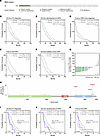 Figure 1
AR mutation is associated with a better clinical outcome in advanced PC. (A) Oncoprint diagram illustrating the frequency and type of AR alteration in a cohort of 475 metastatic CRPC (mCRPC) biopsies with available next-generation sequencing (NGS) data (RMH clinical cohort). (B–F) Kaplan-Meier curves comparing clinical outcomes between patients with and without detectable AR mutation (RMH clinical cohort). Detectable AR mutation in mCRPC tissue biopsy associated with improved overall survival from prostate cancer (PC) diagnosis (B; n = 122, P < 0.05; Log-rank test) and development of CRPC (C; n = 122, P < 0.005; Log-rank test), with a longer time to development of CRPC (D; n = 122, P > 0.05; Log-rank test). Detectable AR mutation also associated with a longer time on first AR pathway inhibitor (ARPI) (E; n = 112, P < 0.0001; Log-rank test) and overall survival from initiation of first ARPI (F; n = 112, P < 0.0001; Log-rank test). (G) Waterfall plot demonstrating percentage (%) PSA change from baseline 12 weeks after commencement of first ARPI (Abiraterone/Enzalutamide). All patients received ARPI in the CRPC setting. Each bar represents an individual patient within the RMH clinical cohort with sufficient clinical data for evaluation. Patients with a detectable AR mutation shown in green. Those without a detectable AR mutation shown in grey. (H) Lollipop graph illustrating the location and frequency of AR mutation identified within the evaluated RMH clinical cohort of mCRPC patient biopsies, with the most frequent mutations highlighted in red. (I–K) Kaplan-Meier curves comparing clinical outcomes between patients with AR LBD mutations, AR non-LBD mutations, or without detectable AR mutation (RMH clinical cohort). Overall, AR LBD mutation associated with significantly improved overall survival from diagnosis (I; n = 122, P = 0.005; Log-rank test), overall survival from development of CRPC (J; n = 122, P < 0.005; Log-rank test), and time on first ARPI (K; n = 112, P = 0.0001; Log-rank test), than those without detectable AR mutations. However, this was not the case for patients with non-LBD AR mutations. NTD, AR n-terminal domain; ZFD, AR zinc-finger domain; LBD, AR ligand binding domain.
Next, to investigate the clinical relevance of specific AR mutations, identified mutations were subdivided into those involving the AR LBD and those involving other regions of the AR gene, with clinical outcomes compared between these 2 groups. Of the 58 patients with detectable AR mutations evaluated, 43 (74%) had isolated mutations of the AR gene while 15 (26%) had 2 or more cooccurring mutations (Supplemental Table 1). Interestingly, among patients with more than 1 mutation of AR, these were typically both mutations of the AR LBD (n = 12; 80%), with only 3 (20%) patients having separate mutations in both the LBD and non-LBD regions of the AR gene. For the purposes of these analyses therefore, all patients with at least one detectable mutation of the AR LBD were considered AR LBD mutant, except for 1 patient who, despite having a tumor content of 95%, had an LBD mutation allele frequency of only 7%, with a non-LBD mutation allele frequency of 99%, so was classified as non-LBD mutant (Supplemental Table 1).
Overall, 50 patients (86%) had 1 or more mutations within the AR LBD coding region identifiable in their mCRPC tissue biopsy, with the well characterized activating amino acid point mutations T878A/S (n = 22; 30% of AR mutations), L702H (n = 19; 26%), and H875Y (n = 13; 18%) that increase AR ligand promiscuity occurring most frequently (Figure 1H). Mutations of the AR LBD were associated with better OS from both diagnosis (P = 0.005; Log-rank) and development of CRPC (P < 0.005; Log-rank), with this being independent of AR-V7 status (Supplemental Figure 2). However, there was no significant difference in clinical outcomes between patients with non-LBD AR mutations and those without detectable AR mutations (OS from diagnosis: non-LBD mutant 54 months [n = 8] versus nonmutant 60.5 months [n = 64]; Hazard ratio 1.32; 95% confidence interval 0.58–3.02; P > 0.05; and OS from development of CRPC: non-LBD mutant 36 months [n = 8] versus nonmutant 43 months [n = 64]; Hazard ratio 1.20; 95% confidence interval 0.54–2.64; P > 0.05; Figure 1, I and J). Similarly, patients with detectable AR LBD mutations in their mCRPC biopsies remained on ARPI therapy the longest (P = 0.0001; Log-rank; Figure 1K). Taken together, these data suggest that, while mutations of the AR LBD are associated with improved clinical outcomes, mCRPC with AR mutations in other regions has similar clinical outcomes to mCRPC without detectable AR mutation.
AR LBD mutated mCRPC tissue biopsies exhibit lower levels of AR-V7 protein. We hypothesized that the different clinical outcomes observed with AR-mutated mCRPC compared with AR-nonmutated mCRPC was at least in part due to differences in AR splice variant expression between these 2 groups. AR-V7 protein levels were therefore evaluated across our RMH clinical cohort (n = 122) and compared between patients with (n = 58) and without (n = 64) detectable AR mutations. AR-mutated mCRPC biopsies were subsequently further subdivided into those involving the AR LBD and those that did not involve the AR LBD. Surprisingly, patients with mCRPC with detectable AR mutations did not have a history of different exposure to abiraterone (n = 26; 45%) versus enzalutamide (n = 26; 45%) (Supplemental Table 2).
Overall, nuclear AR-V7 protein levels were significantly lower in patients with detectable AR mutation (AR-mutated median H-score 3.0, IQR [0.0–53.5, n = 58] versus AR-nonmutated median H-score 70 [0.3–137.5, n = 64]; P = 0.002; Figure 2, A–C), with representative micrographs of immunohistochemical (IHC) analyses for AR n-terminal domain (NTD) and AR-V7 protein levels in matched, same-patient, same-biopsy, mCRPC tissue samples shown in Figure 2D. Furthermore, subgroup analysis demonstrated a statistically significant difference in AR-V7 expression between AR-nonmutated and AR LBD-mutated biopsies (median H-score 70 [IQR 0.3–137.5], n = 64 versus 1.0 [0.0–39.0], n = 50; adjusted P = 0.002), with no significant differences observed between the remaining groups. Taken together, these results support the hypothesis that the observed higher antitumor activity of novel ARPIs in clinical development targeting ligand-activated AR signaling in AR-mutated mCRPC may be due to lower levels of AR-V7 in these cancers.
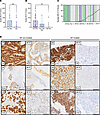 Figure 2
mCRPC patient tissue samples with detectable AR mutations exhibit lower levels of AR-V7 protein. (A) Bar graph of AR-V7 protein levels (IHC H-Score) in mCRPC patient biopsies with and without detectable AR mutations (RMH clinical cohort). Median H-Score and interquartile range shown. Statistical significance determined by Mann-Whitney test (*P < 0.05, **P < 0.01, ***P < 0.001). (B) Bar graph of AR-V7 protein levels (IHC H-Score) in mCRPC patient biopsies with LBD AR mutations, non-LBD AR mutations, or no detectable AR mutations (RMH clinical cohort). Median H-Score and interquartile range shown. Statistical significance determined by Kruskal-Wallis with Dunn’s multiple-comparisons test (*P < 0.05, **P < 0.01, ***P < 0.001). (C) Amalgamation of AR-V7 IHC data with AR mutation status (targeted sequencing panel) for each individual patient within the RMH clinical cohort (n = 122). Green bars indicate patients with detectable AR LBD mutations, purple bars indicate patients with non-LBD AR mutations, and grey bars indicate patients without detectable AR mutations. Grey triangles denote AR-V7 IHC H-Score, determined by analytically validated IHC assay. Results presented in order of increasing AR-V7 H-Score. (D) Representative micrographs of IHC analyses for AR NTD (left) and AR-V7 (right) protein levels in matched, same-patient, same-biopsy, mCRPC tissue samples from 6 different patients; 3 of which have a detectable AR mutation, 3 of which do not (RMH clinical cohort). Scale bars: 100μm. LN, lymph node; LBD, AR ligand binding domain.
AR-V7 levels in AR-mutated mCRPC tissue biopsies are not dependent on AR amplification alone. Higher AR-V7 expression has previously been reported to be associated with increased AR gene copy number (12). To investigate the relationship between FL-AR and AR-V7 expression in AR-mutated and nonmutated mCRPC biopsies, we evaluated AR gene copy number and AR total protein expression (using an NTD binding antibody to detect both full-length and splice-variant AR) across our RMH clinical cohort. Overall, AR gene amplification, defined as log2 (AR copy number) greater than 1.3, was identified in 55% (n = 35) of evaluated mCRPC biopsies without detectable AR mutation and 40% (n = 23) of those with detectable AR mutation (Figure 3A and Supplemental Table 3), indicating that these are not mutually exclusive genomic alterations. Interestingly, while AR copy number was higher in mCRPC biopsies without detectable AR mutation (1.1 [0.3–2.2, n = 56] versus 1.8 [0.5–3.2, n = 57]; P < 0.05; Figure 3B), median nuclear AR NTD protein levels were higher in AR-mutated mCRPC biopsies (AR-mutated median nuclear AR NTD H-Score = 225.0 [158.8–270.0] versus AR-nonmutated median nuclear AR NTD H-Score = 185 [130.0–210.0]; P < 0.0005; Figure 3C).
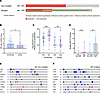 Figure 3
AR amplification and AR-V7 expression in AR-mutated mCRPC clinical biopsies. (A) Oncoprint diagram illustrating the incidence of AR gene amplification among evaluated patients with and without detectable AR mutations (RMH clinical cohort). (B) Bar chart of AR copy number in mCRPC patient biopsies with and without detectable AR mutations (RMH clinical cohort). Threshold for classification as AR gene amplification indicated by dashed grey line. (C) Bar chart of nuclear (Nuc) and cytoplasmic (Cyto) AR-n terminal domain (NTD) protein levels (IHC H-Score) in mCRPC patient biopsies with and without detectable AR mutations (RMH clinical cohort). (D) Bar chart of nuclear AR-V7 protein levels (IHC H-Score) in mCRPC patient biopsies with and without detectable AR mutations, subdivided into those with and without AR amplification. Median H-Score and interquartile range shown. (E and F) Oncoprint diagram illustrating the top cooccurring genetic alterations other than AR amplification found on targeted sequencing of mCRPC tissue biopsies with and without detectable AR mutation. Statistical significance in B and C determined by Mann-Whitney test. Statistical significance in D determined by Kruskal-Wallis test. (*P < 0.05, **P < 0.01, ***P < 0.001). Nuc, Nuclear IHC staining; Cyto, Cytoplasmic IHC staining.
In keeping with previous reports, AR-V7 levels were significantly higher in AR-nonmutated mCRPC biopsies with AR amplification; AR-nonmutated and AR-amplified mCRPC had a median nuclear AR-V7 H-Score of 100.0 [30.0–170.0] while AR-nonmutated and nonamplified mCRPC had a median nuclear AR-V7 H-Score of 5 [0.0–100.0]; Padj < 0.005; Figure 3D). However, this was not the case in AR-mutated mCRPC biopsies; AR-mutated and AR-amplified mCRPC had a median nuclear AR-V7 H-Score of 11.0 [0.0–120.0] whereas AR-mutated and nonamplified mCRPC had a median nuclear AR-V7 H-Score of 0 [0.0–26.0]; Padj > 0.05; Figure 3D).
While AR amplification was the most common cooccurring genomic alteration detected across both AR-mutated and nonmutated mCRPC biopsies, evaluation of available targeting sequencing data revealed 8 of the top 10 cooccurring genomic alterations identified in both AR-mutated and nonmutated cancers to be shared across both groups (Figure 3, E and F). Of these, the most notable difference between these 2 groups was the incidence of PTEN alterations, which was evident in 28% (n = 16) of AR-mutated cancers but only 8% (n = 5) of AR-nonmutated cancers.
Taken together, these data indicate that, while AR amplification contributes to increased AR-V7 expression in AR-nonmutated mCRPC, this alone may not be sufficient to drive AR-V7 production in AR-mutated cancers.
Meta-analyses reveal differences in the expression of spliceosome-related genes between AR-mutated and nonmutated mCRPC. Several proteins involved in chromatin modification (epigenetic regulators) and spliceosome modulation (splicing factors) are implicated in generating AR-V7 (13–16). To investigate whether AR-mutant mCRPC exhibits reduced AR-V7 levels due to decreased alternative splicing activity, RNA-seq data from previously collected mCRPC biopsies with defined AR mutation status (RMH transcriptomic cohort) and from publicly available datasets (International Stand Up To Cancer East Coast Dream Team (SU2C) and West Coast Dream Team (WCDT) cohorts) were interrogated, and differences in global splicing events and splicing factor expression were determined. Overall, transcriptome data from 372 mCRPC patient tissue samples were analyzed from 3 independent cohorts: RMH transcriptomic cohort (n = 88), SU2C (n = 137), and WCDT (n = 147). Of these, 82 patients had detectable AR mutations (22%). Notably, evaluation of AR-V7 mRNA levels in AR-mutated and nonmutated mCRPC tissue biopsies from the SU2C dataset revealed AR-mutated cancers to exhibit lower levels of AR-V7 mRNA, corroborating the findings observed in the RMH clinical cohort (Supplemental Figure 3). Overall, no significant difference was observed in the total number of local splicing variations (LSVs) between tumors with or without AR mutation, suggesting that differences in AR-V7 levels between these 2 groups is not due to broadly altered global splicing (Supplemental Figure 4). Differences were, however, observed in the expression level of several spliceosome-related genes (Figure 4, A–C, and Supplemental Tables 4 and 5). To identify potential regulators of AR splicing among these, we first excluded genes with median expression levels in the lowest quartile of all expressed genes (based on the median expression level of all expressed genes within the SU2C dataset; Figure 4D). We then correlated the RNA expression of the most differentially overexpressed spliceosome-related genes in AR-nonmutated mCRPC biopsies, which have increased AR-V7, with previously validated AR and AR-V7 mRNA signature scores (14, 17). This revealed the serine and arginine rich (SR) splicing factor transformer-2 protein homolog beta (TRA2B), which is enriched in AR-nonmutated mCRPC biopsies, to strongly correlate with AR and AR-V7 activity across all 3 independent cohorts (Figure 4E), implicating TRA2B in AR pre-mRNA splicing. To test this hypothesis, RNA-Seq data from the RMH transcriptomic cohort was then further evaluated, revealing strong positive correlations between TRA2B expression and both AR-V7 (17) and AR (18) mRNA expression signatures in patients with and without detectable AR mutations (Figure 4F). Notably, however, while the expression of TRA2B correlated with AR-V7 mRNA levels in AR-nonmutated samples (P < 0.001), this was not the case in AR-mutated cases (P > 0.5; Figure 4, G and H). Taken together, these data reveal differences in splicing factor expression profiles between mCRPC biopsies with and without AR mutation and identify splicing factors that may be implicated in AR splicing and endocrine treatment-resistance, which merit further evaluation.
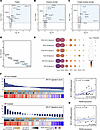 Figure 4
AR-mutated biopsies from patients with mCRPC exhibit a distinct splicing factor expression profile. (A–C) Volcano plots demonstrating the differential gene expression of spliceosome-related genes between mCRPC patient biopsies with and without detectable AR mutations (RMH transcriptomic cohort), identified in meta-analyses using 3 statistical methods: (A) Fisher, (B) Inverse Normal, and (C) Fused Inverse Normal. Purple dots represent genes upregulated in patients with detectable AR alterations, light blue dots indicate genes upregulated in patients without detectable AR alterations, and grey dots denote genes with stable expression between the 2 groups. Dashed horizontal and vertical lines indicate P value and fold-change cut points, respectively. (D) Line graph illustrating the median expression of each identified spliceosome-related gene enriched in AR-nonmutated mCRPC tissue biopsies, relative to the median expression level of all expressed genes (n = 18,854) within the SU2C dataset (represented by the solid line). (E) Bubble plot showing the correlation between each identified spliceosome-related gene enriched in AR-nonmutated mCRPC tissue biopsies and both an AR and an AR-V7 mRNA signature score across the RMH transcriptomic cohort and the SU2C and WCDT datasets. The larger and darker the dot, the stronger the correlation between the respective gene and each mRNA signature score. (F) Heatmaps of gene expression show the level of TRA2B in mCRPC patient biopsies with and without detectable AR mutations within the RMH transcriptomic cohort, correlated with AR-V7 and AR signatures (17, 18). Samples ordered based on the AR-V7 signature, with expression values represented in transcripts per million (TPM). (G and H) Scatter plots displaying Pearson’s correlation (R) between AR-V7 mRNA level and the expression of TRA2B in mCRPC tissue biopsies without (G) and with (H) detectable AR mutations. RMH, Royal Marsden Hospital transcriptomic cohort; SU2C, International Stand Up To Cancer East Coast Dream Team cohort; WCDT, West Coast Dream Team cohort.


Copyright © 2026 American Society for Clinical Investigation
ISSN: 0021-9738 (print), 1558-8238 (online)