
Advertisement
Clinical Research and Public HealthImmunologyInfectious diseaseMicrobiology
Open Access |  10.1172/JCI197346
Pathogen characteristics are key determinants of distinct host response phenotypes of sepsis
Rishi Chanderraj,1,2,3 Brian Bartek,4 Kathleen A. Stringer,3,5,6 Mohamad H. Tiba,3,7 Michael W. Sjoding,3,5,8,9 Ying He,5 Mark Nuppnau,5 Kale S. Bongers,5,10 Mark D. Adame,5,11 Sunny S. Lou,4,12,13 V. Eric Kerschberger,14 Matthew M. Churpek,15,16 Carolyn S. Calfee,17,18,19 Sandhya Tripathi,4 Debra M. Foster,20 John A. Kellum,20,21 Robert P. Dickson,3,5,11 and Pratik Sinha4
1Division of Infectious Diseases, Department of Internal Medicine, University of Michigan Medical School, Ann Arbor, Michigan, USA.
2Medicine Service, Infectious Diseases Section, Veterans Affairs (VA) Ann Arbor Healthcare System, Ann Arbor, Michigan, USA.
3Weil Institute for Critical Care Research & Innovation, Ann Arbor, Michigan, USA.
4Division of Clinical and Translational Research, Division of Critical Care, Department of Anesthesia, Washington University School of Medicine, St. Louis, Missouri, USA.
5Division of Pulmonary and Critical Care Medicine, Department of Internal Medicine, University of Michigan Medical School, Ann Arbor, Michigan, USA.
6Department of Clinical Pharmacy, College of Pharmacy,
7Department of Emergency Medicine,
8Institute for Healthcare Policy and Innovation, University of Michigan, Ann Arbor, Michigan, USA.
9Computational Medicine and Bioinformatics, University of Michigan Medical School, Ann Arbor, Michigan, USA.
10Division of Pulmonary, Critical Care and Occupational Medicine, Department of Internal Medicine, University of Iowa Medical School, Iowa City, Iowa, USA.
11Department of Microbiology and Immunology, University of Michigan Medical School, Ann Arbor, Michigan, USA.
12Department of Anesthesiology and
13Institute for Informatics, Data Science, and Biostatistics, Washington University School of Medicine, St Louis, Missouri, USA.
14Division of Allergy, Pulmonary, and Critical Care Medicine, Department of Medicine, Vanderbilt University Medical Center, Nashville, Tennessee, USA.
15Department of Medicine and
16Department of Biostatistics and Medical Informatics, University of Wisconsin–Madison, Madison, Wisconsin, USA.
17Division of Pulmonary, Critical Care, Allergy and Sleep Medicine, Department of Medicine,
18Department of Anesthesiology,
19Cardiovascular Research Institute, UCSF, San Francisco, California, USA.
20Spectral Medical Inc., Toronto, Ontario, Canada.
21Center for Critical Care Nephrology, Department of Critical Care Medicine, University of Pittsburgh, Pittsburgh, Pennsylvania, USA.
Address correspondence to: Rishi Chanderraj, Infectious Diseases Section, Ann Arbor Veterans Affairs Hospital, 2215 Fuller Road, Room B804, Ann Arbor, Michigan 48105, USA. Phone: 734.845.5826; rchander@med.umich.edu.
Authorship note: RPD and PS contributed equally to this work.
Find articles by Chanderraj, R. in: PubMed | Google Scholar
1Division of Infectious Diseases, Department of Internal Medicine, University of Michigan Medical School, Ann Arbor, Michigan, USA.
2Medicine Service, Infectious Diseases Section, Veterans Affairs (VA) Ann Arbor Healthcare System, Ann Arbor, Michigan, USA.
3Weil Institute for Critical Care Research & Innovation, Ann Arbor, Michigan, USA.
4Division of Clinical and Translational Research, Division of Critical Care, Department of Anesthesia, Washington University School of Medicine, St. Louis, Missouri, USA.
5Division of Pulmonary and Critical Care Medicine, Department of Internal Medicine, University of Michigan Medical School, Ann Arbor, Michigan, USA.
6Department of Clinical Pharmacy, College of Pharmacy,
7Department of Emergency Medicine,
8Institute for Healthcare Policy and Innovation, University of Michigan, Ann Arbor, Michigan, USA.
9Computational Medicine and Bioinformatics, University of Michigan Medical School, Ann Arbor, Michigan, USA.
10Division of Pulmonary, Critical Care and Occupational Medicine, Department of Internal Medicine, University of Iowa Medical School, Iowa City, Iowa, USA.
11Department of Microbiology and Immunology, University of Michigan Medical School, Ann Arbor, Michigan, USA.
12Department of Anesthesiology and
13Institute for Informatics, Data Science, and Biostatistics, Washington University School of Medicine, St Louis, Missouri, USA.
14Division of Allergy, Pulmonary, and Critical Care Medicine, Department of Medicine, Vanderbilt University Medical Center, Nashville, Tennessee, USA.
15Department of Medicine and
16Department of Biostatistics and Medical Informatics, University of Wisconsin–Madison, Madison, Wisconsin, USA.
17Division of Pulmonary, Critical Care, Allergy and Sleep Medicine, Department of Medicine,
18Department of Anesthesiology,
19Cardiovascular Research Institute, UCSF, San Francisco, California, USA.
20Spectral Medical Inc., Toronto, Ontario, Canada.
21Center for Critical Care Nephrology, Department of Critical Care Medicine, University of Pittsburgh, Pittsburgh, Pennsylvania, USA.
Address correspondence to: Rishi Chanderraj, Infectious Diseases Section, Ann Arbor Veterans Affairs Hospital, 2215 Fuller Road, Room B804, Ann Arbor, Michigan 48105, USA. Phone: 734.845.5826; rchander@med.umich.edu.
Authorship note: RPD and PS contributed equally to this work.
Find articles by Bartek, B. in: PubMed | Google Scholar
1Division of Infectious Diseases, Department of Internal Medicine, University of Michigan Medical School, Ann Arbor, Michigan, USA.
2Medicine Service, Infectious Diseases Section, Veterans Affairs (VA) Ann Arbor Healthcare System, Ann Arbor, Michigan, USA.
3Weil Institute for Critical Care Research & Innovation, Ann Arbor, Michigan, USA.
4Division of Clinical and Translational Research, Division of Critical Care, Department of Anesthesia, Washington University School of Medicine, St. Louis, Missouri, USA.
5Division of Pulmonary and Critical Care Medicine, Department of Internal Medicine, University of Michigan Medical School, Ann Arbor, Michigan, USA.
6Department of Clinical Pharmacy, College of Pharmacy,
7Department of Emergency Medicine,
8Institute for Healthcare Policy and Innovation, University of Michigan, Ann Arbor, Michigan, USA.
9Computational Medicine and Bioinformatics, University of Michigan Medical School, Ann Arbor, Michigan, USA.
10Division of Pulmonary, Critical Care and Occupational Medicine, Department of Internal Medicine, University of Iowa Medical School, Iowa City, Iowa, USA.
11Department of Microbiology and Immunology, University of Michigan Medical School, Ann Arbor, Michigan, USA.
12Department of Anesthesiology and
13Institute for Informatics, Data Science, and Biostatistics, Washington University School of Medicine, St Louis, Missouri, USA.
14Division of Allergy, Pulmonary, and Critical Care Medicine, Department of Medicine, Vanderbilt University Medical Center, Nashville, Tennessee, USA.
15Department of Medicine and
16Department of Biostatistics and Medical Informatics, University of Wisconsin–Madison, Madison, Wisconsin, USA.
17Division of Pulmonary, Critical Care, Allergy and Sleep Medicine, Department of Medicine,
18Department of Anesthesiology,
19Cardiovascular Research Institute, UCSF, San Francisco, California, USA.
20Spectral Medical Inc., Toronto, Ontario, Canada.
21Center for Critical Care Nephrology, Department of Critical Care Medicine, University of Pittsburgh, Pittsburgh, Pennsylvania, USA.
Address correspondence to: Rishi Chanderraj, Infectious Diseases Section, Ann Arbor Veterans Affairs Hospital, 2215 Fuller Road, Room B804, Ann Arbor, Michigan 48105, USA. Phone: 734.845.5826; rchander@med.umich.edu.
Authorship note: RPD and PS contributed equally to this work.
Find articles by
Stringer, K.
in:
PubMed
|
Google Scholar
|

1Division of Infectious Diseases, Department of Internal Medicine, University of Michigan Medical School, Ann Arbor, Michigan, USA.
2Medicine Service, Infectious Diseases Section, Veterans Affairs (VA) Ann Arbor Healthcare System, Ann Arbor, Michigan, USA.
3Weil Institute for Critical Care Research & Innovation, Ann Arbor, Michigan, USA.
4Division of Clinical and Translational Research, Division of Critical Care, Department of Anesthesia, Washington University School of Medicine, St. Louis, Missouri, USA.
5Division of Pulmonary and Critical Care Medicine, Department of Internal Medicine, University of Michigan Medical School, Ann Arbor, Michigan, USA.
6Department of Clinical Pharmacy, College of Pharmacy,
7Department of Emergency Medicine,
8Institute for Healthcare Policy and Innovation, University of Michigan, Ann Arbor, Michigan, USA.
9Computational Medicine and Bioinformatics, University of Michigan Medical School, Ann Arbor, Michigan, USA.
10Division of Pulmonary, Critical Care and Occupational Medicine, Department of Internal Medicine, University of Iowa Medical School, Iowa City, Iowa, USA.
11Department of Microbiology and Immunology, University of Michigan Medical School, Ann Arbor, Michigan, USA.
12Department of Anesthesiology and
13Institute for Informatics, Data Science, and Biostatistics, Washington University School of Medicine, St Louis, Missouri, USA.
14Division of Allergy, Pulmonary, and Critical Care Medicine, Department of Medicine, Vanderbilt University Medical Center, Nashville, Tennessee, USA.
15Department of Medicine and
16Department of Biostatistics and Medical Informatics, University of Wisconsin–Madison, Madison, Wisconsin, USA.
17Division of Pulmonary, Critical Care, Allergy and Sleep Medicine, Department of Medicine,
18Department of Anesthesiology,
19Cardiovascular Research Institute, UCSF, San Francisco, California, USA.
20Spectral Medical Inc., Toronto, Ontario, Canada.
21Center for Critical Care Nephrology, Department of Critical Care Medicine, University of Pittsburgh, Pittsburgh, Pennsylvania, USA.
Address correspondence to: Rishi Chanderraj, Infectious Diseases Section, Ann Arbor Veterans Affairs Hospital, 2215 Fuller Road, Room B804, Ann Arbor, Michigan 48105, USA. Phone: 734.845.5826; rchander@med.umich.edu.
Authorship note: RPD and PS contributed equally to this work.
Find articles by Tiba, M. in: PubMed | Google Scholar
1Division of Infectious Diseases, Department of Internal Medicine, University of Michigan Medical School, Ann Arbor, Michigan, USA.
2Medicine Service, Infectious Diseases Section, Veterans Affairs (VA) Ann Arbor Healthcare System, Ann Arbor, Michigan, USA.
3Weil Institute for Critical Care Research & Innovation, Ann Arbor, Michigan, USA.
4Division of Clinical and Translational Research, Division of Critical Care, Department of Anesthesia, Washington University School of Medicine, St. Louis, Missouri, USA.
5Division of Pulmonary and Critical Care Medicine, Department of Internal Medicine, University of Michigan Medical School, Ann Arbor, Michigan, USA.
6Department of Clinical Pharmacy, College of Pharmacy,
7Department of Emergency Medicine,
8Institute for Healthcare Policy and Innovation, University of Michigan, Ann Arbor, Michigan, USA.
9Computational Medicine and Bioinformatics, University of Michigan Medical School, Ann Arbor, Michigan, USA.
10Division of Pulmonary, Critical Care and Occupational Medicine, Department of Internal Medicine, University of Iowa Medical School, Iowa City, Iowa, USA.
11Department of Microbiology and Immunology, University of Michigan Medical School, Ann Arbor, Michigan, USA.
12Department of Anesthesiology and
13Institute for Informatics, Data Science, and Biostatistics, Washington University School of Medicine, St Louis, Missouri, USA.
14Division of Allergy, Pulmonary, and Critical Care Medicine, Department of Medicine, Vanderbilt University Medical Center, Nashville, Tennessee, USA.
15Department of Medicine and
16Department of Biostatistics and Medical Informatics, University of Wisconsin–Madison, Madison, Wisconsin, USA.
17Division of Pulmonary, Critical Care, Allergy and Sleep Medicine, Department of Medicine,
18Department of Anesthesiology,
19Cardiovascular Research Institute, UCSF, San Francisco, California, USA.
20Spectral Medical Inc., Toronto, Ontario, Canada.
21Center for Critical Care Nephrology, Department of Critical Care Medicine, University of Pittsburgh, Pittsburgh, Pennsylvania, USA.
Address correspondence to: Rishi Chanderraj, Infectious Diseases Section, Ann Arbor Veterans Affairs Hospital, 2215 Fuller Road, Room B804, Ann Arbor, Michigan 48105, USA. Phone: 734.845.5826; rchander@med.umich.edu.
Authorship note: RPD and PS contributed equally to this work.
Find articles by Sjoding, M. in: PubMed | Google Scholar
1Division of Infectious Diseases, Department of Internal Medicine, University of Michigan Medical School, Ann Arbor, Michigan, USA.
2Medicine Service, Infectious Diseases Section, Veterans Affairs (VA) Ann Arbor Healthcare System, Ann Arbor, Michigan, USA.
3Weil Institute for Critical Care Research & Innovation, Ann Arbor, Michigan, USA.
4Division of Clinical and Translational Research, Division of Critical Care, Department of Anesthesia, Washington University School of Medicine, St. Louis, Missouri, USA.
5Division of Pulmonary and Critical Care Medicine, Department of Internal Medicine, University of Michigan Medical School, Ann Arbor, Michigan, USA.
6Department of Clinical Pharmacy, College of Pharmacy,
7Department of Emergency Medicine,
8Institute for Healthcare Policy and Innovation, University of Michigan, Ann Arbor, Michigan, USA.
9Computational Medicine and Bioinformatics, University of Michigan Medical School, Ann Arbor, Michigan, USA.
10Division of Pulmonary, Critical Care and Occupational Medicine, Department of Internal Medicine, University of Iowa Medical School, Iowa City, Iowa, USA.
11Department of Microbiology and Immunology, University of Michigan Medical School, Ann Arbor, Michigan, USA.
12Department of Anesthesiology and
13Institute for Informatics, Data Science, and Biostatistics, Washington University School of Medicine, St Louis, Missouri, USA.
14Division of Allergy, Pulmonary, and Critical Care Medicine, Department of Medicine, Vanderbilt University Medical Center, Nashville, Tennessee, USA.
15Department of Medicine and
16Department of Biostatistics and Medical Informatics, University of Wisconsin–Madison, Madison, Wisconsin, USA.
17Division of Pulmonary, Critical Care, Allergy and Sleep Medicine, Department of Medicine,
18Department of Anesthesiology,
19Cardiovascular Research Institute, UCSF, San Francisco, California, USA.
20Spectral Medical Inc., Toronto, Ontario, Canada.
21Center for Critical Care Nephrology, Department of Critical Care Medicine, University of Pittsburgh, Pittsburgh, Pennsylvania, USA.
Address correspondence to: Rishi Chanderraj, Infectious Diseases Section, Ann Arbor Veterans Affairs Hospital, 2215 Fuller Road, Room B804, Ann Arbor, Michigan 48105, USA. Phone: 734.845.5826; rchander@med.umich.edu.
Authorship note: RPD and PS contributed equally to this work.
Find articles by He, Y. in: PubMed | Google Scholar
1Division of Infectious Diseases, Department of Internal Medicine, University of Michigan Medical School, Ann Arbor, Michigan, USA.
2Medicine Service, Infectious Diseases Section, Veterans Affairs (VA) Ann Arbor Healthcare System, Ann Arbor, Michigan, USA.
3Weil Institute for Critical Care Research & Innovation, Ann Arbor, Michigan, USA.
4Division of Clinical and Translational Research, Division of Critical Care, Department of Anesthesia, Washington University School of Medicine, St. Louis, Missouri, USA.
5Division of Pulmonary and Critical Care Medicine, Department of Internal Medicine, University of Michigan Medical School, Ann Arbor, Michigan, USA.
6Department of Clinical Pharmacy, College of Pharmacy,
7Department of Emergency Medicine,
8Institute for Healthcare Policy and Innovation, University of Michigan, Ann Arbor, Michigan, USA.
9Computational Medicine and Bioinformatics, University of Michigan Medical School, Ann Arbor, Michigan, USA.
10Division of Pulmonary, Critical Care and Occupational Medicine, Department of Internal Medicine, University of Iowa Medical School, Iowa City, Iowa, USA.
11Department of Microbiology and Immunology, University of Michigan Medical School, Ann Arbor, Michigan, USA.
12Department of Anesthesiology and
13Institute for Informatics, Data Science, and Biostatistics, Washington University School of Medicine, St Louis, Missouri, USA.
14Division of Allergy, Pulmonary, and Critical Care Medicine, Department of Medicine, Vanderbilt University Medical Center, Nashville, Tennessee, USA.
15Department of Medicine and
16Department of Biostatistics and Medical Informatics, University of Wisconsin–Madison, Madison, Wisconsin, USA.
17Division of Pulmonary, Critical Care, Allergy and Sleep Medicine, Department of Medicine,
18Department of Anesthesiology,
19Cardiovascular Research Institute, UCSF, San Francisco, California, USA.
20Spectral Medical Inc., Toronto, Ontario, Canada.
21Center for Critical Care Nephrology, Department of Critical Care Medicine, University of Pittsburgh, Pittsburgh, Pennsylvania, USA.
Address correspondence to: Rishi Chanderraj, Infectious Diseases Section, Ann Arbor Veterans Affairs Hospital, 2215 Fuller Road, Room B804, Ann Arbor, Michigan 48105, USA. Phone: 734.845.5826; rchander@med.umich.edu.
Authorship note: RPD and PS contributed equally to this work.
Find articles by Nuppnau, M. in: PubMed | Google Scholar
1Division of Infectious Diseases, Department of Internal Medicine, University of Michigan Medical School, Ann Arbor, Michigan, USA.
2Medicine Service, Infectious Diseases Section, Veterans Affairs (VA) Ann Arbor Healthcare System, Ann Arbor, Michigan, USA.
3Weil Institute for Critical Care Research & Innovation, Ann Arbor, Michigan, USA.
4Division of Clinical and Translational Research, Division of Critical Care, Department of Anesthesia, Washington University School of Medicine, St. Louis, Missouri, USA.
5Division of Pulmonary and Critical Care Medicine, Department of Internal Medicine, University of Michigan Medical School, Ann Arbor, Michigan, USA.
6Department of Clinical Pharmacy, College of Pharmacy,
7Department of Emergency Medicine,
8Institute for Healthcare Policy and Innovation, University of Michigan, Ann Arbor, Michigan, USA.
9Computational Medicine and Bioinformatics, University of Michigan Medical School, Ann Arbor, Michigan, USA.
10Division of Pulmonary, Critical Care and Occupational Medicine, Department of Internal Medicine, University of Iowa Medical School, Iowa City, Iowa, USA.
11Department of Microbiology and Immunology, University of Michigan Medical School, Ann Arbor, Michigan, USA.
12Department of Anesthesiology and
13Institute for Informatics, Data Science, and Biostatistics, Washington University School of Medicine, St Louis, Missouri, USA.
14Division of Allergy, Pulmonary, and Critical Care Medicine, Department of Medicine, Vanderbilt University Medical Center, Nashville, Tennessee, USA.
15Department of Medicine and
16Department of Biostatistics and Medical Informatics, University of Wisconsin–Madison, Madison, Wisconsin, USA.
17Division of Pulmonary, Critical Care, Allergy and Sleep Medicine, Department of Medicine,
18Department of Anesthesiology,
19Cardiovascular Research Institute, UCSF, San Francisco, California, USA.
20Spectral Medical Inc., Toronto, Ontario, Canada.
21Center for Critical Care Nephrology, Department of Critical Care Medicine, University of Pittsburgh, Pittsburgh, Pennsylvania, USA.
Address correspondence to: Rishi Chanderraj, Infectious Diseases Section, Ann Arbor Veterans Affairs Hospital, 2215 Fuller Road, Room B804, Ann Arbor, Michigan 48105, USA. Phone: 734.845.5826; rchander@med.umich.edu.
Authorship note: RPD and PS contributed equally to this work.
Find articles by Bongers, K. in: PubMed | Google Scholar
1Division of Infectious Diseases, Department of Internal Medicine, University of Michigan Medical School, Ann Arbor, Michigan, USA.
2Medicine Service, Infectious Diseases Section, Veterans Affairs (VA) Ann Arbor Healthcare System, Ann Arbor, Michigan, USA.
3Weil Institute for Critical Care Research & Innovation, Ann Arbor, Michigan, USA.
4Division of Clinical and Translational Research, Division of Critical Care, Department of Anesthesia, Washington University School of Medicine, St. Louis, Missouri, USA.
5Division of Pulmonary and Critical Care Medicine, Department of Internal Medicine, University of Michigan Medical School, Ann Arbor, Michigan, USA.
6Department of Clinical Pharmacy, College of Pharmacy,
7Department of Emergency Medicine,
8Institute for Healthcare Policy and Innovation, University of Michigan, Ann Arbor, Michigan, USA.
9Computational Medicine and Bioinformatics, University of Michigan Medical School, Ann Arbor, Michigan, USA.
10Division of Pulmonary, Critical Care and Occupational Medicine, Department of Internal Medicine, University of Iowa Medical School, Iowa City, Iowa, USA.
11Department of Microbiology and Immunology, University of Michigan Medical School, Ann Arbor, Michigan, USA.
12Department of Anesthesiology and
13Institute for Informatics, Data Science, and Biostatistics, Washington University School of Medicine, St Louis, Missouri, USA.
14Division of Allergy, Pulmonary, and Critical Care Medicine, Department of Medicine, Vanderbilt University Medical Center, Nashville, Tennessee, USA.
15Department of Medicine and
16Department of Biostatistics and Medical Informatics, University of Wisconsin–Madison, Madison, Wisconsin, USA.
17Division of Pulmonary, Critical Care, Allergy and Sleep Medicine, Department of Medicine,
18Department of Anesthesiology,
19Cardiovascular Research Institute, UCSF, San Francisco, California, USA.
20Spectral Medical Inc., Toronto, Ontario, Canada.
21Center for Critical Care Nephrology, Department of Critical Care Medicine, University of Pittsburgh, Pittsburgh, Pennsylvania, USA.
Address correspondence to: Rishi Chanderraj, Infectious Diseases Section, Ann Arbor Veterans Affairs Hospital, 2215 Fuller Road, Room B804, Ann Arbor, Michigan 48105, USA. Phone: 734.845.5826; rchander@med.umich.edu.
Authorship note: RPD and PS contributed equally to this work.
Find articles by Adame, M. in: PubMed | Google Scholar
1Division of Infectious Diseases, Department of Internal Medicine, University of Michigan Medical School, Ann Arbor, Michigan, USA.
2Medicine Service, Infectious Diseases Section, Veterans Affairs (VA) Ann Arbor Healthcare System, Ann Arbor, Michigan, USA.
3Weil Institute for Critical Care Research & Innovation, Ann Arbor, Michigan, USA.
4Division of Clinical and Translational Research, Division of Critical Care, Department of Anesthesia, Washington University School of Medicine, St. Louis, Missouri, USA.
5Division of Pulmonary and Critical Care Medicine, Department of Internal Medicine, University of Michigan Medical School, Ann Arbor, Michigan, USA.
6Department of Clinical Pharmacy, College of Pharmacy,
7Department of Emergency Medicine,
8Institute for Healthcare Policy and Innovation, University of Michigan, Ann Arbor, Michigan, USA.
9Computational Medicine and Bioinformatics, University of Michigan Medical School, Ann Arbor, Michigan, USA.
10Division of Pulmonary, Critical Care and Occupational Medicine, Department of Internal Medicine, University of Iowa Medical School, Iowa City, Iowa, USA.
11Department of Microbiology and Immunology, University of Michigan Medical School, Ann Arbor, Michigan, USA.
12Department of Anesthesiology and
13Institute for Informatics, Data Science, and Biostatistics, Washington University School of Medicine, St Louis, Missouri, USA.
14Division of Allergy, Pulmonary, and Critical Care Medicine, Department of Medicine, Vanderbilt University Medical Center, Nashville, Tennessee, USA.
15Department of Medicine and
16Department of Biostatistics and Medical Informatics, University of Wisconsin–Madison, Madison, Wisconsin, USA.
17Division of Pulmonary, Critical Care, Allergy and Sleep Medicine, Department of Medicine,
18Department of Anesthesiology,
19Cardiovascular Research Institute, UCSF, San Francisco, California, USA.
20Spectral Medical Inc., Toronto, Ontario, Canada.
21Center for Critical Care Nephrology, Department of Critical Care Medicine, University of Pittsburgh, Pittsburgh, Pennsylvania, USA.
Address correspondence to: Rishi Chanderraj, Infectious Diseases Section, Ann Arbor Veterans Affairs Hospital, 2215 Fuller Road, Room B804, Ann Arbor, Michigan 48105, USA. Phone: 734.845.5826; rchander@med.umich.edu.
Authorship note: RPD and PS contributed equally to this work.
Find articles by Lou, S. in: PubMed | Google Scholar
1Division of Infectious Diseases, Department of Internal Medicine, University of Michigan Medical School, Ann Arbor, Michigan, USA.
2Medicine Service, Infectious Diseases Section, Veterans Affairs (VA) Ann Arbor Healthcare System, Ann Arbor, Michigan, USA.
3Weil Institute for Critical Care Research & Innovation, Ann Arbor, Michigan, USA.
4Division of Clinical and Translational Research, Division of Critical Care, Department of Anesthesia, Washington University School of Medicine, St. Louis, Missouri, USA.
5Division of Pulmonary and Critical Care Medicine, Department of Internal Medicine, University of Michigan Medical School, Ann Arbor, Michigan, USA.
6Department of Clinical Pharmacy, College of Pharmacy,
7Department of Emergency Medicine,
8Institute for Healthcare Policy and Innovation, University of Michigan, Ann Arbor, Michigan, USA.
9Computational Medicine and Bioinformatics, University of Michigan Medical School, Ann Arbor, Michigan, USA.
10Division of Pulmonary, Critical Care and Occupational Medicine, Department of Internal Medicine, University of Iowa Medical School, Iowa City, Iowa, USA.
11Department of Microbiology and Immunology, University of Michigan Medical School, Ann Arbor, Michigan, USA.
12Department of Anesthesiology and
13Institute for Informatics, Data Science, and Biostatistics, Washington University School of Medicine, St Louis, Missouri, USA.
14Division of Allergy, Pulmonary, and Critical Care Medicine, Department of Medicine, Vanderbilt University Medical Center, Nashville, Tennessee, USA.
15Department of Medicine and
16Department of Biostatistics and Medical Informatics, University of Wisconsin–Madison, Madison, Wisconsin, USA.
17Division of Pulmonary, Critical Care, Allergy and Sleep Medicine, Department of Medicine,
18Department of Anesthesiology,
19Cardiovascular Research Institute, UCSF, San Francisco, California, USA.
20Spectral Medical Inc., Toronto, Ontario, Canada.
21Center for Critical Care Nephrology, Department of Critical Care Medicine, University of Pittsburgh, Pittsburgh, Pennsylvania, USA.
Address correspondence to: Rishi Chanderraj, Infectious Diseases Section, Ann Arbor Veterans Affairs Hospital, 2215 Fuller Road, Room B804, Ann Arbor, Michigan 48105, USA. Phone: 734.845.5826; rchander@med.umich.edu.
Authorship note: RPD and PS contributed equally to this work.
Find articles by Kerschberger, V. in: PubMed | Google Scholar
1Division of Infectious Diseases, Department of Internal Medicine, University of Michigan Medical School, Ann Arbor, Michigan, USA.
2Medicine Service, Infectious Diseases Section, Veterans Affairs (VA) Ann Arbor Healthcare System, Ann Arbor, Michigan, USA.
3Weil Institute for Critical Care Research & Innovation, Ann Arbor, Michigan, USA.
4Division of Clinical and Translational Research, Division of Critical Care, Department of Anesthesia, Washington University School of Medicine, St. Louis, Missouri, USA.
5Division of Pulmonary and Critical Care Medicine, Department of Internal Medicine, University of Michigan Medical School, Ann Arbor, Michigan, USA.
6Department of Clinical Pharmacy, College of Pharmacy,
7Department of Emergency Medicine,
8Institute for Healthcare Policy and Innovation, University of Michigan, Ann Arbor, Michigan, USA.
9Computational Medicine and Bioinformatics, University of Michigan Medical School, Ann Arbor, Michigan, USA.
10Division of Pulmonary, Critical Care and Occupational Medicine, Department of Internal Medicine, University of Iowa Medical School, Iowa City, Iowa, USA.
11Department of Microbiology and Immunology, University of Michigan Medical School, Ann Arbor, Michigan, USA.
12Department of Anesthesiology and
13Institute for Informatics, Data Science, and Biostatistics, Washington University School of Medicine, St Louis, Missouri, USA.
14Division of Allergy, Pulmonary, and Critical Care Medicine, Department of Medicine, Vanderbilt University Medical Center, Nashville, Tennessee, USA.
15Department of Medicine and
16Department of Biostatistics and Medical Informatics, University of Wisconsin–Madison, Madison, Wisconsin, USA.
17Division of Pulmonary, Critical Care, Allergy and Sleep Medicine, Department of Medicine,
18Department of Anesthesiology,
19Cardiovascular Research Institute, UCSF, San Francisco, California, USA.
20Spectral Medical Inc., Toronto, Ontario, Canada.
21Center for Critical Care Nephrology, Department of Critical Care Medicine, University of Pittsburgh, Pittsburgh, Pennsylvania, USA.
Address correspondence to: Rishi Chanderraj, Infectious Diseases Section, Ann Arbor Veterans Affairs Hospital, 2215 Fuller Road, Room B804, Ann Arbor, Michigan 48105, USA. Phone: 734.845.5826; rchander@med.umich.edu.
Authorship note: RPD and PS contributed equally to this work.
Find articles by Churpek, M. in: PubMed | Google Scholar
1Division of Infectious Diseases, Department of Internal Medicine, University of Michigan Medical School, Ann Arbor, Michigan, USA.
2Medicine Service, Infectious Diseases Section, Veterans Affairs (VA) Ann Arbor Healthcare System, Ann Arbor, Michigan, USA.
3Weil Institute for Critical Care Research & Innovation, Ann Arbor, Michigan, USA.
4Division of Clinical and Translational Research, Division of Critical Care, Department of Anesthesia, Washington University School of Medicine, St. Louis, Missouri, USA.
5Division of Pulmonary and Critical Care Medicine, Department of Internal Medicine, University of Michigan Medical School, Ann Arbor, Michigan, USA.
6Department of Clinical Pharmacy, College of Pharmacy,
7Department of Emergency Medicine,
8Institute for Healthcare Policy and Innovation, University of Michigan, Ann Arbor, Michigan, USA.
9Computational Medicine and Bioinformatics, University of Michigan Medical School, Ann Arbor, Michigan, USA.
10Division of Pulmonary, Critical Care and Occupational Medicine, Department of Internal Medicine, University of Iowa Medical School, Iowa City, Iowa, USA.
11Department of Microbiology and Immunology, University of Michigan Medical School, Ann Arbor, Michigan, USA.
12Department of Anesthesiology and
13Institute for Informatics, Data Science, and Biostatistics, Washington University School of Medicine, St Louis, Missouri, USA.
14Division of Allergy, Pulmonary, and Critical Care Medicine, Department of Medicine, Vanderbilt University Medical Center, Nashville, Tennessee, USA.
15Department of Medicine and
16Department of Biostatistics and Medical Informatics, University of Wisconsin–Madison, Madison, Wisconsin, USA.
17Division of Pulmonary, Critical Care, Allergy and Sleep Medicine, Department of Medicine,
18Department of Anesthesiology,
19Cardiovascular Research Institute, UCSF, San Francisco, California, USA.
20Spectral Medical Inc., Toronto, Ontario, Canada.
21Center for Critical Care Nephrology, Department of Critical Care Medicine, University of Pittsburgh, Pittsburgh, Pennsylvania, USA.
Address correspondence to: Rishi Chanderraj, Infectious Diseases Section, Ann Arbor Veterans Affairs Hospital, 2215 Fuller Road, Room B804, Ann Arbor, Michigan 48105, USA. Phone: 734.845.5826; rchander@med.umich.edu.
Authorship note: RPD and PS contributed equally to this work.
Find articles by Calfee, C. in: PubMed | Google Scholar
1Division of Infectious Diseases, Department of Internal Medicine, University of Michigan Medical School, Ann Arbor, Michigan, USA.
2Medicine Service, Infectious Diseases Section, Veterans Affairs (VA) Ann Arbor Healthcare System, Ann Arbor, Michigan, USA.
3Weil Institute for Critical Care Research & Innovation, Ann Arbor, Michigan, USA.
4Division of Clinical and Translational Research, Division of Critical Care, Department of Anesthesia, Washington University School of Medicine, St. Louis, Missouri, USA.
5Division of Pulmonary and Critical Care Medicine, Department of Internal Medicine, University of Michigan Medical School, Ann Arbor, Michigan, USA.
6Department of Clinical Pharmacy, College of Pharmacy,
7Department of Emergency Medicine,
8Institute for Healthcare Policy and Innovation, University of Michigan, Ann Arbor, Michigan, USA.
9Computational Medicine and Bioinformatics, University of Michigan Medical School, Ann Arbor, Michigan, USA.
10Division of Pulmonary, Critical Care and Occupational Medicine, Department of Internal Medicine, University of Iowa Medical School, Iowa City, Iowa, USA.
11Department of Microbiology and Immunology, University of Michigan Medical School, Ann Arbor, Michigan, USA.
12Department of Anesthesiology and
13Institute for Informatics, Data Science, and Biostatistics, Washington University School of Medicine, St Louis, Missouri, USA.
14Division of Allergy, Pulmonary, and Critical Care Medicine, Department of Medicine, Vanderbilt University Medical Center, Nashville, Tennessee, USA.
15Department of Medicine and
16Department of Biostatistics and Medical Informatics, University of Wisconsin–Madison, Madison, Wisconsin, USA.
17Division of Pulmonary, Critical Care, Allergy and Sleep Medicine, Department of Medicine,
18Department of Anesthesiology,
19Cardiovascular Research Institute, UCSF, San Francisco, California, USA.
20Spectral Medical Inc., Toronto, Ontario, Canada.
21Center for Critical Care Nephrology, Department of Critical Care Medicine, University of Pittsburgh, Pittsburgh, Pennsylvania, USA.
Address correspondence to: Rishi Chanderraj, Infectious Diseases Section, Ann Arbor Veterans Affairs Hospital, 2215 Fuller Road, Room B804, Ann Arbor, Michigan 48105, USA. Phone: 734.845.5826; rchander@med.umich.edu.
Authorship note: RPD and PS contributed equally to this work.
Find articles by Tripathi, S. in: PubMed | Google Scholar
1Division of Infectious Diseases, Department of Internal Medicine, University of Michigan Medical School, Ann Arbor, Michigan, USA.
2Medicine Service, Infectious Diseases Section, Veterans Affairs (VA) Ann Arbor Healthcare System, Ann Arbor, Michigan, USA.
3Weil Institute for Critical Care Research & Innovation, Ann Arbor, Michigan, USA.
4Division of Clinical and Translational Research, Division of Critical Care, Department of Anesthesia, Washington University School of Medicine, St. Louis, Missouri, USA.
5Division of Pulmonary and Critical Care Medicine, Department of Internal Medicine, University of Michigan Medical School, Ann Arbor, Michigan, USA.
6Department of Clinical Pharmacy, College of Pharmacy,
7Department of Emergency Medicine,
8Institute for Healthcare Policy and Innovation, University of Michigan, Ann Arbor, Michigan, USA.
9Computational Medicine and Bioinformatics, University of Michigan Medical School, Ann Arbor, Michigan, USA.
10Division of Pulmonary, Critical Care and Occupational Medicine, Department of Internal Medicine, University of Iowa Medical School, Iowa City, Iowa, USA.
11Department of Microbiology and Immunology, University of Michigan Medical School, Ann Arbor, Michigan, USA.
12Department of Anesthesiology and
13Institute for Informatics, Data Science, and Biostatistics, Washington University School of Medicine, St Louis, Missouri, USA.
14Division of Allergy, Pulmonary, and Critical Care Medicine, Department of Medicine, Vanderbilt University Medical Center, Nashville, Tennessee, USA.
15Department of Medicine and
16Department of Biostatistics and Medical Informatics, University of Wisconsin–Madison, Madison, Wisconsin, USA.
17Division of Pulmonary, Critical Care, Allergy and Sleep Medicine, Department of Medicine,
18Department of Anesthesiology,
19Cardiovascular Research Institute, UCSF, San Francisco, California, USA.
20Spectral Medical Inc., Toronto, Ontario, Canada.
21Center for Critical Care Nephrology, Department of Critical Care Medicine, University of Pittsburgh, Pittsburgh, Pennsylvania, USA.
Address correspondence to: Rishi Chanderraj, Infectious Diseases Section, Ann Arbor Veterans Affairs Hospital, 2215 Fuller Road, Room B804, Ann Arbor, Michigan 48105, USA. Phone: 734.845.5826; rchander@med.umich.edu.
Authorship note: RPD and PS contributed equally to this work.
Find articles by Foster, D. in: PubMed | Google Scholar
1Division of Infectious Diseases, Department of Internal Medicine, University of Michigan Medical School, Ann Arbor, Michigan, USA.
2Medicine Service, Infectious Diseases Section, Veterans Affairs (VA) Ann Arbor Healthcare System, Ann Arbor, Michigan, USA.
3Weil Institute for Critical Care Research & Innovation, Ann Arbor, Michigan, USA.
4Division of Clinical and Translational Research, Division of Critical Care, Department of Anesthesia, Washington University School of Medicine, St. Louis, Missouri, USA.
5Division of Pulmonary and Critical Care Medicine, Department of Internal Medicine, University of Michigan Medical School, Ann Arbor, Michigan, USA.
6Department of Clinical Pharmacy, College of Pharmacy,
7Department of Emergency Medicine,
8Institute for Healthcare Policy and Innovation, University of Michigan, Ann Arbor, Michigan, USA.
9Computational Medicine and Bioinformatics, University of Michigan Medical School, Ann Arbor, Michigan, USA.
10Division of Pulmonary, Critical Care and Occupational Medicine, Department of Internal Medicine, University of Iowa Medical School, Iowa City, Iowa, USA.
11Department of Microbiology and Immunology, University of Michigan Medical School, Ann Arbor, Michigan, USA.
12Department of Anesthesiology and
13Institute for Informatics, Data Science, and Biostatistics, Washington University School of Medicine, St Louis, Missouri, USA.
14Division of Allergy, Pulmonary, and Critical Care Medicine, Department of Medicine, Vanderbilt University Medical Center, Nashville, Tennessee, USA.
15Department of Medicine and
16Department of Biostatistics and Medical Informatics, University of Wisconsin–Madison, Madison, Wisconsin, USA.
17Division of Pulmonary, Critical Care, Allergy and Sleep Medicine, Department of Medicine,
18Department of Anesthesiology,
19Cardiovascular Research Institute, UCSF, San Francisco, California, USA.
20Spectral Medical Inc., Toronto, Ontario, Canada.
21Center for Critical Care Nephrology, Department of Critical Care Medicine, University of Pittsburgh, Pittsburgh, Pennsylvania, USA.
Address correspondence to: Rishi Chanderraj, Infectious Diseases Section, Ann Arbor Veterans Affairs Hospital, 2215 Fuller Road, Room B804, Ann Arbor, Michigan 48105, USA. Phone: 734.845.5826; rchander@med.umich.edu.
Authorship note: RPD and PS contributed equally to this work.
Find articles by
Kellum, J.
in:
PubMed
|
Google Scholar
|
1Division of Infectious Diseases, Department of Internal Medicine, University of Michigan Medical School, Ann Arbor, Michigan, USA.
2Medicine Service, Infectious Diseases Section, Veterans Affairs (VA) Ann Arbor Healthcare System, Ann Arbor, Michigan, USA.
3Weil Institute for Critical Care Research & Innovation, Ann Arbor, Michigan, USA.
4Division of Clinical and Translational Research, Division of Critical Care, Department of Anesthesia, Washington University School of Medicine, St. Louis, Missouri, USA.
5Division of Pulmonary and Critical Care Medicine, Department of Internal Medicine, University of Michigan Medical School, Ann Arbor, Michigan, USA.
6Department of Clinical Pharmacy, College of Pharmacy,
7Department of Emergency Medicine,
8Institute for Healthcare Policy and Innovation, University of Michigan, Ann Arbor, Michigan, USA.
9Computational Medicine and Bioinformatics, University of Michigan Medical School, Ann Arbor, Michigan, USA.
10Division of Pulmonary, Critical Care and Occupational Medicine, Department of Internal Medicine, University of Iowa Medical School, Iowa City, Iowa, USA.
11Department of Microbiology and Immunology, University of Michigan Medical School, Ann Arbor, Michigan, USA.
12Department of Anesthesiology and
13Institute for Informatics, Data Science, and Biostatistics, Washington University School of Medicine, St Louis, Missouri, USA.
14Division of Allergy, Pulmonary, and Critical Care Medicine, Department of Medicine, Vanderbilt University Medical Center, Nashville, Tennessee, USA.
15Department of Medicine and
16Department of Biostatistics and Medical Informatics, University of Wisconsin–Madison, Madison, Wisconsin, USA.
17Division of Pulmonary, Critical Care, Allergy and Sleep Medicine, Department of Medicine,
18Department of Anesthesiology,
19Cardiovascular Research Institute, UCSF, San Francisco, California, USA.
20Spectral Medical Inc., Toronto, Ontario, Canada.
21Center for Critical Care Nephrology, Department of Critical Care Medicine, University of Pittsburgh, Pittsburgh, Pennsylvania, USA.
Address correspondence to: Rishi Chanderraj, Infectious Diseases Section, Ann Arbor Veterans Affairs Hospital, 2215 Fuller Road, Room B804, Ann Arbor, Michigan 48105, USA. Phone: 734.845.5826; rchander@med.umich.edu.
Authorship note: RPD and PS contributed equally to this work.
Find articles by Dickson, R. in: PubMed | Google Scholar
1Division of Infectious Diseases, Department of Internal Medicine, University of Michigan Medical School, Ann Arbor, Michigan, USA.
2Medicine Service, Infectious Diseases Section, Veterans Affairs (VA) Ann Arbor Healthcare System, Ann Arbor, Michigan, USA.
3Weil Institute for Critical Care Research & Innovation, Ann Arbor, Michigan, USA.
4Division of Clinical and Translational Research, Division of Critical Care, Department of Anesthesia, Washington University School of Medicine, St. Louis, Missouri, USA.
5Division of Pulmonary and Critical Care Medicine, Department of Internal Medicine, University of Michigan Medical School, Ann Arbor, Michigan, USA.
6Department of Clinical Pharmacy, College of Pharmacy,
7Department of Emergency Medicine,
8Institute for Healthcare Policy and Innovation, University of Michigan, Ann Arbor, Michigan, USA.
9Computational Medicine and Bioinformatics, University of Michigan Medical School, Ann Arbor, Michigan, USA.
10Division of Pulmonary, Critical Care and Occupational Medicine, Department of Internal Medicine, University of Iowa Medical School, Iowa City, Iowa, USA.
11Department of Microbiology and Immunology, University of Michigan Medical School, Ann Arbor, Michigan, USA.
12Department of Anesthesiology and
13Institute for Informatics, Data Science, and Biostatistics, Washington University School of Medicine, St Louis, Missouri, USA.
14Division of Allergy, Pulmonary, and Critical Care Medicine, Department of Medicine, Vanderbilt University Medical Center, Nashville, Tennessee, USA.
15Department of Medicine and
16Department of Biostatistics and Medical Informatics, University of Wisconsin–Madison, Madison, Wisconsin, USA.
17Division of Pulmonary, Critical Care, Allergy and Sleep Medicine, Department of Medicine,
18Department of Anesthesiology,
19Cardiovascular Research Institute, UCSF, San Francisco, California, USA.
20Spectral Medical Inc., Toronto, Ontario, Canada.
21Center for Critical Care Nephrology, Department of Critical Care Medicine, University of Pittsburgh, Pittsburgh, Pennsylvania, USA.
Address correspondence to: Rishi Chanderraj, Infectious Diseases Section, Ann Arbor Veterans Affairs Hospital, 2215 Fuller Road, Room B804, Ann Arbor, Michigan 48105, USA. Phone: 734.845.5826; rchander@med.umich.edu.
Authorship note: RPD and PS contributed equally to this work.
Find articles by Sinha, P. in: PubMed | Google Scholar
Published March 16, 2026 - More info
J Clin Invest. 2026;136(6):e197346. https://doi.org/10.1172/JCI197346.
© 2026 Chanderraj et al. This work is licensed under the Creative Commons Attribution 4.0 International License. To view a copy of this license, visit http://creativecommons.org/licenses/by/4.0/.
Received: July 14, 2025; Accepted: December 18, 2025

Related article:
Abstract
For over a decade, sepsis phenotyping has identified hyperinflammatory and hypoinflammatory subphenotypes using host biomarkers and clinical variables, without factoring in contributions from infectious insults across patients. In this issue, Chanderraj and colleagues challenge this host-centric paradigm by demonstrating that pathogen characteristics independently contribute to sepsis subphenotypes. They reported that Enterobacterales infections, particularly Escherichia coli, strongly associated with hyperinflammatory subphenotypes, independent of illness severity. Bacterial burden, anatomic barrier breach, and circulating pathogen-associated molecular patterns influence phenotypic classification, with implications extending to culture-negative sepsis. Animal models supported causality, while reanalysis of an observational cohort and a clinical trial revealed that lactate clearance’s prognostic value and therapeutic effects of endotoxin removal with polymyxin B hemoadsorption vary by subphenotype and pathogen. These findings lay groundwork for integrative host-pathogen phenotyping; for precision medicine in critical illness, we must know not only who is sick, but what made them sick, and how the two interact.
Authors
Georgios D. Kitsios, Rebecca M. Baron
-
Results
Sepsis phenotype assignment.
In a retrospective cohort of critically ill septic patients at the University of Michigan, we identified 8,280 patients who met our inclusion criteria (Supplemental Figure 1; supplemental material available online with this article; https://doi.org/10.1172/JCI197346DS1). The median probability of a hyperinflammatory phenotype in the cohort was 0.07, with a mean probability of 0.25 (Supplemental Figure 2). Using a probability threshold of 0.5 to classify patients into a binary hyper- or hypoinflammatory designation, 1,858 (22.4%) patients were classified as the hyperinflammatory phenotype and 6,422 (77.6%) as the hypoinflammatory phenotype (Table 1). To evaluate the temporal availability of the clinical data informing phenotype classification, we examined the timing of all laboratory and physiologic variables used as model inputs. Across 66,240 laboratory measurements, 65,898 (99.5%) represented the first obtained value, and 60,496 (91%) were drawn within 2 hours of presentation to the Emergency Department. The mean time to draw was 1.1 hours (median 0.43 hours; IQR 0.22–0.93 hours) from presentation. These results indicate that, although we used the operational framework of “worst-within-24-hours,” for input variable capturing, practically, the variables contributing to phenotype assignment overwhelmingly reflect initial presentation physiology.
Validity of phenotype assignments.
To determine the validity of phenotype assignments, we asked if the clinical characteristics of phenotypes were similar to those of prior cohorts (9, 17, 19, 20) (Table 1). Concordant with previous studies, hyperinflammatory patients had higher acuity of illness (mean APACHE IV Score 52.5 hypoinflammatory, 83.0 hyperinflammatory, P < 0.001) and greater burden of comorbidities (mean Charlson comorbidity index 2.5 for hypoinflammatory; 3.4 for hyperinflammatory, P = 0.002) (Supplemental Table 1). Hyperinflammatory sepsis was also associated with more frequent bacteremia (23% in hypoinflammatory; 34% in hyperinflammatory, P < 0.001), greater duration of shock (mean vasopressor free–days 25.2 in hypoinflammatory; 18.3 in hyperinflammatory, P < 0.001), and higher 90-day mortality (21% for hypoinflammatory; 39% for hyperinflammatory, P < 0.001).
We next asked if phenotype assignments identified clinically and prognostically meaningful information beyond disease severity and comorbid illness. To accomplish this, we built a multivariable logistic regression model of 90-day mortality, including phenotype assignment (as a binary hyper- or hypoinflammatory designation), demographics, APACHE IV score, Charlson comorbidity index, and time to antibiotic administration (to account for quality of sepsis care, given the strong association between time to antibiotic administration and sepsis mortality) as independent predictors in the model (Table 2 and Figure 1). We found that designation of the hyperinflammatory phenotype independently predicted 90-day mortality (OR 1.04, 95% CI 1.01–1.08, absolute marginal increase in ninety-day mortality 4.1%, 95% CI 0.8–7.4%). We concluded that phenotype assignment captured prognostically meaningful information, even when controlling for the severity of illness, age, and comorbidity burden. Results were consistent when 28-day mortality was used as the endpoint, with near-identical effect estimates for all covariates (hyperinflammatory phenotype OR 1.04, 95% CI 1.01–1.06, P = 0.0009) (Table 1 and Supplemental Table 2). Results were also similar when we modeled hyperinflammatory probability continuously on the 0–1 scale instead of as a binary label: higher probability remained independently associated with both 28- and 90-day mortality (Supplemental Table 3).
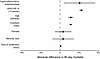 Figure 1
Hyperinflammatory subphenotype is independently predictive of 90-day mortality. In a cohort of 8,280 hospitalized patients with sepsis, classification within the hyperinflammatory subphenotype predicted increased 90-day mortality when controlled for severity of illness, comorbidities, demographics, and time to antibiotics.
We next asked whether these phenotypes capture biologically meaningful distinctions relevant to severe bacterial infection. To do this, we assessed 3 biomarkers, each representing a distinct facet of the host response. C-reactive protein (CRP) as a measure of general inflammation, procalcitonin as a measure of inflammation specific to bacterial infection (particularly gram-negative infections) (22), and lactate, though influenced by multiple factors, as a measure of hypoperfusion, mitochondrial dysfunction, and organ failure (1, 15, 21) (Figure 2, A and B). By examining these biologically grounded indices, we aimed to determine whether the hyperinflammatory phenotype aligns with a more exaggerated bacteria-driven inflammatory response and greater metabolic derangement than would be expected based on illness severity alone.
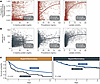 Figure 2
Hyperinflammatory subphenotype is associated with biomarkers of acute bacterial infection and shock. (A) Among 8,280 patients hospitalized with sepsis, the hyperinflammatory subphenotype was weakly correlated with C-reactive protein (a nonspecific inflammatory marker) and more strongly correlated with procalcitonin and lactate. (B) In contrast, physiologic severity of illness (APACHE IV) was only weakly associated both with C-reactive protein and procalcitonin. (C) In a cohort of 1,865 patients with vasopressor-dependent septic shock and elevated lactate, initial lactate clearance (defined as decreasing initial lactate concentration by 10% within 2–12 hours) was predictive of 28-day mortality in hyperinflammatory, but not hypoinflammatory, patients. This difference in predictive utility of lactate clearance was similar when comparing patients with and without Enterobacterales pathogens (Supplemental Figure 4).
To distinguish phenotype-specific biology from global severity, we compared the fraction of variance (R2) in each biomarker explained by phenotype assignment versus APACHE IV. If these biomarkers primarily reflected global illness severity, their variance should be equally explained by APACHE IV and phenotype probability. Instead, among patients with available CRP measurements (n = 2,867), both APACHE IV and hyperinflammatory probability explained only about 1%–2% of the variance (R2 0.014 versus R2 0.017, respectively), reflecting weak overall associations. By contrast, among patients who had procalcitonin measured (n = 5,353), procalcitonin showed much stronger alignment with hyperinflammatory probability (R2 0.28) than with APACHE IV (R2 0.03). Among patients who had lactate measured (n = 7,964), lactate followed a similar pattern: phenotype probability explained roughly 38% of lactate’s variance, versus 26% for APACHE IV. Thus, while APACHE IV score captures biochemical perturbation associated with organ failure and nonspecific inflammation that is comparable to the hyperinflammatory phenotype, it fails to capture perturbations associated with bacteria-driven inflammation (procalcitonin), which is better captured by the hyperinflammatory phenotype. These findings demonstrate that the hyperinflammatory phenotype captures biological information beyond organ failure–derived severity scores.
Clinical relevance of phenotype assignment: lactate clearance and survival.
Serum lactate and its clearance is a frequent target of hemodynamic resuscitation in sepsis (1, 15, 21), yet, despite several prospective trials (23, 24), its utility has never been demonstrated. We hypothesized that the additional 12% variance of lactate explained by the hyperinflammatory phenotype beyond the APACHE IV score may be due to the underlying pathophysiology of the phenotype. Specifically, we hypothesized that metabolic dysfunction, which has been observed in the hyperinflammatory phenotype, may explain this phenomenon (25), and that lactate clearance may be differentially prognostic according to the molecular phenotypes.
To test this hypothesis, we limited our analysis to a subgroup of patients who met inclusion criteria for the ANDROMEDA-SHOCK randomized clinical trial (23) (i.e., septic shock with vasopressor dependence and lactate ≥ 2.0 mmol/L, n = 1,865) in order to focus on a high-acuity population aligned with established resuscitation-focused research (23). We performed a multivariable Cox regression model of 90-day survival, adjusting for demographics, APACHE IV, Charlson comorbidity index, and time to antibiotic administration. We included an interaction term for lactate clearance × phenotype. This allowed us to determine whether the prognostic value of lactate clearance differs by phenotype, rather than assuming a uniform effect in all patients. In our multivariable analysis, we observed a significant interaction between lactate clearance and phenotype (HR 0.42, 95% CI 0.05–0.75). This estimate was well below 1.0, suggesting that early lactate reduction was associated with a stronger survival benefit in the hyperinflammatory phenotype than in the hypoinflammatory phenotype (Figure 2C and Supplemental Table 4). We thus concluded that the prognostic utility of lactate clearance is not uniform in sepsis but differs across phenotypes.
In our primary analysis, lactate clearance was defined as a ≥ 10% reduction in serum lactate within 6 hours of presentation, consistent with the 2021 Surviving Sepsis Campaign guidelines. To assess robustness, we repeated all analyses using the more stringent ANDROMEDA-SHOCK criterion of a ≥ 20% reduction every 2 hours. The direction and magnitude of associations, including the interaction between lactate clearance and phenotype, were materially unchanged (HR 0.42 [0.05–0.75] versus 0.13 [0.02–0.73]), confirming that findings were independent of the clearance definition (Supplemental Table 5).
Association between pathogen features and phenotype.
We next sought to determine the association between patient pathogen features and phenotypes. We began our analysis by focusing on bacteremia. The most common causes of bacteremia in the overall cohort were S. aureus (n = 382) and E. coli (n = 215).
To determine the association between pathogen identity and phenotype, we restricted our analysis to patients with monomicrobial bacteremia (n = 1,350). Pathogen identity was strongly associated with the likelihood of a hyperinflammatory phenotype (χ2 106, df =11, P < 0.001, Supplemental Table 6 and Figure 3A). E. coli bacteremia had a higher probability of a hyperinflammatory phenotype than S. aureus (median probability 0.50 E. coli, 0.14 for S. aureus, P < 0.001). More broadly, patients with Enterobacterales spp. bacteremia were more likely to be classified as hyperinflammatory than patients with other pathogens (median probability 0.43 Enterobacterales, median probability 0.12 other pathogens, P < 0.001), and gram-negative organisms were more frequent among the hyperinflammatory phenotype (gram negative median probability 0.43, gram-positive median probability 0.12).
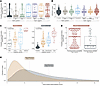 Figure 3
Hyperinflammatory subphenotype is predicted by pathogen features. (A) Among 2,108 bacteremic patients with sepsis, the hyperinflammatory subphenotype was strongly predicted by the identity of the pathogen, specifically gram-negative members of the Enterobacterales order (E. coli, Klebsiella spp.). (B) In contrast, physiologic severity of illness (APACHE IV) did not correlate strongly with pathogen identity. (C) Among patients with the same species of pathogen (E. coli [n = 161], S. aureus [n = 240]), the hyperinflammatory subphenotype was strongly predicted by anatomic site of initial infection. (D) Among patients infected with members of the Enterobacterales order (n = 248), in vitro resistance to fluoroquinolones (which is associated with decreased virulence) was predictive of the hypoinflammatory subphenotype. (E) Time to culture positivity, which is inversely correlated with blood bacterial burden, was shorter among patients in the hyperinflammatory subphenotype (n = 2,108).
To determine whether these pathogen-phenotype associations observed in bacteremic patients extended to other infection types and to culture-independent pathogen detection, we conducted 2 complementary analyses. First, within our primary cohort we adjudicated infections in 891 nonbacteremic patients: 414 with lower respiratory infections (LRI) and 477 with urinary tract infections (UTI). Across both sites, gram-negative pathogens, particularly Enterobacterales, were strongly associated with the hyperinflammatory phenotype. Among patients with urinary infections, Enterobacterales infections showed higher hyperinflammatory probabilities than other pathogens (median 0.12 [IQR 0.02–0.58] versus 0.05 [0.01–0.35], P = 0.034). This pattern was mirrored in patients with LRI (median 0.10 [0.02–0.52] versus 0.09 [0.02–0.37], P = 0.0056). These findings parallel those observed in patients with bacteremia (Supplemental Figure 3 and Supplemental Table 7). Second, we analyzed patient data from the EUPHRATES trial, comparing circulating endotoxin concentrations (an index and mediator of gram-negative infection) with hyperinflammatory probability. Endotoxin activity correlated positively with hyperinflammatory probability across the full cohort (Spearman ρ = 0.13, P = 0.003) and within the hyperinflammatory subset (ρ = 0.21, P = 0.001) (Supplemental Figure 4). This relationship persisted despite approximately 70% of patients having negative blood cultures and the cohort being preselected for elevated endotoxin activity. Together, these complementary analyses demonstrate that the relationship between pathogen features and hyperinflammatory classification generalizes beyond bacteremia to other anatomic sites of infection in sepsis.
Given this strong relationship between Enterobacterales spp. bacteremia and the hyperinflammatory phenotype, we revisited our analysis of the prognostic utility of lactate clearance (Figure 2C), now asking whether the prognostic utility of lactate clearance varies according to pathogen identity. We again performed a multivariable Cox regression model, adjusting for demographics, APACHE IV, Charlson comorbidity index, and time to antibiotic administration (Supplemental Table 8). We now included an interaction term for lactate clearance × Enterobacterales infection to determine whether the prognostic value of lactate clearance differs by causative pathogen. As with phenotype status (Figure 2C), we observed a significant interaction between lactate clearance and Enterobacterales infection (HR 0.25, 95% CI 0.01–0.53) (Supplemental Figure 5). This estimate was also well below 1.0, suggesting that early lactate reduction was associated with a stronger survival benefit in patients with Enterobacterales spp. bacteremia.
We then asked whether the association between pathogen identity and hyperinflammatory phenotype was attributable to differences in sepsis severity. As shown in Figure 3B, sepsis severity (measured via APACHE IV score) did not correlate with pathogen identity. The association between pathogen identity and the hyperinflammatory phenotype (ω² = 0.02) was 2 orders of magnitude greater than the association between pathogen identity and APACHE IV score (ω² = 1 × 10⁻⁴), indicating that variation in illness severity (APACHE IV) is less associated with phenotype than pathogen identity. Another notable finding was that the distribution of hyperinflammatory probabilities among patients with gram-negative bacteremia was bimodal, with distributions polarized near 0 or 1, with lowest frequency of distribution at a probability of 0.5. This hourglass distribution of probabilities in gram-negative bacteremia contrasted both with patients with gram-positive bacteremia (in their phenotype probability, Figure 3A) and among all bacteremic patients in their APACHE IV scores (Figure 3B).
We then asked if the source (anatomic site) of bacteremia influenced the probability of a hyperinflammatory phenotype, focusing on the most common causes of bacteremia in the cohort: E. coli and S. aureus (Figure 3C and Supplemental Tables 9 and 10). In patients with E. coli bacteremia, anatomic site of infection was associated with the likelihood of a hyperinflammatory phenotype (P < 0.001), with intraabdominal infection having the highest probability. The anatomic site of infection in S. aureus bacteremia was also associated with the likelihood of hyperinflammatory phenotype (P < 0.001), with pneumonia having the highest probability. We concluded that, alongside the identity of the pathogen, the anatomic source of bacteremia was also associated with the likelihood of hyperinflammatory phenotype.
We then characterized the association between virulence and phenotype by investigating the relationship between fluoroquinolone resistance and molecular phenotype in Enterobacterales bacteremia (Figure 3D), leveraging the established fitness cost associated with in vitro fluoroquinolone resistance in Enterobacterales (26–33). We found that fluoroquinolone resistance was associated with a decreased probability of hyperinflammatory phenotype (median probability 0.14 in resistant species, 0.57 in sensitive species, P < 0.001), suggesting an association between pathogen virulence and probability of hyperinflammatory phenotype.
Next, we characterized the association between phenotype and pathogen burden (Figure 3E). To accomplish this, we compared the time to positive blood culture growth between patients categorized as hyper- or hypoinflammatory, which is known to be inversely correlated with pathogen burden (34–38). When we dichotomized hyperinflammatory status at a probability threshold of 0.5, patients who were hyperinflammatory had a faster time to blood culture positivity compared with patients who were hypoinflammatory (mean time to positive 12.9 hours hyperinflammatory, 23.9 hours in hypoinflammatory, P < 0.001, Figure 3E). When evaluated as a continuous variable, the probability of a hyperinflammatory phenotype was negatively correlated with time to positive blood culture growth, with slower time to positivity (indicating lower bacterial burden) being significantly associated with a decreased likelihood of a hyperinflammatory phenotype (Spearman ρ= –0.22, P < 0.001, Supplemental Figure 6). These findings confirm our hypothesis that increased pathogen burden is positively correlated with hyperinflammatory phenotype status.
After determining that bacterial pathogens’ identity, burden, and virulence were linked to the likelihood of a hyperinflammatory phenotype, we developed a multivariable logistic regression model to assess the independent association of these characteristics with the phenotype (Figure 4 and Table 3). To achieve this, we included pathogen features that we identified as significant in the single variable analysis, as well as host features that we believed could play a role in the inflammatory response to a pathogen: the burden of medical comorbidities (characterized by Charlson index) and organ dysfunction (characterized by APACHE IV). Enterobacterales bacteremia was identified as the strongest independent predictor of the hyperinflammatory phenotype (OR 1.13, 95% CI 1.09 - 1.17). The time to blood culture growth and fluoroquinolone resistance were inversely correlated with burden and virulence, and both were also associated with the phenotype. Each hour of delay in blood culture growth correlated with reduced odds of a hyperinflammatory phenotype (OR 0.97, 95% CI 0.96–0.99), and fluoroquinolone resistance (OR 0.97, 95% CI 0.96–0.98), similarly decreased the odds of the hyperinflammatory phenotype.
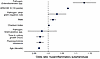 Figure 4
The identity, burden, and virulence of pathogens are independently predictive of hyperinflammatory subphenotype. Among 8,280 patients hospitalized with sepsis, bacteremia with a gram-negative pathogen, specifically Enterobacterales spp., was more predictive of hyperinflammatory subphenotype status than severity of illness, demographics, or comorbidities. Delayed bacterial culture growth (reflecting decreased bacterial burden) and fluoroquinolone resistance (reflecting decreased bacterial virulence) were negatively associated with hyperinflammatory status.
Swine and murine modeling.
We next set out to validate our observational human findings with complementary animal models. We started by using 2 swine models of acute lung injury/acute respiratory distress syndrome (ALI/ARDS), the first using only direct lung injury exposures (aspiration of clarified and acidified gastric particles, hyperoxia, and volutrauma) and the other using the same direct lung injury exposures as well as E. coli sepsis (as an indirect lung injury exposure). Details of the models, as well as physiologic and histopathologic confirmation of ALI/ARDS, have previously been published (39, 40). We analyzed 4 pigs in each experimental group and analyzed venous blood collected longitudinally during the experiment. We measured IL-6, IL-8, and bicarbonate to calculate the probability of hyperinflammatory phenotype (17).
The 4 animals who received only the direct lung injury exposures did not develop high probability of the hyperinflammatory phenotype (Figure 5A). In contrast, among the 4 animals who also had E. coli sepsis, the probability of classification as hyperinflammatory, while variable, was significantly higher (P < 0.05, comparison of peak probabilities). Biomarker-specific trajectories among animals are presented in Supplemental Figure 7. We thus concluded that the addition of E. coli sepsis to a model of ALI/ARDS provokes the biochemical and physiological features of hyperinflammatory sepsis/ARDS.
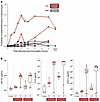 Figure 5
In animal models of ARDS and sepsis, hyperinflammatory biomarkers are provoked by Enterobacterales sepsis and increased pathogen burden. (A) In a swine model of ARDS, direct lung injury alone (aspiration, hyperoxia, volutrauma), did not provoke the biochemical features of the hyperinflammatory subphenotype, while combined direct lung injury and E. coli sepsis provoked the hyperinflammatory subphenotype in all exposed animals. (B) In a murine model of peritoneal sepsis, concentrations of blood biomarkers of the hyperinflammatory subphenotype (TNF-R1, IL-6, and CXCL1) were provoked by 2 models of Enterobacterales sepsis and potentiated by increased pathogen burden (increasing injected CFUs from 108 CFU to 109 CFU). Sepsis was modeled using intraperitoneal instillation of E. fergusonii and E. hormaechei. CXCL1 (also called KC) is the murine analogue to human IL-8.
We then used murine modeling to test the hypothesis that, among animals with Enterobacterales sepsis, increased pathogen burden will provoke the biochemical features of hyperinflammatory sepsis. To accomplish this, we used a model of bacterial peritonitis that has previously been described (41) (Figure 5B). We used 2 different pathogens within the Enterobacterales order: E. fergusonii and E. hormaechei, and compared both with animals treated with saline controls. Enterobacter hormaechei strain ATCC 700323 was obtained from the American Type Culture Collection. The E. fergusonii strain was initially isolated from a mouse cecum and demonstrated to have high sequence homology to Escherichia fergusonii (a gift of Vincent Young, University of Michigan, Ann Arbor, Michigan, USA) (42). For each species, we compared 2 concentrations of inocula: 108 and 109 CFU. We measured blood concentrations of 3 key biomarkers of the hyperinflammatory phenotype: sTNF-R1, IL-6, and CXCL1 (the murine analogue for IL-8). For all 3 analytes, increased pathogen burden provoked a greater concentration of the hyperinflammatory biomarker (P < 0.05 for all comparisons). We thus concluded that, in a murine model of Enterobacterales sepsis, congruent with our human data (Figure 3E), development of the hyperinflammatory response is associated with increased pathogen burden.
Clinical relevance of phenotype assignment: polymyxin B hemoadsorption.
Having established the relationship between gram-negative pathogens and the hyperinflammatory phenotype, we next asked whether the therapeutic benefit of polymyxin B hemoadsorption (which removes endotoxin from the bloodstream) varies by phenotype. We performed heterogeneity of treatment effect analysis of data from the EUPHRATES multicenter randomized controlled trial. Details regarding the trial and cohort have been published (43).
Given that this cohort was enriched for elevated endotoxin activity, and given the observed relationship between gram negative pathogens and hyperinflammatory status (Figure 3A), we first hypothesized that hyperinflammatory patients would be enriched within the EUPHRATES cohort relative to other sepsis cohorts. As shown in Figure 6A, 45% (200 of 449) of patients were classified as hypoinflammatory and 55% (249 of 449) as hyperinflammatory. As predicted, this percentage of hyperinflammatory patients was greater than that of our primary cohort and that of prior published cohorts where the prevalence of the hyperinflammatory phenotype is approximately 30%–40% (17, 19, 20). Another notable finding in this endotoxin-enriched cohort was that distribution of probabilities was bimodal, recapitulating the findings in Enterobacterales bacteremic patients in the University of Michigan cohort.
 Figure 6
In sepsis, the therapeutic benefit of polymyxin B hemoperfusion depends on subphenotype status. (A) In the EUPHRATES clinical trial of polymyxin B hemoperfusion, the study population (for which endotoxemia was an inclusion criterion) was relatively enriched with the hyperinflammatory subphenotype. (B) We observed a significant interaction between hyperinflammatory subphenotype assignment probability and 28-day mortality.
We next hypothesized that the therapeutic benefit of endotoxin removal would be greater in the hyperinflammatory phenotype. We found a significant treatment interaction between randomization group and phenotype classification for the primary outcome of 28-day mortality (P = 0.041), with the polymyxin B hemoadsorption (treatment) arm associated with lower deaths in hyperinflammatory and higher deaths in hypoinflammatory patients compared with the sham group. This significant interaction was also observed when we used phenotype probability as a continuous variable (P = 0.047; Figure 6B). Notably, we found no significant treatment interaction between randomization group and severity of illness as measured using the MOD score (P = 0.395) or endotoxin activity levels (P = 0.417).
Although the interaction was statistically significant, the pattern of effect modification reflected lower survival with polymyxin B among patients at the hypoinflammatory end of the spectrum, with diminishing differences at higher hyperinflammatory probabilities. The curves converged beyond approximately 0.7, suggesting that endotoxin removal may be harmful in hypoinflammatory sepsis and, at best, neutral in hyperinflammatory sepsis. Accordingly, these findings are best interpreted as evidence that treatment efficacy varies by inflammatory state, with harm avoidance in hypoinflammatory sepsis emerging as the most robust inference.


Copyright © 2026 American Society for Clinical Investigation
ISSN: 0021-9738 (print), 1558-8238 (online)