
Advertisement
Review
Open Access |  10.1172/JCI196507
Autoimmune neuropsychiatric disorders manifesting with psychosis
José Maria Cabrera-Maqueda,1,2 Jesús Planagumà,1 Mar Guasp,1,2,3 and Josep Dalmau1,2,3,4,5
1Institut d’Investigacions Biomèdiques August Pi i Sunyer (IDIBAPS), Barcelona, Spain.
2Service of Neurology, University Hospital Clínic of Barcelona, Barcelona, Spain.
3CaixaResearch Institute, Barcelona, Spain.
4Centre for Biomedical Network Research on Rare Diseases (CIBERER), Instituto de Salud Carlos III, Madrid, Spain.
5Department of Neurology, University of Pennsylvania, Philadelphia, Pennsylvania, USA.
Address correspondence to: Josep Dalmau, IDIBAPS-Hospital Clínic de Barcelona, Casanova, 143; 3rd floor, Barcelona 08036, Spain. Phone: 34.932.271.738; Email: jdalmau@clinic.cat.
Find articles by Cabrera-Maqueda, J. in: PubMed | Google Scholar
1Institut d’Investigacions Biomèdiques August Pi i Sunyer (IDIBAPS), Barcelona, Spain.
2Service of Neurology, University Hospital Clínic of Barcelona, Barcelona, Spain.
3CaixaResearch Institute, Barcelona, Spain.
4Centre for Biomedical Network Research on Rare Diseases (CIBERER), Instituto de Salud Carlos III, Madrid, Spain.
5Department of Neurology, University of Pennsylvania, Philadelphia, Pennsylvania, USA.
Address correspondence to: Josep Dalmau, IDIBAPS-Hospital Clínic de Barcelona, Casanova, 143; 3rd floor, Barcelona 08036, Spain. Phone: 34.932.271.738; Email: jdalmau@clinic.cat.
Find articles by Planagumà, J. in: PubMed | Google Scholar
1Institut d’Investigacions Biomèdiques August Pi i Sunyer (IDIBAPS), Barcelona, Spain.
2Service of Neurology, University Hospital Clínic of Barcelona, Barcelona, Spain.
3CaixaResearch Institute, Barcelona, Spain.
4Centre for Biomedical Network Research on Rare Diseases (CIBERER), Instituto de Salud Carlos III, Madrid, Spain.
5Department of Neurology, University of Pennsylvania, Philadelphia, Pennsylvania, USA.
Address correspondence to: Josep Dalmau, IDIBAPS-Hospital Clínic de Barcelona, Casanova, 143; 3rd floor, Barcelona 08036, Spain. Phone: 34.932.271.738; Email: jdalmau@clinic.cat.
Find articles by Guasp, M. in: PubMed | Google Scholar
1Institut d’Investigacions Biomèdiques August Pi i Sunyer (IDIBAPS), Barcelona, Spain.
2Service of Neurology, University Hospital Clínic of Barcelona, Barcelona, Spain.
3CaixaResearch Institute, Barcelona, Spain.
4Centre for Biomedical Network Research on Rare Diseases (CIBERER), Instituto de Salud Carlos III, Madrid, Spain.
5Department of Neurology, University of Pennsylvania, Philadelphia, Pennsylvania, USA.
Address correspondence to: Josep Dalmau, IDIBAPS-Hospital Clínic de Barcelona, Casanova, 143; 3rd floor, Barcelona 08036, Spain. Phone: 34.932.271.738; Email: jdalmau@clinic.cat.
Find articles by Dalmau, J. in: PubMed | Google Scholar
Published October 15, 2025 - More info
J Clin Invest. 2025;135(20):e196507. https://doi.org/10.1172/JCI196507.
© 2025 Cabrera-Maqueda et al. This work is licensed under the Creative Commons Attribution 4.0 International License. To view a copy of this license, visit http://creativecommons.org/licenses/by/4.0/.

-
Psychosis and its causes
A psychotic disorder refers to a set of symptoms collectively known as psychosis (Table 1), which can arise from various underlying conditions (1). Psychotic symptoms are most often associated with mental illnesses but can also result from systemic autoimmune or inflammatory diseases, neurologic disorders (e.g., genetic, neurodegenerative, brain tumors, epilepsy, encephalitis), organ failure, or metabolic, toxic, drug-related, or iatrogenic causes (2–8). Schizophrenia spectrum disorders, the prototypical group of mental illnesses causing psychosis, are manageable but not curable, with a continued risk of recurrent psychotic episodes. In contrast, many acquired causes of psychosis are both treatable and curable upon resolution of the underlying condition. While the exact causes and mechanisms of schizophrenia remain poorly understood, systemic and neurologic disorders associated with psychotic features are better characterized and often more effectively prevented. These concepts, along with observations that schizophrenia and related disorders are more prevalent in patients with inflammatory or autoimmune diseases (and vice versa), have periodically sparked interest in immune mechanisms as potential contributors to psychiatric illnesses (9–11). Evidence suggesting that treating these conditions may positively influence mental health has reinforced this interest.
This Review explores the psychotic features of autoimmune encephalitides, particularly anti-NMDA receptor (NMDAR) encephalitis, and examines whether neuronal antibody-mediated psychosis or distinct psychiatric disorders may occur independently of these conditions.

-
NMDAR and other autoimmune encephalitides
In 2005, a report detailing four young women with a newly identified neuropsychiatric syndrome — marked by initial psychotic symptoms and the presence of autoantibodies targeting a neuronal cell surface protein, later characterized as the NMDAR — reignited the interest in autoimmune neuropsychiatric disorders (39, 40). Key features of this disease are that the autoantibodies are of the IgG class, target the GluN1 subunit of NMDAR, and are consistently present in the CSF, though they are variably present in serum, with approximately 15% of patients being seronegative (41, 42).
The estimated annual incidence of anti-NMDAR encephalitis is 1.2–2 cases per million people, varying by ethnicity, and primarily affecting children and young adults (median age ~21 years) (42–44). Approximately 70% of patients are female. Known triggers include tumors, most commonly ovarian teratomas, and less frequently herpes simplex encephalitis; however, in 50%–60% of cases, the trigger remains unidentified (42, 45). The disease often presents with isolated psychotic and behavioral symptoms, making early differentiation from primary psychiatric disorders challenging (46, 47). Although most patients develop additional neurological symptoms within days or weeks, such as seizures, abnormal movements, or reduced consciousness, 5%–10% exhibit predominantly psychotic or behavioral change throughout, often with early-onset insomnia (42, 48). The complexity of these presentations has led to efforts to define a distinct psychopathology for anti-NMDAR encephalitis (49–51) or classify them as “atypical” or “cycloid” psychosis (52, 53), though with limited clinical utility. Consequently, nearly half of patients are initially misdiagnosed with a primary psychiatric disorder, admitted to psychiatric wards, and treated with neuroleptics, increasing the risks of adverse effects that resemble neuroleptic malignant syndrome (54, 55).
Approximately 80% of patients with anti-NMDAR encephalitis experience substantial recovery; however, the disease course is prolonged (42). While functional neurological deficits and seizures tend to resolve earlier, cognitive and psychiatric symptoms can persist for many months (55–57). One study during the postacute phase found that 14% of patients transiently met criteria for schizophrenia when their recent history of encephalitis-related neurological deficits was not disclosed (55). Further analyses revealed that patients with anti-NMDAR encephalitis and those with schizophrenia exhibited similar working memory deficits in a delayed-response task. Compared with age-matched healthy participants, both populations showed a significantly reduced influence of previous stimuli on working memory content, despite memory performance being generally maintained (58). Computational simulations using a prefrontal cortex microcircuit model revealed an NMDAR-dependent process operating over longer timescales and involving mechanisms more complex than simple excitation/inhibition regulation, such as short-term potentiation (58). A key distinction was that patients with anti-NMDAR encephalitis recovered, whereas those with schizophrenia did not (55, 58), a finding supported by other studies (59).
The discovery of anti-NMDAR encephalitis was soon followed by the identification of other autoimmune encephalitides involving autoantibodies against various synaptic receptors or surface proteins (Table 2) (60). Although many of these patients present with neuropsychiatric symptoms, they are typically accompanied by concurrent or early neurological signs such as seizures, memory impairment, or altered consciousness. Abnormal findings on MRI, EEG, and CSF analysis usually help reveal the underlying neuroinflammatory process (61).
Beyond anti-NMDAR encephalitis, few studies have examined the psychotic features in other autoimmune encephalitis. One study on anti-LGI1 encephalitis — the second most common neuronal antibody-mediated encephalitis — found that, after excluding cases with neurological symptoms or those lacking core psychotic features (e.g., hallucinations, catalepsy), only 5 of 46 patients presented with isolated psychosis (62). All five patients later developed neurological deficits. A literature review in the same study identified 50 anti-LGI1 cases with reported psychosis, but only six met criteria for isolated psychosis after identical exclusions (62). Another study of 152 patients with antibodies detected by an immunoprecipitation assay — now obsolete but capable of identifying LGI1 antibodies in some cases — reported visual hallucinations in five patients and delusions in three, though only two were initially diagnosed with a primary psychiatric disorder, both with affective features (63). In the other forms of autoimmune encephalitis (Table 2), such presentations remain uncommon and largely anecdotal.
Taken together, the predominance of psychiatric symptoms, including both positive and negative psychotic features (Table 1), and the specific targeting of NMDARs uniquely distinguish anti-NMDAR encephalitis from other forms of autoimmune encephalitis.

-
Mechanisms of anti-NMDAR encephalitis
Neuropathological studies in anti-NMDAR encephalitis reveal mild-to-moderate brain infiltrates of B cells and plasma cells that predominate over T cells, reduced NMDAR immunostaining, extensive microglial activation, and mild or absent neuronal loss (40, 64, 65). Experimental models show that patients’ antibodies exert effects at three levels: neuronal synapses and networks, microglia, and oligodendroglia and white matter (Figure 1).
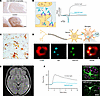 Figure 1
Effects of NMDAR autoantibodies on neurons and synaptic networks, microglia, and white matter. (A) Hippocampus from the autopsy of a patient with anti-NMDAR encephalitis (top) shows markedly reduced expression of NMDARs detected using a specific biomarker (brown immunostaining), compared with a control hippocampus (bottom) (65). (B) Experimental studies demonstrate that the antibodies crosslink and internalize NMDARs (left). This disrupts long-term potentiation compared with control-IgG (right) (66, 156), associated with impairment of function of NMDAR-dependent networks (72). (C) Microglial activation is consistently observed in patient neuropathological studies, as shown with HLA-DR staining (65). (D) Experimental models demonstrate that activated microglia endocytose IgG bound to NMDARs (top), with stimulated emission depletion (STED) superresolution microscopy confirming colocalization of endosomes (CD68), IgG, and the GluN1 subunit of NMDAR (bottom) (77). Microglia may process internalized NMDARs, contributing to epitope spreading and the polyclonal antibody response, likely occurring in deep cervical lymph nodes (not shown). (E) MRI from a patient with anti-NMDAR encephalitis shows mild increase of FLAIR signal in the left parietal region. (F) Although MRI studies in patients with anti-NMDAR encephalitis are often unremarkable, experimental data from cultured oligodendrocytes show that patients’ antibodies, but not control IgG, impair NMDAR-mediated calcium currents (left), which lead to reduced surface expression of GLUT1 (right; GLUT1 shown in pink), likely contributing to white matter abnormalities frequently observed with advanced neuroimaging, such as diffusion tensor imaging (81, 82). GLUT1, glucose transporter 1. Scale bars: 1 mm (A); 20 μm (C); 100 nm (D); 10 μm (F). Images were reproduced with permission from Annals of Neurology (65) (A), Annals of Neurology (40) (C), Brain (77) (D), New England Journal of Medicine (157) (E), and Annals of Neurology (82) (F).
Initial studies with live immunocytochemistry on cultured rat hippocampal neurons showed that NMDAR-IgG crosslinked and internalized receptors, reducing synaptic and extrasynaptic NMDAR clusters and spontaneous NMDAR-mediated currents (66). These findings associated with a disruption of the cell-surface dynamics and organization of NMDARs (67, 68). Cerebroventricular transfer of patient-derived IgG, CSF, or monoclonal antibodies to mice replicated these effects in hippocampal slices and impaired hippocampal plasticity, inducing psychosis-like behavior, anhedonia, depression-like symptoms, memory deficits, and lowered seizure threshold, all reversible upon antibody clearance (69, 70). The decrease in density of cell surface NMDARs was also associated with a decrease of dopamine 1 receptor (D1R) and increase of D2R (71). Further studies demonstrated antibody-mediated hippocampal network dysfunction, including impaired excitatory-inhibitory balance, CA1 neuronal hypoexcitability, reduced AMPA receptor signaling, and faster synaptic inhibition, ultimately triggering increased γ-oscillations in brain slices (72).
In another passive transfer model, patients’ autoantibodies were injected into the medial prefrontal cortex (mPFC) of mice, resulting in a preferential reduction in the excitability of parvalbumin (PV) neurons (73). PV neurons provide major inhibition to pyramidal neurons, and subsequent studies confirmed reduced inhibitory effects of mPFC PV neurons on local pyramidal neurons in NMDAR IgG-injected mice compared with controls. Because cortical PV neurons regulate γ-oscillations, which are important for cognitive function, the antibody-mediated reduction of NMDAR in these neurons led to a loss of NMDAR antagonist-induced cortical γ-oscillations (73). Overall, these findings resemble the effects of direct NMDAR antagonists, which are commonly used to model cognitive and psychotic features of schizophrenia (74–76).
Active immunization models, where mice generate an endogenous immune response against NMDARs, have successfully recapitulated key clinical and neuropathological features of anti-NMDAR encephalitis, including psychotic-like behavior, memory impairment, lowered seizure threshold, and abnormal movements in a subset of animals (77–80). These manifestations are accompanied by antibody-mediated reduction of synaptic NMDAR density, impaired hippocampal plasticity, and widespread microglial activation, which may contribute to epitope spreading and development of a polyclonal anti-NMDAR immune response (77).
Although standard clinical brain MRI studies are unremarkable in approximately 60% of anti-NMDAR encephalitis patients and reveal only mild-to-moderate nonspecific changes in others (42), diffusion tensor imaging studies often detect superficial white matter abnormalities that correlate with cognitive deficits (81). A potential NMDAR-specific effect on myelin integrity is supported by experiments in cultured oligodendrocytes, where patient-derived antibodies reduced NMDAR-mediated currents and decreased surface expression of the glucose transporter 1 (GLUT1), an essential component for maintaining myelin health and providing metabolic support to axons (82).
Collectively, clinical, pathological, and experimental evidence converge on a mechanism in which reduced synaptic NMDAR content and function are identified as primary drivers of the neuropsychiatric alterations in anti-NMDAR encephalitis.
-
Neurotransmitter and pharmacological theories of psychosis
Psychosis has traditionally been linked to a hyperdopaminergic state involving D2Rs in the ventral striatum (nucleus accumbens), part of the mesolimbic dopamine pathway (Figure 2A) (83). This theory, supported by symptom relief from D2R-blocking drugs, has been held for over 50 years. An alternative theory, the NMDAR hypofunction/glutamate hypothesis, proposes reduced NMDAR receptor function, especially in prefrontal cortical GABAergic interneurons, leading to excess glutamatergic input to the ventral tegmental area (VTA), resulting in a hyperdopaminergic state in the mesolimbic region (Figure 2B) (84, 85).
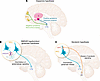 Figure 2
The three hypotheses of psychosis. (A) The classical theory of psychosis posits that dopamine hyperactivity at D2 receptors (D2Rs) in the mesolimbic pathway, particularly from ventral tegmental area (VTA) projections to the ventral striatum (nucleus accumbens), drives positive symptoms such as delusions and hallucinations in schizophrenia and manic psychosis. In contrast, dopamine hypoactivity in the mesocortical pathway is thought to underlie negative and cognitive symptoms. Typical antipsychotics that block D2Rs in the mesolimbic pathway also affect the nigrostriatal pathway (not shown), causing motor side effects such as parkinsonism and, over time, tardive dyskinesia (84). (B) A more recent theory of psychosis, the NMDAR hypofunction/glutamate hypothesis, proposes that dopamine hyperactivity is a downstream consequence of glutamate dysregulation in the prefrontal cortex. This hypothesis suggests that reduced NMDAR activity on GABAergic interneurons (due to neurodevelopmental abnormalities in schizophrenia or receptor internalization in anti-NMDAR encephalitis) leads to disinhibition of glutamatergic signaling, involving the VTA and activating the mesolimbic dopamine pathway. Experimental models using patient-derived autoantibodies and mouse models of anti-NMDAR encephalitis show psychosis-like behavior and reduced synaptic NMDAR content and function, supporting this mechanism (71, 73, 77). (C) A third theory, the serotonin hypothesis, is based on findings that 5-HT2A receptor antagonism, without D2R blockade, can be effective in treating certain forms of psychosis, such as those associated with dementia or Parkinson’s disease. In these conditions, excess serotonin signaling may result from 5-HT2A receptor upregulation, increased serotonin release, or both. This activation promotes downstream glutamate release, involving the VTA and other regions such the visual cortex, potentially contributing to symptoms like visual hallucinations (84). NA, nucleus accumbens; NMDAR, N-methyl-D-aspartate receptor; PV, parvalbumin interneuron; PFC, prefrontal cortex; RF, raphe nuclei; S, dorsal striatum; VTA, ventral tegmental area; 5-HT2A, 5-hydroxytryptamine 2A receptor.
More recently, the effectiveness of pimavanserin, a 5-hydroxytryptamine 2A (5-HT2A, or serotonin 2A) receptor antagonist with no activity on D2R, in treating psychosis in Parkinson’s disease has suggested a third theory: the serotonin hypothesis (86). According to this model, excess serotonin release, increased 5-HT2A receptor expression, or both may trigger downstream glutamate release, which in turn stimulates the VTA (Figure 2C) (87).
Clinically, the roles of these three neurotransmitters in psychosis have long been recognized through pharmacological models. For example, it is known that psychostimulants, dissociative anesthetics, and psychedelics each induce distinct psychotic symptoms (87–90). Psychostimulants like cocaine and amphetamine increase dopamine release and D2R stimulation, typically leading to auditory hallucinations and paranoid delusions (83, 88). Anesthetics such as phencyclidine and ketamine, which are noncompetitive antagonists of NMDAR, cause visual hallucinations, paranoid delusions, and dissociative states (75, 91). Hallucinogens like LSD and psilocybin act mainly as 5-HT2A agonists, producing visual hallucinations and religious/mystical delusions (92).
Alongside the observation that different drugs can elicit varying psychotic symptoms, it is also recognized that psychosis from neurological and psychiatric disorders may present with some symptom differences. For instance, the auditory hallucinations and paranoid delusions linked to dopaminergic hyperactivity in schizophrenia differ from the visual hallucinations and persecutory or jealous delusions more commonly observed in Parkinson’s disease or dementia, where early insight is often preserved (86, 93). While D2R blockers improve the psychotic features in schizophrenia and in manic or depressive psychosis, they worsen those associated with Parkinson’s disease or dementia, which respond better to the 5-HT2A antagonist pimavanserin (86).
As expected, the psychotic features of anti-NMDAR encephalitis align more closely with the NMDAR hypofunction/glutamate hypothesis than with the dopamine or serotonin models, though none provides a perfect fit (94). The clinical context and salient features for differentiating anti-NMDAR encephalitis-related psychosis are summarized in Table 3 (95). Features that frequently raise suspicion for anti-NMDAR encephalitis include the absence of a prodromal phase, the coexistence of positive and negative symptoms, pronounced fluctuations (within minutes to hours) between extreme agitation and catatonic features, manic behavior, and frequent intolerance to antipsychotic medications, particularly typical antipsychotics. Insomnia and cognitive deficits, although present in schizophrenia, tend to be disproportionately severe in the presentation of anti-NMDAR encephalitis (48, 55). Many patients show sexual disinhibition along with grandiose, religious, referential, or persecutory delusions. Hyperthermia, rigidity, decreased consciousness, elevated creatine kinase, and rhabdomyolysis, suggestive of neuroleptic malignant syndrome, may also occur in neuroleptic-naive patients (54, 96, 97).
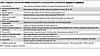 Table 3
Diagnostic clues for anti-NMDAR encephalitis in acute psychiatric presentations (SEARCH For NMDAR-A)
In contrast, the biological pathways linking psychiatric symptoms to the mechanisms of other antibody-mediated encephalitides remain largely unexplored. This is due to (a) the lower prevalence of these disorders and the early overlap of neurological and psychiatric symptoms, which has led to less interest in studying the mechanisms of isolated psychosis (62, 98); (b) the absence of known autoantigens aligning with the major psychosis models, except for D2R antibody-associated encephalitis, which is exceptionally rare (98); and (c) the potential contribution of inflammation itself to psychosis, as observed in infectious (99–102) and systemic autoimmune conditions (103, 104).
Overall, clinical and mechanistic studies of anti-NMDAR encephalitis, supporting the NMDAR hypofunction/glutamate hypothesis of psychosis, along with rare psychiatric presentations in other autoimmune encephalitides, have prompted research into autoantibodies in schizophrenia and related conditions.
-
Neuronal autoantibodies in schizophrenia and other psychiatric diseases
Numerous studies investigating the prevalence of autoantibodies in schizophrenia, other psychiatric disorders, and first-onset psychosis, suggest that the likelihood of identifying clinically relevant autoantibodies is low. A review of 18 series published up to 2021, collectively involving 6,573 patients with primary psychiatric disorders, found that only 50 (1%) had IgG NMDAR antibodies; a similar prevalence was observed in the control group, in which 36 (1%) of 3,893 cases had IgG NMDAR antibodies (61). In 10 of these series, no antibodies were detected in any patient with schizophrenia, schizophrenic disorders, or affective/mood disorders. Among the remaining studies, the prevalence of NMDAR antibodies in schizophrenia spectrum disorders ranged from 1% to 19%. In general, seropositive cases exhibited clinical features and outcomes comparable to those of seronegative patients. Notably, only one of the 18 studies systematically tested CSF, identifying 2 of 741 patients as “questionable” when assessing whether they were positive for NMDAR antibodies (105). Subsequent studies conducted between 2020 and 2024 have yielded similar findings (Table 4).
In the study in which 19% of patients with schizophrenia exhibited NMDAR antibodies in serum but not CSF, single-particle tracking in neurons exposed to patients’ IgG revealed disrupted NMDAR surface dynamics and receptor internalization, mirroring the effects seen in anti-NMDAR encephalitis (106). However, other studies by the same authors failed to reproduce the initially high antibody prevalence, raising doubts about missed anti-NMDAR encephalitis diagnoses in the initial series (107). A follow-up study using the same methods in CSF from patients with schizophrenia (apparently lacking NMDAR antibodies) demonstrated altered NMDAR surface dynamics and organization via unclear mechanisms (108).
It has been proposed that in psychiatric patients with serum NMDAR antibodies, only a small fraction of the antibodies crosses the blood-brain barrier, altering NMDAR surface dynamics and promoting internalization (106). The absence of detectable CSF antibodies in such cases has been attributed to their absorption by brain NMDARs (109). However, this theory remains unproven (110). Given the high antibody levels during anti-NMDAR encephalitis and their persistence at lower titers for months or years after recovery, any antibody-mediated link to schizophrenia or other psychiatric disorders would likely have been observed in individuals with prior encephalitis; however, such an association has not been observed (111, 112).
A range of autoantibodies typically associated with rheumatologic, neurologic, or paraneoplastic disorders has been reported in rare instances of schizophrenia and other psychiatric disorders. Many of these antibodies have uncertain clinical significance, even in their more common nonpsychiatric associations, such as voltage-gated potassium channels (VGKC) antibodies in limbic encephalitis (113, 114), thyroid peroxidase (TPO) in Hashimoto encephalitis (104, 105), NR2 antibodies in SLE (115), the Cunningham panel in pediatric autoimmune neuropsychiatric disorders associated with streptococcal infections (PANDAS)/pediatric acute-onset neuropsychiatric syndrome (PANS) (116), and antinuclear antibodies (ANA) in various disorders (117). The rare psychiatric cases presenting with onconeural antibodies likely reflect diagnostic inaccuracies or erroneous causal inferences, for example, the misattribution of Yo antibodies to limbic encephalitis (118). In a study of 585 patients admitted to acute psychiatric care and tested for onconeural antibodies, only one was positive for recoverin antibodies (which has no clinical value outside paraneoplastic retinopathy) (117, 119). Thus, onconeural antibody testing is not justified in well-established primary psychiatric conditions (120).
Using a different approach focused on identifying novel autoantibodies in patients with schizophrenia, researchers identified NCAM1 and neurexin-1α as targets in 5% and 2% of patients, respectively (121, 122). NCAM1 autoantibodies were also present in 1% of healthy individuals acting as controls and have been previously reported in lupus nephritis (123), whereas neurexin-1α antibodies were absent in individuals acting as controls. Both autoantibodies induced behavioral and synaptic changes in passive transfer mouse models, though their clinical significance remains unclear. The antibodies were detected a median of 24.5 and 22.5 years after schizophrenia diagnosis. Clinical features, demographics, and comorbidities were similar between antibody-positive and -negative patients, except for apparent resistance to antipsychotics in the antibody-positive group. The effect of immunotherapy was not assessed, and further studies are needed to determine clinical relevance.
Finally, some reports on schizophreniform and affective psychosis describe novel CNS autoantibodies based solely on reactivity patterns (e.g., vascular, astrocytic, granule cells, Purkinje cells, myelin tracts) (105, 124, 125). However, these studies exhibit important methodological shortcomings: antigens remained unidentified, CNS specificity was untested, controls were absent, or similar patterns were present in unrelated conditions, from obsessive-compulsive disorder to COVID-19, without clinical or therapeutic relevance. In such cases, the discovery process should match the rigor used in characterizing established autoimmune encephalitis, including the identification of specific target antigens, biological markers of CNS autoimmunity (e.g., CSF pleocytosis, elevated IgG index, autoantibodies), and well-defined syndrome-antibody associations, which may ultimately lead to the recognition of a novel autoimmune psychiatric disorder.

-
Neuronal autoantibodies in first episode of psychosis
Given that psychosis is a syndrome with diverse causes, a higher detection rate of neuronal surface antibodies might be expected in first-episode psychosis compared with schizophrenia or other primary psychiatric disorders. A 2021 review of 13 studies involving 1,651 patients with first-episode psychosis found serum NMDAR antibodies in 51 cases (3%), with reported rates ranging from 0% to 12%; 8 of 11 studies reported frequencies at or below 3% (61). Among 656 individuals acting as controls, 3 (0.5%) were antibody positive. Only one study systematically tested both serum and CSF in all patients (n = 105), yielding negative results for NMDAR and other neuronal antibodies (126). In the remaining 12 studies, CSF was assessed in just 7 of 1,546 patients, with 4 positives — each diagnosed with anti-NMDAR encephalitis (3 with classic neurological features, 1 with isolated psychiatric symptoms).
The unexpectedly low serum autoantibody rates in first-onset psychosis raised the possibility that CSF testing might reveal more autoimmune cases (127, 128). To investigate this, a study assessed the clinical features and CSF antibodies in 105 consecutive first-onset psychosis patients (126). The median age was 30 years (range, 14–75 years), 42% of participants were female, and none had detectable neuronal antibodies. CSF pleocytosis was found in 2%, MRI abnormalities in 4%, and EEG changes in 4%, a sharp contrast to anti-NMDAR and other antibody-mediated encephalitides, where such abnormalities are detected in over 80% (CSF/MRI) and 90% (EEG) of patients (61).
Since 2021, studies examining neuronal autoantibodies in serum and CSF of patients with first episode of psychosis have reported findings consistent with earlier data (Table 5). Therefore, contrary to prior assumptions, systematic CSF testing has not identified novel psychosis-specific autoantibodies or increased rates of autoimmune causes beyond established diseases such as anti-NMDAR encephalitis.

-
Implications of neuronal autoantibody findings
Most investigations into neuronal autoantibodies in psychiatric disorders rely on a single testing modality, typically cell-based assay (CBA; Figure 3, A and B). Among these, NMDAR antibodies are the most frequently reported, detected in 194 of 11,468 serum samples (1.7%) across 32 psychiatric cohorts published between 2010 and 2024 (Figure 3C). In CSF, NMDAR antibodies were found in 17 of 2,425 samples (0.7%) from 11 cohorts (Figure 3D).
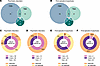 Figure 3
Tests and samples used in studies of neuronal autoantibodies. (A and B) Number of studies examining neuronal autoantibodies in patients with psychiatric disorders (A) or first episode of psychosis (B), categorized by the techniques used: cell-based assay (CBA), tissue-based assay (TBA), or live immunocytochemistry on cultured neurons (LN). (C and D) Number of tests (CBA and/or TBA) performed and corresponding diagnoses in patients with psychiatric disorders and NMDAR antibodies in serum (C) or CSF (D). (E and F) Number of tests (CBA and/or TBA) performed and corresponding diagnoses in patients with first episode of psychosis and NMDAR antibodies in serum (E) or CSF (F). No studies reporting NMDAR antibodies in patients with psychiatric disorders or first episode of psychosis have systematically used the three indicated techniques. Notably, all individuals with NMDAR antibodies detected in CSF, regardless of whether they were initially diagnosed with a psychiatric disorder or first episode of psychosis, were ultimately found to have anti-NMDAR encephalitis and were mostly treated with immunotherapy. In contrast, patients with NMDAR antibodies only in serum (either not tested in CSF or CSF negative), without clinical or paraclinical features of anti-NMDAR encephalitis, typically exhibited symptoms similar to antibody-negative individuals and usually received standard psychiatric care. NMDARE, anti-NMDA receptor encephalitis.
Among patients with a first episode of psychosis, NMDAR antibodies were detected in 85 of 2,106 serum samples (4%) across 19 cohorts and in 26 of 491 CSF samples (5.3%) from 10 cohorts published between 2014 and 2024 (Figure 3, E and F).
Altogether, detection of NMDAR antibodies in CSF, whether using one or two methods, typically aligns with the clinical and paraclinical features, as well as comorbidities characteristic of anti-NMDAR encephalitis (Tables 4 and 5). In contrast, serum antibody findings are less consistent, even with identical methods, as reflected by the variability across cohorts with the same diagnoses (Tables 4 and 5) (129, 130). Similar inconsistencies are seen in control groups, with some studies reporting comparable antibody rates in healthy individuals and psychiatric patients (131–134).
Given the absent or minimal clinical differences between antibody-negative patients and those with serum-only positivity in the absence of other features of anti-NMDAR encephalitis, most experts recommend standard psychiatric care (135) and discourage neuronal antibody testing in schizophrenia and other established psychiatric disorders (136).
Similarly, in first episode of psychosis, detection of serum NMDAR antibodies without CSF positivity or other abnormalities (pleocytosis, elevated IgG index) should prompt neurology and laboratory consultation to evaluate for anti-NMDAR encephalitis and a potential false negative CSF result. In the absence of additional evidence beyond serum antibodies and isolated psychosis, immunotherapy is not indicated, and treatment should proceed with conventional antipsychotics (137).
Article tools
- Download citation information
- Send a comment
- Terms of use
- Standard abbreviations
- Need help? Email the journal
Metrics
Go to
- Top
- Abstract
- Psychosis and its causes
- Inflammation and autoimmunity in psychiatric disorders
- NMDAR and other autoimmune encephalitides
- Mechanisms of anti-NMDAR encephalitis
- Neurotransmitter and pharmacological theories of psychosis
- Neuronal autoantibodies in schizophrenia and other psychiatric diseases
- Neuronal autoantibodies in first episode of psychosis
- Implications of neuronal autoantibody findings
- Current challenges and research priorities
- Acknowledgments
- Footnotes
- References
- Version history


Copyright © 2026 American Society for Clinical Investigation
ISSN: 0021-9738 (print), 1558-8238 (online)