
Abstract
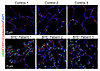
Germline loss-of-function folliculin (FLCN) gene mutations cause Birt-Hogg-Dubé (BHD) syndrome, in which pulmonary cysts are present in up to 90% of the patients. The pathogenic mechanisms underlying lung cyst development in BHD are almost entirely unknown because of the limited availability of BHD patient lung samples and the lack of authentic BHD lung disease models. We generated lung mesenchyme–specific and lung epithelium–specific Flcn-knockout mice using a Cre/loxP approach. We found that deletion of Flcn in lung mesenchymal cells, but not in lung epithelial cells, resulted in alveolar enlargement starting from early postnatal life, with evidence of cyst formation in adult mice, resembling the pulmonary disease in human BHD. These changes were associated with increased mechanistic target of rapamycin complex 1 (mTORC1) activity in the lungs of both patients with BHD and Flcn-knockout mice. Attenuation of mTORC1 activity by knocking out Raptor gene (Rptor) or pharmacologic inhibition using rapamycin substantially rescued the pulmonary pathology caused by Flcn deletion in mice. Taken together, these human and mouse data support a model in which mTORC1 hyperactivation drives pulmonary cystic pathology in BHD.
Authors
Ke Cao, Hui Chen, Ling Chu, Hong-Jun Wang, Jianhua Zhang, Yongfeng Luo, Joanne Chiu, Damir Khabibullin, Nicola Alesi, Matthew E. Thornton, Brendan H. Grubbs, Ali Ataya, Nishant Gupta, Francis X. McCormack, Kathryn A. Wikenheiser-Brokamp, Elizabeth P. Henske, Wei Shi
Supporting data values - Download (23.21 KB)
No preview available for this file type: xlsx
Use the download link to access the file.


Copyright © 2026 American Society for Clinical Investigation
ISSN: 0021-9738 (print), 1558-8238 (online)