
Advertisement
Research ArticleCell biologyDevelopmentPulmonology
Open Access |  10.1172/JCI194300
Hyperactivation of mTORC1 signaling mediates folliculin deficiency–induced pulmonary cyst formation in Birt-Hogg-Dubé syndrome
Ke Cao,1 Hui Chen,1 Ling Chu,2 Hong-Jun Wang,1 Jianhua Zhang,1 Yongfeng Luo,2 Joanne Chiu,2 Damir Khabibullin,3 Nicola Alesi,3 Matthew E. Thornton,4 Brendan H. Grubbs,4 Ali Ataya,5 Nishant Gupta,1 Francis X. McCormack,1 Kathryn A. Wikenheiser-Brokamp,6,7 Elizabeth P. Henske,3 and Wei Shi1
1Division of Pulmonary, Critical Care and Sleep Medicine; Department of Internal Medicine; University of Cincinnati College of Medicine, Cincinnati, Ohio, USA.
2The Saban Research Institute, Children’s Hospital Los Angeles, Keck School of Medicine, University of Southern California, Los Angeles, California, USA.
3Division of Pulmonary and Critical Care Medicine, Brigham and Women’s Hospital and Harvard Medical School, Boston, Massachusetts, USA.
4Division of Maternal Fetal Medicine, Department of Obstetrics and Gynecology, Keck School of Medicine, University of Southern California, Los Angeles, California, USA.
5Division of Pulmonary, Critical Care and Sleep Medicine; Department of Internal Medicine; College of Medicine, University of Florida, Gainesville, Florida, USA.
6Division of Pathology & Laboratory Medicine and Perinatal Institute Division of Pulmonary Biology, Cincinnati Children’s Hospital Medical Center, Cincinnati, Ohio, USA.
7Department of Pathology & Laboratory Medicine, University of Cincinnati College of Medicine, Cincinnati, Ohio, USA.
Address correspondence to: Elizabeth P. Henske, Thorn 826, Brigham and Women’s Hospital, 45 Francis St., Boston, Massachusetts, 02115, USA. Email: ehenske@bwh.harvard.edu. Or to: Wei Shi, University of Cincinnati, 231 Albert Sabin Way, ML0564, Cincinnati, Ohio, 45267, USA. Email: shiwe@ucmail.uc.edu.
Authorship note: KC and HC contributed equally to this work as co–first authors. EPH and WS have been designated as co–senior authors.
Find articles by Cao, K. in: PubMed | Google Scholar
1Division of Pulmonary, Critical Care and Sleep Medicine; Department of Internal Medicine; University of Cincinnati College of Medicine, Cincinnati, Ohio, USA.
2The Saban Research Institute, Children’s Hospital Los Angeles, Keck School of Medicine, University of Southern California, Los Angeles, California, USA.
3Division of Pulmonary and Critical Care Medicine, Brigham and Women’s Hospital and Harvard Medical School, Boston, Massachusetts, USA.
4Division of Maternal Fetal Medicine, Department of Obstetrics and Gynecology, Keck School of Medicine, University of Southern California, Los Angeles, California, USA.
5Division of Pulmonary, Critical Care and Sleep Medicine; Department of Internal Medicine; College of Medicine, University of Florida, Gainesville, Florida, USA.
6Division of Pathology & Laboratory Medicine and Perinatal Institute Division of Pulmonary Biology, Cincinnati Children’s Hospital Medical Center, Cincinnati, Ohio, USA.
7Department of Pathology & Laboratory Medicine, University of Cincinnati College of Medicine, Cincinnati, Ohio, USA.
Address correspondence to: Elizabeth P. Henske, Thorn 826, Brigham and Women’s Hospital, 45 Francis St., Boston, Massachusetts, 02115, USA. Email: ehenske@bwh.harvard.edu. Or to: Wei Shi, University of Cincinnati, 231 Albert Sabin Way, ML0564, Cincinnati, Ohio, 45267, USA. Email: shiwe@ucmail.uc.edu.
Authorship note: KC and HC contributed equally to this work as co–first authors. EPH and WS have been designated as co–senior authors.
Find articles by Chen, H. in: PubMed | Google Scholar
1Division of Pulmonary, Critical Care and Sleep Medicine; Department of Internal Medicine; University of Cincinnati College of Medicine, Cincinnati, Ohio, USA.
2The Saban Research Institute, Children’s Hospital Los Angeles, Keck School of Medicine, University of Southern California, Los Angeles, California, USA.
3Division of Pulmonary and Critical Care Medicine, Brigham and Women’s Hospital and Harvard Medical School, Boston, Massachusetts, USA.
4Division of Maternal Fetal Medicine, Department of Obstetrics and Gynecology, Keck School of Medicine, University of Southern California, Los Angeles, California, USA.
5Division of Pulmonary, Critical Care and Sleep Medicine; Department of Internal Medicine; College of Medicine, University of Florida, Gainesville, Florida, USA.
6Division of Pathology & Laboratory Medicine and Perinatal Institute Division of Pulmonary Biology, Cincinnati Children’s Hospital Medical Center, Cincinnati, Ohio, USA.
7Department of Pathology & Laboratory Medicine, University of Cincinnati College of Medicine, Cincinnati, Ohio, USA.
Address correspondence to: Elizabeth P. Henske, Thorn 826, Brigham and Women’s Hospital, 45 Francis St., Boston, Massachusetts, 02115, USA. Email: ehenske@bwh.harvard.edu. Or to: Wei Shi, University of Cincinnati, 231 Albert Sabin Way, ML0564, Cincinnati, Ohio, 45267, USA. Email: shiwe@ucmail.uc.edu.
Authorship note: KC and HC contributed equally to this work as co–first authors. EPH and WS have been designated as co–senior authors.
Find articles by Chu, L. in: PubMed | Google Scholar
1Division of Pulmonary, Critical Care and Sleep Medicine; Department of Internal Medicine; University of Cincinnati College of Medicine, Cincinnati, Ohio, USA.
2The Saban Research Institute, Children’s Hospital Los Angeles, Keck School of Medicine, University of Southern California, Los Angeles, California, USA.
3Division of Pulmonary and Critical Care Medicine, Brigham and Women’s Hospital and Harvard Medical School, Boston, Massachusetts, USA.
4Division of Maternal Fetal Medicine, Department of Obstetrics and Gynecology, Keck School of Medicine, University of Southern California, Los Angeles, California, USA.
5Division of Pulmonary, Critical Care and Sleep Medicine; Department of Internal Medicine; College of Medicine, University of Florida, Gainesville, Florida, USA.
6Division of Pathology & Laboratory Medicine and Perinatal Institute Division of Pulmonary Biology, Cincinnati Children’s Hospital Medical Center, Cincinnati, Ohio, USA.
7Department of Pathology & Laboratory Medicine, University of Cincinnati College of Medicine, Cincinnati, Ohio, USA.
Address correspondence to: Elizabeth P. Henske, Thorn 826, Brigham and Women’s Hospital, 45 Francis St., Boston, Massachusetts, 02115, USA. Email: ehenske@bwh.harvard.edu. Or to: Wei Shi, University of Cincinnati, 231 Albert Sabin Way, ML0564, Cincinnati, Ohio, 45267, USA. Email: shiwe@ucmail.uc.edu.
Authorship note: KC and HC contributed equally to this work as co–first authors. EPH and WS have been designated as co–senior authors.
Find articles by Wang, H. in: PubMed | Google Scholar
1Division of Pulmonary, Critical Care and Sleep Medicine; Department of Internal Medicine; University of Cincinnati College of Medicine, Cincinnati, Ohio, USA.
2The Saban Research Institute, Children’s Hospital Los Angeles, Keck School of Medicine, University of Southern California, Los Angeles, California, USA.
3Division of Pulmonary and Critical Care Medicine, Brigham and Women’s Hospital and Harvard Medical School, Boston, Massachusetts, USA.
4Division of Maternal Fetal Medicine, Department of Obstetrics and Gynecology, Keck School of Medicine, University of Southern California, Los Angeles, California, USA.
5Division of Pulmonary, Critical Care and Sleep Medicine; Department of Internal Medicine; College of Medicine, University of Florida, Gainesville, Florida, USA.
6Division of Pathology & Laboratory Medicine and Perinatal Institute Division of Pulmonary Biology, Cincinnati Children’s Hospital Medical Center, Cincinnati, Ohio, USA.
7Department of Pathology & Laboratory Medicine, University of Cincinnati College of Medicine, Cincinnati, Ohio, USA.
Address correspondence to: Elizabeth P. Henske, Thorn 826, Brigham and Women’s Hospital, 45 Francis St., Boston, Massachusetts, 02115, USA. Email: ehenske@bwh.harvard.edu. Or to: Wei Shi, University of Cincinnati, 231 Albert Sabin Way, ML0564, Cincinnati, Ohio, 45267, USA. Email: shiwe@ucmail.uc.edu.
Authorship note: KC and HC contributed equally to this work as co–first authors. EPH and WS have been designated as co–senior authors.
Find articles by Zhang, J. in: PubMed | Google Scholar
1Division of Pulmonary, Critical Care and Sleep Medicine; Department of Internal Medicine; University of Cincinnati College of Medicine, Cincinnati, Ohio, USA.
2The Saban Research Institute, Children’s Hospital Los Angeles, Keck School of Medicine, University of Southern California, Los Angeles, California, USA.
3Division of Pulmonary and Critical Care Medicine, Brigham and Women’s Hospital and Harvard Medical School, Boston, Massachusetts, USA.
4Division of Maternal Fetal Medicine, Department of Obstetrics and Gynecology, Keck School of Medicine, University of Southern California, Los Angeles, California, USA.
5Division of Pulmonary, Critical Care and Sleep Medicine; Department of Internal Medicine; College of Medicine, University of Florida, Gainesville, Florida, USA.
6Division of Pathology & Laboratory Medicine and Perinatal Institute Division of Pulmonary Biology, Cincinnati Children’s Hospital Medical Center, Cincinnati, Ohio, USA.
7Department of Pathology & Laboratory Medicine, University of Cincinnati College of Medicine, Cincinnati, Ohio, USA.
Address correspondence to: Elizabeth P. Henske, Thorn 826, Brigham and Women’s Hospital, 45 Francis St., Boston, Massachusetts, 02115, USA. Email: ehenske@bwh.harvard.edu. Or to: Wei Shi, University of Cincinnati, 231 Albert Sabin Way, ML0564, Cincinnati, Ohio, 45267, USA. Email: shiwe@ucmail.uc.edu.
Authorship note: KC and HC contributed equally to this work as co–first authors. EPH and WS have been designated as co–senior authors.
Find articles by Luo, Y. in: PubMed | Google Scholar
1Division of Pulmonary, Critical Care and Sleep Medicine; Department of Internal Medicine; University of Cincinnati College of Medicine, Cincinnati, Ohio, USA.
2The Saban Research Institute, Children’s Hospital Los Angeles, Keck School of Medicine, University of Southern California, Los Angeles, California, USA.
3Division of Pulmonary and Critical Care Medicine, Brigham and Women’s Hospital and Harvard Medical School, Boston, Massachusetts, USA.
4Division of Maternal Fetal Medicine, Department of Obstetrics and Gynecology, Keck School of Medicine, University of Southern California, Los Angeles, California, USA.
5Division of Pulmonary, Critical Care and Sleep Medicine; Department of Internal Medicine; College of Medicine, University of Florida, Gainesville, Florida, USA.
6Division of Pathology & Laboratory Medicine and Perinatal Institute Division of Pulmonary Biology, Cincinnati Children’s Hospital Medical Center, Cincinnati, Ohio, USA.
7Department of Pathology & Laboratory Medicine, University of Cincinnati College of Medicine, Cincinnati, Ohio, USA.
Address correspondence to: Elizabeth P. Henske, Thorn 826, Brigham and Women’s Hospital, 45 Francis St., Boston, Massachusetts, 02115, USA. Email: ehenske@bwh.harvard.edu. Or to: Wei Shi, University of Cincinnati, 231 Albert Sabin Way, ML0564, Cincinnati, Ohio, 45267, USA. Email: shiwe@ucmail.uc.edu.
Authorship note: KC and HC contributed equally to this work as co–first authors. EPH and WS have been designated as co–senior authors.
Find articles by Chiu, J. in: PubMed | Google Scholar
1Division of Pulmonary, Critical Care and Sleep Medicine; Department of Internal Medicine; University of Cincinnati College of Medicine, Cincinnati, Ohio, USA.
2The Saban Research Institute, Children’s Hospital Los Angeles, Keck School of Medicine, University of Southern California, Los Angeles, California, USA.
3Division of Pulmonary and Critical Care Medicine, Brigham and Women’s Hospital and Harvard Medical School, Boston, Massachusetts, USA.
4Division of Maternal Fetal Medicine, Department of Obstetrics and Gynecology, Keck School of Medicine, University of Southern California, Los Angeles, California, USA.
5Division of Pulmonary, Critical Care and Sleep Medicine; Department of Internal Medicine; College of Medicine, University of Florida, Gainesville, Florida, USA.
6Division of Pathology & Laboratory Medicine and Perinatal Institute Division of Pulmonary Biology, Cincinnati Children’s Hospital Medical Center, Cincinnati, Ohio, USA.
7Department of Pathology & Laboratory Medicine, University of Cincinnati College of Medicine, Cincinnati, Ohio, USA.
Address correspondence to: Elizabeth P. Henske, Thorn 826, Brigham and Women’s Hospital, 45 Francis St., Boston, Massachusetts, 02115, USA. Email: ehenske@bwh.harvard.edu. Or to: Wei Shi, University of Cincinnati, 231 Albert Sabin Way, ML0564, Cincinnati, Ohio, 45267, USA. Email: shiwe@ucmail.uc.edu.
Authorship note: KC and HC contributed equally to this work as co–first authors. EPH and WS have been designated as co–senior authors.
Find articles by Khabibullin, D. in: PubMed | Google Scholar
1Division of Pulmonary, Critical Care and Sleep Medicine; Department of Internal Medicine; University of Cincinnati College of Medicine, Cincinnati, Ohio, USA.
2The Saban Research Institute, Children’s Hospital Los Angeles, Keck School of Medicine, University of Southern California, Los Angeles, California, USA.
3Division of Pulmonary and Critical Care Medicine, Brigham and Women’s Hospital and Harvard Medical School, Boston, Massachusetts, USA.
4Division of Maternal Fetal Medicine, Department of Obstetrics and Gynecology, Keck School of Medicine, University of Southern California, Los Angeles, California, USA.
5Division of Pulmonary, Critical Care and Sleep Medicine; Department of Internal Medicine; College of Medicine, University of Florida, Gainesville, Florida, USA.
6Division of Pathology & Laboratory Medicine and Perinatal Institute Division of Pulmonary Biology, Cincinnati Children’s Hospital Medical Center, Cincinnati, Ohio, USA.
7Department of Pathology & Laboratory Medicine, University of Cincinnati College of Medicine, Cincinnati, Ohio, USA.
Address correspondence to: Elizabeth P. Henske, Thorn 826, Brigham and Women’s Hospital, 45 Francis St., Boston, Massachusetts, 02115, USA. Email: ehenske@bwh.harvard.edu. Or to: Wei Shi, University of Cincinnati, 231 Albert Sabin Way, ML0564, Cincinnati, Ohio, 45267, USA. Email: shiwe@ucmail.uc.edu.
Authorship note: KC and HC contributed equally to this work as co–first authors. EPH and WS have been designated as co–senior authors.
Find articles by Alesi, N. in: PubMed | Google Scholar
1Division of Pulmonary, Critical Care and Sleep Medicine; Department of Internal Medicine; University of Cincinnati College of Medicine, Cincinnati, Ohio, USA.
2The Saban Research Institute, Children’s Hospital Los Angeles, Keck School of Medicine, University of Southern California, Los Angeles, California, USA.
3Division of Pulmonary and Critical Care Medicine, Brigham and Women’s Hospital and Harvard Medical School, Boston, Massachusetts, USA.
4Division of Maternal Fetal Medicine, Department of Obstetrics and Gynecology, Keck School of Medicine, University of Southern California, Los Angeles, California, USA.
5Division of Pulmonary, Critical Care and Sleep Medicine; Department of Internal Medicine; College of Medicine, University of Florida, Gainesville, Florida, USA.
6Division of Pathology & Laboratory Medicine and Perinatal Institute Division of Pulmonary Biology, Cincinnati Children’s Hospital Medical Center, Cincinnati, Ohio, USA.
7Department of Pathology & Laboratory Medicine, University of Cincinnati College of Medicine, Cincinnati, Ohio, USA.
Address correspondence to: Elizabeth P. Henske, Thorn 826, Brigham and Women’s Hospital, 45 Francis St., Boston, Massachusetts, 02115, USA. Email: ehenske@bwh.harvard.edu. Or to: Wei Shi, University of Cincinnati, 231 Albert Sabin Way, ML0564, Cincinnati, Ohio, 45267, USA. Email: shiwe@ucmail.uc.edu.
Authorship note: KC and HC contributed equally to this work as co–first authors. EPH and WS have been designated as co–senior authors.
Find articles by
Thornton, M.
in:
PubMed
|
Google Scholar
|

1Division of Pulmonary, Critical Care and Sleep Medicine; Department of Internal Medicine; University of Cincinnati College of Medicine, Cincinnati, Ohio, USA.
2The Saban Research Institute, Children’s Hospital Los Angeles, Keck School of Medicine, University of Southern California, Los Angeles, California, USA.
3Division of Pulmonary and Critical Care Medicine, Brigham and Women’s Hospital and Harvard Medical School, Boston, Massachusetts, USA.
4Division of Maternal Fetal Medicine, Department of Obstetrics and Gynecology, Keck School of Medicine, University of Southern California, Los Angeles, California, USA.
5Division of Pulmonary, Critical Care and Sleep Medicine; Department of Internal Medicine; College of Medicine, University of Florida, Gainesville, Florida, USA.
6Division of Pathology & Laboratory Medicine and Perinatal Institute Division of Pulmonary Biology, Cincinnati Children’s Hospital Medical Center, Cincinnati, Ohio, USA.
7Department of Pathology & Laboratory Medicine, University of Cincinnati College of Medicine, Cincinnati, Ohio, USA.
Address correspondence to: Elizabeth P. Henske, Thorn 826, Brigham and Women’s Hospital, 45 Francis St., Boston, Massachusetts, 02115, USA. Email: ehenske@bwh.harvard.edu. Or to: Wei Shi, University of Cincinnati, 231 Albert Sabin Way, ML0564, Cincinnati, Ohio, 45267, USA. Email: shiwe@ucmail.uc.edu.
Authorship note: KC and HC contributed equally to this work as co–first authors. EPH and WS have been designated as co–senior authors.
Find articles by Grubbs, B. in: PubMed | Google Scholar
1Division of Pulmonary, Critical Care and Sleep Medicine; Department of Internal Medicine; University of Cincinnati College of Medicine, Cincinnati, Ohio, USA.
2The Saban Research Institute, Children’s Hospital Los Angeles, Keck School of Medicine, University of Southern California, Los Angeles, California, USA.
3Division of Pulmonary and Critical Care Medicine, Brigham and Women’s Hospital and Harvard Medical School, Boston, Massachusetts, USA.
4Division of Maternal Fetal Medicine, Department of Obstetrics and Gynecology, Keck School of Medicine, University of Southern California, Los Angeles, California, USA.
5Division of Pulmonary, Critical Care and Sleep Medicine; Department of Internal Medicine; College of Medicine, University of Florida, Gainesville, Florida, USA.
6Division of Pathology & Laboratory Medicine and Perinatal Institute Division of Pulmonary Biology, Cincinnati Children’s Hospital Medical Center, Cincinnati, Ohio, USA.
7Department of Pathology & Laboratory Medicine, University of Cincinnati College of Medicine, Cincinnati, Ohio, USA.
Address correspondence to: Elizabeth P. Henske, Thorn 826, Brigham and Women’s Hospital, 45 Francis St., Boston, Massachusetts, 02115, USA. Email: ehenske@bwh.harvard.edu. Or to: Wei Shi, University of Cincinnati, 231 Albert Sabin Way, ML0564, Cincinnati, Ohio, 45267, USA. Email: shiwe@ucmail.uc.edu.
Authorship note: KC and HC contributed equally to this work as co–first authors. EPH and WS have been designated as co–senior authors.
Find articles by Ataya, A. in: PubMed | Google Scholar
1Division of Pulmonary, Critical Care and Sleep Medicine; Department of Internal Medicine; University of Cincinnati College of Medicine, Cincinnati, Ohio, USA.
2The Saban Research Institute, Children’s Hospital Los Angeles, Keck School of Medicine, University of Southern California, Los Angeles, California, USA.
3Division of Pulmonary and Critical Care Medicine, Brigham and Women’s Hospital and Harvard Medical School, Boston, Massachusetts, USA.
4Division of Maternal Fetal Medicine, Department of Obstetrics and Gynecology, Keck School of Medicine, University of Southern California, Los Angeles, California, USA.
5Division of Pulmonary, Critical Care and Sleep Medicine; Department of Internal Medicine; College of Medicine, University of Florida, Gainesville, Florida, USA.
6Division of Pathology & Laboratory Medicine and Perinatal Institute Division of Pulmonary Biology, Cincinnati Children’s Hospital Medical Center, Cincinnati, Ohio, USA.
7Department of Pathology & Laboratory Medicine, University of Cincinnati College of Medicine, Cincinnati, Ohio, USA.
Address correspondence to: Elizabeth P. Henske, Thorn 826, Brigham and Women’s Hospital, 45 Francis St., Boston, Massachusetts, 02115, USA. Email: ehenske@bwh.harvard.edu. Or to: Wei Shi, University of Cincinnati, 231 Albert Sabin Way, ML0564, Cincinnati, Ohio, 45267, USA. Email: shiwe@ucmail.uc.edu.
Authorship note: KC and HC contributed equally to this work as co–first authors. EPH and WS have been designated as co–senior authors.
Find articles by
Gupta, N.
in:
PubMed
|
Google Scholar
|
1Division of Pulmonary, Critical Care and Sleep Medicine; Department of Internal Medicine; University of Cincinnati College of Medicine, Cincinnati, Ohio, USA.
2The Saban Research Institute, Children’s Hospital Los Angeles, Keck School of Medicine, University of Southern California, Los Angeles, California, USA.
3Division of Pulmonary and Critical Care Medicine, Brigham and Women’s Hospital and Harvard Medical School, Boston, Massachusetts, USA.
4Division of Maternal Fetal Medicine, Department of Obstetrics and Gynecology, Keck School of Medicine, University of Southern California, Los Angeles, California, USA.
5Division of Pulmonary, Critical Care and Sleep Medicine; Department of Internal Medicine; College of Medicine, University of Florida, Gainesville, Florida, USA.
6Division of Pathology & Laboratory Medicine and Perinatal Institute Division of Pulmonary Biology, Cincinnati Children’s Hospital Medical Center, Cincinnati, Ohio, USA.
7Department of Pathology & Laboratory Medicine, University of Cincinnati College of Medicine, Cincinnati, Ohio, USA.
Address correspondence to: Elizabeth P. Henske, Thorn 826, Brigham and Women’s Hospital, 45 Francis St., Boston, Massachusetts, 02115, USA. Email: ehenske@bwh.harvard.edu. Or to: Wei Shi, University of Cincinnati, 231 Albert Sabin Way, ML0564, Cincinnati, Ohio, 45267, USA. Email: shiwe@ucmail.uc.edu.
Authorship note: KC and HC contributed equally to this work as co–first authors. EPH and WS have been designated as co–senior authors.
Find articles by McCormack, F. in: PubMed | Google Scholar
1Division of Pulmonary, Critical Care and Sleep Medicine; Department of Internal Medicine; University of Cincinnati College of Medicine, Cincinnati, Ohio, USA.
2The Saban Research Institute, Children’s Hospital Los Angeles, Keck School of Medicine, University of Southern California, Los Angeles, California, USA.
3Division of Pulmonary and Critical Care Medicine, Brigham and Women’s Hospital and Harvard Medical School, Boston, Massachusetts, USA.
4Division of Maternal Fetal Medicine, Department of Obstetrics and Gynecology, Keck School of Medicine, University of Southern California, Los Angeles, California, USA.
5Division of Pulmonary, Critical Care and Sleep Medicine; Department of Internal Medicine; College of Medicine, University of Florida, Gainesville, Florida, USA.
6Division of Pathology & Laboratory Medicine and Perinatal Institute Division of Pulmonary Biology, Cincinnati Children’s Hospital Medical Center, Cincinnati, Ohio, USA.
7Department of Pathology & Laboratory Medicine, University of Cincinnati College of Medicine, Cincinnati, Ohio, USA.
Address correspondence to: Elizabeth P. Henske, Thorn 826, Brigham and Women’s Hospital, 45 Francis St., Boston, Massachusetts, 02115, USA. Email: ehenske@bwh.harvard.edu. Or to: Wei Shi, University of Cincinnati, 231 Albert Sabin Way, ML0564, Cincinnati, Ohio, 45267, USA. Email: shiwe@ucmail.uc.edu.
Authorship note: KC and HC contributed equally to this work as co–first authors. EPH and WS have been designated as co–senior authors.
Find articles by
Wikenheiser-Brokamp, K.
in:
PubMed
|
Google Scholar
|
1Division of Pulmonary, Critical Care and Sleep Medicine; Department of Internal Medicine; University of Cincinnati College of Medicine, Cincinnati, Ohio, USA.
2The Saban Research Institute, Children’s Hospital Los Angeles, Keck School of Medicine, University of Southern California, Los Angeles, California, USA.
3Division of Pulmonary and Critical Care Medicine, Brigham and Women’s Hospital and Harvard Medical School, Boston, Massachusetts, USA.
4Division of Maternal Fetal Medicine, Department of Obstetrics and Gynecology, Keck School of Medicine, University of Southern California, Los Angeles, California, USA.
5Division of Pulmonary, Critical Care and Sleep Medicine; Department of Internal Medicine; College of Medicine, University of Florida, Gainesville, Florida, USA.
6Division of Pathology & Laboratory Medicine and Perinatal Institute Division of Pulmonary Biology, Cincinnati Children’s Hospital Medical Center, Cincinnati, Ohio, USA.
7Department of Pathology & Laboratory Medicine, University of Cincinnati College of Medicine, Cincinnati, Ohio, USA.
Address correspondence to: Elizabeth P. Henske, Thorn 826, Brigham and Women’s Hospital, 45 Francis St., Boston, Massachusetts, 02115, USA. Email: ehenske@bwh.harvard.edu. Or to: Wei Shi, University of Cincinnati, 231 Albert Sabin Way, ML0564, Cincinnati, Ohio, 45267, USA. Email: shiwe@ucmail.uc.edu.
Authorship note: KC and HC contributed equally to this work as co–first authors. EPH and WS have been designated as co–senior authors.
Find articles by
Henske, E.
in:
PubMed
|
Google Scholar
|
1Division of Pulmonary, Critical Care and Sleep Medicine; Department of Internal Medicine; University of Cincinnati College of Medicine, Cincinnati, Ohio, USA.
2The Saban Research Institute, Children’s Hospital Los Angeles, Keck School of Medicine, University of Southern California, Los Angeles, California, USA.
3Division of Pulmonary and Critical Care Medicine, Brigham and Women’s Hospital and Harvard Medical School, Boston, Massachusetts, USA.
4Division of Maternal Fetal Medicine, Department of Obstetrics and Gynecology, Keck School of Medicine, University of Southern California, Los Angeles, California, USA.
5Division of Pulmonary, Critical Care and Sleep Medicine; Department of Internal Medicine; College of Medicine, University of Florida, Gainesville, Florida, USA.
6Division of Pathology & Laboratory Medicine and Perinatal Institute Division of Pulmonary Biology, Cincinnati Children’s Hospital Medical Center, Cincinnati, Ohio, USA.
7Department of Pathology & Laboratory Medicine, University of Cincinnati College of Medicine, Cincinnati, Ohio, USA.
Address correspondence to: Elizabeth P. Henske, Thorn 826, Brigham and Women’s Hospital, 45 Francis St., Boston, Massachusetts, 02115, USA. Email: ehenske@bwh.harvard.edu. Or to: Wei Shi, University of Cincinnati, 231 Albert Sabin Way, ML0564, Cincinnati, Ohio, 45267, USA. Email: shiwe@ucmail.uc.edu.
Authorship note: KC and HC contributed equally to this work as co–first authors. EPH and WS have been designated as co–senior authors.
Find articles by Shi, W. in: PubMed | Google Scholar
Published February 16, 2026 - More info
J Clin Invest. 2026;136(4):e194300. https://doi.org/10.1172/JCI194300.
© 2026 Cao et al. This work is licensed under the Creative Commons Attribution 4.0 International License. To view a copy of this license, visit http://creativecommons.org/licenses/by/4.0/.
Received: April 8, 2025; Accepted: December 16, 2025

-
Results
Increased mTORC1 activation in human BHD lung specimens. Studies in cultured cells and kidneys with Flcn deletion have revealed both increased and decreased mTORC1 activity (10, 15). To assess the state of mTORC1 activity in lung lesions of BHD, we examined pS6, a downstream target of the mTORC1 activation cascade. Interestingly, increased pS6 was detected in the lungs of the BHD lung samples compared with non-BHD controls (Figure 1), shown in both alveolar epithelial (highlighted by CDH1 and cytokeratin immunostaining) and nonepithelial compartments, suggesting that abnormal mTORC1 activation may play a role in the pathogenesis of pulmonary cyst formation in BHD.
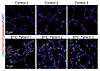 Figure 1
Increased pS6 in human BHD lung tissue specimens. Lung tissues from 3 patients with BHD patients and 3 non-BHD healthy donors were immunostained with anti-pS6 antibody (shown in green). Epithelial cells were marked by CDH1 (or E-cadherin) and cytokeratin immunostaining (shown in red), and cell nuclei were counterstained with DAPI (shown in blue).
Generating a BHD mouse model by lung mesenchymal cell–specific Flcn deletion. Mouse mesodermal deletion of Flcn using Dermo1-Cre driver results in multiple organ abnormalities and death prior to P30 (13), limiting the utility of this model to study the formation and progression of pulmonary cysts in BHD. We generated a lung mesenchyme–specific Flcn-knockout mouse model, Tbx4-rtTA/TetO-Cre/Flcnfl/fl, in which lung mesenchyme–specific Flcn gene knockout is induced by administering doxycycline during fetal lung development from embryonic day (E) 6.5 to P1 (16). Mesenchymal Flcn deletion resulted in lower levels of the FLCN protein in lung tissue lysates, and Flcn exon 7 truncation was validated at the mRNA level (Figure 2A). Increased mTORC1 activity, as measured by elevated phosphorylation of the mTORC1 targets S6 and 4E-BP1, was detected in primary lung mesenchymal cells isolated from the Tbx4-rtTA/TetO-Cre–driven lung mesenchyme–specific Flcn–conditional knockout mice (hereafter referred as LM-Flcn KO mice, Supplemental Figure 1; supplemental material available online with this article; https://doi.org/10.1172/JCI194300DS1). The LM-Flcn KO mice had normal body weight comparable to their WT controls, which included all littermates without Flcn deletion (Figure 2B). These LM-Flcn KO mice survived to adult ages without observable physical differences compared to the WT controls. Thus, this model allows us to study the evolution of lung pathology from the neonatal stage to adulthood in the absence of extraneous and potentially confounding factors that may negatively affect lung growth and homeostasis, such as the reduction in chest cavity size and attenuated musculoskeletal growth that were present in the Dermo1-Cre–driven Flcn-knockout mouse model.
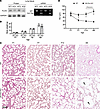 Figure 2
Deletion of Flcn in lung mesenchyme results in abnormal alveolar development and disrupted lung homeostasis. (A) Validation of Flcn protein reduction and exon 7 deletion (Ex7 Del) in Flcn mRNA of the lung mesenchyme Flcn knockout (LM-Flcn KO) mouse lung tissues at P14. (B) Body weight comparison of LM-Flcn KO and littermate WT control mice at 4 time points. (C) H&E-stained lung tissue sections at 4 time points, showing progressive alveolar enlargement beginning at P7. Cystic lung lesions in the LM-Flcn KO lung at 4 months are indicated with arrows. (D) Quantification of alveolar size by measuring mean linear intercept (MLI) in LM-Flcn KO and WT mice at the indicated time points (*P < 0.001). The LM-Flcn KO mice have increased MLI from P14 to 4M (P = 0.013 using 2-tailed independent-sample t test). Numbers of mice: P1 WT = 4, P1 KO = 3, P7 WT = 7, P7 KO = 7, P14 WT = 5, P14 KO = 6, 4M WT = 8, 4M KO = 8. All images were taken at the same magnification.
The histopathology of the LM-Flcn KO lungs was examined from lung development stages (<1 month of age) to the postdevelopment period (4 months). While lung saccular structures were comparable between newborn (P1) LM-Flcn KO mice and their WT littermates, a marked reduction in alveolar formation was observed in LM-Flcn KO lungs from P7 to P14, when the lungs of WT mice underwent normal secondary alveolarization (Figure 2C). This was quantitatively validated by measuring average alveolar size (mean linear intercept, MLI) (Figure 2D), revealing that the alveolar size did not change appreciably from P1 to P14 in LM-Flcn KO lungs, in striking contrast with the substantial reduction in WT controls because of alveolar growth–related subdivision of peripheral saccular spaces. In adult (4-month, 4M) mice, the alveoli were further enlarged in LM-Flcn KO mouse lungs with multiple bilateral, cyst-like lesions, particularly in the locations adjacent to the pleural membrane, as observed in human BHD, where the mechanical stress placed on the lung parenchyma during respiration is the greatest (17). This was further supported by striking increases in the MLI from P14 to 4M in LM-Flcn KO lungs (P = 0.013, n ≥ 6). This suggests that additional loss of preformed alveolar septal structures contributes to cyst formation and progression in adult LM-Flcn KO mice.
Mesenchymal FLCN is essential for both alveolar growth and alveolar maintenance. To determine whether the progressive enlargement of alveoli in adult LM-Flcn KO mice is the consequence of abnormal alveolar development or a direct impact of FLCN deficiency in adulthood, we induced Flcn deletion after alveolar development by treating the triple-transgenic mice (Tbx4-rtTA/TetO-Cre/Flcnfl/fl) with doxycycline from P28 to P60. The specificity and efficiency of Tbx4-rtTA–driven Cre expression in lung mesenchyme after 1 month of age (postdevelopment stage) were validated by detecting membrane GFP (mG) expression in a Cre-mediated mT-mG reporter mouse line without Flcn knockout (Tbx4-rtTA/TetO-Cre/mT-mG, Figure 3A). Expression of Cre results in floxed-mT/STOP cassette DNA deletion, thereby allowing downstream mG expression. Therefore, the cells with mG expression are the cells where Cre-mediated gene deletion occurs. Lung histopathology of the P28-induced LM-Flcn KO mouse lungs was examined at 4 months of age. Moderate but significant enlargement (P < 0.001) of alveoli in peripheral lungs was consistently observed in the P28-induced LM-Flcn KO mice (Figure 3B). The average alveolar size in these LM-Flcn KO mice was about 20% larger than controls (MLI: 38.9 ± 0.7 μm in P28-induced LM-Flcn KO versus 32.1 ± 0.7 μm in WT, P < 0.001, Figure 3C). These data indicate that deficiency of FLCN in postdevelopment lung mesenchyme negatively affects lung alveolar homeostasis. The severe cystic lesions in adult mice in which loss of Flcn is induced prenatally are therefore predicted to be caused by the combined effects of FLCN deficiency on alveolar development and alveolar maintenance.
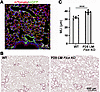 Figure 3
Abrogation of lung mesenchymal Flcn after completion of lung development results in moderate alveolar enlargement. (A) Validation of Tbx4-rtTA–driven Cre expression in lung mesenchyme after completion of alveolar development (P28–P60). mGFP expression resulting from Cre-mediated floxed-gene recombination was detected in lung mesenchymal cells in the mT-mG reporter lung (Tbx4-rtTA/TetO-Cre/mT-mG with doxycycline induction from P28 to P60). (B) H&E-stained lung tissue sections at 4 months of age, illustrating alveolar enlargement in P28-induced LM-Flcn KO lungs. (C) Quantitative comparison of alveolar size (MLI) between P28-induced LM-Flcn KO lungs and WT controls (***P < 0.001, n = 6), analyzed using 2-sample t test.
The cellular and molecular impact of FLCN deficiency in lung is age dependent. To understand the mechanisms by which FLCN deficiency causes abnormal alveolar growth and homeostasis, we examined the cellular changes in the lungs during alveolar development versus after alveolar development. Reduction in alveolar myofibroblasts (ACTA2-positive cells, Figure 4A) was detected during alveolar development (P7), while alterations of endothelial cells and epithelial cells in conducting airways and alveoli were not observed at this age. At 4 months of age, alveolar myofibroblasts were nearly absent in both LM-Flcn KO and WT control lungs, with no difference detected. Interestingly, at 4 months, proximal airway Club epithelial cells in the LM-Flcn KO lungs had a flattened shape and weaker staining for the marker SCGB1A1+ relative to the control, while alveolar epithelial cells including type 1 (PDPN) and type 2 (SFTPC) seemed unchanged (Figure 4, A and B). To further elucidate the impact of mesenchymal FLCN deficiency, cell proliferation was evaluated using Ki67 staining. The percentage of Ki67+ proliferative cells in nonepithelial cells (negative for cytokeratin and CDH1) was approximately 4-fold reduced in LM-Flcn KO lungs compared with WT lungs (Figure 4, C and D). Furthermore, lung mesenchymal cells were isolated and compared between Flcn KO and controls. Flcn deletion resulted in marked reduction of mesenchymal cell proliferation in culture (Figure 4E), but no differences in cell death were detected by TUNEL assay in the cultured mesenchymal cells from the LM-Flcn KO and WT mice (Figure 4F). Interestingly, the isolated Flcn-null lung mesenchymal cell colonies stopped growth after passage 3–4 while WT control lung mesenchymal cells remained growing in culture.
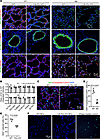 Figure 4
Mesenchymal Flcn deletion influences lung cell growth directly and indirectly. (A) Lung mesenchymal and epithelial cell differentiation, detected by immunostaining of the indicated cellular markers. (B) The integrated intensity of the immunostaining shown in A from at least 6 fields per sample and 4 samples per genotype was measured and normalized by the DAPI staining area. The ratios of KO to WT intensity at P7 and 4M are shown (mean ± SD); **P = 0.004, *P = 0.04. (C) Mesenchymal proliferation of adult mouse lungs was measured by Ki67 immunostaining for cells that were negative for the combined epithelial markers (cytokeratin and CDH1). (D) The Ki67+ mesenchymal cells were quantified and compared between LM-Flcn KO and WT. (E) Comparison of cell proliferation of isolated lung mesenchymal cells in culture from adult WT and LM-Flcn KO mice. Experiments were repeated in the cells that were separately isolated from 3 individual mice per genotype. (F) TUNEL assay of cultured lung mesenchymal cells (MCs). Normal lung sections pretreated with DNase were used as a positive control for the assay. In B, D, and E, 2-sample t test was used. EdU, 5-ethynyl-2′-deoxyuridine.
To further understand the molecular effects of Flcn deficiency in this model, we performed bulk RNA-sequencing on LM-Flcn KO lungs and WT control lungs at P7 and 4 months of age. Interestingly, the majority of genes with altered expression (log fold-change [LogFC] > 2, FDR < 0.05) between LM-Flcn KO and WT lungs were unique to each age group (Figure 5A). The common set of differentially expressed genes (DEGs) between KO and WT lungs that showed consistent expression changes at both ages is shown in Figure 5B. Ingenuity Pathway Analysis was used to identify canonical pathways that were significantly enriched (–log10P > 1.30, equivalent to P < 0.05). The pathways predicted to be activated with positive Z-score or inhibited with negative Z-score are shown in Supplemental Figure 2. The top pathways that are predicted to be differentially regulated at both P7 and 4M include phagosome formation, G protein–coupled receptor signaling, wound healing, inhibition of matrix metalloproteases, and pulmonary fibrosis. Multiple others, such as WNT/β-catenin, pyrimidine metabolism, SNARE signaling, and melatonin degradation, are predicted to be likely age specific. For example, WNT/β-catenin is increased at 4M but not at P7. Similarly, time-specific DEGs were reported in human kidney proximal tubule cells after FLCN knockdown (18). We further examined 4 common DEGs (Ctsk, Gpnmb, Mlana, and Rragd), which are related to phagosome/lysosome biology and regulated by mTOR signaling. By RT-PCR, significant increases of their expression were validated in multiple LM-Flcn KO lungs at both P7 and 4M (Figure 5C).
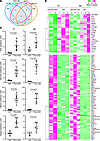 Figure 5
Subsets of genes that are coordinately up- or downregulated in LM-Flcn KO lungs at P7 and 4M, including genes related to mTORC1 signaling and lysosome biology. (A) Venn diagram summarizing the number of genes that undergo increased and decreased expression (LogFC ≥ 2, FDR < 0.05) at P7 vs. 4M. (B) Heatmap of the genes that have consistent changes between P7 and 4M. (C) RT-PCR validation of 4 genes (Ctsk, Gpnmb, Mlana, and Rragd) related to mTORC1 and lysosomal activities was performed with 2-sample t test analysis (n = 6 for P7 WT and P7 KO, n = 5 for 4M WT and 4M KO).
Deletion of lung epithelial Flcn does not negatively influence alveolar structures. Our data provide evidence that Flcn deletion in lung mesenchyme is a critical driver of cystic lung pathology in BHD. To understand if Flcn deletion in the epithelial compartment might be cooperative with mesenchymal Flcn loss in cystic formation, an Sftpc-rtTA driver line was introduced into the Tbx4-rtTA–driven Flcn-knockout mice to generate the quadruple-transgenic mice with genotypes of Sftpc-rtTA/Tbx4-rtTA/TetO-Cre/Flcnfl/fl. The Flcn gene deletion was induced by treating the dams with doxycycline from E6.5 to P1. Lung pathology was compared at 4 months of age among LM-Flcn KO, lung epithelial Flcn knockout (LE-Flcn KO), lung mesenchymal plus epithelial Flcn knockout (LEM-Flcn KO), and WT littermate control mice (Figure 6A). LE-Flcn KO did not have observable changes in alveolar size and structure compared to the controls. The alveolar enlargement in LEM-Flcn KO lungs was comparable to LM-Flcn KO lungs, as shown by both tissue histopathology and morphometric quantification for MLI (Figure 6, B and C). These data support the hypothesis that deficiency of Flcn in lung mesenchymal cells, but not in epithelial cells, drives the cystic lung disease seen in BHD.
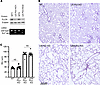 Figure 6
Lack of effect of epithelial Flcn deletion in alveolar structure, either alone or in combination with mesenchymal Flcn deletion, compared to mesenchymal Flcn deletion alone. (A) Validation of Flcn deletion in LE-Flcn KO lungs at the protein and mRNA levels by Western blot and RT-PCR. (B) Histopathology of the mouse lungs with the indicated genotypes, shown in H&E-stained lung tissue sections. LEM-Flcn KO, Flcn knockout in both lung epithelia and mesenchyme. (C) Comparison of alveolar size (MLI) between Flcn KO mouse lungs by 2-sample t test. (n = 7 for WT, LM-Flcn KO, and LEM-Flcn KO, and n = 6 for LE-Flcn KO.)
mTORC1 hyperactivation is a key mediator of cystic lung pathology in LM-Flcn KO mice. As shown earlier, increased mTORC1 activity was detected in human BHD lung specimens (Figure 1). Hyperactivation of mTORC1, as detected by increased phosphorylation of both ribosomal protein S6 and 4E-BP1, was also seen in LM-Flcn KO lung tissues (Figure 7B). mTORC1 comprises mTOR and the essential accessory proteins mLST8 and RAPTOR. To determine whether hyperactivation of mTORC1 signaling mediates Flcn deficiency–induced alveolar enlargement and/or destruction in vivo, we blocked mTORC1 activity in the LM-Flcn KO lungs by simultaneously deleting Rptor and Flcn in lung mesenchymal cells (Figure 7A). This lung mesenchyme–specific Flcn and Rptor double knockout (LM-Flcn/Rptor DKO, with the genotype of Tbx4-rtTA/TetO-Cre/Flcnfl/fl/Rptorfl/fl) was induced by treating the dams with doxycycline from E6.5 to P1. The mouse lung tissues were harvested and analyzed at adulthood (4–6 months of age). Deletion of lung mesenchymal Rptor effectively reversed mTORC1 hyperactivation (Figure 7B). The severe cystic lung phenotype seen in LM-Flcn KO mice was substantially rescued in LM-Flcn/Rptor DKO mice (Figure 7, C and D), as shown by histopathology and morphometric measurement of MLI (91.9 ± 9.8 μm in LM-Flcn KO versus 48.5 ± 3.3 μm in LM-Flcn/Rptor DKO, P < 0.001). However, compared with WT littermate control, moderate alveolar enlargement was still present in the LM-Flcn/Rptor DKO lungs, which was validated by morphometric analysis (MLI: 48.5 ± 3.3 μm in LM-Flcn/Rptor DKO versus 35.3 ± 3.7 μm in WT controls, P < 0.001).
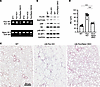 Figure 7
Genetic inactivation of mTORC1 pathway by deleting Rptor in lung mesenchymal cells partially rescues the alveolar phenotype in LM-Flcn KO lungs. (A) Deletion of Rptor and/or Flcn in the knockout mouse lungs was validated by RT-PCR. (B) Assessment of mTORC1 activity in lung tissue lysate was performed by detecting the phosphorylation of S6 (pS6) and 4E-BP1 (p4E-BP1). GAPDH was used as a loading control. (C) Lung histopathology in LM-Flcn KO mice vs. LM-Flcn/Rptor DKO mice is shown in H&E-stained lung tissue sections. (D) Average alveolar size was quantified and compared among WT, LM-Flcn KO, and LM-Flcn/Rptor DKO mice using a 1-way ANOVA. ***P < 0.001. (Numbers of mice: WT = 9, Flcn KO = 7, Flcn/Rptor DKO = 5.)
In addition to genetically blocking mTORC1 specifically in lung mesenchymal cells, we assessed the effect of pharmacologic inhibition of mTORC1 by treating the LM-Flcn KO mice with rapamycin beginning after birth (Figure 8A). Consistent with the observation from the genetic deletion of Rptor above, rapamycin treatment markedly attenuated alveolar enlargement and cyst formation in Flcn KO lung at 4M (Figure 8, B and C, P < 0.01), though moderate (~20%) alveolar enlargement was still present in rapamycin-treated Flcn KO mice compared with the WT treated with rapamycin (P < 0.05). No significant difference in airspace dimensions was detected in WT mice treated with rapamycin versus vehicle control. Taken together, these data from the Rptor knockout and the rapamycin treatment models suggest activation of mTORC1 is a major contributor to the lung alveolar abnormality caused by Flcn deficiency but is not the only contributor.
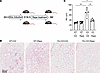 Figure 8
Postnatal rapamycin treatment prevents lung cyst formation in LM-Flcn KO mice. (A) Schematic diagram for the regimen of rapamycin treatment: intraperitoneal (i.p.) injection (1 mg/kg) every 4 days from E18.5 to P20 and i.p. injection (2 mg/kg) 3 times per week from P20 through 3 months. (B) Lung histopathology for the WT and LM-Flcn KO mice treated with rapamycin (Rapa) or vehicle control (Ctrl). (C) Measurement of alveolar MLI. Significant differences (*P = 0.042 and **P < 0.01) were detected using a 1-way ANOVA. Numbers of mice: WT+Ctrl = 5, WT+Rapa = 5, LM-Flcn KO+Ctrl = 6, LM-Flcn KO+Rapa = 6.


Copyright © 2026 American Society for Clinical Investigation
ISSN: 0021-9738 (print), 1558-8238 (online)