
Advertisement
Research ArticleCell biologyOncology
Open Access |  10.1172/JCI186711
MRE11 deacetylation by SIRT2 promotes DNA binding to facilitate DNA end resection and ATM-dependent signaling
Fatmata Sesay,1,2 Hui Zhang,1 Priya Kapoor-Vazirani,1 Andrew T. Jung,1 Mark E. Essien,1 Amanda J. Bastien,1 Nho C. Luong,1 Xu Liu,3 PamelaSara E. Head,1 Duc M. Duong,3 Xiaofeng Yang,1 Zachary S. Buchwald,1 Xingming Deng,1 Nicholas T. Seyfried,3 and David S. Yu1
1Department of Radiation Oncology and Winship Cancer Institute, Emory University School of Medicine, Atlanta, Georgia, USA.
2Department of Biology, Clark Atlanta University, Atlanta, Georgia, USA.
3Department of Biochemistry, Emory University School of Medicine, Atlanta, Georgia, USA.
Address correspondence to: David S. Yu, Department of Radiation Oncology, Emory University School of Medicine, 1365 Clifton Road NE, C3008, Atlanta, Georgia, USA. Phone: 404.778.1758; Email: dsyu@emory.edu.
Authorship note: FS and HZ are co-first authors.
Find articles by Sesay, F. in: PubMed | Google Scholar
1Department of Radiation Oncology and Winship Cancer Institute, Emory University School of Medicine, Atlanta, Georgia, USA.
2Department of Biology, Clark Atlanta University, Atlanta, Georgia, USA.
3Department of Biochemistry, Emory University School of Medicine, Atlanta, Georgia, USA.
Address correspondence to: David S. Yu, Department of Radiation Oncology, Emory University School of Medicine, 1365 Clifton Road NE, C3008, Atlanta, Georgia, USA. Phone: 404.778.1758; Email: dsyu@emory.edu.
Authorship note: FS and HZ are co-first authors.
Find articles by Zhang, H. in: PubMed | Google Scholar
1Department of Radiation Oncology and Winship Cancer Institute, Emory University School of Medicine, Atlanta, Georgia, USA.
2Department of Biology, Clark Atlanta University, Atlanta, Georgia, USA.
3Department of Biochemistry, Emory University School of Medicine, Atlanta, Georgia, USA.
Address correspondence to: David S. Yu, Department of Radiation Oncology, Emory University School of Medicine, 1365 Clifton Road NE, C3008, Atlanta, Georgia, USA. Phone: 404.778.1758; Email: dsyu@emory.edu.
Authorship note: FS and HZ are co-first authors.
Find articles by Kapoor-Vazirani, P. in: PubMed | Google Scholar
1Department of Radiation Oncology and Winship Cancer Institute, Emory University School of Medicine, Atlanta, Georgia, USA.
2Department of Biology, Clark Atlanta University, Atlanta, Georgia, USA.
3Department of Biochemistry, Emory University School of Medicine, Atlanta, Georgia, USA.
Address correspondence to: David S. Yu, Department of Radiation Oncology, Emory University School of Medicine, 1365 Clifton Road NE, C3008, Atlanta, Georgia, USA. Phone: 404.778.1758; Email: dsyu@emory.edu.
Authorship note: FS and HZ are co-first authors.
Find articles by Jung, A. in: PubMed | Google Scholar
1Department of Radiation Oncology and Winship Cancer Institute, Emory University School of Medicine, Atlanta, Georgia, USA.
2Department of Biology, Clark Atlanta University, Atlanta, Georgia, USA.
3Department of Biochemistry, Emory University School of Medicine, Atlanta, Georgia, USA.
Address correspondence to: David S. Yu, Department of Radiation Oncology, Emory University School of Medicine, 1365 Clifton Road NE, C3008, Atlanta, Georgia, USA. Phone: 404.778.1758; Email: dsyu@emory.edu.
Authorship note: FS and HZ are co-first authors.
Find articles by Essien, M. in: PubMed | Google Scholar
1Department of Radiation Oncology and Winship Cancer Institute, Emory University School of Medicine, Atlanta, Georgia, USA.
2Department of Biology, Clark Atlanta University, Atlanta, Georgia, USA.
3Department of Biochemistry, Emory University School of Medicine, Atlanta, Georgia, USA.
Address correspondence to: David S. Yu, Department of Radiation Oncology, Emory University School of Medicine, 1365 Clifton Road NE, C3008, Atlanta, Georgia, USA. Phone: 404.778.1758; Email: dsyu@emory.edu.
Authorship note: FS and HZ are co-first authors.
Find articles by Bastien, A. in: PubMed | Google Scholar
1Department of Radiation Oncology and Winship Cancer Institute, Emory University School of Medicine, Atlanta, Georgia, USA.
2Department of Biology, Clark Atlanta University, Atlanta, Georgia, USA.
3Department of Biochemistry, Emory University School of Medicine, Atlanta, Georgia, USA.
Address correspondence to: David S. Yu, Department of Radiation Oncology, Emory University School of Medicine, 1365 Clifton Road NE, C3008, Atlanta, Georgia, USA. Phone: 404.778.1758; Email: dsyu@emory.edu.
Authorship note: FS and HZ are co-first authors.
Find articles by Luong, N. in: PubMed | Google Scholar
1Department of Radiation Oncology and Winship Cancer Institute, Emory University School of Medicine, Atlanta, Georgia, USA.
2Department of Biology, Clark Atlanta University, Atlanta, Georgia, USA.
3Department of Biochemistry, Emory University School of Medicine, Atlanta, Georgia, USA.
Address correspondence to: David S. Yu, Department of Radiation Oncology, Emory University School of Medicine, 1365 Clifton Road NE, C3008, Atlanta, Georgia, USA. Phone: 404.778.1758; Email: dsyu@emory.edu.
Authorship note: FS and HZ are co-first authors.
Find articles by Liu, X. in: PubMed | Google Scholar
1Department of Radiation Oncology and Winship Cancer Institute, Emory University School of Medicine, Atlanta, Georgia, USA.
2Department of Biology, Clark Atlanta University, Atlanta, Georgia, USA.
3Department of Biochemistry, Emory University School of Medicine, Atlanta, Georgia, USA.
Address correspondence to: David S. Yu, Department of Radiation Oncology, Emory University School of Medicine, 1365 Clifton Road NE, C3008, Atlanta, Georgia, USA. Phone: 404.778.1758; Email: dsyu@emory.edu.
Authorship note: FS and HZ are co-first authors.
Find articles by Head, P. in: PubMed | Google Scholar
1Department of Radiation Oncology and Winship Cancer Institute, Emory University School of Medicine, Atlanta, Georgia, USA.
2Department of Biology, Clark Atlanta University, Atlanta, Georgia, USA.
3Department of Biochemistry, Emory University School of Medicine, Atlanta, Georgia, USA.
Address correspondence to: David S. Yu, Department of Radiation Oncology, Emory University School of Medicine, 1365 Clifton Road NE, C3008, Atlanta, Georgia, USA. Phone: 404.778.1758; Email: dsyu@emory.edu.
Authorship note: FS and HZ are co-first authors.
Find articles by Duong, D. in: PubMed | Google Scholar
1Department of Radiation Oncology and Winship Cancer Institute, Emory University School of Medicine, Atlanta, Georgia, USA.
2Department of Biology, Clark Atlanta University, Atlanta, Georgia, USA.
3Department of Biochemistry, Emory University School of Medicine, Atlanta, Georgia, USA.
Address correspondence to: David S. Yu, Department of Radiation Oncology, Emory University School of Medicine, 1365 Clifton Road NE, C3008, Atlanta, Georgia, USA. Phone: 404.778.1758; Email: dsyu@emory.edu.
Authorship note: FS and HZ are co-first authors.
Find articles by Yang, X. in: PubMed | Google Scholar
1Department of Radiation Oncology and Winship Cancer Institute, Emory University School of Medicine, Atlanta, Georgia, USA.
2Department of Biology, Clark Atlanta University, Atlanta, Georgia, USA.
3Department of Biochemistry, Emory University School of Medicine, Atlanta, Georgia, USA.
Address correspondence to: David S. Yu, Department of Radiation Oncology, Emory University School of Medicine, 1365 Clifton Road NE, C3008, Atlanta, Georgia, USA. Phone: 404.778.1758; Email: dsyu@emory.edu.
Authorship note: FS and HZ are co-first authors.
Find articles by Buchwald, Z. in: PubMed | Google Scholar
1Department of Radiation Oncology and Winship Cancer Institute, Emory University School of Medicine, Atlanta, Georgia, USA.
2Department of Biology, Clark Atlanta University, Atlanta, Georgia, USA.
3Department of Biochemistry, Emory University School of Medicine, Atlanta, Georgia, USA.
Address correspondence to: David S. Yu, Department of Radiation Oncology, Emory University School of Medicine, 1365 Clifton Road NE, C3008, Atlanta, Georgia, USA. Phone: 404.778.1758; Email: dsyu@emory.edu.
Authorship note: FS and HZ are co-first authors.
Find articles by Deng, X. in: PubMed | Google Scholar
1Department of Radiation Oncology and Winship Cancer Institute, Emory University School of Medicine, Atlanta, Georgia, USA.
2Department of Biology, Clark Atlanta University, Atlanta, Georgia, USA.
3Department of Biochemistry, Emory University School of Medicine, Atlanta, Georgia, USA.
Address correspondence to: David S. Yu, Department of Radiation Oncology, Emory University School of Medicine, 1365 Clifton Road NE, C3008, Atlanta, Georgia, USA. Phone: 404.778.1758; Email: dsyu@emory.edu.
Authorship note: FS and HZ are co-first authors.
Find articles by Seyfried, N. in: PubMed | Google Scholar
1Department of Radiation Oncology and Winship Cancer Institute, Emory University School of Medicine, Atlanta, Georgia, USA.
2Department of Biology, Clark Atlanta University, Atlanta, Georgia, USA.
3Department of Biochemistry, Emory University School of Medicine, Atlanta, Georgia, USA.
Address correspondence to: David S. Yu, Department of Radiation Oncology, Emory University School of Medicine, 1365 Clifton Road NE, C3008, Atlanta, Georgia, USA. Phone: 404.778.1758; Email: dsyu@emory.edu.
Authorship note: FS and HZ are co-first authors.
Find articles by Yu, D. in: PubMed | Google Scholar
Published January 8, 2026 - More info
J Clin Invest. 2026;136(5):e186711. https://doi.org/10.1172/JCI186711.
© 2026 Sesay et al. This work is licensed under the Creative Commons Attribution 4.0 International License. To view a copy of this license, visit http://creativecommons.org/licenses/by/4.0/.
Received: September 10, 2024; Accepted: January 5, 2026


-
Results
SIRT2 interacts with and deacetylates MRE11 in response to DSBs. To investigate the interaction between SIRT2 and MRE11, we conducted co-immunoprecipitation (co-IP) analyses. We expressed SIRT2-FLAG in human embryonic kidney (HEK) 293T cells and observed its interaction with endogenous MRE11 (Figure 1A). In reciprocal co-IP experiments, SFB-MRE11 expressed in HEK 293T cells pulled down endogenous SIRT2 (Figure 1B). We found no evidence for a change in interaction of MRE11 with SIRT2 in response to DNA damage induced by 6 Gy ionizing radiation (IR) (Figure 1B), consistent with SIRT2’s interaction with several DDR substrates (71, 75). To assess the deacetylation of MRE11 by SIRT2, we conducted both in vitro and cellular deacetylation assays. SIRT2-FLAG WT, but not deacetylase inactive SIRT2-FLAG H187Y (76), deacetylated purified acetylated GFP-MRE11 in vitro (Figure 1C). Furthermore, GFP-SIRT2 deacetylated SFB-MRE11 expressed in HCT116 cells in a manner that was inhibited by nicotinamide, a sirtuin inhibitor (Figure 1D). Collectively, these data indicate SIRT2 complexes with and deacetylates MRE11 in vitro and in cells.
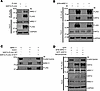 Figure 1
SIRT2 complexes with and deacetylates MRE11. (A) IP of SIRT2 with anti-FLAG antibody from HEK293T cells expressing SIRT2-FLAG or FLAG empty vector, followed by Western blot with the indicated antibodies. (B) Reciprocal co-IP of MRE11 from HEK293T cells expressing SFB-MRE11 or empty vector with and without 6 Gy IR and a 4-hour recovery period. (C) In vitro deacetylation assay of MRE11 by SIRT2. Immunopurified acetylated GFP-MRE11 was incubated with immunopurified SIRT2-FLAG WT or catalytically inactive H187Y in an in vitro reaction with and without NAD. (D) Cellular deacetylation assay of MRE11 by SIRT2. HCT116 cells expressing SFB-MRE11 and GFP-SIRT2, with or without nicotinamide, were harvested, immunoprecipitated with anti-FLAG antibody, and subjected to SDS-PAGE and Western blot with the indicated antibodies. Shown are representative Western blots; each experiment was conducted 3 independent times.
SIRT2 promotes MRE11 localization to DNA damage sites. To determine the functional significance of the interaction of SIRT2 and MRE11, we assessed the impact of SIRT2 on MRE11’s localization to DNA damage sites, using U2OS-265 cells, in which 4-hydroxytamoxifen (4-OHT) triggers nuclear translocation of FokI nuclease domain fused to mCherry-LacR (mCherry-LacR-FokI) to induce DSBs at a chromosomally integrated 256-copy lac operator array (77). SIRT2 depletion impaired the localization of endogenous MRE11 to FokI-induced DSBs in these cells (Figure 2, A–C). To validate our observation, we induced DNA damage in U2OS cells through microirradiation with a 365 nm laser. Notably, SIRT2 depletion impaired the mobilization of GFP-MRE11 to DNA damage sites induced by laser microirradiation co-labeled with γH2AX, a marker for DSBs (Figure 2, D and E), suggesting that SIRT2 promotes MRE11 localization to DSBs.
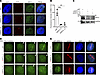 Figure 2
SIRT2 promotes MRE11 localization to DNA damage sites. (A and B) U2OS-265 cells were transfected with SIRT2 or nontargeting (NT) siRNA and induced for FokI expression. FokI and MRE11 proteins were visualized by mCherry fluorescence and anti-MRE11 antibody. DNA was visualized by DAPI staining. Representative confocal microscopy images (A) and quantification of MRE11 fluorescence intensity at the FokI-damage site (B) are shown. Data are reported as the mean ± SD from 3 replicates of 50 cells. (C) Western blot showing SIRT2 depletion in U2OS-265 cells used in A and B. (D and E) MRE11 recruitment to DNA damage sites induced by laser-microirradiation is impaired after SIRT2 depletion. (D) U2OS cells with SIRT2 or NT siRNA and transfected with GFP-MRE11 were subjected to laser microirradiation. A representative image shows the time course of GFP-MRE11 accumulation at laser-induced damage sites (arrows). (E) U2OS cells were transfected with GFP-MRE11 and SIRT2 or NT siRNA, and then subject to laser microirradiation, followed by IF for γH2AX to verify DNA damage. The representative image shows accumulation of GFP-MRE11 and γH2AX at sites of laser-induced damage. All representative IF experiments were conducted at least 3 independent times. The Western blots shown are representative, and each experiment was conducted at least 3 independent times. Statistical significance was determined using 1-way ANOVA followed by Dunnett’s post hoc test for multiple comparisons. **P < 0.01 and ***P < 0.001.
SIRT2 deacetylase activity promotes DNA end resection. Given SIRT2’s role in directing MRE11 localization to DSBs, we investigated its involvement in the resection of DNA ends at DSBs. SIRT2 depletion in U2OS-265 cells impaired the localization of RPA70, which binds to resected ssDNA, to FokI-induced DSBs (Figure 3, A–C) and at DNA damage sites induced by laser microirradiation (Supplemental Figure 1; supplemental material available online with this article; https://doi.org/10.1172/JCI186711DS1). To more directly determine the role of SIRT2 in promoting DNA end resection, we examined BrdU exposure under nondenaturing conditions following treatment of HeLa cells with 6 Gy IR. Similar to CtIP but in contrast to 53BP1, SIRT2 depletion significantly impaired BrdU exposure but not γH2AX foci under these conditions (Supplemental Figure 2, A–C). Moreover, the impairment in BrdU exposure was rescued by the expression of SIRT2-FLAG WT but not H187Y (Figure 3, D–F). Collectively, these data suggest that SIRT2 deacetylase activity promotes DNA end resection in response to DSBs and that this is generalizable to multiple cell types.
 Figure 3
SIRT2 deacetylase activity promotes DNA end resection. (A–C) U20S-265 cells were treated with SIRT2 or NT siRNA and induced for FokI expression with 1 μM Shield-1 and 2 μM 4-OHT for 4 hours. Localization of FokI and endogenous RPA70 proteins were visualized by mCherry fluorescence and anti-RPA70 antibody. DNA was visualized by DAPI staining. (A) Representative images obtained by confocal microscopy are shown. (B) Quantitation of RPA70 fluorescence intensity at FokI-induced DSB site. Data are reported as the mean ± SD of 3 replicates of 50 cells. (C) Western blot showing knockdown of SIRT2 in the U2OS-265 cells used in A and B. (D and E) HeLa cells depleted for SIRT2 and rescued with siRNA-resistant SIRT2 WT or SIRT2 H187Y. Cells were processed for BrdU exposure. Representative images (D) and quantitation of relative percent BrdU foci positive cells (E) are shown. Data in the graph represent the mean ± SD. (F) Western blot analysis showing confirmation of SIRT2 depletion and expression of SIRT2-FLAG WT and H187Y. The Western blots shown are representative, and each experiment was conducted at least 3 independent times. Statistical significance was determined using 1-way ANOVA followed by Dunnett’s post hoc test for multiple comparisons. *P < 0.05 and ****P < 0.0001.
MRE11 K393 deacetylation by SIRT2 in response to DNA damage promotes its binding to dsDNA. To identify the specific lysine (Lys) residue (hereafter identified by K and the residue number) target sites of SIRT2 deacetylation on MRE11, we conducted mass spectrometry (MS) analysis of purified SFB-MRE11 expressed in HEK293T cells. Our analysis revealed 3 candidate acetylation sites on MRE11: K393, K416, and K673 (Figure 4A and Supplemental Figure 3A). Notably, among these sites, K393 and its surrounding amino acids located within MRE11’s more amino-terminal DNA binding domain showed the most evolutionary conservation (Figure 4A). Moreover, in silico bioinformatics analyses using Sorting Intolerant from Tolerant (SIFT) (78, 79) and PolyPhen-2 (80) indicated that mutations at K393 are likely to be the most impactful among these sites (Supplemental Figure 3B).
 Figure 4
MRE11 is acetylated at K393. (A) Schematic of MRE11 protein depicting key domains and evolutionary conservation of putative Lys acetylation sites identified by liquid chromatography-MS/MS. NBS1 binding, RAD50 binding, and DNA binding domains are indicated. (B) Analysis of MRE11 site-specific Lys acetylation was tested with SFB-MRE11 WT and Lys to arginine nonacetylable Lys-mimic mutants expressed in HEK293T cells. Lysate from cells was immunoprecipitated with anti-FLAG, run on SDS-PAGE, and probed with indicated antibodies. (C) MRE11 K393 was deacetylated in response to IR. Cells expressing SFB-MRE11 WT and K393R were treated with or without 6 Gy IR, harvested after 4 hours, run on SDS-PAGE, immunoprecipitated with anti-FLAG, and probed with indicated antibodies. Western blots shown are representative, and each experiment was conducted at least 3 independent times.
To identify Lys sites on MRE11 that undergo acetylation, we generated SFB-MRE11 mutants in which a single Lys residue was replaced by arginine, mimicking a nonacetylatable Lys. These mutants were then expressed in HEK293T cells and subjected to treatment with and without IR. In contrast to SFB-MRE11 K416R and K673R, which had comparable levels of acetylation to SFB-MRE11 WT at baseline, SFB-MRE11 K393R had reduced acetylation levels (Figure 4B), suggesting that K393 contributes to MRE11 acetylation. Moreover, IR induced a decrease in acetylation specifically in SFB-MRE11 WT, but not in the K393R mutant (Figure 4C), suggesting that MRE11 K393 is deacetylated in response to IR. Biochemical fractionation studies further showed that, like total endogenous MRE11, acetylated endogenous MRE11 is primarily nuclear and deacetylated in response to IR (Supplemental Figure 3C).
The location of K393 within MRE11’s DNA binding domain and impairment of MRE11 localization to DSBs after SIRT2 depletion suggests a critical role for K393 in mediating DNA binding. We aligned the structure of human MRE11 residues 1–411 (81) with that of Pyrococcus furiosus MRE11-DNA complex (12) and found potential electrostatic interaction between the positively charged K393 side chain (-NH3+) and the negatively charged DNA phosphate backbone (within 4.0 Å). This interaction may be impaired by acetylation of K393, as shown by the model of the K393Q mutation (Figure 5A). To determine whether MRE11 K393 deacetylation by SIRT2 is critical for its interaction with DNA, we conducted streptavidin pulldown assays using biotin-labeled dsDNA incubated with MRE11 purified from HCT116 SIRT2 WT and KO cells treated with or without IR. An increase in interaction of MRE11 with dsDNA was observed after IR treatment, and the interaction was impaired with SIRT2 deficiency (Figure 5B). Moreover, both GFP-MRE11 WT and K393R had increased binding to dsDNA compared with GFP-MRE11 K393Q, which mimics an acetylated state (Figure 5C). This trend was consistent in A549 IR-resistant cells, where GFP-MRE11 WT and K393R also exhibited increased binding to dsDNA relative to GFP-MRE11 K393Q, and IR treatment did not alter DNA binding, consistent with the IR-resistant phenotype (Supplemental Figure 3D).
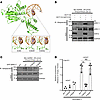 Figure 5
MRE11 K393 deacetylation by SIRT2 in response to DNA damage promotes its binding to dsDNA. (A) Structural model depicting the impact of K393 acetylation on binding with DNA. Human MRE11 aa 1–411 (PDB: 3T1I) were aligned with the structure of Pyrococcus furiosus MRE11-DNA complex (PDB: 3DSC). The distance between K393 and the phosphate group in the DNA was measured using PyMOL (version 2.5.4). Residue K393 was mutated to Q and R, respectively, in PyMOL. (B) MRE11 was purified from HCT116 SIRT2 WT and KO cells treated with or without 6 Gy IR with a 4 hour recovery, incubated with biotin-labeled dsDNA oligos (bio-dsDNA), and pulled down with agarose-streptavidin beads. Pull-downs were separated by SDS-PAGE and immunoblotted with the indicated antibodies. (C) GFP-MRE11 WT, K393Q, and K393R mutants were purified from HCT116 cells and incubated with bio-dsDNA as described in B. (D) Quantitative analysis of MRE11-binding to FokI-induced DSBs using ChIP-qPCR. Quantification from 3 independent experiments is shown as the mean ± SD. Western blots shown are representative, and each experiment was conducted at least 3 independent times. Statistical significance was determined using 1-way ANOVA followed by Dunnett’s post hoc test for multiple comparisons. **P < 0.01.
To determine whether K393 acetylation impacts MRE11 binding to DSBs, we performed ChIP quantitative PCR (qPCR) of SFB-MRE11 WT, K393Q, and K393R expressed in U2OS-265 cells. SFB-MRE11 WT and K393R, but not K393Q, showed increased binding to DSBs after 4-OHT treatment (Figure 5D and Supplemental Figure 3, E and F). In contrast, we observed no substantial difference in interaction of SFB-MRE11 WT, K393R, and K393Q with RAD50, NBS1, and CtIP by co-IP (Supplemental Figure 3G), which suggests K393 acetylation does not affect its interactions with RAD50, NBS1, and CtIP and likely does not disrupt global MRE11 protein structure. Collectively, these findings indicate SIRT2 deacetylation of MRE11 at K393 facilitates its binding to dsDNA at DSBs.
MRE11 K393 deacetylation by SIRT2 promotes DNA end resection and HR. To determine the downstream functional significance of MRE1 K393 deacetylation by SIRT2, we examined IR-induced RPA70 foci in U2OS cells silenced for SIRT2 and expressing SFB-MRE11 WT, K393R, and K393Q. The impairment in IR-induced RPA70 foci following SIRT2 depletion was alleviated by expression of SFB-MRE11 WT and K393R, but not K393Q (Figure 6, A–C), suggesting that MRE11 K393 deacetylation by SIRT2 promotes DNA end resection. Moreover, expression of SFB-MRE11 K393R, but not K393Q, alleviated the impairment in IR-induced RAD51 foci and IR hypersensitivity after MRE11 depletion in U2OS cells (Figure 7A-D), suggesting that MRE11 deacetylation promotes HR and IR resistance.
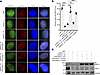 Figure 6
MRE11 K393 deacetylation by SIRT2 promotes DNA end resection. (A) U20S cells, either not silenced or silenced for SIRT2 and expressing SFB-MRE11 proteins where indicated, were treated with 6 Gy IR and recovered for 4 hours. Cells were processed for IF with antibodies against RPA70 and γH2AX. Shown is a representative image. (B) Percentage of cells with RPA70 foci (per positive γH2AX foci cell) in A was quantified across 3 independent experiments. Data are reported as the mean ±- SD. (C) Western blot analysis showing SIRT2 silencing and SFB-MRE11 expression in A. Western blots shown are representative and each experiment was conducted at least 3 independent times. Statistical significance was determined using 1-way ANOVA followed by Dunnett’s post hoc test for multiple comparisons. ****P < 0.0001.
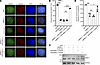 Figure 7
MRE11 acetylation at K393 impairs HR. (A) U20S cells were either not silenced or silenced for MRE11 and expressing SFB-MRE11 proteins where indicated, then treated with 6 Gy IR and recovered for 4 hours. Cells were processed for IF with antibodies against RAD51 and γH2AX. (B) The percentage of cells with RAD51 foci was calculated. Three independent experiments were conducted, and data are presented as the mean ± SD. (C) Western blot indicating downregulation of MRE11 and expression of SFB-MRE11 in A. (D) Colony formation assay in U2OS cells after MRE11 knockdown and re-expression of mutant MRE11 proteins. Percentages of colonies surviving relative to no treatment (siNT) are shown. The experiment was conducted 3 independent times, and data are represented as the mean ± SD. Western blots shown are representative, and each experiment was conducted at least 3 independent times. Statistical significance was determined using 1-way ANOVA followed by Dunnett’s post-hoc test for multiple comparisons. *P < 0.05, *** P < 0.001, and ****P < 0.0001. NT, nontargeting.
MRE11 K393 deacetylation by SIRT2 promotes ATM-dependent signaling. To determine if K393 deacetylation by SIRT2 affects ATM-dependent signaling, we examined ATM-dependent phosphorylation of KAP1 at serine 473 (S473) and CHK2 at threonine 69 (T69) in HCT116 SIRT2 WT and KO cells after treatment of the cells with 6 Gy IR, which activates the DDR in these cells (75). The IR-induced ATM-dependent phosphorylation of KAP1 at S473 and CHK2 at T69 but not total KAP1 or CHK2 levels were impaired with SIRT2 deficiency (Figure 8, A and B), suggesting that SIRT2 promotes ATM signaling. Significantly, the impairment in ATM-dependent phosphorylation of KAP1 at S473 and CHK2 at T69 in HCT116 SIRT2 KO cells was rescued by expression of SFB-MRE11 WT and K393R, but not by K393Q expression (Figure 8, C–E), suggesting that MRE11 K393 deacetylation by SIRT2 promotes ATM-dependent signaling. However, we found no evidence that SIRT2 deficiency in HCT116 cells or SFB-MRE11 K393Q expression in MRE11-silenced IR-resistant A549 cells (IRR-A549) impairs ATM-dependent phosphorylation of NBS1 at S343 (82–84) (Supplemental Figure 4, A and B), which is activated by SIRT1 deacetylation of NBS1 (85), thus suggesting that MRE11 K393 deacetylation by SIRT2 does not promote ATM-dependent phosphorylation of all ATM substrates.
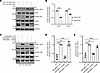 Figure 8
MRE11 K393 deacetylation by SIRT2 promotes ATM-dependent signaling. (A) HCT116 SIRT2 WT and KO cells were treated with 6 Gy IR, harvested after 4 hours, run on SDS-PAGE, and probed with the indicated antibodies. The image shown is representative of data from 3 separate experiments conducted independently. (B) Quantitation of IR-induced phosphorylation of KAP1 and CHK2 relative to total KAP1 and CHK2 protein levels. Data are represented as the mean ± SD from 3 independent experiments. **P < 0.01 and ***P < 0.001, by 2-tail Student’s t test. (C) HCT116 SIRT2 KO cells expressing SFB-MRE11 WT, K393Q, and K393R were treated with or without 6 Gy IR, harvested after 4 hours, run on SDS-PAGE, and probed with the indicated antibodies. Shown is a representative image of 3 independent experiments. (D and E) Quantitation of phosphorylation of KAP1 and CHK2 relative to total KAP1 and CHK2 protein levels. Data are presented as the mean ± SD of 3 independent experiments. Statistical significance was determined using 1-way ANOVA followed by Dunnett’s post hoc test for multiple comparisons. ****P < 0.0001.


-
Discussion
Our findings reveal a critical regulatory mechanism governing MRE11 function in the DDR, whereby MRE11 deacetylation at conserved K393 by SIRT2 facilitates MRE11 localization and binding to DNA at DSBs, thereby promoting DNA end resection and ATM-dependent DNA damage signaling. These findings reveal a critical upstream signaling event directing MRE11 localization to DNA damage sites and binding to DNA that promotes MRE11’s functions in the DDR, identify MRE11 as a unique binding partner and substrate for SIRT2, and establish SIRT2 as a positive regulator of DNA end resection and ATM-dependent signaling. Moreover, our findings provide insight into how SIRT2 deficiency results in genomic instability and development of cancer. In this regard, we found that SIRT2 deacetylase activity promotes DNA end resection, defining a role for SIRT2 in DNA end resection that facilitates its known function in DSB repair by HR (72, 73, 86) and governing resistance to IR (75, 87). We further found that SIRT2 complexes with and deacetylates MRE11 at conserved K393 located in a region critical for interfacing with DNA (12), providing evidence that MRE11 is an interacting partner and substrate for SIRT2. In addition, we found that K393 deacetylation by SIRT2 promotes MRE11 localization and binding to DNA at DSBs, providing a mechanistic model for how SIRT2 promotes MRE11 function in the DDR. Finally, we found that K393 deacetylation by SIRT2 promotes DNA end resection, HR, IR resistance, and ATM-dependent signaling, demonstrating functional significance of K393 deacetylation by SIRT2 in promoting MRE11 downstream functions in the DDR.
Our findings thus lead to a model in which, after IR, SIRT2 deacetylates MRE11 at K393 to facilitate its localization and binding to dsDNA at DSBs, which promotes DNA end resection and ATM-dependent phosphorylation of downstream substrates, including CHK2 and KAP1 (Figure 9). Dysregulation of this pathway leads to genomic instability, which may contribute to SIRT2’s role in tumor suppression.
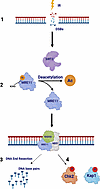 Figure 9
Model of SIRT2 regulation of MRE11 in the DDR. (Step 1) DNA damage results in DSBs. (Step 2) SIRT2 deacetylates MRE11 at K393 in response to DNA damage. (Step 3) MRE11 K393 deacetylation by SIRT2 facilitates its recruitment and binding to DNA at DSBs. (Step 4) MRE11-RAD50-NBS1 assembles and promotes DNA end resection and ATM-dependent phosphorylation of downstream substrates, including CHK2 and KAP1.
The amino and carboxyl-terminal domains of MRE11 bind to DNA (9, 12, 46–50), which is facilitated by RAD50 and NBS1 (49, 51, 52). Our observation that SIRT2 deficiency impairs MRE11 binding to dsDNA and that MRE11 K393Q, but not WT or K393R, has impaired binding to dsDNA and FokI-induced DSBs suggests a critical role for SIRT2 in directing reversible acetylation at K393 within the amino-terminal DNA binding domain to facilitate MRE11 binding to dsDNA. At a structural level, our modeling indicates that the positive charge of K393 mediates electrostatic interactions with the negative charge of nucleic acids interfacing with MRE11, and these are disrupted by acetylation. Our finding that K393 acetylation does not impair MRE11 interaction with RAD50, NBS1, or CtIP suggests that K393 does not mediate binding with DNA indirectly through these proteins. Furthermore, we found no evidence that K393 acetylation impairs NBS1 S343 phosphorylation under the same conditions of impairment in DNA binding, suggesting that the effect of acetylation status of MRE11 on DNA binding is distinct from that of the acetylation status of NBS1 on NBS1 S343 phosphorylation, which is regulated by SIRT1 (85). MRE11 is modified by lactylation at K673 (55) and by methylation at R570 and R594 within its glycine-arginine–rich motif (55), which promote DNA binding, and by phosphorylation at S649, 676, and 678, which dissociates it from chromatin (55). We now report a critical role for acetylation at K393 within MRE11’s amino-terminal DNA binding domain in regulating its binding with DNA, which complements regulation at its carboxyl-terminal DNA domain. Given that K393 acetylation alone abolishes most of MRE11’s binding with DNA, these data suggest a central role for K393 acetylation in governing MRE11 binding with DNA that cannot be fully compensated for by its carboxyl-terminal DNA-binding interface.
Our data indicate that MRE11 K393 is deacetylated by SIRT2 in response to IR; however, we found no evidence that the interaction of SIRT2 and MRE11 is regulated by IR. It is possible that IR-regulated deacetylation of MRE11 results from an increase in SIRT2 catalytic activity induced by IR. Indeed, we previously reported that the SIRT2 deacetylase activity increases in response to DNA damage in vitro (71). SIRT2 directs HR through deacetylation of BARD1 (72) and recruitment of RPA70 and RAD51 to DSBs through an undefined mechanism (73). Our observation that SIRT2 promotes DNA end resection provides evidence for SIRT2 in directing an early event that facilitates HR. Moreover, our finding that SIRT2 promotes ATM-dependent signaling through MRE11 deacetylation broadens SIRT2’s role in the ATM checkpoint pathway in addition to directing the ATR (71) and DNA-PKcs (75) PI3K-related kinases, and provides further support for SIRT2 in regulating a network of proteins involved in the DDR (67). In addition, our finding that SIRT2 directs MRE11 in DNA end resection and ATM-dependent signaling provides additional insight into how both SIRT2 and MRE11 dysregulation leads to genomic instability and breast tumorigenesis.


Copyright © 2026 American Society for Clinical Investigation
ISSN: 0021-9738 (print), 1558-8238 (online)