
Abstract
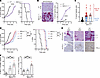
Resistance to antiangiogenics is a major challenge in cancer therapy. These agents can either normalize or exacerbate tumor vascular abnormality and hypoxia. The mechanisms of resistance remain unclear in the latter setting. By integrating data from mouse models and clinical trials, we showed that hypoxia-inducing anti-VEGF therapy upregulated programmed cell death ligand 1 (PD-L1), yet failed to sensitize tumors to PD-L1 blockade. Mechanistically, early hypoxic stress triggered epithelial osteopontin (SPP1) production, which recruited monocytes and skewed macrophages toward M2 states, suppressing T cell cytotoxicity. Pharmacological SPP1 depletion impeded the development of hypoxia, reduced M2 infiltration, restored T cell activity, and enabled synergy between antiangiogenics and anti–PD-L1. Genetic dissection — tumor-epithelial Spp1-KO grafts and bone marrow chimeras generated by lethal irradiation and reconstitution with Spp1–/– or WT hematopoietic donors — showed that myeloid SPP1 contributed only marginally compared with epithelial SPP1. These findings identified SPP1 as a central mediator of resistance to hypoxia-inducing antiangiogenics, contributed to a comprehensive model of antiangiogenic resistance, and supported SPP1-targeted strategies to personalize immunotherapy and antiangiogenic therapy according to tumor hypoxia.
Authors
Jose Luis Ruiz-Sepulveda, Maria J. Bueno, Silvana Mouron, Veronica Jimenez-Renard, Manuel Muñoz, Manuel Moradiellos, Leonardo D. Garma, Luis García-Jimeno, Adam W. Watson, Ghassan Mouneimne, Solip Park, Rebeca Jimeno, Miguel Quintela-Fandino
This file is in Adobe Acrobat (PDF) format. If you have not installed and configured the Adobe Acrobat Reader on your system.
Having trouble reading a PDF?
PDFs are designed to be printed out and read, but if you prefer to read them online, you may find it easier if you increase the view size to 125%.
Having trouble saving a PDF?
Many versions of the free Acrobat Reader do not allow Save. You must instead save the PDF from the JCI Online page you downloaded it from. PC users: Right-click on the Download link and choose the option that says something like "Save Link As...". Mac users should hold the mouse button down on the link to get these same options.
Having trouble printing a PDF?
- Try printing one page at a time or to a newer printer.
- Try saving the file to disk before printing rather than opening it "on the fly." This requires that you configure your browser to "Save" rather than "Launch Application" for the file type "application/pdf", and can usually be done in the "Helper Applications" options.
- Make sure you are using the latest version of Adobe's Acrobat Reader.
Unedited blot and gel images - Download (598.29 KB)


Copyright © 2026 American Society for Clinical Investigation
ISSN: 0021-9738 (print), 1558-8238 (online)