
Review
Abstract
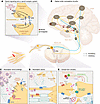
Acute pain management has historically been dominated by opioids, whose efficacy is overshadowed by the risks of addiction, tolerance, and dependence, culminating in the global opioid crisis. To transcend this issue, we must innovate beyond opioid-based μ receptor treatments, identifying nonopioid analgesics with high efficacy and minimal adverse effects. This Review navigates the multifaceted landscape of inflammatory, neuropathic, and nociplastic pain, emphasizing mechanism-based analgesic targets tailored to specific pain conditions. We delve into the challenges and breakthroughs in clinical trials targeting ion channels, GPCRs, and other molecular targets. We also highlight the intricate crosstalk between different physiological systems and the need for multimodal interventions with distinct pharmacodynamics to manage acute and chronic pain, respectively. Furthermore, we explore emerging strategies, including gene therapy, stem cell therapy, cell type–specific neuromodulation, and AI-driven techniques for objective, unbiased pain assessment and research. These innovative approaches are poised to revolutionize pain management, paving the way for the discovery of safer and more effective analgesics.
Authors
Xiangsunze Zeng, Rasheen Powell, Clifford J. Woolf

Abstract
Chronic pain affects more than 50 million Americans, with women disproportionately affected by severe pain, pain interference, and overall disability. The development of chronic pain is multifactorial and often begins with an incident of acute pain associated with an injury or a surgical procedure that transitions to persistent pain lasting for months or years. Despite this, there are limited clinical studies investigating sex differences in predictors and biomarkers for the transition to chronic pain. Several preclinical animal models have been developed to gain a better understanding of the mechanisms for the transition to chronic pain, and several sex-specific mechanisms have been identified across multiple systems. These preclinical models generally involve a multiple-insult approach, in which a priming insult enhances sensitivity to a subsequent induction stimulus. There is emerging evidence from preclinical research for several male-specific and female-specific mechanisms, as well as several studies showing shared mechanisms. Here, we review the clinical and preclinical literature covering sex differences in the periphery and immune system, the central nervous system, and the endocrine system related to the transition to chronic pain. We further highlight gaps in the literature and provide recommendations for future research to understand sex-specific differences in the transition to chronic pain.
Authors
Angela F. Smith, Ashley N. Plumb, Giovanni Berardi, Kathleen A. Sluka

Abstract
Bacterial vaginosis (BV) is a polymicrobial condition of the vaginal microbiota associated with a variety of sexually transmitted infections, infections of maternal and fetal tissues during pregnancy, and even some infections outside of the reproductive tract, including the urinary tract and mouth. BV has also been associated with conditions in which the body generates prominent inflammatory reactions to microbes, including infections of the cervix and other upper genital tract tissues. For reasons still not understood, BV is a highly recurrent and often difficult-to-treat condition, complicating attempts to prevent these associated infections. An additional layer of complexity arises from the increasing awareness that the presence of BV-associated bacteria in the vagina is not always symptomatic or associated with adverse outcomes. In this concise Review, we summarize and synthesize three groups of factors grounded in the literature that may be fueling the associations between BV and infection: (a) aspects of society and culture; (b) pathogens, virulence factors, and processes of microbial antagonism and synergy; and (c) host factors, such as genetics and immunity. Our goal is to understand what contexts and combinations of microbial, host, and social factors conspire to make BV virulent in some individuals but not others. Disrupting these patterns more systematically may achieve healthier outcomes.
Authors
Nicole M. Gilbert, Luis A. Ramirez Hernandez, Daniela Berman, Sydney Morrill, Pascal Gagneux, Amanda L. Lewis

Abstract
A large body of evidence suggests that single- and multiple-strain probiotics and synbiotics could have roles in the management of specific gastrointestinal disorders. However, ongoing concerns regarding the quality and heterogeneity of the clinical data, safety in vulnerable populations, and the lack of regulation of products containing live microbes are barriers to widespread clinical use. Safety and regulatory issues must be addressed and new technologies considered. One alternative future strategy is the use of synthetic bacterial communities, defined as manually assembled consortia of two or more bacteria originally derived from the human gastrointestinal tract. Synthetic bacterial communities can model functional, ecological, and structural aspects of native communities within the gastrointestinal tract, occupying varying nutritional niches and providing the host with a stable, robust, and diverse gut microbiota that can prevent pathobiont colonization by way of colonization resistance. Alternatively, phage therapy is the use of lytic phage to treat bacterial infections. The rise of antimicrobial resistance has led to renewed interest in phage therapy, and the high specificity of phages for their hosts has spurred interest in using phage-based approaches to precisely modulate the microbiome. In this Review, we consider the present and future of microbiome-targeting therapies, with a special focus on early-life applications, such as prevention of necrotizing enterocolitis.
Authors
Lauren E. Lynch, Rachel Lahowetz, Christian Maresso, Austen Terwilliger, Jason Pizzini, Valeria Melendez Hebib, Robert A. Britton, Anthony W. Maresso, Geoffrey A. Preidis

Abstract
The gut microbiome has been linked to everything from human behavior to athletic performance to disease pathogenesis. And yet, few universal truths have emerged regarding how the microbiome exerts its effects or responds to the host environment except for one: gut microbiota are exquisitely sensitive to human diets. What we eat from birth onward shapes our gut microbiome composition and function, and this is likely an evolutionarily conserved interaction that benefits the microbe and often the host. However, modern diets and lifestyles have created discordance between our slowly evolving human genome and rapidly adaptable microbiome, and have been implicated in the rise of chronic diseases over the past 75 years. Diet and microbiome interactions have been reviewed extensively, so here we focus on areas of microbiome research that have most illuminated natural and disruptive dietary forces over time in humans, and where we may have opportunities to restore the natural balance of host with microbes in our modern world.
Authors
Carolina Koletic, Amanda Mrad, Anthony Martin, Suzanne Devkota

Abstract
Metabolic dysfunction–associated steatotic liver disease (MASLD) is rising among reproductive-aged individuals and in pregnancy. MASLD in pregnancy does increase such risks as gestational diabetes, preeclampsia, and preterm birth. Although routine screening for MASLD has not been established in pregnancy, individuals with metabolic comorbidities, such as type 2 diabetes mellitus, should be evaluated by liver imaging and liver panel. Preconception counseling should address potential risks as well as need for optimized metabolic health before and during pregnancy. Fibrosis assessment should ideally be completed before pregnancy, to identify cases of cirrhosis that may warrant additional preconception management, such as variceal screening, as well as comanagement with maternal-fetal medicine specialists. In patients with MASLD, aspirin is advised at 12 weeks of gestational age to lower preeclampsia risk. In the absence of cirrhosis, no additional blood test monitoring is needed. In the general population, breastfeeding has beneficial effects on metabolic health in birthing parents and offspring and thus should be encouraged in the setting of MASLD, including access to enhanced lactation support. Research needs include evaluation of the long-term risks of MASLD in pregnancy on metabolic health in birthing parents and infants, as well as safety data for MASLD-directed therapies during pregnancy and lactation.
Authors
Monika Sarkar, Tatyana Kushner

Abstract
Metabolic dysfunction–associated steatotic liver disease (MASLD) diagnosis and management have evolved rapidly alongside the increasing prevalence of obesity and related complications. Hepatology has expanded its focus beyond late-stage cirrhosis and portal hypertension to earlier, complex MASLD cases in younger patients, necessitating closer collaboration with endocrinology. The renaming of nonalcoholic fatty liver disease (NAFLD) to MASLD reflects its pathophysiology, reduces stigma, and has prompted new research directions. Noninvasive tests such as liver stiffness measurement now play a crucial role in diagnosis, reducing reliance on invasive liver biopsies. However, advanced omics technologies, despite their potential to enhance diagnostic precision and patient stratification, remain underutilized in routine clinical practice. Behavioral factors, including posttraumatic stress disorder (PTSD) and lifestyle choices, influence disease outcomes and must be integrated into patient management strategies. Primary care settings are critical for early screening to prevent progression to advanced disease, yet sizable challenges remain in implementing effective screening protocols. This Review explores these evolving aspects of MASLD diagnosis and management, emphasizing the need for improved diagnostic tools, multidisciplinary collaboration, and holistic care approaches to address existing gaps and ensure comprehensive patient care across all healthcare levels.
Authors
Mette Munk Lauridsen, Kim Ravnskjaer, Lise Lotte Gluud, Arun J. Sanyal

Abstract
Kidney cancer poses unique clinical challenges because of its resistance to conventional treatments and its tendency to metastasize. The kidney is particularly susceptible to dysfunction of the complement system, an immune network that tumors often exploit. Recent discoveries have highlighted that the complement system not only plays a crucial role in immune surveillance and defense in the circulatory system, but also functions intracellularly and autonomously. This concept has shifted the focus of investigation toward understanding how complement proteins influence cancer progression by regulating the tumor microenvironment (TME), cell signaling, proliferation, metabolism, and the immune response. With the complement system and its inhibitors emerging as a promising new class of immunotherapeutics and potential complement-targeted treatments advancing through development pipelines and clinical trials, this Review provides a timely examination of how harnessing the complement system could lead to effective tumor treatments and how to strategically combine complement inhibitors with other cancer treatments, offering renewed hope in the fight against kidney cancer.
Authors
Ravikumar Aalinkeel, Richard J. Quigg, Jessy Alexander

Abstract
Type 2 (Th2) allergic diseases are chronic conditions characterized by a Th2-polarized immune response to allergens. These diseases can be categorized by affected barrier sites: skin (atopic dermatitis, allergic contact dermatitis), gut (food allergy), and respiratory tract (e.g., asthma, chronic rhinosinusitis). The global prevalence of Th2 allergic diseases has increased the need for a deeper understanding of their pathophysiology. Several associations have been identified between genetic variants in the genes encoding components of the complement system and allergic disease. Moreover, levels of several complement proteins are elevated in patients with allergy. Experimental evidence demonstrates that the complement system plays a critical role in the development of these diseases across barrier sites. While site-specific differences exist in the complement components involved, key pathways, particularly C3 and C5, are prominent across the skin, gut, and lung.
Authors
Sarah A. Thomas, Stephane Lajoie

Abstract
Reduced kidney function is associated with increased risk of cardiovascular disease in addition to kidney disease progression. Kidney disease is considered an inflammatory state, based on elevated levels of C-reactive protein and inflammatory cytokines. A key mediator of cardiovascular and kidney disease progression in the setting of reduced kidney function is systemic and vascular inflammation. However, the exact pathways that link chronic kidney disease (CKD) with inflammation remain incompletely understood. For decades it has been known that factor D, the main activator of the alternative complement pathway, is increased in the plasma of patients with reduced kidney function. Recent biomarker evidence suggests alternative pathway activation in this setting. CKD, therefore, seems to alter the balance of alternative pathway proteins, promoting inflammation and potentially exacerbating complement-mediated diseases and CKD-associated complications. In this manuscript, we review the impact of reduced kidney function on biomarkers of the alternative complement pathway and the implications of alternative pathway activation on cardiovascular disease and kidney disease progression. Importantly, we highlight the need for ongoing research efforts that may lead to opportunities to target the alternative pathway of complement withx the goal of improving kidney and cardiovascular outcomes in persons with reduced kidney function.
Authors
Diana I. Jalal, Joshua M. Thurman, Richard J.H. Smith
No posts were found with this tag.


Copyright © 2026 American Society for Clinical Investigation
ISSN: 0021-9738 (print), 1558-8238 (online)