
Go to JCI Insight
  • About
  • Editors
  • Consulting Editors
  • For authors
  • Journal stats
  • Publication ethics
  • Publication alerts by email
  • Advertising
  • Job board
  • Contact
  • Clinical Research and Public Health
  • Current issue
  • Past issues
  • By specialty
    • COVID-19
    • Cardiology
    • Gastroenterology
    • Immunology
    • Metabolism
    • Nephrology
    • Neuroscience
    • Oncology
    • Pulmonology
    • Vascular biology
    • All ...
  • Videos
    • ASCI Milestone Awards
    • Video Abstracts
    • Conversations with Giants in Medicine
  • Reviews
    • View all reviews ...
    • The cGAS-STING pathway: DNA sensing in health and disease (Jun 2026)
    • Neurodegeneration (Mar 2026)
    • Clinical innovation and scientific progress in GLP-1 medicine (Nov 2025)
    • Pancreatic Cancer (Jul 2025)
    • Complement Biology and Therapeutics (May 2025)
    • Evolving insights into MASLD and MASH pathogenesis and treatment (Apr 2025)
    • Microbiome in Health and Disease (Feb 2025)
    • View all review series ...
  • Viewpoint
  • Collections
    • In-Press Preview
    • Clinical Research and Public Health
    • Research Letters
    • Letters to the Editor
    • Editorials
    • Commentaries
    • Editor's notes
    • Reviews
    • Viewpoints
    • 100th anniversary
    • Top read articles

  • Current issue
  • Past issues
  • Specialties
  • Reviews
  • Review series
  • ASCI Milestone Awards
  • Video Abstracts
  • Conversations with Giants in Medicine
  • In-Press Preview
  • Clinical Research and Public Health
  • Research Letters
  • Letters to the Editor
  • Editorials
  • Commentaries
  • Editor's notes
  • Reviews
  • Viewpoints
  • 100th anniversary
  • Top read articles
  • About
  • Editors
  • Consulting Editors
  • For authors
  • Journal stats
  • Publication ethics
  • Publication alerts by email
  • Advertising
  • Job board
  • Contact

The hippocampus and Huntington's disease
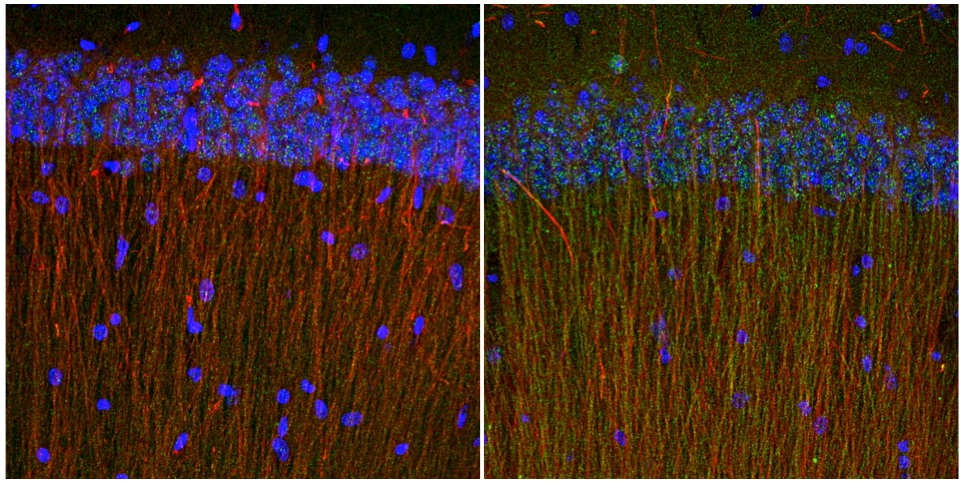
Patients with the neurodegenerative disorder Huntington’s disease (HD) present with spastic movement, reduced control of voluntary motor function, and a decline in cognitive ability. HD-associated defects in learning and memory are often the first signs of disease onset and have been ascribed to corticostriatal dysfunction. Verónica Brito, Albert Giralt, and colleagues at the University of Barcelona present evidence that alterations in the hippocampus underlie memory and learning dysfunction in HD. Evaluation of the hippocampus from HD patients and two different HD mouse models revealed enhanced expression of the neurotrophin receptor p75NTR, which is known to reduce dendritic spine density­–a phenotype associated with memory and learning defects. Normalization of p75NTR in HD mouse models prevented cognitive decline and relieved dendritic spine abnormalities. Moreover, overexpression of p75NTR in the hippocampus of WT mice recapitulated HD-associated memory and learning defects. The results of this study indicate that aberrant expression of p75NTR in the hippocampus mediates the development of HD-associated memory and learning dysfunction. The accompanying confocal microcopy images are representative of postsynaptic p75NTR staining (green) in the CA1 hippocampal region from WT (left) and HD mutant mice (right) at 8 months of age. Dendrites are stained with microtubule-associated protein 2 (MAP2, red)) and nuclei are stained with dapi (blue).


Published September 2, 2014, by Corinne Williams

Scientific Show Stopper

Related articles

Neurotrophin receptor p75NTR mediates Huntington’s disease–associated synaptic and memory dysfunction
Verónica Brito, Albert Giralt, Lilian Enriquez-Barreto, Mar Puigdellívol, Nuria Suelves, Alfonsa Zamora-Moratalla, Jesús J. Ballesteros, Eduardo D. Martín, Nuria Dominguez-Iturza, Miguel Morales, Jordi Alberch, Sílvia Ginés
View: Text | PDF
Research Article Neuroscience

Neurotrophin receptor p75NTR mediates Huntington’s disease–associated synaptic and memory dysfunction

  • Text
  • PDF
Abstract

Learning and memory deficits are early clinical manifestations of Huntington’s disease (HD). These cognitive impairments have been mainly associated with frontostriatal HD pathology; however, compelling evidence provided by several HD murine models suggests that the hippocampus may contribute to synaptic deficits and memory dysfunction in HD. The neurotrophin receptor p75NTR negatively regulates spine density, which is associated with learning and memory; therefore, we explored whether disturbed p75NTR function in the hippocampus could contribute to synaptic dysfunction and memory deficits in HD. Here, we determined that levels of p75NTR are markedly increased in the hippocampus of 2 distinct mouse models of HD and in HD patients. Normalization of p75NTR levels in HD mutant mice heterozygous for p75NTR prevented memory and synaptic plasticity deficits and ameliorated dendritic spine abnormalities, likely through normalization of the activity of the GTPase RhoA. Moreover, viral-mediated overexpression of p75NTR in the hippocampus of WT mice reproduced HD learning and memory deficits, while knockdown of p75NTR in the hippocampus of HD mice prevented cognitive decline. Together, these findings provide evidence of hippocampus-associated memory deficits in HD and demonstrate that p75NTR mediates synaptic, learning, and memory dysfunction in HD.

Authors

Verónica Brito, Albert Giralt, Lilian Enriquez-Barreto, Mar Puigdellívol, Nuria Suelves, Alfonsa Zamora-Moratalla, Jesús J. Ballesteros, Eduardo D. Martín, Nuria Dominguez-Iturza, Miguel Morales, Jordi Alberch, Sílvia Ginés

×
Advertisement

Copyright © 2026 American Society for Clinical Investigation
ISSN: 0021-9738 (print), 1558-8238 (online)

Sign up for email alerts