
Submit a comment
Abstract
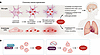
Growing evidence shows that the risk of cognitive impairment is increased across a range of metabolic and cardiovascular diseases, but underlying mechanisms remain poorly understood. One possibility involves activation of microglia, a glial cell type of the central nervous system with morphological and transcriptional features comparable to resident macrophages in other tissues that plays specialized roles in supporting neuronal and brain function. Combining clinical investigation in pulmonary arterial hypertension (PAH) cohorts with mouse model and microglial cell culture studies, a study by Okawa, Shi, and colleagues in this issue of the JCI adds compelling, albeit indirect, evidence linking impaired lysosomal lipid handling in both endothelial cells and microglia to a specific neurological disorder associated with PAH. The findings open opportunities for understanding how cardiopulmonary disease predisposes to neurodegeneration.
Authors
Michael W. Schwartz, Karin E. Bornfeldt
Guidelines
The Editorial Board will only consider comments that are deemed relevant and of interest to readers. The Journal will not post data that have not been subjected to peer review; or a comment that is essentially a reiteration of another comment.
- Comments appear on the Journal’s website and are linked from the original article’s web page.
- Authors are notified by email if their comments are posted.
- The Journal reserves the right to edit comments for length and clarity.
- No appeals will be considered.
- Comments are not indexed in PubMed.
Specific requirements
- Maximum length, 400 words
- Entered as plain text or HTML
- Author’s name and email address, to be posted with the comment
- Declaration of all potential conflicts of interest (even if these are not ultimately posted); see the Journal’s conflict-of-interest policy
- Comments may not include figures


Copyright © 2026 American Society for Clinical Investigation
ISSN: 0021-9738 (print), 1558-8238 (online)