
Submit a comment
Abstract
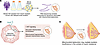
Lactation insufficiency in postpartum women has been associated with obesity and insulin resistance, among other risk factors. Challenges related to translating findings from animal models of lactation and the limited ability to study pregnant and lactating women in clinical trials have impeded more detailed mechanistic understanding of this relationship. In this issue of the JCI, Meng et al. combined studies in human milk samples and in vitro mammary epithelial cell models from humans and rodents to provide compelling evidence that mitochondrial dysfunction mediates the link between insulin resistance and lactation insufficiency. Notably, they observed that chronic exposure to high levels of insulin led to mitochondrial fragmentation and loss of volume in mouse mammary epithelial cells. This framework linking mitochondria, insulin signaling, and lactation should be extended to in vivo models and primary human tissues to better define the mechanisms supporting successful lactation.
Authors
Laura L. Hernandez
Guidelines
The Editorial Board will only consider comments that are deemed relevant and of interest to readers. The Journal will not post data that have not been subjected to peer review; or a comment that is essentially a reiteration of another comment.
- Comments appear on the Journal’s website and are linked from the original article’s web page.
- Authors are notified by email if their comments are posted.
- The Journal reserves the right to edit comments for length and clarity.
- No appeals will be considered.
- Comments are not indexed in PubMed.
Specific requirements
- Maximum length, 400 words
- Entered as plain text or HTML
- Author’s name and email address, to be posted with the comment
- Declaration of all potential conflicts of interest (even if these are not ultimately posted); see the Journal’s conflict-of-interest policy
- Comments may not include figures


Copyright © 2026 American Society for Clinical Investigation
ISSN: 0021-9738 (print), 1558-8238 (online)