
Go to JCI Insight
  • About
  • Editors
  • Consulting Editors
  • For authors
  • Journal stats
  • Publication ethics
  • Publication alerts by email
  • Advertising
  • Job board
  • Contact
  • Clinical Research and Public Health
  • Current issue
  • Past issues
  • By specialty
    • COVID-19
    • Cardiology
    • Gastroenterology
    • Immunology
    • Metabolism
    • Nephrology
    • Neuroscience
    • Oncology
    • Pulmonology
    • Vascular biology
    • All ...
  • Videos
    • ASCI Milestone Awards
    • Video Abstracts
    • Conversations with Giants in Medicine
  • Reviews
    • View all reviews ...
    • Emerging therapeutic strategies in breast cancer (Oct 2026)
    • The cGAS-STING pathway: DNA sensing in health and disease (Jun 2026)
    • Neurodegeneration (Mar 2026)
    • Clinical innovation and scientific progress in GLP-1 medicine (Nov 2025)
    • Pancreatic Cancer (Jul 2025)
    • Complement Biology and Therapeutics (May 2025)
    • Evolving insights into MASLD and MASH pathogenesis and treatment (Apr 2025)
    • View all review series ...
  • Viewpoint
  • Collections
    • In-Press Preview
    • Clinical Research and Public Health
    • Research Letters
    • Letters to the Editor
    • Editorials
    • Commentaries
    • Editor's notes
    • Reviews
    • Viewpoints
    • 100th anniversary
    • Top read articles

  • Current issue
  • Past issues
  • Specialties
  • Reviews
  • Review series
  • ASCI Milestone Awards
  • Video Abstracts
  • Conversations with Giants in Medicine
  • In-Press Preview
  • Clinical Research and Public Health
  • Research Letters
  • Letters to the Editor
  • Editorials
  • Commentaries
  • Editor's notes
  • Reviews
  • Viewpoints
  • 100th anniversary
  • Top read articles
  • About
  • Editors
  • Consulting Editors
  • For authors
  • Journal stats
  • Publication ethics
  • Publication alerts by email
  • Advertising
  • Job board
  • Contact

Submit a comment

Toward targeted therapeutics for lobular breast cancer
Kristina A. Fanucci, Shaymaa Bahnassy, Arya Mariam Roy, Anna Sokolova, Daniel G. Stover, Peter T. Simpson, Rebecca B. Riggins, Rinath Jeselsohn
View: Text | PDF
Review Series

Toward targeted therapeutics for lobular breast cancer

  • Text
  • PDF
Abstract

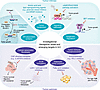
Despite growing recognition of invasive lobular carcinoma (ILC) as a biologically and clinically distinct subtype of breast cancer, ILC remains understudied. Most contemporary therapeutic trials continue to enroll patients predominantly with invasive ductal carcinoma/invasive carcinoma of no special type and rarely stratify by histology. As a result, ILC’s unique disease biology, characteristic loss of E-cadherin function, diffuse growth pattern, and distinct metastatic tropism remain underrepresented in evidence that guides systemic therapy recommendations. In this Review, we examine key molecular alterations and emerging therapeutic targets in ILC, emphasizing recent preclinical discoveries that identify subtype-specific therapeutic vulnerabilities and guide the development of histology-specific treatment approaches for this unique disease. In combination with endocrine therapies, effective targeting in ILC may require a multilayered strategy that extends beyond genomic alterations to leverage ILC’s specific estrogen receptor–associated proteins, metabolism, and tumor microenvironment. Future clinical trial frameworks incorporating prespecified ILC cohorts, tailored endpoints, and coclinical approaches enabling parallel testing in patients and patient-derived models could help accelerate the development and evaluation of ILC-targeted therapeutics.

Authors

Kristina A. Fanucci, Shaymaa Bahnassy, Arya Mariam Roy, Anna Sokolova, Daniel G. Stover, Peter T. Simpson, Rebecca B. Riggins, Rinath Jeselsohn

×

Guidelines

The Editorial Board will only consider comments that are deemed relevant and of interest to readers. The Journal will not post data that have not been subjected to peer review; or a comment that is essentially a reiteration of another comment.

  • Comments appear on the Journal’s website and are linked from the original article’s web page.
  • Authors are notified by email if their comments are posted.
  • The Journal reserves the right to edit comments for length and clarity.
  • No appeals will be considered.
  • Comments are not indexed in PubMed.

Specific requirements

  • Maximum length, 400 words
  • Entered as plain text or HTML
  • Author’s name and email address, to be posted with the comment
  • Declaration of all potential conflicts of interest (even if these are not ultimately posted); see the Journal’s conflict-of-interest policy
  • Comments may not include figures
This field is required

Copyright © 2026 American Society for Clinical Investigation
ISSN: 0021-9738 (print), 1558-8238 (online)

Sign up for email alerts