
Go to JCI Insight
  • About
  • Editors
  • Consulting Editors
  • For authors
  • Publication ethics
  • Publication alerts by email
  • Advertising
  • Job board
  • Contact
  • Clinical Research and Public Health
  • Current issue
  • Past issues
  • By specialty
    • COVID-19
    • Cardiology
    • Gastroenterology
    • Immunology
    • Metabolism
    • Nephrology
    • Neuroscience
    • Oncology
    • Pulmonology
    • Vascular biology
    • All ...
  • Videos
    • ASCI Milestone Awards
    • Video Abstracts
    • Conversations with Giants in Medicine
  • Reviews
    • View all reviews ...
    • The cGAS-STING pathway: DNA sensing in health and disease (Jun 2026)
    • Neurodegeneration (Mar 2026)
    • Clinical innovation and scientific progress in GLP-1 medicine (Nov 2025)
    • Pancreatic Cancer (Jul 2025)
    • Complement Biology and Therapeutics (May 2025)
    • Evolving insights into MASLD and MASH pathogenesis and treatment (Apr 2025)
    • Microbiome in Health and Disease (Feb 2025)
    • View all review series ...
  • Viewpoint
  • Collections
    • In-Press Preview
    • Clinical Research and Public Health
    • Research Letters
    • Letters to the Editor
    • Editorials
    • Commentaries
    • Editor's notes
    • Reviews
    • Viewpoints
    • 100th anniversary
    • Top read articles

  • Current issue
  • Past issues
  • Specialties
  • Reviews
  • Review series
  • ASCI Milestone Awards
  • Video Abstracts
  • Conversations with Giants in Medicine
  • In-Press Preview
  • Clinical Research and Public Health
  • Research Letters
  • Letters to the Editor
  • Editorials
  • Commentaries
  • Editor's notes
  • Reviews
  • Viewpoints
  • 100th anniversary
  • Top read articles
  • About
  • Editors
  • Consulting Editors
  • For authors
  • Publication ethics
  • Publication alerts by email
  • Advertising
  • Job board
  • Contact

Citations to this article
Bittersweet: how hyperglycemia exacerbates vitiligo progression through the succinate/SUCNR1 axis
Kaitlyn G. O’Donnell, I. Caroline Le Poole
View: Text | PDF
Commentary

Bittersweet: how hyperglycemia exacerbates vitiligo progression through the succinate/SUCNR1 axis

  • Text
  • PDF
Abstract

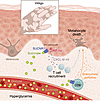
Vitiligo is a depigmenting disease marked by progressive T cell–driven destruction of melanocytes in the skin, hair, and mucosa. While vitiligo is known to be a T cell–mediated autoimmune disease, its triggers have remained poorly understood and treatment options limited. In this issue of the JCI, Kang et al. demonstrated how hyperglycemia exacerbates vitiligo progression through the succinate/SUCNR1 axis. These findings identify succinate as a potential biomarker for disease activity and highlight an independent pathway for targeting in therapeutic intervention. More broadly, the findings linking succinate and glucose metabolism to vitiligo suggest that lifestyle factors could be modified to slow development of vitiligo and other autoimmune diseases linked to succinate.

Authors

Kaitlyn G. O’Donnell, I. Caroline Le Poole

×

Loading citation information...
Advertisement

Copyright © 2026 American Society for Clinical Investigation
ISSN: 0021-9738 (print), 1558-8238 (online)

Sign up for email alerts