Advertisement
Commentary
Open Access |
10.1172/JCI203657
1Michigan Center for Translational Pathology,
2Department of Pathology,
3Rogel Cancer Center,
4Howard Hughes Medical Institute, and
5Department of Urology, University of Michigan, Ann Arbor, Michigan, USA.
Address correspondence to: Arul M. Chinnaiyan, 5316 Rogel Cancer Center, 1500 E. Medical Center Dr., Ann Arbor, Michigan 48109, USA. Email: arul@med.umich.edu.
Find articles by Wang, X. in: PubMed | Google Scholar
1Michigan Center for Translational Pathology,
2Department of Pathology,
3Rogel Cancer Center,
4Howard Hughes Medical Institute, and
5Department of Urology, University of Michigan, Ann Arbor, Michigan, USA.
Address correspondence to: Arul M. Chinnaiyan, 5316 Rogel Cancer Center, 1500 E. Medical Center Dr., Ann Arbor, Michigan 48109, USA. Email: arul@med.umich.edu.
Find articles by Chinnaiyan, A. in: PubMed | Google Scholar
Published March 16, 2026 - More info
Radiotherapy (RT) is a central treatment for prostate cancer (PCa), relying on the induction of DNA double-strand breaks (DSBs). Tumor ability to repair these breaks limits RT efficacy, making DSB repair inhibitors potential radiosensitizers. However, many of these inhibitors lack tumor specificity and harm normal cells. Therefore, tumor-specific radiosensitization strategies are critically needed for PCa. Approximately 50% of PCa cases harbor the TMPRSS2-ERG gene fusion, leading to overexpression of the ERG transcription factor (ERG+). In this study, we demonstrate that ERG+ tumors shift DSB repair toward the poly(ADP-ribose) polymerase 1–dependent end-joining (PARP1-EJ) pathway. Proteomic and Western blot analyses revealed elevated PARP1, XRCC1, and LIG3 levels in ERG+ cells. Notably, PARP inhibition with olaparib increased residual γH2AX/53BP1 foci postirradiation in ERG+ cells, indicating enhanced radiosensitization. In tissue slice cultures (TSCs) from 53 tumors of patients with high-risk PCa, olaparib selectively increased γH2AX/53BP1 foci selectively in ERG+ samples. ERG+ patient–derived organoids also showed significantly delayed growth when treated with olaparib plus RT, compared with either treatment alone. Interestingly, ERG-negative cells within ERG+ TSCs were similarly radiosensitized by olaparib, likely through bystander effect, with residual 53BP1 foci levels comparable to those in ERG+ cells. This was confirmed by medium exchange experiments. These findings suggest that ERG expression promotes dependency on the PARP1-EJ pathway, rendering ERG+ PCa more susceptible to PARP inhibition. This supports combining PARP inhibitors with RT for tumor-selective radiosensitization in ERG+ patients.
Sabrina Köcher, Mohamed E. Elsesy, Ayham Moustafa, Wahid Mohammadi, Adriana Perugachi Heinsohn, Yamini Nagaraj, Su Jung Oh-Hohenhorst, Jan Hahn, Bente Siebels, Thomas Mair, Susanne Burdak-Rothkamm, Pierre Tennstedt, Ronald Simon, Tobias Lange, Derya Tilki, Thorsten Frenzel, Tobias Maurer, Cordula Petersen, Hartmut Schlüter, Carsten Bokemeyer, Gunhild von Amsberg, Kai Rothkamm, Wael Y. Mansour
The TMPRSS2:ERG gene fusion is a truncal oncogenic event in a large subset of prostate cancers, yet its clinical relevance has remained unclear. In this issue of the JCI, Köcher et al. have demonstrated that ERG overexpression in human prostate cancer cells rewired DNA double-strand break repair toward a poly(ADP-ribose) polymerase 1–dependent (PARP1-dependent) alternative end-joining pathway without disrupting canonical repair. This repair bias created a conditional dependency on PARP1 that was exposed by radiotherapy, rendering ERG-positive tumors selectively sensitive to PARP inhibition–mediated radiosensitization. The tumor-selective cytotoxic effect of combined PARP1 inhibition and irradiation was corroborated in human-derived prostate cancer organoids. These findings establish ERG as a predictive biomarker for precision radiotherapy and highlight a tumor-selective strategy to enhance radiotherapeutic efficacy in prostate cancer.
Prostate cancer is the most commonly diagnosed malignancy in men worldwide and a leading cause of cancer-related mortality (1). While localized disease is often curable, outcomes for patients with high-risk localized or locally advanced prostate cancer remain suboptimal despite multimodal therapy (2). Radiotherapy (RT), frequently combined with androgen deprivation therapy (ADT), remains a cornerstone of treatment across disease stages (3). However, the therapeutic index of RT is limited by its toxicity in normal tissue, motivating the development of tumor-selective radiosensitization strategies (4). In this context, tumor-intrinsic genomic alterations that reprogram DNA damage responses offer a compelling framework for precision RT.
Among genomic alterations identified in prostate cancer, rearrangements involving ETS family transcription factors are the most prevalent. Fusion of the androgen-responsive TMPRSS2 promoter to the ERG oncogene occurs in approximately 50% of prostate cancers in patients of European ancestry (5–7). Although the prognostic significance of TMPRSS2:ERG has remained controversial, growing evidence indicates that ERG overexpression imposes distinct biological states and therapeutic dependencies. The study by Köcher et al. (8) provides compelling mechanistic and translational evidence that ERG overexpression reprograms DNA double-strand break (DSB) repair pathway choice, creating a selective vulnerability to poly(ADP-ribose) polymerase inhibition (PARPi) in the context of RT. Collectively, these findings reposition TMPRSS2:ERG from a debated prognostic marker to a functional biomarker for tumor-selective radiosensitization (Figure 1).
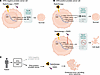
Figure 1ERG-driven DNA repair rewiring creates a therapeutic window for radiosensitization. Köcher et al. (8) showed that the TMPRSS2:ERG fusion reprograms DNA double-strand break (DSB) repair in prostate cancer to create a selective vulnerability to PARP inhibitor–mediated radiosensitization. (A) In ERG-negative cells, radiation-induced DSBs are predominantly repaired by canonical nonhomologous end-joining (NHEJ) and homologous recombination (HR), and PARP inhibition (PARPi) has minimal impact. (B) In contrast, ERG overexpression shifts DSB repair toward PARP1-dependent alternative end-joining (Alt-EJ) without impairing HR or NHEJ. Upon PARPi during radiotherapy, ERG-positive cells lose their dominant repair pathway, resulting in persistent γH2AX/53BP1 foci, genomic instability, and enhanced tumor cell death. (C) Thus, ERG expression serves as a predictive biomarker for tumor-selective radiosensitization.
ERG rearrangements represent truncal events in prostate tumorigenesis, arising early and persisting throughout disease evolution (6). By placing ERG under the control of the androgen-responsive TMPRSS2 promoter-enhancer, this rearrangement enforces sustained ERG expression throughout disease evolution. Unlike androgen receptor (AR) alterations — which typically emerge under selective pressure from hormonal therapies — ERG gene rearrangements precede treatment and define a molecular subtype from tumor initiation onward (9).
ERG expression is absent from normal prostate epithelium, underscoring its tumor specificity (10). This distinction has important therapeutic implications: ERG-driven dependencies are unlikely to be shared by surrounding normal tissues, creating opportunities for selective intervention. Despite its high prevalence, ERG has proven difficult to directly target. As a transcription factor, ERG lacks enzymatic activity, and early efforts to use ERG as a prognostic biomarker yielded inconsistent results across prostatectomy and RT cohorts (11).
These inconsistencies suggest that ERG does not function as a classical prognostic determinant. Instead, ERG defines a molecular subtype with distinct responses to cellular stress, including DNA damage induced by therapy. Functionally, ERG orchestrates transcriptional programs linked to invasion (7), lineage plasticity, and therapeutic resistance (12), and emerging evidence places ERG at the intersection of genome stability and DNA repair pathway regulation (13).
RT exerts its antitumor effects primarily by inducing DNA DSBs, and the efficiency and fidelity of DSB repair are major determinants of radiosensitivity (14). In mammalian cells, DSBs are repaired predominantly through canonical nonhomologous end-joining (c-NHEJ) and homologous recombination (HR). Defects in HR, such as those caused by BRCA1/2 mutations, confer sensitivity to PARP inhibitors and form the basis of their current clinical use (15). However, such defects are relatively uncommon in prostate cancer, limiting the applicability of established PARPi paradigms (16).
In addition to HR and c-NHEJ, DSBs can be repaired by an alternative end-joining (Alt-EJ) pathway. Alt-EJ is typically engaged when c-NHEJ is compromised and is characterized by its reliance on PARP1 (PARP1-dependent end-joining; PARP1-EJ) and its intrinsically error-prone nature (17). Cells that shift DSB repair toward PARP1-EJ become selectively vulnerable to PARPi, particularly in the setting of radiation-induced DNA damage (18). Importantly, this mode of radiosensitization is replication independent and does not require preexisting HR deficiency, distinguishing it from canonical PARPi sensitivity.
In the present study, Köcher et al. (8) demonstrated that ERG overexpression in human prostate cancer cell lines did not abolish canonical DSB repair. ERG-positive prostate cancer cells retained intact HR and c-NHEJ activity, consistent with clinical data showing comparable outcomes following RT alone in ERG-positive and ERG-negative tumors (11). Rather than inducing repair defects, ERG drove a qualitative shift in repair pathway choice: ERG-positive cells preferentially engaged PARP1-EJ, supported by increased expression and utilization of PARP1, XRCC1, and DNA ligase III, instead of DNA-PK–dependent c-NHEJ (19). Sequencing of repair junctions revealed increased deletions and imprecise end-joining, molecular hallmarks of PARP1-EJ–mediated repair.
Thus, ERG rewires DSB repair architecture without reducing overall repair capacity, creating a conditional dependency on PARP1 that becomes apparent only under genotoxic stress.
Mechanistically, ERG functions as a transcriptional organizer of the PARP1-EJ axis. Köcher et al.’s proteomic and transcriptional analyses revealed upregulation of PARP1-EJ components, including PARP1, XRCC1, LIG3, and MRE11, in ERG-positive cells (8). ERG depletion reversed this expression pattern, consistent with ERG’s role as a chromatin-binding transcriptional regulator (20).
This ERG-driven program biases DSB repair toward an error-prone but flexible pathway capable of accommodating the high transcriptional output and replication stress characteristic of ERG-positive tumors (21). In this context, PARP1-EJ may represent an adaptive solution for genome maintenance — until therapeutic pressure is applied.
PARPi alone had minimal effects on cell survival or DNA repair in ERG-positive cells. However, when combined with radiation-induced DSBs, PARPi removed the dominant repair pathway on which these cells rely, resulting in persistent unrepaired damage and marked radiosensitization.
The therapeutic significance of ERG-mediated repair rewiring becomes evident when PARPi is combined with RT. In the absence of irradiation, PARP inhibitors exerted limited cytotoxicity in ERG-positive prostate cancer cells, consistent with intact HR and c-NHEJ (22). Upon radiation exposure, however, inhibition of PARP1 abolished the preferred repair pathway, leading to accumulation of unrepaired DSBs marked by persistent γH2AX and 53BP1 foci and subsequent tumor cell death (23).
This radiosensitization was selective: ERG-negative cells, which rely primarily on canonical repair pathways, were largely spared. Patient-derived organoid models corroborated these findings, demonstrating that combined PARPi and irradiation selectively suppressed growth and survival of ERG-positive organoids, while ERG-negative organoids derived minimal benefit.
Identifying the TMPRSS2:ERG fusion as a biomarker for PARPi-mediated radiosensitization represents a conceptual advance in precision RT. Unlike BRCA mutations, which occur in a minority of patients, ERG fusion is present in nearly half of prostate cancers, substantially expanding the population that could benefit from targeted radiosensitization.
Clinically, combining PARP inhibitors with RT in ERG-positive patients offers several advantages: tumor selectivity due to absent ERG expression in normal tissues, transient PARPi exposure limited to the RT window to minimize toxicity and resistance (24), and straightforward patient stratification using existing diagnostics. Effective radiosensitization may also permit treatment de-escalation, potentially reducing the duration or intensity of ADT and improving quality of life without compromising tumor control (25).
Prospective clinical trials are now warranted to validate ERG-guided combination strategies and to optimize dosing, scheduling, and patient selection. Incorporation of correlative studies will be essential to further elucidate the molecular circuitry linking ERG, PARP1-EJ, and DNA damage signaling.
The TMPRSS2:ERG fusion defines a biologically distinct and therapeutically actionable subtype of prostate cancer. By rewiring DSB repair toward PARP1-EJ, ERG overexpression creates a selective vulnerability that can be exploited using PARP inhibitors in combination with RT. These findings shift the paradigm of ERG from a debated prognostic marker to a functional biomarker for precision RT, offering a rational strategy to enhance tumor control while minimizing normal tissue toxicity.
This work is the result of NIH funding, in whole or in part, and is subject to the NIH Public Access Policy. Through acceptance of this federal funding, the NIH has been given a right to make the work publicly available in PubMed Central.
Conflict of interest: The University of Michigan has filed patents related to the use of TMPRSS2:ERG as a biomarker for prostate cancer (“Recurrent gene fusions in prostate cancer” [US7718369B2]; “Kits and methods useful for prognosing, diagnosing, and treating prostate cancer” [US 63/442,045; US 63/446,596]). AMC is a coinventor on these patents. AMC is also a cofounder and equity holder in Lynx Dx, a company developing TMPRSS2:ERG–based biomarkers, including an 18-gene multiplex urine assay for aggressive prostate cancer. Lynx Dx has licensed the relevant intellectual property from the University of Michigan.
Copyright: © 2026, Wang et al. This is an open access article published under the terms of the Creative Commons Attribution 4.0 International License.
Reference information: J Clin Invest. 2026;136(6):e203657. https://doi.org/10.1172/JCI203657.
See the related article at Overexpression of the ERG oncogene in prostate cancer identifies candidates for PARP inhibitor–based radiosensitization.