
Go to JCI Insight
  • About
  • Editors
  • Consulting Editors
  • For authors
  • Publication ethics
  • Publication alerts by email
  • Advertising
  • Job board
  • Contact
  • Clinical Research and Public Health
  • Current issue
  • Past issues
  • By specialty
    • COVID-19
    • Cardiology
    • Gastroenterology
    • Immunology
    • Metabolism
    • Nephrology
    • Neuroscience
    • Oncology
    • Pulmonology
    • Vascular biology
    • All ...
  • Videos
    • ASCI Milestone Awards
    • Video Abstracts
    • Conversations with Giants in Medicine
  • Reviews
    • View all reviews ...
    • Clinical innovation and scientific progress in GLP-1 medicine (Nov 2025)
    • Pancreatic Cancer (Jul 2025)
    • Complement Biology and Therapeutics (May 2025)
    • Evolving insights into MASLD and MASH pathogenesis and treatment (Apr 2025)
    • Microbiome in Health and Disease (Feb 2025)
    • Substance Use Disorders (Oct 2024)
    • Clonal Hematopoiesis (Oct 2024)
    • View all review series ...
  • Viewpoint
  • Collections
    • In-Press Preview
    • Clinical Research and Public Health
    • Research Letters
    • Letters to the Editor
    • Editorials
    • Commentaries
    • Editor's notes
    • Reviews
    • Viewpoints
    • 100th anniversary
    • Top read articles

  • Current issue
  • Past issues
  • Specialties
  • Reviews
  • Review series
  • ASCI Milestone Awards
  • Video Abstracts
  • Conversations with Giants in Medicine
  • In-Press Preview
  • Clinical Research and Public Health
  • Research Letters
  • Letters to the Editor
  • Editorials
  • Commentaries
  • Editor's notes
  • Reviews
  • Viewpoints
  • 100th anniversary
  • Top read articles
  • About
  • Editors
  • Consulting Editors
  • For authors
  • Publication ethics
  • Publication alerts by email
  • Advertising
  • Job board
  • Contact
Top
  • View PDF
  • Download citation information
  • Send a comment
  • Terms of use
  • Standard abbreviations
  • Need help? Email the journal
  • Top
  • Abstract
  • Profiling intragraft innate-like B cell differentiation during rejection
  • Bilirubin deposits as local antigenic targets in CAV
  • Heme catabolism in heart transplants: a double-edged sword?
  • Conclusions
  • Funding support
  • Footnotes
  • References
  • Version history
  • Article usage
  • Citations to this article

Advertisement

Commentary Open Access | 10.1172/JCI201815

Heme disposal inside heart transplants: a trigger for rejection?

Fuyi Liao and Andrew E. Gelman

Department of Surgery, Washington University School of Medicine, St. Louis, Missouri, USA.

Address correspondence to: Andrew E. Gelman, Campus Box 8234, 660 South Euclid Avenue, Washington University in St. Louis, St. Louis, Missouri, 63110, USA. Phone: 314.362.8382; Email: gelmana@wudosis.wustl.edu.

Find articles by Liao, F. in: PubMed | Google Scholar

Department of Surgery, Washington University School of Medicine, St. Louis, Missouri, USA.

Address correspondence to: Andrew E. Gelman, Campus Box 8234, 660 South Euclid Avenue, Washington University in St. Louis, St. Louis, Missouri, 63110, USA. Phone: 314.362.8382; Email: gelmana@wudosis.wustl.edu.

Find articles by Gelman, A. in: PubMed | Google Scholar |

Published February 2, 2026 - More info

Published in Volume 136, Issue 3 on February 2, 2026
J Clin Invest. 2026;136(3):e201815. https://doi.org/10.1172/JCI201815.
© 2026 Liao et al. This work is licensed under the Creative Commons Attribution 4.0 International License. To view a copy of this license, visit http://creativecommons.org/licenses/by/4.0/.
Published February 2, 2026 - Version history
View PDF

Related article:

Dominant intragraft plasma cells targeting bilirubin implicate local heme catabolism in human cardiac allograft vasculopathy
Sarah B. See, Talita Aguiar, Max Dietzel, Mattea Ausmeier, Hang T.T. Nguyen, Shunya Mashiko, Laura Donadeu, Hector Cordero, Poulomi Roy, Lorea Roson, Charles C. Marboe, Matthias J. Szabolcs, Maryjane Farr, Jose González-Costello, Aleix Olivella, Yoshifumi Naka, Koji Takeda, Rodica Vasilescu, Kevin J. Clerkin, Gilles Benichou, Joren C. Madsen, R. Glenn King, Oriol Bestard, Evan P. Kransdorf, Emmanuel Zorn
Plasma cells in human cardiac allografts with vasculopathy target bilirubin, revealing local heme catabolism and suggesting a novel contributor to CAV pathogenesis.
Clinical Research and Public Health Cardiology Immunology

Dominant intragraft plasma cells targeting bilirubin implicate local heme catabolism in human cardiac allograft vasculopathy

  • Text
  • PDF
Abstract

BACKGROUND Cardiac allograft vasculopathy (CAV) is consistently accompanied by immune infiltrates surrounding affected coronary arteries, including antibody-producing plasma cells (PC). The antigenic drivers of these intragraft PC responses remain poorly defined.METHODS We characterized graft infiltrating PC by single-cell RNA sequencing and immunoglobulin gene profiling. Using immunoglobulin sequences, we generated 37 recombinant monoclonal antibodies (mAb) from dominant intragraft PC clones and 24 control mAb from peripheral blood PC. Antigen reactivity was screened against chemical adducts, including bilirubin, a heme-degradation byproduct. Histologic and tissue analyses assessed bilirubin deposition as well as expression of hemecatabolic enzymes and the presence of Fe2+ in heart explants with CAV.RESULTS A majority of graft-derived mAb (21 of 37; approximately 57%) — but none of the mAb derived from blood PC — reacted to bilirubin. Bilirubin deposition was detected within lymphocytic aggregates in CAV grafts. In coronary arteries with CAV lesions, bilirubin accumulated in the cytoplasm and nuclei of smooth muscle cells in the tunica media, a pattern not observed in healthy heart tissue. Lastly, we detected the expression of heme-oxygenase-1 and biliverdin reductases in graft-infiltrating macrophages along with the presence of Fe2+ ion in the media of arteries with hyperplasia.CONCLUSION These findings suggest that local heme catabolism and resultant bilirubin accumulation create a prominent target for intragraft antibody responses in CAV. Bilirubin-specific antibodies and hemecatabolic pathways may contribute to CAV pathogenesis and represent potential mechanistic and therapeutic avenues for further investigation.FUNDING Grants AI116814, AI154845, AI184963, and AI176507, HL148528, RYC2022-036797-I, P30CA013696, UL1TR001873, S10OD020056.

Authors

Sarah B. See, Talita Aguiar, Max Dietzel, Mattea Ausmeier, Hang T.T. Nguyen, Shunya Mashiko, Laura Donadeu, Hector Cordero, Poulomi Roy, Lorea Roson, Charles C. Marboe, Matthias J. Szabolcs, Maryjane Farr, Jose González-Costello, Aleix Olivella, Yoshifumi Naka, Koji Takeda, Rodica Vasilescu, Kevin J. Clerkin, Gilles Benichou, Joren C. Madsen, R. Glenn King, Oriol Bestard, Evan P. Kransdorf, Emmanuel Zorn

×

Abstract

Cardiac allograft vasculopathy (CAV) is a fibroproliferative form of transplant rejection with limited treatment options other than retransplantation. In this issue, See and colleagues examined human explanted allografts with CAV. They found that a high proportion of intragraft plasma cells produce antibodies that recognize the heme catabolic end product, bilirubin. Clonotypic profiling revealed that bilirubin-reactive antibody-producing plasma cells develop from graft-infiltrating innate-like B cells, a subset often characterized by their rapid production of polyreactive natural antibodies as an early defense against infection. CAV but not nonrejecting graft tissue contained bilirubin deposits along with macrophages that expressed genes involved in heme catabolism. These findings raise the intriguing possibility that graft-derived bilirubin-specific antibodies target local heme catabolism to promote CAV.

Profiling intragraft innate-like B cell differentiation during rejection

Cardiac allograft vasculopathy (CAV) is a major cause of heart transplant rejection and is associated with dense immune infiltration in the coronary arteries. It is well established that rejecting cardiac allografts have intragraft class-switched B cells and plasma cells (PCs), with early work indicating that these cells participate in donor-specific recognition of human leukocyte antigen (HLA) (1). However, with the advent of single-cell gene profiling techniques, accumulating evidence suggests this may not be the case. Emerging observations indicate that chronically rejected human lung, kidney, and heart transplants contain activated B cell subsets with transcriptional profiles more akin to those of mouse B-1 B cells and human innate-like B cells than to those of conventional B cells (2–4). In contrast with conventional B cells, that are better suited to making high-affinity donor-specific HLA antibodies, innate-like B cells are best characterized by their production of natural antibodies, which are critical for rapid responses to infections. Whereas conventional B cells recirculate throughout the body, innate-like B cells are primarily localized to specific tissues or body cavities. Innate-like B cells are also distinguished by their polyreactive antigen specificity, which expands their clonal capacity through the recognition of particular chemical adducts attached to what can be structurally dissimilar macromolecules (5).

In the transplant setting, recent work has indicated that intragraft innate-like B cells, in part, target organ-specific antigens. Antibodies expressed from isotype-switched immunoglobulin sequences in innate-like B cells from rejecting human kidney allografts showed greater affinity for renal-specific antigens than for donor HLA, even in recipients with circulating donor-specific antibodies (3). However, whether there is an expansion of innate-like B cells with organ-antigen specificity in other rejecting organs remains unclear. Additionally, it remains to be determined the degree to which activated intragraft innate-like B cells and PCs are clonally related.

In this issue of JCI, See et al. analyzed antigen specificities of B cells and their clonal relatedness to PCs in explanted human heart transplants with and without CAV, as well as in the peripheral blood (6). Using single-cell RNA profiling, they first compared peripheral blood B cells and PC populations to their intragraft counterparts. Unlike B cells and PCs in control heart tissue, CAV intragraft B cells and PCs exhibited transcript accumulation characteristic of innate-like B cells, including AHNAK, a gene reported to be preferentially expressed in mouse B-1 B cells and human innate-like B cells from rejecting kidney allografts. Additionally, gene expression enrichment analysis identified pathways associated with B cell activation and antibody secretion, suggesting local clonal expansion and differentiation into PCs. To explore this finding further, the group conducted clonotypic profiling on CAV specimens and PBMCs using a combination of 5′ single cell V(D)J’ scRNA analysis and DNA sequencing on rearranged immunoglobulin γ heavy chain (IGH) variable region genes. Cells were considered clonally related if they had the same IGH variable and joining segment usage and a greater than 85% sequence similarity in complementary-determining region 3. In line with earlier work by these investigators, clonal relatedness was nearly absent between CAV B cells and plasma cells compared with the same respective cells in peripheral blood (4). However, almost a third of intragraft PCs and B cells were clonally related, supporting the notion that intragraft innate-like B cells differentiate locally into PCs during CAV pathogenesis.

Bilirubin deposits as local antigenic targets in CAV

Previous work from this group has shown that B cells in CAV lesions exhibit polyreactive antigen profiles characteristic of innate-like B cells (4). However, the specificities of antibodies encoded by intragraft PCs remain largely unexplored. To profile antigen specificities in the present study, the group generated monoclonal antibodies (mAbs) from PCs that showed evidence of expansion and isotype switching by selecting cells with paired immunoglobulin γ heavy and light chains that were rearranged and detected multiple times. Then the investigators drew upon their previous work (4), which showed that innate-like B cell polyreactivity results from recognition of specific chemical adducts covalently linked to various macromolecules. Here, using their unique high-dimensional ELISA platform, they tested 37 PC-generated mAbs for reactivity against a 93-adduct panel. More than half of these mAbs bound the end-product of heme catabolism, bilirubin. In contrast, only 1 of 96 mAbs derived from circulating memory B cells of recipients with CAV detected bilirubin, indicating that bilirubin is a primary antigen target of intragraft antibody production during CAV pathogenesis.

Interestingly, there are no prior reports of bilirubin accumulation in rejecting hearts, although deposits have been observed in atherosclerotic lesions in experimental models (7). Using commercially available bilirubin-specific antibodies, See and colleagues detected bilirubin deposits in CAV specimens, with the bulk of reactivity localized to immune cell infiltrates and to smooth muscle cells lining the coronary arteries. Bilirubin was also found in biopsies from a patient who later developed CAV, suggesting it could also be an early indicator of the disease. In contrast, bilirubin deposits were not found in cardiac allografts without CAV or in healthy hearts from patients who did not die of cardiac disease, further supporting the association between bilirubin and CAV development. Finally, intragraft PC-derived mAbs also detected bilirubin in CAV explants, with staining intensity roughly proportional to bilirubin reactivity in the ELISA platform. Collectively, these observations raise the possibility that locally produced antibodies targeting bilirubin play a pathogenic role in this disease.

Heme catabolism in heart transplants: a double-edged sword?

Remarkably, hyperbilirubinemia is a common complication after heart transplantation and cardiac failure. However, recipients with CAV did not develop hyperbilirubinemia in this study, suggesting that heme degradation is occurring in situ. This would be unexpected, as heme catabolism is commonly observed in macrophages in the spleen, liver, and bone marrow, which phagocytize dying erythrocytes and then oxidize the heme ring via heme oxygenase-1 (HO-1). Heme catabolism results in the production of a ferrous iron (Fe2+), carbon monoxide, and the tetrapyrrole biliverdin, which is catabolized to bilirubin by biliverdin reductases. In an examination of macrophages residing within CAV lesions, the group found compelling evidence of heme degradation as indicated by adjacent Fe2+ deposits, especially around infiltrating macrophages that expressed HO-1 (Figure 1). A bit more surprising was that heme catabolic pathways were also upregulated in other cells. Cytoplasmic bilirubin staining was observed in some intragraft B cells and PCs. In addition, gene expression enrichment analysis indicated a high probability of heme catabolism in intragraft-activated B cells and PCs, as evidenced by elevated transcript levels of heme oxygenase and biliverdin reductase isoforms.
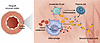
Schematic of intragraft heme catabolism and bilirubin-specific antibody proFigure 1

Schematic of intragraft heme catabolism and bilirubin-specific antibody production during CAV pathogenesis. See et al. demonstrated that intragraft plasma cells are derived locally from graft-infiltrating innate-like B cell clones that recognize bilirubin (6). Heme catabolism also likely occurs within allograft tissue, as evidenced by bilirubin and iron deposits in the tunica media of the coronary artery and macrophages, upregulating genes that drive heme degradation, such as HMOX1 (encoding HO-1). CO, carbon monoxide.

The observations of intragraft heme processing raise some interesting questions about the pathogenesis of CAV. For instance, is local heme catabolism a compensatory response to allograft inflammation? Among heme catabolism’s products, bilirubin is itself a potent antioxidant, while Fe2+ drives the expression of the cytoprotective gene ferritin, and carbon monoxide promotes vascular relaxation to increase perfusion (8). The induction of intragraft HO-1 expression has been shown to prevent signs of cellular stress and chronic rejection in a mouse cardiac allograft model (9). Nevertheless, antibody-targeted responses to a molecule absent in the tolerant graft are likely to have deleterious consequences for allograft survival.

Clearance of heme is a normal homeostatic function of reticuloendothelial organs, indicating that antibody recognition of bilirubin may reflect a loss of self tolerance. However, it has been reported that humans have circulating natural antibodies to bilirubin (5), suggesting innate-like B cell clonal recognition of heme catabolism may have arisen from polyreactive repertoires that evolved to sense products of bacterial metabolism. Interestingly, Corynebacterium diphtheriae and Pseudomonas aeruginosa are highly dependent on scavenging iron from exogenous heme. While these pathogens do not encode the complete set of enzymes required to convert heme to bilirubin, they do express homologs of the mammalian HO-1 enzyme and produce biliverdin (10, 11). Other work has shown that Mycobacterium tuberculosis hijacks endogenous macrophage HO-1 activity by expressing its own functional biliverdin reductase analogue to generate bilirubin, which, in turn, is thought to promote immune evasion (12). Given that the polyreactive repertoires of innate-like B cells can exhibit broad specificities and that biliverdin and bilirubin are highly similar in structure, it would be interesting to know if intragraft-derived or natural antibodies that recognize bilirubin also bind to biliverdin.

Finally, do the products of heme catabolism mark injured cells for removal? Of note, innate-like B cells produce natural antibodies that bind to oxidized cellular membranes by recognizing the covalent adducts, such as malondialdehyde (MDA). This activity typically promotes the phagocytic removal of cellular debris to help maintain tissue homeostasis (5, 13). However, in the setting of chronic tissue injury, antibodies that recognize MDA adducts are thought to promote pathogenic organ damage in Systemic Lupus Erythematosus (14) and Coronary Artery Disease (15). Determining whether graft-derived bilirubin-specific antibodies function analogously and if bilirubin adducts are attached to cardiac-specific macromolecules should provide valuable additional insight into CAV pathogenesis.
Conclusions

See and colleagues have identified intragraft bilirubin deposition as a major target of graft-derived antibody production in CAV (6). The investigators also provided clear evidence for the clonal relationship between intragraft innate-like B cells, locally formed PCs, and graft-derived antibody production against bilirubin. These findings are impactful and provide a basis for targeting intragraft PC development and antibody production as a therapeutic approach to combat CAV.

Funding support

This work is the result of NIH funding, in whole or in part, and is subject to the NIH Public Access Policy. Through acceptance of this federal funding, the NIH has been given a right to make the work publicly available in PubMed Central.

  • The National Institutes of Health (P01AI116501, R01HL167277, R01HL094601, R01HL173976, and P41EB025815) (to AEG).
  • The Cystic Fibrosis Foundation (GELMAN25XX0) (to AEG).
  • The Barnes-Jewish Foundation Maritz Chair of Immunology (to AEG).
Footnotes

Conflict of interest: The authors have declared that no conflict of interest exists.

Copyright: © 2026, Liao et al. This is an open access article published under the terms of the Creative Commons Attribution 4.0 International License.

Reference information: J Clin Invest. 2026;136(3):e201815. https://doi.org/10.1172/JCI201815.

See the related article at Dominant intragraft plasma cells targeting bilirubin implicate local heme catabolism in human cardiac allograft vasculopathy.

References
  1. Huibers MM, et al. Donor-specific antibodies are produced locally in ectopic lymphoid structures in cardiac allografts. Am J Transplant. 2017;17(1):246–254.
    View this article via: CrossRef PubMed Google Scholar
  2. Smirnova NF, et al. Single-cell transcriptome mapping identifies a local, innate B cell population driving chronic rejection after lung transplantation. JCI Insight. 2022;7(18):e156648.
    View this article via: JCI Insight CrossRef PubMed Google Scholar
  3. Asano Y, et al. Innate-like self-reactive B cells infiltrate human renal allografts during transplant rejection. Nat Commun. 2021;12(1):4372.
    View this article via: CrossRef PubMed Google Scholar
  4. Chatterjee D, et al. Prevalence of polyreactive innate clones among graft--infiltrating B cells in human cardiac allograft vasculopathy. J Heart Lung Transplant. 2018;37(3):385–393.
    View this article via: CrossRef PubMed Google Scholar
  5. Mashiko S, et al. Broad responses to chemical adducts shape the natural antibody repertoire in early infancy. Sci Adv. 2023;9(19):eade8872.
    View this article via: CrossRef PubMed Google Scholar
  6. See SB, et al. Dominant intragraft plasma cells targeting bilirubin implicate local heme catabolism in human cardiac allograft vasculopathy. J Clin Invest. 2026;136(3):e194138.
    View this article via: JCI PubMed CrossRef Google Scholar
  7. Nakayama M, et al. Increased expression of heme oxygenase-1 and bilirubin accumulation in foam cells of rabbit atherosclerotic lesions. Arterioscler Thromb Vasc Biol. 2001;21(8):1373–1377.
    View this article via: CrossRef PubMed Google Scholar
  8. Ryter SW. Heme Oxygenase-1: an anti-inflammatory effector in cardiovascular, lung, and related metabolic disorders. Antioxidants (Basel). 2022;11(3):555.
    View this article via: CrossRef PubMed Google Scholar
  9. Hancock WW, et al. Antibody-induced transplant arteriosclerosis is prevented by graft expression of anti-oxidant and anti-apoptotic genes. Nat Med. 1998;4(12):1392–1396.
    View this article via: CrossRef PubMed Google Scholar
  10. Chu GC, et al. Heme degradation as catalyzed by a recombinant bacterial heme oxygenase (Hmu O) from Corynebacterium diphtheriae. J Biol Chem. 1999;274(30):21319–21325.
    View this article via: CrossRef PubMed Google Scholar
  11. Shahzad S, et al. Pseudomonas aeruginosa heme metabolites biliverdin IXβ and IXδ are integral to lifestyle adaptations associated with chronic infection. mBio. 2024;15(3):e0276323.
    View this article via: CrossRef PubMed Google Scholar
  12. Ahmed FH, et al. Rv2074 is a novel F420 H2 -dependent biliverdin reductase in Mycobacterium tuberculosis. Protein Sci. 2016;25(9):1692–1709.
    View this article via: CrossRef PubMed Google Scholar
  13. Wang C, et al. Natural antibodies of newborns recognize oxidative stress-related malondialdehyde acetaldehyde adducts on apoptotic cells and atherosclerotic plaques. Int Immunol. 2013;25(10):575–587.
    View this article via: CrossRef PubMed Google Scholar
  14. Frostegard J, et al. Lipid peroxidation is enhanced in patients with systemic lupus erythematosus and is associated with arterial and renal disease manifestations. Arthritis Rheum. 2005;52(1):192–200.
    View this article via: CrossRef PubMed Google Scholar
  15. Anderson DR, et al. Unique antibody responses to malondialdehyde-acetaldehyde (MAA)-protein adducts predict coronary artery disease. PLoS One. 2014;9(9):e107440.
    View this article via: CrossRef PubMed Google Scholar
Version history
  • Version 1 (February 2, 2026): Electronic publication

Article tools

  • View PDF
  • Download citation information
  • Send a comment
  • Terms of use
  • Standard abbreviations
  • Need help? Email the journal

Metrics

  • Article usage
  • Citations to this article

Go to

  • Top
  • Abstract
  • Profiling intragraft innate-like B cell differentiation during rejection
  • Bilirubin deposits as local antigenic targets in CAV
  • Heme catabolism in heart transplants: a double-edged sword?
  • Conclusions
  • Funding support
  • Footnotes
  • References
  • Version history
Advertisement
Advertisement

Copyright © 2026 American Society for Clinical Investigation
ISSN: 0021-9738 (print), 1558-8238 (online)

Sign up for email alerts