
Advertisement
Research ArticleInflammationNeuroscience
Open Access |  10.1172/JCI199818
Inflammasome adaptor ASC promotes sustained neuroinflammation and mild cognitive impairment in a closed-head injury model
Tao Li,1 Sergio Castro-Gomez,1,2 Pablo Botella Lucena,3 Ana Vieira-Saecker,1 Stephanie Schwartz,1,2 Yingying Ding,2 Yushuang Deng,4 Maling Gou,5 Valentin Stein,2 Douglas T. Golenbock,6 Eicke Latz,7,8,9 and Michael T. Heneka3,6
1Clinic of Parkinson, Sleep and Movement Disorders, Center for Neurology, and
2Institute of Physiology II, University Hospital Bonn, University of Bonn, Bonn, Germany.
3Luxembourg Centre for Systems Biomedicine (LCSB), University of Luxembourg, Belvaux, Luxembourg.
4German Center for Neurodegenerative Diseases (DZNE), Bonn, Germany.
5Department of Biotherapy, Cancer Center and State Key Laboratory of Biotherapy, West China Hospital, Sichuan University, Chengdu, PR China.
6Division of Infectious Diseases and Immunology, University of Massachusetts Medical School, Worcester, Massachusetts, USA.
7Institute of Innate Immunity, University Hospital Bonn, Bonn, Germany.
8Centre of Molecular Inflammation Research, Norwegian University of Science and Technology, Trondheim, Norway.
9Deutsches Rheuma-Forschungszentrum (DRFZ), Berlin, Germany.
Address correspondence to: Michael T. Heneka, Luxembourg Centre for Systems Biomedicine, University of Luxembourg, 6 Avenue du Swing, 4367 Belvaux, Luxembourg. Phone: 352.621.712.820; Email: michael.heneka@uni.lu. Or to: Sergio Castro-Gomez, Clinic of Parkinson, Sleep and Movement Disorders, Center for Neurology, University Hospital Bonn, University of Bonn, Venusberg-Campus 1, 53127 Bonn, Germany. Phone: 49.228.287.53217; Email: sergio.castro-gomez@ukbonn.de.
Authorship note: TL and SCG contributed equally to this work.
Find articles by Li, T. in: PubMed | Google Scholar
1Clinic of Parkinson, Sleep and Movement Disorders, Center for Neurology, and
2Institute of Physiology II, University Hospital Bonn, University of Bonn, Bonn, Germany.
3Luxembourg Centre for Systems Biomedicine (LCSB), University of Luxembourg, Belvaux, Luxembourg.
4German Center for Neurodegenerative Diseases (DZNE), Bonn, Germany.
5Department of Biotherapy, Cancer Center and State Key Laboratory of Biotherapy, West China Hospital, Sichuan University, Chengdu, PR China.
6Division of Infectious Diseases and Immunology, University of Massachusetts Medical School, Worcester, Massachusetts, USA.
7Institute of Innate Immunity, University Hospital Bonn, Bonn, Germany.
8Centre of Molecular Inflammation Research, Norwegian University of Science and Technology, Trondheim, Norway.
9Deutsches Rheuma-Forschungszentrum (DRFZ), Berlin, Germany.
Address correspondence to: Michael T. Heneka, Luxembourg Centre for Systems Biomedicine, University of Luxembourg, 6 Avenue du Swing, 4367 Belvaux, Luxembourg. Phone: 352.621.712.820; Email: michael.heneka@uni.lu. Or to: Sergio Castro-Gomez, Clinic of Parkinson, Sleep and Movement Disorders, Center for Neurology, University Hospital Bonn, University of Bonn, Venusberg-Campus 1, 53127 Bonn, Germany. Phone: 49.228.287.53217; Email: sergio.castro-gomez@ukbonn.de.
Authorship note: TL and SCG contributed equally to this work.
Find articles by Castro-Gomez, S. in: PubMed | Google Scholar
1Clinic of Parkinson, Sleep and Movement Disorders, Center for Neurology, and
2Institute of Physiology II, University Hospital Bonn, University of Bonn, Bonn, Germany.
3Luxembourg Centre for Systems Biomedicine (LCSB), University of Luxembourg, Belvaux, Luxembourg.
4German Center for Neurodegenerative Diseases (DZNE), Bonn, Germany.
5Department of Biotherapy, Cancer Center and State Key Laboratory of Biotherapy, West China Hospital, Sichuan University, Chengdu, PR China.
6Division of Infectious Diseases and Immunology, University of Massachusetts Medical School, Worcester, Massachusetts, USA.
7Institute of Innate Immunity, University Hospital Bonn, Bonn, Germany.
8Centre of Molecular Inflammation Research, Norwegian University of Science and Technology, Trondheim, Norway.
9Deutsches Rheuma-Forschungszentrum (DRFZ), Berlin, Germany.
Address correspondence to: Michael T. Heneka, Luxembourg Centre for Systems Biomedicine, University of Luxembourg, 6 Avenue du Swing, 4367 Belvaux, Luxembourg. Phone: 352.621.712.820; Email: michael.heneka@uni.lu. Or to: Sergio Castro-Gomez, Clinic of Parkinson, Sleep and Movement Disorders, Center for Neurology, University Hospital Bonn, University of Bonn, Venusberg-Campus 1, 53127 Bonn, Germany. Phone: 49.228.287.53217; Email: sergio.castro-gomez@ukbonn.de.
Authorship note: TL and SCG contributed equally to this work.
Find articles by Botella Lucena, P. in: PubMed | Google Scholar
1Clinic of Parkinson, Sleep and Movement Disorders, Center for Neurology, and
2Institute of Physiology II, University Hospital Bonn, University of Bonn, Bonn, Germany.
3Luxembourg Centre for Systems Biomedicine (LCSB), University of Luxembourg, Belvaux, Luxembourg.
4German Center for Neurodegenerative Diseases (DZNE), Bonn, Germany.
5Department of Biotherapy, Cancer Center and State Key Laboratory of Biotherapy, West China Hospital, Sichuan University, Chengdu, PR China.
6Division of Infectious Diseases and Immunology, University of Massachusetts Medical School, Worcester, Massachusetts, USA.
7Institute of Innate Immunity, University Hospital Bonn, Bonn, Germany.
8Centre of Molecular Inflammation Research, Norwegian University of Science and Technology, Trondheim, Norway.
9Deutsches Rheuma-Forschungszentrum (DRFZ), Berlin, Germany.
Address correspondence to: Michael T. Heneka, Luxembourg Centre for Systems Biomedicine, University of Luxembourg, 6 Avenue du Swing, 4367 Belvaux, Luxembourg. Phone: 352.621.712.820; Email: michael.heneka@uni.lu. Or to: Sergio Castro-Gomez, Clinic of Parkinson, Sleep and Movement Disorders, Center for Neurology, University Hospital Bonn, University of Bonn, Venusberg-Campus 1, 53127 Bonn, Germany. Phone: 49.228.287.53217; Email: sergio.castro-gomez@ukbonn.de.
Authorship note: TL and SCG contributed equally to this work.
Find articles by Vieira-Saecker, A. in: PubMed | Google Scholar
1Clinic of Parkinson, Sleep and Movement Disorders, Center for Neurology, and
2Institute of Physiology II, University Hospital Bonn, University of Bonn, Bonn, Germany.
3Luxembourg Centre for Systems Biomedicine (LCSB), University of Luxembourg, Belvaux, Luxembourg.
4German Center for Neurodegenerative Diseases (DZNE), Bonn, Germany.
5Department of Biotherapy, Cancer Center and State Key Laboratory of Biotherapy, West China Hospital, Sichuan University, Chengdu, PR China.
6Division of Infectious Diseases and Immunology, University of Massachusetts Medical School, Worcester, Massachusetts, USA.
7Institute of Innate Immunity, University Hospital Bonn, Bonn, Germany.
8Centre of Molecular Inflammation Research, Norwegian University of Science and Technology, Trondheim, Norway.
9Deutsches Rheuma-Forschungszentrum (DRFZ), Berlin, Germany.
Address correspondence to: Michael T. Heneka, Luxembourg Centre for Systems Biomedicine, University of Luxembourg, 6 Avenue du Swing, 4367 Belvaux, Luxembourg. Phone: 352.621.712.820; Email: michael.heneka@uni.lu. Or to: Sergio Castro-Gomez, Clinic of Parkinson, Sleep and Movement Disorders, Center for Neurology, University Hospital Bonn, University of Bonn, Venusberg-Campus 1, 53127 Bonn, Germany. Phone: 49.228.287.53217; Email: sergio.castro-gomez@ukbonn.de.
Authorship note: TL and SCG contributed equally to this work.
Find articles by Schwartz, S. in: PubMed | Google Scholar
1Clinic of Parkinson, Sleep and Movement Disorders, Center for Neurology, and
2Institute of Physiology II, University Hospital Bonn, University of Bonn, Bonn, Germany.
3Luxembourg Centre for Systems Biomedicine (LCSB), University of Luxembourg, Belvaux, Luxembourg.
4German Center for Neurodegenerative Diseases (DZNE), Bonn, Germany.
5Department of Biotherapy, Cancer Center and State Key Laboratory of Biotherapy, West China Hospital, Sichuan University, Chengdu, PR China.
6Division of Infectious Diseases and Immunology, University of Massachusetts Medical School, Worcester, Massachusetts, USA.
7Institute of Innate Immunity, University Hospital Bonn, Bonn, Germany.
8Centre of Molecular Inflammation Research, Norwegian University of Science and Technology, Trondheim, Norway.
9Deutsches Rheuma-Forschungszentrum (DRFZ), Berlin, Germany.
Address correspondence to: Michael T. Heneka, Luxembourg Centre for Systems Biomedicine, University of Luxembourg, 6 Avenue du Swing, 4367 Belvaux, Luxembourg. Phone: 352.621.712.820; Email: michael.heneka@uni.lu. Or to: Sergio Castro-Gomez, Clinic of Parkinson, Sleep and Movement Disorders, Center for Neurology, University Hospital Bonn, University of Bonn, Venusberg-Campus 1, 53127 Bonn, Germany. Phone: 49.228.287.53217; Email: sergio.castro-gomez@ukbonn.de.
Authorship note: TL and SCG contributed equally to this work.
Find articles by Ding, Y. in: PubMed | Google Scholar
1Clinic of Parkinson, Sleep and Movement Disorders, Center for Neurology, and
2Institute of Physiology II, University Hospital Bonn, University of Bonn, Bonn, Germany.
3Luxembourg Centre for Systems Biomedicine (LCSB), University of Luxembourg, Belvaux, Luxembourg.
4German Center for Neurodegenerative Diseases (DZNE), Bonn, Germany.
5Department of Biotherapy, Cancer Center and State Key Laboratory of Biotherapy, West China Hospital, Sichuan University, Chengdu, PR China.
6Division of Infectious Diseases and Immunology, University of Massachusetts Medical School, Worcester, Massachusetts, USA.
7Institute of Innate Immunity, University Hospital Bonn, Bonn, Germany.
8Centre of Molecular Inflammation Research, Norwegian University of Science and Technology, Trondheim, Norway.
9Deutsches Rheuma-Forschungszentrum (DRFZ), Berlin, Germany.
Address correspondence to: Michael T. Heneka, Luxembourg Centre for Systems Biomedicine, University of Luxembourg, 6 Avenue du Swing, 4367 Belvaux, Luxembourg. Phone: 352.621.712.820; Email: michael.heneka@uni.lu. Or to: Sergio Castro-Gomez, Clinic of Parkinson, Sleep and Movement Disorders, Center for Neurology, University Hospital Bonn, University of Bonn, Venusberg-Campus 1, 53127 Bonn, Germany. Phone: 49.228.287.53217; Email: sergio.castro-gomez@ukbonn.de.
Authorship note: TL and SCG contributed equally to this work.
Find articles by Deng, Y. in: PubMed | Google Scholar
1Clinic of Parkinson, Sleep and Movement Disorders, Center for Neurology, and
2Institute of Physiology II, University Hospital Bonn, University of Bonn, Bonn, Germany.
3Luxembourg Centre for Systems Biomedicine (LCSB), University of Luxembourg, Belvaux, Luxembourg.
4German Center for Neurodegenerative Diseases (DZNE), Bonn, Germany.
5Department of Biotherapy, Cancer Center and State Key Laboratory of Biotherapy, West China Hospital, Sichuan University, Chengdu, PR China.
6Division of Infectious Diseases and Immunology, University of Massachusetts Medical School, Worcester, Massachusetts, USA.
7Institute of Innate Immunity, University Hospital Bonn, Bonn, Germany.
8Centre of Molecular Inflammation Research, Norwegian University of Science and Technology, Trondheim, Norway.
9Deutsches Rheuma-Forschungszentrum (DRFZ), Berlin, Germany.
Address correspondence to: Michael T. Heneka, Luxembourg Centre for Systems Biomedicine, University of Luxembourg, 6 Avenue du Swing, 4367 Belvaux, Luxembourg. Phone: 352.621.712.820; Email: michael.heneka@uni.lu. Or to: Sergio Castro-Gomez, Clinic of Parkinson, Sleep and Movement Disorders, Center for Neurology, University Hospital Bonn, University of Bonn, Venusberg-Campus 1, 53127 Bonn, Germany. Phone: 49.228.287.53217; Email: sergio.castro-gomez@ukbonn.de.
Authorship note: TL and SCG contributed equally to this work.
Find articles by Gou, M. in: PubMed | Google Scholar
1Clinic of Parkinson, Sleep and Movement Disorders, Center for Neurology, and
2Institute of Physiology II, University Hospital Bonn, University of Bonn, Bonn, Germany.
3Luxembourg Centre for Systems Biomedicine (LCSB), University of Luxembourg, Belvaux, Luxembourg.
4German Center for Neurodegenerative Diseases (DZNE), Bonn, Germany.
5Department of Biotherapy, Cancer Center and State Key Laboratory of Biotherapy, West China Hospital, Sichuan University, Chengdu, PR China.
6Division of Infectious Diseases and Immunology, University of Massachusetts Medical School, Worcester, Massachusetts, USA.
7Institute of Innate Immunity, University Hospital Bonn, Bonn, Germany.
8Centre of Molecular Inflammation Research, Norwegian University of Science and Technology, Trondheim, Norway.
9Deutsches Rheuma-Forschungszentrum (DRFZ), Berlin, Germany.
Address correspondence to: Michael T. Heneka, Luxembourg Centre for Systems Biomedicine, University of Luxembourg, 6 Avenue du Swing, 4367 Belvaux, Luxembourg. Phone: 352.621.712.820; Email: michael.heneka@uni.lu. Or to: Sergio Castro-Gomez, Clinic of Parkinson, Sleep and Movement Disorders, Center for Neurology, University Hospital Bonn, University of Bonn, Venusberg-Campus 1, 53127 Bonn, Germany. Phone: 49.228.287.53217; Email: sergio.castro-gomez@ukbonn.de.
Authorship note: TL and SCG contributed equally to this work.
Find articles by Stein, V. in: PubMed | Google Scholar
1Clinic of Parkinson, Sleep and Movement Disorders, Center for Neurology, and
2Institute of Physiology II, University Hospital Bonn, University of Bonn, Bonn, Germany.
3Luxembourg Centre for Systems Biomedicine (LCSB), University of Luxembourg, Belvaux, Luxembourg.
4German Center for Neurodegenerative Diseases (DZNE), Bonn, Germany.
5Department of Biotherapy, Cancer Center and State Key Laboratory of Biotherapy, West China Hospital, Sichuan University, Chengdu, PR China.
6Division of Infectious Diseases and Immunology, University of Massachusetts Medical School, Worcester, Massachusetts, USA.
7Institute of Innate Immunity, University Hospital Bonn, Bonn, Germany.
8Centre of Molecular Inflammation Research, Norwegian University of Science and Technology, Trondheim, Norway.
9Deutsches Rheuma-Forschungszentrum (DRFZ), Berlin, Germany.
Address correspondence to: Michael T. Heneka, Luxembourg Centre for Systems Biomedicine, University of Luxembourg, 6 Avenue du Swing, 4367 Belvaux, Luxembourg. Phone: 352.621.712.820; Email: michael.heneka@uni.lu. Or to: Sergio Castro-Gomez, Clinic of Parkinson, Sleep and Movement Disorders, Center for Neurology, University Hospital Bonn, University of Bonn, Venusberg-Campus 1, 53127 Bonn, Germany. Phone: 49.228.287.53217; Email: sergio.castro-gomez@ukbonn.de.
Authorship note: TL and SCG contributed equally to this work.
Find articles by Golenbock, D. in: PubMed | Google Scholar
1Clinic of Parkinson, Sleep and Movement Disorders, Center for Neurology, and
2Institute of Physiology II, University Hospital Bonn, University of Bonn, Bonn, Germany.
3Luxembourg Centre for Systems Biomedicine (LCSB), University of Luxembourg, Belvaux, Luxembourg.
4German Center for Neurodegenerative Diseases (DZNE), Bonn, Germany.
5Department of Biotherapy, Cancer Center and State Key Laboratory of Biotherapy, West China Hospital, Sichuan University, Chengdu, PR China.
6Division of Infectious Diseases and Immunology, University of Massachusetts Medical School, Worcester, Massachusetts, USA.
7Institute of Innate Immunity, University Hospital Bonn, Bonn, Germany.
8Centre of Molecular Inflammation Research, Norwegian University of Science and Technology, Trondheim, Norway.
9Deutsches Rheuma-Forschungszentrum (DRFZ), Berlin, Germany.
Address correspondence to: Michael T. Heneka, Luxembourg Centre for Systems Biomedicine, University of Luxembourg, 6 Avenue du Swing, 4367 Belvaux, Luxembourg. Phone: 352.621.712.820; Email: michael.heneka@uni.lu. Or to: Sergio Castro-Gomez, Clinic of Parkinson, Sleep and Movement Disorders, Center for Neurology, University Hospital Bonn, University of Bonn, Venusberg-Campus 1, 53127 Bonn, Germany. Phone: 49.228.287.53217; Email: sergio.castro-gomez@ukbonn.de.
Authorship note: TL and SCG contributed equally to this work.
Find articles by Latz, E. in: PubMed | Google Scholar
1Clinic of Parkinson, Sleep and Movement Disorders, Center for Neurology, and
2Institute of Physiology II, University Hospital Bonn, University of Bonn, Bonn, Germany.
3Luxembourg Centre for Systems Biomedicine (LCSB), University of Luxembourg, Belvaux, Luxembourg.
4German Center for Neurodegenerative Diseases (DZNE), Bonn, Germany.
5Department of Biotherapy, Cancer Center and State Key Laboratory of Biotherapy, West China Hospital, Sichuan University, Chengdu, PR China.
6Division of Infectious Diseases and Immunology, University of Massachusetts Medical School, Worcester, Massachusetts, USA.
7Institute of Innate Immunity, University Hospital Bonn, Bonn, Germany.
8Centre of Molecular Inflammation Research, Norwegian University of Science and Technology, Trondheim, Norway.
9Deutsches Rheuma-Forschungszentrum (DRFZ), Berlin, Germany.
Address correspondence to: Michael T. Heneka, Luxembourg Centre for Systems Biomedicine, University of Luxembourg, 6 Avenue du Swing, 4367 Belvaux, Luxembourg. Phone: 352.621.712.820; Email: michael.heneka@uni.lu. Or to: Sergio Castro-Gomez, Clinic of Parkinson, Sleep and Movement Disorders, Center for Neurology, University Hospital Bonn, University of Bonn, Venusberg-Campus 1, 53127 Bonn, Germany. Phone: 49.228.287.53217; Email: sergio.castro-gomez@ukbonn.de.
Authorship note: TL and SCG contributed equally to this work.
Find articles by Heneka, M. in: PubMed | Google Scholar
Published February 24, 2026 - More info
J Clin Invest. 2026;136(7):e199818. https://doi.org/10.1172/JCI199818.
© 2026 Li et al. This work is licensed under the Creative Commons Attribution 4.0 International License. To view a copy of this license, visit http://creativecommons.org/licenses/by/4.0/.
Received: September 16, 2025; Accepted: January 27, 2026


-
Results
Subacute Asc expression in microglia subpopulations after CHI. To examine the cellular expression of genes coding for inflammasome-related proteins after CHI, our first approach was to conduct single-cell transcriptomics analysis. We chose to reexamine a publicly available scRNA-seq dataset from dissociated cortical cells 7 days (7 dpi) after mFPI (31). mFPI mimics several relevant features of CHI, including diffused trauma without localized lesions or hemorrhages, and closely models mild-to-moderate TBI (33). After quality control, we analyzed 14,688 control cells and 10,745 cells in the mFPI group (Figure 1A and Supplemental Figure 1A; supplemental material available online with this article; https://doi.org/10.1172/JCI199818DS1). The complex multidimensional dataset was transformed and visualized using the nonlinear dimensionality reduction technique uniform manifold approximation and projection (UMAP) (Figure 1, A, B, and E). Examination of cellular transcriptional identities at the single-cell level uncovered 22 distinct cellular clusters. Cellular subpopulation labels were assigned via automated cell-type annotation per metadata sample using SingleR (34) (Supplemental Figure 1B). Cells identified as microglia were especially enriched in this dataset (Figure 1B). Differential gene expression analysis of this subset of cells showed a typical disease-associated microglial signature after TBI, with overexpression of type 1 IFN genes (such as Ifi27l2a, Ifitm3, Ifit3, Irf7) and of Apoe, as well as reduced expression of homeostatic genes such as tmem119 or tgfb1 (Figure 1C).
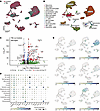 Figure 1
Subacute Asc expression in microglia in CHI model. (A and B) scRNA-seq analysis of murine brain cell suspensions 7 days after mFPI. (A) UMAP visualization shows clustering of different cell populations, with mFPI and control samples overlaid. (B) Annotated cell types, including microglia, macrophages, and other immune and neural cells after cluster identification. (C) Volcano plot depicting log2 fold change (TBI/control) versus –log10 P-value for microglial genes in mFPI compared to controls. Genes are color-coded: gray (not significant), green (significant by log fold change), blue (significant by P-value), red (significant by both P-value and log fold change). Dashed lines indicate significance thresholds. Not sig., not significant. (D) Dot plot expression analysis showing the percentage of cells expressing key inflammasome-related genes across various brain cell types, highlighting Asc expression in microglia, NK cells, macrophages, and monocytes. Avg., average. (E) UMAP projection of colored cells relative to the expression of the canonical inflammasome-related genes Nlrp3, Pycard (Asc), Casp1, Il1b, Il18, and Gsdmd.
We then evaluated, for each predicted cellular subpopulation, the expression of genes annotated to pathways related to inflammasome activation (pathcards.genecards.org [ref. 35], Supplemental Figure 1C). Notably, we found that Asc was one of the genes expressed more widely in clusters represented by microglia, macrophages, and other peripheral infiltrating immune cells (Figure 1, D and E, and Supplemental Figure 1, C and D). These clusters showed a reduced percentage of cells expressing genes such as Gsdmd, Casp1, Il1b, or Il18, which code for inflammasome effectors (Figure 1, D and E). Surprisingly, we found a very low percentage of cells expressing genes such as Nlrc4, Nlrc5, Nlrp1b, Nlrp3, or Aim2, which code for inflammasome activators Supplemental Figure 1C). These results suggest that the subacute and prolonged expression of the adaptor protein ASC, especially in microglia, may play a central role in the sustained innate immune response and pathophysiology of CHI.
ASC contributes to the sustained expression and processing of inflammasome mediators following mCHI. To unveil the pathophysiological role of inflammasomes and specifically of ASC as the main inflammasome adaptor and abundantly expressed gene in microglia after CHI, we adopted an electromagnetic CHI procedure as the main model for mTBI (32). In this model, a controlled cortical impact injury is delivered directly to the midline surface of the skull using a 5 mm diameter tip at a specified depth and velocity (Supplemental Figure 2A). We found mild motor, reflex, or reaction deficits at 1 and 7 dpi when the mice were evaluated using the Revised Neurobehavioral Severity Scale (NSS-R) for rodents (36) (Supplemental Figure 2B). To examine the expression of inflammasome-related proteins after CHI, we performed immunoblot analysis of cortices from WT and Asc–/– mice that underwent either sham or CHI surgery. We analyzed and semiquantified the protein levels of NLRP3, ASC, CASP1, and IL-1β at 1, 7, and 21 dpi (Figure 2, A–I). Our results revealed sustained upregulation of these proteins up to 21 days after CHI in WT mice. Notably, mice with a constitutive genetic deficiency of the Asc gene (Asc–/–) showed a significant deficit in the expression and cleavage of CASP1 (Figure 2, D and E) and of IL-1β over time (Figure 2G) following CHI. ELISA measurements further demonstrated significantly lower soluble levels of IL-1β and TNF-α in Asc–/– mice (Figure 2, H and I), particularly at later time points. We additionally evaluated the levels of cleavage of caspase 8 (CASP8), a proposed noncanonical enzyme involved in IL-1β processing (37) (Supplemental Figure 2, C and D), and its downstream effector caspase 3 (CASP3), as indirect measurement of apoptotic pathways (38) (Supplemental Figure 2, C and E). Consistent with the reduction in soluble IL-1β, Asc–/– mouse cortices showed significantly reduced levels of cleaved CASP8 up to 21 days after CHI (Supplemental Figure 2D), which suggests parallel activation of canonical and noncanonical pathways of IL-1β processing, both of which appeared largely dependent on ASC. Additionally, the cleavage of CASP3 was significantly reduced in Asc–/– mice (Supplemental Figure 2E), suggesting a strong neuroprotective effect and complex crosstalk involving the activation of multiple types of cell death influenced by inflammasome signaling (39). Further colocalization analysis of cleavage CASP3 immunostaining with the ionized calcium-binding adaptor molecule 1 (Iba1+) and glial fibrillary acidic protein (GFAP+) on cortices from WT mice revealed that cleaved CASP3 was predominantly localized in both the cytoplasm and nucleus of Iba1+ cells, likely microglia, whereas its expression of GFAP+ cells, likely astrocytes, was comparatively weaker. These results suggest that CASP3 activation occurred in microglia or infiltrating macrophages, where it may have participated in both apoptotic (nuclear) and nonapoptotic (cytoplasmic) signaling processes, consistent with its reported roles in regulating neuroinflammatory responses (40). Notably, microglia and astrocytes exhibiting stronger nuclear localization of cleaved CASP3 displayed neuroinflammatory morphological features, including nuclear condensation and cell-body shrinkage (Supplemental Figure 2, F and G).
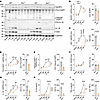 Figure 2
ASC contributes to the upregulation of inflammasome mediators following CHI. (A) Immunoblot detection and (B–G) densitometric semiquantification of the inflammasome-related proteins NLRP3, ASC, CASP1, and IL-1β at 1, 7, and 21 dpi in contusional cortices from WT and Asc-–/– mice following sham surgery or CHI (left panels n = 4 per group and time point). (H and I) IL-1β and TNF-α levels in brain lysates from WT and Asc–/– mice at 1, 7, and 21 dpi. n = 3–4 mice per group and time point. Right panels in B–I show integrated relative concentrations (AUC). *P < 0.05, **P < 0.01, ***P < 0.001, and ****P < 0.0001, by ordinary 2-way ANOVA with Bonferroni’s test (B–I, left panels) and Student’s t test (B–I, right panels). Data are presented as the mean ± SEM.
To identify the cellular sources of IL-1β following mCHI, we additionally conducted immunohistochemical staining for IL-1β, Iba1, and GFAP on cortices of WT mice in the 7 and 21 dpi groups (Supplemental Figure 3A). At day 7 after mTBI, we found that IL-1β signal was colocalized with or in the vicinity of GFAP+ cells (presumably reactive astrocytes) and with Iba1+ cells (likely microglia) (Supplemental Figure 3A). Interestingly, at 21 dpi, the majority of IL-1β was detected in Iba1+ cells (microglia or infiltrating macrophages), suggesting a very active role of microglia in the TBI-dependent upregulation and secretion of this cytokine (Supplemental Figure 3, B and C). Our findings thus emphasize the crucial role of inflammasome signaling, with ASC as the common adaptor protein, in sustaining the expression and processing of neuroinflammatory mediator after CHI. Moreover, we identified Iba1+ cells, likely microglia, or infiltrating macrophages as the primary cellular sources of IL-1β, especially at later post-injury time points.
ASC shapes the morphology of Iba1+ cells following CHI. Microglia exhibit distinct adaptive morphologies in response to mechanical stimuli, and their morphology is considered a proxy for their function (41). To investigate microglia architecture after CHI, we performed immunofluorescence staining for Iba1 and skeleton analysis (42) to examine cell morphology in cortices of WT and Asc–/– mice at 1, 7, and 21 dpi (Figure 3, A and B). First, we observed that Asc–/– mice consistently exhibited lower Iba+ cell counts compared with WT mice at 7 dpi (Figure 3C), suggesting decreased microgliosis in the subacute CHI phase. Next, we quantified the normalized changes in the morphology of Iba1+ cells based on cell count. The morphological alterations, including the number of branches per cell, endpoints per cell, and branch length per cell, substantially decreased after injury in WT mice, particularly at 21 dpi. In contrast, Asc–/– mice showed a significant preservation of these morphological features at 21 dpi compared with WT mice (Figure 3, D–F). In conclusion, our observations suggest a wave of microgliosis in the subacute phase and revealed a progressive debranching of Iba1+ cells over time following injury. Notably, the lack of ASC demonstrated protection against these sustained cellular morphological alterations, particularly at later time points.
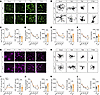 Figure 3
Morphology of Iba1+ and GFAP+ cells is modulated by ASC following CHI. (A) IHC images of Iba1 (green, presumably microglia) staining in cortices from WT and Asc–/– mice subjected to sham surgery or at 1, 7, and 21 dpi. Arrows indicate representative morphological changes. Scale bar: 20 μm. (B) Representative skeletonized Iba1+ cells following CHI. Scale bars: 10 μm. Quantitative analysis of (C) Iba1+ cell counts, (D) branch numbers per cell, (E) total branch length per cell, and (F) endpoint numbers per cell at 1, 7, and 21 dpi for WT and Asc–/– mice subjected to sham or CHI. (G) IHC images of GFAP (magenta, presumably astrocytes) in cortices from WT and Asc–/– mice at 1, 7, and 21 dpi. Arrows indicate representative morphological changes. Scale bar: 20 μm. (H) Representative skeletonized GFAP+ cells following CHI. Scale bars: 10 μm. Quantitative analysis of (I) GFAP+ cell counts (J) branch numbers per cell, (K) total branch length per cell, and (L) endpoint numbers per cell at 1, 7, and 21 dpi for WT and Asc–/– mice subjected to sham surgery or CHI. n = 12 slices from 4 mice per group per time point. **P < 0.01 and ***P < 0.001, by ordinary 2-way ANOVA with Bonferroni’s post hoc test and 2-tailed Student’s t test. 27. *P < 0.05, **P < 0.01, ***P < 0.001, and ****P < 0.0001, by ordinary 2-way ANOVA with Bonferroni’s test (C–F and I–L, left panels) and Student’s t test (C–F and I–L, right panels). Data are presented as the mean ± SEM. Right panels show the integrative AUC of each marker over time (dpi).
ASC regulates the reactivity of GFAP+ cells following CHI. Previous studies have provided evidence that morphological changes in astrocytes are intricately linked to microglia activation during inflammation-induced responses (43). To examine reactive astrocytes and their morphological alterations following mCHI, we performed morphological analysis of GFAP+ cells in contusional layers 1 and 2/3 of the retrosplenial and primary motor cortices, using the same method as for Iba1+ cells (Figure 3, G and H). We initially observed a noteworthy increase in the GFAP+ cell count at 1, 7, and 21 dpi in WT mice (Figure 3I), confirming increased reactive astrogliosis in our model. Asc deficiency exerted a genotype-related effect in the cell count similar to what we observed in Iba1+ cells, showing significantly lower numbers, especially at 7 dpi (Figure 3I). Subsequently, we quantified normalized morphological changes in GFAP+ cells on the basis of cell counts. The branches per cell, endpoints per cell, and length of branches per cell were significantly decreased after CHI, particularly at 21 dpi (Figure 3, J–L). In contrast, Asc–/– mice showed preserved morphological features at 21 dpi compared with WT mice (Figure 3, J–L). Interestingly, at 21 dpi, we observed clusters of aggregated GFAP+ cells, indicating post-injury spatial reorganization. Similar morphological changes were evident in both microglia and reactive astrocytes after injury, suggesting a potential correlation or interactions between these 2 glial cell populations.
Iba1+ and GFAP+ cell interactions are modulated by ASC following CHI. To investigate the interactions between reactive astrocytes and microglia in the contusional cortex following injury, we performed surface-surface colocalization analysis of the contact areas after 3D reconstruction of confocal images from GFAP- and Iba1-immunostained tissues (Figure 4A). We observed a significant increase in contact area between reactive astrocytes and microglia at 7 dpi, reaching a peak at 21 dpi in WT mice (Figure 4B). Notably, the contact area was significantly reduced at 7 and 21 dpi in Asc–/– mice (Figure 4B), which may be explained by the deficient microglia activation and reactive astrogliosis observed in our previous analysis. These findings, together with our expression analysis, suggest that inflammasome ensembles and neuroinflammatory processing are essential for sustained microglial and astrocytic responses and cellular interactions after mCHI.
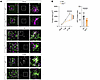 Figure 4
Cellular interactions of microglia and reactive astrocytes are modulated by ASC following CHI. (A) IHC images for Iba1 (green) and GFAP (magenta) staining in cortices of WT and Asc–/– mice following sham surgery and 7 and 21 dpi. Surface-surface colocalization analysis after 3D reconstruction was used to estimate contact areas between Iba1+ cells and GFAP+ cells. Rectangles highlight examples of glial surface-surface colocalization, shown in high-magnification views. Scale bars: 20 μm. (B) Quantification of contact areas between Iba1+ cells and GFAP+ cells at 7 and 21 dpi in WT and Asc–/– mice subjected to sham surgery or CHI. n = 12 slices from 4 mice per group per time point. ***P < 0.001 and ****P < 0.0001, by ordinary 2-way ANOVA with Bonferroni’s post hoc test (left panel) and 2-tailed Student’s t test (right panel). Right panel shows the integrative AUC of each marker over time (dpi).
Genetic deficiency in the Asc gene provides protection against mild cognitive impairment following mCHI. Having demonstrated that Asc was predominantly expressed by microglia subpopulations in the subacute phase of CHI, contributing to the sustained inflammasome activation, as well as microglial and astrocytic reactivity following CHI, we next sought to investigate whether genetic removal of the main inflammasome adaptor protein ASC influences cognitive outcomes after mCHI. In humans, a significant number of individuals show transient or persistent cognitive impairment following mTBI, including deficits in memory recall, procedural tasks, executive functions, attention, and emotional symptoms such as heightened anxiety (44). To investigate the role of ASC in neurobehavioral phenotypes following mCHI, we conducted a comprehensive battery of behavioral tests evaluating motor, emotional, and cognitive functions (Figure 5A). Motor coordination and balance were assessed using the rotarod task from 4 days before until 3 dpi. Anxiety-related and exploratory behaviors were measured by the elevated O-maze (EOM) and open-field (OF) tests at 5 and 7 dpi, respectively. Nest-building behavior test (NBT), a sensitive indicator of motivation and stress, was evaluated 1 day before and at 1, 3, and 7 dpi. Short-term spatial memory was examined with the novel object location memory (OLM) test at 7 and 8 dpi. Furthermore, mice were subjected to the Morris Water Maze (MWM) test, a more cognitively demanding paradigm, from 10 to 20 dpi, including a spatial learning phase (10–15 dpi), a 24-hour long-term memory test (16 dpi), and a cued learning phase (17–20 dpi) to assess procedural learning and sensorimotor function (Figure 5A and Figure 6A).
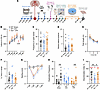 Figure 5
Asc–/– mice show preserved short-term spatial memory following mCHI. (A) Experimental timeline of the behavioral test battery for cognitive assessment following CHI. Rotarod (RR) performance was evaluated between –4 and –1 days before injury and at 1 and 3 dpi. NBTs were conducted at day –1 day before injury and 1, 3, and 7 dpi. The EOM was conducted at 5 dpi, the OF test at 7 dpi, the OLM test at 8 and 9 dpi, and the MWM test from 10–20 dpi. (B–G) Comparable behavioral performances were observed among sham-treated WT mice, WT mice subjected to CHI, and Asc−/− mice subjected to CHI for (B) latency to fall during the rotarod tests, (C) frequency in open sectors, (D) stretch-attend postures in the EOM, (E) path length, and (F) percentage of time spent in the center of the OF (n = 10–11 mice per genotype; 1-way ANOVA). (G) NBT scores (n = 10–11 mice per genotype; repeated-measures 2-way ANOVA). (H and I) Asc−/− mice subjected to CHI, similar to sham-treated WT mice (H) explored 1 of the displaced objects significantly more frequently than the other 2 objects (**P < 0.01, by Friedman test with Dunn’s multiple-comparison test) and (I) exhibited a higher discrimination index compared with both the chance level (**P < 0.01 and ***P < 0.001, by 1-sample t test vs. 33.3% chance level shown by a red dashed line) and CHI WT mice (*P < 0.05 and **P < 0.01, by 1-way ANOVA with Tukey’s post hoc test).
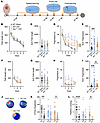 Figure 6
Genetic deficiency of the Asc gene protects against mild cognitive deficits in the MWM following mCHI. (A) Experimental timeline for cognitive assessment following CHI, including the spatial learning phase (10–15 dpi), the probe trial (16 dpi), and cued learning (17–20 dpi) in the MWM test. (B–E) MWM performance of WT and Asc–/– mice, showing path length and thigmotaxis across spatial (B–E) and cued (F–J) training days (n = 10–11 mice per genotype. Integrative AUC for path length and thigmotaxis from spatial learning (C and E) and cued learning phase (G and I). (J) Representative heatmaps mean swimming trajectories and (K) quantification of the percentage of time spent in the target quadrant compared with another quadrant (a.o.) or (L) platform crossing times in the virtual target platform compared with another virtual platform (a.o.). n = 10–11 mice per genotype. *P < 0.05, **P < 0.01, and ***P < 0.001, by repeated-measures 2-way ANOVA with Tukey’s post hoc test (B–I) and ordinary 1- or 2-way ANOVA with Tukey’s post hoc test (K and L). Data are presented as the mean ± SEM.
Our mCHI protocol did not induce impairments in latency to fall (Figure 5B) or running speed (Supplemental Figure 4A) in the rotarod test, or in exploratory frequency (Figure 5C and Supplemental Figure 4B) or stretch-attend postures in the open sectors (Figure 5D) of the EOM, or in total path length in the OF (Figure 5E). Injured WT and Asc–/– mice showed no significant increase in the percentage of time spent in the center (Figure 5F) or in locomotor velocity in the OF (Supplemental Figure 4C). Although mCHI induced transient deficits in nest building at 1 and 3 dpi, no differences were observed between WT and Asc–/– mice at any assessed time point (Figure 5G).
At 8 and 9 dpi, the experimental groups underwent the OLM test to assess short-term spatial memory. Mice were trained for 2 consecutive days with 3 identical objects placed in a box containing visual cues on the walls. We observed no differences in the exploration frequency of 3 identical objects during the training phase across the experimental groups (Supplemental Figure 4D). One hour after the last training session, 1 object was relocated to a novel position. Mice naturally explored the displaced object for a considerably longer time. mCHI resulted in significant impairment of both the exploration frequency (Figure 5H) and the preference index in the OLM test for WT mice (Figure 5I). These deficits were absent in Asc–/– mice subjected to mCHI (Figure 5, H and I), indicating a preserved short-term spatial memory.
During the MWM test (Figure 6A), WT mice subjected to mCHI exhibited a daily reduction in path length toward the hidden platform comparable to that seen with WT sham animals (Figure 6, B and C). However, CHI significantly increased thigmotaxis, as reflected by prolonged swimming near the pool walls during the learning phase for injured WT mice (Figure 6, D and E). In the cued version of the task, WT injured mice similarly demonstrated a daily reduction in path length (Figure 6, F and G) and increased thigmotactic behavior (Figure 6, H and I). This procedural deficit was significantly reduced in Asc–/– mice (Figure 6, D, E, H, and I). Moreover, Asc–/– mice displayed preserved long-term spatial memory 24 hours after the learning phase, as visually suggested by the density plots (heatmaps) of the swim paths (Figure 6J). This observation was further supported by a significantly greater percentage of time spent exploring the target quadrant (Figure 6K) and by more frequent crossings over the virtual target platform compared with control quadrants or platforms during the probe trial at 16 dpi (Figure 6L). Furthermore, Asc–/– mice showed slightly higher velocity on the last day of cued learning (Supplemental Figure 4, E and F). Collectively, these data show that CHI induced mild cognitive impairments, mainly as procedural and memory deficits in the OLM and the MWM tests, and these impairments appeared to be largely dependent on ASC expression.
NLRP3 regulates ASC aggregation and distribution following CHI. The NLRP3 is widely recognized as one of the most relevant inflammasome activators in the context of TBI, with growing evidence indicating its central role in mediating neuroinflammation and secondary brain damage (45, 46). To explore the involvement of NLRP3 in the aggregation of ASC as the main inflammasome adaptor in following CHI, contusional cortical tissue was immunohistochemically stained for Iba1, GFAP, and ASC at 7 and 21 dpi in WT and Nlrp3–/– mice (Figure 7A). We used a KO-validated monoclonal antibody for ASC detection (Supplemental Figure 5, A and B). Subsequently, we conducted 3D surface reconstruction of Iba1, GFAP, and ASC immunosignal analysis (Figure 7A and Supplemental Figure 5C). We detected a marked increase in the total number of fluorescent ASC aggregates, especially in Iba1+ cells (likely microglia) at 7 dpi, similar to the mRNA expression of Asc observed in the scRNA-seq data analysis following mFPI (Figure 1B, Figure 7B, and Supplemental Figure 5D). The number of ASC aggregates within Iba1+ cells followed the total ASC aggregates pattern (Figure 7B and Supplemental Figure 5, C and D). Notably, Nlrp3–/– injured mice showed comparable ASC aggregate counts, both overall and within Iba1+ cells, compared with WT mice (Figure 7B), but these mice had significantly fewer aggregates in GFAP+ cells (presumably reactive astrocytes, Figure 7C). Interestingly, at 21 dpi, the number of ASC aggregates outside Iba1+ and GFAP+ cells (extra-glia ASC) significantly increased in both WT and Nlrp3–/– mice (Figure 7D). However, this ensemble count was significantly lower in Nlrp3–/– mice than in WT controls (Figure 7D). Additionally, as ASC aggregate numbers increased within microglia, their corresponding volumes also increased. To further analyze ASC aggregation, we categorized ASC aggregates by volume (1–20 μm3, 20–30 μm3, 30–40 μm3) and quantified the number of ensembles in each category (Figure 7E and Supplemental Figure 5, E and F). ASC aggregates within a range of 30–40 μm3 were significantly decreased in the Nlrp3–/– mice at 21 dpi (Figure 7E). Collectively, our findings demonstrate a remarkable upregulation of ASC aggregates outside of Iba1+ and GFAP+ cells, along with significant ASC aggregation at 21 dpi. Nlrp3–/– mice showed reduced ASC aggregation in Iba1+ cells and fewer extra-glial ASC aggregates compared with the WT group at 21 dpi. These observations highlight the essential role of NLRP3, not only in promoting inflammasome activation after brain injury but also in facilitating ASC aggregation, as previously suggested in in vitro studies (47).
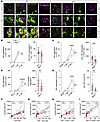 Figure 7
NLRP3 regulates ASC aggregation and distribution following CHI. (A) IHC images for Iba1 (green), GFAP (magenta), and ASC (red) staining in cortices of WT and Nlrp3–/– mice at 7 and 21 dpi. ASC localization in Iba1+ cells (yellow spots), GFAP+ cells (blue spots), and outside glial cells (red spots) was analyzed using IMARIS. Rectangles highlight examples of ASC distribution in high-magnification views. Scale bars: 20 μm. (B–E) Quantification of total ASC aggregates (B), intracellular ASC aggregates in Iba1+ cells (C), ASC aggregates outside glial cells (D), and ASC aggregates with a volume range of 30–40 μm3 (E) at 7 and 21 dpi in WT and Nlrp3–/– mice subjected to sham surgery or CHI. n = 12 slices from 4 mice per group per time point. *P < 0.05, **P < 0.01, ***P < 0.001, and ****P < 0.0001, by ordinary 2-way ANOVA with Bonferroni’s post hoc test (B–E, left panels) and 2-tailed Student’s t test (B–E, right panels). Right panels show integrative AUC of each marker over time (dpi). Data are presented as the mean ± SEM. (F–I) Spearman’s correlation analysis (r) with a linear regression model (black lines represent WT mice; red lines represent Nlrp3–/– mice) with an interaction term for ASC aggregates (total, within glial cells and outside glial cells) and glial cell contact areas. n = 36 slices from 12 mice per genotype. ****P < 0.0001. Differences between WT and Nlrp3–/– Spearman correlation coefficients (r) were calculated using standard Fisher’s z-transformation and subsequent comparison (87). *P < 0.05 and **P < 0.01.
Interaction between reactive astrocytes and microglia correlates with ASC distribution following CHI. To further investigate the relationship between reactive astrocytes and microglia interactions and ASC distribution following CHI, we conducted analysis of the correlation between ASC aggregates and glial contact areas after 3D reconstruction (Figure 7, F–I). Notably, in WT animals after CHI, we observed a strong positive correlation between the cell contact area and the number of extra-glial ASC aggregates (r = 0.86, P < 0.0001) (Figure 7G) as well as ASC aggregates in GFAP+ cells (r = 0.93, P < 0.0001) (Figure 7I). Although lower correlation coefficients were found between the reactive astrocytes and microglia contact areas and the number of ASC aggregates in microglia (r = 0.73, P < 0.0001) (Figure 7H) and the overall count of ASC aggregates (r = 0.82, P < 0.0001) (Figure 7F), these correlations remained significantly positive (Figure 7, F–I). Interestingly, the genetic deficiency of Nlrp3 significantly reduced the correlation between the contact area and the number of extra-glial ASC aggregates (z = 1.95, P < 0.05) (Figure 7G) as well as ASC in GFAP+ cells (z = 2.54, P < 0.01) (Figure 7I). In summary, these results indicate that post-CHI ASC aggregation was partly dependent on NLRP3 and that reactive astrocytes and microglia contacts were influenced by ASC expression, distribution, and aggregation, especially the ASC aggregates located outside of Iba1+ and GFAP+ cells.


Copyright © 2026 American Society for Clinical Investigation
ISSN: 0021-9738 (print), 1558-8238 (online)