
Go to JCI Insight
  • About
  • Editors
  • Consulting Editors
  • For authors
  • Publication ethics
  • Publication alerts by email
  • Advertising
  • Job board
  • Contact
  • Clinical Research and Public Health
  • Current issue
  • Past issues
  • By specialty
    • COVID-19
    • Cardiology
    • Gastroenterology
    • Immunology
    • Metabolism
    • Nephrology
    • Neuroscience
    • Oncology
    • Pulmonology
    • Vascular biology
    • All ...
  • Videos
    • Conversations with Giants in Medicine
    • Video Abstracts
  • Reviews
    • View all reviews ...
    • Clinical innovation and scientific progress in GLP-1 medicine (Nov 2025)
    • Pancreatic Cancer (Jul 2025)
    • Complement Biology and Therapeutics (May 2025)
    • Evolving insights into MASLD and MASH pathogenesis and treatment (Apr 2025)
    • Microbiome in Health and Disease (Feb 2025)
    • Substance Use Disorders (Oct 2024)
    • Clonal Hematopoiesis (Oct 2024)
    • View all review series ...
  • Viewpoint
  • Collections
    • In-Press Preview
    • Clinical Research and Public Health
    • Research Letters
    • Letters to the Editor
    • Editorials
    • Commentaries
    • Editor's notes
    • Reviews
    • Viewpoints
    • 100th anniversary
    • Top read articles

  • Current issue
  • Past issues
  • Specialties
  • Reviews
  • Review series
  • Conversations with Giants in Medicine
  • Video Abstracts
  • In-Press Preview
  • Clinical Research and Public Health
  • Research Letters
  • Letters to the Editor
  • Editorials
  • Commentaries
  • Editor's notes
  • Reviews
  • Viewpoints
  • 100th anniversary
  • Top read articles
  • About
  • Editors
  • Consulting Editors
  • For authors
  • Publication ethics
  • Publication alerts by email
  • Advertising
  • Job board
  • Contact
Top
  • View PDF
  • Download citation information
  • Send a comment
  • Terms of use
  • Standard abbreviations
  • Need help? Email the journal
  • Top
  • Abstract
  • The mutational landscape of acute myeloid leukemia
  • Chromosome amplification identified in Dnmt3aR878H/+ Npm1cA/+ mutant animal models
  • GAB2 facilitates AML progression induced by Dnmt3aR878H/+ Npm1cA/+ mutations
  • The unexpected role of GAB2 in posttranscriptional regulation in AML
  • GAB2 dependency in murine and human AML cells
  • Transcriptional activation of Gab2 by the PML::RARA fusion protein
  • Final remarks and future perspectives
  • Funding support
  • Acknowledgments
  • Footnotes
  • References
  • Version history
  • Article usage
  • Citations to this article

Advertisement

Commentary Open Access | 10.1172/JCI198684

GAB2 couples genetic drivers and signaling networks in acute myeloid leukemia

Amanda Luvisotto1,2 and Lu Wang1,2

1Department of Biochemistry and Molecular Genetics and

2Simpson Querrey Center for Epigenetics, Feinberg School of Medicine, Northwestern University, Chicago, Illinois, USA.

Address correspondence to: Lu Wang, Department of Biochemistry and Molecular Genetics, Northwestern University, Simpson Querrey BRC 7-400, 303 E. Superior St., Chicago, Illinois 60611, USA. Email: lu.wang1@northwestern.edu.

Find articles by Luvisotto, A. in: PubMed | Google Scholar

1Department of Biochemistry and Molecular Genetics and

2Simpson Querrey Center for Epigenetics, Feinberg School of Medicine, Northwestern University, Chicago, Illinois, USA.

Address correspondence to: Lu Wang, Department of Biochemistry and Molecular Genetics, Northwestern University, Simpson Querrey BRC 7-400, 303 E. Superior St., Chicago, Illinois 60611, USA. Email: lu.wang1@northwestern.edu.

Find articles by Wang, L. in: PubMed | Google Scholar

Published November 3, 2025 - More info

Published in Volume 135, Issue 21 on November 3, 2025
J Clin Invest. 2025;135(21):e198684. https://doi.org/10.1172/JCI198684.
© 2025 Luvisotto, et al. This work is licensed under the Creative Commons Attribution 4.0 International License. To view a copy of this license, visit http://creativecommons.org/licenses/by/4.0/.
Published November 3, 2025 - Version history
View PDF

Related article:

Overexpression of the signaling coordinator GAB2 can play an important role in acute myeloid leukemia progression
Michael H. Kramer, … , Christopher A. Miller, Timothy J. Ley
This study identified overexpression of the signaling-coordinator GAB2 as a progression event that may mechanistically link initiating and cooperating mutations in AML and other cancers.
Research Article Genetics Oncology

Overexpression of the signaling coordinator GAB2 can play an important role in acute myeloid leukemia progression

  • Text
  • PDF
Abstract

Mutations that initiate acute myeloid leukemia (AML) can cause clonal expansion without transformation (clonal hematopoiesis). Cooperating mutations, usually in signaling genes, are needed to cause overt disease, but these may require a specific fitness state to be tolerated. Here, we show that nearly all AMLs arising in a mouse model expressing 2 common AML-initiating mutations (Dnmt3aR878H and Npm1cA) acquired a single copy amplification of chromosome 7 (chr7), followed by activating mutations in signaling genes. We show that overexpression of a single gene on chr7 (Gab2, which coordinates signaling pathways) was tolerated in the presence of the Npm1cA mutation, could accelerate the development of AML, and was important for the survival of fully transformed AML cells. GAB2 is likewise overexpressed in many human AMLs with mutations in NPM1 and/or signaling genes, and also in acute promyelocytic leukemia initiated by PML::RARA; the PML::RARA fusion protein may activate GAB2 by directly binding to its 5′ flanking region. A similar pattern of GAB2 overexpression preceding mutations in signaling genes has been described in other human malignancies. GAB2 overexpression may represent an oncogene-driven adaptation that facilitates the action of signaling mutations, suggesting an important (and potentially targetable) missing link between the initiating and progression mutations associated with AML.

Authors

Michael H. Kramer, Stephanie N. Richardson, Yang Li, Tiankai Yin, Nichole M. Helton, Daniel R. George, Michelle Cai, Sai Mukund Ramakrishnan, Casey D.S. Katerndahl, Christopher A. Miller, Timothy J. Ley

×

Abstract

In acute myeloid leukemia (AML), leukemogenesis is typically driven by the sequential acquisition of distinct classes of mutations that collaborate to transform normal hematopoietic stem and progenitor cells. The founding and cooperating mutations in AML are often in signaling genes and form functional partnerships with each other, each addressing complementary aspects of malignant transformation. In this issue of the JCI, Kramer et al. elaborate on the molecular pathogenesis of AML. By using a mouse bone marrow model bearing the common AML-initiating mutations in DNA methyltransferase 3 α (DNMT3A) and nucleophosmin 1 (NPM1), the work provides further evidence for the role of the signaling orchestrator GRB2-associated–binding protein 2 (GAB2) in AML progression, positioning GAB2 as a potential therapeutic target.

The mutational landscape of acute myeloid leukemia

Acute myeloid leukemia (AML) is a bone marrow malignancy that originates from myeloid progenitor cells through uncontrolled clonal proliferation (1). By the end of 2025, over 22,000 new cases of AML will be diagnosed, and more than 11,000 patients will die from the disease (2). The standard therapeutic regimen consists of combination chemotherapy with an anthracycline and cytarabine, a protocol that has been used for over 50 years (3–5). Recently, the approval of targeted therapies on an individual basis has reached clinical practice and broadened the range of treatment options for patients (4, 6). However, despite these advancements, relapses are common, and refractory disease is frequently observed. AML remains highly aggressive, with a dismal 5-year survival rate of only 32% (2, 6, 7).

Myeloid cells are important components of immunity, as they play multiple roles in supporting the immune system (8, 9). Nevertheless, when their proliferation and differentiation become dysregulated, these cells can become the origin of illness (10). Genetic abnormalities are common in AML and play an important role in leukemogenesis, although the complete pathophysiology of the disease has not yet been fully clarified (11, 12). After initiation by concurrent, cooperating mutations, AML pathogenesis is supported by the accumulation of alterations that confer survival advantages to myeloid cells (13). Some common driver mutations in AML occur in the genes DNA methyltransferase 3 α (DNMT3A), nucleophosmin 1 (NPM1), fms-like tyrosine kinase 3 (FLT3), ten-eleven translocation methylcytosine dioxygenase 2 (TET2), TP53, and isocitrate dehydrogenase (IDH) (10–15). These alterations often act synergistically to contribute to AML progression, and the diversity of mutations underscores the heterogeneity of this disease (11, 12). Moreover, chromosomal structural rearrangements are also frequent in AML, particularly the t(15;17) translocation, which results in the PML::RARA fusion protein and is strongly associated with acute promyelocytic leukemia (APL), a subtype of AML (16).

Malignant cells are often transformed at an early myeloid stage in AML (10, 17), and molecular characterization of AML provides important insights into diagnosis, prognosis, and treatment strategies (4, 5, 18). Understanding how the molecular landscape of AML contributes to disease progression is crucial for uncovering new precision medicine approaches aimed at improving patient outcomes.

Chromosome amplification identified in Dnmt3aR878H/+ Npm1cA/+ mutant animal models

The DNMT3A and NPM1 genes are among the most frequently mutated in AML, each affecting 20%–30% of patients (10, 19, 20). These mutations co-occur more often than expected by chance, with approximately 15% of patients with AML harboring alterations in both genes (15). Previous studies have also identified additional cooperating factors in patients with DNMT3A and NPM1 mutations, such as mutations in the RTK/RAS signaling pathway (21). In the present study, Kramer and colleagues sought to elucidate the mechanistic links between the initiating mutations in DNMT3A and NPM1 and facilitating mutations within the RTK/RAS signaling pathway (22). The researchers used a well-established mouse model carrying a heterogeneous germline Dnmt3aR878H/+ mutation and a conditional Npm1cA/+ allele, together with a tamoxifen-inducible (TAM-inducible) flippase transgene to activate the Npm1 mutation (23). Once myelomonocytic AML had developed in these mice, the team performed whole-genome sequencing and identified human AML–like cooperating mutations, including alterations in Ptpn11, Kit, Cbl, and Nf1. Additionally, they observed amplification of murine chromosome 7 in nearly all samples (10 of 11) (Figure 1). Notably, similar amplifications were identified in two nonleukemic mice in this study, supporting the interpretation that this amplification may be an intermediate step during AML progression.
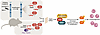
GAB2 links initiating mutations and progression signaling in myeloid leukemFigure 1

GAB2 links initiating mutations and progression signaling in myeloid leukemogenesis. AMLs arising in a mouse model expressing two common initiating mutations (Dnmt3aR878H and Npm1cA) frequently acquire a single-copy amplification of chromosome 7, which includes the Gab2 gene locus. Overexpression of Gab2, driven by genetic amplification and/or the PML:RARA fusion protein, can accelerate AML development and promote the survival of fully transformed AML cells. The unique GAB2 interactome formed in the presence of mutant NPM1 activates downstream AKT and ERK signaling in a posttranscriptional manner, highlighting a critical role for GAB2 as a potentially targetable “missing link” between AML-initiating mutations and RTK/RAS pathway mutations associated with AML progression.
GAB2 facilitates AML progression induced by Dnmt3aR878H/+ Npm1cA/+ mutations

Next, Kramer et al. set out to determine which of the 206 genes within the minimally amplified region on chromosome 7 was responsible for bridging the gap between initiating mutations and subsequent facilitating mutations or activation of RTK/RAS pathway components (22). Using RNA-Seq analysis of AML cells derived from the mouse model, they narrowed their focus to two genes, GRB2-associated–binding protein 2 (Gab2) and p21-activated kinase 1 (Pak1) (Figure 1), which were also identified as highly essential in AML based on the DepMap analysis (24). In the subsequent validation, Kramer and colleagues found that retroviral expression of Gab2, but not Pak1, markedly stimulated clonal expansion in Dnmt3a Npm1 double-mutant cells in vivo. Interestingly, Gab2 overexpression conferred a selective disadvantage in both wild-type and Dnmt3a-mutant bone marrow, whereas the combination of Npm1 and Dnmt3a mutations synergized to create a permissive environment favoring Gab2 overexpression. Additional cooperating mutations — such as in Nf1, Ep300, and Notch1 — were observed in Gab2-overexpressing AMLs, with only one case showing mutations in RTK/RAS signaling genes. This suggests that Gab2 overexpression may, at least in part, reduce the requirement for additional RTK/RAS activation.

The unexpected role of GAB2 in posttranscriptional regulation in AML

To further investigate the underlying mechanism, Kramer et al. performed bulk RNA-Seq analysis to identify potential changes in transcriptional programs between GFP-expressing and Gab2-overexpressing cells isolated from mice at different time points (22). Surprisingly, no significant differences in gene expression were detected between Gab2-overexpressing and GFP-expressing cells. Although GAB2 may also influence cellular function by regulating mRNA splicing, the researchers chose to focus on the GAB2 protein interactome in Dnmt3a Npm1 mutant cells. To this end, they used the TurboID system to label intracellular proteins in close proximity to GAB2 as well as to either wild-type or mutant forms of DNMT3A and NPM1 in primary hematopoietic stem and progenitor cells (HSPCs). Notably, they observed a substantially increased interaction between GAB2 and mutant NPM1 in cells carrying the Dnmt3aR878H/+ mutation, but not in cells with wild-type Dnmt3a. This finding suggests that GAB2 may modulate cellular function via posttranscriptional mechanisms.

To further validate this hypothesis, the team conducted global tandem mass tag (TMT) proteomics analysis alongside bulk RNA-Seq and identified several key RTK/RAS signaling proteins, including GRB2, MAPK1, and PIK3CD, that were elevated at the protein level in bone marrow of mice with myelomonocytic AML without corresponding increases in mRNA levels. Consistent with this result, the phosphorylation levels of AKT (Ser473) and ERK (Thr202/Tyr204) were markedly increased in GAB2-expressing myelomonocytic AML cells (Figure 1).

GAB2 dependency in murine and human AML cells

Next, the researchers sought to determine whether Gab2 is required for the viability of fully transformed murine AML cells. As expected, depletion of Gab2 via CRISPR markedly reduced cell viability in in vitro culture, underscoring its strong relevance to human AML pathogenesis and highlighting its potential as a therapeutic target. Kramer et al. then examined GAB2 mRNA levels in primary human AML samples from The Cancer Genome Atlas (TCGA) database and found that GAB2 expression was higher in PML::RARA-positive tumor samples than in normal CD34+ cells (22). Consistently, DepMap analysis revealed a marked dependency on GAB2 in a subset of human leukemia cell lines compared with nonmyeloid cancer cells (24). Notably, the patient-derived AML samples harboring mutant NPM1 and FLT3-ITD fusions were more sensitive to GAB2 depletion than normal human CD34+ HSPCs from cord blood.

Transcriptional activation of Gab2 by the PML::RARA fusion protein

Finally, given the elevated expression of GAB2 in PML::RARA-positive primary AML, the researchers investigated whether the PML::RARA fusion protein could act as a transcriptional regulator of GAB2 in human and mouse AML cells. Indeed, they observed substantial occupancy of the PML::RARA fusion protein at the GAB2 promoter regions, which was abolished upon treatment with all-trans retinoic acid (ATRA) — a compound that is known to degrade the PML::RARA protein (25, 26). Single-cell RNA-Seq analysis in mice expressing the PML::RARA fusion protein in Ctsg-expressing myeloid progenitors further revealed a dramatic increase in Gab2+ cells within a unique population of myeloid precursor cells that is found exclusively in the bone marrow. These findings suggest a potential therapeutic approach in which targeting the PML::RARA fusion protein using small-molecule inhibitors or degraders such as ATRA could block the ability of the fusion protein to activate GAB2 expression.

Final remarks and future perspectives

The findings presented by Kramer et al. advance our understanding of the complex molecular landscape of AML progression, highlighting GAB2 as a key signaling coordinator in the context of DNMT3A and NPM1 mutations (19, 20, 27, 28). Moreover, the data suggest that GAB2 upregulation is promoted by the PML::RARA fusion protein, thereby intensifying its expression in both mouse and human samples. This work identifies GAB2 as a potential missing link between a driving mutation event in AML and downstream signaling, positioning it as a potentially relevant therapeutic target.

While this study presents a well-conceived design and yields interesting findings, several key questions remain to be addressed in future explorations. For instance, despite insights from the GAB2 interactome analysis, a further understanding of how GAB2 interacts with mutant NPM1 and how the GAB2/NPM1cA activates protein stability of factors within RTK/RAS signaling will greatly extend our knowledge of the role of GAB2 in leukemogenesis. Ultimately, these insights may affect the development of diagnostic strategies and targeted therapies, enhancing patient prognosis and survival.

Funding support

This work is the result of NIH funding, in whole or in part, and is subject to the NIH Public Access Policy. Through acceptance of this federal funding, the NIH has been given a right to make the work publicly available in PubMed Central.

  • NIH (R35GM146979, to LW).
  • American Cancer Society, Research Scholar Grant (RSG-22-039-01-DMC).
  • United States Army Medical Research Acquisition Activity (USAMRAA) Idea Development Award (HT94252310360).
Acknowledgments

We acknowledge the NIH, the American Cancer Society, and the USAMRAA for their support.

Address correspondence to: Lu Wang, Department of Biochemistry and Molecular Genetics, Northwestern University, Simpson Querrey BRC 7-400, 303 E. Superior St., Chicago, Illinois 60611, USA. Email: lu.wang1@northwestern.edu.

Footnotes

Conflict of interest: The authors have declared that no conflict of interest exist.

Copyright: © 2025, Luvisotto et al. This is an open access article published under the terms of the Creative Commons Attribution 4.0 International License.

Reference information: J Clin Invest. 2025;135(21):e198684. https://doi.org/10.1172/JCI198684.

See the related article at Overexpression of the signaling coordinator GAB2 can play an important role in acute myeloid leukemia progression.

References
  1. O’Donnell MR, et al. Acute myeloid leukemia, version 3.2017, NCCN Clinical Practice Guidelines in Oncology. J Natl Compr Canc Netw. 2017;15(7):926–957.
    View this article via: CrossRef PubMed Google Scholar
  2. Siegel RL, et al. Cancer statistics, 2025. CA Cancer J Clin. 2025;75(1):10–45.
    View this article via: PubMed CrossRef Google Scholar
  3. De Kouchkovsky I, Abdul-Hay M. ‘Acute myeloid leukemia: a comprehensive review and 2016 update’. Blood Cancer J. 2016;6(7):e441.
    View this article via: CrossRef PubMed Google Scholar
  4. Kantarjian HM, et al. Acute myeloid leukemia management and research in 2025. CA Cancer J Clin. 2025;75(1):46–67.
    View this article via: PubMed CrossRef Google Scholar
  5. Shimony S, et al. Acute myeloid leukemia: 2025 update on diagnosis, risk-stratification, and management. Am J Hematol. 2025;100(5):860–891.
    View this article via: CrossRef PubMed Google Scholar
  6. Newell LF, Cook RJ. Advances in acute myeloid leukemia. BMJ. 2021;375:n2026.
    View this article via: CrossRef PubMed Google Scholar
  7. Thol F, Ganser A. Treatment of relapsed acute myeloid leukemia. Curr Treat Options Oncol. 2020;21(8):66.
    View this article via: CrossRef PubMed Google Scholar
  8. Bassler K, et al. The myeloid cell compartment-cell by cell. Annu Rev Immunol. 2019;37:269–293.
    View this article via: CrossRef PubMed Google Scholar
  9. Kawamoto H, Minato N. Myeloid cells. Int J Biochem Cell Biol. 2004;36(8):1374–1379.
    View this article via: CrossRef PubMed Google Scholar
  10. Yamashita M, et al. Dysregulated haematopoietic stem cell behaviour in myeloid leukaemogenesis. Nat Rev Cancer. 2020;20(7):365–382.
    View this article via: CrossRef PubMed Google Scholar
  11. Nong T, et al. Common driver mutations in AML: biological impact, clinical considerations, and treatment strategies. Cells. 2024;13(16):1392.
    View this article via: CrossRef PubMed Google Scholar
  12. Jin P, et al. Driver mutation landscape of acute myeloid leukemia provides insights for neoantigen-based immunotherapy. Cancer Lett. 2024;611:217427.
    View this article via: CrossRef PubMed Google Scholar
  13. JWelch JS, et al. The origin and evolution of mutations in acute myeloid leukemia. Cell. 2012;150(2):264–278.
    View this article via: CrossRef PubMed Google Scholar
  14. Kishtagari A, et al. Driver mutations in acute myeloid leukemia. Curr Opin Hematol. 2020;27(2):49–57.
    View this article via: CrossRef PubMed Google Scholar
  15. Cancer Genome Atlas Research Network, et al. Genomic and epigenomic landscapes of adult de novo acute myeloid leukemia. N Engl J Med. 2013;368(22):2059–2074.
    View this article via: CrossRef PubMed Google Scholar
  16. Arber DA, et al. International Consensus Classification of Myeloid Neoplasms and Acute Leukemias: integrating morphologic, clinical, and genomic data. Blood. 2022;140(11):1200–1228.
    View this article via: CrossRef PubMed Google Scholar
  17. Li F, et al. Recent advances in material technology for leukemia treatments. Adv Mater. 2024;36(26):e2313955.
    View this article via: CrossRef PubMed Google Scholar
  18. Kayser S, Levis MJ. The clinical impact of the molecular landscape of acute myeloid leukemia. Haematologica. 2023;108(2):308–320.
    View this article via: CrossRef PubMed Google Scholar
  19. Falini B, et al. Cytoplasmic nucleophosmin in acute myelogenous leukemia with a normal karyotype. N Engl J Med. 2005;352(3):254–266.
    View this article via: CrossRef PubMed Google Scholar
  20. Ley TJ, et al. DNMT3A mutations in acute myeloid leukemia. N Engl J Med. 2010;363(25):2424–2433.
    View this article via: CrossRef PubMed Google Scholar
  21. Papaemmanuil E, et al. Genomic classification and prognosis in acute myeloid leukemia. N Engl J Med. 2016;374(23):2209–2221.
    View this article via: CrossRef PubMed Google Scholar
  22. Kramer MH, et al. Overexpression of the signaling coordinator GAB2 can play an important role in acute myeloid leukemia progression. J Clin Invest. 2025;135(21):e195929.
    View this article via: JCI PubMed CrossRef Google Scholar
  23. Loberg MA, et al. Sequentially inducible mouse models reveal that Npm1 mutation causes malignant transformation of Dnmt3a-mutant clonal hematopoiesis. Leukemia. 2019;33(7):1635–1649.
    View this article via: CrossRef PubMed Google Scholar
  24. Arafeh R, et al. The present and future of the Cancer Dependency Map. Nat Rev Cancer. 2025;25(1):59–73.
    View this article via: CrossRef PubMed Google Scholar
  25. Zhu J, et al. Retinoic acid induces proteasome-dependent degradation of retinoic acid receptor α (RARα) and oncogenic RARα fusion proteins. Proc Natl Acad Sci U S A. 1999;96(26):14807–14812.
    View this article via: CrossRef PubMed Google Scholar
  26. Lo-Coco F, et al. Retinoic acid and arsenic trioxide for acute promyelocytic leukemia. N Engl J Med. 2013;369(2):111–121.
    View this article via: CrossRef PubMed Google Scholar
  27. Gaidzik VI, et al. Clinical impact of DNMT3A mutations in younger adult patients with acute myeloid leukemia: results of the AML Study Group (AMLSG). Blood. 2013;121(23):4769–4777.
    View this article via: CrossRef PubMed Google Scholar
  28. Falini B, et al. NPM1-mutated acute myeloid leukemia: from bench to bedside. Blood. 2020;136(15):1707–1721.
    View this article via: CrossRef PubMed Google Scholar
Version history
  • Version 1 (November 3, 2025): Electronic publication

Article tools

  • View PDF
  • Download citation information
  • Send a comment
  • Terms of use
  • Standard abbreviations
  • Need help? Email the journal

Metrics

  • Article usage
  • Citations to this article

Go to

  • Top
  • Abstract
  • The mutational landscape of acute myeloid leukemia
  • Chromosome amplification identified in Dnmt3aR878H/+ Npm1cA/+ mutant animal models
  • GAB2 facilitates AML progression induced by Dnmt3aR878H/+ Npm1cA/+ mutations
  • The unexpected role of GAB2 in posttranscriptional regulation in AML
  • GAB2 dependency in murine and human AML cells
  • Transcriptional activation of Gab2 by the PML::RARA fusion protein
  • Final remarks and future perspectives
  • Funding support
  • Acknowledgments
  • Footnotes
  • References
  • Version history
Advertisement
Advertisement

Copyright © 2025 American Society for Clinical Investigation
ISSN: 0021-9738 (print), 1558-8238 (online)

Sign up for email alerts