
Advertisement
Research ArticleDermatologyImmunology
Open Access |  10.1172/JCI196108
Dermal fibroblasts respond to IL-4 and IL-13 and promote T cell recruitment in atopic dermatitis
Tomofumi Numata, Michael Shia, Yoshiyuki Nakamura, Fengwu Li, Hung Chan, Teruaki Nakatsuji, Kellen J. Cavagnero, Jared Simmons, Henry Li, Aaroh Anand Joshi, Marta Palomo-Irigoyen, and Richard L. Gallo
Department of Dermatology, UCSD, La Jolla, California, USA.
Address correspondence to: Richard L. Gallo, Department of Dermatology, MC0869, UCSD, 9500 Gilman Dr., La Jolla, California, 92093, USA. Phone: 858.822.4608; Email: rgallo@health.ucsd.edu.
Find articles by
Numata, T.
in:
PubMed
|
Google Scholar
|

Department of Dermatology, UCSD, La Jolla, California, USA.
Address correspondence to: Richard L. Gallo, Department of Dermatology, MC0869, UCSD, 9500 Gilman Dr., La Jolla, California, 92093, USA. Phone: 858.822.4608; Email: rgallo@health.ucsd.edu.
Find articles by
Shia, M.
in:
PubMed
|
Google Scholar
|
Department of Dermatology, UCSD, La Jolla, California, USA.
Address correspondence to: Richard L. Gallo, Department of Dermatology, MC0869, UCSD, 9500 Gilman Dr., La Jolla, California, 92093, USA. Phone: 858.822.4608; Email: rgallo@health.ucsd.edu.
Find articles by Nakamura, Y. in: PubMed | Google Scholar
Department of Dermatology, UCSD, La Jolla, California, USA.
Address correspondence to: Richard L. Gallo, Department of Dermatology, MC0869, UCSD, 9500 Gilman Dr., La Jolla, California, 92093, USA. Phone: 858.822.4608; Email: rgallo@health.ucsd.edu.
Find articles by Li, F. in: PubMed | Google Scholar
Department of Dermatology, UCSD, La Jolla, California, USA.
Address correspondence to: Richard L. Gallo, Department of Dermatology, MC0869, UCSD, 9500 Gilman Dr., La Jolla, California, 92093, USA. Phone: 858.822.4608; Email: rgallo@health.ucsd.edu.
Find articles by Chan, H. in: PubMed | Google Scholar
Department of Dermatology, UCSD, La Jolla, California, USA.
Address correspondence to: Richard L. Gallo, Department of Dermatology, MC0869, UCSD, 9500 Gilman Dr., La Jolla, California, 92093, USA. Phone: 858.822.4608; Email: rgallo@health.ucsd.edu.
Find articles by
Nakatsuji, T.
in:
PubMed
|
Google Scholar
|
Department of Dermatology, UCSD, La Jolla, California, USA.
Address correspondence to: Richard L. Gallo, Department of Dermatology, MC0869, UCSD, 9500 Gilman Dr., La Jolla, California, 92093, USA. Phone: 858.822.4608; Email: rgallo@health.ucsd.edu.
Find articles by Cavagnero, K. in: PubMed | Google Scholar
Department of Dermatology, UCSD, La Jolla, California, USA.
Address correspondence to: Richard L. Gallo, Department of Dermatology, MC0869, UCSD, 9500 Gilman Dr., La Jolla, California, 92093, USA. Phone: 858.822.4608; Email: rgallo@health.ucsd.edu.
Find articles by Simmons, J. in: PubMed | Google Scholar
Department of Dermatology, UCSD, La Jolla, California, USA.
Address correspondence to: Richard L. Gallo, Department of Dermatology, MC0869, UCSD, 9500 Gilman Dr., La Jolla, California, 92093, USA. Phone: 858.822.4608; Email: rgallo@health.ucsd.edu.
Find articles by Li, H. in: PubMed | Google Scholar
Department of Dermatology, UCSD, La Jolla, California, USA.
Address correspondence to: Richard L. Gallo, Department of Dermatology, MC0869, UCSD, 9500 Gilman Dr., La Jolla, California, 92093, USA. Phone: 858.822.4608; Email: rgallo@health.ucsd.edu.
Find articles by Joshi, A. in: PubMed | Google Scholar
Department of Dermatology, UCSD, La Jolla, California, USA.
Address correspondence to: Richard L. Gallo, Department of Dermatology, MC0869, UCSD, 9500 Gilman Dr., La Jolla, California, 92093, USA. Phone: 858.822.4608; Email: rgallo@health.ucsd.edu.
Find articles by Palomo-Irigoyen, M. in: PubMed | Google Scholar
Department of Dermatology, UCSD, La Jolla, California, USA.
Address correspondence to: Richard L. Gallo, Department of Dermatology, MC0869, UCSD, 9500 Gilman Dr., La Jolla, California, 92093, USA. Phone: 858.822.4608; Email: rgallo@health.ucsd.edu.
Find articles by
Gallo, R.
in:
PubMed
|
Google Scholar
|
Published January 22, 2026 - More info
J Clin Invest. 2026;136(5):e196108. https://doi.org/10.1172/JCI196108.
© 2026 Numata et al. This work is licensed under the Creative Commons Attribution 4.0 International License. To view a copy of this license, visit http://creativecommons.org/licenses/by/4.0/.
Received: May 28, 2025; Accepted: January 5, 2026


-
Results
Type 2 inflammation enhances chemokine expression by dermal fibroblasts. Fibroblasts have been hypothesized to play a pivotal role in coordinating immune responses (15, 23, 24), but their function in AD is unknown. To investigate the cell-specific changes in gene expression by dermal fibroblasts in AD, we performed unbiased network analysis of scRNA-seq data previously obtained from patients with AD (Gene Expression Omnibus [GEO] GSE147424) (25). On the basis of conventional marker gene expression, major cell lineages were identified, and cells were clustered as fibroblasts, keratinocytes, myeloid cells, T cells, endothelial cells, pericytes, sweat gland cells, melanocytes, and sebaceous gland cells (Supplemental Figure 1, A and B; supplemental material available online with this article; https://doi.org/10.1172/JCI196108DS1). As expected, the frequencies of myeloid cells and T cells increased in the skin of individuals with AD (Figure 1A). A dot plot visualizing changes in gene expression across all cell types and conditions revealed increased chemokine expression by several cell types in lesional skin from individuals with AD, with distinct patterns observed between fibroblasts, keratinocytes, myeloid cells, T cells, and pericytes. Further analysis of these data identified a total of 16 fibroblast clusters that could be distinguished between those seen in healthy human control skin samples compared with nonlesional and lesional AD skin (Supplemental Figure 1C). Eight functional characteristics were identified in the 16 fibroblast clusters, with several fibroblast clusters showing significant expression of chemokines (Supplemental Figure 1, D–U). Intercellular network analysis using CellChat further found communication from fibroblasts to myeloid cells and T cells that increased in AD (Figure 1B). These observations bring into question current models of AD pathogenesis in which keratinocytes and DCs are thought to be primarily responsible for recruiting immune cells following epidermal barrier disruption (26) and support the hypothesis that fibroblasts also participate in driving inflammation in AD.
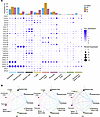 Figure 1
Transcriptional analysis of skin in AD shows increased chemokine gene expression by fibroblasts. (A) Bar plot for proportion of each cell type identified in HC (n = 8), NL (n = 5), and LS (n = 4) samples and dot plots showing chemokine expression. (B) Intercellular communication analysis between cell types in HC, NL, and LS samples using CellChat.
To test for a potential role of dermal fibroblasts in mediating type 2 inflammatory processes such as AD, we evaluated a mouse model of AD. scRNA-seq results from mouse skin following topical application of MC903 (MC) and SA were compared with control mice and mice with systemic loss of the IL-4Rα (Figure 2A) (20). Following cell-type annotation and analysis of chemokine gene expression, we found that several cell types expressed multiple chemokines, but fibroblasts represented the highest proportion of cells expressing multiple chemokines (Supplemental Figure 2, A–D). Intercellular communication analysis by CellChat showed that fibroblast output to T cells is one of the major sources in the T cell input pathways (Supplemental Figure 2, E and F).
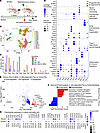 Figure 2
IL-4Rα–dependent dermal fibroblasts express inflammatory chemokines in a mouse model of AD. (A) Schematic of murine models of AD following topical application of MC + SA. (B) Uniform manifold approximation and projection (UMAP) plot of dermal fibroblast clusters from the back skin of mice in the following groups: control mice (Ctrl), mice treated with SA alone, mice treated with MC + SA, and IL-4Rα–/– mice treated with MC + SA. Dotted circles with each color contain the major cell population in each condition. (C) Frequency of each fibroblast cluster in control, SA, MC + SA, and MC + SA + IL-4Rα–/– samples. (D) Marker genes associated with specific fibroblast clusters. (E) Volcano plot of gene expression comparing IL-4Rα–dependent fibroblast clusters and control fibroblast clusters. (F) Gene enrichment analysis for genes upregulated in the IL-4Rα+ clusters compared with the control. (G) Comparison of chemokine expression profiles in human and mouse dermal fibroblasts in AD skin. avg.exp., average expression; pct.exp, percent expression.
Further analysis revealed 12 transcriptionally distinct clusters of dermal fibroblasts in mice (Fb1–Fb12), with distinct patterns of gene expression in several cell types after induction of inflammation by MC, SA, and loss of IL-4 receptor signaling in IL-4Rα–/– mice (Figure 2B and Supplemental Figure 2, G–J). The fibroblast clusters Fb5, Fb7, Fb9, and Fb12 were exclusive to the control skin samples, whereas the remaining clusters appeared in greater frequency in the skin under inflamed conditions (Figure 2C). Fb1 and Fb2 were enriched in control SA mice and in IL-4Rα–/– mice treated with MC and SA (hereafter referred to as MC+SA+IL-4Rα–/– mice), but less prominent in mice treated with MC and SA (hereafter referred to as MC+SA mice). Conversely, Fb3 and Fb4 were most abundant in MC+SA, mice but lost in MC+SA+IL-4Rα–/– mice, suggesting that they represented IL-4– and IL-13–driven fibroblast clusters.
Differentially expressed genes (DEGs) and gene ontology enrichment of 12 mouse dermal fibroblast clusters were analyzed and visualized using dot plots (Figure 2D and Supplemental Figure 2, K–V). Fibroblast clusters were classified into 6 groups on the basis of the major functional and molecular characteristics: inflammatory and immune-regulatory fibroblasts (Fb1, Fb2, Fb8, Fb10), type 2 responsive/wound-healing fibroblasts (Fb3, Fb4), extracellular matrix–maintaining (ECM-maintaining) and matrix-organizing fibroblasts (Fb5, Fb6, Fb11), perivascular- and vascular-associated fibroblasts (Fb7), neuroimmune-interacting fibroblasts (Fb9), and progenitor-like and regenerative fibroblasts (Fb12). The inflammatory and immune-regulatory fibroblast clusters were enriched in SA and MC+SA+IL-4Rα–/– conditions and expressed genes associated with inflammatory responses and immune cell recruitment, including Tnc, Epas1, and Crispld2. The Fb1 cluster exhibited high expression of Tnc, Epas1, Crispld2, Cxcl5, Mmp3, and Timp1, which are involved in ECM remodeling, inflammatory signaling, and immune cell migration (16, 27–32). The Fb2 cluster exhibited an inflammatory and immune-regulatory profile, with high expression of the genes Il33, Ackr1, Ackr3, Irak3, and Cxcl13, in addition to ECM-associated genes such as Prg4, Adamts15, and Sned1. This suggests that Fb2 fibroblasts not only share some perivascular features but also act as modulators of immune responses through cytokine and chemokine regulation. Fb8, exclusive to SA-treated skin, had a strong immune-sensing and acute inflammatory signature, characterized by high expression of Nos2, Serpinb2, and Sptssb, together with induction of inflammatory mediators such as Cxcl2, Cxcl3, Csf3, Lif, and Saa1/2. These genes suggest that Fb8 fibroblasts act as potent amplifiers of neutrophil recruitment and early inflammatory responses upon microbial stimulation. Fb10 displayed a strong proinflammatory and immune-like phenotype, with high expression of Fcer1g, Il1b, and Acod1, together with additional upregulation of inflammatory mediators (Tnf, Ccl3, Ccl4, Nlrp3) and myeloid-associated genes (Cd14, Cd68, Fcgr3, Tyrobp). These findings suggest that Fb10 fibroblasts adopt an immune-activated program that overlaps with innate immune cell pathways. The type 2 responsive /wound-healing fibroblast group, found predominantly in MC+SA mice, showed IL-4/IL-13–dependent activation. Fb3 exhibited a fibrotic and wound-healing signature, characterized by strong upregulation of ECM and matrix organization genes (Postn, Fbln7, Mfap4, Col6a1, Col15a1, Bgn, Aspn) together with fibrotic regulators (Cilp, Peg3, Cdh11). In addition, growth- and migration-related factors (Mdk, Mylk, Slit2, Pdgfrl) and Wnt/TGF-β–associated genes (Sfrp1, Dkk3, Sox4) were enriched, supporting its classification as a type 2 responsive/wound-healing fibroblast cluster. Fb4 exhibited a metabolic-inflammatory phenotype, marked by strong expression of metabolic enzymes (Smpd3, Akr1c18, Akr1c14, Aldh1a3), together with immune- and stress-responsive genes (Mrgprg, Atf3, Socs3, Ifi27l2a). In addition, vascular and ECM remodeling factors (Tek, Sema3c, Plxdc2, Fn1) were enriched, suggesting that Fb4 integrates metabolic reprogramming, inflammatory signaling, and vascular remodeling in type 2–driven skin inflammation. The ECM-maintaining and matrix organization fibroblast group, mainly found in control skin, included Fb5 (Hbb-bs, Cdh4, Elovl4), Fb6 (Tpx2, Ccna2, Hmmr), and Fb11 (Coch, Gldn, Fmod), representing fibroblasts specialized in ECM production and structural organization. The perivascular-/vascular-associated fibroblasts in Fb7 expressed Pgr, Edn1, and Akr1c14, together with vascular- and matrix-related genes such as Itgb7, Agtr2, Thbd, and Plau, suggesting roles in vascular regulation, barrier support, and local matrix remodeling. The neuroimmune-interacting fibroblasts of Fb9 expressed Chd7, Tfap2b, and Lhx2, along with adhesion and neurodevelopmental genes such as Itga3, Celsr2, Casz1, Lamb3, and Itgb4, indicating a role in sensory neuron remodeling and immune-neural crosstalk. The progenitor-like and regenerative fibroblasts of Fb12 expressed Prlr, Slc26a7, and Lef1, together with additional stemness and developmental regulator genes such as Lrrn1, Cpne5, Tfap2a/c, Runx3, and Prdm1, suggesting a regenerative and stem-like fibroblast phenotype. Module score analysis further demonstrated that the vascular/perivascular program was most prominent in Fb7, which was predominantly found in control skin, but appreciable vascular scores were also observed in several other fibroblast clusters (Supplemental Figure 2W). In contrast, the neuroimmune program was largely restricted to Fb9 in the control skin, with only minimal expression detectable in other conditions, suggesting a context-dependent and tightly regulated activity of this cluster. We next examined a follicle/epidermal interface gene set (Fgf7, Rspo3, Bmp4, Cldn1, Corin, Alpl, Sox18, Lef1, Coch) across fibroblast clusters. The Coch+ signature mapped almost exclusively to Fb11, whereas Fb9 was characterized by Cldn1, Fb8 by Alpl and Fgf7, and Fb12 by Rspo3, Bmp4, Corin, Sox18, and Lef1 (Supplemental Figure 2X). Together with our functional annotations, these data place Fb11 as a Coch-tuned papillary-/appendage-associated fibroblast cluster, Fb9 as an epithelial interface/neuroimmune fibroblast, Fb8 as an appendage-supportive fibroblast cluster, and Fb12 as a progenitor-like follicular program.
The presence of multiple, potentially distinct clusters of dermal fibroblasts is consistent with studies of fibroblasts in other inflammatory conditions and further supports the hypothesis that dermal fibroblasts mediate some cell behaviors during type 2 inflammation (33–35). Notably, although the emergence of certain fibroblast clusters (e.g., Fb3 and Fb4) was dependent on type 2 inflammatory conditions, the expression of Il4ra was detected in multiple fibroblast clusters under control conditions and was particularly evident in Fb4 upon stimulation of the skin with MC and SA (Supplemental Figure 2Y).
Next, to better understand the immunological consequences of fibroblast activation during type 2 inflammation, we examined the molecular features of IL-4Rα–dependent fibroblasts (Fb3, Fb4) in inflamed skin. Differential expression analysis comparing IL-4Rα–dependent fibroblasts with homeostatic fibroblasts (Fb5, Fb7, Fb9, and Fb12) revealed upregulation of chemokine genes associated with immune cell migration, including Ccl7, Ccl8, Cxcl1, Cxcl2, Cxcl12, and Cxcl13 (Figure 2E). Ccl7, Cxcl1, Cxcl2, Cxcl12, and Cxcl13 were significantly upregulated (adjusted P < 0.05, log2 fold change [FC] > 0.5), while Ccl8 showed increased expression but did not reach statistical significance (log2 FC = 1.04, adjusted P = 1). Positive regulation of cell migration was enriched, aligning with the observed chemokine upregulation. In contrast, pathways associated with cell junction organization, desmosome organization, and canonical Wnt signaling were significantly downregulated (adjusted P < 0.05), suggesting alterations in fibroblast adhesion and transcriptional regulation. Additionally, pathways related to ribonucleoprotein complex biogenesis and formation of the cornified envelope were downregulated, indicating a shift away from normal fibroblast differentiation programs (Figure 2F). Compared with the trends of chemokine gene expression in human fibroblasts, although there are species-specific differences, the trends of chemokine expression mouse fibroblast clusters were similar (Figure 2G). These results suggest that fibroblasts are directly responsive to the type 2 immune environment and participate in immune cell recruitment by expressing chemokines.
IL-4 plus IL-13 directly induce cultured fibroblasts to express chemokines. To investigate the direct effect of type 2 cytokines on fibroblasts, we cultured the mouse embryonic fibroblast cell line 3T3-L1 with an inflammatory (Inf) cytokine cocktail of TNF-α, IL-17A, and IL-1β and then evaluated the additional response seen following the addition of IL-4 and IL-13 (IL-4/13) (Figure 3A). This cocktail was chosen because TNF-α, IL-17A, and IL-1β are elevated in human AD (36, 37), and our previous studies demonstrated that TNF-α and IL-17A potently activate dermal fibroblasts to induce chemokines such as CXCL1, CXCL12, and LCN2 (16). The Inf cytokine cocktail was used to replicate the host defense inflammatory skin environment found in AD or induced by injury or SA colonization in mice. To assess the transcriptional responses of fibroblasts under these conditions, we performed bulk RNA-seq analysis under 4 experimental conditions: (a) unstimulated fibroblasts as a control, (b) fibroblasts treated with IL-4/13 alone, (c) fibroblasts stimulated with Inf, and (d) fibroblasts exposed to a combination of IL-4/13 and Inf. Principal component analysis (PCA) of the bulk RNA-seq data revealed distinct transcriptomic profiles for each condition, highlighting the unique transcriptional profile of fibroblasts following the addition of IL-4/13 (Figure 3B). Analysis of DEGs was conducted in each condition relative to the control, and upregulated genes were visualized using a Venn diagram to show that several genes were uniquely expressed by fibroblasts following the addition of IL-4/13 (Supplemental Figure 3A). Fibroblasts cultured in the IL-4/13 + Inf condition showed increased expression of 768 genes compared with control fibroblasts, with 542 genes overlapping with those upregulated by Inf alone. A cluster of 47 genes were commonly upregulated across all 3 cytokine-treated conditions, whereas only 20 genes were shared between IL-4/13 + Inf and IL-4/13, excluding those already induced by Inf. These findings demonstrate that type 2 cytokines were able to directly alter fibroblast gene expression, particularly under inflammatory conditions.
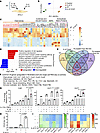 Figure 3
Fibroblasts express multiple chemokines in response to IL-4/13. (A) Schematic of the assessment of the response of 3T3-L1 fibroblasts to inflammatory cytokines. (B) PCA of the normalized bulk RNA-seq data from fibroblasts 24 hours after culturing under control conditions, with addition of IL-4 (50 ng/mL) and IL-13 (50 ng/mL) (IL-4/13), with the addition of a mixture of inflammatory cytokines TNF-α (20 ng/mL), IL-17A (50 ng/mL), and IL-1β (0.5 ng/mL) (Inf), or with IL-4/13 + Inf. (C) Heatmap illustrating changes in selected gene expression, scaled by row. (D) Gene enrichment analysis for 3T3-L1 fibroblasts treated with IL-4/13 + Inf and Inf alone. (E) Venn diagram showing the overlap of genes induced in cultured fibroblasts and mouse dermal fibroblasts. Shown is the expression of genes induced in cultured fibroblasts following the addition of Inf or IL-4/13 + Inf compared with control culture conditions, and fibroblast gene expression in mice determined by scRNA-seq of mouse skin exposed to SA alone or MC + SA compared with control mouse skin. Numbers indicate the numbers and percentages of upregulated genes with significant differences. The red dashed area highlights the 28 genes commonly upregulated across all 4 conditions. (F) List of 28 genes upregulated in fibroblasts in culture or in mice following exposure to type 2 cytokines. (G) qRT-PCR analysis of Ccl8, Ccl11, and Ccl17 mRNA expression in 3T3-L1 fibroblasts treated with Inf and IL-4/13 as in B (n = 3). (H) Measurement of CCL8 protein concentration in 3T3-L1 fibroblast supernatants by ELISA 72 hours after treatment with Inf or IL-4/13 as in B (n = 3). (I) Heatmap of protein expression measured by LEGENDPLEX in culture supernatants of the human fibroblast cell line HPAd. Statistical significance was determined by 1-way ANOVA followed by Tukey’s multiple-comparison test (G and H) (n = 3). Experiments in G–I are representative of 2–3 independent experiments. Data are presented as the mean ± SD.
The addition of IL-4/13 to the Inf cytokine environment enhanced the expression of multiple chemokines not induced by IL-4/13 alone and exceeded the expression levels observed under the Inf condition alone (Figure 3C). Notably these included Ccl2, Ccl7, Ccl8, Ccl11, Ccl17, Cxcl1, Cxcl2, Cxcl3, and Cxcl10 and the ECM regulator Timp1 (38). Conversely, and as previously shown in keratinocytes (20), the addition of IL-4/13 decreased the expression of antimicrobial peptide (AMP) genes such as cathelicidin (Camp), S100 calcium–binding protein A8 (S100a8), and lipocalin 2 (Lcn2), compared with Inf alone. Independent DEG analysis found significant changes in the expression of multiple genes by fibroblasts after exposure to IL-4/13, with the top pathway identified as being associated with positive regulation of cell migration (Figure 3D).
To determine whether the expression of genes by fibroblasts in vitro was representative of the response of fibroblasts from the mouse AD model, we compared data from bulk RNA-seq of 3T3-L1 fibroblasts after stimulation with IL-4/13 and Inf with the results of pseudobulk DEG analysis of all dermal fibroblast genes from the in vivo AD mouse. We found that 28 genes were upregulated in both fibroblasts from mice after a type 2 inflammatory response and in cultured fibroblasts exposed to IL-4/13 + Inf (Figure 3, E and F). Several of these genes (Ccl2, Ccl7, Ccl8, Ccl11, Cxcl1, Cxcl2, and Cxcl5) were also expressed in dermal fibroblasts from individuals with AD (Figure 2G). These results suggest a conserved fibroblast transcriptional program across in vivo and in vitro type 2 inflammatory settings and support the relevance of the mouse as a model for studying the role of fibroblasts in human AD.
Next, we performed quantitative reverse transcription PCR (qRT-PCR) to quantitatively validate the results obtained by RNA-seq. These results confirmed that the addition of IL-4/13 to IL-17A + TNF-α, or to the Inf cytokine cocktail of IL-17A + TNF-α + IL-1β, significantly upregulated the expression of mRNA for C-C motif chemokines (CC chemokines) in 3T3-L1 fibroblasts (Figure 3G and Supplemental Figure 3B). We observed a similar pattern of induction for Ccl2 and Ccl7 in mouse primary dermal fibroblasts, although Ccl8 decreased upon the addition of IL-4/13 to Inf, potentially reflecting the heterogeneous nature of primary cell culture containing multiple transcriptionally distinct fibroblasts (Supplemental Figure 3C). CCL8 protein increased in 3T3-L1 fibroblast culture supernatant after activation by IL-4/13 + Inf compared with Inf alone (Figure 3H). The human-derived fibroblast cell line HPAds showed increased expression of multiple chemokine proteins (Figure 3I) and induction of mRNA (Supplemental Figure 3D) after activation by IL-4/13 + Inf, thus demonstrating that the direct response to IL-4/13 also occurs in the human system.
On the basis of the gene sets induced in 3T3-L1 cells by Inf, IL-4/13, and IL-4/13 + Inf, we generated module scores for each fibroblast cluster identified from mouse skin by scRNA-Seq (Supplemental Figure 3E). Violin plot analysis demonstrated that the module score was highest across multiple fibroblast subclusters when generated from 3T3-L1 cells activated by Inf. Notably, the module score of Fb4 was highest when determined by comparison with 3T3-L1 cells activated by the addition of IL-4/13 + Inf. This aligns with the cluster enriched in the mouse AD model when comparing WT mice with IL-4Rα–/– mice. This alignment further indicates that the 3T3-L1 cell line can model some fibroblast clusters in vivo that are responsive to IL-4/13.
IL-4/13 enhance the capacity of fibroblasts to promote T cell migration by chemokines recognized by CCR3. To determine whether the secretome of fibroblasts is sufficient to induce cell migration, we next performed a cell migration assay using the culture supernatant of fibroblasts activated by IL-4/13 and inflammatory cytokines (Figure 4A). The culture supernatant of fibroblasts stimulated with TNF-α and IL-17A greatly increased the migration of neutrophils, monocytes, and T cells compared with the culture supernatant of unstimulated fibroblasts, but the addition of IL-4/13 alone did not (Figure 4B). IL-1β did not further enhance the activity of TNF-α and IL-17A to induce fibroblasts to release chemotactic activity under these conditions. However, the addition of IL-4/13 + Inf to fibroblasts selectively promoted T cell migration from the mixed immature cell population prepared from mouse bone marrow. Cell migration assays performed with mouse splenocytes showed a similar response, demonstrating that fibroblasts stimulated by IL-4/13 significantly promoted T cell migration (Figure 4C and Supplemental Figure 4A). Both CD4+ and CD8a+ T cell populations were recruited by the supernatant of fibroblasts activated by IL-4/13 + Inf (Figure 4, D and E, and Supplemental Figure 4B), but control experiments done with media containing IL-4/13 + Inf without fibroblasts did not promote significant cell migration.
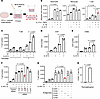 Figure 4
Fibroblasts recruit T cells through the production of multiple chemokines. (A) Schematic of the migration assay assessing the chemotactic activity of culture supernatant from fibroblasts. (B) Number of mouse bone marrow cells migrated toward the lower chamber containing fibroblast cultured supernatant. (C) Number of CD3e+ T cells from mouse splenocytes that migrated toward the lower chamber containing fibroblast cultured supernatant. (D) Comparison of the number of CD4+ T cells from the splenocyte migration assay. (E) Comparison of CD8a+ T cell numbers from the migration assay. (F) Comparison of CD3e+ T cell numbers in culture supernatants of fibroblasts after the indicated chemokine siRNA treatments. (G) Comparison of CD3e+T cell numbers after pretreatment with the indicated CCR antagonists in migration assays toward fibroblast culture supernatants. (H) Percentage of CD3e+ T cell staining for CCR3 before and after cell permeabilization. Statistical significance was determined by 1-way ANOVA followed by Tukey’s multiple-comparison test (B–G) or unpaired, 2-tailed Student’s t test (H) (n = 3). Experiments in B–H are representative of 2–3 independent experiments. Data are presented as the mean ± SD.
Next, to determine which chemokines induced by IL-4/13 in fibroblasts were responsible for the capacity of fibroblasts to promote T cell migration, we performed siRNA knockdown of Ccl2, Ccl7, Ccl8, Ccl11, and Ccl17 in 3T3-L1 fibroblasts and tested the cultured supernatants individually in the migration assay. siRNA knockdown of Ccl8 was most effective in inhibiting T cell migration (Figure 4F and Supplemental Figure 4C). Furthermore, analysis of the capacity of a panel of chemokine receptor inhibitors showed that the CCR3 antagonist SB-328437 was most effective in inhibiting T cell migration driven by fibroblasts (Figure 4G and Supplemental Figure 4D). Permeabilization confirmed that CCR3 was present in the splenocyte population (Figure 4H and Supplemental Figure 4E).
CCR3 is critical for T cell recruitment and inflammation in a mouse model of AD. Having demonstrated that dermal fibroblasts are a major source of chemokines that recruit T cells and that CCR3 is important to this process, we next measured the response to inhibition of CCR3 in mice by administration of a CCR3 antagonist (iCCR3, SB-328437, MedChemExpress) via i.p. injection (Figure 5A). Administration of iCCR3 to mice after MC + SA decreased redness and reduced disease scores (Figure 5, B and C). Histological analysis showed decreased CD3+ cells in the dermis and reduced skin thickness after iCCR3 treatment (Figure 5D and Supplemental Figure 5A). Flow cytometric analysis confirmed a significant reduction in total T cell numbers, including both CD4+ and CD8+ T cells after iCCR3 treatment in the AD model (Figure 5E). To determine whether iCCR3 similarly inhibits T cell migration in an alternative, allergic model of AD in mice, we also assessed mice after sensitization with OVA and topical SA (Supplemental Figure 5B) (39). Consistent with the results observed in the MC + SA model, we found that iCCR3 treatment reduced CD3+ T cell infiltration in the dermis (Supplemental Figure 5C), and flow cytometric analysis revealed a significant decrease in T cells (Supplemental Figure 5D). Across both AD models, iCCR3 treatment was associated with a trend toward decreased expression of inflammatory cytokine gene expression, including Il4, Il13, Il17a, and Cxcl1 (Figure 5F and Supplemental Figure 5E). No significant decrease in neutrophils present in the skin was seen under either condition after iCCR3 treatment (Figure 5G and Supplemental Figure 5F). Furthermore, costaining for CCL8 and PDGFRα in mouse AD skin showed that CCL8 protein was expressed in the epidermis as well as in Pdgfra+ fibroblasts in the deep dermis (Supplemental Figure 5G). Flow cytometric analysis of skin-infiltrating CD45+CD3+ cells demonstrated that 80% of the CD3+ T cells expressed CCR3 (Figure 5H). Since these CD3+ T cells were primarily localized in the dermal compartment adjacent to the CCL8 protein expressed by dermal fibroblasts and the numbers of these CD3+ T cells significantly decreased in skin after iCCR3 treatment (Figure 5, D and E), these findings suggest that a spatial association between fibroblast CCL8 and CCR3+ T cells is functionally relevant.
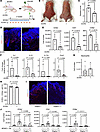 Figure 5
CCR3 antagonist reduces T cell numbers in skin and AD-related cytokine expression. (A) Schematic of mouse model of AD treated with CCR3 antagonist (iCCR3, SB-328437, 20 μg/g body weight, administered i.p. every other day). (B) Representative images of dorsal skin from mice treated as in A, with and without iCCR3. (C) Disease score for mice treated as in A, with and without iCCR3. (D) Immunofluorescence images of CD3+ T cells (red) and nuclei (DAPI, blue) in dorsal skin from mice treated as in A, with and without iCCR3. Scale bars: 300 μm. (E) Flow cytometric quantification of CD3e+, CD4+, and CD8a+ T cells in dorsal skin from mice treated as in A, with and without iCCR3. (F) qRT-PCR analysis of Il4, Il13, Il17a, and Cxcl1 mRNA expression in dorsal skin from mice treated as in A, with and without iCCR3. (G) Flow cytometric quantification of neutrophils in dorsal skin from mice treated as in A, with and without iCCR3. (H) Ratio of CCR3+ cells of CD45+CD3e+ cells in dorsal skin from mice treated as in A, with and without iCCR3. (I) Immunofluorescence images of CD3+ T cells (red) and nuclei (DAPI, blue) in dorsal skin from PdgfraΔIl4ra mice treated as in A. Scale bars: 300 μm. (J) Flow cytometric quantification of CD3e+, CD4+, and CD8a+ T cells in dorsal skin from PdgfraΔIl4ra and control mice treated in the MC + SA model. Statistical significance was determined by unpaired, 2-tailed Student’s t test (C and E–H) or 1-way ANOVA followed by Tukey’s multiple-comparison test (J) (n = 3–10). Results are representative of 2–3 independent experiments. Data are presented as the mean ± SD.
Dermal fibroblasts are important for the recruitment of T cells in mice during type 2 inflammation. To specifically investigate the role of fibroblast IL-4Rα in T cell recruitment during type 2 inflammation, we next tested mice with a deletion of IL-4Rα targeted to fibroblasts by crossing Pdgfra-Cre mice with Il4rafl/fl mice (PdgfraΔIl4ra). Histological analysis revealed that PdgfraΔIl4ra mice had decreased CD3+ cell frequencies in the deeper dermis (Figure 5I), a pattern consistent with the predominant expression of CCL8 seen on deep reticular fibroblasts, as shown in Supplemental Figure 5G. Flow cytometric analysis also showed a significant reduction of total T cell numbers, including both CD4+ and CD8+ T cells, in the skin of PdgfraΔIl4ra mice following application of MC + SA (Figure 5J).


Copyright © 2026 American Society for Clinical Investigation
ISSN: 0021-9738 (print), 1558-8238 (online)