
Advertisement
Research ArticleNeuroscienceVirology
Open Access |  10.1172/JCI195764
Broad-spectrum antiviral brincidofovir inhibits Epstein-Barr virus and related gammaherpesvirus in human and nonhuman primate cells
Abaigeal Donaldson,1 Madeleine R. Druker,1 Maria Chiara Monaco,1 Emily H. Stack,1 Paige Zimmerman,1 Amanda Lee,2 Izabela Bialuk,3 William Frazier,1 Irene Cortese,4 Heather Narver,5 Masatoshi Hazama,6 Fuminori Yoshida,6 Xiaofan Li,7 Laurie T. Krug,7 Stacey L. Piotrowski,1 and Steven Jacobson1
1Viral Immunology Section, National Institute of Neurological Disorders and Stroke (NINDS) and
2Translational Neuroradiology Section, NINDS, NIH, Bethesda, Maryland, USA.
3Department of General and Experimental Pathology, Medical University of Białystok, Białystok, Poland.
4Experimental Immunotherapeutics Unit and
5Animal Health and Care Section, NINDS, NIH, Bethesda, Maryland, USA.
6SymBio Pharmaceuticals Limited, Tokyo, Japan.
7HIV and AIDS Malignancy Branch, National Cancer Institute, NIH, Bethesda, Maryland, USA.
Address correspondence to: Steven Jacobson, NIH NINDS, Building 10 Room 5C103, 10 Center Drive, Bethesda, Maryland 20892, USA. Phone: 301.496.0519 or 301.402.0373; Email: jacobsons@ninds.nih.gov.
Find articles by Donaldson, A. in: PubMed | Google Scholar
1Viral Immunology Section, National Institute of Neurological Disorders and Stroke (NINDS) and
2Translational Neuroradiology Section, NINDS, NIH, Bethesda, Maryland, USA.
3Department of General and Experimental Pathology, Medical University of Białystok, Białystok, Poland.
4Experimental Immunotherapeutics Unit and
5Animal Health and Care Section, NINDS, NIH, Bethesda, Maryland, USA.
6SymBio Pharmaceuticals Limited, Tokyo, Japan.
7HIV and AIDS Malignancy Branch, National Cancer Institute, NIH, Bethesda, Maryland, USA.
Address correspondence to: Steven Jacobson, NIH NINDS, Building 10 Room 5C103, 10 Center Drive, Bethesda, Maryland 20892, USA. Phone: 301.496.0519 or 301.402.0373; Email: jacobsons@ninds.nih.gov.
Find articles by Druker, M. in: PubMed | Google Scholar
1Viral Immunology Section, National Institute of Neurological Disorders and Stroke (NINDS) and
2Translational Neuroradiology Section, NINDS, NIH, Bethesda, Maryland, USA.
3Department of General and Experimental Pathology, Medical University of Białystok, Białystok, Poland.
4Experimental Immunotherapeutics Unit and
5Animal Health and Care Section, NINDS, NIH, Bethesda, Maryland, USA.
6SymBio Pharmaceuticals Limited, Tokyo, Japan.
7HIV and AIDS Malignancy Branch, National Cancer Institute, NIH, Bethesda, Maryland, USA.
Address correspondence to: Steven Jacobson, NIH NINDS, Building 10 Room 5C103, 10 Center Drive, Bethesda, Maryland 20892, USA. Phone: 301.496.0519 or 301.402.0373; Email: jacobsons@ninds.nih.gov.
Find articles by Monaco, M. in: PubMed | Google Scholar
1Viral Immunology Section, National Institute of Neurological Disorders and Stroke (NINDS) and
2Translational Neuroradiology Section, NINDS, NIH, Bethesda, Maryland, USA.
3Department of General and Experimental Pathology, Medical University of Białystok, Białystok, Poland.
4Experimental Immunotherapeutics Unit and
5Animal Health and Care Section, NINDS, NIH, Bethesda, Maryland, USA.
6SymBio Pharmaceuticals Limited, Tokyo, Japan.
7HIV and AIDS Malignancy Branch, National Cancer Institute, NIH, Bethesda, Maryland, USA.
Address correspondence to: Steven Jacobson, NIH NINDS, Building 10 Room 5C103, 10 Center Drive, Bethesda, Maryland 20892, USA. Phone: 301.496.0519 or 301.402.0373; Email: jacobsons@ninds.nih.gov.
Find articles by Stack, E. in: PubMed | Google Scholar
1Viral Immunology Section, National Institute of Neurological Disorders and Stroke (NINDS) and
2Translational Neuroradiology Section, NINDS, NIH, Bethesda, Maryland, USA.
3Department of General and Experimental Pathology, Medical University of Białystok, Białystok, Poland.
4Experimental Immunotherapeutics Unit and
5Animal Health and Care Section, NINDS, NIH, Bethesda, Maryland, USA.
6SymBio Pharmaceuticals Limited, Tokyo, Japan.
7HIV and AIDS Malignancy Branch, National Cancer Institute, NIH, Bethesda, Maryland, USA.
Address correspondence to: Steven Jacobson, NIH NINDS, Building 10 Room 5C103, 10 Center Drive, Bethesda, Maryland 20892, USA. Phone: 301.496.0519 or 301.402.0373; Email: jacobsons@ninds.nih.gov.
Find articles by Zimmerman, P. in: PubMed | Google Scholar
1Viral Immunology Section, National Institute of Neurological Disorders and Stroke (NINDS) and
2Translational Neuroradiology Section, NINDS, NIH, Bethesda, Maryland, USA.
3Department of General and Experimental Pathology, Medical University of Białystok, Białystok, Poland.
4Experimental Immunotherapeutics Unit and
5Animal Health and Care Section, NINDS, NIH, Bethesda, Maryland, USA.
6SymBio Pharmaceuticals Limited, Tokyo, Japan.
7HIV and AIDS Malignancy Branch, National Cancer Institute, NIH, Bethesda, Maryland, USA.
Address correspondence to: Steven Jacobson, NIH NINDS, Building 10 Room 5C103, 10 Center Drive, Bethesda, Maryland 20892, USA. Phone: 301.496.0519 or 301.402.0373; Email: jacobsons@ninds.nih.gov.
Find articles by Lee, A. in: PubMed | Google Scholar
1Viral Immunology Section, National Institute of Neurological Disorders and Stroke (NINDS) and
2Translational Neuroradiology Section, NINDS, NIH, Bethesda, Maryland, USA.
3Department of General and Experimental Pathology, Medical University of Białystok, Białystok, Poland.
4Experimental Immunotherapeutics Unit and
5Animal Health and Care Section, NINDS, NIH, Bethesda, Maryland, USA.
6SymBio Pharmaceuticals Limited, Tokyo, Japan.
7HIV and AIDS Malignancy Branch, National Cancer Institute, NIH, Bethesda, Maryland, USA.
Address correspondence to: Steven Jacobson, NIH NINDS, Building 10 Room 5C103, 10 Center Drive, Bethesda, Maryland 20892, USA. Phone: 301.496.0519 or 301.402.0373; Email: jacobsons@ninds.nih.gov.
Find articles by Bialuk, I. in: PubMed | Google Scholar
1Viral Immunology Section, National Institute of Neurological Disorders and Stroke (NINDS) and
2Translational Neuroradiology Section, NINDS, NIH, Bethesda, Maryland, USA.
3Department of General and Experimental Pathology, Medical University of Białystok, Białystok, Poland.
4Experimental Immunotherapeutics Unit and
5Animal Health and Care Section, NINDS, NIH, Bethesda, Maryland, USA.
6SymBio Pharmaceuticals Limited, Tokyo, Japan.
7HIV and AIDS Malignancy Branch, National Cancer Institute, NIH, Bethesda, Maryland, USA.
Address correspondence to: Steven Jacobson, NIH NINDS, Building 10 Room 5C103, 10 Center Drive, Bethesda, Maryland 20892, USA. Phone: 301.496.0519 or 301.402.0373; Email: jacobsons@ninds.nih.gov.
Find articles by Frazier, W. in: PubMed | Google Scholar
1Viral Immunology Section, National Institute of Neurological Disorders and Stroke (NINDS) and
2Translational Neuroradiology Section, NINDS, NIH, Bethesda, Maryland, USA.
3Department of General and Experimental Pathology, Medical University of Białystok, Białystok, Poland.
4Experimental Immunotherapeutics Unit and
5Animal Health and Care Section, NINDS, NIH, Bethesda, Maryland, USA.
6SymBio Pharmaceuticals Limited, Tokyo, Japan.
7HIV and AIDS Malignancy Branch, National Cancer Institute, NIH, Bethesda, Maryland, USA.
Address correspondence to: Steven Jacobson, NIH NINDS, Building 10 Room 5C103, 10 Center Drive, Bethesda, Maryland 20892, USA. Phone: 301.496.0519 or 301.402.0373; Email: jacobsons@ninds.nih.gov.
Find articles by
Cortese, I.
in:
PubMed
|
Google Scholar
|

1Viral Immunology Section, National Institute of Neurological Disorders and Stroke (NINDS) and
2Translational Neuroradiology Section, NINDS, NIH, Bethesda, Maryland, USA.
3Department of General and Experimental Pathology, Medical University of Białystok, Białystok, Poland.
4Experimental Immunotherapeutics Unit and
5Animal Health and Care Section, NINDS, NIH, Bethesda, Maryland, USA.
6SymBio Pharmaceuticals Limited, Tokyo, Japan.
7HIV and AIDS Malignancy Branch, National Cancer Institute, NIH, Bethesda, Maryland, USA.
Address correspondence to: Steven Jacobson, NIH NINDS, Building 10 Room 5C103, 10 Center Drive, Bethesda, Maryland 20892, USA. Phone: 301.496.0519 or 301.402.0373; Email: jacobsons@ninds.nih.gov.
Find articles by Narver, H. in: PubMed | Google Scholar
1Viral Immunology Section, National Institute of Neurological Disorders and Stroke (NINDS) and
2Translational Neuroradiology Section, NINDS, NIH, Bethesda, Maryland, USA.
3Department of General and Experimental Pathology, Medical University of Białystok, Białystok, Poland.
4Experimental Immunotherapeutics Unit and
5Animal Health and Care Section, NINDS, NIH, Bethesda, Maryland, USA.
6SymBio Pharmaceuticals Limited, Tokyo, Japan.
7HIV and AIDS Malignancy Branch, National Cancer Institute, NIH, Bethesda, Maryland, USA.
Address correspondence to: Steven Jacobson, NIH NINDS, Building 10 Room 5C103, 10 Center Drive, Bethesda, Maryland 20892, USA. Phone: 301.496.0519 or 301.402.0373; Email: jacobsons@ninds.nih.gov.
Find articles by Hazama, M. in: PubMed | Google Scholar
1Viral Immunology Section, National Institute of Neurological Disorders and Stroke (NINDS) and
2Translational Neuroradiology Section, NINDS, NIH, Bethesda, Maryland, USA.
3Department of General and Experimental Pathology, Medical University of Białystok, Białystok, Poland.
4Experimental Immunotherapeutics Unit and
5Animal Health and Care Section, NINDS, NIH, Bethesda, Maryland, USA.
6SymBio Pharmaceuticals Limited, Tokyo, Japan.
7HIV and AIDS Malignancy Branch, National Cancer Institute, NIH, Bethesda, Maryland, USA.
Address correspondence to: Steven Jacobson, NIH NINDS, Building 10 Room 5C103, 10 Center Drive, Bethesda, Maryland 20892, USA. Phone: 301.496.0519 or 301.402.0373; Email: jacobsons@ninds.nih.gov.
Find articles by Yoshida, F. in: PubMed | Google Scholar
1Viral Immunology Section, National Institute of Neurological Disorders and Stroke (NINDS) and
2Translational Neuroradiology Section, NINDS, NIH, Bethesda, Maryland, USA.
3Department of General and Experimental Pathology, Medical University of Białystok, Białystok, Poland.
4Experimental Immunotherapeutics Unit and
5Animal Health and Care Section, NINDS, NIH, Bethesda, Maryland, USA.
6SymBio Pharmaceuticals Limited, Tokyo, Japan.
7HIV and AIDS Malignancy Branch, National Cancer Institute, NIH, Bethesda, Maryland, USA.
Address correspondence to: Steven Jacobson, NIH NINDS, Building 10 Room 5C103, 10 Center Drive, Bethesda, Maryland 20892, USA. Phone: 301.496.0519 or 301.402.0373; Email: jacobsons@ninds.nih.gov.
Find articles by Li, X. in: PubMed | Google Scholar
1Viral Immunology Section, National Institute of Neurological Disorders and Stroke (NINDS) and
2Translational Neuroradiology Section, NINDS, NIH, Bethesda, Maryland, USA.
3Department of General and Experimental Pathology, Medical University of Białystok, Białystok, Poland.
4Experimental Immunotherapeutics Unit and
5Animal Health and Care Section, NINDS, NIH, Bethesda, Maryland, USA.
6SymBio Pharmaceuticals Limited, Tokyo, Japan.
7HIV and AIDS Malignancy Branch, National Cancer Institute, NIH, Bethesda, Maryland, USA.
Address correspondence to: Steven Jacobson, NIH NINDS, Building 10 Room 5C103, 10 Center Drive, Bethesda, Maryland 20892, USA. Phone: 301.496.0519 or 301.402.0373; Email: jacobsons@ninds.nih.gov.
Find articles by Krug, L. in: PubMed | Google Scholar
1Viral Immunology Section, National Institute of Neurological Disorders and Stroke (NINDS) and
2Translational Neuroradiology Section, NINDS, NIH, Bethesda, Maryland, USA.
3Department of General and Experimental Pathology, Medical University of Białystok, Białystok, Poland.
4Experimental Immunotherapeutics Unit and
5Animal Health and Care Section, NINDS, NIH, Bethesda, Maryland, USA.
6SymBio Pharmaceuticals Limited, Tokyo, Japan.
7HIV and AIDS Malignancy Branch, National Cancer Institute, NIH, Bethesda, Maryland, USA.
Address correspondence to: Steven Jacobson, NIH NINDS, Building 10 Room 5C103, 10 Center Drive, Bethesda, Maryland 20892, USA. Phone: 301.496.0519 or 301.402.0373; Email: jacobsons@ninds.nih.gov.
Find articles by Piotrowski, S. in: PubMed | Google Scholar
1Viral Immunology Section, National Institute of Neurological Disorders and Stroke (NINDS) and
2Translational Neuroradiology Section, NINDS, NIH, Bethesda, Maryland, USA.
3Department of General and Experimental Pathology, Medical University of Białystok, Białystok, Poland.
4Experimental Immunotherapeutics Unit and
5Animal Health and Care Section, NINDS, NIH, Bethesda, Maryland, USA.
6SymBio Pharmaceuticals Limited, Tokyo, Japan.
7HIV and AIDS Malignancy Branch, National Cancer Institute, NIH, Bethesda, Maryland, USA.
Address correspondence to: Steven Jacobson, NIH NINDS, Building 10 Room 5C103, 10 Center Drive, Bethesda, Maryland 20892, USA. Phone: 301.496.0519 or 301.402.0373; Email: jacobsons@ninds.nih.gov.
Find articles by Jacobson, S. in: PubMed | Google Scholar
Published November 25, 2025 - More info
J Clin Invest. 2026;136(2):e195764. https://doi.org/10.1172/JCI195764.
© 2025 Donaldson et al. This work is licensed under the Creative Commons Attribution 4.0 International License. To view a copy of this license, visit http://creativecommons.org/licenses/by/4.0/.
Received: May 20, 2025; Accepted: November 12, 2025

-
Results
Effect of BCV treatment in EBV-infected SLCLs. The effects of BCV were first tested on EBV-infected SLCLs that had been previously generated from HCs and patients with stable MS (SMS) or active MS (AMS) (Table 1). These SLCLs express high levels of the endogenous EBV from whom the B cell lines were generated (43, 44). The effects of BCV on the viability of an EBV-positive SLCL (SMS2) are shown in Figure 1A. Increasing concentrations of BCV demonstrated a dose-dependent effect of decreasing cell viability after 7 days in culture in the EBV-infected SLCL SMS2 compared with the EBV-negative Ramos cell line (Figure 1A). In addition, the effects of BCV on EBV viral DNA load in the SLCL SMS2 were also analyzed after both 5 and 7 days in culture (Figure 1, B and C respectively). The SLCL was cultured with BCV at concentrations between 1 and 500 nM for 7 days, and EBV DNA copy number for each concentration was determined by droplet digital PCR (ddPCR). Samples were harvested on days 5 and 7. BCV exhibited a dose-dependent effect on EBV viral load at concentrations of BCV beginning as low as 1 nM for SMS2 SLCL on day 5 (Figure 1B) and day 7 (Figure 1C). These results demonstrate that BCV selectively targets EBV-infected cells, and the lowest, most effective doses of BCV were between 1 nM and 500 nM. Therefore, subsequent experiments utilized BCV concentrations of 500 nM or less.
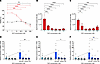 Figure 1
Brincidofovir decreases EBV DNA in a human EBV-infected cell line and reduces viral mRNA following reactivation. (A) Viability of one EBV-infected SLCL, SMS2 (red triangle), and the Ramos EBV-negative cell line (black square) after 7 days in culture with BCV. (B and C) Average EBV DNA copy number ± SEM per 1 × 10⁶ cells of the SMS2 SLCL detected by ddPCR for EBV BamHI DNA following 5 days in culture (B) and 7 days in culture (C) with BCV. (D–F) Average of EBV mRNA expression ± SEM in HC (open circles, n = 4) and MS (black circles, n = 6) SLCLs cultured with BCV and with (dark blue bars, to right of arrow) or without (light blue bars, under arrow) NaB+TPA to induce viral reactivation (arrow). (D) EBNA1 expression; (E) BZLF1 expression; (F) BFRF3 expression. Data analyzed using 1-way ANOVA with Tukey’s multiple comparisons (A–C) and the Kruskal-Wallis test with Dunn’s test for pairwise comparisons (D–F), *P ≤ 0.05, **P ≤ 0.01, ***P ≤ 0.001, ****P ≤ 0.0001. BCV, Brincidofovir; EBV, Epstein-Barr virus; HC, healthy control; SMS, stable multiple sclerosis patient.
It is known that treating cells latently infected with EBV with tetradecanoyl phorbol acetate (TPA) induces the expression of the EBV lytic transactivator protein Zta (BZLF1), through activation of protein kinase C (PKC), to drive reactivation and genome-wide gene expression (45). Sodium butyrate (NaB) is an inhibitor of histone deacetylases and leads to a broad increase in chromatin accessibility and gene expression (46). Therefore, we used the combined treatment of TPA and NaB to induce EBV reactivation in 10 SLCLs derived from healthy controls and patients with MS (Table 1). To analyze viral gene expression, EBV transcripts for the latent EBV nuclear antigen 1 (EBNA1) (Figure 1D), the lytic immediate early EBV Zta viral transcription and replication factor (BZLF1) (Figure 1E), and the late EBV small capsid protein BFRF3 (BFRF3) (Figure 1F) were measured. Treatment of all 10 SLCLs with 5 μM NaB and 50 ng/mL of TPA led to an approximately 4-fold increase of all 3 EBV transcripts examined over the 7-day time course (Figure 1, D–F, arrow). The effect of BCV on the expression of reactivated EBV mRNAs resulted in a reduction of all 3 EBV mRNA transcripts by approximately 80% in all SLCLs (Figure 1, D–F). This reduction was statistically significant (Figure 1, D–F) for all mRNAs at the highest concentration of BCV (250 nM) and at the 125 nM dose of BCV for BFRF3 (Figure 1F). Despite the stratification of samples, there was no substantial difference between healthy controls and patients with MS at any concentration of BCV-induced reduction of reactivated EBV in SLCLs (P >.05; t test). In addition, there was no notable difference in the degree of reactivation between HCs and patients with MS following treatment with NaB and TPA (P >.05; t test). These results suggest that BCV effectively reduces the relative expression of latent, immediate lytic, and late lytic EBV genes in reactivated EBV in the SLCLs.
BCV decreases the viral load in EBV reactivated from PBMCs. To determine if BCV is also effective at reducing reactivated EBV from PBMCs, the relative expression of reactivated EBV mRNA genes was measured in PBMCs from 23 individuals (Table 2), including HCs, patients with MS, and one healthy donor with an active EBV infection at the time of sample collection (Table 2, HC6). Although this individual was healthy, as he was recruited to be a bone marrow donor at the time of collection, he was IgM positive for an EBV infection and had a high EBV BamHI DNA copy number of 23,700 copies per 1 × 10⁶ cells (Table 2). In addition, EBV mRNA was detected in freshly isolated PBMCs from this individual. A representative ddPCR plot is shown in Figure 2A, in which EBV EBNA1 mRNA is shown as positive droplets in the upper quadrants. Reactivation with NaB+TPA for 7 days generated a relative increase in EBV EBNA1 mRNA (Figure 2B, upper quadrant drops), quantified as a 1.75 increase in Figure 2D (arrow). Similar increases in BZLF1 and BFRF3 mRNA expressions, of 2.32 and 5.48 respectively, were also observed (Figure 2, E and F, arrows). Importantly, BCV was shown to reduce EBV mRNAs from both nonreactivated PBMCs (Figure 2, D–F, light green bars under arrow) and in NaB+TPA reactivated EBV (Figure 2, D–F, dark green bars to right of arrow) in a dose-dependent manner. A representative ddPCR plot is shown in Figure 2C and quantified in Figure 2D. These results clearly demonstrate that BCV can reduce mRNA expression of EBV genes in an individual with an active EBV infection.
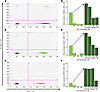 Figure 2
Brincidofovir reduces EBV mRNA expression in PBMCs from an individual with active EBV infection following viral reactivation. (A–C) Representative ddPCR plots of EBNA1 detection from HC6 PBMCs cultured (A) without NaB+TPA and no BCV, (B) with NaB+TPA and no BCV, and (C) with NaB+TPA and 125 nM BCV. Y axis represents the FAM-MGBNFQ fluorescent amplitude, corresponding to EBNA1 detection in this plot (blue dots + orange dots, upper quadrants). X axis represents the VIC-MGBNFQ fluorescent amplitude, which corresponds to the HPRT housekeeping gene (green dots, bottom right quadrant). Lower left quadrant represents droplets negative for both EBNA1 and HPRT (gray dots). (D–F) Quantification of EBV mRNA expression in HC6 PBMCs cultured with BCV and with or without NaB+TPA to induce viral reactivation (arrow). Treatment with BCV and no NaB+TPA (light green bars, under arrow); treatment with BCV plus NaB+TPA (dark green bars, right of arrow). (D) EBNA1 expression; (E) BZLF1 expression; (F) BFRF3 expression. Open circle intersecting x-axis indicates mRNA expression undetected by ddPCR. BCV, Brincidofovir; EBV, Epstein-Barr virus; HC, healthy control.
Similarly, the effect of BCV on reactivated PBMCs from both healthy individuals and patients with MS not experiencing an active EBV infection was determined. A ddPCR plot is shown in Figure 3A from a representative patient with MS (Table 2, SMS6), demonstrating the typical observation of no EBV mRNA from fresh PBMCs. However, upon reactivation with NaB+TPA for 7 days, EBV EBNA1 mRNA was detected (Figure 3B, drops upper quadrant) and quantified as a dramatic increase in EBV EBNA1 mRNA (Figure 3D, arrow). Again, a similar increase in BZLF1 and BFRF3 mRNA was also observed (Figure 3, E and F respectively, arrows). Treatment of EBV-reactivated PBMCs with BCV demonstrated a reduction in the expression of EBV EBNA1 mRNA, as shown by fewer drops (Figure 3C, upper left quadrant) and quantified in Figure 3D as a dose-dependent reduction. The relative expressions of BZLF1 and BFRF3 mRNAs in MS patient SMS6 displayed similar dose-dependent reductions in response to BCV as EBNA1 mRNA (Figure 3, D–F). These representative results are supported by group analysis of 9 individuals (4 HCs and 5 patients with MS) in which there was a greater than 30-fold increase in all 3 EBV mRNA transcripts upon reactivation with NaB+TPA (Figure 4). Importantly, there was a greater than 90% reduction in all EBV-reactivated mRNAs following treatment with 125 nM and 250 nM BCV (Figure 4). No differences were observed in EBV mRNA detection pre- and postreactivation between healthy donors and MS patients (Figure 4, circles). Additionally, no marked differences were found between the magnitudes of reactivation of healthy donor PBMCs and MS patient PBMCs. Collectively, these results demonstrate that BCV can actively reduce the levels of EBV mRNAs from PBMCs of healthy individuals and patients with MS following EBV reactivation.
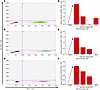 Figure 3
Brincidofovir reduces EBV mRNA expression in PBMCs from an individual with stable multiple sclerosis (SMS) following viral reactivation. (A–C) Representative ddPCR plots of EBNA1 detection from SMS6 PBMCs cultured (A) without NaB+TPA and no BCV, (B) with NaB+TPA and no BCV, and (C) with NaB+TPA and 125nM BCV. Y axis represents the FAM-MGBNFQ fluorescent amplitude, corresponding to EBNA1 detection in this plot (blue dots + orange dots, upper quadrants). X axis represents the VIC-MGBNFQ fluorescent amplitude, which corresponds to the HPRT housekeeping gene (green dots, bottom right quadrant). Lower left quadrant represents droplets negative for both EBNA1 and HPRT (gray dots). (D–F) Quantification of EBV mRNA expression in SMS6 PBMCs cultured with BCV and with or without NaB+TPA to induce viral reactivation (arrow). (D) EBNA1 expression; (E) BZLF1 expression; (F) BFRF3 expression. Open circle intersecting x-axis, mRNA expression undetected by ddPCR; BCV, Brincidofovir; EBV, Epstein-Barr virus; SMS, stable multiple sclerosis patient; Control, cells treated with only media.
 Figure 4
Treatment of EBV-infected human PBMCs with brincidofovir attenuates viral reactivation. (A–C) Average of EBV mRNA expression ± SEM in human PBMCs cultured with BCV and with or without NaB+TPA to induce viral reactivation (arrow). HC PBMCs, open circles (n = 4). MS PBMCs, black circles (n = 5). (A) EBNA1 expression; (B) BZLF1 expression; (C) BFRF3 expression. Data analyzed using Kruskal-Wallis test with Dunn’s multiple comparisons, ****P ≤ 0.0001. H, healthy control; MS, multiple sclerosis patient.
BCV has a dose-dependent effect on CalHV-3 in reactivated marmoset cells. To further explore the efficacy of BCV, we utilized another lymphocrypto-gammaherpesvirus (CalHV-3) naturally occurring in a nonhuman primate, the common marmoset (23, 25). CalHV-3 shares many phylogenetic, biological, and pathogenic similarities with EBV and is used as a translational experimental model of EBV infection and associated diseases (26, 28). A marmoset B cell line, CJ0149, endogenously expresses high levels of CalHV-3 DNA and has been shown to transcribe viral mRNA (ORF45, ORF39) in a pattern broadly consistent with lytic and latent gene expression programs of EBV homologs (gp350, EBNA1). The CalHV-3–infected CJ0149 cell line was stimulated with increasing doses of NaB+TPA to determine optimal reactivation conditions. Higher concentrations of 5 mM NaB + 20 ng/mL TPA, compared with EBV reactivation conditions from human cells, were required to reactivate CalHV-3 mRNA from the CJ0149 cell line (Supplemental Figure 1, A and B; supplemental material available online with this article; https://doi.org/10.1172/JCI195764DS1). Additionally, reactivation of CalHV-3 peaked on day 5 of treatment (Supplemental Figure 1, C–E), compared with day 7 for EBV in human cells.
After determining the effective reactivation conditions for the CJ0149 marmoset cell line, the effect of BCV was assessed. CalHV-3–infected CJ0149 cells were reactivated and treated with BCV (Figure 5, A–C). Reactivation with NaB+TPA demonstrated an increase in CalHV-3 DNA and CalHV-3 ORF39 and ORF45 mRNA, and all were inhibited by treatment with BCV in a dose-dependent manner (Figure 5, A–C). We extended these observations of the effect of BCV on CalHV-3 from the CJ0149 cell line directly to CalHV-3–infected marmoset PBMCs. As limited quantities of marmoset samples were available due to collection restrictions, conditions of PBMC reactivation with NaB+TPA were first determined. Plating 1.5 × 10⁵ marmoset PBMCs per well and incubating the cells with 5 mM NaB + 20 ng/mL TPA were the optimal conditions for reactivation during a 5-day assay (Supplemental Figure 2). As shown in the upper quadrants of Figure 5D, ddPCR of CalHV-3–positive marmoset #3 PBMCs with no reactivation showed limited expression of CalHV-3 ORF39 mRNA, which dramatically increased upon stimulation with NaB+TPA (Figure 5E, upper quadrants). Treatment with BCV of these reactivated marmoset PBMCs resulted in a decrease of ORF39 mRNA expression (Figure 5F, upper quadrants). These results are quantified in a group analysis of 4 animals, in which increases in both CalHV-3 DNA (Figure 5G) and, in particular, CalHV-3 mRNA expression (Figure 5, H and I), were observed. While treatment of CalHV-3 infected marmoset PBMCs with BCV resulted in a modest decrease in CalHV-3 reactivated DNA (Figure 5G), there was a 70% decrease in the ORF39 mRNA at 250 nM of BCV (Figure 5H) and a statistically significant decrease in expression of ORF45 (Figure 5I). These results further demonstrate that BCV has a broad effect on herpesviruses and suggest the potential for the use of marmosets infected with CalHV-3 as a nonhuman primate model for antiherpesvirus therapies.
 Figure 5
CalHV-3–infected marmoset cells treated with brincidofovir show decreases in CalHV-3 DNA and mRNA following viral reactivation assay. (A–C) Quantification of Callitrichine herpesvirus 3 (CalHV-3) DNA and mRNA expression in CalHV-3 infected cell line, CJ0149, with (dark blue bars, right) or without (light blue bar, left) NaB+TPA to induce viral reactivation. (A) CalHV-3 DNA expression; (B) ORF39 mRNA expression; (C) ORF45 mRNA expression. (D–F) Representative ddPCR plots of ORF39 mRNA expression in marmoset #3 PBMCs cultured (D) without NaB+TPA and no BCV, (E) with NaB+TPA and no BCV, and (F) with NaB+TPA and 250nM BCV. Y axis represents FAM-MGBNFQ fluorescent amplitude, which corresponds to ORF39 mRNA detection (blue dots + orange dots, upper quadrants). X axis represents the VIC-MGBNFQ fluorescent amplitude, which corresponds to the CJ-TBP housekeeping gene (green dots, bottom right quadrant). Lower left quadrant represents droplets negative for both ORF39 and CJ-TBP (gray dots). (G–I) Mean detection ± SEM of CalHV-3 gene expression in marmoset PBMCs (n = 4, circles) cultured with BCV and with (dark blue bars, right) or without (light blue bar, left) NaB+TPA to induce viral reactivation. (G) CalHV-3 DNA expression; (H) ORF39 mRNA expression; (I) ORF45 mRNA expression. Data analyzed using (G) Kruskal-Wallis test with Dunn’s comparisons, (H) a Welch’s ANOVA, and (I) 1-way ANOVA with Tukey’s multiple comparisons, *P ≤ 0.05, **P ≤ 0.01, ***P ≤ 0.001. Control, cells treated with only media; BCV, brincidofovir.
Reactivation of EBV from human PBMCs is correlated with the production of SLCLs and suggests a rationale for the selection of patients with MS for antiherpesvirus therapy research. A major theme of this study was that treatment with BCV inhibited the reactivation of EBV from EBV-infected cell lines (SLCLs) (Figure 1) and ex vivo PBMCs (Figure 4). The results in Table 2 demonstrate that 5 μM NaB + 50 ng/mL TPA reactivation of EBV from PBMCs was variable between individuals. Indeed, from 23 individuals tested, reactivation was observed in 9 (40%) (Table 2 and Figure 6). There were no apparent differences in reactivation between healthy control PBMCs and patients with MS, or between patients with MS in either the stable or active phase of their disease (Figure 6B). Of interest was the observation that, in those 9 individuals, either patients with MS or healthy controls, whose PBMCs were able to reactivate EBV after treatment with NaB+TPA, SLCLs were successfully generated from all 9 (Table 2 and Figure 6A). Conversely, in those 14 individuals in which EBV could not be reactivated, no SLCLs were generated (Table 2 and Figure 6A). These results suggest a significant correlation between the ability to reactivate EBV from PBMCs in response to ex vivo stimulation and the capacity to generate EBV-infected SLCLs. As treatment with an anti-EBV compound like BCV was particularly effective in the inhibition of EBV reactivated from PBMCs, consistent with its mode of action as a viral DNA polymerase inhibitor (47), these observations suggest a rationale for screening of individuals, such as patients with MS, for inclusion in an anti-EBV clinical trial.
 Figure 6
Ability to reactivate EBV in human PBMCs correlates with ability to generate a spontaneous lymphoblastoid cell line. (A) Table demonstrating correlation between successful reactivation of EBV and ability to generate an SLCL for 23 individuals (Fisher’s exact test, P < 0.0001). (B) Representation of number of individuals in which EBV was successfully reactivated (shaded area) compared with the total number of individuals tested. Total PBMCs reactivated: 9/23, 39%; HC PBMCs reactivated: 4/12, 33%; MS PBMCs reactivated: 5/11, 45%; SMS PBMCs reactivated: 3/7, 43%; AMS PBMCs reactivated: 2/4, 50%. HC, healthy control; MS, multiple sclerosis patient; SMS, stable multiple sclerosis patient; AMS, active multiple sclerosis patient; SLCL, spontaneous lymphoblastoid cell line.


Copyright © 2026 American Society for Clinical Investigation
ISSN: 0021-9738 (print), 1558-8238 (online)