
Advertisement
Research ArticleHematologyVascular biology
Open Access |  10.1172/JCI195662
Mitochondrial oxidants promote platelet activation and thrombotic susceptibility in prediabetes
Azaj Ahmed,1 Pooja Yadav,1 Melissa Jensen,1 Katharine Geasland,1 Jagadish Swamy,1 Douglas R. Spitz,2,3 E. Dale Abel,1,4 Diana Jalal,1,5 and Sanjana Dayal1,3,5
1Department of Internal Medicine,
2Department of Radiation Oncology, and
3Holden Comprehensive Cancer Center, University of Iowa Carver College of Medicine, Iowa City, Iowa, USA.
4Department of Medicine, David Geffen School of Medicine, UCLA, Los Angeles, California, USA.
5Iowa City VA Healthcare System, Iowa City, Iowa, USA.
Address correspondence to: Sanjana Dayal, Department of Internal Medicine, Carver College of Medicine, University of Iowa, 100D EMRB, 500 Newton Road, Iowa City, Iowa, 52242, USA. Phone: 319.335.7712; Email: sanjana-dayal@uiowa.edu.
Find articles by Ahmed, A. in: PubMed | Google Scholar
1Department of Internal Medicine,
2Department of Radiation Oncology, and
3Holden Comprehensive Cancer Center, University of Iowa Carver College of Medicine, Iowa City, Iowa, USA.
4Department of Medicine, David Geffen School of Medicine, UCLA, Los Angeles, California, USA.
5Iowa City VA Healthcare System, Iowa City, Iowa, USA.
Address correspondence to: Sanjana Dayal, Department of Internal Medicine, Carver College of Medicine, University of Iowa, 100D EMRB, 500 Newton Road, Iowa City, Iowa, 52242, USA. Phone: 319.335.7712; Email: sanjana-dayal@uiowa.edu.
Find articles by Yadav, P. in: PubMed | Google Scholar
1Department of Internal Medicine,
2Department of Radiation Oncology, and
3Holden Comprehensive Cancer Center, University of Iowa Carver College of Medicine, Iowa City, Iowa, USA.
4Department of Medicine, David Geffen School of Medicine, UCLA, Los Angeles, California, USA.
5Iowa City VA Healthcare System, Iowa City, Iowa, USA.
Address correspondence to: Sanjana Dayal, Department of Internal Medicine, Carver College of Medicine, University of Iowa, 100D EMRB, 500 Newton Road, Iowa City, Iowa, 52242, USA. Phone: 319.335.7712; Email: sanjana-dayal@uiowa.edu.
Find articles by Jensen, M. in: PubMed | Google Scholar
1Department of Internal Medicine,
2Department of Radiation Oncology, and
3Holden Comprehensive Cancer Center, University of Iowa Carver College of Medicine, Iowa City, Iowa, USA.
4Department of Medicine, David Geffen School of Medicine, UCLA, Los Angeles, California, USA.
5Iowa City VA Healthcare System, Iowa City, Iowa, USA.
Address correspondence to: Sanjana Dayal, Department of Internal Medicine, Carver College of Medicine, University of Iowa, 100D EMRB, 500 Newton Road, Iowa City, Iowa, 52242, USA. Phone: 319.335.7712; Email: sanjana-dayal@uiowa.edu.
Find articles by Geasland, K. in: PubMed | Google Scholar
1Department of Internal Medicine,
2Department of Radiation Oncology, and
3Holden Comprehensive Cancer Center, University of Iowa Carver College of Medicine, Iowa City, Iowa, USA.
4Department of Medicine, David Geffen School of Medicine, UCLA, Los Angeles, California, USA.
5Iowa City VA Healthcare System, Iowa City, Iowa, USA.
Address correspondence to: Sanjana Dayal, Department of Internal Medicine, Carver College of Medicine, University of Iowa, 100D EMRB, 500 Newton Road, Iowa City, Iowa, 52242, USA. Phone: 319.335.7712; Email: sanjana-dayal@uiowa.edu.
Find articles by Swamy, J. in: PubMed | Google Scholar
1Department of Internal Medicine,
2Department of Radiation Oncology, and
3Holden Comprehensive Cancer Center, University of Iowa Carver College of Medicine, Iowa City, Iowa, USA.
4Department of Medicine, David Geffen School of Medicine, UCLA, Los Angeles, California, USA.
5Iowa City VA Healthcare System, Iowa City, Iowa, USA.
Address correspondence to: Sanjana Dayal, Department of Internal Medicine, Carver College of Medicine, University of Iowa, 100D EMRB, 500 Newton Road, Iowa City, Iowa, 52242, USA. Phone: 319.335.7712; Email: sanjana-dayal@uiowa.edu.
Find articles by Spitz, D. in: PubMed | Google Scholar
1Department of Internal Medicine,
2Department of Radiation Oncology, and
3Holden Comprehensive Cancer Center, University of Iowa Carver College of Medicine, Iowa City, Iowa, USA.
4Department of Medicine, David Geffen School of Medicine, UCLA, Los Angeles, California, USA.
5Iowa City VA Healthcare System, Iowa City, Iowa, USA.
Address correspondence to: Sanjana Dayal, Department of Internal Medicine, Carver College of Medicine, University of Iowa, 100D EMRB, 500 Newton Road, Iowa City, Iowa, 52242, USA. Phone: 319.335.7712; Email: sanjana-dayal@uiowa.edu.
Find articles by
Abel, E.
in:
PubMed
|
Google Scholar
|

1Department of Internal Medicine,
2Department of Radiation Oncology, and
3Holden Comprehensive Cancer Center, University of Iowa Carver College of Medicine, Iowa City, Iowa, USA.
4Department of Medicine, David Geffen School of Medicine, UCLA, Los Angeles, California, USA.
5Iowa City VA Healthcare System, Iowa City, Iowa, USA.
Address correspondence to: Sanjana Dayal, Department of Internal Medicine, Carver College of Medicine, University of Iowa, 100D EMRB, 500 Newton Road, Iowa City, Iowa, 52242, USA. Phone: 319.335.7712; Email: sanjana-dayal@uiowa.edu.
Find articles by Jalal, D. in: PubMed | Google Scholar
1Department of Internal Medicine,
2Department of Radiation Oncology, and
3Holden Comprehensive Cancer Center, University of Iowa Carver College of Medicine, Iowa City, Iowa, USA.
4Department of Medicine, David Geffen School of Medicine, UCLA, Los Angeles, California, USA.
5Iowa City VA Healthcare System, Iowa City, Iowa, USA.
Address correspondence to: Sanjana Dayal, Department of Internal Medicine, Carver College of Medicine, University of Iowa, 100D EMRB, 500 Newton Road, Iowa City, Iowa, 52242, USA. Phone: 319.335.7712; Email: sanjana-dayal@uiowa.edu.
Find articles by Dayal, S. in: PubMed | Google Scholar
Published December 23, 2025 - More info
J Clin Invest. 2026;136(4):e195662. https://doi.org/10.1172/JCI195662.
© 2025 Ahmed et al. This work is licensed under the Creative Commons Attribution 4.0 International License. To view a copy of this license, visit http://creativecommons.org/licenses/by/4.0/.
Received: May 15, 2025; Accepted: December 16, 2025


-
Results
Demographics, baseline characteristics, and complete blood cell count. We studied 19 young (aged 18–50 years) and 19 middle-aged (51–64 years) military veterans with prediabetes. We also recruited 25 young and 22 middle-aged military veterans with normoglycemia (FBG < 100 mg/dL and HbA1c < 5.7%) as control participants. Demographics, baseline characteristics, serum chemistry findings, and complete blood cell counts of the patients and control participants are summarized in Table 1. The FBG, HbA1c, insulin, and Homeostasis Model Assessment of Insulin Resistance (HOMA-IR) values were increased in both young and middle-aged participants with prediabetes relative to normoglycemic young or middle-aged control participants, respectively. Other parameters, such as systolic BP (SBP), diastolic BP (DBP), cholesterol, LDL, HDL, and triglyceride levels, were mostly not different among groups, but an increase in SBP in middle-aged participants with prediabetes or DBP in middle-aged control participants and a decreased HDL level in young participants with prediabetes were noted. The complete blood cell counts also were comparable among the groups except that an increase in neutrophil count was noted in young participants with prediabetes and an increase in the neutrophil/lymphocyte ratio was observed in middle-aged control participants. One and 2 patients in young control and young prediabetic groups, respectively, were taking antihypertensive drugs. In the middle-aged control group, 3 individuals were taking lipid-lowering drugs, and 1 was taking antihypertensive medication. In the middle-aged prediabetic group, 3 participants were taking lipid-lowering drugs, and 4 were taking antihypertensive medication.
Prediabetes enhanced agonist-induced platelet activation and thrombus formation ex vivo. To evaluate alterations in platelet activation as a function of prediabetes or age, we examined markers for integrin activation (i.e., activated αIIbβ3), fibrinogen binding, and granule release (P-selectin) in the washed platelets in the absence (resting state) or presence (activated state) of the agonist, thrombin. There were no alterations for these markers at resting state among 4 groups (Figure 1, A–C). Two submaximal doses of thrombin (0.02 and 0.05 U/mL) were used to capture differential sensitivity of platelets due to prediabetes or age, and we observed a dose-dependent increase in mean fluorescence for these platelet activation markers in all 4 groups.
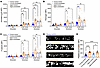 Figure 1
Platelets from patients with prediabetes show hyperactivity at both young and older ages. Washed platelets were incubated with antibody against (A) activated αIIbβ3, (B) fibrinogen, or (C) P-selectin, in the absence or presence of thrombin (n = 2 doses) for 10 minutes; diluted in PBS; fixed; and analyzed via flow cytometry. Data are presented as mean ± SEM and analyzed using 2-way ANOVA with Tukey’s test for multiple-group comparisons on log-transformed values. n = 14–24/group. (D) Calcein green–labeled washed platelets were suspended in Tyrode’s buffer and superfused over a collagen-coated microfluidic chamber under arterial shear stress. Representative images of platelet accumulation after 5 minutes of superfusion for each group are shown. Scale bar: 100 μm. (E) Quantification of D is shown as MFI, presented as mean ± SEM and analyzed using 2-way ANOVA with Tukey’s test for multiple-group comparisons on log-transformed values. n = 12–19/group. *P < 0.05, **P < 0.01, ***P < 0.001, ****P < 0.0001.
After activation, the main effect of prediabetes was evident for all 3 activation markers within each dose of thrombin. A significant increase due to age among normoglycemic participants was observed for activated αIIbβ3 at both doses of thrombin and for P-selectin at the higher dose of thrombin. However, among the participants with prediabetes, increased platelet activation with advancing age was not evident. In fact, young participants with prediabetes had an increasing trend for platelet activation compared with the middle-aged participants with prediabetes. Middle-aged participants with prediabetes did not have any significant increase when compared with the middle-aged normoglycemic participants for any of the platelet activation markers.
Platelet accumulation and ex vivo thrombus formation were assessed in a microfluidic flow chamber after 5 minutes of superfusion on the collagen coated surface. Prediabetes was associated with significant increase in ex vivo thrombus formation in both young and middle-aged participants (Figure 1, D and E). There was also a greater accumulation of platelets in middle-aged participants with prediabetes compared with the middle-aged normoglycemic group.
Prediabetes aggravated platelet mito-oxidant levels, aggravated mitochondrial membrane hyperpolarization, and increased phosphatidylserine exposure. We next tested whether prediabetes or age was associated with increased platelet mito-oxidants in our cohort. Using the oxidative fluorescent dye MitoSOX, we measured accumulation of oxidants within mitochondria. Under resting conditions, increased MitoSOX fluorescence was observed in the young participants with prediabetes compared with the young control participants and middle-aged participants with prediabetes (Figure 2A). Upon agonist activation, an increase in MitoSOX fluorescence was seen in all groups, but enhancement in the participants with prediabetes exceeded the increase in age-matched control groups. The measurement of mitochondrial membrane potential (Δψm) using tetramethylrhodamine, methyl ester (TMRM), fluorescence revealed mitochondrial hyperpolarization in both groups with prediabetes compared with age-matched control groups (Figure 2B). Treatment with the uncoupler carbonyl cyanide-p-trifluoromethoxyphenylhydrazone (FCCP) collapsed the Δψm in all groups; the residual Δψm remained modestly higher in those with prediabetes; but the difference from the control group was not significant. Annexin V binding demonstrating phosphatidylserine (PS) exposure in platelets was similar in the resting state among the 4 groups but was increased upon agonist stimulation in platelets from both the young and middle-aged participants with prediabetes relative to the age-matched control participants (Figure 2C). In contrast with findings for integrin activation, fibrinogen binding, or P-selectin, the middle-aged participants with prediabetes had a significant increase in MitoSOX and TMRM fluorescence and PS exposure compared with the middle-aged normoglycemic participants, suggesting an additive effect of prediabetes in middle-aged individuals for these parameters.
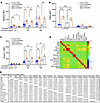 Figure 2
Platelets from participants with prediabetes have increased concentrations of mito-oxidants, mitochondrial membrane hyperpolarization, and PS exposure. Washed platelets were prepared, and (A) mitochondrial pro-oxidants were detected by incubating platelets with 2.5 μM MitoSOX in the absence or presence of thrombin and convulxin; (B) Δψm was detected by incubating platelets with TMRM dye for 10 minutes in the presence or absence of FCCP; and (C) PS exposure was measured by annexin V binding in washed platelets in the absence or presence of thrombin and convulxin activation. Samples were evaluated via flow cytometry, and MFI data are presented as mean ± SEM and analyzed using 2-way ANOVA with Tukey’s test for multiple-group comparisons within each treatment. n = 9–22/group. *P < 0.05, **P < 0.01, ***P < 0.001, ****P < 0.0001. (D) A heatmap showing associations among different variables using the Spearman’s correlation. n = 85. (E) Correspondent P values for D.
Correlation matrix. To assess the relationships among age, FBG, HbA1c, insulin, HOMA-IR, BMI, BP, lipids, and platelet activation parameters, a correlation matrix analysis was performed (Figure 2, D and E). Age was associated positively with FBG, HbA1c, SBP (P < 0.05 to P < 0.01), and DBP (P < 0.000001) and with only 1 marker of platelet activation (i.e., activated integrin, P < 0.01). Likewise, BMI was associated positively with FBG, HbA1c, insulin, HOMA-IR, SBP, DBP, and triglyceride values (P < 0.05 to P < 0.000001), and with platelet integrin activation, as well as with fibrinogen and P-selectin (P < 0.05 for all 3 markers). There was no association of age with BMI in our cohort. All the markers of platelet activation showed the strongest associations with HOMA-IR, insulin, and FBG (P < 0.001 to P < 0.0000001), and HbA1c (P < 0.05 to P < 0.0001). There were no associations between platelet activation markers and DBP or total cholesterol. LDL and SBP were associated with only annexin V (P < 0.05 and P < 0.01, respectively), and triglycerides had significant associations with most platelet activation markers (P < 0.05 to P < 0.01). Both mito-oxidant and TMRM staining were positively associated with all the platelet activation markers (P < 0.01 to P < 0.0001), suggesting a mechanistic link.
A SOD2 mimetic (GC4419) and lipid peroxide–targeting drug, mitoquinol, lowered mito-oxidant burden and decreased platelet activation and ex vivo thrombus growth in prediabetes. Given the elevated burden of platelet mito-oxidants in prediabetes, we questioned whether this increase is due to a compromised expression or activity of the SOD2 enzyme, which is exclusively expressed in mitochondria where it dismutates superoxide. No alteration in levels of SOD2 protein by Western blot as a function of age or prediabetes was observed (Supplemental Figure 1, A and B; supplemental material available online with this article; https://doi.org/10.1172/JCI195662DS1). Considering that posttranslational modifications may contribute to impaired mitochondrial antioxidant defense despite unaltered protein expression, we measured SOD2 activity and observed significant reduction in the participants with prediabetes (Supplemental Figure 1C).
We then tested whether supplementing platelets with a small-molecule SOD mimetic, avasopasem (GC4419; Galera Therapeutics) (13), could decrease mito-oxidants, platelet activation, and the likelihood of ex vivo platelet thrombus formation. GC4419 is taken up by mitochondria and mimics the activity of SOD2 (19). Ex vivo treatment with 2 doses of GC4419 protected platelets from prediabetes-induced hyperactivity in both young and middle-aged groups, manifested by a significant lowering of the mito-oxidant load as well as reduced integrin activation, fibrinogen binding, granule release, and PS exposure (Figure 3, A–E). GC4419 also lowered integrin activation, fibrinogen, and granule release in the middle-aged normoglycemic participants. Furthermore, GC4419 prevented excessive platelet thrombus formation on collagen under shear stress conditions in both prediabetes groups and in the middle-aged normoglycemic participants (Figure 3F and Supplemental Figure 2A).
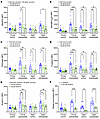 Figure 3
Treatment of platelets with SOD mimetic (GC4419) lowers mito-oxidant burden and decreases agonist-induced platelet activation and ex vivo thrombus formation in prediabetes. Washed platelets were preincubated either with vehicle buffer (control) or with 25 or 50 μM GC4419 for 10 minutes, then stained with either (A) MitoSOX dye or fluorescent antibody against (B) activated αIIbβ3, (C) fibrinogen, (D) P-selectin, or with (E) annexin V; activated with thrombin or thrombin plus convulxin for 10 minutes; and analyzed via flow cytometry. Data are presented as mean ± SEM and analyzed using 2-way ANOVA with Tukey’s analysis for multiple-group comparisons, whereby, within each cohort, platelets treated with 2 doses of GC4419 were compared with the control treatment. n = 9–20/group. (F) Calcein green–labeled washed platelets were preincubated with 50 μM GC4419 and superfused over a collagen-coated microfluidic chamber under arterial shear stress for 5 minutes. MFI was quantified, presented as mean ± SEM, and analyzed using Student’s t test within each cohort. n = 9–19/group. *P < 0.05, **P < 0.01, ***P < 0.001, ****P < 0.0001.
As a complementary approach, we treated platelets with the mitochondria-targeted antioxidant mitoquinol (MitoQ), which is positively charged with a triphenyl phosphonium ion and accumulates in mitochondria, where it decreases lipid peroxidation by acting as a chain-breaking antioxidant by neutralizing lipid peroxyl radicals (20). Prior treatment of platelets with MitoQ prevented enhancement of mito-oxidants, integrin activation, fibrinogen binding, granule release, and PS exposure in both prediabetes groups but not in any control groups (Figure 4, A–E). Treatment with MitoQ also protected from excessive platelet accumulation on collagen under shear stress in the young age group with prediabetes and both middle-aged normoglycemic and middle-aged prediabetes groups (Figure 4F and Supplemental Figure 2B).
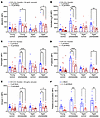 Figure 4
Treatment of platelets with MitoQ lowers mito-oxidant burden and decreases agonist-induced platelet activation and ex vivo thrombus formation in prediabetes. Washed platelets were preincubated either with vehicle buffer (control) or with 5 or 10 μM MitoQ for 15 minutes, then stained with (A) MitoSOX dye or fluorescent antibody against (B) activated αIIbβ3, (C) fibrinogen, (D) P-selectin, or (E) annexin V, following activation with thrombin or thrombin plus convulxin for 10 minutes, and analyzed via flow cytometry. Data are presented as mean ± SEM and analyzed using 2-way ANOVA with Tukey’s analysis for multiple-group comparisons, whereby, within each cohort, platelets treated with 2 doses of MitoQ were compared with the control treatment. n = 6–14/group. (F) Calcein green–labeled washed platelets were preincubated with 10 μM MitoQ and superfused over a collagen-coated microfluidic chamber under arterial shear stress for 5 minutes. MFI was quantified, presented as mean ± SEM, and analyzed using Student’s t test within each cohort. n = 6–10/group. *P < 0.05, **P < 0.01, ***P < 0.001, ****P < 0.0001.
Mice with early onset of glucose intolerance developed a prothrombotic phenotype that is preventable with a SOD mimetic. To test the antiplatelet and antithrombotic efficacy of the SOD mimetic (GC4419) in an in vivo system, we established a mouse model mimicking early-onset glucose intolerance, which we used as a model of prediabetes. C57BL6/J mice were fed a high-fat (HF) diet for a short duration (2 weeks). Relative to chow-fed mice, HF-fed mice gained about 10% more weight and exhibited glucose intolerance, increased fasting and random glucose levels, and higher insulin level at baseline and 30 minutes after dextrose injection (1 g/kg) (Supplemental Figure 3, A–E). Platelet flow cytometry revealed that the mice fed the HF diet for 2 weeks had increased platelet integrin activation, granule release, PS exposure, and mito-oxidant levels compared with chow-fed mice (Supplemental Figure 3, F–I). These findings mimic the findings in the human participants with prediabetes.
To test the protective effects of GC4419, 1 week after mice were fed the HF or chow diet, GC4419 (10 mg/kg daily via i.p. injection) or vehicle buffer was administered (13), and platelets were harvested after 1 week of treatment. Treatment with GC4419 did not affect agonist-induced platelet activation or mito-oxidant levels in mice fed the chow diet; however, it prevented the increase in mito-oxidants, integrin activation, P-selectin expression, and PS exposure in mice fed the HF diet (Supplemental Figure 4, A–D). Importantly, although the photochemical injury to the carotid artery caused a significantly shorter time to form an occlusive thrombus in HF-fed mice treated with vehicle buffer relative to mice fed the chow diet, treatment with GC4419 prevented HF-fed mice from this accelerated thrombus formation (Supplemental Figure 4E).
In a complementary model of platelet activation-induced pulmonary thrombosis, infusion of collagen in mice treated with vehicle buffer caused rapid death in HF-fed mice compared with chow-fed mice. Treatment with GC4419 prolonged time to death in HF-fed mice to rates similar to those of chow-fed mice treated with buffer or GC4419 (Supplemental Figure 4F). Bleeding time assessed by tail transection was similar in all groups regardless of diet or treatment with GC4419 (Supplemental Figure 4G). Additionally, treatment with GC4419 did not alter glucose tolerance test (GTT) results in mice fed the chow or HF diet (Supplemental Figure 5, A and B).
Treatment of mice fed the HF diet with MitoQ reduced mito-oxidant levels, platelet activation, and in vivo thrombosis in part by influencing platelet Ca2+ mobilization. To test the protective effects of MitoQ, we treated mice with MitoQ (1 mg/kg daily via i.p. injection) or vehicle buffer starting a week after they were fed the HF or chow diet. After a week of MitoQ treatment, platelets were isolated from whole blood. Although in vivo treatment with MitoQ did not affect agonist-induced platelet mito-oxidant generation or platelet activation in mice fed the chow diet, it prevented mice fed the HF diet from increased mito-oxidants, integrin activation, and PS exposure (Figure 5, A–C). In HF-fed mice treated with vehicle buffer, time to stable occlusion of the carotid artery after photochemical injury was significantly shorter relative to mice fed the chow diet, and treatment with MitoQ prevented this accelerated thrombosis in HF-fed mice (Figure 5D). Furthermore, the mice fed HF diet treated with vehicle buffer died rapidly with infusion of collagen compared with chow-fed mice, and treatment with MitoQ prolonged time to death in HF-fed mice similar to chow-fed mice treated with buffer or MitoQ (Figure 5E). Bleeding time assessed by tail transection was similar in all groups regardless of diet or treatment with MitoQ (Figure 5F). Treatment with MitoQ also did not alter GTT results in mice fed the chow or HF diet (Supplemental Figure 6, A and B).
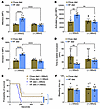 Figure 5
In vivo treatment with MitoQ protects mice with short-term glucose intolerance from enhanced platelet mito-oxidants, platelet activation, and susceptibility to carotid artery and pulmonary thrombosis without altering hemostasis. C57BL6/J mice fed chow or an HF diet for 2 weeks received daily treatment with (+) MitoQ (1 mg/kg daily, i.p.) or vehicle buffer (–) MitoQ beginning after 1 week on the diet. Washed platelets were prepared for quantifying (A) mito-oxidants, (B) αIIbβ3 activation, and (C) annexin V binding; activated with 0.05 U/mL thrombin and 50 ng/mL convulxin (A and C) and with 0.05 U/mL thrombin for B; and analyzed via flow cytometry. (D) Time to stable occlusion of the carotid artery after photochemical injury. Data are presented as median with 95% CI and analyzed by Kruskal-Wallis test with Dunn’s post hoc test for multiple-group comparisons (n = 8–9 per group). (E) Survival curve depicting time to death after infusion with 0.5 μg/g collagen. Data were analyzed using the Mantel-Cox log-rank test. The comparison between HF groups [(–) or (+) MitoQ] is shown with a blue bracket and between chow and HF-fed (–) MitoQ groups is shown as a brown bracket with blue fill (n = 9–10 per group). (F) Tail bleeding time. Data for A–C and F are presented as mean ± SEM and analyzed using 2-way ANOVA with Tukey’s test for multiple-group comparisons (n = 5–7 per group). *P < 0.05, **P < 0.01, ***P < 0.001, ****P < 0.0001.
To gain mechanistic insight into the role of MitoQ, we first measured lipid peroxide levels and Δψm in platelets. In vehicle buffer–treated mice, we observed that platelets from mice fed the HF diet, compared with mice fed the chow diet, had increased lipid peroxide levels when activated with thrombin or thrombin plus convulxin (Figure 6, A and B) and a higher Δψm (Figure 6C). Treatment of mice with MitoQ normalized the differences observed between chow diet– or HF diet–fed mice for both parameters. Furthermore, in the absence of MitoQ, mice fed the HF diet not only had increased baseline total cellular Ca2+ levels but also had increased levels with thrombin. Treatment with MitoQ normalized the differences in Ca2+ levels between chow diet– or HF diet–fed mice at baseline as well as in the thrombin-triggered increase (Figure 6, D–F).
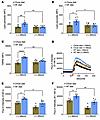 Figure 6
In vivo treatment with MitoQ protects mice with short-term glucose intolerance from enhanced generation of platelet lipid peroxides, mitochondrial membrane hyperpolarization, and increased platelet Ca2+. C57BL6/J mice fed chow or an HF diet for 2 weeks received daily treatment with (+) MitoQ (1 mg/kg daily, i.p.) or vehicle buffer [(–) MitoQ] beginning after 1 week on the diet. Washed platelets were prepared 1 week after treatment with MitoQ, and lipid peroxides were quantified using flow cytometry after activation with (A) 0.05 U/mL thrombin or (B) 0.05 U/mL thrombin and 50 ng/mL convulxin. (C) TMRM fluorescence was measured in washed platelets. (D) Representative tracings of platelet Ca2+ content measured with Fluo-4 dye at baseline for up to 60 seconds and then with 0.05 U/mL thrombin for another 120 seconds. The addition of thrombin is indicated by the red arrow. Quantification for D is shown (E) at baseline and (F) after thrombin activation. Data for A–C, E, and F are presented as mean ± SEM and analyzed using 2-way ANOVA with Tukey’s test for multiple-group comparisons (n = 5–7 per group). *P < 0.05, **P < 0.01, ****P < 0.0001.
At this point, we considered that our interpretation of elevated mito-oxidant levels based on increased MitoSOX fluorescence in platelets from HF-fed mice could be confounded by the simultaneous presence of increased TMRM fluorescence, because accumulation of both dyes could occur in hyperpolarized mitochondria. To address this possibility, we stained the platelets from chow diet– and HF diet–fed mice with TMRM and MitoSOX, where we first confirmed an increased signal for both TMRM and MitoSOX in platelets from mice fed the HF diet compared with chow-fed mice (Supplemental Figure 7, A and B). Addition of FCCP reduced the TMRM signal profoundly in all mice regardless of diet but only caused a nonsignificant drop in MitoSOX fluorescence. Additionally, a higher MitoSOX signal was maintained in the platelets from mice fed the HF diet, even after FCCP treatment, but the signal was normalized after treatment with a SOD mimetic or MitoQ. Together, these data suggest MitoSOX accumulation in our model is minimally driven by Δψm, and the increased accumulation of MitoSOX in platelets from HF diet–fed mice under the study conditions reflects elevation in mito-oxidants.
To determine the contribution of altered calcium mobilization in the platelet phenotype in mice fed the HF diet, we used the intracellular calcium chelator BAPTA-AM and the mitochondrial calcium uniporter complex inhibitor Ru360, which specifically inhibits calcium influx into mitochondria. The increase in intracellular calcium in platelets from mice fed the HF diet at baseline or with thrombin activation was attenuated by the BAPTA-AM but remained unaffected by the Ru360. This suggests that, under these conditions, the driver of increased platelet Ca2+ is via mechanisms related to platelet plasma membrane Ca2+ uptake and/or its release intracellularly but not by increased mitochondrial Ca2+ entry (Supplemental Figure 8, A and B). However, Ru360 exposure completely depolarized mitochondria (Supplemental Figure 8C). BAPTA-AM also decreased Δψm but had less of an effect than Ru360, suggesting a greater role of mitochondrial Ca²+ in sustaining the increase in Δψm. Exposure to either BAPTA-AM or Ru360 reduced mito-oxidants, including lipid peroxides and integrin activation in platelets from HF-fed mice, supporting Ca2+ dependency of these pathophysiologic changes (Supplemental Figure 8, D–F).
Overexpression of mitochondria-targeted catalase protects glucose-intolerant mice from platelet activation and thrombosis. Finally, we used a genetic approach to test whether reducing mitochondrial peroxide protects mice from platelet activation and thrombosis. We fed the HF or chow diet for 2 weeks to mCAT-Tg mice (mice overexpressing catalase in mitochondria) and their wild-type littermate controls. Wild-type and mCAT-Tg littermates fed the HF diet developed glucose intolerance (Supplemental Figure 9, A and B). Wild-type mice fed the HF diet for 2 weeks had increased platelet mito-oxidants, integrin activation, and granule release compared with mice fed the chow diet (Figure 7, A–C). In contrast, the mCAT-Tg mice fed HF diet had decreased platelet mito-oxidants and activation relative to wild-type mice fed the HF diet.
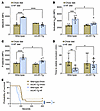 Figure 7
mCAT-Tg mice are protected from enhanced platelet mito-oxidants, platelet activation, and susceptibility to carotid artery and pulmonary thrombosis after short-term HF diet feeding. mCAT-Tg mice and wild-type littermates were fed chow or an HF diet for 2 weeks. Washed platelets were prepared for quantifying (A) mito-oxidants, (B) αIIbβ3 activation, and (C) P-selectin expression after activation with 0.05 U/mL thrombin and 50 ng/mL convulxin for A, and with 0.05 U/mL thrombin for B and C, and analyzed via flow cytometry. (D) Time to stable occlusion of the carotid artery after photochemical injury. Data are presented as median with 95% CI and were analyzed by Kruskal-Wallis test with Dunn’s post hoc test for multiple-group comparisons (n = 8–10 per group). (E) Survival curve depicting time to death after infusion with 0.5 μg/g collagen. Data were analyzed using the Mantel-Cox log-rank test. The comparison between wild-type and mCAT-Tg mice fed the HF diet is shown with a blue bracket and between chow- and HF-fed wild-type groups is shown as a brown bracket with blue fill (n = 11–14 per group). Data for A–C are presented as mean ± SEM and analyzed using 2-way ANOVA with Tukey’s test for multiple-group comparisons (n = 6 per group). *P < 0.05, **P < 0.01, ***P < 0.001, ****P < 0.0001.
Furthermore, in wild-type mice, the HF diet shortened the time to form stable occlusion compared with the time to occlusion in mice fed the chow diet or mCAT-Tg mice fed the HF diet (Figure 7D). In the pulmonary thrombosis model, the HF diet caused rapid death in wild-type mice, whereas mCAT-Tg littermates had a prolonged survival (Figure 7E). Mechanistically, the HF diet enhanced lipid peroxides, Δψm, and baseline Ca2+, as well as Ca2+ elevation with thrombin in wild-type mice but not in the mCAT-Tg mice (Figure 8, A–F).
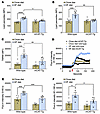 Figure 8
mCAT-Tg mice are protected from excessive accumulation of platelet lipid peroxides, mitochondrial membrane hyperpolarization, and increased platelet Ca2+ after short-term HF diet feeding. Washed platelets were prepared 2 weeks after mice were fed chow or an HF diet, and lipid peroxides were quantified after activation with (A) 0.05 U/mL thrombin or (B) 0.05 U/mL thrombin and 50 ng/mL convulxin, then analyzed via flow cytometry. (C) TMRM fluorescence was measured in washed platelets. (D) Representative tracings of Ca2+ flux measured with Fluo-4 dye at baseline for up to 60 seconds and after 0.05 U/mL thrombin for another 120 seconds. The red arrow indicates the addition of thrombin. Quantification for D is shown (E) at baseline and (F) with thrombin activation. Data for A–C, E, and F are presented as mean ± SEM and analyzed using 2-way ANOVA with Tukey’s test for multiple-group comparisons (n = 5–7 per group). *P < 0.05, **P < 0.01, ***P < 0.001, ****P < 0.0001.
Together, these findings indicate mitochondrial hyperpolarization and elevation in platelet Ca2+ and mito-oxidants, including lipid peroxide, are linked to platelet activation.


Copyright © 2026 American Society for Clinical Investigation
ISSN: 0021-9738 (print), 1558-8238 (online)