
Advertisement
Research ArticleAIDS/HIVImmunology
Open Access |  10.1172/JCI193912
Immune correlates of HIV-1 rebound during broadly neutralizing antibody treatment in young children
Aischa Niesar,1 Melanie Lancien,1 Seohyun Hong,1 Chloe Naasz,1,2 Gbolahan Ajibola,3 Kenneth Maswabi,3 Maureen Sakoi-Mosetlhi,3 Oganne Batlang,3 Sikhulile Moyo,3,4,5,6,7 Terence Mohammed,3 Comfort Maphorisa,3 Leah Carrere,1,2 Isabelle Roseto,1,2 Ciputra Adijaya Hartana,1 Toong Seng Tan,1,2 Ce Gao,1 Elizabeth Parsons,1,2 Renee Hua,1 Molly Pretorius Holme,4 Shahin Lockman,2,3,4 Kathleen M. Powis,3,4 Mary Carrington,1,8,9 Joseph Makhema,3 Xu G. Yu,1 Daniel R. Kuritzkes,2 Roger L. Shapiro,3,4 and Mathias Lichterfeld1,2
1Ragon Institute of MGH, MIT and Harvard, Cambridge, Massachusetts, USA.
2Infectious Disease Division, Brigham and Women’s Hospital, Boston, Massachusetts, USA.
3Botswana Harvard Health Partnership, Gaborone, Botswana.
4Department of Immunology and Infectious Diseases. Harvard T.H. Chan School of Public Health, Boston, Massachusetts, USA.
5School of Allied Health Professions, Faculty of Health Sciences, University of Botswana, Gaborone, Botswana.
6School of Health Systems and Public Health, University of Pretoria, Pretoria, South Africa.
7Division of Medical Virology, Faculty of Medicine and Health Sciences, Stellenbosch University, Cape Town, South Africa.
8Basic Science Program, Frederick National Laboratory for Cancer Research, and
9Laboratory of Integrative Cancer Immunology, Center for Cancer Research, National Cancer Institute, Bethesda, Maryland, USA.
Address correspondence to: Mathias Lichterfeld, Ragon Institute of MGH, MIT and Harvard, Cambridge, Massachusetts, 02139, USA. Phone: 857.268.7105; Email: mlichterfeld@mgh.harvard.edu.
Find articles by Niesar, A. in: PubMed | Google Scholar
1Ragon Institute of MGH, MIT and Harvard, Cambridge, Massachusetts, USA.
2Infectious Disease Division, Brigham and Women’s Hospital, Boston, Massachusetts, USA.
3Botswana Harvard Health Partnership, Gaborone, Botswana.
4Department of Immunology and Infectious Diseases. Harvard T.H. Chan School of Public Health, Boston, Massachusetts, USA.
5School of Allied Health Professions, Faculty of Health Sciences, University of Botswana, Gaborone, Botswana.
6School of Health Systems and Public Health, University of Pretoria, Pretoria, South Africa.
7Division of Medical Virology, Faculty of Medicine and Health Sciences, Stellenbosch University, Cape Town, South Africa.
8Basic Science Program, Frederick National Laboratory for Cancer Research, and
9Laboratory of Integrative Cancer Immunology, Center for Cancer Research, National Cancer Institute, Bethesda, Maryland, USA.
Address correspondence to: Mathias Lichterfeld, Ragon Institute of MGH, MIT and Harvard, Cambridge, Massachusetts, 02139, USA. Phone: 857.268.7105; Email: mlichterfeld@mgh.harvard.edu.
Find articles by Lancien, M. in: PubMed | Google Scholar
1Ragon Institute of MGH, MIT and Harvard, Cambridge, Massachusetts, USA.
2Infectious Disease Division, Brigham and Women’s Hospital, Boston, Massachusetts, USA.
3Botswana Harvard Health Partnership, Gaborone, Botswana.
4Department of Immunology and Infectious Diseases. Harvard T.H. Chan School of Public Health, Boston, Massachusetts, USA.
5School of Allied Health Professions, Faculty of Health Sciences, University of Botswana, Gaborone, Botswana.
6School of Health Systems and Public Health, University of Pretoria, Pretoria, South Africa.
7Division of Medical Virology, Faculty of Medicine and Health Sciences, Stellenbosch University, Cape Town, South Africa.
8Basic Science Program, Frederick National Laboratory for Cancer Research, and
9Laboratory of Integrative Cancer Immunology, Center for Cancer Research, National Cancer Institute, Bethesda, Maryland, USA.
Address correspondence to: Mathias Lichterfeld, Ragon Institute of MGH, MIT and Harvard, Cambridge, Massachusetts, 02139, USA. Phone: 857.268.7105; Email: mlichterfeld@mgh.harvard.edu.
Find articles by Hong, S. in: PubMed | Google Scholar
1Ragon Institute of MGH, MIT and Harvard, Cambridge, Massachusetts, USA.
2Infectious Disease Division, Brigham and Women’s Hospital, Boston, Massachusetts, USA.
3Botswana Harvard Health Partnership, Gaborone, Botswana.
4Department of Immunology and Infectious Diseases. Harvard T.H. Chan School of Public Health, Boston, Massachusetts, USA.
5School of Allied Health Professions, Faculty of Health Sciences, University of Botswana, Gaborone, Botswana.
6School of Health Systems and Public Health, University of Pretoria, Pretoria, South Africa.
7Division of Medical Virology, Faculty of Medicine and Health Sciences, Stellenbosch University, Cape Town, South Africa.
8Basic Science Program, Frederick National Laboratory for Cancer Research, and
9Laboratory of Integrative Cancer Immunology, Center for Cancer Research, National Cancer Institute, Bethesda, Maryland, USA.
Address correspondence to: Mathias Lichterfeld, Ragon Institute of MGH, MIT and Harvard, Cambridge, Massachusetts, 02139, USA. Phone: 857.268.7105; Email: mlichterfeld@mgh.harvard.edu.
Find articles by Naasz, C. in: PubMed | Google Scholar
1Ragon Institute of MGH, MIT and Harvard, Cambridge, Massachusetts, USA.
2Infectious Disease Division, Brigham and Women’s Hospital, Boston, Massachusetts, USA.
3Botswana Harvard Health Partnership, Gaborone, Botswana.
4Department of Immunology and Infectious Diseases. Harvard T.H. Chan School of Public Health, Boston, Massachusetts, USA.
5School of Allied Health Professions, Faculty of Health Sciences, University of Botswana, Gaborone, Botswana.
6School of Health Systems and Public Health, University of Pretoria, Pretoria, South Africa.
7Division of Medical Virology, Faculty of Medicine and Health Sciences, Stellenbosch University, Cape Town, South Africa.
8Basic Science Program, Frederick National Laboratory for Cancer Research, and
9Laboratory of Integrative Cancer Immunology, Center for Cancer Research, National Cancer Institute, Bethesda, Maryland, USA.
Address correspondence to: Mathias Lichterfeld, Ragon Institute of MGH, MIT and Harvard, Cambridge, Massachusetts, 02139, USA. Phone: 857.268.7105; Email: mlichterfeld@mgh.harvard.edu.
Find articles by
Ajibola, G.
in:
PubMed
|
Google Scholar
|

1Ragon Institute of MGH, MIT and Harvard, Cambridge, Massachusetts, USA.
2Infectious Disease Division, Brigham and Women’s Hospital, Boston, Massachusetts, USA.
3Botswana Harvard Health Partnership, Gaborone, Botswana.
4Department of Immunology and Infectious Diseases. Harvard T.H. Chan School of Public Health, Boston, Massachusetts, USA.
5School of Allied Health Professions, Faculty of Health Sciences, University of Botswana, Gaborone, Botswana.
6School of Health Systems and Public Health, University of Pretoria, Pretoria, South Africa.
7Division of Medical Virology, Faculty of Medicine and Health Sciences, Stellenbosch University, Cape Town, South Africa.
8Basic Science Program, Frederick National Laboratory for Cancer Research, and
9Laboratory of Integrative Cancer Immunology, Center for Cancer Research, National Cancer Institute, Bethesda, Maryland, USA.
Address correspondence to: Mathias Lichterfeld, Ragon Institute of MGH, MIT and Harvard, Cambridge, Massachusetts, 02139, USA. Phone: 857.268.7105; Email: mlichterfeld@mgh.harvard.edu.
Find articles by Maswabi, K. in: PubMed | Google Scholar
1Ragon Institute of MGH, MIT and Harvard, Cambridge, Massachusetts, USA.
2Infectious Disease Division, Brigham and Women’s Hospital, Boston, Massachusetts, USA.
3Botswana Harvard Health Partnership, Gaborone, Botswana.
4Department of Immunology and Infectious Diseases. Harvard T.H. Chan School of Public Health, Boston, Massachusetts, USA.
5School of Allied Health Professions, Faculty of Health Sciences, University of Botswana, Gaborone, Botswana.
6School of Health Systems and Public Health, University of Pretoria, Pretoria, South Africa.
7Division of Medical Virology, Faculty of Medicine and Health Sciences, Stellenbosch University, Cape Town, South Africa.
8Basic Science Program, Frederick National Laboratory for Cancer Research, and
9Laboratory of Integrative Cancer Immunology, Center for Cancer Research, National Cancer Institute, Bethesda, Maryland, USA.
Address correspondence to: Mathias Lichterfeld, Ragon Institute of MGH, MIT and Harvard, Cambridge, Massachusetts, 02139, USA. Phone: 857.268.7105; Email: mlichterfeld@mgh.harvard.edu.
Find articles by Sakoi-Mosetlhi, M. in: PubMed | Google Scholar
1Ragon Institute of MGH, MIT and Harvard, Cambridge, Massachusetts, USA.
2Infectious Disease Division, Brigham and Women’s Hospital, Boston, Massachusetts, USA.
3Botswana Harvard Health Partnership, Gaborone, Botswana.
4Department of Immunology and Infectious Diseases. Harvard T.H. Chan School of Public Health, Boston, Massachusetts, USA.
5School of Allied Health Professions, Faculty of Health Sciences, University of Botswana, Gaborone, Botswana.
6School of Health Systems and Public Health, University of Pretoria, Pretoria, South Africa.
7Division of Medical Virology, Faculty of Medicine and Health Sciences, Stellenbosch University, Cape Town, South Africa.
8Basic Science Program, Frederick National Laboratory for Cancer Research, and
9Laboratory of Integrative Cancer Immunology, Center for Cancer Research, National Cancer Institute, Bethesda, Maryland, USA.
Address correspondence to: Mathias Lichterfeld, Ragon Institute of MGH, MIT and Harvard, Cambridge, Massachusetts, 02139, USA. Phone: 857.268.7105; Email: mlichterfeld@mgh.harvard.edu.
Find articles by Batlang, O. in: PubMed | Google Scholar
1Ragon Institute of MGH, MIT and Harvard, Cambridge, Massachusetts, USA.
2Infectious Disease Division, Brigham and Women’s Hospital, Boston, Massachusetts, USA.
3Botswana Harvard Health Partnership, Gaborone, Botswana.
4Department of Immunology and Infectious Diseases. Harvard T.H. Chan School of Public Health, Boston, Massachusetts, USA.
5School of Allied Health Professions, Faculty of Health Sciences, University of Botswana, Gaborone, Botswana.
6School of Health Systems and Public Health, University of Pretoria, Pretoria, South Africa.
7Division of Medical Virology, Faculty of Medicine and Health Sciences, Stellenbosch University, Cape Town, South Africa.
8Basic Science Program, Frederick National Laboratory for Cancer Research, and
9Laboratory of Integrative Cancer Immunology, Center for Cancer Research, National Cancer Institute, Bethesda, Maryland, USA.
Address correspondence to: Mathias Lichterfeld, Ragon Institute of MGH, MIT and Harvard, Cambridge, Massachusetts, 02139, USA. Phone: 857.268.7105; Email: mlichterfeld@mgh.harvard.edu.
Find articles by
Moyo, S.
in:
PubMed
|
Google Scholar
|
1Ragon Institute of MGH, MIT and Harvard, Cambridge, Massachusetts, USA.
2Infectious Disease Division, Brigham and Women’s Hospital, Boston, Massachusetts, USA.
3Botswana Harvard Health Partnership, Gaborone, Botswana.
4Department of Immunology and Infectious Diseases. Harvard T.H. Chan School of Public Health, Boston, Massachusetts, USA.
5School of Allied Health Professions, Faculty of Health Sciences, University of Botswana, Gaborone, Botswana.
6School of Health Systems and Public Health, University of Pretoria, Pretoria, South Africa.
7Division of Medical Virology, Faculty of Medicine and Health Sciences, Stellenbosch University, Cape Town, South Africa.
8Basic Science Program, Frederick National Laboratory for Cancer Research, and
9Laboratory of Integrative Cancer Immunology, Center for Cancer Research, National Cancer Institute, Bethesda, Maryland, USA.
Address correspondence to: Mathias Lichterfeld, Ragon Institute of MGH, MIT and Harvard, Cambridge, Massachusetts, 02139, USA. Phone: 857.268.7105; Email: mlichterfeld@mgh.harvard.edu.
Find articles by Mohammed, T. in: PubMed | Google Scholar
1Ragon Institute of MGH, MIT and Harvard, Cambridge, Massachusetts, USA.
2Infectious Disease Division, Brigham and Women’s Hospital, Boston, Massachusetts, USA.
3Botswana Harvard Health Partnership, Gaborone, Botswana.
4Department of Immunology and Infectious Diseases. Harvard T.H. Chan School of Public Health, Boston, Massachusetts, USA.
5School of Allied Health Professions, Faculty of Health Sciences, University of Botswana, Gaborone, Botswana.
6School of Health Systems and Public Health, University of Pretoria, Pretoria, South Africa.
7Division of Medical Virology, Faculty of Medicine and Health Sciences, Stellenbosch University, Cape Town, South Africa.
8Basic Science Program, Frederick National Laboratory for Cancer Research, and
9Laboratory of Integrative Cancer Immunology, Center for Cancer Research, National Cancer Institute, Bethesda, Maryland, USA.
Address correspondence to: Mathias Lichterfeld, Ragon Institute of MGH, MIT and Harvard, Cambridge, Massachusetts, 02139, USA. Phone: 857.268.7105; Email: mlichterfeld@mgh.harvard.edu.
Find articles by Maphorisa, C. in: PubMed | Google Scholar
1Ragon Institute of MGH, MIT and Harvard, Cambridge, Massachusetts, USA.
2Infectious Disease Division, Brigham and Women’s Hospital, Boston, Massachusetts, USA.
3Botswana Harvard Health Partnership, Gaborone, Botswana.
4Department of Immunology and Infectious Diseases. Harvard T.H. Chan School of Public Health, Boston, Massachusetts, USA.
5School of Allied Health Professions, Faculty of Health Sciences, University of Botswana, Gaborone, Botswana.
6School of Health Systems and Public Health, University of Pretoria, Pretoria, South Africa.
7Division of Medical Virology, Faculty of Medicine and Health Sciences, Stellenbosch University, Cape Town, South Africa.
8Basic Science Program, Frederick National Laboratory for Cancer Research, and
9Laboratory of Integrative Cancer Immunology, Center for Cancer Research, National Cancer Institute, Bethesda, Maryland, USA.
Address correspondence to: Mathias Lichterfeld, Ragon Institute of MGH, MIT and Harvard, Cambridge, Massachusetts, 02139, USA. Phone: 857.268.7105; Email: mlichterfeld@mgh.harvard.edu.
Find articles by Carrere, L. in: PubMed | Google Scholar
1Ragon Institute of MGH, MIT and Harvard, Cambridge, Massachusetts, USA.
2Infectious Disease Division, Brigham and Women’s Hospital, Boston, Massachusetts, USA.
3Botswana Harvard Health Partnership, Gaborone, Botswana.
4Department of Immunology and Infectious Diseases. Harvard T.H. Chan School of Public Health, Boston, Massachusetts, USA.
5School of Allied Health Professions, Faculty of Health Sciences, University of Botswana, Gaborone, Botswana.
6School of Health Systems and Public Health, University of Pretoria, Pretoria, South Africa.
7Division of Medical Virology, Faculty of Medicine and Health Sciences, Stellenbosch University, Cape Town, South Africa.
8Basic Science Program, Frederick National Laboratory for Cancer Research, and
9Laboratory of Integrative Cancer Immunology, Center for Cancer Research, National Cancer Institute, Bethesda, Maryland, USA.
Address correspondence to: Mathias Lichterfeld, Ragon Institute of MGH, MIT and Harvard, Cambridge, Massachusetts, 02139, USA. Phone: 857.268.7105; Email: mlichterfeld@mgh.harvard.edu.
Find articles by Roseto, I. in: PubMed | Google Scholar
1Ragon Institute of MGH, MIT and Harvard, Cambridge, Massachusetts, USA.
2Infectious Disease Division, Brigham and Women’s Hospital, Boston, Massachusetts, USA.
3Botswana Harvard Health Partnership, Gaborone, Botswana.
4Department of Immunology and Infectious Diseases. Harvard T.H. Chan School of Public Health, Boston, Massachusetts, USA.
5School of Allied Health Professions, Faculty of Health Sciences, University of Botswana, Gaborone, Botswana.
6School of Health Systems and Public Health, University of Pretoria, Pretoria, South Africa.
7Division of Medical Virology, Faculty of Medicine and Health Sciences, Stellenbosch University, Cape Town, South Africa.
8Basic Science Program, Frederick National Laboratory for Cancer Research, and
9Laboratory of Integrative Cancer Immunology, Center for Cancer Research, National Cancer Institute, Bethesda, Maryland, USA.
Address correspondence to: Mathias Lichterfeld, Ragon Institute of MGH, MIT and Harvard, Cambridge, Massachusetts, 02139, USA. Phone: 857.268.7105; Email: mlichterfeld@mgh.harvard.edu.
Find articles by
Hartana, C.
in:
PubMed
|
Google Scholar
|
1Ragon Institute of MGH, MIT and Harvard, Cambridge, Massachusetts, USA.
2Infectious Disease Division, Brigham and Women’s Hospital, Boston, Massachusetts, USA.
3Botswana Harvard Health Partnership, Gaborone, Botswana.
4Department of Immunology and Infectious Diseases. Harvard T.H. Chan School of Public Health, Boston, Massachusetts, USA.
5School of Allied Health Professions, Faculty of Health Sciences, University of Botswana, Gaborone, Botswana.
6School of Health Systems and Public Health, University of Pretoria, Pretoria, South Africa.
7Division of Medical Virology, Faculty of Medicine and Health Sciences, Stellenbosch University, Cape Town, South Africa.
8Basic Science Program, Frederick National Laboratory for Cancer Research, and
9Laboratory of Integrative Cancer Immunology, Center for Cancer Research, National Cancer Institute, Bethesda, Maryland, USA.
Address correspondence to: Mathias Lichterfeld, Ragon Institute of MGH, MIT and Harvard, Cambridge, Massachusetts, 02139, USA. Phone: 857.268.7105; Email: mlichterfeld@mgh.harvard.edu.
Find articles by Tan, T. in: PubMed | Google Scholar
1Ragon Institute of MGH, MIT and Harvard, Cambridge, Massachusetts, USA.
2Infectious Disease Division, Brigham and Women’s Hospital, Boston, Massachusetts, USA.
3Botswana Harvard Health Partnership, Gaborone, Botswana.
4Department of Immunology and Infectious Diseases. Harvard T.H. Chan School of Public Health, Boston, Massachusetts, USA.
5School of Allied Health Professions, Faculty of Health Sciences, University of Botswana, Gaborone, Botswana.
6School of Health Systems and Public Health, University of Pretoria, Pretoria, South Africa.
7Division of Medical Virology, Faculty of Medicine and Health Sciences, Stellenbosch University, Cape Town, South Africa.
8Basic Science Program, Frederick National Laboratory for Cancer Research, and
9Laboratory of Integrative Cancer Immunology, Center for Cancer Research, National Cancer Institute, Bethesda, Maryland, USA.
Address correspondence to: Mathias Lichterfeld, Ragon Institute of MGH, MIT and Harvard, Cambridge, Massachusetts, 02139, USA. Phone: 857.268.7105; Email: mlichterfeld@mgh.harvard.edu.
Find articles by
Gao, C.
in:
PubMed
|
Google Scholar
|
1Ragon Institute of MGH, MIT and Harvard, Cambridge, Massachusetts, USA.
2Infectious Disease Division, Brigham and Women’s Hospital, Boston, Massachusetts, USA.
3Botswana Harvard Health Partnership, Gaborone, Botswana.
4Department of Immunology and Infectious Diseases. Harvard T.H. Chan School of Public Health, Boston, Massachusetts, USA.
5School of Allied Health Professions, Faculty of Health Sciences, University of Botswana, Gaborone, Botswana.
6School of Health Systems and Public Health, University of Pretoria, Pretoria, South Africa.
7Division of Medical Virology, Faculty of Medicine and Health Sciences, Stellenbosch University, Cape Town, South Africa.
8Basic Science Program, Frederick National Laboratory for Cancer Research, and
9Laboratory of Integrative Cancer Immunology, Center for Cancer Research, National Cancer Institute, Bethesda, Maryland, USA.
Address correspondence to: Mathias Lichterfeld, Ragon Institute of MGH, MIT and Harvard, Cambridge, Massachusetts, 02139, USA. Phone: 857.268.7105; Email: mlichterfeld@mgh.harvard.edu.
Find articles by
Parsons, E.
in:
PubMed
|
Google Scholar
|
1Ragon Institute of MGH, MIT and Harvard, Cambridge, Massachusetts, USA.
2Infectious Disease Division, Brigham and Women’s Hospital, Boston, Massachusetts, USA.
3Botswana Harvard Health Partnership, Gaborone, Botswana.
4Department of Immunology and Infectious Diseases. Harvard T.H. Chan School of Public Health, Boston, Massachusetts, USA.
5School of Allied Health Professions, Faculty of Health Sciences, University of Botswana, Gaborone, Botswana.
6School of Health Systems and Public Health, University of Pretoria, Pretoria, South Africa.
7Division of Medical Virology, Faculty of Medicine and Health Sciences, Stellenbosch University, Cape Town, South Africa.
8Basic Science Program, Frederick National Laboratory for Cancer Research, and
9Laboratory of Integrative Cancer Immunology, Center for Cancer Research, National Cancer Institute, Bethesda, Maryland, USA.
Address correspondence to: Mathias Lichterfeld, Ragon Institute of MGH, MIT and Harvard, Cambridge, Massachusetts, 02139, USA. Phone: 857.268.7105; Email: mlichterfeld@mgh.harvard.edu.
Find articles by Hua, R. in: PubMed | Google Scholar
1Ragon Institute of MGH, MIT and Harvard, Cambridge, Massachusetts, USA.
2Infectious Disease Division, Brigham and Women’s Hospital, Boston, Massachusetts, USA.
3Botswana Harvard Health Partnership, Gaborone, Botswana.
4Department of Immunology and Infectious Diseases. Harvard T.H. Chan School of Public Health, Boston, Massachusetts, USA.
5School of Allied Health Professions, Faculty of Health Sciences, University of Botswana, Gaborone, Botswana.
6School of Health Systems and Public Health, University of Pretoria, Pretoria, South Africa.
7Division of Medical Virology, Faculty of Medicine and Health Sciences, Stellenbosch University, Cape Town, South Africa.
8Basic Science Program, Frederick National Laboratory for Cancer Research, and
9Laboratory of Integrative Cancer Immunology, Center for Cancer Research, National Cancer Institute, Bethesda, Maryland, USA.
Address correspondence to: Mathias Lichterfeld, Ragon Institute of MGH, MIT and Harvard, Cambridge, Massachusetts, 02139, USA. Phone: 857.268.7105; Email: mlichterfeld@mgh.harvard.edu.
Find articles by Pretorius Holme, M. in: PubMed | Google Scholar
1Ragon Institute of MGH, MIT and Harvard, Cambridge, Massachusetts, USA.
2Infectious Disease Division, Brigham and Women’s Hospital, Boston, Massachusetts, USA.
3Botswana Harvard Health Partnership, Gaborone, Botswana.
4Department of Immunology and Infectious Diseases. Harvard T.H. Chan School of Public Health, Boston, Massachusetts, USA.
5School of Allied Health Professions, Faculty of Health Sciences, University of Botswana, Gaborone, Botswana.
6School of Health Systems and Public Health, University of Pretoria, Pretoria, South Africa.
7Division of Medical Virology, Faculty of Medicine and Health Sciences, Stellenbosch University, Cape Town, South Africa.
8Basic Science Program, Frederick National Laboratory for Cancer Research, and
9Laboratory of Integrative Cancer Immunology, Center for Cancer Research, National Cancer Institute, Bethesda, Maryland, USA.
Address correspondence to: Mathias Lichterfeld, Ragon Institute of MGH, MIT and Harvard, Cambridge, Massachusetts, 02139, USA. Phone: 857.268.7105; Email: mlichterfeld@mgh.harvard.edu.
Find articles by Lockman, S. in: PubMed | Google Scholar
1Ragon Institute of MGH, MIT and Harvard, Cambridge, Massachusetts, USA.
2Infectious Disease Division, Brigham and Women’s Hospital, Boston, Massachusetts, USA.
3Botswana Harvard Health Partnership, Gaborone, Botswana.
4Department of Immunology and Infectious Diseases. Harvard T.H. Chan School of Public Health, Boston, Massachusetts, USA.
5School of Allied Health Professions, Faculty of Health Sciences, University of Botswana, Gaborone, Botswana.
6School of Health Systems and Public Health, University of Pretoria, Pretoria, South Africa.
7Division of Medical Virology, Faculty of Medicine and Health Sciences, Stellenbosch University, Cape Town, South Africa.
8Basic Science Program, Frederick National Laboratory for Cancer Research, and
9Laboratory of Integrative Cancer Immunology, Center for Cancer Research, National Cancer Institute, Bethesda, Maryland, USA.
Address correspondence to: Mathias Lichterfeld, Ragon Institute of MGH, MIT and Harvard, Cambridge, Massachusetts, 02139, USA. Phone: 857.268.7105; Email: mlichterfeld@mgh.harvard.edu.
Find articles by Powis, K. in: PubMed | Google Scholar
1Ragon Institute of MGH, MIT and Harvard, Cambridge, Massachusetts, USA.
2Infectious Disease Division, Brigham and Women’s Hospital, Boston, Massachusetts, USA.
3Botswana Harvard Health Partnership, Gaborone, Botswana.
4Department of Immunology and Infectious Diseases. Harvard T.H. Chan School of Public Health, Boston, Massachusetts, USA.
5School of Allied Health Professions, Faculty of Health Sciences, University of Botswana, Gaborone, Botswana.
6School of Health Systems and Public Health, University of Pretoria, Pretoria, South Africa.
7Division of Medical Virology, Faculty of Medicine and Health Sciences, Stellenbosch University, Cape Town, South Africa.
8Basic Science Program, Frederick National Laboratory for Cancer Research, and
9Laboratory of Integrative Cancer Immunology, Center for Cancer Research, National Cancer Institute, Bethesda, Maryland, USA.
Address correspondence to: Mathias Lichterfeld, Ragon Institute of MGH, MIT and Harvard, Cambridge, Massachusetts, 02139, USA. Phone: 857.268.7105; Email: mlichterfeld@mgh.harvard.edu.
Find articles by Carrington, M. in: PubMed | Google Scholar
1Ragon Institute of MGH, MIT and Harvard, Cambridge, Massachusetts, USA.
2Infectious Disease Division, Brigham and Women’s Hospital, Boston, Massachusetts, USA.
3Botswana Harvard Health Partnership, Gaborone, Botswana.
4Department of Immunology and Infectious Diseases. Harvard T.H. Chan School of Public Health, Boston, Massachusetts, USA.
5School of Allied Health Professions, Faculty of Health Sciences, University of Botswana, Gaborone, Botswana.
6School of Health Systems and Public Health, University of Pretoria, Pretoria, South Africa.
7Division of Medical Virology, Faculty of Medicine and Health Sciences, Stellenbosch University, Cape Town, South Africa.
8Basic Science Program, Frederick National Laboratory for Cancer Research, and
9Laboratory of Integrative Cancer Immunology, Center for Cancer Research, National Cancer Institute, Bethesda, Maryland, USA.
Address correspondence to: Mathias Lichterfeld, Ragon Institute of MGH, MIT and Harvard, Cambridge, Massachusetts, 02139, USA. Phone: 857.268.7105; Email: mlichterfeld@mgh.harvard.edu.
Find articles by Makhema, J. in: PubMed | Google Scholar
1Ragon Institute of MGH, MIT and Harvard, Cambridge, Massachusetts, USA.
2Infectious Disease Division, Brigham and Women’s Hospital, Boston, Massachusetts, USA.
3Botswana Harvard Health Partnership, Gaborone, Botswana.
4Department of Immunology and Infectious Diseases. Harvard T.H. Chan School of Public Health, Boston, Massachusetts, USA.
5School of Allied Health Professions, Faculty of Health Sciences, University of Botswana, Gaborone, Botswana.
6School of Health Systems and Public Health, University of Pretoria, Pretoria, South Africa.
7Division of Medical Virology, Faculty of Medicine and Health Sciences, Stellenbosch University, Cape Town, South Africa.
8Basic Science Program, Frederick National Laboratory for Cancer Research, and
9Laboratory of Integrative Cancer Immunology, Center for Cancer Research, National Cancer Institute, Bethesda, Maryland, USA.
Address correspondence to: Mathias Lichterfeld, Ragon Institute of MGH, MIT and Harvard, Cambridge, Massachusetts, 02139, USA. Phone: 857.268.7105; Email: mlichterfeld@mgh.harvard.edu.
Find articles by Yu, X. in: PubMed | Google Scholar
1Ragon Institute of MGH, MIT and Harvard, Cambridge, Massachusetts, USA.
2Infectious Disease Division, Brigham and Women’s Hospital, Boston, Massachusetts, USA.
3Botswana Harvard Health Partnership, Gaborone, Botswana.
4Department of Immunology and Infectious Diseases. Harvard T.H. Chan School of Public Health, Boston, Massachusetts, USA.
5School of Allied Health Professions, Faculty of Health Sciences, University of Botswana, Gaborone, Botswana.
6School of Health Systems and Public Health, University of Pretoria, Pretoria, South Africa.
7Division of Medical Virology, Faculty of Medicine and Health Sciences, Stellenbosch University, Cape Town, South Africa.
8Basic Science Program, Frederick National Laboratory for Cancer Research, and
9Laboratory of Integrative Cancer Immunology, Center for Cancer Research, National Cancer Institute, Bethesda, Maryland, USA.
Address correspondence to: Mathias Lichterfeld, Ragon Institute of MGH, MIT and Harvard, Cambridge, Massachusetts, 02139, USA. Phone: 857.268.7105; Email: mlichterfeld@mgh.harvard.edu.
Find articles by Kuritzkes, D. in: PubMed | Google Scholar
1Ragon Institute of MGH, MIT and Harvard, Cambridge, Massachusetts, USA.
2Infectious Disease Division, Brigham and Women’s Hospital, Boston, Massachusetts, USA.
3Botswana Harvard Health Partnership, Gaborone, Botswana.
4Department of Immunology and Infectious Diseases. Harvard T.H. Chan School of Public Health, Boston, Massachusetts, USA.
5School of Allied Health Professions, Faculty of Health Sciences, University of Botswana, Gaborone, Botswana.
6School of Health Systems and Public Health, University of Pretoria, Pretoria, South Africa.
7Division of Medical Virology, Faculty of Medicine and Health Sciences, Stellenbosch University, Cape Town, South Africa.
8Basic Science Program, Frederick National Laboratory for Cancer Research, and
9Laboratory of Integrative Cancer Immunology, Center for Cancer Research, National Cancer Institute, Bethesda, Maryland, USA.
Address correspondence to: Mathias Lichterfeld, Ragon Institute of MGH, MIT and Harvard, Cambridge, Massachusetts, 02139, USA. Phone: 857.268.7105; Email: mlichterfeld@mgh.harvard.edu.
Find articles by Shapiro, R. in: PubMed | Google Scholar
1Ragon Institute of MGH, MIT and Harvard, Cambridge, Massachusetts, USA.
2Infectious Disease Division, Brigham and Women’s Hospital, Boston, Massachusetts, USA.
3Botswana Harvard Health Partnership, Gaborone, Botswana.
4Department of Immunology and Infectious Diseases. Harvard T.H. Chan School of Public Health, Boston, Massachusetts, USA.
5School of Allied Health Professions, Faculty of Health Sciences, University of Botswana, Gaborone, Botswana.
6School of Health Systems and Public Health, University of Pretoria, Pretoria, South Africa.
7Division of Medical Virology, Faculty of Medicine and Health Sciences, Stellenbosch University, Cape Town, South Africa.
8Basic Science Program, Frederick National Laboratory for Cancer Research, and
9Laboratory of Integrative Cancer Immunology, Center for Cancer Research, National Cancer Institute, Bethesda, Maryland, USA.
Address correspondence to: Mathias Lichterfeld, Ragon Institute of MGH, MIT and Harvard, Cambridge, Massachusetts, 02139, USA. Phone: 857.268.7105; Email: mlichterfeld@mgh.harvard.edu.
Find articles by Lichterfeld, M. in: PubMed | Google Scholar
Published February 16, 2026 - More info
J Clin Invest. 2026;136(4):e193912. https://doi.org/10.1172/JCI193912.
© 2026 Niesar et al. This work is licensed under the Creative Commons Attribution 4.0 International License. To view a copy of this license, visit http://creativecommons.org/licenses/by/4.0/.
Received: June 27, 2025; Accepted: December 18, 2025

-
Results
Longitudinal viral reservoir dynamics. To investigate how bnAb therapy influenced viral reservoir cell evolution in the Tatelo study, we focused on the analysis of 25 study participants who completed the entire study protocol (Supplemental Figure 1; supplemental material available online with this article; https://doi.org/10.1172/JCI193912DS1). The clinical trial started with an at least 8-week period of combined bnAb and ART treatment (step 1), followed by up to 6 months of bnAb-only treatment (step 2), and a follow-up period of up to 3 years after reinitiation of ART (step 3 and follow-up). Clinical, demographical, and immunogenetic data of the study participants included in the analysis are summarized in Supplemental Tables 1–3. During Step 2, 11 participants (“controllers”) maintained viral loads below 400 copies/mL for the full 6-month period, while 14 participants (“rebounders”) experienced virological rebound, leading to earlier ART reinitiation and discontinuation of bnAb treatment. The median time to ART reinitiation in rebounders was 4 weeks but varied among individual study participants (range 1–20 weeks). For detailed virological studies, PBMC samples were available at baseline prior to bnAb-only treatment (step 1, during combined ART and bnAb treatment), from immediately prior or at the time of ART reinitiation (end of step 2; controller: 24 weeks of dual bnAb treatment, rebounder: rebound timepoint) and at multiple follow-up timepoints after ART resumption (throughout and after step 3). Using these samples, we performed near full-length individual proviral sequencing (FLIP-seq) to quantify viral DNA sequences, to distinguish intact and defective proviruses, and to identify clonal sequences based on proviral genome sequence identity (26). These data were complemented by proviral sequences obtained by an identical experimental protocol from blood samples collected from the study participants immediately after birth and over the first 2 years of life, as described in our previous work (20).
In total, we analyzed a median of approximately 1.55 million (range: 8.10 × 10⁵–2.89 × 10⁶) PBMCs per participant per timepoint and identified 85 intact and 1,886 defective proviruses across all Tatelo timepoints in both groups combined. Total numbers of analyzed PBMCs and obtained sequences are summarized in Supplemental Table 5. In 3 of the 25 study participants, we failed to detect any type of intact or defective proviruses, likely due to limited PBMC quantities that could be safely obtained from infants and young children, and because viral reservoirs in our study participants with ART initiation at birth were generally low and markedly smaller than viral reservoirs in adults. Despite these limitations, we observed that controllers had significantly lower levels of intact and defective proviruses at birth compared with rebounders (Figure 1, A and B, and Supplemental Figure 2). No quantitative differences were noted between the 2 study groups at week 84 after ART initiation, or at the beginning of bnAb-only treatment in the Tatelo study. However, at ART reinitiation after the bnAb-only treatment, there was a significant increase of intact proviruses in the rebounder group compared with the start of bnAb therapy, as expected (Figure 1, A and B). Notably, intact proviruses decreased in most rebounders 6 months after ART reinitiation, suggesting that newly infected cells after viral rebound were unstable and, to some extent, subject to subsequent immune clearance. At the latest follow-up timepoint at a median of 26 months after ART reinitiation (range 17–36 months), levels of intact and defective proviruses in Tatelo study participants were substantially lower compared with a reference cohort of adults who initiated treatment during acute or chronic infection (Supplemental Table 4), emphasizing the small viral reservoir size in infants who started treatment early in life. Frequencies of intact proviruses from the Tatelo cohort at the last analysis timepoint were not different from a reference adult cohort of elite controllers (EC) but were lower compared with long-term ART-treated adults and to adults on short-term ART started in acute infection from the RIVER cohort (27) (Figure 1, A and B, and Supplemental Table 4). Consistent with prior results (28–30), we noted that, in both rebounders and controllers, the frequencies of intact proviruses declined more rapidly during the initial year after ART initiation compared with defective proviruses; however, there were no kinetic differences in the decay rates of intact proviruses between the 2 study groups (Figure 1C), and we detected no experimental evidence supporting a decrease of viral reservoir cells during bnAb therapy. The proportions of clonal genome-intact sequences (defined as sequences detected at least 2 times at a given timepoint) within the total pool of intact sequences were not different prior to bnAb treatment between controllers and rebounders. While both groups showed a proportional increase in clonal intact sequences over time, this was more pronounced and reached statistical significance only in the controller group (Figure 2A). Generally, proviral sequence diversity in the Tatelo cohort was very low and did not differ between both groups, as determined by calculating pair-wise genetic distances between individual intact proviruses in each study participants (Figure 2B and Figure 3). In summary, our findings demonstrate extremely low levels of intact proviruses at most timepoints for Tatelo participants, which limited our ability to evaluate the impact of bnAb treatment on viral reservoirs in this cohort of infants and young children.
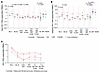 Figure 1
Viral reservoir dynamics in participants of the Tatelo study. (A and B) Frequency of intact (A) and defective (B) proviruses in controllers and rebounders from the Tatelo study, measured at indicated timepoints (wk0, birth; wk84, week 84 after birth). Data from elite controllers (EC), long-term ART-treated adults who initiated treatment during chronic infection, and adults who started ART during acute infection in the RIVER cohort (27) are presented for comparative purposes. Limit of defection (LOD) was calculated as 0.5 copies per maximum number of cells tested without target identification. Data were obtained by near full-length proviral sequencing (FLIP-Seq) or by matched integration site and proviral sequencing (MIP-Seq). (C) Decay kinetics of intact and defective proviral HIV-1 sequences before, during, and after the Tatelo study. Mean and SEM are shown. (A and B) Significance was tested using 2-tailed Mann-Whitney-U or Wilcoxon matched-pairs signed-rank tests; nominal P values are indicated. (A and B) Medians are indicated by horizontal lines.
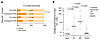 Figure 2
Clonality and genetic distance of intact proviruses in the Tatelo cohort. (A) Bar graphs reflecting proportions of intact proviruses detected once (nonclonal) or multiple times (clonal) in the controller and rebounder group before bnAb treatment and after Tatelo entry. (B) Average genetic distance of intact proviruses from the Tatelo cohort (n = 16), ART-treated adults (n = 27), Elite controllers (n = 26) and participants of the RIVER study (n = 10) determined by pairwise comparisons between all intact sequences within each study person. Data from all Tatelo participants with at least 2 different intact proviruses were included. χ2 test was used in A. Significance was tested using 2-tailed Mann-Whitney-U or Wilcoxon matched-pairs signed-rank tests; nominal P values are indicated (B). Medians are indicated by horizontal lines (B).
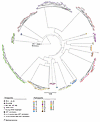 Figure 3
Circular maximum-likelihood phylogenetic tree of intact proviral sequences from participants in the Tatelo cohort. A clade C HIV-1 sequence from Botswana was used as reference for clade C. Clonal sequences, defined by complete sequence identity, are highlighted by arches. Timepoints of sample collection are indicated by symbols.
Chromosomal location of HIV-1 proviral sequences. For a deeper analysis of qualitative changes in the viral reservoir cell pool, we employed matched integration site and proviral sequencing (MIP-seq), a method allowing for identifying the chromosomal integration sites of defined proviral sequences. This experimental approach has previously been used to unravel longitudinal selections of intact proviruses integrated in heterochromatin regions during long-term ART in adults (31). We identified a total of 121 integration sites from 3 controllers from whom sufficient cell quantities were available, permitting a deeper analysis. All integration sites are listed in Supplemental Table 6. In controller participant 16 (Figure 4), we observed clonal expansion of cells harboring an intact provirus integrated into centromeric satellite DNA of chromosome 1, a chromatin region that displays repressive chromatin features (32). This clone was detected at week 84 after birth, at the beginning of the Tatelo study, and 2 years after the Tatelo study. In addition, a clone of cells harboring intact proviruses integrated into the ZNF gene 84, a genomic location also associated with repressive chromatin characteristics (33), was observed at the time of Tatelo entry. For comparative purposes, we also analyzed integration sites of a larger number of defective proviruses in study participant 16 (Figure 4). Notably, none of these defective proviruses were integrated in centromeric satellite DNA or in ZNF genes; instead, defective proviruses in this individual were mostly located in highly expressed genes that are preferred sites for viral integration. Four distinct clones of defective proviruses in study participant 16 were integrated in the BACH2 gene. This is in line with prior findings indicating that integration into the BACH2 gene locus can support viral persistence, presumably due to retroviral insertional mutagenesis leading to a BACH2-mediated increase in proliferative turnover of cells harboring integrated proviral DNA at this genomic location (34, 35).
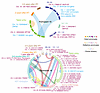 Figure 4
Proviral integration site analysis in Tatelo study participant 16. CIRCOS plots reflect the chromosomal locations of intact (filled symbols) or defective proviruses (outline symbols) at the indicated time points in study participant 16. Each symbol reflects 1 intact or defective provirus. Clonal sequences, defined by identical integration sites and/or complete sequence identity, are highlighted. Only sequences for which integration sites were available are shown. Purple font color indicates chromosomal locations in genes; blue font color indicates chromosomal integration sites in non-genic/heterochromatin locations.
In 2 additional controller study participants, we also noted persistence of intact proviruses in ZNF genes: in study participant 9, we observed one large clone of intact proviruses integrated in ZNF gene 26 and an additional proviral sequence in ZNF gene 56, 2 years after the Tatelo study (Figure 5A). In study participant 10, intact proviruses in nongenic regions were detected after birth and at the time of Tatelo entry (Figure 5B). Of note, no clonal expansion of intact proviruses integrated in genes was detected after the first 12 weeks of life in these 3 controller study participants. Defective proviruses integrated in nongenic regions or in ZNF genes were not detected in study participant 9, and in only 2 defective proviruses from study participant 10. Although being limited by the relatively small numbers of proviruses that could be precisely mapped to chromosomal locations in the small amount of PBMCs available for analysis from infants, these results suggest preferential persistence of intact proviruses in nongenic regions and ZNF genes. This is likely because viral integration in such repressive heterochromatin regions effectively suppresses HIV-1 gene transcription, permitting avoidance of host immune recognition. Therefore, the longitudinal selection of intact proviruses in repressive chromatin can be interpreted as a sign of host immune pressure against viral reservoir cells in infants.
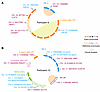 Figure 5
Proviral integration site analysis in Tatelo study participants 9 and 10. CIRCOS plots reflect the chromosomal locations of intact (filled symbols) or defective proviruses (outline symbols) at indicated time points in study participants 9 (A) and 10 (B). Each symbol reflects one intact or defective provirus. Clonal sequences, defined by identical integration sites and/or complete sequence identity, are highlighted. Only sequences for which integration sites were available are shown. Purple font color indicates chromosomal locations in genes; blue font color indicates chromosomal integration sites in non-genic/heterochromatin locations.
KIR2DL1-expressing NK cells distinguish controllers from rebounders. To better explore immune mechanisms that may be involved in targeting HIV-1 reservoir cells and modulating HIV-1 rebound kinetics during the Tatelo study, we initially focused on NK cells, which play a critical role in immune defense against viral infections, particularly in the infant immune system that typically lacks fully developed adaptive B and T cell responses (36). To investigate NK cell responses and their possible association with viral reservoir and viral rebound during bnAb therapy in infants, we conducted detailed multiparametric flow cytometry experiments in PBMC samples collected immediately prior to bnAb-only treatment and at the time of ART reinitiation. In an initial analysis, we identified 5 NK cell subsets according to CD16 and CD56 surface expression (Supplemental Figure 3A and Supplemental Figure 4). We observed a slight nonsignificant expansion of CD56dim CD16dim NK cells in the controller group when compared with the rebounder group (Supplemental Figure 3B). This specific NK cell subset is typically associated with higher cytotoxic activity (37). Other NK cell subsets defined by CD16 and CD56 expression patterns, such as CD56bri CD16low, CD56– CD16dim, CD56pos CD16–, and CD56– CD16bri NK cells, did not quantitatively differ between the 2 groups of study participants. Of note, no marked differences in NK cell subsets were observed between the beginning and the end of bnAb-only therapy within each of the study groups (Supplemental Figure 3B). However, the proportions of CD56dim CD16dim NK cells slightly decreased after discontinuation of standard ART.
We subsequently focused on analyzing NK cells expressing Killer Immunoglobulin-Like Receptors (KIRs), markers that play an important role in NK cell education and licensing (38). While KIR3DL1, KIR2DL5, and KIR2DL2 showed no differences in NK cell surface expression between our 2 groups of participants, we observed that the frequency of NK cells expressing KIR2DL1, the major inhibitory NK cell receptor for HLA-C2 allotypes, was significantly elevated in the rebounder group at ATI conclusion (end of Step 2) in the following NK cell subsets: CD56pos CD16–, CD56bri CD16low, and CD56dim CD16dim (Figure 6A). We also noted that the proportion of KIR2DL1-expressing NK cells, determined immediately prior to stopping standard ART (step 1), tended to negatively correlate with viral rebound kinetics in the CD56dim CD16dim NK cells (P = 0.06), in the CD56bright CD16low NK cell subset (P = 0.017), and in the CD56pos CD16– NK cell subset (P = 0.03) (Figure 6B). These data show that higher levels of KIR2DL1 expression on NK cells were associated with accelerated viral rebound during bnAb therapy.
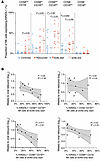 Figure 6
Expression of KIR2DL1 on NK cells in the controller and rebounder group. (A) Relative expression of KIR2DL1 in 5 distinct NK cell subsets (defined by CD16 and CD56 expression) in the controller and rebounder group at Step 2 start (bnAb start) and Step 2 end (bnAb end). Medians are indicated by horizontal lines. (B) Association between indicated NK cell subsets expressing KIR2DL1 (measured at the beginning of step 2) and weeks to viral rebound (rebounder group). Linear regression coefficients with nominal P values are shown. Mann-Whitney-U test was used in A. Nominal P values are indicated.
To further evaluate connections between KIR2DL1-expressing NK cells and viral rebound kinetics, we assessed KIR2DL1 surface expression in the context of additional immunomodulatory NK cell markers. These studies demonstrated that proportions of KIR2DL1-expressing NK cells lacking the expression of NKp30/NKp46 and NKG2A were higher in rebounders than in controllers (Figure 7). This was also true when KIR2DL1+ NKG2A– NK cells were evaluated independently of NKp30/NKp46 expression and was most notable in the dominant CD56dim CD16dim NK cell subset.
 Figure 7
Combinatorial surface expression of KIR2DL1, Nkp30, NKG2A, and Nkp46 on NK cells in the controller and rebounder group. (A) SPICE diagrams reflect proportions of NK cells expressing KIR2DL1 in the presence or absence of Nkp46, NKG2A, and Nkp30 coexpression (determined by Boolean combination gating) in the controller and the rebounder group. Pie chart color represents number of expressed receptors, whereas each receptor is represented by an arc. (B–D) Frequency of KIR2DL1+ NK cells expressing the indicated phenotypic profile in the controller and rebounder group at Step 2 start and Step 2 end. Mann-Whitney-U test was used in B–D. Nominal P values are indicated.
NKG2A+ NK cell expression patterns during bnAb treatment. We subsequently focused on NK cells expressing NKG2A, an inhibitory marker that influences NK cell education and function through interactions with HLA-E, and has been associated with superior cytotoxic activities against HIV-1–infected cells in some studies (39–41). We found no marked differences in NKG2A expression between NK cells from controllers and rebounders (Figure 8A); this was also noted for frequencies of NK cells expressing the activating receptor NKG2C, which also recognizes HLA-E (Supplemental Figure 3C). Nevertheless, the proportions of NKG2A-expressing cells within the dominant CD56dim CD16dim NK cell subset were inversely correlated with the frequencies of intact and defective proviral copies (Figure 8B); moreover, proportions of NKG2A+ cells within the total NK cell compartment were also inversely associated with total proviral copy frequencies. In addition, fractions of NKG2A+ NK cells, measured prior to ART interruption, tended to correlate with the time to viral rebound following ART discontinuation; in particular, this was true for KIR2DL1– NKG2A+ NK cells (P = 0.068), for NKG2A+ CD56dim CD16dim NK cells (P = 0.08), and for NKG2A+ CD56bri CD16low NK cells (P = 0.019) (Figure 9). Together, these results suggest that higher frequencies of NKG2A-expressing NK cells are linked to delayed viral rebound kinetics during bnAb-only therapy. To complete the characterization of the innate immune cells in our study groups, we analyzed the frequencies of monocytes and their subtypes (classical, intermediate, nonclassical) as well as dendritic cells (mDC, pDC, DC1, DC2-3, DC4). No statistically significant differences were observed between the controller and rebounder groups at the start of bnAb-only treatment or at ART reinitiation (Supplemental Figure 4 and Supplemental Figure 6, D and E), nor were there any associations between these innate immune cell subsets and viral rebound kinetics or viral reservoir sizes.
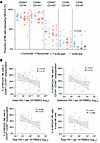 Figure 8
Frequencies of NKG2A-expressing NK cells in Tatelo study participants. (A) Proportions of NKG2A+ cells in 5 distinct NK cell subsets (defined by CD16 and CD56 expression) in the controller and rebounder group at the start and the end of Step 2. Medians are indicated by horizontal lines. (B) Association between indicated NKG2A-expressing NK cell subsets and frequency of intact, defective, or total proviruses (data from both study groups at Step 2 start and Step 2 end, LOD values were included).
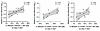 Figure 9
Correlation of NKG2A+ KIR2DL1– NK cells and viral rebound kinetics. Data show the association of NKG2A+ KIR2DL1– NK cells (measured at the beginning of step 2) and weeks to viral rebound (rebounder group). Linear regression coefficients with nominal P values are shown.
Immunogenetic associations. To further explore the possible impact of NK cells on viral reservoirs and viral rebound kinetics, we analyzed immunogenetic characteristics known to influence NK cell education and function in our study participants. We observed marked differences in allele frequencies for the HLA-B21M/T signal peptide polymorphism between rebounders and controllers, with T/T genotypes being significantly more prevalent in rebounders, while controllers were more frequently carriers of at least one -B21M allele (P = 0.03), (Figure 10A and Supplemental Table 2). The presence of at least one -B21M allele can stabilize HLA-E surface expression and has been reported to promote NKG2A-dependent education of CD56dim NK cells (42). However, compared with alternative signal peptides, the -B21M peptide can reduce the binding affinity of the HLA-E complex to NKG2A, resulting in a lower activation threshold for NKG2A-expressing NK cells (43). We noted that carriers of at least 1 -B21M allele had slightly higher proportions of NKG2A-expressing NK cells and lower levels of HIV-1 proviral copies before, during, and after bnAb therapy (Figure 10, B and C). However, these differences failed to reach statistical significance in our small study cohort. Additional immunogenetic studies demonstrated that carriers of HLA-C2 alleles, encoding for the major ligands of KIR2DL1, were slightly but not significantly more frequent among rebounders compared with controllers (Figure 11A and Supplemental Table 2). In particular, we noted that, among all carriers of HLA-C2 alleles, HLA-C2 allotypes with high surface expression, as experimentally assessed in a prior study (44), were nominally enriched in rebounders, while HLA-C2 allotypes with lower cell surface expression were more frequent in controllers (Figure 11B). Children with at least 1 HLA-C2 allele tended to have higher levels of KIR2DL1-expressing NK cells and displayed an increase in levels of proviral HIV-1 DNA copies at birth, associated with a trend for higher HIV-1 DNA levels at subsequent timepoints (Figure 11, C and D). Genes encoding for the activating receptor KIR2DS1 were only present in a minority of our study persons (5 of 25, 20%) and were unrelated to proviral reservoir size or time to viral rebound; the same was true for the presence or absence of KIR-A or KIR-B haplotypes (Supplemental Table 3 and Supplemental Figure 3D). Together, these immunogenetic data raise the possibility that the HLA-B-21M/T polymorphism and the presence or absence of HLA-C1/2 alleles may have influenced the phenotypic profile of NK cells, the proviral reservoir, and the propensity for viral rebound in Tatelo study participants.
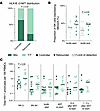 Figure 10
Distribution of the HLA-B21 M/T polymorphism in the Tatelo cohort. (A) Proportions of carriers with the M/x or T/T genotype of the HLA-B21 M/T signal peptide polymorphism within rebounders and controllers. (B) Frequencies of NKG2A-expressing NK cells in carriers of the HLA-B21 T/T genotype or carriers of at least one -B21M allele (M/x). (C) Total HIV-1 proviruses in carriers of the T/T genotypes or in carriers of at least one -B21M allele. χ2 test was used in A. Mann-Whitney-U test in B and C. Nominal P values are reported. (B and C) Medians are indicated by horizontal lines.
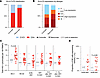 Figure 11
Distribution of HLA-C1/C2 alleles in the Tatelo cohort. (A) Proportions of carriers of the HLA-C1/C1 or the HLA-C2/x genotype in the controller and rebounder group. (B) Frequencies of indicated HLA-C2 alleles with high or low surface expression in the controller and rebounder group. (C) Total HIV-1 proviruses within participants with HLA-C1/C1 alleles or carriers of at least one HLA-C2 allele (C2/x). (D) Frequencies of KIR2DL1-expressing NK cells within participants with HLA-C1/C1 alleles or carriers of at least one HLA-C2 allele. Mann-Whitney-U test in C and D. Nominal P values are reported. (C and D) Medians are indicated by horizontal lines.
HIV-1–specific T cells during bnAb treatment. To explore the potential effects of bnAbs on HIV-1–specific T cell responses in young children, we performed a phenotypic and functional analysis of CD4+ and CD8+ T cells in participants from the Tatelo cohort. Overall, there were no quantitative differences in global CD4+ or CD8+ T cells between the controller and rebounder groups (Supplemental Figure 6, A–C). Analysis of activation-induced surface markers (CD69, CD25, CD40L, OX40), degranulation markers (CD107a/b), or intracellular cytokines (IFN-γ, IL-2, TNF-α) following in vitro stimulation with overlapping clade C gag peptides demonstrated relatively few HIV-specific CD4+ and CD8+ T cell responses in both groups, with no significant differences between controllers and rebounders at the time of ART discontinuation or after reinitiation of ART (Figure 12, A and B). This was also true when ensemble cytokine secretion patterns or combinations of activation-induced surface marker expression profiles were considered (Figure 13). There was no evidence for an expansion or increase of HIV-1–specific CD4+ or CD8+ T cell responses during bnAb treatment. However, because our study was not designed to continue bnAb treatment for any children with viral rebound greater than 400 copies/mL, there was a limited opportunity to assess T cell responses with both bnAbs and detectable virus present. We also found no statistically significant association between HIV-1–specific CD4+ and CD8+ T cells and the corresponding frequencies of total, intact, or defective proviruses or with kinetics of viral rebound in the rebounder study group. This finding was limited by the fact that only 2 controllers initiated the study with detectable intact virus, and no controllers had detectable intact virus at the end of bnAb treatment. As shown in our previous work (45), HIV-1 antibody levels were generally low in the EIT cohort, with gp120-specific antibodies being almost entirely undetectable; this is likely due to the very early onset of ART in EIT study participants that intercepts complete seroconversion. Therefore, we did not perform additional studies to determine how viral rebound might be influenced by autologous neutralizing antibody responses.
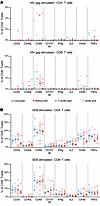 Figure 12
HIV-1–specific CD4+ and CD8+ T cell responses in the controller and rebounder group. (A and B) Frequencies of CD4+ and CD8+ T cells expressing selected activation markers and cytokines after stimulation with HIV-1 gag or SEB. Medians are shown.
 Figure 13
Combinatorial analysis of CD107a/b, TNF-α, IFN-γ, and IL-2 in the controller and rebounder group. SPICE diagrams reflecting proportions of SEB− or HIV-1 Gag-specific CD4+ and CD8+ T cell responses with indicated functional profile (determined by Boolean combination gating) in the controller and rebounder groups in a combinatorial analysis of data from PBMC samples collected at the beginning and at the end of Step 2. Pie chart colors represent number of effector molecules, whereas each effector function is represented by an arc.


Copyright © 2026 American Society for Clinical Investigation
ISSN: 0021-9738 (print), 1558-8238 (online)