
Advertisement
Research ArticleGeneticsOtology
Open Access |  10.1172/JCI193812
Postnatal Slc26a4 gene therapy improves hearing and structural integrity in a hereditary hearing loss model
Yi-Hsiu Tsai,1 Peng-Yu Wu,1 Yu-Chi Chuang,1 Chun-Ying Huang,1,2,3 Hiroki Takeda,4,5 Hiroshi Hibino,4,6 Chen-Chi Wu,7,8 and Yen-Fu Cheng1,2,3,9
1Institute of Brain Science, College of Medicine, National Yang Ming Chiao Tung University, Taipei, Taiwan.
2Department of Medical Research, Taipei Veterans General Hospital, Taipei, Taiwan.
3Gene Therapy Research Center, National Yang Ming Chiao Tung University, Taipei, Taiwan.
4Division of Glocal Pharmacology, Department of Pharmacology, Graduate School of Medicine,
5Department of Otorhinolaryngology, Graduate School of Medicine, and
6Global Center for Medical Engineering and Informatics, The University of Osaka, Osaka, Japan.
7Department of Otolaryngology, National Taiwan University Hospital, Taipei, Taiwan.
8Department of Medical Research, National Taiwan University Hospital Hsin-Chu Branch, Hsin-Chu City, Taiwan.
9Department of Otolaryngology-Head and Neck Surgery, Taipei Veterans General Hospital, Taipei, Taiwan.
Address correspondence to: Chen-Chi Wu, Department of Otolaryngology, National Taiwan University Hospital, No. 1, Changde St., Zhongzheng Dist., Taipei City 100229, Taiwan. Phone: 886.2.2312.3456; Email: chenchiwu@ntuh.gov.tw. Or to: Yen-Fu Cheng, Department of Medical Research, Taipei Veterans General Hospital, No. 201, Sec. 2, Shipai Rd., Beitou District, Taipei City 11217, Taiwan. Phone: 886.2.2875.7642; Email: yfcheng2@vghtpe.gov.tw.
Find articles by Tsai, Y. in: PubMed | Google Scholar
1Institute of Brain Science, College of Medicine, National Yang Ming Chiao Tung University, Taipei, Taiwan.
2Department of Medical Research, Taipei Veterans General Hospital, Taipei, Taiwan.
3Gene Therapy Research Center, National Yang Ming Chiao Tung University, Taipei, Taiwan.
4Division of Glocal Pharmacology, Department of Pharmacology, Graduate School of Medicine,
5Department of Otorhinolaryngology, Graduate School of Medicine, and
6Global Center for Medical Engineering and Informatics, The University of Osaka, Osaka, Japan.
7Department of Otolaryngology, National Taiwan University Hospital, Taipei, Taiwan.
8Department of Medical Research, National Taiwan University Hospital Hsin-Chu Branch, Hsin-Chu City, Taiwan.
9Department of Otolaryngology-Head and Neck Surgery, Taipei Veterans General Hospital, Taipei, Taiwan.
Address correspondence to: Chen-Chi Wu, Department of Otolaryngology, National Taiwan University Hospital, No. 1, Changde St., Zhongzheng Dist., Taipei City 100229, Taiwan. Phone: 886.2.2312.3456; Email: chenchiwu@ntuh.gov.tw. Or to: Yen-Fu Cheng, Department of Medical Research, Taipei Veterans General Hospital, No. 201, Sec. 2, Shipai Rd., Beitou District, Taipei City 11217, Taiwan. Phone: 886.2.2875.7642; Email: yfcheng2@vghtpe.gov.tw.
Find articles by Wu, P. in: PubMed | Google Scholar
1Institute of Brain Science, College of Medicine, National Yang Ming Chiao Tung University, Taipei, Taiwan.
2Department of Medical Research, Taipei Veterans General Hospital, Taipei, Taiwan.
3Gene Therapy Research Center, National Yang Ming Chiao Tung University, Taipei, Taiwan.
4Division of Glocal Pharmacology, Department of Pharmacology, Graduate School of Medicine,
5Department of Otorhinolaryngology, Graduate School of Medicine, and
6Global Center for Medical Engineering and Informatics, The University of Osaka, Osaka, Japan.
7Department of Otolaryngology, National Taiwan University Hospital, Taipei, Taiwan.
8Department of Medical Research, National Taiwan University Hospital Hsin-Chu Branch, Hsin-Chu City, Taiwan.
9Department of Otolaryngology-Head and Neck Surgery, Taipei Veterans General Hospital, Taipei, Taiwan.
Address correspondence to: Chen-Chi Wu, Department of Otolaryngology, National Taiwan University Hospital, No. 1, Changde St., Zhongzheng Dist., Taipei City 100229, Taiwan. Phone: 886.2.2312.3456; Email: chenchiwu@ntuh.gov.tw. Or to: Yen-Fu Cheng, Department of Medical Research, Taipei Veterans General Hospital, No. 201, Sec. 2, Shipai Rd., Beitou District, Taipei City 11217, Taiwan. Phone: 886.2.2875.7642; Email: yfcheng2@vghtpe.gov.tw.
Find articles by Chuang, Y. in: PubMed | Google Scholar
1Institute of Brain Science, College of Medicine, National Yang Ming Chiao Tung University, Taipei, Taiwan.
2Department of Medical Research, Taipei Veterans General Hospital, Taipei, Taiwan.
3Gene Therapy Research Center, National Yang Ming Chiao Tung University, Taipei, Taiwan.
4Division of Glocal Pharmacology, Department of Pharmacology, Graduate School of Medicine,
5Department of Otorhinolaryngology, Graduate School of Medicine, and
6Global Center for Medical Engineering and Informatics, The University of Osaka, Osaka, Japan.
7Department of Otolaryngology, National Taiwan University Hospital, Taipei, Taiwan.
8Department of Medical Research, National Taiwan University Hospital Hsin-Chu Branch, Hsin-Chu City, Taiwan.
9Department of Otolaryngology-Head and Neck Surgery, Taipei Veterans General Hospital, Taipei, Taiwan.
Address correspondence to: Chen-Chi Wu, Department of Otolaryngology, National Taiwan University Hospital, No. 1, Changde St., Zhongzheng Dist., Taipei City 100229, Taiwan. Phone: 886.2.2312.3456; Email: chenchiwu@ntuh.gov.tw. Or to: Yen-Fu Cheng, Department of Medical Research, Taipei Veterans General Hospital, No. 201, Sec. 2, Shipai Rd., Beitou District, Taipei City 11217, Taiwan. Phone: 886.2.2875.7642; Email: yfcheng2@vghtpe.gov.tw.
Find articles by Huang, C. in: PubMed | Google Scholar
1Institute of Brain Science, College of Medicine, National Yang Ming Chiao Tung University, Taipei, Taiwan.
2Department of Medical Research, Taipei Veterans General Hospital, Taipei, Taiwan.
3Gene Therapy Research Center, National Yang Ming Chiao Tung University, Taipei, Taiwan.
4Division of Glocal Pharmacology, Department of Pharmacology, Graduate School of Medicine,
5Department of Otorhinolaryngology, Graduate School of Medicine, and
6Global Center for Medical Engineering and Informatics, The University of Osaka, Osaka, Japan.
7Department of Otolaryngology, National Taiwan University Hospital, Taipei, Taiwan.
8Department of Medical Research, National Taiwan University Hospital Hsin-Chu Branch, Hsin-Chu City, Taiwan.
9Department of Otolaryngology-Head and Neck Surgery, Taipei Veterans General Hospital, Taipei, Taiwan.
Address correspondence to: Chen-Chi Wu, Department of Otolaryngology, National Taiwan University Hospital, No. 1, Changde St., Zhongzheng Dist., Taipei City 100229, Taiwan. Phone: 886.2.2312.3456; Email: chenchiwu@ntuh.gov.tw. Or to: Yen-Fu Cheng, Department of Medical Research, Taipei Veterans General Hospital, No. 201, Sec. 2, Shipai Rd., Beitou District, Taipei City 11217, Taiwan. Phone: 886.2.2875.7642; Email: yfcheng2@vghtpe.gov.tw.
Find articles by Takeda, H. in: PubMed | Google Scholar
1Institute of Brain Science, College of Medicine, National Yang Ming Chiao Tung University, Taipei, Taiwan.
2Department of Medical Research, Taipei Veterans General Hospital, Taipei, Taiwan.
3Gene Therapy Research Center, National Yang Ming Chiao Tung University, Taipei, Taiwan.
4Division of Glocal Pharmacology, Department of Pharmacology, Graduate School of Medicine,
5Department of Otorhinolaryngology, Graduate School of Medicine, and
6Global Center for Medical Engineering and Informatics, The University of Osaka, Osaka, Japan.
7Department of Otolaryngology, National Taiwan University Hospital, Taipei, Taiwan.
8Department of Medical Research, National Taiwan University Hospital Hsin-Chu Branch, Hsin-Chu City, Taiwan.
9Department of Otolaryngology-Head and Neck Surgery, Taipei Veterans General Hospital, Taipei, Taiwan.
Address correspondence to: Chen-Chi Wu, Department of Otolaryngology, National Taiwan University Hospital, No. 1, Changde St., Zhongzheng Dist., Taipei City 100229, Taiwan. Phone: 886.2.2312.3456; Email: chenchiwu@ntuh.gov.tw. Or to: Yen-Fu Cheng, Department of Medical Research, Taipei Veterans General Hospital, No. 201, Sec. 2, Shipai Rd., Beitou District, Taipei City 11217, Taiwan. Phone: 886.2.2875.7642; Email: yfcheng2@vghtpe.gov.tw.
Find articles by
Hibino, H.
in:
PubMed
|
Google Scholar
|

1Institute of Brain Science, College of Medicine, National Yang Ming Chiao Tung University, Taipei, Taiwan.
2Department of Medical Research, Taipei Veterans General Hospital, Taipei, Taiwan.
3Gene Therapy Research Center, National Yang Ming Chiao Tung University, Taipei, Taiwan.
4Division of Glocal Pharmacology, Department of Pharmacology, Graduate School of Medicine,
5Department of Otorhinolaryngology, Graduate School of Medicine, and
6Global Center for Medical Engineering and Informatics, The University of Osaka, Osaka, Japan.
7Department of Otolaryngology, National Taiwan University Hospital, Taipei, Taiwan.
8Department of Medical Research, National Taiwan University Hospital Hsin-Chu Branch, Hsin-Chu City, Taiwan.
9Department of Otolaryngology-Head and Neck Surgery, Taipei Veterans General Hospital, Taipei, Taiwan.
Address correspondence to: Chen-Chi Wu, Department of Otolaryngology, National Taiwan University Hospital, No. 1, Changde St., Zhongzheng Dist., Taipei City 100229, Taiwan. Phone: 886.2.2312.3456; Email: chenchiwu@ntuh.gov.tw. Or to: Yen-Fu Cheng, Department of Medical Research, Taipei Veterans General Hospital, No. 201, Sec. 2, Shipai Rd., Beitou District, Taipei City 11217, Taiwan. Phone: 886.2.2875.7642; Email: yfcheng2@vghtpe.gov.tw.
Find articles by Wu, C. in: PubMed | Google Scholar
1Institute of Brain Science, College of Medicine, National Yang Ming Chiao Tung University, Taipei, Taiwan.
2Department of Medical Research, Taipei Veterans General Hospital, Taipei, Taiwan.
3Gene Therapy Research Center, National Yang Ming Chiao Tung University, Taipei, Taiwan.
4Division of Glocal Pharmacology, Department of Pharmacology, Graduate School of Medicine,
5Department of Otorhinolaryngology, Graduate School of Medicine, and
6Global Center for Medical Engineering and Informatics, The University of Osaka, Osaka, Japan.
7Department of Otolaryngology, National Taiwan University Hospital, Taipei, Taiwan.
8Department of Medical Research, National Taiwan University Hospital Hsin-Chu Branch, Hsin-Chu City, Taiwan.
9Department of Otolaryngology-Head and Neck Surgery, Taipei Veterans General Hospital, Taipei, Taiwan.
Address correspondence to: Chen-Chi Wu, Department of Otolaryngology, National Taiwan University Hospital, No. 1, Changde St., Zhongzheng Dist., Taipei City 100229, Taiwan. Phone: 886.2.2312.3456; Email: chenchiwu@ntuh.gov.tw. Or to: Yen-Fu Cheng, Department of Medical Research, Taipei Veterans General Hospital, No. 201, Sec. 2, Shipai Rd., Beitou District, Taipei City 11217, Taiwan. Phone: 886.2.2875.7642; Email: yfcheng2@vghtpe.gov.tw.
Find articles by
Cheng, Y.
in:
PubMed
|
Google Scholar
|
Published February 17, 2026 - More info
J Clin Invest. 2026;136(8):e193812. https://doi.org/10.1172/JCI193812.
© 2026 Tsai et al. This work is licensed under the Creative Commons Attribution 4.0 International License. To view a copy of this license, visit http://creativecommons.org/licenses/by/4.0/.
Received: March 25, 2025; Accepted: February 5, 2026


-
Results
Exploring the therapeutic window for gene therapy in a l236p dfnb4 mouse model
A critical challenge in the development of gene therapy for DFNB4 lies in identifying the optimal therapeutic window to prevent or reverse progressive HL, physiological dysfunction (such as reduced EP), and structural abnormalities. The Slc26a4 L236P mouse model, which demonstrated early-onset moderate-to-profound HL (15), mimics the human phenotypes with variable hearing thresholds at birth. However, previous studies lacked long-term follow-up and comprehensive physiological characterization, limiting their utility in defining intervention timing and therapeutic efficacy. To address this, we conducted a comprehensive phenotypic characterization of L236P-mutant mice on a FVB/NJ Narl mice (FVB) background over an extended timeline (Supplemental Figure 1A; supplemental material available online with this article; https://doi.org/10.1172/JCI193812DS1).
HL progression and variability. At P21, L236P-mutant mice exhibited varying degrees of HL (Figure 1A, hearing distribution at P21), similar to that in patients with DFNB4. To facilitate a detailed analysis and comparison, the mice were categorized into 3 groups on the basis of their ABR thresholds under 32 kHz stimulation: (a) mild HL (<60 dB SPL; Figure 1A, panel with red lines), (b) moderate HL (60–90 dB SPL; Figure 1A, panel with green lines), and (c) severe HL (>90 dB SPL; Figure 1A, panel with blue lines). This grouping allowed for the investigation of phenotypic variability and the relationship between hearing thresholds and structural changes. At P21, 22.73% (10 of 44 mice) exhibited mild HL, 56.81% (25 of 44 mice) moderate HL, and 20.45% (9 of 44 mice) severe HL. Notably, approximately 34.48% of the L236P mice had asymmetric HL, defined as an interaural difference of 20 dB or greater at 16 and 32 kHz. This asymmetry mirrored the clinical heterogeneity often observed in patients with DFNB4 (34, 35). Longitudinal assessment from P21 to P150 revealed that 75.86% (44 of 58 mice) maintained an ABR threshold within their initial category across multiple time points (P21, P60, P105, and P150), whereas some mice had fluctuations in their measured hearing (Supplemental Figure 1B).
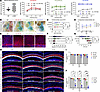 Figure 1
Phenotypic characterization of auditory function and cochlear anatomical anomalies in L236P-mutant mice. (A) L236P-mutant mice exhibited varying degrees of HL at P21, categorized into 3 groups: <60 dB (red, n = 23), 60–90 dB (green, n = 26), and >90 dB (blue, n = 10). WT mice served as controls (n = 16). (B) Representative images of endolymphatic sacs from WT and L236P mice across hearing groups at P21 (sacs are outlined by white dashed lines). Scale bars: 1 mm. (C) Quantification of the endolymphatic sac area at P21. Data are presented as the mean ± SD (n = 5–9 mice per group). ***P < 0.001, by 1-way ANOVA multiple comparisons with Tukey’s test). (D) Endolymphatic sac area at subsequent time points. Data represent the mean ± SD (n = 5–9 mice per group). (E) Representative images of marginal cells in the stria vascularis at P21. Scale bars: 50 μm. (F) Quantification of the surface area of marginal cells at P21. Data are presented as the mean ± SD (n = 45–105 cells per group). *P = 0.02 and ***P < 0.001, by 1-way ANOVA with Tukey’s test. (G) EP values for WT and L236P mice stratified by hearing thresholds: < 60 dB (n = 13); 60–90 dB (n = 20); and higher than 90 dB (n = 19). Data are presented as the mean ± SD. **P = 0.001 and *** P < 0.001, by Kruskal-Wallis test with Dunn’s test. (H) Hair cell morphology in the cochlear basal turn. Myosin VIIA (gray), phalloidin (red), and DAPI (blue) stainings are shown. Scale bars: 100 μm. (I and J) Quantification of basal IHCs and OHCs. Data are presented as the mean ± SD (n = 6). *P < 0.05, ** P < 0.01, and ***P < 0.001, by 2-way ANOVA with Dunnett’s test.
Correlation of hearing impairment with endolymphatic sac enlargement, marginal cell Atrophy, and EP
Several studies have shown that most mouse models of Slc26a4 deficiency exhibit inner ear structural abnormalities, including an enlarged endolymphatic sac and vestibular aqueduct, marginal cells atrophy, abnormal EP, and hair cell loss (36–39). To investigate these changes in the L236P-mutant model, we examined the inner ear morphology at P21. Similar to other Slc26a4-deficient mouse models, all L236P-mutant mice displayed an enlarged endolymphatic sac at P21 (Figure 1B, white dashed lines). Mice with more severe hearing impairment tended to have a larger endolymphatic sac size (Figure 1B). Specifically, the average endolymphatic sac area in mice with severe HL (>90 dB) was 0.759 ± 0.364 mm² compared with 0.034 ± 0.016 mm² for WT FVB mice (P < 0.001). Similarly, mice with mild (<60 dB) and moderate (60–90 dB) HL had enlarged sac areas of 0.599 ± 0.206 mm² and 0.755 ± 0.203 mm², respectively (P < 0.001 vs. WT for both; n = 6–10 in each group). However, the differences in endolymphatic sac size among the mild, moderate, and severe HL groups were not statistically significant at P21 (Figure 1C) or at subsequent time points (Figure 1D). Furthermore, quantitative analysis of cochlear cross-sections revealed that, unlike other Slc26a4-deficient models, L236P mice did not exhibit significant scala media enlargement (Supplemental Figure 2).
Another common histopathological feature in the Slc26a4-deficient mouse model is the atrophy of marginal cells in the stria vascularis (38, 39), a structure essential for maintaining the ionic composition of the endolymph. To further evaluate the physiological effect of this abnormality, we quantified the surface area of the marginal cells in each hearing group of L236P mice (Figure 1, E and F). Compared with WT FVB mice (199.17 ± 84.40 μm2), L236P mice with mild, moderate, or severe HL exhibited average marginal cell areas of 207.72 ± 134.54 μm2 (n = 9), 314.09 ± 198.63 μm2 (n = 12) (vs. WT, P = 0.02), and 414.50 ± 288.91 μm2 (n = 21) (vs. WT, P < 0.001), respectively. Among these 3 hearing groups, mice with severe HL displayed significantly larger marginal cells than did mice in the mild (P < 0.001) and moderate (P = 0.02) HL groups (Figure 1F). Quantification of marginal cells at P150 revealed no significant difference in cell numbers between L236P and WT mice (Supplemental Figure 3), indicating that the observed pathology represented cellular atrophy rather than cell loss.
Corresponding differences were observed in EP values. EP measurements were assessed 1 day after ABR testing in L236P mice across the 3 hearing groups, using age-matched WT FVB mice as controls. Compared with WT mice, L236P mice exhibited a broad range of EP values (0.6–101.1 mV n = 52 mice) and a significantly reduced mean EP (WT: 98.97 ± 12.17 mV vs. L236P: 60.91 ± 27.99 mV, P < 0.001) (Supplemental Figure 4A). When stratified by hearing phenotype, EP values averaged 85.18 ± 10.98 mV, 65.73 ± 19.47 mV, and 39.23 ± 28.13 mV in the mild, moderate, and severe HL groups, respectively (Figure 1G). Spearman’s rank correlation analysis revealed a significant negative correlation between EP and the 32 kHz hearing threshold (r = –0.663, P < 0.001, n = 52) (Supplemental Figure 4B), indicating that EP deficits in L236P mice closely correlated with hearing dysfunction.
Hair cell counts and potential therapeutic windows
To identify the optimal intervention time points for gene therapy, we first investigated cochlear structures at the neonatal stage (Supplemental Figure 5). Examination of hair cell numbers revealed that L236P-mutant mice maintained inner hair cell (IHC) and outer hair cell (OHC) counts comparable to those of WT mice at P5, regardless of their later auditory phenotypes, including the mild, moderate, and severe HL categories established on the basis of ABR thresholds. Quantitative analysis confirmed that there were no significant differences between L236P mutants and WT controls across any of the cochlear regions (Supplemental Figure 5B). These findings suggest that gene therapy intervention at the neonatal stage has the potential to prevent subsequent hair cell loss and associated hearing impairment in L236P-mutant mice.
We further examined the hair cell numbers and their correlations with hearing status in juvenile and adult mice. Whole-mount immunofluorescence staining of cochlear hair cells revealed no statistically significant differences in IHC counts between L236P-mutant mice and WT FVB mice across different cochlear turns, ages (from P21to P150), or hearing performance (Figure 1, H and I). However, OHC counts in the severe HL group were significantly lower at P21 compared with the moderate HL group (P = 0.03), the mild HL group (P = 0.04), and the WT group (P = 0.04), whereas no significant difference was seen among the other groups (Figure 1J, blue bar). The progressive OHC loss in the severe HL group was further observed at P60 and P150 (Figure 1, H and J) using 2-way ANOVA (n = 6 in each group and timing). Mice with moderate HL (Figure 1J, green bars) also showed progressive loss of basal OHCs at P150, while mice with mild HL maintained OHC numbers comparable to those in age-matched WT controls (Figure 1J).
Overall, our findings highlight 2 potential time points for gene therapy intervention in L236P mice. First, the neonatal stage (P5) appears to be a promising window for intervention, as hair cell counts remained intact at this age. Gene therapy administered at this stage could potentially prevent subsequent hair cell loss and hearing impairment. Second, the juvenile stage (P21) may be an effective intervention point, particularly for mice with moderate HL, as their IHCs and OHCs were largely intact. However, mice with severe HL at P21 already showed significant OHC loss, suggesting that earlier intervention, possibly at the neonatal stage, may be necessary for this group to maximize therapeutic benefit.
AAV-mediated gene therapy in L236P mice
AAV.Anc80L65 demonstrates high transduction efficiency in the endolymphatic sac. To identify a suitable AAV capsid for DFNB4 gene therapy, we examined the transduction efficiency of 4 WT AAVs (AAV1, AAV2, AAV8, and AAV9) and 4 synthetic AAVs (AAV2.7m8, AAVie, AAV-PHP.eB, and AAV.Anc80L65) in the endolymphatic sac and cochlear lateral wall. Each capsid was packaged with a CAG promoter driving GFP and administered into the inner ear of WT FVB mice via round window membrane (RWM) microinjection during the neonatal phase (Figure 2A). Ten days after the AAV-GFP injection, whole-mount samples of the inner ear from the pups were collected to assess transduction efficiency in the critical tissue. GFP-positive cells within the endolymphatic sac were identified and quantified.
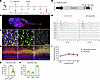 Figure 2
The AAV.Anc80L65 vector effectively transduces the endolymphatic sac and lateral wall cells without affecting hearing in WT mice. (A) Experimental timeline of neonatal delivery of Anc80.GFP and Anc80.hSLC26A4 to WT mice. The illustration was created with BioRender.com. (B and C) The transduction tropism of Anc80.GFP in the endolymphatic sac of WT mice. Original magnification of confocal images, ×10 (B) and ×40 (C, zoomed-in white square area in B). The green, gray, red, and blue channels represent GFP, pendrin, phalloidin, and DAPI, respectively. Scale bars: 100 μm (B) and 10 μm (C). (D) Transduction tropism of Anc80.GFP in spiral prominence cells in the lateral wall of WT mice. The green, gray, red, and blue channels represent GFP, pendrin, phalloidin, and DAPI, respectively. Scale bars: 50 μm. (E) Quantification of the images in C. Data are presented as the mean ± SD (n = 11 AAV-injected mice). ***P < 0.001, by unpaired, 2-tailed t test. (F) Quantification of the images in D. Data are presented as the mean ± SD (n = 11 AAV injected mice). (G) Schematic diagram of the transgene construct. The full-length hSLC26A4 coding sequence and FLAG sequence were driven by a CAG promoter (CMV enhancer and CBA promoter), followed by the bovine growth hormone (bGH) polyA sequence, flanked by AAV2 ITR, and packaged into an AAV.Anc80L65 capsid. (H) ABR waveforms of WT mice injected by Anc80.hSLC26A4 (left panel) and vehicle (right panel) under 32 kHz stimulation at P30. The threshold is represented in bold lines in each panel. (I) Mouse ABR thresholds under click, 8, 16, and 32 kHz stimulations. Data are presented as the mean ± SD (n = 8 injected mice in each group).
All tested capsids were able to transduce the endolymphatic sac (Supplemental Figure 6 and 7) and spiral prominence (Supplemental Figures 8 and 9), with AAV.Anc80L65 demonstrating the highest efficiency in both tissues. In the endolymphatic sac, AAV.Anc80L65 achieved transduction rates of 47.16% ± 14.77% relative to DAPI (n = 11) and 53.13% ± 7.47% specifically within pendrin-positive cells (n = 4) (Figure 2, B, C, and E). Similarly, in the spiral prominence, transduction efficiency reached 88.00% ± 7.48% relative to DAPI (n = 8) and 67.22% ± 5.93% within pendrin-positive cells (n = 6) (Figure 2, D–F). The mean transduction efficiencies for the other capsids in the endolymphatic sac were as follows: AAV1 (9.43% ± 1.91%, n = 4), AAV2 (11.44% ± 4.09%, n = 7), AAV8 (27.15% ± 4.44%, n = 4), AAV9 (11.11% ± 2.22%, n = 3), AAV2.7m8 (8.30% ± 1.36%, n = 3), AAV-ie (18.48% ± 3.11%, n = 4), and AAV-PHP.eB (10.81% ± 2.28%, n = 3). In the spiral prominence, the transduction efficiencies of the AAVs were as follows: AAV1 (20.80% ± 6.57%, n = 5), AAV2 (1.60% ± 2.19%, n = 5), AAV8 (21.60% ± 4.56%, n = 5), AAV9 (4.00% ± 2.83%, n = 5), AAV2.7m8 (13.60% ± 9.21%, n = 5), AAV-ie (46.40% ± 10.81%, n = 45), and AAV-PHP.eB (12.00% ± 4.00%, n = 5). On the basis of these results, we identified AAV.Anc80L65 as the most effective capsid for transducing the endolymphatic sac and spiral prominence and subsequently utilized it in additional animal studies.
Neonatal gene therapy improves hearing and mitigates inner ear structural defects. To test the therapeutic potential of gene therapy in L236P mice, we designed an AAV vector carrying a human SLC26A4 transgene and 3 FLAG tags, driven by a CAG promoter and packed in an AAV.Anc80L65 capsid (Figure 2G). This vector, abbreviated as Anc80.hSLC26A4, was first evaluated for safety by injecting it into the RWM of WT FVB mice during the neonatal period. The ABR threshold measured 25 days after surgery revealed no significant differences between Anc80.hSLC26A4-injected mice and vehicle-injected control mice (Figure 2, H and I). The findings indicated that Anc80.hSLC26A4 delivery through the RWM effectively transduced cells in the inner ear, specifically the endolymphatic sac and spiral prominence, without causing hearing impairment.
Our phenotyping analyses identified the neonatal stage (at least at P5) as a potential therapeutic window, during which gene therapy could potentially intervene to prevent or reverse inner ear abnormalities and, thus, the associated HL. To evaluate this hypothesis, Anc80.hSLC26A4 vectors were administered through the RWM of newborn L236P-mutant mice, followed by audiological assessments to examine functionality and histological outcomes at P30, P60, P105, and P150 (Figure 3A).
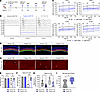 Figure 3
Neonatal delivery of Anc80.hSLC26A4 improves hearing improvement and preserves cochlear structure in L236P-mutant mice. (A) Experimental timeline of neonatal delivery of Anc80.hSLC26A4 to L236P-mutant mice. The illustration is created with BioRender.com. (B) Representative ABR waveforms for P30 L236P-mutant mice receiving a vehicle (left panel, threshold at 90 dB SPL in 32 kHz) or Anc80.hSLC26A4 (middle panel, threshold at 35 dB SPL in 32 kHz) injection as neonates. Age-matched WT FVB mice were used as a control (right panel, threshold at 35 dB SPL in 32 kHz). (C) ABR thresholds of vehicle-treated (black lines) and Anc80.hSLC26A4-treated (dark blue lines; individual mice are represented by light blue lines) L236P-mutant mice. Age-matched WT FVB mice are represented by gray lines. Data are presented as the mean ± SD (n = 13–23 mice in each group). *P < 0.05, ** P < 0.01, and *** P < 0.001, by Kruskal-Wallis test with Dunn’s test. (D) Hair cell morphology at the cochlear basal turn in vehicle- and AAV-treated mice at P30 and P150. The green, red, and blue channels represent myosin VIIA, phalloidin, and DAPI, respectively. Scale bars: 100 μm. (E and F) Quantification of basal IHCs (E) and OHCs (F). Data are presented as mean ± SD. ***P = 0.004, by Mann-Whitney U test. (G) Morphology of marginal cells in the basal turn stria vascularis. Phalloidin staining (red) was used to delineate cell boundaries and epithelial organization. White arrows indicate atrophic marginal cells. Scale bars: 50 μm. (H) Quantification of the surface area of marginal cells. Data are presented as the mean ± SD. *P = 0.05 and ** P = 0.001, by ordinary 2-way ANOVA with Tukey’s multiple-comparison test. (I) EP value for vehicle-treated (n = 7) and AAV-treated L236P (n = 10) mice at P30. Data are presented as the mean ± SD. *P = 0.01, by unpaired, 2-tailed t test.
Hearing ability was evaluated on the basis of ABR thresholds in response to click and pure tone (8, 16, and 32 kHz) sound stimuli. At the first measurement time point, P30, the AAV-injected L236P-mutant mice (Figure 3B, blue lines in right panel, threshold at 35 dB sound pressure level [SPL] in 32 kHz) exhibited improved hearing thresholds compared with the vehicle-injected littermates (Figure 3B, black lines in left panel, threshold at 90 dB SPL in 32 kHz). Lower ABR thresholds were observed in treated L236P-mutant mice at all the tested time points, from P30, P60, P105, to P150, across nearly all measured frequencies (Figure 3C) (vehicle, n = 13–21, vs. treated, n = 17–23, Kruskal-Wallis test with Dunn’s test). These findings indicated that neonatal injection of Anc80.hSLC26A4 can improved hearing in L236P-mutant mice and that this effect was maintained for an extended duration.
Our previous findings indicated that L236P-mutant animals exhibited moderate-to-severe OHC loss, which resulted in hearing impairment. To assess whether neonatal gene therapy can prevent this hair cell loss, we examined histological alterations in the inner ear following Anc80.hSLC26A4 delivery.
Cochlear tissues, including the organ of Corti and lateral wall, from AAV-treated and vehicle-injected L236P mice were collected at P30 and P150 and processed for whole-mount immunofluorescence staining (Figure 3, D and G). At P30, there were no significant differences in IHC or OHC counts between the 2 groups (Figure 3E), probably because most L236P mice still have regular hair cell numbers at this early age. However, at P150, the vehicle group showed a significant reduction in OHC numbers in the basal turn, whereas hair cell counts were maintained in the AAV-treated mice (Figure 3F; P < 0.001, Mann-Whitney U test, n = 8–12 in each group).
We also assessed the surface area of marginal cells in the stria vascularis using phalloidin staining (Figure 3, G and H). Neonatal injection of Anc80.hSLC26A4 significantly mitigated marginal cell atrophy at both P30 (P = 0.01, Mann-Whitney U test, n = 15) and P150 (P = 0.004, Mann-Whitney U test, n = 15) compared with the vehicle-treated group (n = 8 at each time point). Consistent with the preservation in marginal cell morphology, we assessed the physiological function by measuring the EP at P30 (Figure 3I). Treated mice exhibited an average EP of 69.80 ± 18.04 mV (n = 10), which was significantly higher than that of the vehicle-treated mice (36.53 ± 29.48 mV, n = 7; P = 0.01, unpaired t test). These results indicate that neonatal gene therapy improved both the structural integrity and physiological function of the stria vascularis.
L236P mice typically exhibit an enlarged endolymphatic sac and vestibular aqueduct from birth (Supplemental Figure 5A). We subsequently assessed whether neonatal gene therapy could ameliorate these structural anomalies. Compared with age-matched vehicle-injected mice, Anc80.hSLC26A4-treated mice exhibited a significant reduction in the endolymphatic sac size at P150 (Figure 4, A and B, vehicle vs. AAV-treated = 1.13 ± 0.37 vs. 0.68 ± 0.29 mm², n = 12, P = 0.03, Kruskal-Wallis test with Dunn’s multiple-comparison test), although the difference was not significant at P30 (vehicle vs. AAV-treated = 0.90 ± 0.36 vs. 0.48 ± 0.17 mm², n = 4–5, P = 0.71, Kruskal-Wallis test with Dunn’s multiple-comparison test). The width of the vestibular aqueduct showed reduced, yet no statistically significant, difference in the AAV-treated L236P-mutant mice (Figure 4, A and C; P30 vehicle vs. AAV-treated: 0.46 ± 0.14 mm vs. 0.32 ± 0.07 mm, n = 12, P = 0.8; P150 vehicle vs. AAV-treated: 0.57 ± 0.11 mm vs. 0.44 ± 0.14 mm, n = 14, P = 0.15).
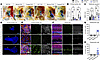 Figure 4
Neonatal delivery of Anc80.hSLC26A4 reduces the enlarged endolymphatic sac in L236P-mutant mice. (A) Representative images of the endolymphatic sac of vehicle-treated and AAV-treated L236P-mutant mice at P30 and P150, compared with age-matched WT controls. Scale bars: 1 mm. (B and C) Quantification of the endolymphatic sac area (B) and vestibular aqueduct width (C) in vehicle-treated, AAV-treated, and age-matched WT mice. Data are expressed as the mean ± SD. *P = 0.01, **P < 0.03, and ***P < 0.001, by 1-way ANOVA with Tukey’s multiple-comparison test. (D and E) Confocal microscopy images showing the endolymphatic sac size (D) and transgene expression (E) in WT control, vehicle-injected, and AAV-treated L236P-mutant mice. The green, gray, red, and blue channels represent FLAG, pendrin, phalloidin, and DAPI, respectively. Scale bars: 100 μm (D) and 10 μm (E). (F) Confocal microscopy images showing transgene expression in the lateral wall in 3 groups of mice. The green, gray, red, and blue channels represent FLAG, pendrin, phalloidin, and DAPI, respectively. Scale bars: 50 μm. (G) Quantification of the images in E. Data are presented as the mean ± SD (n = 10 AAV-injected mice). (H) Quantification of the images in F. Data are presented as the mean ± SD (n = 10 AAV-injected mice).
Immunofluorescence staining at P150 confirmed the presence of FLAG-tagged pendrin in the endolymphatic sac of treated animals but not in vehicle-treated animals or WT controls (Figure 4, D, E, and G). Similar staining results were observed in the spiral prominence of the lateral wall (Figure 4, F and H), indicating successful transduction and expression of the SLC26A4 transgene. The reduced endolymphatic sac size in treated mice suggests that overexpression of the functional SLC26A4 transgene can rectify this structural defect.
Juvenile gene therapy improves hearing and mitigates cochlear structural abnormalities. To examine the therapeutic potential of Anc80.hSLC26A4 following the onset of hearing, we conducted gene therapy in juvenile L236P-mutant mice. Given the variability in hearing abilities and histological changes in this mouse model, we selected individuals with moderate HL (60–90 dB SPL threshold) at P21, characterized by the number of intact hair cells at P21, for further treatment. We first evaluated the transduction efficiency of Anc80.hSLC26A4 in juvenile WT mice. The vector achieved transduction rates of 33.5% ± 17.85% in the endolymphatic sac (n = 8; Supplemental Figure 10, A, B, and D) and 23.00% ± 4.77% in the spiral prominence (n = 6; Supplemental Figure 10, C and E). These results confirm that Anc80 capsid successfully transduced the target regions even at the juvenile stage.
Before the treatment, mice underwent a pretreatment ABR (pre-ABR) test at P21 to establish their initial hearing threshold. Mice with an ABR threshold in the 60–90 dB SPL range were then randomly assigned to either the vehicle control or gene therapy group. Gene therapy was delivered via Anc80.hSLC26A4 injection at P23. Post-treatment ABR (post-ABR) was measured at P60 and P105 (Figure 5A).
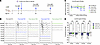 Figure 5
Delivery of Anc80.hSLC26A4 improves hearing in L236P-mutant juvenile mice. (A) Experimental timeline of injection of Anc80.hSLC26A4 into juvenile L236P-mutant mice, with pre-ABR measurements at P21 and post-ABR assessments at P60 and P105. The illustration was created with BioRender.com. (B) Representative 32 kHz ABR waveforms in L236P-mutant mice showing the pre-ABR (Pre-treat) at P21, the post-ABR (Post-treat) of AAV-treated animals at P60 and P105, and the post-ABR (Post-vehicle) of vehicle-injected animals at P60 and P105. (C) ABR thresholds for pre-ABR (black) and post-ABR in Anc80.hSLC26A4-treated (blue lines), vehicle-injected mice. Solid lines represent the threshold at P60; dashed lines represent the threshold at P105. (D) ABR threshold shifts calculated from C. Blue and green bars represent treated and vehicle-injected animals, respectively. Bars without and with slash lines represent post-ABR at P60 and P105, respectively. Negative values indicate hearing improvement. Data are presented as the mean ± SD. **P < 0.01 and *** P < 0.001, by 2-way ANOVA.
At P60, AAV-treated mice demonstrated substantial hearing improvements, with thresholds reduced to 60 dB SPL for 32 kHz stimuli (Figure 5B, blue lines in middle panel). Hearing thresholds in the AAV-treated group showed further improvement by P105 (Figure 5C).
To quantify the changes, we calculated the threshold shift (post-ABR minus pre-ABR values) for each mouse, with negative values indicating hearing improvement. At P60, AAV-treated mice showed significant hearing improvements compared with the control group, particularly at 8, 16, and 32 kHz. By P105, significant improvement persisted at 16 and 32 kHz frequencies (Figure 5D).
Following the hearing assessment, L236P-mutant mice that underwent juvenile-stage gene therapy were analyzed at P60 and P105. At P105, AAV-treated mice exhibited a significant reduction in size in endolymphatic sac size compared with age-matched controls (Figure 6, A and B, P105 vehicle vs. AAV-treated = 1.17 ± 0.27 vs. 0.69 ± 0.33 mm², n = 11, P = 0.02, Kruskal-Wallis test). No significant differences in endolymphatic sac size were observed at P60, and measurements of the vestibular aqueduct width revealed no significant differences at either time point (Figure 6, B and C).
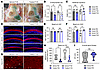 Figure 6
Juvenile delivery of Anc80.hSLC26A4 reduces the size of the enlarged endolymphatic sac and improves cochlear structures in L236P-mutant mice. (A) Representative images of the endolymphatic sac of vehicle-injected and Anc80.hSLC26A4-treated L236P-mutant mice at P105. Scale bars: 1 mm. (B and C) Quantification of the endolymphatic sac area (B) and vestibular aqueduct width (C) at P60 and P105. Data are expressed as the mean ± SD. *P = 0.01 and **P = 0.002, by unpaired, 2-tailed t test. (D) Hair cell morphology in cochlear turns of vehicle-injected and Anc80.hSLC26A4-treated mice at P105. Red and blue channels represent phalloidin and DAPI, respectively. Scale bars: 100 μm. (E and F) Quantification of basal IHCs (E) and OHCs (F) at P60 and P105. Data are presented as the mean ± SD. *P = 0.02, by Kruskal-Wallis test. (G) Morphology of marginal cells in the basal turn stria vascularis. Phalloidin staining (red) was used to delineate cell boundaries and epithelial organization. White arrows indicate atrophic marginal cells. Scale bars: 50 μm. (H) Quantification of the surface area of marginal cells at P60 and P105. Data are expressed as the mean ± SD. *P = 0.02 and ***P = 0.01, by Kruskal-Wallis test with Dunn’s multiple-comparison test. (I) EP value for vehicle-treated mice (n = 6) and AAV-treated L236P mice (n = 13) at P60. Data are presented as the mean ± SD. Statistical significance was assessed by unpaired, 2-tailed t test.
The number of hair cells and the surface area of marginal cells in the stria vascularis were determined following immunofluorescence labeling. At P105, AAV-treated L236P-mutant mice exhibited significantly higher OHC survival rates compared with control mice (Figure 6, D and F) and a normalized marginal cell area at both P60 and P105 (Figure 6, G and H). In contrast, no significant differences were observed in IHC counts at P60 and P105 Figure 6E), or in OHC counts at P60, likely due to the moderate baseline phenotype of the mice selected for juvenile intervention. Although marginal cell morphology was better preserved in the treated mice than in the vehicle-treated controls, the EP of juvenile-treated mice (55.59 ± 17.14 mV) was only moderately higher and showed only a modest, nonsignificant increase compared with the vehicle-treated group (42.10 ± 32.63 mV) (Figure 6I).
The juvenile-stage delivery of Anc80.hSLC26A4 injections resulted in a reduced hearing threshold as early as P60, with further improvement observed at P105. This auditory enhancement was more pronounced and was accompanied by a reduction in endolymphatic sac size, prevention of OHC loss, and normalization of the stria vascularis structure. Together, these findings highlight the ability of juvenile gene therapy to mitigate cochlear structural alterations and improve auditory outcomes in L236P-mutant mice.


Copyright © 2026 American Society for Clinical Investigation
ISSN: 0021-9738 (print), 1558-8238 (online)