
Advertisement
Research ArticleImmunologyInflammationPulmonology
Open Access |  10.1172/JCI193133
Effect of external cues on clock-driven protection from influenza A infection
Oindrila Paul,1 Thomas G. Brooks,2 Alisha Shetty,1 Y. Jane Choi,1 Martina Towers,1 Lora J. Assi,1 James P. Garifallou,1 Kaitlyn Forrest,1 Alecia Cameron,1 Amita Sehgal,2,3 Gregory Grant,4 and Shaon Sengupta1,2,5
1Children’s Hospital of Philadelphia, Philadelphia, Pennsylvania, USA.
2Institute of Translational Medicine and Therapeutics, University of Pennsylvania, Philadelphia, Pennsylvania, USA.
3Department of Neuroscience,
4Department of Genetics, and
5Department of Pediatrics, University of Pennsylvania Perelman School of Medicine, Philadelphia, Pennsylvania, USA.
Address correspondence to: Shaon Sengupta, Perelman School of Medicine at the University of Pennsylvania, 3615 Curie Blvd., Abramson Research Center, 1102C, Philadelphia, Pennsylvania, 19104, USA. Email: SenguptaS@chop.edu.
Find articles by Paul, O. in: PubMed | Google Scholar
1Children’s Hospital of Philadelphia, Philadelphia, Pennsylvania, USA.
2Institute of Translational Medicine and Therapeutics, University of Pennsylvania, Philadelphia, Pennsylvania, USA.
3Department of Neuroscience,
4Department of Genetics, and
5Department of Pediatrics, University of Pennsylvania Perelman School of Medicine, Philadelphia, Pennsylvania, USA.
Address correspondence to: Shaon Sengupta, Perelman School of Medicine at the University of Pennsylvania, 3615 Curie Blvd., Abramson Research Center, 1102C, Philadelphia, Pennsylvania, 19104, USA. Email: SenguptaS@chop.edu.
Find articles by
Brooks, T.
in:
PubMed
|
Google Scholar
|

1Children’s Hospital of Philadelphia, Philadelphia, Pennsylvania, USA.
2Institute of Translational Medicine and Therapeutics, University of Pennsylvania, Philadelphia, Pennsylvania, USA.
3Department of Neuroscience,
4Department of Genetics, and
5Department of Pediatrics, University of Pennsylvania Perelman School of Medicine, Philadelphia, Pennsylvania, USA.
Address correspondence to: Shaon Sengupta, Perelman School of Medicine at the University of Pennsylvania, 3615 Curie Blvd., Abramson Research Center, 1102C, Philadelphia, Pennsylvania, 19104, USA. Email: SenguptaS@chop.edu.
Find articles by Shetty, A. in: PubMed | Google Scholar
1Children’s Hospital of Philadelphia, Philadelphia, Pennsylvania, USA.
2Institute of Translational Medicine and Therapeutics, University of Pennsylvania, Philadelphia, Pennsylvania, USA.
3Department of Neuroscience,
4Department of Genetics, and
5Department of Pediatrics, University of Pennsylvania Perelman School of Medicine, Philadelphia, Pennsylvania, USA.
Address correspondence to: Shaon Sengupta, Perelman School of Medicine at the University of Pennsylvania, 3615 Curie Blvd., Abramson Research Center, 1102C, Philadelphia, Pennsylvania, 19104, USA. Email: SenguptaS@chop.edu.
Find articles by Choi, Y. in: PubMed | Google Scholar
1Children’s Hospital of Philadelphia, Philadelphia, Pennsylvania, USA.
2Institute of Translational Medicine and Therapeutics, University of Pennsylvania, Philadelphia, Pennsylvania, USA.
3Department of Neuroscience,
4Department of Genetics, and
5Department of Pediatrics, University of Pennsylvania Perelman School of Medicine, Philadelphia, Pennsylvania, USA.
Address correspondence to: Shaon Sengupta, Perelman School of Medicine at the University of Pennsylvania, 3615 Curie Blvd., Abramson Research Center, 1102C, Philadelphia, Pennsylvania, 19104, USA. Email: SenguptaS@chop.edu.
Find articles by Towers, M. in: PubMed | Google Scholar
1Children’s Hospital of Philadelphia, Philadelphia, Pennsylvania, USA.
2Institute of Translational Medicine and Therapeutics, University of Pennsylvania, Philadelphia, Pennsylvania, USA.
3Department of Neuroscience,
4Department of Genetics, and
5Department of Pediatrics, University of Pennsylvania Perelman School of Medicine, Philadelphia, Pennsylvania, USA.
Address correspondence to: Shaon Sengupta, Perelman School of Medicine at the University of Pennsylvania, 3615 Curie Blvd., Abramson Research Center, 1102C, Philadelphia, Pennsylvania, 19104, USA. Email: SenguptaS@chop.edu.
Find articles by Assi, L. in: PubMed | Google Scholar
1Children’s Hospital of Philadelphia, Philadelphia, Pennsylvania, USA.
2Institute of Translational Medicine and Therapeutics, University of Pennsylvania, Philadelphia, Pennsylvania, USA.
3Department of Neuroscience,
4Department of Genetics, and
5Department of Pediatrics, University of Pennsylvania Perelman School of Medicine, Philadelphia, Pennsylvania, USA.
Address correspondence to: Shaon Sengupta, Perelman School of Medicine at the University of Pennsylvania, 3615 Curie Blvd., Abramson Research Center, 1102C, Philadelphia, Pennsylvania, 19104, USA. Email: SenguptaS@chop.edu.
Find articles by Garifallou, J. in: PubMed | Google Scholar
1Children’s Hospital of Philadelphia, Philadelphia, Pennsylvania, USA.
2Institute of Translational Medicine and Therapeutics, University of Pennsylvania, Philadelphia, Pennsylvania, USA.
3Department of Neuroscience,
4Department of Genetics, and
5Department of Pediatrics, University of Pennsylvania Perelman School of Medicine, Philadelphia, Pennsylvania, USA.
Address correspondence to: Shaon Sengupta, Perelman School of Medicine at the University of Pennsylvania, 3615 Curie Blvd., Abramson Research Center, 1102C, Philadelphia, Pennsylvania, 19104, USA. Email: SenguptaS@chop.edu.
Find articles by Forrest, K. in: PubMed | Google Scholar
1Children’s Hospital of Philadelphia, Philadelphia, Pennsylvania, USA.
2Institute of Translational Medicine and Therapeutics, University of Pennsylvania, Philadelphia, Pennsylvania, USA.
3Department of Neuroscience,
4Department of Genetics, and
5Department of Pediatrics, University of Pennsylvania Perelman School of Medicine, Philadelphia, Pennsylvania, USA.
Address correspondence to: Shaon Sengupta, Perelman School of Medicine at the University of Pennsylvania, 3615 Curie Blvd., Abramson Research Center, 1102C, Philadelphia, Pennsylvania, 19104, USA. Email: SenguptaS@chop.edu.
Find articles by Cameron, A. in: PubMed | Google Scholar
1Children’s Hospital of Philadelphia, Philadelphia, Pennsylvania, USA.
2Institute of Translational Medicine and Therapeutics, University of Pennsylvania, Philadelphia, Pennsylvania, USA.
3Department of Neuroscience,
4Department of Genetics, and
5Department of Pediatrics, University of Pennsylvania Perelman School of Medicine, Philadelphia, Pennsylvania, USA.
Address correspondence to: Shaon Sengupta, Perelman School of Medicine at the University of Pennsylvania, 3615 Curie Blvd., Abramson Research Center, 1102C, Philadelphia, Pennsylvania, 19104, USA. Email: SenguptaS@chop.edu.
Find articles by
Sehgal, A.
in:
PubMed
|
Google Scholar
|
1Children’s Hospital of Philadelphia, Philadelphia, Pennsylvania, USA.
2Institute of Translational Medicine and Therapeutics, University of Pennsylvania, Philadelphia, Pennsylvania, USA.
3Department of Neuroscience,
4Department of Genetics, and
5Department of Pediatrics, University of Pennsylvania Perelman School of Medicine, Philadelphia, Pennsylvania, USA.
Address correspondence to: Shaon Sengupta, Perelman School of Medicine at the University of Pennsylvania, 3615 Curie Blvd., Abramson Research Center, 1102C, Philadelphia, Pennsylvania, 19104, USA. Email: SenguptaS@chop.edu.
Find articles by Grant, G. in: PubMed | Google Scholar
1Children’s Hospital of Philadelphia, Philadelphia, Pennsylvania, USA.
2Institute of Translational Medicine and Therapeutics, University of Pennsylvania, Philadelphia, Pennsylvania, USA.
3Department of Neuroscience,
4Department of Genetics, and
5Department of Pediatrics, University of Pennsylvania Perelman School of Medicine, Philadelphia, Pennsylvania, USA.
Address correspondence to: Shaon Sengupta, Perelman School of Medicine at the University of Pennsylvania, 3615 Curie Blvd., Abramson Research Center, 1102C, Philadelphia, Pennsylvania, 19104, USA. Email: SenguptaS@chop.edu.
Find articles by
Sengupta, S.
in:
PubMed
|
Google Scholar
|
Published November 17, 2025 - More info
J Clin Invest. 2025;135(22):e193133. https://doi.org/10.1172/JCI193133.
© 2025 Paul et al. This work is licensed under the Creative Commons Attribution 4.0 International License. To view a copy of this license, visit http://creativecommons.org/licenses/by/4.0/.
Received: March 6, 2025; Accepted: September 9, 2025


-
Results
Time-of-day-specific protection from influenza infection is lost after constant light exposure. We have previously shown that mice infected at dawn had 3-fold higher survival compared with mice infected at dusk (5). We hypothesized that abrogation of cyclical photic cues caused by constant light exposure would abolish the time-of-day-specific protection from influenza A virus (IAV) driven by the endogenous circadian clock. By circadian terminology, ZT0 refers to the time when the lights turn on, and ZT12 is when the lights turn off; therefore, ZT23 refers to the time just before the lights go on or just before the onset of the rest phase, and ZT11 refers to the time just before the lights go off or before the onset of the active phase. As in our prior studies, C57BL/6J adult mice were infected at either ZT23 or ZT11 with IAV (H1N1; PR8- 30 PFU) and maintained in 12-hour light-dark (LD) cycling conditions. A subset of mice infected at ZT23 were moved to constant light conditions on day 4 postinfection (p.i.), remaining there throughout the study [referred to as ZT23(LL) mice] (Figure 1A). Light intensity for the LD and LL groups was between 270 and 300 lux. Animals were weighed and monitored daily for 14 days. Our choice of constant light exposure to start on day 4 was driven by our previous work, where we noted the weight trajectory of the ZT11 group started diverging from that of the ZT23 group by day 4, with other signs of inflammation being apparent by day 2 (5). Henceforth, we referred to ZT23(LD) and ZT11(LD) as ZT23 and ZT11, respectively. Additional qualifiers will be used to define how the groups differed from the 12-hour LD cycling.
 Figure 1
Constant light exposure abrogated the specific time-of-day protection following influenza A infection. (A) Experimental model. (B) Survival (**P < 0.01, log-rank test; *P < 0.05, log-rank test from 3 independent experiments). (C) Weight loss trajectory (*P < 0.001, ANOVA for repeated measures; #P < 0.001, ANOVA for repeated measures). (D) Average clinical score as a representation of disease progression (*P < 0.001, ANOVA for repeated measures; #P < 0.001, ANOVA for repeated measures) following IAV infection (n = 16–36 per group). All data were pooled from 3–5 independent experiments. ZT23 vs. ZT11 comparisons are indicated with an *; ZT23 vs. ZT23(LL) comparisons are indicated with a #.
Consistent with findings from our previous work, mice kept in 12-hour LD cycling and infected at ZT23 had significantly better survival (88.88% in ZT23 vs. 44.82% in ZT11; P < 0.01 by Mantel-Cox log-rank test) than the mice infected at ZT11 (Figure 1B). However, the ZT23(LL) group had significantly lower survival [58.33% in ZT23(LL) vs. 88.88% in ZT23; P < 0.05 by Mantel-Cox log-rank test] than the ZT23 group (Figure 1B). This was comparable to the mice infected at ZT11 [44.82% survival in ZT11 and 58.33% in ZT23(LL)]. This effect was also reflected in the weight loss trajectory, where the ZT23-infected groups are identical until day 4 p.i. (Figure 1C). However, thereafter, the weight loss was more pronounced in the ZT23(LL) than the ZT23 group, eventually becoming indistinguishable from that of the ZT11 group (Figure 1C). We also monitored these mice for sickness behavior using a previously validated scoring system (Supplemental Table 1; supplemental material available online with this article; https://doi.org/10.1172/JCI193133DS1) based on activity level, behavior, and respiratory distress (5, 6) — the higher the score, the sicker the animal. Like the ZT11 mice, the ZT23(LL) group had consistently higher scores than the ZT23 group, suggesting higher morbidity with constant light exposure (Figure 1D). Upon stratification by sex, we saw similar patterns in both males and females, which is consistent with our previous work (5, 7) (Supplemental Figure 1). Together, these data suggest that disruption of light-dark cycling, even after the initial few days of influenza infection, abrogates the clock-driven time-of-day-specific protection from influenza-induced mortality and morbidity.
Constant light exposure does not affect ultimate clearance of virus. We quantified viral titers in lung tissue to determine whether environmental light disruption affects IAV clearance. Since the disruption of light cycling was introduced on day 4 p.i., viral titers were measured on days 6 and 8 p.i. to allow the host to experience the effects of this perturbation. For this dose of the IAV, we expected days 6 and 8 p.i. to represent time points that follow peak viral titers and likely represent viral clearance. No significant difference in viral burden was observed between the ZT23 and ZT23(LL) groups on either day (Figure 2A). However, the ZT23 group exhibited significantly lower viral titers than the ZT11 group on day 6, consistent with our previous work, adjusted for the initial dose of the virus at infection (5). The ZT23(LL) group had viral titers that fell between the ZT23 and ZT11 groups. However, by day 8, all groups had cleared the virus. These findings suggest that light-dark cycle disruption does not significantly affect IAV clearance.
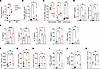 Figure 2
Exposure to constant light following IAV infection caused exaggerated inflammation independent of viral burden. (A) Quantification of viral titers (day 6, n = 8–14 per group; day 8, n = 6–10 per group; *P < 0.05, 1-way ANOVA; ***P < 0.0005, 2-way ANOVA with main effects only). (B) Total bronchoalveolar lavage (BAL) on 6 days p.i. (n = 13–15 per group; *P < 0.05, 1-way ANOVA, Kruskal Wallis test). (C) Differential of the total BAL cells (n = 6–13 per group; *P < 0.05, **P < 0.001 2-way ANOVA, mixed effects model). (D) Chemokine levels in BAL on day 6 p.i. (n = 3–8 per group; *P < 0.05, **P < 0.001, 1-way ANOVA). (E) Cytokine levels in BAL on day 6 p.i. (n = 3–7 per group; *P < 0.05, **P < 0.001, ****P < 0.0001, 1-way ANOVA). (F) Absolute number of CD45+ cells. (G) Absolute number of CD4+ T lymphocytes. (H) Absolute number of CD8+ T lymphocytes. (F–H) n = 9–15 per group; *P < 0.05, **P < 0.001, 1-way ANOVA. (I) Absolute number of Ly6Chi inflammatory monocytes and (J) absolute number of Neutrophils. (K) Absolute number of B cells (n = 4–7 per group *P < 0.05, 1-way ANOVA; Kruskal-Wallis test). All data were pooled from 3–5 independent experiments.
Constant light exposure worsens immune-mediated pathology in IAV infection. Given that the viral titers were comparable in the ZT23(LL) and ZT23 groups despite significantly higher mortality in the former, we next investigated if exposure to constant light worsened lung inflammation. Consistent with our previous work (5), the total bronchoalveolar lavage (BAL) cell count was higher in the mice infected at ZT11 than in those infected at ZT23 (Figure 2B). Interestingly, the ZT23(LL) group mice had higher total BAL cell counts than the ZT23 group, comparable to the ZT11 group (Figure 2B). The higher BAL count in the ZT23(LL) and ZT11 mice was accompanied by a significantly lower percentage of macrophages compared with the ZT23(LD) group (Figure 2C). Next, to test if a short period of LD cycling-driven circadian disruption can result in a state of heightened inflammation in the lungs, we examined BAL from naive mice exposed to constant light for 4 days. We found no differences in the total BAL cell counts between mice maintained in 12-hour LD cycling and those exposed to constant light (Supplemental Figure 2, A and B). Considered together, this supports the idea that the effect of short periods of light disruption is exacerbated in an infected host. The ZT23(LL) and ZT11 groups had significantly more polymorphonuclear cells in the BAL than the ZT23 group (Figure 2C). Furthermore, compared with the ZT23 group, on day 6 p.i., the levels of chemokines, MCP-1 and CXCL10, were significantly higher in the BAL of the ZT23(LL) and ZT11 groups (Figure 2D). The levels of cytokines IL-1β and IL-15 were also significantly higher in both the ZT23(LL) and ZT11 groups than in the ZT23 group, whereas the level of IL-2 was only significantly higher in the ZT23(LL) group (Figure 2E). Interestingly, there was no significant difference in IFN-γ levels across the 3 groups on day 6 p.i. (Figure 2E). Overall, the chemokine/cytokine profile of the ZT23(LL) group was aligned with that of the ZT11 group. Based on these analyses, we hypothesized that the ZT23(LL) group would have more proinflammatory immune populations than the ZT23 group. Therefore, we harvested lungs on day 8 p.i. and compared the immune populations in the 3 groups. Consistent with results from our previous work and our BAL analyses, we found that the ZT23(LL) mice had more leukocytes in the lungs than the ZT23 mice (Figure 2F). Because the ZT23(LL) group had higher levels of MCP-1 and CXCL10 — chemokines that promote monocyte and lymphocyte trafficking, respectively, into inflamed lungs — we enumerated these populations in the lungs (Figure 2, G–K). Ly6Chi inflammatory monocytes (CD45+Ly6G–CD11b+Ly6Chi) and T cells (CD45+CD4+ and CD45+CD8+) were higher in the ZT23(LL) group than in the ZT23 group (Figure 2, G–I). We posit that the intraparenchymal location and the migration patterns of T cells following influenza A infection explain why the percentage of lymphocytes in the BAL on after infection day 6 was not different for the ZT23 group versus the ZT11 or ZT23(LL) groups in Figure 2B. On the other hand, flow cytometry of lung cells on day 8 revealed an elevation of T cells (Figure 2, G and H). The absolute number of neutrophils (CD45+Ly6G+CD11b+) was also higher in the ZT23(LL) group than in the ZT23 group; however, the number of B cells was comparable across the 3 groups (Figure 2K). Thus, the disruption of environmental lighting leads to an exaggerated inflammatory milieu, marked by high levels of chemokines and accumulation of inflammatory cell populations.
Constant light exposure worsens lung injury from IAV. To validate the above results, we undertook a histological assessment of lungs harvested from the 3 groups. Consistent with our previous results, using a validated scoring system (5, 6), the ZT23 mice sustained significantly less injury than mice in the ZT11 group (Figure 3, A and B, and Supplemental Table 2). Lung pathology was markedly worse for the ZT23(LL) than the ZT23 group, with higher peribronchial infiltrates, perivascular infiltrates, inflammatory alveolar exudates, and epithelial necrosis (Figure 3, A and B). Furthermore, we validated the results of our immunophenotyping on histology from day 8 p.i. by staining for T lymphocytes (CD3+) and macrophages and monocytes (F4/80+). The lungs harvested from the ZT23(LL) and ZT11 groups had a significantly higher proportion of CD3+ and F4/80+ cells per high-power field (HPF) than those of the ZT23 group (Figure 3, C–F, respectively). Next, we investigated if constant light exposure would affect lung regeneration, even beyond the acute immunopathology described above. After severe lung injury, alveolar type 2 (AT2) cells promote the regeneration of the airspace or alveoli (8–11). We found that there were significantly fewer AT2 cells, denoted by SFTPC+ cells/HPF, in the lungs of the ZT23(LL) and ZT11 groups than in the ZT23 group (Figure 3, G and H). This could have affected how the lungs regenerate after the initial inflammatory response. Interestingly, we previously showed that the circadian clock, especially the AT2 clock, affects mortality (6), lung regeneration, and repair following IAV infection (7). Although the primary driver for the poorer outcomes in the ZT23(LL) group, like those for the ZT11 group historically, is immune-mediated pathology, a loss of regenerative capacity would likely worsen recovery from IAV, leading to long-term morbidity.
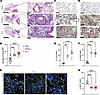 Figure 3
Immunopathology from IAV is worsened by environmental light cycling disruption. (A) Representative micrographs of H&E-stained lung sections on day 8 p.i. Left: Scale bar: 5 mm (left); 200 μm (right). Original magnification, ×20 (right). (B) Quantification of acute lung injury (n = 12–14 per group; ****P < 0.0001, 1-way ANOVA). (C) Representative micrographs of CD3-stained lung sections on day 8 p.i. Original magnification, ×20; scale bar: 200 μm. (D) Quantification of CD3+ cells per HPF (n = 5–7 per group; **P < 0.001, ****P < 0.0001, 1-way ANOVA). (E) Representative micrographs of F4/80-stained lung sections on day 8 p.i. Original magnification, ×20; Scale bar: 200 μm. (F) Quantification of F4/80+ cells per HPF (n = 5–7 per group; ****P < 0.0001, 1-way ANOVA). (G) Representative images of pro-SPC-stained lung sections on day 8 p.i. Original magnification, ×40. (H) Quantification of SFTPC+ (SPC+) alveolar type 2 cells per HPF (n = 5–11 per group; ****P < 0.0001 1-way ANOVA). Scale bar: 100 μm. All data were pooled from 5 independent experiments.
Light disruption is effective during a specific window of vulnerability following influenza A infection. Having established the need for synchronizing the influence of entraining photic cues in maintaining the clock-driven protection from IAV in the early phase of influenza, we asked if there exists a window of vulnerability to light disruption following influenza infection. At the range of the doses used for the infection, we expected the peak viral titers to be around day 4 and clearance coinciding with day 7–8. Therefore, we infected mice at either ZT23 or ZT11 and maintained them in 12-hour LD cycling conditions until day 7 p.i. At this time, a subset of the ZT23 groups was moved to constant light, referred to as the ZT23(LL-DAY7) group, instead of day 4, as in earlier experiments (Figure 4A).
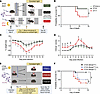 Figure 4
A specific window of vulnerability to light disruption following influenza A infection existed. (A) Experimental model. (B) Survival (n = 10–21 per group, **P < 0.001 log-rank test). (C) Weight loss trajectory (n = 10–21 per group, *P < 0.05 ANOVA for repeated measures) following IAV infection. (D) Average clinical score (n = 10–21 per group, *P < 0.05 ANOVA for repeated measures). ZT23 vs. ZT11 comparisons are indicated with an *; ZT23(LL) day 7 vs. ZT11 comparisons are indicated with a &. (E) Experimental model. (F) Survival (n = 10–18 per group, **P < 0.001 log-rank test). All data were pooled from 3 independent experiments.
Mice from the ZT23 group had significantly lower mortality than mice infected at ZT11. However, unlike the results from constant light exposure on day 4 p.i., the time-of-day difference in outcomes was not lost when animals were moved to constant light on day 7 p.i. [Figure 4B; 90% survival in ZT23 versus 86.66% survival in ZT23(LL-DAY7) and 42.8% in ZT11]. Furthermore, the weight loss trajectory and morbidity of the ZT23(LL-DAY7) group were comparable to that of the ZT23 group (Figure 4, C and D), suggesting that there was a window of vulnerability to LD disruption following influenza infection.
The central clock mediates the abrogation of time-of-day-specific protection. To investigate if the central clock mediates the loss of time-of-day-specific protection in influenza infection in mice exposed to constant light, we analyzed the locomotor activity as a read out for the former. Since singly housing mice (necessary for locomotor activity monitoring) after IAV infection could worsen outcomes, we used naive mice in this experiment. Mice were exposed to 4 weeks of LD cycling and then moved to constant light conditions for 3 weeks. We found that the mice in LD cycling showed clear demarcation between active and rest phases, coinciding with the dark and light phases of the 24-hour cycle (Supplemental Figure 3). The mice exposed to constant light displayed erratic onsets of activity, eventually becoming completely arrhythmic after being exposed to constant light for 3 weeks (Supplemental Figure 3A). Mice kept in continuous light, although arrhythmic, had comparable activity levels, supporting the idea that constant light led to a loss of rhythmicity but did not impair overall activity level (Supplemental Figure 3, B and C). Prolonged constant light exposure in an uninfected host is also associated with increased stress response (12, 13). This response may include neurohumoral alteration (14–16), immune perturbations (17–19), metabolic dysregulation (20, 21), and adverse behavioral changes (15, 22). Many of these effects are often attributed to circadian disruption. To test whether the increased mortality observed under constant light is due to circadian-independent stress mechanisms, we repeated this experiment in clock mutant mice. Given our context-specific and short duration of LL exposure, we hypothesized that the effect of LL in our influenza model mediates its effect mainly through circadian disruption, rather than additional stress independent of circadian disruption.
To test this, we used iBmal1–/– (Bmal1fl/fl ERT2Cre+) mice, in which the clock has been genetically disrupted globally. These mice are arrhythmic in constant darkness; henceforth, they are abbreviated as DD (23). Previously, we have shown that these iBmal1–/– mice do not have clock-driven time-of-day-specific protection against IAV (5). Initially, we tested the effect of LD cycling on WT and iBmal1–/– mice to maintain consistency with our experimental design, as outlined in Figure 1. However, we found that Bmal1–/– mice under LD conditions showed a reversal of the time of day-specific protection compared with WT mice, with iBmal1–/– mice infected at ZT11 having better outcomes than iBmal1–/– mice infected at ZT23 (Supplemental Figure 4). This would suggest that, in the absence of the molecular clock, LD cycling primes processes allowing a reversal but not an abrogation of the time-of-day protection. Thus, based on our previously published work, we tested the Bmal1–/– mice in DD conditions (5). In circadian terminology, CT time refers to the same times as ZT but under DD conditions. Therefore, CT23 represents subjective dawn. We infected Bmal1–/– mice and their creneg littermates maintained in DD conditions. On day 4 p.i., a subset of Bmal1–/– mice were moved from constant darkness to constant light conditions (Figure 4E). We found that, consistent with our previous results (5), Bmal1–/– mice infected at CT23 experienced significantly higher mortality than wild-type littermates (P < 0.001, Mantel-Cox log-rank test; Figure 4F). However, while Bmal1–/– mice exposed to constant light still had higher mortality than the WT littermates, there was no difference in the outcomes of Bmal1–/– mice in the 2 lighting conditions [survival of 31% in iBmal1–/– CT23 and 50% in iBmal1–/– CT23(LL-D4)], suggesting that constant light did not worsen the outcomes over that attributed to loss of the clock.
Global immune activation observed in the dawn-infected group when exposed to constant light after infection. To determine what pathways resulted in worse outcomes in the ZT23(LL) group, we performed transcriptional profiling on lungs harvested on day 8 p.i from both ZT23 and ZT23(LL) (n = 5/ group; all females) (Figure 5A). Environmental light disruption following influenza infection resulted in disparate transcriptional phenotypes (Figure 5B). 1,125 genes were differentially expressed between the 2 groups, with 801 genes upregulated and 324 genes downregulated in the ZT23(LL) group relative to the ZT23 group. Several genes associated with the migration of leukocytes (Ccr5, Ccl4, Cxcl10) into the lung and exaggerated immune activation (Il18rap, Gzma, Ly6c2), were upregulated in the ZT23(LL) group compared with the ZT23 group (Figure 5C). Further pathway analysis revealed that while those involved in innate activation (granulocyte diapedesis, IL-15 signaling, cytokine storm) were upregulated in the ZT23(LL) group relative to the ZT23 group, the most highly significant pathways involved innate to adaptive communication (communication between innate and adaptive cells) and activation of the adaptive immune system (B cell activation as in systemic lupus, altered T and B cells signaling, NFAT signaling) (Figure 5D). Overall, these pathways supported our findings of excessive immune cells, especially lymphocytes and monocytes, in the lungs of the ZT23(LL) group compared with the ZT23 group. Thus, even a short duration of light-based circadian disruption caused profound alteration of the immune response.
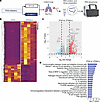 Figure 5
Transcriptomic analyses showed global immune activation in the ZT23 and ZT23(LL) groups. (A) Schematic of bulk RNA-Seq processing on day 8 p.i. lungs. (B) Heatmaps of all differentially regulated genes. (C) Volcano plots showing upregulated and downregulated genes. In each volcano plot, the horizontal dotted line represents a Padj = 0.05, and the vertical dotted line represents a log (fold change) >2 or <–2. (D) Plot of log-adjusted fold change for ZT23 vs. ZT23(LL) shows the directionality of the most differentially expressed genes. n = 5 per group, all females. All data were pooled from 3 independent experiments.
Transcriptomic parallels between the effect of light disruption and time-of-day effects. While we have shown that the ZT11 and ZT23(LL) groups both show excessive immune infiltration and subsequent tissue destruction (Figures 2 and 3), we wanted to test if the mechanism(s) underlying the poorer outcomes in both these groups were indeed similar. For this, we expanded our transcriptomic study to include 3 groups — ZT23, ZT11, and ZT23(LL) (Figure 6A). There were 1,304 differentially expressed (DE) genes when comparing the ZT23 group with the ZT11 group. Of these, 856 genes were upregulated and 448 genes were downregulated in the ZT11 group relative to the ZT23 group. Of the 1,304 DE genes, 739 genes were common to the comparison between ZT23 vs. ZT23(LL) (Figure 6A). Of these 739 shared DE genes, 587 genes were upregulated, while 151 genes were downregulated in both ZT23(LL) and ZT11 groups relative to the ZT23 group. Only one low-expression gene (Oxtr) was downregulated in the ZT23(LL) group and upregulated in the ZT11 group. Thus, not only was there significant overlap in the DE genes (Figure 6B), but their directionality was also conserved across the 2 comparisons — that of ZT23(LL) versus ZT23 and ZT11 versus ZT23, respectively. To understand how the cellular composition of the lungs from each of these 3 groups affected our transcriptomic profile, we used another dataset from day 8 p.i., where single-nuclear RNA-Seq (sn-RNA-Seq) analyses had been performed. This allowed us to use deconvolution algorithms to infer the cellular composition (24). As expected, the ZT23 groups had a markedly lower proportion of immune cells than the ZT23(LL) or ZT11 groups (Supplemental Figure 5, A and B). Next, we compared the ZT23(LL) with the ZT11 group to further confirm the mechanistic overlap. We found only 13 DE genes with a 2-fold change in expression between these 2 groups; of these, many were circadian genes like Bmal1 (Arntl), Dbp, and Npas2, whose expression oscillates across the day and is expected to be disrupted by constant light (Figure 6C). In further analyses, as expected, various innate immune pathways, namely, “cell adhesion and diapedesis” and “the role of hypercytokinemia/hypercytokinemia in the pathogenesis of influenza,” were enriched and conserved in both comparisons (Figure 6C). Pathways involved in adaptive immune activation were also enriched in the ZT23(LL) and ZT11 groups relative to the ZT23 group (Figure 6C). Genes involved in leukocyte migration (Ccl4, Ccr5) and activation of the immune system (Ifng, Klrk1, Gzma, Il18rap) were all higher in the ZT23(LL) and ZT11 groups compared with the ZT23 group. We confirmed changes in expression in some of the key genes by qPCR (Figure 6, D–H). Together, these results suggested that LD-cycling perturbation following influenza impairs lymphocyte and monocyte diapedesis and results in the clock-regulated less favorable time of day. Next, we blocked the migration of leukocytes into the lungs in the ZT23(LL) groups by administering anti-leukocyte function–associated antigen (LFA) antibody on day 4 p.i., a time coinciding with their transition from LD cycling to constant light (Supplemental Figure 6A). Interestingly, we observed that blocking leukocyte migration did not improve the outcomes in the ZT23(LL) group [Supplemental Figure 6B; 93.3% survival in ZT23 vs. 54.5% in ZT11, vs. 65% in ZT23(LL) vs. 53.8% in ZT23(LL) with anti-LFA]. This raises 2 possibilities that are not mutually exclusive. First, some leukocyte migration may be beneficial to the host, and inhibiting all leukocyte trafficking while protecting from the effects of light disruption might make the host more vulnerable owing to the absence of the protective cell populations, at least when inhibited early on day 4 p.i. The second and the more speculative possibility is that the immune cells are merely responding to the signals emanating from the lung parenchyma in response to the light disruption; therefore, blocking leukocyte migration itself has minimal independent effect on mortality. Regardless, from these experiments, we concluded that the processes affected by light disruption are usually regulated by the clock to confer time-of-day-specific protection.
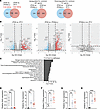 Figure 6
Transcriptomic analyses showed global immune activation in the ZT23(LL) and ZT11 LD groups. (A) Venn diagram (sizes not to scale) depicting the number of differentially expressed genes. (B) Volcano plots showing upregulated and downregulated genes. In each volcano plot, the horizontal dotted line represents a Padj = 0.05, and the vertical dotted line represents a log (fold change) >2 or <–2. (C) Plot of log-adjusted fold change for overlapping pathways between ZT23 LD vs. ZT23(LL) and ZT23 LD vs. ZT11 LD. (D–H) Relative gene expression of selected genes as a confirmation for bulk RNA-Seq. n = 4–8 per group, *P < 0.05, **P < 0.001, ***P < 0.0005, ****P < 0.0001; 1-way ANOVA. All data were pooled from 3 independent experiments.
Cycling of food availability restores the time-of-day-specific protection from influenza A infection in the face of environmental light disruption. While light is the primary external cue that entrains and synchronizes the central and peripheral clocks, other external cues like exercise and meal timing may significantly affect peripheral clocks (25). To investigate whether the poor outcomes caused by environmental light perturbation could be rescued by using a different entrainment cue, we considered a role for food cycling (FC) in the presence of environmental light perturbation. We followed the experimental design in Figure 1A, where mice were infected at either ZT23 or ZT11 and a subset of mice infected at ZT23 were moved to constant light on day 4 after infection. Within the ZT23(LL) group, a subset of mice was subjected to food cycling, wherein food was provided from ZT12 to ZT0 each day for the ZT23(LL-food cycling) group, while the other had access to food ad libitum [ZT23(LL)]; all groups had unrestricted access to water (Figure 7A). Consistent with our previous results, the ZT23(LL) with food ad libitum group had higher mortality than the ZT23 group. As in previous experiments, the ZT23 group had significantly better survival than the ZT11 group (Figure 7B, 87% survival in ZT23 versus 37.5% survival in ZT11; P < 0.001 by Mantel-Cox log-rank test). Likewise, the exposure to constant light significantly reduced the survival in the ZT23(LL) group [Figure 7B, 51% survival in ZT23(LL) vs. 86% survival in the ZT23 group, P < 0.05 by Mantel-Cox log-rank test]. Interestingly, the mice from the ZT23(LL-food cycling) group showed rescue of the survival advantage associated with infection at ZT23 that had been lost in the ZT23(LL) group [Figure 7B, survival of 81% in ZT23(LL-food cycling) vs. 51% in ZT23(LL); P < 0.05, Mantel-Cox Log-rank test]. The mice in the food-cycling group also lost less weight than those in the ZT23(LL) group (Figure 7C). The ZT23(LL-food cycling) groups also exhibited lower clinical scores, suggesting less morbidity than that in the ZT23(LL) group (Figure 7D). These findings led to the conclusion that, while LD cycling and meal timing are important zeitgebers affecting the host’s circadian rhythms, the latter is hierarchically a more potent entraining factor for optimal host response to influenza infection.
 Figure 7
Food cycling rescued the loss of time-of-day protection from influenza A following environmental light disruption. (A) Experimental model. (B) Survival (n = 21–50 per group; **P < 0.01 log-rank test from 3 independent experiments, *P < 0.05 log-rank test from 3 independent experiments). (C) Weight loss trajectory (n = 21–50 per group, *P < 0.05, ANOVA for repeated measures; #P < 0.001, ANOVA for repeated measures) following IAV. (D) Average clinical score. (n = 21–50 per group, *P < 0.05 ANOVA for repeated measures) following IAV infection. All data were pooled from 3 independent experiments. ZT23 vs. ZT11 comparisons are indicated with an *; ZT23 vs. ZT23(LL-food cycling) comparisons are indicated with a #.


Copyright © 2026 American Society for Clinical Investigation
ISSN: 0021-9738 (print), 1558-8238 (online)