
Advertisement
Research ArticleGastroenterologyNeuroscience
Open Access |  10.1172/JCI192437
BM-derived mesenchymal stem cell microvesicles protect enteric neural precursor cells and alleviate diabetes-associated enteric neuropathy
Huiying Shi, Hailing Yao, Yilin Liu, Mengke Fan, Sicheng Cai, Shizhao Xu, Chen Jiang, Yurui Zhang, Weiwei Jiang, Wei Qian, and Rong Lin
Department of Gastroenterology, Union Hospital, Tongji Medical College, Huazhong University of Science and Technology, Wuhan, China.
Address correspondence to: Rong Lin, Department of Gastroenterology, Union Hospital, Tongji Medical College, Huazhong University of Science and Technology, Wuhan 430074, China. Phone: 86.156.2918.0035; Email: linrong@hust.edu.cn.
Authorship note: HS, HY, YL, and MF contributed equally to this work and are co–first authors.
Find articles by Shi, H. in: PubMed | Google Scholar
Department of Gastroenterology, Union Hospital, Tongji Medical College, Huazhong University of Science and Technology, Wuhan, China.
Address correspondence to: Rong Lin, Department of Gastroenterology, Union Hospital, Tongji Medical College, Huazhong University of Science and Technology, Wuhan 430074, China. Phone: 86.156.2918.0035; Email: linrong@hust.edu.cn.
Authorship note: HS, HY, YL, and MF contributed equally to this work and are co–first authors.
Find articles by Yao, H. in: PubMed | Google Scholar
Department of Gastroenterology, Union Hospital, Tongji Medical College, Huazhong University of Science and Technology, Wuhan, China.
Address correspondence to: Rong Lin, Department of Gastroenterology, Union Hospital, Tongji Medical College, Huazhong University of Science and Technology, Wuhan 430074, China. Phone: 86.156.2918.0035; Email: linrong@hust.edu.cn.
Authorship note: HS, HY, YL, and MF contributed equally to this work and are co–first authors.
Find articles by Liu, Y. in: PubMed | Google Scholar
Department of Gastroenterology, Union Hospital, Tongji Medical College, Huazhong University of Science and Technology, Wuhan, China.
Address correspondence to: Rong Lin, Department of Gastroenterology, Union Hospital, Tongji Medical College, Huazhong University of Science and Technology, Wuhan 430074, China. Phone: 86.156.2918.0035; Email: linrong@hust.edu.cn.
Authorship note: HS, HY, YL, and MF contributed equally to this work and are co–first authors.
Find articles by Fan, M. in: PubMed | Google Scholar
Department of Gastroenterology, Union Hospital, Tongji Medical College, Huazhong University of Science and Technology, Wuhan, China.
Address correspondence to: Rong Lin, Department of Gastroenterology, Union Hospital, Tongji Medical College, Huazhong University of Science and Technology, Wuhan 430074, China. Phone: 86.156.2918.0035; Email: linrong@hust.edu.cn.
Authorship note: HS, HY, YL, and MF contributed equally to this work and are co–first authors.
Find articles by Cai, S. in: PubMed | Google Scholar
Department of Gastroenterology, Union Hospital, Tongji Medical College, Huazhong University of Science and Technology, Wuhan, China.
Address correspondence to: Rong Lin, Department of Gastroenterology, Union Hospital, Tongji Medical College, Huazhong University of Science and Technology, Wuhan 430074, China. Phone: 86.156.2918.0035; Email: linrong@hust.edu.cn.
Authorship note: HS, HY, YL, and MF contributed equally to this work and are co–first authors.
Find articles by Xu, S. in: PubMed | Google Scholar
Department of Gastroenterology, Union Hospital, Tongji Medical College, Huazhong University of Science and Technology, Wuhan, China.
Address correspondence to: Rong Lin, Department of Gastroenterology, Union Hospital, Tongji Medical College, Huazhong University of Science and Technology, Wuhan 430074, China. Phone: 86.156.2918.0035; Email: linrong@hust.edu.cn.
Authorship note: HS, HY, YL, and MF contributed equally to this work and are co–first authors.
Find articles by Jiang, C. in: PubMed | Google Scholar
Department of Gastroenterology, Union Hospital, Tongji Medical College, Huazhong University of Science and Technology, Wuhan, China.
Address correspondence to: Rong Lin, Department of Gastroenterology, Union Hospital, Tongji Medical College, Huazhong University of Science and Technology, Wuhan 430074, China. Phone: 86.156.2918.0035; Email: linrong@hust.edu.cn.
Authorship note: HS, HY, YL, and MF contributed equally to this work and are co–first authors.
Find articles by Zhang, Y. in: PubMed | Google Scholar
Department of Gastroenterology, Union Hospital, Tongji Medical College, Huazhong University of Science and Technology, Wuhan, China.
Address correspondence to: Rong Lin, Department of Gastroenterology, Union Hospital, Tongji Medical College, Huazhong University of Science and Technology, Wuhan 430074, China. Phone: 86.156.2918.0035; Email: linrong@hust.edu.cn.
Authorship note: HS, HY, YL, and MF contributed equally to this work and are co–first authors.
Find articles by Jiang, W. in: PubMed | Google Scholar
Department of Gastroenterology, Union Hospital, Tongji Medical College, Huazhong University of Science and Technology, Wuhan, China.
Address correspondence to: Rong Lin, Department of Gastroenterology, Union Hospital, Tongji Medical College, Huazhong University of Science and Technology, Wuhan 430074, China. Phone: 86.156.2918.0035; Email: linrong@hust.edu.cn.
Authorship note: HS, HY, YL, and MF contributed equally to this work and are co–first authors.
Find articles by Qian, W. in: PubMed | Google Scholar
Department of Gastroenterology, Union Hospital, Tongji Medical College, Huazhong University of Science and Technology, Wuhan, China.
Address correspondence to: Rong Lin, Department of Gastroenterology, Union Hospital, Tongji Medical College, Huazhong University of Science and Technology, Wuhan 430074, China. Phone: 86.156.2918.0035; Email: linrong@hust.edu.cn.
Authorship note: HS, HY, YL, and MF contributed equally to this work and are co–first authors.
Find articles by Lin, R. in: PubMed | Google Scholar
Published March 16, 2026 - More info
J Clin Invest. 2026;136(6):e192437. https://doi.org/10.1172/JCI192437.
© 2026 Shi et al. This work is licensed under the Creative Commons Attribution 4.0 International License. To view a copy of this license, visit http://creativecommons.org/licenses/by/4.0/.
Received: February 14, 2025; Accepted: January 30, 2026


-
Results
ER stress and unfolded protein response were activated in ENPCs under diabetic conditions. We analyzed data from the 2005–2010 National Health and Nutrition Examination Survey database and found that the incidence of chronic diarrhea and constipation was significantly higher in patients with prediabetes (25.35%) and diabetes (30.22%) compared with normal controls (14.55%) (Figure 1A). Consistently, a retrospective analysis of patients undergoing magnetically controlled capsule endoscopy at our center (2019–2024) revealed markedly prolonged gastrointestinal transit times (including gastric, small intestinal, colonic, and whole-gut transit) in individuals with diabetes (Figure 1B). Parallel ex vivo experiments demonstrated weakened spontaneous contractions of colonic muscle strips in diabetic mice (Figure 1C).
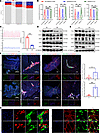 Figure 1
Diabetes-associated gastrointestinal motility dysfunction and ENS impairment in humans and mice. (A) Incidence of chronic constipation and diarrhea in normal (NC), prediabetic, and diabetic individuals. (B) Gastrointestinal transit time (total, gastric, small intestinal, and colonic) in control, hyperlipidemic, and diabetic groups. (C) Representative images and quantitative analysis of spontaneous colonic muscle strip contractility in control and diabetic mice (DM; 5 minutes). n = 4. (D and E) Western blot analysis of TUJ1, HuC/D, nNOS, ChAT, and GFAP expression in human (D) and mouse (E) colon tissues. n = 6. (F) Representative immunofluorescence images and quantification of ENPC-derived (NESTIN+NGFR+) neurons and glial cells in the transverse section of colon from human samples. Scale bars: 2,000, 1,000, 200, and 100 μm. n = 4. (G) Representative immunofluorescence images of ENPC-derived (GFP+) neurons and glial cells in mouse colonic longitudinal muscle-myenteric plexus. Scale bars: 20 μm (left), 50 μm (right). n = 4. Data are presented as mean ± SD. Statistical significance was determined by unpaired 2-tailed Student’s t test (A, C, and F) and 1-way ANOVA with Tukey’s multiple-comparison test (B). *P < 0.05, **P < 0.01, ***P < 0.001, ****P < 0.0001; ns, P > 0.05.
Histologically, the ENS network exhibited marked structural damage in the colon of both diabetic humans and mice, characterized by decreased expression of β III-tubulin (TUJ1; nerve fiber marker), HuC/D (pan-neuronal marker), and glial fibrillary acidic protein (GFAP; glial cell marker), as validated by Western blot and immunofluorescence (Figure 1, D and E, and Supplemental Figure 1, A–D; supplemental material available online with this article; https://doi.org/10.1172/JCI192437DS1). At the neurochemical level, protein expression of neuronal nitric oxide synthase (nNOS; a marker of inhibitory nitrergic neurons) was significantly reduced, whereas choline acetyltransferase (ChAT; a marker of cholinergic neurons) remained unchanged (Figure 1, D and E, and Supplemental Figure 1, C and D).
Interestingly, despite this overall neuronal loss, we observed increased ENPC-derived neurogenesis and gliogenesis in both diabetic patients and mice (Figure 1, F and G, and Supplemental Figure 1E). This dissociation between enhanced regenerative activity and persistent structural degeneration led us to hypothesize that the diabetic microenvironment might compromise the functional efficacy of ENPC-mediated repair. To explore the underlying mechanisms, we performed transcriptomic sequencing on colonic tissues from humans and mice, which revealed substantial enrichment of differentially expressed genes in ER stress and unfolded protein response (UPR) pathways (Figure 2, A and B). Subsequent protein-level analyses confirmed the activation of the ER stress marker 78 kDa glucose-regulated protein (GRP78) and the protein kinase RNA–like ER kinase (PERK) branch of the UPR under diabetic conditions, while the inositol-requiring enzyme 1 alpha (IRE1α) and activating transcription factor 6 (ATF6) branches remained unchanged (Figure 2, C and D). Additionally, fluorescence colocalization analysis revealed elevated GRP78 levels in ENPCs under diabetic conditions (Figure 2E). In vitro, high glucose treatment of primary ENPCs (Supplemental Figure 2, A and B) recapitulated the in vivo findings, which was evidenced by the activation of ER stress and the PERK branch of the UPR (Figure 2, F and G, and Supplemental Figure 2C).
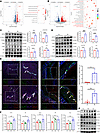 Figure 2
ER stress and UPR were activated in ENPCs under diabetic conditions. (A and B) Volcano plot and Gene Ontology enrichment of transcriptomic data from human (A) and mouse (B) colonic samples. n = 5 human; n = 3 mouse. (C and D) Western blot and quantification of ER stress/UPR markers (GRP78, p-PERK, PERK, p-IRE1α, IRE1α, and ATF6) in human (C) and mouse (D) colon samples. n = 6. (E) Representative immunofluorescence images and quantification of GRP78 in ENPCs from human (left) and mouse (right) colon samples. Scale bars: 100 μm. n = 4. (F) Relative mRNA expression of ER stress/UPR marker–related genes (Grp78, Atf4, Xbp1s, Atf6, and Chop) in ENPCs treated with high glucose or mannitol control. n = 4. (G) Western blot analysis of ER stress/UPR markers in ENPCs treated with high glucose or mannitol as osmotic control. n = 4. Data are presented as mean ± SD. Statistical significance was determined by unpaired 2-tailed Student’s t test. *P < 0.05, **P < 0.01, ***P < 0.001, ****P < 0.0001; ns, P > 0.05.
In summary, these results suggest that diabetes-related gastrointestinal dysfunction and ENS damage may be linked to an impaired reparative capacity of ENPCs, in which ER stress and selective UPR activation represent a plausible mechanistic contributor.
Inhibition of ER stress ameliorates diabetes-induced ENS injury by restoring ENPC function. Having established the activation of ER stress and the UPR in ENPCs under diabetic conditions, we next asked whether this pathway directly contributes to ENPCs injury. As shown in Figure 3, high glucose treatment significantly suppressed ENPC proliferation (Figure 3, A–C), increased apoptosis (Figure 3, D and E), and impaired neuronal and glial differentiation (Figure 3, F and G). Although chronic ER stress and persistent UPR activation have been implicated in neurodegenerative diseases, their role in diabetic ENS injury remains poorly understood (23). To functionally assess ER stress in this context, we treated ENPCs with the chemical chaperone 4-phenylbutyric acid (4-PBA), a known ER stress inhibitor. Western blot and RT-qPCR confirmed that 4-PBA effectively suppressed high glucose–induced ER stress and the pro-apoptotic PERK branch (Supplemental Figure 3, A and B). Importantly, 4-PBA treatment rescued high glucose–induced deficits in ENPC proliferation (Figure 3, A–C) and differentiation (Figure 3, F and G), while reducing apoptosis (Figure 3, D and E), indicating that ER stress is an important contributor to ENPC dysfunction.
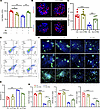 Figure 3
Inhibition of ER stress ameliorates high glucose–induced dysfunction in ENPCs. (A) CCK-8 assay assessing the viability of ENPCs following 4-PBA treatment. n = 5. (B and C) Representative immunofluorescence images (B) and quantification (C) of EdU incorporation in ENPCs treated with 4-PBA. Scale bars: 20 μm. n = 7. (D and E) Representative dot plots of apoptosis (D) in ENPCs treated with 4-PBA by annexin V/PI flow cytometry, showing viable (annexin V–/PI–), early apoptotic (annexin V+/PI–), and late apoptotic (annexin V+/PI+) populations, and quantification (E) of total apoptotic rate (sum of early and late apoptotic cells). n = 3. (F and G) Representative immunofluorescence images (F) and quantification (G) of neuronal (HuC/D+ and nNOS+) and glial (GFAP+) differentiation in ENPCs treated with 4-PBA. Scale bars: 100 μm. n = 3. Data are presented as mean ± SD. Statistical significance was determined by 1-way ANOVA with Tukey’s multiple-comparison test. *P < 0.05, **P < 0.01, ***P < 0.001, ****P < 0.0001.
We further evaluated the therapeutic potential of 4-PBA in diabetic mice (Supplemental Figure 3, C and D). Immunofluorescence analyses indicated that 4-PBA significantly promoted the differentiation of ENPCs into enteric neurons (HuC/D+GFP+ cells), nitrergic neurons (nNOS+GFP+ cells), and glial cells (GFAP+GFP+ cells) (Figure 4, A and B). This was accompanied by a marked increase in the number of enteric neurons and glial cells in diabetic mice, nearly restoring counts to control levels (Figure 4, C–E, and Supplemental Figure 3E). Functionally, 4-PBA ameliorated diabetes-related motility impairments, as evidenced by increased defecation frequency (Figure 4F), shortened total gastrointestinal and distal colonic transit times (Figure 4, G and H), and enhanced spontaneous (Figure 4, I and J) and electrically (Figure 4, K and L) evoked contractions of colonic muscle strips. Taken together, these results indicate that ER stress and UPR activation markedly impede ENPC differentiation, thereby compromising ENS repair.
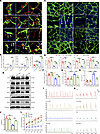 Figure 4
Inhibition of ER stress ameliorates diabetes-induced ENS injury by restoring ENPC function. (A and B) Representative immunofluorescence images (A) and quantification (B) of ENPC-derived neurons (HuC/D+ and nNOS+) and glia (GFAP+) in colonic LMMP from 4-PBA–treated mice. Scale bars: 20 μm (left and middle), 50 μm (right). n = 4. (C and D) Representative immunofluorescence images (C) and quantification (D) of TUJ1, HuC/D, nNOS, and GFAP in colonic LMMP from 4-PBA–treated mice. Scale bars: 100 μm. n = 6. (E) Western blot analysis of TUJ1, HuC/D, nNOS, ChAT, and GFAP in colon tissues from 4-PBA–treated mice. n = 3. (F–H) Assessment of gastrointestinal motility in 4-PBA–treated mice: defecation frequency (F), total intestinal transit time (G), and distal colonic transit time (H). n = 5. (I and J) Representative images (I) and quantitative analysis (J) of spontaneous colonic muscle strip contractility in 4-PBA–treated mice (5 minutes). n = 3. (K and L) Representative contractile curve (K) and quantification (L) of colonic muscle strip induced by EFS at 2, 4, 8, 16, 32, and 64 Hz in 4-PBA–treated mice. n = 3. Data are presented as mean ± SD. Statistical significance was determined by 1-way ANOVA with Tukey’s multiple-comparison test. *P < 0.05, **P < 0.01, ***P < 0.001, ****P < 0.0001.
However, CCK-8 assays revealed that 4-PBA monotherapy reduced ENPC viability (Figure 3A), suggesting that systemic ER stress inhibition may have off-target effects that limit its therapeutic utility. Given this limitation, we turned to BMSC-MVs, which have shown the ability to mitigate ER stress with favorable biosafety profiles, representing a promising alternative for regenerative therapy.
BMSC-MVs alleviate high glucose–induced ENPC damage by suppressing ER stress and the pro-apoptotic PERK branch. We next asked whether BMSC-MVs could mitigate ER stress and restore ENPC function under high-glucose conditions. BMSC-MVs were successfully isolated from BMSC culture supernatant and characterized using transmission electron microscopy (TEM), nanoparticle tracking analysis, and Western blot (Figure 5, A–C). As expected, BMSC-MVs markedly suppressed high glucose–induced ER stress and PERK branch activation in ENPCs, as evidenced by decreased protein levels of GRP78 and the PERK branch (Figure 5, D and E), restored global protein synthesis (Figure 5, F and G), and decreased protein aggregation (Figure 5, H and I). TEM further confirmed that BMSC-MVs restored normal ER morphology, which was notably swollen in high glucose–treated ENPCs (Figure 5J). Functionally, BMSC-MVs markedly alleviated high glucose–induced ENPC damage, enhancing proliferation (Figure 6, A–C), reducing apoptosis (Figure 6, D and E), and improving differentiation capacity (Figure 6, F and G). Notably, unlike 4-PBA, BMSC-MVs did not impair ENPC viability under physiological conditions. Taken together, these results indicate that BMSC-MVs effectively ameliorate high glucose–induced ENPC damage, an effect closely associated with the suppression of ER stress and the pro-apoptotic PERK pathway.
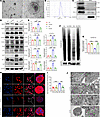 Figure 5
BMSC-MVs alleviate high glucose–induced ENPC damage. (A–C) Characterization of BMSC-MVs by TEM (A), nanoparticle tracking analysis (B), and Western blot (C) analysis. Scale bars: 1 μm (left), 100 nm (right). (D and E) Western blot (D) and quantification (E) of GRP78, p-PERK, PERK, p-EIF2A, EIF2A, ATF4, CHOP, BCL-2, and BAX in ENPCs treated with BMSC-MVs. n = 4. (F and G) Western blot (F) and quantification (G) of puromycin incorporation assessing global protein synthesis rates in ENPCs treated with BMSC-MVs. n = 3. (H and I) Representative immunofluorescence images (H) and quantification (I) of PROTEOSTAT-detected protein aggregation in ENPCs treated with BMSC-MVs. Scale bars: 100 μm, 10 μm (enlarged insets). n = 4. (J) TEM images of ER morphology in ENPCs treated with BMSC-MVs. Scale bars: 5 μm (left), 500 nm (right). Data are presented as mean ± SD. Statistical significance was determined by 1-way ANOVA with Tukey’s multiple-comparison test. ***P < 0.001, ****P < 0.0001.
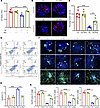 Figure 6
BMSC-MVs suppress ER stress and the pro-apoptotic PERK branch activation in high glucose–treated ENPCs. (A) CCK-8 assay assessing the viability of ENPCs treated with BMSC-MVs. n = 6. (B and C) Representative immunofluorescence images (B) and quantification (C) of EdU incorporation in ENPCs treated with BMSC-MVs. Scale bars: 20 μm. n = 6. (D and E) Representative dot plots of apoptosis (D) in ENPCs treated with BMSC-MVs by annexin V/PI flow cytometry, showing viable (annexin V–/PI–), early apoptotic (annexin V+/PI–), and late apoptotic (annexin V+/PI+) populations, and quantification (E) of total apoptotic rate (sum of early and late apoptotic cells). n = 3. (F and G) Representative immunofluorescence images (F) and quantification (G) of HuC/D+ neuronal differentiation, nNOS+ neuronal differentiation, or GFAP+ glial differentiation in ENPCs treated with BMSC-MVs. n = 3. Data are presented as mean ± SD. Statistical significance was determined by 1-way ANOVA with Tukey’s multiple-comparison test. *P < 0.05, **P < 0.01, ***P < 0.001, ****P < 0.0001.
Surface vinculin on BMSC-MVs mediates internalization by binding to TLN1 on ENPCs. To elucidate the mechanism by which BMSC-MVs regulate ER stress in ENPCs, we focused on the internalization process, which is critical for EV-mediated functional delivery and depends on specific ligand–receptor interactions between EV membrane proteins and target cell surface receptors (24). We first confirmed that BMSC-MVs were internalized by ENPCs in a time-dependent manner, as shown by 1,1′-dioctadecyl-3,3,3′,3′-tetramethylindocarbocyanine perchlorate (DiI) fluorescent labeling (Figure 7A). Ex vivo coculture of longitudinal muscle myenteric plexus (LMMP) preparations with BMSC-MVs revealed that the DiI-labeled BMSC-MVs were predominantly localized in GFP+ ENPCs, with minimal uptake by HuC/D+ neurons or GFAP+ glial cells (Figure 7B), suggesting a receptor-mediated uptake mechanism. This was further supported by a marked reduction in ENPC uptake following proteinase K treatment of BMSC-MVs, which removes surface proteins (Figure 7C).
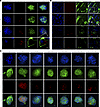 Figure 7
Uptake of BMSC-MVs by ENPCs and distribution within the ENS. (A) Uptake of DiI-labeled BMSC-MVs (red) by FITC-phalloidin–stained ENPCs (green) at 0, 12, and 24 hours. Scale bars: 20 μm, 10 μm (enlarged insets). n = 3. (B) Distribution of DiI-labeled BMSC-MVs in ENPCs, neurons, and glial cells within colonic LMMP 24 hours after incubation. Scale bars: 20 and 10 μm. n = 3. (C) Representative images showing BMSC-MV uptake by ENPCs across experimental groups. Scale bars: 10 μm. n = 3.
We next identified the specific interacting membrane proteins from ENPCs using far Western blot (Figure 8A) and biotin pull-down assays (Figure 8B). Liquid chromatography–tandem mass spectrometry (LC-MS/MS) analysis identified talin-1 (TLN1), a membrane-associated protein involved in cell adhesion, as a top candidate based on unique peptide counts (Figure 8C and Supplemental Table 1). Similarly, among the candidate membrane proteins from BMSC-MVs (Figures 8, D and E, Supplemental Figure 4A, and Supplemental Table 2), vinculin (VCL) was selected due to its known high binding affinity for TLN1 (Figure 8F). We then constructed HA-tagged Vcl-overexpressing BMSC-MVs (Figures 8G and Supplemental Figure 4B) and FLAG-tagged Tln1-overexpressing ENPCs (Figures 8H and Supplemental Figure 4C). Coimmunoprecipitation assays confirmed a direct physical interaction between TLN1 on ENPCs and VCL on BMSC-MVs (Figure 8, I and J).
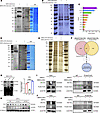 Figure 8
Surface VCL on BMSC-MVs mediates internalization by binding to TLN1 on ENPCs. (A and B) Screening of ENPC surface proteins interacting with BMSC-MVs by far Western blot (A) and biotin pull-down (B). Far Western analysis revealed 5 candidate bands, with band 1 identified as TLN1 by LC-MS/MS; biotin pull-down showed 3 bands, with band 1 confirmed as TLN1. CBB, Coomassie blue. (C) Peptide-based ranking of ENPC surface proteins interacting with BMSC-MVs from far Western blot. (D and E) Screening of BMSC-MV surface proteins by far Western blot (D) and biotin pull-down (E). Far Western showed 3 candidates, with band 1 identified as VCL; biotin pull-down revealed 5 bands, with band 1 identified as VCL by LC-MS/MS. (F) Venn diagram of overlapping ENPC surface proteins identified by far Western and biotin pull-down assays. (G) Western blot analysis and qualification of VCL in BMSC-MVs after Vcl knockdown (shVCL) or overexpression (oeVCL). n = 4. (H) Western blot analysis of TLN1 in ENPCs after Tln1 knockdown (siTLN1) or overexpression (oeTLN1). n = 3. (I and J) Coimmunoprecipitation assay to assess the binding of HA-tagged VCL in BMSC-MVs to FLAG-tagged TLN1 in ENPCs. IgG control is shown. Data are presented as mean ± SD. Statistical significance was determined by unpaired 2-tailed Student’s t test. ****P < 0.0001.
Functional validation through loss-of-function experiments showed that knockdown of Vcl in BMSCs using short hairpin RNA or sgRNA (Supplemental Figure 4, B and D) did not alter MV marker expression (shVCL MVs or sgVCL MVs; Figure 8G and Supplemental Figure 4, E and F) but significantly impaired their uptake by ENPCs (Figure 7C). Similarly, siRNA-mediated knockdown of Tln1 in ENPCs (Figure 8H and Supplemental Figure 4, C and G) markedly reduced BMSC-MV internalization (Figure 7C). Rescue experiments further confirmed the specificity of this interaction: in Tln1-knockdown ENPCs, overexpression of Vcl in BMSC-MVs failed to restore internalization. Conversely, in Tln1-overexpressing ENPCs, Vcl-knockdown BMSC-MVs still showed impaired uptake (Figure 7C). Together, these results demonstrate that the specific VCL–TLN1 interaction is essential for efficient internalization of BMSC-MVs by ENPCs.
VCL–TLN1 interaction is required for BMSC-MV–mediated functional recovery in ENPCs. Having established that VCL-TLN1 mediates the internalization of BMSC-MVs, we next asked whether this interaction is necessary for their therapeutic function. Disruption of the VCL–TLN1 axis — via knocking down Vcl in BMSC-MVs or Tln1 in ENPCs — abolished the ability of BMSC-MVs to restore proliferation (Figure 9, A–C), inhibit apoptosis (Figure 9, D and E), and promote differentiation (Figure 9, F and G) in high glucose–treated ENPCs. Mechanistically, interfering with VCL-TLN1 binding blocked BMSC-MV–mediated suppression of ER stress and UPR activation, as reflected by increased protein levels of GRP78 and PERK branch components (Figure 9H and Supplemental Figure 5A), decreased global protein synthesis (Figure 9I and Supplemental Figure 5B), and elevated protein aggregation (Figure 9J and Supplemental Figure 5C).
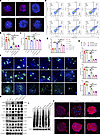 Figure 9
Loss of VCL or TLN1 abolishes the protective effects of BMSC-MVs on ENPCs. (A and B) Representative immunofluorescence images (A) and quantification (B) of EdU incorporation in ENPCs. Scale bars: 20 μm. n = 6. (C) CCK-8 assay assessing ENPC viability under different treatments. n = 5. (D and E) Representative dot plots of apoptosis (D) in ENPCs under different treatments by annexin V/PI flow cytometry, showing viable (annexin V–/PI–), early apoptotic (annexin V+/PI–), and late apoptotic (annexin V+/PI+) populations, and quantification (E) of total apoptotic rate (sum of early and late apoptotic cells). n = 3. (F and G) Representative immunofluorescence images (F) and quantification (G) of neuronal (HuC/D+ and nNOS+) and glial (GFAP+) differentiation in ENPCs under different treatments. Scale bars: 100 μm. n = 3. (H) Western blot analysis of GRP78, p-PERK, PERK, p-EIF2A, EIF2A, ATF4, CHOP, BCL-2, and BAX proteins in ENPCs under different treatments. n = 3. (I) Western blot analysis of puromycin incorporation assessing global protein synthesis rates in ENPCs under different treatments. n = 3. (J) Representative immunofluorescence images of PROTEOSTAT-detected protein aggregation in ENPCs under different treatments. Scale bars: 10 μm. n = 4. Data are presented as mean ± SD. Statistical significance was determined by 1-way ANOVA with Tukey’s multiple-comparison test. **P < 0.01, ****P < 0.0001; ns, P > 0.05.
Rescue experiments further confirmed the strict dependence of functional recovery on VCL-TLN1 engagement. In Tln1-knockdown ENPCs, Vcl-overexpressing BMSC-MVs failed to restore proliferation (Figure 10A and Supplemental Figure 5D), apoptosis resistance (Figure 10B), differentiation (Figure 10, C and D), or ER stress homeostasis (Figure 10, E–H, and Supplemental Figure 5, E and F). Similarly, in Tln1-overexpressing ENPCs, Vcl-knockdown BMSC-MVs remained functionally impaired (Figure 10 and Supplemental Figure 5, D–F). These results indicate that the therapeutic benefits of BMSC-MVs depend not only on cellular entry but also on downstream signaling events specifically triggered by the VCL–TLN1 interaction. Together, our findings identify the VCL–TLN1 interaction as a key regulator that coordinates the internalization and reparative function of BMSCs-MVs in high glucose–induced ENPC injury.
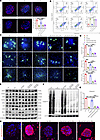 Figure 10
VCL–TLN1 interaction is required for BMSC-MV–mediated functional recovery in ENPCs. (A) Representative immunofluorescence images and quantification of EdU incorporation in ENPCs in rescue experiments. Scale bars: 20 μm. n = 6. (B) Flow cytometric analysis of apoptosis using annexin V/PI staining in ENPCs in rescue experiments. n = 3. (C and D) Representative immunofluorescence images (C) and quantification (D) of neuronal (HuC/D+ and nNOS+) and glial (GFAP+) differentiation in ENPCs in rescue experiments. Scale bars: 100 μm. n = 3. (E) Western blot analysis of GRP78, p-PERK, PERK, p-EIF2A, EIF2A, ATF4, CHOP, BCL-2, and BAX proteins in ENPCs in rescue experiments. n = 3. (F and G) Western blot analysis (F) and quantification (G) of puromycin incorporation assessing global protein synthesis rates in ENPCs in rescue experiments. n = 3. (H) Representative immunofluorescence images of PROTEOSTAT-detected protein aggregation in ENPCs in rescue experiments. Scale bars: 10 μm. n = 4. Data are presented as mean ± SD. Statistical significance was determined by 1-way ANOVA with Tukey’s multiple-comparison test. ***P < 0.001, ****P < 0.0001.
BMSC-MVs alleviate high glucose–induced ENPCs injury via ERK-dependent suppression of ER stress. To elucidate the link between VCL-TLN1 engagement and ER stress suppression, we performed Kyoto Encyclopedia of Genes and Genomes (KEGG) pathway analysis on transcriptomic data from human and murine samples, which revealed significant enrichment of differentially expressed genes in the MAPK cascade (Figure 11, A and B). In addition, multiple TLN1-related pathways were associated with MAPK activation (Figure 11C). Given the established role of the MAPK cascade — comprising JNK, ERKs, and P38 cascades — in stem cell differentiation (25, 26), we evaluated the activation status of these branches. Under diabetic conditions, only the ERK pathway was significantly upregulated, whereas JNK and P38 remained unaffected (Figure 11, D and E), prompting us to focus on ERK in subsequent experiments.
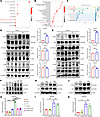 Figure 11
ERK activation is identified as a key event in BMSC-MV–mediated protection. (A and B) KEGG enrichment analysis of differentially expressed genes from transcriptomic sequencing of colonic tissues of human (A) and mouse (B) samples. (C) Reactome pathway enrichment analysis of TLN1 using the STRING online website (https://www.string-db.org/). (D and E) Western blot and quantification of p-ERK, ERK, p-P38, P38, p-JNK, and JNK in the colonic tissues of human (D) and mouse (E) samples. n = 3. (F and G) Western blot (F) and quantification (G) of p-ERK and ERK in ENPCs under different treatments. n = 3. (H–K) Western blot and quantification of p-ERK and ERK in ENPCs (H and I) or mice (J and K) treated with 4-PBA. n = 3. Data are presented as mean ± SD. Statistical significance was determined by unpaired 2-tailed Student’s t test (D and E) and 1-way ANOVA with Tukey’s multiple-comparison test (G, I, and K). **P < 0.01, ***P < 0.001, ****P < 0.0001; ns, P > 0.05.
We found that BMSC-MVs enhanced ERK pathway activation in ENPCs under high glucose, an effect that was abolished upon knockdown of Vcl in BMSC-MVs or Tln1 in ENPCs (Figure 11, F and G), indicating that VCL-TLN1 binding is required for ERK activation. In contrast, treatment with the ER stress inhibitor 4-PBA did not influence ERK activation in high glucose–treated ENPCs (Figure 11, H and I) or in diabetic mice (Figure 11, J and K), suggesting that ERK acts upstream of ER stress and is regulated by VCL–TLN1 signaling.
We next inhibited ERK in primary ENPCs using the small-molecule inhibitor PD98059 (Supplemental Figure 6A). ERK suppression exacerbated high glucose–induced impairments in proliferation (Figure 12, A–C), increased apoptosis (Figure 12D and Supplemental Figure 6B), impaired differentiation (Figure 12E and Supplemental Figure 6C), and intensified ER stress (Figure 12, F–H, and Supplemental Figure 6, D–F). Critically, ERK inhibition completely abolished the ability of BMSC-MVs to restore ENPC function and suppress ER stress and the PERK branch under high glucose (Figure 12 and Supplemental Figure 6). Together, these results demonstrate that surface VCL on BMSC-MVs binds to TLN1 on ENPCs to activate the ERK signaling pathway, which in turn attenuates ER stress and UPR activation, thereby preserving ENPC function.
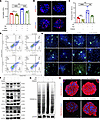 Figure 12
Pharmacological inhibition of ERK abolishes the protective effects of BMSC-MVs on ENPCs. (A) CCK-8 assay assessing the viability of ENPCs treated with ERK inhibitor PD98059. n = 7. (B and C) Representative immunofluorescence images (B) and quantification (C) of EdU incorporation in ENPCs treated with ERK inhibitor PD98059. Scale bars: 20 μm. n = 6. (D) Flow cytometric analysis of apoptosis using annexin V/PI staining in ENPCs treated with ERK inhibitor PD98059. n = 3. (E) Representative immunofluorescence images of neuronal (HuC/D+ and nNOS+) and glial (GFAP+) differentiation in ENPCs treated with ERK inhibitor PD98059. Scale bars: 100 μm. n = 3. (F) Western blot analysis of GRP78, p-PERK, PERK, p-EIF2A, EIF2A, ATF4, CHOP, BCL-2, and BAX proteins in ENPCs treated with ERK inhibitor PD98059. n = 3. (G) Western blot analysis of puromycin incorporation assessing global protein synthesis rates in ENPCs treated with ERK inhibitor PD98059. n = 3. (H) Representative immunofluorescence images of PROTEOSTAT-detected protein aggregation in ENPCs treated with ERK inhibitor PD98059. Scale bars: 10 μm. n = 4. Data are presented as mean ± SD. Statistical significance was determined by 1-way ANOVA with Tukey’s multiple-comparison test. *P < 0.05, **P < 0.01, ***P < 0.001, ****P < 0.0001; ns, P > 0.05.
BMSC-MVs ameliorate diabetes-induced ENS injury via ER stress and PERK branch suppression in ENPCs. We next evaluated the therapeutic potential of BMSC-MVs in a diabetic mouse model (Figure 13A). Following intraperitoneal injection of 1,1-dioctadecyl-3,3,3,3-tetramethylindotricarbocyaine iodide–labeled (DiR-labeled) BMSC-MVs, in vivo imaging revealed strong abdominal fluorescence at 4 hours, which persisted but diminished by 24 hours (Figure 13B). Ex vivo imaging confirmed substantial BMSC-MV accumulation in the colon and small intestine (Figure 13B and Supplemental Figure 7A), and frozen sections showed their localization within the muscular layer (Figure 13C). These findings suggest that BMSC-MVs could efficiently reach the colonic muscle layer following intraperitoneal injection, providing valuable evidence for investigating their potential therapeutic effects in the repair of ENS injury.
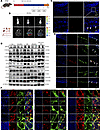 Figure 13
BMSC-MVs suppress ER stress and promote ENPC differentiation in ENPCs in diabetic mice. (A) Experimental timeline of BMSC-MV treatment and gastrointestinal motility assessment. (B) In vivo distribution of BMSC-MVs at 0, 4, and 24 hours after injection. (C) Representative immunofluorescence images of DiR-labeled BMSC-MVs in colon at 24 hours. Scale bars: 200 μm (top), 50 μm (bottom). (D) Western blot analysis of GRP78, p-PERK, PERK, p-EIF2A, EIF2A, ATF4, CHOP, BCL-2, BAX, and p-ERK in colon tissues from BMSC-MV–treated mice. n = 3. (E) Representative immunofluorescence images of GRP78 in ENPCs in colon from BMSC-MV–treated mice. Scale bars: 50 μm. (F) Representative immunofluorescence images and quantification of ENPC-derived neurons (HuC/D+ and nNOS+), and GFAP+ glial cells in colonic LMMP from BMSC-MV–treated mice. Scale bars: 20 μm (left and middle), 50 μm (right). n = 4.
Consistent with in vitro observation, BMSC-MV treatment significantly downregulated mRNA and protein levels of GRP78, p-PERK, p-EIF2A, ATF4, CHOP, and BAX in the colon of diabetic mice, while increasing BCL-2 and p-ERK expression (Figure 13D and Supplemental Figure 7, B and C). Fluorescence colocalization further confirmed a marked reduction in GRP78 levels within ENPCs after BMSC-MV administration (Figure 13E). Furthermore, BMSC-MVs robustly promoted neurogenesis and gliogenesis, as shown by a substantial increase in the number of HuC/D+GFP+ neurons, nNOS+GFP+ neurons, and GFAP+GFP+ glial cells (Figure 13F and Supplemental Figure 7D).
BMSC-MVs also restored ENS network integrity and gastrointestinal motility. Immunofluorescence (Figure 14, A and B) and Western blot (Figure 14C and Supplemental Figure 7E) analyses showed recovery of TUJ1+ neuronal fibers, HuC/D+ neurons, nNOS+ neurons, and GFAP+ glial cells. Accordingly, administration of BMSC-MVs significantly ameliorated gastrointestinal dysmotility (Figure 14D) and enhanced both spontaneous and electrical field stimulation–induced (EFS-induced) contractility of colonic muscle strips in diabetic mice (Figure 14, E–H). Importantly, all these therapeutic effects were abolished in mice that received Vcl-knockdown BMSC-MVs, which failed to suppress ER stress, activate ERK, promote ENPC differentiation, or restore ENS structure and motility, confirming the essential role of VCL in mediating the reparative effects of BMSC-MVs (Figure 13, D–F, and Figure 14, A–H). We further evaluated the durability of the therapeutic response. The protective effects of BMSC-MVs persisted for 8 weeks after the second administration (Figure 14I). By 24 weeks after streptozotocin (STZ) injection (12 weeks after the second BMSC-MV administration), although improvements in whole-gut transit and defecation frequency were not sustained, a significant benefit in distal colonic transit remained (Figure 14J).
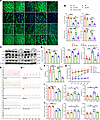 Figure 14
BMSC-MVs restore ENS structure and gastrointestinal motility in diabetic mice. (A and B) Representative immunofluorescence images (A) and quantification (B) of TUJ1, HuC/D, nNOS, and GFAP in colonic LMMP from BMSC-MV–treated mice. Scale bars: 100 μm. n = 6. (C) Western blot analysis of TUJ1, HuC/D, nNOS, and GFAP in colon tissues from BMSC-MV–treated mice. (D) Gastrointestinal motility assessment in BMSC-MV–treated mice at 16 weeks after STZ injection. n = 4–5. (E and F) Representative images (E) and quantification (F) of spontaneous colonic muscle strip contractility from BMSC-MV–treated mice (5 minutes). n = 4. (G and H) Representative contractile curve (G) and quantification (H) of colonic muscle strip induced by EFS at 2, 4, 8, 16, 32, and 64 Hz from BMSC-MV–treated mice. n = 3. (I and J) Gastrointestinal motility assessment in BMSC-MV–treated mice at 20 (I) and 24 (J) weeks after STZ injection. n = 4–5. Data are presented as mean ± SD. Statistical significance was determined by 1-way ANOVA with Tukey’s multiple-comparison test. *P < 0.05, **P < 0.01, ***P < 0.001, ****P < 0.0001; ns, P > 0.05.
Finally, we assessed the safety and immunogenicity of BMSC-MVs. No significant increase in total IgG was observed (Supplemental Figure 8A), indicating low humoral immunogenicity. Serum analysis showed that BMSC-MVs reduced alanine aminotransferase in diabetic mice without affecting aspartate aminotransferase or renal markers (Supplemental Figure 8B). In the intestine, BMSC-MVs downregulated proinflammatory cytokines Il1b and Il6 but did not alter Tnfa or antiinflammatory cytokines Il4, Il10, and Il13 (Supplemental Figure 8C). Collectively, these results support the biocompatibility, low immunogenicity, and sustained functional efficacy of BMSC-MVs as a promising therapeutic strategy for diabetes-induced ENS injury.


Copyright © 2026 American Society for Clinical Investigation
ISSN: 0021-9738 (print), 1558-8238 (online)