
Advertisement
Research ArticleDevelopmentNeuroscience
Open Access |  10.1172/JCI190954
Modulation of WNT and FGF18 enhances yield and subtype identity of hPSC-derived midbrain dopamine neurons
Tae Wan Kim,1,2,3,4 Jinghua Piao,1,5,6 Vittoria D. Bocchi,1,2 So Yeon Koo,1,2,7 Se Joon Choi,8 Fayzan Chaudhry,9,10 Donghe Yang,1,2 Hyein S. Cho,1,2 Emiliano Hergenreder,1,2,7 Lucia Ruiz Perera,1,5,6 Subhashini Joshi,5,6 Zaki Abou Mrad,1,5,6 Nidia Claros,1,5,6 Shkurte Ademi Donohue,1,5,6 Yeong Eun Im,4 Hyo Jae Jeong,4 Anika K. Frank,8 Ryan M. Walsh,1,2 Eugene V. Mosharov,8 Doron Betel,8 Viviane Tabar,1,5,6 and Lorenz Studer1,2
1Center for Stem Cell Biology and
2Developmental Biology Program, Memorial Sloan-Kettering Cancer Center, New York, New York, USA.
3Department of New Biology and
4Department of Biomedical Science and Engineering, Daegu Gyeongbuk Institute of Science and Technology (DGIST), Daegu, South Korea.
5Department of Neurosurgery and
6Cancer Biology and Genetics Program, Memorial Sloan-Kettering Cancer Center, New York, New York, USA.
7Neuroscience program, Graduate School of Medical Sciences, Weill Cornell Medical College, New York, New York, USA.
8Department of Psychiatry, Columbia University Medical Center, New York, New York, USA.
9Institute for Computational Biomedicine, Division of Hematology/Oncology, Department of Medicine, Weill Cornell Medical College, New York, New York, USA.
10Tri-Institutional Ph.D. program in Computational Biology, New York, New York, USA.
Address correspondence to: Tae Wan Kim, Department of New Biology, Daegu Gyeongbuk Institute of Science and Technology (DGIST), Daegu, South Korea, 42988. Phone: 82.53.785.6812; Email: taewan79@dgist.ac.kr. Or to: Viviane Tabar or Lorenz Studer, Department of Neurosurgery, Memorial Sloan-Kettering Cancer Center, New York, New York 10065, USA. Phone: 1.212.639.3006; Email: tarbarv@mskcc.org (VT). Phone: 1.212.639.6126; Email: studerl@mskcc.org (LS).
Authorship note: TWK, JP, and VDB are co-first authors.
Find articles by Kim, T. in: PubMed | Google Scholar
1Center for Stem Cell Biology and
2Developmental Biology Program, Memorial Sloan-Kettering Cancer Center, New York, New York, USA.
3Department of New Biology and
4Department of Biomedical Science and Engineering, Daegu Gyeongbuk Institute of Science and Technology (DGIST), Daegu, South Korea.
5Department of Neurosurgery and
6Cancer Biology and Genetics Program, Memorial Sloan-Kettering Cancer Center, New York, New York, USA.
7Neuroscience program, Graduate School of Medical Sciences, Weill Cornell Medical College, New York, New York, USA.
8Department of Psychiatry, Columbia University Medical Center, New York, New York, USA.
9Institute for Computational Biomedicine, Division of Hematology/Oncology, Department of Medicine, Weill Cornell Medical College, New York, New York, USA.
10Tri-Institutional Ph.D. program in Computational Biology, New York, New York, USA.
Address correspondence to: Tae Wan Kim, Department of New Biology, Daegu Gyeongbuk Institute of Science and Technology (DGIST), Daegu, South Korea, 42988. Phone: 82.53.785.6812; Email: taewan79@dgist.ac.kr. Or to: Viviane Tabar or Lorenz Studer, Department of Neurosurgery, Memorial Sloan-Kettering Cancer Center, New York, New York 10065, USA. Phone: 1.212.639.3006; Email: tarbarv@mskcc.org (VT). Phone: 1.212.639.6126; Email: studerl@mskcc.org (LS).
Authorship note: TWK, JP, and VDB are co-first authors.
Find articles by Piao, J. in: PubMed | Google Scholar
1Center for Stem Cell Biology and
2Developmental Biology Program, Memorial Sloan-Kettering Cancer Center, New York, New York, USA.
3Department of New Biology and
4Department of Biomedical Science and Engineering, Daegu Gyeongbuk Institute of Science and Technology (DGIST), Daegu, South Korea.
5Department of Neurosurgery and
6Cancer Biology and Genetics Program, Memorial Sloan-Kettering Cancer Center, New York, New York, USA.
7Neuroscience program, Graduate School of Medical Sciences, Weill Cornell Medical College, New York, New York, USA.
8Department of Psychiatry, Columbia University Medical Center, New York, New York, USA.
9Institute for Computational Biomedicine, Division of Hematology/Oncology, Department of Medicine, Weill Cornell Medical College, New York, New York, USA.
10Tri-Institutional Ph.D. program in Computational Biology, New York, New York, USA.
Address correspondence to: Tae Wan Kim, Department of New Biology, Daegu Gyeongbuk Institute of Science and Technology (DGIST), Daegu, South Korea, 42988. Phone: 82.53.785.6812; Email: taewan79@dgist.ac.kr. Or to: Viviane Tabar or Lorenz Studer, Department of Neurosurgery, Memorial Sloan-Kettering Cancer Center, New York, New York 10065, USA. Phone: 1.212.639.3006; Email: tarbarv@mskcc.org (VT). Phone: 1.212.639.6126; Email: studerl@mskcc.org (LS).
Authorship note: TWK, JP, and VDB are co-first authors.
Find articles by Bocchi, V. in: PubMed | Google Scholar
1Center for Stem Cell Biology and
2Developmental Biology Program, Memorial Sloan-Kettering Cancer Center, New York, New York, USA.
3Department of New Biology and
4Department of Biomedical Science and Engineering, Daegu Gyeongbuk Institute of Science and Technology (DGIST), Daegu, South Korea.
5Department of Neurosurgery and
6Cancer Biology and Genetics Program, Memorial Sloan-Kettering Cancer Center, New York, New York, USA.
7Neuroscience program, Graduate School of Medical Sciences, Weill Cornell Medical College, New York, New York, USA.
8Department of Psychiatry, Columbia University Medical Center, New York, New York, USA.
9Institute for Computational Biomedicine, Division of Hematology/Oncology, Department of Medicine, Weill Cornell Medical College, New York, New York, USA.
10Tri-Institutional Ph.D. program in Computational Biology, New York, New York, USA.
Address correspondence to: Tae Wan Kim, Department of New Biology, Daegu Gyeongbuk Institute of Science and Technology (DGIST), Daegu, South Korea, 42988. Phone: 82.53.785.6812; Email: taewan79@dgist.ac.kr. Or to: Viviane Tabar or Lorenz Studer, Department of Neurosurgery, Memorial Sloan-Kettering Cancer Center, New York, New York 10065, USA. Phone: 1.212.639.3006; Email: tarbarv@mskcc.org (VT). Phone: 1.212.639.6126; Email: studerl@mskcc.org (LS).
Authorship note: TWK, JP, and VDB are co-first authors.
Find articles by Koo, S. in: PubMed | Google Scholar
1Center for Stem Cell Biology and
2Developmental Biology Program, Memorial Sloan-Kettering Cancer Center, New York, New York, USA.
3Department of New Biology and
4Department of Biomedical Science and Engineering, Daegu Gyeongbuk Institute of Science and Technology (DGIST), Daegu, South Korea.
5Department of Neurosurgery and
6Cancer Biology and Genetics Program, Memorial Sloan-Kettering Cancer Center, New York, New York, USA.
7Neuroscience program, Graduate School of Medical Sciences, Weill Cornell Medical College, New York, New York, USA.
8Department of Psychiatry, Columbia University Medical Center, New York, New York, USA.
9Institute for Computational Biomedicine, Division of Hematology/Oncology, Department of Medicine, Weill Cornell Medical College, New York, New York, USA.
10Tri-Institutional Ph.D. program in Computational Biology, New York, New York, USA.
Address correspondence to: Tae Wan Kim, Department of New Biology, Daegu Gyeongbuk Institute of Science and Technology (DGIST), Daegu, South Korea, 42988. Phone: 82.53.785.6812; Email: taewan79@dgist.ac.kr. Or to: Viviane Tabar or Lorenz Studer, Department of Neurosurgery, Memorial Sloan-Kettering Cancer Center, New York, New York 10065, USA. Phone: 1.212.639.3006; Email: tarbarv@mskcc.org (VT). Phone: 1.212.639.6126; Email: studerl@mskcc.org (LS).
Authorship note: TWK, JP, and VDB are co-first authors.
Find articles by Choi, S. in: PubMed | Google Scholar
1Center for Stem Cell Biology and
2Developmental Biology Program, Memorial Sloan-Kettering Cancer Center, New York, New York, USA.
3Department of New Biology and
4Department of Biomedical Science and Engineering, Daegu Gyeongbuk Institute of Science and Technology (DGIST), Daegu, South Korea.
5Department of Neurosurgery and
6Cancer Biology and Genetics Program, Memorial Sloan-Kettering Cancer Center, New York, New York, USA.
7Neuroscience program, Graduate School of Medical Sciences, Weill Cornell Medical College, New York, New York, USA.
8Department of Psychiatry, Columbia University Medical Center, New York, New York, USA.
9Institute for Computational Biomedicine, Division of Hematology/Oncology, Department of Medicine, Weill Cornell Medical College, New York, New York, USA.
10Tri-Institutional Ph.D. program in Computational Biology, New York, New York, USA.
Address correspondence to: Tae Wan Kim, Department of New Biology, Daegu Gyeongbuk Institute of Science and Technology (DGIST), Daegu, South Korea, 42988. Phone: 82.53.785.6812; Email: taewan79@dgist.ac.kr. Or to: Viviane Tabar or Lorenz Studer, Department of Neurosurgery, Memorial Sloan-Kettering Cancer Center, New York, New York 10065, USA. Phone: 1.212.639.3006; Email: tarbarv@mskcc.org (VT). Phone: 1.212.639.6126; Email: studerl@mskcc.org (LS).
Authorship note: TWK, JP, and VDB are co-first authors.
Find articles by Chaudhry, F. in: PubMed | Google Scholar
1Center for Stem Cell Biology and
2Developmental Biology Program, Memorial Sloan-Kettering Cancer Center, New York, New York, USA.
3Department of New Biology and
4Department of Biomedical Science and Engineering, Daegu Gyeongbuk Institute of Science and Technology (DGIST), Daegu, South Korea.
5Department of Neurosurgery and
6Cancer Biology and Genetics Program, Memorial Sloan-Kettering Cancer Center, New York, New York, USA.
7Neuroscience program, Graduate School of Medical Sciences, Weill Cornell Medical College, New York, New York, USA.
8Department of Psychiatry, Columbia University Medical Center, New York, New York, USA.
9Institute for Computational Biomedicine, Division of Hematology/Oncology, Department of Medicine, Weill Cornell Medical College, New York, New York, USA.
10Tri-Institutional Ph.D. program in Computational Biology, New York, New York, USA.
Address correspondence to: Tae Wan Kim, Department of New Biology, Daegu Gyeongbuk Institute of Science and Technology (DGIST), Daegu, South Korea, 42988. Phone: 82.53.785.6812; Email: taewan79@dgist.ac.kr. Or to: Viviane Tabar or Lorenz Studer, Department of Neurosurgery, Memorial Sloan-Kettering Cancer Center, New York, New York 10065, USA. Phone: 1.212.639.3006; Email: tarbarv@mskcc.org (VT). Phone: 1.212.639.6126; Email: studerl@mskcc.org (LS).
Authorship note: TWK, JP, and VDB are co-first authors.
Find articles by Yang, D. in: PubMed | Google Scholar
1Center for Stem Cell Biology and
2Developmental Biology Program, Memorial Sloan-Kettering Cancer Center, New York, New York, USA.
3Department of New Biology and
4Department of Biomedical Science and Engineering, Daegu Gyeongbuk Institute of Science and Technology (DGIST), Daegu, South Korea.
5Department of Neurosurgery and
6Cancer Biology and Genetics Program, Memorial Sloan-Kettering Cancer Center, New York, New York, USA.
7Neuroscience program, Graduate School of Medical Sciences, Weill Cornell Medical College, New York, New York, USA.
8Department of Psychiatry, Columbia University Medical Center, New York, New York, USA.
9Institute for Computational Biomedicine, Division of Hematology/Oncology, Department of Medicine, Weill Cornell Medical College, New York, New York, USA.
10Tri-Institutional Ph.D. program in Computational Biology, New York, New York, USA.
Address correspondence to: Tae Wan Kim, Department of New Biology, Daegu Gyeongbuk Institute of Science and Technology (DGIST), Daegu, South Korea, 42988. Phone: 82.53.785.6812; Email: taewan79@dgist.ac.kr. Or to: Viviane Tabar or Lorenz Studer, Department of Neurosurgery, Memorial Sloan-Kettering Cancer Center, New York, New York 10065, USA. Phone: 1.212.639.3006; Email: tarbarv@mskcc.org (VT). Phone: 1.212.639.6126; Email: studerl@mskcc.org (LS).
Authorship note: TWK, JP, and VDB are co-first authors.
Find articles by Cho, H. in: PubMed | Google Scholar
1Center for Stem Cell Biology and
2Developmental Biology Program, Memorial Sloan-Kettering Cancer Center, New York, New York, USA.
3Department of New Biology and
4Department of Biomedical Science and Engineering, Daegu Gyeongbuk Institute of Science and Technology (DGIST), Daegu, South Korea.
5Department of Neurosurgery and
6Cancer Biology and Genetics Program, Memorial Sloan-Kettering Cancer Center, New York, New York, USA.
7Neuroscience program, Graduate School of Medical Sciences, Weill Cornell Medical College, New York, New York, USA.
8Department of Psychiatry, Columbia University Medical Center, New York, New York, USA.
9Institute for Computational Biomedicine, Division of Hematology/Oncology, Department of Medicine, Weill Cornell Medical College, New York, New York, USA.
10Tri-Institutional Ph.D. program in Computational Biology, New York, New York, USA.
Address correspondence to: Tae Wan Kim, Department of New Biology, Daegu Gyeongbuk Institute of Science and Technology (DGIST), Daegu, South Korea, 42988. Phone: 82.53.785.6812; Email: taewan79@dgist.ac.kr. Or to: Viviane Tabar or Lorenz Studer, Department of Neurosurgery, Memorial Sloan-Kettering Cancer Center, New York, New York 10065, USA. Phone: 1.212.639.3006; Email: tarbarv@mskcc.org (VT). Phone: 1.212.639.6126; Email: studerl@mskcc.org (LS).
Authorship note: TWK, JP, and VDB are co-first authors.
Find articles by Hergenreder, E. in: PubMed | Google Scholar
1Center for Stem Cell Biology and
2Developmental Biology Program, Memorial Sloan-Kettering Cancer Center, New York, New York, USA.
3Department of New Biology and
4Department of Biomedical Science and Engineering, Daegu Gyeongbuk Institute of Science and Technology (DGIST), Daegu, South Korea.
5Department of Neurosurgery and
6Cancer Biology and Genetics Program, Memorial Sloan-Kettering Cancer Center, New York, New York, USA.
7Neuroscience program, Graduate School of Medical Sciences, Weill Cornell Medical College, New York, New York, USA.
8Department of Psychiatry, Columbia University Medical Center, New York, New York, USA.
9Institute for Computational Biomedicine, Division of Hematology/Oncology, Department of Medicine, Weill Cornell Medical College, New York, New York, USA.
10Tri-Institutional Ph.D. program in Computational Biology, New York, New York, USA.
Address correspondence to: Tae Wan Kim, Department of New Biology, Daegu Gyeongbuk Institute of Science and Technology (DGIST), Daegu, South Korea, 42988. Phone: 82.53.785.6812; Email: taewan79@dgist.ac.kr. Or to: Viviane Tabar or Lorenz Studer, Department of Neurosurgery, Memorial Sloan-Kettering Cancer Center, New York, New York 10065, USA. Phone: 1.212.639.3006; Email: tarbarv@mskcc.org (VT). Phone: 1.212.639.6126; Email: studerl@mskcc.org (LS).
Authorship note: TWK, JP, and VDB are co-first authors.
Find articles by Ruiz Perera, L. in: PubMed | Google Scholar
1Center for Stem Cell Biology and
2Developmental Biology Program, Memorial Sloan-Kettering Cancer Center, New York, New York, USA.
3Department of New Biology and
4Department of Biomedical Science and Engineering, Daegu Gyeongbuk Institute of Science and Technology (DGIST), Daegu, South Korea.
5Department of Neurosurgery and
6Cancer Biology and Genetics Program, Memorial Sloan-Kettering Cancer Center, New York, New York, USA.
7Neuroscience program, Graduate School of Medical Sciences, Weill Cornell Medical College, New York, New York, USA.
8Department of Psychiatry, Columbia University Medical Center, New York, New York, USA.
9Institute for Computational Biomedicine, Division of Hematology/Oncology, Department of Medicine, Weill Cornell Medical College, New York, New York, USA.
10Tri-Institutional Ph.D. program in Computational Biology, New York, New York, USA.
Address correspondence to: Tae Wan Kim, Department of New Biology, Daegu Gyeongbuk Institute of Science and Technology (DGIST), Daegu, South Korea, 42988. Phone: 82.53.785.6812; Email: taewan79@dgist.ac.kr. Or to: Viviane Tabar or Lorenz Studer, Department of Neurosurgery, Memorial Sloan-Kettering Cancer Center, New York, New York 10065, USA. Phone: 1.212.639.3006; Email: tarbarv@mskcc.org (VT). Phone: 1.212.639.6126; Email: studerl@mskcc.org (LS).
Authorship note: TWK, JP, and VDB are co-first authors.
Find articles by Joshi, S. in: PubMed | Google Scholar
1Center for Stem Cell Biology and
2Developmental Biology Program, Memorial Sloan-Kettering Cancer Center, New York, New York, USA.
3Department of New Biology and
4Department of Biomedical Science and Engineering, Daegu Gyeongbuk Institute of Science and Technology (DGIST), Daegu, South Korea.
5Department of Neurosurgery and
6Cancer Biology and Genetics Program, Memorial Sloan-Kettering Cancer Center, New York, New York, USA.
7Neuroscience program, Graduate School of Medical Sciences, Weill Cornell Medical College, New York, New York, USA.
8Department of Psychiatry, Columbia University Medical Center, New York, New York, USA.
9Institute for Computational Biomedicine, Division of Hematology/Oncology, Department of Medicine, Weill Cornell Medical College, New York, New York, USA.
10Tri-Institutional Ph.D. program in Computational Biology, New York, New York, USA.
Address correspondence to: Tae Wan Kim, Department of New Biology, Daegu Gyeongbuk Institute of Science and Technology (DGIST), Daegu, South Korea, 42988. Phone: 82.53.785.6812; Email: taewan79@dgist.ac.kr. Or to: Viviane Tabar or Lorenz Studer, Department of Neurosurgery, Memorial Sloan-Kettering Cancer Center, New York, New York 10065, USA. Phone: 1.212.639.3006; Email: tarbarv@mskcc.org (VT). Phone: 1.212.639.6126; Email: studerl@mskcc.org (LS).
Authorship note: TWK, JP, and VDB are co-first authors.
Find articles by Abou Mrad, Z. in: PubMed | Google Scholar
1Center for Stem Cell Biology and
2Developmental Biology Program, Memorial Sloan-Kettering Cancer Center, New York, New York, USA.
3Department of New Biology and
4Department of Biomedical Science and Engineering, Daegu Gyeongbuk Institute of Science and Technology (DGIST), Daegu, South Korea.
5Department of Neurosurgery and
6Cancer Biology and Genetics Program, Memorial Sloan-Kettering Cancer Center, New York, New York, USA.
7Neuroscience program, Graduate School of Medical Sciences, Weill Cornell Medical College, New York, New York, USA.
8Department of Psychiatry, Columbia University Medical Center, New York, New York, USA.
9Institute for Computational Biomedicine, Division of Hematology/Oncology, Department of Medicine, Weill Cornell Medical College, New York, New York, USA.
10Tri-Institutional Ph.D. program in Computational Biology, New York, New York, USA.
Address correspondence to: Tae Wan Kim, Department of New Biology, Daegu Gyeongbuk Institute of Science and Technology (DGIST), Daegu, South Korea, 42988. Phone: 82.53.785.6812; Email: taewan79@dgist.ac.kr. Or to: Viviane Tabar or Lorenz Studer, Department of Neurosurgery, Memorial Sloan-Kettering Cancer Center, New York, New York 10065, USA. Phone: 1.212.639.3006; Email: tarbarv@mskcc.org (VT). Phone: 1.212.639.6126; Email: studerl@mskcc.org (LS).
Authorship note: TWK, JP, and VDB are co-first authors.
Find articles by Claros, N. in: PubMed | Google Scholar
1Center for Stem Cell Biology and
2Developmental Biology Program, Memorial Sloan-Kettering Cancer Center, New York, New York, USA.
3Department of New Biology and
4Department of Biomedical Science and Engineering, Daegu Gyeongbuk Institute of Science and Technology (DGIST), Daegu, South Korea.
5Department of Neurosurgery and
6Cancer Biology and Genetics Program, Memorial Sloan-Kettering Cancer Center, New York, New York, USA.
7Neuroscience program, Graduate School of Medical Sciences, Weill Cornell Medical College, New York, New York, USA.
8Department of Psychiatry, Columbia University Medical Center, New York, New York, USA.
9Institute for Computational Biomedicine, Division of Hematology/Oncology, Department of Medicine, Weill Cornell Medical College, New York, New York, USA.
10Tri-Institutional Ph.D. program in Computational Biology, New York, New York, USA.
Address correspondence to: Tae Wan Kim, Department of New Biology, Daegu Gyeongbuk Institute of Science and Technology (DGIST), Daegu, South Korea, 42988. Phone: 82.53.785.6812; Email: taewan79@dgist.ac.kr. Or to: Viviane Tabar or Lorenz Studer, Department of Neurosurgery, Memorial Sloan-Kettering Cancer Center, New York, New York 10065, USA. Phone: 1.212.639.3006; Email: tarbarv@mskcc.org (VT). Phone: 1.212.639.6126; Email: studerl@mskcc.org (LS).
Authorship note: TWK, JP, and VDB are co-first authors.
Find articles by Donohue, S. in: PubMed | Google Scholar
1Center for Stem Cell Biology and
2Developmental Biology Program, Memorial Sloan-Kettering Cancer Center, New York, New York, USA.
3Department of New Biology and
4Department of Biomedical Science and Engineering, Daegu Gyeongbuk Institute of Science and Technology (DGIST), Daegu, South Korea.
5Department of Neurosurgery and
6Cancer Biology and Genetics Program, Memorial Sloan-Kettering Cancer Center, New York, New York, USA.
7Neuroscience program, Graduate School of Medical Sciences, Weill Cornell Medical College, New York, New York, USA.
8Department of Psychiatry, Columbia University Medical Center, New York, New York, USA.
9Institute for Computational Biomedicine, Division of Hematology/Oncology, Department of Medicine, Weill Cornell Medical College, New York, New York, USA.
10Tri-Institutional Ph.D. program in Computational Biology, New York, New York, USA.
Address correspondence to: Tae Wan Kim, Department of New Biology, Daegu Gyeongbuk Institute of Science and Technology (DGIST), Daegu, South Korea, 42988. Phone: 82.53.785.6812; Email: taewan79@dgist.ac.kr. Or to: Viviane Tabar or Lorenz Studer, Department of Neurosurgery, Memorial Sloan-Kettering Cancer Center, New York, New York 10065, USA. Phone: 1.212.639.3006; Email: tarbarv@mskcc.org (VT). Phone: 1.212.639.6126; Email: studerl@mskcc.org (LS).
Authorship note: TWK, JP, and VDB are co-first authors.
Find articles by Eun Im, Y. in: PubMed | Google Scholar
1Center for Stem Cell Biology and
2Developmental Biology Program, Memorial Sloan-Kettering Cancer Center, New York, New York, USA.
3Department of New Biology and
4Department of Biomedical Science and Engineering, Daegu Gyeongbuk Institute of Science and Technology (DGIST), Daegu, South Korea.
5Department of Neurosurgery and
6Cancer Biology and Genetics Program, Memorial Sloan-Kettering Cancer Center, New York, New York, USA.
7Neuroscience program, Graduate School of Medical Sciences, Weill Cornell Medical College, New York, New York, USA.
8Department of Psychiatry, Columbia University Medical Center, New York, New York, USA.
9Institute for Computational Biomedicine, Division of Hematology/Oncology, Department of Medicine, Weill Cornell Medical College, New York, New York, USA.
10Tri-Institutional Ph.D. program in Computational Biology, New York, New York, USA.
Address correspondence to: Tae Wan Kim, Department of New Biology, Daegu Gyeongbuk Institute of Science and Technology (DGIST), Daegu, South Korea, 42988. Phone: 82.53.785.6812; Email: taewan79@dgist.ac.kr. Or to: Viviane Tabar or Lorenz Studer, Department of Neurosurgery, Memorial Sloan-Kettering Cancer Center, New York, New York 10065, USA. Phone: 1.212.639.3006; Email: tarbarv@mskcc.org (VT). Phone: 1.212.639.6126; Email: studerl@mskcc.org (LS).
Authorship note: TWK, JP, and VDB are co-first authors.
Find articles by Jeong, H. in: PubMed | Google Scholar
1Center for Stem Cell Biology and
2Developmental Biology Program, Memorial Sloan-Kettering Cancer Center, New York, New York, USA.
3Department of New Biology and
4Department of Biomedical Science and Engineering, Daegu Gyeongbuk Institute of Science and Technology (DGIST), Daegu, South Korea.
5Department of Neurosurgery and
6Cancer Biology and Genetics Program, Memorial Sloan-Kettering Cancer Center, New York, New York, USA.
7Neuroscience program, Graduate School of Medical Sciences, Weill Cornell Medical College, New York, New York, USA.
8Department of Psychiatry, Columbia University Medical Center, New York, New York, USA.
9Institute for Computational Biomedicine, Division of Hematology/Oncology, Department of Medicine, Weill Cornell Medical College, New York, New York, USA.
10Tri-Institutional Ph.D. program in Computational Biology, New York, New York, USA.
Address correspondence to: Tae Wan Kim, Department of New Biology, Daegu Gyeongbuk Institute of Science and Technology (DGIST), Daegu, South Korea, 42988. Phone: 82.53.785.6812; Email: taewan79@dgist.ac.kr. Or to: Viviane Tabar or Lorenz Studer, Department of Neurosurgery, Memorial Sloan-Kettering Cancer Center, New York, New York 10065, USA. Phone: 1.212.639.3006; Email: tarbarv@mskcc.org (VT). Phone: 1.212.639.6126; Email: studerl@mskcc.org (LS).
Authorship note: TWK, JP, and VDB are co-first authors.
Find articles by Frank, A. in: PubMed | Google Scholar
1Center for Stem Cell Biology and
2Developmental Biology Program, Memorial Sloan-Kettering Cancer Center, New York, New York, USA.
3Department of New Biology and
4Department of Biomedical Science and Engineering, Daegu Gyeongbuk Institute of Science and Technology (DGIST), Daegu, South Korea.
5Department of Neurosurgery and
6Cancer Biology and Genetics Program, Memorial Sloan-Kettering Cancer Center, New York, New York, USA.
7Neuroscience program, Graduate School of Medical Sciences, Weill Cornell Medical College, New York, New York, USA.
8Department of Psychiatry, Columbia University Medical Center, New York, New York, USA.
9Institute for Computational Biomedicine, Division of Hematology/Oncology, Department of Medicine, Weill Cornell Medical College, New York, New York, USA.
10Tri-Institutional Ph.D. program in Computational Biology, New York, New York, USA.
Address correspondence to: Tae Wan Kim, Department of New Biology, Daegu Gyeongbuk Institute of Science and Technology (DGIST), Daegu, South Korea, 42988. Phone: 82.53.785.6812; Email: taewan79@dgist.ac.kr. Or to: Viviane Tabar or Lorenz Studer, Department of Neurosurgery, Memorial Sloan-Kettering Cancer Center, New York, New York 10065, USA. Phone: 1.212.639.3006; Email: tarbarv@mskcc.org (VT). Phone: 1.212.639.6126; Email: studerl@mskcc.org (LS).
Authorship note: TWK, JP, and VDB are co-first authors.
Find articles by Walsh, R. in: PubMed | Google Scholar
1Center for Stem Cell Biology and
2Developmental Biology Program, Memorial Sloan-Kettering Cancer Center, New York, New York, USA.
3Department of New Biology and
4Department of Biomedical Science and Engineering, Daegu Gyeongbuk Institute of Science and Technology (DGIST), Daegu, South Korea.
5Department of Neurosurgery and
6Cancer Biology and Genetics Program, Memorial Sloan-Kettering Cancer Center, New York, New York, USA.
7Neuroscience program, Graduate School of Medical Sciences, Weill Cornell Medical College, New York, New York, USA.
8Department of Psychiatry, Columbia University Medical Center, New York, New York, USA.
9Institute for Computational Biomedicine, Division of Hematology/Oncology, Department of Medicine, Weill Cornell Medical College, New York, New York, USA.
10Tri-Institutional Ph.D. program in Computational Biology, New York, New York, USA.
Address correspondence to: Tae Wan Kim, Department of New Biology, Daegu Gyeongbuk Institute of Science and Technology (DGIST), Daegu, South Korea, 42988. Phone: 82.53.785.6812; Email: taewan79@dgist.ac.kr. Or to: Viviane Tabar or Lorenz Studer, Department of Neurosurgery, Memorial Sloan-Kettering Cancer Center, New York, New York 10065, USA. Phone: 1.212.639.3006; Email: tarbarv@mskcc.org (VT). Phone: 1.212.639.6126; Email: studerl@mskcc.org (LS).
Authorship note: TWK, JP, and VDB are co-first authors.
Find articles by Mosharov, E. in: PubMed | Google Scholar
1Center for Stem Cell Biology and
2Developmental Biology Program, Memorial Sloan-Kettering Cancer Center, New York, New York, USA.
3Department of New Biology and
4Department of Biomedical Science and Engineering, Daegu Gyeongbuk Institute of Science and Technology (DGIST), Daegu, South Korea.
5Department of Neurosurgery and
6Cancer Biology and Genetics Program, Memorial Sloan-Kettering Cancer Center, New York, New York, USA.
7Neuroscience program, Graduate School of Medical Sciences, Weill Cornell Medical College, New York, New York, USA.
8Department of Psychiatry, Columbia University Medical Center, New York, New York, USA.
9Institute for Computational Biomedicine, Division of Hematology/Oncology, Department of Medicine, Weill Cornell Medical College, New York, New York, USA.
10Tri-Institutional Ph.D. program in Computational Biology, New York, New York, USA.
Address correspondence to: Tae Wan Kim, Department of New Biology, Daegu Gyeongbuk Institute of Science and Technology (DGIST), Daegu, South Korea, 42988. Phone: 82.53.785.6812; Email: taewan79@dgist.ac.kr. Or to: Viviane Tabar or Lorenz Studer, Department of Neurosurgery, Memorial Sloan-Kettering Cancer Center, New York, New York 10065, USA. Phone: 1.212.639.3006; Email: tarbarv@mskcc.org (VT). Phone: 1.212.639.6126; Email: studerl@mskcc.org (LS).
Authorship note: TWK, JP, and VDB are co-first authors.
Find articles by Betel, D. in: PubMed | Google Scholar
1Center for Stem Cell Biology and
2Developmental Biology Program, Memorial Sloan-Kettering Cancer Center, New York, New York, USA.
3Department of New Biology and
4Department of Biomedical Science and Engineering, Daegu Gyeongbuk Institute of Science and Technology (DGIST), Daegu, South Korea.
5Department of Neurosurgery and
6Cancer Biology and Genetics Program, Memorial Sloan-Kettering Cancer Center, New York, New York, USA.
7Neuroscience program, Graduate School of Medical Sciences, Weill Cornell Medical College, New York, New York, USA.
8Department of Psychiatry, Columbia University Medical Center, New York, New York, USA.
9Institute for Computational Biomedicine, Division of Hematology/Oncology, Department of Medicine, Weill Cornell Medical College, New York, New York, USA.
10Tri-Institutional Ph.D. program in Computational Biology, New York, New York, USA.
Address correspondence to: Tae Wan Kim, Department of New Biology, Daegu Gyeongbuk Institute of Science and Technology (DGIST), Daegu, South Korea, 42988. Phone: 82.53.785.6812; Email: taewan79@dgist.ac.kr. Or to: Viviane Tabar or Lorenz Studer, Department of Neurosurgery, Memorial Sloan-Kettering Cancer Center, New York, New York 10065, USA. Phone: 1.212.639.3006; Email: tarbarv@mskcc.org (VT). Phone: 1.212.639.6126; Email: studerl@mskcc.org (LS).
Authorship note: TWK, JP, and VDB are co-first authors.
Find articles by Tabar, V. in: PubMed | Google Scholar
1Center for Stem Cell Biology and
2Developmental Biology Program, Memorial Sloan-Kettering Cancer Center, New York, New York, USA.
3Department of New Biology and
4Department of Biomedical Science and Engineering, Daegu Gyeongbuk Institute of Science and Technology (DGIST), Daegu, South Korea.
5Department of Neurosurgery and
6Cancer Biology and Genetics Program, Memorial Sloan-Kettering Cancer Center, New York, New York, USA.
7Neuroscience program, Graduate School of Medical Sciences, Weill Cornell Medical College, New York, New York, USA.
8Department of Psychiatry, Columbia University Medical Center, New York, New York, USA.
9Institute for Computational Biomedicine, Division of Hematology/Oncology, Department of Medicine, Weill Cornell Medical College, New York, New York, USA.
10Tri-Institutional Ph.D. program in Computational Biology, New York, New York, USA.
Address correspondence to: Tae Wan Kim, Department of New Biology, Daegu Gyeongbuk Institute of Science and Technology (DGIST), Daegu, South Korea, 42988. Phone: 82.53.785.6812; Email: taewan79@dgist.ac.kr. Or to: Viviane Tabar or Lorenz Studer, Department of Neurosurgery, Memorial Sloan-Kettering Cancer Center, New York, New York 10065, USA. Phone: 1.212.639.3006; Email: tarbarv@mskcc.org (VT). Phone: 1.212.639.6126; Email: studerl@mskcc.org (LS).
Authorship note: TWK, JP, and VDB are co-first authors.
Find articles by
Studer, L.
in:
PubMed
|
Google Scholar
|

Published May 15, 2026 - More info
J Clin Invest. 2026;136(10):e190954. https://doi.org/10.1172/JCI190954.
© 2026 Kim et al. This work is licensed under the Creative Commons Attribution 4.0 International License. To view a copy of this license, visit http://creativecommons.org/licenses/by/4.0/.
Received: January 9, 2025; Accepted: March 12, 2026

-
Results
FGF18 and IWP2 at neurogenic conversion induce improved yield of mDA neurons. We recently reported on the Boost protocol to derive mDA neurons suitable for clinical translation involving the biphasic activation of WNT signaling and resulting in robust EN1 levels at day 11 of differentiation (6). However, EN1 expression in the Boost protocol decreases by day 16 (Supplemental Figure 1A; supplemental material available online with this article; https://doi.org/10.1172/JCI190954DS1). In contrast, EN1 remains highly expressed in primary mDA lineages (30, 31) and FGF signaling is required to sustain its expression (32). Several groups have used FGF8b treatment during either early or late stages of mDA neuron differentiation (9, 19). In the Boost protocol, exogenous FGF8b is not required for EN1 induction at the floorplate stage, as WNT-Boost triggers endogenous FGF8b expression and expression of FGF8-dependent genes such as PAX2, PAX5, and PAX8 (6). In contrast, late FGF8b during neurogenic differentiation maintained EN1 (Supplemental Figure 1, B and C) but also induced off-target markers such as SIX1 and SMA, a finding highly dependent on the onset and duration of FGF8b treatment (Supplemental Figure 1, B and C). To overcome this trade-off, we tested an alternative ligand FGF18 (33), which unlike FGF8b, is selectively expressed in the midbrain (34). Both FGF8b and FGF18 significantly increased EN1 expression, similar to a recent study testing the ability of FGF17 and FGF8 to induce EN1 (35). However, FGF18 showed reduced SIX1, SMA, and COL1A1 induction compared to FGF8b treatment (Supplemental Figure 1, D–F).
While WNT activation is essential for EN1 induction, extended canonical WNT signaling may interfere with mDA neurogenesis (36–38). Accordingly, we conducted studies using the porcupine inhibitor IWP2 to trigger timed abrogation of both canonical and noncanonical WNT signaling. Flow analysis, immunofluorescent staining, and RT-qPCR demonstrated that adding IWP2 together with FGF18 during neurogenic conversion (called Boost+) leads to a high percentage of quadruple FOXA2+LMX1A+OTX2+EN1+ cells at day 16 comparable to FGF18 alone (Figure 1, A–C, and Supplemental Figure 1, G and H). However, cotreatment with FGF18 and IWP2 induced increased ALDH1A1 expression (Supplemental Figure 1H). Boost+ was similarly effective across additional hPSC lines, including MEL1 hESCs and J1 iPSCs (Supplemental Figure 1, I and J). At postmitotic stages, Boost+ mDA neurons exhibited higher levels of key identity markers, including EN1 and PITX3 (Figure 1, D and E). Quantitative RNA FISH and studies on purified mDA neurons based on surface marker expression (39) confirmed higher expression of PITX3 and dopamine transporter (DAT) in Boost+ versus Boost mDA neurons (Figure 1, F and G, and Supplemental Figure 2I).
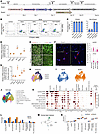 Figure 1
FGF18 and IWP2 at neurogenic conversion induce improved yield of mDA neurons. (A) Schematic illustration of the Boost and Boost+ mDA differentiation method. (B) Representative flow cytometry dot plots showing intracellular expression of FOXA2 and EN1 in day 16 progenitors differentiated under the indicated conditions. IWP2 and/or FGF18 were treated from day 12 to 16. (C) Quantification of FOXA2+ and FOXA2+EN1+ populations across differentiation conditions (n = 3; Mean ± SEM) from B. (D) qRT-PCR analysis of mDA neurons at day 40 for mDA neuron markers derived from the Boost and Boost+ methods (n = 4; Mean ± SEM). *P < 0.05, **P < 0.01. (E) Representative immunofluorescence images showing expression of mDA neuron markers FOXA2, TH, and EN1 in day 60 neurons. (F) Representative confocal image of RNA FISH of day 45 mDA neurons, colabeled with TH, mature mDA markers (left). Human RNA probes against NURR1 and PITX3 were used. The number of RNA FISH dots for each RNA gene (NURR1 and PITX3) was quantified per TH+ mDA neurons at day 35 and 45 (right). n = 4, 2-tailed Student’s t test, *P < 0.05. Scale bars: 100 μm (E), 7 μm (F left), 5 μm (F right). (G) qRT-PCR analysis of homogeneous postmitotic mDA neurons purified at day 40 using CD49e and CD184 for mDA markers in the Boost and Boost+ conditions (n = 3; Mean ± SEM). *P < 0.05. (H–J) UMAP plots of in vitro scRNA-seq data colored by timepoint (H), protocol (I), and cell type (J). (K) Dotplot of canonical marker genes of midbrain progenitors, DA neuron subtypes, and off target cells. (L) Overall percentage of cell types across protocols. (M) UMAP of fetal midbrain dopamine (DA) neurons (49), selected to determine highly specific markers. (N) Boxplots showing the distribution of enrichment scores for each cell type and protocol according to fetal dopamine neurons. Mann-Whitney rank test and Benjamini-Hochberg correction; ***P < 0.001.
We next performed scRNA-seq at days 16, 25, and 40 under Boost and Boost+ conditions (Figure 1, H and I) and classified cell clusters using canonical markers (Figure 1, J and K, and Supplemental Figure 2A). At day 16, cultures comprised ventral floor plate progenitors (Supplemental Figure 2B), progressed to mixed neuroblast–neuron populations by day 25 (Supplemental Fig. 2C), and neuronal lineages by day 40 (Supplemental Figure 2D). Cell-cycle analysis revealed a higher proportion of cycling cells in the Boost versus Boost+ protocol at day 16 (Supplemental Figure 2E). Expression of TH, NR4A2, and low expression of PITX3 defined mDA neurons PITX3 with a subset expressing EN1 (Figure 1K). TH+EN1+ mDA neurons increased approximately 3-fold under Boost+ by day 40 (15% to 47%; Supplemental Figure 2D). Conversely, a rostral DA population (rDA neuron) expressing TH, NR4A2, IRX2, IRX5, and PITX2 was enriched under Boost conditions (Figure 1, K and L, and Supplemental Figure 2, A, C, and D). A small off-target population was identified expressing dorsal diencephalic markers of prethalamic (PAX6, LHX2, LHX9, LEF1, TCF7L2, SLC17A6) (40–44) and pretectal fates (MEIS2, LHX1, BARHL2, TBR1) (41, 43, 45). Furthermore, we observed a small population of TH and GAD2-expressing cells that could represent an immature TH+GAD2+EBF2+CALCRL+ population (Figure 1K and Supplemental Figure 2, A–D) recently discovered (46) within the adult midbrain. We did not detect subthalamic nucleus (STN), red nucleus, or oculomotor neurons (OMNT). Although some COL1A1+ cells were observed in the Boost+ (Supplemental Figure 2, G and H), bona fide VLMCs were not identified based on lack of PDGFRA expression (Figure 1K and Supplemental Figure 2A).
Lineage markers did not fully segregate, with some cells coexpressing mDA markers (TH, NR4A2, EN1) and subthalamic markers such as PITX2 or POU4F1. These hybrid states likely reflect in vitro stress responses, as reported in organoids (47), which impede lineage resolution. Nevertheless, Boost+ increased mature TH+EN1+ mDA neurons threefold and reduced rostral and diencephalic off-targets from 22% (Boost) to 8% (Boost+) (Figure 1L, and Supplemental Figure 2F). To assess mDA neuron fidelity, we scored in vitro–derived cells against a 100-gene signature of human fetal mDA neurons (48) (Figure 1M). TH+EN1+ neurons generated under Boost+ achieved the highest similarity to primary fetal mDA neurons (Figure 1N).
Improved dopaminergic function of Boost+-derived mDA neurons in vitro. We measured the emergence of spontaneous in vitro network activity in mDA neurons at day 50 using a high-density micro-electrode array (MEA) containing 4,096 electrodes. Boost+-derived mDA neurons showed higher levels of spontaneous activity than Boost (Figure 2A). In addition, high-performance liquid chromatography (HPLC) analysis of TH+ mDA neurons at day 60 in the Boost+ protocol showed a 3–5-fold increase in dopamine levels upon KCl or Ca2+ stimulation (Figure 2B). Basal membrane properties of mDA neurons (Boost+ versus Boost) by patch-clamp recording on day 60 showed no major differences, though Boost+ mDA neurons showed a trend toward lower input resistance, higher cell capacitance, and an increased spontaneous action potential (sAP) frequency (Figure 2, C–F). Upon current injections, Boost+ mDA neurons showed an increased evoked action potential (eAP) frequency upon depolarization, maintained stimulated firing activity for a longer time, and had a higher fraction of responding neurons than in Boost protocol (Figure 2, G–I).
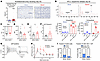 Figure 2
Improved dopaminergic function of Boost+ mDA neurons in vitro. (A) High-density multielectrode array recordings reveal increased firing rates at day 50 in mDA neuron derived from Boost+ versus Boost protocols. Left, mean firing rates calculated from 60 s of activity in the 1 of 64 most active electrodes of each probe (n = 256 electrodes from 4 MEA probes). Right, representative spike raster-gram displaying 1 m MEA recordings. Data are represented as mean ± SD. ***P < 0.001. (B) Representative traces (top) and statistical analysis (bottom) of HPLC recording of DA release evoked by 80 mM KCl stimulation (5 min). DA concentration in fmol per 2 × 10⁵ cells divided by the fraction of TH+ mDA neurons (0.25 in Boost and 0.41 in Boost+. Stimulation in the absence of extracellular Ca2+ is used as a control. ***P < 0.001 from all other groups by 1-way ANOVA (n = 10 culture dishes for control and KCl groups and n = 4 for KCl in 0 mM Ca2+). (C–F) Electrophysiological characteristics of cultured mDA neurons at day 60, including resting membrane potential (C, n = 14 and 10 cells), input resistance (D, n = 14 and 10), membrane capacitance (E, n = 12 and 8), and spontaneous AP frequency (F, n = 10 and 6). (G) Examples of mDA neuron responses to current injections. (H) Dependence of spike frequency evoked by current injection (eAP) on the current amplitude. ***P < 0.001 by 2-way ANOVA. (I) The fraction of neurons responding to current injections was higher in the Boost+ protocol (P < 0.001 by χ2 test).
In vivo cell type composition by single nucleus sequencing. To assess how the Boost+ protocol changes cell type composition in vivo, we transplanted day 16 mDA precursors from Boost or Boost+ protocol into the striatum of adult NSG mice. At 1 month after implantation, histological analysis revealed that Boost+ grafts contained more EN1+ and ALDH1A1+ mDA neurons, while FOXA2 expression was comparable (Figure 3A). To resolve graft composition in detail, we performed snRNA-seq on TdTomato-labeled Boost and Boost+ grafts 1 month after transplantation (Figure 3B and Supplemental Figure 3A). The snRNA-seq data showed more conclusive mDA neuronal subtype identities, including A9 mDA neurons expressing ALDH1A1, SOX6, and LMO3; A10 DA neurons expressing CALB1 and CALB2 (Figure 3, C and D); and rostral DA neurons expressing low levels of PITX2 together with TH and NR4A2. All mDA neurons expressed canonical mDA markers, including TH, NR4A2, PITX3, EN1, and DDC in combination with the dopamine transporters SLC18A2 and SLC6A3 (Figure 3, C and D, and Supplemental Figure 3B), implying a higher degree of maturity in grafted mDA neurons.
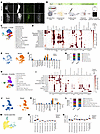 Figure 3
In vivo cell type composition by snRNA-seq. (A) Representative microscopy images of 1-month-old (equivalent of day 45 differentiation in vitro) intrastriatal grafts from Boost versus Boost+ patterned progenitors (day 16) on various markers, FOXA2, SC121, EN1, and ALDH1A1. (B) Schematic illustration of the snRNA-seq from the grafts 1- and 9-months postimplantation of the mDA neuron progenitor (day 16) derived from the Boost and Boost+ method. (C) UMAP plot of 1-month grafted cells from the Boost and Boost+ protocols, colored by cell types. (D) Dotplot of canonical marker genes of midbrain progenitors, mDA neuron subtypes, and off-targets cells (E) UMAP plot colored by protocol at 1 month. (F and G) Percentages of each cell type colored by protocol (F) and different neuronal subtypes in each protocol at 1 month (G). (H) UMAP plot of 9 months grafted cells from the Boost and Boost+ protocols, colored by cell types. (I) Dotplot of canonical marker genes of midbrain progenitors, mDA neuron subtypes, and off-target cells at 9 months. (J) UMAP plot, colored by protocol at 9 months. (K and L) Percentages of each cell type, colored by protocol (K) and different neuronal subtypes in each protocol at 9 months (L). (M) UMAP of adult midbrain dopamine (mDA) neurons, divided by SOX6-and CALB1-positive neurons that were selected to determine highly specific markers for A9 and A10 DA neurons, respectively. (N and O) Boxplots showing the distribution of enrichment scores for each cell type, protocol, and time point according to A9 (N) and A10 (O) mDA neurons of adult signatures. Mann-Whitney rank test and Benjamini-Hochberg correction; *P < 0.001.
In addition to abundant mDA neurons, we identified minor off-target populations, including thalamic and pretectal neurons defined by LHX2, LHX9, LEF1, TCF7L2 or LHX1, LHX9, MEIS2, BARHL2, and a small inhibitory group resembling interneurons of the ventral lateral geniculate nucleus, coexpressing GAD1, GAD2, DLX1, DLX5, DLX6, OTX2, and TLE4 (Figure 3, C and D, and Supplemental Figure 3B). Partition-based graph abstraction (PAGA) analysis linked midbrain floor plate progenitors to mDA neurons and dorsal diencephalic progenitors to off-target diencephalic neurons, suggesting these progenitors give rise to the respective fates (Supplemental Figure 3C). We did not detect bona fide VLMCs (49) as defined by coexpression of PDGFRA, COL1A1, COL1A2, LUM, and DCN (Figure 3D and Supplemental Figure 3, B–E). Consistent with in vitro findings, Boost+ suppressed diencephalic off-targets (18%–5%) and increased mDA neurons (46%–82%) relative to Boost (Figure 3, E–G).
Boost+ generated approximately twice the fraction of highly specific SLC6A3+TH+ and A9 SLC6A3+ALDH1A1+ mDA neurons (Supplemental Figure 3, E–G). To independently validate A9 enrichment, we subset the snRNA-seq data for TH and NR4A2 and subclustered these cells (Supplemental Figure 3, H and I), confirming a higher proportion of ALDH1A1+ neurons under Boost+ (Supplemental Figure 3, J and K). KEGG analysis showed enrichment of dopamine signaling pathways in the ALDH1A1 compartment, whereas CALB1+ neurons were enriched for morphine addiction pathways (Supplemental Figure 3L). Both Boost and Boost+ protocols yielded A9 mDA neurons upon transplantation (clusters 0 and 1; A9-like cells in Supplemental Figure 3M). However, A9 neurons under Boost+ expressed significantly higher levels of TH. Gene Ontology analysis revealed enrichment of glycolytic and ATP metabolic pathways in Boost+ A9-like cells.
To examine long-term maturation, we analyzed grafts at 9 months after transplantation (Figure 3, H–J, and Supplemental Figure 4A). This revealed a marked expansion of glial populations, particularly OPCs and oligodendrocytes (Figure 3K), consistent with progressive gliogenesis in grafts over time (23, 50, 51). Notably, the abundance of oligodendrocytes is a feature more commonly associated with fetal grafts (23). At 9 months, both A9 and A10 mDA subtypes were present, with A9 neurons remaining more abundant in Boost+ (33.6%) than Boost (18.1%). Conversely, A10 neurons were slightly enriched in Boost (21.1%) relative to Boost+ (18.5%). While the proportion of SLC6A3+TH+ neurons no longer differed (Supplemental Figure 4B), SLC6A3+ALDH1A1+ A9-like neurons remained significantly enriched in Boost+ (Supplemental Figure 4C). Importantly, diencephalic off-target populations were less obvious in the 9-month versus 1-month data, suggesting a progressive loss of subtype identity over time, potentially due to the striatal host environment (Figure 3I and Supplemental Figure 4A). Off-target populations remained substantially reduced in the Boost+ condition, with ventral glutamatergic neurons decreasing from 19.1% to 1.5%, and dorsal diencephalic GABAergic neurons from 26.4% to 17.0% (Figure 3L). At 9 months, a very small VLMC population (approximately 1%) emerged in Boost+ grafts. These cells likely originate from floor plate progenitors expressing COL1A1 at 1 month (6% within the FPP cluster; Supplemental Figure 4D), consistent with reports that some progenitors retain multipotency to generate fibroblast-like cells after engraftment (51).
To test subtype authenticity, we compared our data to adult mDA neurons. First, we defined A9 (SOX6 positive neurons) and A10 (CALB1 positive neurons) signatures by calculating the top differentially expressed genes in these 2 populations using a published dataset (52) (Figure 3M). We then scored grafted neurons against these 2 signatures. We show that grafted cells classified either as A9 or A10 mDA neurons are enriched for adult SOX6+ and CALB1+ mDA signatures, respectively (Figure 3, N and O), confirming alignment with their endogenous adult counterparts. Notably, the Boost+ condition yields significantly more A9 mDA neurons across both 1-month and 9-month timepoints (Figure 3N), while the Boost protocol retains a higher authenticity score for A10 mDA neurons (Figure 3O). Moreover, the authenticity of the A9 signature increases between 1 and 9 months, suggesting continued maturation over time (Figure 3N). Collectively, these findings demonstrate robustness and long-term fidelity of the Boost+ protocol in promoting A9 mDA neuron fate, highlighting its potential for clinical translation.
In vivo functional characterization in 6-OHDA-induced Parkinsonian rats. Next, we grafted cryopreserved day 16 mDA precursors from Boost or Boost+ protocols into 6-hydroxydopamine-lesioned (6-OHDA-lesioned) immunodeficient rats (NIH-Foxn1rnu strain) to evaluate graft survival and impact on behavioral deficits. 6-OHDA was unilaterally injected in the median forebrain bundle with subsequent amphetamine-induced rotation tests at 4 and 6 weeks (± 1 week). Rats showing more than 6 rotations per minute were defined as completely lesioned and selected for grafting experiment. The lesioned rats were randomized into 3 groups: vehicle, Boost cell, and Boost+ groups. The Boost and Boost+ differentiations were performed on the same batch and were frozen on day 16 of differentiation. Cells were thawed and suspended at 100,000 ± 10,000 cells/μL with a viability greater than 85%. Each animal received an injection of 400,000 cells into the striatum. Animals underwent a battery of behavioral tests at 0, 1.5, 3, 4.5, and 6 months (± 1 week) after grafting, including amphetamine-induced rotation, ladder rung walking test, and adhesive removal test. Both Boost and Boost+ cell grafts led to complete recovery at 4.5 months in the rotation test (Figure 4A). At 6 months after transplantation, the average rotations per minute in the Boost and Boost+ group reached –2.68 and –3.75, respectively, compared with 10.65 in the vehicle group. In the adhesive removal test, both Boost and Boost+ cell groups showed significant recovery at 6 months after grafting (Figure 4B, left). Interestingly, only the Boost+ cell group showed significant recovery in the ladder rung walking test, compared with the vehicle group (Figure 4B, right).
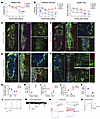 Figure 4
In vivo functional characterization in unilateral 6-OHDA-induced Parkinsonian rats. (A) Amphetamine-induced rotations per minute measured at the indicated time points after transplantation in different animal groups. (B) The percentage of the adhesive removal time by the contralateral paw (left) and deep miss steps in the ladder rung walking test (right). (C–F) Representative IHC images of grafted cells showing expression of FOXA2, EN1, ALDH1A1, DAT, and TH together with human-specific markers (hNA or hNCAM) in Boost and Boost+ grafts. Arrowheads indicate ALDH1A1-expressing TH+ dopaminergic axons (E). (G) Stereological estimation of total hNA+ and TH+ cell numbers in Boost and Boost+ grafts (logarithmic scale). (H–K) The percentage of graft composition showing TH+ cells out of hNA+ cells (H), FOXA2- or EN1-expressing cells out of hNA+ cells (I), EN1+TH+ and ALDH1A1+TH+ cells out of the total human TH+ cells (J), and human-specific hKi67+ cells out of human-specific hKu80+ cells (K) in Boost and Boost+ cell grafts. Animal numbers are 5–7 per group in A and B and 3 per group in G–K. Data are represented as mean ± SEM. *P < 0.05, **P < 0.01, ***P < 0.001. In A and B, the color of * represents the significance between the group with the same color of symbol and the vehicle group. In C–E, scale bar: 100 μm (left panels), 50 μm (right panels). In F, scale bar: 20 μm (right panels). The areas outlined in white lines are shown with higher magnification images in the right panels. (L–O) Whole-cell recordings from grafted mDA neurons (Boost+: 6 months after transplantation), including examples of a spontaneously active neuron (L), spontaneous EPSCs (M), action potentials evoked by current injections (N), and EPSCs evoked by local electrical stimulation (O). Recordings were performed in the absence of synaptic blockers.
Histological analysis showed that both Boost and Boost+ grafts survived and differentiated into TH+ mDA neurons, and extended TH+ processes into the surrounding host tissue (Figure 4, C–F, and Supplemental Figure 5A). Stereological cell counts showed a significantly higher number of human cells (hNA+) in Boost grafts (Figure 4G). The estimated graft volume was also higher in Boost (3.16 ± 0.90 mm3) than Boost+ (1.12 ± 0.41 mm3) group. This difference may be explained by the higher percentage of cycling cells at day 16 in vitro (Supplemental Figure 2E). In contrast, the overall number of TH+ cells was similar in both groups (Figure 4G). Accordingly, the proportion of TH+ mDA neurons was significantly higher in the Boost+ graft (30.8% versus 9.4%) (Figure 4H). The density of TH expression was also higher in the Boost+ grafts (Figure 4, C–F, and Supplemental Figure 5A). Most Boost (average at 97.7%) and Boost+ (average at 96.7%) human cells expressed FOXA2 (Figure 4, C and I), but the percentage of EN1+ cells was higher in Boost+ grafts, (average at 47.6% versus 27.4%) (Figure 4, D and I). The percentage of EN1+ in hNA+ TH+ mDA neurons is also higher in Boost+ (average of 17.9% versus 9.0%) (Figure 4, D and J). GIRK2+ mDA neuron percentages were higher in Boost+ (92.9 ± 1.7%) than Boost (59.7 ± 6.8%) grafts (Supplemental Figure 5B). In both Boost and Boost+ grafts, around 30% GIRK2 mDA neurons coexpressed CALB1 (Supplemental Figure 5B). Expression of ALDH1A1 was also elevated in the Boost+ grafts (average at 26% of hNCAM+/TH+ mDA neurons) compared with Boost (average at 3.3%), and extended axons into the surrounding host tissue (Figure 4, E and J). The majority (around 93%) of ALDH1A1+ mDA neurons coexpress GIRK2 (Supplemental Figure 5C). Dopamine transporter (DAT) expression was more pronounced in Boost+ grafts with a higher percentage of TH+ neurons expressing DAT (36.5 ± 2.4% versus 23.8 ± 0.3%) (P = 0.011) (Figure 4F). Assessment of proliferation (Supplemental Figure 5D) revealed a lower proportion of human Ki67+ cells in Boost+ grafts (average at 0.7% versus 2.8%) (Figure 4K), which may have contributed to the lower total human cell number in Boost+ grafts(Figure 4G). Nonneuronal cell types, including perivascular fibroblasts and choroid plexus-like epithelial cells, were previously reported in hPSC-derived mDA cell grafts (8, 23) but were negative in our previously reported grafts (6, 10). hCOL1A1-labeled human perivascular fibroblasts were negative in Boost grafts but present in Boost+ (Supplemental Figure 5E), with partial coexpression of PDGFR-α (Supplemental Figure 5F). Transthyretin-expressing cells were largely absent in Boost and Boost+ grafts (Supplemental Figure 5G).
Finally, we performed whole-cell recordings from graft-derived mDA neurons in the Boost+ group at 6 months after implantation. Grafted neurons exhibit spontaneous activity, spontaneous EPSCs, action potentials evoked by current injections, and EPSCs evoked by local electrical stimulation (Figure 4, L–O). In addition, whole-cell recordings from striatal medium spiny projection neurons (SPN) proximal to the mDA neuron grafts indicate that both the Boost and Boost+ grafts mediate action potential frequencies back to levels recorded in nonlesioned mice (sham). In contrast, a lower AP frequency in SPN was observed when recorded in lesioned control mice (no grafts). However, only Boost+ graft triggered a reduction in resting membrane potential (RMP) and EPSC amplitude in SPNs upon current injection conditions (Supplemental Figure 5, H–O).


Copyright © 2026 American Society for Clinical Investigation
ISSN: 0021-9738 (print), 1558-8238 (online)