
Advertisement
Research ArticleInflammationVascular biology
Open Access |  10.1172/JCI189570
Endothelial STING and STAT1 mediate IFN-independent effects of IL-6 in an endotoxemia-induced model of shock
Nina Martino,1 Erin K. Sanders,2 Ramon Bossardi Ramos,1 Iria Di John Portela,1 Fatma Awadalla,1 Shuhan Lu,1 Dareen Chuy,1 Neil Poddar,1 Mei Xing G. Zuo,1 Uma Balasubramanian,1 Peter A. Vincent,1 Pilar Alcaide,2 and Alejandro P. Adam1,3
1Department of Molecular and Cellular Physiology, Albany Medical College, Albany, New York, USA.
2Department of Immunology, Tufts University School of Medicine, Boston, Massachusetts, USA.
3Department of Ophthalmology, Albany Medical College, Albany, New York, USA.
Address correspondence to: Alejandro P Adam, Department of Molecular and Cellular Physiology, Albany Medical College, 43 New Scotland Ave., Albany, New York, 12208, USA. Phone: 518.262.5298; Email: adama1@amc.edu.
Find articles by Martino, N. in: PubMed | Google Scholar
1Department of Molecular and Cellular Physiology, Albany Medical College, Albany, New York, USA.
2Department of Immunology, Tufts University School of Medicine, Boston, Massachusetts, USA.
3Department of Ophthalmology, Albany Medical College, Albany, New York, USA.
Address correspondence to: Alejandro P Adam, Department of Molecular and Cellular Physiology, Albany Medical College, 43 New Scotland Ave., Albany, New York, 12208, USA. Phone: 518.262.5298; Email: adama1@amc.edu.
Find articles by Sanders, E. in: PubMed | Google Scholar
1Department of Molecular and Cellular Physiology, Albany Medical College, Albany, New York, USA.
2Department of Immunology, Tufts University School of Medicine, Boston, Massachusetts, USA.
3Department of Ophthalmology, Albany Medical College, Albany, New York, USA.
Address correspondence to: Alejandro P Adam, Department of Molecular and Cellular Physiology, Albany Medical College, 43 New Scotland Ave., Albany, New York, 12208, USA. Phone: 518.262.5298; Email: adama1@amc.edu.
Find articles by Bossardi Ramos, R. in: PubMed | Google Scholar
1Department of Molecular and Cellular Physiology, Albany Medical College, Albany, New York, USA.
2Department of Immunology, Tufts University School of Medicine, Boston, Massachusetts, USA.
3Department of Ophthalmology, Albany Medical College, Albany, New York, USA.
Address correspondence to: Alejandro P Adam, Department of Molecular and Cellular Physiology, Albany Medical College, 43 New Scotland Ave., Albany, New York, 12208, USA. Phone: 518.262.5298; Email: adama1@amc.edu.
Find articles by Di John Portela, I. in: PubMed | Google Scholar
1Department of Molecular and Cellular Physiology, Albany Medical College, Albany, New York, USA.
2Department of Immunology, Tufts University School of Medicine, Boston, Massachusetts, USA.
3Department of Ophthalmology, Albany Medical College, Albany, New York, USA.
Address correspondence to: Alejandro P Adam, Department of Molecular and Cellular Physiology, Albany Medical College, 43 New Scotland Ave., Albany, New York, 12208, USA. Phone: 518.262.5298; Email: adama1@amc.edu.
Find articles by Awadalla, F. in: PubMed | Google Scholar
1Department of Molecular and Cellular Physiology, Albany Medical College, Albany, New York, USA.
2Department of Immunology, Tufts University School of Medicine, Boston, Massachusetts, USA.
3Department of Ophthalmology, Albany Medical College, Albany, New York, USA.
Address correspondence to: Alejandro P Adam, Department of Molecular and Cellular Physiology, Albany Medical College, 43 New Scotland Ave., Albany, New York, 12208, USA. Phone: 518.262.5298; Email: adama1@amc.edu.
Find articles by Lu, S. in: PubMed | Google Scholar
1Department of Molecular and Cellular Physiology, Albany Medical College, Albany, New York, USA.
2Department of Immunology, Tufts University School of Medicine, Boston, Massachusetts, USA.
3Department of Ophthalmology, Albany Medical College, Albany, New York, USA.
Address correspondence to: Alejandro P Adam, Department of Molecular and Cellular Physiology, Albany Medical College, 43 New Scotland Ave., Albany, New York, 12208, USA. Phone: 518.262.5298; Email: adama1@amc.edu.
Find articles by Chuy, D. in: PubMed | Google Scholar
1Department of Molecular and Cellular Physiology, Albany Medical College, Albany, New York, USA.
2Department of Immunology, Tufts University School of Medicine, Boston, Massachusetts, USA.
3Department of Ophthalmology, Albany Medical College, Albany, New York, USA.
Address correspondence to: Alejandro P Adam, Department of Molecular and Cellular Physiology, Albany Medical College, 43 New Scotland Ave., Albany, New York, 12208, USA. Phone: 518.262.5298; Email: adama1@amc.edu.
Find articles by Poddar, N. in: PubMed | Google Scholar
1Department of Molecular and Cellular Physiology, Albany Medical College, Albany, New York, USA.
2Department of Immunology, Tufts University School of Medicine, Boston, Massachusetts, USA.
3Department of Ophthalmology, Albany Medical College, Albany, New York, USA.
Address correspondence to: Alejandro P Adam, Department of Molecular and Cellular Physiology, Albany Medical College, 43 New Scotland Ave., Albany, New York, 12208, USA. Phone: 518.262.5298; Email: adama1@amc.edu.
Find articles by Zuo, M. in: PubMed | Google Scholar
1Department of Molecular and Cellular Physiology, Albany Medical College, Albany, New York, USA.
2Department of Immunology, Tufts University School of Medicine, Boston, Massachusetts, USA.
3Department of Ophthalmology, Albany Medical College, Albany, New York, USA.
Address correspondence to: Alejandro P Adam, Department of Molecular and Cellular Physiology, Albany Medical College, 43 New Scotland Ave., Albany, New York, 12208, USA. Phone: 518.262.5298; Email: adama1@amc.edu.
Find articles by Balasubramanian, U. in: PubMed | Google Scholar
1Department of Molecular and Cellular Physiology, Albany Medical College, Albany, New York, USA.
2Department of Immunology, Tufts University School of Medicine, Boston, Massachusetts, USA.
3Department of Ophthalmology, Albany Medical College, Albany, New York, USA.
Address correspondence to: Alejandro P Adam, Department of Molecular and Cellular Physiology, Albany Medical College, 43 New Scotland Ave., Albany, New York, 12208, USA. Phone: 518.262.5298; Email: adama1@amc.edu.
Find articles by Vincent, P. in: PubMed | Google Scholar
1Department of Molecular and Cellular Physiology, Albany Medical College, Albany, New York, USA.
2Department of Immunology, Tufts University School of Medicine, Boston, Massachusetts, USA.
3Department of Ophthalmology, Albany Medical College, Albany, New York, USA.
Address correspondence to: Alejandro P Adam, Department of Molecular and Cellular Physiology, Albany Medical College, 43 New Scotland Ave., Albany, New York, 12208, USA. Phone: 518.262.5298; Email: adama1@amc.edu.
Find articles by
Alcaide, P.
in:
PubMed
|
Google Scholar
|

1Department of Molecular and Cellular Physiology, Albany Medical College, Albany, New York, USA.
2Department of Immunology, Tufts University School of Medicine, Boston, Massachusetts, USA.
3Department of Ophthalmology, Albany Medical College, Albany, New York, USA.
Address correspondence to: Alejandro P Adam, Department of Molecular and Cellular Physiology, Albany Medical College, 43 New Scotland Ave., Albany, New York, 12208, USA. Phone: 518.262.5298; Email: adama1@amc.edu.
Find articles by
Adam, A.
in:
PubMed
|
Google Scholar
|
Published September 16, 2025 - More info
J Clin Invest. 2025;135(21):e189570. https://doi.org/10.1172/JCI189570.
© 2025 Martino et al. This work is licensed under the Creative Commons Attribution 4.0 International License. To view a copy of this license, visit http://creativecommons.org/licenses/by/4.0/.
Received: November 25, 2024; Accepted: August 28, 2025


-
Results
Acute endotoxemia leads to strong ISG expression in the kidney endothelium. To determine whether the endothelium was responsible in part for the LPS-induced expression of ISGs, we performed endothelial cell–specific TRAP-Seq on mice challenged with a single LPS bolus. The TRAP approach allows for isolation of ribosome-bound mRNA to capture actively translated transcripts (37). Mice expressing the endothelial driver cdh5-CreERT2 (38) and floxed SOCS3 alleles (39) were described previously (19, 21, 22). To perform TRAP, the tdTomato reporter was replaced by an EGFP/Rpl10a transgene (37) on the same Rosa26 locus. EGFP/Rpl10a expression was induced in the endothelium by tamoxifen treatments at least 2 weeks prior to a challenge with 250 μg LPS. We previously reported that this dose led to 100% mortality in SOCS3iEKO mice but was nonlethal in littermate WT SOCS3 mice (19) and led to substantial transcriptional changes in kidney and brain endothelium (21, 22). This challenge induced the expected increase in the severity score, hypothermia, and acute weight loss, demonstrating that this dose of LPS elicited a strong systemic reaction (Figure 1A). Mice were then euthanized and perfused with cycloheximide (CHX) prior to whole-kidney tissue homogenization. CHX perfusion is required to lock ribosomes in place for subsequent immunoprecipitation and isolation of ribosome-bound mRNA. After organ retrieval and tissue mincing, an aliquot was removed for total RNA extraction, and the rest was processed for TRAP pull-down. A diagram of the approach is shown in Figure 1B. RNA-Seq analysis of paired total and TRAP data from each mouse showed the high efficiency of the TRAP protocol, with high expression ratios for endothelial markers and low expression ratios for nonendothelial genes (Figure 1C). As expected, a challenge with LPS induced a strong transcriptional response in whole kidneys 15 hours later, with 1,040 genes upregulated at least 2-fold (adjusted P value < 0.05) and 1,309 genes downregulated at least 2-fold (adjusted P value < 0.05). The endothelium showed a similarly strong response (429 genes upregulated and 546 downregulated) (Figure 1D) that partially but significantly correlated with the total organ response (Figure 1E). Notably, the expression of many ISGs in the kidney endothelium highly correlated with overall severity score (Figure 1F).
 Figure 1
Endothelial transcriptional response in the kidney endothelium. (A) LPS induces physiological changes associated with a strong inflammatory reaction: increased severity, hypothermia, and an acute loss of body weight. *P < 0.05 (severity: Mann-Whitney U test; temperature: Welch’s t test; weight: unpaired t test). (B) Schematic of TRAP approach. EC, endothelial cell. (C) Ratio of normalized counts (TRAP-Seq over whole kidney RNA-Seq) obtained from the same organs. (D) Heatmap of the top 100 most significant changes in kidney expression for bulk RNA-Seq (left) and TRAP-Seq (right). Lookup table (LUT) corresponds to z-score. (E) Strong correlation between whole kidney and endothelial gene expression in response to LPS. (F) Endothelial expression of multiple IFN-regulated genes significantly correlates with disease severity (P < 0.05).
Loss of endothelial SOCS3 enhances ISG expression. We have previously shown fast mortality of SOCS3iEKO mice upon similar LPS challenges that was associated with kidney failure and brain microvascular leak (19). Thus, we performed TRAP-Seq analysis to determine the response to LPS in mice lacking or not endothelial SOCS3. Figure 2A shows kidney TRAP-Seq counts of SOCS3 mRNA, demonstrating the efficacy and specificity of the endothelial knockout. Similar to recent findings in brain (22), loss of SOCS3 expression led to a dramatic increase in the number of genes responsive to LPS (975 genes with at least a 2-fold difference, adjusted P value < 0.05 in WT; 3,447 genes with at least a 2-fold difference, adjusted P value < 0.05 in SOCS3iEKO mice), and SOCS3iEKO mice showing a strong overall difference in gene expression in response to LPS compared with WT mice (Figure 2, B and C). Upstream pathway and transcription factor analysis demonstrated an expected increase in JAK/STAT activity in SOCS3iEKO mice (Supplemental Figure 1; supplemental material available online with this article; https://doi.org/10.1172/JCI189570DS1). Consistent with a role for SOCS3 in limiting ISG expression, loss of SOCS3 further increased an IFN-like response in both kidney and brain endothelium (Figure 2, D and E).
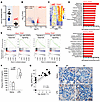 Figure 2
Loss of endothelial SOCS3 promotes a type I IFN–like response to LPS in the kidney and brain endothelium. (A) TRAP-Seq data demonstrating the specificity of the loss of SOCS3 expression in SOCS3iEKO mice. (B) Volcano plot demonstrating a strong alteration of the endothelial transcriptional response to LPS. FC, fold change. (C) Heatmap of the most significant kidney transcriptional changes in response to LPS in SOCS3iEKO mice compared with WT mice. (D) Normalized gene set enrichment analysis scores of kidney and brain TRAP-Seq comparing the LPS response in SOCS3iEKO and WT mice. (E) Strong IFN-α signature in TRAP-Seq from LPS-treated SOCS3iEKO mice. (F) Plasma CXCL10 levels are greatly increased by an LPS challenge in WT and further increased in SOCS3iEKO mice. Box-and-whisker plot (line defines the median, the box extends from the 25th to 75th percentiles, and whiskers define the full range of value). *P < 0.05 (2-way ANOVA and Šidák’s post hoc test; n = 6–10). (G) Correlation between plasma CXCL10 levels and disease severity. Dotted lines represent 95% CI. (H) Immunohistochemistry of kidney to detect CXCL10. Scale bars: 20 μm. Representative of 3 independent cohorts.
To determine the systemic effects of IL-6–induced endothelial expression of CXCL10, we measured levels of this cytokine in WT and SOCS3iEKO mice. The LPS challenge in WT mice induced a greater than 10-fold increase in circulating CXCL10 levels, which were elevated a further 2-fold in SOCS3iEKO mice (Figure 2F). The levels of this cytokine highly correlated with severity score (Figure 2G). While CXCL10 protein expression was increased in endotoxemic SOCS3iEKO mice (Figure 2H), the increase was much more subdued than for the RNA levels, suggesting that not all CXCL10 mRNA are translated in this setting or that the cytokine is quickly cleared from the affected tissue.
Induction of ISGs by IL-6 in HUVECs does not require IFNAR1 expression. To better understand the mechanisms by which SOCS3 regulates ISG expression, we took advantage of our prior observations that activation of IL-6 signaling in cultured primary endothelial cells led to a transient increase in the expression of several IFN-associated genes, including IRF1, IRF7, and MX1 (19). We treated HUVECs with a combination of IL-6 and its soluble receptor (herein referred to as IL-6+R) to confirm expression of increased MX1 and to determine whether other ISGs were similarly induced by IL-6 signaling. We found that this treatment promoted a fast response to induce expression of CXCL10, DDX58, MX1, IFIH1, and OAS2 (Figure 3A). The responses peaked between 1 and 3 hours after treatment, showing a slight delay compared with the response to the canonical STAT3 target SOCS3. This treatment led to increases in ISG protein expression with similarly fast kinetics. Expression of the transcription factor IRF1 peaked 1 hour after challenge, while expression of MX1 was detectable by 3 hours and further increased by 6 hours (Figure 3B). Consistent with its inhibitory activity, overexpression of a proteasome-resistant SOCS3 construct abrogated the IL-6–dependent induction of ISGs (Supplemental Figure 2). We chose to test the effect of this mutant, since we previously showed an enhancement of JAK/STAT signaling inhibition (19).
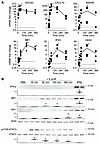 Figure 3
IL-6 promotes a type I IFN–like transcriptional response in HUVECs independently of IFNAR1 signaling. (A) RT-qPCR of HUVECs treated with or without 200 ng/mL recombinant human IL-6 and 100 ng/mL recombinant soluble IL-6Rα (IL-6+R). One-way ANOVA for all comparisons except IFIH1, in which a Welch’s ANOVA was performed due to unequal variance. (B) Western blotting against IFN-β, IRF1, or MX1 of confluent HUVECs treated with IL-6+R for the described times, or for 2 hours with IFN-β. STAT3 phosphorylation was used as positive control for IL-6 treatments. Upper panels: Representative blots of phosphorylated and total proteins. Lower panels: Normalized band intensity (phosphorylated over total) from 3 experiments. One-way ANOVA. *P < 0.05. Data representative of at least 3 independent experiments each performed in duplicate.
The increase of ISG expression by IL-6+R was then tested in the 2 other human endothelial cell types. In the human brain endothelial cell line HCMEC/D3, IL-6+R significantly upregulated expression of CXCL10, DDX58, MX1, and IFIH1, but surprisingly not OAS2 (Supplemental Figure 3). The levels of increase were lower than in HUVECs, consistent with a reduced increase in SOCS3 and IL-6, suggesting a dampened overall response in this cell line. Notably, human primary glomerular endothelial cells showed an increase in CXCL10 mRNA and IRF1 protein, but not other ISGs (Supplemental Figure 4). These results suggest that this response may depend in part on the origin of the endothelial cells and/or culture conditions.
We have previously shown that an IL-6+R treatment in HUVECs does not lead to a detectable release of IFNs (19), and we were unable to detect IFN-β by Western blotting, at least within a 6-hour time frame (Figure 3B). These findings suggest that the increase in ISG expression was not due to an IFN autocrine loop, as described before for TNF-α (33, 34). This hypothesis was further supported by the quick response to IL-6+R shown in Figure 3. To directly assess whether IL-6+R signaling required de novo IFN protein synthesis for ISG expression, we pretreated cells with the ribosome inhibitor CHX prior to the IL-6+R challenge. This treatment completely abrogated production of IRF1 protein, demonstrating efficient inhibition of translation (Figure 4A). This was not due to an impairment of IL-6 signaling by CHX, because levels of STAT3 phosphorylation were not lowered by the ribosome inhibitor (Figure 4A). As shown in Figure 4B, CHX did not reduce the induction of ISG expression, and in many cases instead it exacerbated the response. Consistent with SOCS3 protein synthesis being required to dampen the IL-6 response, protein synthesis inhibition significantly increased both STAT3 phosphorylation (Figure 4A) and SOCS3 mRNA levels (Figure 4B). To determine whether a release of stored IFNs, which would be insensitive to CHX pretreatment, was responsible for ISG expression, we treated cells with IL-6+R after IFNAR1 knockdown. As shown in Figure 4C, loss of IFNAR1 expression did not prevent IL-6+R–induced ISG expression despite significant knockdown. Overall, these data suggested that IL-6 signaling does not require an autocrine IFN loop to induce a transient increase in ISG expression.
 Figure 4
IL-6–induced ISG expression is independent of IFNAR1 signaling. (A) Western blotting against IRF1 or phosphorylated STAT3 of HUVECs treated for 2 hours with IL-6+R after pretreatment with or without CHX. Upper panels: Representative blots of phosphorylated and total proteins. Lower panels: Normalized band intensity (phosphorylated over total) from 3 experiments. (B) RT-qPCR of HUVECs treated as above. (C) RT-qPCR 2 hours after IL-6+R treatment in cells transfected with siRNA to knock down IFNAR1 (siIFNAR1) or with a nontargeting sequence control (NTS). Two-way ANOVA. *P < 0.05. Data representative of at least 3 independent experiments each performed in duplicate.
Induction of ISGs by IL-6 in HUVECs requires STAT1, but not STAT3 expression. The levels of ISG expression as induced by 2 hours of IL-6+R treatment were significantly lower than those observed with direct treatment with recombinant IFN-α2 or IFN-β (Supplemental Figure 5). As expected, IFN treatment did not significantly induce SOCS3 expression within this time frame. The lower expression of ISGs in IL-6+R– versus IFN-treated cells could be explained by a lack of phosphorylation of STAT2 in response to IL-6+R when compared with IFN treatments (Figure 5A). Notably, STAT1 and STAT3 phosphorylation reached similar levels upon these treatments (Figure 5A). As expected, IL-6+R induced very fast STAT3 nuclear translocation. STAT3 remained nuclear, albeit at lower levels, for up to 6 hours (Supplemental Figure 6). While IFN-β induced nuclear translocation of both STAT1 and STAT2 with similarly fast kinetics, IL-6+R treatment led to nuclear translocation only of STAT1, but not STAT2 (Supplemental Figure 7), a finding consistent with the lack of STAT2 phosphorylation by IL-6+R.
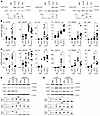 Figure 5
ISG expression by IL-6+R depends on STAT1 but not STAT3. (A) Western blotting of HUVEC lysates treated or not with IL-6+R, 2,000 U/mL IFN-α2, or 500 U/mL IFN-β. Upper panels: Representative blots of phosphorylated and total proteins. Images representative of 3 independent experiments. Lower panels: Normalized band intensity (phosphorylated over total) from 3 experiments. One-way ANOVA and Šidák’s post hoc test against IL-6+R. *P < 0.05. (B) RT-qPCR 2 hours after IL-6+R treatment in cells transfected with siRNA to knock down STAT3 (siSTAT3) or with a nontargeting sequence control (siNTS). (C) RT-qPCR of cells treated as in B but after siRNA-mediated STAT1 knockdown (siSTAT1). B and C: Two-way ANOVA and Šidák’s post hoc test. *P < 0.05. Data representative of at least 4 independent experiments each performed in duplicate. (D) HUVECs transfected with siRNAs against STAT3 or a nontargeting sequence were treated for 15 minutes with PBS, soluble IL-6 receptor (sIL-6R) or IL-6+R prior to cell lysis. (E) HUVECs treated as in D but after siRNA-mediated STAT1 knockdown. D and E: Representative Western blots (top panels) and band quantification and statistics of 3 independent experiments. *P < 0.05. Two-way ANOVA.
We then sought to determine the relative importance of STAT1 and STAT3 in the ISG response to IL-6+R. As expected, and consistent with our own prior findings (17), STAT3 knockdown completely abrogated the IL-6+R–induced expression of SOCS3 and significantly reduced IL6 expression itself (Figure 5B). Efficient knockdown was confirmed by the significantly lower STAT3 mRNA expression compared with control cells transfected with a nontargeting siRNA (siNTS). However, this knockdown was unable to block the increases in CXCL10, DDX58, or MX1 (Figure 5B). In contrast, while STAT1 knockdown did not limit IL-6+R–induced SOCS3 or IL6 expression, it significantly dampened the ISG response (Figure 5C). Transfection with this siRNA efficiently reduced STAT1 mRNA levels (Figure 5C). Western blots demonstrating the efficacy and specificity of STAT3 and STAT1 knockdowns are shown in Figure 5, D and E.
IL6-induced ISG expression involves mtDNA release and activation of cGAS and STING. STAT1 activation alone is not described to promote an IFNI-like transcriptional signature. Thus, we hypothesized that a parallel pathway may be activated by IL-6+R. Mitochondrial damage mediates many responses to proinflammatory signaling in the endothelium. We performed mild lysis and centrifugation to isolate the cytoplasmic fraction, followed by quantitative PCR, and found that IL-6+R induced a transient but significant release of mtDNA into the cytoplasm (Figure 6A). This release peaked at 15 minutes after treatment and began resolving after that, without causing apoptosis or other forms of cell death. This transient nature of the mtDNA release is consistent with the fast kinetics of mRNA and protein expression after an IL-6+R challenge (Figure 3). Indirect immunofluorescence and super-resolution imaging (Zeiss Airyscan; Figure 6B) showed that this mitochondrial dysfunction was associated with a marked aggregation of the mitochondrial transcription factor A TFAM (40) within mitochondria, as labeled with the outer-membrane marker Tomm20. 3D reconstruction and rendering using Imaris allowed us to quantify the size of each object. Consistent with the aggregation shown in Figure 6B, we measured significantly larger sizes of TFAM objects in IL-6+R–treated cells (Figure 6, C and D). Together, these findings suggest that IL-6 leads to fast, self-limited mitochondrial dysfunction and DNA release that could further promote ISG expression.
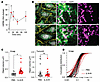 Figure 6
IL-6 leads to mtDNA release. (A) qPCR of mtDNA released into the cytoplasm in response to IL-6+R. One-way ANOVA. Data from 5 independent experiments. (B) Single section of 3D Airyscan imaging of the mitochondrial outer membrane marker Tomm20 and the mtDNA-binding protein TFAM as detected by indirect immunofluorescence of PBS- or IL-6+R–treated cells. The arrow points to a region of TFAM aggregation. (C). Images were rendered in Imaris to segment individual TFAM and Tomm20 objects. Plotted is the average size of each object within an image field. *P < 0.05 by unpaired t test. (D) Cumulative distribution of all objects for each imaging field. Each line corresponds to an average as shown in C. Data from 3 independent experiments; 8 imaging fields per condition, per experiment.
cGAS is a major cytoplasmic DNA sensor, leading to STING-dependent type I IFN signaling. Thus, we sought to determine the involvement of cGAS and STING in this pathway. Inhibition of cGAS activity by the inhibitor RU.521 significantly dampened ISG induction by IL-6+R (Figure 7A), without reducing either STAT1 or STAT3 activation (Figure 7B). Depletion of CGAS by siRNA-mediated knockdown (Figure 7C) also limited IL-6+R–induced ISG expression, although not for all genes assayed (Figure 7D).
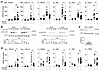 Figure 7
ISG expression in HUVECs in response to IL-6+R requires cGAS signaling. (A) RT-qPCR of HUVECs treated for 30 minutes with the cGAS inhibitor RU.521 prior to treatment for 2 hours with or without IL-6+R. (B) Western blotting of cells treated with or without RU.521 and IL-6+R to determine the phosphorylation levels of STAT1 and STAT3. (C) Western blotting of cells treated with or without siRNA to knock down cGAS (siCGAS) to measure knockdown efficiency. Upper panels: Representative Western blot. Lower panels: Fold expression versus NTS. Single-sample t test. (D) RT-qPCR of HUVECs transfected with NTS or CGAS siRNA prior to treatment for 2 hours with or without IL-6+R. (B and D) Two-way ANOVA and Šidák’s post hoc test. *P < 0.05. Data representative of at least 3 independent experiments.
Consistent with these findings, knockdown of the cGAS downstream mediator STING did not alter STAT1 or STAT3 phosphorylation (Figure 8A), but abrogated IL-6+R–induced ISG expression (Figure 8B). STING knockdown did not alter IL-6+R–induced SOCS3 expression (Figure 8B), suggesting a role independent of STAT3.
 Figure 8
ISG expression in HUVECs in response to IL-6+R requires STING signaling. (A) Western blotting of cells treated with or without siRNA to knock down STING (siSTING) and IL-6+R to measure phosphorylation levels of STAT1 and STAT3. (B) RT-qPCR of HUVECs transfected with NTS or STING siRNA prior to treatment for 2 hours with or without IL-6+R. Two-way ANOVA and Šidák’s post hoc test. *P < 0.05. Data representative of at least 3 independent experiments.
IRF1 and IRF3 mediate transcriptional changes downstream of IL-6 signaling. STING promotes activation of IRF proteins, and IRFs can also mediate IFN-independent responses. An analysis of all publicly available ChIP data for the ISGs described above, obtained from ChIP-Atlas: Peak Browser (41), suggested that direct binding of multiple IRFs occurred near the promoter regions in close proximity to, or overlapping with, STAT-binding sites (Supplemental Figure 8). Thus, we sought to determine whether IRF transcription factors were involved in the IFNI-like transcriptional response downstream of IL-6. Although IRF9 has been shown to mediate the transcriptional response to IFNs, indirect immunofluorescence did not detect significant nuclear translocation of IRF9 upon IL-6+R challenge, suggesting that this IRF may not be involved in this particular response (Supplemental Figure 9). Lack of IRF9 nuclear translocation was confirmed by subcellular fractionation and Western blotting (Figure 9A). Western blot analysis was unable to detect expression of IRF5, -6, -7, and -8 (data not shown).
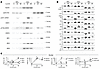 Figure 9
IL-6+R–induced nuclear translocation of IRF1 and phosphorylated STAT1 and STAT3. Subcellular fractionation of HUVECs treated or not with IL-6+R for either 30 minutes or 1 hour. (A) Representative Western blotting for whole cell lysates (WCL), cytoplasmic fractions (Cyto), or nuclear fractions (Nuc). Tubulin was used as a cytoplasmic marker, and lamin A/C was used as nuclear marker. (B) Densitometry analysis. Data expressed as relative intensity compared with control WCL. (C) Densitometry data of nuclear bands expressed as a ratio to control nuclear protein. Three independent experiments performed in duplicate each.
We thus focused our attention on a potential role for IRFs 1–4. IRF1 showed a constitutively nuclear signal and a substantial additional translocation to the nucleus 1 hour after IL-6+R challenge (Figure 9), consistent with its increase in protein expression, whereas IRF3 showed a small but constant nuclear signal. Knockdown of both IRF1 (Figure 10A) and IRF3 (Figure 10B) significantly reduced expression of multiple ISGs upon IL-6 signaling, whereas IRF4 knockdown (Figure 10C) led to a significant reduction of only a subset of genes. In contrast, IRF2 knockdown did not block induction of any of these ISGs (Supplemental Figure 10). Notably, while we detected significant increases in phosphorylated STAT1 and STAT3, we found that only nuclear STAT3 levels significantly increased with IL-6+R (Figure 9), suggesting that only a small portion of phosphorylated STAT1 is sufficient to drive the observed gene expression.
 Figure 10
ISG expression in HUVECs in response to IL-6+R requires expression of IRF1, IRF3, and IRF4. (A) RT-qPCR of HUVECs transfected with NTS, IRF1 (A), IRF3 (B), or IRF4 (C) siRNA prior to treatment for 2 hours with or without IL-6+R. Two-way ANOVA and Šidák’s post hoc test. *P < 0.05. Data representative of at least 3 independent experiments.
Moreover, lentiviral IRF1 overexpression led to a significant increase in ISG expression on its own and further increased the levels of expression induced by IL-6+R, suggesting that IRF1 activation may be sufficient to drive ISG expression in endothelial cells. This effect was specific to ISG expression, because IRF1 overexpression did not alter IL6 or SOCS3 mRNA levels alone or in response to IL-6+R (Figure 11).
 Figure 11
IRF1 overexpression in HUVECs promotes ISG expression. HUVECs were transduced with a lentivirus to overexpress IRF1 or with an empty vector control (EV). RT-qPCR of cells treated for 2 hours with or without IL-6+R. Two-way ANOVA and Šidák’s post hoc test. *P < 0.05. Data representative of 3 independent experiments.
Loss of endothelial STING limits the severity of the LPS challenge. To determine whether this pathway was involved in the systemic response to LPS, we performed a challenge in mice lacking or not lacking STING in endothelial cells. Mice carrying both cdh5-CreERT2 and homozygous floxed Sting1 (coding for STING) were treated for 3 days with tamoxifen (STINGiEKO) or vehicle (control) 2 weeks prior to LPS injections. STINGiEKO mice showed reduced overall disease severity (Figure 12A) and hypothermia (Figure 12B) in response to LPS when compared with control mice. To determine whether Sting mediated ISG expression in endothelial cells, we obtained kidneys from LPS- or saline-treated mice and performed RNA-Seq on an endothelial cell–enriched population derived from single-cell suspensions using a 2-step approach including negative selection of non–endothelial cells using EpCAM- and CD45-labeled magnetic beads, followed by PECAM-labeled bead–mediated positive selection (Figure 12C). An aliquot of single cells was obtained prior to endothelial cell enrichment for whole-kidney bulk RNA-Seq. First, we confirmed successful excision of exons 3–5 of the Sting1 gene in the endothelium but not in the whole kidney from STINGiEKO mice (Figure 12D). Endothelial cell enrichment was confirmed by determining the ratio of expression of endothelial cell markers in the enriched population to those in the total kidney (Figure 12E). Of note, in contrast to the efficacy of the TRAP approach (Figure 1), the magnetic bead enrichment approach was efficient in removing epithelial cells, but mural cells (pericytes and smooth muscle cells) appeared to remain as contaminants (Figure 12E). Consistent with the reduction in disease severity, the response to LPS was dramatically altered in STINGiEKO mice compared with controls (Figure 12F). Most notably, loss of endothelial Sting1 greatly diminished the LPS-induced increase in ISG expression (Figure 12G), demonstrating a crucial role for STING in the endothelial transcriptional response to shock.
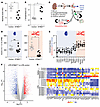 Figure 12
Endothelial STING is required for the kidney type I IFN–like response to LPS. STINGiEKO mice were challenged with an intraperitoneal bolus of LPS for 15 hours. Disease severity (A) and body temperature (B) were measured prior to euthanasia. Immediately afterward, kidneys were processed for RNA isolation from whole tissue and from an endothelial cell–enriched fraction following a 2-step magnetic bead isolation procedure (C). (D) RNA-Seq counts demonstrating loss of exons 3–5 in the endothelium of STINGiEKO mice. (E) Ratio of endothelial cell–enriched over whole-kidney RNA-Seq normalized counts obtained from the same organs. (F) Volcano plot demonstrating a strong alteration of the endothelial transcriptional response to LPS by loss of STING. (G) Heatmap of kidney endothelium expression of ISGs. LUT corresponds to z-scores. A, B, and D: *P < 0.05 (severity: Mann Whitney U test; temperature: unpaired t test; STING expression: unpaired t test (whole kidney) or Welch’s t test (TRAP-Seq).
Loss of STAT1 expression reduces LPS severity and endothelial ISG expression. We performed similar LPS challenges in mice lacking Stat1 expression (STAT1–/– mice) and age-matched C57BL/6J controls. Liver RT-qPCR confirmed the lack of detectable Stat1 expression in STAT1–/– mice (Supplemental Figure 11). Similar to STINGiEKO mice, STAT1–/– mice showed overall reduced LPS-induced disease severity (Figure 13A) and hypothermia (Figure 13B). Consistent with severe LPS-induced shock, mice displayed hypotension and bradycardia (Figure 13, C and D). Notably, STAT1–/– mice displayed significantly reduced bradycardia compared with control mice (Figure 13C), despite reaching similar levels of hypotension (Figure 13D). Upon euthanasia, we obtained kidneys and performed endothelial cell enrichment for RNA-Seq as described above. Figure 13E shows confirmation of the loss of Stat1 as a dramatic reduction in Stat1 counts. Endothelial enrichment was confirmed as above (Figure 13F). Most importantly, the RNA-Seq analysis confirmed a crucial role for Stat1 in endothelial ISG expression in response to LPS (Figure 13G). Expression of several ISGs was also lower in livers of STAT1–/– mice (Supplemental Figure 11).
 Figure 13
STAT1 is required for the kidney endothelial type I IFN–like response to LPS. STAT1–/– or control C57BL/6J mice were challenged with an intraperitoneal bolus of LPS for 15 hours. Disease severity (A) and body temperature (B), heart rate (C), and blood pressure (D) were measured prior to euthanasia. Immediately afterward, kidneys were processed for RNA isolation from whole-tissue and from an endothelial cell–enriched fraction following a 2-step magnetic bead isolation procedure. (E) RNA-Seq counts demonstrating lack of STAT1 expression in STAT1–/– mice (n = 4). (F) Ratio of EC-enriched over whole kidney RNA-Seq normalized counts obtained from the same organs. (G) Heatmap of kidney endothelium expression of ISGs. LUT corresponds to z-scores. A–D: Two-way ANOVA (n = 8). E: Welch’s t test. *P < 0.05.


Copyright © 2026 American Society for Clinical Investigation
ISSN: 0021-9738 (print), 1558-8238 (online)