
Advertisement
Research ArticleCardiologyVascular biology
Open Access |  10.1172/JCI187451
ADAMTS7 promotes smooth muscle foam cell expansion in atherosclerosis
Allen Chung,1 Lauren E. Fries,1 Hyun-Kyung Chang,1 Huize Pan,1 Alexander C. Bashore,1 Karissa Shuck,1 Caio V. Matias,1 Juliana Gomez Pardo,1 Jordan S. Kesner,1 Hanying Yan,2 Mingyao Li,2 and Robert C. Bauer1
1Cardiometabolic Genomics Program, Division of Cardiology, Department of Medicine, Columbia University, New York, New York, USA.
2Department of Biostatistics, Epidemiology and Informatics, University of Pennsylvania Perelman School of Medicine, Philadelphia, Pennsylvania, USA.
Address correspondence to: Robert C. Bauer, Cardiometabolic Genomics Program, Division of Cardiology, Department of Medicine, Columbia University, 630 W. 168th Street, PS10-401, New York, New York 10032, USA. Phone: 1.212.342.0952; Email: rcb36@columbia.edu.
Find articles by Chung, A. in: PubMed | Google Scholar
1Cardiometabolic Genomics Program, Division of Cardiology, Department of Medicine, Columbia University, New York, New York, USA.
2Department of Biostatistics, Epidemiology and Informatics, University of Pennsylvania Perelman School of Medicine, Philadelphia, Pennsylvania, USA.
Address correspondence to: Robert C. Bauer, Cardiometabolic Genomics Program, Division of Cardiology, Department of Medicine, Columbia University, 630 W. 168th Street, PS10-401, New York, New York 10032, USA. Phone: 1.212.342.0952; Email: rcb36@columbia.edu.
Find articles by Fries, L. in: PubMed | Google Scholar
1Cardiometabolic Genomics Program, Division of Cardiology, Department of Medicine, Columbia University, New York, New York, USA.
2Department of Biostatistics, Epidemiology and Informatics, University of Pennsylvania Perelman School of Medicine, Philadelphia, Pennsylvania, USA.
Address correspondence to: Robert C. Bauer, Cardiometabolic Genomics Program, Division of Cardiology, Department of Medicine, Columbia University, 630 W. 168th Street, PS10-401, New York, New York 10032, USA. Phone: 1.212.342.0952; Email: rcb36@columbia.edu.
Find articles by Chang, H. in: PubMed | Google Scholar
1Cardiometabolic Genomics Program, Division of Cardiology, Department of Medicine, Columbia University, New York, New York, USA.
2Department of Biostatistics, Epidemiology and Informatics, University of Pennsylvania Perelman School of Medicine, Philadelphia, Pennsylvania, USA.
Address correspondence to: Robert C. Bauer, Cardiometabolic Genomics Program, Division of Cardiology, Department of Medicine, Columbia University, 630 W. 168th Street, PS10-401, New York, New York 10032, USA. Phone: 1.212.342.0952; Email: rcb36@columbia.edu.
Find articles by Pan, H. in: PubMed | Google Scholar
1Cardiometabolic Genomics Program, Division of Cardiology, Department of Medicine, Columbia University, New York, New York, USA.
2Department of Biostatistics, Epidemiology and Informatics, University of Pennsylvania Perelman School of Medicine, Philadelphia, Pennsylvania, USA.
Address correspondence to: Robert C. Bauer, Cardiometabolic Genomics Program, Division of Cardiology, Department of Medicine, Columbia University, 630 W. 168th Street, PS10-401, New York, New York 10032, USA. Phone: 1.212.342.0952; Email: rcb36@columbia.edu.
Find articles by Bashore, A. in: PubMed | Google Scholar
1Cardiometabolic Genomics Program, Division of Cardiology, Department of Medicine, Columbia University, New York, New York, USA.
2Department of Biostatistics, Epidemiology and Informatics, University of Pennsylvania Perelman School of Medicine, Philadelphia, Pennsylvania, USA.
Address correspondence to: Robert C. Bauer, Cardiometabolic Genomics Program, Division of Cardiology, Department of Medicine, Columbia University, 630 W. 168th Street, PS10-401, New York, New York 10032, USA. Phone: 1.212.342.0952; Email: rcb36@columbia.edu.
Find articles by Shuck, K. in: PubMed | Google Scholar
1Cardiometabolic Genomics Program, Division of Cardiology, Department of Medicine, Columbia University, New York, New York, USA.
2Department of Biostatistics, Epidemiology and Informatics, University of Pennsylvania Perelman School of Medicine, Philadelphia, Pennsylvania, USA.
Address correspondence to: Robert C. Bauer, Cardiometabolic Genomics Program, Division of Cardiology, Department of Medicine, Columbia University, 630 W. 168th Street, PS10-401, New York, New York 10032, USA. Phone: 1.212.342.0952; Email: rcb36@columbia.edu.
Find articles by Matias, C. in: PubMed | Google Scholar
1Cardiometabolic Genomics Program, Division of Cardiology, Department of Medicine, Columbia University, New York, New York, USA.
2Department of Biostatistics, Epidemiology and Informatics, University of Pennsylvania Perelman School of Medicine, Philadelphia, Pennsylvania, USA.
Address correspondence to: Robert C. Bauer, Cardiometabolic Genomics Program, Division of Cardiology, Department of Medicine, Columbia University, 630 W. 168th Street, PS10-401, New York, New York 10032, USA. Phone: 1.212.342.0952; Email: rcb36@columbia.edu.
Find articles by Gomez Pardo, J. in: PubMed | Google Scholar
1Cardiometabolic Genomics Program, Division of Cardiology, Department of Medicine, Columbia University, New York, New York, USA.
2Department of Biostatistics, Epidemiology and Informatics, University of Pennsylvania Perelman School of Medicine, Philadelphia, Pennsylvania, USA.
Address correspondence to: Robert C. Bauer, Cardiometabolic Genomics Program, Division of Cardiology, Department of Medicine, Columbia University, 630 W. 168th Street, PS10-401, New York, New York 10032, USA. Phone: 1.212.342.0952; Email: rcb36@columbia.edu.
Find articles by Kesner, J. in: PubMed | Google Scholar
1Cardiometabolic Genomics Program, Division of Cardiology, Department of Medicine, Columbia University, New York, New York, USA.
2Department of Biostatistics, Epidemiology and Informatics, University of Pennsylvania Perelman School of Medicine, Philadelphia, Pennsylvania, USA.
Address correspondence to: Robert C. Bauer, Cardiometabolic Genomics Program, Division of Cardiology, Department of Medicine, Columbia University, 630 W. 168th Street, PS10-401, New York, New York 10032, USA. Phone: 1.212.342.0952; Email: rcb36@columbia.edu.
Find articles by Yan, H. in: PubMed | Google Scholar
1Cardiometabolic Genomics Program, Division of Cardiology, Department of Medicine, Columbia University, New York, New York, USA.
2Department of Biostatistics, Epidemiology and Informatics, University of Pennsylvania Perelman School of Medicine, Philadelphia, Pennsylvania, USA.
Address correspondence to: Robert C. Bauer, Cardiometabolic Genomics Program, Division of Cardiology, Department of Medicine, Columbia University, 630 W. 168th Street, PS10-401, New York, New York 10032, USA. Phone: 1.212.342.0952; Email: rcb36@columbia.edu.
Find articles by Li, M. in: PubMed | Google Scholar
1Cardiometabolic Genomics Program, Division of Cardiology, Department of Medicine, Columbia University, New York, New York, USA.
2Department of Biostatistics, Epidemiology and Informatics, University of Pennsylvania Perelman School of Medicine, Philadelphia, Pennsylvania, USA.
Address correspondence to: Robert C. Bauer, Cardiometabolic Genomics Program, Division of Cardiology, Department of Medicine, Columbia University, 630 W. 168th Street, PS10-401, New York, New York 10032, USA. Phone: 1.212.342.0952; Email: rcb36@columbia.edu.
Find articles by
Bauer, R.
in:
PubMed
|
Google Scholar
|

Published January 29, 2026 - More info
J Clin Invest. 2026;136(6):e187451. https://doi.org/10.1172/JCI187451.
© 2026 Chung et al. This work is licensed under the Creative Commons Attribution 4.0 International License. To view a copy of this license, visit http://creativecommons.org/licenses/by/4.0/.
Received: October 4, 2024; Accepted: January 22, 2026


-
Results
ADAMTS7 is induced within multiple vascular cell types during lesion formation. Prior literature indicates that Adamts7 expression is induced within the vasculature and promotes SMC migration while inhibiting re-endothelialization (7, 17). ADAMTS7 is secreted (18), and as such, the cell type that responds to it does not necessarily have to produce it. Thus, to determine the cellular origins of ADAMTS7, we interrogated the largest human atherosclerotic carotid artery scRNA-seq dataset generated to date (19) and found that multiple vascular cell types express ADAMTS7 in mature plaques. The highest ADAMTS7 expression was present in ECs, whereas SMCs, fibroblasts, and mast cells displayed ADAMTS7 expression at a lower level (Figure 1A). Interestingly, the highest level of ADAMTS7 expression occurred in ECs annotated as inflammatory (19), whereas fibrotic ECs did not display as high a level of expression.
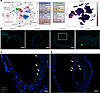 Figure 1
Identifying endogenous ADAMTS7 expression. (A) scRNA-seq of human carotid atherosclerosis and cell clustering identities. Cluster identities are reproduced with permission (19). (B) RNAscope of the BCA in mice after WTD feeding. Nuclei are stained with DAPI. Scale bar: 100 μm. RNAscope of the BCA of LdlrKO mice after 7 (C) and 10 (D) weeks of WTD feeding and probed against Adamts7 and Pecam1. White arrows highlight EC expression of Adamts7. Yellow arrows indicate non-EC expression of Adamts7. Scale bar: 50 μm.
We next sought to confirm this observation in mouse models of atherosclerosis. Previous work in Apoe–/– mice has shown that Adamts7 expression is induced after 4 weeks of a Western-type diet (WTD) feeding but is absent by terminal time points (7). To determine when Adamts7 is expressed during atherosclerosis, we performed RNAscope within the brachiocephalic artery (BCA) of hyperlipidemic LDL receptor KO (LdlrKO) mice at 4, 6, and 9 weeks of WTD. Adamts7 expression appears during early atheroma formation and is especially prominent at 9 weeks when established lesions are present (Figure 1B). Across multiple experiments, Adamts7 expression was localized to the developing atherosclerotic neointima and to multiple other locations in the BCA, consistent with its expression in SMCs and other cells (Figure 1, B–D). To confirm EC expression as seen in the human scRNA-seq data, we performed RNAscope in the BCA of LdlrKO mice after 7 and 10 weeks of WTD (Figure 1, C and D). At the early lesion time point of 7 weeks, we detected colocalization of the Adamts7 transcript with Pecam1, an EC marker, whereas at the 10-week time point, we observed Adamts7 expression in both ECs and non-ECs. These data support the notion that multiple vascular cell types produce ADAMTS7 during atherosclerosis in mice and humans.
SMC- or EC-specific KO of Adamts7 does not reduce atherosclerosis. Given Adamts7 expression in multiple vascular cell types, we next asked if the KO of Adamts7 in any single vascular cell type could reduce atherosclerosis. We generated a conditional KO model of Adamts7 in which exons 5 and 6 are floxed (Supplemental Figure 1A; supplemental material available online with this article; https://doi.org/10.1172/JCI187451DS1). Given the existing prior literature on ADAMTS7 regulation of SMC function (7, 15), we crossed this mouse to the Myh11-CreERT2 and LdlrKO to generate a hyperlipidemic SMC conditional KO of Adamts7 (Adamts7fl/fl; LdlrKO; Myh11-CreERT2, referred to as Adamts7SMCKO LdlrKO) and subsequently induced KO through intraperitoneal tamoxifen injections (Figure 2A).
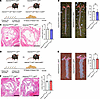 Figure 2
SMC or EC KO of Adamts7 does not affect atherosclerosis. (A) Schematic outlining experimental design and mouse comparisons for SMC KO of Adamts7. Created with BioRender.com. (B) Representative ORO staining of en face aortas and enumeration. n = 12–14. (C) Representative images of H&E-stained aortic root sections, quantification of plaque areas (n = 5–7). Scale bar: 500 μm. (D) Schematic outlining experimental design and mouse comparisons for EC KO of Adamts7. Created with BioRender.com. (E) Representative ORO staining of en face aortas and enumeration. n = 7. (F) Representative images of H&E-stained aortic root sections, quantification of plaque areas (n = 6–7). Scale bar: 500 μm. Statistics were analyzed using a 2-tailed Student’s t test.
Although Adamts7 expression is typically low in uninjured vessels, SMC explants from Adamts7SMCKO LdlrKO mice had an approximately 50% reduction in Adamts7 expression compared with WT controls Adamts7SMCWT LdlrKO (Supplemental Figure 1B). After 16 weeks of WTD feeding, we observed no changes in body weight or total cholesterol level (Supplemental Figure 1, D and E). Surprisingly, Adamts7SMCKO LdlrKO did not alter the lesion area in either en face Oil Red O (ORO) analysis (Figure 2B) or aortic root lesion area (Figure 2C).
Because ADAMTS7 expression is also prominent in ECs, on the basis of human scRNA-seq data (Figure 1A), we next generated an Adamts7 EC-specific conditional KO by crossing the hyperlipidemic conditional KO mouse to the Cdh5-CreERT2 (Adamts7fl/fl; LdlrKO; Cdh5-CreERT2, referred to as Adamts7ECKO LdlrKO). To confirm EC-specific KO, we isolated CD31+ ECs from aortas and observed markedly reduced Adamts7 expression in the CD31+ fraction from Adamts7ECKO LdlrKO mice compared with WT mice (Adamts7ECWT LdlrKO), whereas no difference was observed in the CD31– (non-EC) fraction (Supplemental Figure 1C). After 16 weeks of WTD feeding, we assessed atherosclerosis in Adamts7ECKO LdlrKO compared with Adamts7ECWT LdlrKO (Figure 2D). Again, we observed no changes in body weight or total cholesterol levels (Supplemental Figure 1, F and G). Similar to Adamts7SMCKO LdlrKO mice, EC KO of Adamts7 also did not demonstrate any changes in the atherosclerotic burden (Figure 2, E and F). These data strongly suggest that individual KO of Adamts7 in ECs or SMCs alone is not adequate to alter atherogenesis in mice.
Transgenic overexpression of Adamts7 in mouse SMCs or ECs exacerbates atherosclerosis. Given that KO of Adamts7 in either SMCs or ECs alone did not appear to reduce atherogenesis in our model, we next asked whether sustained induction of Adamts7 expression in a single cell type can increase atherogenesis. Because ADAMTS7 is induced in multiple vascular cell types in human atherosclerosis (Figure 1A), we generated a transgenic mouse model with conditional Adamts7 overexpression to mimic its induction and promote its function in multiple cell types. We inserted murine Adamts7 into the Rosa26 locus with a lox-stop-lox (LSL) cassette preceding the gene, allowing for tissue type–specific overexpression of Adamts7. The transgenic overexpression model was subsequently bred to the LdlrKO background as well as to either the Myh11-CreERT2 (Adamts7SMCTG) or the Cdh5-CreERT2 (Adamts7ECTG) to allow for SMC (Figure 3A) or EC (Figure 3G) specific overexpression of Adamts7, respectively. We verified Adamts7 overexpression in the SMC transgenic model via qPCR (Supplemental Figure 2A) and Western blot (Supplemental Figure 2B) from isolated aortic RNA and protein. We note that Adamts7SMCTG LdlrKO exhibited a large-fold change in Adamts7 RNA, but this was partly due to the near-complete absence of baseline expression of Adamts7. Primary SMC explants from Adamts7SMCTG displayed increased migration (Supplemental Figure 2C), consistent with prior findings (7). Validation of Adamts7ECTG was achieved by examining Adamts7 expression in isolated CD31+ vascular ECs as well as mouse lung ECs (Supplemental Figure 2D); Adamts7 expression was elevated in ECs, whereas CD31– cells showed no difference in Adamts7 expression.
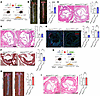 Figure 3
SMC and EC transgenic Adamts7 increases aortic atherosclerosis. (A) Schematic outlining experimental design and the generation of the SMC transgenic ADAMTS7 mouse. Created with BioRender.com. (B) ORO staining of the en face aorta and quantification of lesion area. n = 9. (C) Representative images of H&E-stained aortic root sections, quantification of plaque areas (n = 6). Scale bar: 500 μm. (D) Representative images of H&E-stained aortic root sections with necrotic core outlined in dotted line (n = 6 mice). Scale bar: 300 μm. (E) Representative images of aortic root sections stained against α-SMA (Cy3; red), MAC2 (Alexa Fluor 488 green), and cell nuclei (DAPI blue) with their subsequent quantification relative to lesion area (n = 6). Scale bar: 300 μm. (F) Representative Picrosirius red staining of aortic root lesions with bars indicating fibrous cap thickness and quantification of fibrous cap thickness (n = 6). Scale bar: 300 μm. (G) Schematic outlining experimental design and the generation of the EC transgenic ADAMTS7 mouse. Created with BioRender.com. (H) ORO staining of the en face aorta and quantification of lesion area. n = 3–4. (I) Representative images of H&E-stained aortic root sections and quantification of plaque areas (n = 5–6). Scale bar: 500 μm. ****P < 0.0001, *P < 0.05. Statistics were analyzed using a 2-tailed Student’s t test.
To investigate the role of sustained cellular Adamts7 in atherosclerosis development, Adamts7 overexpression was induced in all animal models via tamoxifen injection, and mice were fed a WTD for 16 weeks. There were no plasma cholesterol or body weight changes in any animal models (Supplemental Figure 2, E–H). Adamts7SMCTG LdlrKO mice had a stark 3.5-fold increase in atherosclerosis as shown by en face ORO staining as compared with control Adamts7SMCCTL LdlrKO mice (Figure 3B) but no change in the aortic root lesion area as assessed by H&E staining (Figure 3C), consistent with findings in other Adamts7 mouse models (9).
Given the dramatic increase in aortic atherosclerosis, we asked whether shorter durations of WTD feeding would confer an atherosclerosis phenotype. Indeed, we found increased atherosclerosis at 3, 6, and 9 weeks of WTD feeding (Supplemental Figure 3A).
During atherosclerosis, SMCs play an essential role in plaque stabilization (20). As such, we further characterized the aortic root plaque morphology in Adamts7SMCTG LdlrKO mice. We found no changes in necrotic core area (Figure 3D) or macrophage content via MAC2 staining (Figure 3E). However, Adamts7SMCTG LdlrKO lesions had reduced SMC content as determined by α-SMA staining (Figure 3E), especially in the fibrous cap region. The reduction in α-SMA also coincided with a 48% reduction in fibrous cap thickness as assessed with Picrosirius red staining (Figure 3F). The lack of change in MAC2 staining and the reduction in cap thickness indicate that increased ADAMTS7 reduces indices associated with human plaque stability in these mouse models.
Finally, in tandem, we performed a similar atherosclerosis study on the Adamts7ECTG LdlrKO mice and observed a 1.5-fold increase in aortic atherosclerosis in Adamts7ECTG LdlrKO mice as compared with controls (Figure 3H). We also observed the same lack of changes in aortic root lesion area between groups (Figure 3I).
Adamts7 promotes SMC foam cell formation. The significant increase in ORO staining of the en face aorta indicated an increased accumulation of neutral lipids within vascular cells, presumably due to an expansion in foam cell formation. Thus, we next assessed aortic foam cell content in our Adamts7 transgenic mice using a neutral lipid dye, LipidTOX. After excluding debris, doublets, and dead cells (Supplemental Figure 4A), we observed that the Adamts7SMCTG LdlrKO had a 3-fold increase in foam cell content, mirroring the increase in aortic atherosclerosis (Figure 4A). Notably, greater than 80% of these foam cells lacked CD11B and CD64, indicating that non-leukocytes were accumulating lipids and becoming foamy (Figure 4B) (14).
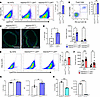 Figure 4
ADAMTS7 promotes foam cell expansion. (A) Flow cytometry–based quantification of foam cells through LipidTOX staining of the aorta. A normolipidemic aorta was used to establish the LipidTOX high gate. n = 3. (B) Breakdown of foam cells stained positively for CD11B and CD64. n = 3. (C) Confirmation of efficient ZsGreen labeling of SMCs with nuclei counterstained with DAPI. Scale bar: 500 μm. (D) Foam cell analysis with the SMC lineage tracer ZsGreen and leukocyte marker CD45 after 12 weeks of WTD. Counts were normalized to 100,000 live cells. n = 4–6 mice. Statistics were analyzed by 2-way ANOVA with Šidák’s multiple comparison test. (E) Flow cytometry–based quantification of foam cells through LipidTOX staining of the aorta. A normolipidemic aorta was used to establish the LipidTOX high gate. n = 3–4. (F) Normalized foam cell counts out of 100,000 live cells after 16 weeks of WTD. Leukocytes were identified as CD45+. SMCs were identified as CD31– CD45– CD200+. n = 10–11 mice. Statistics were analyzed by 2-way ANOVA with Šidák’s multiple comparison test. (G) In vitro foam cell analysis with primary cells from transgenic mice treated with 10 μg/mL DiI-oxLDL for 24 hours. n = 4. (H) In vitro foam cell analysis with explanted primary SMCs from whole-body Adamts7 KO mice treated with 10 μg/mL DiI-oxLDL for 24 hours. n = 3. ****P < 0.0001, ***P < 0.001, ** P < 0.01, *P < 0.05 Between-sample comparisons were analyzed by a 2-tailed Student’s t test.
Given that increased ORO staining of the aorta was evident even at early time points, we next examined foam cell composition after 3 weeks of WTD. Despite the short feeding period, Adamts7SMCTG LdlrKO mice already exhibited a significant increase in foam cell formation, driven primarily by an expansion of SMC-derived foam cells as identified by CD200 expression (Supplemental Figure 3B).
To further confirm that the increase in foam cells was predominantly of SMC origin, the Adamts7SMCCTL LdlrKO and Adamts7SMCTG LdlrKO mouse model was subsequently bred to an LSL-ZsGreen reporter (Adamts7SMCCTL LdlrKO ZsGreenSMC+ and Adamts7SMCTG LdlrKO ZsGreenSMC+) to allow for the lineage tracing of SMCs and their derived cells (12). Efficient ZsGreen labeling of SMCs was achieved through microscopy (Figure 4C). After 12 weeks of WTD feeding, ZsGreen status and concurrent staining with CD45 revealed that greater than 65% of lipid-laden foam cells were ZsGreen+ and CD45- (Supplemental Figure 4B), indicating again that Adamts7 was predominately increasing SMC foam cell formation (Figure 4D). We repeated the foam cell analysis within Adamts7ECCTL LdlrKO and Adamts7ECTG LdlrKO and observed that the Adamts7ECTG LdlrKO mice contained an increase in foam cell content as well (Figure 4E). Further assessment of these foam cells within the aorta revealed that the majority were CD45– and CD31– while being CD200+ (21), indicating again that SMCs are also becoming foamy in this model (Figure 4F).
To test if ADAMTS7 promotes SMC foam cell formation by enhancing lipid uptake, we generated primary SMC explants from the Adamts7SMCCTL and Adamts7SMCTG mice with WT Ldlr and treated them with fluorescently labeled oxLDL (DiI-oxLDL). We chose oxLDL because it is a pathophysiologically relevant modified lipoprotein that accumulates within atherosclerotic lesions (22). Adamts7SMCTG primary SMCs had a 38% increase in DiI-oxLDL uptake compared with Adamts7SMCCTL as measured by median fluorescence intensity (Figure 4G). Both the proportion of DiI-oxLDL–positive cells and the intensity of staining per cell were elevated in the Adamts7SMCTG group.
To further validate the role of Adamts7 in SMC lipid uptake, we examined primary SMCs isolated from our previously described global Adamts7 KO mice (7). After TNF-α stimulation for 72 hours to induce Adamts7 expression, the SMCs were loaded with DiI-oxLDL. KO of Adamts7 reduced the percentage of cells accumulating lipids and the amount of lipid uptake (Figure 4H), complementing the transgenic phenotype.
Adamts7 leads to an increase in lipid uptake gene expression in SMCs. To identify how ADAMTS7 mediates an increase in SMC lipid uptake, we performed bulk RNA-seq on SMCs explanted from Adamts7SMCCTL and Adamts7SMCTG mouse aortas 10 days after transgene induction (Figure 5A). These cells were from mice with WT Ldlr expression and that were fed a chow diet, ensuring that any changes in gene expression were due specifically to increased Adamts7 expression. Differential gene expression analysis revealed that Adamts7SMCTG cells had increased expression of lipid uptake genes typically associated with macrophages, including Cd36, Fabp5, and Trem2, as well as the macrophage-associated marker Adgre1. Importantly, this represents a transcriptional elevation; these cells are not bona fide macrophages. These findings were validated in vivo by qRT-PCR of whole-aorta RNA from Adamts7SMCTG mice (Figure 5B). Although the increase in macrophage-like gene expression indicates SMC phenotypic modulation, we did not observe decreases in canonical SMC contractile markers, either by RNA-seq or by qRT-PCR (Supplemental Figure 5A), even with oxLDL treatment (Supplemental Figure 5B). Similarly, the expression of Klf4, a marker typically associated with modulated SMCs, remained unchanged even with oxLDL treatment (13). Ingenuity pathway analysis (IPA) of the differentially expressed gene set identified pathways enriched within the Adamts7SMCTG SMCs that are typically ascribed to macrophages, such as phagosome formation and immune signaling (Figure 5C). Because 1 of the hallmark functions of macrophages during atherosclerosis is perpetuating inflammation, we asked whether our Adamts7SMCTG SMCs were more inflammatory. Cytokine analysis of conditioned media revealed no differences in IL-1β, IL-6, or TNF-α secretion (Supplemental Figure 5C). These findings indicate that Adamts7SMCTG SMCs are not inflammatory and any atherosclerosis phenotype is likely independent of canonical inflammatory pathways. Collectively, the RNA-seq and qRT-PCR data indicate that Adamts7SMCTG SMCs acquire a gene signature typically associated with macrophages, with an enrichment of phagocytic and lipid-uptake genes, consistent with prior reports that modulated SMCs can upregulate macrophage processes (12, 23).
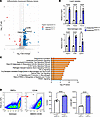 Figure 5
Bulk RNA-seq of Adamts7SMCTG primary SMCs reveals an increase in lipid-handling genes. (A) Volcano plot of the most upregulated and downregulated genes by P value adjusted for multiple comparisons. Passage 2 cells were used for RNA-seq. Adamts7 (x = 3.65, y = 122) was excluded from the plot for visualization purposes because it fell completely off scale. (B) qRT-PCR confirmation of upregulated lipid uptake and macrophage-like genes (n = 4). Normalization was performed relative to Hprt1. (C) IPA of differentially expressed genes with Ingenuity Canonical Pathways highlighted. Shown pathways are predicted to be upregulated within Adamts7SMCTG primary SMCs. (D) Confirmation of enhanced SMC CD36 in vivo. Flow cytometry analysis of lineage traced mice after 12 weeks of WTD feeding. n = 4–6 mice. ****P < 0.0001, **P < 0.01. Statistics were analyzed using a 2-tailed Student’s t test.
Knockdown of Cd36 ameliorates enhanced oxLDL uptake conferred by Adamts7. Given the known role of CD36 as a receptor for oxLDL (24), we next investigated whether CD36 mediates the increased lipid uptake observed in Adamts7SMCTG cells. Flow cytometric analysis was used on Adamts7SMCTG LdlrKO ZsGreenSMC+ aortas after 12 weeks of WTD feeding to examine CD36 levels in vivo. ZsGreen+ cells from Adamts7SMCTG LdlrKO ZsGreenSMC+ mice had a 40% increase in cells expressing Cd36 and a 2.3-fold increase in median fluorescence intensity of CD36 signal (Figure 5D), consistent with the in vitro increase in CD36 expression in Adamts7SMCTG cells. To determine whether CD36 is functionally required for ADAMTS7-induced lipid uptake, we performed siRNA-mediated knockdown of Cd36 in primary SMCs isolated from Adamts7SMCCTL and Adamts7SMCTG mice. siRNA-mediated knockdown of Cd36 in primary SMCs from Adamts7SMCTG mice reduced Cd36 expression to that of nontargeting control–treated (NTC-treated) Adamts7SMCCTL cells (Figure 6A). Consistent with this, siCd36 treatment normalized oxLDL uptake in Adamts7SMCTG cells to levels comparable to that of NTC-treated controls (Figure 6B). Together, these data demonstrate that ADAMTS7 promotes SMC lipid uptake through upregulation of Cd36, identifying CD36 as a key mediator of the enhanced oxLDL uptake and foam cell formation driven by ADAMTS7 during atherogenesis.
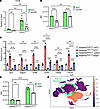 Figure 6
CD36 and PU.1 mediate ADAMTS7-conferred foam cell expansion. (A) Confirmation of knockdown of Cd36 through siRNA. Primary SMCs were treated with 10 nM of either an NTC or Cd36 siRNA. Knockdown was assessed 48 hours after transfection. n = 3–5 mice. (B) Flow analysis of oxLDL lipid uptake. 24 hours after siRNA transfection, cells were treated with 10 μg/mL of DiI-oxLDL, and uptake was assessed 24 hours after oxLDL treatment. n = 3. (C) Knockdown of Spi1 in primary SMCs. Cells were treated with 10 nM of siRNA, and 48 hours after transfection, cells were harvested for qRT-PCR. (D) Flow analysis of lipid uptake. At 24 hours after Spi1 siRNA transfection, cells were treated with 10 μg/mL DiI-oxLDL, and uptake was assessed 24 hours after oxLDL treatment. (E) Expression of SPI1 in human carotid atherosclerosis. ****P < 0.0001, ***P < 0.001, ** P < 0.01, *P < 0.05. Statistics were analyzed by 2-way ANOVA with Šidák’s multiple comparison test.
Knockdown of Spi1 in Adamts7 overexpressing SMCs attenuates the expression of macrophage-like and lipid-uptake genes. We next used IPA to identify upstream transcriptional regulators that could mediate the observed differential gene expression (Table 1) in Adamts7SMCTG cells. The top predicted activated TF was Spi1, which encodes the protein PU.1. Spi1 itself also exhibited a 3.16-fold increase in expression in Adamts7SMCTG cells. To test whether PU.1 is required for the Adamts7-mediated increase in lipid uptake genes, we used siRNA to achieve a 66% knockdown of Spi1 in primary SMCs. Knockdown of Spi1 abrogated the increases in gene expression of Cd36, Fabp5, Trem2, Adgre1, and Cd68 (Figure 6C). We also performed siRNA knockdown of other predicted master-regulator TFs identified by IPA and found that knockdown of Cebpa, Smarca4, Bhlhe40, and Klf6 did not ameliorate the increases in lipid uptake gene expression (Supplemental Figure 6). DiI-oxLDL loading of primary Adamts7SMCTG SMCs with Spi1 knockdown demonstrated that loss of Spi1 attenuated the increased oxLDL uptake in Adamts7SMCTG cells while having no effect in Adamts7SMCCTL primary SMCs (Figure 6D). This finding suggests increased Spi1 levels resulting from Adamts7 expression are responsible for the increased oxLDL uptake observed in Adamts7SMCTG SMCs.
Finally, we examined the level of SPI1 expression within our human single-cell data and found clear SPI1 expression in the modulated SMC populations (Figure 6E), mirroring our observations in mice and suggesting that SPI1 may contribute similarly to SMC phenotypic modulation in humans. Within these human SMCs, phenotypic modulation was also accompanied by increased expression of lipid-handling genes CD36 (19), FABP5, and TREM2, as well as the macrophage marker ADGRE1 (Supplemental Figure 7).
ADAMTS7 promotes an AP-1–dependent chromatin remodeling program in SMCs. RNA-seq analysis revealed widespread transcriptional reprogramming in Adamts7SMCTG SMCs (Figure 5), leading to increased oxLDL uptake. Given that ADAMTS7 is a secreted extracellular protein, these changes must be driven by outside-in signaling that alters TF activity. To identify changes in TF activity, we conducted an assay for transposase-accessible chromatin using sequencing (ATAC-seq) on primary SMCs explanted from Adamts7SMCCTL and Adamts7SMCTG mice to map regions with altered chromatin accessibility. Differential ATAC-seq peak analysis revealed that Adamts7 overexpression broadly remodeled the chromatin landscape in SMCs, with 47,452 peaks (19.5% of all ATAC peaks) showing differential accessibility between groups (Figure 7A). TF binding motif analysis of the differential peaks identified enrichment of binding sites for FOS and JUN, members of the AP-1 TF complex (Figure 7B). Integration of ATAC-seq with RNA-seq data (Figure 5) further demonstrated that 85.8% of genes differentially expressed in Adamts7SMCTG SMCs were associated with a nearby differential ATAC peak (±100 kb from the transcription start site), indicating a close coupling between chromatin accessibility and transcriptional reprogramming by ADAMTS7 (Figure 7C).
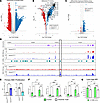 Figure 7
ADAMTS7 drives AP-1–dependent chromatin remodeling and transcriptional reprogramming in SMCs. (A) Differential ATAC-seq peaks in primary SMCs from Adamts7SMCCTL and Adamts7SMCTG mice reveal widespread chromatin remodeling. (B) Motif enrichment analysis of differential peaks identifies significant overrepresentation of FOS and JUN (AP-1) binding sites. (C) Integration of ATAC-seq and RNA-seq data show that 85.8% of genes upregulated in Adamts7SMCTG SMCs are associated with nearby differential ATAC peaks (±100 kb from TSS. (D) Genome browser tracks at the Spi1 locus indicate increased chromatin accessibility in Adamts7SMCTG SMCs at a predicted cis-regulatory element containing an AP-1 motif. (E) Proliferation as determined by CellTiter of primary SMCs of Adamts7 overexpression (n = 4) and Adamts7 KO cells (n = 8). (F) qRT-PCR of ERK1/2 inhibition with ulixertinib suppresses ADAMTS7-induced upregulation of Spi1, lipid-handling genes (Cd36, Trem2). (G) Ulixertinib treatment and subsequent DiI-oxLDL uptake in primary SMCs. n = 3. Statistics were analyzed using a 2-tailed Student’s t test or 2-way ANOVA with Šidák’s multiple comparison test. ****P < 0.0001, **P < 0.01, *P < 0.05.
We next focused on the Spi1 genomic locus in greater detail. Chromatin accessibility increased markedly within ±200 kb of the Spi1 transcriptional start site (TSS) (Supplemental Figure 8). Notably, a region of differential accessibility within a Spi1 intron overlaps both a predicted cis-regulatory element and AP-1 binding site, consistent with AP-1–dependent regulation of Spi1 transcription in Adamts7SMCTG SMCs (Figure 7D). AP-1 transcriptional activity is canonically regulated by MAPK/ERK-dependent phosphorylation of FOS and JUN, which enhances their DNA-binding and transactivation potential (25). Consistent with this model, Adamts7SMCTG SMCs displayed increased proliferation, a hallmark of MAPK/ERK pathway activation, whereas SMCs isolated from global Adamts7-KO mice exhibited slower proliferation, confirming that ADAMTS7 contributes to SMC proliferative capacity (Figure 7E).
We next tested whether inhibiting MAPK/ERK signaling could block ADAMTS7-induced phenotypes. Treatment with ulixertinib, a selective ERK1/2 inhibitor, significantly suppressed Spi1 expression (Figure 7F), reduced the induction of Cd36 and Trem2, and blunted oxLDL lipid accumulation (Figure 7G). Together, these results are consistent with a model in which ADAMTS7 promotes AP-1 activity, which, in turn, upregulates Spi1 and downstream lipid-handling genes, driving both transcriptional and phenotypic reprogramming of SMCs.
Given that ADAMTS7 is a metalloproteinase, we next investigated whether previously identified ADAMTS7 extracellular matrix substrates (THBS1, cartilage oligomeric matrix protein [COMP], LTBP4, and TIMP1) mediate the observed increases in lipid-handling gene expression in Adamts7SMCTG SMCs. To test this, we performed siRNA knockdowns of putative substrates in primary SMCs from Adamts7SMCCTL and Adamts7SMCTG mice (Supplemental Figure 9A). Among these, Thbs1 knockdown most strongly attenuated the ADAMTS7-induced upregulation of Cd36, Spi1, and Trem2, whereas Fabp5 expression remained unaffected. Although it did not fully restore gene expression to baseline, this partial rescue indicated Thbs1 contributes, in part, to ADAMTS7-dependent gene activation. In contrast, Comp silencing modestly reduced the expression of select lipid-related genes with minor to no effects on Cd36, and knockdown of Ltbp4 or Timp1 produced minimal effects.
Finally, we assessed THBS1 and COMP protein levels by Western blot of whole-aorta lysates after WTD feeding. This analysis revealed the presence of cleaved THBS1 fragments in Adamts7SMCTG lysates with no reduction in total THBS1 protein, whereas total COMP protein levels were noticeably reduced (Supplemental Figure 9B). Collectively, these results demonstrate ADAMTS7 promotes PU.1-dependent lipid uptake and transcriptional reprogramming in SMCs through a combination of extracellular matrix substrate–mediated signaling and AP-1–dependent chromatin remodeling.


Copyright © 2026 American Society for Clinical Investigation
ISSN: 0021-9738 (print), 1558-8238 (online)