
Advertisement
Research ArticleCell biologyMetabolism
Open Access |  10.1172/JCI186258
Multiomic analysis reveals a key BCAT1 role in mTOR activation by B cell receptor and TLR9
Rui Guo,1,2,3 Yizhe Sun,1,2,3 Matthew Y. Lim,4,5 Hardik Shah,6 Joao A. Paulo,4 Rahaman A. Ahmed,7,8,9 Weixing Li,10 Yuchen Zhang,1,2,3 Haopeng Yang,11 Liang Wei Wang,1,2,3,5 Daniel Strebinger,9 Nicholas A. Smith,1,2,3 Meng Li,12 Merrin Man Long Leong,1,2,3 Michael Lutchenkov,1,2,3 Jin Hua Liang,1,2,3 Zhixuan Li,1,2,3 Yin Wang,1,2,3 Rishi Puri,13 Ari Melnick,12 Michael R. Green,11 John M. Asara,14 Adonia E. Papathanassiu,10 Duane R. Wesemann,7,8,9 Steven P. Gygi,4 Vamsi K. Mootha,2,6,9 and Benjamin E. Gewurz1,2,3,5
1Division of Infectious Diseases, Department of Medicine, Brigham and Women’s Hospital, Boston, Massachusetts, USA.
2Center for Integrated Solutions in Infectious Disease, Broad Institute, Cambridge, Massachusetts, USA.
3Department of Microbiology and
4Department of Cell Biology, Harvard Medical School, Boston, Massachusetts, USA.
5Harvard Program in Virology, Boston, Massachusetts, USA.
6Howard Hughes Medical Institute and Department of Molecular Biology, Massachusetts General Hospital, Boston, Massachusetts, USA.
7Department of Medicine, Division of Allergy and Clinical Immunology, Brigham and Women’s Hospital and Harvard Medical School, Boston, Massachusetts, USA.
8Ragon Institute of Massachusetts General Hospital and
9Broad Institute of Harvard and Massachusetts Institute of Technology, Cambridge, Massachusetts, USA.
10Ergon Pharmaceuticals, LLC, Silver Spring, Maryland, USA.
11Department of Lymphoma/Myeloma, University of Texas MD Anderson Cancer Center, Houston, Texas, USA.
12Department of Medicine, Division of Hematology & Medical Oncology, Weill Cornell Medicine, New York, New York, USA.
13Department of Biomedical Sciences, College of Veterinary Medicine, Cornell University, Ithaca, New York, USA.
14Mass Spectrometry Core, Beth Israel Deaconess Medical Center, Boston, Massachusetts, USA.
Address correspondence to: Benjamin E. Gewurz, 181 Longwood Ave., Boston, Massachusetts 02115, USA; Phone: 617.525.4282; Email: bgewurz@bwh.harvard.edu. Or to: Rui Guo, 150 Harrison Ave, Boston, Massachusetts 02111, USA. Phone: 617.636.0457; Email: Rui.Guo@tufts.edu.
Authorship note: RG and YS contributed equally to this work.
Find articles by Guo, R. in: PubMed | Google Scholar
1Division of Infectious Diseases, Department of Medicine, Brigham and Women’s Hospital, Boston, Massachusetts, USA.
2Center for Integrated Solutions in Infectious Disease, Broad Institute, Cambridge, Massachusetts, USA.
3Department of Microbiology and
4Department of Cell Biology, Harvard Medical School, Boston, Massachusetts, USA.
5Harvard Program in Virology, Boston, Massachusetts, USA.
6Howard Hughes Medical Institute and Department of Molecular Biology, Massachusetts General Hospital, Boston, Massachusetts, USA.
7Department of Medicine, Division of Allergy and Clinical Immunology, Brigham and Women’s Hospital and Harvard Medical School, Boston, Massachusetts, USA.
8Ragon Institute of Massachusetts General Hospital and
9Broad Institute of Harvard and Massachusetts Institute of Technology, Cambridge, Massachusetts, USA.
10Ergon Pharmaceuticals, LLC, Silver Spring, Maryland, USA.
11Department of Lymphoma/Myeloma, University of Texas MD Anderson Cancer Center, Houston, Texas, USA.
12Department of Medicine, Division of Hematology & Medical Oncology, Weill Cornell Medicine, New York, New York, USA.
13Department of Biomedical Sciences, College of Veterinary Medicine, Cornell University, Ithaca, New York, USA.
14Mass Spectrometry Core, Beth Israel Deaconess Medical Center, Boston, Massachusetts, USA.
Address correspondence to: Benjamin E. Gewurz, 181 Longwood Ave., Boston, Massachusetts 02115, USA; Phone: 617.525.4282; Email: bgewurz@bwh.harvard.edu. Or to: Rui Guo, 150 Harrison Ave, Boston, Massachusetts 02111, USA. Phone: 617.636.0457; Email: Rui.Guo@tufts.edu.
Authorship note: RG and YS contributed equally to this work.
Find articles by Sun, Y. in: PubMed | Google Scholar
1Division of Infectious Diseases, Department of Medicine, Brigham and Women’s Hospital, Boston, Massachusetts, USA.
2Center for Integrated Solutions in Infectious Disease, Broad Institute, Cambridge, Massachusetts, USA.
3Department of Microbiology and
4Department of Cell Biology, Harvard Medical School, Boston, Massachusetts, USA.
5Harvard Program in Virology, Boston, Massachusetts, USA.
6Howard Hughes Medical Institute and Department of Molecular Biology, Massachusetts General Hospital, Boston, Massachusetts, USA.
7Department of Medicine, Division of Allergy and Clinical Immunology, Brigham and Women’s Hospital and Harvard Medical School, Boston, Massachusetts, USA.
8Ragon Institute of Massachusetts General Hospital and
9Broad Institute of Harvard and Massachusetts Institute of Technology, Cambridge, Massachusetts, USA.
10Ergon Pharmaceuticals, LLC, Silver Spring, Maryland, USA.
11Department of Lymphoma/Myeloma, University of Texas MD Anderson Cancer Center, Houston, Texas, USA.
12Department of Medicine, Division of Hematology & Medical Oncology, Weill Cornell Medicine, New York, New York, USA.
13Department of Biomedical Sciences, College of Veterinary Medicine, Cornell University, Ithaca, New York, USA.
14Mass Spectrometry Core, Beth Israel Deaconess Medical Center, Boston, Massachusetts, USA.
Address correspondence to: Benjamin E. Gewurz, 181 Longwood Ave., Boston, Massachusetts 02115, USA; Phone: 617.525.4282; Email: bgewurz@bwh.harvard.edu. Or to: Rui Guo, 150 Harrison Ave, Boston, Massachusetts 02111, USA. Phone: 617.636.0457; Email: Rui.Guo@tufts.edu.
Authorship note: RG and YS contributed equally to this work.
Find articles by Lim, M. in: PubMed | Google Scholar
1Division of Infectious Diseases, Department of Medicine, Brigham and Women’s Hospital, Boston, Massachusetts, USA.
2Center for Integrated Solutions in Infectious Disease, Broad Institute, Cambridge, Massachusetts, USA.
3Department of Microbiology and
4Department of Cell Biology, Harvard Medical School, Boston, Massachusetts, USA.
5Harvard Program in Virology, Boston, Massachusetts, USA.
6Howard Hughes Medical Institute and Department of Molecular Biology, Massachusetts General Hospital, Boston, Massachusetts, USA.
7Department of Medicine, Division of Allergy and Clinical Immunology, Brigham and Women’s Hospital and Harvard Medical School, Boston, Massachusetts, USA.
8Ragon Institute of Massachusetts General Hospital and
9Broad Institute of Harvard and Massachusetts Institute of Technology, Cambridge, Massachusetts, USA.
10Ergon Pharmaceuticals, LLC, Silver Spring, Maryland, USA.
11Department of Lymphoma/Myeloma, University of Texas MD Anderson Cancer Center, Houston, Texas, USA.
12Department of Medicine, Division of Hematology & Medical Oncology, Weill Cornell Medicine, New York, New York, USA.
13Department of Biomedical Sciences, College of Veterinary Medicine, Cornell University, Ithaca, New York, USA.
14Mass Spectrometry Core, Beth Israel Deaconess Medical Center, Boston, Massachusetts, USA.
Address correspondence to: Benjamin E. Gewurz, 181 Longwood Ave., Boston, Massachusetts 02115, USA; Phone: 617.525.4282; Email: bgewurz@bwh.harvard.edu. Or to: Rui Guo, 150 Harrison Ave, Boston, Massachusetts 02111, USA. Phone: 617.636.0457; Email: Rui.Guo@tufts.edu.
Authorship note: RG and YS contributed equally to this work.
Find articles by
Shah, H.
in:
PubMed
|
Google Scholar
|

1Division of Infectious Diseases, Department of Medicine, Brigham and Women’s Hospital, Boston, Massachusetts, USA.
2Center for Integrated Solutions in Infectious Disease, Broad Institute, Cambridge, Massachusetts, USA.
3Department of Microbiology and
4Department of Cell Biology, Harvard Medical School, Boston, Massachusetts, USA.
5Harvard Program in Virology, Boston, Massachusetts, USA.
6Howard Hughes Medical Institute and Department of Molecular Biology, Massachusetts General Hospital, Boston, Massachusetts, USA.
7Department of Medicine, Division of Allergy and Clinical Immunology, Brigham and Women’s Hospital and Harvard Medical School, Boston, Massachusetts, USA.
8Ragon Institute of Massachusetts General Hospital and
9Broad Institute of Harvard and Massachusetts Institute of Technology, Cambridge, Massachusetts, USA.
10Ergon Pharmaceuticals, LLC, Silver Spring, Maryland, USA.
11Department of Lymphoma/Myeloma, University of Texas MD Anderson Cancer Center, Houston, Texas, USA.
12Department of Medicine, Division of Hematology & Medical Oncology, Weill Cornell Medicine, New York, New York, USA.
13Department of Biomedical Sciences, College of Veterinary Medicine, Cornell University, Ithaca, New York, USA.
14Mass Spectrometry Core, Beth Israel Deaconess Medical Center, Boston, Massachusetts, USA.
Address correspondence to: Benjamin E. Gewurz, 181 Longwood Ave., Boston, Massachusetts 02115, USA; Phone: 617.525.4282; Email: bgewurz@bwh.harvard.edu. Or to: Rui Guo, 150 Harrison Ave, Boston, Massachusetts 02111, USA. Phone: 617.636.0457; Email: Rui.Guo@tufts.edu.
Authorship note: RG and YS contributed equally to this work.
Find articles by
Paulo, J.
in:
PubMed
|
Google Scholar
|
1Division of Infectious Diseases, Department of Medicine, Brigham and Women’s Hospital, Boston, Massachusetts, USA.
2Center for Integrated Solutions in Infectious Disease, Broad Institute, Cambridge, Massachusetts, USA.
3Department of Microbiology and
4Department of Cell Biology, Harvard Medical School, Boston, Massachusetts, USA.
5Harvard Program in Virology, Boston, Massachusetts, USA.
6Howard Hughes Medical Institute and Department of Molecular Biology, Massachusetts General Hospital, Boston, Massachusetts, USA.
7Department of Medicine, Division of Allergy and Clinical Immunology, Brigham and Women’s Hospital and Harvard Medical School, Boston, Massachusetts, USA.
8Ragon Institute of Massachusetts General Hospital and
9Broad Institute of Harvard and Massachusetts Institute of Technology, Cambridge, Massachusetts, USA.
10Ergon Pharmaceuticals, LLC, Silver Spring, Maryland, USA.
11Department of Lymphoma/Myeloma, University of Texas MD Anderson Cancer Center, Houston, Texas, USA.
12Department of Medicine, Division of Hematology & Medical Oncology, Weill Cornell Medicine, New York, New York, USA.
13Department of Biomedical Sciences, College of Veterinary Medicine, Cornell University, Ithaca, New York, USA.
14Mass Spectrometry Core, Beth Israel Deaconess Medical Center, Boston, Massachusetts, USA.
Address correspondence to: Benjamin E. Gewurz, 181 Longwood Ave., Boston, Massachusetts 02115, USA; Phone: 617.525.4282; Email: bgewurz@bwh.harvard.edu. Or to: Rui Guo, 150 Harrison Ave, Boston, Massachusetts 02111, USA. Phone: 617.636.0457; Email: Rui.Guo@tufts.edu.
Authorship note: RG and YS contributed equally to this work.
Find articles by Ahmed, R. in: PubMed | Google Scholar
1Division of Infectious Diseases, Department of Medicine, Brigham and Women’s Hospital, Boston, Massachusetts, USA.
2Center for Integrated Solutions in Infectious Disease, Broad Institute, Cambridge, Massachusetts, USA.
3Department of Microbiology and
4Department of Cell Biology, Harvard Medical School, Boston, Massachusetts, USA.
5Harvard Program in Virology, Boston, Massachusetts, USA.
6Howard Hughes Medical Institute and Department of Molecular Biology, Massachusetts General Hospital, Boston, Massachusetts, USA.
7Department of Medicine, Division of Allergy and Clinical Immunology, Brigham and Women’s Hospital and Harvard Medical School, Boston, Massachusetts, USA.
8Ragon Institute of Massachusetts General Hospital and
9Broad Institute of Harvard and Massachusetts Institute of Technology, Cambridge, Massachusetts, USA.
10Ergon Pharmaceuticals, LLC, Silver Spring, Maryland, USA.
11Department of Lymphoma/Myeloma, University of Texas MD Anderson Cancer Center, Houston, Texas, USA.
12Department of Medicine, Division of Hematology & Medical Oncology, Weill Cornell Medicine, New York, New York, USA.
13Department of Biomedical Sciences, College of Veterinary Medicine, Cornell University, Ithaca, New York, USA.
14Mass Spectrometry Core, Beth Israel Deaconess Medical Center, Boston, Massachusetts, USA.
Address correspondence to: Benjamin E. Gewurz, 181 Longwood Ave., Boston, Massachusetts 02115, USA; Phone: 617.525.4282; Email: bgewurz@bwh.harvard.edu. Or to: Rui Guo, 150 Harrison Ave, Boston, Massachusetts 02111, USA. Phone: 617.636.0457; Email: Rui.Guo@tufts.edu.
Authorship note: RG and YS contributed equally to this work.
Find articles by Li, W. in: PubMed | Google Scholar
1Division of Infectious Diseases, Department of Medicine, Brigham and Women’s Hospital, Boston, Massachusetts, USA.
2Center for Integrated Solutions in Infectious Disease, Broad Institute, Cambridge, Massachusetts, USA.
3Department of Microbiology and
4Department of Cell Biology, Harvard Medical School, Boston, Massachusetts, USA.
5Harvard Program in Virology, Boston, Massachusetts, USA.
6Howard Hughes Medical Institute and Department of Molecular Biology, Massachusetts General Hospital, Boston, Massachusetts, USA.
7Department of Medicine, Division of Allergy and Clinical Immunology, Brigham and Women’s Hospital and Harvard Medical School, Boston, Massachusetts, USA.
8Ragon Institute of Massachusetts General Hospital and
9Broad Institute of Harvard and Massachusetts Institute of Technology, Cambridge, Massachusetts, USA.
10Ergon Pharmaceuticals, LLC, Silver Spring, Maryland, USA.
11Department of Lymphoma/Myeloma, University of Texas MD Anderson Cancer Center, Houston, Texas, USA.
12Department of Medicine, Division of Hematology & Medical Oncology, Weill Cornell Medicine, New York, New York, USA.
13Department of Biomedical Sciences, College of Veterinary Medicine, Cornell University, Ithaca, New York, USA.
14Mass Spectrometry Core, Beth Israel Deaconess Medical Center, Boston, Massachusetts, USA.
Address correspondence to: Benjamin E. Gewurz, 181 Longwood Ave., Boston, Massachusetts 02115, USA; Phone: 617.525.4282; Email: bgewurz@bwh.harvard.edu. Or to: Rui Guo, 150 Harrison Ave, Boston, Massachusetts 02111, USA. Phone: 617.636.0457; Email: Rui.Guo@tufts.edu.
Authorship note: RG and YS contributed equally to this work.
Find articles by Zhang, Y. in: PubMed | Google Scholar
1Division of Infectious Diseases, Department of Medicine, Brigham and Women’s Hospital, Boston, Massachusetts, USA.
2Center for Integrated Solutions in Infectious Disease, Broad Institute, Cambridge, Massachusetts, USA.
3Department of Microbiology and
4Department of Cell Biology, Harvard Medical School, Boston, Massachusetts, USA.
5Harvard Program in Virology, Boston, Massachusetts, USA.
6Howard Hughes Medical Institute and Department of Molecular Biology, Massachusetts General Hospital, Boston, Massachusetts, USA.
7Department of Medicine, Division of Allergy and Clinical Immunology, Brigham and Women’s Hospital and Harvard Medical School, Boston, Massachusetts, USA.
8Ragon Institute of Massachusetts General Hospital and
9Broad Institute of Harvard and Massachusetts Institute of Technology, Cambridge, Massachusetts, USA.
10Ergon Pharmaceuticals, LLC, Silver Spring, Maryland, USA.
11Department of Lymphoma/Myeloma, University of Texas MD Anderson Cancer Center, Houston, Texas, USA.
12Department of Medicine, Division of Hematology & Medical Oncology, Weill Cornell Medicine, New York, New York, USA.
13Department of Biomedical Sciences, College of Veterinary Medicine, Cornell University, Ithaca, New York, USA.
14Mass Spectrometry Core, Beth Israel Deaconess Medical Center, Boston, Massachusetts, USA.
Address correspondence to: Benjamin E. Gewurz, 181 Longwood Ave., Boston, Massachusetts 02115, USA; Phone: 617.525.4282; Email: bgewurz@bwh.harvard.edu. Or to: Rui Guo, 150 Harrison Ave, Boston, Massachusetts 02111, USA. Phone: 617.636.0457; Email: Rui.Guo@tufts.edu.
Authorship note: RG and YS contributed equally to this work.
Find articles by Yang, H. in: PubMed | Google Scholar
1Division of Infectious Diseases, Department of Medicine, Brigham and Women’s Hospital, Boston, Massachusetts, USA.
2Center for Integrated Solutions in Infectious Disease, Broad Institute, Cambridge, Massachusetts, USA.
3Department of Microbiology and
4Department of Cell Biology, Harvard Medical School, Boston, Massachusetts, USA.
5Harvard Program in Virology, Boston, Massachusetts, USA.
6Howard Hughes Medical Institute and Department of Molecular Biology, Massachusetts General Hospital, Boston, Massachusetts, USA.
7Department of Medicine, Division of Allergy and Clinical Immunology, Brigham and Women’s Hospital and Harvard Medical School, Boston, Massachusetts, USA.
8Ragon Institute of Massachusetts General Hospital and
9Broad Institute of Harvard and Massachusetts Institute of Technology, Cambridge, Massachusetts, USA.
10Ergon Pharmaceuticals, LLC, Silver Spring, Maryland, USA.
11Department of Lymphoma/Myeloma, University of Texas MD Anderson Cancer Center, Houston, Texas, USA.
12Department of Medicine, Division of Hematology & Medical Oncology, Weill Cornell Medicine, New York, New York, USA.
13Department of Biomedical Sciences, College of Veterinary Medicine, Cornell University, Ithaca, New York, USA.
14Mass Spectrometry Core, Beth Israel Deaconess Medical Center, Boston, Massachusetts, USA.
Address correspondence to: Benjamin E. Gewurz, 181 Longwood Ave., Boston, Massachusetts 02115, USA; Phone: 617.525.4282; Email: bgewurz@bwh.harvard.edu. Or to: Rui Guo, 150 Harrison Ave, Boston, Massachusetts 02111, USA. Phone: 617.636.0457; Email: Rui.Guo@tufts.edu.
Authorship note: RG and YS contributed equally to this work.
Find articles by Wang, L. in: PubMed | Google Scholar
1Division of Infectious Diseases, Department of Medicine, Brigham and Women’s Hospital, Boston, Massachusetts, USA.
2Center for Integrated Solutions in Infectious Disease, Broad Institute, Cambridge, Massachusetts, USA.
3Department of Microbiology and
4Department of Cell Biology, Harvard Medical School, Boston, Massachusetts, USA.
5Harvard Program in Virology, Boston, Massachusetts, USA.
6Howard Hughes Medical Institute and Department of Molecular Biology, Massachusetts General Hospital, Boston, Massachusetts, USA.
7Department of Medicine, Division of Allergy and Clinical Immunology, Brigham and Women’s Hospital and Harvard Medical School, Boston, Massachusetts, USA.
8Ragon Institute of Massachusetts General Hospital and
9Broad Institute of Harvard and Massachusetts Institute of Technology, Cambridge, Massachusetts, USA.
10Ergon Pharmaceuticals, LLC, Silver Spring, Maryland, USA.
11Department of Lymphoma/Myeloma, University of Texas MD Anderson Cancer Center, Houston, Texas, USA.
12Department of Medicine, Division of Hematology & Medical Oncology, Weill Cornell Medicine, New York, New York, USA.
13Department of Biomedical Sciences, College of Veterinary Medicine, Cornell University, Ithaca, New York, USA.
14Mass Spectrometry Core, Beth Israel Deaconess Medical Center, Boston, Massachusetts, USA.
Address correspondence to: Benjamin E. Gewurz, 181 Longwood Ave., Boston, Massachusetts 02115, USA; Phone: 617.525.4282; Email: bgewurz@bwh.harvard.edu. Or to: Rui Guo, 150 Harrison Ave, Boston, Massachusetts 02111, USA. Phone: 617.636.0457; Email: Rui.Guo@tufts.edu.
Authorship note: RG and YS contributed equally to this work.
Find articles by Strebinger, D. in: PubMed | Google Scholar
1Division of Infectious Diseases, Department of Medicine, Brigham and Women’s Hospital, Boston, Massachusetts, USA.
2Center for Integrated Solutions in Infectious Disease, Broad Institute, Cambridge, Massachusetts, USA.
3Department of Microbiology and
4Department of Cell Biology, Harvard Medical School, Boston, Massachusetts, USA.
5Harvard Program in Virology, Boston, Massachusetts, USA.
6Howard Hughes Medical Institute and Department of Molecular Biology, Massachusetts General Hospital, Boston, Massachusetts, USA.
7Department of Medicine, Division of Allergy and Clinical Immunology, Brigham and Women’s Hospital and Harvard Medical School, Boston, Massachusetts, USA.
8Ragon Institute of Massachusetts General Hospital and
9Broad Institute of Harvard and Massachusetts Institute of Technology, Cambridge, Massachusetts, USA.
10Ergon Pharmaceuticals, LLC, Silver Spring, Maryland, USA.
11Department of Lymphoma/Myeloma, University of Texas MD Anderson Cancer Center, Houston, Texas, USA.
12Department of Medicine, Division of Hematology & Medical Oncology, Weill Cornell Medicine, New York, New York, USA.
13Department of Biomedical Sciences, College of Veterinary Medicine, Cornell University, Ithaca, New York, USA.
14Mass Spectrometry Core, Beth Israel Deaconess Medical Center, Boston, Massachusetts, USA.
Address correspondence to: Benjamin E. Gewurz, 181 Longwood Ave., Boston, Massachusetts 02115, USA; Phone: 617.525.4282; Email: bgewurz@bwh.harvard.edu. Or to: Rui Guo, 150 Harrison Ave, Boston, Massachusetts 02111, USA. Phone: 617.636.0457; Email: Rui.Guo@tufts.edu.
Authorship note: RG and YS contributed equally to this work.
Find articles by Smith, N. in: PubMed | Google Scholar
1Division of Infectious Diseases, Department of Medicine, Brigham and Women’s Hospital, Boston, Massachusetts, USA.
2Center for Integrated Solutions in Infectious Disease, Broad Institute, Cambridge, Massachusetts, USA.
3Department of Microbiology and
4Department of Cell Biology, Harvard Medical School, Boston, Massachusetts, USA.
5Harvard Program in Virology, Boston, Massachusetts, USA.
6Howard Hughes Medical Institute and Department of Molecular Biology, Massachusetts General Hospital, Boston, Massachusetts, USA.
7Department of Medicine, Division of Allergy and Clinical Immunology, Brigham and Women’s Hospital and Harvard Medical School, Boston, Massachusetts, USA.
8Ragon Institute of Massachusetts General Hospital and
9Broad Institute of Harvard and Massachusetts Institute of Technology, Cambridge, Massachusetts, USA.
10Ergon Pharmaceuticals, LLC, Silver Spring, Maryland, USA.
11Department of Lymphoma/Myeloma, University of Texas MD Anderson Cancer Center, Houston, Texas, USA.
12Department of Medicine, Division of Hematology & Medical Oncology, Weill Cornell Medicine, New York, New York, USA.
13Department of Biomedical Sciences, College of Veterinary Medicine, Cornell University, Ithaca, New York, USA.
14Mass Spectrometry Core, Beth Israel Deaconess Medical Center, Boston, Massachusetts, USA.
Address correspondence to: Benjamin E. Gewurz, 181 Longwood Ave., Boston, Massachusetts 02115, USA; Phone: 617.525.4282; Email: bgewurz@bwh.harvard.edu. Or to: Rui Guo, 150 Harrison Ave, Boston, Massachusetts 02111, USA. Phone: 617.636.0457; Email: Rui.Guo@tufts.edu.
Authorship note: RG and YS contributed equally to this work.
Find articles by Li, M. in: PubMed | Google Scholar
1Division of Infectious Diseases, Department of Medicine, Brigham and Women’s Hospital, Boston, Massachusetts, USA.
2Center for Integrated Solutions in Infectious Disease, Broad Institute, Cambridge, Massachusetts, USA.
3Department of Microbiology and
4Department of Cell Biology, Harvard Medical School, Boston, Massachusetts, USA.
5Harvard Program in Virology, Boston, Massachusetts, USA.
6Howard Hughes Medical Institute and Department of Molecular Biology, Massachusetts General Hospital, Boston, Massachusetts, USA.
7Department of Medicine, Division of Allergy and Clinical Immunology, Brigham and Women’s Hospital and Harvard Medical School, Boston, Massachusetts, USA.
8Ragon Institute of Massachusetts General Hospital and
9Broad Institute of Harvard and Massachusetts Institute of Technology, Cambridge, Massachusetts, USA.
10Ergon Pharmaceuticals, LLC, Silver Spring, Maryland, USA.
11Department of Lymphoma/Myeloma, University of Texas MD Anderson Cancer Center, Houston, Texas, USA.
12Department of Medicine, Division of Hematology & Medical Oncology, Weill Cornell Medicine, New York, New York, USA.
13Department of Biomedical Sciences, College of Veterinary Medicine, Cornell University, Ithaca, New York, USA.
14Mass Spectrometry Core, Beth Israel Deaconess Medical Center, Boston, Massachusetts, USA.
Address correspondence to: Benjamin E. Gewurz, 181 Longwood Ave., Boston, Massachusetts 02115, USA; Phone: 617.525.4282; Email: bgewurz@bwh.harvard.edu. Or to: Rui Guo, 150 Harrison Ave, Boston, Massachusetts 02111, USA. Phone: 617.636.0457; Email: Rui.Guo@tufts.edu.
Authorship note: RG and YS contributed equally to this work.
Find articles by Leong, M. in: PubMed | Google Scholar
1Division of Infectious Diseases, Department of Medicine, Brigham and Women’s Hospital, Boston, Massachusetts, USA.
2Center for Integrated Solutions in Infectious Disease, Broad Institute, Cambridge, Massachusetts, USA.
3Department of Microbiology and
4Department of Cell Biology, Harvard Medical School, Boston, Massachusetts, USA.
5Harvard Program in Virology, Boston, Massachusetts, USA.
6Howard Hughes Medical Institute and Department of Molecular Biology, Massachusetts General Hospital, Boston, Massachusetts, USA.
7Department of Medicine, Division of Allergy and Clinical Immunology, Brigham and Women’s Hospital and Harvard Medical School, Boston, Massachusetts, USA.
8Ragon Institute of Massachusetts General Hospital and
9Broad Institute of Harvard and Massachusetts Institute of Technology, Cambridge, Massachusetts, USA.
10Ergon Pharmaceuticals, LLC, Silver Spring, Maryland, USA.
11Department of Lymphoma/Myeloma, University of Texas MD Anderson Cancer Center, Houston, Texas, USA.
12Department of Medicine, Division of Hematology & Medical Oncology, Weill Cornell Medicine, New York, New York, USA.
13Department of Biomedical Sciences, College of Veterinary Medicine, Cornell University, Ithaca, New York, USA.
14Mass Spectrometry Core, Beth Israel Deaconess Medical Center, Boston, Massachusetts, USA.
Address correspondence to: Benjamin E. Gewurz, 181 Longwood Ave., Boston, Massachusetts 02115, USA; Phone: 617.525.4282; Email: bgewurz@bwh.harvard.edu. Or to: Rui Guo, 150 Harrison Ave, Boston, Massachusetts 02111, USA. Phone: 617.636.0457; Email: Rui.Guo@tufts.edu.
Authorship note: RG and YS contributed equally to this work.
Find articles by Lutchenkov, M. in: PubMed | Google Scholar
1Division of Infectious Diseases, Department of Medicine, Brigham and Women’s Hospital, Boston, Massachusetts, USA.
2Center for Integrated Solutions in Infectious Disease, Broad Institute, Cambridge, Massachusetts, USA.
3Department of Microbiology and
4Department of Cell Biology, Harvard Medical School, Boston, Massachusetts, USA.
5Harvard Program in Virology, Boston, Massachusetts, USA.
6Howard Hughes Medical Institute and Department of Molecular Biology, Massachusetts General Hospital, Boston, Massachusetts, USA.
7Department of Medicine, Division of Allergy and Clinical Immunology, Brigham and Women’s Hospital and Harvard Medical School, Boston, Massachusetts, USA.
8Ragon Institute of Massachusetts General Hospital and
9Broad Institute of Harvard and Massachusetts Institute of Technology, Cambridge, Massachusetts, USA.
10Ergon Pharmaceuticals, LLC, Silver Spring, Maryland, USA.
11Department of Lymphoma/Myeloma, University of Texas MD Anderson Cancer Center, Houston, Texas, USA.
12Department of Medicine, Division of Hematology & Medical Oncology, Weill Cornell Medicine, New York, New York, USA.
13Department of Biomedical Sciences, College of Veterinary Medicine, Cornell University, Ithaca, New York, USA.
14Mass Spectrometry Core, Beth Israel Deaconess Medical Center, Boston, Massachusetts, USA.
Address correspondence to: Benjamin E. Gewurz, 181 Longwood Ave., Boston, Massachusetts 02115, USA; Phone: 617.525.4282; Email: bgewurz@bwh.harvard.edu. Or to: Rui Guo, 150 Harrison Ave, Boston, Massachusetts 02111, USA. Phone: 617.636.0457; Email: Rui.Guo@tufts.edu.
Authorship note: RG and YS contributed equally to this work.
Find articles by Liang, J. in: PubMed | Google Scholar
1Division of Infectious Diseases, Department of Medicine, Brigham and Women’s Hospital, Boston, Massachusetts, USA.
2Center for Integrated Solutions in Infectious Disease, Broad Institute, Cambridge, Massachusetts, USA.
3Department of Microbiology and
4Department of Cell Biology, Harvard Medical School, Boston, Massachusetts, USA.
5Harvard Program in Virology, Boston, Massachusetts, USA.
6Howard Hughes Medical Institute and Department of Molecular Biology, Massachusetts General Hospital, Boston, Massachusetts, USA.
7Department of Medicine, Division of Allergy and Clinical Immunology, Brigham and Women’s Hospital and Harvard Medical School, Boston, Massachusetts, USA.
8Ragon Institute of Massachusetts General Hospital and
9Broad Institute of Harvard and Massachusetts Institute of Technology, Cambridge, Massachusetts, USA.
10Ergon Pharmaceuticals, LLC, Silver Spring, Maryland, USA.
11Department of Lymphoma/Myeloma, University of Texas MD Anderson Cancer Center, Houston, Texas, USA.
12Department of Medicine, Division of Hematology & Medical Oncology, Weill Cornell Medicine, New York, New York, USA.
13Department of Biomedical Sciences, College of Veterinary Medicine, Cornell University, Ithaca, New York, USA.
14Mass Spectrometry Core, Beth Israel Deaconess Medical Center, Boston, Massachusetts, USA.
Address correspondence to: Benjamin E. Gewurz, 181 Longwood Ave., Boston, Massachusetts 02115, USA; Phone: 617.525.4282; Email: bgewurz@bwh.harvard.edu. Or to: Rui Guo, 150 Harrison Ave, Boston, Massachusetts 02111, USA. Phone: 617.636.0457; Email: Rui.Guo@tufts.edu.
Authorship note: RG and YS contributed equally to this work.
Find articles by Li, Z. in: PubMed | Google Scholar
1Division of Infectious Diseases, Department of Medicine, Brigham and Women’s Hospital, Boston, Massachusetts, USA.
2Center for Integrated Solutions in Infectious Disease, Broad Institute, Cambridge, Massachusetts, USA.
3Department of Microbiology and
4Department of Cell Biology, Harvard Medical School, Boston, Massachusetts, USA.
5Harvard Program in Virology, Boston, Massachusetts, USA.
6Howard Hughes Medical Institute and Department of Molecular Biology, Massachusetts General Hospital, Boston, Massachusetts, USA.
7Department of Medicine, Division of Allergy and Clinical Immunology, Brigham and Women’s Hospital and Harvard Medical School, Boston, Massachusetts, USA.
8Ragon Institute of Massachusetts General Hospital and
9Broad Institute of Harvard and Massachusetts Institute of Technology, Cambridge, Massachusetts, USA.
10Ergon Pharmaceuticals, LLC, Silver Spring, Maryland, USA.
11Department of Lymphoma/Myeloma, University of Texas MD Anderson Cancer Center, Houston, Texas, USA.
12Department of Medicine, Division of Hematology & Medical Oncology, Weill Cornell Medicine, New York, New York, USA.
13Department of Biomedical Sciences, College of Veterinary Medicine, Cornell University, Ithaca, New York, USA.
14Mass Spectrometry Core, Beth Israel Deaconess Medical Center, Boston, Massachusetts, USA.
Address correspondence to: Benjamin E. Gewurz, 181 Longwood Ave., Boston, Massachusetts 02115, USA; Phone: 617.525.4282; Email: bgewurz@bwh.harvard.edu. Or to: Rui Guo, 150 Harrison Ave, Boston, Massachusetts 02111, USA. Phone: 617.636.0457; Email: Rui.Guo@tufts.edu.
Authorship note: RG and YS contributed equally to this work.
Find articles by Wang, Y. in: PubMed | Google Scholar
1Division of Infectious Diseases, Department of Medicine, Brigham and Women’s Hospital, Boston, Massachusetts, USA.
2Center for Integrated Solutions in Infectious Disease, Broad Institute, Cambridge, Massachusetts, USA.
3Department of Microbiology and
4Department of Cell Biology, Harvard Medical School, Boston, Massachusetts, USA.
5Harvard Program in Virology, Boston, Massachusetts, USA.
6Howard Hughes Medical Institute and Department of Molecular Biology, Massachusetts General Hospital, Boston, Massachusetts, USA.
7Department of Medicine, Division of Allergy and Clinical Immunology, Brigham and Women’s Hospital and Harvard Medical School, Boston, Massachusetts, USA.
8Ragon Institute of Massachusetts General Hospital and
9Broad Institute of Harvard and Massachusetts Institute of Technology, Cambridge, Massachusetts, USA.
10Ergon Pharmaceuticals, LLC, Silver Spring, Maryland, USA.
11Department of Lymphoma/Myeloma, University of Texas MD Anderson Cancer Center, Houston, Texas, USA.
12Department of Medicine, Division of Hematology & Medical Oncology, Weill Cornell Medicine, New York, New York, USA.
13Department of Biomedical Sciences, College of Veterinary Medicine, Cornell University, Ithaca, New York, USA.
14Mass Spectrometry Core, Beth Israel Deaconess Medical Center, Boston, Massachusetts, USA.
Address correspondence to: Benjamin E. Gewurz, 181 Longwood Ave., Boston, Massachusetts 02115, USA; Phone: 617.525.4282; Email: bgewurz@bwh.harvard.edu. Or to: Rui Guo, 150 Harrison Ave, Boston, Massachusetts 02111, USA. Phone: 617.636.0457; Email: Rui.Guo@tufts.edu.
Authorship note: RG and YS contributed equally to this work.
Find articles by Puri, R. in: PubMed | Google Scholar
1Division of Infectious Diseases, Department of Medicine, Brigham and Women’s Hospital, Boston, Massachusetts, USA.
2Center for Integrated Solutions in Infectious Disease, Broad Institute, Cambridge, Massachusetts, USA.
3Department of Microbiology and
4Department of Cell Biology, Harvard Medical School, Boston, Massachusetts, USA.
5Harvard Program in Virology, Boston, Massachusetts, USA.
6Howard Hughes Medical Institute and Department of Molecular Biology, Massachusetts General Hospital, Boston, Massachusetts, USA.
7Department of Medicine, Division of Allergy and Clinical Immunology, Brigham and Women’s Hospital and Harvard Medical School, Boston, Massachusetts, USA.
8Ragon Institute of Massachusetts General Hospital and
9Broad Institute of Harvard and Massachusetts Institute of Technology, Cambridge, Massachusetts, USA.
10Ergon Pharmaceuticals, LLC, Silver Spring, Maryland, USA.
11Department of Lymphoma/Myeloma, University of Texas MD Anderson Cancer Center, Houston, Texas, USA.
12Department of Medicine, Division of Hematology & Medical Oncology, Weill Cornell Medicine, New York, New York, USA.
13Department of Biomedical Sciences, College of Veterinary Medicine, Cornell University, Ithaca, New York, USA.
14Mass Spectrometry Core, Beth Israel Deaconess Medical Center, Boston, Massachusetts, USA.
Address correspondence to: Benjamin E. Gewurz, 181 Longwood Ave., Boston, Massachusetts 02115, USA; Phone: 617.525.4282; Email: bgewurz@bwh.harvard.edu. Or to: Rui Guo, 150 Harrison Ave, Boston, Massachusetts 02111, USA. Phone: 617.636.0457; Email: Rui.Guo@tufts.edu.
Authorship note: RG and YS contributed equally to this work.
Find articles by
Melnick, A.
in:
PubMed
|
Google Scholar
|
1Division of Infectious Diseases, Department of Medicine, Brigham and Women’s Hospital, Boston, Massachusetts, USA.
2Center for Integrated Solutions in Infectious Disease, Broad Institute, Cambridge, Massachusetts, USA.
3Department of Microbiology and
4Department of Cell Biology, Harvard Medical School, Boston, Massachusetts, USA.
5Harvard Program in Virology, Boston, Massachusetts, USA.
6Howard Hughes Medical Institute and Department of Molecular Biology, Massachusetts General Hospital, Boston, Massachusetts, USA.
7Department of Medicine, Division of Allergy and Clinical Immunology, Brigham and Women’s Hospital and Harvard Medical School, Boston, Massachusetts, USA.
8Ragon Institute of Massachusetts General Hospital and
9Broad Institute of Harvard and Massachusetts Institute of Technology, Cambridge, Massachusetts, USA.
10Ergon Pharmaceuticals, LLC, Silver Spring, Maryland, USA.
11Department of Lymphoma/Myeloma, University of Texas MD Anderson Cancer Center, Houston, Texas, USA.
12Department of Medicine, Division of Hematology & Medical Oncology, Weill Cornell Medicine, New York, New York, USA.
13Department of Biomedical Sciences, College of Veterinary Medicine, Cornell University, Ithaca, New York, USA.
14Mass Spectrometry Core, Beth Israel Deaconess Medical Center, Boston, Massachusetts, USA.
Address correspondence to: Benjamin E. Gewurz, 181 Longwood Ave., Boston, Massachusetts 02115, USA; Phone: 617.525.4282; Email: bgewurz@bwh.harvard.edu. Or to: Rui Guo, 150 Harrison Ave, Boston, Massachusetts 02111, USA. Phone: 617.636.0457; Email: Rui.Guo@tufts.edu.
Authorship note: RG and YS contributed equally to this work.
Find articles by Green, M. in: PubMed | Google Scholar
1Division of Infectious Diseases, Department of Medicine, Brigham and Women’s Hospital, Boston, Massachusetts, USA.
2Center for Integrated Solutions in Infectious Disease, Broad Institute, Cambridge, Massachusetts, USA.
3Department of Microbiology and
4Department of Cell Biology, Harvard Medical School, Boston, Massachusetts, USA.
5Harvard Program in Virology, Boston, Massachusetts, USA.
6Howard Hughes Medical Institute and Department of Molecular Biology, Massachusetts General Hospital, Boston, Massachusetts, USA.
7Department of Medicine, Division of Allergy and Clinical Immunology, Brigham and Women’s Hospital and Harvard Medical School, Boston, Massachusetts, USA.
8Ragon Institute of Massachusetts General Hospital and
9Broad Institute of Harvard and Massachusetts Institute of Technology, Cambridge, Massachusetts, USA.
10Ergon Pharmaceuticals, LLC, Silver Spring, Maryland, USA.
11Department of Lymphoma/Myeloma, University of Texas MD Anderson Cancer Center, Houston, Texas, USA.
12Department of Medicine, Division of Hematology & Medical Oncology, Weill Cornell Medicine, New York, New York, USA.
13Department of Biomedical Sciences, College of Veterinary Medicine, Cornell University, Ithaca, New York, USA.
14Mass Spectrometry Core, Beth Israel Deaconess Medical Center, Boston, Massachusetts, USA.
Address correspondence to: Benjamin E. Gewurz, 181 Longwood Ave., Boston, Massachusetts 02115, USA; Phone: 617.525.4282; Email: bgewurz@bwh.harvard.edu. Or to: Rui Guo, 150 Harrison Ave, Boston, Massachusetts 02111, USA. Phone: 617.636.0457; Email: Rui.Guo@tufts.edu.
Authorship note: RG and YS contributed equally to this work.
Find articles by
Asara, J.
in:
PubMed
|
Google Scholar
|
1Division of Infectious Diseases, Department of Medicine, Brigham and Women’s Hospital, Boston, Massachusetts, USA.
2Center for Integrated Solutions in Infectious Disease, Broad Institute, Cambridge, Massachusetts, USA.
3Department of Microbiology and
4Department of Cell Biology, Harvard Medical School, Boston, Massachusetts, USA.
5Harvard Program in Virology, Boston, Massachusetts, USA.
6Howard Hughes Medical Institute and Department of Molecular Biology, Massachusetts General Hospital, Boston, Massachusetts, USA.
7Department of Medicine, Division of Allergy and Clinical Immunology, Brigham and Women’s Hospital and Harvard Medical School, Boston, Massachusetts, USA.
8Ragon Institute of Massachusetts General Hospital and
9Broad Institute of Harvard and Massachusetts Institute of Technology, Cambridge, Massachusetts, USA.
10Ergon Pharmaceuticals, LLC, Silver Spring, Maryland, USA.
11Department of Lymphoma/Myeloma, University of Texas MD Anderson Cancer Center, Houston, Texas, USA.
12Department of Medicine, Division of Hematology & Medical Oncology, Weill Cornell Medicine, New York, New York, USA.
13Department of Biomedical Sciences, College of Veterinary Medicine, Cornell University, Ithaca, New York, USA.
14Mass Spectrometry Core, Beth Israel Deaconess Medical Center, Boston, Massachusetts, USA.
Address correspondence to: Benjamin E. Gewurz, 181 Longwood Ave., Boston, Massachusetts 02115, USA; Phone: 617.525.4282; Email: bgewurz@bwh.harvard.edu. Or to: Rui Guo, 150 Harrison Ave, Boston, Massachusetts 02111, USA. Phone: 617.636.0457; Email: Rui.Guo@tufts.edu.
Authorship note: RG and YS contributed equally to this work.
Find articles by Papathanassiu, A. in: PubMed | Google Scholar
1Division of Infectious Diseases, Department of Medicine, Brigham and Women’s Hospital, Boston, Massachusetts, USA.
2Center for Integrated Solutions in Infectious Disease, Broad Institute, Cambridge, Massachusetts, USA.
3Department of Microbiology and
4Department of Cell Biology, Harvard Medical School, Boston, Massachusetts, USA.
5Harvard Program in Virology, Boston, Massachusetts, USA.
6Howard Hughes Medical Institute and Department of Molecular Biology, Massachusetts General Hospital, Boston, Massachusetts, USA.
7Department of Medicine, Division of Allergy and Clinical Immunology, Brigham and Women’s Hospital and Harvard Medical School, Boston, Massachusetts, USA.
8Ragon Institute of Massachusetts General Hospital and
9Broad Institute of Harvard and Massachusetts Institute of Technology, Cambridge, Massachusetts, USA.
10Ergon Pharmaceuticals, LLC, Silver Spring, Maryland, USA.
11Department of Lymphoma/Myeloma, University of Texas MD Anderson Cancer Center, Houston, Texas, USA.
12Department of Medicine, Division of Hematology & Medical Oncology, Weill Cornell Medicine, New York, New York, USA.
13Department of Biomedical Sciences, College of Veterinary Medicine, Cornell University, Ithaca, New York, USA.
14Mass Spectrometry Core, Beth Israel Deaconess Medical Center, Boston, Massachusetts, USA.
Address correspondence to: Benjamin E. Gewurz, 181 Longwood Ave., Boston, Massachusetts 02115, USA; Phone: 617.525.4282; Email: bgewurz@bwh.harvard.edu. Or to: Rui Guo, 150 Harrison Ave, Boston, Massachusetts 02111, USA. Phone: 617.636.0457; Email: Rui.Guo@tufts.edu.
Authorship note: RG and YS contributed equally to this work.
Find articles by
Wesemann, D.
in:
PubMed
|
Google Scholar
|
1Division of Infectious Diseases, Department of Medicine, Brigham and Women’s Hospital, Boston, Massachusetts, USA.
2Center for Integrated Solutions in Infectious Disease, Broad Institute, Cambridge, Massachusetts, USA.
3Department of Microbiology and
4Department of Cell Biology, Harvard Medical School, Boston, Massachusetts, USA.
5Harvard Program in Virology, Boston, Massachusetts, USA.
6Howard Hughes Medical Institute and Department of Molecular Biology, Massachusetts General Hospital, Boston, Massachusetts, USA.
7Department of Medicine, Division of Allergy and Clinical Immunology, Brigham and Women’s Hospital and Harvard Medical School, Boston, Massachusetts, USA.
8Ragon Institute of Massachusetts General Hospital and
9Broad Institute of Harvard and Massachusetts Institute of Technology, Cambridge, Massachusetts, USA.
10Ergon Pharmaceuticals, LLC, Silver Spring, Maryland, USA.
11Department of Lymphoma/Myeloma, University of Texas MD Anderson Cancer Center, Houston, Texas, USA.
12Department of Medicine, Division of Hematology & Medical Oncology, Weill Cornell Medicine, New York, New York, USA.
13Department of Biomedical Sciences, College of Veterinary Medicine, Cornell University, Ithaca, New York, USA.
14Mass Spectrometry Core, Beth Israel Deaconess Medical Center, Boston, Massachusetts, USA.
Address correspondence to: Benjamin E. Gewurz, 181 Longwood Ave., Boston, Massachusetts 02115, USA; Phone: 617.525.4282; Email: bgewurz@bwh.harvard.edu. Or to: Rui Guo, 150 Harrison Ave, Boston, Massachusetts 02111, USA. Phone: 617.636.0457; Email: Rui.Guo@tufts.edu.
Authorship note: RG and YS contributed equally to this work.
Find articles by Gygi, S. in: PubMed | Google Scholar
1Division of Infectious Diseases, Department of Medicine, Brigham and Women’s Hospital, Boston, Massachusetts, USA.
2Center for Integrated Solutions in Infectious Disease, Broad Institute, Cambridge, Massachusetts, USA.
3Department of Microbiology and
4Department of Cell Biology, Harvard Medical School, Boston, Massachusetts, USA.
5Harvard Program in Virology, Boston, Massachusetts, USA.
6Howard Hughes Medical Institute and Department of Molecular Biology, Massachusetts General Hospital, Boston, Massachusetts, USA.
7Department of Medicine, Division of Allergy and Clinical Immunology, Brigham and Women’s Hospital and Harvard Medical School, Boston, Massachusetts, USA.
8Ragon Institute of Massachusetts General Hospital and
9Broad Institute of Harvard and Massachusetts Institute of Technology, Cambridge, Massachusetts, USA.
10Ergon Pharmaceuticals, LLC, Silver Spring, Maryland, USA.
11Department of Lymphoma/Myeloma, University of Texas MD Anderson Cancer Center, Houston, Texas, USA.
12Department of Medicine, Division of Hematology & Medical Oncology, Weill Cornell Medicine, New York, New York, USA.
13Department of Biomedical Sciences, College of Veterinary Medicine, Cornell University, Ithaca, New York, USA.
14Mass Spectrometry Core, Beth Israel Deaconess Medical Center, Boston, Massachusetts, USA.
Address correspondence to: Benjamin E. Gewurz, 181 Longwood Ave., Boston, Massachusetts 02115, USA; Phone: 617.525.4282; Email: bgewurz@bwh.harvard.edu. Or to: Rui Guo, 150 Harrison Ave, Boston, Massachusetts 02111, USA. Phone: 617.636.0457; Email: Rui.Guo@tufts.edu.
Authorship note: RG and YS contributed equally to this work.
Find articles by
Mootha, V.
in:
PubMed
|
Google Scholar
|
1Division of Infectious Diseases, Department of Medicine, Brigham and Women’s Hospital, Boston, Massachusetts, USA.
2Center for Integrated Solutions in Infectious Disease, Broad Institute, Cambridge, Massachusetts, USA.
3Department of Microbiology and
4Department of Cell Biology, Harvard Medical School, Boston, Massachusetts, USA.
5Harvard Program in Virology, Boston, Massachusetts, USA.
6Howard Hughes Medical Institute and Department of Molecular Biology, Massachusetts General Hospital, Boston, Massachusetts, USA.
7Department of Medicine, Division of Allergy and Clinical Immunology, Brigham and Women’s Hospital and Harvard Medical School, Boston, Massachusetts, USA.
8Ragon Institute of Massachusetts General Hospital and
9Broad Institute of Harvard and Massachusetts Institute of Technology, Cambridge, Massachusetts, USA.
10Ergon Pharmaceuticals, LLC, Silver Spring, Maryland, USA.
11Department of Lymphoma/Myeloma, University of Texas MD Anderson Cancer Center, Houston, Texas, USA.
12Department of Medicine, Division of Hematology & Medical Oncology, Weill Cornell Medicine, New York, New York, USA.
13Department of Biomedical Sciences, College of Veterinary Medicine, Cornell University, Ithaca, New York, USA.
14Mass Spectrometry Core, Beth Israel Deaconess Medical Center, Boston, Massachusetts, USA.
Address correspondence to: Benjamin E. Gewurz, 181 Longwood Ave., Boston, Massachusetts 02115, USA; Phone: 617.525.4282; Email: bgewurz@bwh.harvard.edu. Or to: Rui Guo, 150 Harrison Ave, Boston, Massachusetts 02111, USA. Phone: 617.636.0457; Email: Rui.Guo@tufts.edu.
Authorship note: RG and YS contributed equally to this work.
Find articles by
Gewurz, B.
in:
PubMed
|
Google Scholar
|
Published September 9, 2025 - More info
J Clin Invest. 2025;135(22):e186258. https://doi.org/10.1172/JCI186258.
© 2025 Guo et al. This work is licensed under the Creative Commons Attribution 4.0 International License. To view a copy of this license, visit http://creativecommons.org/licenses/by/4.0/.
Received: September 27, 2024; Accepted: September 3, 2025


-
Results
Multiomics profiling of differential primary human B cell responses to immune receptor stimuli. To systematically investigate acute primary human B cell transcriptional, translational, and metabolomic responses to key T cell–dependent versus T cell–independent receptor cues, peripheral blood CD19+ cells were purified by negative selection. We modeled responses to key T cell–independent stimuli by anti-immunoglobulin cross-linking to drive BCR signaling and/or with the TLR9-activating PAMP CpG oligonucleotide. To model responses to key T cell–dependent stimuli, B cells were instead stimulated with trimeric CD40 ligand (CD40L) and/or IL-4 (Figure 1, A and B). We also activated B cells with CD40L + CpG to model bystander B cell activation or with CD40L + αIgM ± IL-4 to model antigen receptor stimulation with T cell help. To facilitate cross-comparison between agonists, we tested the effects of 5 different concentrations for each agonist to define a dosage that produced a maximal or near-maximal response (Supplemental Figure 1, A and B; supplemental material available online with this article; https://doi.org/10.1172/JCI186258DS1). We then profiled cells at 24 hours after stimulation, a time point prior to the first mitotic division of both naive B cells and circulating memory B cells (Supplemental Figure 2, A and B), in order to permit cross-comparison with the basal unstimulated state. Indicative of distinct biological outcomes, B cells exhibited markedly different morphological changes in response to these stimuli. For instance, B cells stimulated by αIgM + CpG appeared larger but formed smaller aggregates by comparison with cells stimulated by T cell–dependent signals (Supplemental Figure 3A).
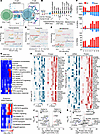 Figure 1
Receptor-driven B cell activation results in different cellular responses. (A) Schematic of T cell–dependent or –independent B cell activation pathways. (B) Multiomics profiling experimental design. Human primary peripheral blood CD19+ B cells were isolated by negative selection from 3 donors and stimulated by CD40L (50 ng/mL), CpG (0.5 μM), IL-4 (20 ng/mL), αIgM (1 mg/mL), or combinations thereof for 24 hours and then profiled. (C–E) Principal component analysis of transcriptomic (C), proteomic (D), and metabolomic (E) datasets. (F) Numbers of differentially expressed genes (DEGs), proteins (DEP), and metabolites (DEMs) across conditions using the numbering scheme in B, relative to unstimulated cells and using a P value < 0.01 and a fold-change > 2 or <0.5 cutoff. (G) GSEA of pathways enriched across conditions at the RNA (top) or protein (bottom) levels. (H) Heatmap visualization of row z scores of mRNA and protein abundance in GSEA Hallmark mTORC1 signaling (top) and MYC target V2 (bottom) gene set. (I) Heatmap visualization of row z scores of mRNA and protein abundance in GSEA TNF-α signaling via NF-κB gene set. (J) Volcano plot visualization of –log10 (P value statistical significance) versus log2 (mRNA abundance fold change) from RNA-Seq analysis of B cells stimulated with αIgM + CpG versus CD40L + IL-4. (K) Volcano plot visualization of –log10 (P value statistical significance) versus log2 (protein abundance fold change) from proteomic analysis of B cells stimulated with αIgM + CpG versus CD40L + IL-4.
In order to systematically investigate how individual versus combinatorial stimuli altered B cell expression and immunometabolism networks, we conducted parallel RNA-Seq, tandem-mass-tag mass spectrometry proteomic and polar metabolite liquid chromatography/mass spectrometry (LC/MS) profiling across all 10 conditions (Supplemental Table 1). Principal component analysis (PCA) yielded triplicates that closely clustered together from each condition, indicating a high level of reproducibility across conditions and human donors (Figure 1, C–E). Notably, transcriptomic responses to T cell–dependent stimuli modeled by CD40L + IL-4 ± αIgM clustered oppositely from responses to T cell–independent αIgM + CpG (Figure 1C).
We next cross-compared differentially expressed genes (DEGs), differentially expressed proteins (DEPs), and differentially expressed metabolites (DEMs) across the 10 conditions to broadly characterize stimulus-specific B cell responses. Response magnitude was generally higher at the transcriptomic than proteomic level at this early time point, with CD40L or CpG stimulation eliciting larger numbers of DEGs than stimulation by either αIgM or IL-4 alone (Figure 1F and Supplemental Figure 3B). Interestingly, similar numbers of DEGs were observed in response to CD40L, CpG, and to the combinatorial stimuli tested, suggesting dominant effects of these ligands. Combinatorial stimulation differentially regulated a large gene set, with 1,077 DEGs overlapping across all 5 combinatorial stimulation groups, despite these varying by the degree of T cell–dependent versus T cell–independent signaling (Supplemental Figure 3C).
Despite a degree of overlap, we nonetheless observed that each of the 9 stimulation conditions most dynamically regulated a small set of genes often implicated in B cell biology, most of which were upregulated (Supplemental Figure 4). These included well-characterized T cell–dependent genes upregulated by CD40/IL-4, including AICDA, which encodes the enzyme AID, and XBP1, which stimulates plasma cell differentiation (30). Interestingly, IL-4 stimulation alone most highly induced the transcriptional repressor BCL6, which is critical for germinal center formation and for preventing premature B cell activation and differentiation (31, 32) (Supplemental Figure 4). By contrast, T cell–independent αIgM + CpG costimulation selectively induced a wider range of targets, including the de novo nicotinamide adenine dinucleotide biosynthetic enzyme NAMPT and the neutral amino acid transporter SLC7A5 (Supplemental Figure 4). CpG alone, but to a greater extent αIgM + CpG, highly induced PRDM1, which encodes BLIMP1, the master regulator of antibody-secreting cell differentiation. Gene Set Enrichment Analysis (GSEA) (33) highlighted that αIgM + CpG stimuli more strongly induced mTORC1 signaling, MYC targets, and OXPHOS (group 9, Figure 1, G and H), suggesting that T cell–independent stimulation may preferentially upregulate these key immunometabolic pathways. By contrast, CD40L + IL-4 or CD40L + IL-4 + αIgM stimulation more strongly induced TNF-α, IL-2/STAT5, and IFN-γ signaling (group 7, Figure 1, G and I). These gene sets included transcription factors, metabolic enzymes, and cell surface receptors with critical roles in B cell adhesion, activation, survival, and antigen presentation (Figure 1H), highlighting multiple levels of T/B cell crosstalk.
To gain further insights into B cell responses to T cell–dependent versus T cell–independent stimuli, we next directly cross-compared the CD40L + IL-4 versus αIgM + CpG conditions. Volcano plot analysis highlighted CD40L + IL-4 induction of mRNAs encoding the T cell chemoattractant chemokines CCL17 and CCL22, exemplifying B/T cell cross-communication even at the early 24-hour time point. Transcripts encoding multiple B cell surface proteins were likewise more highly induced by T cell–dependent signaling, including FAS, ICAM-1, and CD23/FCER2. By contrast, αIgM + CpG more highly upregulated CD274, which encodes the immune checkpoint regulator PD-L1 (Figure 1J). On the protein level, CD40L + IL-4 more strongly upregulated the antiapoptotic proteins CFLAR/cFLIP and BCL2L1/Bcl-xL, even at this early time point, whereas αIgM + CpG more highly induced CLEC2D, the lectin receptor for the NK inhibitor receptor KLRB1. Taken together with effects on PD-L1, these results suggest that T cell–independent stimulation may downmodulate key cellular immune responses. Suggestive also of key T cell–independent effects on B cell immunometabolism, αIgM + CpG also more highly induced dihydrofolate reductase (DHFR), the neutral amino acid transporter (SLC7A5) and branched-chain amino acid transaminase 1 (BCAT1), which are key regulators of folate, amino acid, and BCAA metabolism, respectively (Figure 1, J and K).
BCR and TLR9 coactivation hyperactivates key B cell immunometabolism pathways. To gain further insights into how T cell–dependent versus independent stimuli affect primary B cell immunometabolism, we next analyzed metabolic gene responses using a curated gene set (34). As Figure 2A shows, αIgM + CpG and CD40/IL-4 similarly induced multiple metabolic pathways, albeit to varying degrees, indicating responses to somewhat overlapping metabolic demands. Yet, large clusters of metabolic genes were more highly induced by αIgM + CpG than by CD40L + IL-4 (Supplemental Figure 5A). Gene ontology (GO) analysis indicated that OXPHOS, fatty acid metabolism, purine metabolism, and amino acid catabolism were all more highly induced by αIgM + CpG than by CD40L + IL-4 (Figure 2, A and B, and Supplemental Figure 5, A and B).
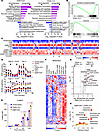 Figure 2
Cross-comparison of αIgM + CpG versus CD40/IL-4–driven B cell metabolism remodeling. (A) Gene ontology (GO) biological process analysis of genes differentially expressed in B cells stimulated with αIgM + CpG versus CD40L + IL-4, using a curated metabolism gene set (34). (B) GSEA Hallmark pathway analysis of oxidative phosphorylation (top) and hypoxia genes in CD differentially expressed genes in B cells stimulated with αIgM + CpG versus CD40L + IL-4. (C) Heatmap analysis of mRNA encoding electron transport chain (ETC) components in cells stimulated as indicated. Columns display z score values for each ETC gene, produced by cross-comparison of the 10 conditions. (D) Seahorse oxygen consumption rate (OCR, top) and extracellular acidification rate (ECAR, bottom) of primary B cells stimulated by indicated conditions for 24 hours and subject to flux analysis in the presence of indicated ETC inhibitors. Mean ± SEM from n = 7 replicates shown. P values calculated by 2-way ANOVA. (E) FACS analysis of primary B cell glucose analogue 2-(N-(7-nitrobenz-2-oxa-1,3-diazol-4-yl)amino)-2-deoxyglucose uptake at the indicated time points after stimulation. Mean ± SEM from n = 3 replicates. P values calculated by 2-tailed paired Student’s t test. (F) Heatmap analysis showing intracellular metabolite z scores in primary human B cells stimulated for 24 hours as indicated. (G) Volcano plot visualization of –log10 (P value statistical significance) versus log2 (fold-change metabolite abundance) from primary B cells stimulated by αIgM + CpG versus CD40L + IL-4 for 24 hours from n = 3 replicates. (H) MetaboAnalyst pathway enrichment analysis of metabolites that were higher in αIgM + CpG–stimulated cells than CD40L + IL-4–stimulated cells at 24 hours.
Components of all 5 electron transport chain complexes were the most highly upregulated by αIgM + CpG, whereas stimulation by a CD40L-containing regimen induced these to a lesser extent (Figure 2C). Phenotypically, Seahorse metabolic flux analysis identified that αIgM + CpG and CD40L + IL-4 nonetheless similarly induced basal respiration and maximal respiratory capacity, perhaps suggesting posttranscriptional level compensatory regulation (Figure 2D). Consistent with prior analyses (7), combinatorial αIgM + CpG stimuli more strongly induced oxygen consumption rate (OCR) than either αIgM or CpG alone. A similar phenomenon was observed with CD40L and IL-4 stimuli (Figure 2D). Of the transcription factors implicated in control of respiratory chain component expression, MYC was the most highly induced by CD40L and a regimen containing CD40L, although combinatorial αIgM + CpG also highly induced MYC (Supplemental Figure 5C). Notably, CD40 + IL-4 costimulation elicited a higher extracellular acidification rate, a measure of glycolysis (Figure 2D). Taken together with our GSEA, which identified hypoxia gene upregulation in CD40L/IL-4–stimulated cells (Figure 2B), these results suggest that T cell–dependent B cell responses may be more reliant on aerobic glycolysis. However, while CD40L/IL-4 and αIgM/CpG stimulation each significantly increased glucose uptake, αIgM + CpG did so more strongly (Figure 2E).
Across individual stimuli, CD40L or CpG more highly affected the intracellular B cell metabolite landscape than either αIgM or IL-4, consistent with the magnitude of their transcription level effects. As shown in Figure 2F, αIgM + CpG produced the strongest cellular metabolome-wide effect, which triggered higher metabolite levels of the purine and pyrimidine nucleotide, methionine, nicotinate/nicotinamide, and glutathione metabolism pathways (Figure 2, G and H, and Supplemental Table 1). Despite these differences, combinatorial CD40L + IL-4 + αIgM stimulation, which models a key T cell–dependent germinal center light zone B cell stimulus, produced somewhat overlapping metabolomic responses with T cell–independent αIgM + CpG stimulation (Figure 2F and Supplemental Figure 5, A and B). Collectively, these findings highlight that distinct types of receptor stimuli, including a T cell–dependent versus T cell–independent regimen, produce myriad metabolomic responses in primary human CD19+ B cells, with potential major effects on key humoral immune phenotypes.
Multiple targets induced by αIgM/CpG stimulation, such as ASNS and MTHFD2, are targets of the activating transcription factor 4 (ATF4), which serves as a central mediator of cellular responses to stress, including metabolic adaptation (35). For instance, ATF4 drives integrated stress responses by promoting expression of cytoprotective genes that program key metabolic pathways (36, 37). We therefore further investigated agonist responses on ATF4 expression. Transcriptomic analyses identified that multiple stimuli, including αIgM + CpG and CD40L + IL-4, increased ATF4 mRNA levels by approximately 2-fold (Supplemental Figure 6A). ATF4 upregulation on the protein level was also observed by immunoblot (Supplemental Figure 6B). Given ATF4 roles in metabolic adaptation, we tested whether ATF4 induction was mTOR dependent. Indeed, blockade of mTORC1 and 2 by the small molecule antagonist Torin 1 prevented ATF4 induction in αIgM/CpG-stimulated Rael Burkitt B cells (Supplemental Figure 6C).
BCAT1 is essential for BCR/TLR9-driven B cell proliferation. We observed that BCR/TLR9 costimulation markedly upregulated BCAT1 expression on the mRNA and protein levels, whereas it was induced to a much lesser extent or not at all by the other stimuli (Figure 3A and Supplemental Figure 7A). BCAT1 is an aminotransferase that can either synthesize or catabolize the BCAAs leucine, isoleucine, and valine in reversible reactions, but it has not previously been studied in B cell activation. When running in the forward direction, BCAT1 converts the nitrogen donor glutamine and branched chain ketoacids (BCKAs) into αKG and BCAA, which support protein synthesis and mTOR activation. When running in the reverse direction, BCAT1 instead catabolizes αKG and BCAA to produce glutamine and BCKA, which fuel TCA and fatty acid synthesis (38–40).
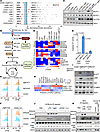 Figure 3
BCR/TLR9 costimulation highly induces BCAT1, which is essential for αIgM/CpG but not CD40/IL-4–driven primary B cell mTORC1 activation, growth, and survival. (A) Log2-normalized protein abundance from proteomic analysis of primary B cells after 24-hour stimulation. BCAT1 protein levels are highlighted in red. (B) BCAA metabolism schematic. Cytosolic BCAT1 and mitochondrial BCAT2 catalyze reversible transamination of BCKA and BCAA.. (C) Immunoblot of BCAT1, BCAT2, SLC7A5, and DDX1 from whole-cell lysates (WCLs) of 24-hour stimulated B cells. DDX1 was the load control. (D) Heatmap analysis of key BCAA pathway RNA, protein, and metabolite z scores in 24-hour stimulated primary B cells. (E) CFSE analysis of primary B cells electroporated with Cas9 ribonucleoprotein complexes with control or BCAT1 targeting sgRNA, then stimulated for 5 days. (F) CFSE analysis of primary B cells treated with vehicle or ERG245 (100 mM) and stimulated. (G) Mean ± SEM caspase-3/7 activity of primary B cells with indicated Cas9 ribonucleoproteins after 48 hour stimulation. P values calculated by 2-tailed paired Student’s t test. (H) Heatmap of selected mTORC1 pathway target gene z scores, shown in vertical columns, in 24-hour stimulated primary B cells. Metabolic enzymes upregulated by αIgM + CpG vs. CD40L + IL-4 stimulation are highlighted. (I) Immunoblots of WCLs from 24-hour stimulated primary B cells expressing indicated Cas9 ribonucleoproteins. (J) Immunoblot of WCLs from C57BL/6J murine splenic B cells, harvested 48 hours after i.p. injection of PBS vehicle, 20 mg LPS + 250 mg αIgM, or 250 mg aCD40 antibody + 1 mg murine IL-4 in complex with 10 mg anti–IL-4, with vehicle or 20 mg/kg ERG245. (K) Immunoblot of WCLs from MD4 murine splenic B cells, harvested 48 hours after i.p. injection of PBS vehicle, 20 mg LPS + 10 mg HEL, or 250 mg aCD40 antibody + 1 mg IL-4 in complex with 10 mg αIL-4, with vehicle or 20 mg/kg ERG245. Representative of n = 3 replicates (E, F, and I–K). See also Supplemental Figure 4.
We validated that αIgM + CpG more strongly upregulated BCAT1 by immunoblot (Figure 3C). By comparison, the mitochondrial BCAT2 isoform was expressed in unstimulated cells and was only modestly upregulated by any of the conditions (Figure 3, C and D). BCAT1 was induced by that αIgM + CpG in both peripheral blood CD27– naive B cells and in CD27+ circulating memory cells (Supplemental Figure 7B). Consistent with a key BCAA role in support of BCR/TLR9-costimulated B cells, the major plasma membrane BCAA transporter SLC7A5 was also highly induced (Figure 3, B–D). BCAA abundance was also higher in αIgM + CpG–stimulated cells than in B cells stimulated by combinatorial regimens, with the exception of CD40L + αIgM + IL-4. By contrast, subunits of the BCKA dehydrogenase complex (BCKDHA/B), which participate in BCKA catabolism to acetyl-CoA and CO2, were downmodulated on the protein level (Figure 3D). This raised the interesting possibility that BCAT1 may take on a selectively important role downstream of CD79 and MyD88.
To gain insights into BCAT1 roles in B cell activation, we tested the effects of BCAT1 perturbation on proliferation and survival of peripheral blood B cells stimulated by αIgM + CpG versus by CD40L + IL-4. We electroporated freshly isolated B cells with Cas9 ribonucleoprotein complexes containing control or BCAT1 targeting sgRNA (Supplemental Figure 7C) (41). Intriguingly, CRISPR BCAT1 KO strongly impaired αIgM + CpG– but not CD40L + IL-4–driven primary B cell outgrowth, as judged by a CFSE dye dilution assay (Figure 3E and Supplemental Figure 7D). Similar results were obtained with primary B cells treated with the highly selective leucine-based BCAT1 small molecule antagonist ERG245 (42), suggestive of on-target effects at the level of BCAT1 (Figure 3F and Supplemental Figure 7, E and F). We further validated ERG245 on-target effects by LC-MS analysis (Supplemental Figure 8 and Supplemental Table 2). In particular, ERG245 treatment produced similar results to BCAT1 KO in Rael Burkitt B cells, which we used to achieve higher levels of CRISPR editing than we could achieve in primary B cells (Supplemental Figure 8, A–C). To interrogate effects of BCAT1 KO on primary B cell survival, we next performed caspase activity assays. BCAT1 KO induced caspase-3/7 activity and cell death to a significantly greater extent in αIgM + CpG–stimulated than in CD40L + IL-4–stimulated primary B cells (Figure 3G and Supplemental Figure 9A).
We hypothesized that BCAT1 may be needed to support mTOR in αIgM + CpG–stimulated cells, given that αIgM + CpG most highly activated GSEA Hallmark mTORC1 signaling at the RNA and protein levels (Figure 1G). In support, proteomic analysis highlighted that clusters of mTORC1 pathway targets were more highly upregulated by αIgM + CpG than by CD40L/IL-4 stimulation, including multiple components of the glycolysis, one-carbon metabolism, and amino acid metabolism pathways (Figure 3H). Consistent with this result, mTORC1 target S6K phosphorylation levels were higher in αIgM + CpG–stimulated cells, and BCAT1 KO strongly impaired S6K phosphorylation (Figure 3I). BCAT1 was similarly important for αIgM + CpG–driven phosphorylation of mTORC1 serine 2448, which is indicative of mTOR activation. Additionally, immunoblot analysis revealed that αIgM + CpG induced a much higher level of phospho-S6, further indicating hyperactivated mTORC1 signaling. Although phosphorylation of the mTOR-negative regulator AMPK was somewhat higher in αIgM + CpG–stimulated cells, this was not affected by BCAT1 KO, suggesting alternative route(s) by which BCAT1 supports mTOR. Since mTORC1 regulates translation, we also tested the translation rate using puromycin pulse labeling, which detects puromycin incorporation into elongating protein chains (43). Puromycin labeling indicated that αIgM + CpG more highly induced nascent polypeptide synthesis than the other conditions (Supplemental Figure 9B). Similar results were observed by flow cytometry analysis of total protein content and cell size, which is also controlled by mTORC1 (44). However, total protein content was slightly higher in cells stimulated by CD40L + αIgM + IL-4 (Supplemental Figure 9C). These findings indicate that BCAT1 is a major positive regulator of mTOR in αIgM + CpG–stimulated B cells.
BCR/TLR9 costimulation induces BCAT1 in vivo. To investigate whether BCAT1 is induced by BCR/TLR costimulation in support of mTOR activation in vivo, we utilized murine models. Since LPS is more commonly used than CpG to activate TLR signaling in mice, we first cross-compared BCAT1 induction in ex vivo murine splenic B cells stimulated by LPS + αIgM versus CpG + αIgM. Although both induced BCAT1, LPS + αIgM stimulation did so more strongly (Supplemental Figure 10A). We then stimulated C57BL/6J mice by i.p. injection of PBS vehicle, LPS + αIgM, or agonistic aCD40 mAb BE0016-2, together with IL-4, which we complexed with the mAb 11B11 to stabilize IL-4 in vivo (45, 46), in the absence or presence of ERG245. Consistent with our human B cell results, BCAT1 expression was highly induced on the protein level in murine splenic B cells by αIgM + LPS but not by CD40 + IL-4 stimulation (Figure 3J). Although ERG245 did not appreciably alter BCAT1 induction, it blocked αIgM + LPS–driven mTOR activation, as judged by S6K phosphorylation (Figure 3J).
To further test BCAT1 induction and support of mTOR activation in vivo in the context of physiological BCR stimulation, we next utilized MD4 transgenic mice (47), which express BCR directed against hen egg lysosome (HEL). As observed with C57BL/6J mice above, BCAT1 was highly induced by incubation of ex vivo MD4 splenic B cells with HEL together with LPS, but not appreciably by negative control ovalbumin or by CD40L + IL-4 stimulation (Supplemental Figure 10B). We then stimulated MD4 mice by i.p. injection with LPS + HEL or by aCD40 + IL-4 (stabilized by aIL-4 as above) for 48 hours, together with vehicle or ERG245. BCAT1 expression was again highly induced by BCR stimulation by HEL, together with LPS, but not appreciably by aCD40 + IL-4 stimulation. Importantly, LPS + HEL strongly induced S6K phosphorylation in a manner that was nearly completely blocked by ERG245, whereas S6K phosphorylation downstream of aCD40 + IL-4 was not diminished by ERG245 (Figure 3K). Together, these results indicate that BCAT1 is highly induced by combinatorial BCR + TLR stimulation in vivo, where it again plays key roles in support of mTOR activation.
Analysis of mediators that induce BCAT1 and of B cell genes regulated by BCAT1. To gain insights into pathways that induce BCAT1 expression, we stimulated human peripheral blood B cells by αIgM + CpG in the presence of DMSO vehicle versus well-characterized small molecule inhibitors against downstream BCR and TLR9 mediators. Inhibition of the kinases SYK or BTK by R406 or ibrutinib, respectively, each strongly impaired BCAT1 induction, suggesting the importance of BCR proximal tyrosine kinase signaling in driving BCAT1 expression (Supplemental Figure 11A). Inhibition of PI3 kinase by idelalisib blocked BCAT1 induction to a similar extent, likewise implicating kinase signaling downstream of TLR9 (Supplemental Figure 11A). By contrast, inhibition of NFAT, canonical NF-κB, or JAK/STAT only modestly impaired BCAT1 induction (Supplemental Figure 11A). Interestingly, MAPK and mTOR are activated downstream of both BCR and TLR9, and inhibition of ERK, JNK, or p38 MAPK or mTOR each strongly impaired BCAT1 induction (Supplemental Figure 11A). Taken together, these data highlight roles of kinase signaling in rapid BCAT1 induction by BCR + TLR9 costimulation.
To next characterize potential BCAT1 roles in transcription regulation downstream of BCR and TLR9, we performed RNA-Seq on αIgM + CpG–stimulated BCAT1 CRISPR KO versus control primary human B cells. BCAT1 KO upregulated 145 and downregulated 101 B cell genes at 24 hours of stimulation. GO analysis indicated that BCAT1 depletion resulted in downregulation of E2F targets and G2-M checkpoint genes in αIgM + CpG–stimulated cells (Supplemental Figure 11B and Supplemental Table 3). The most highly downregulated genes included IL-10; the DNA methylation enzyme UHRF1; the transcription factor BATF; and the genes CDC25A, MCM10, and PCNA, each of which have key cell cycle roles (Supplemental Figure 11C). We validated that αIgM + CpG induced IL-10 on the protein level in primary B cells. Furthermore, BCAT1 KO reduced IL-10 abundance to levels observed in CD40L/IL-4–stimulated cells, in which BCAT1 KO did not substantially alter IL-10 levels (Supplemental Figure 11D). Interestingly, BCAT1, IL-10, and PD-L1 mRNA amounts were each markedly higher at 48 hours of αIgM/CpG than in CD40L/IL-4–stimulated cells (Supplemental Figure 11E). Since IL-10 is a B regulatory cell hallmark (48–52), our data raise the possibility that BCAT1 may support B regulatory cell function upon BCR/TLR9 activation.
BCAT1 supports BCAA production in BCR/TLR9-stimulated B cells. We next used [13C]-leucine_m+6 and [15N]-glutamine_m+2 isotope tracing to investigate the directionality of BCR/TLR9-induced BCAT1 BCAA metabolism. To trace BCAT1 conversion of BCAA and αKG to BCKA and glutamate (Glu), we incubated αIgM + CpG–stimulated cells with 0.381mM [13C]-leucine_m+6 to survey for the appearance of labeled BCKA catabolites. However, since BCKA can then be reaminated by BCAT1 using glutamine (Gln) as the amino donor, we also added 2 mM [15N]-Gln_m+2. We measured BCAA catabolism by detecting [13C]-ketoisocaproate (KIC)_m+6 levels. Likewise, we measured BCAA anabolism by detecting the appearances of [15N]-labeled leucine (Leu)_m+1, isoleucine (Ile)_m+1, and valine (Val)_m+1 (Figure 4A). B cells were pretreated with either vehicle or ERG245 for 1 hour before αIgM + CpG stimulation, and then incubated in medium containing [13C]-Leu_m+6 and [15N]-Gln_m+2 starting from 24 hours after stimulation. Labeled and unlabeled metabolite abundance was quantitated at 32, 48, and 72 hours after stimulation (Figure 4B).
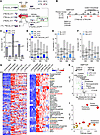 Figure 4
BCR/TLR9 stimulation drives BCAA synthesis in human primary B cells. (A) Isotope tracing schematic. [13C]-L-leucine_m+6 was used to trace BCAT1 BCAA catabolism to a-keto-isocaproic acid (KIC); [15N]-glutamine_m+2 was used to monitor BCAT1 BCAA biosynthesis from KIC, a-keto-isovaleric acid (KIV), or a-keto b-methylvaleric acid (KMV). Gln, glutamine. Glu, glutamate. (B) Isotope tracing experimental design. Primary B cells from n = 4 donors were pretreated with vehicle or ERG245(100 μM) for 1 hour and then stimulated by αIgM + CpG for 24 hours in the presence of vehicle or ERG245. Cells were washed with PBS 3 times and resuspended in glutamine/leucine-free media supplemented with 381 mM 13C6-leucine and 2.054 mM 15N2-glutamine + 10% dialyzed FBS. ERG245(100 μM) and αIgM + CpG stimulants were also refreshed at this time point. Intracellular metabolites were profiled at 8, 24, and 48 hours later. (C) Ion intensities of m+6-labeled and -unlabeled KIC at the indicated times in cells treated with vehicle control or ERG245. (D) Ion intensities of labeled and unlabeled leucine (Leu) at the indicated times in cells treated with vehicle control or ERG245. (E) Ion intensities of labeled and unlabeled isoleucine (Ile) at the indicated times in cells treated with vehicle control or ERG245. (F) Ion intensities of labeled and unlabeled valine (Val) at the indicated times in cells treated with vehicle control or ERG245. (G) Heatmap analysis of metabolite z scores in primary B cells treated with vehicle or ERG245 (100 μM) and stimulated as indicated for 24 hours. (H) Volcano plot visualization of –log10 (P value statistical significance) and log2 (fold-change metabolite abundance) from metabolomic analysis of ERG245-treated versus vehicle-treated primary B cells stimulated by αIgM + CpG for 24 hours from n = 4 replicates. (I) MetaboAnalyst pathway enrichment analysis of metabolites diminished by ERG245 treatment in αIgM + CpG–stimulated B cells at 24 hours. P values were calculated by 2-way ANOVA followed by Tukey’s multiple-comparison test (C–F).
Liquid chromatography/mass spectrometry metabolite tracing indicated that BCAT1 does contribute to B cell BCKA pools upon its induction by αIgM + CpG, as [13C]-KIC_m+6 levels significantly increased between 32 and 72 hours after stimulation. [13C]-KIC_m+6 levels then decreased at the 72-hour time point, potentially indicating a balance between production and consumption (Figure 4C and Supplemental Table 4). BCAT1 inhibition by ERG245 strongly decreased [13C]-KIC_m+6 levels at all time points, indicating BCAT1 roles in KIC generation (Figure 4C). However, we also observed steadily increasing [15N]-labeled Leu_m+1, Ile_m+1, and to a lesser extent Val_m+1 levels, each of which were suppressed by ERG245, indicating that BCAT1 also consumes glutamine to synthesize BCAA and produce αKG (Figure 4, D–F). [13C,15N]-Leu_m+7 composed the majority of the [15N]-labeled Leu pool, indicating that BCAT1 preferentially reaminated [13C]-KIC_m+6 at this time point (Figure 4D). However, the fraction of [15N]-labeled Val_m+1 was comparatively smaller, suggesting that BCAT1 may preferentially synthesize Leu and Ile at the early stage of αIgM + CpG–driven B cell activation (Figure 4, D–F). In contrast to serving as a substrate for BCAA biosynthesis, [13C]-KIC_m+6 was not a major TCA cycle anaplerotic input. TCA intermediate m+2 isotope signals remained low throughout the time course, despite marked increases in unlabeled TCA metabolite abundance (Supplemental Figure 12, A–G). Intriguingly, ERG245 nonetheless strongly decreased levels of most TCA cycle intermediates, indicating that BCAT1 plays a crucial role in coordinating TCA metabolism in BCR/TLR9 coactivated cells, potentially via effects on mTOR (Supplemental Figure 12, A–G).
To broadly profile BCAT1 contributions to αIgM + CpG versus CD40L/IL-4 coactivated peripheral blood B cells, we performed LC/MS metabolome profiling on cells stimulated in the presence of DMSO vehicle control or ERG245. Whereas ERG245 had minimal effects on unstimulated cells, ERG245 broadly restrained BCR/TLR9-driven metabolite increases. Comparatively smaller effects were observed on CD40L/IL-4–treated cells, and ERG245 only modestly affected the metabolome (Figure 4G and Supplemental Table 5). Leucine-isoleucine and 2-keto-isovalerate levels were higher in αIgM + CpG–stimulated cells, whereas glutamine was higher in CD40/IL-4–stimulated cells (Figure 4G and Supplemental Figure 12H). Notably, ERG245 did not significantly change aspartate abundance, despite it being a substrate for similar transamination reactions (Supplemental Figure 12I). Volcano plot and metabolism pathway impact analysis highlighted that ERG245 most strongly reduced the abundance of nucleotides and glutathione in BCR/TLR9-stimulated B cells, potentially due to effects at the level of mTOR (Figure 4, H and I) and reflecting that resting human B cells have low nucleotide and glutathione levels and must rapidly increase them upon activation (26). These findings suggest that BCAT1 supports BCAA pools and mTOR upon BCR/TLR9-driven B cell activation.
Since import can also substantially affect BCAA intracellular levels, we next inhibited the plasma membrane neutral transporter LAT3 (also called SLC43A1), which is a major transporter of neutral amino acids including leucine, isoleucine, and valine. LAT3 inhibition by the highly selective small molecule antagonist Venuloside A (53) did not appreciably affect proliferation of αIgM + CpG–stimulated peripheral blood B cells. However, Venuloside A LAT3 inhibition impaired αIgM + CpG–driven peripheral blood B cell proliferation when dosed in combination with either of two ERG245 doses, to a significantly greater degree than ERG245 alone at either dose (Supplemental Figure 13). These results are consistent with a model in which BCAT1 inhibition renders cells more dependent on LAT3-mediated BCAA uptake.
BCR/TLR9 signaling targets BCAT1 to lysosome membranes to support mTOR. A complex of lysosomal membrane proteins sense amino acid levels to control mTORC1 recruitment and activation. When amino acids are abundant, mTORC1 is recruited to the outer lysosomal membrane, where it is activated by RHEB (54–57). When leucine levels are low, several mechanisms block mTORC1 activation. Sestrin2 inhibits mTORC1 lysosomal recruitment and activation (58), SAR1B inhibits the mTORC1 activator GATOR2(59), leucyl-tRNA synthetase LARS fails to activate Rag GTPase (60), and Raptor acetylation decreases to further downmodulate mTORC1(61). Because BCAT1 is thought to be cytoplasmic, we hypothesized that BCR/TLR9-induced BCAT1 supports mTORC1 by producing BCAA in close proximity with lysosomes. To test this, we performed confocal microscopy on primary B cells at rest or 24 hours after stimulation by CD40L/IL-4 versus αIgM + CpG, which revealed a high degree of colocalization between BCAT1 and lysosomal-associated membrane protein 1 (LAMP1) but not with the mitochondrial marker translocase of outer mitochondrial membrane 20 homolog (TOMM20) (Figure 5A and B, and Supplemental Figure 14, A–C). Thus, a major population of BCAT1 homes to lysosomes in BCR/TLR9-stimulated primary human B cells, presumably to the lysosomal outer membrane as BCAT1 does not appear to contain a targeting sequence for lysosomal uptake.
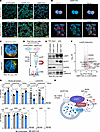 Figure 5
BCR/TLR9 but not CD40/IL-4 costimulation targets BCAT1 to remodeled lysosomes. (A) Confocal microscopy analysis of BCAT1 (red) colocalization with the lysosomal LAMP1 (top, green) or mitochondrial TOMM20 (bottom, green) markers in primary B cells stimulated for 24 hours as indicated. (B) 3D Z-stack reconstruction of BCAT1, LAMP1, and TOMM20 in primary B cells stimulated by αIgM + CpG for 24 hours. (C) Confocal analysis of BCAT1 and LAMP1 colocalization in Rael TMEM192-HA+ B cells (HA-Lyso cells) stimulated by αIgM + CpG for 24 hours, as indicated. (D) Lyso-IP proteomic analysis workflow. (E) Immunoblot of whole-cell lysates or anti-HA immunopurified lysosomes from Rael Lyso cells stimulated as in D. (F) Volcano plot of –log10 (P value) versus log2 (fold-change) of tandem-mass-tag protein abundance in immunopurified lysosomes from Rael Lyso-IP cells as in D. (G) Normalized BCAAs and BCKA ion intensities in whole-cell lysates versus lysosomes immunopurified from Rael Lyso-IP cells as in D. P values were calculated by 2-tailed paired Student’s t test. (H) Schematic of BCAT1 lysosomal targeting and BCAA production to support mTORC1 hyperactivation.
To further investigate BCAT1 subcellular localization, we then leveraged the LysoIP approach, in which stably expressed HA-epitope tagged transmembrane protein 192 (TMEM192) is used as a bait for lysosomal affinity purification (62) (Figure 5, C and D). We stably expressed TMEM192 in Rael Burkitt lymphoma B cells, in which BCAT1 and LAMP1 colocalization was increased by αIgM + CpG stimulation (Supplemental Figure 14D). The lysosomal marker LAMP1 was enriched in material anti–HA-TMEM192 immunopurified from Rael cells, whereas cytosolic GAPDH was highly depleted, suggesting successful lysosome isolation. Importantly, BCAT1 was also enriched in immunopurified lysosomes, particularly after αIgM + CpG stimulation, even though in Rael cells total BCAT1 levels remained similar (Figure 5E). Confocal microscopy again highlighted that αIgM + CpG increased BCAT1/LAMP1 colocalization in Rael TMEM192+ cells (Supplemental Figure 14D). BCAT1/LAMP1 colocalization was similarly evident in HBL1 MCD DLBCL cells (Supplemental Figure 14, E and F). These results suggest that BCR/TLR9 signaling contributes to BCAT1 lysosomal subcellular localization, likely at the outer membrane.
To gain further insights into how BCR/TLR9 stimulation remodels Rael lysosomes, we performed LC/MS proteomic profiling of lysosomes immunopurified from αIgM + CpG versus unstimulated LysoIP Rael cells. Consistent with our immunoblot and microscopy analyses, BCAT1 was enriched in lysosomes purified from stimulated Rael cells (Figure 5F and Supplemental Table 6). Intriguingly, BCR/TLR9 signaling also increased lysosomal levels of LAMTOR1, which has a key role in assembly of the Ragulator complex that together with the Rag GTPases control mTORC1 lysosomal recruitment (63, 64). Further suggestive of crosstalk between BCR/TLR9 and mTORC1 at the level of the lysosome, SLC38A1/2 abundance was also increased in lysosomes of stimulated Rael cells. SLC38A1/2 are membrane transporters that specialize in the uptake of neutral amino acids and that are implicated in mTORC1 regulation in T cells (65), but they have not yet been studied in B cells (Figure 5F and Supplemental Table 6). Of note, SLC38A2 family member SLC38A9 is a lysosomal membrane protein that is a major regulator of lysosomal amino acid sensing (66, 67).
To then directly investigate BCR/TLR coactivation effects on lysosomal BCAA and BCKA, we performed targeted LC/MS analysis in whole cells or in lysosomes immunopurified from resting versus αIgM + CpG–stimulated Rael HA-LysoIP cells. Whole-cell Leu, Ile, and Val BCAA pools each significantly increased upon BCR/TLR9 costimulation. However, lysosomal Leu and Ile levels instead substantially decreased, suggesting that these amino acids were exported from lysosomes upon αIgM + CpG stimulation. Whole-cell BCKAs remained unchanged by BCR/TLR stimulation, whereas BCKAs were not detected in immunopurified lysosomes (Figure 5G). Collectively, our results support a model where BCAT1 augments Leu and Ile synthesis at the lysosomal membrane to support mTORC1 hyperactivation (Figure 5H).
BCAT1 inhibition suppresses MCD DLBCL tumor growth in vitro and in vivo. mTORC1 is hyperactivated by the My-T-BCR complex in MCD DLBCL, where BCR, TLR9, and MyD88 form a super-complex that colocalizes with mTORC1 on endolysosomes (21). To gain insights into whether TLR9/BCR coactivation causes similar remodeling in primary B cells and in MCD DLBCL, we cross-compared proteomes from αIgM/CpG-stimulated primary B cells or the tumor-derived MCD DLBCL HBL1 cell line with resting primary B cells. Interestingly, a group of metabolic proteins were similarly upregulated in αIgM + CpG and in HBL1, presumably by My-T-BCR signaling in both contexts, including BCAT1 and SLC7A5. Using a fold-change of 2 or greater as the threshold, we identified that 1,280 proteins were commonly upregulated by αIgM + CpG and in HBL1, relative to their resting primary B cell levels (Figure 6A and Supplemental Table 7). STRING analysis (68) identified multiple metabolic subnetworks upregulated in both activated B cell contexts, including BCAA metabolism (Figure 6B).
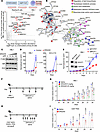 Figure 6
BCAT1 is highly expressed in BCR/TLR9-driven MCD DLBCL, where it supports B cell proliferation in vitro and in vivo. (A) Volcano plot comparing tandem-mass-tag proteomic log2 (fold change) of whole cell protein abundance in HBL1 DLBCL versus unstimulated primary B cell (y axis) versus 24 hours αIgM + CpG–stimulated versus unstimulated primary B cell (x axis). Proteins from a curated metabolic gene set are shown (34). From n = 3 proteomics dataset. (B) String analysis of protein-protein interactions among factors upregulated in both αIgM + CpG–stimulated and HBL1 (fold change >2) relative to unstimulated primary B cells. (C) Immunoblots of whole-cell lysates from HBL1 cells treated with vehicle, 10, 50, and 100 μM ERG245 as indicated for 24 hours. (D) Growth curve analysis of vehicle or 100 μM ERG245-treated HBL1 (left) or OCI-LY10 MCD DLBCL cells. Mean ± SD values from n = 3 replicates. (E) Growth curve analysis of Cas9 + HBL1 cells expressing control or BCAT1 sgRNAs. Mean ± SD values from n = 3 replicates. (F) Schematic of HBL1 MCD DLBCL mouse xenograft experiments. HBL1 tumors were implanted in mouse flanks 2 weeks prior to administration of vehicle versus 5 mg/kg or 20 mg/kg ERG245. (G) Mean ± SEM HBL1 tumor volumes in mice treated as indicated. (H) Schematic of C007 MCD DLBCL patient-derived xenograft (PDX) experiments. Tumors were implanted in mouse flanks 2 weeks prior to administration of vehicle versus 20 mg/kg ERG245. (I) Mean ± SEM C007 PDX tumor volumes in mice treated as indicated. P values were calculated by 2-way ANOVA followed by Šídák’s multiple-comparison test (D, E, and G) or Tukey’s multiple-comparison test (I).
To determine whether BCAT1 activity is likewise important for MCD DLBCL proliferation in vitro, we tested ERG245 effects on HBL1 and OCI-LY10. ERG245 reduced phospho-S6 levels, indicating its inhibitory effects on mTOR signaling (Figure 6C). ERG245 significantly reduced proliferation of both MCD cell lines (Figure 6D), which was further supported by the observation that CRISPR editing of BCAT1 also impaired HBL1 proliferation (Figure 6E). To extend this observation in vivo, we established HBL1 xenografts in NOD.Cg-Prkdcscid Il2rgtm1Wjl/SzJ (NSG) mice. HBL1 tumors were grown for approximately 14 days after implantation until tumor volumes reached 32–64 mm3. Mice were then treated weekly with either vehicle control or ERG245 at doses of 5 or 20 mg/kg via i.p. injection (Figure 6F). There was no significant difference in body weight observed between mice treated with vehicle control versus ERG245 at either the 5 or 20 mg/kg dose over the following 3 weeks (Supplemental Figure 14G), indicating that ERG245 was well tolerated. However, tumor volumes were significantly smaller from day 12 onward in ERG245-treated mice in a dose-dependent manner (Figure 6G). Tumor volumes of OCI-LY10 xenografts were also significantly reduced by ERG245 (Supplemental Figure 14H). To further extend these results, we next tested ERG245’s effects on an MCD DLBCL PDX model. Two weeks after establishment of the C007 PDX, ERG245 was dosed 3 times per week at 20 mg/kg (Figure 6H). ERG245 significantly decreased PDX tumor volumes beginning at day 7 after ERG245 dosing and significantly increased body weight of C007 PDX–carrying mice (Figure 6I and Supplemental Figure 14I).


Copyright © 2026 American Society for Clinical Investigation
ISSN: 0021-9738 (print), 1558-8238 (online)