
Advertisement
Research ArticleCell biologyOncology
Open Access |  10.1172/JCI179282
Epigenetic targeting of PGBD5-dependent DNA damage in SMARCB1-deficient sarcomas
Yaniv Kazansky,1,2 Helen S. Mueller,1,2 Daniel Cameron,1,2 Phillip Demarest,1,2 Nadia Zaffaroni,3 Noemi Arrighetti,3 Valentina Zuco,3 Prabhjot S. Mundi,4 Yasumichi Kuwahara,5 Romel Somwar,6 Rui Qu,7 Andrea Califano,4,8,9,10 Elisa de Stanchina,7 Filemon S. Dela Cruz,11 Andrew L. Kung,11 Mrinal M. Gounder,12 and Alex Kentsis1,2,13
1Molecular Pharmacology Program, Sloan Kettering Institute and
2Tow Center for Developmental Oncology, Department of Pediatrics, Memorial Sloan Kettering Cancer Center, New York, New York, USA.
3Molecular Pharmacology Unit, Department of Experimental Oncology, Fondazione IRCCS Istituto Nazionale dei Tumori di Milano, Milan, Italy.
4Department of Systems Biology, Columbia University Irving Medical Center, New York, New York, USA.
5Department of Biochemistry and Molecular Biology, Kyoto Prefectural University of Medicine, Japan.
6Department of Pathology and
7Antitumor Assessment Core, Memorial Sloan Kettering Cancer Center, New York, New York, USA.
8Herbert Irving Comprehensive Cancer Center and
9Departments of Biochemistry and Molecular Biophysics, Biomedical Informatics, and Medicine, Vagelos College of Physicians and Surgeons, Columbia University, New York, New York, USA.
10Chan Zuckerberg Biohub New York, New York, New York, USA.
11Department of Pediatrics and
12Department of Medicine, Memorial Sloan Kettering Cancer Center, New York, New York, USA.
13Departments of Pediatrics, Pharmacology, and Physiology & Biophysics, Weill Medical College of Cornell University, New York, New York, USA.
Address correspondence to: Alex Kentsis, Memorial Sloan Kettering Cancer Center, 1275 York Avenue, ZRC-1863, New York, New York 10021, USA. Phone: 1.646.888.2593; Email kentsisresearchgroup@gmail.com.
Authorship note: Y. Kazansky and HSM contributed equally to this work.
Find articles by Kazansky, Y. in: PubMed | Google Scholar
1Molecular Pharmacology Program, Sloan Kettering Institute and
2Tow Center for Developmental Oncology, Department of Pediatrics, Memorial Sloan Kettering Cancer Center, New York, New York, USA.
3Molecular Pharmacology Unit, Department of Experimental Oncology, Fondazione IRCCS Istituto Nazionale dei Tumori di Milano, Milan, Italy.
4Department of Systems Biology, Columbia University Irving Medical Center, New York, New York, USA.
5Department of Biochemistry and Molecular Biology, Kyoto Prefectural University of Medicine, Japan.
6Department of Pathology and
7Antitumor Assessment Core, Memorial Sloan Kettering Cancer Center, New York, New York, USA.
8Herbert Irving Comprehensive Cancer Center and
9Departments of Biochemistry and Molecular Biophysics, Biomedical Informatics, and Medicine, Vagelos College of Physicians and Surgeons, Columbia University, New York, New York, USA.
10Chan Zuckerberg Biohub New York, New York, New York, USA.
11Department of Pediatrics and
12Department of Medicine, Memorial Sloan Kettering Cancer Center, New York, New York, USA.
13Departments of Pediatrics, Pharmacology, and Physiology & Biophysics, Weill Medical College of Cornell University, New York, New York, USA.
Address correspondence to: Alex Kentsis, Memorial Sloan Kettering Cancer Center, 1275 York Avenue, ZRC-1863, New York, New York 10021, USA. Phone: 1.646.888.2593; Email kentsisresearchgroup@gmail.com.
Authorship note: Y. Kazansky and HSM contributed equally to this work.
Find articles by Mueller, H. in: PubMed | Google Scholar
1Molecular Pharmacology Program, Sloan Kettering Institute and
2Tow Center for Developmental Oncology, Department of Pediatrics, Memorial Sloan Kettering Cancer Center, New York, New York, USA.
3Molecular Pharmacology Unit, Department of Experimental Oncology, Fondazione IRCCS Istituto Nazionale dei Tumori di Milano, Milan, Italy.
4Department of Systems Biology, Columbia University Irving Medical Center, New York, New York, USA.
5Department of Biochemistry and Molecular Biology, Kyoto Prefectural University of Medicine, Japan.
6Department of Pathology and
7Antitumor Assessment Core, Memorial Sloan Kettering Cancer Center, New York, New York, USA.
8Herbert Irving Comprehensive Cancer Center and
9Departments of Biochemistry and Molecular Biophysics, Biomedical Informatics, and Medicine, Vagelos College of Physicians and Surgeons, Columbia University, New York, New York, USA.
10Chan Zuckerberg Biohub New York, New York, New York, USA.
11Department of Pediatrics and
12Department of Medicine, Memorial Sloan Kettering Cancer Center, New York, New York, USA.
13Departments of Pediatrics, Pharmacology, and Physiology & Biophysics, Weill Medical College of Cornell University, New York, New York, USA.
Address correspondence to: Alex Kentsis, Memorial Sloan Kettering Cancer Center, 1275 York Avenue, ZRC-1863, New York, New York 10021, USA. Phone: 1.646.888.2593; Email kentsisresearchgroup@gmail.com.
Authorship note: Y. Kazansky and HSM contributed equally to this work.
Find articles by Cameron, D. in: PubMed | Google Scholar
1Molecular Pharmacology Program, Sloan Kettering Institute and
2Tow Center for Developmental Oncology, Department of Pediatrics, Memorial Sloan Kettering Cancer Center, New York, New York, USA.
3Molecular Pharmacology Unit, Department of Experimental Oncology, Fondazione IRCCS Istituto Nazionale dei Tumori di Milano, Milan, Italy.
4Department of Systems Biology, Columbia University Irving Medical Center, New York, New York, USA.
5Department of Biochemistry and Molecular Biology, Kyoto Prefectural University of Medicine, Japan.
6Department of Pathology and
7Antitumor Assessment Core, Memorial Sloan Kettering Cancer Center, New York, New York, USA.
8Herbert Irving Comprehensive Cancer Center and
9Departments of Biochemistry and Molecular Biophysics, Biomedical Informatics, and Medicine, Vagelos College of Physicians and Surgeons, Columbia University, New York, New York, USA.
10Chan Zuckerberg Biohub New York, New York, New York, USA.
11Department of Pediatrics and
12Department of Medicine, Memorial Sloan Kettering Cancer Center, New York, New York, USA.
13Departments of Pediatrics, Pharmacology, and Physiology & Biophysics, Weill Medical College of Cornell University, New York, New York, USA.
Address correspondence to: Alex Kentsis, Memorial Sloan Kettering Cancer Center, 1275 York Avenue, ZRC-1863, New York, New York 10021, USA. Phone: 1.646.888.2593; Email kentsisresearchgroup@gmail.com.
Authorship note: Y. Kazansky and HSM contributed equally to this work.
Find articles by Demarest, P. in: PubMed | Google Scholar
1Molecular Pharmacology Program, Sloan Kettering Institute and
2Tow Center for Developmental Oncology, Department of Pediatrics, Memorial Sloan Kettering Cancer Center, New York, New York, USA.
3Molecular Pharmacology Unit, Department of Experimental Oncology, Fondazione IRCCS Istituto Nazionale dei Tumori di Milano, Milan, Italy.
4Department of Systems Biology, Columbia University Irving Medical Center, New York, New York, USA.
5Department of Biochemistry and Molecular Biology, Kyoto Prefectural University of Medicine, Japan.
6Department of Pathology and
7Antitumor Assessment Core, Memorial Sloan Kettering Cancer Center, New York, New York, USA.
8Herbert Irving Comprehensive Cancer Center and
9Departments of Biochemistry and Molecular Biophysics, Biomedical Informatics, and Medicine, Vagelos College of Physicians and Surgeons, Columbia University, New York, New York, USA.
10Chan Zuckerberg Biohub New York, New York, New York, USA.
11Department of Pediatrics and
12Department of Medicine, Memorial Sloan Kettering Cancer Center, New York, New York, USA.
13Departments of Pediatrics, Pharmacology, and Physiology & Biophysics, Weill Medical College of Cornell University, New York, New York, USA.
Address correspondence to: Alex Kentsis, Memorial Sloan Kettering Cancer Center, 1275 York Avenue, ZRC-1863, New York, New York 10021, USA. Phone: 1.646.888.2593; Email kentsisresearchgroup@gmail.com.
Authorship note: Y. Kazansky and HSM contributed equally to this work.
Find articles by Zaffaroni, N. in: PubMed | Google Scholar
1Molecular Pharmacology Program, Sloan Kettering Institute and
2Tow Center for Developmental Oncology, Department of Pediatrics, Memorial Sloan Kettering Cancer Center, New York, New York, USA.
3Molecular Pharmacology Unit, Department of Experimental Oncology, Fondazione IRCCS Istituto Nazionale dei Tumori di Milano, Milan, Italy.
4Department of Systems Biology, Columbia University Irving Medical Center, New York, New York, USA.
5Department of Biochemistry and Molecular Biology, Kyoto Prefectural University of Medicine, Japan.
6Department of Pathology and
7Antitumor Assessment Core, Memorial Sloan Kettering Cancer Center, New York, New York, USA.
8Herbert Irving Comprehensive Cancer Center and
9Departments of Biochemistry and Molecular Biophysics, Biomedical Informatics, and Medicine, Vagelos College of Physicians and Surgeons, Columbia University, New York, New York, USA.
10Chan Zuckerberg Biohub New York, New York, New York, USA.
11Department of Pediatrics and
12Department of Medicine, Memorial Sloan Kettering Cancer Center, New York, New York, USA.
13Departments of Pediatrics, Pharmacology, and Physiology & Biophysics, Weill Medical College of Cornell University, New York, New York, USA.
Address correspondence to: Alex Kentsis, Memorial Sloan Kettering Cancer Center, 1275 York Avenue, ZRC-1863, New York, New York 10021, USA. Phone: 1.646.888.2593; Email kentsisresearchgroup@gmail.com.
Authorship note: Y. Kazansky and HSM contributed equally to this work.
Find articles by Arrighetti, N. in: PubMed | Google Scholar
1Molecular Pharmacology Program, Sloan Kettering Institute and
2Tow Center for Developmental Oncology, Department of Pediatrics, Memorial Sloan Kettering Cancer Center, New York, New York, USA.
3Molecular Pharmacology Unit, Department of Experimental Oncology, Fondazione IRCCS Istituto Nazionale dei Tumori di Milano, Milan, Italy.
4Department of Systems Biology, Columbia University Irving Medical Center, New York, New York, USA.
5Department of Biochemistry and Molecular Biology, Kyoto Prefectural University of Medicine, Japan.
6Department of Pathology and
7Antitumor Assessment Core, Memorial Sloan Kettering Cancer Center, New York, New York, USA.
8Herbert Irving Comprehensive Cancer Center and
9Departments of Biochemistry and Molecular Biophysics, Biomedical Informatics, and Medicine, Vagelos College of Physicians and Surgeons, Columbia University, New York, New York, USA.
10Chan Zuckerberg Biohub New York, New York, New York, USA.
11Department of Pediatrics and
12Department of Medicine, Memorial Sloan Kettering Cancer Center, New York, New York, USA.
13Departments of Pediatrics, Pharmacology, and Physiology & Biophysics, Weill Medical College of Cornell University, New York, New York, USA.
Address correspondence to: Alex Kentsis, Memorial Sloan Kettering Cancer Center, 1275 York Avenue, ZRC-1863, New York, New York 10021, USA. Phone: 1.646.888.2593; Email kentsisresearchgroup@gmail.com.
Authorship note: Y. Kazansky and HSM contributed equally to this work.
Find articles by Zuco, V. in: PubMed | Google Scholar
1Molecular Pharmacology Program, Sloan Kettering Institute and
2Tow Center for Developmental Oncology, Department of Pediatrics, Memorial Sloan Kettering Cancer Center, New York, New York, USA.
3Molecular Pharmacology Unit, Department of Experimental Oncology, Fondazione IRCCS Istituto Nazionale dei Tumori di Milano, Milan, Italy.
4Department of Systems Biology, Columbia University Irving Medical Center, New York, New York, USA.
5Department of Biochemistry and Molecular Biology, Kyoto Prefectural University of Medicine, Japan.
6Department of Pathology and
7Antitumor Assessment Core, Memorial Sloan Kettering Cancer Center, New York, New York, USA.
8Herbert Irving Comprehensive Cancer Center and
9Departments of Biochemistry and Molecular Biophysics, Biomedical Informatics, and Medicine, Vagelos College of Physicians and Surgeons, Columbia University, New York, New York, USA.
10Chan Zuckerberg Biohub New York, New York, New York, USA.
11Department of Pediatrics and
12Department of Medicine, Memorial Sloan Kettering Cancer Center, New York, New York, USA.
13Departments of Pediatrics, Pharmacology, and Physiology & Biophysics, Weill Medical College of Cornell University, New York, New York, USA.
Address correspondence to: Alex Kentsis, Memorial Sloan Kettering Cancer Center, 1275 York Avenue, ZRC-1863, New York, New York 10021, USA. Phone: 1.646.888.2593; Email kentsisresearchgroup@gmail.com.
Authorship note: Y. Kazansky and HSM contributed equally to this work.
Find articles by Mundi, P. in: PubMed | Google Scholar
1Molecular Pharmacology Program, Sloan Kettering Institute and
2Tow Center for Developmental Oncology, Department of Pediatrics, Memorial Sloan Kettering Cancer Center, New York, New York, USA.
3Molecular Pharmacology Unit, Department of Experimental Oncology, Fondazione IRCCS Istituto Nazionale dei Tumori di Milano, Milan, Italy.
4Department of Systems Biology, Columbia University Irving Medical Center, New York, New York, USA.
5Department of Biochemistry and Molecular Biology, Kyoto Prefectural University of Medicine, Japan.
6Department of Pathology and
7Antitumor Assessment Core, Memorial Sloan Kettering Cancer Center, New York, New York, USA.
8Herbert Irving Comprehensive Cancer Center and
9Departments of Biochemistry and Molecular Biophysics, Biomedical Informatics, and Medicine, Vagelos College of Physicians and Surgeons, Columbia University, New York, New York, USA.
10Chan Zuckerberg Biohub New York, New York, New York, USA.
11Department of Pediatrics and
12Department of Medicine, Memorial Sloan Kettering Cancer Center, New York, New York, USA.
13Departments of Pediatrics, Pharmacology, and Physiology & Biophysics, Weill Medical College of Cornell University, New York, New York, USA.
Address correspondence to: Alex Kentsis, Memorial Sloan Kettering Cancer Center, 1275 York Avenue, ZRC-1863, New York, New York 10021, USA. Phone: 1.646.888.2593; Email kentsisresearchgroup@gmail.com.
Authorship note: Y. Kazansky and HSM contributed equally to this work.
Find articles by Kuwahara, Y. in: PubMed | Google Scholar
1Molecular Pharmacology Program, Sloan Kettering Institute and
2Tow Center for Developmental Oncology, Department of Pediatrics, Memorial Sloan Kettering Cancer Center, New York, New York, USA.
3Molecular Pharmacology Unit, Department of Experimental Oncology, Fondazione IRCCS Istituto Nazionale dei Tumori di Milano, Milan, Italy.
4Department of Systems Biology, Columbia University Irving Medical Center, New York, New York, USA.
5Department of Biochemistry and Molecular Biology, Kyoto Prefectural University of Medicine, Japan.
6Department of Pathology and
7Antitumor Assessment Core, Memorial Sloan Kettering Cancer Center, New York, New York, USA.
8Herbert Irving Comprehensive Cancer Center and
9Departments of Biochemistry and Molecular Biophysics, Biomedical Informatics, and Medicine, Vagelos College of Physicians and Surgeons, Columbia University, New York, New York, USA.
10Chan Zuckerberg Biohub New York, New York, New York, USA.
11Department of Pediatrics and
12Department of Medicine, Memorial Sloan Kettering Cancer Center, New York, New York, USA.
13Departments of Pediatrics, Pharmacology, and Physiology & Biophysics, Weill Medical College of Cornell University, New York, New York, USA.
Address correspondence to: Alex Kentsis, Memorial Sloan Kettering Cancer Center, 1275 York Avenue, ZRC-1863, New York, New York 10021, USA. Phone: 1.646.888.2593; Email kentsisresearchgroup@gmail.com.
Authorship note: Y. Kazansky and HSM contributed equally to this work.
Find articles by Somwar, R. in: PubMed | Google Scholar
1Molecular Pharmacology Program, Sloan Kettering Institute and
2Tow Center for Developmental Oncology, Department of Pediatrics, Memorial Sloan Kettering Cancer Center, New York, New York, USA.
3Molecular Pharmacology Unit, Department of Experimental Oncology, Fondazione IRCCS Istituto Nazionale dei Tumori di Milano, Milan, Italy.
4Department of Systems Biology, Columbia University Irving Medical Center, New York, New York, USA.
5Department of Biochemistry and Molecular Biology, Kyoto Prefectural University of Medicine, Japan.
6Department of Pathology and
7Antitumor Assessment Core, Memorial Sloan Kettering Cancer Center, New York, New York, USA.
8Herbert Irving Comprehensive Cancer Center and
9Departments of Biochemistry and Molecular Biophysics, Biomedical Informatics, and Medicine, Vagelos College of Physicians and Surgeons, Columbia University, New York, New York, USA.
10Chan Zuckerberg Biohub New York, New York, New York, USA.
11Department of Pediatrics and
12Department of Medicine, Memorial Sloan Kettering Cancer Center, New York, New York, USA.
13Departments of Pediatrics, Pharmacology, and Physiology & Biophysics, Weill Medical College of Cornell University, New York, New York, USA.
Address correspondence to: Alex Kentsis, Memorial Sloan Kettering Cancer Center, 1275 York Avenue, ZRC-1863, New York, New York 10021, USA. Phone: 1.646.888.2593; Email kentsisresearchgroup@gmail.com.
Authorship note: Y. Kazansky and HSM contributed equally to this work.
Find articles by Qu, R. in: PubMed | Google Scholar
1Molecular Pharmacology Program, Sloan Kettering Institute and
2Tow Center for Developmental Oncology, Department of Pediatrics, Memorial Sloan Kettering Cancer Center, New York, New York, USA.
3Molecular Pharmacology Unit, Department of Experimental Oncology, Fondazione IRCCS Istituto Nazionale dei Tumori di Milano, Milan, Italy.
4Department of Systems Biology, Columbia University Irving Medical Center, New York, New York, USA.
5Department of Biochemistry and Molecular Biology, Kyoto Prefectural University of Medicine, Japan.
6Department of Pathology and
7Antitumor Assessment Core, Memorial Sloan Kettering Cancer Center, New York, New York, USA.
8Herbert Irving Comprehensive Cancer Center and
9Departments of Biochemistry and Molecular Biophysics, Biomedical Informatics, and Medicine, Vagelos College of Physicians and Surgeons, Columbia University, New York, New York, USA.
10Chan Zuckerberg Biohub New York, New York, New York, USA.
11Department of Pediatrics and
12Department of Medicine, Memorial Sloan Kettering Cancer Center, New York, New York, USA.
13Departments of Pediatrics, Pharmacology, and Physiology & Biophysics, Weill Medical College of Cornell University, New York, New York, USA.
Address correspondence to: Alex Kentsis, Memorial Sloan Kettering Cancer Center, 1275 York Avenue, ZRC-1863, New York, New York 10021, USA. Phone: 1.646.888.2593; Email kentsisresearchgroup@gmail.com.
Authorship note: Y. Kazansky and HSM contributed equally to this work.
Find articles by
Califano, A.
in:
PubMed
|
Google Scholar
|

1Molecular Pharmacology Program, Sloan Kettering Institute and
2Tow Center for Developmental Oncology, Department of Pediatrics, Memorial Sloan Kettering Cancer Center, New York, New York, USA.
3Molecular Pharmacology Unit, Department of Experimental Oncology, Fondazione IRCCS Istituto Nazionale dei Tumori di Milano, Milan, Italy.
4Department of Systems Biology, Columbia University Irving Medical Center, New York, New York, USA.
5Department of Biochemistry and Molecular Biology, Kyoto Prefectural University of Medicine, Japan.
6Department of Pathology and
7Antitumor Assessment Core, Memorial Sloan Kettering Cancer Center, New York, New York, USA.
8Herbert Irving Comprehensive Cancer Center and
9Departments of Biochemistry and Molecular Biophysics, Biomedical Informatics, and Medicine, Vagelos College of Physicians and Surgeons, Columbia University, New York, New York, USA.
10Chan Zuckerberg Biohub New York, New York, New York, USA.
11Department of Pediatrics and
12Department of Medicine, Memorial Sloan Kettering Cancer Center, New York, New York, USA.
13Departments of Pediatrics, Pharmacology, and Physiology & Biophysics, Weill Medical College of Cornell University, New York, New York, USA.
Address correspondence to: Alex Kentsis, Memorial Sloan Kettering Cancer Center, 1275 York Avenue, ZRC-1863, New York, New York 10021, USA. Phone: 1.646.888.2593; Email kentsisresearchgroup@gmail.com.
Authorship note: Y. Kazansky and HSM contributed equally to this work.
Find articles by
de Stanchina, E.
in:
PubMed
|
Google Scholar
|
1Molecular Pharmacology Program, Sloan Kettering Institute and
2Tow Center for Developmental Oncology, Department of Pediatrics, Memorial Sloan Kettering Cancer Center, New York, New York, USA.
3Molecular Pharmacology Unit, Department of Experimental Oncology, Fondazione IRCCS Istituto Nazionale dei Tumori di Milano, Milan, Italy.
4Department of Systems Biology, Columbia University Irving Medical Center, New York, New York, USA.
5Department of Biochemistry and Molecular Biology, Kyoto Prefectural University of Medicine, Japan.
6Department of Pathology and
7Antitumor Assessment Core, Memorial Sloan Kettering Cancer Center, New York, New York, USA.
8Herbert Irving Comprehensive Cancer Center and
9Departments of Biochemistry and Molecular Biophysics, Biomedical Informatics, and Medicine, Vagelos College of Physicians and Surgeons, Columbia University, New York, New York, USA.
10Chan Zuckerberg Biohub New York, New York, New York, USA.
11Department of Pediatrics and
12Department of Medicine, Memorial Sloan Kettering Cancer Center, New York, New York, USA.
13Departments of Pediatrics, Pharmacology, and Physiology & Biophysics, Weill Medical College of Cornell University, New York, New York, USA.
Address correspondence to: Alex Kentsis, Memorial Sloan Kettering Cancer Center, 1275 York Avenue, ZRC-1863, New York, New York 10021, USA. Phone: 1.646.888.2593; Email kentsisresearchgroup@gmail.com.
Authorship note: Y. Kazansky and HSM contributed equally to this work.
Find articles by Dela Cruz, F. in: PubMed | Google Scholar
1Molecular Pharmacology Program, Sloan Kettering Institute and
2Tow Center for Developmental Oncology, Department of Pediatrics, Memorial Sloan Kettering Cancer Center, New York, New York, USA.
3Molecular Pharmacology Unit, Department of Experimental Oncology, Fondazione IRCCS Istituto Nazionale dei Tumori di Milano, Milan, Italy.
4Department of Systems Biology, Columbia University Irving Medical Center, New York, New York, USA.
5Department of Biochemistry and Molecular Biology, Kyoto Prefectural University of Medicine, Japan.
6Department of Pathology and
7Antitumor Assessment Core, Memorial Sloan Kettering Cancer Center, New York, New York, USA.
8Herbert Irving Comprehensive Cancer Center and
9Departments of Biochemistry and Molecular Biophysics, Biomedical Informatics, and Medicine, Vagelos College of Physicians and Surgeons, Columbia University, New York, New York, USA.
10Chan Zuckerberg Biohub New York, New York, New York, USA.
11Department of Pediatrics and
12Department of Medicine, Memorial Sloan Kettering Cancer Center, New York, New York, USA.
13Departments of Pediatrics, Pharmacology, and Physiology & Biophysics, Weill Medical College of Cornell University, New York, New York, USA.
Address correspondence to: Alex Kentsis, Memorial Sloan Kettering Cancer Center, 1275 York Avenue, ZRC-1863, New York, New York 10021, USA. Phone: 1.646.888.2593; Email kentsisresearchgroup@gmail.com.
Authorship note: Y. Kazansky and HSM contributed equally to this work.
Find articles by Kung, A. in: PubMed | Google Scholar
1Molecular Pharmacology Program, Sloan Kettering Institute and
2Tow Center for Developmental Oncology, Department of Pediatrics, Memorial Sloan Kettering Cancer Center, New York, New York, USA.
3Molecular Pharmacology Unit, Department of Experimental Oncology, Fondazione IRCCS Istituto Nazionale dei Tumori di Milano, Milan, Italy.
4Department of Systems Biology, Columbia University Irving Medical Center, New York, New York, USA.
5Department of Biochemistry and Molecular Biology, Kyoto Prefectural University of Medicine, Japan.
6Department of Pathology and
7Antitumor Assessment Core, Memorial Sloan Kettering Cancer Center, New York, New York, USA.
8Herbert Irving Comprehensive Cancer Center and
9Departments of Biochemistry and Molecular Biophysics, Biomedical Informatics, and Medicine, Vagelos College of Physicians and Surgeons, Columbia University, New York, New York, USA.
10Chan Zuckerberg Biohub New York, New York, New York, USA.
11Department of Pediatrics and
12Department of Medicine, Memorial Sloan Kettering Cancer Center, New York, New York, USA.
13Departments of Pediatrics, Pharmacology, and Physiology & Biophysics, Weill Medical College of Cornell University, New York, New York, USA.
Address correspondence to: Alex Kentsis, Memorial Sloan Kettering Cancer Center, 1275 York Avenue, ZRC-1863, New York, New York 10021, USA. Phone: 1.646.888.2593; Email kentsisresearchgroup@gmail.com.
Authorship note: Y. Kazansky and HSM contributed equally to this work.
Find articles by Gounder, M. in: PubMed | Google Scholar
1Molecular Pharmacology Program, Sloan Kettering Institute and
2Tow Center for Developmental Oncology, Department of Pediatrics, Memorial Sloan Kettering Cancer Center, New York, New York, USA.
3Molecular Pharmacology Unit, Department of Experimental Oncology, Fondazione IRCCS Istituto Nazionale dei Tumori di Milano, Milan, Italy.
4Department of Systems Biology, Columbia University Irving Medical Center, New York, New York, USA.
5Department of Biochemistry and Molecular Biology, Kyoto Prefectural University of Medicine, Japan.
6Department of Pathology and
7Antitumor Assessment Core, Memorial Sloan Kettering Cancer Center, New York, New York, USA.
8Herbert Irving Comprehensive Cancer Center and
9Departments of Biochemistry and Molecular Biophysics, Biomedical Informatics, and Medicine, Vagelos College of Physicians and Surgeons, Columbia University, New York, New York, USA.
10Chan Zuckerberg Biohub New York, New York, New York, USA.
11Department of Pediatrics and
12Department of Medicine, Memorial Sloan Kettering Cancer Center, New York, New York, USA.
13Departments of Pediatrics, Pharmacology, and Physiology & Biophysics, Weill Medical College of Cornell University, New York, New York, USA.
Address correspondence to: Alex Kentsis, Memorial Sloan Kettering Cancer Center, 1275 York Avenue, ZRC-1863, New York, New York 10021, USA. Phone: 1.646.888.2593; Email kentsisresearchgroup@gmail.com.
Authorship note: Y. Kazansky and HSM contributed equally to this work.
Find articles by
Kentsis, A.
in:
PubMed
|
Google Scholar
|
Published August 12, 2025 - More info
J Clin Invest. 2025;135(20):e179282. https://doi.org/10.1172/JCI179282.
© 2025 Kazansky et al. This work is licensed under the Creative Commons Attribution 4.0 International License. To view a copy of this license, visit http://creativecommons.org/licenses/by/4.0/.
Received: May 1, 2024; Accepted: August 7, 2025

-
Results
To define potential therapeutic targets for tazemetostat combination therapy in SMARCB1-deficient tumors, we leveraged a recently developed method for transcriptomic inference of protein activity, termed metaVIPER (virtual inference of protein activity by enriched regulon), which was recently applied to gene expression profiles of 68 patients’ rhabdoid tumors collected as part of the Therapeutically Applicable Research to Generate Effective Treatments (TARGET) initiative (15–17). To prioritize actionable targets, we focused the analysis on the previously published OncoTarget annotation of 180 putative master regulator (MR) proteins with high-affinity pharmacologic inhibitors available (17). We ordered these druggable candidates by their mean activity scores in this tumor cohort (Figure 1A and Supplemental Table 1; supplemental material available online with this article; https://doi.org/10.1172/JCI179282DS1). Together, these analyses identified potentially targetable proteins based on their transcriptional activity in these tumors. As expected, EZH2 was among the most activated MR proteins in rhabdoid tumors, as was AURKB, the target of our previously identified tazemetostat and barasertib combination therapy (Figure 1A). This analysis also prioritized CDK4, CDK2, and AURKA (Figure 1A), consistent with the previously established activity of cell cycle checkpoints downstream of G1/S in rhabdoid tumors (8), validating this ranking approach.
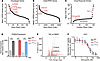 Figure 1
ATR inhibition is a therapeutic target and shows activity in tazemetostat-resistant rhabdoid tumor cells. (A and B) metaVIPER analysis of rhabdoid tumor transcriptomes for proteins within the OncoTarget protein set (A) and the complete metaVIPER protein set (B). (C) Inhibitors rank ordered by IC50, data from Lee, et al. (D) DESeq2-normalized read counts of cells treated with 10 μM tazemetostat (TAZ) versus equivalent volume of DMSO for 11 days. n = 3 biological replicates per condition. ***P < 0.001; P = 1.2 × 10⁻⁷, 1.3 × 10⁻⁶, 1.6 × 10⁻⁶, and for RB1WT, RB1del E1, and RB1del F2, respectively, by 2-sided Student’s t test. (E) Volcano plot of previously published RNA-Seq data from cells treated with 10 μM TAZ vs. equivalent volume of DMSO for 11 days. n = 3 replicates per condition. Dots in red indicate genes with log2(expression fold-change) > ±1 and P < 0.01. (F) G401 cells treated with elimusertib for 4 days (experiment was repeated 3 times; representative is shown here).
In addition to these known dependencies, this analysis also identified the nonhomologous end-joining DNA repair structural factor XRCC6 (Ku70), and the DNA repair kinase ATR among the most activated MR genes of all 6,000 MR proteins in metaVIPER (Figure 1B and Supplemental Table 2), both of which were shown in previous studies to be required for the survival of cells expressing active PGBD5 (14). Indeed, XRCC6 ranked higher in this analysis than the well-validated target EZH2 (Figure 1B).
To ascertain the robustness of this prediction, we next analyzed an independent data set from Lee et al. (18), which we used to assess the responses of sarcoma cell lines to a panel of 151 pharmacologic inhibitors, including G401 and A204 rhabdoid tumor and VA-ES-BJ epithelioid sarcoma cell lines. We observed that the ATR-selective kinase inhibitor elimusertib (BAY-1895344; mean IC50 = 146 nM) was among the most active drugs against epithelioid and rhabdoid tumor cells, and notably, more active than both barasertib (mean IC50 = 951 nM) and tazemetostat (mean IC50 > 100 mM) (Figure 1C and Supplemental Table 3). Our previous work and that of others have shown that the minimum tazemetostat treatment duration to observe cell viability effects in rhabdoid tumor cell lines is 7 days; therefore, the high mean IC50 for tazemetostat is likely a result of the shorter 72-hour treatment time used in this experiment. Thus, SMARCB1-deficient epithelioid and rhabdoid tumors are highly sensitive to ATR inhibition (14).
Since modulation of both gene expression by tazemetostat and DNA repair by ATR inhibitor elimusertib appears to have prominent activity in rhabdoid tumor cells, we inquired whether the combination of both drugs could achieve improved antitumor effects. We next observed that in addition to the expected upregulation of polycomb gene sets, which we described previously (8), EZH2 inhibition in G401 rhabdoid tumor cells via 11-day tazemetostat treatment also caused a significant increase in the expression of PGBD5, a key mediator of ATR sensitivity in rhabdoid tumors (mean increase of 6.6-fold and P = 1.2 × 10⁻⁷ by Student’s t test) (Figure 1D). This upregulation was more pronounced and more significant than upregulation of the validated EZH2 target CDKN2A (8) (Figure 1E). Given both this substantial upregulation of PGBD5 by tazemetostat and the fundamental functions that PGBD5 plays as a developmental mutator and an inducer of DNA damage in rhabdoid tumorigenesis (9, 12, 13), we pursued the therapeutic implications of tazemetostat-mediated PGBD5 upregulation in tumor cells.
Using CRISPR gene editing, we previously generated isogenic RB1 WT and RB1del mutant G401 cells and confirmed correct biallelic RB1 inactivating mutations and consequent loss of RB1 protein expression, using the AAVS1 safe harbor as a negative control (8). We found that loss of RB1, as well as other defects in the RB1/E2F axis, cause tazemetostat resistance (8). Consistent with the independence of this tazemetostat resistance mechanism from ATR inhibitor susceptibility, two independent G401 RB1del mutant cell lines also exhibited significant tazemetostat-mediated induction of PGBD5 expression (mean fold-increase of 333 and 8.6; P = 1.3 × 10⁻⁶ and 1.6 × 10⁻⁶, by t test, for E1 and F2 clones, respectively) (Figure 1D). Additionally, both RB1WT and RB1del mutant G401 cells exhibited nanomolar susceptibility to elimusertib (EC50 = 18 ± 1.6 nM, 19 ± 3.8 nM, and 27 ± 3.2 nM for RB1WT, RB1del E1, and F2 clones, respectively; Figure 1F).
Elimusertib is currently undergoing clinical trials in patients with refractory or relapsed solid tumors, including patients with PGBD5-expressing tumors such as rhabdoid and epithelioid sarcoma (ClinicalTrials.gov NCT05071209). Therefore, we investigated the activity of combination treatment with tazemetostat and elimusertib, reasoning that tazemetostat-induced upregulation of PGBD5 expression may potentiate the antitumor effects of ATR inhibition. We selected an elimusertib dose below its monotherapy IC50 (for G401 cells) to visualize any additive effects upon combination with tazemetostat. We observed greater antitumor effects with the combination of tazemetostat and elimusertib than with either drug alone in diverse rhabdoid and epithelioid sarcoma cell lines, including tazemetostat-resistant ES1 cells (mean decrease in normalized cell viability of 1.56-, 1.59-, 1.28-, 1.19-, and 1.19-fold compared with most effective monotherapy for TTC642, KP-MRT-NS, KP-MRT-RY, G401, and ES1, respectively; P = 1.0 × 10⁻³, 3.0 × 10⁻⁵, 3.3×10⁻³, 2.6 × 10⁻⁴, and 6.1 × 10⁻⁵, by t test, respectively; TM8716 cells showed a similar trend but did not reach the level of significance [P = 0.14 by t test]) (Figure 2A). In contrast, the combination did not impair proliferation in immortalized retinal pigment epithelial (RPE) cells (Figure 2A). Strikingly, the combination of tazemetostat and elimusertib was highly synergistic in G401 rhabdoid and ES1 epithelioid sarcomas cells (zero interaction potency [ZIP] synergy = 3.4 and 2, respectively) (Figure 2, B and C).
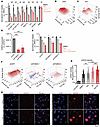 Figure 2
Combination EZH2 and ATR inhibition improves response in vitro. (A) Panel of rhabdoid (TTC642, KP-MRT-NS, KP-MRT-RY, G401, TM8716), epithelioid (ES1, VAESBJ) and nonsarcoma (RPE) cell lines ordered by decreasing response to TAZ monotherapy. Cells were treated with the indicated regimens at 200 nM TAZ and 8 nM elimusertib for 11 days. P = 0.001, 3.0 × 10⁻⁵, 0.0033, 2.6 × 10⁻⁴, 0.14, 6.1 × 10⁻⁵ for TTC642, KP-MRT-NS, KP-MRT-RY, G401, TM8716, and ES1, respectively, by 2-sided Student’s t test. All comparisons refer to combination versus elimusertib conditions, except for G401 cells, for which the comparison is for combination versus TAZ. n = 5 replicates per condition. (B and C) Synergy plots for combination treatment with TAZ and elimusertib for (B) G401 and (C) ES1 cells. Cells were treated for 9 days and analyzed for synergy using the ZIP model. (D) RT-qPCR showing PGBD5 expression versus GAPDH in G401 cells with the indicated shRNA. P values were 2.8 × 10⁻⁴ and 8.0 × 10⁻⁴ for shGFP versus shPGBD5-1 and shPGBD5-3, respectively, by 2-sided Student’s t test with Bonferroni correction. (E) G401 cells with indicated shRNA were treated for 9 days with the indicated drug regimen (50 nM TAZ and 0.5 nM elimusertib). P = 0.01 for shGFP elimusertib versus combination by 2-sided Student’s t test. n = 3 replicates per condition. (F) ZIP synergy plots for the indicated cell line, treated for 9 days. (G) Quantification of γH2AX fluorescence relative to DAPI fluorescence. G401 cells were treated with 500 nM TAZ for 7 days ± 100 nM elimusertib (Eli) added on day 5. P = 0.0088 for DMSO versus TAZ; P = 1.2 × 10⁻⁴ for elimusertib versus combination; and TAZ versus combination by 2-sided permutation test with Benjamini-Hochberg (FDR) correction. n = 332 nuclei for DMSO, 404 for TAZ, 400 for elimusertib, 257 for combination. (H) Representative images of cells from (G). *P < 0.05, **P < 0.01, ***P < 0.001.
We next sought to confirm whether this synergistic effect is dependent on PGBD5 expression. To test this prediction, we engineered shRNA-mediated depletion of PGBD5 in G401 cells using lentiviral transduction of two independent PGBD5-specific shRNAs (shPGBD5), as compared with a control GFP-targeting shRNA (shGFP). We confirmed that shPGBD5-expressing cells were significantly depleted of PGBD5 as compared with control shGFP cells (mean fold-depletion = 4.5 and 2.8; P = 2.8 × 10⁻⁴ and 8.0 × 10⁻⁴, by Bonferroni-adjusted t test, respectively) (Figure 2D). As predicted, control tumor cells transduced with shGFP vectors expressing endogenous levels of PGBD5 demonstrated significant reduction in cell viability when treated with the combination (1.4-fold vs. elimusertib, P = 0.013, by t test) (Figure 2E). In contrast, PGBD5-depleted shPGBD5-transduced cells showed no such reduction, which was also evident across all drug doses tested in the combination synergy analysis (Figure 2F).
If the improved antitumor activity of tazemetostat and elimusertib is due to the induction of PGBD5-dependent DNA damage, then this treatment combination should be associated with the induction of DNA damage repair signaling. To test this prediction, we used confocal immunofluorescence microscopy to quantify γH2AX as a specific marker of DNA damage (19). In agreement with prior studies (14), vehicle-treated G401 cells showed measurable γH2AX staining associated with baseline PGBD5 expression (Figure 2, G and H). Consistent with tazemetostat-mediated induction of PGBD5 expression (Figure 1D), we found that tazemetostat treatment alone significantly increased nuclear γH2AX (mean normalized intensity = 0.42 vs. 0.29 for tazemetostat and DMSO, respectively; P = 0.0088, Benjamini-Hochberg adjusted permutation test) (Figure 2, G and H). Additionally, the combination of tazemetostat and elimusertib induced a significant increase in γH2AX as compared with either drug alone (mean normalized intensity = 1.8 for the combination vs. 0.42 and 0.85 for tazemetostat and elimusertib, respectively; P = 1.2 × 10⁻⁴, Benjamini-Hochberg adjusted permutation test, for combination versus either elimusertib or tazemetostat monotherapy) (Figure 2, G and H).
Recently, EZH2 suppression was shown to induce replication stress through upregulation of MYCN expression in T acute lymphoblastic leukemia cells, which, in turn, sensitized cells to inhibition of CHK1 (19), a downstream mediator of ATR signaling (20). To test this possibility, we measured MYCN expression in G401 rhabdoid tumor cells, which was significantly increased upon tazemetostat treatment (Figure 3A; P = 0.0035, 0.032, and 0.0041, by t test, for DMSO- versus tazemetostat-treated RB1WT, RB1del E1, and RB1del F2 cells, respectively). However, this induction of MYCN gene expression was not associated with the accumulation of MYCN protein, as measured by Western blotting with MYCN-amplified IMR5 neuroblastoma cells as a positive control (Figure 3B). Consistent with this, EZH2 inhibition, either alone or in combination with CHK1 inhibition, did not induce apparent replication stress, as measured by RPA phosphorylation, using cells treated with the DNA topoisomerase inhibitor camptothecin as a positive control for replication stress and RPA phosphorylation. This was despite the effective inhibition of CHK1 autophosphorylation by the CHK1-selective SRA737 inhibitor (Figure 3C). Concordantly, the CHK1 inhibitor SRA737 showed poor activity against G401 cells, regardless of RB1 status (Figure 3D), and sensitivity did not improve with the addition of 0.2 or 2.0 μM tazemetostat (Figure 3E). Thus, rhabdoid tumor cells exhibit a specific dependency on ATR-dependent but CHK1-independent DNA damage repair signaling.
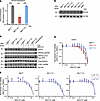 Figure 3
CHK1 inhibition does not induce replication stress or synergize with tazemetostat. (A) DESeq2-normalized read counts of cells treated with 10 μM TAZ versus equivalent volume of DMSO for 11 days. n = 3 biological replicates per condition. P = 0.0035, 0.032, and 0.0041 by 2-sided Student’s t test for DMSO versus TAZ-treated RB1WT, RB1del E1, and RB1del F2 cells, respectively. (B) Cells treated with 10 μM TAZ or DMSO for 11 days do not express MYCN protein. MYCN-amplified neuroblastoma cell line IMR5 was used as a positive control for MYCN expression. (C) Western blot assaying replication stress as measured by RPA32 phosphorylation at S4/8 and T21. Camptothecin treatment (1.5 μM) for 2 hours was used as a positive control for replication stress. Total RPA32 was used to control for RPA32 protein levels, and autophosphorylation of CHK1 at S296 was used to confirm CHK1 inhibition. Cells were pretreated with 10 μM TAZ or DMSO for 9 days. Cells were then split and additionally treated with SRA737 (3 μM) or equivalent volume of DMSO for 2 days. (D) Dose-response curves of G401 cells treated with the CHK1 inhibitor SRA737 for 9 days. (E) Dose-response curves of the indicated G401 cells treated with SRA737 for 9 days in combination with the indicated (0, 0.2, or 2.0 μM) TAZ concentration. Experiments in D and E were repeated 3 times; representative experiments are shown. *P < 0.05, ***P < 0.001.
Tazemetostat-mediated induction of PGBD5 and DNA damage would indicate that this form of DNA damage should be dependent on PGBD5 expression. To test this prediction, we engineered additional G401 cells with shRNA-mediated depletion of PGBD5 using lentiviral transduction of two independent shPGBD5 proteins, as compared with a control shGFP. We again confirmed that shPGBD5-expressing cells were significantly depleted of PGBD5 as compared with control shGFP cells (mean fold-depletion = 1.7- and 1.9-fold; P = 0.0042 and 0.0033, by Bonferroni-adjusted t test, respectively) (Figure 4A). We note that these cells had a lower level of PGBD5 depletion compared with the cells used in Figure 2, D–F, because G401 cells are difficult to culture long term with a high degree of PGBD5 depletion.
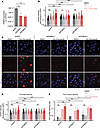 Figure 4
Tazemetostat-induced DNA damage is PGBD5 dependent. (A) RT-qPCR showing PGBD5 expression versus GAPDH in G401 cells with the indicated shRNA. P = 0.0042 and 0.0033 for shGFP versus shPGBD5-1 and shPGBD5-3, respectively, by 2-sided Student’s t test with Bonferroni correction. (B) Quantification of γH2AX fluorescence relative to DAPI in all nuclei. P = 1.8 × 10⁻⁴ for both combination-treated shPGBD5-1 versus shGFP and shPGBD5-3 versus shGFP by 2-sided permutation test. P = 1.8 × 10⁻⁴, 0.011, and 0.26 for TAZ versus DMSO for shGFP, shPGBD5-1, and shPGBD5-3, respectively. P = 1.8 × 10⁻⁴ for DMSO-treated shPGBD5-1 versus shGFP and shPGBD5-3 versus shGFP. Cells were treated with the indicated regimen (500 mM TAZ for 7 days, and 100 nM elimusertib, added on day 5). (C) Representative images of cells quantified in (B). (D) Quantification of γH2AX fluorescence relative to DAPI in nuclei with punctate γH2AX staining. P = 1.7 × 10⁻⁴ for combination-treated shPGBD5-1 versus shGFP and shPGBD5-3 versus shGFP by 2-sided permutation test. P = 1.7 × 10⁻⁴, 0.047, and 0.29 for TAZ versus DMSO for shGFP, shPGBD5-1, and shPGBD5-3, respectively. P = 1.7 × 10⁻⁴ for DMSO-treated shPGBD5-1 versus shGFP and shPGBD5-3 versus shGFP. For B and C, n = 539, 497, and 703, respectively, for shGFP, shPGBD5-1, and shPGBD5-3 cells is 539, 497, and 703 for DMSO; n = 321, 390, and 418 for TAZ; n = 491, 354, and 554 for elimusertib; and n = 418, 277, and 317 for combination, respectively (E). Proportion of nuclei with pan-nuclear γH2AX staining per field. Each dot represents 1 field. P = 0.002 and 0.025 for combination-treated shPGBD5-1 versus shGFP and shPGBD5-3 versus shGFP, respectively, by 2-sided permutation test. P = 0.65, 0.30, and 0.65 for TAZ versus DMSO for shGFP, shPGBD5-1, and shPGBD5-3, respectively. P = 0.84 and 0.30 for DMSO-treated shPGBD5-1 versus shGFP and shPGBD5-3 versus shGFP, respectively. For shGFP cells, n = 22 fields for DMSO, TAZ, and elimusertib; n = 28 for combination. For shPGBD5-1, n = 22 for DMSO, TAZ, and elimusertib; n = 20 for combination. For shPGBD5-3, n = is 22 for DMSO, TAZ, and combination; and n = 20 for elimusertib. P values are for permutation tests adjusted with Benjamini-Hochberg correction. *P < 0.05, **P < 0.01, ***P < 0.001.
We then measured DNA damage using quantitative confocal immunofluorescence microscopy of γH2AX, and found that, although the combination of tazemetostat and elimusertib induced DNA damage in shPGBD5 cells, this effect was significantly reduced compared with control shGFP cells (mean fold-reduction = 2.9- and 2.6-fold; P = 1.8 × 10⁻⁴, by Benjamini-Hochberg adjusted permutation test, for both combination-treated shGFP versus shPGBD5-1 and shPGBD5-3) (Figure 4, B and C). This PGBD5-dependent reduction in DNA damage was observed both when examining all nuclei with γH2AX staining (Figure 4B) and only nuclei with punctate γH2AX staining, corresponding to more localized DNA damage (mean fold-reduction = 1.7- and 1.6-fold; P = 1.7 × 10⁻⁴, by permutation test, for shGFP versus shPGBD5-1 and shPGBD5-3, respectively) (Figure 4D), as opposed to pan-nuclear γH2AX staining due to genome-wide unrepaired DNA damage and cellular apoptosis (mean fold-reduction = 3.2- and 1.8-fold; P = 0.002 and 0.025, by permutation test, for shGFP versus shPGBD5-1 and shPGBD5-3, respectively) (Figure 4E). Thus, in addition to its requirement for tazemetostat and elimusertib synergy, PGBD5, at least in part is necessary for tazemetostat-mediated induction of DNA damage and its potentiation by the combination with elimusertib.
This nominates therapeutic targeting of the EZH2-PGBD5 synthetic lethal dependency as an improved combination strategy for epithelioid and rhabdoid tumors. To test this idea, we assembled a phase 2–like cohort of diverse rhabdoid and epithelioid sarcoma tumors derived from patients with relapsed and metastatic disease, including tumors with numerous additional acquired mutations (Supplemental Table 4). We engrafted these tumors into immunodeficient NOD-scid IL2Rgammanull mice and randomized tumor-bearing animals to treatment with tazemetostat or elimusertib or the combination of both (Figure 5A). The combination of tazemetostat and elimusertib exceeded the effect of treatment with either drug alone when assessed by tumor growth measurements (P = 0.023 and 0.20, by Vardi U test, for combination versus elimusertib or tazemetostat, respectively) (Figure 5A) and significantly extended tumor-free survival from 51 days (95% CI 42–60) for elimusertib and 68 days (95% CI 53–82) for tazemetostat to 100 days (95% CI 76–124) for the combination (P = 5.8 × 10⁻⁴ and 0.038, log-rank test, for combination versus elimusertib or tazemetostat, respectively) (Figure 5B).
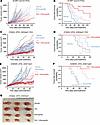 Figure 5
Tazemetostat plus elimusertib improves therapeutic response in vivo. (A) Tumor growth curves for 5 mouse PDXs treated with the indicated drug regimen. n = 20 mice for vehicle and elimusertib groups, n = 21 for TAZ and TAZ plus elimusertib groups. P = 0.023 and 0.20, Vardi U test, for combination versus elimusertib or TAZ, respectively. (B) Kaplan-Meier curves showing tumor-free survival (defined as tumor volume ≤1,000 mm3) for the PDXs in panel C. Mean survival is 51 days (95% CI 42–60) for elimusertib, 68 days (95% CI 53–82) for TAZ to 100 days (95% CI 74–124) for the combination. Log-rank test P = 5.8 × 10⁻⁴ and 0.038 for combination versus elimusertib or TAZ, respectively. (C) Tumor growth curves for the HYMAD_EPIS_X0004aS1 PDX model treated with the indicated drug regimen. P = 2.0 × 10⁻⁴, Vardi U test, for combination versus elimusertib or TAZ. n = 14 mice per treatment group. (D) Kaplan-Meier curves showing tumor-free survival for the PDXs in panel C. Log-rank test P = 0.0062 and 6.3 × 10⁻⁵ for combination versus elimusertib or TAZ, respectively. (E) Tumor growth curves for the SOMWR_EPIS_X00013aS1 PDX model. P = 0.001 and 0.06, Vardi U test, for combination versus elimusertib and TAZ, respectively. n = 8 mice for all groups. (F) Kaplan-Meier curves showing tumor-free survival for the SOMWR_EPIS_X00013aS1 PDX model; mean survival is 90 days (95% CI 83–97) for combination versus 80 days (95% CI 70–90) for TAZ and 45 days (95% CI 37–52) for elimusertib. Log-rank test P = 9.5 × 10⁻⁵ and 0.06 for combination versus elimusertib and TAZ, respectively. (G) Image of representative tumors extracted from mice in C and D on day 52 of treatment.
This activity was most pronounced for the HYMAD_EPIS_X0004aS1 and SOMWR_EPIS_X00013aS1 patient-derived xenograft (PDX) models (Figure 5, C–G), despite the former exhibiting a relatively poor response to tazemetostat monotherapy, when assessed by tumor growth measurements (P = 2.0 × 10⁻⁴, by Vardi U test, for combination versus elimusertib or tazemetostat for HYMAD_EPIS_X0003aS1, Figure 5C; P = 0.001 and 0.06 for combination versus elimusertib and tazemetostat, respectively, for SOMWR_EPIS_X00013aS1, Figure 5E) and tumor-free survival (P = 0.0062 and 6.3 × 10⁻⁵, by log-rank test, for combination versus elimusertib or tazemetostat, respectively, for HYMAD_EPIS_X0003aS1, Figure 5D; and P = 9.5 × 10⁻⁵ and 0.06 for combination versus elimusertib or tazemetostat, respectively, for SOMWR_EPIS_X00013aS1, Figure 5F). This effect leverages the EZH2-PGBD5 collateral synthetic lethal dependency, targeting PGBD5-dependent DNA damage to improve tazemetostat clinical response and overcome resistance in epithelioid and rhabdoid tumors.
-
Methods
Sex as a biological variable. Our study examined male and female animals, and similar findings are reported for both sexes.
Cell culture. G401, TTC642, VAESBJ, TM8716, and RPE-hTERT cell lines were obtained from the American Type Culture Collection. The ES1 cell line was generated in house. Rhabdoid tumor cell lines KP-MRT-NS and KP-MRT-RY were provided by Yasumichi Kuwahara and Hajime Hosoi, Department of Biochemistry and Molecular Biology, Kyoto Prefectural University of Medicine, Kyoto). The identity of all cell lines was verified by short tandem repeat analysis. Absence of Mycoplasma contamination was determined at every plating using the MycoAlert kit (Lonza) according to manufacturer’s instructions. Cell lines were cultured in 5% CO2 in a humidified atmosphere in 37°C. All media were obtained from Corning and supplemented with 10% FBS, 1% l-glutamine, and 100 U/mL penicillin and 100 μg/mL streptomycin (Gibco). G401, ES1, VAESBJ, and RPE cells were cultured in DMEM. TTC642, TM8716, KP-MRT-NS, and KP-MRT-RY cells were cultured in RPMI medium. All experiments were performed using cell lines kept in culture for no more than 10 passages. Generation of G401 with RB1 deletion was described previously (8); the guide RNA sequence used is presented in Table 1.
Western blotting. To assess protein expression by Western immunoblotting, pellets of 1 million cells were prepared and washed once in cold PBS. Cells were resuspended in 100–130 μL of RIPA lysis buffer (50 mM Tris-HCl, pH 8.0, 150 mM NaCl, 1.0% NP-40, 0.5% sodium deoxycholate, 0.1% sodium dodecyl sulfate) and incubated on ice for 10 minutes. Cell suspensions were then disrupted using a Covaris S220 adaptive focused sonicator for 5 minutes (peak incident power: 35W; duty factor: 10%, 200 cycles/burst) at 4°C. Lysates were cleared by centrifugation at 18,000g for 15 minutes at 4°C. Protein concentration was assayed using the DC Protein Assay (Bio-Rad) and 15–35 μg whole-cell extract was used per sample. Samples were boiled for 5 minutes at 95°C in Laemmli buffer (Bio-Rad) with 40 mM DTT and resolved using SDS-PAGE. Proteins were transferred to Immobilon FL PVDF membranes (Millipore), and membranes were blocked using Intercept Blocking buffer (Li-Cor). Primary Abs (all from Cell Signaling Technology except where noted) used were as follows: anti-EZH2 (catalog 5246) at 1:1,000; anti-RPA32 pT21 (Abcam, ab109394) at 1:2,000; anti-RPA32 pS4/pS8 (Thermo Fisher Scientific, A300-245A) at 1:2,000; anti-RPA32 (catalog 35869) at 1:1,000; anti-pCHK1 S296 (catalog 90178) at 1:250, anti-MYCN (catalog 9405) at 1:250, and anti-actin (catalog 4970 and 3700) at 1:5,000. Blotted membranes were visualized using goat secondary Abs conjugated to IRDye 680RD or IRDye 800CW (Li-Cor, 926-68071 and 926-32210) at 1:15,000 and the Odyssey CLx fluorescence scanner, according to manufacturer’s instructions (Li-Cor). Image analysis was done using the Li-Cor Image Studio software (version 4).
Transcriptomic data. Expression levels of PGBD5 and MYCN in G401 cells were determined from our previously published data set (8). Transcriptomic data (Figure 1, A and B) were generated and metaVIPER protein activity inference was performed as previously described (15, 16). Briefly, rhabdoid tumor transcriptomes referenced in this article were previously generated as part of the TARGET initiative (https://www.cancer.gov/ccg/research/genome-sequencing/target), with the dbGap study identification no. phs000218 and substudy identification no. phs000470 for all rhabdoid tumor samples. The data used for this analysis are available at Genomic Data Commons (https://portal.gdc.cancer.gov; TARGET-RT). Detailed methods for rhabdoid tumor sample processing may be found online (https://www.cancer.gov/ccg/research/genome-sequencing/target/using-target-data/technology#kidney-rhabdoid-tumor). Gene expression analysis and metaVIPER activity scores for each gene were previously generated by Coutinho et al. (16) and replotted in this work.
Generating shPGBD5 cells. For shRNA cells, pLKO.1 shRNA vectors targeting PGBD5 (TRCN0000138412, TRCN0000135121) and control shGFP were obtained from the RNAi Consortium (Broad Institute). Lentivirus production was carried out as described previously (8). G401 cells were transduced at an MOI approximately 1.5 and selected with puromycin at 2 μg/mL for 72 hours. Knockdown was confirmed by quantitative RT-PCR as previously described (9), using primers specified in Table 1.
Combination drug treatment. Drugs used for in vitro treatment were supplied by Selleckchem (tazemetostat, S7128; elimusertib/BAY-1895344, S9864; camptothecin, S1288; SRA737, S8253).
For combination treatment with tazemetostat and elimusertib, we used a 2-dimensional dose-matrix design, treating the cells for 9 days. After the addition of cells, drugs were added using a pin tool (i.e., stainless steel pins with 50 nL slots; V&P Scientific) mounted onto a liquid-handling robot (CyBio Well vario; Analytik Jena). On day 9, CellTiter-Glo reagent was freshly reconstituted and added in a 1:1 proportion to cell medium, according to the manufacturer’s instructions. A similar protocol was used for monotherapy dose-response curves for elimusertib and SRA737, and for specific dose combinations, although drug solutions were added manually by multichannel pipette; specific treatment times are indicated in the corresponding figure legends. Outliers due to pinning errors were excluded after manual examination. For analysis of synergy, we used the SynergyFinder 3.0 website (58, 59), with contour plots based on calculated synergy generated in OriginPro (Microcal).
Immunofluorescence. Immunofluorescence for γH2AX was performed on cells plated on Millicell EZ Slide glass slides (EMD Millipore) coated for 45 minutes with bovine plasma fibronectin (Millipore Sigma). After drug treatment, cells were washed once with PBS and fixed in 4% formaldehyde for 10 minutes at room temperature. Slides were then washed 3 times in PBS for 5 minutes, permeabilized for 15 minutes in 0.3% Triton X-100, washed again in PBS 3 times, and blocked with 5% goat serum (Millipore Sigma, G9023) in PBS for 1 hour at room temperature. Slides were incubated with mouse anti-γH2A.X primary Ab (Sigma-Aldrich, 05-636) at 1:500 in blocking buffer for 1 hour, washed 3 times in PBS, and incubated with goat anti-mouse secondary Ab conjugated to AlexaFluor555 (Invitrogen, A-21422) at 1:1,000. Cells were then counterstained with DAPI at 1:1,000 for 10 minutes and treated with ProLong Diamond Antifade Mountant with DAPI (Invitrogen, P36962) for 48 hours.
Images were acquired on a Zeiss LSM880 confocal microscope at ×63 magnification. Images were then processed using a custom pipeline in CellProfiler (60). Per-cell integrated γH2A.X intensity was normalized against per-cell integrated DAPI intensity. All image analyses used the same pipeline settings, with the exception of the RescaleIntensity module for the AF555 channel, which used the settings 0.009–0.09 for the images in Figure 2 and 0.005–0.09 for Figure 4. Overlaid images were prepared using Fiji (61).
Xenografts. To generate PDXs, tumor specimens were immediately minced and mixed after collection (50:50) with Matrigel (Corning) and implanted subcutaneously in the flank of 6- to 8-week-old female NOD.Cg-Prkdcscid Il2rgtm1Wjl/Szj (NSG) mice (The Jackson Laboratory), as described previously (62). Mice were monitored daily, and PDX samples were serially transplanted 3 times before being deemed established. PDX tumor histology was confirmed by review of H&E-stained slides and direct comparison to the corresponding patient tumor slides. PDX identity was further confirmed by Memorial Sloan Kettering Cancer Center–Integrated Mutation Profiling of Actionable Cancer Targets (MSK-IMPACT) sequencing analysis.
Therapeutic studies used female and male NSG mice obtained from The Jackson Laboratory. Xenografts were prepared as single-cell suspensions, resuspended in Matrigel, and implanted subcutaneously into the right flank of 6- to 10-week-old mice (100 μL of tumor cell suspension per mouse). Tumors were allowed to grow until they reached a volume of 100 μL, at which point they were randomized into treatment groups without blinding. Drugs were prepared using the following formulations: tazemetostat was dissolved at 25 mg/mL in 5% DMSO, 40% PEG 300, 5% Tween 80, and 50% water. Elimusertib was dissolved at 5 mg/mL in 10% DMSO, 40% PEG 300, 5% Tween 80, and 45% water using a sonicator. Drugs were reconstituted daily. tazemetostat was dosed at 250 mg/kg twice daily by oral gavage, 7 days/week. Elimusertib was dosed at 40 mg/kg twice daily by oral gavage using a 2-days-on/12-days-off cycle. Caliper tumor measurements were made twice weekly. Tumor volumes were calculated using the following formula: volume = (π/6) × length × width2.
Statistics. Data were analyzed using OriginPro (version 2022b; OriginLab Corporation), with the exception of tumor growth analysis, which was performed using the Vardi U test (63), as implemented in the clinfun R package using the aucVardiTest function. Tumor-free survival analysis was calculated by the Kaplan-Meier method, using the log-rank test. Data are presented as means, with individual replicates shown. Comparisons were performed by Student’s 2-tailed t test or permutation test with Benjamini-Hochberg correction for multiple comparisons as indicated. A P value <0.05 was considered significant.
Study approvals. All mouse experiments were carried out in accordance with Memorial Sloan Kettering Cancer Center’s IACUC-approved protocol 13-05-004 (8). Tumor specimens for PDX generation were collected under approved IRB protocol 14-091.
Data availability. All numerical data appearing in this article are included in the Supplemental Data Values file. Raw data and R scripts used for analysis of PDX data are available on Zenodo (DOI: 10.5281/zenodo.10398544). CellProfiler analysis pipeline files and raw image files are also available on Zenodo (DOI: 10.5281/zenodo.10982946).


Copyright © 2026 American Society for Clinical Investigation
ISSN: 0021-9738 (print), 1558-8238 (online)