
Advertisement
Research ArticleAgingCardiologyInflammation
Open Access |  10.1172/JCI171634
Clonal hematopoiesis activates procalcific pathways in macrophages and promotes aortic valve stenosis
Wesley T. Abplanalp,1,2,3 Michael A. Raddatz,4,5,6 Bianca Schuhmacher,1,3 Silvia Mas-Peiro,7 María A. Zuriaga,8 Nuria Matesanz,8 José J. Fuster,8,9 Yash Pershad,6 Caitlyn Vlasschaert,10 Alexander J. Silver,4,11,12 Eric Farber-Eger,13 Yaomin Xu,14,15,16 Quinn S. Wells,13,15,17 Delara Shahidi,1,3 Sameen Fatima,1,3 Xiao Yang,1,3 Adwitiya A.P. Boruah,1,3 Akshay Ware,1,3 Maximilian Merten,1,2,3 Moritz von Scheidt,18 David John,1,2,3 Mariana Shumliakivska,1,2,3 Marion Muhly-Reinholz,1,3 Mariuca Vasa-Nicotera,7 Stefan Guenter,2,3,19 Michael R. Savona,11,12,20,21 Brian R. Lindman,13,22 Stefanie Dimmeler,1,2,3 Alexander G. Bick,6,21 and Andreas M. Zeiher1,2,3
1Institute for Cardiovascular Regeneration, Goethe University, Frankfurt, Germany.
2German Center for Cardiovascular Research (DZHK), Partner Site Frankfurt Rhine-Main, Berlin, Germany.
3Cardiopulmonary Institute, Goethe University, Frankfurt, Germany.
4Vanderbilt University School of Medicine, Nashville, Tennessee, USA.
5Division of Cardiology, Department of Medicine, UCLA, Los Angeles, California, USA.
6Division of Genetic Medicine, Department of Medicine, Vanderbilt University Medical Center, Nashville, Tennessee, USA.
7Department of Medicine 3 (Cardiology/Angiology), Goethe University, Frankfurt, Germany.
8Centro Nacional de Investigaciones Cardiovasculares (CNIC), Madrid, Spain.
9CIBER en Enfermedades Cardiovasculares (CIBER-CV), Madrid, Spain.
10Department of Medicine, Queen’s University, Kingston, Ontario, Canada.
11Division of Hematology and Oncology, Department of Medicine,
12Program in Cancer Biology,
13Division of Cardiovascular Medicine, Department of Medicine, and
14Department of Biostatistics, Vanderbilt University Medical Center, Nashville, Tennessee, USA.
15Department of Biomedical Informatics, Vanderbilt University, Nashville, Tennessee, USA.
16Center for Quantitative Sciences and
17Department of Pharmacology, Vanderbilt University Medical Center, Nashville, Tennessee, USA.
18German Heart Center, Technical University of Munich, Munich, Germany.
19Max Planck Institute for Heart and Lung Research, Bad Nauheim, Germany.
20Vanderbilt-Ingram Cancer Center, Nashville, Tennessee, USA.
21Center for Immunobiology and
22Structural Heart and Valve Center, Vanderbilt University Medical Center, Nashville, Tennessee, USA.
Address correspondence to: Wesley T. Abplanalp, Goethe University, Institute of Cardiovascular Regeneration, Theodor-Stern-Kai 7, 60590 Frankfurt, Germany. Phone: 49.069.6301.86410; Email: abplanalp@em.uni-frankfurt.de.
Authorship note: WTA, MAR, and BS contributed equally to this work. SD, AGB, and AMZ contributed equally to this work.
Find articles by
Abplanalp, W.
in:
PubMed
|
Google Scholar
|

1Institute for Cardiovascular Regeneration, Goethe University, Frankfurt, Germany.
2German Center for Cardiovascular Research (DZHK), Partner Site Frankfurt Rhine-Main, Berlin, Germany.
3Cardiopulmonary Institute, Goethe University, Frankfurt, Germany.
4Vanderbilt University School of Medicine, Nashville, Tennessee, USA.
5Division of Cardiology, Department of Medicine, UCLA, Los Angeles, California, USA.
6Division of Genetic Medicine, Department of Medicine, Vanderbilt University Medical Center, Nashville, Tennessee, USA.
7Department of Medicine 3 (Cardiology/Angiology), Goethe University, Frankfurt, Germany.
8Centro Nacional de Investigaciones Cardiovasculares (CNIC), Madrid, Spain.
9CIBER en Enfermedades Cardiovasculares (CIBER-CV), Madrid, Spain.
10Department of Medicine, Queen’s University, Kingston, Ontario, Canada.
11Division of Hematology and Oncology, Department of Medicine,
12Program in Cancer Biology,
13Division of Cardiovascular Medicine, Department of Medicine, and
14Department of Biostatistics, Vanderbilt University Medical Center, Nashville, Tennessee, USA.
15Department of Biomedical Informatics, Vanderbilt University, Nashville, Tennessee, USA.
16Center for Quantitative Sciences and
17Department of Pharmacology, Vanderbilt University Medical Center, Nashville, Tennessee, USA.
18German Heart Center, Technical University of Munich, Munich, Germany.
19Max Planck Institute for Heart and Lung Research, Bad Nauheim, Germany.
20Vanderbilt-Ingram Cancer Center, Nashville, Tennessee, USA.
21Center for Immunobiology and
22Structural Heart and Valve Center, Vanderbilt University Medical Center, Nashville, Tennessee, USA.
Address correspondence to: Wesley T. Abplanalp, Goethe University, Institute of Cardiovascular Regeneration, Theodor-Stern-Kai 7, 60590 Frankfurt, Germany. Phone: 49.069.6301.86410; Email: abplanalp@em.uni-frankfurt.de.
Authorship note: WTA, MAR, and BS contributed equally to this work. SD, AGB, and AMZ contributed equally to this work.
Find articles by
Raddatz, M.
in:
PubMed
|
Google Scholar
|
1Institute for Cardiovascular Regeneration, Goethe University, Frankfurt, Germany.
2German Center for Cardiovascular Research (DZHK), Partner Site Frankfurt Rhine-Main, Berlin, Germany.
3Cardiopulmonary Institute, Goethe University, Frankfurt, Germany.
4Vanderbilt University School of Medicine, Nashville, Tennessee, USA.
5Division of Cardiology, Department of Medicine, UCLA, Los Angeles, California, USA.
6Division of Genetic Medicine, Department of Medicine, Vanderbilt University Medical Center, Nashville, Tennessee, USA.
7Department of Medicine 3 (Cardiology/Angiology), Goethe University, Frankfurt, Germany.
8Centro Nacional de Investigaciones Cardiovasculares (CNIC), Madrid, Spain.
9CIBER en Enfermedades Cardiovasculares (CIBER-CV), Madrid, Spain.
10Department of Medicine, Queen’s University, Kingston, Ontario, Canada.
11Division of Hematology and Oncology, Department of Medicine,
12Program in Cancer Biology,
13Division of Cardiovascular Medicine, Department of Medicine, and
14Department of Biostatistics, Vanderbilt University Medical Center, Nashville, Tennessee, USA.
15Department of Biomedical Informatics, Vanderbilt University, Nashville, Tennessee, USA.
16Center for Quantitative Sciences and
17Department of Pharmacology, Vanderbilt University Medical Center, Nashville, Tennessee, USA.
18German Heart Center, Technical University of Munich, Munich, Germany.
19Max Planck Institute for Heart and Lung Research, Bad Nauheim, Germany.
20Vanderbilt-Ingram Cancer Center, Nashville, Tennessee, USA.
21Center for Immunobiology and
22Structural Heart and Valve Center, Vanderbilt University Medical Center, Nashville, Tennessee, USA.
Address correspondence to: Wesley T. Abplanalp, Goethe University, Institute of Cardiovascular Regeneration, Theodor-Stern-Kai 7, 60590 Frankfurt, Germany. Phone: 49.069.6301.86410; Email: abplanalp@em.uni-frankfurt.de.
Authorship note: WTA, MAR, and BS contributed equally to this work. SD, AGB, and AMZ contributed equally to this work.
Find articles by Schuhmacher, B. in: PubMed | Google Scholar
1Institute for Cardiovascular Regeneration, Goethe University, Frankfurt, Germany.
2German Center for Cardiovascular Research (DZHK), Partner Site Frankfurt Rhine-Main, Berlin, Germany.
3Cardiopulmonary Institute, Goethe University, Frankfurt, Germany.
4Vanderbilt University School of Medicine, Nashville, Tennessee, USA.
5Division of Cardiology, Department of Medicine, UCLA, Los Angeles, California, USA.
6Division of Genetic Medicine, Department of Medicine, Vanderbilt University Medical Center, Nashville, Tennessee, USA.
7Department of Medicine 3 (Cardiology/Angiology), Goethe University, Frankfurt, Germany.
8Centro Nacional de Investigaciones Cardiovasculares (CNIC), Madrid, Spain.
9CIBER en Enfermedades Cardiovasculares (CIBER-CV), Madrid, Spain.
10Department of Medicine, Queen’s University, Kingston, Ontario, Canada.
11Division of Hematology and Oncology, Department of Medicine,
12Program in Cancer Biology,
13Division of Cardiovascular Medicine, Department of Medicine, and
14Department of Biostatistics, Vanderbilt University Medical Center, Nashville, Tennessee, USA.
15Department of Biomedical Informatics, Vanderbilt University, Nashville, Tennessee, USA.
16Center for Quantitative Sciences and
17Department of Pharmacology, Vanderbilt University Medical Center, Nashville, Tennessee, USA.
18German Heart Center, Technical University of Munich, Munich, Germany.
19Max Planck Institute for Heart and Lung Research, Bad Nauheim, Germany.
20Vanderbilt-Ingram Cancer Center, Nashville, Tennessee, USA.
21Center for Immunobiology and
22Structural Heart and Valve Center, Vanderbilt University Medical Center, Nashville, Tennessee, USA.
Address correspondence to: Wesley T. Abplanalp, Goethe University, Institute of Cardiovascular Regeneration, Theodor-Stern-Kai 7, 60590 Frankfurt, Germany. Phone: 49.069.6301.86410; Email: abplanalp@em.uni-frankfurt.de.
Authorship note: WTA, MAR, and BS contributed equally to this work. SD, AGB, and AMZ contributed equally to this work.
Find articles by Mas-Peiro, S. in: PubMed | Google Scholar
1Institute for Cardiovascular Regeneration, Goethe University, Frankfurt, Germany.
2German Center for Cardiovascular Research (DZHK), Partner Site Frankfurt Rhine-Main, Berlin, Germany.
3Cardiopulmonary Institute, Goethe University, Frankfurt, Germany.
4Vanderbilt University School of Medicine, Nashville, Tennessee, USA.
5Division of Cardiology, Department of Medicine, UCLA, Los Angeles, California, USA.
6Division of Genetic Medicine, Department of Medicine, Vanderbilt University Medical Center, Nashville, Tennessee, USA.
7Department of Medicine 3 (Cardiology/Angiology), Goethe University, Frankfurt, Germany.
8Centro Nacional de Investigaciones Cardiovasculares (CNIC), Madrid, Spain.
9CIBER en Enfermedades Cardiovasculares (CIBER-CV), Madrid, Spain.
10Department of Medicine, Queen’s University, Kingston, Ontario, Canada.
11Division of Hematology and Oncology, Department of Medicine,
12Program in Cancer Biology,
13Division of Cardiovascular Medicine, Department of Medicine, and
14Department of Biostatistics, Vanderbilt University Medical Center, Nashville, Tennessee, USA.
15Department of Biomedical Informatics, Vanderbilt University, Nashville, Tennessee, USA.
16Center for Quantitative Sciences and
17Department of Pharmacology, Vanderbilt University Medical Center, Nashville, Tennessee, USA.
18German Heart Center, Technical University of Munich, Munich, Germany.
19Max Planck Institute for Heart and Lung Research, Bad Nauheim, Germany.
20Vanderbilt-Ingram Cancer Center, Nashville, Tennessee, USA.
21Center for Immunobiology and
22Structural Heart and Valve Center, Vanderbilt University Medical Center, Nashville, Tennessee, USA.
Address correspondence to: Wesley T. Abplanalp, Goethe University, Institute of Cardiovascular Regeneration, Theodor-Stern-Kai 7, 60590 Frankfurt, Germany. Phone: 49.069.6301.86410; Email: abplanalp@em.uni-frankfurt.de.
Authorship note: WTA, MAR, and BS contributed equally to this work. SD, AGB, and AMZ contributed equally to this work.
Find articles by Zuriaga, M. in: PubMed | Google Scholar
1Institute for Cardiovascular Regeneration, Goethe University, Frankfurt, Germany.
2German Center for Cardiovascular Research (DZHK), Partner Site Frankfurt Rhine-Main, Berlin, Germany.
3Cardiopulmonary Institute, Goethe University, Frankfurt, Germany.
4Vanderbilt University School of Medicine, Nashville, Tennessee, USA.
5Division of Cardiology, Department of Medicine, UCLA, Los Angeles, California, USA.
6Division of Genetic Medicine, Department of Medicine, Vanderbilt University Medical Center, Nashville, Tennessee, USA.
7Department of Medicine 3 (Cardiology/Angiology), Goethe University, Frankfurt, Germany.
8Centro Nacional de Investigaciones Cardiovasculares (CNIC), Madrid, Spain.
9CIBER en Enfermedades Cardiovasculares (CIBER-CV), Madrid, Spain.
10Department of Medicine, Queen’s University, Kingston, Ontario, Canada.
11Division of Hematology and Oncology, Department of Medicine,
12Program in Cancer Biology,
13Division of Cardiovascular Medicine, Department of Medicine, and
14Department of Biostatistics, Vanderbilt University Medical Center, Nashville, Tennessee, USA.
15Department of Biomedical Informatics, Vanderbilt University, Nashville, Tennessee, USA.
16Center for Quantitative Sciences and
17Department of Pharmacology, Vanderbilt University Medical Center, Nashville, Tennessee, USA.
18German Heart Center, Technical University of Munich, Munich, Germany.
19Max Planck Institute for Heart and Lung Research, Bad Nauheim, Germany.
20Vanderbilt-Ingram Cancer Center, Nashville, Tennessee, USA.
21Center for Immunobiology and
22Structural Heart and Valve Center, Vanderbilt University Medical Center, Nashville, Tennessee, USA.
Address correspondence to: Wesley T. Abplanalp, Goethe University, Institute of Cardiovascular Regeneration, Theodor-Stern-Kai 7, 60590 Frankfurt, Germany. Phone: 49.069.6301.86410; Email: abplanalp@em.uni-frankfurt.de.
Authorship note: WTA, MAR, and BS contributed equally to this work. SD, AGB, and AMZ contributed equally to this work.
Find articles by Matesanz, N. in: PubMed | Google Scholar
1Institute for Cardiovascular Regeneration, Goethe University, Frankfurt, Germany.
2German Center for Cardiovascular Research (DZHK), Partner Site Frankfurt Rhine-Main, Berlin, Germany.
3Cardiopulmonary Institute, Goethe University, Frankfurt, Germany.
4Vanderbilt University School of Medicine, Nashville, Tennessee, USA.
5Division of Cardiology, Department of Medicine, UCLA, Los Angeles, California, USA.
6Division of Genetic Medicine, Department of Medicine, Vanderbilt University Medical Center, Nashville, Tennessee, USA.
7Department of Medicine 3 (Cardiology/Angiology), Goethe University, Frankfurt, Germany.
8Centro Nacional de Investigaciones Cardiovasculares (CNIC), Madrid, Spain.
9CIBER en Enfermedades Cardiovasculares (CIBER-CV), Madrid, Spain.
10Department of Medicine, Queen’s University, Kingston, Ontario, Canada.
11Division of Hematology and Oncology, Department of Medicine,
12Program in Cancer Biology,
13Division of Cardiovascular Medicine, Department of Medicine, and
14Department of Biostatistics, Vanderbilt University Medical Center, Nashville, Tennessee, USA.
15Department of Biomedical Informatics, Vanderbilt University, Nashville, Tennessee, USA.
16Center for Quantitative Sciences and
17Department of Pharmacology, Vanderbilt University Medical Center, Nashville, Tennessee, USA.
18German Heart Center, Technical University of Munich, Munich, Germany.
19Max Planck Institute for Heart and Lung Research, Bad Nauheim, Germany.
20Vanderbilt-Ingram Cancer Center, Nashville, Tennessee, USA.
21Center for Immunobiology and
22Structural Heart and Valve Center, Vanderbilt University Medical Center, Nashville, Tennessee, USA.
Address correspondence to: Wesley T. Abplanalp, Goethe University, Institute of Cardiovascular Regeneration, Theodor-Stern-Kai 7, 60590 Frankfurt, Germany. Phone: 49.069.6301.86410; Email: abplanalp@em.uni-frankfurt.de.
Authorship note: WTA, MAR, and BS contributed equally to this work. SD, AGB, and AMZ contributed equally to this work.
Find articles by
Fuster, J.
in:
PubMed
|
Google Scholar
|
1Institute for Cardiovascular Regeneration, Goethe University, Frankfurt, Germany.
2German Center for Cardiovascular Research (DZHK), Partner Site Frankfurt Rhine-Main, Berlin, Germany.
3Cardiopulmonary Institute, Goethe University, Frankfurt, Germany.
4Vanderbilt University School of Medicine, Nashville, Tennessee, USA.
5Division of Cardiology, Department of Medicine, UCLA, Los Angeles, California, USA.
6Division of Genetic Medicine, Department of Medicine, Vanderbilt University Medical Center, Nashville, Tennessee, USA.
7Department of Medicine 3 (Cardiology/Angiology), Goethe University, Frankfurt, Germany.
8Centro Nacional de Investigaciones Cardiovasculares (CNIC), Madrid, Spain.
9CIBER en Enfermedades Cardiovasculares (CIBER-CV), Madrid, Spain.
10Department of Medicine, Queen’s University, Kingston, Ontario, Canada.
11Division of Hematology and Oncology, Department of Medicine,
12Program in Cancer Biology,
13Division of Cardiovascular Medicine, Department of Medicine, and
14Department of Biostatistics, Vanderbilt University Medical Center, Nashville, Tennessee, USA.
15Department of Biomedical Informatics, Vanderbilt University, Nashville, Tennessee, USA.
16Center for Quantitative Sciences and
17Department of Pharmacology, Vanderbilt University Medical Center, Nashville, Tennessee, USA.
18German Heart Center, Technical University of Munich, Munich, Germany.
19Max Planck Institute for Heart and Lung Research, Bad Nauheim, Germany.
20Vanderbilt-Ingram Cancer Center, Nashville, Tennessee, USA.
21Center for Immunobiology and
22Structural Heart and Valve Center, Vanderbilt University Medical Center, Nashville, Tennessee, USA.
Address correspondence to: Wesley T. Abplanalp, Goethe University, Institute of Cardiovascular Regeneration, Theodor-Stern-Kai 7, 60590 Frankfurt, Germany. Phone: 49.069.6301.86410; Email: abplanalp@em.uni-frankfurt.de.
Authorship note: WTA, MAR, and BS contributed equally to this work. SD, AGB, and AMZ contributed equally to this work.
Find articles by Pershad, Y. in: PubMed | Google Scholar
1Institute for Cardiovascular Regeneration, Goethe University, Frankfurt, Germany.
2German Center for Cardiovascular Research (DZHK), Partner Site Frankfurt Rhine-Main, Berlin, Germany.
3Cardiopulmonary Institute, Goethe University, Frankfurt, Germany.
4Vanderbilt University School of Medicine, Nashville, Tennessee, USA.
5Division of Cardiology, Department of Medicine, UCLA, Los Angeles, California, USA.
6Division of Genetic Medicine, Department of Medicine, Vanderbilt University Medical Center, Nashville, Tennessee, USA.
7Department of Medicine 3 (Cardiology/Angiology), Goethe University, Frankfurt, Germany.
8Centro Nacional de Investigaciones Cardiovasculares (CNIC), Madrid, Spain.
9CIBER en Enfermedades Cardiovasculares (CIBER-CV), Madrid, Spain.
10Department of Medicine, Queen’s University, Kingston, Ontario, Canada.
11Division of Hematology and Oncology, Department of Medicine,
12Program in Cancer Biology,
13Division of Cardiovascular Medicine, Department of Medicine, and
14Department of Biostatistics, Vanderbilt University Medical Center, Nashville, Tennessee, USA.
15Department of Biomedical Informatics, Vanderbilt University, Nashville, Tennessee, USA.
16Center for Quantitative Sciences and
17Department of Pharmacology, Vanderbilt University Medical Center, Nashville, Tennessee, USA.
18German Heart Center, Technical University of Munich, Munich, Germany.
19Max Planck Institute for Heart and Lung Research, Bad Nauheim, Germany.
20Vanderbilt-Ingram Cancer Center, Nashville, Tennessee, USA.
21Center for Immunobiology and
22Structural Heart and Valve Center, Vanderbilt University Medical Center, Nashville, Tennessee, USA.
Address correspondence to: Wesley T. Abplanalp, Goethe University, Institute of Cardiovascular Regeneration, Theodor-Stern-Kai 7, 60590 Frankfurt, Germany. Phone: 49.069.6301.86410; Email: abplanalp@em.uni-frankfurt.de.
Authorship note: WTA, MAR, and BS contributed equally to this work. SD, AGB, and AMZ contributed equally to this work.
Find articles by Vlasschaert, C. in: PubMed | Google Scholar
1Institute for Cardiovascular Regeneration, Goethe University, Frankfurt, Germany.
2German Center for Cardiovascular Research (DZHK), Partner Site Frankfurt Rhine-Main, Berlin, Germany.
3Cardiopulmonary Institute, Goethe University, Frankfurt, Germany.
4Vanderbilt University School of Medicine, Nashville, Tennessee, USA.
5Division of Cardiology, Department of Medicine, UCLA, Los Angeles, California, USA.
6Division of Genetic Medicine, Department of Medicine, Vanderbilt University Medical Center, Nashville, Tennessee, USA.
7Department of Medicine 3 (Cardiology/Angiology), Goethe University, Frankfurt, Germany.
8Centro Nacional de Investigaciones Cardiovasculares (CNIC), Madrid, Spain.
9CIBER en Enfermedades Cardiovasculares (CIBER-CV), Madrid, Spain.
10Department of Medicine, Queen’s University, Kingston, Ontario, Canada.
11Division of Hematology and Oncology, Department of Medicine,
12Program in Cancer Biology,
13Division of Cardiovascular Medicine, Department of Medicine, and
14Department of Biostatistics, Vanderbilt University Medical Center, Nashville, Tennessee, USA.
15Department of Biomedical Informatics, Vanderbilt University, Nashville, Tennessee, USA.
16Center for Quantitative Sciences and
17Department of Pharmacology, Vanderbilt University Medical Center, Nashville, Tennessee, USA.
18German Heart Center, Technical University of Munich, Munich, Germany.
19Max Planck Institute for Heart and Lung Research, Bad Nauheim, Germany.
20Vanderbilt-Ingram Cancer Center, Nashville, Tennessee, USA.
21Center for Immunobiology and
22Structural Heart and Valve Center, Vanderbilt University Medical Center, Nashville, Tennessee, USA.
Address correspondence to: Wesley T. Abplanalp, Goethe University, Institute of Cardiovascular Regeneration, Theodor-Stern-Kai 7, 60590 Frankfurt, Germany. Phone: 49.069.6301.86410; Email: abplanalp@em.uni-frankfurt.de.
Authorship note: WTA, MAR, and BS contributed equally to this work. SD, AGB, and AMZ contributed equally to this work.
Find articles by
Silver, A.
in:
PubMed
|
Google Scholar
|
1Institute for Cardiovascular Regeneration, Goethe University, Frankfurt, Germany.
2German Center for Cardiovascular Research (DZHK), Partner Site Frankfurt Rhine-Main, Berlin, Germany.
3Cardiopulmonary Institute, Goethe University, Frankfurt, Germany.
4Vanderbilt University School of Medicine, Nashville, Tennessee, USA.
5Division of Cardiology, Department of Medicine, UCLA, Los Angeles, California, USA.
6Division of Genetic Medicine, Department of Medicine, Vanderbilt University Medical Center, Nashville, Tennessee, USA.
7Department of Medicine 3 (Cardiology/Angiology), Goethe University, Frankfurt, Germany.
8Centro Nacional de Investigaciones Cardiovasculares (CNIC), Madrid, Spain.
9CIBER en Enfermedades Cardiovasculares (CIBER-CV), Madrid, Spain.
10Department of Medicine, Queen’s University, Kingston, Ontario, Canada.
11Division of Hematology and Oncology, Department of Medicine,
12Program in Cancer Biology,
13Division of Cardiovascular Medicine, Department of Medicine, and
14Department of Biostatistics, Vanderbilt University Medical Center, Nashville, Tennessee, USA.
15Department of Biomedical Informatics, Vanderbilt University, Nashville, Tennessee, USA.
16Center for Quantitative Sciences and
17Department of Pharmacology, Vanderbilt University Medical Center, Nashville, Tennessee, USA.
18German Heart Center, Technical University of Munich, Munich, Germany.
19Max Planck Institute for Heart and Lung Research, Bad Nauheim, Germany.
20Vanderbilt-Ingram Cancer Center, Nashville, Tennessee, USA.
21Center for Immunobiology and
22Structural Heart and Valve Center, Vanderbilt University Medical Center, Nashville, Tennessee, USA.
Address correspondence to: Wesley T. Abplanalp, Goethe University, Institute of Cardiovascular Regeneration, Theodor-Stern-Kai 7, 60590 Frankfurt, Germany. Phone: 49.069.6301.86410; Email: abplanalp@em.uni-frankfurt.de.
Authorship note: WTA, MAR, and BS contributed equally to this work. SD, AGB, and AMZ contributed equally to this work.
Find articles by Farber-Eger, E. in: PubMed | Google Scholar
1Institute for Cardiovascular Regeneration, Goethe University, Frankfurt, Germany.
2German Center for Cardiovascular Research (DZHK), Partner Site Frankfurt Rhine-Main, Berlin, Germany.
3Cardiopulmonary Institute, Goethe University, Frankfurt, Germany.
4Vanderbilt University School of Medicine, Nashville, Tennessee, USA.
5Division of Cardiology, Department of Medicine, UCLA, Los Angeles, California, USA.
6Division of Genetic Medicine, Department of Medicine, Vanderbilt University Medical Center, Nashville, Tennessee, USA.
7Department of Medicine 3 (Cardiology/Angiology), Goethe University, Frankfurt, Germany.
8Centro Nacional de Investigaciones Cardiovasculares (CNIC), Madrid, Spain.
9CIBER en Enfermedades Cardiovasculares (CIBER-CV), Madrid, Spain.
10Department of Medicine, Queen’s University, Kingston, Ontario, Canada.
11Division of Hematology and Oncology, Department of Medicine,
12Program in Cancer Biology,
13Division of Cardiovascular Medicine, Department of Medicine, and
14Department of Biostatistics, Vanderbilt University Medical Center, Nashville, Tennessee, USA.
15Department of Biomedical Informatics, Vanderbilt University, Nashville, Tennessee, USA.
16Center for Quantitative Sciences and
17Department of Pharmacology, Vanderbilt University Medical Center, Nashville, Tennessee, USA.
18German Heart Center, Technical University of Munich, Munich, Germany.
19Max Planck Institute for Heart and Lung Research, Bad Nauheim, Germany.
20Vanderbilt-Ingram Cancer Center, Nashville, Tennessee, USA.
21Center for Immunobiology and
22Structural Heart and Valve Center, Vanderbilt University Medical Center, Nashville, Tennessee, USA.
Address correspondence to: Wesley T. Abplanalp, Goethe University, Institute of Cardiovascular Regeneration, Theodor-Stern-Kai 7, 60590 Frankfurt, Germany. Phone: 49.069.6301.86410; Email: abplanalp@em.uni-frankfurt.de.
Authorship note: WTA, MAR, and BS contributed equally to this work. SD, AGB, and AMZ contributed equally to this work.
Find articles by
Xu, Y.
in:
PubMed
|
Google Scholar
|
1Institute for Cardiovascular Regeneration, Goethe University, Frankfurt, Germany.
2German Center for Cardiovascular Research (DZHK), Partner Site Frankfurt Rhine-Main, Berlin, Germany.
3Cardiopulmonary Institute, Goethe University, Frankfurt, Germany.
4Vanderbilt University School of Medicine, Nashville, Tennessee, USA.
5Division of Cardiology, Department of Medicine, UCLA, Los Angeles, California, USA.
6Division of Genetic Medicine, Department of Medicine, Vanderbilt University Medical Center, Nashville, Tennessee, USA.
7Department of Medicine 3 (Cardiology/Angiology), Goethe University, Frankfurt, Germany.
8Centro Nacional de Investigaciones Cardiovasculares (CNIC), Madrid, Spain.
9CIBER en Enfermedades Cardiovasculares (CIBER-CV), Madrid, Spain.
10Department of Medicine, Queen’s University, Kingston, Ontario, Canada.
11Division of Hematology and Oncology, Department of Medicine,
12Program in Cancer Biology,
13Division of Cardiovascular Medicine, Department of Medicine, and
14Department of Biostatistics, Vanderbilt University Medical Center, Nashville, Tennessee, USA.
15Department of Biomedical Informatics, Vanderbilt University, Nashville, Tennessee, USA.
16Center for Quantitative Sciences and
17Department of Pharmacology, Vanderbilt University Medical Center, Nashville, Tennessee, USA.
18German Heart Center, Technical University of Munich, Munich, Germany.
19Max Planck Institute for Heart and Lung Research, Bad Nauheim, Germany.
20Vanderbilt-Ingram Cancer Center, Nashville, Tennessee, USA.
21Center for Immunobiology and
22Structural Heart and Valve Center, Vanderbilt University Medical Center, Nashville, Tennessee, USA.
Address correspondence to: Wesley T. Abplanalp, Goethe University, Institute of Cardiovascular Regeneration, Theodor-Stern-Kai 7, 60590 Frankfurt, Germany. Phone: 49.069.6301.86410; Email: abplanalp@em.uni-frankfurt.de.
Authorship note: WTA, MAR, and BS contributed equally to this work. SD, AGB, and AMZ contributed equally to this work.
Find articles by Wells, Q. in: PubMed | Google Scholar
1Institute for Cardiovascular Regeneration, Goethe University, Frankfurt, Germany.
2German Center for Cardiovascular Research (DZHK), Partner Site Frankfurt Rhine-Main, Berlin, Germany.
3Cardiopulmonary Institute, Goethe University, Frankfurt, Germany.
4Vanderbilt University School of Medicine, Nashville, Tennessee, USA.
5Division of Cardiology, Department of Medicine, UCLA, Los Angeles, California, USA.
6Division of Genetic Medicine, Department of Medicine, Vanderbilt University Medical Center, Nashville, Tennessee, USA.
7Department of Medicine 3 (Cardiology/Angiology), Goethe University, Frankfurt, Germany.
8Centro Nacional de Investigaciones Cardiovasculares (CNIC), Madrid, Spain.
9CIBER en Enfermedades Cardiovasculares (CIBER-CV), Madrid, Spain.
10Department of Medicine, Queen’s University, Kingston, Ontario, Canada.
11Division of Hematology and Oncology, Department of Medicine,
12Program in Cancer Biology,
13Division of Cardiovascular Medicine, Department of Medicine, and
14Department of Biostatistics, Vanderbilt University Medical Center, Nashville, Tennessee, USA.
15Department of Biomedical Informatics, Vanderbilt University, Nashville, Tennessee, USA.
16Center for Quantitative Sciences and
17Department of Pharmacology, Vanderbilt University Medical Center, Nashville, Tennessee, USA.
18German Heart Center, Technical University of Munich, Munich, Germany.
19Max Planck Institute for Heart and Lung Research, Bad Nauheim, Germany.
20Vanderbilt-Ingram Cancer Center, Nashville, Tennessee, USA.
21Center for Immunobiology and
22Structural Heart and Valve Center, Vanderbilt University Medical Center, Nashville, Tennessee, USA.
Address correspondence to: Wesley T. Abplanalp, Goethe University, Institute of Cardiovascular Regeneration, Theodor-Stern-Kai 7, 60590 Frankfurt, Germany. Phone: 49.069.6301.86410; Email: abplanalp@em.uni-frankfurt.de.
Authorship note: WTA, MAR, and BS contributed equally to this work. SD, AGB, and AMZ contributed equally to this work.
Find articles by Shahidi, D. in: PubMed | Google Scholar
1Institute for Cardiovascular Regeneration, Goethe University, Frankfurt, Germany.
2German Center for Cardiovascular Research (DZHK), Partner Site Frankfurt Rhine-Main, Berlin, Germany.
3Cardiopulmonary Institute, Goethe University, Frankfurt, Germany.
4Vanderbilt University School of Medicine, Nashville, Tennessee, USA.
5Division of Cardiology, Department of Medicine, UCLA, Los Angeles, California, USA.
6Division of Genetic Medicine, Department of Medicine, Vanderbilt University Medical Center, Nashville, Tennessee, USA.
7Department of Medicine 3 (Cardiology/Angiology), Goethe University, Frankfurt, Germany.
8Centro Nacional de Investigaciones Cardiovasculares (CNIC), Madrid, Spain.
9CIBER en Enfermedades Cardiovasculares (CIBER-CV), Madrid, Spain.
10Department of Medicine, Queen’s University, Kingston, Ontario, Canada.
11Division of Hematology and Oncology, Department of Medicine,
12Program in Cancer Biology,
13Division of Cardiovascular Medicine, Department of Medicine, and
14Department of Biostatistics, Vanderbilt University Medical Center, Nashville, Tennessee, USA.
15Department of Biomedical Informatics, Vanderbilt University, Nashville, Tennessee, USA.
16Center for Quantitative Sciences and
17Department of Pharmacology, Vanderbilt University Medical Center, Nashville, Tennessee, USA.
18German Heart Center, Technical University of Munich, Munich, Germany.
19Max Planck Institute for Heart and Lung Research, Bad Nauheim, Germany.
20Vanderbilt-Ingram Cancer Center, Nashville, Tennessee, USA.
21Center for Immunobiology and
22Structural Heart and Valve Center, Vanderbilt University Medical Center, Nashville, Tennessee, USA.
Address correspondence to: Wesley T. Abplanalp, Goethe University, Institute of Cardiovascular Regeneration, Theodor-Stern-Kai 7, 60590 Frankfurt, Germany. Phone: 49.069.6301.86410; Email: abplanalp@em.uni-frankfurt.de.
Authorship note: WTA, MAR, and BS contributed equally to this work. SD, AGB, and AMZ contributed equally to this work.
Find articles by Fatima, S. in: PubMed | Google Scholar
1Institute for Cardiovascular Regeneration, Goethe University, Frankfurt, Germany.
2German Center for Cardiovascular Research (DZHK), Partner Site Frankfurt Rhine-Main, Berlin, Germany.
3Cardiopulmonary Institute, Goethe University, Frankfurt, Germany.
4Vanderbilt University School of Medicine, Nashville, Tennessee, USA.
5Division of Cardiology, Department of Medicine, UCLA, Los Angeles, California, USA.
6Division of Genetic Medicine, Department of Medicine, Vanderbilt University Medical Center, Nashville, Tennessee, USA.
7Department of Medicine 3 (Cardiology/Angiology), Goethe University, Frankfurt, Germany.
8Centro Nacional de Investigaciones Cardiovasculares (CNIC), Madrid, Spain.
9CIBER en Enfermedades Cardiovasculares (CIBER-CV), Madrid, Spain.
10Department of Medicine, Queen’s University, Kingston, Ontario, Canada.
11Division of Hematology and Oncology, Department of Medicine,
12Program in Cancer Biology,
13Division of Cardiovascular Medicine, Department of Medicine, and
14Department of Biostatistics, Vanderbilt University Medical Center, Nashville, Tennessee, USA.
15Department of Biomedical Informatics, Vanderbilt University, Nashville, Tennessee, USA.
16Center for Quantitative Sciences and
17Department of Pharmacology, Vanderbilt University Medical Center, Nashville, Tennessee, USA.
18German Heart Center, Technical University of Munich, Munich, Germany.
19Max Planck Institute for Heart and Lung Research, Bad Nauheim, Germany.
20Vanderbilt-Ingram Cancer Center, Nashville, Tennessee, USA.
21Center for Immunobiology and
22Structural Heart and Valve Center, Vanderbilt University Medical Center, Nashville, Tennessee, USA.
Address correspondence to: Wesley T. Abplanalp, Goethe University, Institute of Cardiovascular Regeneration, Theodor-Stern-Kai 7, 60590 Frankfurt, Germany. Phone: 49.069.6301.86410; Email: abplanalp@em.uni-frankfurt.de.
Authorship note: WTA, MAR, and BS contributed equally to this work. SD, AGB, and AMZ contributed equally to this work.
Find articles by Yang, X. in: PubMed | Google Scholar
1Institute for Cardiovascular Regeneration, Goethe University, Frankfurt, Germany.
2German Center for Cardiovascular Research (DZHK), Partner Site Frankfurt Rhine-Main, Berlin, Germany.
3Cardiopulmonary Institute, Goethe University, Frankfurt, Germany.
4Vanderbilt University School of Medicine, Nashville, Tennessee, USA.
5Division of Cardiology, Department of Medicine, UCLA, Los Angeles, California, USA.
6Division of Genetic Medicine, Department of Medicine, Vanderbilt University Medical Center, Nashville, Tennessee, USA.
7Department of Medicine 3 (Cardiology/Angiology), Goethe University, Frankfurt, Germany.
8Centro Nacional de Investigaciones Cardiovasculares (CNIC), Madrid, Spain.
9CIBER en Enfermedades Cardiovasculares (CIBER-CV), Madrid, Spain.
10Department of Medicine, Queen’s University, Kingston, Ontario, Canada.
11Division of Hematology and Oncology, Department of Medicine,
12Program in Cancer Biology,
13Division of Cardiovascular Medicine, Department of Medicine, and
14Department of Biostatistics, Vanderbilt University Medical Center, Nashville, Tennessee, USA.
15Department of Biomedical Informatics, Vanderbilt University, Nashville, Tennessee, USA.
16Center for Quantitative Sciences and
17Department of Pharmacology, Vanderbilt University Medical Center, Nashville, Tennessee, USA.
18German Heart Center, Technical University of Munich, Munich, Germany.
19Max Planck Institute for Heart and Lung Research, Bad Nauheim, Germany.
20Vanderbilt-Ingram Cancer Center, Nashville, Tennessee, USA.
21Center for Immunobiology and
22Structural Heart and Valve Center, Vanderbilt University Medical Center, Nashville, Tennessee, USA.
Address correspondence to: Wesley T. Abplanalp, Goethe University, Institute of Cardiovascular Regeneration, Theodor-Stern-Kai 7, 60590 Frankfurt, Germany. Phone: 49.069.6301.86410; Email: abplanalp@em.uni-frankfurt.de.
Authorship note: WTA, MAR, and BS contributed equally to this work. SD, AGB, and AMZ contributed equally to this work.
Find articles by Boruah, A. in: PubMed | Google Scholar
1Institute for Cardiovascular Regeneration, Goethe University, Frankfurt, Germany.
2German Center for Cardiovascular Research (DZHK), Partner Site Frankfurt Rhine-Main, Berlin, Germany.
3Cardiopulmonary Institute, Goethe University, Frankfurt, Germany.
4Vanderbilt University School of Medicine, Nashville, Tennessee, USA.
5Division of Cardiology, Department of Medicine, UCLA, Los Angeles, California, USA.
6Division of Genetic Medicine, Department of Medicine, Vanderbilt University Medical Center, Nashville, Tennessee, USA.
7Department of Medicine 3 (Cardiology/Angiology), Goethe University, Frankfurt, Germany.
8Centro Nacional de Investigaciones Cardiovasculares (CNIC), Madrid, Spain.
9CIBER en Enfermedades Cardiovasculares (CIBER-CV), Madrid, Spain.
10Department of Medicine, Queen’s University, Kingston, Ontario, Canada.
11Division of Hematology and Oncology, Department of Medicine,
12Program in Cancer Biology,
13Division of Cardiovascular Medicine, Department of Medicine, and
14Department of Biostatistics, Vanderbilt University Medical Center, Nashville, Tennessee, USA.
15Department of Biomedical Informatics, Vanderbilt University, Nashville, Tennessee, USA.
16Center for Quantitative Sciences and
17Department of Pharmacology, Vanderbilt University Medical Center, Nashville, Tennessee, USA.
18German Heart Center, Technical University of Munich, Munich, Germany.
19Max Planck Institute for Heart and Lung Research, Bad Nauheim, Germany.
20Vanderbilt-Ingram Cancer Center, Nashville, Tennessee, USA.
21Center for Immunobiology and
22Structural Heart and Valve Center, Vanderbilt University Medical Center, Nashville, Tennessee, USA.
Address correspondence to: Wesley T. Abplanalp, Goethe University, Institute of Cardiovascular Regeneration, Theodor-Stern-Kai 7, 60590 Frankfurt, Germany. Phone: 49.069.6301.86410; Email: abplanalp@em.uni-frankfurt.de.
Authorship note: WTA, MAR, and BS contributed equally to this work. SD, AGB, and AMZ contributed equally to this work.
Find articles by Ware, A. in: PubMed | Google Scholar
1Institute for Cardiovascular Regeneration, Goethe University, Frankfurt, Germany.
2German Center for Cardiovascular Research (DZHK), Partner Site Frankfurt Rhine-Main, Berlin, Germany.
3Cardiopulmonary Institute, Goethe University, Frankfurt, Germany.
4Vanderbilt University School of Medicine, Nashville, Tennessee, USA.
5Division of Cardiology, Department of Medicine, UCLA, Los Angeles, California, USA.
6Division of Genetic Medicine, Department of Medicine, Vanderbilt University Medical Center, Nashville, Tennessee, USA.
7Department of Medicine 3 (Cardiology/Angiology), Goethe University, Frankfurt, Germany.
8Centro Nacional de Investigaciones Cardiovasculares (CNIC), Madrid, Spain.
9CIBER en Enfermedades Cardiovasculares (CIBER-CV), Madrid, Spain.
10Department of Medicine, Queen’s University, Kingston, Ontario, Canada.
11Division of Hematology and Oncology, Department of Medicine,
12Program in Cancer Biology,
13Division of Cardiovascular Medicine, Department of Medicine, and
14Department of Biostatistics, Vanderbilt University Medical Center, Nashville, Tennessee, USA.
15Department of Biomedical Informatics, Vanderbilt University, Nashville, Tennessee, USA.
16Center for Quantitative Sciences and
17Department of Pharmacology, Vanderbilt University Medical Center, Nashville, Tennessee, USA.
18German Heart Center, Technical University of Munich, Munich, Germany.
19Max Planck Institute for Heart and Lung Research, Bad Nauheim, Germany.
20Vanderbilt-Ingram Cancer Center, Nashville, Tennessee, USA.
21Center for Immunobiology and
22Structural Heart and Valve Center, Vanderbilt University Medical Center, Nashville, Tennessee, USA.
Address correspondence to: Wesley T. Abplanalp, Goethe University, Institute of Cardiovascular Regeneration, Theodor-Stern-Kai 7, 60590 Frankfurt, Germany. Phone: 49.069.6301.86410; Email: abplanalp@em.uni-frankfurt.de.
Authorship note: WTA, MAR, and BS contributed equally to this work. SD, AGB, and AMZ contributed equally to this work.
Find articles by Merten, M. in: PubMed | Google Scholar
1Institute for Cardiovascular Regeneration, Goethe University, Frankfurt, Germany.
2German Center for Cardiovascular Research (DZHK), Partner Site Frankfurt Rhine-Main, Berlin, Germany.
3Cardiopulmonary Institute, Goethe University, Frankfurt, Germany.
4Vanderbilt University School of Medicine, Nashville, Tennessee, USA.
5Division of Cardiology, Department of Medicine, UCLA, Los Angeles, California, USA.
6Division of Genetic Medicine, Department of Medicine, Vanderbilt University Medical Center, Nashville, Tennessee, USA.
7Department of Medicine 3 (Cardiology/Angiology), Goethe University, Frankfurt, Germany.
8Centro Nacional de Investigaciones Cardiovasculares (CNIC), Madrid, Spain.
9CIBER en Enfermedades Cardiovasculares (CIBER-CV), Madrid, Spain.
10Department of Medicine, Queen’s University, Kingston, Ontario, Canada.
11Division of Hematology and Oncology, Department of Medicine,
12Program in Cancer Biology,
13Division of Cardiovascular Medicine, Department of Medicine, and
14Department of Biostatistics, Vanderbilt University Medical Center, Nashville, Tennessee, USA.
15Department of Biomedical Informatics, Vanderbilt University, Nashville, Tennessee, USA.
16Center for Quantitative Sciences and
17Department of Pharmacology, Vanderbilt University Medical Center, Nashville, Tennessee, USA.
18German Heart Center, Technical University of Munich, Munich, Germany.
19Max Planck Institute for Heart and Lung Research, Bad Nauheim, Germany.
20Vanderbilt-Ingram Cancer Center, Nashville, Tennessee, USA.
21Center for Immunobiology and
22Structural Heart and Valve Center, Vanderbilt University Medical Center, Nashville, Tennessee, USA.
Address correspondence to: Wesley T. Abplanalp, Goethe University, Institute of Cardiovascular Regeneration, Theodor-Stern-Kai 7, 60590 Frankfurt, Germany. Phone: 49.069.6301.86410; Email: abplanalp@em.uni-frankfurt.de.
Authorship note: WTA, MAR, and BS contributed equally to this work. SD, AGB, and AMZ contributed equally to this work.
Find articles by von Scheidt, M. in: PubMed | Google Scholar
1Institute for Cardiovascular Regeneration, Goethe University, Frankfurt, Germany.
2German Center for Cardiovascular Research (DZHK), Partner Site Frankfurt Rhine-Main, Berlin, Germany.
3Cardiopulmonary Institute, Goethe University, Frankfurt, Germany.
4Vanderbilt University School of Medicine, Nashville, Tennessee, USA.
5Division of Cardiology, Department of Medicine, UCLA, Los Angeles, California, USA.
6Division of Genetic Medicine, Department of Medicine, Vanderbilt University Medical Center, Nashville, Tennessee, USA.
7Department of Medicine 3 (Cardiology/Angiology), Goethe University, Frankfurt, Germany.
8Centro Nacional de Investigaciones Cardiovasculares (CNIC), Madrid, Spain.
9CIBER en Enfermedades Cardiovasculares (CIBER-CV), Madrid, Spain.
10Department of Medicine, Queen’s University, Kingston, Ontario, Canada.
11Division of Hematology and Oncology, Department of Medicine,
12Program in Cancer Biology,
13Division of Cardiovascular Medicine, Department of Medicine, and
14Department of Biostatistics, Vanderbilt University Medical Center, Nashville, Tennessee, USA.
15Department of Biomedical Informatics, Vanderbilt University, Nashville, Tennessee, USA.
16Center for Quantitative Sciences and
17Department of Pharmacology, Vanderbilt University Medical Center, Nashville, Tennessee, USA.
18German Heart Center, Technical University of Munich, Munich, Germany.
19Max Planck Institute for Heart and Lung Research, Bad Nauheim, Germany.
20Vanderbilt-Ingram Cancer Center, Nashville, Tennessee, USA.
21Center for Immunobiology and
22Structural Heart and Valve Center, Vanderbilt University Medical Center, Nashville, Tennessee, USA.
Address correspondence to: Wesley T. Abplanalp, Goethe University, Institute of Cardiovascular Regeneration, Theodor-Stern-Kai 7, 60590 Frankfurt, Germany. Phone: 49.069.6301.86410; Email: abplanalp@em.uni-frankfurt.de.
Authorship note: WTA, MAR, and BS contributed equally to this work. SD, AGB, and AMZ contributed equally to this work.
Find articles by
John, D.
in:
PubMed
|
Google Scholar
|
1Institute for Cardiovascular Regeneration, Goethe University, Frankfurt, Germany.
2German Center for Cardiovascular Research (DZHK), Partner Site Frankfurt Rhine-Main, Berlin, Germany.
3Cardiopulmonary Institute, Goethe University, Frankfurt, Germany.
4Vanderbilt University School of Medicine, Nashville, Tennessee, USA.
5Division of Cardiology, Department of Medicine, UCLA, Los Angeles, California, USA.
6Division of Genetic Medicine, Department of Medicine, Vanderbilt University Medical Center, Nashville, Tennessee, USA.
7Department of Medicine 3 (Cardiology/Angiology), Goethe University, Frankfurt, Germany.
8Centro Nacional de Investigaciones Cardiovasculares (CNIC), Madrid, Spain.
9CIBER en Enfermedades Cardiovasculares (CIBER-CV), Madrid, Spain.
10Department of Medicine, Queen’s University, Kingston, Ontario, Canada.
11Division of Hematology and Oncology, Department of Medicine,
12Program in Cancer Biology,
13Division of Cardiovascular Medicine, Department of Medicine, and
14Department of Biostatistics, Vanderbilt University Medical Center, Nashville, Tennessee, USA.
15Department of Biomedical Informatics, Vanderbilt University, Nashville, Tennessee, USA.
16Center for Quantitative Sciences and
17Department of Pharmacology, Vanderbilt University Medical Center, Nashville, Tennessee, USA.
18German Heart Center, Technical University of Munich, Munich, Germany.
19Max Planck Institute for Heart and Lung Research, Bad Nauheim, Germany.
20Vanderbilt-Ingram Cancer Center, Nashville, Tennessee, USA.
21Center for Immunobiology and
22Structural Heart and Valve Center, Vanderbilt University Medical Center, Nashville, Tennessee, USA.
Address correspondence to: Wesley T. Abplanalp, Goethe University, Institute of Cardiovascular Regeneration, Theodor-Stern-Kai 7, 60590 Frankfurt, Germany. Phone: 49.069.6301.86410; Email: abplanalp@em.uni-frankfurt.de.
Authorship note: WTA, MAR, and BS contributed equally to this work. SD, AGB, and AMZ contributed equally to this work.
Find articles by
Shumliakivska, M.
in:
PubMed
|
Google Scholar
|
1Institute for Cardiovascular Regeneration, Goethe University, Frankfurt, Germany.
2German Center for Cardiovascular Research (DZHK), Partner Site Frankfurt Rhine-Main, Berlin, Germany.
3Cardiopulmonary Institute, Goethe University, Frankfurt, Germany.
4Vanderbilt University School of Medicine, Nashville, Tennessee, USA.
5Division of Cardiology, Department of Medicine, UCLA, Los Angeles, California, USA.
6Division of Genetic Medicine, Department of Medicine, Vanderbilt University Medical Center, Nashville, Tennessee, USA.
7Department of Medicine 3 (Cardiology/Angiology), Goethe University, Frankfurt, Germany.
8Centro Nacional de Investigaciones Cardiovasculares (CNIC), Madrid, Spain.
9CIBER en Enfermedades Cardiovasculares (CIBER-CV), Madrid, Spain.
10Department of Medicine, Queen’s University, Kingston, Ontario, Canada.
11Division of Hematology and Oncology, Department of Medicine,
12Program in Cancer Biology,
13Division of Cardiovascular Medicine, Department of Medicine, and
14Department of Biostatistics, Vanderbilt University Medical Center, Nashville, Tennessee, USA.
15Department of Biomedical Informatics, Vanderbilt University, Nashville, Tennessee, USA.
16Center for Quantitative Sciences and
17Department of Pharmacology, Vanderbilt University Medical Center, Nashville, Tennessee, USA.
18German Heart Center, Technical University of Munich, Munich, Germany.
19Max Planck Institute for Heart and Lung Research, Bad Nauheim, Germany.
20Vanderbilt-Ingram Cancer Center, Nashville, Tennessee, USA.
21Center for Immunobiology and
22Structural Heart and Valve Center, Vanderbilt University Medical Center, Nashville, Tennessee, USA.
Address correspondence to: Wesley T. Abplanalp, Goethe University, Institute of Cardiovascular Regeneration, Theodor-Stern-Kai 7, 60590 Frankfurt, Germany. Phone: 49.069.6301.86410; Email: abplanalp@em.uni-frankfurt.de.
Authorship note: WTA, MAR, and BS contributed equally to this work. SD, AGB, and AMZ contributed equally to this work.
Find articles by Muhly-Reinholz, M. in: PubMed | Google Scholar
1Institute for Cardiovascular Regeneration, Goethe University, Frankfurt, Germany.
2German Center for Cardiovascular Research (DZHK), Partner Site Frankfurt Rhine-Main, Berlin, Germany.
3Cardiopulmonary Institute, Goethe University, Frankfurt, Germany.
4Vanderbilt University School of Medicine, Nashville, Tennessee, USA.
5Division of Cardiology, Department of Medicine, UCLA, Los Angeles, California, USA.
6Division of Genetic Medicine, Department of Medicine, Vanderbilt University Medical Center, Nashville, Tennessee, USA.
7Department of Medicine 3 (Cardiology/Angiology), Goethe University, Frankfurt, Germany.
8Centro Nacional de Investigaciones Cardiovasculares (CNIC), Madrid, Spain.
9CIBER en Enfermedades Cardiovasculares (CIBER-CV), Madrid, Spain.
10Department of Medicine, Queen’s University, Kingston, Ontario, Canada.
11Division of Hematology and Oncology, Department of Medicine,
12Program in Cancer Biology,
13Division of Cardiovascular Medicine, Department of Medicine, and
14Department of Biostatistics, Vanderbilt University Medical Center, Nashville, Tennessee, USA.
15Department of Biomedical Informatics, Vanderbilt University, Nashville, Tennessee, USA.
16Center for Quantitative Sciences and
17Department of Pharmacology, Vanderbilt University Medical Center, Nashville, Tennessee, USA.
18German Heart Center, Technical University of Munich, Munich, Germany.
19Max Planck Institute for Heart and Lung Research, Bad Nauheim, Germany.
20Vanderbilt-Ingram Cancer Center, Nashville, Tennessee, USA.
21Center for Immunobiology and
22Structural Heart and Valve Center, Vanderbilt University Medical Center, Nashville, Tennessee, USA.
Address correspondence to: Wesley T. Abplanalp, Goethe University, Institute of Cardiovascular Regeneration, Theodor-Stern-Kai 7, 60590 Frankfurt, Germany. Phone: 49.069.6301.86410; Email: abplanalp@em.uni-frankfurt.de.
Authorship note: WTA, MAR, and BS contributed equally to this work. SD, AGB, and AMZ contributed equally to this work.
Find articles by Vasa-Nicotera, M. in: PubMed | Google Scholar
1Institute for Cardiovascular Regeneration, Goethe University, Frankfurt, Germany.
2German Center for Cardiovascular Research (DZHK), Partner Site Frankfurt Rhine-Main, Berlin, Germany.
3Cardiopulmonary Institute, Goethe University, Frankfurt, Germany.
4Vanderbilt University School of Medicine, Nashville, Tennessee, USA.
5Division of Cardiology, Department of Medicine, UCLA, Los Angeles, California, USA.
6Division of Genetic Medicine, Department of Medicine, Vanderbilt University Medical Center, Nashville, Tennessee, USA.
7Department of Medicine 3 (Cardiology/Angiology), Goethe University, Frankfurt, Germany.
8Centro Nacional de Investigaciones Cardiovasculares (CNIC), Madrid, Spain.
9CIBER en Enfermedades Cardiovasculares (CIBER-CV), Madrid, Spain.
10Department of Medicine, Queen’s University, Kingston, Ontario, Canada.
11Division of Hematology and Oncology, Department of Medicine,
12Program in Cancer Biology,
13Division of Cardiovascular Medicine, Department of Medicine, and
14Department of Biostatistics, Vanderbilt University Medical Center, Nashville, Tennessee, USA.
15Department of Biomedical Informatics, Vanderbilt University, Nashville, Tennessee, USA.
16Center for Quantitative Sciences and
17Department of Pharmacology, Vanderbilt University Medical Center, Nashville, Tennessee, USA.
18German Heart Center, Technical University of Munich, Munich, Germany.
19Max Planck Institute for Heart and Lung Research, Bad Nauheim, Germany.
20Vanderbilt-Ingram Cancer Center, Nashville, Tennessee, USA.
21Center for Immunobiology and
22Structural Heart and Valve Center, Vanderbilt University Medical Center, Nashville, Tennessee, USA.
Address correspondence to: Wesley T. Abplanalp, Goethe University, Institute of Cardiovascular Regeneration, Theodor-Stern-Kai 7, 60590 Frankfurt, Germany. Phone: 49.069.6301.86410; Email: abplanalp@em.uni-frankfurt.de.
Authorship note: WTA, MAR, and BS contributed equally to this work. SD, AGB, and AMZ contributed equally to this work.
Find articles by Guenter, S. in: PubMed | Google Scholar
1Institute for Cardiovascular Regeneration, Goethe University, Frankfurt, Germany.
2German Center for Cardiovascular Research (DZHK), Partner Site Frankfurt Rhine-Main, Berlin, Germany.
3Cardiopulmonary Institute, Goethe University, Frankfurt, Germany.
4Vanderbilt University School of Medicine, Nashville, Tennessee, USA.
5Division of Cardiology, Department of Medicine, UCLA, Los Angeles, California, USA.
6Division of Genetic Medicine, Department of Medicine, Vanderbilt University Medical Center, Nashville, Tennessee, USA.
7Department of Medicine 3 (Cardiology/Angiology), Goethe University, Frankfurt, Germany.
8Centro Nacional de Investigaciones Cardiovasculares (CNIC), Madrid, Spain.
9CIBER en Enfermedades Cardiovasculares (CIBER-CV), Madrid, Spain.
10Department of Medicine, Queen’s University, Kingston, Ontario, Canada.
11Division of Hematology and Oncology, Department of Medicine,
12Program in Cancer Biology,
13Division of Cardiovascular Medicine, Department of Medicine, and
14Department of Biostatistics, Vanderbilt University Medical Center, Nashville, Tennessee, USA.
15Department of Biomedical Informatics, Vanderbilt University, Nashville, Tennessee, USA.
16Center for Quantitative Sciences and
17Department of Pharmacology, Vanderbilt University Medical Center, Nashville, Tennessee, USA.
18German Heart Center, Technical University of Munich, Munich, Germany.
19Max Planck Institute for Heart and Lung Research, Bad Nauheim, Germany.
20Vanderbilt-Ingram Cancer Center, Nashville, Tennessee, USA.
21Center for Immunobiology and
22Structural Heart and Valve Center, Vanderbilt University Medical Center, Nashville, Tennessee, USA.
Address correspondence to: Wesley T. Abplanalp, Goethe University, Institute of Cardiovascular Regeneration, Theodor-Stern-Kai 7, 60590 Frankfurt, Germany. Phone: 49.069.6301.86410; Email: abplanalp@em.uni-frankfurt.de.
Authorship note: WTA, MAR, and BS contributed equally to this work. SD, AGB, and AMZ contributed equally to this work.
Find articles by Savona, M. in: PubMed | Google Scholar
1Institute for Cardiovascular Regeneration, Goethe University, Frankfurt, Germany.
2German Center for Cardiovascular Research (DZHK), Partner Site Frankfurt Rhine-Main, Berlin, Germany.
3Cardiopulmonary Institute, Goethe University, Frankfurt, Germany.
4Vanderbilt University School of Medicine, Nashville, Tennessee, USA.
5Division of Cardiology, Department of Medicine, UCLA, Los Angeles, California, USA.
6Division of Genetic Medicine, Department of Medicine, Vanderbilt University Medical Center, Nashville, Tennessee, USA.
7Department of Medicine 3 (Cardiology/Angiology), Goethe University, Frankfurt, Germany.
8Centro Nacional de Investigaciones Cardiovasculares (CNIC), Madrid, Spain.
9CIBER en Enfermedades Cardiovasculares (CIBER-CV), Madrid, Spain.
10Department of Medicine, Queen’s University, Kingston, Ontario, Canada.
11Division of Hematology and Oncology, Department of Medicine,
12Program in Cancer Biology,
13Division of Cardiovascular Medicine, Department of Medicine, and
14Department of Biostatistics, Vanderbilt University Medical Center, Nashville, Tennessee, USA.
15Department of Biomedical Informatics, Vanderbilt University, Nashville, Tennessee, USA.
16Center for Quantitative Sciences and
17Department of Pharmacology, Vanderbilt University Medical Center, Nashville, Tennessee, USA.
18German Heart Center, Technical University of Munich, Munich, Germany.
19Max Planck Institute for Heart and Lung Research, Bad Nauheim, Germany.
20Vanderbilt-Ingram Cancer Center, Nashville, Tennessee, USA.
21Center for Immunobiology and
22Structural Heart and Valve Center, Vanderbilt University Medical Center, Nashville, Tennessee, USA.
Address correspondence to: Wesley T. Abplanalp, Goethe University, Institute of Cardiovascular Regeneration, Theodor-Stern-Kai 7, 60590 Frankfurt, Germany. Phone: 49.069.6301.86410; Email: abplanalp@em.uni-frankfurt.de.
Authorship note: WTA, MAR, and BS contributed equally to this work. SD, AGB, and AMZ contributed equally to this work.
Find articles by Lindman, B. in: PubMed | Google Scholar
1Institute for Cardiovascular Regeneration, Goethe University, Frankfurt, Germany.
2German Center for Cardiovascular Research (DZHK), Partner Site Frankfurt Rhine-Main, Berlin, Germany.
3Cardiopulmonary Institute, Goethe University, Frankfurt, Germany.
4Vanderbilt University School of Medicine, Nashville, Tennessee, USA.
5Division of Cardiology, Department of Medicine, UCLA, Los Angeles, California, USA.
6Division of Genetic Medicine, Department of Medicine, Vanderbilt University Medical Center, Nashville, Tennessee, USA.
7Department of Medicine 3 (Cardiology/Angiology), Goethe University, Frankfurt, Germany.
8Centro Nacional de Investigaciones Cardiovasculares (CNIC), Madrid, Spain.
9CIBER en Enfermedades Cardiovasculares (CIBER-CV), Madrid, Spain.
10Department of Medicine, Queen’s University, Kingston, Ontario, Canada.
11Division of Hematology and Oncology, Department of Medicine,
12Program in Cancer Biology,
13Division of Cardiovascular Medicine, Department of Medicine, and
14Department of Biostatistics, Vanderbilt University Medical Center, Nashville, Tennessee, USA.
15Department of Biomedical Informatics, Vanderbilt University, Nashville, Tennessee, USA.
16Center for Quantitative Sciences and
17Department of Pharmacology, Vanderbilt University Medical Center, Nashville, Tennessee, USA.
18German Heart Center, Technical University of Munich, Munich, Germany.
19Max Planck Institute for Heart and Lung Research, Bad Nauheim, Germany.
20Vanderbilt-Ingram Cancer Center, Nashville, Tennessee, USA.
21Center for Immunobiology and
22Structural Heart and Valve Center, Vanderbilt University Medical Center, Nashville, Tennessee, USA.
Address correspondence to: Wesley T. Abplanalp, Goethe University, Institute of Cardiovascular Regeneration, Theodor-Stern-Kai 7, 60590 Frankfurt, Germany. Phone: 49.069.6301.86410; Email: abplanalp@em.uni-frankfurt.de.
Authorship note: WTA, MAR, and BS contributed equally to this work. SD, AGB, and AMZ contributed equally to this work.
Find articles by Dimmeler, S. in: PubMed | Google Scholar
1Institute for Cardiovascular Regeneration, Goethe University, Frankfurt, Germany.
2German Center for Cardiovascular Research (DZHK), Partner Site Frankfurt Rhine-Main, Berlin, Germany.
3Cardiopulmonary Institute, Goethe University, Frankfurt, Germany.
4Vanderbilt University School of Medicine, Nashville, Tennessee, USA.
5Division of Cardiology, Department of Medicine, UCLA, Los Angeles, California, USA.
6Division of Genetic Medicine, Department of Medicine, Vanderbilt University Medical Center, Nashville, Tennessee, USA.
7Department of Medicine 3 (Cardiology/Angiology), Goethe University, Frankfurt, Germany.
8Centro Nacional de Investigaciones Cardiovasculares (CNIC), Madrid, Spain.
9CIBER en Enfermedades Cardiovasculares (CIBER-CV), Madrid, Spain.
10Department of Medicine, Queen’s University, Kingston, Ontario, Canada.
11Division of Hematology and Oncology, Department of Medicine,
12Program in Cancer Biology,
13Division of Cardiovascular Medicine, Department of Medicine, and
14Department of Biostatistics, Vanderbilt University Medical Center, Nashville, Tennessee, USA.
15Department of Biomedical Informatics, Vanderbilt University, Nashville, Tennessee, USA.
16Center for Quantitative Sciences and
17Department of Pharmacology, Vanderbilt University Medical Center, Nashville, Tennessee, USA.
18German Heart Center, Technical University of Munich, Munich, Germany.
19Max Planck Institute for Heart and Lung Research, Bad Nauheim, Germany.
20Vanderbilt-Ingram Cancer Center, Nashville, Tennessee, USA.
21Center for Immunobiology and
22Structural Heart and Valve Center, Vanderbilt University Medical Center, Nashville, Tennessee, USA.
Address correspondence to: Wesley T. Abplanalp, Goethe University, Institute of Cardiovascular Regeneration, Theodor-Stern-Kai 7, 60590 Frankfurt, Germany. Phone: 49.069.6301.86410; Email: abplanalp@em.uni-frankfurt.de.
Authorship note: WTA, MAR, and BS contributed equally to this work. SD, AGB, and AMZ contributed equally to this work.
Find articles by
Bick, A.
in:
PubMed
|
Google Scholar
|
1Institute for Cardiovascular Regeneration, Goethe University, Frankfurt, Germany.
2German Center for Cardiovascular Research (DZHK), Partner Site Frankfurt Rhine-Main, Berlin, Germany.
3Cardiopulmonary Institute, Goethe University, Frankfurt, Germany.
4Vanderbilt University School of Medicine, Nashville, Tennessee, USA.
5Division of Cardiology, Department of Medicine, UCLA, Los Angeles, California, USA.
6Division of Genetic Medicine, Department of Medicine, Vanderbilt University Medical Center, Nashville, Tennessee, USA.
7Department of Medicine 3 (Cardiology/Angiology), Goethe University, Frankfurt, Germany.
8Centro Nacional de Investigaciones Cardiovasculares (CNIC), Madrid, Spain.
9CIBER en Enfermedades Cardiovasculares (CIBER-CV), Madrid, Spain.
10Department of Medicine, Queen’s University, Kingston, Ontario, Canada.
11Division of Hematology and Oncology, Department of Medicine,
12Program in Cancer Biology,
13Division of Cardiovascular Medicine, Department of Medicine, and
14Department of Biostatistics, Vanderbilt University Medical Center, Nashville, Tennessee, USA.
15Department of Biomedical Informatics, Vanderbilt University, Nashville, Tennessee, USA.
16Center for Quantitative Sciences and
17Department of Pharmacology, Vanderbilt University Medical Center, Nashville, Tennessee, USA.
18German Heart Center, Technical University of Munich, Munich, Germany.
19Max Planck Institute for Heart and Lung Research, Bad Nauheim, Germany.
20Vanderbilt-Ingram Cancer Center, Nashville, Tennessee, USA.
21Center for Immunobiology and
22Structural Heart and Valve Center, Vanderbilt University Medical Center, Nashville, Tennessee, USA.
Address correspondence to: Wesley T. Abplanalp, Goethe University, Institute of Cardiovascular Regeneration, Theodor-Stern-Kai 7, 60590 Frankfurt, Germany. Phone: 49.069.6301.86410; Email: abplanalp@em.uni-frankfurt.de.
Authorship note: WTA, MAR, and BS contributed equally to this work. SD, AGB, and AMZ contributed equally to this work.
Find articles by Zeiher, A. in: PubMed | Google Scholar
Published November 18, 2025 - More info
J Clin Invest. 2026;136(1):e171634. https://doi.org/10.1172/JCI171634.
© 2025 Abplanalp et al. This work is licensed under the Creative Commons Attribution 4.0 International License. To view a copy of this license, visit http://creativecommons.org/licenses/by/4.0/.
Received: April 19, 2023; Accepted: October 28, 2025


-
Results
Association of CH with aortic valve disease in BioVU, All of Us, and the UK Biobank. We first analyzed clonal hematopoiesis of indeterminate potential (CHIP) across All of Us (n = 275,679), BioVU (n = 160,012), and the UK Biobank (n = 450,687). CHIP was identified in 35,311 participants (~3.9%) using previously reported methods (12) (Supplemental Table 1). AVS was documented by International Classification of Diseases (ICD) diagnostic codes (Supplemental Table 2). As expected, CHIP carriers were older and had a higher prevalence of cardiovascular comorbidities (Table 1). In fully adjusted models across all cohorts, CHIP was associated with a significantly increased risk of AVS (HR = 1.38 [1.22–1.56], P = 1.5 × 10⁻⁷). Gene-pecific analyses revealed that TET2 (HR = 1.44 [1.13–1.83], P = 0.0032) and additional sex combs like transcriptional regulator 1 (ASXL1), (HR = 1.52 [1.10–2.10], P = 0.012) mutations conferred the greatest risk, whereas DNA methyltransferase 3 alpha (DNMT3A) mutations were associated with a more modest effect (HR = 1.20 [1.00-1.44], P = 0.045) (Figure 1). Taken together, these results demonstrate that CHIP represents a risk factor for AVS across diverse populations.
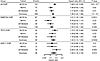 Figure 1
Association of CHIP with AVS in All of Us, BioVU, and UK Biobanks. HRs for all CHIP genes and AVS along with specific CHIP gene associations with AVS across three biobanks for all VAF. Horizontal lines indicate 95% CIs.
CH-associated gene expression signature in circulating myeloid cells from patients with severe calcific AVS. Next, we sought to identify how CH mutations in the blood confer an increased risk of AVS. As myeloid cells have been previously shown to promote progression of AVS (13), we hypothesized that CH driver mutations may further accelerate this progression. We performed single-cell RNA-Seq (scRNA-Seq) on PBMCs obtained from AVS patients with and without mutations in the CH driver gene TET2 (Supplemental Tables 3–5; supplemental material available online with this article; https://doi.org/10.1172/JCI171634DS1). Mean CH driver gene variant allele frequency was 17.9% (range: 2.6%–37.4%). Unsupervised clustering revealed 6 cell types in PBMCs, with no significant changes in cell type distribution with respect to the presence or absence of CH driver mutations (Figure 2, A–C, and Supplemental Figure 1). Among these cell types, monocytes demonstrated an upregulation of an osteogenic module score, which represents a composite expression of known paracrine mediators of calcification (Figure 2D). This module was more highly expressed in monocytes of patients harboring TET2 mutations (Figure 2E), so we focused on a deeper characterization of circulating monocytes.
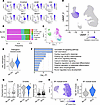 Figure 2
TET2-mutant carriers show increased expression of proinflammatory and procalcific mediators. (A) Uniform manifold approximation and projections (UMAPs) showing gene expression of cell-type–specific markers in scRNA-Seq of PBMCs from patients with and without CH mutations. (B and C) Relative abundance of cell types by mutation status (B) with annotations (C). (D) Expression of the osteogenic module score in PBMCs. (E) Expression of the osteogenic module score in human monocytes by violin plot. (F) Selection from the top GO terms called by upregulated genes in monocytes of patients harboring TET2 mutations. (G) Expression of procalcific genes in patients’ monocytes. (H and I) Expression of the M1 macrophage module score in human monocytes by (H) feature plot and quantified in (I) a violin plot. Statistical significance in scRNA-Seq was determined using the FindMarkers function in Seurat. *P < 0.05.
Monocytes of patients harboring TET2 mutations had 4,320 upregulated genes compared with monocytes derived from patients without mutations. Gene Ontology (GO) terms of upregulated genes comprised inflammatory pathways including for oncostatin M (OSM) and osteoblastic differentiation (Figure 2F). Additionally, scRNA-Seq of monocytes from patients with CH documented increased expression of the procalcific, secreted inflammatory factors (e.g., OSM, S100A9, IL-23), which are known to support the mineralization and calcification of valvular and vascular cells (14, 15) (Figure 2G). Finally, an M1 marker module score (16) revealed that monocytes derived from patients with severe calcified AVS harboring CH driver mutations showed polarization toward M1 macrophages, which are well established to be associated with progression to severe calcified AVS (13, 17, 18) (Figure 2, H and I, Supplemental Table 6). Taken together, these data show that monocytes from peripheral blood of patients with severe calcified AVS harboring TET2 CH driver mutations exhibited a proinflammatory and procalcific gene expression signature.
In vitro validation of the procalcific signature by mimicking CH in monocyte-derived macrophages. Since TET2 CH driver mutations are loss-of-function mutations, we mimicked a CH phenotype by silencing TET2 in THP1 macrophages and human primary monocyte–derived macrophages to address potential CH-mediated macrophage polarization in vitro. Silencing of TET2 (Supplemental Figure 2A) resulted in increased expression of the classical M1 markers CXCL10 and CD38 in both resting (M0) and M1 macrophages (Figure 3, A and B), while expression the antiinflammatory (M2) markers MRC1 and ALOX15 was decreased in M0 and M2 macrophages (Figure 3, C and D) (19, 20). Moreover, concordant with the scRNA-Seq analyses of patient samples, CH gene silencing showed increased expression of the prototypical, procalcific secreted inflammatory factors IL23, S100A9, and OSM in both, M0 and M1 THP1 macrophages (Figure 3E) and upregulation of S100A9 and OSM in both M0 and M1 human primary macrophages (Figure 3F).
 Figure 3
TET2 silencing enhances proinflammatory and procalcific gene expression in 2 macrophage models. (A and B) Expression of proinflammatory M1 markers in TET2-silenced M0 and M1 (A) THP1 macrophages (n = 7–10) and (B) human primary monocyte–derived macrophages (n = 6). (C and D) Expression of antiinflammatory M2 markers in TET2-silenced M0 (C) THP1 macrophages (n = 4) and (D) human primary monocyte–derived macrophages. (E and F) Expression of procalcific genes in TET2-silenced M0 and M1 (E) THP1 macrophages (n = 7–19) and (F) human primary monocyte–derived macrophages (n = 14–19). Statistical significance was assessed by 2-tailed Student’s t test within groups or, when comparing M0 and M1 groups, by 1-way ANOVA with Tukey’s multiple-comparison test. *P < 0.05. Data represent the mean ± SEM.
Upregulation of S100A9, a calcium-binding protein and main component of procalcific extracellular vesicles (EVs) released by macrophages (15), was further validated in CH gene– silenced macrophages (Figure 4, A and B, and Supplemental Figure 2B). Co-occurrence of S100A9 and the extracellular vesicle marker CD9, along with increased calcium levels in the supernatant of CH gene–silenced THP1 macrophages (Figure 4C) suggests that the TET2 CH driver gene influences S100A9-associated calcific EV secretion. Finally, secretion of OSM, an IL-6 family member known to mediate calcification in mesenchymal cells (21), was significantly increased in M0 and M1 CH gene–silenced THP1 and human primary macrophages (Figure 4, D–F).
 Figure 4
TET2 silencing promotes S100A9 accumulation and OSM-mediated calcium deposition. (A) Immunofluorescence analysis S100A9 (red) and TET2 (green) expression in control (top panels, siNC) and TET2-silenced (bottom panels, siTET2) macrophages. Original magnification, ×40. (B) Quantification of S100A9 detected by immunofluorescence in TET2-silenced macrophages (n = 10 areas, 2 independent experiments). (C) Calcium levels in the supernatant of TET2-silenced macrophages (n = 3). (D–F) ELISA of OSM protein secreted by TET2-silenced M0 and M1 THP1 macrophages (D) (n = 5–7), (E) M0 (n = 5), and (F) M1 (n = 5) siNC and siTET2 ± siOSM THP1 macrophages. Statistical significance was assessed by 2-tailed Student’s t test within groups or, when comparing M0 and M1 groups, by 1-way ANOVA with Tukey’s multiple-comparison test. *P < 0.05. Data represent the mean ± SEM.
Thus, transcript and protein data disclosed a markedly stimulated proinflammatory and procalcific potential in TET2 gene–silenced macrophages.
Paracrine effects of CH driver gene–silenced macrophages on the osteoblast-like potential of mesenchymal cells. Macrophages can promote osteoblast conversion of mesenchymal cells but are not known to differentiate directly into osteoblasts, therefore, we hypothesized that CH-mutated macrophages may promote osteoblast-like differentiation by a secreted factor. To test this hypothesis, we cultured mesenchymal cells in the presence of conditioned medium derived from CH gene–silenced macrophages (Figure 5A). Mesenchymal cells exposed to the supernatant of M0 or M1 TET2 gene–silenced macrophages displayed increased expression of the osteogenic markers RUNX2, ALP, and COL1A2 (Figure 5B). In line with this observation, mesenchymal cells deposited increased calcified mineralized matrix after supernatant coculture with M0 and M1 TET2 gene–silenced macrophages (Figure 5, C and D).
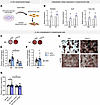 Figure 5
TET2 silencing stimulates mineralization of mesenchymal cells in vitro. (A) Schematic of the experimental design. (B) Expression of osteoblastic markers in mesenchymal cells indirectly cocultured with TET2 silenced or control M0 and M1 macrophages (n = 4–5; n = 4–5 independent experiments). (C and D) Representative mineralization of mesenchymal cells visualized by alizarin red S after indirect coculture with TET2 silenced M0 and M1 macrophages at (C) low and (D) high magnification. Original magnification, ×4. (E–G) Alizarin red S quantification of mineralization in mesenchymal cells after indirect coculture with (E) M0 TET2–silenced versus OSM- and TET2-silenced M0 THP1 macrophages (n = 10–25), (F) TET2- silenced M1 THP1 macrophages (n = 20–25), and (G) TET2-silenced versus OSM- and TET2-silenced M0 human primary macrophages (n = 18–24). Statistical significance was assessed by 2-tailed Student’s t test for within-group comparisons or by ordinary 1-way ANOVA with Tukey’s multiple-comparison test across groups. *P < 0.05. Data represent the mean ± SEM.
OSM is well established to promote osteoblast-like differentiation and ossifications of cells with mesenchymal origin in a paracrine manner. Given that GO term analyses of patient-derived monocytes identified OSM signaling in CH mutation carriers and, specifically, that silencing TET2 showed upregulation of OSM or OSM signaling (Figure 2, E and G, and Figure 3E), we addressed the potential contribution of OSM in CH gene–silenced macrophage-mediated mesenchymal cell calcification. Downregulation of OSM in TET2-silenced THP1 and human primary macrophages abrogated the augmentation of mesenchymal cell calcification induced by the supernatant of TET2-silenced macrophages (Figure 5, E–G). Thus, TET2 CH gene silencing in macrophages also stimulated the osteoblast-like differentiation of mesenchymal cells in a paracrine manner, potentially via OSM (21–23).
Mimicking TET2-mediated CH in mice enhances aortic valve calcification in vivo. Finally, we assessed whether TET2 CH driver mutations causally promote aortic valve calcification in vivo. Thus, we examined aortic valves of low-density lipoprotein receptor–deficient (Ldlr−/−) mice receiving 10% WT or Tet2–/– bone marrow transplants with a subsequent 8-week high-cholesterol diet (Figure 6, A–C, and Supplemental Figure 3, A–E). Valves from mice carrying Tet2−/− cells demonstrated an increase in the total calcified area (P = 0.029) along with increased numbers of calcification deposits, as evidenced by von Kossa staining (P = 0.001) (Figure 7, A and B). Moreover, in line with our cell culture model results, the aortic valve tissue of Tet2−/− recipient mice showed increased OSM and S100A9 levels (Figure 7C and Supplemental Figure 4, A and B), suggesting that the procalcific inflammatory signaling pathways identified in vitro wee also operative in vivo (24, 25). Consistently, transcriptomic analyses of Tet2−/− macrophages (Supplemental Figure 5) also revealed elevated Osm expression. Taken together, these data support the concept that TET2 deficiency drives proinflammatory, procalcific signaling in vivo.
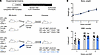 Figure 6
Experimental design and hematologic characterization of TET2 mutant BMT. (A) Workflow diagram for BMT studies along with (B) body weight (C) and WBC counts following BMT as shown by mutation status. Data represent the mean ± SEM. Statistical significance was assessed by 2-tailed Student’s t test between mutation types and only comparing data from the same time point.
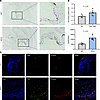 Figure 7
TET2-mutant BMT accelerates aortic valve calcification. (A) Von Kossa stainings of aortic valves in WT and Tet2−/− BMT mice with (B) quantification of positive calcified area (top) and number of calcific depositions (bottom) counted per image. (n = 5–6 animals/treatment; n = 5 images/animal). (C) Aortic valve staining with OSM and S100A9. Data represent the mean ± SEM. Statistical significance was assessed by 2-tailed Student’s t test between mutation types and only comparing data from the same time point. (A) and (C) Original magnification, ×4.


Copyright © 2026 American Society for Clinical Investigation
ISSN: 0021-9738 (print), 1558-8238 (online)