
Go to JCI Insight
  • About
  • Editors
  • Consulting Editors
  • For authors
  • Journal stats
  • Publication ethics
  • Publication alerts by email
  • Advertising
  • Job board
  • Contact
  • Clinical Research and Public Health
  • Current issue
  • Past issues
  • By specialty
    • COVID-19
    • Cardiology
    • Gastroenterology
    • Immunology
    • Metabolism
    • Nephrology
    • Neuroscience
    • Oncology
    • Pulmonology
    • Vascular biology
    • All ...
  • Videos
    • ASCI Milestone Awards
    • Video Abstracts
    • Conversations with Giants in Medicine
  • Reviews
    • View all reviews ...
    • The cGAS-STING pathway: DNA sensing in health and disease (Jun 2026)
    • Neurodegeneration (Mar 2026)
    • Clinical innovation and scientific progress in GLP-1 medicine (Nov 2025)
    • Pancreatic Cancer (Jul 2025)
    • Complement Biology and Therapeutics (May 2025)
    • Evolving insights into MASLD and MASH pathogenesis and treatment (Apr 2025)
    • Microbiome in Health and Disease (Feb 2025)
    • View all review series ...
  • Viewpoint
  • Collections
    • In-Press Preview
    • Clinical Research and Public Health
    • Research Letters
    • Letters to the Editor
    • Editorials
    • Commentaries
    • Editor's notes
    • Reviews
    • Viewpoints
    • 100th anniversary
    • Top read articles

  • Current issue
  • Past issues
  • Specialties
  • Reviews
  • Review series
  • ASCI Milestone Awards
  • Video Abstracts
  • Conversations with Giants in Medicine
  • In-Press Preview
  • Clinical Research and Public Health
  • Research Letters
  • Letters to the Editor
  • Editorials
  • Commentaries
  • Editor's notes
  • Reviews
  • Viewpoints
  • 100th anniversary
  • Top read articles
  • About
  • Editors
  • Consulting Editors
  • For authors
  • Journal stats
  • Publication ethics
  • Publication alerts by email
  • Advertising
  • Job board
  • Contact
Top
  • View PDF
  • Download citation information
  • Send a comment
  • Terms of use
  • Standard abbreviations
  • Need help? Email the journal
  • Top
  • GLP-1–targeted therapies and addiction
  • New opportunities and unprecedented trends
  • Gaps to fill
  • Conclusions: where we started, where we are now
  • Conflict of interest
  • Funding support
  • Acknowledgments
  • Footnotes
  • References
  • Version history
  • Article usage
  • Citations to this article

Advertisement

Viewpoint Open Access | 10.1172/JCI211153

GLP-1–targeted therapies for alcohol and other substance use disorders: a new era on the horizon?

Lorenzo Leggio1,2,3,4 and W. Kyle Simmons5

1Clinical Psychoneuroendocrinology and Neuropsychopharmacology Section, Translational Addiction Medicine Branch, National Institute on Drug Abuse Intramural Research Program and National Institute on Alcohol Abuse and Alcoholism Division of Intramural Clinical and Biological Research, NIH, Baltimore, Maryland, USA.

2Center for Alcohol and Addiction Studies, Department of Behavioral and Social Sciences, Brown University, Providence, Rhode Island, USA.

3Division of Addiction Medicine, Department of Medicine, School of Medicine, Johns Hopkins University, Baltimore, Maryland, USA.

4Department of Neuroscience, Georgetown University Medical Center, Washington, DC, USA.

5Department of Pharmacology and Physiology and OSU Biomedical Imaging Center, Oklahoma State University Center for Health Sciences, Tulsa, Oklahoma, USA.

Address correspondence to: Lorenzo Leggio, National Institute on Drug Abuse/National Institute on Alcohol Abuse and Alcoholism, NIH, Biomedical Research Center, 251 Bayview Blvd., Suite 200, Room 04A515, Baltimore, Maryland, 21224, USA. Email: lorenzo.leggio@nih.gov.

Find articles by Leggio, L. in: PubMed | Google Scholar |

1Clinical Psychoneuroendocrinology and Neuropsychopharmacology Section, Translational Addiction Medicine Branch, National Institute on Drug Abuse Intramural Research Program and National Institute on Alcohol Abuse and Alcoholism Division of Intramural Clinical and Biological Research, NIH, Baltimore, Maryland, USA.

2Center for Alcohol and Addiction Studies, Department of Behavioral and Social Sciences, Brown University, Providence, Rhode Island, USA.

3Division of Addiction Medicine, Department of Medicine, School of Medicine, Johns Hopkins University, Baltimore, Maryland, USA.

4Department of Neuroscience, Georgetown University Medical Center, Washington, DC, USA.

5Department of Pharmacology and Physiology and OSU Biomedical Imaging Center, Oklahoma State University Center for Health Sciences, Tulsa, Oklahoma, USA.

Address correspondence to: Lorenzo Leggio, National Institute on Drug Abuse/National Institute on Alcohol Abuse and Alcoholism, NIH, Biomedical Research Center, 251 Bayview Blvd., Suite 200, Room 04A515, Baltimore, Maryland, 21224, USA. Email: lorenzo.leggio@nih.gov.

Find articles by Simmons, W. in: PubMed | Google Scholar |

Published September 1, 2026 - More info

Published in Volume 136, Issue 17 on September 1, 2026
J Clin Invest. 2026;136(17):e211153. https://doi.org/10.1172/JCI211153.
© 2026 Leggio,,, et al. This work is licensed under the Creative Commons Attribution 4.0 International License. To view a copy of this license, visit http://creativecommons.org/licenses/by/4.0/.
Published September 1, 2026 - Version history
View PDF

Alcohol and other substance use disorders (SUDs) are chronic medical conditions associated with substantial medical, psychological, socioeconomic, and societal burden. The DSM-5 diagnosis of a SUD constitutes the presence of two or more of 11 symptoms over the past year, resulting in substantial clinical heterogeneity, with more than 2,000 symptom combinations possible. SUD includes three levels of severity: mild (2–3 symptoms), moderate (4–5 symptoms), and severe (6+ symptoms). The International Classification of Diseases system retains two diagnoses, harmful use (lower severity) and substance dependence (higher severity). Despite the availability of psychosocial, behavioral, and pharmacological treatments, SUDs remain leading causes of mortality and morbidity. FDA-approved medications exist for alcohol, opioid, and tobacco use disorders, but their numbers are few, and not all patients respond to these medications, underscoring the urgent need for developing additional effective medications.

Interestingly, a growing body of preclinical literature, coupled with human research (e.g., neuroimaging as well as epidemiological and behavioral studies), supports commonalities between substance use disorders (SUDs) and obesity (1–3). The neurocircuitry, pathways, and mechanisms regulating alcohol and other addictive drug seeking and use overlap greatly with those regulating food seeking and consumption (1–3). These shared mechanisms span both brain-specific and periphery-brain pathways, including neuroendocrine gut-brain systems such as glucagon-like peptide-1 (GLP-1) signaling (4), as detailed in this Viewpoint.

GLP-1–targeted therapies and addiction

Growing literature supports the potential role of GLP-1 receptor agonists (GLP-1RAs) such as semaglutide in treatment of SUDs. Across multiple animal models and species, GLP-1RAs reduce drug intake and other translationally relevant drug-related outcomes, including conditioned place preference and reinstatement (5). In parallel, a plethora of electronic health record–based (EHR-based) pharmacoepidemiological studies, some employing target trial emulation approaches, have linked GLP-1RA prescription receipt with improved outcomes in SUDs, including longer remissions and reduced alcohol/drug intake, hospitalization, overdose, and mortality (6). Perhaps most critically, a few recent randomized controlled trials (RCTs) provide support for the role of GLP-1RAs in treating SUDs (for review, see Farokhnia and Leggio, 2026) (5). Specifically, although an initial RCT of once-weekly exenatide in people with alcohol use disorder (AUD) found no difference between the active drug and placebo on the primary alcohol drinking outcomes in the overall sample (7), three more recent RCTs evaluating either weekly subcutaneous semaglutide (8, 9) or daily oral semaglutide (10) provide converging evidence that semaglutide reduces alcohol consumption in people with AUD. The RCT literature on people with tobacco use disorder (TUD) is more mixed. Compared with placebo, once-weekly exenatide led to a significantly higher smoking abstinence rate and lower craving scores (11), whereas once-weekly dulaglutide was not superior to placebo with respect to either smoking abstinence or craving (12). A more recent RCT in people with TUD found that once-weekly semaglutide reduced nicotine craving but had no effect on laboratory smoking resistance or cigarettes smoked per day (13). All 3 RCTs reported beneficial effects on weight (11–13), including reduced postcessation weight gain (11, 12). Finally, a 3- to 5-week pilot RCT conducted in a residential opioid use disorder (OUD) treatment program showed that the once daily liraglutide was safe and led to a reduction in opioid craving in people with OUD (unpublished observations; for further information, see clinicaltrials.gov, NCT04199728) (14).

Collectively, these findings have generated substantial enthusiasm for the potentially transformative role of GLP-1–targeted therapies in addiction medicine. Given the widespread use of GLP-1RAs and prevalence of SUDs, should their effectiveness be confirmed, this class of medications may already represent the most widely used pharmacotherapy for addictive behaviors ever developed. This Viewpoint focuses on emerging opportunities and key unanswered questions (Figure 1).
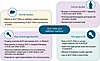
The emerging translational landscape of GLP-1–targeted therapies in AUD andFigure 1

The emerging translational landscape of GLP-1–targeted therapies in AUD and other SUDs. ALD, alcohol-associated liver disease; AUD, alcohol use disorder; GLP-1RA, GLP-1 receptor agonist; MetALD, metabolic dysfunction–associated alcohol-related liver disease; SUD, substance use disorder.
New opportunities and unprecedented trends

The expanded landscape of GLP-1RAs, ranging from cardiometabolic and liver diseases to neurodegenerative and neuropsychiatric disorders, positions this class of medications uniquely within addiction medicine. Beyond improving SUD-related outcomes (e.g., abstinence, reduction in use), GLP-1RAs may simultaneously address the many comorbidities common in people with SUDs, including obesity, sleep disorders, liver diseases, cardiovascular diseases, and neuropsychiatric disorders. As an example, alcohol is a major contributor to liver diseases, including alcohol-associated liver disease, and metabolic dysfunction and alcohol-associated liver disease. Thus, GLP-1–targeted therapies may represent a much-needed natural bridge between addiction medicine and hepatology (15). Importantly, concerns about unforeseen safety issues during real-world implementation of GLP-1RAs to treat SUDs may be somewhat allayed for at least three reasons. First, these medications are already widely prescribed and, given the high prevalence of SUDs in the general population, many people affected by an SUD are likely taking them for type 2 diabetes and/or obesity. Second, their expanding clinical use may facilitate simultaneous treatment of SUDs and related medical and mental health comorbidities. Third, the available RCT data suggest that GLP-1RA safety profiles in populations with SUDs are comparable to those observed in GLP-1RA RCTs for diabetes and obesity (7–14). If effectiveness for SUDs is confirmed, GLP-1RAs represent an exciting and unprecedented example of drug repurposing and implementation science.

Scientific momentum has accelerated rapidly in studying GLP-1–targeted therapies as promising treatments for SUDs and comorbid conditions, with growing investment from NIH (via its intramural research program, extramural grants, contract-based RCTs), academia, pharmaceutical companies, and other private/philanthropic entities. In tandem, patients taking GLP-1RAs for diabetes or obesity are anecdotally reporting reductions in drinking and/or cigarette smoking and other drug use, which has attracted widespread media and public attention. The net result is an unprecedented opportunity for GLP-1RAs to transform addiction medicine, similar to how selective serotonin reuptake inhibitors advanced treatment of depression and other mood disorders a few decades ago. Longstanding challenges in the field include not only the limited number of approved medications, but also their low uptake by the patient population (16), which is driven by numerous, potentially synergistic, factors: stigma, limited awareness among those affected that effective treatments exist, gaps in clinician education and training, and insufficient structural support within healthcare institutions. The leitmotiv accompanying all these factors is the profound stigma of addiction. GLP-1RAs may help to dismantle this stigma. Public discussion of GLP-1–targeted therapies is already increasing awareness of SUDs as treatable chronic medical conditions and highlighting the existence of both GLP-1RA and non–GLP-1–based pharmacologic treatments alike, including those already approved by the FDA. Moreover, because GLP-1RAs are already widely accepted in clinical practice for type 2 diabetes and obesity, both patients and clinicians may feel more comfortable using them than traditional SUD medications. If proven effective, GLP-1–targeted therapies could substantially increase engagement with evidence-based SUD treatment, expand prescribing beyond specialty settings, and contribute broadly to the destigmatization of addiction and SUDs.

Notably, the exact mechanisms by which GLP-1–targeted therapies may help people with SUDs are still not fully understood. The best-supported mechanism is the ability of GLP-1RAs to reduce the hedonic value not only of food but also of addictive substances by directly and indirectly reducing dopamine transmission in mesolimbic areas related to reward processing (4). More broadly, GLP-1RAs seem to act on neural pathways involved in processing reward, motivation, and elements of wanting and liking that are often implicated as contributing factors in SUDs (4). Additionally, GLP-1 acts on brain areas involved in stress response and emotion regulation (17), which are also critically implicated in the etiology, development, and maintenance of SUDs. This suggests that stress-related and affective mechanisms may also play a role in how GLP-1RAs affect SUD-related outcomes (4, 5). Other mechanisms may include those related to satiety, interoception, taste and smell, neuroprotection, and neuroinflammation (5).

Gaps to fill

Many important open questions remain. Chief among them are the optimal dose and duration of GLP-1RA therapy for SUDs. For example, low-dose semaglutide (up to 0.5 mg/week) reduced alcohol drinking in nontreatment seeking people with AUD, especially in those without obesity (BMI <30 Kg/m2) (8), while a 5-month RCT demonstrated efficacy of a higher dose of semaglutide (up to 2.4 mg/week) in people with AUD and obesity (9). People taking GLP-1RAs for weight loss may experience a pronounced rebound in appetite after discontinuing treatment. This well-known observation raises the question of whether a similar phenomenon may occur in people with SUDs who are treated with GLP-1RAs. Although long-term follow-up studies will be necessary to address this question, two important concepts should be considered. First, a return to pretreatment alcohol or drug use is commonly observed in clinical practice among patients who discontinue treatment, regardless of the specific pharmacological and/or behavioral approach used (18, 19). Second, SUDs are chronic medical disorders that require ongoing follow-up and long-term care. For example, if proven effective, GLP-1RAs could be used for a defined period as a bridge to transition patients to behavioral and/or psychosocial interventions for long-term maintenance. Furthermore, just like any other treatment for virtually any medical condition, if proven to be effective for SUDs, GLP-1RAs will not work equally for everyone. Genetic, metabolic, and other biological and/or environmental factors may influence safety, tolerability, and efficacy of GLP-1–targeted therapies. These determinants remain poorly understood, however.

The emergence of oral formulations and GLP-1 dual or poly-agonists, which emulate other incretin molecules, such as glucose-dependent insulinotropic polypeptide and glucagon, also represent important areas to investigate in the context of SUDs (5). These poly-agonists have the potential for providing stronger effects, but their safety and tolerability in people with SUDs require careful investigation. These poly-agonist approaches also raise mechanistic questions that require continued integration of basic neuroscience and clinical trials.

GLP-1 signaling influences not only appetitive and consummatory behaviors, but also reward processing, stress and mood, neuroinflammation, aversion, and interoception (20). Thus, further investigation is necessary to clarify the role of the GLP-1 receptor itself (including postreceptor mechanisms like biased agonism) versus the endogenous GLP-1 peptide. This is especially critical given evidence across mice, rats, and humans that receptor agonism, but not increase of the endogenous peptide via dipeptidyl peptidase-4 (DPP-4) inhibition, is effective in SUD outcomes (21–23). The latter observation may be due, at least in part, to the overall superphysiological levels of GLP-1RAs and consequent level of receptor occupancy achieved with the newer long-acting GLP-1RA molecules, effects that are unlikely to be achieved with DPP-4 inhibition–related increases in endogenous GLP-1 levels. Shedding light on these mechanisms, including a better understanding of peripheral versus central actions and the extent to which the current generation of GLP-1RA molecules penetrate the blood-brain barrier, will be critical to better refine incretin-targeted therapies for SUDs and other medical conditions.

Finally, research on GLP-1–targeted therapies in SUDs and addictive behaviors has primarily focused on AUDs, OUDs, and TUDs with comparatively less attention given to stimulants, cannabis use disorder, and gambling. These areas represent important directions for future investigation, given the current limited pharmacological treatment options for this wide range of addiction-associated conditions. There has also been little focus on polysubstance use, even though polysubstance use disorders are more common than isolated SUDs (24), highlighting another critical gap in the literature. Future research should also investigate the optimal SUD treatment protocol with GLP-1RAs, including whether they are best utilized acutely in early recovery, as a long-term maintenance therapy, or both.

Conclusions: where we started, where we are now

The development and final approval of GLP-1RAs for obesity was the culmination of decades of work spanning basic science to clinical translational efforts. Similarly, interest in GLP-1–targeted therapies for SUDs predates the more recent anecdotical reports. The hypothesis that GLP-1–targeted therapies could represent innovative pharmacological approaches for SUDs emerged more than a decade ago, and RCTs began well before the topic entered the public spotlight. The first preclinical studies on the effects of GLP-1–targeted therapies on alcohol, nicotine, and psychostimulant use came from a series of papers published in 2012–2013 from Aurelio Galli’s lab in the United States and from Elisabet Jerlhag’s lab in Sweden (for reviews from these labs, please see refs. 25, 26). A 2015 study from Lorenzo Leggio’s lab at the US NIH provided some of the earliest clinical evidence showing a genetically based link between GLP-1 receptor function and risk of AUD in humans (27). Since then, GLP-1–related preclinical and clinical research continues to grow exponentially, including EHR-based pharmacoepidemiology studies and RCTs. As is often the case when an early signal arises, enthusiasm outpaced evidence (28), but more recently we are observing encouraging positive results from well-controlled rigorous RCTs, as summarized above. While a firm evidence base of efficacy for use of GLP-1–targeted therapies for SUDs is not fully established, the results from recent RCTs represent a compelling step toward making these treatments available to patients. These studies, together with several ongoing trials of GLP-1–targeted therapies in SUDs across academia, the NIH, industry, and private sectors (see the several ongoing or recently completed RCTs registered in ClinicalTrials.gov) provide an encouraging outlook toward the potential of incretin-targeted therapies to open a new era in addiction science, addiction medicine, and, most importantly, for patients with alcohol and other SUDs.

Conflict of interest

This work was supported in part by the Intramural Research Program of the NIH. LL reports, outside his federal employment, honoraria from the UK Medical Council on Alcohol (Editor-in-Chief for Alcohol and Alcoholism) and book royalties from Routledge (as editor of a textbook). WKS’s lab has received funding from Apollo Therapeutics and Altimmune Inc. as a clinical trial site in studies of GLP-1RA medications and has involvement in sponsored (preclinical) research agreements with Palatin Therapeutics. WKS is also listed as a coinventor on a provisional patent for weight loss (PCT/US2026/017411). WKS also currently serves on an advisory board for Eli Lilly Inc. and has formerly served on an advisory board for Apollo Therapeutics.

Funding support

This work is the result of NIH funding, in whole or in part, and is subject to the NIH Public Access Policy. Through acceptance of this federal funding, the NIH has been given a right to make the work publicly available in PubMed Central.

  • NIH intramural funding ZIA-DA000635 (Clinical Psychoneuroendocrinology and Neuropsychopharmacology Section; PI: LL), jointly supported by the National Institute on Drug Abuse Intramural Research Program and the National Institute on Alcohol Abuse and Alcoholism Division of Intramural Clinical and Biological Research.
  • Hardesty Family Foundation grant to WKS.
  • WKS also holds the Roger Hardesty Endowed Chair in Clinical Neuroscience at OSU.
Acknowledgments

The authors would like to thank Teri Franklin for editorial assistance. The contributions of the author from the NIH were made as part of their official duties as an NIH federal employee, are in compliance with agency policy requirements, and are considered works of the United States government. However, the findings and conclusions presented in this paper are those of the authors and do not necessarily reflect the views of the NIH or the US Department of Health and Human Services.

Address correspondence to: Lorenzo Leggio, National Institute on Drug Abuse/National Institute on Alcohol Abuse and Alcoholism, NIH, Biomedical Research Center, 251 Bayview Blvd., Suite 200, Room 04A515, Baltimore, Maryland, 21224, USA. Email: lorenzo.leggio@nih.gov.

Footnotes

Copyright: © 2026, Leggio et al. This is an open access article published under the terms of the Creative Commons Attribution 4.0 International License.

Reference information: J Clin Invest. 2026;136(17):e211153. https://doi.org/10.1172/JCI211153.

References
  1. Leggio L, et al. Crosstalk between alcohol use disorder and obesity: two sides of the same coin? Mol Psychiatry. 2025;30(12):5938–5952.
    View this article via: CrossRef PubMed Google Scholar
  2. Volkow ND, et al. The addictive dimensionality of obesity. Biol Psychiatry. 2013;73(9):811–818.
    View this article via: CrossRef PubMed Google Scholar
  3. Moore CF, et al. Pathological overeating: emerging evidence for a compulsivity construct. Neuropsychopharmacology. 2017;42(7):1375–1389.
    View this article via: CrossRef PubMed Google Scholar
  4. Guo J, et al. GLP-1 receptor agonists and research to treat overeating and substance use disorders. J Neurosci. 2025;45(46):e1375252025.
    View this article via: CrossRef PubMed Google Scholar
  5. Farokhnia M, Leggio L. Prospects of GLP-1 therapies for addiction and mental health comorbidities-quo vadis?: A review. JAMA Psychiatry. 2026;83(3):306–314.
    View this article via: CrossRef PubMed Google Scholar
  6. Volkow ND, Xu R. GLP-1 receptor agonists in psychiatry: a pharmacoepidemiological scoping review. [published online April 2, 2026]. Biol Psychiatry. https://doi.org/10.1016/j.biopsych.2026.03.1002.
  7. Klausen MK, et al. Exenatide once weekly for alcohol use disorder investigated in a randomized, placebo-controlled clinical trial. JCI Insight. 2022;7(19):e159863.
    View this article via: JCI Insight CrossRef PubMed Google Scholar
  8. Hendershot CS, et al. Once-weekly semaglutide in adults with alcohol use disorder: a randomized clinical trial. JAMA Psychiatry. 2025;82(4):395–405.
    View this article via: CrossRef PubMed Google Scholar
  9. Klausen MK, et al. Once-weekly semaglutide versus placebo in patients with alcohol use disorder and comorbid obesity: a randomised, double-blind, placebo-controlled trial. Lancet. 2026;407(10540):1687–1698.
    View this article via: CrossRef PubMed Google Scholar
  10. Schacht JP, et al. Oral semaglutide for Alcohol Use Disorder: A randomized clinical trial. [published online July 29, 2026]. Am J Psychiatry. https://doi.org/10.1176/appi.ajp.202600.
    View this article via: PubMed Google Scholar
  11. Yammine L, et al. Exenatide adjunct to nicotine patch facilitates smoking cessation and may reduce post-cessation weight gain: a pilot randomized controlled trial. Nicotine Tob Res. 2021;23(10):1682–1690.
    View this article via: CrossRef PubMed Google Scholar
  12. Lengsfeld S, et al. Effect of dulaglutide in promoting abstinence during smoking cessation: a single-center, randomized, double-blind, placebo-controlled, parallel group trial. EClinicalMedicine. 2023;57:101865.
    View this article via: CrossRef PubMed Google Scholar
  13. Hendershot CS, et al. Once-weekly semaglutide in adults with daily cigarette use: a randomized clinical trial. JAMA Netw Open. 2026;9(5):e2614898.
    View this article via: CrossRef PubMed Google Scholar
  14. Freet CS, et al. Ecological momentary assessment and cue-elicited drug craving as primary endpoints: study protocol for a randomized, double-blind, placebo-controlled clinical trial testing the efficacy of a GLP-1 receptor agonist in opioid use disorder. Addict Sci Clin Pract. 2024;19(1):56.
    View this article via: CrossRef PubMed Google Scholar
  15. Singal AK, Leggio L. GLP-1 receptor agonists in alcohol use disorder and alcohol-associated liver disease. Lancet Gastroenterol Hepatol. 2025;10(8):707–709.
    View this article via: CrossRef PubMed Google Scholar
  16. Substance Abuse and Mental Health Services Administration. Key Substance Use and Mental Health Indicators in the United States: Results from the 2024 National Survey on Drug Use and Health. Center for Behavioral Health Statistics and Quality. https://www.samhsa.gov/data/sites/default/files/reports/rpt56287/2024-nsduh-annual-national-report.pdf Accessed July 15, 2026.
  17. Guerrero-Hreins E, et al. The therapeutic potential of GLP-1 analogues for stress-related eating and role of GLP-1 in stress, emotion and mood: a review. Prog Neuropsychopharmacol Biol Psychiatry. 2021;110:110303.
    View this article via: CrossRef PubMed Google Scholar
  18. McLellan AT, et al. Drug dependence, a chronic medical illness: implications for treatment, insurance, and outcomes evaluation. JAMA. 2000;284(13):1689–1695.
    View this article via: CrossRef PubMed Google Scholar
  19. Heilig M, et al. Addiction as a brain disease revised: why it still matters, and the need for consilience. Neuropsychopharmacology. 2021;46(10):1715–1723.
    View this article via: CrossRef PubMed Google Scholar
  20. Gao SX, et al. GLP-1 at the metabolic-cognitive interface: reward, affect, and memory. Compr Physiol. 2026;16(2):e70129.
    View this article via: CrossRef PubMed Google Scholar
  21. Chuong V, et al. The glucagon-like peptide-1 (GLP-1) analogue semaglutide reduces alcohol drinking and modulates central GABA neurotransmission. JCI Insight. 2023;8(12):e170671.
    View this article via: JCI Insight CrossRef PubMed Google Scholar
  22. Farokhnia M, et al. Glucagon-like peptide-1 receptor agonists, but not dipeptidyl peptidase-4 inhibitors, reduce alcohol intake. J Clin Invest. 2025;135(9):e188314.
    View this article via: JCI CrossRef PubMed Google Scholar
  23. Marty VN, et al. Long-acting glucagon-like peptide-1 receptor agonists suppress voluntary alcohol intake in male Wistar rats. Front Neurosci. 2020;14:599646.
    View this article via: CrossRef PubMed Google Scholar
  24. Han B, et al. Polysubstance use disorders among US adults. [published online April 29, 2026]. Mol Psychiatry. https://doi.org/10.1038/s41380-026-03618-z.
    View this article via: PubMed Google Scholar
  25. Reddy IA, et al. Moving beyond energy homeostasis: new roles for glucagon-like peptide-1 in food and drug reward. Neurochem Int. 2014;73:49–55.
    View this article via: CrossRef PubMed Google Scholar
  26. Jerlhag E. GLP-1 receptor agonists: promising therapeutic targets for alcohol use disorder. Endocrinology. 2025;166(4):bqaf028.
    View this article via: CrossRef PubMed Google Scholar
  27. Suchankova P, et al. The glucagon-like peptide-1 receptor as a potential treatment target in alcohol use disorder: evidence from human genetic association studies and a mouse model of alcohol dependence. Transl Psychiatry. 2015;5(6):e583.
    View this article via: CrossRef PubMed Google Scholar
  28. Leggio L, et al. GLP-1 receptor agonists are promising but unproven treatments for alcohol and substance use disorders. Nat Med. 2023;29(12):2993–2995.
    View this article via: CrossRef PubMed Google Scholar
Version history
  • Version 1 (September 1, 2026): Electronic publication

Article tools

  • View PDF
  • Download citation information
  • Send a comment
  • Terms of use
  • Standard abbreviations
  • Need help? Email the journal

Metrics

  • Article usage
  • Citations to this article

Go to

  • Top
  • GLP-1–targeted therapies and addiction
  • New opportunities and unprecedented trends
  • Gaps to fill
  • Conclusions: where we started, where we are now
  • Conflict of interest
  • Funding support
  • Acknowledgments
  • Footnotes
  • References
  • Version history
Advertisement
Advertisement

Copyright © 2026 American Society for Clinical Investigation
ISSN: 0021-9738 (print), 1558-8238 (online)

Sign up for email alerts