
Advertisement
Clinical Research and Public HealthGeneticsNeuroscienceOncology
Open Access |  10.1172/JCI197391
Tumor-derived cell-free DNA detected in cerebrospinal fluid enables minimally invasive profiling of pediatric brain tumors
Liana Nobre,1,2,3 Yoshiko Nakano,4 Ian Burns,5 Robert Siddaway,2,6 Michal Zápotocky,7 Monique Johnson,6 Mansuba Rana,6 Cyril Li,6 Rodney K. Lyn,6 Richard Yuditskiy,6 Michelle Ku,6 Javal Sheth,2,6 Adrian B. Levine,2,6,8 Cody L. Nesvick,9 Anirban Das,2,4 Chantel Cacciotti,10 Shayna Zelcer,10 Seth A. Climans,11 Maria MacDonald,12 Logine Negm,2 Jiil Chung,2 Julie Bennett,2,4,13 Andrew Bondoc,2 Jim Loukides,2 Lucie Stengs,2 Melissa Edwards,2 Eric Bouffet,2,4 Vijay Ramaswamy,2,4 Anthony P.Y. Liu,2,4 Annie Huang,2,4 Ute Bartels,4 Peter B. Dirks,2,9 Uri Tabori,2,3,4 and Cynthia Hawkins2,6,8
1Division of Hematology/Oncology (iHOPE), Stollery Children’s Hospital, Department of Pediatrics, University of Alberta, Edmonton, Alberta, Canada.
2Arthur and Sonia Labatt Brain Tumour Research Centre, The Hospital for Sick Children, Toronto, Ontario, Canada.
3Institute of Medical Science, University of Toronto, Toronto, Ontario, Canada.
4Division of Hematology/Oncology, The Hospital for Sick Children, Toronto, Ontario, Canada.
5Department of Paediatrics, The Hospital for Sick Children, Toronto, Ontario, Canada.
6Department of Pediatric Laboratory Medicine, The Hospital for Sick Children, Toronto, Ontario, Canada.
7Department of Paediatric Haematology and Oncology, Charles University, Second Faculty of Medicine and University Hospital Motol, Prague, Czech Republic.
8Department of Laboratory Medicine and Pathobiology, University of Toronto, Toronto, Ontario, Canada.
9Division of Neurosurgery, The Hospital for Sick Children, Toronto, Ontario, Canada.
10Children’s Hospital London Health Sciences/Western University, London, Ontario, Canada.
11Department of Clinical Neurological Sciences, Schulich School of Medicine and Dentistry, Western University, London, Ontario, Canada.
12Department of Oncology, London Health Sciences Centre, Schulich School of Medicine and Dentistry, University of Western Ontario, London, Ontario, Canada.
13Division of Medical Oncology and Hematology, Princess Margaret Cancer Centre, Toronto, Ontario, Canada.
Address correspondence to: Cynthia Hawkins, MD, PhD, 555 University Ave., Department of Pediatric Lab Med, Rm 3118, Toronto, Ontario Canada M5G 1X8. Phone: 416.813.5974; Email: cynthia.hawkins@sickkids.ca.
Authorship note: LN and YN are co–first authors.
Find articles by Nobre, L. in: PubMed | Google Scholar
1Division of Hematology/Oncology (iHOPE), Stollery Children’s Hospital, Department of Pediatrics, University of Alberta, Edmonton, Alberta, Canada.
2Arthur and Sonia Labatt Brain Tumour Research Centre, The Hospital for Sick Children, Toronto, Ontario, Canada.
3Institute of Medical Science, University of Toronto, Toronto, Ontario, Canada.
4Division of Hematology/Oncology, The Hospital for Sick Children, Toronto, Ontario, Canada.
5Department of Paediatrics, The Hospital for Sick Children, Toronto, Ontario, Canada.
6Department of Pediatric Laboratory Medicine, The Hospital for Sick Children, Toronto, Ontario, Canada.
7Department of Paediatric Haematology and Oncology, Charles University, Second Faculty of Medicine and University Hospital Motol, Prague, Czech Republic.
8Department of Laboratory Medicine and Pathobiology, University of Toronto, Toronto, Ontario, Canada.
9Division of Neurosurgery, The Hospital for Sick Children, Toronto, Ontario, Canada.
10Children’s Hospital London Health Sciences/Western University, London, Ontario, Canada.
11Department of Clinical Neurological Sciences, Schulich School of Medicine and Dentistry, Western University, London, Ontario, Canada.
12Department of Oncology, London Health Sciences Centre, Schulich School of Medicine and Dentistry, University of Western Ontario, London, Ontario, Canada.
13Division of Medical Oncology and Hematology, Princess Margaret Cancer Centre, Toronto, Ontario, Canada.
Address correspondence to: Cynthia Hawkins, MD, PhD, 555 University Ave., Department of Pediatric Lab Med, Rm 3118, Toronto, Ontario Canada M5G 1X8. Phone: 416.813.5974; Email: cynthia.hawkins@sickkids.ca.
Authorship note: LN and YN are co–first authors.
Find articles by Nakano, Y. in: PubMed | Google Scholar
1Division of Hematology/Oncology (iHOPE), Stollery Children’s Hospital, Department of Pediatrics, University of Alberta, Edmonton, Alberta, Canada.
2Arthur and Sonia Labatt Brain Tumour Research Centre, The Hospital for Sick Children, Toronto, Ontario, Canada.
3Institute of Medical Science, University of Toronto, Toronto, Ontario, Canada.
4Division of Hematology/Oncology, The Hospital for Sick Children, Toronto, Ontario, Canada.
5Department of Paediatrics, The Hospital for Sick Children, Toronto, Ontario, Canada.
6Department of Pediatric Laboratory Medicine, The Hospital for Sick Children, Toronto, Ontario, Canada.
7Department of Paediatric Haematology and Oncology, Charles University, Second Faculty of Medicine and University Hospital Motol, Prague, Czech Republic.
8Department of Laboratory Medicine and Pathobiology, University of Toronto, Toronto, Ontario, Canada.
9Division of Neurosurgery, The Hospital for Sick Children, Toronto, Ontario, Canada.
10Children’s Hospital London Health Sciences/Western University, London, Ontario, Canada.
11Department of Clinical Neurological Sciences, Schulich School of Medicine and Dentistry, Western University, London, Ontario, Canada.
12Department of Oncology, London Health Sciences Centre, Schulich School of Medicine and Dentistry, University of Western Ontario, London, Ontario, Canada.
13Division of Medical Oncology and Hematology, Princess Margaret Cancer Centre, Toronto, Ontario, Canada.
Address correspondence to: Cynthia Hawkins, MD, PhD, 555 University Ave., Department of Pediatric Lab Med, Rm 3118, Toronto, Ontario Canada M5G 1X8. Phone: 416.813.5974; Email: cynthia.hawkins@sickkids.ca.
Authorship note: LN and YN are co–first authors.
Find articles by Burns, I. in: PubMed | Google Scholar
1Division of Hematology/Oncology (iHOPE), Stollery Children’s Hospital, Department of Pediatrics, University of Alberta, Edmonton, Alberta, Canada.
2Arthur and Sonia Labatt Brain Tumour Research Centre, The Hospital for Sick Children, Toronto, Ontario, Canada.
3Institute of Medical Science, University of Toronto, Toronto, Ontario, Canada.
4Division of Hematology/Oncology, The Hospital for Sick Children, Toronto, Ontario, Canada.
5Department of Paediatrics, The Hospital for Sick Children, Toronto, Ontario, Canada.
6Department of Pediatric Laboratory Medicine, The Hospital for Sick Children, Toronto, Ontario, Canada.
7Department of Paediatric Haematology and Oncology, Charles University, Second Faculty of Medicine and University Hospital Motol, Prague, Czech Republic.
8Department of Laboratory Medicine and Pathobiology, University of Toronto, Toronto, Ontario, Canada.
9Division of Neurosurgery, The Hospital for Sick Children, Toronto, Ontario, Canada.
10Children’s Hospital London Health Sciences/Western University, London, Ontario, Canada.
11Department of Clinical Neurological Sciences, Schulich School of Medicine and Dentistry, Western University, London, Ontario, Canada.
12Department of Oncology, London Health Sciences Centre, Schulich School of Medicine and Dentistry, University of Western Ontario, London, Ontario, Canada.
13Division of Medical Oncology and Hematology, Princess Margaret Cancer Centre, Toronto, Ontario, Canada.
Address correspondence to: Cynthia Hawkins, MD, PhD, 555 University Ave., Department of Pediatric Lab Med, Rm 3118, Toronto, Ontario Canada M5G 1X8. Phone: 416.813.5974; Email: cynthia.hawkins@sickkids.ca.
Authorship note: LN and YN are co–first authors.
Find articles by
Siddaway, R.
in:
PubMed
|
Google Scholar
|

1Division of Hematology/Oncology (iHOPE), Stollery Children’s Hospital, Department of Pediatrics, University of Alberta, Edmonton, Alberta, Canada.
2Arthur and Sonia Labatt Brain Tumour Research Centre, The Hospital for Sick Children, Toronto, Ontario, Canada.
3Institute of Medical Science, University of Toronto, Toronto, Ontario, Canada.
4Division of Hematology/Oncology, The Hospital for Sick Children, Toronto, Ontario, Canada.
5Department of Paediatrics, The Hospital for Sick Children, Toronto, Ontario, Canada.
6Department of Pediatric Laboratory Medicine, The Hospital for Sick Children, Toronto, Ontario, Canada.
7Department of Paediatric Haematology and Oncology, Charles University, Second Faculty of Medicine and University Hospital Motol, Prague, Czech Republic.
8Department of Laboratory Medicine and Pathobiology, University of Toronto, Toronto, Ontario, Canada.
9Division of Neurosurgery, The Hospital for Sick Children, Toronto, Ontario, Canada.
10Children’s Hospital London Health Sciences/Western University, London, Ontario, Canada.
11Department of Clinical Neurological Sciences, Schulich School of Medicine and Dentistry, Western University, London, Ontario, Canada.
12Department of Oncology, London Health Sciences Centre, Schulich School of Medicine and Dentistry, University of Western Ontario, London, Ontario, Canada.
13Division of Medical Oncology and Hematology, Princess Margaret Cancer Centre, Toronto, Ontario, Canada.
Address correspondence to: Cynthia Hawkins, MD, PhD, 555 University Ave., Department of Pediatric Lab Med, Rm 3118, Toronto, Ontario Canada M5G 1X8. Phone: 416.813.5974; Email: cynthia.hawkins@sickkids.ca.
Authorship note: LN and YN are co–first authors.
Find articles by Zápotocky, M. in: PubMed | Google Scholar
1Division of Hematology/Oncology (iHOPE), Stollery Children’s Hospital, Department of Pediatrics, University of Alberta, Edmonton, Alberta, Canada.
2Arthur and Sonia Labatt Brain Tumour Research Centre, The Hospital for Sick Children, Toronto, Ontario, Canada.
3Institute of Medical Science, University of Toronto, Toronto, Ontario, Canada.
4Division of Hematology/Oncology, The Hospital for Sick Children, Toronto, Ontario, Canada.
5Department of Paediatrics, The Hospital for Sick Children, Toronto, Ontario, Canada.
6Department of Pediatric Laboratory Medicine, The Hospital for Sick Children, Toronto, Ontario, Canada.
7Department of Paediatric Haematology and Oncology, Charles University, Second Faculty of Medicine and University Hospital Motol, Prague, Czech Republic.
8Department of Laboratory Medicine and Pathobiology, University of Toronto, Toronto, Ontario, Canada.
9Division of Neurosurgery, The Hospital for Sick Children, Toronto, Ontario, Canada.
10Children’s Hospital London Health Sciences/Western University, London, Ontario, Canada.
11Department of Clinical Neurological Sciences, Schulich School of Medicine and Dentistry, Western University, London, Ontario, Canada.
12Department of Oncology, London Health Sciences Centre, Schulich School of Medicine and Dentistry, University of Western Ontario, London, Ontario, Canada.
13Division of Medical Oncology and Hematology, Princess Margaret Cancer Centre, Toronto, Ontario, Canada.
Address correspondence to: Cynthia Hawkins, MD, PhD, 555 University Ave., Department of Pediatric Lab Med, Rm 3118, Toronto, Ontario Canada M5G 1X8. Phone: 416.813.5974; Email: cynthia.hawkins@sickkids.ca.
Authorship note: LN and YN are co–first authors.
Find articles by Johnson, M. in: PubMed | Google Scholar
1Division of Hematology/Oncology (iHOPE), Stollery Children’s Hospital, Department of Pediatrics, University of Alberta, Edmonton, Alberta, Canada.
2Arthur and Sonia Labatt Brain Tumour Research Centre, The Hospital for Sick Children, Toronto, Ontario, Canada.
3Institute of Medical Science, University of Toronto, Toronto, Ontario, Canada.
4Division of Hematology/Oncology, The Hospital for Sick Children, Toronto, Ontario, Canada.
5Department of Paediatrics, The Hospital for Sick Children, Toronto, Ontario, Canada.
6Department of Pediatric Laboratory Medicine, The Hospital for Sick Children, Toronto, Ontario, Canada.
7Department of Paediatric Haematology and Oncology, Charles University, Second Faculty of Medicine and University Hospital Motol, Prague, Czech Republic.
8Department of Laboratory Medicine and Pathobiology, University of Toronto, Toronto, Ontario, Canada.
9Division of Neurosurgery, The Hospital for Sick Children, Toronto, Ontario, Canada.
10Children’s Hospital London Health Sciences/Western University, London, Ontario, Canada.
11Department of Clinical Neurological Sciences, Schulich School of Medicine and Dentistry, Western University, London, Ontario, Canada.
12Department of Oncology, London Health Sciences Centre, Schulich School of Medicine and Dentistry, University of Western Ontario, London, Ontario, Canada.
13Division of Medical Oncology and Hematology, Princess Margaret Cancer Centre, Toronto, Ontario, Canada.
Address correspondence to: Cynthia Hawkins, MD, PhD, 555 University Ave., Department of Pediatric Lab Med, Rm 3118, Toronto, Ontario Canada M5G 1X8. Phone: 416.813.5974; Email: cynthia.hawkins@sickkids.ca.
Authorship note: LN and YN are co–first authors.
Find articles by Rana, M. in: PubMed | Google Scholar
1Division of Hematology/Oncology (iHOPE), Stollery Children’s Hospital, Department of Pediatrics, University of Alberta, Edmonton, Alberta, Canada.
2Arthur and Sonia Labatt Brain Tumour Research Centre, The Hospital for Sick Children, Toronto, Ontario, Canada.
3Institute of Medical Science, University of Toronto, Toronto, Ontario, Canada.
4Division of Hematology/Oncology, The Hospital for Sick Children, Toronto, Ontario, Canada.
5Department of Paediatrics, The Hospital for Sick Children, Toronto, Ontario, Canada.
6Department of Pediatric Laboratory Medicine, The Hospital for Sick Children, Toronto, Ontario, Canada.
7Department of Paediatric Haematology and Oncology, Charles University, Second Faculty of Medicine and University Hospital Motol, Prague, Czech Republic.
8Department of Laboratory Medicine and Pathobiology, University of Toronto, Toronto, Ontario, Canada.
9Division of Neurosurgery, The Hospital for Sick Children, Toronto, Ontario, Canada.
10Children’s Hospital London Health Sciences/Western University, London, Ontario, Canada.
11Department of Clinical Neurological Sciences, Schulich School of Medicine and Dentistry, Western University, London, Ontario, Canada.
12Department of Oncology, London Health Sciences Centre, Schulich School of Medicine and Dentistry, University of Western Ontario, London, Ontario, Canada.
13Division of Medical Oncology and Hematology, Princess Margaret Cancer Centre, Toronto, Ontario, Canada.
Address correspondence to: Cynthia Hawkins, MD, PhD, 555 University Ave., Department of Pediatric Lab Med, Rm 3118, Toronto, Ontario Canada M5G 1X8. Phone: 416.813.5974; Email: cynthia.hawkins@sickkids.ca.
Authorship note: LN and YN are co–first authors.
Find articles by Li, C. in: PubMed | Google Scholar
1Division of Hematology/Oncology (iHOPE), Stollery Children’s Hospital, Department of Pediatrics, University of Alberta, Edmonton, Alberta, Canada.
2Arthur and Sonia Labatt Brain Tumour Research Centre, The Hospital for Sick Children, Toronto, Ontario, Canada.
3Institute of Medical Science, University of Toronto, Toronto, Ontario, Canada.
4Division of Hematology/Oncology, The Hospital for Sick Children, Toronto, Ontario, Canada.
5Department of Paediatrics, The Hospital for Sick Children, Toronto, Ontario, Canada.
6Department of Pediatric Laboratory Medicine, The Hospital for Sick Children, Toronto, Ontario, Canada.
7Department of Paediatric Haematology and Oncology, Charles University, Second Faculty of Medicine and University Hospital Motol, Prague, Czech Republic.
8Department of Laboratory Medicine and Pathobiology, University of Toronto, Toronto, Ontario, Canada.
9Division of Neurosurgery, The Hospital for Sick Children, Toronto, Ontario, Canada.
10Children’s Hospital London Health Sciences/Western University, London, Ontario, Canada.
11Department of Clinical Neurological Sciences, Schulich School of Medicine and Dentistry, Western University, London, Ontario, Canada.
12Department of Oncology, London Health Sciences Centre, Schulich School of Medicine and Dentistry, University of Western Ontario, London, Ontario, Canada.
13Division of Medical Oncology and Hematology, Princess Margaret Cancer Centre, Toronto, Ontario, Canada.
Address correspondence to: Cynthia Hawkins, MD, PhD, 555 University Ave., Department of Pediatric Lab Med, Rm 3118, Toronto, Ontario Canada M5G 1X8. Phone: 416.813.5974; Email: cynthia.hawkins@sickkids.ca.
Authorship note: LN and YN are co–first authors.
Find articles by Lyn, R. in: PubMed | Google Scholar
1Division of Hematology/Oncology (iHOPE), Stollery Children’s Hospital, Department of Pediatrics, University of Alberta, Edmonton, Alberta, Canada.
2Arthur and Sonia Labatt Brain Tumour Research Centre, The Hospital for Sick Children, Toronto, Ontario, Canada.
3Institute of Medical Science, University of Toronto, Toronto, Ontario, Canada.
4Division of Hematology/Oncology, The Hospital for Sick Children, Toronto, Ontario, Canada.
5Department of Paediatrics, The Hospital for Sick Children, Toronto, Ontario, Canada.
6Department of Pediatric Laboratory Medicine, The Hospital for Sick Children, Toronto, Ontario, Canada.
7Department of Paediatric Haematology and Oncology, Charles University, Second Faculty of Medicine and University Hospital Motol, Prague, Czech Republic.
8Department of Laboratory Medicine and Pathobiology, University of Toronto, Toronto, Ontario, Canada.
9Division of Neurosurgery, The Hospital for Sick Children, Toronto, Ontario, Canada.
10Children’s Hospital London Health Sciences/Western University, London, Ontario, Canada.
11Department of Clinical Neurological Sciences, Schulich School of Medicine and Dentistry, Western University, London, Ontario, Canada.
12Department of Oncology, London Health Sciences Centre, Schulich School of Medicine and Dentistry, University of Western Ontario, London, Ontario, Canada.
13Division of Medical Oncology and Hematology, Princess Margaret Cancer Centre, Toronto, Ontario, Canada.
Address correspondence to: Cynthia Hawkins, MD, PhD, 555 University Ave., Department of Pediatric Lab Med, Rm 3118, Toronto, Ontario Canada M5G 1X8. Phone: 416.813.5974; Email: cynthia.hawkins@sickkids.ca.
Authorship note: LN and YN are co–first authors.
Find articles by Yuditskiy, R. in: PubMed | Google Scholar
1Division of Hematology/Oncology (iHOPE), Stollery Children’s Hospital, Department of Pediatrics, University of Alberta, Edmonton, Alberta, Canada.
2Arthur and Sonia Labatt Brain Tumour Research Centre, The Hospital for Sick Children, Toronto, Ontario, Canada.
3Institute of Medical Science, University of Toronto, Toronto, Ontario, Canada.
4Division of Hematology/Oncology, The Hospital for Sick Children, Toronto, Ontario, Canada.
5Department of Paediatrics, The Hospital for Sick Children, Toronto, Ontario, Canada.
6Department of Pediatric Laboratory Medicine, The Hospital for Sick Children, Toronto, Ontario, Canada.
7Department of Paediatric Haematology and Oncology, Charles University, Second Faculty of Medicine and University Hospital Motol, Prague, Czech Republic.
8Department of Laboratory Medicine and Pathobiology, University of Toronto, Toronto, Ontario, Canada.
9Division of Neurosurgery, The Hospital for Sick Children, Toronto, Ontario, Canada.
10Children’s Hospital London Health Sciences/Western University, London, Ontario, Canada.
11Department of Clinical Neurological Sciences, Schulich School of Medicine and Dentistry, Western University, London, Ontario, Canada.
12Department of Oncology, London Health Sciences Centre, Schulich School of Medicine and Dentistry, University of Western Ontario, London, Ontario, Canada.
13Division of Medical Oncology and Hematology, Princess Margaret Cancer Centre, Toronto, Ontario, Canada.
Address correspondence to: Cynthia Hawkins, MD, PhD, 555 University Ave., Department of Pediatric Lab Med, Rm 3118, Toronto, Ontario Canada M5G 1X8. Phone: 416.813.5974; Email: cynthia.hawkins@sickkids.ca.
Authorship note: LN and YN are co–first authors.
Find articles by Ku, M. in: PubMed | Google Scholar
1Division of Hematology/Oncology (iHOPE), Stollery Children’s Hospital, Department of Pediatrics, University of Alberta, Edmonton, Alberta, Canada.
2Arthur and Sonia Labatt Brain Tumour Research Centre, The Hospital for Sick Children, Toronto, Ontario, Canada.
3Institute of Medical Science, University of Toronto, Toronto, Ontario, Canada.
4Division of Hematology/Oncology, The Hospital for Sick Children, Toronto, Ontario, Canada.
5Department of Paediatrics, The Hospital for Sick Children, Toronto, Ontario, Canada.
6Department of Pediatric Laboratory Medicine, The Hospital for Sick Children, Toronto, Ontario, Canada.
7Department of Paediatric Haematology and Oncology, Charles University, Second Faculty of Medicine and University Hospital Motol, Prague, Czech Republic.
8Department of Laboratory Medicine and Pathobiology, University of Toronto, Toronto, Ontario, Canada.
9Division of Neurosurgery, The Hospital for Sick Children, Toronto, Ontario, Canada.
10Children’s Hospital London Health Sciences/Western University, London, Ontario, Canada.
11Department of Clinical Neurological Sciences, Schulich School of Medicine and Dentistry, Western University, London, Ontario, Canada.
12Department of Oncology, London Health Sciences Centre, Schulich School of Medicine and Dentistry, University of Western Ontario, London, Ontario, Canada.
13Division of Medical Oncology and Hematology, Princess Margaret Cancer Centre, Toronto, Ontario, Canada.
Address correspondence to: Cynthia Hawkins, MD, PhD, 555 University Ave., Department of Pediatric Lab Med, Rm 3118, Toronto, Ontario Canada M5G 1X8. Phone: 416.813.5974; Email: cynthia.hawkins@sickkids.ca.
Authorship note: LN and YN are co–first authors.
Find articles by Sheth, J. in: PubMed | Google Scholar
1Division of Hematology/Oncology (iHOPE), Stollery Children’s Hospital, Department of Pediatrics, University of Alberta, Edmonton, Alberta, Canada.
2Arthur and Sonia Labatt Brain Tumour Research Centre, The Hospital for Sick Children, Toronto, Ontario, Canada.
3Institute of Medical Science, University of Toronto, Toronto, Ontario, Canada.
4Division of Hematology/Oncology, The Hospital for Sick Children, Toronto, Ontario, Canada.
5Department of Paediatrics, The Hospital for Sick Children, Toronto, Ontario, Canada.
6Department of Pediatric Laboratory Medicine, The Hospital for Sick Children, Toronto, Ontario, Canada.
7Department of Paediatric Haematology and Oncology, Charles University, Second Faculty of Medicine and University Hospital Motol, Prague, Czech Republic.
8Department of Laboratory Medicine and Pathobiology, University of Toronto, Toronto, Ontario, Canada.
9Division of Neurosurgery, The Hospital for Sick Children, Toronto, Ontario, Canada.
10Children’s Hospital London Health Sciences/Western University, London, Ontario, Canada.
11Department of Clinical Neurological Sciences, Schulich School of Medicine and Dentistry, Western University, London, Ontario, Canada.
12Department of Oncology, London Health Sciences Centre, Schulich School of Medicine and Dentistry, University of Western Ontario, London, Ontario, Canada.
13Division of Medical Oncology and Hematology, Princess Margaret Cancer Centre, Toronto, Ontario, Canada.
Address correspondence to: Cynthia Hawkins, MD, PhD, 555 University Ave., Department of Pediatric Lab Med, Rm 3118, Toronto, Ontario Canada M5G 1X8. Phone: 416.813.5974; Email: cynthia.hawkins@sickkids.ca.
Authorship note: LN and YN are co–first authors.
Find articles by Levine, A. in: PubMed | Google Scholar
1Division of Hematology/Oncology (iHOPE), Stollery Children’s Hospital, Department of Pediatrics, University of Alberta, Edmonton, Alberta, Canada.
2Arthur and Sonia Labatt Brain Tumour Research Centre, The Hospital for Sick Children, Toronto, Ontario, Canada.
3Institute of Medical Science, University of Toronto, Toronto, Ontario, Canada.
4Division of Hematology/Oncology, The Hospital for Sick Children, Toronto, Ontario, Canada.
5Department of Paediatrics, The Hospital for Sick Children, Toronto, Ontario, Canada.
6Department of Pediatric Laboratory Medicine, The Hospital for Sick Children, Toronto, Ontario, Canada.
7Department of Paediatric Haematology and Oncology, Charles University, Second Faculty of Medicine and University Hospital Motol, Prague, Czech Republic.
8Department of Laboratory Medicine and Pathobiology, University of Toronto, Toronto, Ontario, Canada.
9Division of Neurosurgery, The Hospital for Sick Children, Toronto, Ontario, Canada.
10Children’s Hospital London Health Sciences/Western University, London, Ontario, Canada.
11Department of Clinical Neurological Sciences, Schulich School of Medicine and Dentistry, Western University, London, Ontario, Canada.
12Department of Oncology, London Health Sciences Centre, Schulich School of Medicine and Dentistry, University of Western Ontario, London, Ontario, Canada.
13Division of Medical Oncology and Hematology, Princess Margaret Cancer Centre, Toronto, Ontario, Canada.
Address correspondence to: Cynthia Hawkins, MD, PhD, 555 University Ave., Department of Pediatric Lab Med, Rm 3118, Toronto, Ontario Canada M5G 1X8. Phone: 416.813.5974; Email: cynthia.hawkins@sickkids.ca.
Authorship note: LN and YN are co–first authors.
Find articles by Nesvick, C. in: PubMed | Google Scholar
1Division of Hematology/Oncology (iHOPE), Stollery Children’s Hospital, Department of Pediatrics, University of Alberta, Edmonton, Alberta, Canada.
2Arthur and Sonia Labatt Brain Tumour Research Centre, The Hospital for Sick Children, Toronto, Ontario, Canada.
3Institute of Medical Science, University of Toronto, Toronto, Ontario, Canada.
4Division of Hematology/Oncology, The Hospital for Sick Children, Toronto, Ontario, Canada.
5Department of Paediatrics, The Hospital for Sick Children, Toronto, Ontario, Canada.
6Department of Pediatric Laboratory Medicine, The Hospital for Sick Children, Toronto, Ontario, Canada.
7Department of Paediatric Haematology and Oncology, Charles University, Second Faculty of Medicine and University Hospital Motol, Prague, Czech Republic.
8Department of Laboratory Medicine and Pathobiology, University of Toronto, Toronto, Ontario, Canada.
9Division of Neurosurgery, The Hospital for Sick Children, Toronto, Ontario, Canada.
10Children’s Hospital London Health Sciences/Western University, London, Ontario, Canada.
11Department of Clinical Neurological Sciences, Schulich School of Medicine and Dentistry, Western University, London, Ontario, Canada.
12Department of Oncology, London Health Sciences Centre, Schulich School of Medicine and Dentistry, University of Western Ontario, London, Ontario, Canada.
13Division of Medical Oncology and Hematology, Princess Margaret Cancer Centre, Toronto, Ontario, Canada.
Address correspondence to: Cynthia Hawkins, MD, PhD, 555 University Ave., Department of Pediatric Lab Med, Rm 3118, Toronto, Ontario Canada M5G 1X8. Phone: 416.813.5974; Email: cynthia.hawkins@sickkids.ca.
Authorship note: LN and YN are co–first authors.
Find articles by Das, A. in: PubMed | Google Scholar
1Division of Hematology/Oncology (iHOPE), Stollery Children’s Hospital, Department of Pediatrics, University of Alberta, Edmonton, Alberta, Canada.
2Arthur and Sonia Labatt Brain Tumour Research Centre, The Hospital for Sick Children, Toronto, Ontario, Canada.
3Institute of Medical Science, University of Toronto, Toronto, Ontario, Canada.
4Division of Hematology/Oncology, The Hospital for Sick Children, Toronto, Ontario, Canada.
5Department of Paediatrics, The Hospital for Sick Children, Toronto, Ontario, Canada.
6Department of Pediatric Laboratory Medicine, The Hospital for Sick Children, Toronto, Ontario, Canada.
7Department of Paediatric Haematology and Oncology, Charles University, Second Faculty of Medicine and University Hospital Motol, Prague, Czech Republic.
8Department of Laboratory Medicine and Pathobiology, University of Toronto, Toronto, Ontario, Canada.
9Division of Neurosurgery, The Hospital for Sick Children, Toronto, Ontario, Canada.
10Children’s Hospital London Health Sciences/Western University, London, Ontario, Canada.
11Department of Clinical Neurological Sciences, Schulich School of Medicine and Dentistry, Western University, London, Ontario, Canada.
12Department of Oncology, London Health Sciences Centre, Schulich School of Medicine and Dentistry, University of Western Ontario, London, Ontario, Canada.
13Division of Medical Oncology and Hematology, Princess Margaret Cancer Centre, Toronto, Ontario, Canada.
Address correspondence to: Cynthia Hawkins, MD, PhD, 555 University Ave., Department of Pediatric Lab Med, Rm 3118, Toronto, Ontario Canada M5G 1X8. Phone: 416.813.5974; Email: cynthia.hawkins@sickkids.ca.
Authorship note: LN and YN are co–first authors.
Find articles by Cacciotti, C. in: PubMed | Google Scholar
1Division of Hematology/Oncology (iHOPE), Stollery Children’s Hospital, Department of Pediatrics, University of Alberta, Edmonton, Alberta, Canada.
2Arthur and Sonia Labatt Brain Tumour Research Centre, The Hospital for Sick Children, Toronto, Ontario, Canada.
3Institute of Medical Science, University of Toronto, Toronto, Ontario, Canada.
4Division of Hematology/Oncology, The Hospital for Sick Children, Toronto, Ontario, Canada.
5Department of Paediatrics, The Hospital for Sick Children, Toronto, Ontario, Canada.
6Department of Pediatric Laboratory Medicine, The Hospital for Sick Children, Toronto, Ontario, Canada.
7Department of Paediatric Haematology and Oncology, Charles University, Second Faculty of Medicine and University Hospital Motol, Prague, Czech Republic.
8Department of Laboratory Medicine and Pathobiology, University of Toronto, Toronto, Ontario, Canada.
9Division of Neurosurgery, The Hospital for Sick Children, Toronto, Ontario, Canada.
10Children’s Hospital London Health Sciences/Western University, London, Ontario, Canada.
11Department of Clinical Neurological Sciences, Schulich School of Medicine and Dentistry, Western University, London, Ontario, Canada.
12Department of Oncology, London Health Sciences Centre, Schulich School of Medicine and Dentistry, University of Western Ontario, London, Ontario, Canada.
13Division of Medical Oncology and Hematology, Princess Margaret Cancer Centre, Toronto, Ontario, Canada.
Address correspondence to: Cynthia Hawkins, MD, PhD, 555 University Ave., Department of Pediatric Lab Med, Rm 3118, Toronto, Ontario Canada M5G 1X8. Phone: 416.813.5974; Email: cynthia.hawkins@sickkids.ca.
Authorship note: LN and YN are co–first authors.
Find articles by Zelcer, S. in: PubMed | Google Scholar
1Division of Hematology/Oncology (iHOPE), Stollery Children’s Hospital, Department of Pediatrics, University of Alberta, Edmonton, Alberta, Canada.
2Arthur and Sonia Labatt Brain Tumour Research Centre, The Hospital for Sick Children, Toronto, Ontario, Canada.
3Institute of Medical Science, University of Toronto, Toronto, Ontario, Canada.
4Division of Hematology/Oncology, The Hospital for Sick Children, Toronto, Ontario, Canada.
5Department of Paediatrics, The Hospital for Sick Children, Toronto, Ontario, Canada.
6Department of Pediatric Laboratory Medicine, The Hospital for Sick Children, Toronto, Ontario, Canada.
7Department of Paediatric Haematology and Oncology, Charles University, Second Faculty of Medicine and University Hospital Motol, Prague, Czech Republic.
8Department of Laboratory Medicine and Pathobiology, University of Toronto, Toronto, Ontario, Canada.
9Division of Neurosurgery, The Hospital for Sick Children, Toronto, Ontario, Canada.
10Children’s Hospital London Health Sciences/Western University, London, Ontario, Canada.
11Department of Clinical Neurological Sciences, Schulich School of Medicine and Dentistry, Western University, London, Ontario, Canada.
12Department of Oncology, London Health Sciences Centre, Schulich School of Medicine and Dentistry, University of Western Ontario, London, Ontario, Canada.
13Division of Medical Oncology and Hematology, Princess Margaret Cancer Centre, Toronto, Ontario, Canada.
Address correspondence to: Cynthia Hawkins, MD, PhD, 555 University Ave., Department of Pediatric Lab Med, Rm 3118, Toronto, Ontario Canada M5G 1X8. Phone: 416.813.5974; Email: cynthia.hawkins@sickkids.ca.
Authorship note: LN and YN are co–first authors.
Find articles by Climans, S. in: PubMed | Google Scholar
1Division of Hematology/Oncology (iHOPE), Stollery Children’s Hospital, Department of Pediatrics, University of Alberta, Edmonton, Alberta, Canada.
2Arthur and Sonia Labatt Brain Tumour Research Centre, The Hospital for Sick Children, Toronto, Ontario, Canada.
3Institute of Medical Science, University of Toronto, Toronto, Ontario, Canada.
4Division of Hematology/Oncology, The Hospital for Sick Children, Toronto, Ontario, Canada.
5Department of Paediatrics, The Hospital for Sick Children, Toronto, Ontario, Canada.
6Department of Pediatric Laboratory Medicine, The Hospital for Sick Children, Toronto, Ontario, Canada.
7Department of Paediatric Haematology and Oncology, Charles University, Second Faculty of Medicine and University Hospital Motol, Prague, Czech Republic.
8Department of Laboratory Medicine and Pathobiology, University of Toronto, Toronto, Ontario, Canada.
9Division of Neurosurgery, The Hospital for Sick Children, Toronto, Ontario, Canada.
10Children’s Hospital London Health Sciences/Western University, London, Ontario, Canada.
11Department of Clinical Neurological Sciences, Schulich School of Medicine and Dentistry, Western University, London, Ontario, Canada.
12Department of Oncology, London Health Sciences Centre, Schulich School of Medicine and Dentistry, University of Western Ontario, London, Ontario, Canada.
13Division of Medical Oncology and Hematology, Princess Margaret Cancer Centre, Toronto, Ontario, Canada.
Address correspondence to: Cynthia Hawkins, MD, PhD, 555 University Ave., Department of Pediatric Lab Med, Rm 3118, Toronto, Ontario Canada M5G 1X8. Phone: 416.813.5974; Email: cynthia.hawkins@sickkids.ca.
Authorship note: LN and YN are co–first authors.
Find articles by MacDonald, M. in: PubMed | Google Scholar
1Division of Hematology/Oncology (iHOPE), Stollery Children’s Hospital, Department of Pediatrics, University of Alberta, Edmonton, Alberta, Canada.
2Arthur and Sonia Labatt Brain Tumour Research Centre, The Hospital for Sick Children, Toronto, Ontario, Canada.
3Institute of Medical Science, University of Toronto, Toronto, Ontario, Canada.
4Division of Hematology/Oncology, The Hospital for Sick Children, Toronto, Ontario, Canada.
5Department of Paediatrics, The Hospital for Sick Children, Toronto, Ontario, Canada.
6Department of Pediatric Laboratory Medicine, The Hospital for Sick Children, Toronto, Ontario, Canada.
7Department of Paediatric Haematology and Oncology, Charles University, Second Faculty of Medicine and University Hospital Motol, Prague, Czech Republic.
8Department of Laboratory Medicine and Pathobiology, University of Toronto, Toronto, Ontario, Canada.
9Division of Neurosurgery, The Hospital for Sick Children, Toronto, Ontario, Canada.
10Children’s Hospital London Health Sciences/Western University, London, Ontario, Canada.
11Department of Clinical Neurological Sciences, Schulich School of Medicine and Dentistry, Western University, London, Ontario, Canada.
12Department of Oncology, London Health Sciences Centre, Schulich School of Medicine and Dentistry, University of Western Ontario, London, Ontario, Canada.
13Division of Medical Oncology and Hematology, Princess Margaret Cancer Centre, Toronto, Ontario, Canada.
Address correspondence to: Cynthia Hawkins, MD, PhD, 555 University Ave., Department of Pediatric Lab Med, Rm 3118, Toronto, Ontario Canada M5G 1X8. Phone: 416.813.5974; Email: cynthia.hawkins@sickkids.ca.
Authorship note: LN and YN are co–first authors.
Find articles by Negm, L. in: PubMed | Google Scholar
1Division of Hematology/Oncology (iHOPE), Stollery Children’s Hospital, Department of Pediatrics, University of Alberta, Edmonton, Alberta, Canada.
2Arthur and Sonia Labatt Brain Tumour Research Centre, The Hospital for Sick Children, Toronto, Ontario, Canada.
3Institute of Medical Science, University of Toronto, Toronto, Ontario, Canada.
4Division of Hematology/Oncology, The Hospital for Sick Children, Toronto, Ontario, Canada.
5Department of Paediatrics, The Hospital for Sick Children, Toronto, Ontario, Canada.
6Department of Pediatric Laboratory Medicine, The Hospital for Sick Children, Toronto, Ontario, Canada.
7Department of Paediatric Haematology and Oncology, Charles University, Second Faculty of Medicine and University Hospital Motol, Prague, Czech Republic.
8Department of Laboratory Medicine and Pathobiology, University of Toronto, Toronto, Ontario, Canada.
9Division of Neurosurgery, The Hospital for Sick Children, Toronto, Ontario, Canada.
10Children’s Hospital London Health Sciences/Western University, London, Ontario, Canada.
11Department of Clinical Neurological Sciences, Schulich School of Medicine and Dentistry, Western University, London, Ontario, Canada.
12Department of Oncology, London Health Sciences Centre, Schulich School of Medicine and Dentistry, University of Western Ontario, London, Ontario, Canada.
13Division of Medical Oncology and Hematology, Princess Margaret Cancer Centre, Toronto, Ontario, Canada.
Address correspondence to: Cynthia Hawkins, MD, PhD, 555 University Ave., Department of Pediatric Lab Med, Rm 3118, Toronto, Ontario Canada M5G 1X8. Phone: 416.813.5974; Email: cynthia.hawkins@sickkids.ca.
Authorship note: LN and YN are co–first authors.
Find articles by Chung, J. in: PubMed | Google Scholar
1Division of Hematology/Oncology (iHOPE), Stollery Children’s Hospital, Department of Pediatrics, University of Alberta, Edmonton, Alberta, Canada.
2Arthur and Sonia Labatt Brain Tumour Research Centre, The Hospital for Sick Children, Toronto, Ontario, Canada.
3Institute of Medical Science, University of Toronto, Toronto, Ontario, Canada.
4Division of Hematology/Oncology, The Hospital for Sick Children, Toronto, Ontario, Canada.
5Department of Paediatrics, The Hospital for Sick Children, Toronto, Ontario, Canada.
6Department of Pediatric Laboratory Medicine, The Hospital for Sick Children, Toronto, Ontario, Canada.
7Department of Paediatric Haematology and Oncology, Charles University, Second Faculty of Medicine and University Hospital Motol, Prague, Czech Republic.
8Department of Laboratory Medicine and Pathobiology, University of Toronto, Toronto, Ontario, Canada.
9Division of Neurosurgery, The Hospital for Sick Children, Toronto, Ontario, Canada.
10Children’s Hospital London Health Sciences/Western University, London, Ontario, Canada.
11Department of Clinical Neurological Sciences, Schulich School of Medicine and Dentistry, Western University, London, Ontario, Canada.
12Department of Oncology, London Health Sciences Centre, Schulich School of Medicine and Dentistry, University of Western Ontario, London, Ontario, Canada.
13Division of Medical Oncology and Hematology, Princess Margaret Cancer Centre, Toronto, Ontario, Canada.
Address correspondence to: Cynthia Hawkins, MD, PhD, 555 University Ave., Department of Pediatric Lab Med, Rm 3118, Toronto, Ontario Canada M5G 1X8. Phone: 416.813.5974; Email: cynthia.hawkins@sickkids.ca.
Authorship note: LN and YN are co–first authors.
Find articles by Bennett, J. in: PubMed | Google Scholar
1Division of Hematology/Oncology (iHOPE), Stollery Children’s Hospital, Department of Pediatrics, University of Alberta, Edmonton, Alberta, Canada.
2Arthur and Sonia Labatt Brain Tumour Research Centre, The Hospital for Sick Children, Toronto, Ontario, Canada.
3Institute of Medical Science, University of Toronto, Toronto, Ontario, Canada.
4Division of Hematology/Oncology, The Hospital for Sick Children, Toronto, Ontario, Canada.
5Department of Paediatrics, The Hospital for Sick Children, Toronto, Ontario, Canada.
6Department of Pediatric Laboratory Medicine, The Hospital for Sick Children, Toronto, Ontario, Canada.
7Department of Paediatric Haematology and Oncology, Charles University, Second Faculty of Medicine and University Hospital Motol, Prague, Czech Republic.
8Department of Laboratory Medicine and Pathobiology, University of Toronto, Toronto, Ontario, Canada.
9Division of Neurosurgery, The Hospital for Sick Children, Toronto, Ontario, Canada.
10Children’s Hospital London Health Sciences/Western University, London, Ontario, Canada.
11Department of Clinical Neurological Sciences, Schulich School of Medicine and Dentistry, Western University, London, Ontario, Canada.
12Department of Oncology, London Health Sciences Centre, Schulich School of Medicine and Dentistry, University of Western Ontario, London, Ontario, Canada.
13Division of Medical Oncology and Hematology, Princess Margaret Cancer Centre, Toronto, Ontario, Canada.
Address correspondence to: Cynthia Hawkins, MD, PhD, 555 University Ave., Department of Pediatric Lab Med, Rm 3118, Toronto, Ontario Canada M5G 1X8. Phone: 416.813.5974; Email: cynthia.hawkins@sickkids.ca.
Authorship note: LN and YN are co–first authors.
Find articles by Bondoc, A. in: PubMed | Google Scholar
1Division of Hematology/Oncology (iHOPE), Stollery Children’s Hospital, Department of Pediatrics, University of Alberta, Edmonton, Alberta, Canada.
2Arthur and Sonia Labatt Brain Tumour Research Centre, The Hospital for Sick Children, Toronto, Ontario, Canada.
3Institute of Medical Science, University of Toronto, Toronto, Ontario, Canada.
4Division of Hematology/Oncology, The Hospital for Sick Children, Toronto, Ontario, Canada.
5Department of Paediatrics, The Hospital for Sick Children, Toronto, Ontario, Canada.
6Department of Pediatric Laboratory Medicine, The Hospital for Sick Children, Toronto, Ontario, Canada.
7Department of Paediatric Haematology and Oncology, Charles University, Second Faculty of Medicine and University Hospital Motol, Prague, Czech Republic.
8Department of Laboratory Medicine and Pathobiology, University of Toronto, Toronto, Ontario, Canada.
9Division of Neurosurgery, The Hospital for Sick Children, Toronto, Ontario, Canada.
10Children’s Hospital London Health Sciences/Western University, London, Ontario, Canada.
11Department of Clinical Neurological Sciences, Schulich School of Medicine and Dentistry, Western University, London, Ontario, Canada.
12Department of Oncology, London Health Sciences Centre, Schulich School of Medicine and Dentistry, University of Western Ontario, London, Ontario, Canada.
13Division of Medical Oncology and Hematology, Princess Margaret Cancer Centre, Toronto, Ontario, Canada.
Address correspondence to: Cynthia Hawkins, MD, PhD, 555 University Ave., Department of Pediatric Lab Med, Rm 3118, Toronto, Ontario Canada M5G 1X8. Phone: 416.813.5974; Email: cynthia.hawkins@sickkids.ca.
Authorship note: LN and YN are co–first authors.
Find articles by Loukides, J. in: PubMed | Google Scholar
1Division of Hematology/Oncology (iHOPE), Stollery Children’s Hospital, Department of Pediatrics, University of Alberta, Edmonton, Alberta, Canada.
2Arthur and Sonia Labatt Brain Tumour Research Centre, The Hospital for Sick Children, Toronto, Ontario, Canada.
3Institute of Medical Science, University of Toronto, Toronto, Ontario, Canada.
4Division of Hematology/Oncology, The Hospital for Sick Children, Toronto, Ontario, Canada.
5Department of Paediatrics, The Hospital for Sick Children, Toronto, Ontario, Canada.
6Department of Pediatric Laboratory Medicine, The Hospital for Sick Children, Toronto, Ontario, Canada.
7Department of Paediatric Haematology and Oncology, Charles University, Second Faculty of Medicine and University Hospital Motol, Prague, Czech Republic.
8Department of Laboratory Medicine and Pathobiology, University of Toronto, Toronto, Ontario, Canada.
9Division of Neurosurgery, The Hospital for Sick Children, Toronto, Ontario, Canada.
10Children’s Hospital London Health Sciences/Western University, London, Ontario, Canada.
11Department of Clinical Neurological Sciences, Schulich School of Medicine and Dentistry, Western University, London, Ontario, Canada.
12Department of Oncology, London Health Sciences Centre, Schulich School of Medicine and Dentistry, University of Western Ontario, London, Ontario, Canada.
13Division of Medical Oncology and Hematology, Princess Margaret Cancer Centre, Toronto, Ontario, Canada.
Address correspondence to: Cynthia Hawkins, MD, PhD, 555 University Ave., Department of Pediatric Lab Med, Rm 3118, Toronto, Ontario Canada M5G 1X8. Phone: 416.813.5974; Email: cynthia.hawkins@sickkids.ca.
Authorship note: LN and YN are co–first authors.
Find articles by Stengs, L. in: PubMed | Google Scholar
1Division of Hematology/Oncology (iHOPE), Stollery Children’s Hospital, Department of Pediatrics, University of Alberta, Edmonton, Alberta, Canada.
2Arthur and Sonia Labatt Brain Tumour Research Centre, The Hospital for Sick Children, Toronto, Ontario, Canada.
3Institute of Medical Science, University of Toronto, Toronto, Ontario, Canada.
4Division of Hematology/Oncology, The Hospital for Sick Children, Toronto, Ontario, Canada.
5Department of Paediatrics, The Hospital for Sick Children, Toronto, Ontario, Canada.
6Department of Pediatric Laboratory Medicine, The Hospital for Sick Children, Toronto, Ontario, Canada.
7Department of Paediatric Haematology and Oncology, Charles University, Second Faculty of Medicine and University Hospital Motol, Prague, Czech Republic.
8Department of Laboratory Medicine and Pathobiology, University of Toronto, Toronto, Ontario, Canada.
9Division of Neurosurgery, The Hospital for Sick Children, Toronto, Ontario, Canada.
10Children’s Hospital London Health Sciences/Western University, London, Ontario, Canada.
11Department of Clinical Neurological Sciences, Schulich School of Medicine and Dentistry, Western University, London, Ontario, Canada.
12Department of Oncology, London Health Sciences Centre, Schulich School of Medicine and Dentistry, University of Western Ontario, London, Ontario, Canada.
13Division of Medical Oncology and Hematology, Princess Margaret Cancer Centre, Toronto, Ontario, Canada.
Address correspondence to: Cynthia Hawkins, MD, PhD, 555 University Ave., Department of Pediatric Lab Med, Rm 3118, Toronto, Ontario Canada M5G 1X8. Phone: 416.813.5974; Email: cynthia.hawkins@sickkids.ca.
Authorship note: LN and YN are co–first authors.
Find articles by Edwards, M. in: PubMed | Google Scholar
1Division of Hematology/Oncology (iHOPE), Stollery Children’s Hospital, Department of Pediatrics, University of Alberta, Edmonton, Alberta, Canada.
2Arthur and Sonia Labatt Brain Tumour Research Centre, The Hospital for Sick Children, Toronto, Ontario, Canada.
3Institute of Medical Science, University of Toronto, Toronto, Ontario, Canada.
4Division of Hematology/Oncology, The Hospital for Sick Children, Toronto, Ontario, Canada.
5Department of Paediatrics, The Hospital for Sick Children, Toronto, Ontario, Canada.
6Department of Pediatric Laboratory Medicine, The Hospital for Sick Children, Toronto, Ontario, Canada.
7Department of Paediatric Haematology and Oncology, Charles University, Second Faculty of Medicine and University Hospital Motol, Prague, Czech Republic.
8Department of Laboratory Medicine and Pathobiology, University of Toronto, Toronto, Ontario, Canada.
9Division of Neurosurgery, The Hospital for Sick Children, Toronto, Ontario, Canada.
10Children’s Hospital London Health Sciences/Western University, London, Ontario, Canada.
11Department of Clinical Neurological Sciences, Schulich School of Medicine and Dentistry, Western University, London, Ontario, Canada.
12Department of Oncology, London Health Sciences Centre, Schulich School of Medicine and Dentistry, University of Western Ontario, London, Ontario, Canada.
13Division of Medical Oncology and Hematology, Princess Margaret Cancer Centre, Toronto, Ontario, Canada.
Address correspondence to: Cynthia Hawkins, MD, PhD, 555 University Ave., Department of Pediatric Lab Med, Rm 3118, Toronto, Ontario Canada M5G 1X8. Phone: 416.813.5974; Email: cynthia.hawkins@sickkids.ca.
Authorship note: LN and YN are co–first authors.
Find articles by Bouffet, E. in: PubMed | Google Scholar
1Division of Hematology/Oncology (iHOPE), Stollery Children’s Hospital, Department of Pediatrics, University of Alberta, Edmonton, Alberta, Canada.
2Arthur and Sonia Labatt Brain Tumour Research Centre, The Hospital for Sick Children, Toronto, Ontario, Canada.
3Institute of Medical Science, University of Toronto, Toronto, Ontario, Canada.
4Division of Hematology/Oncology, The Hospital for Sick Children, Toronto, Ontario, Canada.
5Department of Paediatrics, The Hospital for Sick Children, Toronto, Ontario, Canada.
6Department of Pediatric Laboratory Medicine, The Hospital for Sick Children, Toronto, Ontario, Canada.
7Department of Paediatric Haematology and Oncology, Charles University, Second Faculty of Medicine and University Hospital Motol, Prague, Czech Republic.
8Department of Laboratory Medicine and Pathobiology, University of Toronto, Toronto, Ontario, Canada.
9Division of Neurosurgery, The Hospital for Sick Children, Toronto, Ontario, Canada.
10Children’s Hospital London Health Sciences/Western University, London, Ontario, Canada.
11Department of Clinical Neurological Sciences, Schulich School of Medicine and Dentistry, Western University, London, Ontario, Canada.
12Department of Oncology, London Health Sciences Centre, Schulich School of Medicine and Dentistry, University of Western Ontario, London, Ontario, Canada.
13Division of Medical Oncology and Hematology, Princess Margaret Cancer Centre, Toronto, Ontario, Canada.
Address correspondence to: Cynthia Hawkins, MD, PhD, 555 University Ave., Department of Pediatric Lab Med, Rm 3118, Toronto, Ontario Canada M5G 1X8. Phone: 416.813.5974; Email: cynthia.hawkins@sickkids.ca.
Authorship note: LN and YN are co–first authors.
Find articles by
Ramaswamy, V.
in:
PubMed
|
Google Scholar
|
1Division of Hematology/Oncology (iHOPE), Stollery Children’s Hospital, Department of Pediatrics, University of Alberta, Edmonton, Alberta, Canada.
2Arthur and Sonia Labatt Brain Tumour Research Centre, The Hospital for Sick Children, Toronto, Ontario, Canada.
3Institute of Medical Science, University of Toronto, Toronto, Ontario, Canada.
4Division of Hematology/Oncology, The Hospital for Sick Children, Toronto, Ontario, Canada.
5Department of Paediatrics, The Hospital for Sick Children, Toronto, Ontario, Canada.
6Department of Pediatric Laboratory Medicine, The Hospital for Sick Children, Toronto, Ontario, Canada.
7Department of Paediatric Haematology and Oncology, Charles University, Second Faculty of Medicine and University Hospital Motol, Prague, Czech Republic.
8Department of Laboratory Medicine and Pathobiology, University of Toronto, Toronto, Ontario, Canada.
9Division of Neurosurgery, The Hospital for Sick Children, Toronto, Ontario, Canada.
10Children’s Hospital London Health Sciences/Western University, London, Ontario, Canada.
11Department of Clinical Neurological Sciences, Schulich School of Medicine and Dentistry, Western University, London, Ontario, Canada.
12Department of Oncology, London Health Sciences Centre, Schulich School of Medicine and Dentistry, University of Western Ontario, London, Ontario, Canada.
13Division of Medical Oncology and Hematology, Princess Margaret Cancer Centre, Toronto, Ontario, Canada.
Address correspondence to: Cynthia Hawkins, MD, PhD, 555 University Ave., Department of Pediatric Lab Med, Rm 3118, Toronto, Ontario Canada M5G 1X8. Phone: 416.813.5974; Email: cynthia.hawkins@sickkids.ca.
Authorship note: LN and YN are co–first authors.
Find articles by Liu, A. in: PubMed | Google Scholar
1Division of Hematology/Oncology (iHOPE), Stollery Children’s Hospital, Department of Pediatrics, University of Alberta, Edmonton, Alberta, Canada.
2Arthur and Sonia Labatt Brain Tumour Research Centre, The Hospital for Sick Children, Toronto, Ontario, Canada.
3Institute of Medical Science, University of Toronto, Toronto, Ontario, Canada.
4Division of Hematology/Oncology, The Hospital for Sick Children, Toronto, Ontario, Canada.
5Department of Paediatrics, The Hospital for Sick Children, Toronto, Ontario, Canada.
6Department of Pediatric Laboratory Medicine, The Hospital for Sick Children, Toronto, Ontario, Canada.
7Department of Paediatric Haematology and Oncology, Charles University, Second Faculty of Medicine and University Hospital Motol, Prague, Czech Republic.
8Department of Laboratory Medicine and Pathobiology, University of Toronto, Toronto, Ontario, Canada.
9Division of Neurosurgery, The Hospital for Sick Children, Toronto, Ontario, Canada.
10Children’s Hospital London Health Sciences/Western University, London, Ontario, Canada.
11Department of Clinical Neurological Sciences, Schulich School of Medicine and Dentistry, Western University, London, Ontario, Canada.
12Department of Oncology, London Health Sciences Centre, Schulich School of Medicine and Dentistry, University of Western Ontario, London, Ontario, Canada.
13Division of Medical Oncology and Hematology, Princess Margaret Cancer Centre, Toronto, Ontario, Canada.
Address correspondence to: Cynthia Hawkins, MD, PhD, 555 University Ave., Department of Pediatric Lab Med, Rm 3118, Toronto, Ontario Canada M5G 1X8. Phone: 416.813.5974; Email: cynthia.hawkins@sickkids.ca.
Authorship note: LN and YN are co–first authors.
Find articles by Huang, A. in: PubMed | Google Scholar
1Division of Hematology/Oncology (iHOPE), Stollery Children’s Hospital, Department of Pediatrics, University of Alberta, Edmonton, Alberta, Canada.
2Arthur and Sonia Labatt Brain Tumour Research Centre, The Hospital for Sick Children, Toronto, Ontario, Canada.
3Institute of Medical Science, University of Toronto, Toronto, Ontario, Canada.
4Division of Hematology/Oncology, The Hospital for Sick Children, Toronto, Ontario, Canada.
5Department of Paediatrics, The Hospital for Sick Children, Toronto, Ontario, Canada.
6Department of Pediatric Laboratory Medicine, The Hospital for Sick Children, Toronto, Ontario, Canada.
7Department of Paediatric Haematology and Oncology, Charles University, Second Faculty of Medicine and University Hospital Motol, Prague, Czech Republic.
8Department of Laboratory Medicine and Pathobiology, University of Toronto, Toronto, Ontario, Canada.
9Division of Neurosurgery, The Hospital for Sick Children, Toronto, Ontario, Canada.
10Children’s Hospital London Health Sciences/Western University, London, Ontario, Canada.
11Department of Clinical Neurological Sciences, Schulich School of Medicine and Dentistry, Western University, London, Ontario, Canada.
12Department of Oncology, London Health Sciences Centre, Schulich School of Medicine and Dentistry, University of Western Ontario, London, Ontario, Canada.
13Division of Medical Oncology and Hematology, Princess Margaret Cancer Centre, Toronto, Ontario, Canada.
Address correspondence to: Cynthia Hawkins, MD, PhD, 555 University Ave., Department of Pediatric Lab Med, Rm 3118, Toronto, Ontario Canada M5G 1X8. Phone: 416.813.5974; Email: cynthia.hawkins@sickkids.ca.
Authorship note: LN and YN are co–first authors.
Find articles by Bartels, U. in: PubMed | Google Scholar
1Division of Hematology/Oncology (iHOPE), Stollery Children’s Hospital, Department of Pediatrics, University of Alberta, Edmonton, Alberta, Canada.
2Arthur and Sonia Labatt Brain Tumour Research Centre, The Hospital for Sick Children, Toronto, Ontario, Canada.
3Institute of Medical Science, University of Toronto, Toronto, Ontario, Canada.
4Division of Hematology/Oncology, The Hospital for Sick Children, Toronto, Ontario, Canada.
5Department of Paediatrics, The Hospital for Sick Children, Toronto, Ontario, Canada.
6Department of Pediatric Laboratory Medicine, The Hospital for Sick Children, Toronto, Ontario, Canada.
7Department of Paediatric Haematology and Oncology, Charles University, Second Faculty of Medicine and University Hospital Motol, Prague, Czech Republic.
8Department of Laboratory Medicine and Pathobiology, University of Toronto, Toronto, Ontario, Canada.
9Division of Neurosurgery, The Hospital for Sick Children, Toronto, Ontario, Canada.
10Children’s Hospital London Health Sciences/Western University, London, Ontario, Canada.
11Department of Clinical Neurological Sciences, Schulich School of Medicine and Dentistry, Western University, London, Ontario, Canada.
12Department of Oncology, London Health Sciences Centre, Schulich School of Medicine and Dentistry, University of Western Ontario, London, Ontario, Canada.
13Division of Medical Oncology and Hematology, Princess Margaret Cancer Centre, Toronto, Ontario, Canada.
Address correspondence to: Cynthia Hawkins, MD, PhD, 555 University Ave., Department of Pediatric Lab Med, Rm 3118, Toronto, Ontario Canada M5G 1X8. Phone: 416.813.5974; Email: cynthia.hawkins@sickkids.ca.
Authorship note: LN and YN are co–first authors.
Find articles by Dirks, P. in: PubMed | Google Scholar
1Division of Hematology/Oncology (iHOPE), Stollery Children’s Hospital, Department of Pediatrics, University of Alberta, Edmonton, Alberta, Canada.
2Arthur and Sonia Labatt Brain Tumour Research Centre, The Hospital for Sick Children, Toronto, Ontario, Canada.
3Institute of Medical Science, University of Toronto, Toronto, Ontario, Canada.
4Division of Hematology/Oncology, The Hospital for Sick Children, Toronto, Ontario, Canada.
5Department of Paediatrics, The Hospital for Sick Children, Toronto, Ontario, Canada.
6Department of Pediatric Laboratory Medicine, The Hospital for Sick Children, Toronto, Ontario, Canada.
7Department of Paediatric Haematology and Oncology, Charles University, Second Faculty of Medicine and University Hospital Motol, Prague, Czech Republic.
8Department of Laboratory Medicine and Pathobiology, University of Toronto, Toronto, Ontario, Canada.
9Division of Neurosurgery, The Hospital for Sick Children, Toronto, Ontario, Canada.
10Children’s Hospital London Health Sciences/Western University, London, Ontario, Canada.
11Department of Clinical Neurological Sciences, Schulich School of Medicine and Dentistry, Western University, London, Ontario, Canada.
12Department of Oncology, London Health Sciences Centre, Schulich School of Medicine and Dentistry, University of Western Ontario, London, Ontario, Canada.
13Division of Medical Oncology and Hematology, Princess Margaret Cancer Centre, Toronto, Ontario, Canada.
Address correspondence to: Cynthia Hawkins, MD, PhD, 555 University Ave., Department of Pediatric Lab Med, Rm 3118, Toronto, Ontario Canada M5G 1X8. Phone: 416.813.5974; Email: cynthia.hawkins@sickkids.ca.
Authorship note: LN and YN are co–first authors.
Find articles by Tabori, U. in: PubMed | Google Scholar
1Division of Hematology/Oncology (iHOPE), Stollery Children’s Hospital, Department of Pediatrics, University of Alberta, Edmonton, Alberta, Canada.
2Arthur and Sonia Labatt Brain Tumour Research Centre, The Hospital for Sick Children, Toronto, Ontario, Canada.
3Institute of Medical Science, University of Toronto, Toronto, Ontario, Canada.
4Division of Hematology/Oncology, The Hospital for Sick Children, Toronto, Ontario, Canada.
5Department of Paediatrics, The Hospital for Sick Children, Toronto, Ontario, Canada.
6Department of Pediatric Laboratory Medicine, The Hospital for Sick Children, Toronto, Ontario, Canada.
7Department of Paediatric Haematology and Oncology, Charles University, Second Faculty of Medicine and University Hospital Motol, Prague, Czech Republic.
8Department of Laboratory Medicine and Pathobiology, University of Toronto, Toronto, Ontario, Canada.
9Division of Neurosurgery, The Hospital for Sick Children, Toronto, Ontario, Canada.
10Children’s Hospital London Health Sciences/Western University, London, Ontario, Canada.
11Department of Clinical Neurological Sciences, Schulich School of Medicine and Dentistry, Western University, London, Ontario, Canada.
12Department of Oncology, London Health Sciences Centre, Schulich School of Medicine and Dentistry, University of Western Ontario, London, Ontario, Canada.
13Division of Medical Oncology and Hematology, Princess Margaret Cancer Centre, Toronto, Ontario, Canada.
Address correspondence to: Cynthia Hawkins, MD, PhD, 555 University Ave., Department of Pediatric Lab Med, Rm 3118, Toronto, Ontario Canada M5G 1X8. Phone: 416.813.5974; Email: cynthia.hawkins@sickkids.ca.
Authorship note: LN and YN are co–first authors.
Find articles by Hawkins, C. in: PubMed | Google Scholar
Published June 15, 2026 - More info
J Clin Invest. 2026;136(12):e197391. https://doi.org/10.1172/JCI197391.
© 2026 Nobre et al. This work is licensed under the Creative Commons Attribution 4.0 International License. To view a copy of this license, visit http://creativecommons.org/licenses/by/4.0/.
Received: July 7, 2025; Accepted: April 15, 2026

-
Results
Patient Cohort and sample characteristics
Between April 2017 and July 2024, we collected 148 CSF samples from 120 patients with pediatric-type brain tumors, along with 32 additional CSF samples that were used as negative controls. Samples were tested with one or more of the following assays: ddPCR for BRAFV600E and/or H3.3K27M, panel NGS, and/or LP-WGS (Supplemental Figure 1C; supplemental material available online with this article; https://doi.org/10.1172/JCI197391DS1). Assays were chosen based on availability at the time of sample collection, as these methods were developed sequentially, and on clinical or sample criteria. For example, patients with tumors characterized by frequent copy number alterations were tested with LP-WGS, whereas samples with limited amount of ctDNA and suspected BRAFV600E or H3K27M mutations were profiled by ddPCR. Overall, 54% (80 of 148) of samples were positive for ctDNA by at least one assay, including one case with a H3K27M mutation detected below the threshold of quantification (equivocal). Six samples were tested exclusively by ddPCR, while 142 samples were tested by NGS; of these, 9 were tested with both ddPCR and NGS (Figure 1C). Regarding clinical context, 67 samples were collected at initial presentation, 25 during treatment, 9 after therapy, and 36 at relapse or progression; the remainder were collected at autopsy or at unknown clinical status. Underlying tumor diagnoses included high grade glioma (n = 36), low-grade glioma (n = 48), medulloblastoma (n = 29) and others (n = 15), consisting of pineoblastoma (n = 6), ependymoma (n = 5), teratoma (n = 1), CNS neuroblastoma (n = 1), choroid plexus carcinoma (n = 1), and glioma NOS (n = 1). Additionally, 20 samples were collected from patients with undetermined intracranial lesions, suspicious brain neoplasms, or clinical/radiological diagnoses of CNS tumors without pathologic confirmation, including 5 samples from young adults (32–45 years old) with presumed pediatric type tumors. Thirty-seven plasma samples (including 13 negative controls) were also collected and tested with ddPCR for comparison with CSF samples (Supplemental Figure 1, A and B).
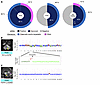 Figure 1
Liquid biopsy at diagnosis of pediatric gliomas. (A) The pie charts show the proportion of samples with detectable circulating tumor DNA (ctDNA) in high-grade gliomas (HGG), low-grade gliomas (LGG), and nonbiopsied lesions. The accompanying donut chart depicts diagnostic and/or targetable molecular alterations identified in these samples. (B) H3.3 p.K27M and copy number alterations including PDGFRA amplification detected in a patient with nonbiopsied midline lesion, leading to the diagnosis of DMG, H3 K27-altered. (C) FGFR1 p.N546D and gain of 12q were detected in a patient with nonbiopsied tumor, which led to the diagnosis of LGG and treatment with targeted therapy.
For samples from pediatric patients that underwent sequencing analysis, the median age at the time of sample collection was 9 years (range 0–19 years), and the median volume of CSF collected for cfDNA extraction was 5 ml (range 1–10 ml). Median concentrations of total DNA and cfDNA were 5.25 ng/ml (range 1.3–4,545 ng/ml) and 0.15 ng/ml (range 0.01–124.8 ng/ml), respectively. Both, total DNA and cfDNA concentrations were higher in CSF collected from the ventricles (via intraoperative sampling or external ventricular drains) compared with lumbar puncture (LP) samples (median total DNA 16.25 versus 4.15 ng/ml, P < 0.0001; cfDNA 0.62 versus 0.12 ng/ml, P = 0.0304) (Supplemental Figure 2A). In addition, we analyzed 8 control ventricular CSF samples from patients with nonneoplastic disorders (e.g., congenital hydrocephalus). Median total DNA and cfDNA concentrations in these controls were 3.2 ng/ml (range: 1.8–315.5 ng/ml) and 0.12 ng/ml (range: 0.02–3.6 ng/ml), respectively. While DNA concentrations were significantly higher in patients with CNS tumors compared with controls (P = 0.0192), cfDNA concentrations in ventricular samples did not differ significantly between the 2 groups (P = 0.238). These findings highlight the variability in cfDNA levels in CSF and underscore the challenges of interpreting cfDNA quantification in this context (Supplemental Figure 2B).
ddPCR versus NGS for CSF liquid biopsy
A major question arising for clinical implementation of liquid biopsy in neuro-oncology is determining the most appropriate assay. Several methods are available for analyzing ctDNA; however, in the context of CSF-derived samples, the 2 technologies currently used in clinical settings are ddPCR and NGS, the latter encompassing both deep targeted panel sequencing and/or LP-WGS. We therefore evaluated the relative performance characteristic of these 2 assays in a large cohort of pediatric brain tumors. We first assessed the utility of ddPCR for detecting tumor-specific mutations in cfDNA from CSF or plasma in a subset of patients. To evaluate this approach, we developed ddPCR assays targeting BRAFV600E and H3.3K27M alterations. These targets were chosen, as these are hotspot mutations commonly found in CNS midline gliomas that are difficult to access surgically and may be amenable to targeted therapy (e.g., BRAF V600E) and thus served as proof of principle for the utility of CSF-based liquid biopsy to make diagnoses and enable targeted therapeutics without the need of a surgical biopsy. We tested 17 plasma and 5 CSF samples from patients with BRAFV600E-mutant gliomas (2 HGG; 20 LGG) and 7 plasma and 4 CSF samples from H3.3K27M-mutant diffuse midline gliomas (DMGs). The mutation detection rate from CSF was 80% (4 of 5) for BRAFV600E and 100% (4 of 4) for H3.3K27M, while rate of detection in plasma samples was significantly lower at 0% (0 of 17) for BRAFV600E and 14% (1 of 7) for H3.3K27M. No false positives were identified in negative controls (37 CSF and 11 plasma samples for BRAFV600E; 20 CSF and 6 plasma samples for H3.3K27M), all of which yielded negative results. Consistent with findings from other studies, the detection rate of CNS tumor ctDNA was significantly higher in CSF than in plasma, leading us to focus on CSF-based analyses for NGS testing (14, 27). Although our small cohort demonstrated excellent detection rates using ddPCR, its application is limited by its design as a single mutation test and is therefore not applicable to a range of CNS cancers, particularly in clinical settings where validation of multiple individual assays is impractical.
We next evaluated an NGS-based liquid biopsy approach using a combination of targeted panel sequencing and/or LP-WGS to detect a broad spectrum of genomic alterations, including single nucleotide variants (SNVs), fusions, and copy number alterations (CNAs). Results from cfDNA sequencing were compared with known somatic alterations when tumor profiling was available. A total of 142 samples were sequenced, including 112 samples analyzed with our targeted panel and 92 samples with LP-WGS. Overall, the median sequencing depths of the targeted panel and LP-WGS were 190.2 (0.2–190) and 0.18 (0.01–5.73), respectively. ctDNA was detected in 53% (75 of 142) of samples across the entire cohort and in 58% of samples (69 of 119) with radiologic evidence of disease. Among the latter group, 68% (34 of 50) of intraventricular samples tested positive, compared with 50% (32 of 65) of LP samples. The LP group included 2 equivocal cases with H3.3 K27M mutations where VAF was below the assay’s limit of detection.
The detection rate of ctDNA varied by tumor grade. Among imaging-positive cases, high-grade tumors (WHO grade 3 and 4) were more likely to yield positive samples when compared to low-grade tumors (WHO 1 and 2) with detection rates of 74% versus 48%, respectively.
In HGG, ctDNA was positive in 76% (26 of 34) of samples. Of 48 mutations identified, 7 mutations in 4 samples were uniquely detected by liquid biopsy. One sample yielded mutations compatible with resected tumor profiles but fell below the confidence threshold for positive calling (i.e., equivocal); Targetable mutations were identified in 15 samples, these included alterations such as BRAFV600E and oncogenic mutations in PDGFRA, IDH, FGFR, and PIK3C. For LGG, we analyzed 43 samples from 39 patients, with an overall positivity rate of 51% (22 of 43). All alterations detected in low-grade gliomas were targetable, including BRAF and FGFR mutations or fusions (Supplemental Table 1).
Overall, similar to previous reports, our experience using liquid biopsy in the pediatric brain tumor population shows high sensitivity for patients with high-grade tumors. For low-grade gliomas, sensitivity is improved with ventricular sampling over LP. ddPCR shows superior sensitivity to NGS-based techniques and is successful with lower cfDNA inputs; however, it is limited by the narrow range of alterations testable by this method.
Clinical utility of liquid biopsies
Liquid biopsy has a broad range of potential clinical applications, including noninvasive diagnosis (replacing surgical biopsy), monitoring for response to therapy, and early relapse detection, among others. We used our prospectively collected cohort to test the potential utility in these clinical scenarios for the pediatric CNS tumor population.
Liquid biopsy for detection of diagnostic alterations. A total of 67 samples were collected at the time of initial diagnosis, of which 53 had paired tissue available for comparison of molecular alterations. ctDNA in keeping with the primary diagnosis was detected in 60% (n = 32 of 53, 1 equivocal). The detection rate for HGG and LGG were 100% and 48%, respectively (Figure 1A). In 45% (17 of 38) of HGG and LGG cases, an actionable alteration was identified (Supplemental Table 1). Among medulloblastoma samples collected prior to therapy, 6 of 8 were obtained via LP and showed positive ctDNA. In 4 samples for which matched cytology was available, it was negative, suggesting higher sensitivity of liquid biopsy in this group of tumors.
In addition, for 14 patients in our cohort, CSF was sampled with the aim of establishing a diagnosis without requiring a surgical procedure. CSF was also collected from 6 additional patients with presumed CNS malignancies during the course of their disease. ctDNA was detected in 50% (10 of 20) of these cases (Figure 1A). Positive ctDNA enabled diagnosis of glioma without biopsy and pointed to potential therapeutic targets. For example, in one case (NA11-D), CNAs, including PDGFRA amplification as well as H3.3 K27M SNV, were detected, confirming the clinical-radiologic diagnosis of diffuse midline glioma (DMG) H3 K27-altered and providing a potential therapeutic target (Figure 1B). In another case (ND8-D), FGFR1 N546D and 12q gain were identified, consistent with the diagnosis of a low-grade glioma and leading to consideration of targeted therapy (Figure 1C). In a third case, we detected BRAFV600E using ddPCR (chosen because of low cfDNA quantity) on an LP sample from a 2-year-old male child with presumed midline low-grade glioma (LGG). The detection of BRAFV600E in CSF guided the initiation of targeted therapy with a BRAF inhibitor, resulting in major clinical and radiological improvement. At the last follow-up, 2 years after treatment, the patient remained clinically stable (Supplemental Figure 3B). Conversely, negative ctDNA results were equally informative. In 4 patients with negative ctDNA, the intracranial lesions were stable with median follow-up period from first abnormal imaging of 6.5 (2–7) years. Thus, absence of ctDNA may suggest clinically nonneoplastic or low-grade etiology.
Liquid biopsy for evaluation of recurrent or progressive disease. In 39 patients, liquid biopsy was done at relapse or progression to distinguish recurrent primary tumor versus secondary neoplasm, to characterize possible tumor evolution, and/or to define radiologically ambiguous lesions. In patients with medulloblastoma, liquid biopsy helped distinguish recurrence from secondary gliomas. Among 5 cases, diagnostic CNAs consistent with recurrent medulloblastoma were detected in 60% (3 of 5). For example, in a suspected recurrent medulloblastoma case (MB13-R), liquid biopsy confirmed recurrence by detecting CNAs consistent with the primary tumor (Figure 2B). In 2 additional cases (MB11-R, MB12-R), loss of 17p and gain of 17q identified by liquid biopsy suggested isochromosome 17q (i(17q)), confirming recurrence and guiding therapy (Figure 2C).
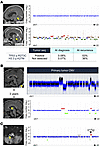 Figure 2
Liquid biopsy at recurrence and progression. (A) Diffuse midline glioma. CSF collected at progression reveals H3.3 p.K27M and TP53 p.R273C at higher variant allele frequencies along with CNAs not present at diagnosis. (B) Copy number alterations in CSF at recurrence were compatible with CNA detected in the primary tumor, leading to the diagnosis of recurrent MB. (C) Detection of CNA including isochromosome 17q leading to diagnosis of a recurrent MB.
In one DMG case, liquid biopsy at progression identified H3K27M as well as a TP53 mutations not detected at diagnosis, refining the diagnosis and confirming disease progression (Figure 2A). In another DMG case, liquid biopsy revealed subclonal evolution with PIK3CA mutations (Q546R and E545K) that were not present in the primary tumor identified in mutually exclusive reads (Supplemental Figure 3C).
These findings suggest that liquid biopsy may complement traditional diagnostic methods and provide actionable insights in ambiguous or challenging cases.
Liquid biopsy for disease monitoring. To evaluate the ability of our liquid biopsy assay to complement conventional methods such as imaging and CSF cytology for response assessment and disease monitoring, we serially analyzed a total of 43 CSF samples from 16 patients with various tumor types, including 8 medulloblastomas, 7 gliomas, and 1 pineoblastoma. (Figure 3A). Serial samples were collected through lumbar puncture or ommaya reservoir when possible.
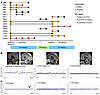 Figure 3
Liquid biopsy during and/or after completion of therapy. (A) Positivity of liquid biopsy and evidence of tumor by imaging at the time of sample collection. (B) ctDNA was positive after gross total resection (GTR) of medulloblastoma and after radiotherapy, becoming negative at the end-of-therapy (MB6). (C) Detection of i(17q) confirmed the existence of recurrent medulloblastoma and ctDNA became undetectable in CSF collected at 15 months and 22 months of therapy (MB11).
Among these, 4 became negative through the course of treatment. Importantly, in one case of infant pineoblastoma, serial liquid biopsy revealed persistent ctDNA positivity throughout induction and high-dose chemotherapy, despite no radiographic evidence of disease and negative CSF cytology. This result prompted continuation of therapy with a maintenance regimen consisting of low-dose oral chemotherapy and biweekly intrathecal (IT) topotecan. After 6 weeks of maintenance therapy, ctDNA levels became undetectable, with no evidence of CNAs. The patient remained clinically and radiologically clear at 6 months following high-dose chemotherapy (Figure 3A, case labeled “Other5”).
In a case of recurrent medulloblastoma (MB011) diagnosed by liquid biopsy, therapy consisting of oral and intrathecal chemotherapy was initiated. ctDNA was undetectable in follow-up samples collected at 15 and 21 months, with no evidence of disease on MRI. This prompted deescalation of therapy, illustrating how serial ctDNA analysis can guide treatment decisions with greater specificity and sensitivity than conventional imaging (Figure 3C).
In addition, liquid biopsy was able to clarify ambiguous radiographic findings in a case of Group 4 medulloblastoma (MB6). MRI after the completion of radiotherapy showed small lesions in the tumor bed and spine of unclear nature; liquid biopsy detected CNAs, ascertaining the presence of residual disease (Figure 3B). Subsequent testing at the end of therapy showed no ctDNA, corroborating MRI findings of complete tumor resolution.
Collectively, these results demonstrate that liquid biopsy-based ctDNA analysis can complement radiological assessments of therapy response, offering superior specificity and sensitivity in monitoring disease activity and informing clinical management.
Is liquid biopsy in pediatric low-grade gliomas useful?
The use of liquid biopsies and their clinical utility for pediatric LGG has been controversial, to address this gap we profiled 45 CSF samples collected from 42 patients with diagnosis of LGG. Overall 51% (23 of 45) of samples were positive and all alterations found were considered targetable with direct impact for potential therapeutic strategies. Most samples were ventricular, collected either intraoperatively or through external shunts (n = 32). Of 32, 18 samples (56%) were ctDNA positive; only 3 of these cases showed leptomeningeal dissemination on imaging. In contrast, lumbar puncture (LP) samples (n = 13) had a lower positivity rate, with 5 of 13 (38%) ctDNA-positive, all from patients with leptomeningeal dissemination. Among LP samples, 71% (n = 5 of 7) collected from patients with disseminated lesions were positive for ctDNA, whereas none (n = 0 of 6) of those collected from patients without disseminated lesions or lesions adjacent to the ventricles were positive. Additionally, 3 samples obtained from cystic lesions were also positive. Detection rates were overall higher in samples from disseminated LGG (80%, 8 of 10) compared with nondisseminated cases (43%, 15 of 35). Notably, all ctDNA-positive samples in nondisseminated LGG were collected via ventricular sampling, with none of the 6 LP samples from nondisseminated tumors testing positive and only 2 with a sequencing depth of greater than or equal to 20×. These findings suggest that ctDNA detection in nondisseminated LGG, particularly when CSF is collected via LP, remains challenging. However, liquid biopsy was able to provide additional molecular insights in cases where tumor sequencing failed or did not detect specific mutations (Supplemental Figure 3A).
Liquid Biopsy for patients with MMRD: ctDNA detection and MMRDness
In cancer predisposition syndromes such as mismatch repair deficiency (MMRD), liquid biopsies may play an important role in cancer surveillance, diagnosis, and therapeutic monitoring. MMRD patients frequently develop CNS tumors during childhood, particularly high-grade gliomas (HGG) (28, 29). In our cohort, 18 CSF samples from 12 patients with MMRD were analyzed.
In addition to our NGS-based strategy for detecting molecular alterations, we applied the previously reported MMRDness tool to evaluate microsatellite instability in cfDNA using LP-WGS (30). Among these 18 samples, 12 had positive cfDNA, 11 were positive for SNVs and 8 for CNAs. MMRDness scores were calculated for 9 samples with LP-WGS coverage greater than 0.2×. ctDNA-positive samples from patients with MMRD (n = 7) exhibited significantly higher MMRDness scores compared with ctDNA-positive samples from patients with MMR-proficient (MMRP) patients (n = 18) (median: 0.11 [0.03–0.23] vs. –0.025 [–0.09–0.02], P < 0.001) supporting the hypothesis that MMRDness could be reliably evaluated from CSF ctDNA (Figure 4A).
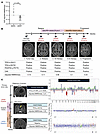 Figure 4
Liquid biopsy in patients with mismatch-repair deficiency. (A) CSF samples from patients with MMRD with detectable ctDNA had significantly higher MMRDness scores than samples from patients with mismatch repair–proficient (MMRP) tumors. (B) Mutations, copy number alterations (CNA), and high MMRDness persisted throughout therapy for a high-grade glioma despite radiologic improvement, with progression eventually detected by MRI. (C) In a patient with high-grade glioma and a new lesion, liquid biopsy identified CNA and 12 variants,including pathogenic variants (PV) and variants of uncertain significance (VUS) distinct from those in the primary tumor. This led to the diagnosis of a new tumor rather than recurrence. A high MMRDness score also supported this finding. ctDNA became undetectable with response to therapy.
In one case (MMR5), ctDNA analysis at relapse detected 3 pathogenic SNVs and CNAs consistent with the primary tumor at diagnosis (Figure 4B). High MMRDness scores further supported the diagnosis of recurrence. Despite partial response to immune checkpoint inhibitors (ICI) with marked leptomeningeal disease improvement, ctDNA and high MMRDness persisted in follow-up samples, suggesting ongoing active disease. Emerging variants in subsequent liquid biopsies indicated tumor evolution and clonal diversity (Supplemental Figure 3D). The patient eventually died 21 months after relapse.
A second case (MMR9) highlighted the role of liquid biopsy in diagnosing new primary tumors. Following remission from a HGG diagnosed 4 years prior, new MRI-detected lesions raised concerns of recurrence (Figure 4C). However, ctDNA findings revealed a distinct molecular profile from the primary tumor, with P53 p.R273C detected instead of the original P53 mutations (p.R158H and p.H178Qfs). Additionally, 12 SNVs detected in the CSF at query relapse were absent from the primary tumor sequencing. High MMRDness (0.03) and disparate CNAs supported the diagnosis of a second tumor in the context of MMRD, rather than a relapse of the primary tumor. Surgical biopsy confirmed these findings, and the patient responded well to radiotherapy and subsequent immunotherapy. Follow-up liquid biopsy at 13 months showed no ctDNA evidence, correlating with clinical and radiological stability at the 32-month follow-up.
These findings demonstrate that liquid biopsy, with ctDNA detection complemented by MMRDness analysis, can aid in distinguishing new tumor from recurrent disease in pediatric patients with MMRD-associated CNS tumors. The ability to detect ctDNA and emerging tumor clones facilitates early cancer detection, may help guide therapeutic decisions and monitor disease evolution. This combined approach holds promise for improving outcomes in this high-risk population.


Copyright © 2026 American Society for Clinical Investigation
ISSN: 0021-9738 (print), 1558-8238 (online)