
Advertisement
Research ArticleImmunologyOncology
Open Access |  10.1172/JCI184422
Co-targeting TGF-β and PD-L1 sensitizes triple-negative breast cancer to experimental immunogenic cisplatin-eribulin chemotherapy doublet
Laura Kalfeist,1,2,3,4 Fanny Ledys,1,3,4 Stacy Petit,1,2,3,4 Cyriane Poirrier,1,2,3,4 Samia Kada Mohammed,1,2,3,4 Loïck Galland,1,2,3,5 Valentin Derangère,1,2,3,4 Alis Ilie,1,2,3,4 David Rageot,1,2,3,4 Romain Aucagne,1,3,6,7 Pierre-Simon Bellaye,1,3,8 Caroline Truntzer,1,2,3,4 Marion Thibaudin,1,2,3,4 Mickaël Rialland,2,5 François Ghiringhelli,1,2,3,4,5 Emeric Limagne,1,2,3,4 and Sylvain Ladoire1,2,3,4,5
1Université de Bourgogne Europe, Dijon, France.
2Cancer Biology Transfer Platform, Centre Georges-François Leclerc, INSERM UMS 58 BioSanD, Equipe Labellisée Ligue Contre le Cancer, Dijon, France.
3INSERM UMR 1231, Center for Translational and Molecular Medicine (CTM), Dijon, France.
4Genetic and Immunology Medical Institute, Dijon, France.
5Department of Medical Oncology, Centre Georges-François Leclerc, Dijon, France.
6Unit for Innovation in Genetics and Epigenetics in Oncology, Dijon University Hospital, Dijon, France.
7INSERM UMS 58 BioSanD, CRISPR Functional Genomics (CRIGEN) Facility, Dijon, France.
8Plateforme d’imagerie et de radiothérapie précliniques, INSERM UMS 58 BioSanD, Centre Georges-François Leclerc, Dijon, France.
Address correspondence to: Emeric Limagne or Sylvain Ladoire, G-F Leclerc Cancer Center, Université de Bourgogne Europe, 1 rue Professeur Marion, 21079 Dijon Cedex, France. Phone: 33.80.73.77.58; Email: Emeric.Limagne@u-bourgogne.fr (EL). Phone: 33.80.73.75.06; Email: sladoire@cgfl.fr (SL).
Authorship note: LK and FL contributed equally to this work. EL and SL are joint supervisors of this work.
Find articles by Kalfeist, L. in: PubMed | Google Scholar
1Université de Bourgogne Europe, Dijon, France.
2Cancer Biology Transfer Platform, Centre Georges-François Leclerc, INSERM UMS 58 BioSanD, Equipe Labellisée Ligue Contre le Cancer, Dijon, France.
3INSERM UMR 1231, Center for Translational and Molecular Medicine (CTM), Dijon, France.
4Genetic and Immunology Medical Institute, Dijon, France.
5Department of Medical Oncology, Centre Georges-François Leclerc, Dijon, France.
6Unit for Innovation in Genetics and Epigenetics in Oncology, Dijon University Hospital, Dijon, France.
7INSERM UMS 58 BioSanD, CRISPR Functional Genomics (CRIGEN) Facility, Dijon, France.
8Plateforme d’imagerie et de radiothérapie précliniques, INSERM UMS 58 BioSanD, Centre Georges-François Leclerc, Dijon, France.
Address correspondence to: Emeric Limagne or Sylvain Ladoire, G-F Leclerc Cancer Center, Université de Bourgogne Europe, 1 rue Professeur Marion, 21079 Dijon Cedex, France. Phone: 33.80.73.77.58; Email: Emeric.Limagne@u-bourgogne.fr (EL). Phone: 33.80.73.75.06; Email: sladoire@cgfl.fr (SL).
Authorship note: LK and FL contributed equally to this work. EL and SL are joint supervisors of this work.
Find articles by Ledys, F. in: PubMed | Google Scholar
1Université de Bourgogne Europe, Dijon, France.
2Cancer Biology Transfer Platform, Centre Georges-François Leclerc, INSERM UMS 58 BioSanD, Equipe Labellisée Ligue Contre le Cancer, Dijon, France.
3INSERM UMR 1231, Center for Translational and Molecular Medicine (CTM), Dijon, France.
4Genetic and Immunology Medical Institute, Dijon, France.
5Department of Medical Oncology, Centre Georges-François Leclerc, Dijon, France.
6Unit for Innovation in Genetics and Epigenetics in Oncology, Dijon University Hospital, Dijon, France.
7INSERM UMS 58 BioSanD, CRISPR Functional Genomics (CRIGEN) Facility, Dijon, France.
8Plateforme d’imagerie et de radiothérapie précliniques, INSERM UMS 58 BioSanD, Centre Georges-François Leclerc, Dijon, France.
Address correspondence to: Emeric Limagne or Sylvain Ladoire, G-F Leclerc Cancer Center, Université de Bourgogne Europe, 1 rue Professeur Marion, 21079 Dijon Cedex, France. Phone: 33.80.73.77.58; Email: Emeric.Limagne@u-bourgogne.fr (EL). Phone: 33.80.73.75.06; Email: sladoire@cgfl.fr (SL).
Authorship note: LK and FL contributed equally to this work. EL and SL are joint supervisors of this work.
Find articles by Petit, S. in: PubMed | Google Scholar
1Université de Bourgogne Europe, Dijon, France.
2Cancer Biology Transfer Platform, Centre Georges-François Leclerc, INSERM UMS 58 BioSanD, Equipe Labellisée Ligue Contre le Cancer, Dijon, France.
3INSERM UMR 1231, Center for Translational and Molecular Medicine (CTM), Dijon, France.
4Genetic and Immunology Medical Institute, Dijon, France.
5Department of Medical Oncology, Centre Georges-François Leclerc, Dijon, France.
6Unit for Innovation in Genetics and Epigenetics in Oncology, Dijon University Hospital, Dijon, France.
7INSERM UMS 58 BioSanD, CRISPR Functional Genomics (CRIGEN) Facility, Dijon, France.
8Plateforme d’imagerie et de radiothérapie précliniques, INSERM UMS 58 BioSanD, Centre Georges-François Leclerc, Dijon, France.
Address correspondence to: Emeric Limagne or Sylvain Ladoire, G-F Leclerc Cancer Center, Université de Bourgogne Europe, 1 rue Professeur Marion, 21079 Dijon Cedex, France. Phone: 33.80.73.77.58; Email: Emeric.Limagne@u-bourgogne.fr (EL). Phone: 33.80.73.75.06; Email: sladoire@cgfl.fr (SL).
Authorship note: LK and FL contributed equally to this work. EL and SL are joint supervisors of this work.
Find articles by Poirrier, C. in: PubMed | Google Scholar
1Université de Bourgogne Europe, Dijon, France.
2Cancer Biology Transfer Platform, Centre Georges-François Leclerc, INSERM UMS 58 BioSanD, Equipe Labellisée Ligue Contre le Cancer, Dijon, France.
3INSERM UMR 1231, Center for Translational and Molecular Medicine (CTM), Dijon, France.
4Genetic and Immunology Medical Institute, Dijon, France.
5Department of Medical Oncology, Centre Georges-François Leclerc, Dijon, France.
6Unit for Innovation in Genetics and Epigenetics in Oncology, Dijon University Hospital, Dijon, France.
7INSERM UMS 58 BioSanD, CRISPR Functional Genomics (CRIGEN) Facility, Dijon, France.
8Plateforme d’imagerie et de radiothérapie précliniques, INSERM UMS 58 BioSanD, Centre Georges-François Leclerc, Dijon, France.
Address correspondence to: Emeric Limagne or Sylvain Ladoire, G-F Leclerc Cancer Center, Université de Bourgogne Europe, 1 rue Professeur Marion, 21079 Dijon Cedex, France. Phone: 33.80.73.77.58; Email: Emeric.Limagne@u-bourgogne.fr (EL). Phone: 33.80.73.75.06; Email: sladoire@cgfl.fr (SL).
Authorship note: LK and FL contributed equally to this work. EL and SL are joint supervisors of this work.
Find articles by Kada Mohammed, S. in: PubMed | Google Scholar
1Université de Bourgogne Europe, Dijon, France.
2Cancer Biology Transfer Platform, Centre Georges-François Leclerc, INSERM UMS 58 BioSanD, Equipe Labellisée Ligue Contre le Cancer, Dijon, France.
3INSERM UMR 1231, Center for Translational and Molecular Medicine (CTM), Dijon, France.
4Genetic and Immunology Medical Institute, Dijon, France.
5Department of Medical Oncology, Centre Georges-François Leclerc, Dijon, France.
6Unit for Innovation in Genetics and Epigenetics in Oncology, Dijon University Hospital, Dijon, France.
7INSERM UMS 58 BioSanD, CRISPR Functional Genomics (CRIGEN) Facility, Dijon, France.
8Plateforme d’imagerie et de radiothérapie précliniques, INSERM UMS 58 BioSanD, Centre Georges-François Leclerc, Dijon, France.
Address correspondence to: Emeric Limagne or Sylvain Ladoire, G-F Leclerc Cancer Center, Université de Bourgogne Europe, 1 rue Professeur Marion, 21079 Dijon Cedex, France. Phone: 33.80.73.77.58; Email: Emeric.Limagne@u-bourgogne.fr (EL). Phone: 33.80.73.75.06; Email: sladoire@cgfl.fr (SL).
Authorship note: LK and FL contributed equally to this work. EL and SL are joint supervisors of this work.
Find articles by Galland, L. in: PubMed | Google Scholar
1Université de Bourgogne Europe, Dijon, France.
2Cancer Biology Transfer Platform, Centre Georges-François Leclerc, INSERM UMS 58 BioSanD, Equipe Labellisée Ligue Contre le Cancer, Dijon, France.
3INSERM UMR 1231, Center for Translational and Molecular Medicine (CTM), Dijon, France.
4Genetic and Immunology Medical Institute, Dijon, France.
5Department of Medical Oncology, Centre Georges-François Leclerc, Dijon, France.
6Unit for Innovation in Genetics and Epigenetics in Oncology, Dijon University Hospital, Dijon, France.
7INSERM UMS 58 BioSanD, CRISPR Functional Genomics (CRIGEN) Facility, Dijon, France.
8Plateforme d’imagerie et de radiothérapie précliniques, INSERM UMS 58 BioSanD, Centre Georges-François Leclerc, Dijon, France.
Address correspondence to: Emeric Limagne or Sylvain Ladoire, G-F Leclerc Cancer Center, Université de Bourgogne Europe, 1 rue Professeur Marion, 21079 Dijon Cedex, France. Phone: 33.80.73.77.58; Email: Emeric.Limagne@u-bourgogne.fr (EL). Phone: 33.80.73.75.06; Email: sladoire@cgfl.fr (SL).
Authorship note: LK and FL contributed equally to this work. EL and SL are joint supervisors of this work.
Find articles by Derangère, V. in: PubMed | Google Scholar
1Université de Bourgogne Europe, Dijon, France.
2Cancer Biology Transfer Platform, Centre Georges-François Leclerc, INSERM UMS 58 BioSanD, Equipe Labellisée Ligue Contre le Cancer, Dijon, France.
3INSERM UMR 1231, Center for Translational and Molecular Medicine (CTM), Dijon, France.
4Genetic and Immunology Medical Institute, Dijon, France.
5Department of Medical Oncology, Centre Georges-François Leclerc, Dijon, France.
6Unit for Innovation in Genetics and Epigenetics in Oncology, Dijon University Hospital, Dijon, France.
7INSERM UMS 58 BioSanD, CRISPR Functional Genomics (CRIGEN) Facility, Dijon, France.
8Plateforme d’imagerie et de radiothérapie précliniques, INSERM UMS 58 BioSanD, Centre Georges-François Leclerc, Dijon, France.
Address correspondence to: Emeric Limagne or Sylvain Ladoire, G-F Leclerc Cancer Center, Université de Bourgogne Europe, 1 rue Professeur Marion, 21079 Dijon Cedex, France. Phone: 33.80.73.77.58; Email: Emeric.Limagne@u-bourgogne.fr (EL). Phone: 33.80.73.75.06; Email: sladoire@cgfl.fr (SL).
Authorship note: LK and FL contributed equally to this work. EL and SL are joint supervisors of this work.
Find articles by Ilie, A. in: PubMed | Google Scholar
1Université de Bourgogne Europe, Dijon, France.
2Cancer Biology Transfer Platform, Centre Georges-François Leclerc, INSERM UMS 58 BioSanD, Equipe Labellisée Ligue Contre le Cancer, Dijon, France.
3INSERM UMR 1231, Center for Translational and Molecular Medicine (CTM), Dijon, France.
4Genetic and Immunology Medical Institute, Dijon, France.
5Department of Medical Oncology, Centre Georges-François Leclerc, Dijon, France.
6Unit for Innovation in Genetics and Epigenetics in Oncology, Dijon University Hospital, Dijon, France.
7INSERM UMS 58 BioSanD, CRISPR Functional Genomics (CRIGEN) Facility, Dijon, France.
8Plateforme d’imagerie et de radiothérapie précliniques, INSERM UMS 58 BioSanD, Centre Georges-François Leclerc, Dijon, France.
Address correspondence to: Emeric Limagne or Sylvain Ladoire, G-F Leclerc Cancer Center, Université de Bourgogne Europe, 1 rue Professeur Marion, 21079 Dijon Cedex, France. Phone: 33.80.73.77.58; Email: Emeric.Limagne@u-bourgogne.fr (EL). Phone: 33.80.73.75.06; Email: sladoire@cgfl.fr (SL).
Authorship note: LK and FL contributed equally to this work. EL and SL are joint supervisors of this work.
Find articles by Rageot, D. in: PubMed | Google Scholar
1Université de Bourgogne Europe, Dijon, France.
2Cancer Biology Transfer Platform, Centre Georges-François Leclerc, INSERM UMS 58 BioSanD, Equipe Labellisée Ligue Contre le Cancer, Dijon, France.
3INSERM UMR 1231, Center for Translational and Molecular Medicine (CTM), Dijon, France.
4Genetic and Immunology Medical Institute, Dijon, France.
5Department of Medical Oncology, Centre Georges-François Leclerc, Dijon, France.
6Unit for Innovation in Genetics and Epigenetics in Oncology, Dijon University Hospital, Dijon, France.
7INSERM UMS 58 BioSanD, CRISPR Functional Genomics (CRIGEN) Facility, Dijon, France.
8Plateforme d’imagerie et de radiothérapie précliniques, INSERM UMS 58 BioSanD, Centre Georges-François Leclerc, Dijon, France.
Address correspondence to: Emeric Limagne or Sylvain Ladoire, G-F Leclerc Cancer Center, Université de Bourgogne Europe, 1 rue Professeur Marion, 21079 Dijon Cedex, France. Phone: 33.80.73.77.58; Email: Emeric.Limagne@u-bourgogne.fr (EL). Phone: 33.80.73.75.06; Email: sladoire@cgfl.fr (SL).
Authorship note: LK and FL contributed equally to this work. EL and SL are joint supervisors of this work.
Find articles by Aucagne, R. in: PubMed | Google Scholar
1Université de Bourgogne Europe, Dijon, France.
2Cancer Biology Transfer Platform, Centre Georges-François Leclerc, INSERM UMS 58 BioSanD, Equipe Labellisée Ligue Contre le Cancer, Dijon, France.
3INSERM UMR 1231, Center for Translational and Molecular Medicine (CTM), Dijon, France.
4Genetic and Immunology Medical Institute, Dijon, France.
5Department of Medical Oncology, Centre Georges-François Leclerc, Dijon, France.
6Unit for Innovation in Genetics and Epigenetics in Oncology, Dijon University Hospital, Dijon, France.
7INSERM UMS 58 BioSanD, CRISPR Functional Genomics (CRIGEN) Facility, Dijon, France.
8Plateforme d’imagerie et de radiothérapie précliniques, INSERM UMS 58 BioSanD, Centre Georges-François Leclerc, Dijon, France.
Address correspondence to: Emeric Limagne or Sylvain Ladoire, G-F Leclerc Cancer Center, Université de Bourgogne Europe, 1 rue Professeur Marion, 21079 Dijon Cedex, France. Phone: 33.80.73.77.58; Email: Emeric.Limagne@u-bourgogne.fr (EL). Phone: 33.80.73.75.06; Email: sladoire@cgfl.fr (SL).
Authorship note: LK and FL contributed equally to this work. EL and SL are joint supervisors of this work.
Find articles by
Bellaye, P.
in:
PubMed
|
Google Scholar
|

1Université de Bourgogne Europe, Dijon, France.
2Cancer Biology Transfer Platform, Centre Georges-François Leclerc, INSERM UMS 58 BioSanD, Equipe Labellisée Ligue Contre le Cancer, Dijon, France.
3INSERM UMR 1231, Center for Translational and Molecular Medicine (CTM), Dijon, France.
4Genetic and Immunology Medical Institute, Dijon, France.
5Department of Medical Oncology, Centre Georges-François Leclerc, Dijon, France.
6Unit for Innovation in Genetics and Epigenetics in Oncology, Dijon University Hospital, Dijon, France.
7INSERM UMS 58 BioSanD, CRISPR Functional Genomics (CRIGEN) Facility, Dijon, France.
8Plateforme d’imagerie et de radiothérapie précliniques, INSERM UMS 58 BioSanD, Centre Georges-François Leclerc, Dijon, France.
Address correspondence to: Emeric Limagne or Sylvain Ladoire, G-F Leclerc Cancer Center, Université de Bourgogne Europe, 1 rue Professeur Marion, 21079 Dijon Cedex, France. Phone: 33.80.73.77.58; Email: Emeric.Limagne@u-bourgogne.fr (EL). Phone: 33.80.73.75.06; Email: sladoire@cgfl.fr (SL).
Authorship note: LK and FL contributed equally to this work. EL and SL are joint supervisors of this work.
Find articles by Truntzer, C. in: PubMed | Google Scholar
1Université de Bourgogne Europe, Dijon, France.
2Cancer Biology Transfer Platform, Centre Georges-François Leclerc, INSERM UMS 58 BioSanD, Equipe Labellisée Ligue Contre le Cancer, Dijon, France.
3INSERM UMR 1231, Center for Translational and Molecular Medicine (CTM), Dijon, France.
4Genetic and Immunology Medical Institute, Dijon, France.
5Department of Medical Oncology, Centre Georges-François Leclerc, Dijon, France.
6Unit for Innovation in Genetics and Epigenetics in Oncology, Dijon University Hospital, Dijon, France.
7INSERM UMS 58 BioSanD, CRISPR Functional Genomics (CRIGEN) Facility, Dijon, France.
8Plateforme d’imagerie et de radiothérapie précliniques, INSERM UMS 58 BioSanD, Centre Georges-François Leclerc, Dijon, France.
Address correspondence to: Emeric Limagne or Sylvain Ladoire, G-F Leclerc Cancer Center, Université de Bourgogne Europe, 1 rue Professeur Marion, 21079 Dijon Cedex, France. Phone: 33.80.73.77.58; Email: Emeric.Limagne@u-bourgogne.fr (EL). Phone: 33.80.73.75.06; Email: sladoire@cgfl.fr (SL).
Authorship note: LK and FL contributed equally to this work. EL and SL are joint supervisors of this work.
Find articles by Thibaudin, M. in: PubMed | Google Scholar
1Université de Bourgogne Europe, Dijon, France.
2Cancer Biology Transfer Platform, Centre Georges-François Leclerc, INSERM UMS 58 BioSanD, Equipe Labellisée Ligue Contre le Cancer, Dijon, France.
3INSERM UMR 1231, Center for Translational and Molecular Medicine (CTM), Dijon, France.
4Genetic and Immunology Medical Institute, Dijon, France.
5Department of Medical Oncology, Centre Georges-François Leclerc, Dijon, France.
6Unit for Innovation in Genetics and Epigenetics in Oncology, Dijon University Hospital, Dijon, France.
7INSERM UMS 58 BioSanD, CRISPR Functional Genomics (CRIGEN) Facility, Dijon, France.
8Plateforme d’imagerie et de radiothérapie précliniques, INSERM UMS 58 BioSanD, Centre Georges-François Leclerc, Dijon, France.
Address correspondence to: Emeric Limagne or Sylvain Ladoire, G-F Leclerc Cancer Center, Université de Bourgogne Europe, 1 rue Professeur Marion, 21079 Dijon Cedex, France. Phone: 33.80.73.77.58; Email: Emeric.Limagne@u-bourgogne.fr (EL). Phone: 33.80.73.75.06; Email: sladoire@cgfl.fr (SL).
Authorship note: LK and FL contributed equally to this work. EL and SL are joint supervisors of this work.
Find articles by Rialland, M. in: PubMed | Google Scholar
1Université de Bourgogne Europe, Dijon, France.
2Cancer Biology Transfer Platform, Centre Georges-François Leclerc, INSERM UMS 58 BioSanD, Equipe Labellisée Ligue Contre le Cancer, Dijon, France.
3INSERM UMR 1231, Center for Translational and Molecular Medicine (CTM), Dijon, France.
4Genetic and Immunology Medical Institute, Dijon, France.
5Department of Medical Oncology, Centre Georges-François Leclerc, Dijon, France.
6Unit for Innovation in Genetics and Epigenetics in Oncology, Dijon University Hospital, Dijon, France.
7INSERM UMS 58 BioSanD, CRISPR Functional Genomics (CRIGEN) Facility, Dijon, France.
8Plateforme d’imagerie et de radiothérapie précliniques, INSERM UMS 58 BioSanD, Centre Georges-François Leclerc, Dijon, France.
Address correspondence to: Emeric Limagne or Sylvain Ladoire, G-F Leclerc Cancer Center, Université de Bourgogne Europe, 1 rue Professeur Marion, 21079 Dijon Cedex, France. Phone: 33.80.73.77.58; Email: Emeric.Limagne@u-bourgogne.fr (EL). Phone: 33.80.73.75.06; Email: sladoire@cgfl.fr (SL).
Authorship note: LK and FL contributed equally to this work. EL and SL are joint supervisors of this work.
Find articles by
Ghiringhelli, F.
in:
PubMed
|
Google Scholar
|
1Université de Bourgogne Europe, Dijon, France.
2Cancer Biology Transfer Platform, Centre Georges-François Leclerc, INSERM UMS 58 BioSanD, Equipe Labellisée Ligue Contre le Cancer, Dijon, France.
3INSERM UMR 1231, Center for Translational and Molecular Medicine (CTM), Dijon, France.
4Genetic and Immunology Medical Institute, Dijon, France.
5Department of Medical Oncology, Centre Georges-François Leclerc, Dijon, France.
6Unit for Innovation in Genetics and Epigenetics in Oncology, Dijon University Hospital, Dijon, France.
7INSERM UMS 58 BioSanD, CRISPR Functional Genomics (CRIGEN) Facility, Dijon, France.
8Plateforme d’imagerie et de radiothérapie précliniques, INSERM UMS 58 BioSanD, Centre Georges-François Leclerc, Dijon, France.
Address correspondence to: Emeric Limagne or Sylvain Ladoire, G-F Leclerc Cancer Center, Université de Bourgogne Europe, 1 rue Professeur Marion, 21079 Dijon Cedex, France. Phone: 33.80.73.77.58; Email: Emeric.Limagne@u-bourgogne.fr (EL). Phone: 33.80.73.75.06; Email: sladoire@cgfl.fr (SL).
Authorship note: LK and FL contributed equally to this work. EL and SL are joint supervisors of this work.
Find articles by Limagne, E. in: PubMed | Google Scholar
1Université de Bourgogne Europe, Dijon, France.
2Cancer Biology Transfer Platform, Centre Georges-François Leclerc, INSERM UMS 58 BioSanD, Equipe Labellisée Ligue Contre le Cancer, Dijon, France.
3INSERM UMR 1231, Center for Translational and Molecular Medicine (CTM), Dijon, France.
4Genetic and Immunology Medical Institute, Dijon, France.
5Department of Medical Oncology, Centre Georges-François Leclerc, Dijon, France.
6Unit for Innovation in Genetics and Epigenetics in Oncology, Dijon University Hospital, Dijon, France.
7INSERM UMS 58 BioSanD, CRISPR Functional Genomics (CRIGEN) Facility, Dijon, France.
8Plateforme d’imagerie et de radiothérapie précliniques, INSERM UMS 58 BioSanD, Centre Georges-François Leclerc, Dijon, France.
Address correspondence to: Emeric Limagne or Sylvain Ladoire, G-F Leclerc Cancer Center, Université de Bourgogne Europe, 1 rue Professeur Marion, 21079 Dijon Cedex, France. Phone: 33.80.73.77.58; Email: Emeric.Limagne@u-bourgogne.fr (EL). Phone: 33.80.73.75.06; Email: sladoire@cgfl.fr (SL).
Authorship note: LK and FL contributed equally to this work. EL and SL are joint supervisors of this work.
Find articles by Ladoire, S. in: PubMed | Google Scholar
Published July 1, 2025 - More info
J Clin Invest. 2025;135(13):e184422. https://doi.org/10.1172/JCI184422.
© 2025 Kalfeist et al. This work is licensed under the Creative Commons Attribution 4.0 International License. To view a copy of this license, visit http://creativecommons.org/licenses/by/4.0/.
Received: July 5, 2024; Accepted: May 2, 2025


-
Results
The CDDP-Eri chemotherapy combination shows no antitumor synergy, despite the additive immunological effect in TNBC models. First, we evaluated the antitumor and immunological effects of CDDP and Eri, alone or in combination, in 4T1 and EMT6 orthotopic murine models of TNBC presenting distinct tumor immune microenvironment profiles, both unfavorable to the efficacy of PD-L1 blockade compared with the “hot” MC38 model. 4T1 is an immunologically “cold” TNBC model, characterized by low tumoral infiltrates of CD8+ T lymphocytes (CTLs) and low intratumoral PD-L1 expression (Supplemental Figure 1, A–D; supplemental material available online with this article; https://doi.org/10.1172/JCI184422DS1). EMT6 is an “immuno-excluded” TNBC model, characterized by equivalent PD-L1 expression and greater CTL infiltration, but limited to the tumor periphery (Supplemental Figure 1, A–D). In vivo, in our 2 models, monotherapy with Eri or CDDP had acceptable and transient toxicity in animals (Supplemental Figure 2A) and a significant but modest antitumor effect by slowing tumor growth (Figure 1A). Combining the 2 molecules was not more toxic than CDDP monotherapy (Supplemental Figure 2A) and did not confer antitumor therapeutic synergy compared with CDDP alone (Figure 1A).
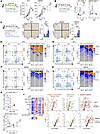 Figure 1
The CDDP-Eri doublet increases tumor CTL infiltration and functionality. (A) 4T1 and EMT6 tumor–bearing mice were treated with CDDP, Eri, or CDDP-Eri, and tumor volume was monitored for 30 days (n ≥10 for 4T1; n ≥5 for EMT6). (B) CTL proportions were assessed by flow cytometry in tumors collected at days 4, 8, and 14 after treatment (n ≥5/group). (C) At day 8, CTLs were visualized by IHC and quantified using QPath (scale bars: 200 μm; n ≥6 for 4T1; n ≥5 for EMT6). Images are shown again in Supplemental Figure 2C. (D and F) CTL functionality was evaluated by measuring GzmB, TNF-α, and IFN-γ expression in 4T1 (D) and EMT6 (F) tumors. Representative dot plots and mean values are shown. (E and G) Activation/proliferation markers (PD-1, TIM-3, and Ki67) were analyzed in 4T1 (E) and EMT6 (G) tumors using flow cytometry, with representative dot plots at day 8 (left) and mean values (right). (H) PD-L1 expression on CD45− tumor cells was quantified by flow cytometry (n ≥4/group). (I) Immune-related gene expression was assessed by NanoString for total tumor mRNA. Heatmap shows normalized z scores, and volcano plots indicate statistical significance (n = 6/group). Box plots show the mean ± SEM. *P < 0.05, **P < 0.01, and ***P < 0.001, by 2-way ANOVA. orth., orthotopic.
On the other hand, from an immunological perspective, in our 2 models, treatment with CDDP alone, but especially the CDDP-Eri combination, was accompanied by an increase in tumor infiltration with CTLs (Figure 1, B and C). This intratumoral influx of CTLs occurred early after treatment (as early as day 8 and peaking at day 21 in 4T1 and day 14 in EMT6 tumors), and was significantly greater after treatment with the CDDP-Eri combination compared with each monotherapy (Figure 1, B and C). Study of the phenotype of these tumor-affluent CTLs in both models showed that the percentage of polyfunctional T cells (expression or coexpression of IFN-γ, granzyme B [GzmB], TNF-α) (Figure 1, D and F), proliferating T cells (Ki67+) and expression of markers of lymphocyte activation/exhaustion (PD-1/TIM3) (Figure 1, E and G) were also greater in tumors treated with the CDDP-Eri combination, particularly at early time points (day 14). At the same time, the proportion of PD-L1+ tumor cells was also greater after CDDP-Eri treatment (Figure 1H). More broadly, study of the tumor bulk transcriptome (in particular the expression of genes involved in the immune response) of 4T1 and EMT6 tumors after different treatments showed little change for tumors treated with Eri alone, but did show the induction of numerous immune genes after treatment with CDDP, especially after CDDP-Eri treatment (Figure 1I). Treatment with CDDP-Eri was accompanied by intratumoral induction of genes involved in (a) immune cell recruitment (Ccl5, Ccl22, Ccl17, Cxcl9/10); (b) type I IFN response (Ifi35, Ifit2); (c) NK cell response (Klrk1, Klrd1, Klrc1); (d) co-stimulation signals (Cd40, Cd80/86); (e) immune checkpoint inhibitors (ICIs) (Pdcd1, Ctla4); (f) cytotoxicity (Prf1, Gzma/b, Stat1, Irf1); (g) T cell response (Cd3e, Cd8a); and (h) antigen presentation (Tap2, H2ab1) (Figure 1I). Comparison of the different treatments with regard to their effects on the tumor transcriptome showed that this induction of immune response gene expression was driven mainly by CDDP (particularly in the 4T1 cold model), and that the combination of CDDP-Eri enhanced this effect, particularly with regard to the expression of genes involved in antigen presentation, the type I IFN response, or the recruitment of immune cells involved in the adaptive response (Supplemental Figure 2B). In the 2 models, this recruitment of CTLs with the CDDP-Eri combination was observed not only at the tumor invasion front, but also within the tumor, in contact with tumor cells (Supplemental Figure 2C).
Taken together, these results show that, in our mouse models of TNBC, the CDDP-Eri combination did not result in antitumor synergy but did appear to be immunologically additive, inducing a global inflammatory and immune tumor response, accompanied by intratumoral PD-L1 expression, as well as intratumoral recruitment of activated, cytotoxic, proliferative, and polyfunctional CTLs.
CDDP and Eri do not have the same immunogenic (ICD) and antigenic properties and have different effects on tumor stromal remodeling. In order to better understand the immunological effects of CDDP and Eri and to understand their immunological additivity observed in vivo, we first sought to assess the ability of these chemotherapies, alone or in combination, to induce immunogenic death of tumor cells (ICD). The molecular steps involved in ICD are now well described and consist of changes in plasma membrane composition and the release of soluble mediators by tumor cells, which are then able to stimulate an immune response against the treated tumor (11). ICD has been well described with certain chemotherapies such as DXR. In contrast, the ability of CDDP and Eri to induce ICD and antigenicity in TNBC tumor cells has not yet, to our knowledge, been described.
We then standardized in vitro experiments in which each chemotherapy (CDDP, Eri, CDDP-Eri, or DXR) induces approximately 50% cell death after 48 hours of treatment (Supplemental Figure 3, A–F) and determined their immunogenic properties (4T1 model: Figure 2, A–C, EMT6 model: Supplemental Figure 3, G and H). We studied the induction by chemotherapies of 11 biological elements linked to ICD (reticulum stress: calreticulin [CRT], Ddit3, Atf4; purinergic signaling: ATP; TLR4 signaling: HMGB1; type I IFN and chemokines: Cxcl10; antigenic presentation and antigenicity: H2-D, H2Kd/Dd, Tap1, Tapbp). We also studied the induction of EIF2α phosphorylation and the LC3-I/LC3-II ratio. DXR was used as a positive control. We observed in our 2 models that Eri alone had little or no ability to induce immunogenic signals compared with controls (Figure 2, A–C, and Supplemental Figure 3, G and H). On the contrary, CDDP induced numerous immunogenic death signals at 24 hours, and some of these signals persisted at 48 hours. In our 2 models, CDDP induced as many or more early ICD signals (24 hours) as those induced by DXR treatment. These effects of CDDP were still observed at 48 hours, as was the ICD induced by DXR. The CDDP-Eri combination was able to induce a greater number of early ICD signals than with DXR, again with an effect maintained at 48 hours. In contrast, the CDDP-Eri combination did not appear to induce more ICD signals than CDDP alone (except marginally on a few elements in the EMT6 model). In line with these results, the transcriptome of in vivo–treated 4T1 tumor cells considerably changed after treatment with the CDDP-Eri combination, showing the induction of the expression of numerous proinflammatory or chemoattractant cytokine genes, genes involved in the type I IFN response or CTL/Th1 polarization, genes involved in antigenic presentation, as well as genes involved in PD-L1 (Cd274) induction (Figure 2, D and E). We then sought to examine the effects of CDDP, Eri, and their combination on other TME cellular subsets, in particular those making up the vascular and connective compartments, by studying cancer-associated fibroblasts (CAFs) (Supplemental Figure 3I). We thus demonstrated that Eri (alone or in combination) had an antivascular effect in our models by depleting CD31+ cells (Figure 2F), which was accompanied morphologically by a reduction in tumor vessel density (Figure 2G). On the other hand, CDDP (alone or in combination) had no effect on tumor vasculature. In the case of CAFs, however, we observed that CDDP had a depleting effect on the pool of these cells and that the combination with Eri further increased this effect (Figure 2H and Supplemental Figure 2I).
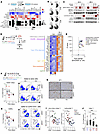 Figure 2
The CDDP-Eri doublet induces ICD markers. (A) 4T1 cells were treated with Eri (50 nM), CDDP (4 μM), DXR (500 nM), or CDDP-Eri. Drug concentrations correspond to the IC50 at 48 hours. ICD markers were analyzed at 24 hours and 48 hours. Heatmap shows normalized marker expression and statistical significance. (B) Pie charts indicate the proportion of ICD marker positivity across independent experiments (1-way ANOVA). (C) EIF2α phosphorylation (Ser51) and LC3I/II levels were assessed by Western blotting. Heatmaps represent the densitometric phosphorylated/total ratio (1 representative experiment of 2). (D and E) Experimental design. 4T1 tumor–bearing mice received CDDP, Eri, or both. Four days later, tumor cells were isolated for NanoString analysis. Heatmap in D shows normalized gene expression; volcano plot in E indicates statistical significance (n = 4/group); 1-way ANOVA. (F) CD31+ endothelial cell proportions were measured by flow cytometry on post-treatment days 4, 8, and 14. Dot plots show CD31+ populations at day 8 (n ≥ 6/group). (G) CD31+ cells were quantified by IHC using QPath (scale bar: 200 μm). (H) CAF proportions were assessed according to PDPN expression using flow cytometry on day 8. Dot plots represent PDPN+ cells (n ≥ 6/group). (I) Correlations between CD31+, CAF, and CTL proportions were analyzed (n ≥ 11). (J) CTL proportions were evaluated on the basis of CAF and CD31+ levels (> median = high, < median = low). Box plots show the mean ± SEM. *P < 0.05, **P < 0.01, ***P < 0.001, and ****P < 0.0001, by 2-way ANOVA. Ctrl, control.
These treatment-induced changes in TME cell populations were strongly correlated with CTL infiltration: there was a significant association between high CTL infiltration and (a) a low number of CD31+ cells induced by Eri (alone or in combination with CDDP) (Figure 2I) and (b) a low number of CAFs induced by CDDP (Figure 2I). These results therefore suggest a favorable role for the effects of the CDDP-Eri combination on the TME in the induction of an intratumoral immune response. Thus, the tumors most infiltrated with CTLs after treatment wee also those in which a low percentage of CD31+ cells was associated with a low percentage of CAFs (Figure 2J). Importantly, when the 2 chemotherapies were combined, the antiangiogenic effects of Eri were not responsible for a better penetration of CDDP into tumors nor therefore, for a higher concentration of intratumoral immunogenic platinum compounds (Supplemental Figure 2J).
Finally, unlike Eri, which did not induce an ICD stigma, in our TNBC mouse models, CDDP proved to be a chemotherapeutic agent capable of inducing as many ICD signals as those induced by DXR. The CDDP-Eri combination did not appear to induce more ICD signals than CDDP alone. Therefore, ICD alone did not explain the immunological synergy of the CDDP-Eri combination previously observed in vivo. In contrast, CDDP and Eri had separate effects on CAFs and the tumor vasculature, respectively, which, when the 2 molecules were combined, seemed to correlate with the intensity of intratumoral immune recruitment.
The antitumor effect of CDDP-Eri combination does not depend on the CTL response and does not synergize with anti–PD-L1 immunotherapy. We then investigated whether the inflammatory response and recruitment of immune cells induced by the CDDP-Eri combination in our models contributed to the antitumor efficacy of the combination of this association. To this end, we evaluated the effects on tumor growth in the 4T1 model of treatment with CDDP, Eri, or the combination of both in immunocompetent mice, and then nude (nu/nu) mice, and in mice treated with an anti-CD8–depleting antibody.
Compared with the immunocompetent animals, in the 4T1 model, we observed a preserved antitumor effect of the different chemotherapy regimens (Eri, CDDP, or the CDDP-Eri combination), despite the absence of T cells or the depletion of CTLs (Figure 3A), suggesting that the immunological synergy induced by the CDDP-Eri combination did not contribute to tumor growth control in the 4T1 model. Similarly, in the 4T1 model (totally unresponsive to anti–PD-L1 monotherapy), the combination of anti–PD-L1 immunotherapy with chemotherapy showed no synergy compared with chemotherapy alone, whether with Eri, CDDP, or the CDDP-Eri combination (Figure 3B), despite the fact that the CDDP-Eri combination was accompanied by polyfunctional PD-1+–activated CTL recruitment and induction of PD-L1 expression. A separate analysis of CD45+ TILs (Figure 3C) and of 4T1 tumor cells (Figure 3D) after treatment confirmed that the induction of the expression of genes associated with antitumor immune responses was uniquely linked to an effect of the CDDP-Eri combination, and that the addition of anti–PD-L1 in this context changed nothing in these 2 cell populations.
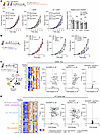 Figure 3
Combination therapy is CTL independent and resistant to anti–PD-L1 immunotherapy. (A) 4T1 tumor–bearing (orth) BALB/c immunocompetent or nude mice received CDDP, Eri, or CDDP-Eri, with or without anti-CD8a or isotype control antibodies. The anti-CD8a antibody was injected twice before and 4 times after chemotherapy. Tumor volume was monitored for at least 3 weeks after treatment (n = at least 4 mice/group). (B) 4T1 tumor–bearing mice received CDDP, Eri, or both, with or without anti–PD-L1 or isotype control antibodies. Tumor volume was monitored for at least 3 weeks after treatment (n = at least 6 mice per group). Box plots show the mean ± SEM. *P < 0.05, ***P < 0.001, and ****P < 0.0001, by 2-way ANOVA. (C and D) 4T1 tumor–bearing mice received CDDP, Eri, or both. Four days later, the 4T1 tumor was recovered, and tumor cells and CD45+ cells were isolated by magnetic beads. Total cell mRNA was extracted, and immune-related gene expression was analyzed by NanoString for CD45+ TILS (C) and tumor cells (D). The heatmap corresponds to normalized marker expression, and the volcano plot indicates the P value from the statistical analysis (n = 4 mice/group). aCD8, anti-CD8 antibody; aPD-L1, anti–PD-L1 antibody.
Thus, despite the favorable immunological effects observed in the immunologically “cold” 4T1 model, the inflammatory and immune responses induced by the CDDP-Eri combination did not appear to contribute to the drugs’ antitumor effect. Paradoxically, this apparent recruitment and activation of immune effectors did not allow therapeutic synergy between the CDDP-Eri combination and anti–PD-L1 immunotherapy. These intriguing observations led us to investigate possible associated immunosuppressive mechanisms in this therapeutic context.
The CDDP-Eri combination is also associated with a complex qualitative and quantitative remodeling of the TME under the effect of CDDP-induced TGF-β. By studying changes in the tumor transcriptome (in particular the expression of genes involved in the main immunosubversion and immunosuppression pathways) after treatment with the different chemotherapies, we showed in the 4T1 model that the apparently favorable immunological effects initially observed were also accompanied, during treatment with the CDDP-Eri combination, by strong induction of genes involved in (a) the TGF-β pathway (Tgfb1); (b) fibrosis (Col1a, Col3a, Fn1, Fgf1); epithelial-mesenchymal transition (EMT) (Zeb1); (c) myeloid cell–mediated immunosuppression (tumor-associated macrophages [TAMs], MDSCs; Cd163, Mcr1, Itgam, Csf1, Ly6c1) (Figure 4A). These immunosuppression/immunosubversion pathway appeared to be much more influenced by CDDP-Eri treatment than by the expression of other immune response inhibitory checkpoints or genes involved in Treg biology (Figure 4A).
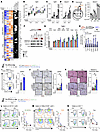 Figure 4
The CDDP-Eri doublet induces TGF-β–mediated immunoresistance. (A) 4T1 tumor–bearing mice were treated with CDDP, Eri, or both. Tumors were collected at days 4, 8, and 14. At day 8, total tumor mRNA was analyzed for immunosuppressive gene expression by NanoString. The heatmap on the left shows normalized expression, and the heatmap on the right shows statistical significance (n = 4/group). P values were determined by 2-way ANOVA. (B) Tgfb1 expression was measured by qPCR at days (D) 4, 8, and 14 (n ≥6/group). (C and D) 4T1 cells were treated with Eri (50 nM), CDDP (4 μM), CDDP-Eri, or left untreated. Tgfb1 (C) and Serpin1 (D) expression was analyzed by qPCR at 24 hours and 48 hours (2 experiments, n = 3/experiment). (E) 4T1 cells were pretreated with galunisertib (10, 100, and 1,000 nM) for 2 hours, and then treated with CDDP (4 μM), TGF-β (2 ng/mL), or left untreated for 48 hours. Serpin1 expression was analyzed by qPCR (2 experiments, n = 2/experiment). (F) Under the same conditions as in C, Smad2/3 phosphorylation [pSmad2 (Ser465/467), pSmad3 (Ser423/425)] was analyzed by Western blotting. Heatmap represents the phosphorylated/total ratio (results are from 1 of 2 experiments). (G and H) 4T1 tumor–bearing mice were treated as in A. At day 4, immunosuppressive cells were sorted, and Tgfb1 expression was measured by qPCR (G). MyCAF-related genes were analyzed in CAFs (H) (n ≥3/group). (I) At day 8, αSMA+ CAF proportions were measured by flow cytometry. (J and K) αSMA+ cells were quantified by IHC (J), and collagen deposition was analyzed by Masson’s trichrome (MTC) staining (K) (n ≥7/group). Images are shown again in Supplemental Figure 4I. (L–N) Mo-MDSC (L), TAM2 (M), and Treg (N) proportions were assessed by flow cytometry (n = 5/group). Box plots represent the mean ± SEM. *P < 0.05, **P < 0.01, ***P < 0.001, and ****P < 0.0001, by 1-way ANOVA (C–E) and 2-way ANOVA (B, G, H, and L–N).
As the common factor in these pathways upregulated by CDDP-Eri treatment appeared to be TGF-β, we then confirmed in vivo Tgfb1 gene induction in 4T1 tumors in CDDP-treated animals (Figure 4B). This phenomenon was also observed in vivo in the EMT6 model (Supplemental Figure 4A). We then investigated the sources of TGF-β produced in the treated tumors. In vitro, we showed induction of the Tgfb1 gene in 4T1 (Figure 4C) and EMT6 (Supplemental Figure 4B) tumors 24 hours and 48 hours after CDDP and CDDP-Eri treatments. This TGF-β produced by tumor cells appeared to be biologically active, acting in an autocrine loop on tumor cells, since we observed induction of a TGF-β target gene (Serpin1) 24 hours and 48 hours after CDDP treatment in 4T1 (Figure 4D) and EMT6 (Supplemental Figure 4, B and C) tumors. To validate this observation, we tested the expression of Serpin1 in CDDP-treated cells with or without galunisertib (a TGF-β receptor I [TGF-βRI] inhibitor). We observed that Serpin1 expression was limited in a dose-dependent manner by galunisertib (Figure 4E and Supplemental Figure 4D). In addition, we also analyzed basal and chemotherapy-induced gene expression of Tgfb2 and Tgfb3. We observed that Tgfb2 was not expressed in 4T1 tumors and was not induced by chemotherapy. Finally, we found that Tgfb3 was expressed to a lesser extent than Tgfb1 and was not induced by treatment either (Supplemental Figure 4E). On the other hand, we observed that SMAD2/3 phosphorylation was increased in 4T1 tumor cells 48 hours after treatment with CDDP or CDDP-Eri (Figure 4F). The TGF-β at the origin of this autocrine loop appeared to be produced in active form by tumor cells, since its presence in the conditioned medium of CDDP-treated 4T1 cells previously induced luciferase activity in MLEC reporter cells (Supplemental Figure 4G). Interestingly, this induction of Tgfb1 in 4T1 cells by CDDP appeared to be dose dependent and was also observed with carboplatin (another platinum salt commonly used for the treatment of TNBC) (Supplemental Figure 4H). Furthermore, after sorting different cell populations from the TME of 4T1 tumors, we also found that, apart from the tumor cells themselves, Tgfb1 expression was also induced in monocytic MDSC (Mo-MDSC), TAM2, and CAF populations following treatment with CDDP and CDDP-Eri (Figure 4G). After treatment with CDDP or CDDP-Eri, CAFs isolated from 4T1 tumors had a more pronounced transcriptomic profile of LRRC15+ CAFs, a myofibroblast subset of CAFs (myCAFs), a population with immunosuppressive properties (12) recently described in abundance in BCs (13, 14) and belonging to TGF-β–induced CAF clusters (C0–C5 clusters) (15) (Figure 4H). Thus, we showed an increase in the percentage of myCAFs by analyzing α–smooth muscle actin (αSMA) expression in the total CD45–CD31–CD90.2+ CAF population in 4T1 tumors treated with CDDP-Eri (Figure 4I). This was reflected histologically by a higher density of αSMA+ spindle cells in 4T1 tumors after treatment with CDDP, and even more so after treatment with the CDDP-Eri combination (Figure 4J). Histologically, this was associated with a higher percentage of surface area of fibrous connective tissue in the tumors (Figure 4K), but without a CTL immuno-exclusion phenomenon (Supplemental Figure 4I). The biological phenomena observed in CAFs and associated with CDDP treatment in our models therefore appear complex, with, on the one hand, a depleting effect on the overall CAF population, but also the emergence of a TGF-β–responsive and immunosuppressive subpopulation.
Concerning the other cellular sources of chemotherapy-induced TGF-β that we identified in our models, we found that the percentage of Mo-MDSCs and TAM2s increased significantly and early (day 10) in CDDP-treated tumors, and again to a greater extent after treatment with the CDDP-Eri combination (Figure 4, L and M, and Supplemental Figure 4J). Among the other immunosuppressive cell populations analyzed, only Tregs increased in CDDP-treated tumors (Figure 4N and Supplemental Figure 4I), in agreement with the role of TGF-β in the proliferation of this cell population (16).
Taken together, these results show that treatment with the immunogenic CDDP-Eri combination was not only accompanied by significant recruitment of immune cells, but also by profound qualitative and quantitative changes in the TME, driven by substantial TGF-β production, which may explain certain immune-escape mechanisms, such as the accumulation of populations of immunosuppressive myeloid and lymphoid cells, as well as a subpopulation of immunosuppressive CAFs.
Targeting TGF-β enhances the antitumor effect of the CDDP-Eri plus PD-L1 blockade combination and makes it CTL dependent. To confirm the deleterious effect of TGF-β in our therapeutic models, we treated tumor-bearing mice (4T1, EMT6, as well as 2 other BC models: a luminal tumor model [TS/A], and a spontaneous model [mouse mammary tumor virus [MMTV] and polyomavirus middle T antigen [PYMT]) with an anti–TGF-β antibody. The aim was to test whether cotreatment with an anti–TGF-β antibody could make the immunogenic chemotherapy combination CDDP-Eri more effective when combined with anti–PD-L1 immunotherapy.
In the 4T1 model, these therapeutic combinations did not appear to show any additional toxicity compared with the other therapeutic combinations used previously (Supplemental Figure 5A). In the 4T1 “cold” model, treatment with anti–TGF-β alone or in combination with anti–PD-L1 was ineffective (Supplemental Figure 5, B and C), and, interestingly, so was the combination of anti–TGF-β plus anti–PD-L1 plus Eri or CDDP alone (as a monochemotherapy) (Supplemental Figure 5, B and C). On the other hand, when anti–TGF-β was administered with the chemotherapy combination CDDP-Eri plus anti–PD-L1, it significantly delayed tumor growth and significantly improved animal survival (Figure 5A and Supplemental Figure 5, D and E), particularly in comparison with the chemotherapy combination alone or the chemotherapy plus anti–PD-L1 combination. The efficacy of this quadritherapy was also observed in the EMT6 model (Figure 5B) as well as in the TS/A and MMTV-PyMT models (Figure 5, C and D). We have seen that the CDDP-Eri combination induced TGF-β expression in both tumor cells and some TME-associated cells (Mo-MDSCs, TAM2s, and CAFs) (Figure 4G). In order to assess the role of TGF-β1 specifically produced by tumor cells in CDDP-Eri plus anti–PD-L1 resistance, we developed a Tgfb1–/– 4T1 cell line (Supplemental Figure 5F). We first evaluated Tgfb1 gene induction in tumor tissue after CDDP-Eri treatment and observed that chemotherapy-induced Tgfb1 expression was lower, but not completely lost, in Tgfb1–/– compared with WT 4T1 tumor tissue (Supplemental Figure 5G). We then evaluated the sensitivity of WT and Tgfb1–/– 4T1 tumor–bearing mice to chemotherapy with or without PD-L1 blockade. Interestingly, we observed significantly better therapeutic efficacy of CDDP-Eri plus anti–PD-L1 in Tgfb1–/– 4T1 compared with WT cells, in which the chemoimmunotherapeutic effect was not different from that of chemotherapy alone. It should be noted, however, that the effect of tumor-specific depletion of TGF-β did not have as strong an effect as complete blockade of the cytokine (from tumor cells and MCT) with an anti–TGF-β antibody (Supplemental Figure 5, H and I). To assess whether this favorable effect of anti–TGF-β treatment was mediated by a positive effect on the antitumor immune response (in particular, the CTL response), we performed the same therapeutic combinations but with and without depleting anti-CD8b antibody treatment. Interestingly CTL depletion completely abolished the therapeutic effect of the quadritherapy but not CDDP-Eri plus anti–PD-L1 combination therapy, confirming the strong role of TGF-β in chemoimmunotherapy resistance in our TNBC models (Figure 5, E and F).
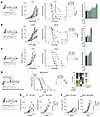 Figure 5
TGF–β blockade restores chemoimmunotherapy efficacy. (A–C) 4T1 (A), EMT6 (B), and TS/A (C) tumor–bearing mice were treated with the CDDP-Eri doublet, anti–PD-L1 mAb, and anti–TGF-β mAb, or the combination of the 4 molecules, or left untreated. Tumor volume was monitored (schema). Data represent the mean ± SEM. Mouse survival was evaluated (n = at least 5 mice/group). Data represent the median; log-rank test. (D) MMTV-PyMT mice were treated with CDDP-Eri doublet, anti–PD-L1, and anti–TGF-β mAbs, or the combination of the 4 molecules, or left untreated at the appearance of the first tumor target lesion. Mouse survival was evaluated for 120 days (control: n = 13, CDDP-Eri: n = 7, anti–PD-L1/anti–TGF-β: n = 16, quadritherapy: n = 10). Data represent the median; log-rank test. The number of tumors was assessed for each mouse at day 29 after the different chemotherapy treatments. (E and F) 4T1 (E) and EMT6 (F) tumor–bearing mice were treated with CDDP-Eri and CDDP-Eri plus anti–PD-L1 with or without anti–TGF-β mAbs with or without CTL depletion. Tumor volume was monitored for at least 4 weeks after treatment (n = at least 3 mice/group). Box plots show the mean ± SEM. *P < 0.05, **P < 0.01, ***P < 0.001, and ****P < 0.0001, by 2-way ANOVA.
Thus, our results confirm the detrimental consequences of TGF-β induced by immunogenic chemotherapy with the CDDP-Eri combination. Targeting TGF-β in vivo enhanced the therapeutic efficacy of immunogenic CDDP-Eri chemotherapy in combination with anti–PD-L1, and this effect was dependent on previously recruited CTLs.
Therapeutic targeting of TGF-β transforms the global immune context of the TNBC TME, which then becomes favorable to the efficacy of CDDP-Eri combined with anti–PD-L1. We then sought to assess in greater detail the immunological effects of targeting TGF-β in our tumor models treated with the combination of immunogenic chemotherapy consisting of CDDP-Eri and anti–PD-L1 therapy.
First, we assessed the effects of adding anti–TGF-β treatment on the elements of the immunosuppressive microenvironment being established under the effect of the CDDP-Eri combination, and which we have described above in our models. Via tumor transcriptome studies, we observed that the immunosuppressive pathways (TGF-β, fibrosis, EMT, TAM2-mediated immunosuppression) that were induced in 4T1 tumors after treatment with the combination of chemotherapies were downregulated by the addition of anti–TGF-β, while at the same time there was an increase in the expression of inhibitory checkpoint genes, indicative of T lymphocyte activation (Figure 6A). More specifically, flow cytometric analysis of the immune cell composition of treated tumors revealed that chemotherapy and dual PD-L1 and TGF-β blockade treatment was not accompanied by a change in the overall density of immune cells in the TME as compared with chemotherapy alone or combined with anti–PD-L1 or anti–TGF-β (Supplemental Figure 6A), but rather resulted in qualitative changes in immune infiltrates. In the case of lymphoid cells, for example, cotreatment with anti–TGF-β was accompanied by an increase in the percentage of conventional CD4+ T cells but, paradoxically, also of Tregs (Supplemental Figure 6B). With regard to myeloid cells, the percentage of tumor-infiltrating MDSCs was not significantly altered by quadritherapy, whether these were polymorphonuclear (PMN) MDSCs or Mo-MDSCs (Supplemental Figure 6C). In fact, the most significant variation induced by the addition of anti–TGF-β occurred in TAM2s, the percentages of which were greatly reduced (Figure 6B), without significant alteration of the total density of TAMs, TAM1s, or the TAM1/TAM2 ratio (Supplemental Figure 6, E and F). We observed the same results in the EMT6 tumor model (Supplemental Figure 7, A–F), but with a significant drop in TAM2s accompanied here by a significant increase in the TAM1/TAM2 ratio (Supplemental Figure 7, D–F). Concerning the effects on CAFs within the TME, anti–TGF-β treatment was able to decrease the percentage of intratumoral CAFs as much as with CDDP-Eri treatment, but without any significant additive or synergistic effects of the combination (Supplemental Figure 6G). In contrast, the expression of TGF-β–related genes of CAFs was completely altered by the addition of anti–TGF-β, which was able to significantly reverse the deleterious protumoral and immunosuppressive myCAFs (C0–C5 transcriptomic profile) induced by the chemotherapy combination (Figure 6C). In agreement with this observation, tumor infiltration with αSMA+ spindle cells (Figure 6D), as well as the tumor surface area of fibrous connective tissue (Figure 6E), was significantly reduced with anti–TGF-β treatment, particularly in combination with chemotherapy. With these immunosuppressive factors removed by anti–TGF-β treatment, the transcriptome of 4T1 tumors treated with quadritherapy showed that, compared with other therapeutic combinations, the CDDP-Eri plus anti–PD-L1 plus anti–TGF-β combination was associated with upregulation of many of the genes involved in the immune response, particularly in (a) immune cell recruitment (Ccl5, Cxcl13, Cxcl9/10); (b) the NK response (Nkg7, Klrk1, Klrd1, Klrc1); (c) costimulatory signals (Cd40, Cd80/86); (d) CTL response and Th1 polarization (Cd3e, Cd8a, Cd4, Tnfa, Ifng, Il12rb1-2, Tbx21); and (e) antigenic presentation (H2kd, H2dd) (Figure 6F). Histological examination of the treated tumors confirmed that the combination of anti–TGF-β treatment with CDDP-Eri plus anti–PD-L1 was accompanied by much greater infiltration of 4T1 tumors by CTLs (Figure 6, G and H) and, given the observations made previously, by a significantly higher CD8/TAM2 ratio (Figure 6I) and CD8/CAF ratio (Figure 6J) compared with the other treatment conditions. These CTL-infiltrated tumors expressed more proliferative and activation/exhaustion markers (Figure 6K), with a higher proportion of polyfunctional CD8+ TILs (Figure 6L). Interestingly, we also observed that chemotherapy combined with anti–TGF-β additively induced PD-L1 expression by tumor cells and Mo-MDSC cells (Supplemental Figure 6, H–K). All these results were also observed in the EMT6 model (Supplemental Figure 7, G–K).
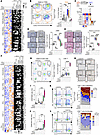 Figure 6
TGF-β blockade reduces immunosuppression induced by chemotherapy combination. (A) 4T1 tumor–bearing mice were treated with CDDP-Eri doublet, anti–TGF-β, anti–PD-L1, or a combination of these treatments. Tumors were recovered 8 days later. Total tumor mRNA was extracted, and immunosuppressive pathway gene expression was analyzed by NanoString. The heatmap on the left corresponds to normalized marker expression and the heatmap on the right indicates the P value from statistical analysis (at least n = 3 mice/group). Statistical significance was determined by 2-way ANOVA. (B–L) 4T1 tumor–bearing mice were treated as in A. (B) Proportions of TAM2s among total living cells were measured by flow cytometry. (C) Total CAFs were isolated using magnetic activated cell sorting (MACS), and MyCAF-related gene expression was analyzed by qPCR. (D) αSMA levels were measured by IHC in the tumor and automatically quantified with QPath software and (E) intratumoral collagen fibrosis fiber deposits were analyzed by Masson’s trichrome staining. Scale bars: 200 μm and 50 μm (enlarged insets). (F) Total tumor mRNA was extracted, and immune-related gene expression was analyzed by NanoString. The heatmap on the left corresponds to normalized marker expression, and the heatmap on the right indicates the P value from statistical analysis (2-way ANOVA). (G) Proportions of CTLs among total living cells were measured by flow cytometry. (H) CD8 was measured by IHC and automatically quantified with QPath software (scale bars: 200 μm). The CD8/TAM2 ratio (I) and CD8/CAF ratio (J) in tumors were calculated. (K) CD8+ activation was evaluated by analysis of PD-1, TIM-3, and Ki67 markers, and (L) the functionality of CD8+ was evaluated by analysis of GzmB, TNF-α, and IFN-γ expression. n = 5 mice/group. Data represent the mean ± SEM. *P < 0.05, **P < 0.01, ***P < 0.0001, and ****P < 0.0001, by 2-way ANOVA.
Taken together, these results indicate that the TGF-β targeting induced by CDDP-Eri counteracted the broad immunosuppressive effects of this cytokine and thus restored a global immunological context within the TME, which was favorable to the efficacy of anti–PD-L1 immunotherapy combined with immunogenic chemotherapy.
In human TNBC, TGF-β can be induced by CDDP-Eri combination treatment and confers an unfavorable prognosis, even when signs of a cytotoxic T cell response are present. In order to assess whether our results obtained in preclinical mouse models also have clinical relevance in humans, we evaluated different human public transcriptomic databases (The Cancer Genome Atlas [TCGA] and Molecular Taxonomy of Breast Cancer International Consortium [METABRIC]) to assess the prognostic effect of TGF-β (gene expression level) and TGF-β signaling (TGF-β1–associated metagene) (17) on prognosis, as well as their links to the immune response in human TNBC. This analysis revealed that the Tgfb1 gene was significantly more highly expressed in BCs (regardless of subtype) than in normal breast tissue (Figure 7A). Among the different transcriptomic subtypes of TNBCs (18), the TGF-β1 metagene is more strongly expressed in the TNBC subtypes that are less responsive to immunotherapy (basal-like immunosuppressed [BLIS], luminal androgen receptor [LAR], and mesenchymal [MES] subtypes) compared with the basal-like, immune-activated (BLIA) subtype, which is the subtype most responsive to anti–PD-L1 therapy (4) (Figure 7B). A high level of TGF-β1–related metagene expression appears to be associated with worse prognosis in terms of progression-free interval (PFI) (Figure 7C) and overall survival (OS) (Supplemental Figure 8A) in patients with localized TNBC.
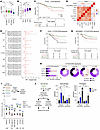 Figure 7
The CDDP-Eri combination induces TGF-β in human BC cell lines. (A) Box plots of TGFB1 gene expression across standard pathological classifications (ER+HER2–, HER2+, ER–HER2–) and normal breast tissue. (B) TGFB1-related metagene expression in TNBC subtypes (BLIA, BLIS, LAR, MES) from the Burstein classification. (C) Kaplan-Meier curves for PFI based on TGFB1 metagene expression. Green: low expression; red: high expression. Ticks denote censored data. (D) Heatmap of correlations between TGFB1 gene, TGFB1 metagene, and immune signatures (IFNG, CXCL9, STAT1, TILs, HLA, DRB1, CXCL10, IDO1) in TNBC. (E) Forest plots showing HRs for immune signatures and the TGFB1 metagene in relation to PFI (left). (F) Kaplan-Meier curves for PFI based on CYTOX and TGFB1 metagene expression in TCGA. Gray: CYTOXloTGFB1lo; red: CYTOXloTGFB1hi; green: CYTOXhiTGFB1lo; black: CYTOXhiTGFB1hi. (G) Kaplan-Meier curves for OS based on CYTOX and TGFB1 metagene expression in METABRIC (same color coding as in F). (H) Bar and pie charts depicting the distribution of patients among TNBC subtypes (BLIA, BLIS, LAR, MES) based on CYTOX-TGFB1 metagene combinations. (I) TNBC cell lines (MFM-223, HCC38, MDA-MB-231, MDA-MB-468, HCC1937, BT-549, DU4475) were treated with Eri, CDDP, or both (IC50 at 48 hours). TGFB1 expression was measured by qPCR (3 independent experiments, n = 3/experiment). (J) MDA-MB-468 cells were treated with CDDP-Eri, and supernatant was applied to human macrophages and CCD-Lu19 fibroblasts pretreated with galunisertib (100 nM, 24 hours). SERPIN1 expression was analyzed by qPCR. *P < 0.05, **P < 0.01, ***P < 0.0001, and ****P < 0.0001, by 1-way ANOVA.
On the contrary, in localized TNBCs, signs of an antitumor immune response (such as the presence of TILs or an IFN-γ inflammatory signature [gene expression profiling (GEP)]) are classically associated with a better prognosis (19), which we found again in TCGA database, with better OS for patients with a cytotoxicity [CYTOX] tumor expression signature (20) or a highly expressed GEP signature (Supplemental Figure 8, B and C). In human TNBCs, the genes implicated in the antitumor immune response and constituting the GEP signature (Ifng, Cxcl9/10, Stat1) had highly correlated expression levels (Figure 7D), whereas their expression was totally uncorrelated with either Tgfb1 or TGF-β1–related metagene expression (Figure 7D). This observation holds true, irrespective of the transcriptomic subtype of TNBC (Supplemental Figure 8D). These 2 aspects of TNBC biology therefore appear to be independent, and we therefore analyzed them jointly to estimate their mutual influence on the prognosis of patients with TNBC. In TCGA TNBC series, we examined the prognostic effect of TGF-β pathway activation (TGF-β1–associated metagene expression) in TNBC with or without evidence of a favorable antitumor immune response (expression level of various immune response signatures: Cd3ε (gene expression), CTL, Th1, CYTOX (20), expanded immune gene (EIG), IFN-γ, and GEP (21) (Figure 7E). We thus show that high expression of these various immune response signatures was associated with a better prognosis (PFI and OS), but only when TGF-β1 metagene expression was low (Figure 7E). For each of the immune response signatures examined, even in the case of significantly high expression, the coexistence of a highly expressed TGF-β signature (and which corresponds to the tumor profile in our models after treatment with the CDDP-Eri combination) then abolished the favorable prognostic effect. This is illustrated, for example, by the PFI curves for TNBCs according to the level of coexpression of cytotoxicity signatures (CYTOX) and the TGF-β1 metagene (Figure 7F). A similar trend was also found in an independent dataset (METABRIC), with the OS of patients with TNBC as a function of the same signatures (Figure 7G).
We then investigated whether there were differences in the coexpression profiles of these 2 signatures (TGF-β and immune response) with opposing prognostic roles, depending on the molecular subtype of human TNBC. Our analysis revealed that the different expression profiles (TGF-β1–related metagene combined with high or low CYTOX/GEP expression, respectively) could be found in each TNBC subtype (Figure 7H and Supplemental Figure 8E), but with significant differences in frequency: TNBCs with a favorable prognostic profile (immune responsehi/TGF-βlo) were more frequently of the BLIA type (which in clinical settings respond better to immunotherapy), whereas subtypes with a TGF-βhi signature mainly involved mesenchymal or LAR TNBCs (Figure 7H and Supplemental Figure 8E), which respond less well to immunotherapy in clinical settings (4). These results therefore show that, in humans, the immune responsehiTGF-βhi profile generated in our preclinical models by the immunogenic chemotherapy CDDP-Eri also exists in the basal state in certain TNBCs, especially of the MES subtype, with a major unfavorable prognostic effect of TGF-β.
Finally, we sought to examine whether chemotherapy with CDDP or CDDP-Eri was capable of inducing TGF-β expression in human TNBC cell lines, as in our preclinical mouse models. We therefore treated 7 different human TNBC cell lines in vitro that were representative of the different transcriptomic subtypes of this disease with Eri, CDDP, or the combination CDDP-Eri (IC50 is shown in Supplemental Figure 9, A–D). In 6 of our cell lines, as in our mouse models, we observed induction of Tgfb1 gene expression when the tumor cells were treated with CDDP or its combination with Eri, irrespective of the transcriptomic subtype of TNBC (Figure 7I and Supplemental 9E). DU-4475 line, the only cell line in which this phenomenon was not observed, corresponds to an immunomodulatory subtype that is enriched for the expression of immune response genes. This chemotherapy-induced TGF-β in human cell lines was again biologically active, as we show that conditioned medium from the human MDA-MB-468 cell line previously treated with CDDP-Eri was able to induce Serpin1 gene expression in cultured human macrophages and fibroblasts and that this was abolished by galunisertib treatment (Figure 7J).
Taken together, these analyses reveal that the CDDP-Eri combination was capable of inducing biologically active TGF-β in human TNBC cell lines and that this cytokine had a major prognostic effect in human TNBC, even when favorable signs of the immune response were present. These human data are therefore in line with our observations in preclinical models and may suggest the relevance of targeting TGF-β in the context of TNBC treated with immunogenic chemotherapy combined with anti–PD-(L)1 immunotherapy.


Copyright © 2026 American Society for Clinical Investigation
ISSN: 0021-9738 (print), 1558-8238 (online)