
Abstract
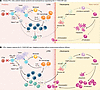
Chimeric antigen receptor T cell (CAR-T) therapy has transformed the treatment of hematologic malignancies, yet, severe inflammatory toxicities continue to limit its broader use. In this issue of the JCI, Goala et al. uncovered a mechanistic link between IFN-γ–driven inflammation and disrupted neutrophil homeostasis, revealing that cytokine release syndrome (CRS) and immune cell–associated hematologic toxicity (ICAHT) stem from a shared biological pathway. Using IL-2Ra–deficient mice and patient samples, they showed that IFN-γ suppressed IL-17A and granulocyte colony-stimulating factor (G-CSF), disrupting granulopoiesis and neutrophil survival. Strikingly, IFN-γ blockade eased both CRS and neutropenia without diminishing CAR-T efficacy, suggesting a path toward safer, better-tolerated cell therapies.
Authors
Stefanie R. Bailey, Marcela V. Maus
This file is in Adobe Acrobat (PDF) format. If you have not installed and configured the Adobe Acrobat Reader on your system.
Having trouble reading a PDF?
PDFs are designed to be printed out and read, but if you prefer to read them online, you may find it easier if you increase the view size to 125%.
Having trouble saving a PDF?
Many versions of the free Acrobat Reader do not allow Save. You must instead save the PDF from the JCI Online page you downloaded it from. PC users: Right-click on the Download link and choose the option that says something like "Save Link As...". Mac users should hold the mouse button down on the link to get these same options.
Having trouble printing a PDF?
- Try printing one page at a time or to a newer printer.
- Try saving the file to disk before printing rather than opening it "on the fly." This requires that you configure your browser to "Save" rather than "Launch Application" for the file type "application/pdf", and can usually be done in the "Helper Applications" options.
- Make sure you are using the latest version of Adobe's Acrobat Reader.
Supplemental data - Download (69.26 KB)


Copyright © 2026 American Society for Clinical Investigation
ISSN: 0021-9738 (print), 1558-8238 (online)