
Issue published October 1, 2026 Previous issue

- Volume 136, Issue 19
On the cover:
Targeting neutrophil effector function reduces graft-versus-host disease
Holzmüller et al. report that pegtarazimod, a peptide drug that reduces neutrophil effector functions, limits acute graft-versus-host disease mortality and severity in mice and is tolerated in patients. Furthermore, pegtarazimod protects enterocytes from oxidative damage and increases taurine metabolism. The cover image shows immunofluorescence staining of mouse small intestinal organoids. Nuclei were stained with DAPI (blue), actin was stained with phalloidin (red/pink), and pegtarazimod was stained with an anti-pegtarazimod antibody (green). Image credit: Verena Holzmüller.
Holzmüller et al. report that pegtarazimod, a peptide drug that reduces neutrophil effector functions, limits acute graft-versus-host disease mortality and severity in mice and is tolerated in patients. Furthermore, pegtarazimod protects enterocytes from oxidative damage and increases taurine metabolism. The cover image shows immunofluorescence staining of mouse small intestinal organoids. Nuclei were stained with DAPI (blue), actin was stained with phalloidin (red/pink), and pegtarazimod was stained with an anti-pegtarazimod antibody (green). Image credit: Verena Holzmüller.
Go to section:

-
Review Series
×
Abstract
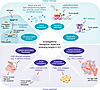
Despite growing recognition of invasive lobular carcinoma (ILC) as a biologically and clinically distinct subtype of breast cancer, ILC remains understudied. Most contemporary therapeutic trials continue to enroll patients predominantly with invasive ductal carcinoma/invasive carcinoma of no special type and rarely stratify by histology. As a result, ILC’s unique disease biology, characteristic loss of E-cadherin function, diffuse growth pattern, and distinct metastatic tropism remain underrepresented in evidence that guides systemic therapy recommendations. In this Review, we examine key molecular alterations and emerging therapeutic targets in ILC, emphasizing recent preclinical discoveries that identify subtype-specific therapeutic vulnerabilities and guide the development of histology-specific treatment approaches for this unique disease. In combination with endocrine therapies, effective targeting in ILC may require a multilayered strategy that extends beyond genomic alterations to leverage ILC’s specific estrogen receptor–associated proteins, metabolism, and tumor microenvironment. Future clinical trial frameworks incorporating prespecified ILC cohorts, tailored endpoints, and coclinical approaches enabling parallel testing in patients and patient-derived models could help accelerate the development and evaluation of ILC-targeted therapeutics.
Authors
Kristina A. Fanucci, Shaymaa Bahnassy, Arya Mariam Roy, Anna Sokolova, Daniel G. Stover, Peter T. Simpson, Rebecca B. Riggins, Rinath Jeselsohn
×Abstract
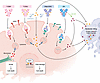
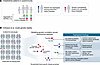
Antibody-drug conjugates (ADCs) have transformed the treatment landscape of breast cancer and redefined the conceptual distinction between targeted therapy and conventional chemotherapy. Originally conceived as “magic bullets” that selectively deliver cytotoxic warheads to antigen-expressing tumor cells, clinical and mechanistic evidence indicates that ADC activity depends on a broader interplay of target-dependent and target-independent mechanisms, including extracellular payload release, bystander killing, off-tumor uptake, and immune modulation. Here, we examine ADCs in breast cancer as a distinct therapeutic paradigm. We discuss how antigen biology, linker chemistry, payload features, and drug-to-antibody ratio collectively determine efficacy, toxicity, and therapeutic index. We then compare currently approved and emerging HER2- and TROP2-directed ADCs, highlighting how differences in linker stability, payload pharmacology, and bystander capacity can affect clinical outcomes in ADCs sharing the same target. We further discuss the biological basis and translational challenges of de novo and acquired resistance related to targets, payloads, and tumor microenvironmental constraints, as well as the implications of these mechanisms for biomarker development, sequencing rationales, and combination strategies with immune checkpoint inhibitors and DNA repair–targeting therapies. Finally, we outline future directions of ADC development, including expansion of the target space, novel payload modalities, and next-generation antibody and conjugation engineering.
Authors
Chenxu Guo, Leif W. Ellisen
×Abstract
Homologous recombination repair deficiency (HRD) occurs in approximately 10% of breast tumors and represents a major targetable vulnerability across multiple cancer types. Impairment of the homologous recombination DNA repair pathway — arising through somatic and germline mutations in homologous recombination repair genes, epigenetic mechanisms, and transcriptomic changes — leads to genomic instability and a reliance on error-prone repair mechanisms. Poly (ADP-ribose) polymerase (PARP) inhibitors harness the synthetic lethality of HRD and PARP inhibition, with current approvals encompassing both early-stage and advanced breast cancer in patients with germline BRCA1/2 (gBRCA1/2) mutations. However, emerging evidence suggests efficacy of PARP inhibitors beyond gBRCA1/2-mutated breast cancer to tumors with other homologous recombination repair defects that confer a “BRCAness” phenotype. This Review examines opportunities to broaden the use of PARP inhibitors in breast cancer and underscores the importance of innovative biomarkers, combination strategies, and next-generation agents to maximize therapeutic impact.
Authors
Charlotte S. Walmsley, Adela Rodriguez, Panagiotis A. Konstantinopoulos, Geoffrey I. Shapiro, Sara M. Tolaney, Judy E. Garber, Filipa Lynce
×Abstract
Immunotherapy has revolutionized the therapeutic landscape for many cancers, but its application in solid tumors has lagged. There is now evidence that immunotherapy can improve outcomes in triple-negative breast cancer, but hormone receptor–positive (HR+) breast cancer has traditionally been considered immunologically cold. However, emerging evidence challenges this binary paradigm, suggesting that a biologically relevant subset of HR+/human epidermal growth factor receptor 2–negative (HER2–) tumors exhibit meaningful immunogenic features and clinically relevant sensitivity to immune-based treatment. In this Review we summarize the current understanding of immunogenicity and clinical use of immune-based treatments across breast cancer subtypes. We argue for a broader view of a spectrum of breast cancer immunogenicity and highlight the importance of host factors, including parity and lactation history, in shaping antitumor immunity. Improved identification of immunologically active subsets and deeper mechanistic insight will be essential to expand the therapeutic benefit of immunotherapy to broader patient cohorts and to refine care of patients with breast cancer.
Authors
Jasmine Kay, Julia R. Dixon-Douglas, Michael A. Harris, Courtney T. van Geelen, Sherene Loi


-
Review
×
Abstract
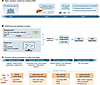
Preclinical drug development has long relied on animal models to predict safety and efficacy before agents enter human trials, despite critical differences between human and animal model physiology. The withdrawal of rosiglitazone, rofecoxib, and terfenadine due to cardiovascular toxicity exemplifies the translational cost of this mismatch. Alternative, human-based systems enable more accurate modeling of cardiometabolic diseases in a dish; in 2025, the US FDA’s new approach methodologies (NAMs) roadmap authorized the submission of results from human-relevant models. The roadmap encourages utilizing biological and digital twins as part of an integrated, context-specific, fit-for-purpose strategy. A “biological twin” is a human-derived in vitro system that captures the physiology of a patient and can be used to assess potential cardiotoxicity by drug metabolites. A “digital twin” is the computational counterpart trained on clinical drug response results that can further interpret biological twin data at the patient scale and predict pharmacological parameters. NAMs are no longer experimental but are not yet fully validated as replacements for animal models; major challenges remain before they can be effectively incorporated into the cardiometabolic disease drug discovery pipeline. Addressing these challenges head-on is essential for improving drug development and prediction of their cardiovascular safety.
Authors
Debarun Patra, Ibrahim M. Sayed, Ravichandra Venkateshappa, Latha Palaniappan, Tracey McLaughlin, Joseph C. Wu
-
Commentaries
×
Abstract
Hereditary hemorrhagic telangiectasia (HHT) is characterized by fragile, enlarged vessels with arteriovenous connections, which can form arteriovenous malformations (AVMs) that are prone to rupture. It is driven by mutations in TGF‑β pathway genes that disrupt endothelial cell responses and blood vessel remodeling. Two studies published in this issue of the JCI identify c‑KIT as a central mediator of HHT vascular pathology. Gahn et al. showed that SMAD4 loss derepressed c‑KIT, whose activity in the junctional mechanosensory receptor complex of endothelial cells reset the fluid shear stress set point to drive maladaptive vascular remodeling. Drapé et al. demonstrated that ALK1 loss in a mouse model of HHT induced a regional pro‑angiogenic c‑KIT+ endothelial state in brain AVMs. Both studies showed that pharmacologic c-KIT inhibition mitigated disease, revealing an unexpected, potentially ligand‑independent role for c‑KIT and highlighting a promising therapeutic target.
Authors
Ruilin Wu, Jason E. Fish
×Abstract
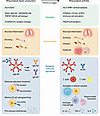
Rheumatoid factors (RFs) are autoantibodies directed against the tail region of IgG antibodies and are present in a majority of people with rheumatoid arthritis (RA). RF production is commonly assessed to help diagnose RA, but its performance is limited due to low specificity and sensitivity for reasons that have remained unclear. In this issue of the JCI, Hocaoğlu and Sawalha shed light on this matter using extensive phenome-, genome-, transcriptome-, and proteome-wide association analyses of RF-seropositive and -seronegative individuals. They report that RF production was controlled by a genetic signature that included HLA and non-HLA genes and an immune signature reflective of B cell dysregulation but distinct from the genetic and immune signatures associated with RA. These findings explain the limited diagnostic value of RF testing in RA and may help refine the clinical management of RA and development of interventions that prevent or delay disease.
Authors
Luc Van Kaer
×Abstract
Another individual’s distress can provoke withdrawal and avoidance behaviors, yet, in social species, it can also motivate approach and caregiving behavior. In this issue, Geng et al. identified a vasopressin-sensitive neuronal circuit that converts distress signals from a cagemate into caregiving-like behavior in mice. Using fiber photometry, electrophysiological recordings, and optogenetic activation to dissect this circuit, they showed that vasopressin neurons in the paraventricular hypothalamus recruit vasopressin 1a receptor–expressing (V1aR-expressing) neurons in the medial central amygdala, which engage the ventral tegmental area to promote allogrooming and injury-directed licking. The findings link emotional state matching, prosocial action, reinforcement, and stress relief, while raising important questions about circuit specificity, sex as a biological variable, and translation.
Authors
Jonathan P. Fadok
×Abstract
Autoimmune diseases share a genetic predisposition, and GWAS have identified certain HLA haplotypes as components of susceptibility. In this issue of the JCI, Eriksson et al. leveraged population-scale registry data from Sweden, encompassing 6.3 million individuals in combination with paired relatedness data from a remarkable 3.84 million sibling pairs drawn from 1.57 million nuclear families to create a unified model of the shared genetic risk across 22 common and rare autoimmune diseases. The resulting network of pairwise genetic relationships demonstrated that genetic predisposition alone could not explain the full spectrum of autoimmunity. Analyses exposed distinct patterns, confirmed expected genetic relationships, and revealed unexpected findings. By looking into the family to quantify shared genetic liability at a remarkable scale, this study not only reinforces established genetic components of autoimmune disease but also highlights variation that lacks shared genetic architecture, paving the way for future study of environmental mechanisms in autoimmunity.
Authors
Arielle Klepper, Mark S. Anderson

-
Research Letters
×
Abstract
Authors
Yashika Parashar, Zsofia Sztupinszki, Aurel György Prósz, Xiaolu Wang, Pratyusha Bala, Shweta Cavale, Chinedu Ukaegbu, Sapna Syngal, Asaf Maoz, Leah Biller, Ramona Lim, Matthew B. Yurgelun, Zoltan Szallasi, Nilay S. Sethi
×Abstract
Authors
Miki Kamiyama, Jingjing Shi, Lorna Rinck, Yanzhu Lin, Yifang Mao, Xiaowen Zhang, Ashik Ahmed Abdul Pari, Stephanie F. Preuss, Marlene Hoffarth, Gladys Hofsetz, Yuxi Di, Asmaa Zahran, Carleen Spegg, Maria Riedel, Donato Inverso, Roxana Ola, Junhao Hu, Kari Alitalo, Hellmut G. Augustin, Mahak Singhal
×Abstract
Authors
Seyi E. Elasoru, Christian Miccile, Jingwu Pan, Zhaoyang Zhang, Kalyanam Shivkumar, Herbert Herzog, Robert D. Harvey, Zhilin Qu, Olujimi A. Ajijola
×Abstract
Authors
Vlad Moisoiu, Roxanne Lourman, Frank Szulzewsky, Tobias Kessler, Giulio Collotta, Antonio Porro, Anne Bertolini, Franziska Singer, Patrick J. Cimino, Caroline Hertler, Wolfgang Wick, Guido Reifenberger, Eric C. Holland, Alessandro A. Sartori, Michael Weller, Hans-Georg Wirsching


-
Research Articles
×
Abstract
Hereditary hemorrhagic telangiectasia type 2 (HHT2), caused by mutations in ACVRL1 (also known as ALK1), is characterized by brain arteriovenous malformations (bAVMs), abnormal artery–vein connections for which treatment options remain limited. Despite evidence of endothelial cell (EC) heterogeneity, its role in bAVM pathogenesis remains poorly defined. Using EC-specific inducible Alk1-knockout mice (Alk1iECKO) and regionally resolved single-cell RNA sequencing, we showed that loss of ALK1 signaling induces bAVMs predominantly in the perineural vascular plexus. This process is driven by the emergence of a KIT+ angiogenic EC population with human AVM-like transcriptional features, including tip cell markers and activation of PI3K and KRAS signaling pathways. Cross-species analyses and validation in human samples demonstrated that KIT expression is conserved in ECs from both sporadic and HHT2 bAVMs. Drug-repurposing analysis identified KIT as a top actionable target, and we showed that Kit is directly repressed by BMP9/ALK1/SMAD4 signaling. Pharmacological inhibition of KIT reduced angiogenic reprogramming and vascular malformations in vivo without affecting normal vasculature. These findings identify a pathogenic angiogenic EC state and position KIT signaling as a therapeutically actionable pathway in bAVMs.
Authors
Elise Drapé, Lauranne Carrier, Gael Cagnone, Atik Rohmana Maftuhatul Fuad, Mathilde Bizou, Damian Sanchez, Typhaine Anquetil, Jack Wang, Halima Drissi Touzani Walali, Adnan Gopinadhan, Patrick Piet van Vliet, Joel P. Howard, Mysha Ibnat, Gregor Andelfinger, Ethan Winkler, Bruno Larrivée, Alexandre Dubrac
×Abstract
Vascular endothelial cells (ECs) encode a homeostatic fluid shear stress (FSS) set point that is essential for vascular stability. Deviations above or below this threshold trigger adaptive remodeling to restore physiological shear levels. Disruption of this control mechanism leads to enlarged arteriovenous malformations (AVMs) in hereditary hemorrhagic telangiectasia, a vascular disorder caused by heterozygous loss-of-function (LOF) mutation in ALK1, ENG, or SMAD4. Mechanistically, Smad4-deficient ECs are reset to a lower FSS set point value, resulting in AVMs that show characteristics of high-FSS remodeling with elevated KLF4 and high activation of the downstream Akt. Here, we investigated the KLF4/Akt upstream mechanisms by which SMAD4 sets the physiological FSS set point. We identified the receptor tyrosine kinase c-KIT as a component and regulator of the junctional mechanosensory receptor complex, which is highly upregulated in murine and human AVMs. SMAD4 restrains flow signaling by limiting c-KIT–dependent ERK5 activation and KLF4 induction. Thus, SMAD4 LOF leads to sustained c-KIT engagement in the sensory junctional apparatus, driving enhanced and prolonged activation of the ERK5/KLF4/Akt signaling axis. These results show that Smad4-LOF mutations induce malformations by disabling a key homeostatic mechanism and identify c-KIT as a potentially previously unrecognized therapeutic target.
Authors
Johannes Gahn, Fan Wu, Qing Zhang, Yuxi Di, Tanmaya Behera, Yonggang Ren, Zohrah Hashemi, Kuheli Banerjee, Julio Cordero, Claudia Gherman, Kornelia Andorfer, Caroline T. Seebauer, Fatemeh Mirzapour-Shafiyi, Gergana Dobreva, Martin A. Schwartz, Roxana Ola
×Abstract
Loss-of-function mutations in PSMB8/β5i and other components of the 20S proteasome result in multiorgan diseases, such as Chronic atypical neutrophilic dermatosis with lipodystrophy and elevated temperature (CANDLE) syndrome. Neurocognitive dysfunction associated with CANDLE suggests that proteasomal mutations may impact neuronal function and development early in life. We generated cerebral organoids (COs) from induced pluripotent stem cells (iPSCs) made from patients with CANDLE. The COs from CANDLE iPSCs exhibited impaired neuronal development when compared with COs from healthy control iPSCs. Impaired neuronal maturation in CANDLE COs was correlated with increased polyamines, which were also elevated in CSF from patients with CANDLE. The proteasome-regulated ornithine decarboxylase (ODC), the rate limiting enzyme in polyamine biosynthesis, was elevated in CANDLE neurons. Inhibition of ODC reversed polyamine overproduction and repaired neuronal maturation in CANDLE COs, suggesting a potential therapeutic avenue for intervention. These findings demonstrate that dysfunction of the proteasome affects neuronal development through overproduction of polyamines via dysregulation of ODC and offer insight into potential therapeutic strategies for CNS-related proteasomal dysfunction.
Authors
Clayton W. Winkler, Benjamin Schwarz, Katie Williams, Sara Alehashemi, Simote T. Foliaki, Joseph Snow, Lisa Joseph, Audrey Thurm, Christopher L. Friend, Gwendolyn Cooper, Eric Bohrnsen, Farzana Bhuyan, Nathan T. Brandes, Ruin Moaddel, Manfred Boehm, Guibin Chen, Cole D. Kimzey, Bibiana Bielekova, Joanna Kocot, Peter Kosa, Cathryn L. Haigh, Raphaela Goldbach-Mansky, Karin E. Peterson
×Abstract
Dexamethasone is widely used to control cerebral edema and inflammation in glioblastoma, but its benefits are limited by systemic toxicities and adverse prognostic associations. We evaluated local administration of dexamethasone via convection-enhanced delivery (CED) to maximize intratumoral antiinflammatory effects by increasing local corticosteroid exposure while minimizing systemic exposure. In 2 glioma mouse models, continuous intraparenchymal infusion of dexamethasone was well tolerated with no adverse effects. Pharmacokinetic analyses supported preferential intratumoral distribution and reduced systemic exposure with CED compared with systemic dosing. Single-nucleus RNA sequencing and immunohistochemistry showed attenuation of glioma-associated inflammation with downregulation of reactive microglial/macrophage programs and reduced tumor-infiltrating myeloid cells with a morphology consistent with a less activated state. Experiments in human induced pluripotent stem cell–derived microglia confirmed that dexamethasone directly suppresses inflammatory gene expression, indicating a conserved mechanism across species. This inflammatory suppression was recapitulated in both immortalized microglial (HMC3) and macrophage (THP-1) cell lines. These findings suggest that localized dexamethasone delivered by CED reprograms the glioma immune microenvironment and achieves control of inflammation without the systemic adverse effects associated with standard systemic dexamethasone therapy. This clinically translatable strategy may improve symptom management and provide a platform for integrating local immunomodulation with future glioblastoma therapies.
Authors
Nathaniel W. Rolfe, Nicholas B. Dadario, Liang Lei, Anthony J. Tang, Misha Amini, Damian E. Teasley, Nkechime Ifediora, Peter J. Chabot, Nathan J. Winans, Nina Yoh, Julia Furnari, Corina Kotidis, Clara H. Stucke, Nivia M. Urena, Yanping Sun, Abby L. Brand, Ashwin Viswanathan, Pavan Upadhyayula, Michael G. Argenziano, Colin P. Sperring, Nadine Khoury, Nelson Humala, Shikun Wang, Justin Neira, Peter A. Sims, Brian J.A. Gill, Peter Canoll, Jeffrey N. Bruce
×Abstract
Aneuploidy is a hallmark of cancer often associated with inferior prognosis. Copy number gains of chromosome 8 (chr8) are recurrent in multiple cancers, including breast, prostate, and colorectal cancers, and sarcomas, such as malignant peripheral nerve sheath tumors (MPNSTs). MPNSTs are aggressive, hard-to-treat sarcomas frequently linked to the neurofibromatosis type 1 (NF1) cancer predisposition syndrome. To investigate the role of chr8 gain in MPNST pathogenesis, we performed a CRISPR-knockout screen and identified 58 essential genes on chr8, including PTK2, which encodes focal adhesion kinase (FAK). We evaluated FAK as a therapeutic target and tested small-molecule FAK inhibitors (FAKi) alone or combined with RAF/MEK inhibitors (RAF/MEKi), a class of agents relevant to NF1-deficient tumors with ERK pathway hyperactivation. Both pharmacological and genetic inhibition of FAK reduced MPNST cell proliferation in vitro and tumor growth in vivo. Combined FAKi and RAF/MEKi treatment further suppressed phosphorylation of FAK, STAT3, and AKT while increasing cleaved caspase-3 and poly (ADP-ribose) polymerase 1 (PARP-1), indicating enhanced apoptosis. In MPNST patient-derived xenograft (PDX) models, combination therapy significantly reduced tumor growth, showing superior efficacy, particularly in chr8 gain MPNST PDX. These results support FAK/RAF/MEK cotargeting as a promising therapeutic strategy for chr8 gain MPNST and related tumors.
Authors
Guangfeng Wang, Dana C. Borcherding, Jiawan Wang, Xiaochun Zhang, Liuzhan Yang, Gorkem Oztosun, James J. Sears, Kangwen Xiao, Belinda B. Garana, Mark I. Zoberi, Aaron U. Bektas, Jeffrey J. Szymanski, Richa Rathore, Silvia Coma, Jonathan A. Pachter, Sara J.C. Gosline, Christine A. Pratilas, Angela C. Hirbe
×Abstract
Dietary cholesterol and de novo cholesterol synthesis in the liver use reciprocal coordination to maintain cholesterol homeostasis. However, high levels of dietary cholesterol still promote excessive cholesterol accumulation in the liver, leading to metabolic dysfunction–associated steatohepatitis (MASH), yet the mechanisms remain poorly understood. Here, we show that hepatic S100 calcium-binding protein A11 (S100A11), a member of the S100 family of calcium-binding proteins, positively responded to dietary cholesterol levels and was involved in hepatic cholesterol metabolism. S100A11 localized to the ER and could bind to cholesterol. In vivo and in vitro, hepatic overexpression of S100A11 led to sterol regulatory element–binding transcription factor 2 (SREBP2) activation to promote cholesterol synthesis, uptake, and accumulation, consequently exacerbating steatohepatitis. In contrast, inactivation of S100A11 had opposite effects and improved steatohepatitis. Mechanistically, S100A11 triggered the noncanonical entry of SREBP2 into the nucleus through a S100A11/annexin A1/importin β (S100A11/ANXA1/KPNB) axis, distinct from the well-known insulin-induced gene /SREBP cleavage-activating protein or caspase 2 pathways. Therefore, our work identifies S100A11 as a regulator of liver cholesterol metabolism, providing a promising target to treat MASH and hypercholesterolemia.
Authors
Mingfeng Zhan, Xiumei Xu, Huiyin Wu, Qijing Fan, Hongsheng Lu, Chengbin Li, Linqiang Zhang, Tingting Zhu, Yunqian Shen, Jing Liu, Yaomei He, Yingjie Wu, Jingjing Zhang, Xiaoju Zou, Bin Liang
×Abstract
Following acute kidney injury (AKI), a substantial subset of patients experience an irreversible progression to chronic kidney disease (CKD), yet the molecular determinants governing this maladaptive transition remain elusive, and effective clinical interventions are lacking. Here, we identify lactate as a key metabolic determinant orchestrating the transition from AKI to CKD. Analysis of the UK Biobank cohort revealed that elevated circulating lactate independently predicts CKD development in patients with AKI and correlates with fibrotic progression. Using murine ischemia-reperfusion injury models, we demonstrated that lactate drives sustained renal damage through posttranslational lactylation of the RNA helicase DDX18. Mechanistically, p300-mediated lactylation of DDX18 at lysine 116 disrupted its nucleolar retention, causing redistribution to the nucleoplasm, where it acquired enhanced binding affinity for CD44 mRNA. This subcellular relocalization stabilized CD44 mRNA through altered RNA–protein interactions, thereby amplifying fibrotic signaling pathways. Therapeutically, we developed a kidney-targeted, cell-penetrating peptide that specifically inhibits DDX18 K116 lactylation, effectively attenuating fibrotic progression in injured kidneys. Our findings establish protein lactylation as a regulatory mechanism governing RNA helicase nucleolar localization and subsequent control of mRNA stability, revealing a potential therapeutic target for interrupting fibrotic processes in CKD.
Authors
Lijun Dong, Jingwen Xie, Mengyuan Tao, Shuai Liu, Yueyang Lu, Tianxing Wu, Jian Geng, Qingyun Chen, Xiaoshan Zhao, Jianbo Zhao, Jia Zhou, Honghao Hou, Jun Ai, Tao Tao, Daming Zuo
×Plasma nucleosome profiling reports on tumor burden and molecular subtypes in small cell lung cancer
Abstract
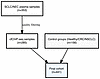
BACKGROUND Small-cell lung cancer (SCLC) is an aggressive malignancy with a poor prognosis and marked transcriptional heterogeneity that may drive distinct therapeutic vulnerabilities. Clinical translation of molecular subtyping has been limited by restricted access to tumor biopsies, particularly at relapse.METHODS We applied chromatin immunoprecipitation of cell-free nucleosomes carrying active histone modifications followed by sequencing (cfChIP-seq) to 441 plasma samples from individuals with advanced SCLC, other neuroendocrine carcinomas, or non-SCLC cancers, as well as from healthy controls. Plasma cfChIP-seq profiles were integrated with matched tumor transcriptomes from 73 samples, including 41 time-matched pairs.RESULTS cfChIP-seq captured the epigenetic and transcriptional landscape of tumor-derived cell-free DNA (cfDNA), including SCLC tissue- and cell-of-origin signatures. A quantitative cfChIP-seq–derived SCLC score tracked radiographic tumor burden and was associated with prognosis. Signals at promoters of lineage-defining transcription factor genes, including ASCL1, NEUROD1, POU2F3, and ATOH1, correlated strongly with matched tumor RNA expression and supported noninvasive inference of SCLC transcriptional subtypes directly from plasma.CONCLUSION Plasma cfChIP-seq provides a practical liquid biopsy platform for real-time assessment of tumor burden, tumor state, and molecular subtype in SCLC. These findings support further development of cfChIP-seq for precision monitoring and subtype-informed therapeutic stratification in SCLC.TRIAL REGISTRATION ClinicalTrials.gov NCT02484404, NCT02487095, NCT02769962, NCT03554473, NCT03896503, and NCT02146170.FUNDING Center for Cancer Research; Intramural Program of the NCI (ZIA BC 011793); European Research Council (ERC) (Adg no. 101019560 “cfChIP”).
Authors
Gavriel Fialkoff, Nobuyuki Takahashi, Israa Sharkia, Jenia Gutin, Nadav Hermoni, Michael Nirula, Rajesh Kumar, Lorinc Pongor, Samantha Nichols, Linda Sciuto, Kanak Parmar, Parth Desai, Priya Suresh, Melissa Abel, Rajaa El Meskini, Myriam Maoz, Yakir Rottenberg, Shoshan Nevo, Hovav Nechushtan, Tamar Peretz, Diana Roame, Ayala Hubert, Jonathan E. Cohen, Azzam Salah, Mark Temper, Albert Grinshpun, Zoe Weaver-Ohler, Arun Rajan, William Douglas Figg Sr., Aviad Zick, Ronen Sadeh, Nir Friedman, Anish Thomas
×Abstract
Intestinal lipid metabolism is essential for systemic energy homeostasis, and its modulation is emerging as a therapeutic strategy for obesity. Menin, encoded by the MEN1 gene, is a scaffold protein that regulates chromatin remodeling and gene expression and is abundantly expressed in intestinal epithelial cells (IECs), but its metabolic role remains underexplored. Here, we generated IEC-specific Men1-knockout mice and found that Men1 deficiency protected against high-fat diet–induced obesity, accompanied by elevated carboxylesterase 1 (CES1) expression in IECs. Increased CES1 promoted triglyceride (TG) hydrolysis and reduced intracellular TG storage, thereby limiting the lipid substrate pool required for ApoB48-dependent chylomicron assembly. Although lipid hydrolysis was enhanced, steady-state free fatty acid levels were not increased; instead, Men1 deficiency activated fatty acid β-oxidation programs and increased etomoxir-sensitive fatty acid–dependent mitochondrial respiration, supporting enhanced fatty acid catabolism. Mechanistically, menin recruited histone deacetylase 1 and interacted with the nuclear receptor liver X receptor-β to suppress Ces1g transcription, thereby sustaining efficient intestinal lipid absorption. Pharmacological inhibition of menin with MI-463 recapitulated the metabolic effects of inducible Men1 deletion. In a human gut organoid-on-chip system, MI-463 dose-dependently increased CES1 expression and markedly reduced lipid accumulation. Collectively, our findings identify menin as a regulator of intestinal lipid metabolism and suggest menin inhibition as a potential therapeutic strategy for obesity-related metabolic disorders.
Authors
Xiaoru Cao, Pingping Zhou, Haiyue Meng, Zhitao Guo, Yan Cao, Chenghao Wang, Lulu Liu, Yinghao Guo, Yue Wang, Guoshun Xin, Dabin Liu, Feng Geng, Jian Ma
×Abstract
γ-Secretase is a transmembrane protease complex that cleaves multiple type I transmembrane proteins, including amyloid precursor protein and neurogenic locus notch homolog protein (NOTCH). Although numerous γ-secretase inhibitors and modulators targeting Notch-dependent cancers have been developed in recent decades, their clinical translation has been hampered by low substrate specificity and on-target gut toxicity. Using a proteomics-based screening approach, we identified dedicator of cytokinesis protein 2 (DOCK2) as an interactor of the γ-secretase subunit nicastrin (NCSTN). We further demonstrate that DOCK2 regulates mannosylation of NCSTN N-glycans, which in turn modulates γ-secretase activity toward NOTCH receptors. Both genetic depletion of DOCK2 and pharmacological inhibition of NCSTN mannosylation with kifunensine attenuated Notch-dependent leukemia progression in vivo. Collectively, these findings uncover a regulatory mechanism underlying substrate-specific activation of γ-secretase and suggest a promising therapeutic strategy for Notch-related diseases.
Authors
Hua Jiang, Weixiang Bian, Yanjun Cao, Zhuo Zhang, Yijia Chen, Yue Sui, Hongqiang Qin, Xu Li
×Abstract
The endocardium is a major source of coronary angiogenesis and arterialization, through coordinated cell fate transition and migration. However, the transcriptional regulatory network synchronizing cell fate determination and movement remains unclear. Here, we identified transcription factor HAND2 as a key candidate for coronary vascular formation. Endocardial deletion of Hand2 in mice disrupted arterial-venous networks and stunted coronary arteries, paralleling a ventricular noncompaction phenotype. Moreover, deletion of Hand2 produced excessive tip cells with defective movement. RNA-seq analysis revealed enhanced hypoxic metabolic activation but declined TGF-β/p38MAPK–dependent endothelial-mesenchymal transition. In contrast, genetic inhibition of the core hypoxic regulators or pharmaceutical administration of TGF-β2 partially recovered the coronary arterial defects in Hand2 mutants. Furthermore, HAND2 was found to directly bind to promoters of the target genes, harmonizing cell migration and cell fate transition. These findings pinpoint HAND2 as an essential regulator of the endocardial transcriptional regulatory network for coronary arterialization and provide potential therapeutic targets for coronary artery diseases.
Authors
Huijuan Wang, Haosheng Zhang, Leiyin Zheng, Peihan Zhang, Yuqian Wang, Sijia Ding, Wenping Liu, Yuanming Cheng, Zhongzhou Yang, Wen Luo
×CD73 inhibition overcomes adaptive immune resistance to PARP inhibition in models of prostate cancer
Abstract
Metastatic castration-resistant prostate cancer (mCRPC) remains a leading cause of cancer-related mortality in men. Although poly(ADP-ribose) polymerase (PARP) inhibitors are approved for mCRPC patients with homologous recombination repair (HRR) deficiencies, clinical trials combining olaparib with PD-1/PD-L1 inhibitors showed limited efficacy in unselected populations. To investigate the immunomodulatory effects of PARP inhibitors in an unbiased manner, we performed bulk RNA-seq on HRR-proficient MycCaP cells treated with the PARP inhibitor olaparib versus vehicle control. Transcriptomic analysis revealed robust upregulation of CD73 (NT5E), an ectoenzyme and emerging immune checkpoint that generates extracellular adenosine, suggesting an adaptive mechanism that undermines olaparib efficacy and promotes immunosuppression. CD73 induction by olaparib was validated in human and mouse prostate cancer cell lines, with more pronounced effects in HRR-compromised PTEN-KO cells. Mechanistically, olaparib-driven CD73 expression was mediated through DNA damage–activated ATR/CHEK1/IRF1 and TGF-β1/AKT signaling pathways. In parallel, olaparib enhanced tumor immunogenicity by activating type I IFN signaling and antigen presentation machinery. In vivo, combining olaparib with CD73 blockade significantly delayed tumor growth, improved T cell infiltration, and augmented CD8+ T cell effector function across HRR-proficient and PTEN-KO prostate cancer models. These findings identify olaparib-induced CD73 upregulation as an adaptive resistance mechanism and support olaparib plus CD73 blockade as a promising therapeutic strategy for advanced prostate cancer, irrespective of HRR status.
Authors
Ping Xie, Renqiang Ma, Minghui Zhang, Jie Fan, Hui Tang, Longzhen Song, Yong Wan, Timothy M. Kuzel, Deyu Fang, Weiguo Cui, Jennifer D. Wu, Sarki A. Abdulkadir, Yi Zhang, Akash Patnaik, Bin Zhang
×Abstract
Metabolic dysfunction–associated steatohepatitis (MASH) involves hepatocyte damage that cannot be explained solely by lipid accumulation. Here, to discover injury-specific pathways, we focused on a gene of uncertain function, EF-hand domain family member D1 (EFHD1), identified in human genome-wide association studies of liver injury but not liver fat. We showed that EFHD1, a Ca2+-dependent actin cross-linker, stabilizes endoplasmic reticulum–mitochondria contact sites (ERMCS) by detecting spatiotemporal coincidence of interorganellar proximity and ER Ca2+ release. During MASH, EFHD1 upregulation drives pathological mitochondrial fragmentation via excessive contact persistence. This structural failure promotes mitochondrial double-stranded RNA escape and activation of a maladaptive, antiviral, protein kinase RNA-activated–associated stress response, a causal relationship also supported by Mendelian randomization in humans. Consequently, inhibiting EFHD1 in human and mouse models blunts hepatocyte damage. These findings identify EFHD1 as a Ca2+-dependent ERMCS stabilizer, reveal a hepatocyte-intrinsic injury pathway, and suggest EFHD1 inhibition as a therapeutic strategy.
Authors
David R. Eberhardt, Emma C. Rekate, Yasmin B. Masini, Hannah E. Duron, David Mollinedo, Adrian M. Velarde, Devorah Stucki, Tara R. Price, Sandra H.J. Lee, Enrique Balderas, Neeraj K. Rai, Ashley R. Bratt, Anthony M. Balynas, Chris J. Stubben, Ryan Bia, Sudipa Maity, Nicolas Hartel, Xue Yin, Andrea Corbin, Anshu Kumari, Dung M. Nguyen, Daisuke Shimura, Vu D. Nguyen, Vishaka Vinod, Kamrul H. Chowdhury, Francisco Verdeguer, Joel Zvick, Patrice N. Mimche, Sihem Boudina, Stavros G. Drakos, Ademuyiwa S. Aromolaran, Sarah Franklin, Vivek Garg, Robin M. Shaw, William L. Holland, Scott A. Summers, Marcus G. Pezzolesi, Jared Rutter, Kimberley J. Evason, Dipayan Chaudhuri
×Abstract
Transfer RNA (tRNA) modifications play a critical role in regulating codon-specific mRNA translation and enabling tumor cell adaptation. The RNA methyltransferase 1 (METTL1) installs N7-methylguanosine (m7G) modifications on tRNAs, thereby shaping codon usage and translational output. However, the function and mechanistic contribution of the METTL1/tRNA axis in pancreatic ductal adenocarcinoma (PDAC) remain poorly defined. Here, we showed that METTL1 was overexpressed in PDAC tissues and that elevated METTL1 expression was associated with poor patient survival. Genetic ablation of METTL1 markedly suppressed PDAC cell proliferation, migration, and tumor growth in vitro and in vivo. Mechanistically, METTL1 loss selectively reduced m7G-modified valine tRNAs — particularly Val-AAC, Val-CAC, and Val-TAC — leading to impaired translation of valine-enriched OXPHOS transcripts. As a consequence, METTL1 deficiency disrupted mitochondrial respiration and energy production in PDAC cells. Consistent with this model, valine tRNA levels were elevated in PDAC tissues, and their selective depletion phenocopied METTL1 loss by impairing mitochondrial bioenergetics and tumor cell fitness. Thus, the METTL1/valine tRNA axis promoted PDAC progression through codon-dependent translational control of the mitochondrial electron transport chain and oxidative metabolism. Together, our findings identify a METTL1/tRNA/mitochondria signaling axis as a metabolic vulnerability and a promising therapeutic target in pancreatic cancer.
Authors
Jiabei Zhu, Qi Zhang, Douglas Evans, Rui Su, Qiuhui Pan, Ajay Goel
×Abstract
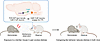
Distress sharing within an ingroup instinctively motivates caregiving-like prosocial behavior in social animals and humans, yet how aversive social stimuli paradoxically trigger such behavior remains unclear. Here, we show that stress-state matching in observer mice elicits caregiving-like behaviors (allogrooming and injury-targeted allolicking) toward cagemates in pain, resulting in synchronized social buffering. Importantly, we identify that the excitation of vasopressin receptor 1a–expressing (V1aR-expressing) neurons in the central medial amygdala (CeM) underlies both emotional-state matching and subsequent allogrooming/allolicking. This excitation is accomplished by arginine vasopressin (AVP) release from presynaptic terminals of the hypothalamic paraventricular nucleus (PVN) to act specifically on postsynaptic V1aR in the CeM. The CeMV1aR neurons then project to the ventral tegmental area (VTA) to drive caregiving-like actions through positive reinforcement, manifested as prosocial preference and recurrent allogrooming/allolicking, and to produce anxiolysis in the caregiver. Collectively, we unravel a dedicated trisynaptic PVNAVP-CeMV1aR-VTA circuit driving and gating caregiving-like behaviors and advance the mechanistic understanding of AVP-V1aR signaling in prosociality.
Authors
Kai-Wen Geng, Rui-Rui Wang, Yan Yang, Yan Wang, Ting He, Chun-Li Li, Chong-Shun Xu, Jun Chen
×Abstract
Hypoxia-inducible factor 1 (HIF-1) orchestrates the transcriptional regulation of thousands of genes involved in breast cancer (BC) progression. Here, we identified protein phosphatase 2A (PP2A) methylesterase 1 (PPME1) as a critical HIF-1 target gene that drives oncogenic signaling under hypoxic conditions. In BC cells, HIF-1–dependent PPME1 expression caused inhibition of the PP2A catalytic subunit (PP2Ac), thereby diminishing PP2A activity, which led to AKT activation, phosphorylation of β-catenin, and its nuclear translocation. Nuclear β-catenin cooperates with HIF-1 to promote BC stem cell specification by activating transcription of the NANOG and KLF4 genes, which encode pluripotency factors, and to drive immune evasion by activating transcription of VEGFA, which recruits and polarizes immunosuppressive tumor-associated macrophages and ISG20, which represses STAT1/IRF1-dependent expression of CXCL10, thereby impairing CD8+ T cell recruitment. In vivo, PPME1 knockdown altered the tumor immune microenvironment, enhanced antitumor immunity, and synergized with anti–CTLA-4 immunotherapy to enable complete tumor eradication. These findings establish PPME1 as a critical regulator linking hypoxia signaling, stemness, and immune evasion and highlight its potential as a BC therapeutic target in combination with immune checkpoint blockade.
Authors
Yajing Lyu, Varen Talwar, Yongkang Yang, Si-Sim Kang, Shuyi Li, Shaima Salman, Daiana Drehmer, Yufeng Wang, Chelsey Chen, Vijay Ramu, Sujin Kim, Dylan Park, Tina Yi-Ting Huang, Emmanuel Datan, Dominic Dordai, Jonathan P. Schneck, Gregg L. Semenza
×Abstract
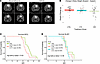
The success of allogeneic hematopoietic cell transplantation (allo-HCT) is limited by acute graft-versus-host disease (aGVHD). We have previously reported that neutrophils can exacerbate tissue damage caused by conditioning regimens. Pegtarazimod is a synthetic peptide, derived from the capsid protein of human astrovirus serotype 1, that was shown to reduce neutrophil effector functions. Therefore, we evaluated the therapeutic activity of pegtarazimod against aGVHD. Pegtarazimod significantly reduced aGVHD-related mortality, histological aGVHD severity, and proinflammatory cytokines in multiple in vivo mouse models while maintaining the antileukemia effect. Mechanistically, pegtarazimod reduced inflammation by decreasing ROS production, as investigated using allo-HCT recipient mice with genetic inactivation of NADPH oxidase in the BM. In addition to the antiinflammatory effect, pegtarazimod protected intestinal organoids against TNF-induced toxicity and oxidative DNA damage. In the phase II clinical trial AURORA, pegtarazimod treatment was well tolerated in patients with corticosteroid-refractory aGVHD (ClinicalTrials.gov NCT06343792), with an overall response rate of 4/7 patients at day 28. In summary, pegtarazimod reduced aGVHD in mice by suppressing proinflammatory neutrophil effector functions and preserving enterocyte integrity. The clinical trial data support tolerability of pegtarazimod in aGVHD patients, and further studies are needed to determine efficacy.
Authors
Verena Holzmüller, Jana Gawron, Ann-Cathrin Burk, Anna-Verena Stell, Anna-Sophia Baur, Alexander Zähringer, Viktor Fetsch, Annika Mäder, Alina Hartmann, Nana Talvard-Balland, Neel Krishna, Kenji Cunnion, Ulrich Thienel, Paolo Martini, Lindsey Glenn, James L.M. Ferrara, Monzr M. Al Malki, Hannah Choe, José Antonio Pérez-Simón, Annette Schmitt-Graeff, Joerg Buescher, Natalie Köhler, Zohreh Mansoori Moghadam, Philipp Henneke, Geoffroy Andrieux, Melanie Boerries, Robert Zeiser
×Abstract
BACKGROUND Autoimmune diseases (ADs) often co-occur within individuals and families, indicating shared genetic risk factors. However, the composition of genetic overlap across autoimmunity is largely unknown.METHODS This nationwide study included 6,336,615 individuals born in Sweden between 1932 and 1983, comprising 3,839,400 full sibling pairs. Based on national health registers, 22 ADs were identified from 1969 to 2013. Aggregation and coaggregation of ADs among siblings was used to estimate pairwise genetic correlations of ADs under a liability-threshold model. Network analysis and principal component analysis were used to characterize the structure of shared genetic risk across ADs.RESULTS A total of 707,995 individuals (11.2%) were diagnosed with at least 1 AD. The studied ADs formed a network of significant genetic correlations (mean rg = 0.24, range 0.08–0.84) with clusters of more closely related ADs (rg ≥ 0.3). We found no evidence of a significant universal factor predisposing to autoimmunity.CONCLUSION This study demonstrates that ADs share substantial cluster-specific genetic overlap that largely aligns with affected tissue types, leading to distinct groupings of connective tissue diseases, gastrointestinal disorders, and endocrinopathies, whereas diseases of the nervous system show limited genetic cohesion. This suggests that shared biological mechanisms may drive coaggregation within disease groups. Clinically, these insights highlight the importance of monitoring patients and their relatives for related autoimmune disorders.FUNDING The Swedish Society of Medicine, Region Värmland’s County Research Council, The Swedish Research Council, The Knut and Alice Wallenberg Foundation, Regional Agreement on Medical Training and Clinical Research (ALF) between Stockholm County Council and Karolinska Institutet.
Authors
Daniel Eriksson, Ralf Kuja-Halkola, Marie Holmqvist, Henrik Larsson, Agnieszka Butwicka, Soffia Gudbjörnsdottir, Olle Kämpe, Sophie Bensing, Jakob Skov
×Abstract
Hepatocellular carcinoma (HCC) is heterogeneous, and hepatocyte plasticity is linked to poorer patient outcomes. A subset of human HCC harboring tuberous sclerosis complex 1 (TSC1) mutations exhibits more aggressive behavior. Transcription factor EB (TFEB) is a master regulator of lysosomal biogenesis and cell fate. We analyzed human normal and HCC tissue arrays for TFEB and CK19 expression, as well as bulk and single-cell RNA-seq datasets from mouse and human HCC, to define TFEB-associated transcriptional programs. We performed biochemical, histological, metabolomic, and transcriptomic analyses in liver-specific Tsc1-knockout (L-Tsc1–KO) and L-Tsc1 Tfeb–double KO mice. Loss of hepatic Tsc1 led to increased phosphorylation of S6 and 4EBP1, with paradoxical increases in TFEB nuclear translocation and activation. L-Tsc1–KO mice showed increased hepatocyte plasticity, decreased HNF4α, increased YAP activation, and spontaneous HCC with increased SOX9- and CK19-positive biliary epithelial cell–like cells at 8–12 months. Deletion of Tfeb dampened hepatic metabolic reprogramming and hepatocyte fate changes and inhibited tumor progression in L-Tsc1–KO mice. Increased TFEB activity was associated with increased YAP and SOX9 gene expression and high-grade malignant HCC in humans. These findings indicate that loss of hepatic TSC1 leads to noncanonical TFEB activation, promoting hepatocyte plasticity and tumor heterogeneity associated with high-grade malignancy in both mouse and human HCC.
Authors
Chen Zhang, Xiaojuan Chao, Sha Neisha Williams, Xiaoli Wei, Anthony M. DiGirolamo, Alisha Bajracharya, Lichun Ma, Ming Huang, Nicholas Dunn, Wanqing Liu, Kaito Ueda, Masayuki Sugimoto, Andrea Ballabio, Hong-Min Ni, Wen-Xing Ding
×Abstract
Liver sinusoidal endothelial cells (LSECs) regulate nutrient flux and immune surveillance within the hepatic niche, yet how they function as metabolic stress sensors that instruct adaptive immune remodeling during metabolic dysfunction–associated steatotic liver disease (MASLD) remains unclear. Here, single-nucleus transcriptomics of human MASLD revealed stage-dependent activation of cyclic GMP-AMP synthase/stimulator of interferon genes (cGAS/STING) signaling in LSEC comparable with that in macrophages, with endothelial activation showing greater responsiveness to metabolic stress. Endothelium-specific STING deletion attenuated steatohepatitis and fibrosis in mice. Mechanistically, LSEC-intrinsic STING activation reprogrammed the angiocrine landscape through NF-κB–mediated transcriptional repression of the endothelium-derived factor BMP4. Loss of BMP4 disrupted the tolerance-supporting sinusoidal immunometabolic niche, skewing CD4+ T cell differentiation toward pathogenic Th17 states while destabilizing Treg, collectively exacerbating hepatic metabolic failure. In human MASLD, endothelial STING activity inversely correlated with BMP4 expression at single-cell resolution. Targeted delivery of a STING inhibitor to LSECs using peptide-functionalized nanoparticles restored hepatic immunometabolic balance at one-tenth the systemic dose. Together, these findings establish endothelial STING as a metabolically responsive vascular immune checkpoint that links chronic metabolic stress to adaptive immune remodeling and fibrotic progression.
Authors
Zhi-Bin Lin, Peng Zou, Xian-Yi Ma, Jun-Bo Song, Hong Zhang, Wei Du, Dan Wei, Ping Song, Xin Hong, Jing-Jing Liu, Zhi-Qiang Fang, Hao Xu, Fei He, Juan-Li Duan, Ke-Feng Dou, Lin Wang
×Abstract
BACKGROUND Rheumatoid factor (RF) autoantibodies are highly prevalent, yet the molecular determinants of RF development and its progression to rheumatoid arthritis (RA) remain poorly understood. Here, we define the genetic, phenotypic, and molecular architecture of RF and its progression to RA.METHODS A total of 469,036 UK Biobank participants with RF testing and 76 Allen Institute for Immunology–University of California, San Diego–University of Colorado Transition to Rheumatoid Arthritis (ALTRA) cohort individuals were studied. Phenome-wide association studies (PheWAS), GWAS, and proteome-wide association studies (PWAS) compared RF+ individuals who did not have autoimmune disease with RF– control individuals. Single-cell RNA-seq enabled pseudobulk differential expression and cytokine signature enrichment analyses.RESULTS RF seroprevalence was 9.3% and longitudinally stable in 94.5% of individuals. PheWAS identified 48 significant associations, led by chronic viral hepatitis (OR 4.8), hypersensitivity pneumonitis (OR 3.6), bronchiectasis (OR 1.9), and COPD (OR 1.4). GWAS of 24,216 RF+ individuals revealed 29 independent loci; the strongest signal was in the extended HLA region (OR 1.45, P = 5.4 × 10–221). Non-HLA loci converged on B cell homeostasis genes (ETS1, BACH2, PAX5, TNFRSF13B, FCGR2A). RF+ individuals did not carry elevated RA polygenic risk. Proteomics profiling identified 153 differentially abundant proteins enriched for humoral immunity and IFN-induced chemokines, with 79% showing dose response relationships across titers. Progression to RA involved a shift toward activating tissue-damaging inflammatory pathways rather than amplification of the RF signature. Single-cell transcriptomics of RF+ individuals without RA localized dysregulation to memory B cells, with downregulation of inhibitory genes (FCGR2B, BACH2, FOXP1) and upregulation of activation markers.CONCLUSION RF production is governed by HLA class II and B cell regulatory loci, associated with mucosal inflammation, and genetically and molecularly distinct from RA.FUNDING This study was supported by the Rheumatoid Arthritis Research Program Grant from the Arthritis Foundation.
Authors
Mehmet Hocaoğlu, Amr H. Sawalha








Copyright © 2026 American Society for Clinical Investigation
ISSN: 0021-9738 (print), 1558-8238 (online)