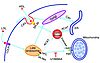
Lessons from viral manipulation of protein disposal pathways
High-flux mitochondrial cholesterol trafficking, a specialized function of the adrenal cortex
Intracellular cholesterol transport
Regulation and mechanisms of macrophage cholesterol efflux
Alan R. Tall, Philippe Costet, Nan Wang
Full text |
PDF
(Page 899)
Consequences of cellular cholesterol accumulation: basic concepts and physiological implications
Endothelial integrins and angiogenesis: not so simple anymore
Anxiolytic drug targets: beyond the usual suspects
Antineutrophil cytoplasmic antibody and vasculitis: much more than a disease marker
PPARγ ligands inhibit primary tumor growth and metastasis by inhibiting angiogenesis
Dipak Panigrahy, Samuel Singer, Lucy Q. Shen, Catherine E. Butterfield, Deborah A. Freedman, Emy J. Chen, Marsha A. Moses, Susan Kilroy, Stefan Duensing, Christopher Fletcher, Jonathan A. Fletcher, Lynn Hlatky, Philip Hahnfeldt, Judah Folkman, Arja Kaipainen
Abstract |
Full text |
PDF
(Page 923)
S
everal drugs approved for a variety of indications have been shown to exhibit antiangiogenic effects. Our study focuses on the PPARγ ligand rosiglitazone, a compound widely used in the treatment of type 2 diabetes. We demonstrate, for the first time to our knowledge, that PPARγ is highly expressed in tumor endothelium and is activated by rosiglitazone in cultured endothelial cells. Furthermore, we show that rosiglitazone suppresses primary tumor growth and metastasis by both direct and indirect antiangiogenic effects. Rosiglitazone inhibits bovine capillary endothelial cell but not tumor cell proliferation at low doses in vitro and decreases VEGF production by tumor cells. In our in vivo studies, rosiglitazone suppresses angiogenesis in the chick chorioallantoic membrane, in the avascular cornea, and in a variety of primary tumors. These results suggest that PPARγ ligands may be useful in treating angiogenic diseases such as cancer by inhibiting angiogenesis.
Inhibition of endothelial cell survival and angiogenesis by protein kinase A
Semi Kim, Manjiri Bakre, Hong Yin, Judith A. Varner
Abstract |
Full text |
PDF
(Page 933)

R
eceptors for the provisional ECM are important regulators of angiogenesis. One of these receptors, integrin α5β1, plays a critical role in tumor- and growth factor–induced angiogenesis, because antagonists of this integrin potently inhibit angiogenesis and tumor growth. Here we show that the integrin α5β1 promotes endothelial cell survival during angiogenesis in vivo by suppressing the activity of protein kinase A (PKA). Antagonists of integrin α5β1 activate PKA, which then leads to the activation of caspase-8 and induction of apoptosis. Direct activation of PKA by cAMP or by expression of the PKA catalytic subunit also induces endothelial cell apoptosis, resulting in angiogenesis inhibition in vivo. Our studies indicate that ligation of integrin α5β1 during angiogenesis suppresses an apoptotic program that is dependent on PKA. These studies also indicate that induction of endothelial cell apoptosis in vivo by genetic or pharmacological activation of PKA may be a useful strategy to inhibit angiogenesis.
Pivotal role of CEACAM1 protein in the inhibition of activated decidual lymphocyte functions
Gal Markel, Dana Wolf, Jacob Hanna, Roi Gazit, Debra Goldman-Wohl, Yuval Lavy, Simcha Yagel, Ofer Mandelboim
Abstract |
Full text |
PDF
(Page 943)

L
ymphocytes in direct contact with embryonic extravillous trophoblasts constitute more than 40% of decidual cells and appear to play major roles in implantation and early gestation. A unique subset of NK cells, making up 70–80% of decidual lymphocytes, express high levels of CD56 but lack CD16. We have recently demonstrated a novel class I MHC–independent inhibitory mechanism of NK cell cytotoxicity that is mediated by CEACAM1 homotypic interactions. This mechanism is used by some melanoma cells to avoid attack, mainly by CD16– NK cells. We now demonstrate that CEACAM1 is expressed on primary extravillous trophoblasts and is upregulated on the vast majority of IL-2–activated decidual lymphocytes, including NK, T, and NKT cells. Importantly, we present evidence that CEACAM1 interactions inhibit the lysis, proliferation, and cytokine secretion of activated decidual NK, T, and NKT cells, respectively. In vivo analysis of decidual lymphocytes isolated from cytomegalovirus-infected (CMV-infected) pregnant women revealed a dramatic increase in the expression of CEACAM1. Finally, we suggest that a novel ligand for this adhesion molecule is present on the surface of CMV-infected fibroblasts. These combined results demonstrate a major role for the CEACAM1 protein in controlling local decidual immune responses.
Antineutrophil cytoplasmic autoantibodies specific for myeloperoxidase cause glomerulonephritis and vasculitis in mice
Hong Xiao, Peter Heeringa, Peiqi Hu, Zhi Liu, Minglang Zhao, Yasuaki Aratani, Nobuyo Maeda, Ronald J. Falk, J. Charles Jennette
Abstract |
Full text |
PDF
(Page 955)

A
ntineutrophil cytoplasmic autoantibodies (ANCAs) are identified in the circulation of approximately 80% of patients with pauci-immune necrotizing and crescentic glomerulonephritis and systemic small vessel vasculitis, such as microscopic polyangiitis and Wegener granulomatosis. The most common antigen target for ANCAs is myeloperoxidase (MPO), which is found in neutrophils and monocytes. We report definitive experimental animal evidence that ANCAs are pathogenic. MPO knockout (Mpo–/–) mice were immunized with mouse MPO. Splenocytes from these mice or from control mice were injected intravenously into recombinase-activating gene-2–deficient (Rag2–/–) mice, which lack functioning B lymphocytes and T lymphocytes. All mice that received splenocytes developed mild to moderate glomerular immune deposits, but only mice that received 1 × 10⁸ or 5 × 10⁷ anti-MPO splenocytes developed severe necrotizing and crescentic glomerulonephritis, granulomatous inflammation, and systemic necrotizing vasculitis, including necrotizing arteritis and hemorrhagic pulmonary capillaritis. To test the pathogenic potential of antibodies alone, purified anti-MPO IgG or control IgG was injected intravenously into Rag2–/– mice and wild-type mice. Mice that received anti-MPO IgG but not mice that received control IgG developed focal necrotizing and crescentic glomerulonephritis with a paucity of glomerular Ig deposition. Thus, anti-MPO IgG alone was able to cause pauci-immune glomerular necrosis and crescent formation in the absence of functional T or B lymphocytes in Rag2–/– mice and in the presence of an intact immune system in wild-type C57BL/6J mice. This animal model offers strong support for a direct pathogenic role for ANCA IgG in human glomerulonephritis and vasculitis.
The role of bile salt export pump mutations in progressive familial intrahepatic cholestasis type II
Lin Wang, Carol J. Soroka, James L. Boyer
Abstract |
Full text |
PDF
(Page 965)

P
FIC II is a subtype of progressive familial intrahepatic cholestasis (PFIC) that is associated with mutations in the ABCB11 gene encoding the bile salt export pump (BSEP). However it is not known how these mutations cause this disease. To evaluate these mechanisms, we introduced seven PFIC II–associated missense mutations into rat Bsep and assessed their effects on Bsep membrane localization and transport function in MDCK and Sf9 cells, respectively. Five mutations, G238V, E297G, G982R, R1153C, and R1268Q, prevented the protein from trafficking to the apical membrane, and E297G, G982R, R1153C, and R1268Q also abolished taurocholate transport activity, possibly by causing Bsep to misfold. Mutation C336S affected neither Bsep transport activity nor the apical trafficking of Bsep, suggesting that this mutation alone may not cause this disease. D482G did not affect the apical expression but partially decreased the transport activity of Bsep. Mutant G238V was rapidly degraded in both MDCK and Sf9 cells, and proteasome inhibitor resulted in intracellular accumulation of this and other mutants, suggesting proteasome-mediated degradation plays an important role in expression of these PFIC II mutants. Our studies highlight the heterogeneous nature of PFIC II mutations and illustrate the significance of these mutations in the function and expression of Bsep.
Lack of prolactin receptor signaling in mice results in lactotroph proliferation and prolactinomas by dopamine-dependent and -independent mechanisms
Kathryn G. Schuff, Shane T. Hentges, Michele A. Kelly, Nadine Binart, Paul A. Kelly, P. Michael Iuvone, Sylvia L. Asa, Malcolm J. Low
Abstract |
Full text |
PDF
(Page 973)

H
ypothalamic dopamine inhibits pituitary prolactin secretion and proliferation of prolactin-producing lactotroph cells by activating lactotroph dopamine D2 receptors (D2Rs). Conversely, prolactin (PRL) stimulates hypothalamic dopamine neurons via PRL receptors (PRLRs) in a short-loop feedback circuit. We used Drd2–/– and Prlr–/– mutant mice to bypass this feedback and investigate possible dopamine-independent effects of PRL on lactotroph function. The absence of either receptor induced hyperprolactinemia and large prolactinomas in females. Small macroadenomas developed in aged Prlr–/– males, but only microscopic adenomas were found in Drd2–/– male mice. Pharmacologic studies in Prlr–/– mice with D2R agonists and antagonists demonstrated a significant loss of endogenous dopamine tone, i.e., constitutive inhibitory signaling by the D2R, in the pituitary. However, Prlr–/– mice exhibited more profound hyperprolactinemia and larger tumors than did age-matched Drd2–/– mice, and there were additive effects in compound homozygous mutant male mice. In vitro, PRL treatment markedly inhibited the proliferation of wild-type female and male Drd2–/– lactotrophs, but had no effect on female Drd2–/– lactotrophs, suggesting a downregulation or desensitization of PRLR in response to chronic hyperprolactinemia. We conclude that PRL inhibits lactotrophs by two distinct mechanisms: (a) indirectly by activation of hypothalamic dopamine neurons and (b) directly within the pituitary in a dopamine-independent fashion.
IL-12 enhances the natural killer cell cytokine response to Ab-coated tumor cells
Robin Parihar, Julie Dierksheide, Yan Hu, William E. Carson
Abstract |
Full text |
PDF
(Page 983)

T
he anti-tumor activity of recombinant mAb’s directed against tumor cell growth receptors has generally been considered to result from direct antiproliferative effects, the induction of apoptosis, or possibly Ab-dependent cellular cytotoxicity mediated against tumor targets. However, it remains unclear to what degree these mechanisms actually aid in the clearance of Ab-coated tumor cells in vivo. We show here that NK cells secrete a distinct profile of potent immunostimulatory cytokines in response to dual stimulation with Ab-coated tumor cells and IL-12. This response could not be duplicated by costimulation with other ILs and was significantly enhanced in the presence of monocytes. Cytokine production was dependent upon synergistic signals mediated by the activating receptor for the Fc portion of IgG (FcγRIII) and the IL-12 receptor expressed on NK cells. Coadministration of Ab-coated tumor cells and IL-12 to BALB/c mice resulted in enhanced circulating levels of NK cell–derived cytokines with the capacity to augment anti-tumor immunity. These findings suggest that, in addition to mediating cellular cytotoxicity and apoptosis, the anti-tumor activity of mAb’s might also result from activation of a potent cytokine secretion program within immune effectors capable of recognizing mAb-coated targets.
Ecto-5′-nucleotidase (CD73) regulation by hypoxia-inducible factor-1 mediates permeability changes in intestinal epithelia
Kristin Synnestvedt, Glenn T. Furuta, Katrina M. Comerford, Nancy Louis, Jorn Karhausen, Holger K. Eltzschig, Karl R. Hansen, Linda F. Thompson, Sean P. Colgan
Abstract |
Full text |
PDF
(Page 993)

U
nder conditions of limited oxygen availability (hypoxia), multiple cell types release adenine nucleotides in the form of ATP, ADP, and AMP. Extracellular AMP is metabolized to adenosine by surface-expressed ecto-5′-nucleotidase (CD73) and subsequently activates surface adenosine receptors regulating endothelial and epithelial barrier function. Therefore, we hypothesized that hypoxia transcriptionally regulates CD73 expression. Microarray RNA analysis revealed an increase in CD73 and ecto-apyrase CD39 in hypoxic epithelial cells. Metabolic studies of CD39/CD73 function in intact epithelia revealed that hypoxia enhances CD39/CD73 function as much as 6 ± 0.5–fold over normoxia. Examination of the CD73 gene promoter identified at least one binding site for hypoxia-inducible factor-1 (HIF-1) and inhibition of HIF-1α expression by antisense oligonucleotides resulted in significant inhibition of hypoxia-inducible CD73 expression. Studies using luciferase reporter constructs revealed a significant increase in activity in cells subjected to hypoxia, which was lost in truncated constructs lacking the HIF-1 site. Mutagenesis of the HIF-1α binding site resulted in a nearly complete loss of hypoxia-inducibility. In vivo studies in a murine hypoxia model revealed that hypoxia-induced CD73 may serve to protect the epithelial barrier, since the CD73 inhibitor α,β-methylene ADP promotes increased intestinal permeability. These results identify an HIF-1–dependent regulatory pathway for CD73 and indicate the likelihood that CD39/CD73 protects the epithelial barrier during hypoxia.
Decreased anxiety-like behavior, reduced stress hormones, and neurosteroid supersensitivity in mice lacking protein kinase Cε
Clyde W. Hodge, Jacob Raber, Thomas McMahon, Helen Walter, Ana Maria Sanchez-Perez, M. Foster Olive, Kristin Mehmert, A. Leslie Morrow, Robert O. Messing
Abstract |
Full text |
PDF
(Page 1003)
M
ice lacking protein kinase Cε (PKCε) are supersensitive to positive allosteric modulators of gamma aminobutyrate type A (GABAA) receptors. Since many of these compounds are anxiolytic, we examined whether anxiety-like behavior is altered in these mice. PKCε-null mice showed reduced anxiety-like behavior and reduced levels of the stress hormones corticosterone and adrenocorticotrophic hormone (ACTH). This was associated with increased sensitivity to neurosteroid modulators of GABAA receptors. Treatment of PKCε-null mice with the GABAA receptor antagonist bicuculline restored corticosterone levels and anxiety-like behavior to wild-type levels. These results suggest that increased GABAA receptor sensitivity to neurosteroids contributes to reduced anxiety-like behavior and stress hormone responses in PKCε-null mice. The findings also suggest PKCε as a possible therapeutic target for development of anxiolytics.
Defective insulin secretion in pancreatic β cells lacking type 1 IGF receptor
Shouhong Xuan, Tadahiro Kitamura, Jun Nakae, Katerina Politi, Yoshiaki Kido, Peter E. Fisher, Manrico Morroni, Saverio Cinti, Morris F. White, Pedro L. Herrera, Domenico Accili, Argiris Efstratiadis
Abstract |
Full text |
PDF
(Page 1011)
D
efective insulin secretion is a feature of type 2 diabetes that results from inadequate compensatory increase of β cell mass and impaired glucose-dependent insulin release. β cell proliferation and secretion are thought to be regulated by signaling through receptor tyrosine kinases. In this regard, we sought to examine the potential proliferative and/or antiapoptotic role of IGFs in β cells by tissue-specific conditional mutagenesis ablating type 1 IGF receptor (IGF1R) signaling. Unexpectedly, lack of functional IGF1R did not affect β cell mass, but resulted in age-dependent impairment of glucose tolerance, associated with a decrease of glucose- and arginine-dependent insulin release. These observations reveal a requirement of IGF1R-mediated signaling for insulin secretion.
Anti-peptide autoantibodies and fatal anaphylaxis in NOD mice in response to insulin self-peptides B:9-23 and B:13-23
Edwin Liu, Hiroaki Moriyama, Norio Abiru, Dongmei Miao, Liping Yu, Robert M. Taylor, Fred D. Finkelman, George S. Eisenbarth
Abstract |
Full text |
PDF
(Page 1021)

T
here is evidence that amino acids 9–23 of the insulin B chain are a major target of anti-islet autoimmunity in type 1 diabetes. Administration of this peptide to NOD mice prevents diabetes, and phase I trials of an altered peptide ligand of B:9-23 are underway in humans. We were interested in long-term subcutaneous therapeutic administration of B:9-23 without adjuvant. To our initial surprise, the peptide consistently induced fatal anaphylaxis in NOD mice after 6 weeks of administration. Anaphylaxis could be blocked by a combination of antihistamine and platelet-activating factor antagonist (but neither alone) or by a combination of anti–IgG receptor and anti-IgE antibodies. High titers of anti–B:9-23 antibodies were induced within 3–4 weeks of immunization with the peptide. Peptide B:13-23 also induced anaphylaxis and was more potent than peptide B:9-23. Antibodies induced by peptide B:9-23 and peptide B:13-23 did not cross-react with each other. Thus, the insulin peptides B:9-23 and B:13-23, even when administered subcutaneously in the absence of adjuvant, can induce a dramatic humoral response leading to fatal anaphylaxis in NOD mice.
Clinical and molecular analysis of patients with defects in μ heavy chain gene
Eduardo Lopez Granados, Andrea S. Porpiglia, Mary Beth Hogan, Nuria Matamoros, Silvia Krasovec, Claudio Pignata, C.I.E. Smith, Lennart Hammarstrom, Janne Bjorkander, Bernd H. Belohradsky, G. Fontan Casariego, M.C. Garcia Rodriguez, Mary Ellen Conley
Abstract |
Full text |
PDF
(Page 1029)

A
utosomal recessive disorders of B cell development are rare and heterogeneous. To determine the proportion of affected patients who have defects in the μ heavy chain (IGHM) gene, we used single-stranded conformational polymorphism analysis to screen genomic DNA from 40 unrelated patients with early onset infections, profound hypogammaglobulinemia, and absent B cells. All of the patients were genotypically normal in BTK, the gene that underlies X-linked agammaglobulinemia. Eight different mutations in the μ heavy chain were identified in 19 members of 12 unrelated families. Four of the mutations were large deletions that removed more than 40 kb of DNA in the IGHM locus. In six of the 12 families, the affected patients had an identical single base pair substitution, a G→A, at the –1 position of the alternative splice site. Immunoglobulin haplotype analysis showed that this mutation occurred on at least three different haplotypes, indicating that this is a hot spot for mutations. Compared with patients with mutations in Btk, patients with defects in the μ heavy chain had an earlier onset of disease and more complications. Our study indicates that at least 20–30% of patients with autosomal recessive defects in B cell development have mutations in the μ heavy chain.
The gene encoding the iron regulatory peptide hepcidin is regulated by anemia, hypoxia, and inflammation
Gaël Nicolas, Caroline Chauvet, Lydie Viatte, Jean Louis Danan, Xavier Bigard, Isabelle Devaux, Carole Beaumont, Axel Kahn, Sophie Vaulont
Abstract |
Full text |
PDF
(Page 1037)

T
he present study was aimed at determining whether hepcidin, a recently identified peptide involved in iron metabolism, plays a role in conditions associated with both iron overload and iron deficiency. Hepcidin mRNA levels were assessed in two models of anemia, acute hemolysis provoked by phenylhydrazine and bleeding provoked by repeated phlebotomies. Hepcidin response to hypoxia was also studied, both ex vivo, in human hepatoma cells, and in vivo. Anemia and hypoxia were associated with a dramatic decrease in liver hepcidin gene expression, which may account for the increase in iron release from reticuloendothelial cells and increase in iron absorption frequently observed in these situations. A single injection of turpentine for 16 hours induced a sixfold increase in liver hepcidin mRNA levels and a twofold decrease in serum iron. The hyposideremic effect of turpentine was completely blunted in hepcidin-deficient mice, revealing hepcidin participation in anemia of inflammatory states. These modifications of hepcidin gene expression further suggest a key role for hepcidin in iron homeostasis under various pathophysiological conditions, which may support the pharmaceutical use of hepcidin agonists and antagonists in various iron homeostasis disorders.
Deletion of phosphodiesterase 4D in mice shortens α2-adrenoceptor–mediated anesthesia, a behavioral correlate of emesis
Annette Robichaud, Panagiota B. Stamatiou, S.-L.Catherine Jin, Nicholas Lachance, Dwight MacDonald, France Laliberté, Susana Liu, Zheng Huang, Marco Conti, Chi-Chung Chan
Abstract |
Full text |
PDF
(Page 1045)

A
combination of pharmacological and genetic approaches was used to determine the role of type 4 cAMP-specific cyclic nucleotide phosphodiesterase 4 (PDE4) in reversing α2-adrenoceptor–mediated anesthesia, a behavioral correlate of emesis in non-vomiting species. Among the family-specific PDE inhibitors, PDE4 inhibitors reduced the duration of xylazine/ketamine–induced anesthesia in mice, with no effect on pentobarbital-induced anesthesia. The rank order of the PDE4 inhibitors tested was 6-(4-pyridylmethyl)-8-(3-nitrophenyl)quinoline (PMNPQ) > (R)-rolipram > (S)-rolipram >> (R)-N-{4-[1-(3-cyclopentyloxy-4-methoxyphenyl)-2-(4-pyridyl)ethyl]phenyl}N′-ethylurea (CT-2450). The specific roles of PDE4B and PDE4D in this model were studied using mice deficient in either subtype. PDE4D-deficient mice, but not PDE4B-deficient mice, had a shorter sleeping time than their wild-type littermates under xylazine/ketamine–induced anesthesia, but not under that induced with pentobarbital. Concomitantly, rolipram-sensitive PDE activity in the brain stem was decreased only in PDE4D-deficient mice compared with their wild-type littermates. While PMNPQ significantly reduced the xylazine/ketamine–induced anesthesia period in wild-type mice and in PDE4B-null mice, it had no effect in PDE4D-deficient mice. These findings strongly support the hypothesis that inhibition of PDE4D is pivotal to the anesthesia-reversing effect of PMNPQ and is likely responsible for emesis induced by PDE4 inhibitors.